This article is written by Andrew S. Gibson, the author of Understanding EOS, on sale now at Snap N Deals for a limited time.
Note: This article is about Canon’s semi-professional and professional EOS cameras. You can read about its entry level models in my previous article.
Semi-professional cameras
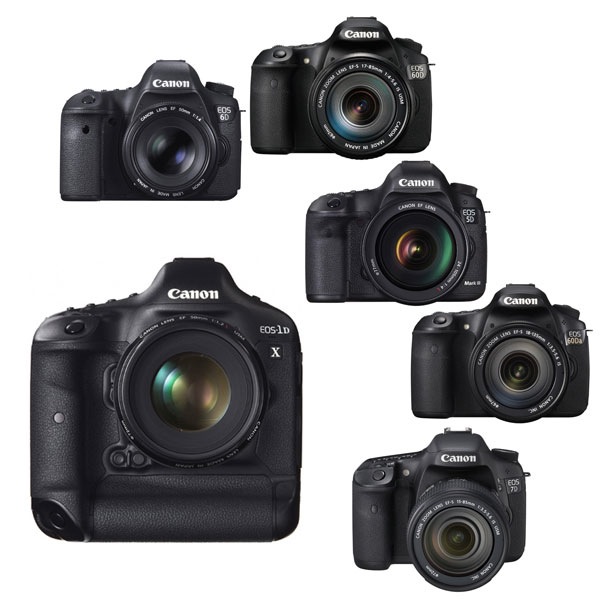
This group of EOS cameras is aimed at semi-professional photographers and serious hobbyists. Don’t let that put you off if your budget stretches to one of these models and you’re looking to buy your first EOS camera. There is nothing intrinsically more complicated about these models. In some ways they are even simpler to use as most of them don’t have the automatic exposure modes (portrait, landscape etc) that come on entry-level models.
The main differences between these cameras and entry level models are:
Size and weight. These cameras are bigger and heavier than entry-level models. Most of them have bodies constructed from magnesium alloy frames and are built to last.
Quick control dial. Entry-level models use a set of four cross keys to dial in exposure compensation and make other adjustments. Semi-professional (and professional) EOS cameras use the Quick Control dial instead. This makes it easy to dial in exposure compensation while looking through the viewfinder and simplifies the photo taking process.
Autofocus. Two of these models (the EOS 7D and 5D Mark III) have a much more advanced autofocus system than the entry level cameras and are suitable for shooting moving subjects such as sports and wildlife.
Full-frame. Both the EOS 6D and 5D Mark III have full-frame sensors. Cameras with full-frame sensors cost more but give better image quality and improved high ISO performance over cameras with APS-C sensors.
Names. These cameras have the same name no matter where they are sold.
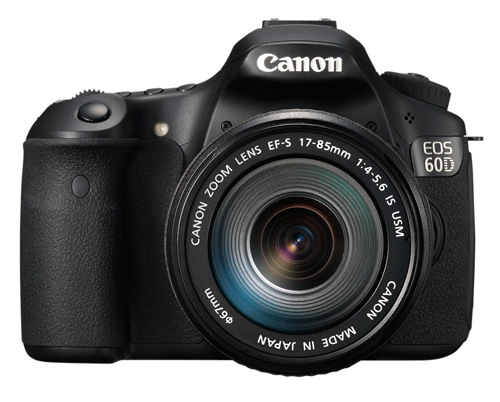
EOS 60D
September 2010
Key specs:
- 18 megapixel APS-C sensor
- 9 point AF with 9 cross-type sensors
- 63 zone evaluative metering
- Live View and movie mode
- DIGIC 4 processor
- Uses SD cards
- Three inch vari-angle LCD display
- Built-in flash with wireless flash control
The EOS 60D is bit of an oddity in that it has a smaller and lighter body than the previous models in the xxD range like the EOS 40D and 50D. In terms of size, weight and features the EOS 60D occupies the middle ground between the EOS 700D and 7D. However, the 700D, being much newer, has a few advanced features that the 60D doesn’t have such as a touchscreen menu system and hybrid AF for improved autofocus performance in Live View and movie mode.
The EOS 60D is a fine camera to learn photography with but the age of the model does suggest that Canon may replace it with an EOS 70D sometime this year. Whether the 70D will retain the body size of the 60D or return to the larger sizes of its predecessors remains to be seen. However, in the meantime the EOS 60D represents great value for money.
While lagging slightly behind the EOS 700D in terms of specification, it has a much more professional feel in the hand, and the Quick control dial is a great asset. If you’re trying to decide between the 700D and the 60D, it’s a good idea to try both out in a camera store. That’s the best way to appreciate the difference between the two.
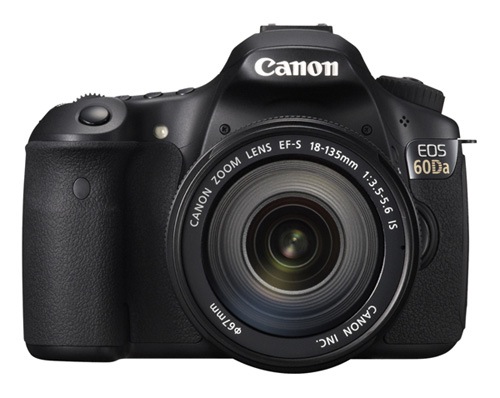
EOS 60Da
April 2012
Key specs:
- 18 megapixel APS-C sensor
- 9 point AF with 9 cross-type sensors
- 63 zone evaluative metering
- Live View and movie mode
- DIGIC 4 processor
- Uses SD cards
- Three inch vari-angle LCD display
- Built-in flash with wireless flash control
The EOS 60Da is a modified version of the EOS 60D designed specifically for astrophotography. It contains a powerful infra-red filter that increases hydrogen-alpha light sensitivity by 300%. This means that it can capture light wavelengths emitted by deep space gases normally blocked by the low-pass filters in regular digital SLRs. This camera is a specialised tool for photographing stars and nebulae in space, and not intended for ‘regular’ photography.
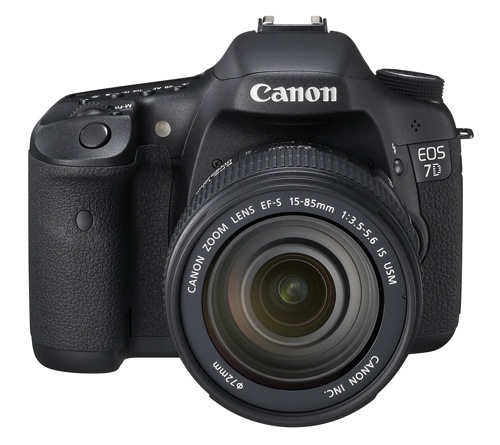
EOS 7D
October 2009
Key specs:
- 18 megapixel APS-C sensor
- 19 point AF with 19 cross-type sensors
- 63 zone evaluative metering
- Live View and movie mode
- Dual DIGIC 4 processors
- Uses CF cards
- Three inch fixed LCD display
- Built-in flash with wireless flash control
The oldest model in the current EOS lineup, the EOS 7D marked a turning point in EOS camera design when it was released in 2009. It was the first APS-C camera to feature an advanced autofocus system capable of accurately focusing on and tracking moving subjects. It has 19 cross-type autofocus points (entry level models have 9 point AF arrays) plus other innovative features such as the electronic level and built-in Speedlite transmotter that have since been included in other EOS cameras. Despite its ‘age’ it’s still a very capable camera and the least expensive EOS camera to feature advanced autofocus.
The big question is will Canon release a 7D Mark II in 2013 and if so how much will it cost and how good will the autofocus be? In the meantime, the EOS 7D is another camera that represents excellent value for money. It is ideal for photographers who photograph sports, wildlife or any other moving subject and need an AF system capable of keeping up.
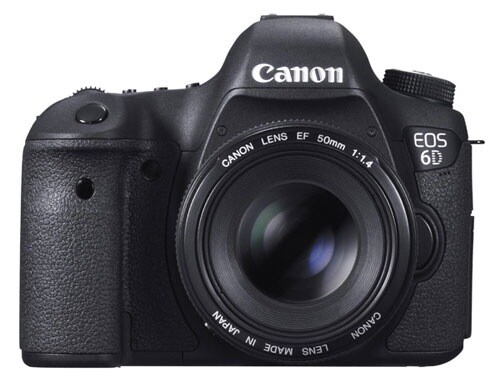
EOS 6D
November 2012
Key specs:
- 20.2 megapixel full-frame sensor
- 11 point AF with 1 cross-type sensor
- 63 zone evaluative metering
- Live View and movie mode
- DIGIC 5+ processor
- Uses SD cards
- Three inch fixed LCD display
- No built-in flash
- Built in Wi-Fi and GPS connectivity
The EOS 6D is less expensive, smaller and lighter than Canon’s other two full-frame EOS cameras, the EOS 5D Mark III and 1D-X.
Unique features include an 11 point autofocus system that Canon claims is the best in low light of any EOS camera and built-in Wi-Fi and GPS transmitters (it is sold in some countries without the latter two features where forbidden to do so by laws regarding radio transmission).
The Wi-Fi lets you tether the camera wirelessly to a computer and will be appreciated by anybody who works in a studio or has bought a dedicated Wi-Fi transmitter separately (expensive!) and struggled to get it to work. The GPS transmitter, if enabled, records your location in the photo’s metadata and will be a useful feature for some.
The EOS 6D, like Canon’s other full-frame cameras, doesn’t have a built-in flash or Speedlite transmitter for controlling Speedlite flash units remotely.
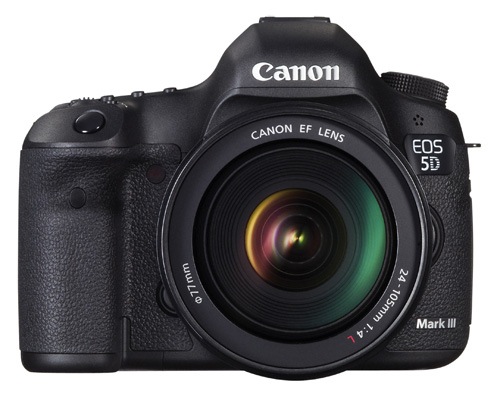
EOS 5D Mark III
March 2012
Key specs:
- 22.3 megapixel full-frame sensor
- 61 point AF with 41 cross-type sensors
- 63 zone evaluative metering
- Live View and movie mode
- DIGIC 5+ processor
- Uses CF and SD cards (dual card slots)
- Three inch fixed LCD display
- No built-in flash
This is the latest model in the venerable 5D range and is used by many professional photographers. While the most expensive of the models reviewed so far, it also has the best autofocus system (61 point array), high ISO performance, dual CF and SD card slots and a 22.3 megapixel sensor. If you can afford it you won’t be disappointed by any aspect of this camera. It is a tool that will serve you faithfully for many years to come.
Professional cameras
Canon’s top of the line EOS 1 series cameras are aimed at professional photographers. They are big, heavy and expensive, built to withstand just about anything the working pro can throw at them. There is just one current model:
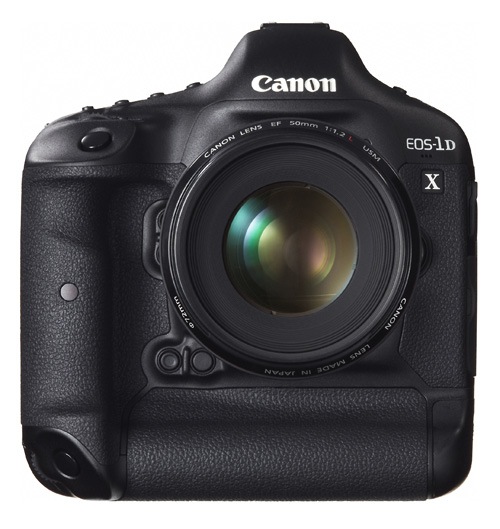
EOS 1D-X
April 2012
Key specs:
- 18.1 megapixel full-frame sensor
- 61 point AF with 41 cross-type sensors
- 252 zone evaluative metering
- Live View and movie mode
- Dual DIGIC 5+ processor plus a DIGIC 4 processor dedicated to AF processing
- Uses CF and SD cards (dual card slots)
- Three inch fixed LCD display
- No built-in flash
The best camera in the EOS range by far. I’ve used one and the look, feel and quality just blows the other cameras away completely. Which, considering the price, is exactly what you’d expect.
The EOS 1D-X has an 18.1 megapixel full-frame sensor, 61 point autofocus, 12 frames per second continuous shooting speed, two DIGIC 5+ processors, a weatherproofed body and a maximum ISO of 204,800. It has a built-in portrait grip and a large battery that outlasts every other Canon battery.
If you’re in the market for this camera bear in mind the extra size and weight may be a disadvantage. Take the EOS 5D Mark III into consideration when making your buying decision. The money saved on the body could be used towards some good quality glass.
Final thoughts
Recent advances in digital camera technology mean that there has never been a better time to buy a new camera body, regardless of which brand you use. The recent expansion of Canon’s line-up with the launch of the EOS 100D and 700D means that Canon users have a greater choice of camera bodies than ever before, which can only be a good thing for the consumer.
Understanding EOS
It’s wise to remember that whichever camera you have, it’s only a tool. Photographers create photos, cameras just take them. An understanding of the principles of light and composition are just as important as which model you own.

This is the principle behind my ebook Understanding EOS, which I wrote to help people learn to use their EOS cameras. It’s available now at Snap N Deals for a special price for a limited period. Whichever EOS camera you own, it’s the essential accessory to help you get the most out of your camera. Grab it today (at 30% off) at SnapNDeals.
Post originally from: Digital Photography Tips.
Check out our more Photography Tips at Photography Tips for Beginners, Portrait Photography Tips and Wedding Photography Tips.
How to Choose Your Next EOS Camera: Part Two

Digital Photography School


