RSS
 

Posts Tagged ‘Camera’

Capture One Pro 10.0.2 update adds new camera and lens support

04 Feb

Phase One has released an update for its Capture One Pro software, taking it up to version 10.0.2. The update implements various bug fixes for both the Windows and macOS versions of the software, and adds new support for Fujifilm, Panasonic, Nikon, Olympus, and Canon cameras and Tamron, Panasonic and Sony lenses.

In addition to adding support for the new cameras and lenses, Capture One Pro 10.0.2 now fixes a pair of issues in Windows, one involving the Skin Tone white balance picker not working and another bug that affected the Lens Correction Shift feature.

For the macOS version, Phase One has fixed four issues: the same Lens Correction Shift problem found in the Windows application, as well as Open CL errors, an Error Code 19 issue during batch processing, and a bug affecting the Find and Replace Batch Rename feature.

Capture One Pro 10.0.2 now supports the following cameras and lenses:

10.0.2 Camera Support

  • Fujifilm X100F Support
  • Olympus E-PL6 Support
  • Fujifilm X-A3 Support
  • Panasonic LX9/LX10/LX15
  • Panasonic G8/G80/G81/G85
  • Canon M5 Support
  • Nikon 1 J5 Support

10.0.2 Lens Support

  • Sony DT 18–250mm F3.5–6.3
  • Sony 70-400mm F4-5.6 G SSM
  • Panasonic LUMIX G Leica DG Summilux 15mm f/1.7 ASPH
  • Panasonic LUMIX G LEICA DG VARIO-ELMAR 100-400mm F4.0-6.3 ASPH
  • Panasonic LUMIX G VARIO 7-14mm F4 ASPH
  • Tamron SP 24-70mm F/2.8 Di VC USD (EF Canon)

Articles: Digital Photography Review (dpreview.com)

 
Comments Off on Capture One Pro 10.0.2 update adds new camera and lens support

Posted in Uncategorized


Sony image sensor sales increase, camera and Xperia sales drop

04 Feb

Sony has announced its financial results for Q4 2016 and the numbers show that the Japanese company’s image sensor division has performed well. Within the semiconductors segment, image sensor sales have increased by 40% year-on-year which is largely due to significantly increased sales of image sensors for mobile devices.

Digital camera sales have slightly decreased from 1.8 to 1.6 billion units, resulting in a 9.6% revenue decrease. On the plus side, the company has noted a continued improvement in terms of product mix, with a shift to high value-add models.

Sony upped its forecast for the financial year but the new figures would still mean a 34% fall in sales volume and a 17% fall in sales by value, compared with 2015.

Things don’t look quite as good in the phone division. The company shipped a total of 5.1 million Xperia phones in the quarter, which is down by around 33% year-on-year. Total mobile revenue for the quarter was ¥249bn ($ 2.2bn). Sony blames lower than expected sales in Europe for the decrease. The forecast for the fiscal year, which ends in March, was also lowered from 17 million to 15 million units.

You can find all of the details at Sony’s investor relations site.

Articles: Digital Photography Review (dpreview.com)

 
Comments Off on Sony image sensor sales increase, camera and Xperia sales drop

Posted in Uncategorized


Fujifilm Instax Mini 8 teardown reveals what makes the camera tick

02 Feb

The folks at All About Circuits have published a teardown of the Fujifilm Instax Mini 8 camera, revealing a glimpse at the components found within. Disassembly is simple, and mostly involves removing a series of screws, after which point DIYers are presented with ‘a surprising amount of circuitry.’

Within the camera, All About Circuits discovered a micro-controller, DC buck converter, and a pulse transformer, as well as a xenon flash tube, a light emitter and sensor, and a couple of transformers. This was a surprise to the publication’s Mark Hughes, who said, ‘I expected to find a flash charging and firing circuit similar to the type found in a disposable camera.’

We can forgive All About Circuits for calling the camera the ‘Insta- X Mini 8,’ because we love peering into the inner workings of cameras we wouldn’t have the nerve to dissect ourselves. Details about the hardware are available in the full teardown here.

Via: All About Circuits

Articles: Digital Photography Review (dpreview.com)

 
Comments Off on Fujifilm Instax Mini 8 teardown reveals what makes the camera tick

Posted in Uncategorized


This instant camera is made almost entirely of cardboard

01 Feb

$ (document).ready(function() { SampleGalleryV2({“containerId”:”embeddedSampleGallery_9055945704″,”galleryId”:”9055945704″,”isEmbeddedWidget”:true,”standalone”:false,”selectedImageIndex”:0,”startInCommentsView”:false,”isMobile”:false}) });

A Ukrainian startup is looking to fund mass production of Jollylook, a camera made mostly of cardboard and paper that accepts Fujifilm Instax mini cartridges. The camera exists in prototype form now, and contains no electronic parts – a specially designed shutter and hand crank used to start the development process are operated manually. 

Jollylook folds up into an ordinary-looking cardboard box (a little bigger than the box an iPhone comes in, its developer says) when not in use. To start using it, the front unit containing the lens is extended. Set the aperture, raise the viewfinder, frame your shot and fire.

Jollylook’s makers state that Kickstarter funds will be used to create molds for the camera’s lenses, organize production and help with marketing efforts. They’re closing in on their $ 15,000 goal fast with a full month to go. Backers who pledge at least $ 35 are promised one Jollylook camera and an Instax mini film cartridge. Shipping is estimated for June 2017.

$ (document).ready(function() { SampleGalleryV2({“containerId”:”embeddedSampleGallery_3471604241″,”galleryId”:”3471604241″,”isEmbeddedWidget”:true,”standalone”:false,”selectedImageIndex”:0,”startInCommentsView”:false,”isMobile”:false}) });

Jollylook – The First Cardboard Vintage Instant Camera!

Jollylook is a simple fold out camera for analog photos, made entirely from recycled paper and cardboard. No electronics, batteries or chargers – some paper, a pair of lenses and a cartridge for instant mini photos. Environment friendly – Jollylook uses less materials than used in the packaging of a regular camera. The camera body, the shutter and aperture are made of thick paper and laminated cardboard. Jollylook is as dangerous to the environment as a banana peal!

On January 31st, 2017 – Jollylook, a Ukrainian team of instant photography enthusiasts, starts a 30-days crowdfunding campaign on Kickstarter.com, to bring Jollylook – The First Cardboard Vintage Instant Film Camera to instant photo lovers.

Oleg Khalip, co-founder and author of the idea: “Once I was showing my son what’s inside the analog camera and how analog photography works, I thought then – “what if the package itself transformed and fulfilled the function of the camera and the picture turned out immediately?!” There was no problem with instant photos technology, people solved this problem long time ago. What remained to create was an analog camera that would be simple and contained in the package, worked properly and allowed to take pictures and get instant results. I had to study the structure of many analog cameras, before being able to make the shutter – the most difficult part in the development was the shutter (no existing structure worked for Jollylook, so I had to invent a new shutter). After picking the right lens and calculating the aperture, we created a folding “accordion” camera body from paper, then the case where the instax cartridge is placed, and we moved to the design, here there where no doubts – it had to be retro with a little steampunk look. Then we had difficulties with the unit for getting the photo out from the cartridge but after testing many options, we achieved a perfect result, photographs are now developed and pulled out with a rotating handle.”

“When moments of life that we see freeze on paper – it is magic!” – says Oleg.

The crowdfunding campaign with a goal of $ 15 000 will last for 30 days and the first mass produced Jollylook cameras are expected in June 2017.

The advantages of Jollylook:

Vintage Design – retro with a little steampunk.

Foldout and Compact – a little bigger than an iphone box.

A Great Gift – can be used immediately and instantly.

A Great Toy – Jollylook is a great teaching toy for children. Your kid can take it apart and see how it works.

A Great Souvenir – even after use Jollylook is beautiful on the shelf!

Fun – entertaining and positive emotions.

Beautiful Photos – using Instax mini film you get 10 instant classic color or monochrome analog unique photos. (the cartridges can be changed many times easily and quickly )

Environment friendly – easily recyclable, as dangerous to the environment as a banana peal!

Specifications:

  • Lens – a meniscus lens with a focal length of 110 mm (4.33 in), allows to take photos from portrait to landscape. Can be moved up to shoot through the pinhole.
  • Viewfinder – a Fresnel lens
  • Aperture – a switchable diaphragm with manual adjustment for the seven values: f/8, f/11, f/16, f/22; f/32; f/45; f/64 + pinhole.
  • Shutter – automatic with shutter speed of 1/250 or 1/160 and manual shutter mode with the possibility to control the exposure time manually.
  • Pinhole – a round hole in a copper foil 0.6 mm (0.023 in) in diameter, located on the diaphragm disk
  • 10 shots per instax mini cartridge (the cartridge can be changed many times)
  • Storage conditions – store in a dry and dark place at room temperature.
  • Conditions of use – use at temperatures between 10 – 35 °C (50 -95 ?) in dry weather.
  • Size when folded 85 x 127 x 48 mm (311?32 x 5 x 157?64 in)
  • Takes Fujifilm “instax mini” instant film cartridge
  • Photo size 46(W) x 62(H) mm

Articles: Digital Photography Review (dpreview.com)

 
Comments Off on This instant camera is made almost entirely of cardboard

Posted in Uncategorized


Get to know the Compass Camera, an ultra-compact pocketable film camera from 1937

31 Jan

The quest to make a ridiculously small, yet still fully-featured camera is not a new one. For historical examples, look no further than the Compass Camera. Made by Swiss watchmaker LeCoultre, it was designed by Englishman Noel Pemberton Billing and sold by Compass Cameras of London starting in 1937. It features a collapsible design and accepts 24x36mm plate film (a roll film back was later introduced).

Take a look at the video above for a full tour of the camera. Only around 5000 were produced, and they’re now highly sought after by collectors. In fact, you can pick one up now on ebay if you have $ 7450 to spare.

Articles: Digital Photography Review (dpreview.com)

 
Comments Off on Get to know the Compass Camera, an ultra-compact pocketable film camera from 1937

Posted in Uncategorized


Samsung Galaxy S8 likely to come with same camera specs as S7

28 Jan

More than six months ago the upcoming Samsung flagship smartphone Galaxy S8 was rumored to come with a dual-cam setup. Now, that we are much closer to the actual launch of the device, it’s looking more and more like those rumors were unfounded. Today a major leak, via the usually very reliable Evan Blass (a.k.a @evleaks), has revealed that the S8’s camera specification will indeed be very similar to its predecessor S7: a 12MP sensor and F1.7 aperture in the main camera and 8MP with F1.7 at the front. The latter has an iris scanner next to it, like we’ve already seen it on the now discontinued Galaxy Note 7. There is no talk of OIS but we’d be surprised if it would not be included. 

There will be a new visual search function that uses the camera, though. The technology will be able to identify objects and users will then be able to perform searches on shopping sites or search engines. We have seen a similar feature on Amazon’s Fire Phone before. The same tool will also offer OCR functionality. 

Other specs sound interesting as well. There will be a Plus version with a large 6.2″ display alongside the 8-8″ standard model. Both displays will be curved AMOLED variants with an unusual 18.5:9 aspect ratio. Both phones will, depending on region, be powered by the brand new Snapdragon 835 or Samsung’s latest in-house Exynos chipset, combined with 4GB RAM and 64GB of expandable storage. The batteries will have a capacity of 3,500 and 3,000 mAh respectively. Both phones are expected to be announced on March 29. In Europe the Galaxy S8 will set you back €799 (approximately $ 855), the Plus model will be €899 ($ 960).

What do you think about the upcoming S8 from a mobile photography point of view? Will it, despite seemingly unchanged camera specs, be able to keep up with its high-end rivals? Let us know what you think in the comments.

Articles: Digital Photography Review (dpreview.com)

 
Comments Off on Samsung Galaxy S8 likely to come with same camera specs as S7

Posted in Uncategorized


Selfly pocket-sized camera drone snaps to a smartphone when not in use

28 Jan

A new pocket-sized consumer camera drone has launched on the crowdfunding website Kickstarter, where the team behind it seeks $ 125k in funding. Called Selfly, this drone is dubbed a ‘smart flying phone case camera’ due to its unique storage design. When not in use, Selfly folds into a compact rectangular shape that can be attached to the back of an included smartphone case.

Selfly is a small autonomous camera drone that, when stored, folds into a 9mm phone case. When removed from the case, four rotors appear to automatically lift the drone into the air where it hovers by default. The related mobile app offers optional control modes, including ‘Stick Control,’ ‘Voice Control,’ and ‘Fly By Picture.’ 

The integrated camera features an 8MP sensor able to record video at 1080p/30fps; live video broadcasting is supported, though flight time tops out at only five minutes. The drone is compatible with all 4″ to 6″ smartphones via its Universal Flip Cover Case. Additionally, Selfly has dedicated phone cases for the iPhone 6/6 Plus/7/7 Plus, Galaxy S6/7 edge, Galaxy 7, and the Nexus 6.

Selfly is similar to the pocket-sized AirSelfie drone that launched on Kickstarter late last year. That drone’s campaign has ended after exceeding its funding goal; backers pledged more than €570,000.

Via: News Atlas

Articles: Digital Photography Review (dpreview.com)

 
Comments Off on Selfly pocket-sized camera drone snaps to a smartphone when not in use

Posted in Uncategorized


Throwback Thursday: Five camera accessories you probably didn’t need

27 Jan

Five camera accessories you probably didn’t need

Plenty of useful camera accessories come on to the market every year – but among them are some real duds. So let’s take a look back at some of the worst offenders, shall we? The first product that comes to mind, at least around here, is the Sony Party-shot.

The Party-shot, introduced in 2009, was actually pretty clever. You popped on a compatible camera (originally the Cyber-shot DSC-WX1 and TX1) and off it went. The ‘personal photographer’ could rotate 360° and tilt up or down 24°, and would use the camera’s Face and Smile Detection features to follow subjects and take a photo at the right moment. It even used the Rule of Thirds for proper composition! The Party-shot was portable, making it the thing to talk about at parties (no pun intended).

Oh, and be sure to watch this:

Five camera accessories you probably didn’t need

No more waving your arms or calling out your childrens’ names to get them to look at the camera, thanks to the Look Lock by Tether Tools. It’s a simple enough gadget: it’s a smartphone holder on an articulating arm that attaches to your camera’s hot shoe. What you put on the screen is up to you. It can be videos, photos or, God forbid, clowns.

To give credit where it’s due, Samsung produced several DualView cameras that had an LCD panel on its front plate to essentially do the same thing. And it did have a clown mode.

Five camera accessories you probably didn’t need

Back in 2007 SanDisk released special ‘Ducati’ edition memory cards as well as a USB stick. This wasn’t just an unusual marketing scheme: at the time these ‘turbo-charged’ cards were also significantly faster than SanDisk’s other offerings at the time. They were also pricey, with that 8GB CF card going for $ 315 and the 4GB SD card priced at $ 130. That snazzy 4GB USB stick was $ 125.

In case you’re wondering about that SD card, it’s what SanDisk called ‘SD Plus’. The card could split open, exposing a hidden USB connector, so you could plug the card right into your PC. Not surprisingly these cards broke quite easily, and the ‘Plus’ designation now means ‘above average’ in SanDisk’s lineup.

Like many things, the partnership between SanDisk and Ducati didn’t last long, which is why I still treasure the 8GB SanDisk Extreme Ducati Edition CF card that I hide in my desk.

Five camera accessories you probably didn’t need

Back in the late 1990s transferring photos from camera to computer was a pain in the butt. You had to hook up a serial cable and those big 1.3 Megapixel files chugged along at a whopping 115kb/sec.  Then a company called SmartDisk said ‘why not make a device that lets you put that SmartMedia card into your floppy drive!’ And so the FlashPath adapter was born. 

The concept was pretty simple. Just pop two watch batteries into it, put the SmartMedia card into the side and insert it into your PC’s floppy drive (remember those?). That assumes that you’ve installed the proper drivers for Windows 95/98 or Mac OS, of course. The FlashPath wasn’t blazing fast, but by our estimates it was about double the speed of a serial cable, so it did save time. Not long after the FlashPath arrived, Sony did the same thing for its Memory Stick format. And not long after that, floppy drives started to disappear from PCs, starting with the iMac.

Five camera accessories you probably didn’t need

There have been plenty of accessory lenses for iPhones, but none is more ridiculous than the Turtleback iPhone SLR jacket. This $ 249 accessory, introduced in 2012, let you attach a Nikon F or Canon EF lens to the front of your iPhone 4. To make that happen you had to first attach a case to the phone and screw on an depth-of-field adapter ring, and then you could attach the lens of your choice. It goes without saying that using the SLR jacket required two hands, otherwise something terrible would happen to your iPhone.

We tested the SLR jacket at the time and it earned 2/5 stars, due mainly to do the fact that the iPhone is actually taking a photo of the focusing screen in the depth-of-field adapter, so you see the pattern of the screen and lots of dust. To its credit, Turtleback did offer an app which automatically flipped the image (since there’s no mirror, the image is upside-down) and calibrates the iPhone’s camera to maximize image quality.

Did we miss your most favorite, least useful camera accessory? Let us know in the comments.

Articles: Digital Photography Review (dpreview.com)

 
Comments Off on Throwback Thursday: Five camera accessories you probably didn’t need

Posted in Uncategorized


When is the Right Time to Upgrade Camera Gear?

21 Jan

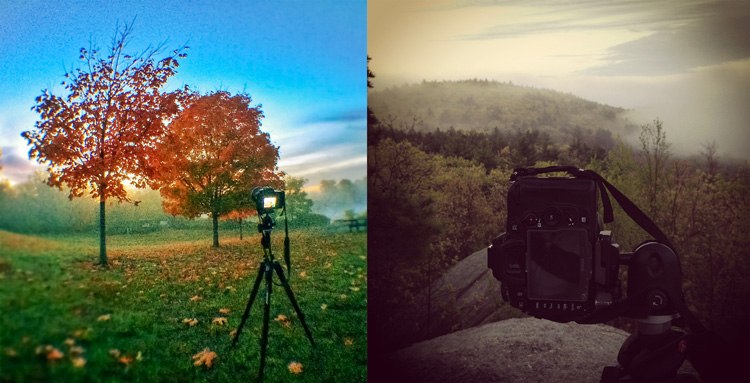
Knowing when to upgrade camera gear can be a little tricky. Picking the right time to upgrade is about knowing who you are as a photographer, and who you want to become.
When is the Right Time to Upgrade Your Camera Gear?

What makes upgrading tricky is the pace at which technology advances. New form factors, features, and capabilities will continue to be innovated over the years to come. It’s certainly possible that new trends could make traditional photography obsolete. For example, 360 degree photography is one new trend that has garnered a lot of interest.

If that wasn’t enough, the amount of money that companies spend on marketing their innovations is continuing to increase. This means that there are more deals, more packages, and more attempts to convince you that it is the right time to upgrade your gear.

So how do you know when you are actually ready to upgrade your photography gear?

Five Signs you’re ready to upgrade your camera gear

Your needs and wants will be different from mine and from that of your neighbor’s so it’s difficult to offer a blanket “This is when you should upgrade” statement. But, there are at least five key things to consider when upgrading your gear.
When is the Right Time to Upgrade Your Camera Gear?

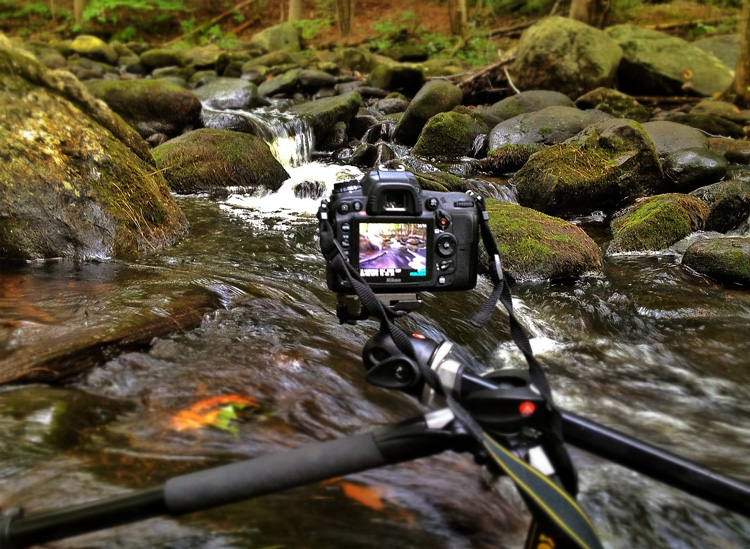
1. Your current gear is struggling to keep up with your creative needs

It’s a good sign that you are ready to upgrade your gear when your current gear fails to give you the results you are looking for.

When this might be the case is if you are trying to take portraits of people with sharp focus in the foreground and creamy bokeh in the background. If you’re still using the kit lens that came with your camera, odds are the results you’re getting aren’t meeting your needs. In a case like this, buying a new lens might be worth considering.

2. If you’ve decided to go to a more professional level of work

When you decide to make the move from hobbyist to being a professional photographer, upgrading could become a viable option. Higher quality gear tends to be more durable and offers more flexibility, both of which are important in a professional setting.

As an added bonus once you start working professionally you will be able to deduct the costs of your gear from your taxes making the cost of upgrading more bearable.

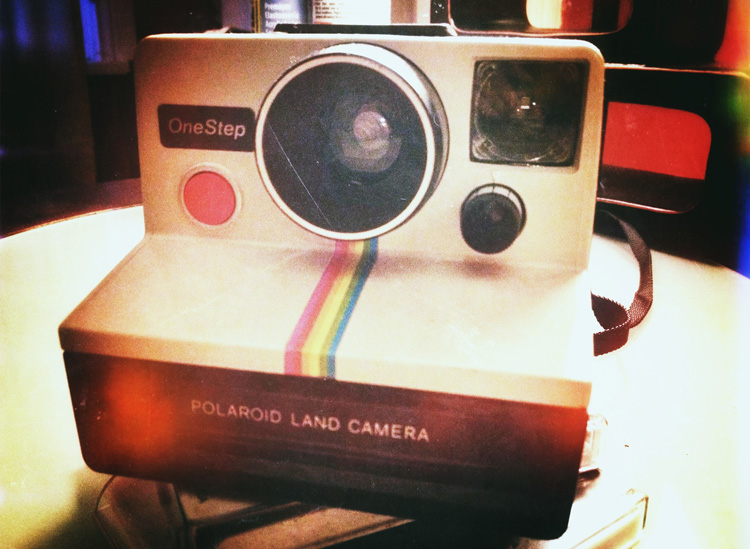
3. Your gear is showing its age

While tomorrow’s technology will always make today’s look old, and upgrading to stay current is not usually the right choice – there will come a time when you gear does get so dated, that upgrading is actually your best option.

You may even be able to save some money by upgrading to generation body or lens that is a year or two old. This will still allow you to make a leap in terms of the technology that you are using, at a fraction of the cost of jumping to the current generation technologies.
When is the Right Time to Upgrade Your Camera Gear?

4. The manufacturer has dropped support

Sometimes you’ll find out that the manufacturer has dropped support for the product you own. In cases like this, it might be time to consider upgrading. (Note: this means you ignored point #3 above and kept using your aging gear until it effectively died).

5. Your current gear is “hacked” together to meet a need

Finally, let’s say that your current gear does what it needs to do to achieve the photographs that you want, but it does so in a way that requires a cumbersome process or a jerry-rigged system. If there’s a solution available that would simplify your current process in a way that saves you time and frustration it’s certainly worth considering an upgrade.

Two good reasons you are not ready to upgrade
When is the Right Time to Upgrade Your Camera Gear?

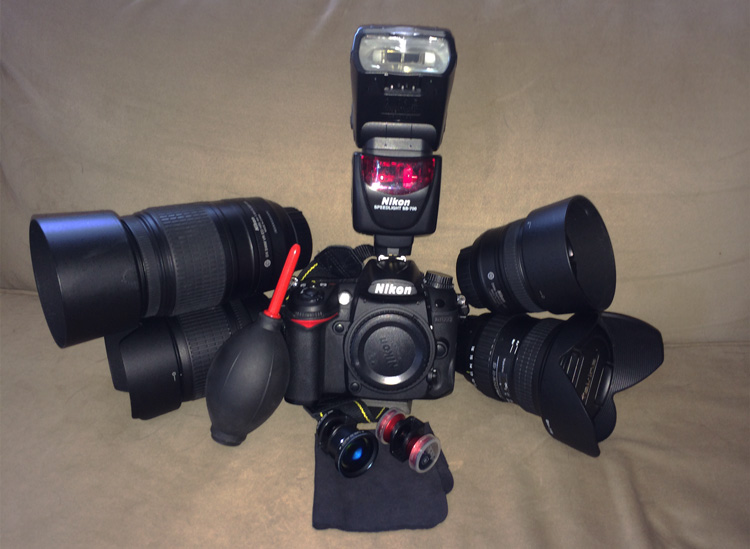
1. Upgrading when a new model is released

New model releases are always going to tempt you into upgrading. Marketing teams do a fantastic job at showcasing the new improvements, and how they will enhance your photography. However, rarely will these improvements have a substantial impact on your overall photography. It’s not about whether the new features are better than the ones that you currently have, but will they actually impact the results that you can not achieve with your current camera.

More concisely – does the new model help justify one or more of the reasons listed above? If not, then it’s probably not worth upgrading at this point in time.

2. Keeping up with your friends

As if you need another reason to upgrade – your best photography buddy just did – so now you have to as well. If the reason you’re buying something is because you’re trying to outdo, or one-up someone you know – it’s the wrong reason to upgrade your gear.

What are other valid reasons to upgrade?

Read more here:

  • 3 Valid Reasons it Might be Time to Upgrade Your Camera Equipment
  • Ready to Upgrade Your Kit Lens? Tips for Which Lens to Invest in Next
  • Do You Need to Upgrade to the Latest Camera?

When have you felt the need to upgrade your camera gear? Let us know in the comments below.

googletag.cmd.push(function() {
tablet_slots.push( googletag.defineSlot( “/1005424/_dPSv4_tab-all-article-bottom_(300×250)”, [300, 250], “pb-ad-78623” ).addService( googletag.pubads() ) ); } );

googletag.cmd.push(function() {
mobile_slots.push( googletag.defineSlot( “/1005424/_dPSv4_mob-all-article-bottom_(300×250)”, [300, 250], “pb-ad-78158” ).addService( googletag.pubads() ) ); } );

The post When is the Right Time to Upgrade Camera Gear? by John Davenport appeared first on Digital Photography School.


Digital Photography School

 
Comments Off on When is the Right Time to Upgrade Camera Gear?

Posted in Photography


TwoEyes VR stereoscopic camera simulates human vision

21 Jan

Another VR camera has launched on Kickstarter, but this one does things a little differently: TwoEyes VR features two horizontally-oriented cameras spaced 65mm apart that record footage in a stereoscopic arrangement. The resulting 3D video simulates the way someone would see the subject with their own eyes.

TwoEyes VR features two F2.0 180-degree lenses spaced 65mm apart, which is said to be the average distance between human eyes. The two cameras (CMOS 1/2.3” sensors), when used together, can record 3D videos in both 180 and 360 degrees, while recording with just one camera results in 360-degree non-3D footage. The camera also supports generating red-cyan 3D footage.

Content is stored to an internal 128GB drive, while other camera features including a 4K image processor, 2,000mAh battery, Bluetooth 4.1, dual-band WiFi, WiFi Direct, and a gyro sensor. The related Android and iOS mobile apps offer users live video previews from the camera, two-button shooting controls, and a post-processing tool for generating either 3D, VR, or 360 videos. 

The team behind TwoEyes is seeking funding on Kickstarter, where they have raised more than double their $ 40,000 goal with 36 days remaining in the campaign. A ‘Kickstarter Pack’ is offered to backers who pledge at least $ 239 — it includes the camera and global shipping. Shipments to backers are expected to start this upcoming August.

Via: Kickstarter

Articles: Digital Photography Review (dpreview.com)

 
Comments Off on TwoEyes VR stereoscopic camera simulates human vision

Posted in Uncategorized