RSS
 

Posts Tagged ‘Business’

Instagram introduces business profiles with insights, promoted posts and contact button

02 Jun

Instagram has introduced business profiles as a free feature for businesses using the service. Business profiles differ from regular profiles in a few ways, allowing companies or individuals operating as a business to add contact details, promote posts and view insights related to their account. 

The new tools are designed to better aid businesses — including individuals operating as a business, such as independent photographers — in managing their Instagram presence while using it to attract new clients. The insights tool shows users how popular individual posts are and provides information on followers, including their demographics and behavior. High-performing posts can now be turned into ads within the Instagram mobile app, as well, and account owners will be able to target specific audiences.

Business profiles also have a contact button that can be connected with a business number or email address, enabling prospective clients to directly contact the company rather than having to seek contact details elsewhere. Instagram plans to rollout business profiles ‘in the coming months’ for users in the United States, Australia and New Zealand. By the end of 2016, business profiles should be available to all users across the globe.

Via: Instagram

Articles: Digital Photography Review (dpreview.com)

 
Comments Off on Instagram introduces business profiles with insights, promoted posts and contact button

Posted in Uncategorized


Logos for Photography Business: 5 Trends to Use

30 May

A well-designed logo is a must-have tool for any photographer and studio wants to be seen on the market. According to many analysts, a logo plays an important role in entrepreneur’s success. Especially, if it’s a part of a brand identity. Use the following trends and ideas to create a powerful logo for your photography business and grab the attention Continue Reading

The post Logos for Photography Business: 5 Trends to Use appeared first on Photodoto.


Photodoto

 
Comments Off on Logos for Photography Business: 5 Trends to Use

Posted in Photography


Photo business: the rise and impending fall of social media ‘influencers’

24 May

With so-called ‘influencers’ in the news recently, an anonymous social media executive confesses to Digiday just what contributed to the rise of the phenomenon and the somewhat startling realities of the new ecosystem.

While it may come as no surprise to the general public that the ‘influencer’ ecosystem is going through some turmoil as of late, it is somewhat surprising that it came about in the first place. According to the interview, it took brands until 2014 to realize what most of us saw much earlier – social media is addictive and engrossing for much of the general public, and it’s here to stay.

Instead of a handful of TV commercials to make each year, brands and agencies realized that they needed to greatly increase the sheer volume of their content creation in a never-ending quest for ever more ‘impressions’ via their social media channels. So, what easier way to get your product out there than to simply pay someone to post your product in front of their hundreds of thousands of followers? Thus, the influencer was born.

‘We have no idea what to pay them.’

What started as a simple $ 500 investment for someone to ‘show up and take some photos’ has ballooned into paying ‘$ 300,000 for a few photographs because the CEO’s kid liked someone.’ It’s pretty absurd, with the executive going on to admit ‘we have no idea what to pay them.’ Although it appears there’s more of a vetting process being developed at some agencies, you still get influencers whose entire pitch is ‘I want to take a car and pick it up in London and drive it around Europe, so give me $ 100,000.’

So it’s no surprise that the interview concludes on a bleak note regarding the future for Instagram superstars. The unnamed executive predicts influencers will start to disappear as brands recognize that the value isn’t there. ‘Just because photos look good and have 200,000 followers means nothing.’ While it lasts, it sure seems like a pretty sweet gig.

Via: digiday.com

Articles: Digital Photography Review (dpreview.com)

 
Comments Off on Photo business: the rise and impending fall of social media ‘influencers’

Posted in Uncategorized


Create a Photography Business Marketing Plan in 3 Days (+ Save $30 Instantly)

25 Apr

Starting a photography business these days is quite a challenge. It takes courage. You need to push yourself constantly to go out of your comfort zone and learn a whole pack of new things. While there are no shortcuts to success, there are accelerated ways. Read on to learn about one of them and build a photography business marketing plan Continue Reading

The post Create a Photography Business Marketing Plan in 3 Days (+ Save $ 30 Instantly) appeared first on Photodoto.


Photodoto

 
Comments Off on Create a Photography Business Marketing Plan in 3 Days (+ Save $30 Instantly)

Posted in Photography


7 Ways Custom Photo Backdrops Can Promote Your Business

13 Apr

How could you photograph a love story in Paris having less than $ 50 at your disposal? Or make local moms stand in line at your photo studio without running an expensive marketing campaign? That’s totally possible if you pay attention to one single element of your studio setup – background. Read on to find out how other photographers are successfully Continue Reading

The post 7 Ways Custom Photo Backdrops Can Promote Your Business appeared first on Photodoto.


Photodoto

 
Comments Off on 7 Ways Custom Photo Backdrops Can Promote Your Business

Posted in Photography


Lytro CEO confirms exit from consumer photography business, focus on VR

05 Apr

In a recent blog post, Lytro CEO Jason Rosenthal has confirmed that the company is headed out of the consumer imaging business to focus instead on developing a light field virtual reality platform. Rosenthal admits that it was too risky to compete in an established consumer space (that was in decline, no less, thanks to smartphones), and determined the value-add of light field technology to VR would have greater impact. Hence, Lytro has scrapped product development in the consumer camera space.

Says Rosenthal, ‘The cold hard fact was that we were competing in an established industry where the product requirements had been firmly cemented in the minds of consumers by much larger more established companies.’ He also mentions the rise of smartphones and consumer satisfaction with image quality from them.

And ‘while consumer Light Field cameras offered a number of true technological breakthroughs such as interactive 3D pictures, radical lens specs, and the ability to focus a picture after the fact,’ the reality was that there was much more investment Lytro would’ve had to make to its cameras competitive with modern cameras in image quality. Meanwhile, VR companies and Hollywood studios were increasingly asking for light field technology in cinematic and next-gen content. ‘We had just raised $ 50MM in new capital. We didn’t have the resources to both continue building consumer products and invest in VR.’

Accordingly, in November of last year, Lytro announced Immerge, a 360° light field video capture device, just after announcing plans for layoffs as the company shifted direction toward video and VR. The pro-grade Immerge was a confirmation of this change in focus. It’s currently only a concept camera, capable of recording live action VR in what Lytro claims as ‘six degrees of freedom’ that, if we understand correctly, should allow for multiple perspectives from multiple angles of view, as well as focus and depth-of-field control after-the-fact. This is a clear benefit for VR capture, which aims to capture as much scene content as possible for the viewer to explore in a virtual environment. 

The decision to shift the company’s focus was not taken lightly. Rosenthal details the anxiety he felt before shifting the company vision, but now says ‘My middle of the night panic attacks are gone. I wake with a burning desire to go to work because I am so excited by what we are building and its potential to help shape VR.’

Have a read of Rosenthal’s full blog post here. It’s quite insightful in laying out some of the considerations Lytro has faced as a company. Some of us here are certainly disappointed that Lytro appears to be completely exiting the consumer camera space, as light field technology had a lot of potential in revolutionizing autofocus, in decoupling depth-of-field and light gathering ability, bringing depth-based image editing to the table, and in radical lens design previously thought impossible, thanks to the ability of light field data to perform certain corrections – even image stabilization – after-the-fact as opposed to optically. That said, we certainly understand the change in direction and are very excited to see what Lytro brings to VR and video.

We’ll be following closely. Let us know your thoughts in the comments below.

Articles: Digital Photography Review (dpreview.com)

 
Comments Off on Lytro CEO confirms exit from consumer photography business, focus on VR

Posted in Uncategorized


Sony may split off its imaging products business

29 Mar

Sony is considering splitting off its imaging products business, according to a new statement from the company. Sony detailed planned management and organizational structure changes last week, saying its previously announced semiconductor business split will take place next month, placing its image sensors, among other things, under a wholly owned subsidiary.

Sony has been undergoing fairly extensive business restructuring over the past couple of years, having split off its TV business in summer 2014 and its Video & Sound business in October of last year. The semiconductor business split out next month will be its third business group to be separated into an autonomous subsidiary. Whether Sony will proceed to split out its Imaging Products and Solutions Sector is yet to be seen.

Splitting off these segments into subsidiaries will help Sony Corporation focus on strategy across the entire company, placing some operations under the governance of each new Sony Group that until recently were handled by headquarters. The transition of these services to Sony Group companies will start on April 1.


Press release:

Sony Corporation announces changes to organizational and management structure

Tokyo, Japan – Sony Corporation (“Sony” or the Company”) has been engaged in the sequential splitting out of business units across the Sony Group, in order to reinforce the competitiveness of each business, and ensure clearly attributable accountability and responsibility.

In addition to Game & Network Services, Mobile Communications, Pictures, Music and certain other Sony Group businesses that were already operating autonomously as subsidiaries, in July 2014 Sony split out its TV business, followed by its Video & Sound business in October 2015. The Company also plans to split out and establish its semiconductor business as a wholly owned subsidiary in April 2016. Sony is also exploring the split out of its Imaging Products and Solutions Sector.

Concurrently, Sony has also been proceeding to realign the platform functions that support each of its business units in order to enhance the effectiveness and efficiency of these operations.

As previously announced, operations that until now have resided within Sony Corporation, including the Consumer AV Sales Platform, the Manufacturing, Logistics, Procurement, Quality and Environmental Platform for Sony’s electronics business, as well as certain cloud-based platforms and service-related businesses, will each be transferred to the related Sony Group companies. This transition is scheduled to be made sequentially from April 1 2016.

Once the splitting out of these functions has been completed, Sony Corporation will focus on the following Group headquarters functions:

Headquarters: Responsibility for the Sony Group’s overall strategy and governance, and oversight of their execution

  • R&D: Leadership of Sony’s differentiation and creativity through technological innovation
  • New Business: Incubation of new businesses in areas beyond Sony’s current business domains
  • Brand Design: To enhance Sony’s brand value and implement horizontal Group-wide initiatives
  • Professional Services: To support the operations of the Sony Group following the completion of the splitting out process

In conjunction with this structural realignment, certain changes will also be made to Sony’s executive assignments and system effective April 1, 2016, in order to further clarify lines of responsibility and assignments within each business and the headquarters organization. 

The Company will newly appoint four executives, currently in charge of four of the Sony Group’s business segments, as “Corporate Executive Officers” of Sony Corporation. They, together with the six existing Corporate Executive Officers, will assume ultimate responsibility for the Sony Group’s management within the scope assigned to them by the Company’s Board of Directors. Sony will also re-classify its other executives. The executives responsible for executing their assigned business operations under the oversight of the relevant Corporate Executive Officers will be named “Business Executives” of Sony Corporation, while the executives responsible for the headquarters functions assigned to them under the oversight of relevant Corporate Executive Officers will be named “Corporate Executives” of Sony Corporation.

Via: Sony Global

Articles: Digital Photography Review (dpreview.com)

 
Comments Off on Sony may split off its imaging products business

Posted in Uncategorized


Photographic Education, Specialties, and Business: Interview with Photographer Melanie Weij

18 Mar

In one of our recent newsletters, I asked our subscribers to share their stories with me. The newsletter celebrated the beginning of spring and was dedicated to inspiration and aspiration in the contemporary photographic world. I always encourage readers to hit the reply button and get involved in the conversation. And often, you do (high five!). So did our subscriber, Continue Reading

The post Photographic Education, Specialties, and Business: Interview with Photographer Melanie Weij appeared first on Photodoto.


Photodoto

 
Comments Off on Photographic Education, Specialties, and Business: Interview with Photographer Melanie Weij

Posted in Photography


Sony camera and sensor business units report drop in sales in 2015

30 Jan

Sony Corp. released its third quarter 2015 earnings report [PDF], in which the company disclosed notable drops in both camera and image sensor sales. It has also lowered the forecast for both business units, though both are still expected to make a profit in the current fiscal year.

Note the drop in camera sales but increase in operating income due to the shift to higher-end models.

Sales in the Imaging Products unit dropped by 5%, due to decreases in unit sales of digital still and video cameras, reflecting ‘a contraction of the market, partially offset by an improvement in the product mix of digital cameras reflecting a shift to high value-added models.’ In other words, they’re selling fewer cheap compacts and more RX and a7-series cameras. Operating income went up by over 20%, however, due the aforementioned shift to higher-end digital cameras.

Image sensor and battery sales are way down in Q3 2015 vs Q3 2014, and the forecast for FY2015 has been lowered considerably.

The image sensor business took an even bigger hit. Sales in the Devices unit decreased by over 12% year-on-year due primary to a drop in sales of image sensors as well as batteries. Operating income dropped ¥65.5bn ($ 540m) to –¥11.7bn ($ 97m), due in large part to a write-down in assets related to batteries. While not specific to digital cameras, the company’s statement mentioned a 7.5% drop in sales to external partners.

Sales in Q1 and Q2 2015 were down more than 500k units each year-on-year and the company’s forecast shows the gap widening in Q3 2015.

Sony also revised its October forecasts downward for both business units. The Imaging unit’s estimated sales has been reduced by 1.4% and now stands at ¥710bn (compared to ¥724bn in FY2014), while the forecast for the Devices business has been brought down by 11.3% to ¥940bn (compared to ¥927bn in FY2014). Both units are still expected to make a operating profit in FY2015, however.

On other item of note from the company’s earnings call mentions the Oita manufacturing facility it recently bought from Toshiba. Sony says that they are considering using a portion of the factory for producing ‘logic’ (processors) rather than photodiodes (sensors) in order to reduce the cost of its sensors. While the company is considering this change to ‘mitigate the downsized rate in [the sensor] business’, it is ‘confident in the long-term prospects of image sensors.’

Articles: Digital Photography Review (dpreview.com)

 
Comments Off on Sony camera and sensor business units report drop in sales in 2015

Posted in Uncategorized


10 Fundamental Tips for Newbies in the Wedding Photography Business

06 Jan

So, you’ve decided you want to enter the wonderful world of wedding photography. Now it’s time to get prepared and arm yourself with as much know-how as possible. After all, you are going to be responsible for capturing the magic of this once-in-a-lifetime event – no pressure!

Here are the top 10 things I have learned on my journey, that are valuable to anybody breaking in to the wedding photography business.
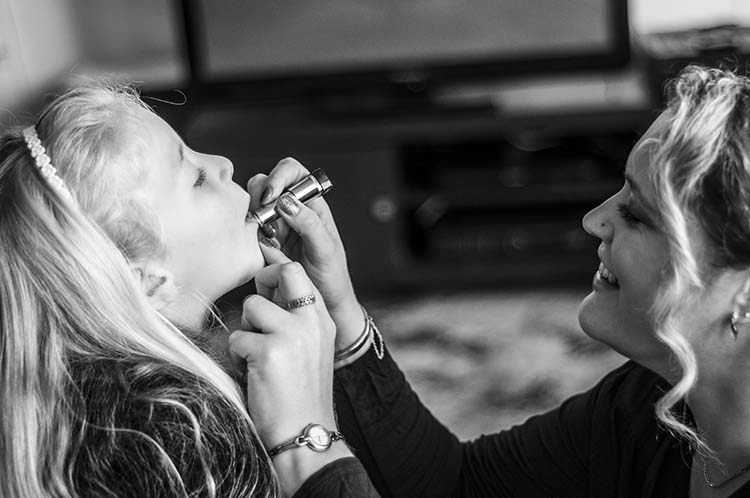
DSC 2518

1) Experience and second shooting

You’re new to the scene, and may not have any experience photographing a wedding, other than that time you used your point-and-shoot camera at your cousin’s wedding. So, how do you get experience photographing a wedding, in a professional setting? Offer your services as a second shooter!

There are a few reasons why this is a highly valuable experience if you’re thinking of becoming a wedding photographer. The most obvious being that you will gain on the job experience, as well as building a wedding photography portfolio. By becoming a second shooter, you will also meet established wedding photographers, and begin to network with other pros. A great way to begin second shooting is to research wedding photographers in your area, and contact three to five that you like the most. You can also use Facebook and search for photographer groups to advertise yourself. Offer your services for free to start, and you should hopefully land yourself a job pretty fast.

When you secure a gig with a photographer, be punctual and polite on the big day. Observe the photographer’s behaviour, and the way they have structured the big day. This will help you get a feel for how you will one day operate your own business. If there is anything you are unsure of, or want to know more about, asking the photographer once the rush of the wedding is over, is a great way to get a better insight.

DSC 2680

2) Compare and prepare

You’ve assisted a few photographers at a number of weddings, and now you want to take the reins. Good job! At this stage, there is a lot to think about, and begin preparing. You need a presentable portfolio to show prospective clients, as well as prices, packages, and a solid contract. A great way to roll two of those things together is to create your own website.

This will allow you to have an online gallery of your images, along with a page outlining all pricing and further information. If you’re not a HTML whizz or web designer, don’t fret – you can sign up to a website that will offer you pre-made themes, designs, and layouts. Wix is a great place to start, you can select a yearly plan, which will give you a domain name, and eliminate all of their advertisements from your website. Plus – their website editing tool is super straight-forward and will allow you to customize your website easily. Another low cost option is Squarespace, starting at $ 8/month.

When you are designing your packages and conjuring up your pricing, comparison is key. Take some time to think about all the expenses involved in your business and compare this to the rate you wish to charge. Depending on your expenses, it might work in your favour to price yourself slightly higher or lower. Things to consider are: your overhead costs (rent, telephone, utilities, web fees, etc.), equipment, price of goods including wedding photography albums and/or prints, and you should also think about your own salary and how much business you hope to accumulate during the year. Remember, you are a novice – clients will not be choosing you because of your years of experience, but because of your passion and artistic flair!

You will also need to think about having a contract ready to go should a client ask to see a copy. There are loads of great wedding photography contract templates online, find one you like and do some adjusting. Important things to consider when writing a contract are: model release, image copyright, illness or injury, pricing and deposits/retainers, sizing/format of images, etc. Always have a lawyer take a look at your contract. Laws vary from place to place, and sometimes it is not my place legal guidance to others. Remember, we are photographers – not lawyers.
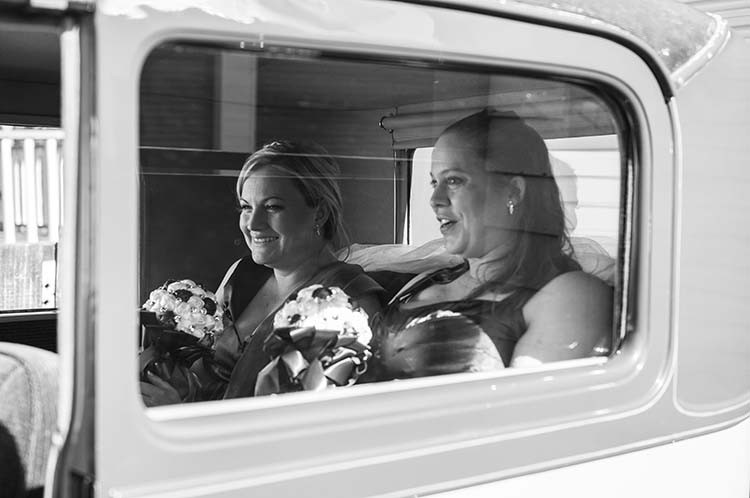
DSC 2716

Read these related dPS articles for more on contracts:

  • The Biggest Legal Mistake Photographers Make
  • Wedding Photography Agreement (Contract) Tips

3) Sell yourself

You’ve compared, you’re prepared – now it’s time to don the marketing hat, and get your name out there. There are a few avenues you can explore, but something that always goes down well, is running a promotion or special offer. For example, you could offer a special bonus (such as 20 free 5×7 prints, or a free 16×20 wall print) on your wedding services for the first five people who make a booking. This will cost you a little to produce, but it will benefit you massively and almost guarantee you five weddings.

A great way to utilize social media (again) is to search Facebook for wedding groups in your area, and advertise yourself there. Be sure to read the rules of the group and make sure you’re allowed to advertise your services in the group, some don’t allow it and you will be blocked. Have your website ready to go, so that as soon as you get some interest, you can fire through a quick message with a link to your work and pricing.
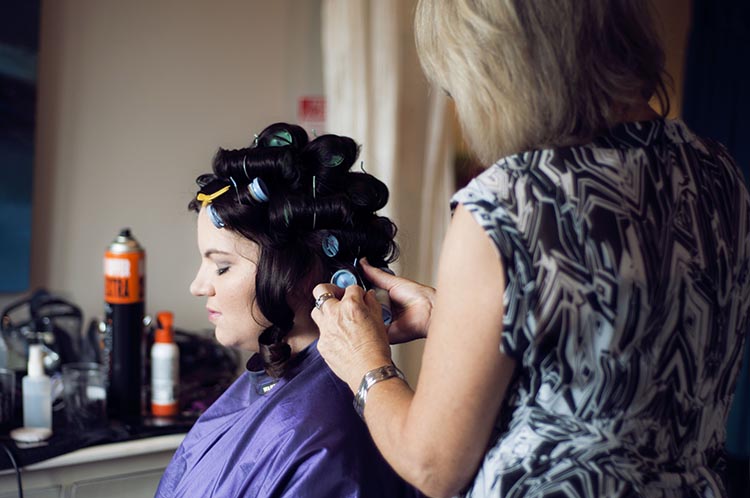
DSC 7202

4) Communicate

By now you should have a few people enquiring about your services and wanting to know more. At this stage, quick, friendly, and professional communication is your best friend. Have a script ready, so that as soon as you receive a message, email, or phone call you have a short and informative response ready to go. Remember, this is a script – NOT a sales pitch! Keep it short, sweet, and straight to the point.

My normal script goes along the line of, “Hello! Thanks for the message. Of course, I would be interested in photographing your wedding – please feel free to head on over to my website to see more of my work and pricing (insert website here). Do you mind me asking what is the date of your big day?” By asking for the date of the wedding, you are opening a conversation which is a hugely important part of the process. Once you have had a brief conversation regarding the details of their wedding, say to them that you will be in touch in a couple of days. This leaves the ball in their court so that they do not feel pressured, but also allows you to follow up with a friendly message and hopefully secure a consultation.

DSC 7742

5) Meetings

You’ve secured a consultation with your first potential client – yay! Turn up 5-10 minutes before the scheduled time, this is your only chance to make a first impression, and being late is a BIG no-no. Once you have greeted your clients with a smile on your face, ask them a few things about themselves. This initial meeting is a chance for them to get to know you (and vice versa) and your process, so go in there with a clear mind and plan of action.

Spend five minutes briefly explaining a run-down of how their big day will work from your perspective, and also explain your pricing, packages, and deposit payments. Take a copy of the contract and give it to them to take home and look over, let them know if they have any questions to contact you.

After this initial meeting, follow up with them three days later, and ask if they want to secure a spot. Make it clear that in order for them to secure their date in your diary, the deposit needs to be paid. If the clients liked you, and books you as their photographer, well done! You should always have a follow up meeting at their wedding venue, so that you can explore the grounds together, talk about potential photographic opportunities, and let those creative idea juices flow.

DSC 3417

6) The Essential List

You’ve got your first official booking, the deposit is paid, and the ball is well and truly rolling. Good on ya! Now you need to make a list of the absolute essentials that you need for the big day. These things include:

  • Family and group shot list
  • Bridal party shot list
  • Full itinerary of the day
  • Your own photographic equipment
  • Any post-wedding preparations

Contact the bride and groom and ask them to send you a list of all the must-have group portraits that they want, and also ask them for a full itinerary of the day. Ask them to allow an hour for photos between the ceremony and reception, in order to ensure that they get all the photographs that they want. Make a list of the equipment you will be taking including SD cards, spare batteries and chargers. If you are including prints or albums as part of your package, take some time to do the research and find a reputable, quality printing agency.

DSC 4113

7) Itinerary and planning

The big day is getting closer and you’re getting nervous – use the itinerary of the wedding day to start scheduling your own plan of action. Decide which shots you want, and when is the best time of day to take them. Be mindful of the time of day and position of the sun if you are shooting outdoors. You don’t want the subjects to appear silhouetted – but you also don’t want to blind your clients with the sun, as this will make for very squinty pictures.

Be sure to also schedule your own breaks – after all, this is a job and you will need a break. I find the best time to have a break is during the lunch or dinner, when everybody is busy with the food. Nobody likes being photographed with their mouth full of food, so this is a great time for you to sit down and enjoy a well deserved break and bite to eat as well. In most cases, the bride and groom will feed you (if this is really important, you can even put it in your contract).

DSC 7929

8) Recruit the best man and maid of honour

This will make your life so much easier, and will also enhance the experience of shooting family portraits. The best man or maid of honour are usually familiar with the family members, and will help herd the groups to make sure that everyone is ready for their portrait with the bride and groom. Let the bride and groom know that you intend to do this at your second meeting, and ask for a contact phone number or email address for the maid of honour and the best man. You can then drop them a line and introduce yourself before the big day, and ask them ever so nicely if they would be willing to stick around for family portraits to help you organize the herds of family members. Hopefully, they will see you operating like a well-oiled machine and the whole experience will not be too stressful on anybody. No one likes a stressed out photographer. This will also help you get to know them a bit better before the bridal party photographs, which is a major advantage in getting more natural, down-to-earth photos of the group.
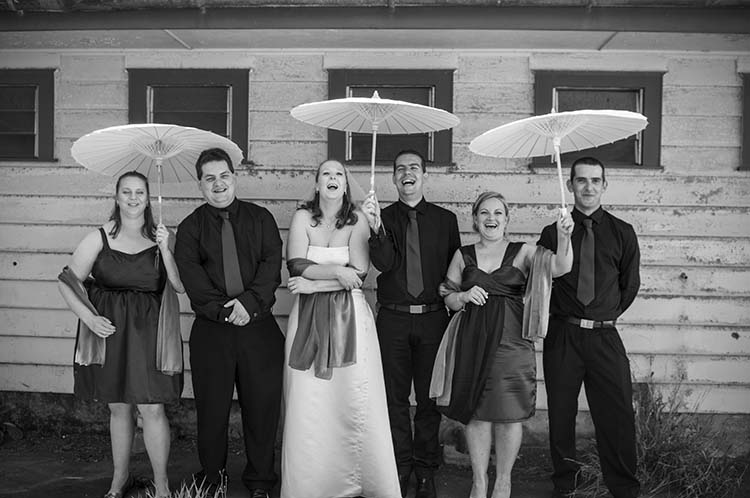
DSC 3917

9) Have a perfectly balanced attitude on the big day

The big day is here – don’t panic! Refer to your equipment check list to double, triple, and quadruple check that you have not forgotten anything. When you turn up to the first location and start shooting, you need to be prepared to wear an infectious smile for the whole day. This will help all of your subjects relax and smile during their photos. Remember – it’s fine to direct people during the staged family portraits, but do it as kindly as you can. Find the perfect balance between friendly and assertive for this part of the day.

Self-check for professionalism, there are a few things that I think of which are absolutely unacceptable. This includes: showing signs of stress, smoking (even if the bride/groom are doing it), chewing gum, spitting, or excessive drinking. Sometimes photographing a wedding can seem a bit like a party, but this is a job and it needs to be treated as such. Be approachable, and just a generally delightful person to be around. People will remember this, and you may even find another engaged couple at that very wedding who like you so much that they decide to make a booking. Word of mouth is truly the best marketing tool ever!

DSC_8003-1

10) Follow up

The big day is over, phew – you survived! Now it’s time to knuckle down and do some editing, you’ve got a whole bunch of beautiful photos that you need to begin post-processing. I use Photos on my MacBook to sort through the images, and add all my best shots to a different album – I then go through that album and spend time editing those images.

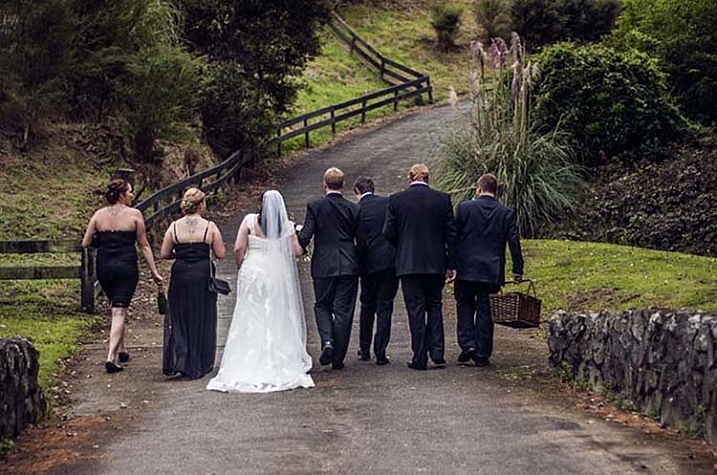
How you should follow up as communication is critical, even at this point of the process. Text or email your clients the next day, and let them know you had an awesome time photographing their big day, and that you’ve got some stunning photographs. Some people take a couple of days to edit and send their images, other people take weeks. I tend to give a timeframe of 14 days, although they are usually done within five to seven days. If the photographs are not done in seven days, drop them a line and keep them updated on your progress, something along the lines of, “Hey guys! Just to let you know I have edited around 500 of your images and only have 100 to go. As soon as these are done I will be in touch to schedule a viewing.”
DSC_8089-1

Once your edits are done, schedule a viewing time so that they can choose their favourites, and any potential prints. The final step is simple – once all is said and done, ask the client to provide you with an honest testimonial. This will give you more content to add to your website, and is also a great way for future clients to read about someone else’s experience with you.

From start to finish, the process of starting a wedding photography business takes hard work and determination, but you got there with (hopefully) no hiccups. Nice work!

Want more on similar topics? Check out these dPS articles:

  • 6 Things to Consider Before Becoming a Professional Photographer
  • What Defines an Amateur versus a Professional Photographer?
  • 4 Things You Must do BEFORE Becoming a Professional Photographer
  • 3 Questions to Ask Yourself When Starting a Photography Business

googletag.cmd.push(function() {
tablet_slots.push( googletag.defineSlot( “/1005424/_dPSv4_tab-all-article-bottom_(300×250)”, [300, 250], “pb-ad-78623” ).addService( googletag.pubads() ) ); } );

googletag.cmd.push(function() {
mobile_slots.push( googletag.defineSlot( “/1005424/_dPSv4_mob-all-article-bottom_(300×250)”, [300, 250], “pb-ad-78158” ).addService( googletag.pubads() ) ); } );

The post 10 Fundamental Tips for Newbies in the Wedding Photography Business by Jasmine Monrouxe appeared first on Digital Photography School.


Digital Photography School

 
Comments Off on 10 Fundamental Tips for Newbies in the Wedding Photography Business

Posted in Photography