RSS
 

Posts Tagged ‘Business’

5 Disastrous Mistakes to Avoid When Starting a Photography Business

02 Jul

While starting a photography business, people don’t always understand how to turn their hobby into a full-time job properly. Most newbie photographers make the same mistakes when starting out that they wish to go back and change. Knowing about these mistakes in advance could help you to avoid them. As they say, “wise men learn by other men’s mistakes; fools Continue Reading

The post 5 Disastrous Mistakes to Avoid When Starting a Photography Business appeared first on Photodoto.


Photodoto

 
Comments Off on 5 Disastrous Mistakes to Avoid When Starting a Photography Business

Posted in Photography


5 Not-So-Obvious Mistakes Photographers Make When Starting a Business and How You Can Avoid Them

29 Jun

By plantoo47

When starting your photography business it’s easy to get caught up in how good your portfolio looks, buying new equipment, or how many followers you have on social media. While these tasks are important, you risk overlooking some crucial numbers that will help you to hold yourself accountable and succeed as a result.

Large corporations have whole departments tracking data to help their CEO’s make better business decisions. So why is this completely overlooked in one-person businesses?

In this article you will learn the Five not-so-obvious mistakes photographers make when starting a business. I will also give you some handy tips on how you can avoid these mistakes in the future.

Mistake #1 – Not knowing your income goal

One of the most common mistakes you can make as a freelance photographer is not setting any targets around how much money you want to make. I think we can all agree that it is an amazing feeling to be able to earn enough money to support yourself.

An effective way to grow your income is to first be aware of how much you’re currently earning so that you can figure out how much you want to earn in the future. Have a good solid brainstorming session about the next 12 months and really ask yourself, “How much do I want to realistically earn this year?”

By Simon Cunningham

Making a million dollars a year photographing would be fantastic, but you have to be realistic about your financial goals. You don’t want to set a figure that is so high that you feel discouraged. You also don’t want to set a figure that undervalues your talent. You want to choose a figure that makes you feel a little stretched but is still achievable with some hard work.

A good place to start is to look at how much income you made in the last year, and then add 30% on top of this amount to calculate how much you’d like to make in the next year. For example, if you earned $ 15,000 last year, your goal this year should be $ 19,500 ($ 15,000 x 1.3).

If you don’t have any income records from last year, just choose a figure that you feel comfortable with, and that is attainable.
After you’ve worked out your target income for the year, the next thing to do is calculate your average fee. You can calculate this by dividing your total income by the number of sales (clients) you had over the last year.

So now that we know what your target income and average fee is, we can move on to calculate the number of photo sessions required to reach your target income goal.

By Historias Visuales

Mistake #2 – Not knowing how many photo sessions you need to do

The number of sessions that you need to do in the next 12 months is dependent on your target income and average fee. For example, to make $ 20,000, you will need to do 40 sessions within the next 12 months to reach your income goals. This is calculated by dividing your income goal of $ 20,000 by your average fee, which in this example is $ 500.

Your required number of sessions may feel daunting at first. It’s important to break it down into smaller increments so that you can visualize these amounts so it appears more attainable, so 40 sessions for the year turns into 3.3 sessions per month. This is calculated by dividing 40 sessions by 12 months.

When you’re setting your income goal, think about how much time you want to take off for the year. You need to give yourself leeway for traveling, illness, recovery, planning and so forth. Just because you’re a business owner doesn’t mean you don’t need
to have time off like the rest of the world.

Going back to the example, the number of sessions required is 3.3 per month. Let’s round this down to three sessions to make things cleaner. This means you need to do 0.75 sessions per week.

By Korry Benneth

If you’re not comfortable with the volume, you could tweak your targets. For example, if you were to get more skilled at charging higher fees, we could set your average fee to $ 1000 instead of $ 500. How would this impact your volume? Well $ 20,000 divided by $ 1000 is 20. That’s 20 less photo sessions you have to do for the year, which equals out to just 1.6 sessions per month or only one photo session every couple of weeks.

So the next question is, should you focus on doing more sessions, or should you learn how to effectively increase your fees? The choice is ultimately up to you, but this example illustrates the importance of knowing your numbers so you can make the necessary adjustments in your business that will help you succeed.

Mistake #3 – Not knowing how many inquiries you need

Inquiries are the first point of contact you have with potential clients. Your main goal when you receive an inquiry is to convert it into a booking.

Measuring the number of required inquiries in your photography business can be a little challenging as some of the people that contact you initially don’t end up booking for various reasons. So as a rule of thumb I like to use a 50% conversion rate. This means that to get three bookings for the month, you need to get at least six inquiries.

As you can see, generating inquiries is easily one of the most important steps in the sales process. When it comes down to it, if you want to achieve your goal of $ 20,000, you need to generate six inquiries per month with an average fee of $ 500. Once again, you will only know this if you are aware of the important numbers in your business, which I’m sure, most of your competition is overlooking.

Mistake #4 – Not knowing how many bookings you need

Converting enquires into bookings is another often overlooked part of the photography sales process. Not only do you get the opportunity for income now, it gives you an opportunity to book future business through referrals.

By Ken Teegardin

The number of bookings required in your business should match the number of sessions required. So if you need to do three photo sessions per month, then you also need to book three clients per month.

Obviously the bookings you get today could help get you more sessions in the future. However, I have found that these numbers tend to correct themselves if you focus on getting your target bookings each and every month. So if you’re not doing enough sessions, you have to revisit your bookings and see how you can increase your inquiries.

Mistake #5 – Not having a method of keeping track of your numbers

Hopefully by now you have a better understanding of the relationship between different targets in your photography business. It is clear that more inquiries lead to more bookings, which lead to more sessions, which ultimately leads to more income.

It’s all well and good to be aware of the numbers, but to make significant change in your photography business requires you to hold yourself accountable and ensure that you’re following through on your goals. There are a couple ways you can do this.

One way is to draw a table in your notebook that displays each target for the month. You then record a dash next to the target when you get it done. So if you have a target of three sessions for the month, every time you do a session you draw a dash next to this target. You can also break this down into weeks if that makes it easier for you to update.

By Wendy House

You could also track your numbers by drawing up your targets on a whiteboard in your home office or studio. This is an excellent idea as you’re constantly looking at it.

Another way to do this is to create a spreadsheet. I know a lot of creative professionals cringe when they hear the word “spreadsheet”. However I encourage you to push through your barriers and use a spreadsheet to track your numbers.

The advantage of a spreadsheet is that it does all the work for you. All you have to do is input your progress and the spreadsheet can tell you how you’re doing. I can just hear what you’re saying at the moment. “Michael, this sounds great, but how do I actually create this spreadsheet you’re talking about?” I thought you might ask, so I’ve prepared a spreadsheet for you to download for you to use in your business. I initially created this spreadsheet for my partner’s photography business to track her numbers, and it really helped change her mindset in her business.

Before using my tool she couldn’t tell me what percentage of inquiries were converting into bookings. After she started tracking her numbers, she felt empowered and knew exactly how her business was going at any given time. Sometimes it was a pleasant surprise to know that she smashed her targets, other times she knew that she had to find ways to generate more business.

You don’t have to look at your numbers daily. I recommend updating your numbers at the end of each week. I also suggest that at the end of each month you send your numbers to an accountability partner. Knowing that you have to submit your numbers will only motivate you more. Choose someone you trust and you’re comfortable enough with to share your goals. This could be your spouse, sibling, good friend or business buddy. Sometimes all you need is some encouraging words to keep you focused in your business.

Bonus mistake #6 – Not tracking your expenses

It can be somewhat soothing to plan and think about how much money you’re going to make. Having said that, it’s just as important to understand how you’re spending your income.

Lots of new and even seasoned professional photographers overlook this highly important step. Reducing your costs is another method of making more money so you can spend it on more important things, like a new lens or a holiday.

By Jorge Franganillo

So how can you go about tracking your expenses? Well it’s quite simple, use accounting software. There are many accounting solutions on the market that are both free and paid. Personally, I recommend going with Wave (because it’s free) or Xero (because it’s awesome). Both systems allow you to automatically pull your transactions from your business account bank statement directly into your accounting software. This means you don’t have to spend hours entering your expenses. Pretty cool huh?

Most photographers get overwhelmed when they think of financial management. But investing time in this area will do wonders for your business.

By far the most important feature of accounting software, is the ability to create reports that allow you to see where, and how much, money you are spending in your business. From there you can make necessary adjustments to cut back on your costs.

By M.Kemal

Bringing clarity to your business

The whole purpose of this article is to bring clarity into your business. A lot of photographers like yourself start a business because you want to earn a living doing something that you enjoy. But you soon come to realize that making a living and growing your business is not easy. It can be overwhelming thinking about how you’re going to get through tomorrow’s to-do list while keeping all of your existing clients happy. This overwhelming feeling often leads to “fog brain” and prevents you from having clarity in your business.

Being aware of your numbers will ultimately help you make better decisions. Instead of spending one hour on Facebook today, you could spend that time contacting potential referral partners for your business.

At the end of the day, activities that generate more inquiries are much more important than getting bogged down with emails, packaging, social media, design and other administrative activities, especially when trying to reach higher income targets. Get someone else to do those things so you can focus on what’s important: servicing your clients, doing sessions, finalizing bookings and generating so you can fund the lifestyle that you want and deserve.

For more photography business tips read these articles:

  • The Ultimate Guide to Going Pro as a Photographer
  • How to Calculate Your Cost of Doing Business – And Other Necessary Numbers
  • 5 Things to Consider Before Starting Your Photography Business
  • 30 Things you Should Know to Help you Start a Photography Business

The post 5 Not-So-Obvious Mistakes Photographers Make When Starting a Business and How You Can Avoid Them by Michael Ofei appeared first on Digital Photography School.


Digital Photography School

 
Comments Off on 5 Not-So-Obvious Mistakes Photographers Make When Starting a Business and How You Can Avoid Them

Posted in Photography


Tips to Establish a Smart Photography Business

27 Jun

Establishing your own photography business is a full time job, if not more. It’s a great gig, don’t get me wrong, but running this or any other business will instantly make you the wearer of many hats. The best way to make it work and avoid headaches along the way is to have a plan, even if it is a Continue Reading

The post Tips to Establish a Smart Photography Business appeared first on Photodoto.


Photodoto

 
Comments Off on Tips to Establish a Smart Photography Business

Posted in Photography


Lenovo introduces 10-inch ThinkPad business tablet

15 May

Thinkpad-10_Standard_05_1699_1190_1.jpg

Lenovo has launched a 10-inch version of its ThinkPad tablet. Running Windows 8.1, the ThinkPad 10 is aimed at professionals and business users. The use of the optional ThinkPad Tablet Dock allows you to turn the tablet into a full-blown workstation. In terms of imaging, the ThinkPad 10 comes with an 8MP rear camera and a 2MP front-equivalent. Lenovo promises 10 hours of battery life. Learn more

News: Digital Photography Review (dpreview.com)

 
Comments Off on Lenovo introduces 10-inch ThinkPad business tablet

Posted in Uncategorized


Finding the Time to do Photography Part 1- Business Trip to Las Vegas

23 Apr
The Fire Wave at Valley of Fire State Park. 4 minutes, f/16, ISO 160. EOS 5D Mark III with EF 16-35 f/2.8L II.

The Fire Wave at Valley of Fire State Park.Exposure: ISO 160, 4 minutes, at f/16. EOS 5D Mark III with EF 16-35 f/2.8L II.

About a month ago, a question was posed on the DPS Facebook Page, “What is the number one obstacle to you taking better photos?” While some answered that they were unsure how to set exposure in Manual mode, and others thought their gear might be limiting them, the overwhelming number one answer was TIME.  In this day and age of being always on, always connected, and always on the go, it can be difficult to find time to do photography.  Like many, my day job, which isn’t as a full time photographer, keeps me busy and eats up much of my time. On weekends, I can occasionally make time but often life and family get in the way.

Scenic Drive in Valley of Fire. 1/10, f/16, ISO 100. EOS 5D Mark III with EF 24-70 f/2.8L II.

Scenic Drive in Valley of Fire. 1/10, f/16, ISO 100. EOS 5D Mark III with EF 24-70 f/2.8L II.

So what to do when you need a fix?  There are several things you can do. What I do is to take advantage of my job when I can. I do occasionally travel for work, and when I do, I bring my camera with me.  While I may not have an entire day, often I can find an hour at the end of the day, or I can even go shoot at night.  This was true when I went to Las Vegas recently for a trade show.  I had two days of training seminars, two days of trade show setup and four full days of trade show to work. Was I tired at the end of the day? Yes, but photography is how I relax, so it seemed only natural to eschew the neon glow of the restaurants and casinos and go grab my camera.

First of all, the day I arrived, my flight got in earlier in the afternoon.  I rented a car and headed out to Valley of Fire State Park, about 45 minutes northeast of Las Vegas. I got a mixed afternoon of clouds, which parted for a nice sunset. I then hung around for darkness and got a few night shots just to finish things off.

The next day, the work began, but after my work day ended, I headed out to the strip to shoot some of the neon.  The Vegas strip is an awesome place to shoot no matter what you like to shoot. Cityscapes, architecture, or people, it’s all there and it’s there every night. You need only spend an hour and you’ll get more than your fill. The beauty of it all is, Las Vegas makes its own light, so you can shoot 24-7 there.

Valley of Fire Storm. 1/1000, f/8, ISO 1600. EOS 5D Mark III with EF 24-70 f/2.8L II. I managed to catch the Valley of Fire on one of the few days it rained all year.

Valley of Fire Storm. 1/1000, f/8, ISO 1600. EOS 5D Mark III with EF 24-70 f/2.8L II. I managed to catch the Valley of Fire on one of the few days it rained all year.

Elephant Rock, in Valley of Fire, at night. 15 seconds, f1.4, ISO 800. EF 24mm f/1.4L II.

Elephant Rock, in Valley of Fire, at night. 15 seconds, f1.4, ISO 800. EF 24mm f/1.4L II.

Get over your objections

I know what your objections will be:

  • I can’t carry everything I need.
  • I don’t have room in my luggage.
  • I’m tired after a day of work.

I’ve said all of those myself, and at times, this attitude won out. But if you have a passion for taking pictures, you’ll find a way.  I carry a small travel tripod- a Gitzo 1541T.  It fits right in my luggage.  I realize that one’s a bit pricey, but there are many other options. Try a Gorillapod. They are small, lightweight, and come in a variety of sizes to fit almost any camera. Perfect for traveling light.

Don’t want to carry a DSLR?  Get yourself a smaller setup you won’t mind carrying.  I own a Canon G16 for when I don’t want to bring my full kit. I can still shoot RAW, have full manual control, but it’ll fit on my belt.  And if you do want a DSLR? Consider minimizing your kit for travel. Pick one or two lenses that can cover most of the standard range. I always have a hard time minimizing, but when I do, I usually carry my EOS 5D Mark III with EF 16-35 f/2.8L II and EF 24-70 f/2.8L II. This is the kit used for the shot of Fire Wave, and of Scenic Drive.  I added the EF 24mm f/1.4 for night shooting. If you’re using a DSLR with an APS-C sensor, an 18-135 is an excellent choice for a do-it-all lens.

I’m not saying finding the time is easy.  Sometimes it will require sacrifice. But I have never regretted spending even a minute with my camera, even when I was tired, or pulled in many directions.  If photography is a passion for you, you make time.  I’m not saying every day.  But I do make it a point to make time to indulge my passion.  You should too. Even if it’s just a minute.  In part two, I’ll discuss ways to make time when you’re at home.

EOS 5D Mark III with EF 16-35mm f/2.8L II. 5 seconds, f/11, ISO 200.

EOS 5D Mark III with EF 16-35mm f/2.8L II. 5 seconds, f/11, ISO 200.

EOS 5D Mark III with EF 16-35mm f/2.8L II.  1/25, f/8, ISO 640.

EOS 5D Mark III with EF 16-35mm f/2.8L II. 1/25, f/8, ISO 640.

Fire Canyon. EOS 5D Mark III with EF 16-35mm f/2.8L II. 1/5, f/16, ISO 100.

Fire Canyon. EOS 5D Mark III with EF 16-35mm f/2.8L II. 1/5, f/16, ISO 100.

The post Finding the Time to do Photography Part 1- Business Trip to Las Vegas by Rick Berk appeared first on Digital Photography School.


Digital Photography School

 
Comments Off on Finding the Time to do Photography Part 1- Business Trip to Las Vegas

Posted in Photography


5 Steps to Validating the Next Idea for Your Photography Business

09 Apr

You have ideas. Things that cross your mind that you should do as you build your career as a photographer. They all seem like good ideas but how do you actually know for sure? You’ll need to make decisions on these ideas as you grow as a professional. This can be how you set your prices, your packages or even the look and feel of your website. The problem is most of us try to validate these ideas in our own head.

By ed ouimette

Your audience and potential customers are real people, not imaginary. So it doesn’t make much sense to be validating ideas in your head? You need real, hands-on feedback. This feedback helps you make better decisions.

In this article, I’m going to share an easy-to-follow, 5-step process for idea validation. We’ll talk about how to keep it simple, how to get your idea out there, and how to get feedback. This straightforward approach will help you ensure you are putting out things that people like and that actually work for you instead of against you. I know because I personally tried what I’m about to share with you many times in my own business. On of those times was back in June 2013, when my partner, Nicole, and I needed to validate Business Republic’s new tagline. We used this exact process and it worked brilliantly. More about our experience later.

First, let’s get a broader idea of what idea validation actually is.

What is Idea Validation?

Idea validation is the process of testing and validating your idea prior to launching it in the real world. This is like the research and development process big companies use to test product ideas before they’re released to the general public.

Idea validation can involve anything from information-gathering interviews to electronic surveys. The entire purpose is to expose the idea to your target audience before you build and release it to them.

I personally think the best way to conduct the idea validation process is face-to-face, in person or over a Skype video call. The advantages will be highlighted below.

Why Should I Do this Idea Validation Thing?

In short, it will save you a ton of time and money, as well as generate interest in your idea and interest in you as a photographer offering professional services. Since you’re testing your idea, you will be exposing it to “the marketplace” or people that would be interested in your services.

Don’t make the rookie mistake of working on an idea that no one is really interested in. Idea validation can save you time by giving you a good feel as to whether your idea appeals to your audience. It can also save you a lot of money. For instance, you can spend thousands of dollars on a website design that may look amazing to you but be confusing to the typical client.

5 Steps to Validating the Next Idea for Your Photography Business

Dreamstime buttercream filter Title Text

Idea validation is fairly easy but it will require some hustle on your part. In order to best demonstrate how to do this, I’ll be using a running example. Say hello to our running example:

All new businesses need a good set of professional photos to display on their website and social media platforms like Facebook and Pinterest. You have a few ideas for what your photography packages for new businesses should include and what they should be priced at, but you are not sure what they actually need and what they will pay for.

Step 1: Brainstorm Internally

You need to have some starting ideas to present to your potential clients. You probably have thousands of ideas about what you want to do but you need to present only four or five at a time. In our example we will need to come up with 4-5 different photo packages at different price points.

Any more than five is too confusing. Trust me. Plus, you do not want to take too much of the potential customer’s time. Ten minutes max. You may want to contact them later for more info so you want to keep it light.

In this step, your goal is to offer your best solutions or versions of your idea, not all the versions that you may have.

Step 2: Don’t ask Family and Friends

Yes, in step 2 you are required to NOT do something. Why did I include this step? Because it’s so hard to skip. We all want to feel good about what we are doing so sometimes we ask our loved ones about our ideas knowing that it will feel good.

I’m not saying that your family and friends are liars. I’m saying that they are biased and in most cases not one of your potential customers. They also might feel forced to give feedback for feedback’s sake. They might even make up a point they don’t really believe in so you feel like they’re being unbiased. Do you see how tricky asking family and friends about this can get?

Unless your mom is a new business owner and needs photos for her new website, please save sharing with your friends and family until after you finish this process.

Step 3: Choose your Interviewees

Next, make a list of 15 potential clients you can reach out to and interview for ten minutes in person, or over a Skype video call. Think about your ideal customers. In our example, we would contact new small business owners. They can be local businesses or online businesses.

After reaching out to them you will likely end up with around ten who say “yes”, a few “I’m sorry, I can’t” and a couple that don’t reply.

Make sure you can secure ten minutes of their time in person, or over Skype. A natural back and forth conversation is essential. It’s hard to see or feel hesitation, excitement or a “wow” expression over the phone. This is essential when we cover the actual discourse you’ll be having.

Laptop CU filter buttercream title

Step 4: Conduct Your Informal Interview

The first thing you want to do when conducting your informal interview is thank them for their time and tell them how their time will help you offer something that your customers will actually want.

Second, explain plainly that you are not selling anything to them and what you are going to be talking about is actually not even available yet. Put them at ease and remind them of how much their feedback is valued and will influence your business. People like knowing that their opinion matters.

Third, take a minute to explain what you do and the nature of your business before explaining what you need their opinion on. Remember to explain things with their perspective in mind. Don’t use jargon that they wouldn’t understand.

Fourth, tell them you are going to present four to five versions of your idea. And that you will show all of them first, then go over each one asking for their thoughts on each one at a time. Let them know you might be jotting down some notes during the process to remember their advice later on.

Fifth, after going through all the options, ask them for their initial thoughts on each one individually. Ask them how the idea makes them feel as well as think. Look at their body language and how quickly they answer. Compare their reaction to the reactions of other ideas you present to gauge what is a brilliant offer to them and what is a dud. Not everyone wears their emotions on their sleeve.

Lastly, after you have received their feedback on each idea, thank them again. Ask them if they would mind if you contacted them again if you need to later on.

Step 5: Review and Decide

The last step is to review all your feedback and decide what worked best for your potential clients. Look at what the majority of your potential clients have said. What is worth noting? What is worth omitting immediately?

When you decide based on the feedback you received, remember that it’s about the customer, not you. Sometimes you will have to give up what you think is best for your business based on what you learned. After all, your customers are the reason why you exist.

Restaurant business chef buttercream filter text over it

Our Experience

As I mentioned before, I used this exact 5 step idea validation process when we were trying to validate our new tagline for our business. We came up with four versions of what we thought was the best tagline for our business. One of the taglines on the list was our existing headline at the time, “ Build a Brand That Matters. Share it Effectively.”  Before our idea validation process, we thought this was the best tagline of the four.

We spoke to 10 potential clients of ours, in person, at local businesses around town . We collected their honest feedback, noticed their body language and took plenty of notes. When it was all said and the feedback told us somethings we really needed to hear.

For starters, what we thought was the best tagline was the worst one of the four. We got feedback like:

  •  The word ‘brand’ doesn’t resonate with me. I’m about business. I care about doing business.”
  • “The words ‘share it effectively’ sounds too self-helpy.”
  • “I just want to be known so I can have more customers.”

We got an overwhelmingly positive response to one of our taglines. People immediately raised their eyebrows and said, “That’s what I’m talking about!” That tagline became our tagline as it is now: Build a Business That Can’t Be Ignored. We realized all new businesses share one common fear: being ignored. By tapping into a huge fear or pain our customers are having and telling them we will help elevate that pain or fear was a huge game changer for us. The change to that tagline has attracted more interested clients to us than anything else we’ve ever done on our website. This process works!

A month ago, we surveyed our members in The $ 100 MBA asking what are some areas of business they wanted/ needed to learn. The answers we got back greatly differed from the courses we had planned to plan, create and rollout for the next 6 months. We had to put our customers first and put the courses they wanted at the top of the to-do list and put most our planned courses off for the time being. At the end of the day, we created our community for them not for us. so when we got the feedback and we knew we had to shift gears.

One Last Thing

This doesn’t have to be painful. Don’t be afraid to have fun with it.

This is your passion, your livelihood, your baby. Show your love and care for it and for your customers. Your interviewees take cues from you, so if you are relaxed and casual about it they will loosen up and give you more than you ask for.

This isn’t a sales exercise. It’s a great conversation with someone you respect. It’s not win or lose. It’s a win-win! And it’s the best way to take your idea and career as a professional photographer to the next level.

Wow! You made it to the end of this post! You’re obviously serious about nailing your idea and creating something your customers want. I don’t want your learning to end here, so as a dPS reader you get access to our free course and workbook on idea validation here.

Have more tips or strategies to share about idea validation? Have you tried doing any real-world idea validation yourself? Share in the comments! We’d love to chat about your experience.

The post 5 Steps to Validating the Next Idea for Your Photography Business by Omar Zenhom appeared first on Digital Photography School.


Digital Photography School

 
Comments Off on 5 Steps to Validating the Next Idea for Your Photography Business

Posted in Photography


5 Things to Consider Before Starting Your Photography Business

29 Jan

Starting a photography business is extremely easy with the accessibility and affordability of digital cameras and processing programs. Often the lure of entrepreneurship, with these low barriers to entry, leads to many photography business owners of all business experiences. Experience levels range from lack of business competence, to the need for growth in photography skills to a mixture of skills with varying weaknesses and strengths. Before entering into business it is important to evaluate whether you are technically proficient, ready to deal with business legalities, have a good grasp of business operating costs, engaging in market research and client management.

Photography business 05

#1 – Are you technically proficient?

The first step is to determine if technical proficiency is at a level to provide a quality, consistent product to each client that comes through the door. The importance of delivering consistently rests in word of mouth marketing and preventing disappointment when a client’s expectations are not met.

Photography business 04

#2 – Are you ready to deal with business legalities?

After technical proficiency comes the battle of business legalities including (but certainly not limited to: business formation, filing appropriate tax documents, acquiring required permits and licenses and using quality contractual documents. These legalities can be acquired through outsourcing to lawyers and certified public accountants, but a good, knowledgeable grasp of business legalities and the requirements placed on business owners is paramount to the success of your business.

Photography business 03

#3 – Do you know your business operating costs?

Following the previous two business necessities comes the costs of running the business. Having arms around the operating costs will assist you in setting appropriate pricing, and in making future investment decisions. Business operating costs are expenses that are directly related to the operation of the photography business. This is calculated by ascertaining costs of resources used to maintain the existence of the business. Operating costs include: rent, utilities, licenses, fees, insurance, maintenance of equipment, office supplies, income taxes, and wages.

Note: It is a good idea to also include a “rainy day savings” into the operating costs for you to have to fall-back on in times of need.

Photography business 02

#4 – Have you done your research?

An ever-required and demanding aspect of business is the initial and constant research on market influences, demands and overall factors that impact how the business will be maintained and marketed. Engaging in research is an organized effort to obtain information about the local market and potential clients. In order to effectively create and implement a successful business strategy, research must be done. Research should include identifying marketing information, trends, and the SWOT (SWOT = Strength, Weakness, Opportunity and Threats to the business) analysis of competitors. The strategies decided upon from out of this research are a key factor to maintaining a competitive edge over competitors and a higher probability for engaging clients.

Photography business 07

#5 – Do you know how to manage clients?

Juggling all of the previous “business things” can get even more complicated when adding on managing of clients. Having a solid business workflow filled with automation, organization and constant revision is necessity to keep the business moving forward when it becomes easy to be distracted with client management and production of the products and services.

Photography business 06

Having the right answers to these considerations does not guarantee a successful business but will increase probability for success, higher level of client satisfaction and less frustration along the way.

The post 5 Things to Consider Before Starting Your Photography Business by Rachel Brenke appeared first on Digital Photography School.


Digital Photography School

 
Comments Off on 5 Things to Consider Before Starting Your Photography Business

Posted in Photography


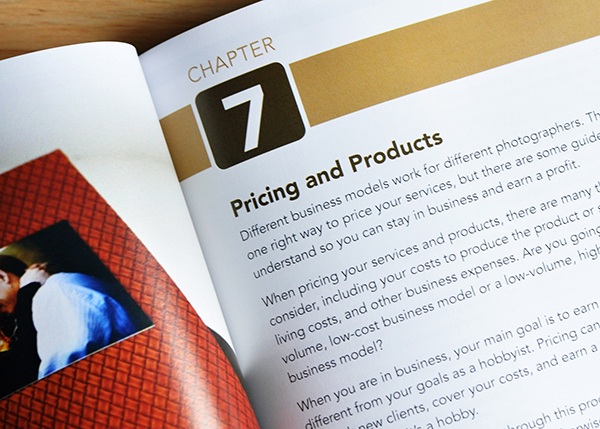
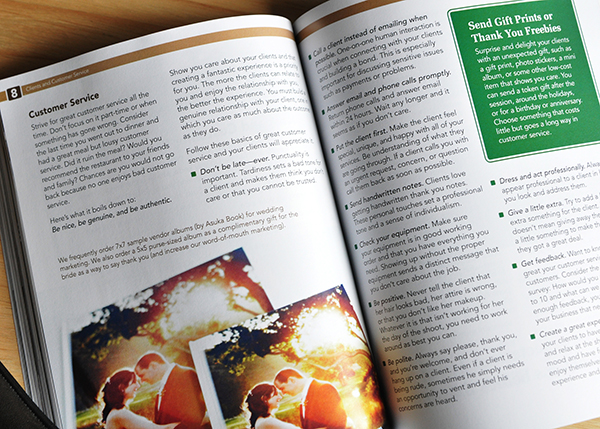
“Photography Business Secrets” – A Review

19 Dec
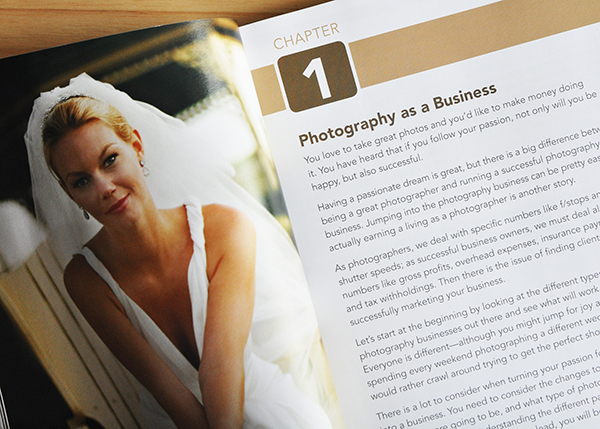
"Photography Business Secrets," by Lara White is a great business resource for any photographer looking to grow their business.

“Photography Business Secrets,” by Lara White is a great resource for any photographer looking to grow their business.

With just a few weeks left before the end of the year, I find myself deep in my annual wrap-up ritual. I don’t like carrying stuff over from December into January if I can avoid it. I make sure that shoots are edited, albums and prints are ordered, contracts are signed, gear is cleaned and serviced, and any other loose ends are taken care of. Transitioning from one year to the next isn’t just a matter of getting my “stuff” in order, but it’s also about getting my head in the right place for whatever challenges– photographic, business, or personal– the coming year might have in store for me.

I don’t think I’m unique in this regard. I think the end of the year is a good time for everybody to look ahead, setting goals for themselves and charting a course for where their photography business is going to take them after January 1st. I think that this pause to reflect on the current and future health of our businesses is particularly important for those of us in creative fields, because so many of us are simply not hard-wired for business to the same extent as we are for photography. One of the best new tools I’ve found for helping with these tasks is “Photography Business Secrets,” by Lara White. A former wedding photographer,  White is a leading expert in the field of photography business education. As founder and operator of PhotoMint, an online business development resource for photographers, her words of wisdom have now been published in more than 70 magazines and professional photography blogs, including right here at Digital Photography School.

When you think of your photography business, have you ever figured out how much of it is “photography,” and how much is actually “business?” White has, and the numbers might surprise you. On average, 20% or less of your time is spent on actual photography. And that’s a good week! With numbers like that, it is essential to get a proper handle on the business end of things. After all, the term “starving artist” started somewhere, right? Passion alone isn’t going to cut it.

Ready to Give Up Your Day Job?

DSC_6591

If your photography plans for next year include ditching your 9-to-5, Section 1 of this book is absolutely required reading. In “Moving from a Hobby to a Business,” Lara walks you through three chapters full of the information you need, questions you need to ask, and steps you need to take before you even think about giving your two weeks notice. This is a big decision, with life-changing ramifications– especially if you have a family that enjoys eating and having a roof over their heads.

This is the perfect chance to get valuable advice from someone who has been where you are and lived to tell the tale. By giving readers a realistic view of some of the issues that can impact transitioning from a hobby to a career, readers are assured very early on that this book has their best interests at heart. Gaining the training and experience you need, as well as figuring out your market, are just a few of the key factors addressed.

Business School for Photographers

DSC_6602

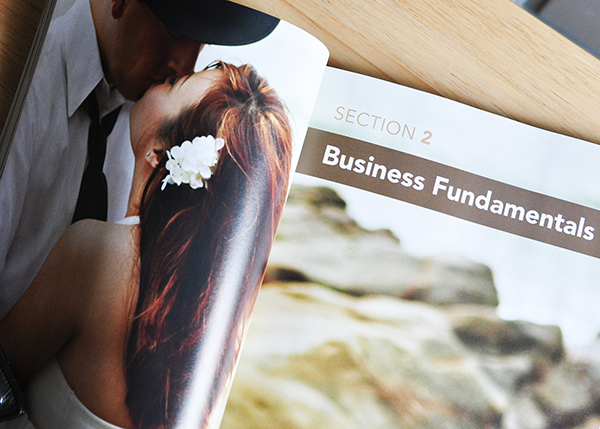
In my previous life as lawyer, my biggest complaint was that law school did nothing to prepare me for the actual day-to-day, nuts-and-bolts of practicing law. Becoming a professional photographer poses similar hurdles. Like any other profession, people tend to have a long list of preconceived notions of what it means to be a photographer. Remember that 80/20 time split I mentioned earlier? That’s just one of the things I’m talking about, and it’s why the seven chapters of “Business Fundamentals” make this such a valuable book–regardless of whether you are an emerging, struggling, or succeeding professional.

Section 2 takes you through the basics of drafting a business plan, calculating overhead, creating a budget, and more. Every journey starts somewhere, and yours as a professional needs to start with the steps that are designed to keep you both functional AND legal. Once those concerns have been addressed, you can move on to advanced business challenges like branding, pricing & products, customer service, and day-to-day operations.

I’m Up and Running. What’s Next?

DSC_6606

It’s a pretty basic premise that you’re in business to make money. I love being an artist, but just being an artist doesn’t pay for my son’s education or the insurance premiums on the studio equipment. As much as I may hate the prospect of being a “businessman,” if I’m not willing to take on that responsibility, I’m going to fail before I even start.

Section 3 answers questions revolving around sales and growth, since the two are inextricably linked. The bottom line is that sales means growth. Tips on getting and increasing sales range from the seemingly obvious (be prompt, creative, and attentive), to running promotions and overcoming shyness. Using these tips to increase your cash flow will help get you over the next hurdle.

The chapter on “Growing Your Business” guides you through the processes of outsourcing, hiring staff, adding new services, and raising your prices. Here, White offers three case studies, showing how actual photographers have dealt with these issues, clearly demonstrating that these are real-life concerns, and not just theoretical exercises.

Looking Ahead

DSC_6609

Sprinters can see the finish line within seconds of leaving the starting blocks. They go all out, giving it everything they’ve got, but they are going to run out of gas pretty quickly. Long-distance runners are in it for the long haul. It may sound like a cliché, but you want to run marathons, not 100-meter sprints. Learning to understand your clients, develop your style, and create marketing strategies isn’t something that comes naturally to most people. Here is your chance to learn those skills without having to reinvent the wheel.

The Bottom Line

A lot of photography books come across my desk. The best among them speak to a broad audience, and this is definitely one of them. It is entirely possible that not every aspect of this book will apply to you or your photography business, but if you find even just a few lessons here that increase your business stability– and therefore your profitability– it will be well worth the $ 20.00 investment.

“Photography Business Secrets: The Savvy Photographer’s Guide to Sales, Marketing, and More” is available at Amazon.com.

The post “Photography Business Secrets” – A Review by Jeff Guyer appeared first on Digital Photography School.


Digital Photography School

 
Comments Off on “Photography Business Secrets” – A Review

Posted in Photography


6 December 2013 – The Fine Art Photography Business

06 Dec

 The LuLa team has been quite busy on a number of fronts.  Michael as you have seen in our recent video has made his annual trek to Mexico with Chris.  Seems though that Mexico has lost their internet somehwere.  Based on headlines they have been loosing a number of things lately  So, Michael and Chris have very spotty internet and hopefully will be back on line 100% very soon.

It’s always good to switch gears and today our regular contributor Alain Briot has done just that.  We share his essay The Fine Art Photography Business.


The Luminous Landscape – What’s New

 
Comments Off on 6 December 2013 – The Fine Art Photography Business

Posted in News


Five Photography Business Mistakes to Avoid

29 Nov

A guest article by Steve McConnell

Five photography business mistakes that cost me dearly and how you can avoid them

I’ve been toying with an idea of writing an article, in which I share some ideas on how to start a successful photography business. Every time I think about writing it, I realize that I wouldn’t know what to write. I just don’t think that the entrepreneurial journey for an aspiring photographer can be boiled down to a set of step-by-step tips which can fit neatly into a blog post on photography business mistakes

There are just too many variables (business nuances, possible changes of direction, personal problems, market issues, artistic visions, industry influences, technical developments)  which can be put together in an infinite amount of ways into a business strategy that may lead you to reach your goals.

However, I think that there’s a fairly universal set of potholes which are likely to derail your ambitions as a creative entrepreneur unless you steer the business ship neatly around them. It is with the aim of highlighting these potholes that I decided to write this article. I hope it enables you to put your dream together in your own unique way, while raising some red flags around things that may trip you up.

I think that it is much more useful to highlight some of the pitfalls that exist on this path, hopefully leaving you with the freedom to put your dream together in your own unique way, while raising some red flags around things that may trip you up.

Bit on my background

Let me give you some context. I started my family photography business almost two years ago. In the first year of operation I managed to grow it to a point where it became my part-time job. In this, my second year, I’ve grown it to a point where I’m working at it full-time, my fiancé works in it part-time, and I employ a part-time retoucher to help with editing.

We’re busy. However we’re far from being as stable and sure-footed as I’d like. Every dollar counts and every day a dozen priorities have to be juggled in a way that ensures the worker-bee stuff gets done and the bigger picture (no pun intended) ideas are considered, planned and executed.

photography-business-mistakes-1

What mistakes have I made that you will want to avoid?

Looking back at the business decisions I’ve made, there were some which helped us grow (niche marketing, focus on online channels, partnerships).  There were also some decisions I’ve made, which held us back significantly. These are the ones I’m going to share with you in hopes that you will avoid them on your photography journey.

Mistake #1 – listening to established photographers

This may be a contentious point. Let me qualify my words here – when I say “established pros”, I mean photographers who have been in the game for 10+ years, who were around in the film era and who most likely built their business by selling big prints, renting a studio and advertising in the Yellow Pages while promoting themselves through industry partnerships.

I’ve found it immensely difficult to get advice from these folks that is relevant and works in today’s business world. The few times I have taken on their advice and steered my business in the direction they suggested, I regretted it and had to reverse those decisions.

My take on it is that many established pros suffered a business downturn in the last few years. As a result, many turned to teaching. Thing is, their downturn happened mainly because their businesses were built on principles which expired.  Yet, they’re teaching those exact principles and strategies to the new generation of aspiring photographers.

I’m not saying that all established pros are not worth listening to, of course not. I’m saying that I personally should have used more discretion in evaluating their advice and rejected more of it, instead of trusting them based on the number of years they’ve been in the game.

Mistake #2 – taking too long to learn sales

A few months ago I finally admitted to myself  that I suck at face-to-face sales.

My background is in marketing, which has been helpful in creating branding and business strategies to bring customers to the websites and ensure they have a great experience there, hopefully leading to a sale. But this skill has also become a crutch, because I’ve become reliant on people making their purchase online. If a potential customer called with intent to ask questions (or, God forbid, challenged me on price), I’d collapse.

I decided it was time to get comfortable talking about prices and learn how to articulate my value proposition in a way which catches people’s attention. At the end of the article I’ll share some resources that helped me.

Learning sales was important because it helped me get comfortable with customers on the phone. It changed my perspective on who I am when I answer the phone – I went from being the guy who helpfully provides information about our prices to being the guy who engages potential customers in a dialogue which aims to deliver maximum possible value to them.

photography-business-mistakes-2

Mistake #3 – underestimating the importance of customer service

I started off with the mindset of “I’m an artist. I’m here to create photos. People hire me for my photographs, not for my phone manner or for a card I might send them for Christmas.” I believed that if I focused on producing great photography, that alone would ensure my customers were happy. I did hardly any follow-up before and after the shoots, and I did little else for my customers, except shooting.

I was inspired to change my opinion about on this when I bought a new Apple laptop. It was the smallest detail that flicked the switch for me – a little plastic tab which sits under the laptop and makes lifting it out of the box easy. I’m pretty sure if I bought another brand of computer, I’d have to either jam my fingers between the device and the box to pry it out or flip the whole thing upside down and let gravity do the work.

Not so with Apple. There was a distinct sense of being taken on a journey, even before the Mac was switched on. It made me realize that my customer’s photography journey with me, starts long before a shutter is pressed.

photography business mistakes to avoid

MacBook unboxing

I made it one of business priorities to design, and constantly improve our customers’ experience at every touchpoint with the business. I want people to feel like they’re immersed in a branded experience which begins the moment they arrive at the website and continues long after the photos are delivered. I’m paying attention to things such as:

  • Do they know how to get here?
  • Do they know where to park?
  • Do they get a thank you note?
  • How does the packaging of the USB stick (on which their photos are presented) look?
  • Do I surprise them with some unexpected previews, letting them know that their photos are almost ready?

I want them to feel like everything is being taken care for them and no matter what goes wrong, they don’t have to worry about it. 

Mistake #4 – forgetting about the winter slump

Our business had a nice surge of growth towards the end of last summer, and then it stopped. I’m not saying it just stopped growing. It literally all stopped. I forgot that people might not be as keen to be photographed in windy, chilly months as they are during the summer heat.

Being prepared for the winter slump will help you avoid a scenario in which the bottom falls out of your business and you have to hock camera (and maybe unessential body) parts on E-bay.

photography-business-mistakes-3

Mistake #5 – neglecting my friends

I’ve lived a fairly ascetic existence for the past two years. My focus has been quite single-mindedly on business. I’ve eliminated just about everything from my schedule which was not business related. I’ve hardly been out. I haven’t spent much money at all on clothes or fancy food. Working for weeks without a day off has been the norm.

It was a conscious decision and a necessary one, because I wanted to grow the business quickly. I was hungry for it and I knew that I’m the kind of person who isn’t very good at doing a number of things at once, so I couldn’t afford to be distracted. . This meant cutting ties with most of my catch-up friends (you know, the people you ‘know’, but in reality you really don’t) and not seeing some of my best friends for months and years at a time.

I don’t regret doing it, but I do regret not managing it better. For some people in my life that I do care about, I kind of fell off the radar. I was simply afraid of having a heartfelt conversation with them and telling them that I needed to disappear for a while because there’s something important I had to do.

photography-business-mistakes-4

In conclusion

I’m not entirely comfortable being in a position of dispensing advice because I don’t feel like I’ve fully cracked the code yet. In many ways, I’m living a dream I never thought possible. However, in the context of what’s possible as a creative entrepreneur, I’m still very much a beginner.

However, there are people in this world who have repeatedly created modern, lean businesses which are turning a healthy profit by creating amazing customer experiences. Let me conclude by sharing some resources that I’ve found invaluable:

Here are two resources which have helped me get comfortable on the phone with potential clients and increase my sales dramatically: S. Anthony Iannarino’s The Sales Blog and  Blake Discher’s Webinar On Negotiating.

  • Everything Google – Moz
  • Sales – S. Anthony Iannarino The Sales Blog
  • Strategy – Fred Destin Startup Lifecycle
  • Starting Small – Seth Godin’s Bootstrapper’s Bible
  • Business Models, Lessons From Silicon Valley – Dave McClure 
  • Kick Up The Bum: A Brief Guide To World Domination (and why that’s a good thing)

If you’re a photographer and have already set off on your entrepreneurial journey, I’d love to hear about the challenges you’ve run into.

  • Are you running out of time or money?
  • Are you not sure who your market is?
  • Not sure where to even start?

Those are normal issues to run into and are very much part of the journey. Please share the details in the comments below.

Editor’s note: of course the opinions expressed in this article of those of the author, based on his experience. If you have a differing opinion or addition tips to add please do so in the comments section below.


Steven McConnell is a Sydney-based entrepreneur and photographer. Together with his fiancee, he is behind two startups – Steven & Irene Photography and Arielle Careers. When he is not photographing, his focus is on empowering creatives to make a living by doing what they love. You can catch up with him on Google+.

Post originally from: Digital Photography Tips.

Check out our more Photography Tips at Photography Tips for Beginners, Portrait Photography Tips and Wedding Photography Tips.

Five Photography Business Mistakes to Avoid

The post Five Photography Business Mistakes to Avoid by Guest Contributor appeared first on Digital Photography School.


Digital Photography School

 
Comments Off on Five Photography Business Mistakes to Avoid

Posted in Photography