RSS
 

Posts Tagged ‘Buildings’

Scanning The Skyline: 10 Bizarre Barcode Buildings

01 Sep

[ By Steve in Architecture & Cities & Urbanism. ]

barcode buildings
You’re gonna need a bigger scanner. These 10 larger than life Universal Product Barcode emblazoned buildings epitomize the digitization of modern society.

Middelburg, Netherlands, by Hercuton

Barcode Building Middelburg Netherlands Hercuton(images via: Bouwgroep Peters BV)

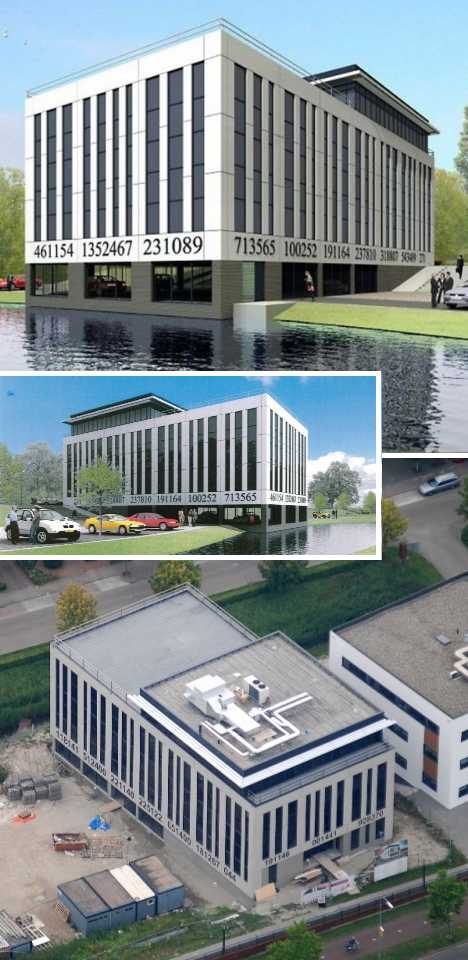
The plainly-named Barcode Building is one of the newest (completed 2011) large structures in the very old city of Middelburg, the Netherlands. Architects of the Dutch design & build organization Hercuton were charged by their client with creating a building that not only looked modern, but both the layout and infrastructure had to reflect today’s environmentally-friendly aesthetic.

Barcode Building Middelburg Netherlands Hercuton(image via: Henk Kosters)

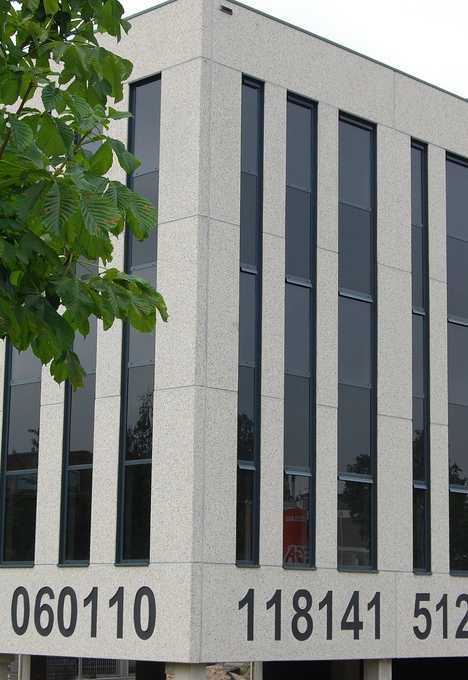
The white walls of the Barcode Building are broken up by vertical strips of tinted window glass that extend from the top of the four-story structure down to the open parking garage beneath the building at street level. The use of random six-digit numbers beneath each stack of three windows reinforces the illusion of a giant barcode while adding visual interest to the structure as a whole.

Shtrikh Kod Building, St. Petersburg, Russia

Shtrikh Kod Building barcode St. Petersburg Russia(images via: Eikongraphia)

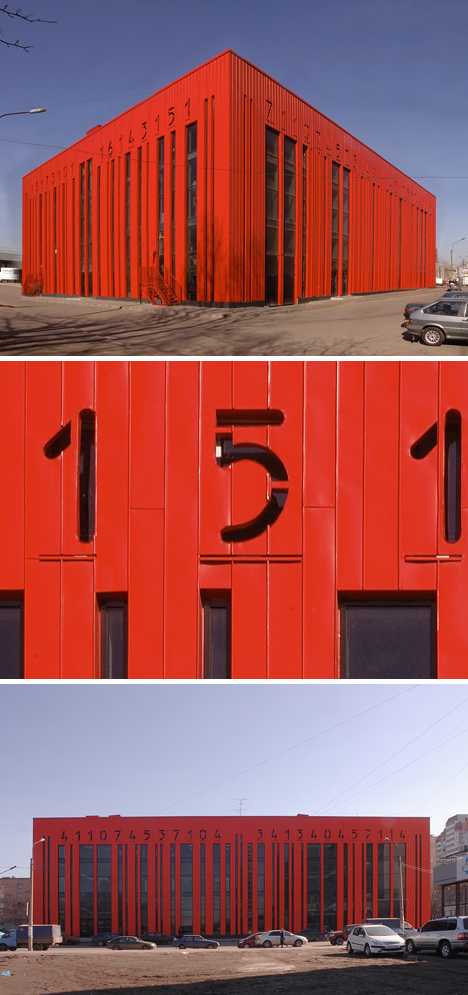
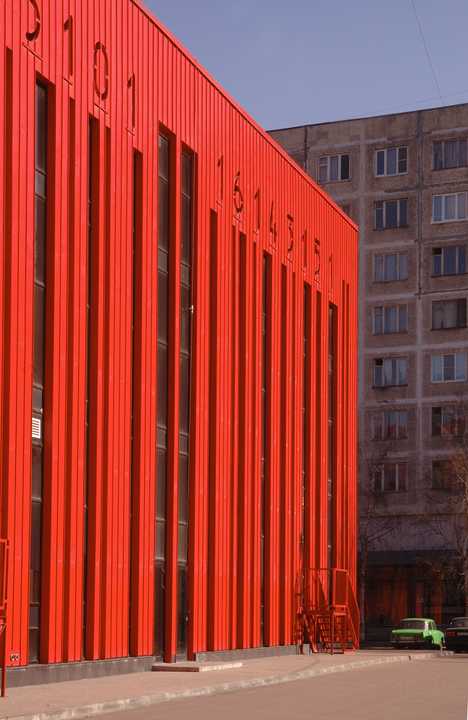
Shtrikh Kod means “Barcode Building” in Russian, which is appropriate since there’s really no other way to describe it. The edifice, located in historic St. Petersburg, was designed by Vitruvius & Sons Studio and it was completed in 2007.

Shtrikh Kod Building barcode St. Petersburg Russia(image via: Eikongraphia)

Kudos to photographer Alexey Naroditsky for capturing the stark yet striking exterior of the Barcode Building. It should be noted that one of the commenters at the Eikongraphia website where Naroditsky’s images are on display opined that “The facade’s hue is close to that of the red 633nm laser light commonly used in bar code scanners.” Coincidence?

Melbourne Theosophical Society, Melbourne, Australia

Melbourne Theosophical Society bookshop barcode (images via: Jodi and Bo Virkelyst Jensen)

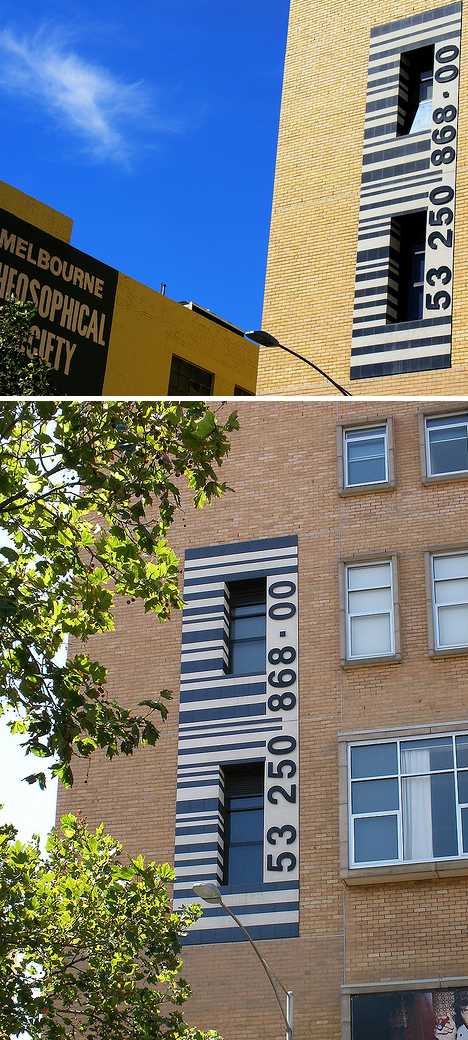
The Melbourne Theosophical Society Bookshop & Library at 126 Russell Street appears much like any other mid-century yellow brick building except for one thing… an odd inset space on the facade that holds a barcode! The roughly two-story tall barcode encompasses a pair of windows and would seem to be a later addition to the building. Why is it there and what does it mean? That’s a rather theosophical question best left for others to wrestle with.

Recall Information Centre, Greystanes, New South Wales, Australia

Recall Information centre warehouse Sydney Australia barcode (images via: Lysaght, Blue Scope Steel and Specifier)

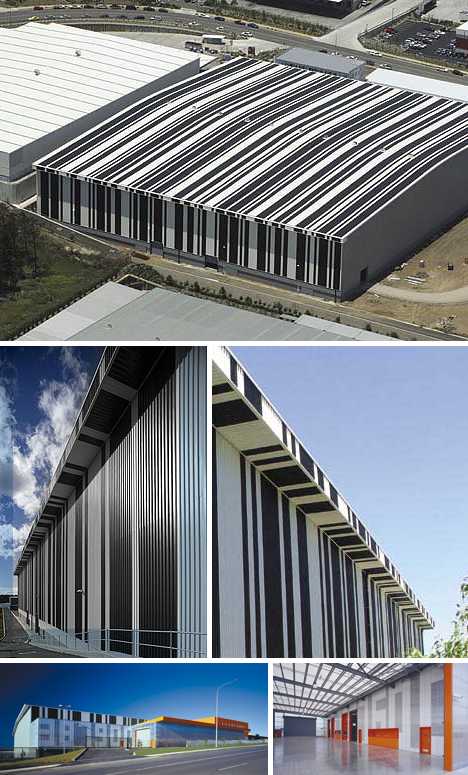
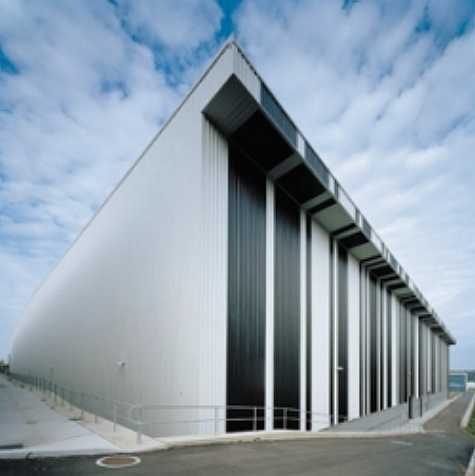
Staying in the antipodes for the moment, we present an uncharacteristically lively warehouse designed by Thierry Lacoste from Lacoste + Stevenson Architects. Built for the Recall company to store nearly four and a half million archive boxes of corporate records, the building’s exterior is made from 21,000 square meters od steel cladding sourced from BlueScope Lysaght.

Recall Information Centre Sydney barcode building(image via: Specifier)

“Barcodes are at the center of everything which Recall does,” explains Thierry Lacoste. “That was the first consideration, then there was the challenge of how to handle a very big wall area. We decided on the barcode theme to break up its visual impact then worked on a couple of ideas before we finally specified a pattern which is actually Recall’s Australian Business Number as a barcode.” Recall operates 250 state-of-the-art information centers around the world but only one sports the Greystanes center’s wild barcode exterior graphics.

Next Page:
Scanning The Skyline 10 Bizarre Barcode Buildings

Share on Facebook


[ By Steve in Architecture & Cities & Urbanism. ]

[ WebUrbanist | Archives | Galleries | Privacy | TOS ]


WebUrbanist

 
Comments Off on Scanning The Skyline: 10 Bizarre Barcode Buildings

Posted in Creativity


Micro-Cities: Tiny Buildings Fuel Miniature Urban Renewal

28 Aug

[ By WebUrbanist in Art & Street Art & Graffiti. ]

mini building street art

Electrical boxes beware – Evol is back to up to his old tricks, turning urban fixtures and unused walls into tiny cityscapes using a deceptively simple toolbox comprised of cardboard, stencils and spray paint.

mini architecture electrical boxes

From process to execution, this artist is both scrappy and calculating, employing quick-and-dirty materials that are easy to obtain and fast to install, but with a remarkable eye for detail, right down to windows, balconies, satellite dishes and flower pots.

mini tiny building installatoins

Dotting the sidewalks of Berlin, perhaps aptly at the urban intersection of where communist East once met democratic West, the faux structures themselves are almost relentlessly monotonous from a distance. The facades are just drab and generic enough style-wise to look (perhaps ironically) incredibly lifelike and believable.

mini buildings drab weathered

Up close, these sprayed-in-place or pasted-on building faces exhibit not only convincing architectural details but also anticipated (yet always-unpredictable) marks of weathering, which in turn reinforce their apparent realism.

micro machines for living in

Le Corbusier, who many blame for the preponderance of ugly mass-produced architecture born of mid-century urban renewal, called buildings “machines for living in.” For better or worse, Evol seems content to continue this tradition at a smaller scale, relentlessly building whole cities worth of micro-machine habitats.

Share on Facebook


[ By WebUrbanist in Art & Street Art & Graffiti. ]

[ WebUrbanist | Archives | Galleries | Privacy | TOS ]


WebUrbanist

 
Comments Off on Micro-Cities: Tiny Buildings Fuel Miniature Urban Renewal

Posted in Creativity


Why are my Buildings Falling Over? A Short Guide to Perspective Distortion and Correction in Photography

07 Aug

A guest contribution by Misho Baranovic, co-developer of the Perspective Correct app and author of the iPhone Photography DPS eBook .

Perspective Photo1

I’ve read a lot of perspective correction articles over the past few days and my head is spinning from the technical explanations, illustrations and equations.   In this article, I’m going to keep it simple and talk about the role that perspective plays in photography.  

What is Perspective?

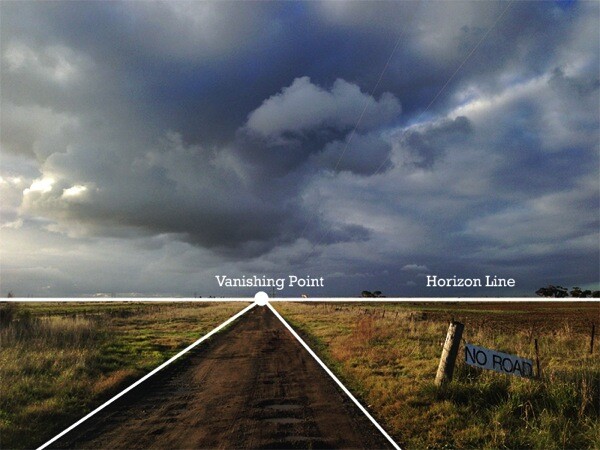
Perspective is one of the many ways that the human eye can judge depth within a scene.  Perspective is something that we can see with one eye (monocular) rather than two (binocular).  It refers to the angle and location of parallel lines within a scene.  The eye registers depth when parallel lines start moving towards each other (converging).  An example would be standing on a straight road, looking down the road, and noticing how the road narrows as it gets further away from you.

Perspective Photo2

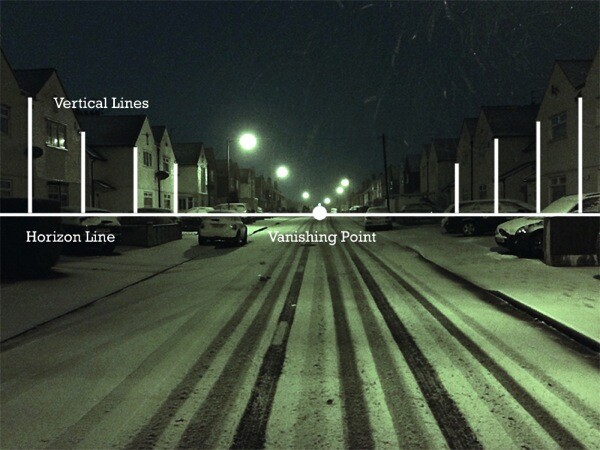
In art and photography, Linear Perspective refers to the way lines are drawn and captured to show an objects perceived size within space. In short, how we translate real world depth into a flat picture. Linear Perspective is made up of two basic concepts, the horizon line and vanishing point.  The horizon line represents the viewing angle of the observer.  Vanishing points are the point (on a horizon line) where parallel lines meet (converge). For example, the point where the two sides of the straight road meet (as shown below).
Perspective Photo3

One of the key visual cues in Linear Perspective is that vertical lines and edges remain vertical in the scene. The only time you would have vertical lines coming together is if you are trying to show a triangular or pyramid shape within the scene, like the angle of a building’s roof or the shape of the Eiffel Tower.
Perspective Photo4

Since the start of photography, camera and lens makers have focused on replicating the visual cues of Linear Perspective in order to make photos look as ‘true to life’ as possible. Nearly all modern lenses are rectilinear – they capture straight lines in a scene as straight lines in a photograph.  Whether wide angle or zoom, DSLR or iPhone, lenses are designed to keep lines straight, which helps the eye judge depth within a two dimensional scene. The fisheye is the most popular non rectilinear lens as straight lines are shown as curved from the extreme field of view.

Perspective Distortion

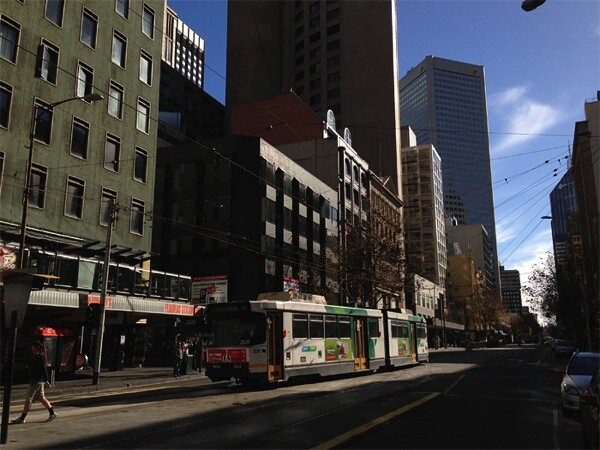
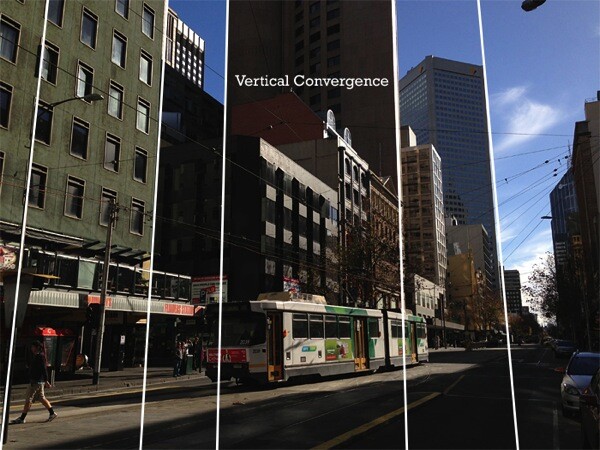
For this article I’m going to focus on only one form of photographic perspective distortion – perspective convergence or keystoning.  This form of distortion is very common across architectural, street and travel photography.  It’s most often seen when tall buildings ‘fall’ or ‘lean’ within a picture. This distortion has become so common that most people have stopped noticing it within their pictures or just think it has something to do with the focal length of their lens. For example, you can see the extent of the vertical convergence below when the verticals are outlined in white.
Perspective Photo5

Perspective Photo6

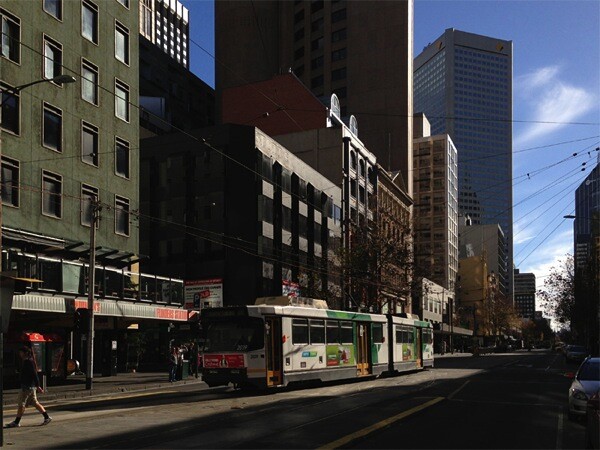
For a number of photographers, vertical convergence and distortion are unpleasant and unwanted because they don’t conform to Linear Perspective cues where vertical lines remain vertical.  This makes the scene look different to how we think it should look.  While this distortion can be used creatively, corrected photos often look ‘right’ to the viewer (see below).
Perspective Photo7

Why does Distortion Happen?

It’s actually pretty simple.  As mentioned, modern lenses are designed to show straight lines.  However, this only works when we the camera is pointed straight at (in line) with the object that is being photographed. This is because the distance between the camera and object remains the same.  As soon as the camera is titled then the distance changes.  Let me explain, if I’m trying to capture a tall building straight on with my camera I can only get the bottom section – vertical lines are straight but I’m missing the rest of the building. Now if I angle the camera higher I can get the whole building into the frame but now the vertical lines (sides of the building) are converging.  Why?  It’s because the top of the building is now further away from the lens than the bottom – just like the road receding into the distance.

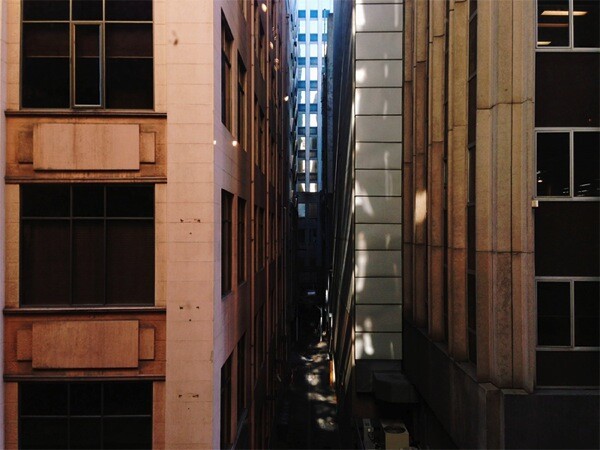
So how do you take a photograph of a tall building without this happening?  There are a few ways.  The most obvious is by changing your viewpoint.  You need to get higher to shoot more of the building front on, with the mid-point being the best place to capture the maximum amount of the structure.  You could shoot out the window of a neighbouring building, or if there is nothing around you could spend some money on a crane!
Perspective Photo8

This photo was taken from the third floor of a neighbouring block. You can see that all the verticals in the photo are straight.

If you can’t physically get higher then you can change your viewpoint in two other ways.  One is with the help of shift lenses the other is through perspective correction software.

Shift Lenses

The ability to shift the position of the lens has been around since the beginning of photography.  The original view cameras (created in the 1840s) used a bellows system which let photographers change the position (shift) the lens in relation to the film. The shifting mechanism acted like a mini elevator, moving the photographer’s viewpoint higher and lower. Historically, shifting in order to correct perspective convergence was seen as an important part of the capture process, just like focus, shutter speed and aperture. Shifting was possible because the lens captured a much larger (circular) field of view than the film. The same way that modern shift lenses work.  Modern shift lenses are commonly used by architecture photographers to limit vertical convergence on large buildings. However, these lenses can only be used on DSLR or medium format cameras and can also be very expensive (upwards of $ 1,000).

Perspective Photo9

Here you can see the mechanical shift mechanism on an SLR lens – Photos by Bengt-Re

Software Correction

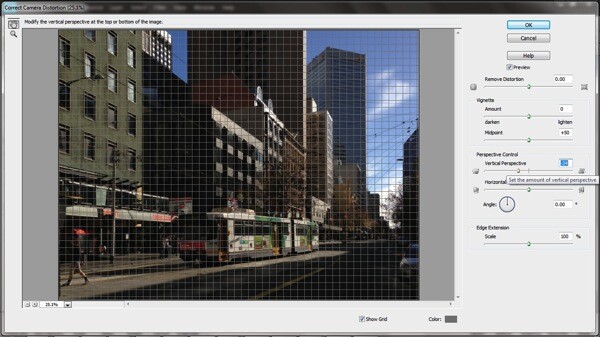
In recent years, digital technology has been able to replicate this shifting process, artificially changing the photographer’s viewpoint.  Software like Photoshop, Lightroom or Gimp reworks the pixels in an image in order to straighten vertical lines in turn reducing distortion.  Most of these programs allow you force the image back into a ‘correct’ position through either sliders or by selecting and dragging a corner.  One of the downsides of the software is that significant adjustments require resampling of the image, often reducing sharpness in parts of the photograph.  
Perspective Photo10

Camera Distortion Correction with Photoshop Elements 11

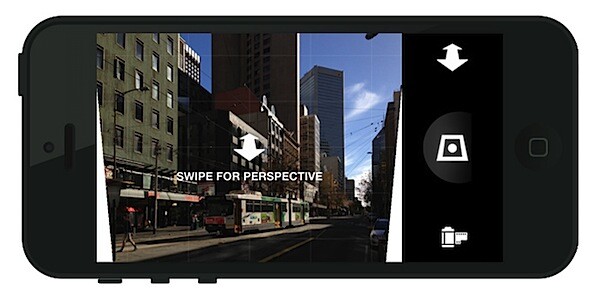
For photographers that either shoot or edit photos on their mobile phones, the Perspective Correct app for iPhone uses the touch interface to adjust both vertical and horizontal convergence within an image.  For example, an up/down swipe on the screen represents the same movement as the shift mechanism on a lens. 
201308011644.jpg
While it’s easy to overlook, small perspective adjustments can often be the difference between good and great urban and architectural photographs.

…………………………………….

Perspective Correct is the first app to offer live perspective adjustment of your photos and is available for download from the Apple App Store for US $ 1.99

Post originally from: Digital Photography Tips.

Check out our more Photography Tips at Photography Tips for Beginners, Portrait Photography Tips and Wedding Photography Tips.

Why are my Buildings Falling Over? A Short Guide to Perspective Distortion and Correction in Photography


Digital Photography School
 
Comments Off on Why are my Buildings Falling Over? A Short Guide to Perspective Distortion and Correction in Photography

Posted in Photography


Sandcastle Suburbs: Beach Buildings Form Fragile Sprawl

19 Jul

[ By WebUrbanist in Art & Installation & Sound. ]

sand castle suburb

If castles of sand are ordinarily creative (if childish) works of artistic expression, then these are their opposite – boring and relentless repetition of identical houses inspired by postwar suburbia and deployed on an incongruous grid.

sand house installation art

This piece of Master Plan is (or rather: was) the first small and temporary installation of an ongoing series by Chad Wright (photography by Lynn Kloythanomsup of Architectural Black). The project is intended as a personal reflection on his own history as well as commentary on the American Dream in light of recent history, particularly the housing crisis. Much like market shocks (metaphorically) or the passage of time (literally), each incoming wave cracks and erodes the constituent buildings in a relentless yet unpredictable fashion.

san suburb water destruction

About the artist and how his history is intertwined with this work: “I was raised in Orange County—a sprawling suburb of Southern California built by disciples of Levittown. We lived in a tract house, a symbol of the American Dream, just like our neighbors. Dad, a realtor, and mom, a preschool teacher, met while working at JCPenneys in 1970. We spent our summers in Breezy Point, New York, at the yellow beach bungalow that my grandma Stella bought with war bonds, unknown to grandpa who was stationed in Iwo Jima soon after they eloped. As children, my big brother Christopher and I would build cities in the sand, beneath the bungalow’s slatted porch floorboards. Phase One [of Master Plan] focuses on the mass-produced tract house, re-examining it as symbol for the model American Dream.

Share on Facebook


[ By WebUrbanist in Art & Installation & Sound. ]

[ WebUrbanist | Archives | Galleries | Privacy | TOS ]


WebUrbanist

 
Comments Off on Sandcastle Suburbs: Beach Buildings Form Fragile Sprawl

Posted in Creativity


Buildings That Don’t Exist: Fake Facades Hide Infrastructure

30 Apr

[ By Steph in Architecture & Cities & Urbanism. ]

Fake Building Facades 1

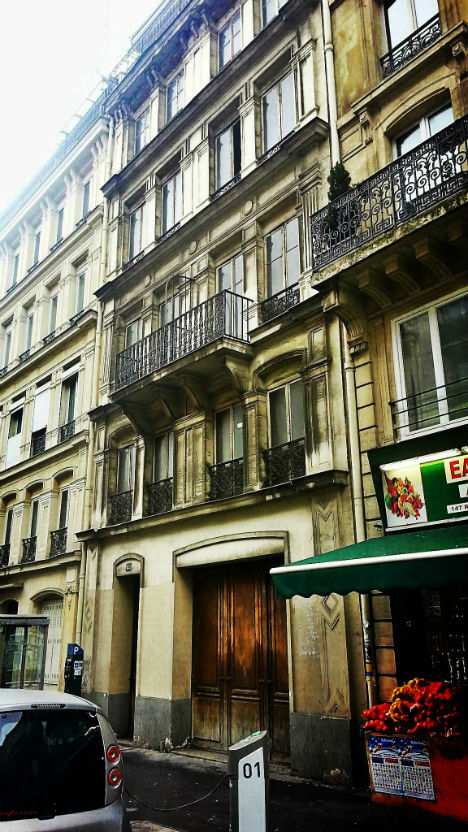
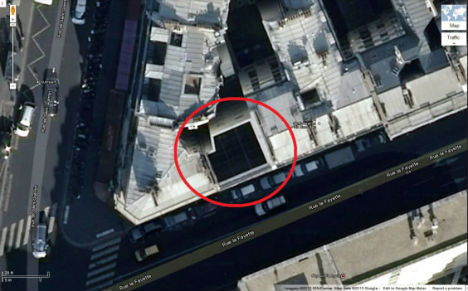
From the sidewalk, this Paris building looks just like those around it, complete with doors, windows and balconies. but take a look at Google Maps, as Paul of the blog Paris by Cellphone did, and you’ll notice something strange: there’s nothing behind that facade. Like many others all over the world, this ordinary-looking building is just a shell to disguise unsightly infrastructure.

Fake Building Facades 2

Fake Building Facades 3

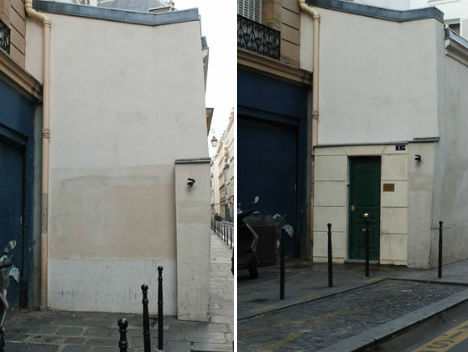
The building, at 154 Rue La Layette, is hiding a giant ventilation chimney for the metro. The chimney is about as large as one of the real buildings that surround it. In another location in Marais, artist Julien Berthier constructed a false door to go on the side of one of these buildings that wasn’t quite as well-disguised.

Fake Building Facades 6

The facade meets local architectural codes and bears an address plate reading ‘J.B. & S.B. Specalistes.’ Wonder how many people have knocked on it over the years, waiting for someone to answer?

Fake Building Facades 4

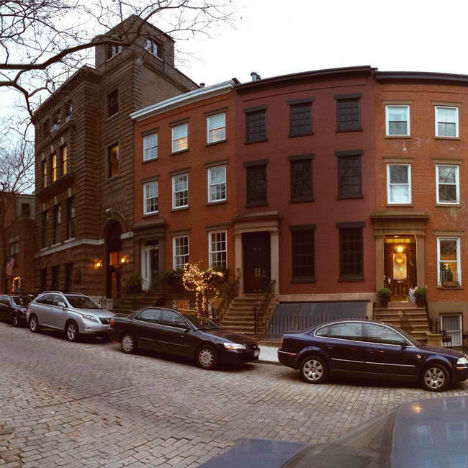
BLDGBLOG discovered another such facade, in Brooklyn. The windows of this particular house are blacked out, making it a bit curious. What are those people trying to hide? Upon closer examination, answer is revealed: it’s a ventilator for the subway. Once, it was a real brownstone, built in 1847, but it was gutted in 1908 when subway service was started in Brooklyn. See more photos of the facade at BLDGBLOG.

Fake Building Facades 5

The Brooklyn Daily Eagle explains, “the exit disguised as a brownstone leads to a grimy-lit set of metal stairs that ascend past utility boxes and ventilation shafts into a windowless room with a door. If you opened the door, you would find yourself on a stoop, which is just part of the façade.”

Share on Facebook


[ By Steph in Architecture & Cities & Urbanism. ]

[ WebUrbanist | Archives | Galleries | Privacy | TOS ]


WebUrbanist

 
Comments Off on Buildings That Don’t Exist: Fake Facades Hide Infrastructure

Posted in Creativity


Fill in the Blanks: Illustrated Sky Spaces Between Buildings

29 Apr

[ By WebUrbanist in Art & Drawing & Digital. ]

sky art

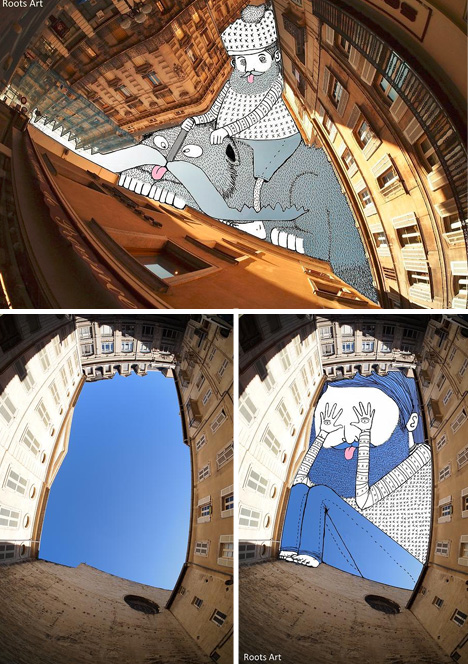
Street art uses roads, sidewalks, walls and infrastructure as canvasses, but one of the brightest and blankest slates of all may be the spaces in between.

sky scape cloud canvass

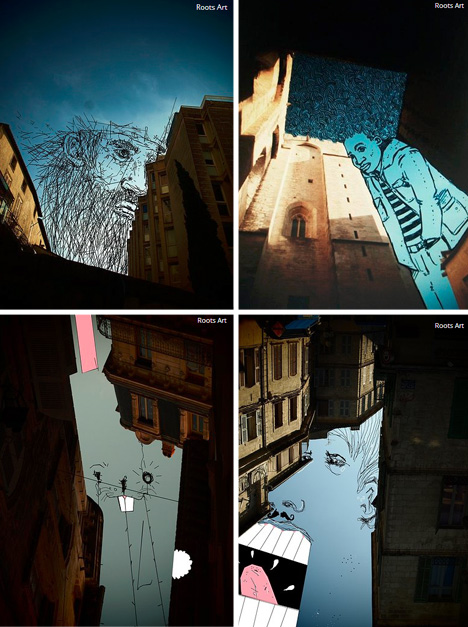
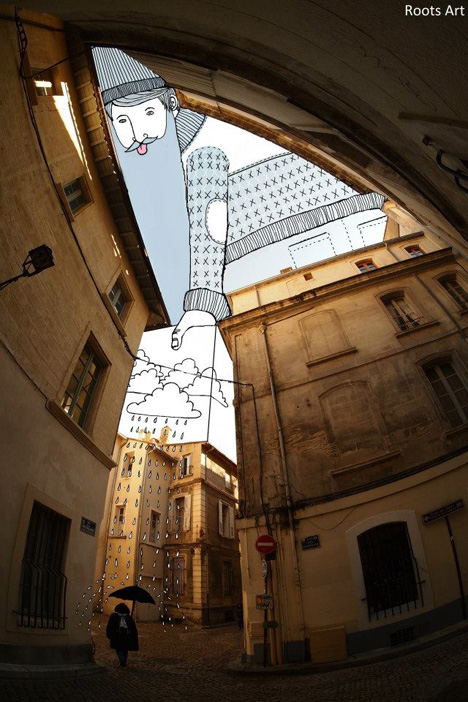
Thomas Lamadieu, a French artist, looks up and sees subject, not void, in blue and clouded city skies, then uses his imagination to fill in the picture, playing on notions of figure and ground.

sky art infill drawings

His Sky Art series shows a given and take between shapes being worked with and what he puts in, often working with minimalist lines and splashes of color.

sky art interactive sketch

In the process, he turns tapering alleys into uncomfortable figures, sinuous spaces into leaning ladies, and cramped courtyards into crouching pranksters, all the while challenging us to see back and forth between positive and negative space (and selectively breaking the boundaries in between).

Share on Facebook


[ By WebUrbanist in Art & Drawing & Digital. ]

[ WebUrbanist | Archives | Galleries | Privacy | TOS ]


WebUrbanist

 
Comments Off on Fill in the Blanks: Illustrated Sky Spaces Between Buildings

Posted in Creativity


Faux Facades: Fake Buildings Hide Trains, Power & More

19 Feb

[ By WebUrbanist in Architecture & Public & Institutional. ]

fake urban architecture

When is a building not a building? When it is only a facade, (aka) dummy! You might have passed right by train tunnels, communications towers or even entirely empty buildings and never realized you were being duped – until now.

Underground Train Passage & Ventilation in Rowhouse

fake architecture underground venting

Consider units 23 & 24, Leinster Gardens in Paddington, London. When underground rail was routed through the neighborhood in the 1860s, the residences at those addresses were razed … and replaced with a very convincing facade. Behind it: an empty void for the old engines to vent along their route, and metal bracing to help hold up adjacent structures. Hoaxes played on this place include everything from the pizza-delivery redirect to a prankster selling tickets to a charity ball at the address.

Subway Emergency Exit & Energy Converter in Townhouse

fake building over subway

One more urban ventilator before we move on: 58 Joralemon Street in Brooklyn, New York follows a similar pattern to its British brethren – blacked-out windows are the only up-close giveaway to an otherwise-complete illusion of occupation, while the railway runs below. This faux building has had multiple subway-related purposes beyond ventilation, though, including electrical conversion and emergency egress.

Power Substations in Houses, Offices, Factories & Castles

fake building power substations

Toronto has a century-long history of hiding its urban energy substations as all kinds of architecture, from small single-family homes to huge block-sized factory buildings, at addresses including 29 Nelson Street, 2833 Yonge Street & 640 Millwood Road. Some have caught fire in freak accidents – not something the neighbors like to worry about. Others have been decommissioned and converted to residential or commercial use, in a strange instance of life imitating the art of imitation.

Share on Facebook


[ By WebUrbanist in Architecture & Public & Institutional. ]

[ WebUrbanist | Archives | Galleries | Privacy | TOS ]


WebUrbanist

 
Comments Off on Faux Facades: Fake Buildings Hide Trains, Power & More

Posted in Creativity


Faux Facades: Fake Buildings Hide Trains, Power & More

12 Feb

[ By WebUrbanist in Architecture & Public & Institutional. ]

fake urban architecture

When is a building not a building? When it is only a facade, (aka) dummy! You might have passed right by train tunnels, communications towers or even entirely empty buildings and never realized you were being duped – until now.

Underground Train Passage & Ventilation in Rowhouse

fake architecture underground venting

Consider units 23 & 24, Leinster Gardens in Paddington, London. When underground rail was routed through the neighborhood in the 1860s, the residences at those addresses were razed … and replaced with a very convincing facade. Behind it: an empty void for the old engines to vent along their route, and metal bracing to help hold up adjacent structures. Hoaxes played on this place include everything from the pizza-delivery redirect to a prankster selling tickets to a charity ball at the address.

Subway Emergency Exit & Energy Converter in Townhouse

fake building over subway

One more urban ventilator before we move on: 58 Joralemon Street in Brooklyn, New York follows a similar pattern to its British brethren – blacked-out windows are the only up-close giveaway to an otherwise-complete illusion of occupation, while the railway runs below. This faux building has had multiple subway-related purposes beyond ventilation, though, including electrical conversion and emergency egress.

Power Substations in Houses, Offices, Factories & Castles

fake building power substations

Toronto has a century-long history of hiding its urban energy substations as all kinds of architecture, from small single-family homes to huge block-sized factory buildings, at addresses including 29 Nelson Street, 2833 Yonge Street & 640 Millwood Road. Some have caught fire in freak accidents – not something the neighbors like to worry about. Others have been decommissioned and converted to residential or commercial use, in a strange instance of life imitating the art of imitation.

Next Page:
Faux Facades Fake Buildings Hide Trains Power More

Share on Facebook


[ By WebUrbanist in Architecture & Public & Institutional. ]

[ WebUrbanist | Archives | Galleries | Privacy | TOS ]


WebUrbanist

 
Comments Off on Faux Facades: Fake Buildings Hide Trains, Power & More

Posted in Creativity


Windows Zero: 9 Telecom Infrastructure Buildings

03 Feb

[ By Steve in Architecture & Offices & Commercial. ]

Telecom Infrastructure Buildings
They may not have windows, workers or office space yet telecom infrastructure buildings are an essential part of the urban megalopolis. Their lack of an obvious human presence, though, has made these towering, nondescript boxes of wire and machinery the subjects of mystery, wonderment and conspiracy theories.

AT&T Long Lines Building (33 Thomas Street), Manhattan

AT&T Long Lines building Manhattanhttp://euphues.tumblr.com/post/2837253379/an-image-of-at-ts-long-lines-building-i-took-this

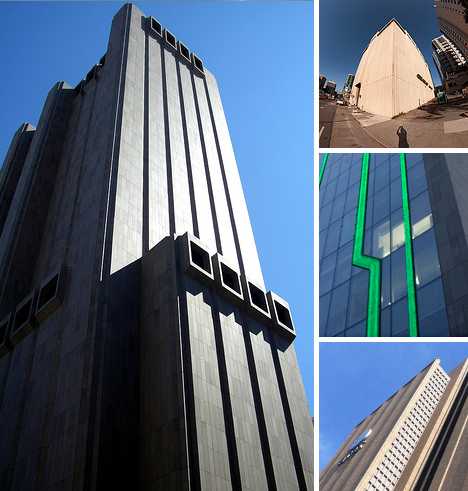
The AT&T Long Lines Building, or as it’s known now by its street address: 33 Thomas Street was designed by architect John Carl Warnecke and opened in 1974. The building was built to last with the expectation that its granite-over-concrete exterior and integral power generators would protect the machinery inside from a nuclear explosion.

AT&T Long Lines Building Manhattan(image via: Michaeln3)

The 550 ft (167.5 m) tall building has only 29 floors because each story has ceilings 18 ft (5.5 meters) high. Odd tubular protrusions on the 10th and 29th floors are for the purpose of ventilating the considerable heat that can build up inside. While often praised for its no-nonsense style that complements other buildings in the area, the stark Brutalist design is a favorite of photographers who wait for lighting conditions that accentuate its “inhuman” aspects.

AT&T Long Lines Building, Kansas City

AT&T Long Lines building Kansas City(images via: Eric Bowers, Wikipedia and KCMeesha)

Another AT&T Long Lines Building, another city, a different design philosophy. Opened in 1976, AT&T’s Kansas City, Missouri telecom building once housed 1,700 workers who manned call centers and helped route the bulk of the region’s long distance phone calls. These days a mere handful of employees rub shoulders with AT&T’s switching equipment in the underutilized yellow brick fortress.

AT&T Long Lines building Kansas City(image via: KCLUVSKC)

At 298 ft (91 meters) and rising 26 stories, the AT&T Long Lines Building at 1425 Oak St. is the 16th-tallest building in Kansas City, so it’s got that going for it, which is nice.

Digital Beijing Building, China

Digital Beijing Building(images via: Galinsky and Coolest Gadgets)

While the USA is still the champ when it comes to wired and wireless telecommunications, the new century has brought new challengers such as China where the Digital Beijing Building offers a new perspective on buildings for non-humans. Designed by Chinese architect Pei Zhu of Studio Pei Zhu/Urbanus, the building opened in 2007 only to be immediately overshadowed by the spectacular neighboring structures built for the 2008 Beijing Summer Olympic Games.

Digital Beijing Building(images via: Oobject and We Make Money Not Art)

The 187 ft (57 meter) tall building wasn’t built for show and compared to its neighbors not everyone is a fan of the structure, either. “It is shaped, cheesily, like a mainframe computer from the 1960s, cut with linear glass strips evoking a circuit board,” sneers Tom Dyckhoff of Times Online. “Four gloomy stone slabs, divided by glass atria, do an excellent Orwellian Ministry of Truth impression. It’s slightly less spirit-crushing inside.” Harsh.

Next Page:
Windows Zero 9 Telecom Infrastructure Buildings

Share on Facebook


[ By Steve in Architecture & Offices & Commercial. ]

[ WebUrbanist | Archives | Galleries | Privacy | TOS ]


WebUrbanist

 
Comments Off on Windows Zero: 9 Telecom Infrastructure Buildings

Posted in Creativity


City Camouflage: Ugly Public Buildings in Disguise

31 Jan

[ By Steph in Architecture & Cities & Urbanism. ]

City Camouflage Buildings in Disguise 1

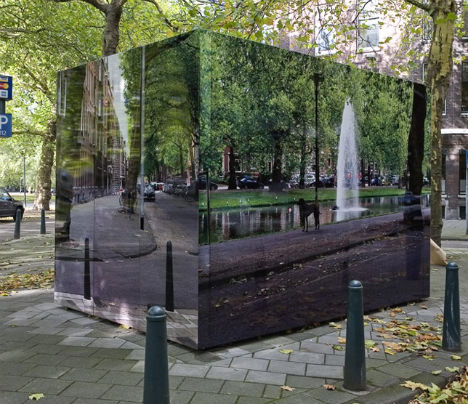
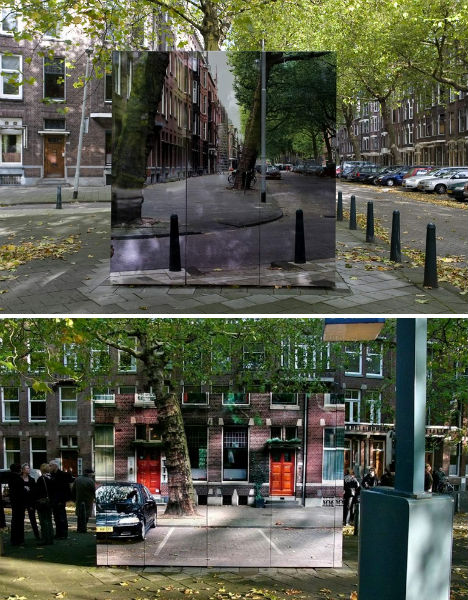
Electricity substations, bathrooms and other less-than-aesthetically pleasing public buildings can stand out as eyesores on the street, taking away from the beauty of their surroundings. Dutch designer Roeland Otten decided to disguise some of Amsterdam and Rotterdam’s worst offenders by making them blend into their environments, in both abstract and highly realistic ways.

City Camouflage Buildings in Disguise 2

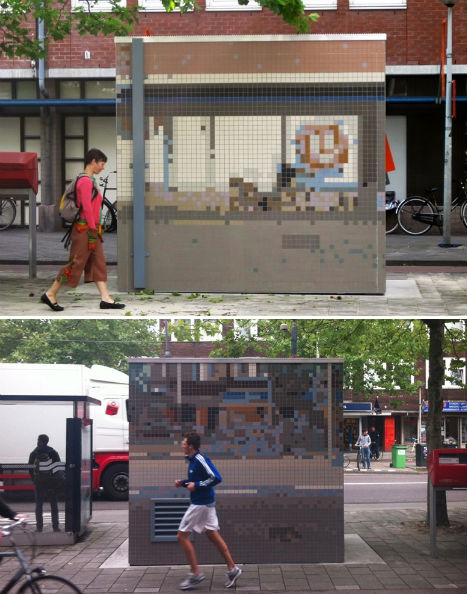
‘City Camouflage’ employs mosaic tiles, paint and photographic prints affixed to the outside of these small buildings to make them less visually offensive. The 1970s structures were unmaintained and beginning to rust.

City Camouflage Buildings in Disguise 3

High-resolution photography printed on sheets of aluminum make some of the buildings seem almost invisible. Gazing down the street, one’s view is no longer interrupted; you can see exactly what is behind each of these camouflaged buildings.

City Camouflage Buildings in Disguise 4

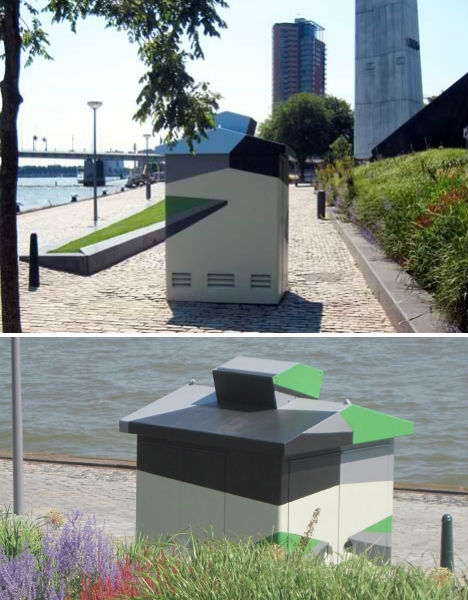
Others are covered in tiles that create a more subtle pixelated effect. One electricity substation on the water was given a bold, graphic treatment with acrylic paint so that it blends in from some angles and looks merely artistic from others.

Share on Facebook


[ By Steph in Architecture & Cities & Urbanism. ]

[ WebUrbanist | Archives | Galleries | Privacy | TOS ]


WebUrbanist

 
Comments Off on City Camouflage: Ugly Public Buildings in Disguise

Posted in Creativity