RSS
 

Posts Tagged ‘Book’

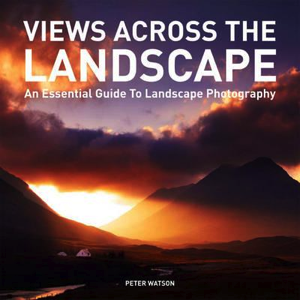
Views Across the Landscape [Book Review]

06 Oct

NewImageAgain, another large format book, sized precisely to best show off the subject matter.

As befits this subject, the pictures get priority and so they should … text takes the back seat but not to a demeaning degree.

Author Peter Watson is a self-taught photographer and has authored five other books, all to do with landscape photography. In his view ‘recent developments in digital technology have simplified landscape photography.’ Perhaps this could have been better said as the arrival of digital photography has simplified landscape photography.

How so? Well, for one thing the burden of establishing, equipping and operating a darkroom has gone, along with the bane of keeping chemicals fresh, enlargers clean and dust free and the pain of long hours of operation, mostly at night. In nearly all forms of photography today, software is king!

Photographers now have total control over the process, right from concept through to the tap on the shutter and on to the final print. Never before has the photographer had complete control.

While we can now enjoy enormous control post exposure there are still limits to what can be achieved and many a trap may lay in waiting for the unwary. What may emerge after software processing can only be as good as the original material: RIRO or Rubbish In Rubbish Out!

Landscapes are a demanding subject. You have no control over the subject, none over the lighting of it, its placement or orientation. Watson’s attitude is that it is sanguine to adopt techniques that require minimal post exposure adjustment; as he says ‘post processing should be considered the icing on the cake, not the main recipe.’

The book begins by suggesting research methods for prospective subjects, location hunting, the ‘right equipment’ and accessories such as tripods and pan heads, filters … even down to the right clothing for the location.

The chapter headings show the way:

  • Equipment
  • Technique
  • Light in the Landscape
  • Composition and Design
  • Taking a Closer Look
  • Landscape Locations

In terms of equipment the book is realistic: beware of buying and using a digital camera with a ‘kit lens’ included in the purchase price; they are all built with a smaller maximum aperture and mostly offer lower resolution than fixed focal length primes lenses.

There is some basic info on lens apertures and shutter speeds, understanding histograms, the use of filters, etc.

Then, to my mind, some of the most important elements in successful and satisfying landscape photography are outlined: finding the best viewpoints and using light.

With the former, location recces using Google Earth lets you ‘fly’ to anywhere in the world, check out sample photos of the area in question and even scout a shooting position. The message is search for a shooting spot by discovering one with a useful foreground.

With the latter, light can impart mood, atmosphere, tranquility, harmony etc. Visit the location at different times of the day and year. Notice its angle, colour, strength and distribution.

In scanning the book I was struck at how the author/photographer used light to lift the quality of his landscape images. If the same images had been shot at different times of the day or at times when the light was a less powerful element those pictures would not have ‘worked’.

There are four pages of pictures and text on how to use mist in photographing the landscape: a fine balance is essential; too much landscape will diminish it; too little will leave you wondering what you’re looking at. Balance is crucial.

IMHO the book’s purchase is worth it for the value of the pictures alone!

Author: P Watson.
Publisher: Ammonite Press.
Length: 192 pages.
Size: 25x25x12mm.
ISBN 978 1 90770 884 8. Price: Get a price on Views Across the Landscape

Post originally from: Digital Photography Tips.

Check out our more Photography Tips at Photography Tips for Beginners, Portrait Photography Tips and Wedding Photography Tips.

Views Across the Landscape [Book Review]

The post Views Across the Landscape [Book Review] appeared first on Digital Photography School.


Digital Photography School

 
Comments Off on Views Across the Landscape [Book Review]

Posted in Photography


All About Flash [Book Review]

15 Sep

All About FlashIf there’s one thing that flummoxes many of us, it’s flash. Onboard or off camera.

Mark Cleghorn’s book gives away the techniques he’s learned over the course of nearly 30 years as a photographer, well-known in Europe and the US.

Beginning with a single on-camera flash effectively and creatively, then moving all the way up to four or more units in multiple wireless groups, he describes how to shoot the best images possible in a variety of situations.

He outlines the methods in minimising distracting details in an image with a single flash; he shows how to diffuse and spread the light by using a number of flash accessories; then, a method of illuminating the background with a second flash; described is an unusual ‘sandwich’ trick with two flash units pointing towards each other; finally, a method of establishing a basic studio set up on location using only three accessory flash units.

Some photographers begin sweating and shaking at the slightest talk of using flash. The trick is to use flash for the right reasons and with the right approach. The approach is to use it for the right reason, not out of habit!

Early on in the book a question is posed: is flash really necessary? Now that top end DSLR cameras can capture high quality images at high ISO settings, with fast lenses, image stabilisers and slow shutter speeds, we can shoot almost round the clock both outdoors and indoors.

Despite this benefit, you still need quality light of the right quality and appropriate strength pointed in the right direction. That is not to say that tonnes of light will answer the need.

As Cleghorn says: ‘I have always had to control the light in some way, whether to increase the amount to record an accurate skin tone, or perhaps to use a desired aperture setting to control the depth of focus.’ His underlying message is ‘control’. Which is right about where most budding, ambitious photographers go wrong.

Then, the question is posed: what is flash good for?

Most will use it as a fill light, which is arguably the best use of onboard flash illumination; this is optimised further if you can lower/lift the flash’s output.

Some will use flash as a key light, some will use it as a catch light for the eyes and others will deploy flash as means of separating the planes in a subject, to lift background information, create a mood of drama, add an accent or introduce modeling into the subject.

Then there are the special talents of flash that no other lighting can rival: one is to freeze motion, with or without the use of first or second shutter curtain sync.

Another use is to add light to a scene where there is no other light, by bouncing it off a wall or ceiling or by taking the flash off camera and increasing the amount of shadow in the image.

Types of flash are listed: all the way from portable accessory units to portable strobes and all the way up to powerful (and not so portable) studio strobes.

More topics: how flash works; output consistency of different units; the role of ISO, lens aperture and shutter speeds.

A subject which often baffles many is the role of a flash meter. These can accurately measure the balance between ambient light and flash output. Cleghorn emphasises that he has used a meter throughout his career and, while he has changed cameras and flash units over the years, use of a meter has remained constant.

The book moves onto info on using wireless flash, the role of accessories such as umbrellas, soft boxes, bounce cards, gels etc.

There are ample illustrations throughout, making the book a rare beast on the photographic bookshelf.

Top book for a tricky subject.

Author: M Cleghorn.
Publisher: Pixiq.
Distributor: Capricorn Link.
Length: 112 pages.
Size: 28x22x10mm.
ISBN: 13 978 1 4547 0244 3.
Price: Get a price on All About Flash at Amazon.

Post originally from: Digital Photography Tips.

Check out our more Photography Tips at Photography Tips for Beginners, Portrait Photography Tips and Wedding Photography Tips.

All About Flash [Book Review]


Digital Photography School

 
Comments Off on All About Flash [Book Review]

Posted in Photography


The Magic of Digital Nature Photography [BOOK REVIEW]

08 Sep

The Magic of Digital Nature PhotographyI like these books for more than the obvious reason that they contain a wealth of help in their pages.
For one thing they’re an easy read so, after a hard day behind the camera, you can relax at home and read it for pleasure, not only soaking up all the useful info but enjoying the largish pictures within its pages.

Author Rob Sheppard intentionally laid out all the practical info and creative suggestions you would need to take your images to a higher level: which lenses and accessories are best for the purpose; the pluses and minuses of RAW vs JPEG; how do you stalk an animal? How about landscape composition?

Satisfying it may be, but many amateurs are unaware their work is just that: amateur. Sure, it takes effort, but it is worth while to lift your game, tune up your senses and place your image making on a higher plane.

Sheppard confesses that he has enjoyed photography since he was a kid and remembers entering a B&W print of a local scenic spot in the local newspaper’s photo contest and recalling his pride in the photo — but it didn’t win!

He still enjoys being out and about with a camera, having shot images from Peru to Newfoundland, Florida to Washington and admits he wants to ‘get you excited about getting out and taking photographs of your own special subjects.’

First the spiritual: Sheppard believes that ‘nature photography definitely deepens, widens and expands our sense of life. He believes you can shoot pictures of your favourite subjects; most times you can shoot many shots of your favourite subjects and yet capture totally different images than another person may take.

A touchy feely sort of book? You betcha!

In a chapter titled ‘Connections’ Sheppard asserts that whilst we may have many connections to the natural world, these are not always recognised. He suggest you connect with the subject in the picture, then connect again with the subject when you look at the final image. The final pleasure comes in sharing the image with others, helping them also to connect with the subject.

Then down to practicalities: choice of camera is important but what may work well for one person may not be OK with another. Educate yourself about differing camera types, decide on which type of nature photography you wish to pursue and make sure you can tote your camera into the field, making sure you don’t spoil your adventures with a pile of gear that weighs you down.

In a section titled ‘Megapixels and Quality’ he comes down heavily on the hype over pixel count: after all, megapixel counts are less about image quality and more about size.

Useful chapters follow on lenses, suitable focal lengths for scenic work, suitable camera mounts. Then follow discussions on exposure; lens aperture vs shutter speed; working in auto vs Program AE vs aperture or shutter priority vs manual exposure; reading a screen histogram; ISO settings; how to determine white balance.

Without light you can’t capture too much in the way of a digital scenic! That much is obvious. But what quality of light? Hard or soft? Front lit or backlit? And its colour?

There follows some handy help on how to model and shape the light on your scenic using reflectors or diffusers, by warming it with a change to the white balance, a change to the exposure, adding another light source, adding a grad filter etc.
The general tone of the book is more in the nature of help rather than a pile of techy details, which makes it an easy and encouraging read.

If you’re into scenics, this is for you!

But, as I said, don’t expect ‘a pile of techy details!’

Author: R Sheppard.
Publisher: Pixiq.
Distributor: Capricorn Link.
Length: 192 pages.
Size: 28x22x12mm.
ISBN: 978 1 4547 0813 1.
Price: Get a Price on The Magic of Digital Nature Photography at Amazon (currently 39% off)

Post originally from: Digital Photography Tips.

Check out our more Photography Tips at Photography Tips for Beginners, Portrait Photography Tips and Wedding Photography Tips.

The Magic of Digital Nature Photography [BOOK REVIEW]


Digital Photography School

 
Comments Off on The Magic of Digital Nature Photography [BOOK REVIEW]

Posted in Photography


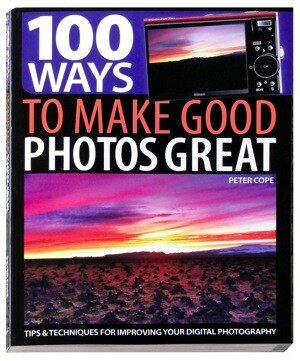
100 Clever Digital Photography Ideas [Book Review]

02 Sep

100 Ways to Make Good Photos GreatSometimes you need more than a guide to specifics in using a digital camera for ambitious image making. It is possible to overload your brain with info on lenses, lighting, camera controls and the rest of the tech jungle.

Sometimes it’s better to just look behind the curtain and pick up some tips on how to make good photos great. As the book says!

Author Peter Cope makes the point early in the book that during the 2012 London Olympics ‘exciting, emotional and iconic images flashed around the world …’

He observes that ‘What made these images unique and different from those that press photographers’ captured was that most came from amateur or casual photographers … grabbed shots ‘taken on a purely opportunist basis.’

Little thought went in to these ‘point and shoot’ pictures, much as they may have been enjoyed. But sometimes we need more: photos rather than snaps. Cope’s book sets out to help you not only shoot technically excellent photos but to create images that have something to say. The layout of the book is ideal for the purpose: for one thing, the size is enough to accommodate large pictures along with concise blocks of text that explain the issues.

For example, the page on red eye from flash suggests ways to avoid the dreaded issue: increase the ISO; use an external flash unit; and — last resort! — remove it in post.

Similarly, with the chapter on how to conceive great landscape photos which, after people, are possibly the most photographed subjects there are!

Cope’s tips go this way: great landscape photos should be in sharp focus from the nearest point to the most distant; follow the rules of composition closely, including the rule of thirds; use lead in lines to draw peoples’ attention to the landscape’s main subject; shoot at different times of day; watch the effect of weather on the scene; use polarising or graduated filters.

You won’t find much specific techy stuff in the book, except for a few pages on such matters as lens choice, exploiting your camera’s aperture controls, mastering ISO settings, astro photography, macro photography and then there’s a longish section on software manipulation. Most of the book is encouraging, handholding help.

The techy section also includes includes optimum ways in successfully sharpening an image, using ‘auto fixes’ such as auto enhance, auto tone and auto levels. Some will shy away from such easy fixes but, in Cope’s view, if the ‘adjustment works and delivers a great image’ — use it.

Within its pages are chapters on a whole variety of people photography, along with subtle suggestions on how to deal with human subjects. Like: shoot plenty of shots of children … they move fast! And, when shooting people at work, shoot fast! In straight portrait photography, establishing eye contact can establish a strong connection or sometimes be unsettling.

There are also whole pages devoted to ideas like ‘transplanting’ a whole sky, creating scenes that might otherwise not exist … if it were not for the magic of our old friend Photoshop!

An excellent publication that’s highly readable just as a book or as a complete reference guide.
Oh and it would make an excellent ebook that you could take with you on a shoot!

Author: P Cope.
Publisher: David & Charles.
Distributor: Capricorn Link.
Length: 144 pages.
Size: 25x19x11mm.
ISBN 1 4463 0300 9.
Price: Get a price on 100 Ways to Make Good Photos Great

Post originally from: Digital Photography Tips.

Check out our more Photography Tips at Photography Tips for Beginners, Portrait Photography Tips and Wedding Photography Tips.

100 Clever Digital Photography Ideas [Book Review]


Digital Photography School

 
Comments Off on 100 Clever Digital Photography Ideas [Book Review]

Posted in Photography


Book of Cities: Rise & Fall of 10 Places Over 200 Years

16 Aug

[ By WebUrbanist in Design & Graphics & Branding. ]

book of cities infographic

We take it for granted that London and New York will grace the pages of books, but would you be surprised to learn that Madrid and Cairo were once as commonly referenced, or that Mumbai and Beijing are now two of the most popular cities capturing global imaginations?

city popularity infographic

Edgard Barbosa created this infographic (above) and other associated graphics (below) to explore the ebb and flow of famous cities in works of fiction and non-fiction alike.

city data in books

From its creator: “Books of Cities measures the quantity of books, written in the English language, that refers to 10 major cities in the world between 1800 and 2000 … it gives an overall idea of the amount of literature produced in each era about the same city.”

book of cities poster

The graphic covers London, New York City, Rome, Paris, Chicago, Tokyo, Madrid, Beijing, Mumbai, and Cairo, and shows how some cities, like Mumbai and Beijing, have recently hit the scene in a major way. Others, meanwhile, like London and NYC, have consistently attracted attention for much of the last few hundred years.

Share on Facebook


[ By WebUrbanist in Design & Graphics & Branding. ]

[ WebUrbanist | Archives | Galleries | Privacy | TOS ]


WebUrbanist

 
Comments Off on Book of Cities: Rise & Fall of 10 Places Over 200 Years

Posted in Creativity


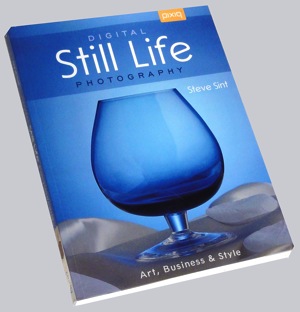
Digital Still Life Photography [Book Review]

30 Jul

Digital Still Life PhotographyThis is a sumptuous book in a number of departments: it’s large, beautifully printed and full of useful, easily navigated information.
So why the word ‘digital’ in the book’s title?

Author Sint explains ‘I hate using Photoshop to correct my mistakes because I feel the time required to do so is both unproductive and unprofitable. … what I really love more than Photoshop is downloading pictures that I find pretty close to perfect the moment I open the image’s file.’

The book’s style is thoroughly disarming and direct to the point: when approaching a still life photograph the first step, Sint suggests, ‘is to spend a moment thinking about what type of photograph you are trying to create.’

He then describes the techniques in shooting simple setups on a plain background, the need for speed and the need to plan your shoot efficiently. After all, time is money and the more shots you can pack in per hour the higher your financial return. This book Sint affirms is about ‘how to make a living taking pictures …’

An initial step is to select a suitable shooting space. It should ideally be a big space, one that includes an office, shooting area, storage for props etc, conference area, makeup room and maybe a kitchen. However, in an effort to describe how little you really need, the author describes his own first studio: a room 250 square feet in area, containing his own twin bed, a dresser, small nightstand … with the remaining 225 square feet dedicated to the studio!

Next, you should assemble the necessary tools to make the space work: timber and the necessary power and hand tools; some form of canned compressed air or even a compressor and more. This is followed by three simple building projects: building a simple set flat; a diffusion screen; a light table.

The important subject of lighting gets serious attention, with tips on how to assemble and use a continuous light array, electronic flash, reflectors, barn doors and snoots, hair lights, scrims, a lighting umbrella etc. The variations in continuous and flash light are explained thoroughly and examples given as to which type suits what subjects.

To give an idea of the depth of detail found in the book, just go to pages 150 and 151 on clamps but not just ordinary clamps but ‘super clamps’! These can do so many more things on a still life shoot than merely position a light as they come in handy to build backgrounds etc.

More follows on soft and hard lighting, the colour of light sources, how to vary a lamp’s colour balance and filtration plus a useful primer on working with fluoro lighting and how to mix it with flash. Fluoros may be 20-30 per cent green in hue so you may filter the flash output with green gels and then add a magenta filter to the camera lens to bring everything back to a daylight balance.

A superb eight page section takes you step-by-step through the shoot of an expensive Cartier watch: how to pose it, light it, position fill lamps. And then there is the fundamental advice never to perform post editing on the original digital file: duplicate! And only work on a copy.

This book will be invaluable to the photographer who wants to move into the studio. Big time!

Author: S Sint.
Publisher: pixiq.
Distributor: Capricorn Link.
Size: 28x22x2cm.
Length: 271 pages.
ISBN: 978 1 4547 03273 3.
Price: Get a price on Digital Still Life Photography at Amazon (currently 50% off).

Post originally from: Digital Photography Tips.

Check out our more Photography Tips at Photography Tips for Beginners, Portrait Photography Tips and Wedding Photography Tips.

Digital Still Life Photography [Book Review]


Digital Photography School

 
Comments Off on Digital Still Life Photography [Book Review]

Posted in Photography


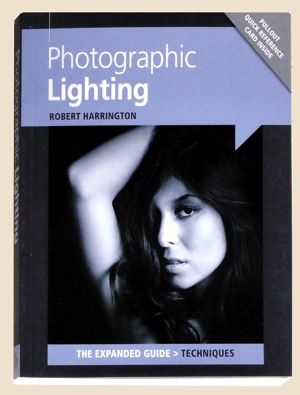
Photographic Lighting [Book Review]

23 Jul

Photographic LightingIf you’re looking for a book that takes you through the mysteries of natural light, shadows and highlights … this is not the one.
Instead, it gives:

‘Expert advice on the basics of on-camera and off-camera flash photography. Professional guidance on choosing flash equipment and accessories. Advice on setting up a photographic studio in the home. Tips on postprocessing techniques to get the best results from flash photography.’

And not a moment too soon for many people. Let’s face it, flash is one of the most misunderstood and misused technologies in photography. Bar none!

And then again, you wouldn’t put a raw amateur into a situation where he or she has access to a battery of studio lamps. Even more chaos.

The book’s chapters:

  • The basics
  • On-camera flash
  • Off-camera flash
  • Using off-camera flash
  • The home studio
  • Putting it into practice
  • One speedlight, 13 looks
  • Postprocessing

The help begins in the first chapter by spelling out the basics of flash: Guide numbers; on camera TTL; the inverse square law explained; reading a histogram; white balance; the RAW format explained; using on-flash colour gels. And we’ve only touched on the basics.

Although the book is relatively small, I was surprised at the depth of info passed on within its pages.

By the time we reach the second chapter we begin to learn how an on-camera flash is set up, power output, battery needs, operational modes, use of diffusion and bounce operation, shutter sync etc.

Matters get even more serious when author Harrington explains ‘Getting the flash off your camera is one of the best things you can do to advance your photographic skills.’ Hear, hear! He goes on to describe the various accessories such as boom arms, flash umbrellas etc. One very useful section recommends using a dummy styrofoam head (purchasable from art supply stores) to run test sessions on how to light a portrait.

Actual off-camera flash shooting situations are discussed and mention is made of some interesting devices which may help: such as Radio Poppers and Pocket wizards that can fire your flash from a distance with no need to use a connecting PC cord.

Also touched on are convertible flash umbrellas: these can be used in a reflective style or in shoot-through style; when used as originally intended, the former can deliver ‘beautiful contrasty light …’, while the latter allows you to shape light ‘and add or subtract softness.’

The degree of detail in the book is admirable and, IMHO, would take the photographer up a notch or two in skills level.

With each chapter there are multiple illustrations to support the text of sufficient size and quality that you quickly see what the info is all about.

Another chapter on choosing lenses will be of help when expanding your optical arsenal. Take heed: ‘buy the best you can afford until you can afford better.’

And then, right in the middle of the book is the sage advice that ‘Film is not dead.’ This is supported by the advice to play around with fun film cameras like the Holga and its ilk.

Creativity is foremost in the book’s pages, with ideas on how to extract the utmost, even when flying with one engine, or even one flash and one reflector.

An important factor in any photography and most especially with flash is post processing; the book deals with file formats and software choices and then gets into detail on white balance as ‘one of the main reasons photographers shoot in RAW format.’

A pair of pop out hint cards at the back of the book suggest the maximum shooting range, f stop, shutter speed and ISO setting with varying flash Guide Numbers.

All in all, a very useful, pocketable guide book.

Author: R Harrington.
Publisher: Ammonite Press.
Size: 18x15x1cm.
Length: 192 pages.
ISBN: 978 1 90770 875 6.
Price: Get a price on Photographic Lighting at Amazon (currently 23% off).

Post originally from: Digital Photography Tips.

Check out our more Photography Tips at Photography Tips for Beginners, Portrait Photography Tips and Wedding Photography Tips.

Photographic Lighting [Book Review]


Digital Photography School

 
Comments Off on Photographic Lighting [Book Review]

Posted in Photography


Book Review: Shooting in Sh*tty Light

21 May

cover.jpg

Lindsay Adler and Erik Valind, both working professionals and educators, have written a beginner’s guide to photographic lighting with an unusual conceit at its core. By structuring a book around a list of common challenges – what they call the ‘top ten worst situations’ – they’ve created a digestible, useful ‘lighting 101’ guide. In this short review, Adam Koplan takes a look at their book ‘Shooting in Sh**ty Light: The Top Ten Worst Photography Lighting Situations and How to Conquer Them’.

News: Digital Photography Review (dpreview.com)

 
Comments Off on Book Review: Shooting in Sh*tty Light

Posted in Uncategorized


The Delight of Photography: An Instructional Book Series for the Aspiring Photographer

16 Apr

At last, here is the photo course that you have always wanted to do but never had the time! The majority of new camera owners just want to know some of the key basics so that they can take good images and enjoy them. I have not yet met a book that caters for this – they all (even the Continue Reading

The post The Delight of Photography: An Instructional Book Series for the Aspiring Photographer appeared first on Photodoto.


Photodoto

 
Comments Off on The Delight of Photography: An Instructional Book Series for the Aspiring Photographer

Posted in Photography


The Photography Bible [BOOK REVIEW]

13 Apr

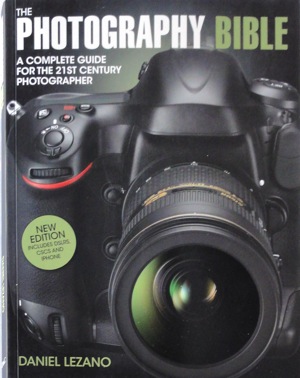
The Photography Bible coverConfession: I’m a sucker for books like this!

‘The Photography Bible brings you up-to-the-minute information on the rapidly changing world of photography, including the latest digital cameras … [and] offers expert photographic advice to help improve your photography ….’

I absolutely love a single book that has the full story. The trouble is that, at the immediate moment the author hands his text file to the book’s publisher, the whole game changes! Camera models change almost overnight and the whole tech story is a very mobile feast!

But, in spite of those cautions, Daniel Lezano’s book does a fine job of packaging most of the data into a single publication.

The opening chapter does a thorough job of describing the current camera types, including generous illustrations and detailed text: from DSLR to Compact System Cameras (MILC) or digi compacts, bridge models, waterproof models … plus a brief rundown on medium format DSLRs, camcorders, the weird Lytro camera and even smart phones with camera capabilities. It should help prospective buyers to narrow down their choices before spending the hard-earned.

Then follows details on camera components: sensors, stabilisers, sensor cleaning systems, LCD screens, Live View, HD video etc.

For the more curious there is some excellent info on the different AF systems which surely, is one of the most misunderstood of camera functions.

Similarly, with such matters as exposure: the role of the lens aperture in exposure and the ‘look’ of an image; differing modes such as auto, Program AE etc; metering systems such as multi zone and spot; how to deal with excessively dark or bright scenes.

My congrats to the author for opening up the subject of resolution and the tricky subject of the ‘megapixel myth’. May I quote? ‘There is a very common misconception that you can determine the quality of a camera simply by judging it on the number of pixels.’ Bravo!

An area that may confuse even the more digitally-educated reader is the subject of sensor types: CMOS and CCD are discussed, along with useful detail on Fujifilm’s X-Trans CMOS and Foveon’s X3 CCD … but I have a disconcerting feeling that tech change is proceeding at such a velocity that there are already sensor types out there that scream for attention.

The book then moves on to subjects that are more in the realm of photo handy hints, such as dealing with white balance, types of memory cards and a useful discussion of how cards are speed rated.

More: file formats; flash and studio lighting; filters; lenses, along with the role of wide and tele focal lengths; printers and scanners; image software and the mysteries of Photoshop; basic composition.

Overall, I found the book to be useful for the newbie to digital photography. I felt, however, it could have gained by including more technical detail on digital hardware, why sensors do what they do along with their foibles, etc.

A good starter. Well illustrated. Clear text.

The book could have benefitted from a chapter on video shooting with digicams, especially now that digi still cameras have developed such enormous capabilities in this area!

Author: Delezano.
Publisher: D&C.
Size: 25x19x1.5cm. 176 pages.
ISBN: 1 4463 0217 0.
Price: Get a price on the Photography Bible at Amazon.

Post originally from: Digital Photography Tips.

Check out our more Photography Tips at Photography Tips for Beginners, Portrait Photography Tips and Wedding Photography Tips.

The Photography Bible [BOOK REVIEW]


Digital Photography School

 
Comments Off on The Photography Bible [BOOK REVIEW]

Posted in Photography