RSS
 

Posts Tagged ‘Better’

10 Ways to Become a Better Photographer in 2018

25 Jan

Let’s face it, it’s the new year. Your heart is full of hope and your head is bursting with ideas on what you want to do this year, be a better photographer, and how you will go about executing it. You have so much hope in your heart that you will achieve your all your 2018 goals, that you walk around with a goofy smile plastered on your face!

Am I right or am I right? Or have I just described how I have been feeling ever since that clock struck midnight and we ushered in 2018!?

10 tips to become a better photographer

Here is a bouquet of stunning florals to wish you a happy 2018!

It is 2018 and let’s start the year right with a few simple, easy yet powerful things you can do if one of your goals is to become a better photographer in the next 12 months.

1. Rock the gear you currently own without buying more

Do you feel limited by the gear you own? Are you telling yourself you really need to upgrade your camera, lens or both? Great! you are exactly where I need you to be.

Challenge yourself to use your existing gear consistently for a few weeks or months. Try to get creative with what you already have instead of hitting purchase on that gear that is sitting in your cart or Amazon checkout.

10 tips to become a better photographer

I had no telephoto lens on hand to get some close-ups of these birds…so instead, I used negative space and rule of thirds to take a creative approach to this image.

2. Photograph in every possible lighting situation

I really believe there is no such thing as bad light. Light is light – it is just different at different times of the day and night. One of the best ways to understand light is to photograph in different lighting situations and challenge yourself to create something unique and different that you are proud of.

Each lighting situation will demand different things from you and your gear. Harsh midday sun will have you rethinking shadows and light. Early morning light or golden hour will have you thinking of ways to create magical images that highlight that golden light. Blue hour may challenge you to bring out the external flash so you can get creative with colors.

Use this exercise to really understand and make the most out of each scenario.

10 tips to become a better photographer

 3. Treat every subject as a rock star

Not every subject is going to be your ideal client. Until you are in a position to only attract your ideal clients, use every opportunity to work towards building your portfolio for your ideal clients. Each client deserves to be treated like they are rock stars. So it is your duty as a photographer to give them the best experience possible – be it in posing, editing, styling or general customer service.

10 tips to become a better photographer

My morning cup of tea and a simple kitchen towel was my subject matter as I practiced still life photography This image is one of the more popular ones on my social media – people really seem to gravitate to light and clean images at times.

 4. Deliberately limit yourself

Today’s DSLR cameras are quite sophisticated pieces of equipment with multiple shutter clicks per second (continuous) and creative photographic modes (Program, Shutter Priority, Aperture Priority) that do a lot of the work for you.

Instead of using those, I challenge you to limit yourself. Think like a film camera photographer and only use 24 or 36 frames to tell your story. Change to Manual mode and try to figure out how shutter speed, IS, and aperture really work to help you take more control of your photography.

10 tips to become a better photographer

I love photographing with a film camera on vacation. It really helps me maintain a good balance between having a vacation and taking pictures because I only have a limited amount of frames to use.

 5. Take an art class

This has nothing to do with photography, yet at the same time, it has everything to do with it. Sometimes stepping away from the thing that we love the most or obsess about can be a really good thing. I have found art, particularly drawing and painting, to be very therapeutic and relaxing. It also gives me a chance to look at creativity with a new lens. As I analyze shapes, sizes and brush strokes – I look at color, patterns and composition in a new light.

6. Study your camera’s manual

I remember taking a technical writing class in graduate school where we had to create a user manual for a product. It was one of the hardest classes I have ever taken because we really had to think as a layman user to design, craft and write the manual. It made me realize that manuals, if done correctly, are incredibly powerful learning tools because they really break down every aspect of the product individually as well as collectively. So don’t be so quick to throw away the camera manual – it might be just the thing you need to really understand the workings of your camera.

7. Use a traditional film camera

10 tips to become a better photographer

Medium format camera love, one of only 16 frames per roll. I love the way medium format film renders colors and tones.

This ties in to point number four above. A film camera is a great way to learn the manual mode of photography because it really makes you think about light, exposure, ISO, and aperture to produce a good, clean image. Also, there is no chimping at the back of the camera screen so you really have to slow down and think of the photo you are trying to produce and then click the shutter.

You have a limited amount of frames per film role and have the additional cost of developing and scanning your pictures at the end of the day. All these factors make you a more intentional photographer as opposed to a “spray and pray” photographer (one who takes several pictures in automatic mode and hopes that at least one will work in his/her favor).

8. Study the work of other photographers

I am sure you have a lot of photographers that you really look up to for various reasons – how they compose, how they handle difficult lighting situations, how they interact with their subjects or even how they run successful photography businesses. Follow them, study how they do things, figure out what makes them tick and how they succeed, and use those ideas to reflect in your own road to improving your photography.

10 tips to become a better photographer

Last summer in Rome I really practiced using a lot of negative space in my cityscapes. Sometimes just a hint of a popular landmark is needed to give a sense of place.

9. Experiment with new techniques

Contrary to popular belief, I feel that photography is not something that you can study in a limited amount of time and then say you are an expert in this field. The field is constantly evolving and expanding and there is always something new to learn.

Become a student no matter what your level of experience and be open to learning new and exciting things in this art of form. It is sure to bring forth much progress in your craft overall.

10 tips to become a better photographer

Triple frame shot on medium format film during an editorial shoot to showcase busyness!

10. Evaluate your own work with a critical eye

Really think about what the work you are producing. Before asking for critiques, refer back to your work and figure out what you like and don’t like in your own work. Chances are you will find several things to add to that list.

Also don’t be quick to delete photos you may not like right now. Wait for a few days to look back and assess all your images. You are more likely to find some new favorites among photos that you previously thought were not correct or worthwhile.

Conclusion

I hope these 10 tips really helped shift your mindset a little bit towards your photography. Hold on tight to that feeling of being invincible that often comes with the new year and use it to the best of your abilities to better your skill and craft.

Tell us about your photography goals for this year in the comments below.

The post 10 Ways to Become a Better Photographer in 2018 by Karthika Gupta appeared first on Digital Photography School.


Digital Photography School

 
Comments Off on 10 Ways to Become a Better Photographer in 2018

Posted in Photography


How to Take Better Sunset Photos

24 Jan

A beautiful sunset is one of the most desirable subjects for photographers to shoot and can be achieved any time of the year when the light is right. Most outdoor photographers will tell you that this is their favourite time of day to take photos when the landscape is bathed in golden light and the rich colours and last rays of the day can be magical. Photographing these moments can be truly satisfying so here are six useful tips to help you capture better sunset photos.

1 – Shoot into the light

Sunset photography tips 3F6A3213 HDRAB

You are more likely to snap a stronger image of the setting sun during the hour leading up to sunset, known as the golden hour. If you aim to shoot directly into the sun when it is low on the horizon you are more likely to capture a better scene than if you were to shoot into the light earlier in the day when the glow of the sun can be too strong and harsh.

That is when lens flare is likely to be present in the image due to the sun hitting the front of the lens element directly. It can sometimes, however, be used to your advantage.

Remember to take care when staring into the sun and don’t do this for too long to prevent damaging your eyes.

2 – Turn around (and shoot what’s behind you)

Have you ever been so focused on capturing the scene in front of you with the sun setting before your very eyes, to then notice that the view behind is just as spectacular? Novice photographers often make this mistake when starting out.

When you’re setting up the camera and composing for the shot in from of you, it is worth turning around to see whether the scene behind you offers any photographic potential. If it does, be sure to capture this alternative view as well.

Sunset photography tips 3F6A5279Deadvlei Namibia

3 – Hide the sun

If you have found a view you like and it is too bright shooting towards the sun, try hiding the sun behind an object to further improve the image. You can experiment by partially shielding the sun behind a tree, rock, or person, for example, to find different compositions.

This technique can result in striking images where you can create great silhouettes or even sun flares by partially masking the sun.

Sunset photography tips 3F6A3116 HDR

4 – Change focal length

Your focal length setting and choice of the composition will make a big difference to the overall picture. Experiment with different focal lengths and figure out what works well and what doesn’t.

If you want to photograph the setting sun in isolation and for it to be the main feature, zoom in and take close-ups. If you want to capture a broad and breathtaking landscape, choose a wider field of view to take in a larger area and include more elements that may provide a more visually pleasing scene.

Sunset photography tips 3F6A0444

5 – Experiment with the White Balance

You will find most cameras are set to Auto White Balance where the camera works out the color tone automatically and therefore sets the color of your photographs. This is the simple option and is great for capturing images where color shifts are not required.

However, if you want to change the color temperature of your image don’t be afraid to experiment with different White Balance settings to create a more interesting and visual image. To add warmth to your image, you will want to select a White Balance such as Cloudy or Shade, whereas if you want to create images with a cooler look and feel, try Tungsten or Fluorescent.

Sunset photography tips 4X8A4732

6 – Stick around after sunset

Once the sun disappears, don’t be tempted to pack up your camera bag and head home as you may get lucky with the light and witness a wonderful afterglow. Stay around after sunset, the sky will usually light up in color 25 minutes after the sun has set below the horizon, which can often give spectacular and colorful light.

Cloud formations can bring another dimension of beauty compared with clear skies especially when their colors start to pop and ignite.

Sunset photography tips 3F6A4514

Conclusion

Without a doubt, sunset photography can be very enjoyable. Using the techniques above may help you improve your pictures and capture a shot you like. Please share your sunset photos and tips in the comments below.

The post How to Take Better Sunset Photos by Jeremy Flint appeared first on Digital Photography School.


Digital Photography School

 
Comments Off on How to Take Better Sunset Photos

Posted in Photography


Using Layers and Foreground Interest for Better Landscape Photography

22 Jan

Have you ever been travelling, come upon a breathtaking vista, and taken a photograph only to find your representation to be a poor record of the view you remember? Welcome to the wonderful world of landscape photography! Capturing that breathtaking view in a photograph is not quite as easy as it looks.

Luckily, with a few simple strategies, you can significantly improve chances of getting better images. Read on and follow these tips for using layers and foreground to take your photos to the next level.

Using Layers and Foreground Interest for Better Landscape Photography

Do your images capture what you saw?

As is the case with any type of photography, great subjects (people or places) always help make better photographs. However, just because a vista is spectacular or the light is gorgeous does not guarantee that your photographs will turn out that way.

Why? What is going on?

The problem

Basically, the problem lies in creating composition from the vistas as they are presented. Many tourist views are interesting because of scale or the unusual nature of the location. To make a good image you need to create interest and capture that sense of scale. As you travel through scenic areas around the world, those locations that are the easiest to access don’t necessarily make the best landscape photographs. Being high or adjacent to the road may create a great viewpoint but it often doesn’t lend itself to a great two-dimensional representation (photography) of a three-dimensional object (the world and the view in front of you).

Using Layers and Foreground Interest for Better Landscape Photography

Going one step further, many beginners will look at landscape images from other photographers and instinctively like some and not others. They will often have difficulty articulating why they prefer one image over another. Understanding composition and layering will help you make more interesting images and get a better appreciation of why you enjoy certain landscape photographs.

The solutions

The best way to understand these concepts is to break your image down into a few simple pieces when approaching a scene you want to photograph, and then put them all together in the final photograph. Let’s start with scene scouting and composition before you worry about your camera settings.

Using Layers and Foreground Interest for Better Landscape Photography

Choose your subject

As part of your location scouting, before you set up to take an image, take some time to think about what you are looking at before you are ready take your camera out of the bag. Decide on the subject matter you are interested in making into a photograph. Figure out what part of it you found interesting – it could be something close, like a lake, or something far away, like a mountain.

Shoot when the light is best

Next, try to make sure you are taking the image when the sun is low in the sky. This is not always an option when you are travelling and it is raining or you only have time during the middle of the day. The wrong time of day (i.e. midday) will significantly limit the impact of your photographs. It is almost always essential to shoot landscape images during golden hour (right after sunrise or just before sunset).

Using Layers and Foreground Interest for Better Landscape Photography

The only exceptions are when the sky is overcast or if you are in the mountains. If the sky is overcast it will extend your shooting time but simultaneously makes getting good images harder because the sky is not interesting.

When you are in a mountain range, the mountains are often big enough to interfere with the lighting on your subject as shadows from mountains will get in the way. This means you have to shoot later in the day. In general, shooting during the golden hour will create interesting shadows and great quality of light.

Think in terms of layers

Once you have your subject selected and have picked an appropriate time of day, the next step is to think about layers. Add an object(s) of interest in front of your subject, and include it in the composition of your image. This will often mean using your feet to get into a better position.

Using Layers and Foreground Interest for Better Landscape Photography

What is meant by layering composition or objects of interest?

Good landscape photos have layers or objects in the foreground (close to you), middle ground (medium distance from the camera), and background (farthest away). This will help prevent your images from looking flat. These layers form elements that draw the viewer’s eyes and create depth in your photo.

It’s even better if the foreground leads into the background (maybe a river or a line of trees). Some objects, like people, can create a sense of scale. This is particularly important when you are looking at large vistas. For example, a massive cliff will provide no sense of scale without someone or something of a recognizable size in the field of view.

Using Layers and Foreground Interest for Better Landscape Photography

What makes a good foreground layer?

What kinds of things can you use to create these layered elements? For the background, distant mountains or hills can do the track. For the middle layer, look for tree lines, intermediate distance hills, clusters of objects, rivers, or lakes. If you have open water such as a lake in the foreground, lowering your perspective, may allow you to see a reflection of your subject that can create additional interest.

Finally, for the front layer, any isolated object in the foreground can function for this purpose. It could be a rock, a cluster of grass, or even a person. The object in the foreground creates weight and balances the image. These should all be placed in the field of view to divide up your image and create interest. You get extra credit for atmospheric effects like fog, mist or haze. Remember you can introduce a subject in the foreground, or get lower to the ground to make something small look bigger.

Using Layers and Foreground Interest for Better Landscape Photography

Get ready to shoot

Okay, now that you have scouted your subject, planned your layers, and have positioned yourself you can grab your camera. Choose a lens that gives an appropriate field of view, remembering that really wide angle lenses don’t necessarily work for distant objects in landscapes because they tend to make them appear very small.

Compose your image well

With your camera and lens selection in hand, you need to compose the image in your frame. It is easiest to remember and implement the Rule of Thirds with layers at the thirds. Most modern cameras can be configured to have a grid with lines that divide the screen into nine squares (two horizontal lines and two vertical lines). Where these lines intersect is where you should put the objects(s) of interest, or the layers.

Using Layers and Foreground Interest for Better Landscape Photography

For example, placing the horizon on one of these lines is great. Having the sunrise positioned on one of the intersections of the lines is even better. If the sky is really interesting, put the horizon on the bottom third so the sky fills the top two thirds. If the ground is the most interesting, position the sky so that it is only the top third.

Remember you can also shoot landscapes in portrait orientation if that helps the composition. Some people don’t want to follow things like the rule of thirds, but until your photographs are regularly turning out as you want them, it is a good general approach.

Camera settings

In general, for each type of landscape there will be preferred camera settings that will make your photographs really pop. Don’t set your camera at its widest aperture for landscape photographs. You want to try to get as much of the subject of interest in focus. Using a smaller aperture will help, but don’t go too far or you will start introducing diffraction effects.

Use the hyperfocal distance of your aperture to your advantage and make sure you are focusing on an element in the middle ground. This will get all of your background in focus and much of your foreground too, especially if you are using a f-stop in the range of f/8 – f/11.

Finally, you should almost always use a tripod for landscape photography. This type of photography demands tack sharp images: achieve this by using a tripod.

Conclusion

Once you get used to this as an approach to your imagery, it will help you create better images and understand why you like some landscape images more than others.

Please share any additional tips you have for adding layers to your landscape photos in the comments below. Share your landscape images as well, we’d love to see them.

The post Using Layers and Foreground Interest for Better Landscape Photography by Mark C Hughes appeared first on Digital Photography School.


Digital Photography School

 
Comments Off on Using Layers and Foreground Interest for Better Landscape Photography

Posted in Photography


4 Tips For Better Black and White Photos In Lightroom

20 Jan

Some photographers use Photoshop for converting photos to black and white, others use plugins. But what you might not know is that you can create beautiful black and white images with Lightroom. The benefit of keeping your workflow within Lightroom is that it saves you a lot of hard drive space (as the only way to send a full-quality photo file to a plugin or to Photoshop is to convert it to a 16 bit TIFF).

The tips in this article will help you create beautiful black and white photos in Lightroom without Photoshop or an extra plugin!

4 Tips For Better Black and White Photos In Lightroom

1. Shoot Raw

The first tip is quick and simple. You need to use the Raw format to make the most out of your camera and for Lightroom to get the best out of your photo files. JPEG files have already been developed and compressed by the camera and don’t contain the information that Lightroom needs to make a good black and white conversion.

2. Learn to use the B&W tab

4 Tips For Better Black and White Photos In Lightroom - B&W panel

The B&W tab is part of the HSL / Color / B&W panel. When you click on the B&W tab, Lightroom converts your photo to black and white. At the same time, it automatically adjusts the Black & White Mix sliders (see below) to the settings it thinks will give you the best black and white conversion.

As this is an automated process, it is quite likely that you’d like to take control and override the settings. But first, you need to know what the Black & White Mix sliders actually do. They work very simply and make the tones in your photo lighter or darker according to the underlying color.

The easiest way to explain this is with examples. The color photo below has a deep blue sky which would look great in black in white.

4 Tips For Better Black and White Photos In Lightroom

When you click on the B&W tab Lightroom carries out an automatic conversion. This is what the photo looks like.

4 Tips For Better Black and White Photos In Lightroom

And these are the Black & White Mix sliders as set by Lightroom.

4 Tips For Better Black and White Photos In Lightroom

Tweak it a bit

The conversion looks good, but you can take control by moving the sliders yourself to see what happens. In this example, you could move the Blue slider left to make the sky darker, which would make the conversion even more dramatic. Or you could move it right to make the sky lighter and give a softer, more subtle conversion. It’s up to you.

You can see the difference when I move the Blue slider more to the left.


Here the blue sider is at -30.

Or move it to the right and the sky gets lighter: Blue + 25

Skin tones

The next example shows how the Orange slider makes a big difference to Caucasian skin tones. Here’s a portrait converted to black and white in Lightroom, with the Black & White Mix settings as chosen automatically by Lightroom.

4 Tips For Better Black and White Photos In Lightroom

This is what happens when you move the Orange slider. To the left makes skin darker – to the right makes it lighter.

4 Tips For Better Black and White Photos In Lightroom

Orange at -31. It makes the model’s skin darker and brings out its texture. If that is not desired – move the Orange slider to the right. 

Orange at 0.

Orange at +20

Experiment with the B&W Mix sliders to see the effect they have on your photos. Keep these points in mind as you do so:

  • The sliders always affect the underlying colors in the photo. If it helps to see the colors in your photo so you can understand which tones are affected by which sliders, click on the Color tab in the HSL / Color / B&W panel. Click the B&W tab again to return to black and white and your settings will not be lost.
  • The B&W panel is for subtle adjustments. If you move the sliders too far you’ll get strange effects like pixelation. Try not to go past +35 or -35.
  • If there are people in your photos pay attention to skin tones when adjusting the Red, Orange, or Yellow sliders. Zoom into 100% to double check your adjustments haven’t done anything odd to their skin tones.

3. Apply Clarity wisely

Clarity is a powerful adjustment that increases contrast, emphasizes texture, and adds punch to your black and white photos. But it needs to be used wisely in order to avoid an overcooked look. If you are new to Lightroom this can be hard to judge at first, but a good rule of thumb is to always add a little less Clarity than you think you need.

Another tip is that Clarity may be more effective when it’s applied locally. A good example of this is a photo taken with a prime lens at a wide aperture, with the subject in sharp focus and a blurred background. In this situation, it’s best to apply Clarity to the sharp areas using a local adjustment.

Let’s look at some examples. In the first, the entire scene is sharp. You can apply Clarity globally (using the slider in the Basic panel) to photos like these. Here, I set Clarity to +80 to emphasize the texture of the metal.

4 Tips For Better Black and White Photos In Lightroom

In the second, I applied Clarity only to the cow’s head, but not to the blurred part of the photo, using the Adjustment Brush.

4 Tips For Better Black and White Photos In Lightroom

This screenshot shows the mask created by the Adjustment Brush.

4 Tips For Better Black and White Photos In Lightroom

4. Learn from Lightroom develop presets

Follow the tips in this article and you’ll have a good foundation for working in black and white in Lightroom. Now it’s time to get even more creative. There are lots of techniques you can use, from Tone Curve adjustments to Split Toning and manipulating contrast.

One of the best ways to learn these techniques is to download Develop Presets made by other photographers. These are helpful if you are new to black and white photography by giving you a quick and easy way to convert your photos to black and white without paying too much attention to the details.

But you can also learn a great deal from those presets by analyzing the settings used. Go into all the Develop module panels and see what the photographer has done. For example, I developed the photo below using a preset.

Black & white in Lightroom

One of its characteristics is that there are no true black tones in the photo. This is confirmed by the gap on the left side of the histogram.

4 Tips For Better Black and White Photos In Lightroom

How has this been achieved? The answer is in the Tone Curve panel. The creator of the preset lifted the left-side of the Tone Curve up, which gives the effect seen in the photo.

Black & white in Lightroom

Conclusion

Lightroom is a powerful tool for black and white conversions and you’ll be amazed at what it can do when you learn how to use it properly. The tips and techniques in this article will get you started. If you have any questions about this then please let us know in the comments!


SuperBlack Presets for Lightroom

Want to get a head start with black and white? Take a look at my SuperBlack Presets for Lightroom, developed to help photographers like you create powerful black and white photos in Lightroom.

The post 4 Tips For Better Black and White Photos In Lightroom by Andrew S. Gibson appeared first on Digital Photography School.


Digital Photography School

 
Comments Off on 4 Tips For Better Black and White Photos In Lightroom

Posted in Photography


6 Tips for Better Engagement Photos

14 Jan

When doing engagement photos, it is very important both to you and to the couple that everyone feels relaxed so that you can capture them being their truest selves. When your clients are relaxed and comfortable in front of your camera, it makes a huge difference in the images you capture and ultimately the client’s experience.

Engagement photos tips 0008

Here are a few tips that can help settle your nerves and your clients’ so that you rock the session and are able to photograph them at their best.

1 – HAVE A CONSULTATION BEFORE THE SESSION

Have a simple meeting, either in person or via email, where you and the couple can talk about what the session will entail. The who, where, what, when, and how of their engagement photos. A few questions can help you narrow down the location, or locations if you’re up for doing more than one, clothing changes, and perhaps special information about the couple.


Start this conversation by asking how their wedding is coming along and how they met. This gives you great insight as to who they are as a couple. In addition, it conveys to the couple that you are interested not only in the session but in them as people. Let the conversation flow between topics and session details.

Ask questions like, “What do you envision for the feel of your engagement photos? Something more earthy or perhaps a more urban feel?” This will help you get an idea of what kind of surroundings they want for their photographs as well as where they’d feel most comfortable for their session. Another great idea is to offer shooting at a location that is special to them, so ask about that too.

Add something special just for them

Engagement photos tips 0002

Perhaps the place where they met, or where they went on their first date might be great locations if they are local and accessible. If they do reveal a place that is feasible, offer it up as one of the locations. They will love that you took interest in finding out such a place and recreating a special memory for them. If not, then go with the previous ideas and
narrow down some places where you like to shoot that go along with what they are envisioning for style and feeling.

Any additional details you can get during the consultation are key to helping you be more confident on the day of the shoot. Knowing a little more about the couple helps to have a few conversation starters as well, which will become important on the day of the engagement photo shoot.

Engagement photos tips 0017

Each couple is different, so it helps when you can get to know them on a more personal level rather than showing up at the location and having an awkward beginning. It isn’t unheard of for clients to turn into friends after photo sessions!

2 – PREP YOURSELF BEFORE THE SESSION

Now that you have the details of the session planned out and a little insight as to the personality of the couple, it’s time to begin preparing yourself for the session.

Aside from the obvious gear preparations, it’s good to go over some inspirational photos that you would like to try. Have at least 10 on your phone so that you can look at them during the session when you need a refresh or want to try something new. Having a set of images to help you with ideas for posing or lighting will make you more confident on the day of the session in the event you get stuck with a pose or need to change it up.


It’s a good idea to confirm with the couple a few days before the session and ask them if they have any questions for you. Being accessible reassures the couple that they have chosen a friendly photographer, which in turn helps them to feel more comfortable when the time comes to be in front of your camera.

Get to the chosen location early, even if it’s a place where you have shot before. Going early can help you make a plan of where you want to start shooting and move through your session. Having a plan makes the session run smoothly without losing momentum.

Engagement photos tips 0012

3 – BE A FRIEND, NOT JUST A PHOTOGRAPHER

You’ve already set the groundwork for being friendly during the pre-session consultation and the confirmation and now it’s time to really be genuine.

When the couple shows up, don’t start shooting right away. Spark up a conversation with them. You will have much more relaxed clients this way and it will also relax you a bit if you’re nervous. Which, by the way, is completely normal! Plenty of seasoned photographers still get nervous before big shoots.


During the entire session, keep the conversation going. In between locations, clothing changes, and through the entire session. It relieves a little bit of the awkwardness between the clients and the professional, you. It speaks volumes when you can give your clients more of a personal experience by finding common interests, discussing the news, or even sports, anything. When your client has a good time, especially if they are nervous during the session, talking about common interests will aid in getting genuine expressions.

4 – KEEP THE SESSION MOVING

Each session and each couple is different. It’s important to keep the session moving smoothly throughout or the couple could tire quickly or become bored. This is why getting to the location and making a plan of where to shoot is so handy. Try different places within the location to shoot, offer clothing changes when you feel you’ve got enough with what they arrived wearing.

Engagement photos tips 0014

If a pose isn’t working, don’t say so, otherwise, you could make the couple feel like they’re doing something wrong. Keep going and try a different pose. Make sure that when you get a great shot, show them! This can build their confidence quickly and help them be more engaged during the session.

5 – BE IN CHARGE BUT ALLOW YOUR CLIENTS TO BE PART OF THE PROCESS

Whether this is your first engagement session or you’re worried because sessions sometimes go in a different direction than you hope – you simply need to take charge.

Direct the couple by showing the poses you’d like for them to do by demonstrating them first. Allow yourself to direct the flow of the session.


It sounds scary, however, you are the photographer. You’re the one who knows what to do and taking charge of the session speaks to the couple that you are confident in your work. Over time, it will become natural to you.

Once your clients become more relaxed in front of your camera, they will offer ideas, poses, and locations. Always allow them to be part of the creative process, as it makes them more confident and offers up more shooting opportunities where they are just being themselves.

6- HAVE FUN


You got into photography because it was fun for you, so why not have fun during your session as well? You should enjoy the shoot as much as the couple.

If you feel nervous that the session tends to go stale, have the couple do actionable poses. For example, have them dance, walk, tell each other a secret, or whisper something funny into their loved one’s ear. This will unwind them and you’ll be able to capture their real expressions.

Conclusion


Engagement photos tips 0004

All of these tips are here to help calm your nerves and allow the clients to be themselves in front of your camera. Being prepared, friendly, having a good momentum during the session, and most importantly, having fun all contribute to real expressions and real moments. Your clients will appreciate how real and relaxed you made them feel during their session and in turn, refer you to more people!

The post 6 Tips for Better Engagement Photos by Jackie Lamas appeared first on Digital Photography School.


Digital Photography School

 
Comments Off on 6 Tips for Better Engagement Photos

Posted in Photography


How to Create a Center of Attention for Better Storytelling Images

08 Jan

Drawing the viewer’s attention to the main subject in your photographs will help them understand your story more clearly. If you have a busy scene with no clear focus point it will possibly give your viewers an overall idea of what you were photographing, but they may not scrutinize it for long. Adding a clear center of attention will help you create better storytelling images.

How to Create a Center of Attention for Better Storytelling Images

Particularly when you are photographing a locality with a lot going on you can seek to isolate or draw the viewer’s eye to one main subject within your composition. By using this technique, you can develop a style which may become easily recognizable in your photographs.

Lessons from documentary photography

I first learned to make photographs like this while working as a newspaper photographer. My task was to illustrate and support the journalist’s story with my pictures. Making photos that compelled people to stop and look was always my priority. We wanted people to take notice, look at the photo, and read the story.

Photos of broad, general scenes will not achieve this so well as people will typically just flick past them.

How to Create a Center of Attention for Better Storytelling Images

Creating a photo essay to tell of your travel experience, an event you attended, a parade, etc., you will be aiming to convey what you saw and how you felt to best engage your audience. By creating a series of images where you have focused in on one main subject in each image you can build an overall illustration communicating to the viewer what it was like to be there. That is storytelling at its best.

How to Create a Center of Attention for Better Storytelling Images

Techniques

There are various techniques you can use to draw attention to one part of your composition. Using a shallow depth of field to isolate is one method. Using the contrast in light between your subject and the background, and various composition methods you can obtain pleasing results.

Play with the background

All of the photos I am using to illustrate this article are from a street parade in Chiang Mai, Thailand. With a lot of people, often cluttered backgrounds, and no real control or means of setting up photos, it’s a challenging situation in which to shoot.

How to Create a Center of Attention for Better Storytelling Images

Finding a dark background to help isolate your subject is not always so easy, but when you can it will produce some great photos. In this photo of the boy playing a large drum, I positioned myself so the background was totally in shadow and therefore underexposed.

This has achieved isolation of my main subject and you easily focus your attention on him. My timing to capture a smile and interesting positioning of his drumstick also helped. On its own though, this photograph does not do much to illustrate the parade and environment.

How to Create a Center of Attention for Better Storytelling Images

Coming in close to the French horn player (with a 35mm lens on a full frame camera and a wide aperture) I was able to isolate him and at the same time convey more information about his activity and location. Making him the center of attention and at the same time leaving him in context helps tell the story.

Had I used a longer lens it would have included less background and it may have been even more blurred, further distorting the detail and therefore the context of the story would be lost.

Using compositional elements

How to Create a Center of Attention for Better Storytelling Images

Using different composition methods such as framing or converging lines you can help draw your viewer’s attention to your chosen subject.

Often during our workshops, I find people want to include too much in their photos. I encourage them to include less and take more photos build up a story that way.

While it is good practice to create a photo essay which has a varied selection of wide, medium and close-up photos, trying to capture too much of what’s in front of you can often produce rather uninteresting photographs. Bringing one part of your composition to the foreground as the center of attention is a more effective means of holding a viewer’s focus.

How to Create a Center of Attention for Better Storytelling Images

Single or multiple photos

At the newspaper most often each story was accompanied by a single photograph. So the challenge was to produce one image supporting the narrative of the story. Not always so easy, especially with an event like a parade.

I often encourage people to photograph as if they are shooting to cover a story for a magazine. The aim being to come away with a series of photographs that together will tell the story of their experience. To finish up with 6-10 photos having a clear center of interest in each one and conveying the overall experience of the day.

How to Create a Center of Attention for Better Storytelling Images

If you produce a small collection of photos most social media and photo sharing sites have means to display them together in an album or gallery so it’s a great way for you to share your stories and your experiences.

Your turn

You can see some of these tips in action in the video below. Please share your tips and thoughs on creating more storytelling images by having a center of attention in the comments below.

The post How to Create a Center of Attention for Better Storytelling Images by Kevin Landwer-Johan appeared first on Digital Photography School.


Digital Photography School

 
Comments Off on How to Create a Center of Attention for Better Storytelling Images

Posted in Photography


2 Video Tutorials – Tips for Better Winter Photography

06 Jan

If you live in the Northern Hemisphere you may be in a snow-covered land at this time of year. So here are some videos to help you get out and do some winter photography and make some stunning images.

15 Winter Photography Ideas

Don’t know what to photograph in the winter? Here are 15 ideas to help you get started.

5 Winter Photography Tips and Hacks

Now that you have some ideas of what to photograph in the winter, here are some tips on how to go about it including:

  1. How to properly expose for snow.
  2. Eliminating the blue cast.
  3. Use a tripod.
  4. Be careful with Chromatic Aberration.
  5. Freeze the snowflakes and make sure the scene is sharp.

The post 2 Video Tutorials – Tips for Better Winter Photography by Darlene Hildebrandt appeared first on Digital Photography School.


Digital Photography School

 
Comments Off on 2 Video Tutorials – Tips for Better Winter Photography

Posted in Photography


5 Tips for Better Winter Landscape Photography

15 Dec

Born and raised in Norway, my opinion might be slightly biased but winter is my favorite season for photography.  Sure, it’s a cold and harsh season but there are so many opportunities to capture beautiful winter landscape images both during the day and night.

I haven’t always been a fan of winter photography, though. In fact, it took me several years after purchasing my first camera before I brought it with me on skiing and hiking trips. Needless to say, it didn’t take many trips before I was hooked and began looking forward to next winter. I quickly realized that photographing during winter is in many ways different than any other season.

There are several new challenges you need to handle and, quite often, everything is white. How do you handle that? Here are five tips to capture better winter landscape images.

5 Tips for Better Winter Landscape Photography

1 – Look for Color Contrast

After a few days of heavy snowfall, the landscape here in Norway is completely white. White trees, white lakes, white mountains and normally a white sky. When everything is white, it’s quite challenging to find a focal element as nothing really stands out.

During days like this, you should be searching for elements of color that stand out in the otherwise white landscape. Here’s an example of a house captured the morning after a heavy snowfall.

5 Tips for Better Winter Landscape Photography

The red cabin is what makes this picture interesting. Without it, the scene lacks a focal element and the viewer’s eyes have no place to rest.

I find red to be a particularly pleasing color in situations like this but search for any dominant color. Perhaps there’s an autumn leaf laying on top of a thin layer of snow, or maybe it’s a few skiers wearing red jackets. Just find a dominant color in the otherwise white landscape and use that as your focal element.

2 – Bright is Better than Dark

When you’re not able to find a colorful focal element that stands out in the frame, overexpose your image. If it’s snowing and there’s no contrast in the sky, winter images can often benefit from being a stop or two brighter. Just avoid clipping the highlights.

5 Tips for Better Winter Landscape Photography

This isn’t something I always do but whenever it’s a whiteout I tend to lean that direction. The slightly overexposed image enhances the whiteout and helps convey just how cold you were when taking the picture, yet it still shows a sense of calmness.

3 – Choose a Cold White Balance

You can either choose White Balance in camera or in post-processing if you’re photographing Raw, a cool color balance is often the most suitable for winter scenes.

Unless it’s a colorful sunset, there’s no reason to use a warm White Balance. Snow is white and the shadows are cool. Using a cold White Balance will help enhance the winter mood while keeping the image more realistic.

5 Tips for Better Winter Landscape Photography

4 – Photograph During Bluehour

Winter is a season with lots of opportunities throughout the entire day; even a sunny winter day is worth taking your camera out for. However, during the last years, I’ve begun to appreciate the blue hour more and more.

The moments before the sun rises or after it sets creates a magical, soft light in the winter landscape, especially near the mountains. This is a time where you should be out with your camera. Even if it’s freezing cold and you’d rather stay at home underneath a blanket, you’re doing yourself a favor by going out with the camera at this time of day.

5 Tips for Better Winter Landscape Photography

If I was only able to choose one time of the day to go photographing during winter it would be the blue hour (well, night-time and aurora chasing might be preferred…)

5 – Bring Extra Batteries and Keep Them Warm!

The last tip is perhaps the most important when it comes to photographing cold climates in general – bring extra batteries. Batteries drain much quicker in winter and if you’re like me and use Live View for most shots, you need to bring at least a few extra batteries – just in case.

I tend to keep at least one spare battery in an inner pocket of my jacket to keep it from draining or failing in the cold temperature. I’ve also found that doing so will result in the battery lasting longer when you do start using it.

5 Tips for Better Winter Landscape Photography

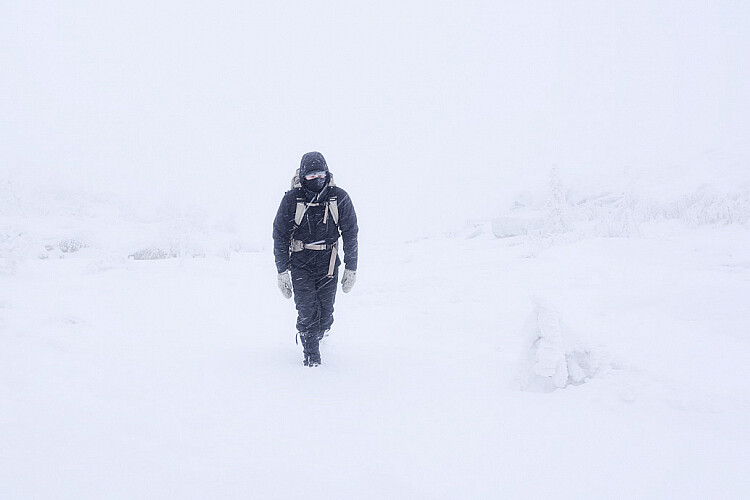
A self-portrait I took on a hike in rough conditions last winter

Lastly, related to keeping the batteries warm, you need to stay warm as well. Always be prepared and rather bring a layer too many than too few. You always want to have the opportunity to dress down, especially if you’re going on a hike.

Over to you

Do you get winter weather where you live? Get out and take some winter landscape shots and share them in the comments below. We’d love to see them.

The post 5 Tips for Better Winter Landscape Photography by Christian Hoiberg appeared first on Digital Photography School.


Digital Photography School

 
Comments Off on 5 Tips for Better Winter Landscape Photography

Posted in Photography


Edelkrone beefs up its slider range with new models and a better app

09 Dec

German video accessories manufacturer Edelkrone has introduced a range of new and updated products to its collection of portable camera sliders. It has upgraded its SliderOne with a SliderOne Pro and introduced a new generation of Wing and Wing Pro models, while the App that controls the SliderOne Pro and the new SurfaceOne has been improved with enhanced timelapse features.

The SliderOne Pro is 2 inches (~5cm) longer than the original model, and now has a more powerful and accurate motor that can take more weight as well as control its movements more precisely.

The power of the motor means it can lift more kit at steeper angles, with the company claiming 8lb/3.6kg can be worked at a 45° angle and 4.4lb/2kg can be moved on a vertical incline. The slider itself is lighter than before but can still move kit weighing up to 20lb/9kg on the flat.

The new app offers greater control over timelapse sequences so that the period between shots can be slowed or quickened during a sequence, and the speed at which the camera is moved can also be varied to create zoom and slowed-time effects.

The same app is used to control the new SurfaceOne, a motorized camera support that drives across flat surfaces that was released a couple of months ago.

It is designed to shoot in an arc around a subject and requires only two laser-positioned references for it to circle a subject at a constant distance. The SurfaceOne can work with small or large subjects, and can also be programed to drive the camera in a linear path or to pan outwards to create a panoramic view.

For those wishing to shift their camera manually, Edelkrone has also introduced a second generation of the Wing and the Wing Pro.

These elbow-jointed arms allow users to shift the camera in a straight line from side to side or in a zooming motion, just by pushing it. These models use what Edelkrone calls ‘SteadyMove’—a form of adjustable resistance that irons out uneven pushing pressure to create smooth motion in the footage.

The Wing is the smaller model and can handle up to 16lb/7.2kg, while the Wing Pro can manage 48lb/21.7kg. They both provide 1.3ft/40cm of motion.

The final new product is the StandOne, which is an all-terrain camera stand with four tensioned adjustable legs that can hold the camera level on uneven ground. The stand folds to a compact size for transporting and can hold 15lb/6.8kg of equipment.

For more information on any of the new and improved products, visit the Edelkrone website.

Prices:
StandOne €170 + VAT
SliderOne Pro €590 + VAT
SurfaceOne €1,000 + VAT
StandOne €170 + VAT
Wing/Wing Pro €400/700 + VAT

Articles: Digital Photography Review (dpreview.com)

 
Comments Off on Edelkrone beefs up its slider range with new models and a better app

Posted in Uncategorized


Video Tips: Composition Dos and Don’ts For Creating Better Images

01 Dec

How you compose or arrange your frame is one of the keys to creating interesting and compelling images. So learning some composition rules, and when to break them is essential.

Here are three short videos to help you see what to do and what to avoid in your composition.

Composition Mistakes to Avoid

Learn what not to do in this video including:

  • Double subjects
  • Looking out of the frame
  • Tangents (lines cutting through the subject)
  • Lazy composition

Beginner’s guide to composition

In this second video, Jordan from Sleeklens gives you four tips you can use to help elevate your photography composition.

?

The four tips covered include:

  1. Rule of thirds
  2. Balance
  3. Symmetry
  4. Leading Lines

9 Composition Tips

Finally, in this last video from COOPH you will see nine more composition tips based on the images of master photographer, Steve McCurry.

?

Do you have any other composition tips you would like to share? Please do so in the comments section below.

The post Video Tips: Composition Dos and Don’ts For Creating Better Images by Darlene Hildebrandt appeared first on Digital Photography School.


Digital Photography School

 
Comments Off on Video Tips: Composition Dos and Don’ts For Creating Better Images

Posted in Photography