Vlogging is more popular than ever. In response, manufacturers have introduced specialty cameras for vloggers. But do you really need a dedicated camera to vlog? We compared the Sony ZV-1 and Panasonic G100 to an iPhone to find out.
Subscribe to our YouTube channel to get new episodes of DPReview TV every week.
Action cameras have become more common in the past few years, and for a good reason. Originally created by GoPro, many big brands have also jumped in the action camera space. As the action camera space grew, there came along a lot of cheap copycats. With multiple brands and tens of models to choose from, it has become difficult to Continue Reading
The post Best Action Cameras for Every Budget: Are Cheap Action Cameras Any Good? appeared first on Photodoto.
The post Fujifilm 16-80mm f/4 Lens Review: The Best All-Purpose Fujifilm Lens in 2020 appeared first on Digital Photography School. It was authored by Jaymes Dempsey.
Is the Fujifilm 16-80mm f/4 OIS the right lens for your needs? Who should think about purchasing it? Can it satisfy beginners? Professionals? Everyone in between?
That’s what this article is all about.
For weeks, I’ve been testing the Fujifilm Fujinon XF 16-80mm f/4 OIS.
And now I’m ready to share my conclusions.
So if you want to find out how this lens performs…
On the surface, the Fujifilm 16-80mm f/4 is an all-purpose lens that can do pretty much everything.
It offers:
An excellent focal length range, stretching from wide to standard to (slight) telephoto (24-120mm on a Fujifilm APS-C camera)
Fujifilm’s image stabilization technology (OIS), promising up to 6 stops of extra sharpness
A well-built, weather-sealed body with relatively compact dimensions
A fixed f/4 aperture, which can’t offer the same low-light or bokeh capabilities as an f/2.8 lens, but is still decently wide
0.25x (1:4) magnification
A reasonable $ 800 USD price tag
Put all this together, and you’ve got a lens that should be able to find its way into the kits of landscape photographers, architectural photographers, street photographers, walkaround photographers, and travel photographers alike (and can even work for the occasional close-up shot!).
But all-purpose lenses like these tend to fail in a couple of ways.
First, they’re often optically mediocre, especially on the extreme ends of their focal length range.
Second, they’re sometimes slow to focus, which immediately takes them off the table for street photographers, and can be a big issue for travel and walkaround photographers, as well.
So does the Fujifilm 16-80mm f/4 suffer from these same issues?
Well, I’m happy to report that it does not. And while I’ll go more into the details later, I’m prepared to argue that the 16-80mm is one of the absolute best all-around lenses out there, and combines impressive value with fantastic photographic capabilities.
It’s not that the lens doesn’t have any drawbacks; pretty much all lenses, especially sub-$ 1000 lenses, do! But the Fujifilm 16-80mm offers remarkable quality given the price (and will even satisfy both amateurs and professionals).
Right out of the box, the Fujifilm 16-80mm feels solid, but not in an annoyingly heavy tank sort of way. It’s just under a pound (0.97 lb/440 g), which is light enough for long days of shooting even when lots of travel is involved. You have a mix of metal and plastic on the body, and a nice, tactile zoom ring smack-dab in the middle of the barrel:
Below the zoom ring is the aperture ring, which fits nicely with Fujifilm’s old-school style and feels great. Above the zoom ring is the focus ring, which is a bit smaller and fast to focus than I’d like, but still very serviceable.
One of the great things about the 16-80mm f/4 is its size. At 16mm, the lens is under 4 inches (10 cm) long and fits firmly in one hand, so you can store it easily in a camera bag or backpack.
And even when zoomed out to 80mm, it feels relatively unobtrusive, which is nice for street photographers hoping to move through crowds unnoticed.
As I mentioned above, the manual focus ring is smoother than I’d like (there’s no real stiffness, at least not on my copy), which is a shame, given how the lens boasts 1:4 magnification for close-up shots on the fly. But the focus ring isn’t bad, and should be fine for casual macro shots.
And I haven’t even mentioned the weather sealing. Honestly, this feels like icing on the cake, and is especially important for street and landscape photographers, who shoot in all sorts of conditions and need a lens that can withstand a bit of water.
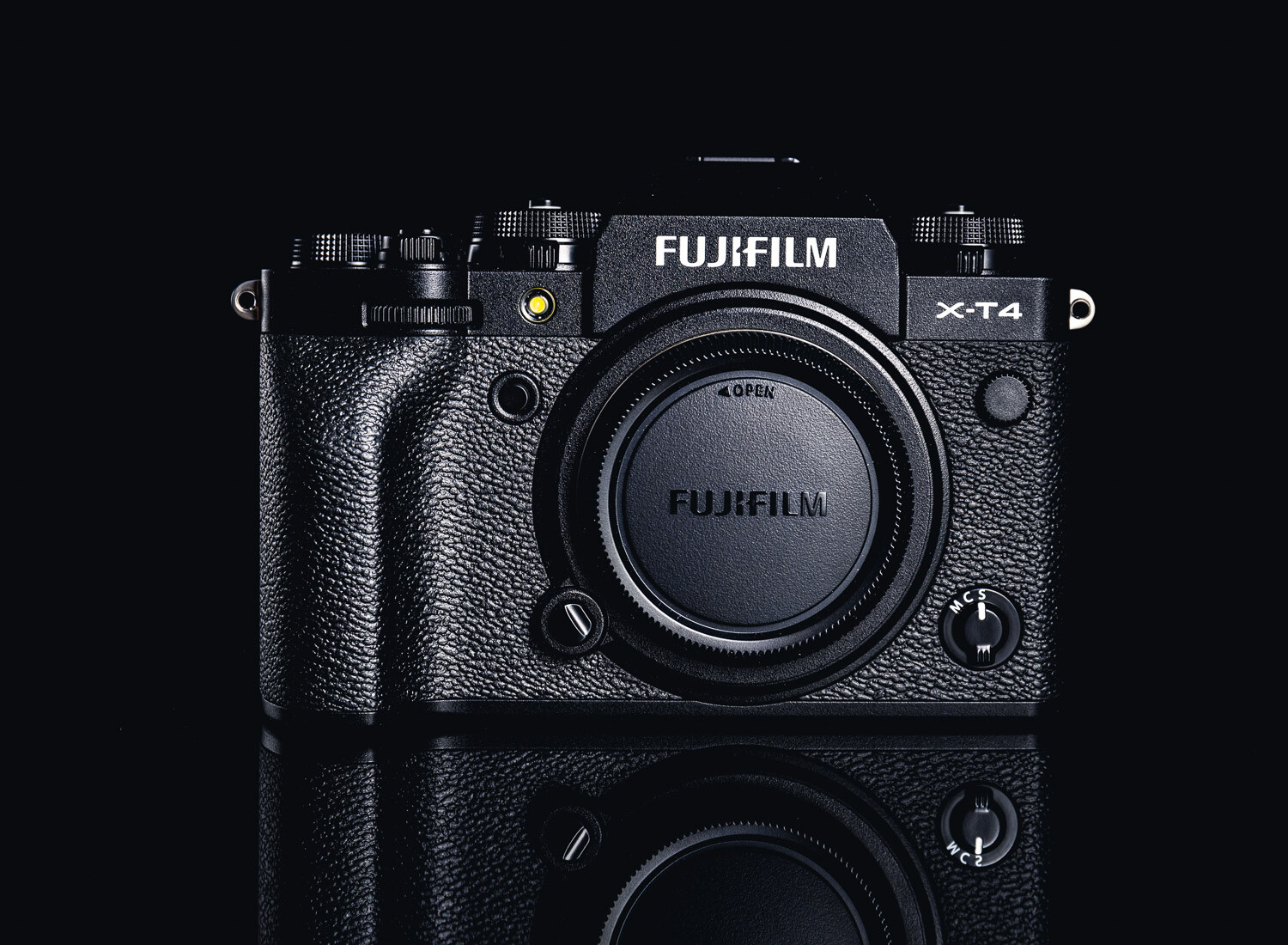
(Of course, you’ll want to make sure that you’re also using a weather-sealed body, such as the all-around awesome Fujifilm X-T4!)
Finally, one of the real bonuses on the 16-80mm is the image stabilization. This is a lifesaver in so many situations, from close-ups to low-light street shooting to handheld landscape photography and more (though the exception is photography of fast-moving subjects, where you’ll probably want to opt for a lens with a wide maximum aperture, instead).
I tested the Fujifilm 16-80mm on the Fujifilm X-T4, and focusing speeds were stellar; the lens was snappy in good light and still pretty strong in low light. I’d expect a slight drop in focusing speeds as you work with other cameras in the Fujifilm lineup, but I can say, without a doubt, that I was happy with the 16-80mm’s performance.
If you’re shooting street-style photos, this fast focusing is essential. And you’re also going to appreciate the 16-80mm’s speed if you grab the occasional action shot while doing walkaround or travel shooting.
That said, the Fujilm 16-80mm doesn’t really scream fast-paced action, so if you’re looking for some sort of wide sports lens or fast lens for indoor events, I’d suggest going elsewhere. This is thanks to the f/4 maximum aperture, which really isn’t going to get you the shutter speeds you need when shooting fast-moving subjects in low light.
On the whole, however, the Fujifilm 16-80mm f/4 autofocuses very well, and won’t let you down when it comes to capturing the occasional action shot.
In terms of focal length, I absolutely love the 16-80mm range on a crop-sensor camera. You can shoot landscapes at the wide end, zoom in for portraits, and zoom all the way to 80mm for longer street shots.
In fact, I’d argue that the 24-120mm focal length equivalent is one of the best focal length ranges available, especially compared to the standard 16-55mm kit-lens focal length range, which does well on the wide lens but just doesn’t offer that extra bit reach for travel and street scenarios.
When I buy a lens, image quality is my greatest concern.
Why?
Because I don’t care if a lens is lightning-fast and is a dream to handle if it can’t deliver sharp images in key scenarios.
Fortunately, I can confirm that the Fujifilm 16-80mm does extremely well optically. At f/4, sharpness is excellent at the center of the frame at all focal lengths, though it does fall off toward the edges of the frame, especially at the focal length extremes (i.e., 16mm and 80mm).
That said, edge sharpness is still good at f/4 when shooting in the 30mm to 50mm arena, and edge sharpness improves across the board when you stop the lens down to f/5.6 and beyond (which is really where things start to count for landscape and other detail shooters, anyway).
All in all, you’re going to love the resolution that this lens can provide. You get gorgeous results in the center of the frame, and very good results at the edges when stopped down, which will be enough for most photographers, including professionals.
You also get pretty much zero chromatic aberration, limited distortion, and limited vignetting.
Now, the f/4 maximum aperture isn’t great for low-light shooting. You’re going to want an f/2.8 lens if you plan to shoot indoor events, and you’ll probably also want f/2.8 if you plan to do any astrophotography.
The f/4 maximum aperture is also a problem for portrait photography, where the goal is often to achieve a creamy background blur combined with a sharp subject; at f/4, the blur is nice, but not outstanding (as pictured below).
The Fujifilm 16-80mm f/4 is, simply put, an outstanding lens.
It offers the focal length, build quality, autofocus speed, and image quality to be taken seriously by professional landscape and street shooters. It’s also a fantastic walkaround or travel option, given its light weight and compact size, especially when attached to Fujifilm’s smaller camera bodies.
At $ 800 USD, the lens doesn’t come cheap. But the price is far from unreasonable when you consider everything it offers.
Pretty much anyone looking for an all-purpose lens who can afford the price tag. The Fujifilm 16-80mm f/4 also does well at street photography, travel photography, walkaround photography, and handheld landscape shooting, and while I wouldn’t recommend it as a primary portrait or macro lens, you can still get some use out of it in both of these genres.
So I absolutely recommend you check it out; the lens is available for $ 799 USD here!
Rating: 4 out of 5.
The post Fujifilm 16-80mm f/4 Lens Review: The Best All-Purpose Fujifilm Lens in 2020 appeared first on Digital Photography School. It was authored by Jaymes Dempsey.
The Mars Petcare Comedy Pet Photo Awards is still taking submissions through August 31, 2020 for its 2020 competition, but the organizers have already released a few of their favorite images submitted thus far, showcasing humorous photos of pets from around the world.
‘From the founders of the world-famous Comedy Wildlife Photography Awards, Paul Joynson-Hicks and Tom Sullam have created a fun photography competition calling on all pet and animal lovers to submit hilarious images of their funny furry friends for a chance of winning £3,000 and being named the 2020 Mars Petcare Comedy Pet Photographer of the Year,’ reads the press release for the ‘Best Images Entered So Far’ gallery.
In addition to laughter, the competition also aims to raise awareness around homeless pets in the United Kingdom, with 10% of the sponsorship fees and 10% of all entry fees going to the Blue Cross, a ‘UK Pet charity to help with its work rehoming pets and providing veterinary treatment and care.’
If you’re interested in submitting your own images to the competition, you can do so through August 31. Of the submitted images, 40 finalists will be announced on September 28 and the winning image will be announced on November 19th. For £5 you can enter five photos or videos; for £10 you can enter 15 photos or videos. There are multiple categories you can submit your photos into, including Dogs, Cats, The Mighty Horse and more.
You can find out more by visiting the Comedy Pet Photo competition website.
We’ve been putting together a 35mm SLR beginners’ guide, aimed at photographers who may be starting out in medium, whether on their own or through some sort of intro to darkroom photography course.
To be considered for this forthcoming guide, we felt cameras should meet the following criteria:
Offer both full-manual and some sort of auto exposure mode, to help beginners wet their feet
Be a manual focus camera
Use readily available batteries (no mercury cells)
Can easily be found in good working order, with lens, for under ~$ 200
After some research and much chatting with other fellow analog nerds, we’ve settled on the following list of cameras, all of which are shining examples of our criteria. Now it’s up to you to help us decide which of these cameras deserve to be featured in our final guide; we’ll lean on your opinions heavily as we whittle the contenders down further.
Please vote only once for your favorite beginner-friendly camera. We’ll share the results of our poll when it closes, and our final guide thereafter.
Is your beginner-friendly SLR choice not listed? Does it meet our criteria? If so, please mention it in the comments below and vote for the next closest model.
About Film Fridays: We recently launched an analog forum and in a continuing effort to promote the fun of the medium, we’ll be sharing film-related content on Fridays, including articles from our friends at KosmoFoto and 35mmc.
It’s famously such a fine line between stupid and clever. And, for that matter, between a brilliant piece of product planning and a complete head-scratcher. History and sales figures may well prove me wrong, but I personally think that the Nikon Z5 makes perfect sense in a way the Z50 didn’t. And that might make it the most interesting entry-level full frame camera.
I criticized Nikon when it launched the Z50, because I didn’t recognize the Instagram-friendly camera the company claimed to have made. Instead I found a rather good enthusiast-friendly camera in a system with few obvious lens options. The Z5 looks a lot like a full-frame Z50, but the different audience that its higher price implies and the shift in sensor size makes all the difference.
A Z6/Z50 hybrid
Visually the Z5 looks like a Z6/Z50 hybrid, with the conventional mode dial from the Z50 grafted on in place of the Z6’s top-panel LCD. You could describe it as a full-frame Z50 or a slightly simplified Z6 and you’d still be right.
It uses an older, front-side illuminated CMOS sensor, which is likely to mean it doesn’t quite match its big brother in terms of image quality but the differences are likely to be small, except in very low light.
With its collapsible zoom and mode dial, the Z5 feels like a hybrid of the Z50 and Z6.
The Z5’s viewfinder is the same resolution as the Z6’s and its control layout is essentially the same. Its back panel is reinforced plastic, rather than magnesium alloy, but Nikon says the weather sealing is just as extensive and both the dimensions and weight are all-but identical.
Lenses
Whereas an APS-C sensor leaves Z50 owners with the choice of a couple of variable aperture zooms (and the promise of an 18-140mm in the works), the move to full frame and slightly more lofty ambitions of the Z5 are much better fit for the Z-mount lenses currently available.
To make a broad generalization, I suspect the kinds of photographers (and, according to Nikon, non-photographers) willing to spend $ 1400 on a Z5 will be more likely to want and buy the well-priced, though still pricey, F1.8 primes the company has introduced. And, by dint of being full-frame, the focal lengths of those primes are more likely to be useful on this camera than the Z50.
The most complete entry-level
Even with its more modest video spec the Z5 isn’t out-gunned by its entry-level peers. But you don’t need to look through its higher-res viewfinder for the Z5 to look like the most interesting entry-level full-frame mirrorless camera. You get a similar perspective if you look at the other cameras’ backstories.
The Sony a7 II was designed as a mid-range camera, but an aging mid-range camera isn’t necessarily better than a modern entry-level one. The distinction is even more dramatic if you compare the higher-end a7R II (which has dropped to the Z5’s launch price) the a7R II has a very good sensor but a very different shooting experience.
Sony has very much done its product development in the public realm: each model in the a7 series has been significantly better than its predecessor (first by adding stabilization, then by offering a larger battery, better AF and revised ergonomics). This leaves the now six-year-old a7 Mark II looking awkward: it’s a very difficult camera to use as soon as you’ve seen or experienced the improvements introduced with the Mark III, no matter how keenly-priced it is.
So it’s not the automatic bargain that getting a formerly $ 1700 for $ 1000 might appear to be. The areas in which it once excelled are at least matched by its entry-level peers and it hasn’t gained any of the ergonomic or interface improvements that have subsequently been developed. So it’s the only camera here without a touchscreen and it hasn’t got the usability improvements of the Mark III. By contrast, the Z5 includes all the AF improvements that the Z6 has gained in firmware over the past two years.
The Canon EOS RP is a really likable camera and the least-expensive full-frame digital camera yet launched, but Nikon has provided a lot of camera for a launch price just $ 100 higher.
Canon approached things from the other direction with the EOS RP: building what software developers might describe as a minimum viable product: the bare basic specs to deliver a credible camera. The result is actually rather likable: it’s not very fast at shooting, the video’s not great and it uses a sensor that’s never been considered particularly good, but the dials are in the right place, it’s easy to use and it produces attractive images. Only the battery life really detracts from the day-to-day experience.
With the Z5 Nikon has clearly started with the Z6 (originally a $ 2000 camera) and found a way to to offer it with a launch price 1/3rd lower. You even get the twin card slots that internet commenters suddenly decided were essential when Canon and Nikon didn’t include them on their mid-priced models (an argument that feels more convincing when it comes to the higher-end Z7).
So it’s not the full-frame Digital Rebel that Canon made, nor is it the tired-looking ex-middleweight champ that Sony offers. It’s not even comparable to the Z50, with its odd mixture of enthusiast-friendly experience and mass-market zooms. Instead the Z5 is a more affordable way to get most of a Z6, and it includes a great many of the improvements that Nikon has made on its Z-mount journey so far.
Now I just really hope it tests and shoots as well as it handles.
The post Fujifilm X-T4 Review: The Best APS-C Camera on the Market (For a Price) appeared first on Digital Photography School. It was authored by Jaymes Dempsey.
If you’re trying to decide whether the Fujifilm X-T4 is the right camera for you, then this comprehensive Fujifilm X-T4 review is exactly what you need.
For several weeks, I’ve been putting Fujifilm’s newest camera through its paces, with the goal of answering a few key questions:
What does the X-T4 offer over the X-T3?
How does the X-T4 compare to other options on the market?
And, ultimately, is the X-T4 worth the price?
All these questions, and more, will be answered in this review.
The Fujifilm X-T4 comes as the latest addition to Fujifilm’s flagship lineup, previously headed by the Fujifilm X-T3. Note that Fujifilm explicitly indicated that the X-T4 does not replace the X-T3, but enters the lineup as a sister model.
In many ways, the X-T3 and the X-T4 are the same; the ergonomics and aesthetics are exceedingly similar, plus you get 26 MP X-trans sensors, dual card slots, and 4K/60p video.
But there are also some fundamental differences. While there’s certainly still room for the X-T3 in a Fujifilm lover’s gear bag, the truth is, the X-T4 is the better camera (though significantly pricier!).
In fact, I’d go so far to say that the X-T4 is one of the absolute best cameras I’ve ever used, and certainly one of my favorites, thanks to its Fujifilm retro charm, as well as its generally strong performance across the board.
Fujifilm X-T4 | Fujifilm XF 16-80mm f/4 | 32.5 mm | 1/250s | f/8 | ISO 200
Fujifilm is in the business of making all-around cameras: Mirrorless models that can do pretty much anything at a high level, from action to landscape to video. The X-T4 is simply another level of this superb well-roundedness, giving a combination of top-notch handling, improved autofocus, blazing-fast continuous shooting speeds, high-powered video, and excellent image quality.
Here are a few key Fujifilm X-T4 specifications:
26 MP APS-C sensor
4K/60p video
Continuous shooting up to 20 fps with electronic shutter (15 fps with mechanical shutter)
3.68M-dot electronic viewfinder
500 shot-per-charge battery
Dual SD card slots
In-body image stabilization
Note that, in purchasing the X-T4, you also get access to Fujifilm’s very impressive array of lenses. Many of these are very reasonably priced, not to mention optically stellar, which is why I consider Fujifilm to be something of a dark horse in the photography world.
That said, there are some drawbacks to buying the X-T4.
While it’s a fantastic all-around camera, it has no particular specialties, which means that it’s probably not the right choice if you’re seeking to capture, say, high-level sports or nothing but detailed HDR landscape photos.
So to find out more about the X-T4, both the good and the bad, read on.
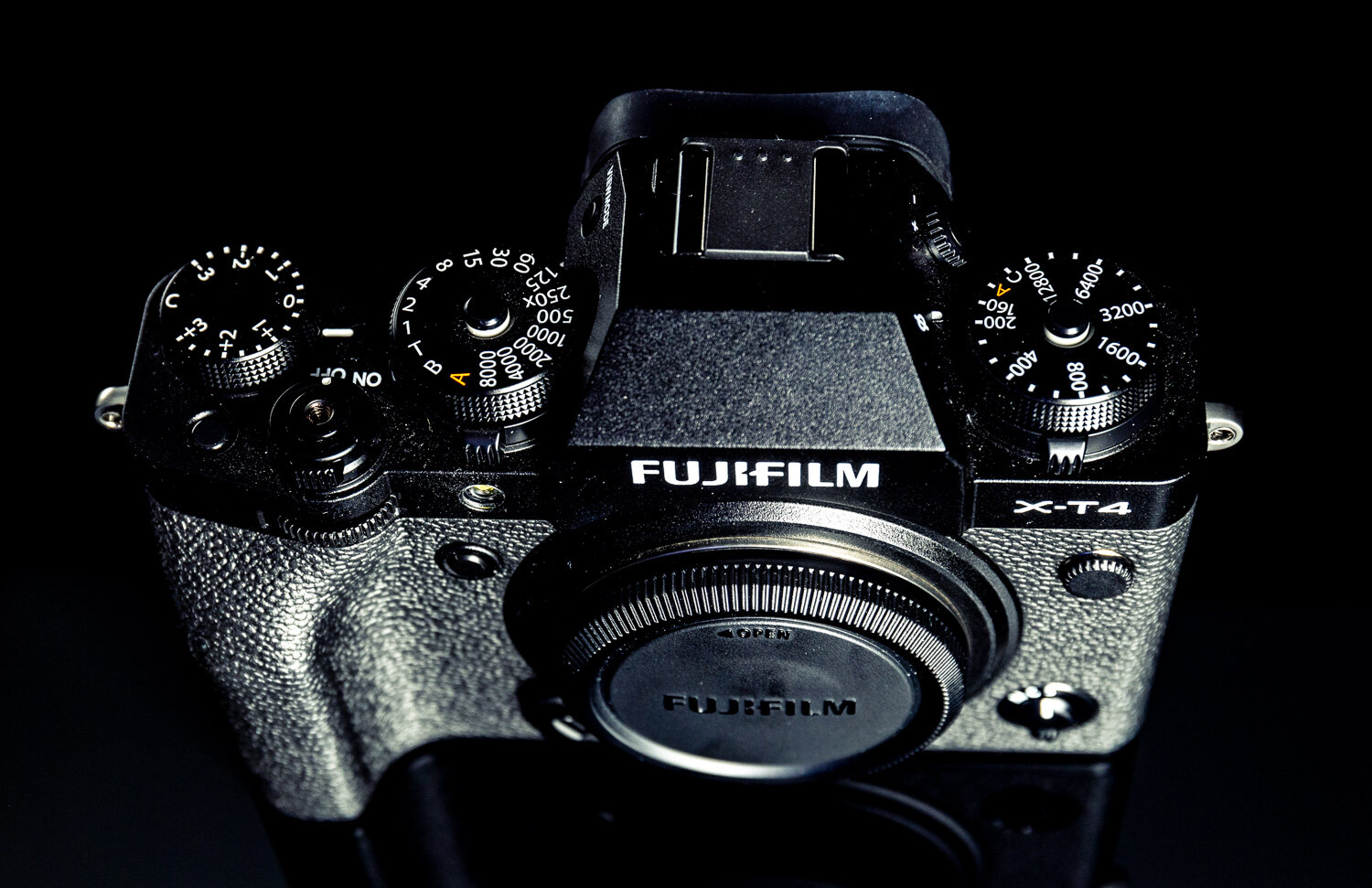
If you’re a long-time Fujifilm shooter, the design of the X-T4 will feel familiar to you. It’s very much in line with the X-T3’s thin, metallic form, though it’s gained a slight amount of bulk, presumably due to the inclusion of IBIS.
For non-Fujifilm shooters, however, holding the X-T4 for the first time may offer a bit of a shock.
First, it feels like a squashed brick; you get a very well-made body, compressed into a compact form. And while the X-T4 does offer a decent-sized handgrip, it’s not as large as what you might expect from a Nikon or Canon camera (and certainly not a Nikon or Canon DSLR), which might take some getting used to.
The Fujifilm X-T4 is weather-sealed, and it feels it; honestly, the whole body just screams durability, which means that you can feel comfortable taking the X-T4 in inclement weather (always important for serious outdoor and nature shooters).
I know I mentioned it above, but I really am a huge fan of the Fujifilm retro aesthetic, which somehow makes the X-T4 feel like less of a finely-crafted tool and more of a camera that works with you.
Handling
As with all Fujifilm cameras, handling is excellent, assuming you don’t mind the old-school dials and switches.
Note that this old-school aesthetic manifests in the form of a dedicated aperture ring on Fujifilm’s lenses, which means that you have to select the aperture by turning the ring on the lens rather than turning a dial on your camera. Also part of the old-school aesthetic is the dedicated ISO, exposure compensation, and shutter speed dials on the top of the X-T4.
I can see how this very external, dial-based handling would annoy some photographers. It’s certainly not built for speed and muscle memory in split-second action, but there’s something really wonderful about setting your shutter speed and ISO via dials on the top of the camera, as opposed to through your camera knobs or touchscreen.
The X-T4’s buttons are well-placed, and I like the focus mode dial on the front (also present on other Fujifilm models); it’s much easier to access in the heat of the moment.
A noticeable upgrade over the X-T3 here is the addition of in-body image stabilization, which allows you to get up to 6.5 extra stops of handholding. This is a huge deal for anyone who frequently shoots in low light, and is a fantastic addition to the X-T4 over the X-T3. In fact, if you haven’t used IBIS before, then you’re going to want to check the X-T4 out immediately. It’s a big help for handheld landscape photography, macro photography, walkaround photography, and much more, further increasing the X-T4’s versatility.
One last handling upgrade worth noting:
The X-T4 comes with a brand-new battery, one that’s rated at 500 images per charge. As with most battery ratings, this one seems to (happily!) undershoot reality. There were at least a few days when I shot over 500 images and still had significant charge left to work with.
For me, and for many shooters out there, this is a big deal. For one, if you’re shooting in adverse conditions, you want to swap batteries as infrequently as possible.
Plus, the better the battery life, the fewer batteries you need to take with you when traveling, for outdoor trips, etc.
The electronic viewfinder looks spectacularly life-like and features a 3.68M-dot resolution. Personally, I neither love nor hate EVFs (they can be great in some situations and terrible in others), but I do think that a minimum resolution of 3.68M-dots is required for good viewing, at least for me, personally, and the X-T4 brings that to the table.
There was never a time when I wished for an optical viewfinder while using the X-T4, and the clarity of the EVF was a huge benefit when working with Fujifilm’s Film Simulation modes (more on these later!).
You also get a fully-articulating rear LCD. This is useful for anyone who prefers to shoot without the EVF to their eye, but it’s especially important for macro photographers, architectural photographers, and landscape photographers in particular; basically, anyone who sets up their camera at odd angles.
With the X-T4’s articulating screen, you can get down-low perspective shots without having to get dirty (and without having to hurt your neck!).
Note that the X-T4’s screen does offer touch functionality, though it’s pretty much limited to setting the autofocus points. This is just fine in my book, because that’s really all I like to use touch screens for since it’s far faster than moving between points with the AF joystick.
Autofocus and Continuous Shooting
The Fujifilm X-T3 was a decent autofocus performer in its own right, but the X-T4 improves on this AF prowess, primarily in terms of tracking. Honestly, I’ve always been impressed by the X-T3’s focusing capabilities, which makes me all the more pleased with the X-T4.
Focusing on still subjects was extremely snappy, even in more difficult lighting situations.
In terms of tracking, I found the X-T4 able to follow predictably moving subjects with ease (e.g., cars), and while my keeper rate wasn’t 100 percent, I was very pleased with the results. Face and eye detection are a bit variable, especially in lower light, but are far from bad.
One of the great things about Fujifilm cameras is the continuous shooting speeds, which are blazing-fast by any metric. On the X-T4, you get 20 fps shooting using the electronic shutter, and this drops to a very respectable 15 fps using the mechanical shutter (up over the 11 fps mechanical shutter on the X-T3).
In fact, continuous shooting is one of the many reasons why the X-T4, and Fujifilm’s top cameras more generally, are such excellent all-around options. While they aren’t really designed as action cameras, you can certainly use them for fast-paced street photography, sports photography, and wildlife photography, assuming you can get the autofocus to work for you.
The X-T4 packs a 26 MP, APS-C sensor, and while it doesn’t offer many changes over the X-T3, it’s still pretty darn powerful.
I tend to be conservative in terms of my tolerance of noise levels, but I feel comfortable pushing the X-T4 to at least ISO 800. Really, noise doesn’t start to become noticeable until around ISO 1600, and images can remain usable through ISO 6400 or so, depending on your purpose.
This is a good performance, especially for an APS-C camera; to my eye, it’s around a half-stop better than the Sony a6600 and pretty much on par with the Nikon Z50. And while the X-T4 can’t quite compete with the full-frame heavy hitters, it’s still plenty useful for photographers seeking a camera that can handle itself in low light.
As mentioned above, one of the benefits of a Fujifilm camera is the film simulation modes, and here the X-T4 doesn’t disappoint. You get 12 high-quality options; it’s a lot of fun to toggle between them, just to see how the world will look with different types of film.
I find these modes to be especially useful for types of shooting where noticeable color grading is acceptable, such as street photography and portrait photography. However, you always have the option of experimenting with film simulation and making changes in post-processing if you’re not pleased.
At the time of writing, the Fujifilm X-T4 costs $ 1700 USD, which is $ 500 USD more than its X-T3 sibling, and is nearly $ 1000 USD more than the X-T30.
And this is where things get a little tricky because while the X-T4 does offer some serious upgrades over the X-T3, I’m just not sure it’s enough to justify $ 500. If I were trying to decide between the X-T3 and the X-T4, I’d feel more tempted by the X-T3, unless I desperately needed the IBIS or autofocus improvements.
Another issue with the X-T4’s price point is that it puts the camera on par with full-frame options such as the Nikon Z6, and only a few hundred dollars cheaper than the Sony a7 III. This isn’t going to make the X-T4 compelling for DSLR photographers looking to make the leap to mirrorless, or non-Fujifilm mirrorless shooters looking for a more powerful camera.
That said, if you’re already a Fujifilm shooter, or you’re a photographer who appreciates the unique design and all-around capabilities of the X-T4, the $ 1700 may be worth it.
But I’m an even bigger fan of the X-T4, mostly thanks to the addition of in-body image stabilization, which makes the camera even more impressive for low-light shooting. It’s the ultimate generalist camera for hobbyists and professionals, and it’s an excellent addition to any kit.
Is the X-T4 the best APS-C camera out there?
Truthfully, I think it is. You get excellent image quality, blazing-fast continuous shooting, great handling, dual card slots, good autofocus, and more.
My only reservation is the price, which feels a bit high compared to the X-T3. But you do get in-body image stabilization, as well as improved autofocus, so if you have the extra money to spend, go for it!
You won’t be disappointed.
?????
The post Fujifilm X-T4 Review: The Best APS-C Camera on the Market (For a Price) appeared first on Digital Photography School. It was authored by Jaymes Dempsey.
We’ve updated our Best cameras under $ 2000 buying guide, and the Fujifilm X-T4 is our top pick for those seeking a camera that excels and both stills and video shooting.
As the year closes, it’s fun to go through the library and pick out my personal faves from the year… In no particular order, my favorite shots from ’09. Not necessarily my best or most commercially successful, just the ones that tickled my own fancy:
The Sony DC-ZV-1 is an interesting camera. It re-arranges some familiar components into a camera explicitly designed with vloggers in mind.
However, while it’s not part of the RX100 series (or even part of the Cyber-shot lineup), enough of its technology comes from those cameras that we think some people will at least consider it as a stills camera.
We’re going to look at how the ZV-1 stacks up against the Canon PowerShot G7 X Mark III and the Sony Cyber-shot DSC-RX100 V (specifically the ‘M5A’ variant), first as tools for vlogging and then as compact stills cameras.
For vlogging vs. Canon G7 X III
We’ve already detailed the vlogging-specific features that the ZV-1 offers, and many of these give it a clear advantage over the Canon G7 X III, when it comes to shooting facing-the-camera video.
Underpinning most of the ZV-1’s benefits over the G7 X III is its autofocus system. Part of this is the inclusion of phase detection elements, meaning the camera can assess depth before refocusing the lens (which is critical for keeping video in focus, without too much hunting), but also Sony’s AF algorithms, which have got very, very good at both subject tracking and face / body recognition. There are other features that distinguish between the two cameras but dependable autofocus is perhaps the most compelling.
Beyond that, the ZV-1’s other key benefit is its vlogging-friendly microphone setup. The three-capsule mic is designed specifically to pick up the sounds of someone addressing the camera. The results are much better than the G7 X III.
For vlogging vs. Canon G7 X III
The ZV-1’s fully articulated screen is also likely to be preferable to the G7 X III’s flip-up screen for most vloggers. The ZV-1’s screen doesn’t extend totally to be totally in-line with the camera body (it’s angled 4 degrees back, even when fully pulled forward), but that’s not a difference likely to have any real-world impact.
Both cameras shoot 4K in both 30p or 24p (or 25p in PAL regions), should you decide your vlog would benefit from a more cinematic look.
In terms of endurance, Canon says it expects the G7 X III to record 4K footage for up to 10 minutes per clip, whereas the ZV-1 by default stops after 5. However, disengaging the overheat warnings on the Sony removes this restriction.
For vlogging vs. Canon G7 X III
The G7 X III can broadcast straight to YouTube if it’s connected to a wireless network (including your phone, if it can operate as a hotspot). However, the utility of this feature is a little questionable. For a start, how often will you be trying to vlog from a situation where you have Wi-Fi but can’t connect your camera to a computer and use either camera? But, more pressingly for most of us, YouTube only allows live streaming from mobile devices (including the G7 X III) if you have 1000+ people following you on your account.
This isn’t a big hurdle if you’re already established to any degree, but it reduces the value of the feature if you’re trying to choose a camera to start vlogging with. If you’re looking for a device to start an empire from, both can livestream if you connect them to a computer (though the ZV-1 is only promising Microsoft Windows support at the moment).
Both can directly Wi-Fi their video footage to a smartphone, for anything you’ve pre-recorded, in FullHD or 4K.
For vlogging vs. the iPhone
Another rival device for vlogging is a good smartphone, not least because there’s a chance that most of us already have one.
In their recent video, DPRTV’s Chris and Jordan used an older iPhone XR to shoot some footage alongside the Sony. Its lens offers a similarly wide angle-of-view to the Sony, while the iPhone 11 goes wider. The selfie camera on the iPhone 11 has focus fixed in a way that covers vlogging distances, but has no way to imitate Sony’s ‘Product Showcase’ AF mode if you want to focus on something nearer to the camera.
As Chris discovered when testing the two side-by-side, the iPhone appears to be rather better at stabilizing its footage than the ZV-1. And, for all Sony’s talk about improved skintones, the iPhone version looks pretty good, to our eyes.
Ultimately, while Sony appears to have more money than most camera companies to develop technologies such as machine-learning-derived AF systems, it seems to be some way behind Apple, which has been working hard to apply processing power and extreme cleverness to the output of its phones for several generations. The iPhone’s exposure and processing, while perhaps edging towards over-tone-mapped ‘bad HDR’ territory, generally looks really good. You’d have to shoot Log or HLG and color grade the ZV-1’s footage to get a comparable result.
The larger sensor of the ZV-1 should give it an edge when it comes to indoor video and, of course, it can provide a shallower depth-of-field look (which phones don’t yet even attempt to simulate in video mode) but is that enough to counteract the convenience offered by an internet-connected smartphone?
For stills vs. RX100 VA
The ZV-1 isn’t supposed to be a stills camera, in the sense that Sony isn’t particularly promoting it that way. But it shares enough with the RX100-series that we’d expect at least some people to see it as a means of getting something like a viewfinderless RX100 V without having to forego multiple generations of improvements by opting for the RX100 II.
Instead, in many respects the ZV-1 could be seen as an RX100 V without a viewfinder but with all the updates of the RX100 VII (including things like a touchscreen, that weren’t added in the M5A revision to the RX100 V). These updates include what Sony calls ‘Real-time Tracking’ and ‘Real-time AF,’ which refer the the camera’s ability to track a subject, switch to face or eye AF if that subject is a person, and continue to track them even if they face away from the camera.
The RX100 VA’s AF system is recognizably older: Tracking isn’t as sophisticated, eye AF requires you hold down a custom button to activate it and there’s a separate (and even less good) tracking system in video mode.
So what else do you gain or lose?
For stills vs. RX100 VA
As you’d expect, the ZV-1 omits a number of features that we’d expect from an RX100-series camera. There’s no EVF, no built-in flash and no control ring around the lens. There’s also no exposure mode dial (it’s replaced by a Mode button).
But in their place you get a more prominent grip to hold the camera with and a flash hotshoe if you want to attach an external flash or other accessories. And, as we say, you get another feature that the RX100 V was missing: a touchscreen.
The more prominent [REC] button on the top of the ZV-1 allows the removal of the tiny version set into the thumb rest of the RX100 V. Neither camera lets you re-purpose this button if you’re really not interested in video.
The control ring around the lens, the built-in flash and the EVF all mean the RX100 V is a better stills camera if you’re an experienced photographer, want flexibility and some direct control, but with its touchscreen and superior AF system, the ZV-1 might be the better point-and-shoot.
For stills vs. Canon G7 X III
We’ve already seen that the ZV-1’s autofocus and mics give it a clear benefit over the Canon G7 X III as a vlogging camera. But given they’re similarly priced and are both 1″ sensor compacts with short, bright lenses and no viewfinder, it’s probably fair to see how they stack up on the stills side of things.
The ZV-1’s autofocus benefits continue to shine in this situation, as does its lens, which is significantly sharper, particularly at the wide-angle end. However, the G7 X III’s 24-100mm range is appreciably longer than the 24-70-ish equiv reach of the Sony.
The Canon also has a dedicated exposure compensation dial, a clicking control ring around the lens and a built-in flash, which help make it a more engaging camera to use, if you wish to take control over your photography. We also found the grip – designed solely for holding the camera facing away from you – more comfortable than the one on the ZV-1.
Overall
The ZV-1 promises to be a more capable vlogging camera than any other we’ve seen. Its generally excellent (and, crucially, dependable) autofocus is a huge part of this, and features such as product showcase mode have clearly been carefully developed to make this capability as easy to exploit as possible.
But building the ZV-1 primarily from existing RX100 components does appear to have limited the camera, somewhat. The 24mm-equiv wide-angle capability (26mm equiv by the time the slight crop of the 4K video mode has been factored-in), isn’t as wide as some users prefer for to-the-camera presenting, especially if you then need to engage the camera’s digital stabilization, which crops-in still further.
Similarly, while the G7 X III doesn’t offer any audio monitoring, either, it does seem odd that Sony hasn’t gone to the effort of providing a means to do so, either via USB or Bluetooth. Instead it’s limited to capabilities we’ve seen in existing RX100 models.
But, for all that, the Sony ZV-1 is the most overtly vlogging-focused camera on the market. In addition, although it’s not intended, we think it might also be a better point-and-shoot camera than the RX100 V. The more prominent grip, the touchscreen and the removal of the control ring may also make it a better (and less expensive) family camera.
For vlogging though, we suspect that the ZV-1’s biggest rival will be high-end smartphones, which offer a lot of capability without the need to buy a separate device.