RSS
 

Posts Tagged ‘Become’

Cartier-Bresson and Stieglitz – Study the Masters of Photography to Become a Better Photographer

02 Sep

There is an unnervingly common trait among photographers, image makers, picture people, etc. Sometimes we forget that the reason we have access to such awesome gear and techniques, is because those who came before us in our trade figured them out, practiced them, advance them, and then left us a legacy of knowledge. The further we go back through the history of photography, the more prevalent this apathy becomes. What do you have to learn from someone who used a camera less advanced than a garage door opener? Well, as it turns out, we stand to learn a lot. Maybe not from a technological standpoint, but rather in a more intangible way that’s more difficult to appreciate, and easy to miss.

This is not to say that you can’t improve your photography from studying the methods of some of the masters. Their gear was varied and less advanced, but that only makes their work more extraordinary, and their skill even more humbling.

Henri Cartier-Bresson
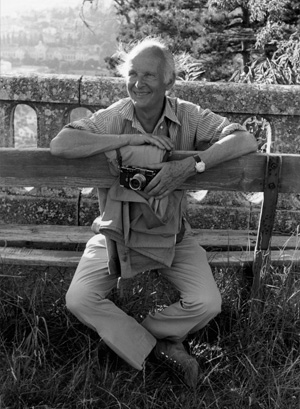
Bresson

Image by Gertrude Käsebier

Even if the name doesn’t ring some little bell in your memory, chances are you most likely have viewed his work at some point. He was literally the inventor of the photojournalistic style… let that sink in for a minute or three. Before Cartier-Bresson, proper street photography as we know it and “still life reportage” as he called it was not a well practiced, or validated form of photography.

Born into a relatively well placed upper-class French family in 1908, Cartier-Bresson, like so many well known photographers, didn’t start out intending to be such. Painting was his major pursuit before picking up a camera. That all changed in 1931 when he set his eyes upon a photograph made by Hungarian photographer Martin Munkacsi. It was an image of three young boys in the surf of a lake in Africa. Cartier-Bresson said that he “couldn’t believe such a thing could be caught with a camera” and that he “suddenly understood that a photograph could fix eternity in an instant.” The photograph drove him to relinquish painting, and start making photographs. He was thoroughly a recorder of the spontaneity of human experience. There is much you can learn from Henri Cartier-Bresson to improve all aspects of your photo making.

Lessons you can learn from Henri Cartier-Bresson:

Strive to be invisible

When you’re working as a photographer it doesn’t take long to understand that humans tend to drastically change once they realize they are being photographed. Their mannerisms, expressions, and appearances all become noticeably different. Conspicuousness steals away realism very quickly if you are not careful. Cartier-Bresson understood this and moulded himself into somewhat of a photographic ninja. He shot with relatively small cameras, usually Leica 35mm Rangefinders. You have to understand that most photographers of his time were using larger format cameras which practically screamed “Hey, I’m making a photograph of you!!!” Anonymity allowed him to capture the essence of any scene in a way that was raw and unobtrusive.

Cartier-Bresson went so far as to conceal all the shiny surfaces of his gear with black paint to further decrease his footprint as a photographer. You might not want to go that far, but it will help you to capture better images if you blend into your surroundings. Plan for your sessions in a practical way. Don’t take more gear than you need, and keep a low profile. Try to wait until you’re ready to make an exposure before you raise your camera. Practice using your camera’s controls and memorize their placement. Also, avoid using a flash if it will likely interfere with your subject. Cartier-Bresson supposedly never used a flash for his images as he saw them as impolite and distracting. Photography, especially photojournalism, depends on the earnest capture of life in all its beauty, and regrettably, its occasional misery. Try to keep it real, literally.

Compose in camera

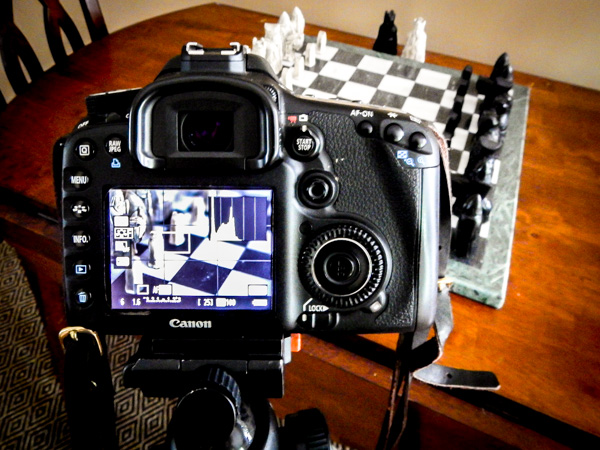
I know, I know. You’ve probably heard this before, and are most likely tired of having that phrase hurled at you. I feel your pain. I would always roll my eyes any time a seasoned photographer or well intentioned writer would talk about the importance of getting things right in-camera. Let’s be real here. It’s so easy to crop an image on the computer instead of using the camera’s viewfinder. It’s so much more convenient to salvage a less than correctly exposed image than to think through your aperture and shutter combinations.
Composeincamera

Post-processing photographs is a wonderful thing. Completely changing a photograph, however, is not always ideal. Cartier-Bresson was absolutely anti photo manipulation and believed any photograph should be cropped in the viewfinder before it was captured. Nearly all of his photographs were printed full-frame and even included about one millimeter of the unexposed negative so that his finished prints sported a thin black border to further prove the absence of cropping.

Any image is only as good as the ingredients put into its making. So try to put the best possible ingredients into your work so that your finished product will be something you will be proud to display and say “I made this”.

Focus as much on the art as the science

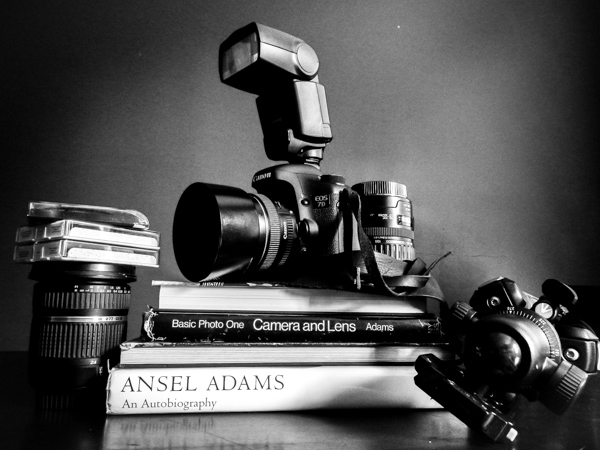
What we do as photographers would have been considered magic in an earlier time. Even at the basic level it is an amazing science. We record light that is completely unique and fleeting. You will never make the exact same photograph twice. The science of image making is an essential part of our creative process, but it must never be viewed as the only part.
Artandscience

Surprisingly, Cartier-Bresson expressed, on multiple occasions, his almost complete lack of interest in the more technical portion of making photographs. The developing and printing of his negatives, actions so carefully controlled and guarded by most serious photographers of the time, were valid only to him in the cases where they allowed more effective expression of his vision. He saw the camera as a tool, and development and printing as merely a means to a much anticipated end. He said “people think far too much about techniques and not enough about seeing”.

You can lose your direction during the of making an image. Sometimes we let technical perfectionism overshadow our initial vision. Thorough knowledge of your gear is essential to grow as a photographer. However, like Cartier-Bresson tells us, don’t allow yourself to become so focused on your tools that you forget your craft.

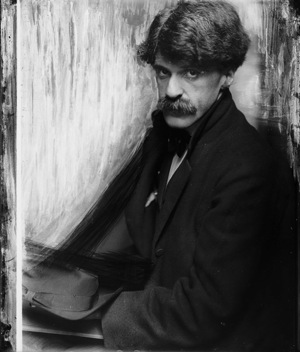
Alfred Stieglitz
Stieglitz

Alfred Stieglitz was born into this world on January 1, 1864 and left it on July 13, 1946. Anything else that I can tell you about the impact of man’s life upon the world of photography and creative art will fall unbelievably short of the full measure of gratitude we owe him as photographers. That’s not hyperbole. Before Stieglitz, photography was not considered a form of artistic expression. There were no real schools of photography, and it certainly was not considered high art on the level of painting and sculpture. Stieglitz gave artists an outlet to show their work to the public, and was the catalyst that helped begin the careers of many celebrated artists including the paintings of Georgia O’Keeffe, and the legendary photographs of the great Ansel Adams. Stieglitz was always open to new techniques and innovative thinking towards art.

His work is removed from our time by nearly a century, and many of the technical mechanisms he used are now obsolete. Still, there is much insight to be gained from Alfred Stieglitz, and his contributions. We can learn from his approach to the art world as a whole, to better ourselves as photographers.

Lessons you can learn from Alfred Stieglitz:

Express yourself when you can

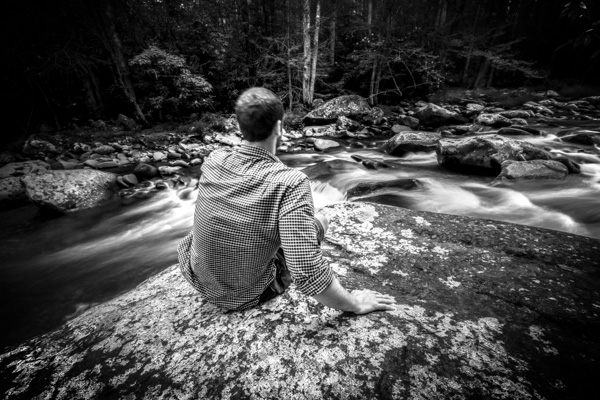
Stieglitz created a series of images called “Equivalents”. It is a collection of photographs that show a variety of different cloud formations. Each image was a self-reflection of the thoughts, emotions, and experiences that he was feeling at the time the frame was exposed. That made each image unique to only him. He was the only person who truly understood how he felt during each release of the shutter. So go out and photograph something that makes you happy. Share it with others if you want, or just keep it for yourself. Go and make photos of something that is only beautiful, or meaningful to you. The act in itself is very freeing.
Expressyourself

This spot has special meaning only to me. I made this photo for myself and no one else.

You might be thinking “I express myself with all my work”, but really think about it for a moment. Do you ever make a photograph and immediately consider how it might be accepted or rejected by other people? Do you sometimes share an image that you personally think is outstanding but no one else seems to care about? We have all done it more often than we might comfortably admit.

Break the rules if you want

Simply put, any photograph that has ever been produced, resulted from of a combination of the following variables: size of aperture, shutter speed, depth of field, focal length, image receptor sensitivity and composition (film, digital sensor, ect) and that’s all. The key to making a great image is putting all those pieces together in such a way that they convert what was only visible within your own mind, into a photograph. Those are the only iron clad rules in photography. In the end it’s you who make the choices and operate the camera.
Bendtherules

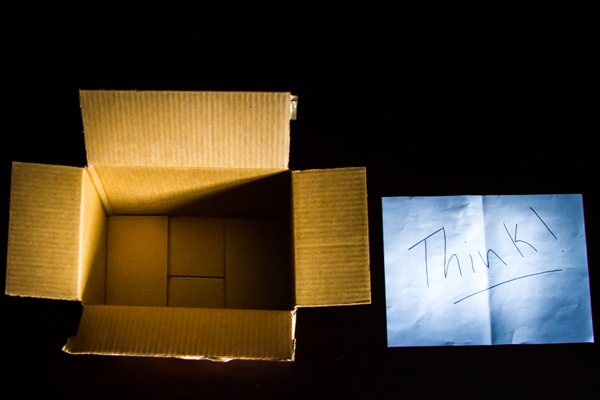
Don’t be afraid to think outside the box!

Some really great work has resulted from stepping outside the mainstream. There are many stunning images that completely ignore the rule of thirds, leading lines, horizons, and so forth. Never completely cast aside guidelines, but don’t convince yourself that you are permanently tied to them either. Learning, and practicing, the tested and proven building blocks of strong photography will help you greatly. Just remember that ground breaking work often arises from the bending of rules.

Look for inspiration everywhere

Stieglitz promoted all art forms. He opened galleries to display the works of painters, sculptors, and of course photographers. He didn’t limit himself to only photography, or painting or to works fashioned from stone and clay. Instead, he drank it all in. He recognized that it was all tangled together and intertwined.

As photographers we are able to almost instantly project what sometimes takes other artists days or weeks, or even months to create. However, this relative ease of creation can gradually place blinders on our creative thinking. We can reach a point when we only look at other photographs for inspiration. That kind of thinking limits our scope as artists. This mindset is especially dangerous for new photographers and can lead to frustration, disappointment and even worse, emulation that festers into plagiarism.

Don’t let yourself have artistic tunnel vision. Begin to look for inspiration everywhere to fuel your photography. Black and white sketches, paintings, wood carvings, architecture, kids finger-painting – everything has the potential to give you a smack of creativity that you can mould into photographic inspiration. The truth is that you really never know what will inspire you.

Please share your questions and comments below. Have you heard of these two masters before? Have they influenced your photography?

The post Cartier-Bresson and Stieglitz – Study the Masters of Photography to Become a Better Photographer by Adam Welch appeared first on Digital Photography School.


Digital Photography School

 
Comments Off on Cartier-Bresson and Stieglitz – Study the Masters of Photography to Become a Better Photographer

Posted in Photography


How to Become a Photography Icon: Inspired by Henri-Cartier Bresson

09 Jul

On the 30th of January in 1948, Mahatma Gandhi was killed by three bullets fired at close range. And while the world lost one of its greatest men (arguably), one man gained even more status as one of the most important photographers in the world.  Henri-Cartier Bresson had photographed Gandhi just about an hour before his tragic death. He also Continue Reading

The post How to Become a Photography Icon: Inspired by Henri-Cartier Bresson appeared first on Photodoto.


Photodoto

 
Comments Off on How to Become a Photography Icon: Inspired by Henri-Cartier Bresson

Posted in Photography


Nokia device division may become ‘Microsoft Mobile’

23 Apr

3308282642.jpg

Microsoft is in the process of acquiring Nokia’s Devices and Services division, and in March both companies confirmed the $ 7.2 billion deal would be closed by the end of April. Now Windows Mobile Power User got hold of a leaked letter which Nokia supposedly had sent out to its suppliers in Finland. In the letter it says that the name of Nokia Oyj will change to Microsoft Mobile Oy. Learn more

News: Digital Photography Review (dpreview.com)

 
Comments Off on Nokia device division may become ‘Microsoft Mobile’

Posted in Uncategorized


After layoffs, Sun-Times expects reporters to become mobile photographers

01 Jun

TS520x0~cms_posts_0262470397_Journalist.jpg

It seems the Chicago Sun-Times is counting on its remaining employees to become mobile photographers. After laying off its entire 28-person photography staff yesterday, the newspaper has announced mandatory training for remaining employees on ‘iPhone photography basics’. That’s according to media writer Robert Feder. Feder quotes a memo from managing editor Craig Newman: ‘In the coming days and weeks, we’ll be working with all editorial employees to train and outfit you as much as possible to produce the content we need’. Click through for the full story on connect.dpreview.com. 

News: Digital Photography Review (dpreview.com)

 
Comments Off on After layoffs, Sun-Times expects reporters to become mobile photographers

Posted in Uncategorized


8 Tips to Become Excellent at Minimalist Photography [+2 bonuses inside]

17 Apr

Less is more! You’ve definitely heard that old saying before, and it couldn’t apply more to the genre of minimalist photography. People’s exact definitions of minimalist photography may vary from person to person, but in general, this style of photography can be summed up in the following way. It makes sure that all of the attention is focused upon the Continue Reading

The post 8 Tips to Become Excellent at Minimalist Photography [+2 bonuses inside] appeared first on Photodoto.


Photodoto

 
Comments Off on 8 Tips to Become Excellent at Minimalist Photography [+2 bonuses inside]

Posted in Photography


How To Know You Are Ready To Become A Professional Photographer

21 Mar

By Annie Tao

Many photography enthusiasts contact me because they want tips on how to make their dream of becoming a Professional Photographer a reality. I am a believer and an example that it is possible to make your life’s passion a profession. The key is to not just start a business, but rather, to sustain it by being profitable and happy. That is success!

Annie Tao Photography Bay Area Burlingame lifestyle family photography family sitting on a bench in backyard 3

There are a multitude of books you can study and courses you can take about this very subject. Below is a short list of topline things you should consider based on my own experience. It will give you a starting point of things to think about and do.
You are ready to make the leap from Aspiring to Professional when…

1. You know your equipment like the back of your hand.

You should be well versed in your camera settings, lenses, lighting equipment, etc. Getting a good image is about skill and experience, not luck. So know your stuff before you start charging for your services.

2. You know that being a Professional Photographer is much more than understanding how to take photographs.

When you make photography your business, you are actually only shooting a small percentage of the time.

At some point in your career, you can choose to outsource or hire staff to do some of these activities, but when you start out, a larger portion of your time will be filled with things like, communicating with clients and potential clients, culling and editing images, balancing your budget, selling products and services, marketing yourself and your business, fulfilling orders, and drafting client contracts.

Being a Professional Photographer means being an Artist and a Business Person.

Annie Tao Photography Bay Area East Bay lifestyle family photography family laughing on tree branch with sun flare

3. You have a Business Plan.

You’ve answered critical questions, such as: Who is your target client? How will you market yourself and your business to your target client? What is your pricing strategy for Year 1? Year 2? What products will you sell? What kinds of services will you provide? How will you differentiate your business from others in your area?

Do this before you start your business. It will be harder to shift business strategies later.

Annie Tao Photography East Bay lifestyle couple photography woman laughing while leading man with golden hour sun

4. You’ve built a portfolio that represents your style and shows consistency.

Once you start charging money for your services, you have to guarantee a certain level of quality and produce it consistently. A good portfolio would do most of the selling for you.

5. You have a means of sharing your work and contact info.

It’s plain and simple: if people can’t find you, you won’t get any business.

Before launching a website, make sure you’ve put thought into your brand identity and have optimized your site for searches (known as SEO or Search Engine Optimization). In addition to a website, there are a plethora of social media options to get your business and images noticed, such as Facebook, Google+, Twitter, Pinterest, Flickr. You can protect your images by placing a watermark on them and limiting the file size and resolution.

Annie Tao Photography San Francisco Bay Area lifestyle family beach photography three sisters laughing under a blanket BxW

6. You have all your documents in order.

You’ve registered your business, gotten insurance, filed for a business license (ie, LLC, Sole Proprietorship, S-Corp), and have a contract ready to send your clients when they book your services. You have also spoken with a small business attorney and tax accountant, and have opened a separate bank account for your business.

Annie Tao Photography San Francisco lifestyle family photography mom and dad reading to baby in the livingroom BxW

7. You know who you are and what kind of photographer you are.

This may sound ridiculously simple, but it’s often overlooked.

Know what specialty you want to have before you start, so you won’t waste your efforts growing a side of your business that you do not love. Especially if you are in a saturated market, stick with your own style – whether it’s a style of shooting, processing, or photography – so you can differentiate yourself from others.

Do what you love, know your own strengths, and be yourself. This will help you attract the right clients for you. (The right client for Business A is not necessarily the right client for Business B.)

Starting and running a successful business takes a lot of resources — namely, your money, time, and energy. If you aren’t sure about something (ie, the quality of the images you’re producing, how to use your equipment, the profitability of a shoot), people will feel that uncertainty and won’t invest in you.

Make the necessary preparations before starting your business, so you can be confident when you do.

Annie Tao ProfileIf you have additional tips for starting out Pros, feel free to share in the comment section.
Annie Tao is a Professional Photographer in the San Francisco Bay Area who is best known for capturing genuine smiles, emotions and stories of her subjects.

You can visit annietaophotography.com for more tips or inspiration and stay connected with Annie at facebook.com/annietaophotography.

Post originally from: Digital Photography Tips.

Check out our more Photography Tips at Photography Tips for Beginners, Portrait Photography Tips and Wedding Photography Tips.

How To Know You Are Ready To Become A Professional Photographer


Digital Photography School

 
Comments Off on How To Know You Are Ready To Become A Professional Photographer

Posted in Photography


How To Become A Better Photographer By Watching Movies

06 Jan

I went to the movies to see Skyfall recently. As I sat amongst strangers, throwing popcorn into my mouth, it suddenly dawned upon me that what a movie, at its simplest, is just a big collection of photographs. Consider this: a movie’s sole purpose is to tell a story. So the movie-maker’s job is to position his cameras, subjects and Continue Reading

The post How To Become A Better Photographer By Watching Movies appeared first on Photodoto.


Photodoto

 
Comments Off on How To Become A Better Photographer By Watching Movies

Posted in Photography


Tips to become a successful pro photographer

07 Dec

6 things to consider to be successful as a professional photographer. Just sharing my 2 cents, what do you think? If you enjoyed this – please FB share, tweet or email to friends! goo.gl Video shot on D5100: goo.gl (Amazon: goo.gl ) 50mm 1.4g: goo.gl (Amazon: goo.gl ) Gitzo GT2540: goo.gl (Amazon: goo.gl ) Join the Flickr forum: www.flickr.com twitter.com www.facebook.com www.thatnikonguy.com
Video Rating: 4 / 5

 
Comments Off on Tips to become a successful pro photographer

Posted in Nikon Videos


Become a Better Photographer By Asking One Simple Question

06 Dec

A Guest Post By: John Davenport

Let’s be honest whether it is coming up with portrait posing ideas, photographing the stars, or avoiding danger in the field we all have a common goal here – gain more knowledge and put it to use in our photography – but there comes a time when we must be our own teachers.
We must venture out away from the tutorials, the guidebooks and those YouTube videos to simply do something for ourselves, without fear, and without guidance. Just with the knowledge that we already have in our heads. My friend, that is what this question is all about. 

What Happens When I Do This?

Image One.jpg

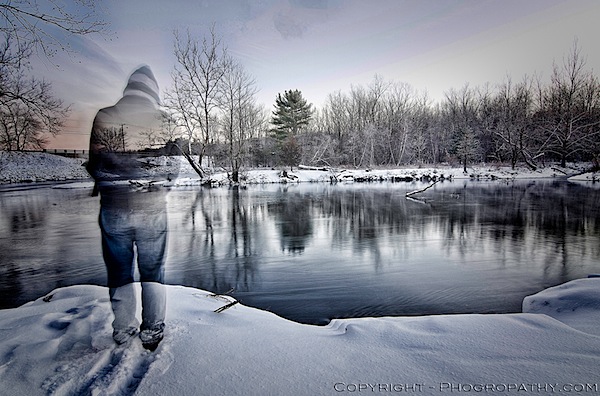
If I had not tried something different, something out of my comfort zone, I wouldn’t have been able to capture this photograph. I was attempting to create an HDR composite, but I wanted to see if I could create one with me in the frame. I’d never done this, I hadn’t even attempted it, so I just set my camera up to capture the brackets, put it on a timer, and walked into where I thought would be a good place to stand. However, while the camera was still taking the shots, I left the scene before the shutter had closed for the final time, and thus – a ghostly figure.

Image Two.jpg

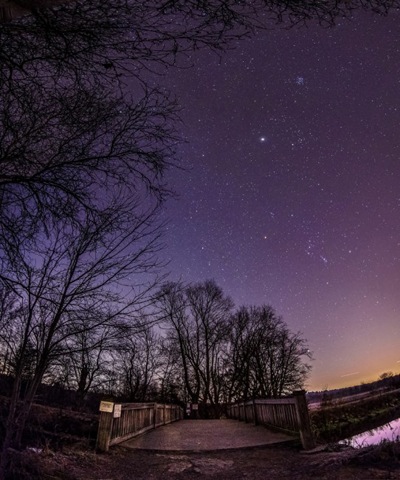
Another example is this photograph of the night sky. It actually consists of four separate landscape orientated images stitched together to create a vertical panorama with a fisheye like effect to boot. I talk in a bit more detail about how I created this vertical panoramic image on my own site, but if you’re listening to the message of this post, you probably shouldn’t have clicked on that link ;) .

It Takes Courage

Tutorials and guides make life easy. Follow the steps and you’ve got a great photograph, but is it original?
It takes courage to be able to do this style of learning and even more so to share your photographs with the world. You have to accept the fact that you’re going to make mistakes, you’re going to feel like you’ve wasted some time, and you’re going to have people tell you that you’ve done it all wrong, but to that I say all this is part of a good learning process.

Don’t Stop With Taking the Photo

Apply this no-holds-bars-experimentation-attitude to all aspects of photography and yes, maybe even to life as well.

Whether you’re using Instagram or Photoshop to edit your photographs asking, what happens if I do this?, is key to creating something different. Sure there’s a lot more to experiment with in the latter, but if you’re always using the same filter and the same blur effect in Instagram are you really learning anything?

What Do You Think?

Is it more important to get out in the field and forget the books once you’ve got the basic knowledge or should you stay up-to-date with all the knowledge that’s being shared on the web every-single-day and miss the possible shot of a lifetime?

John Davenport is an enthusiastic amateur photographer and blogger who shares daily photos on his site Phogropathy. You can also find him on Facebook and Twitter.

Post originally from: Digital Photography Tips.

Check out our more Photography Tips at Photography Tips for Beginners, Portrait Photography Tips and Wedding Photography Tips.

Become a Better Photographer By Asking One Simple Question


Digital Photography School

 
Comments Off on Become a Better Photographer By Asking One Simple Question

Posted in Photography


20 Digital Cameras for a Kid or How to Become a Photographer from an Early Age

06 Dec

In this article I talk about why you should stay away from “made for kids” cameras and get a “real” camera instead. It’s easy to find a great camera that your kids and your wallet can be happy with. And by getting an actual camera instead of a toy, you’ll be buying a product that will last longer than a week and that has capabilities that your child can grow into over time.

The post 20 Digital Cameras for a Kid or How to Become a Photographer from an Early Age appeared first on Photodoto.


Photodoto

 
Comments Off on 20 Digital Cameras for a Kid or How to Become a Photographer from an Early Age

Posted in Photography