RSS
 

Posts Tagged ‘Beauty’

Phottix launches Spartan multi-purpose beauty dish/softbox

08 Jul

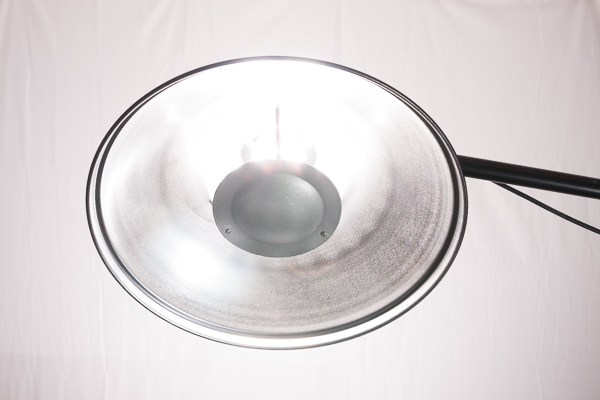
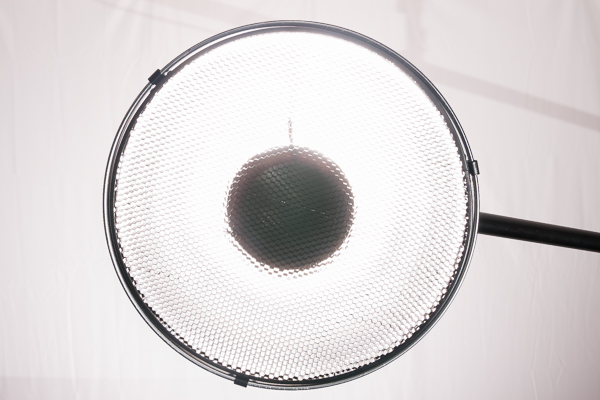
Lighting and accessories manufacturer Phottix has launched a new light modifier for studio heads and hotshoe guns that can be used as a beauty dish as well as an octa softbox. The Spartan is collapsible, uses flexible rods for its assembly and comes in 20″ and 28″ sizes. The central metal diffuser of the beauty dish configuration can be removed and users just have to attach the front diffuser panel to switch it to a softbox. A set of clasps along the rod housings allow a second diffuser to be attached directly in front of the light source, to create an extra diffused effect.

To make the light from the softbox more directional Phottix supplies its standard egg-crate grid that attaches to the inner circumference of the dish just in front of the forward diffuser.

The Spartan comes with a Bowens S-Type mount which fits the Phottix Indra heads, but speed rings are available for most other studio heads. The company’s Cerberus hotshoe flash mount is also compatible with the Spartan, so standard hotshoe speedlights can be mounted to the back of the modifier.

The Phottix Spartan is available now and costs $ 120 for the 20in model and $ 145 for the 28in model. For more information visit the Phottix website.


Manufacturer information:

Meet the Phottix Spartan Beauty Dish

Introducing the Phottix Spartan Beauty Dish. The perfect on-location light modifier, the Phottix Spartan assembles easily using flexible rods, a huge benefit over the time-consuming setup of traditional octa softboxes.

The Phottix Spartan collapsible beauty dish is made from high-grade materials. The white interior produces softer, more even light. Included in the kit are a metal beauty dish “disk”, baffle, front diffuser and fabric grid.

The Phottix Spartan is more than just a beauty dish—it quickly transforms into a traditional octa softbox by replacing the metal diffuser with the internal baffle. Add the outer diffuser for even more softness and the grid to make the light directional. All with the speed and ease that will make Phottix Spartan your first choice in light modifiers.

The Phottix Spartan comes in two popular sizes – 50cm / 20 inches and 70cm / 28 inches – perfect for single subjects and couples. Use with the award-winning Phottix Indra series of studio lights or mount to the Phottix Cerberus Hot Shoe Flash Mount.

Articles: Digital Photography Review (dpreview.com)

 
Comments Off on Phottix launches Spartan multi-purpose beauty dish/softbox

Posted in Uncategorized


Profoto launches collapsible OCF Beauty Dish

08 Mar

Profoto has launched the OCF Beauty Dish, a collapsible, lightweight, fabric version of its Softlight Reflector. Unlike the Softlight Reflector, the OCF Beauty Dish can be collapsed and stored in a carrying case when not in use, making it a more attractive option for photographers on the move.

The OCF Beauty Dish is available in silver and white versions, and includes a diffuser, deflector plate, and carrying bag. Including the deflector plate and speedring (the latter of which is sold separately), the entire beauty dish weighs 1.1lbs/.48kg and measures 56 x 56 x 22 cm/22 x 22 x 8.7 in. This model can only be used with Profoto’s B1 and B2 flashes, however.

The OCF Beauty Dish is available now from Profoto’s website for $ 179.

Articles: Digital Photography Review (dpreview.com)

 
Comments Off on Profoto launches collapsible OCF Beauty Dish

Posted in Uncategorized


How to Capture Beauty in Ugly and Mundane Subjects

26 Feb

A huge part of your job as a photographer is to make people pause, and linger over a photograph. Sometimes it could be a stunningly lit portrait, or maybe an epic landscape. But, if you’re like me, more than likely you don’t live in an area that will provide you with daily majestic shots, and you likely don’t have a full studio set up. So, you need to find inspiration around you, in the day-to-day grind, which is not always obvious.

Roots

Albrect Dürer, the masterful Reformation period painter and engraver said, “Nature holds the beautiful, for the artist who has the insight to extract it. Thus, beauty lies even in humble, perhaps ugly things, and the ideal, which bypasses or improves on nature, may not be truly beautiful in the end.” His studies, such as The Great Piece of Turf, are great examples of this concept.

Even if you live in a concrete jungle, or the strip-mall suburbs, there is some sort of nature around you. And in nature lies the capability and potential for endless creativity. Nature may be trees, flowers and plants to you, but it’s also in the weeds, the decay, or in the ugly, neglected bits along the side of the road.

Snail

The other part to this truth of beauty in ugly is this – we are drawn to imperfection and fascinated by it, it’s human nature. Think about it – the last photo that captured your attention, was it a Photoshopped model with flawless skin in a magazine ad, or was it a side-lit portrait of an older man with a grizzled beard, and experience etched into his face? The more interesting things in life are usually the imperfect ones. We connect more to reality, not ideal perfection. So this search for interesting, compelling images in ugly, may turn you towards the neglected and forlorn places, where decay and rust run rampant.

Seed pod

In your search for beauty in ugliness, try to switch your mindset and look past the obvious subject matter.

A great way to start is to take a walk around where you live, or where you work. All the photos in this post were taken either on a 5-minute walk around the neighborhood, or a 15-minute walk around the campus where I teach. The goal is to stretch your mind on what could be an interesting photo. You could easily do this with your smartphone, as a way to actively work on photography at any time.

If you’re having difficulty getting started, think about these tactics:

Look down and look closely

Much of the decay and imperfection is at your feet, or at the edges of things. Peeling paint, rusting hinges, grass and leaves – all can make compelling images, equal or even more so than the roses or pretty blooms. You need to slow down, and look at the things you normally pass by quickly.

Grass

Shoot tight

Are you fortunate enough to have a macro lens? Use it. No such luck? Experiment with your lenses and find the minimal focal distance that works for you. Even without macro or close focus, think about shooting a quality image (ISO, resolution, etc.) that you can crop in on later. And if you’re doing this as a creative exercise, remember that your smartphone has an incredible macro on it–it’ll focus inches away from your subject. Ugly often works best as a subject in small details rather than big, wide shots.

Seeds

Go for contrast

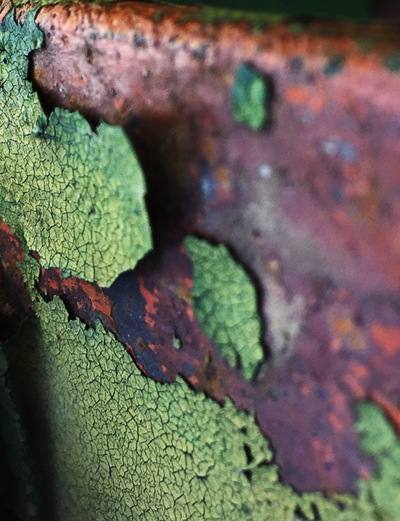
You’re not just looking for tonal contrast, but any contrast is a magical photo trick. Contrasting textures? Check. Contrasting colors? Check.
Peeling paint

Texture, texture, texture. It’s really your best friend in the search for interesting shots in not-so-pretty settings.

Think deeper

Don’t underestimate the power of symbolism. You intuitively know that there are inherent themes of loneliness, isolation, or neglect in a powerful stark image of something ugly. There is a huge fascination in current society with photographing abandoned spaces, and areas that have been forgotten. These images resonate within people. Alternately, there is a hope that occurs when you see a small bloom emerging from a pile of rubble. Remember the power of a simple visual.

Sprouted pod

Remember the ultimate subject in photography – light.

Ordinary objects can be transformed through your use of light. When you find an object to shoot, circle around it and look to see if you have shafts of light streaming in, or if there’s misty diffused light to add a mood. Just remember that if you’re shooting at noon with a harsh direct sun, it’s a good time to head for the shaded areas.

Condensation

In the end, you’ll find that by concentrating on finding interesting images in the weeds and gutters, it will actually help you in your other photography projects as well. By only documenting the ideal, perfect moments in life, you miss out on the whole story. Next time you’re shooting a wedding, or a child’s birthday party, you’ll be better prepared to capture the unplanned, imperfect moments. Those shots will be the ones that get talked about, and laughed over, for years to come.

googletag.cmd.push(function() {
tablet_slots.push( googletag.defineSlot( “/1005424/_dPSv4_tab-all-article-bottom_(300×250)”, [300, 250], “pb-ad-78623” ).addService( googletag.pubads() ) ); } );

googletag.cmd.push(function() {
mobile_slots.push( googletag.defineSlot( “/1005424/_dPSv4_mob-all-article-bottom_(300×250)”, [300, 250], “pb-ad-78158” ).addService( googletag.pubads() ) ); } );

The post How to Capture Beauty in Ugly and Mundane Subjects by Sharon Zoetewey appeared first on Digital Photography School.


Digital Photography School

 
Comments Off on How to Capture Beauty in Ugly and Mundane Subjects

Posted in Photography


Behind the camera: Beauty photographer Lindsay Adler

05 Dec

Lindsay Adler started her career as a portrait photographer very early. As a teenager, she took her classmates’ senior portraits, and later found that shooting portraits through each summer during college would help offset the costs of the school year. She’s now an author, educator and a leading fashion and studio photographer based in New York. We sat down with her recently to find out more about her early career, success and her evolving views on her own so-called ‘failures.’

Articles: Digital Photography Review (dpreview.com)

 
Comments Off on Behind the camera: Beauty photographer Lindsay Adler

Posted in Uncategorized


The Beauty of Serious Work

29 Sep

Mensch bei der Arbeit.

Andreas Meichsner dokumentiert in seiner Serie „The Beauty of Serious Work“ Prüfvorgänge beim deutschen TÜV in Nürnberg. Wir stellen seine Serie vor, die nicht nur über den Charme der Norm informiert, sondern auch die gesellschaftliche Bedeutung von Sicherheit hinterfragt.
kwerfeldein – Fotografie Magazin | Fotocommunity

 
Comments Off on The Beauty of Serious Work

Posted in Equipment


The new Canon 35L II will be a thing of beauty

28 Aug

Canon recently announced an update to the wildly popular 35mm F1.4L lens, originally released in 1998 and undoubtedly designed back in the day for film. The original was always a favorite of our technical editor Rishi Sanyal, so join him as he takes a stroll down memory lane and recounts his favorite aspects of that lens, and what he looks forward to in the update. Read more

Articles: Digital Photography Review (dpreview.com)

 
Comments Off on The new Canon 35L II will be a thing of beauty

Posted in Uncategorized


5 Ways to Use a Beauty Dish Light for Portraits

12 Apr

The beauty dish. It’s one of my favorite light modifiers, which is why I’m so excited to share some techniques you can try with your beauty dish. Don’t have one? Not to worry. There are plenty of DIY beauty dish project plans online. I’ve actually made them out of aluminum turkey pans. When you decide to step up to a more professional beauty dish, however, they are usually not as expensive as most light modifiers and you can get them for speedlights or studio strobes.

Beautydish 2

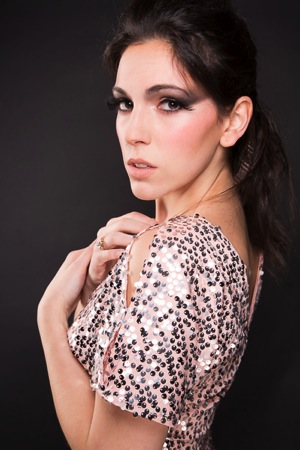
Beauty dishes are a niche modifier usually reserved for beauty shots. These tend to be head and shoulder portraits that highlight makeup and hair, and are commonly used in the fashion industry. So why should you try it? Well, it’s fun to see if you can make images like you see in the fashion magazines, it’s also very creative. You really have to plan and construct the entire image. This may include everything from your choice of background, lighting setup, and hair and makeup.

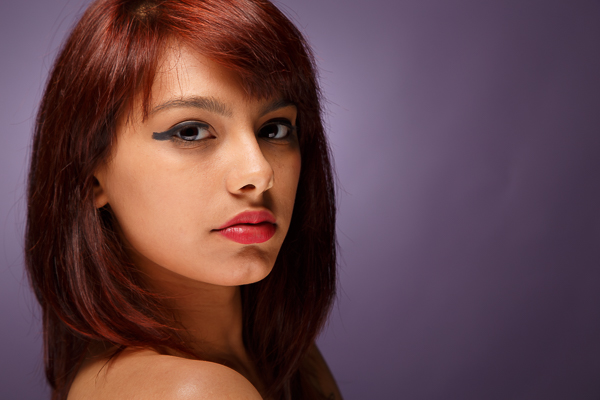
The quality of light produced by a beauty dish is not as soft as a softbox, but it is softer than an umbrella, and not as hard as just using a 7 inch reflector. The light falloff is quite rapid, which helps to sculpt the subject’s face and to show texture in their skin. Beauty dishes often produce nice catch lights in the eyes and shadows under the jaw line. They are versatile modifiers because you can change the quality of light by choosing a dish with a silver, or white, inner surface. The white surface will produce slightly less specular highlights on the subject’s face. You can also control the spill of light by using a grid and even further soften the light by adding a sock over the front.

Beautydish 3

When you plan a shoot using a beauty dish, only use it on clients or models with very good skin because the light pattern it produces can show off imperfections like wrinkles and blemishes. It’s also helpful to find a good makeup and hair artist because you will be showing off the subject’s face in detail. If you’re not ready to pay a makeup artist for this service, you can offer them a trade for images so they can expand their portfolios; or, if you’re really lucky sometimes you can find a model that is skilled at doing her own makeup.

When setting up your camera, I recommend a lens in the 85-200mm range. I use studio strobes and an aperture around f/8 or f/11. I would also recommend using a boom arm because it will help you put the beauty dish in just the right spot, without getting in the way of your shot. The beauty dish will give you very nice light on the subject’s face. Keep in mind you often need to spice up the image with a rim (or accent) light, hair light or a background light.

Beautydish 3 2

Let’s get started with five ways to use your beauty dish:

1. One light with a reflector: Clam shell lighting)

This is the typical way you will see a beauty shot set up. The dish is positioned right above the subject’s face, pointed down slightly, so the center of the dish is aimed at the subject’s forehead, right between the eyes. The dish should be close to your subject to produce soft light, usually within two to four feet. When you set this up, make sure you can see catchlights in the top of subject’s eyes. Then add a reflector under the beauty dish to bounce light back up on to their face. This will help minimize the shadows under chin, and add a catch light at the bottom of the eyes. You will have to put your camera between the beauty dish and the reflector. Some photographers also like to add black cards on either side of the subject to help create shadows on the sides of the face.

Beautydish 1 2 Beautydish 2 2

2. Two light setup: Clam shell lighting

This is basically the same as number one above, except you use a strobe in place of the reflector. This allows you control of the power output of the fill light. I prefer to use a strip box for this purpose, set one or two stops darker (lower) than the main light.

Beautydish 7b Beautydish 8

3. Add a sock over the beauty dish

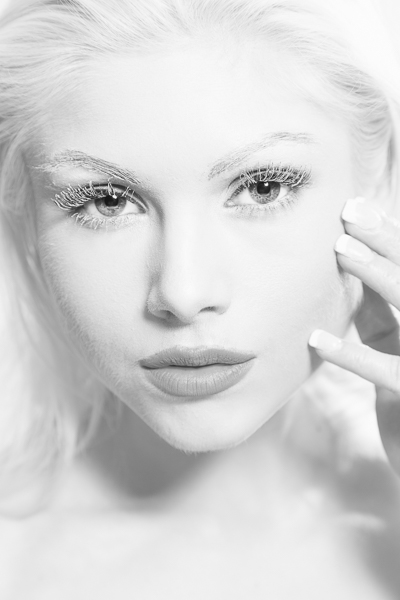
The sock is a piece of diffusion material, that looks like a shower cap, which you put over the beauty dish. This softens the light on the subject’s face, and if you are getting shiny spots it will reduce the specularity of the light. Using a sock will produce a creamy look, with less skin texture.

Beautydish 9

4. Add a grid to the beauty dish

The grid will focus the light into more of a spotlight type pattern, which can be used to create some interesting effects. Just make sure the grid is pointed directly at the subject or the light pattern will not strike the face correctly. The easiest way to check this is to make sure the subject can see directly through the grid to the light source.

Beautydish 4

5. Take it outdoors

The beauty dish is a great light modifier for outdoors because it’s more compact than a softbox, but can be used like one. The light quality will be softer than an umbrella, and won’t catch the wind as much as an umbrella or a softbox. It can be used as the main light source or as a fill light. If you use it as a main or fill light you can set it up at a 45 degree angle like you might use a softbox. When the light conditions are warm in tone such as sunrise or sunset, you may want to add a color temperature orange gel over the beauty dish to help blend the strobe’s light with the sunlight.

Beautydish 6

The beauty dish is a bit of a specialist tool that can produce wonderful lighting patterns when used correctly. However, it can also be used in many creative ways to produce interesting shots. I hope you have fun giving the beauty dish a try.

Beautydish 5

googletag.cmd.push(function() {
tablet_slots.push( googletag.defineSlot( “/1005424/_dPSv4_tab-all-article-bottom_(300×250)”, [300, 250], “pb-ad-78623” ).addService( googletag.pubads() ) ); } );

googletag.cmd.push(function() {
mobile_slots.push( googletag.defineSlot( “/1005424/_dPSv4_mob-all-article-bottom_(300×250)”, [300, 250], “pb-ad-78158” ).addService( googletag.pubads() ) ); } );

The post 5 Ways to Use a Beauty Dish Light for Portraits by Gary Detonnancourt appeared first on Digital Photography School.


Digital Photography School

 
Comments Off on 5 Ways to Use a Beauty Dish Light for Portraits

Posted in Photography


The Beauty Beneath: Ceramic Tile Illusion on Electric Box

24 Mar

[ By Steph in Drawing & Digital. ]

street ceramic 4

The ugly banality of a worn beige electrical box in a Lisbon plaza seems to give way to colorful ceramic tiles hidden beneath, the paint cracking and peeling to reveal a glimpse traditional Portuguese patterns. Street artist Diogo Machado (known as Add Fuel) completed this optical illusion as part of the Trampolins Gerador project, which aims to revitalize the city through urban art, performance, music and other interventions.

street ceramic 2

street ceramic 3

street ceramic 4

The work is a continuation of Machado’s Ceramic series combining contemporary street art with Portuguese ‘azulejo,’ tile patterns that have been a part of the country’s history for centuries. The artist often collaborates with other street artists to fuse these decorative historic details with other styles, bringing them to the city streets in a new way.

street ceramic 5

street ceramic 6

street ceramic 7

Electrical boxes, substations, bathrooms and other less-than-aesthetically-pleasing elements found on city streets are generally eyesores, making them an ideal canvas for imaginative transformations.

micro cities

city camouflage

Street artist EVOL turns them into tiny buildings, while Dutch designer Roeland Otten disguises them by blending them into their environments.

Share on Facebook


[ By Steph in Drawing & Digital. ]

[ WebUrbanist | Archives | Galleries | Privacy | TOS ]


WebUrbanist

 
Comments Off on The Beauty Beneath: Ceramic Tile Illusion on Electric Box

Posted in Creativity


14, September, 2014 – Beauty Is More Than Skin Deep

15 Sep


We have published a few articles on medium format lately.  So, today we take it down a notch and share an article by Olaf Willoughby.  He re-visits the Leica T and his experiences as a user.  You can read test reports and reviews but using a camera is the bottom line.  Olaf digs right down to the heart of it in “Beauty Is More Than Skin Deep – Thoughts On The Leica T”. 

It’s Photokina time and I am publishing this article from the Delta Lounge at the Atlanta Airport.  The show opens Tuesday and Michael and I will be there covering all the new announcements and possibly a few new surprises.  We’ll be providing daily updates on what we see.  We also have some appointments for interviews and these should be interesting.   So, check back on a regular basis as we bring you the 2014 Photokina Report.


The Luminous Landscape – What’s New

 
Comments Off on 14, September, 2014 – Beauty Is More Than Skin Deep

Posted in News


Three Tips to Help you Capture Beauty in the Everyday Moments

27 Jul

When it comes to creating family photo albums, there can be a tendency to create a book filled with your family’s “greatest hits”, the best moments of the year, if you will. Of course, those special moments like birthdays, vacations, and that one perfect Christmas card photo are important to include, but for most of us, they really don’t do a good job of capturing the little moments that make up the majority of our lives.

MeredithClark6

The other day, I was looking through a photo album with my four-year-old daughter Lizzy. As usual she skipped right past all the formal photos of her and her sister, and went right to a candid snapshot of her crying on the floor when she was about two. She’s heard the story of why I took that photo a number of times, but she always asks to hear it again, and so I told her;

“You were crying because I made us blackberry cobbler with whipped cream for breakfast one morning, can you believe that? I thought it would be a special treat, but you just wanted cereal like you had every day, and you were so mad at me that I’d made you something else!”

We both sat on the couch long after that laughing, talking, and telling stories about what Lizzy was like when she was two. To her, those are the important pictures – not the sunset sessions, not the formal portraits of her and her sister, not the perfectly composed family photos (which carefully observe the rule of thirds). To her, the little day-to-day moments really are the big things in life. They are the things that she remembers, and the more I think about it, the more I have realized that they really do belong in our family photo albums, perhaps more than anything else.

So, without further ado, here are my top three tips to help you capture the moments of beauty in the everyday:

1. Tell a Story

MeredithClark1

Look through the camera with the goal of capturing what’s happening in your life right at this moment. Maybe it’s the way your girls are sitting together, heads touching, reading a book. Maybe it’s the collection of coffee mugs on your table that speak to late nights at work. Maybe it’s the dirty feet of your kiddos hanging off the swings that speak to summers spent playing in the backyard.

MeredithClark2

Maybe it’s the collection of bottles drying on the counter that you really wish would hurry up and dry so that you could put them away and not look at them again until tomorrow. I’ve been there. Trust me when I tell you to take a picture of them before you put them away today. Because in a few years, when your kids are older and bottles are the last thing on your mind, you’ll look back on that photo and instantly be transported back to what life was really like with a young baby, counter full of bottles and all.

2. Look For Beauty Everywhere

MeredithClark3

It can be easy to overlook people, places, and things that you see every day, but there’s still beauty there if you take some time to look for it. Last fall, I was commissioned by a client to take some photos of the town that we live in. At first, I had a very difficult time thinking of any place that I’d want to photograph, because everything just felt ordinary to me. I wanted to do something unique and special, and had a difficult time thinking of how to make that happen. It took a few weeks of walking around town while holding my camera, shooting nothing, and sighing heavily before I started to be able to look at things with fresh eyes. I began to see color texture, and character, even in the old wooden house that I drive by all the time. It may be a normal and everyday thing for me, but that doesn’t mean there’s no beauty in it.

MeredithClark4

Is your dinner preparation particularly colorful? That can be beautiful. Are your kids holding hands on the couch one morning? That can be beautiful too. Is that homemade vanilla ice cream slowly dripping down a waffle cone? There’s beauty there. Those weeds outside that really need to be mowed, but in the meantime have grown into tall, prickly, textured creatures? I think they can be pretty beautiful as well.

MeredithClark5

3. Sit Back and Watch

One of the best ways to make sure that your family photos truly capture your family’s personality is to make sure that you include many candid photos. But of course, capturing true candid shots can be easier said than done, especially with children around! My best tip is to spend a lot of time sitting, watching, and holding your camera. It may not happen the first time you bring out your camera (or even the second!), but as your family realizes that you’re not going to be saying “Look right here and say cheese!” over and over, they’ll start to relax and do their own thing, and that’s when the real magic happens. Quietly pick up your camera and start shooting. You’ll start to see their real smiles and expressions, and when it comes to photos of your family and friends, those genuine smiles are always the best ones!

MeredithClark7

For more family photo ideas and projects check out these articles:

  • 10 Ways Photography Makes You a Better Parent
  • How to Create a Family Photo Essay
  • Documentary Photography – Six Tips for Creating a Legacy

The post Three Tips to Help you Capture Beauty in the Everyday Moments by Meredith Clark appeared first on Digital Photography School.


Digital Photography School

 
Comments Off on Three Tips to Help you Capture Beauty in the Everyday Moments

Posted in Photography