RSS
 

Posts Tagged ‘Beautiful’

Lush Labels: 15 Bold & Beautiful Botanical Packaging Designs

19 Jun

[ By SA Rogers in Design & Products & Packaging. ]

Representing all that’s fresh, lush and alive, botanical illustrations can make even the most boring everyday products seem life-sustaining, highlight the potential of a simple bag of dirt and turn takeout coffee cups into fashion accessories. They’re especially effective on personal care products, tea, liquor bottles and other products that go in or on our bodies. This selection of botanical product packaging is so gorgeous, it’s tempting to just keep them on shelves for decor long after the contents are gone.

Pure Health Products by Philippe Tyan

This series of packages created for a theoretical health supplement company by Philippe Tyan makes getting your vitamins seem a whole lot more pleasant with beautiful illustrations of fanciful plants.

Allis Gluten-Free Packaging by Maison d’Idee

Hummingbirds hover around an array of enticing flowers on Allis range of gluten-free flour (see what they did there?) in this series by Maison d’Idée.

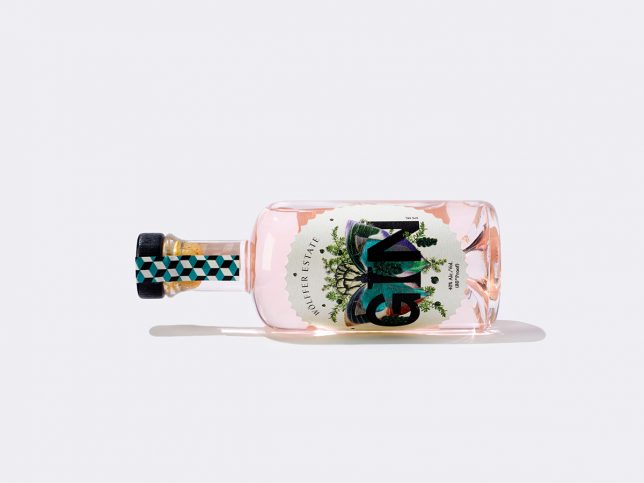
Wolffer Estate Gin by IWANT

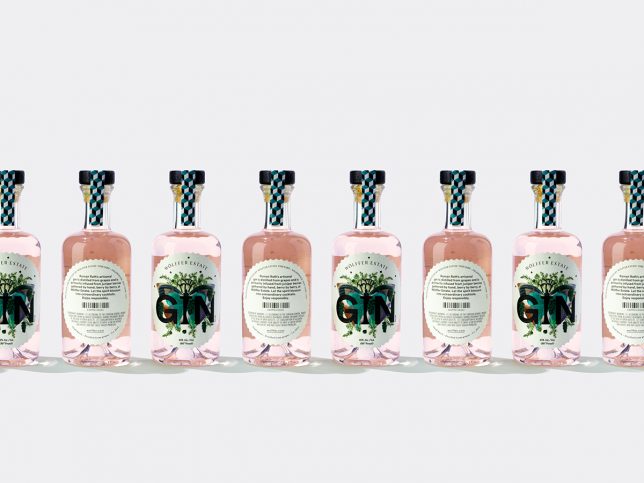
A special-edition pink gin by Wolffer Estate is set off perfectly in a transparent bottle with botanical labeling by IWANT design.

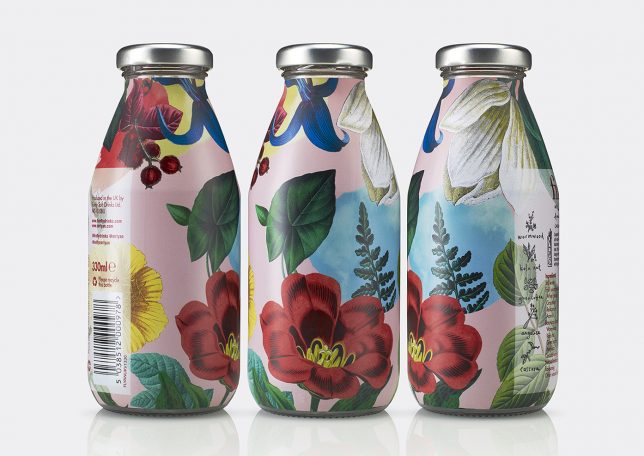
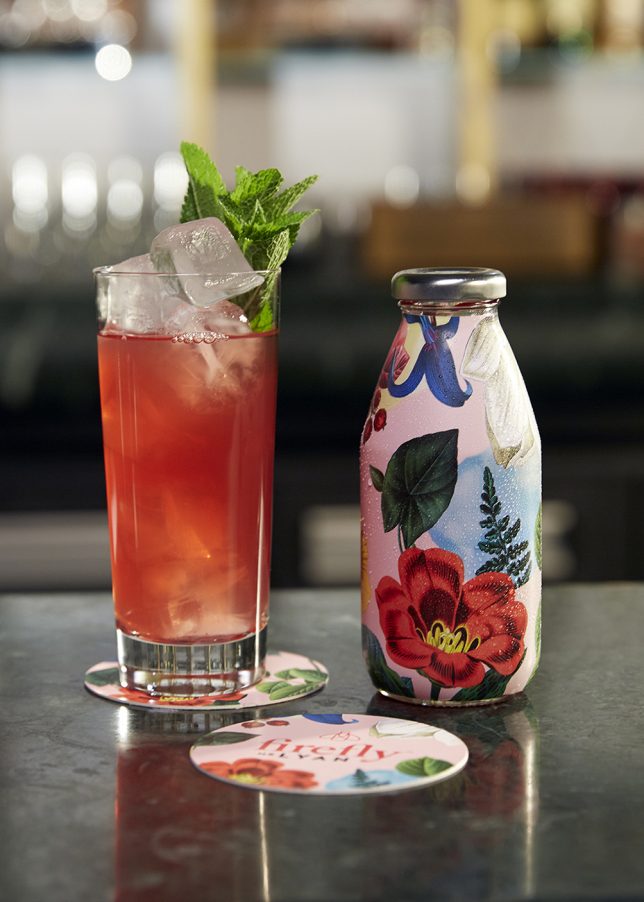
Superfly Juice by B&B Studio

B&B Studio created this ‘no logo’ bottle for Superfly, a new addition to Firefly’s juice range, which is a collaboration with one of the world’s most influential mixologists.

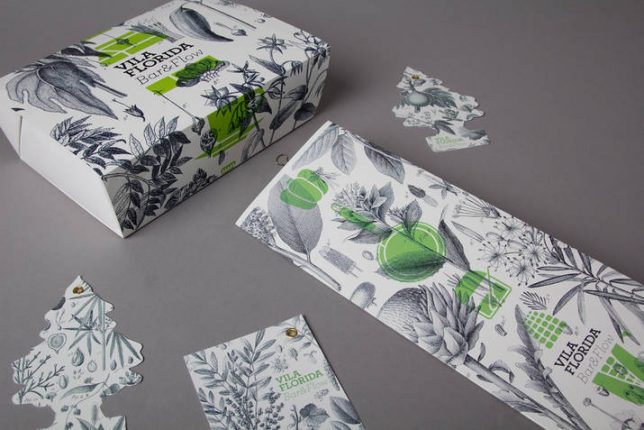
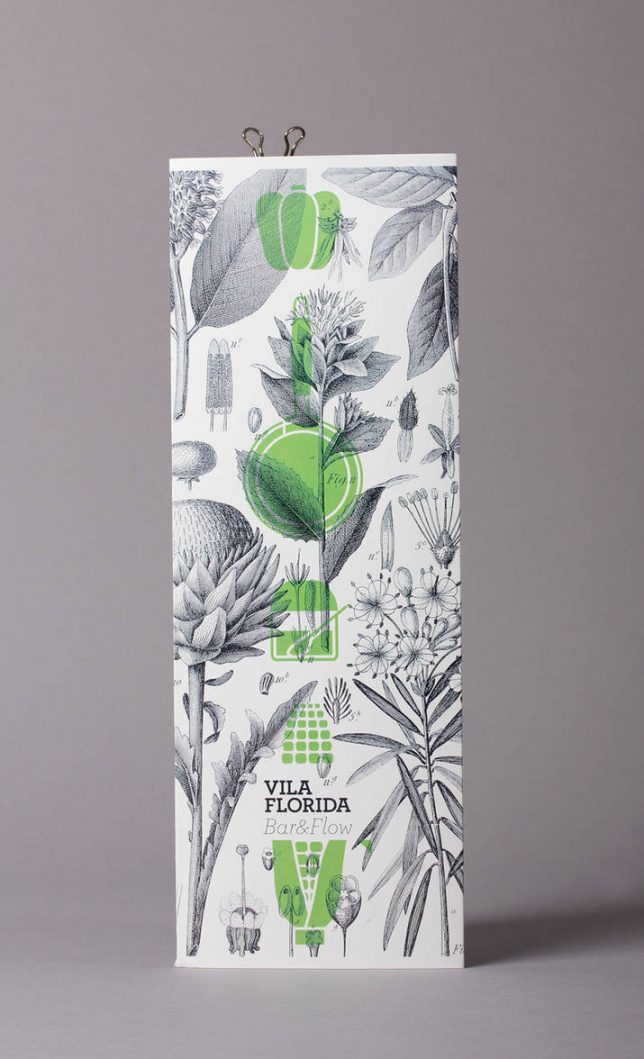
Vila Florida by Lo Siento Design

“This bar and restaurant is located inside a civic center with a garden, and the entire image seeks to evoke that atmosphere,” says Lo Siento design of its ‘Vila Florida’ project. “Featuring botanical elements and bright green as the only color, the result is fresh and natural.”

Next Page – Click Below to Read More:
Lush Labels 15 Bold Beautiful Botanical Packaging Designs

Share on Facebook


[ By SA Rogers in Design & Products & Packaging. ]

[ WebUrbanist | Archives | Galleries | Privacy | TOS ]


WebUrbanist

 
Comments Off on Lush Labels: 15 Bold & Beautiful Botanical Packaging Designs

Posted in Creativity


Aromatic Art: Empty NYC Trash Bins Turned into Beautiful Floral Bouquets

07 Jun

[ By WebUrbanist in Art & Street Art & Graffiti. ]

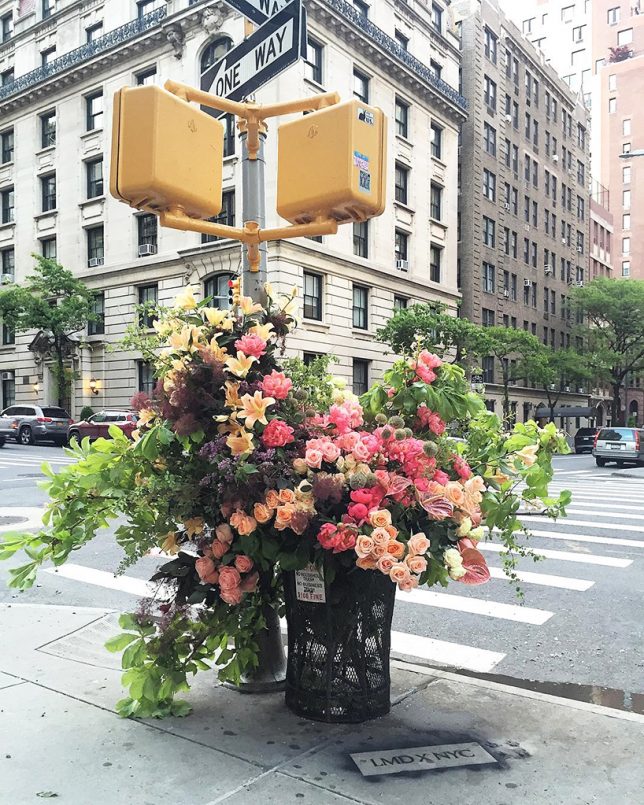
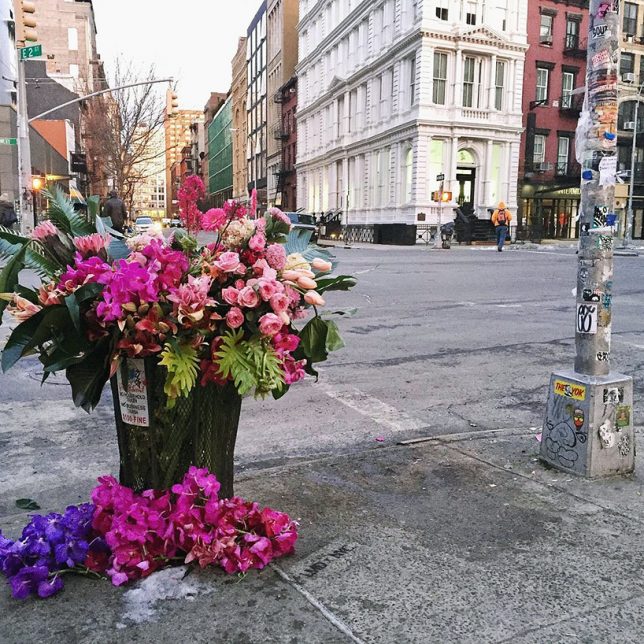
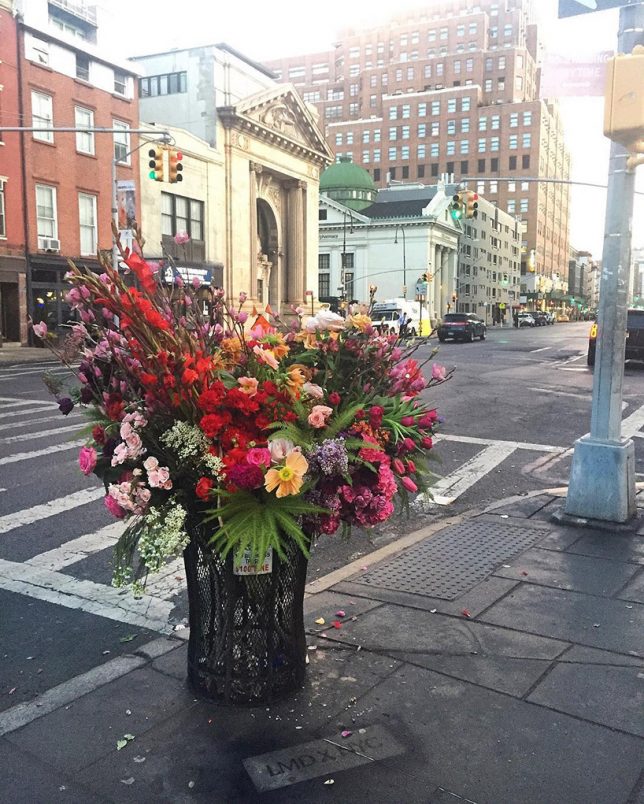
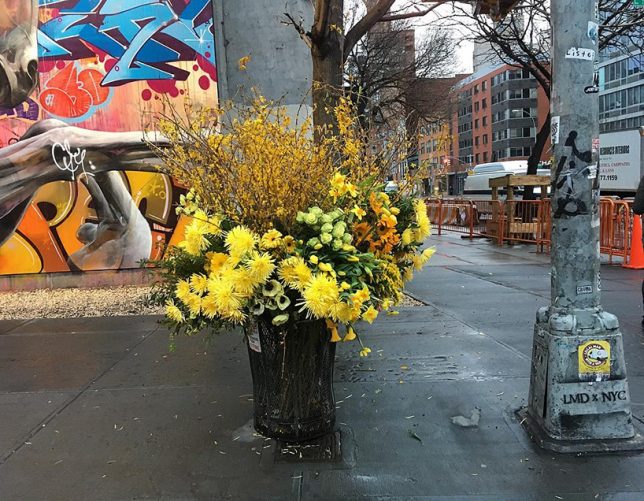
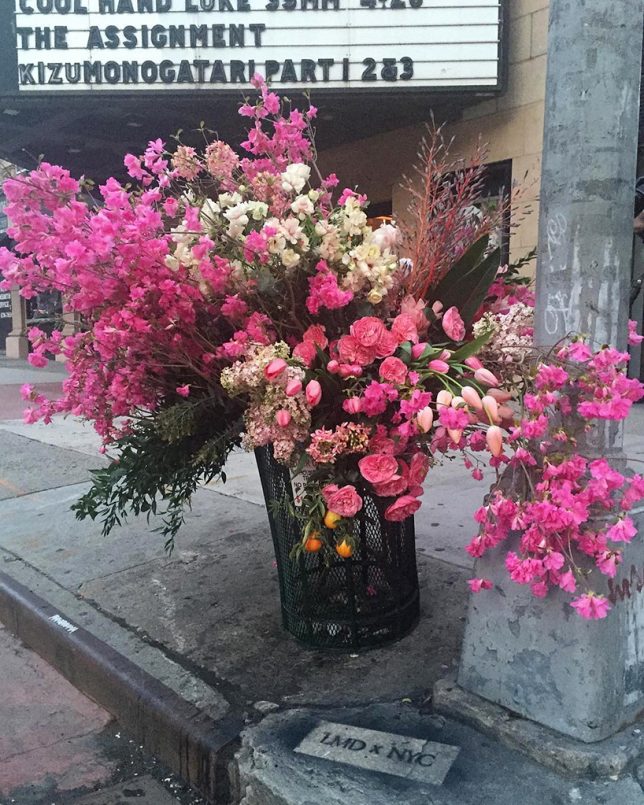
Sprouting up alongside the streets of New York City, garbage cans packed with colorful flowers are turning repelled waste receptacles into attractive centers of attention for garbage-weary pedestrians.

Floral designer Lewis Miller has been turning heads — passersby are quite literally stopping to smell the roses (and other plants) appearing in his carefully arranged bouquets, each unique and site-specific.

His ongoing project takes empty bins and uses them as blank canvasses, creating botanical art through sunflowers, azaleas, and other more exotic species. Something about the juxtaposition with beat-up wire-mesh containers makes them all the more stunning, too.

“We are storytellers through the art of floral design, transforming an arrangement into a love song and an event into an indelible experience,” says the artist. Different arrangements also pick up patterns and colors from their context, be it stickers, signs, architecture or other street art.

The temporary installations may not be a permanent solution for bad-smelling trash in a city well known for its street-side waste, but at least they offer a colorful (if passing) reprieve from the normal contents of these containers.

Share on Facebook


[ By WebUrbanist in Art & Street Art & Graffiti. ]

[ WebUrbanist | Archives | Galleries | Privacy | TOS ]


WebUrbanist

 
Comments Off on Aromatic Art: Empty NYC Trash Bins Turned into Beautiful Floral Bouquets

Posted in Creativity


How one photographer 3D printed this beautiful medium format camera

27 May
It’s named PK-6142016, aka the ‘Cycloptic Mustard Monster,’ and is a 3D printed medium format camera with a Kreuznach 90mm f/8 Super Angulon lens attached.

Photographer Paul Kohlhausen has created what he calls a ‘really precisely engineered box,’ the PK-6142016 ‘Cycloptic Mustard Monster’ medium format analog camera. Kohlhaussen designed the camera himself using Autodesk Fusion 360 and produced it via a 3D printer and SLS polyamide material. The Cycloptic Mustard Monster utilizes 120mm film and produces 6×14 cm negatives.

Kohlhausen detailed the camera on his website, where he explains that he used a Schneider Kreuznach 90mm f/8 Super Angulon lens designed for 4×5 cameras, with focusing being possible via fixed spacer brackets. Camera features include a viewfinder and a removable top plate for inserting film. In an interview with The Phoblographer, Kohlhaussen stated that he is considering launching the product on Kickstarter, but difficulties sourcing the aforementioned lens may be a hindrance.

Via: The Phoblographer

Articles: Digital Photography Review (dpreview.com)

 
Comments Off on How one photographer 3D printed this beautiful medium format camera

Posted in Uncategorized


4 Tips for Capturing Beautiful Seascapes

22 May

Seascape photography can be both incredibly rewarding and incredibly frustrating at the same time. The entire process of photographing seascapes is slightly different than regular landscape photography and there are a few extra factors you need to keep in mind.

4 Things to Know Before Capturing Beautiful Seascapes

Coming from inland Norway it wasn’t until I moved to Northern Spain that I really got a taste of photographing seascapes. It took a while for me to adapt and feel comfortable with waves crashing around me (I know those who come from coastal towns might be laughing now!) However, after living along that coast for nearly a year, and revisiting several times since, I’ve picked up several tips and tricks that can make a huge difference in your seascape photography.

#1 – Know the Tides

Understanding how the tides will impact the location you’re photographing is most likely the most important factor of capturing beautiful seascapes.

I remember the first time I visited Playa de Barrika, a stunning beach outside of Bilbao in Spain, I didn’t take one single image. It was a warm and beautiful day but the beach looked nothing like what I had expected. In fact, there wasn’t much of a beach at all. Since the tide was high, the waves went almost up to the cliffs, leaving only a thin strip of beach left. In my defence, the main purpose of this trip wasn’t photography but I had hoped to at least see what all the fuss about this place was about.

Tips for Seascape Photography

Playa de Barrika during low tide.

A few weeks later, I revisited the beach and this time I made sure that the sunset was during medium to low tide, which is ideal for this location. What met me was a completely different beach which was nothing but spectacular.

Anyway, what I’m saying is that you need to familiarize yourself with the beach you’re visiting and learn what tide is optimal to photograph that spot. Some places are interesting during high tide only while others offer opportunities regardless of the tide. Just make sure that you’re aware of this so you don’t miss out on a potentially great image.

Rising tide at Los Urros, Spain

How to Research the Tides

There are several methods to research and learn about the tides but I prefer to do this via a website such as Tides4Fishing or Tide Forecast. What I like about these pages is that you’re able to see the tides for a long period into the future, making it possible to plan trips that are months ahead.

Even though I prefer to research the tides from my computer or on a web browser, smartphone applications such as My Tide Time will also do a great job.

#2 – Accessories for Seascape Photography

We can’t avoid talking a little about accessories, can we?

Quite honestly, the accessories I recommend for seascape photography is more or less the same as the ones I recommend for landscape photography in general. The requirements are pretty similar even though the conditions by the coast might require a heavier use of cleaning products!

Lens Wipes

If you don’t already have a couple lens cloths and pre-moisturized wipes in your camera bag I strongly recommend you get some right away. These cheap and small tools are essential in keeping your lens clean and free for unnecessary dust spots.

4 Things to Know Before Capturing Beautiful Seascapes

Zeiss lens cleaning wipes.

Pre-moisturized wipes are even more important for seascape photography. If there’s a little wind, or you’re standing close to the waves, it’s quite likely that salt will gather on the front of your lens or filters. By having a pre-moisturized wipe and a microfibre cloth nearby you can easily remove this dirt from the lens and continue to take smudge-free images. This will also save a lot of time in post-processing.

Filters

Filters aren’t an essential part of seascape photography but they do have an even greater impact than they do when photographing motionless landscapes. A slight increase in the shutter speed can benefit the image a lot, but we’ll come back to this in a few minutes.

4 Things to Know Before Capturing Beautiful Seascapes

There are many filters to choose between but if you are just getting started with photography I recommend starting with a Circular Polarizer, a medium strength ND Filter, and a Soft Graduated ND Filter. This combination is all you’ll need in most scenarios and will be a great start to capturing beautiful seascapes.

Keep in mind that the use of a slow shutter speed also requires the use of a tripod!

A Remote Shutter

When you’re working with shutter speeds of approximately 0.5 seconds you’ll want to use a remote shutter to avoid camera shake. This doesn’t need to be an expensive accessory; a cheap remote shutter from Best Buy will do the job.

A remote shutter can also be useful when your tripod is placed close to the water and you don’t want to get wet. You can stand on a rock next to the camera and take pictures exactly when the waves look the best. Just take care of your camera and watch out for big waves. You don’t want the tripod to fall over!

#3 – Choosing the Perspective

The perspective often plays a great role in an image’s composition regardless of what you’re photographing. But when working with seascapes and the water’s motion, I’ve found it to be even more impactful.

Changing from a high to low perspective can make a great difference to the image, especially the depth. When photographing with a low perspective you’ll get the sensation that the waves are actually surrounding you. In addition, you can benefit from the leading lines that the waves create, which also will greatly benefit your composition.

4 Things to Know Before Capturing Beautiful Seascapes

On the other hand, using a higher perspective, or even an overview of the beach, can impact the image in a completely different way. You might not feel like your standing in the water but you get a better look at the beach and its surroundings. Some of my favorite images of beaches are taken from above rather than at sea level.

#4 – Choosing the Right Shutter Speed

The last factor you should keep in mind when photographing seascapes is the choice of shutter speed. Since I first began photographing with filters I’ve been fascinated by how great an impact a slight adjustment can have.

4 Things to Know Before Capturing Beautiful Seascapes

There are no right or wrong choices for shutter speed. It depends on your preference and what you wish to convey through that specific image. However, I’ll share some of my thoughts about this topic:

When photographing close to the water, with waves rolling in and leaving trails as they go back out, I prefer to use a shutter speed of approximately 1/2 second. I’ve found this to be the spot where I capture both the textures of the waves but still get the nice lines as the waves recede.

As I adjust to a higher perspective I tend to slow down the shutter speed more (longer exposures). Exactly how much depends on the specific scene, but normally I use an exposure between 5-30 seconds.

Again, that’s just my preferences and even I don’t follow them strictly. The best way of finding what you enjoy is to explore with different shutter speeds. If you want to learn more about the use of slow shutter speeds I’ve shared everything I know about the topic in The Ultimate Guide to Long Exposure Photography.

The post 4 Tips for Capturing Beautiful Seascapes by Christian Hoiberg appeared first on Digital Photography School.


Digital Photography School

 
Comments Off on 4 Tips for Capturing Beautiful Seascapes

Posted in Photography


How to Create a Beautiful Bokeh Background

22 May

Have you ever thought that a sheet of aluminium foil can be used as a backdrop in order to create stunning bokeh effect? Before we start talking about El Bokeh Wall and how it can be achieved, let us first get to know what exactly the term bokeh means.

Assuming that you may not be aware, bokeh is a term which comes from a Japanese word “boke”, which means blur. You can capture a photo with the blur effect, which makes the background out of focus by shooting at smaller aperture values (larger openings) such as f/1.8 or f/1.4.

Bokeh background or El Bokeh Wall

El Bokeh Wall is basically a technique in which you can capture a photo with the backdrop full of bokeh, which makes your photo eye-catching.

El bokeh background wall 01

Things required to prepare El Bokeh Wall:

  • An sheet of aluminium foil
  • A fast lens, an a maximum aperture of at least f/2.8 or larger
  • At least two speedlights or studio lights
  • A sheet of colored gel

Step 1

El bokeh wall - bokeh background

Take a sheet of aluminium foil long enough to fully cover the background in your frame. Now crumple the foil sheet gently and make a ball out of it, but do not press it too hard.

El bokeh wall - bokeh background

Step 2

Now open the foil ball that you just made and in doing so, make sure that you do not remove the crumples. These crumples on the aluminium foil sheet will be used to create the bokeh effect.

Simply lay the sheet on a flat surface and move your hand gently over it, without removing the wrinkles formed on the foil sheet.

El bokeh wall - bokeh background

Step 3

Once you have flattened the aluminium foil sheet, put it on the wall or hang it in such a manner that it fills the frame. Make sure that the crumples are evenly distributed and the sheet fills your entire frame in order to capture perfect results.

Step 4

Now place your subject in such a position that there is a gap of at least 2-3 feet between the foil sheet and the subject. This will allow you to capture shallow depth of field and make the background out of focus. In order to create a bokeh effect you need to allow some distance between the subject and the background.

Step 5

The last step is where you light up your subject and the foil sheet in order to create a well-lit photo. Start with lighting the aluminium foil sheet, you can either use a flash, studio light or even a table lamp. In order to make the bokeh appear colorful, you can place a colored gel in front of the light source.

El bokeh wall - bokeh background

Now light up the subject as per your desire. Make sure that the light source being used on the subject does not spill too much on the background which can make your background appear overexposed. This is another reason why you should maintain some distance from the background.

Some tips before you start clicking

Once you have positioned your subject and set up the lighting, take out your camera and start clicking. But before that, keep these tips in mind in order to capture a photo full of beautiful bokeh.

El bokeh wall - bokeh background

Try using a lens which allows you to shoot at low aperture value such as f/2.8 or f/1.8. The smaller the aperture value, the more bokeh effect you can achieve.

Use a telephoto lens with focal length of 50mm or more in order to get shallow depth of field and you will need a smaller foil sheet as well.

Using flash or studio lights will give you better control over the light and you can capture much better-quality results. On the other hand, if you are using a table lamp or a bulb, you might have to bump up the ISO sensitivity which will introduce noise.

Conclusion

This is an easy technique to create some stunning bokeh-licious images. Please share your questions, comments and bokeh background images in the section below.

The post How to Create a Beautiful Bokeh Background by Kunal Malhotra appeared first on Digital Photography School.


Digital Photography School

 
Comments Off on How to Create a Beautiful Bokeh Background

Posted in Photography


Beautiful photos from 1942 show the making of the New York Times

11 May

$ (document).ready(function() { SampleGalleryV2({“containerId”:”embeddedSampleGallery_4390151446″,”galleryId”:”4390151446″,”isEmbeddedWidget”:true,”standalone”:false,”selectedImageIndex”:0,”startInCommentsView”:false,”isMobile”:false}) });

Publishing has come a long way since the mid twentieth century. What was once a herculean task putting together each individual page of a newspaper has largely been replaced by click-and-save web publishing.

So when we came across a curated set of images on Mashable, pulled from the Library of Congress, we were instantly mesmerized by the beauty and complexity of a daily paper’s production. These images were all shot during the course of one night of production in the New York Times’ Manhattan office in the Fall of 1942. The photographer, Marjory Collins, worked for the War Information office.

What’s particularly interesting about these images, aside from the daunting physical labor required to publish, is the stories of the day. September 1942 was smack in the middle of World War II and news in that day’s paper focused on fighting in both Europe and the Pacific.

See all the full gallery of images here.

Articles: Digital Photography Review (dpreview.com)

 
Comments Off on Beautiful photos from 1942 show the making of the New York Times

Posted in Uncategorized


Urine for a Beautiful Day: Street Gardens Double as Public Pissoirs

07 Feb

[ By SA Rogers in Design & Fixtures & Interiors. ]

Screen Shot 2017-02-06 at 4.58.27 PM

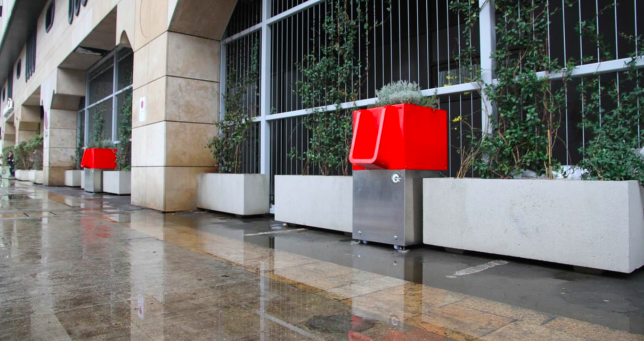
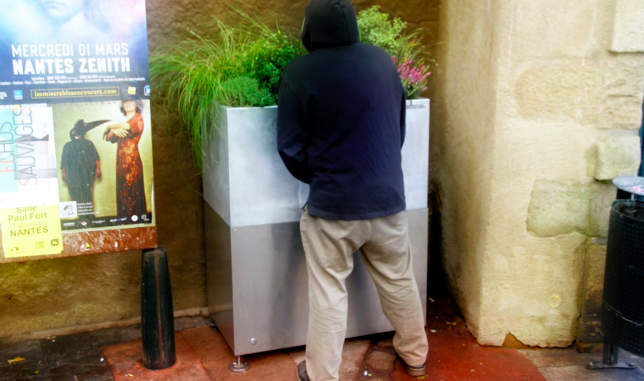
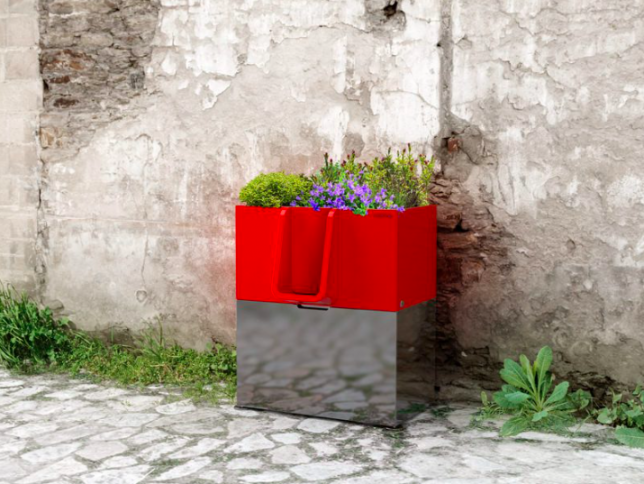
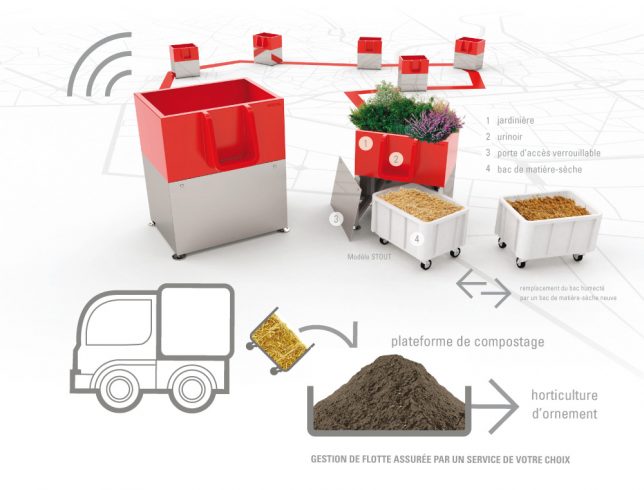
‘Piss in peace’ is the tagline for the Urintrottoir, a recent addition to the streets of Paris that’s part urinal, part composter, part mini garden. City officials are hoping that offering these urinals right out in the open will be a viable way to get men to stop peeing all over everything in sight, especially at night when they’ve had a few drinks. It would be cool if our cities could smell a little nicer, guys.

Screen Shot 2017-02-06 at 4.57.31 PM

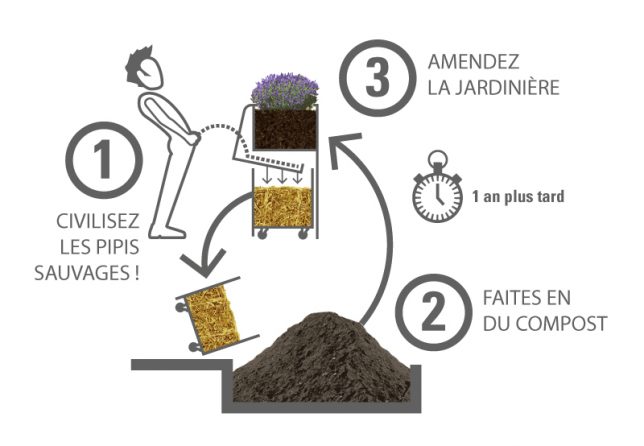
The problem is, most of us don’t want to stare at urinals as we’re walking down the sidewalk. The Urintrottoir design attempts to find a way around that and make use of waste products at the same time, by making each unit into a planter full of herbs and flowers. The top bins contain straw and sawdust, which help break down the urine into relatively neutral-smelling soil for the plants.

urine garden 1 urine garden 2

Larger versions of the device could potentially absorb the urine of 600 people before needing to be emptied. Two smaller versions are currently located near the Gare de Lyon station in Paris, and if the test is successful (and men really do choose to pee in them instead of in alleys or in the doorways of shops,) additional units will be rolled out to other stations in France.

Screen Shot 2017-02-06 at 4.58.36 PM

Some European cities already offer public ‘pissoirs’ that are considerably less decorative, but there’s not always a recycling component involved. This option makes lemonade out of lemons, so to speak (sorry, that metaphor is almost too perfect.) Now, if only there were similar options designed for people with different equipment.

A previous effort to prettify public urinals came in the form of a rose-tinted marble fountain by Portuguese architecture firm Bureau A, attempting to make public pissing into an artistic act.

Share on Facebook


[ By SA Rogers in Design & Fixtures & Interiors. ]

[ WebUrbanist | Archives | Galleries | Privacy | TOS ]


WebUrbanist

 
Comments Off on Urine for a Beautiful Day: Street Gardens Double as Public Pissoirs

Posted in Creativity


Power struggle: Hauntingly beautiful images of abandoned cooling towers

05 Nov

A look inside active and abandoned cooling towers

Belgian photographer Reginald Van de Velde has made a project of exploring the inner workings and mechanisms of some of Europe’s awe-inspiring, dormant giants: cooling towers. His images document both active and decommissioned cooling towers, as well as towers slated for demolition.

The interiors of the towers yield astonishing vistas, and as they’re abandoned he’s able to enter explore them, document and admire them. In his imagery he searches for patterns, a sense of scale, repetition, and disruption, rendering landscapes within the massive structures.

‘One thing that fascinates me extremely is the fact that not a single cooling tower is the same,’ Van de Velde says. ‘Each and every one of them has a unique interior design and build! They all look the same from the exterior, but with each visit to a new cooling tower I’m always surprised by a different interior, time and time again.’

To see more of Reginald’s work, visit his website or follow him on Facebook and Instagram.

A look inside active and abandoned cooling towers

Vegetation is slowly taking over the bottom area of this cooling tower slated for demolition, Belgium. Photo by Reginald Van de Velde

A look inside active and abandoned cooling towers

Inside the belly of an active cooling tower: billions of water drops fall down while releasing heat to the environment. Belgium. Photo by Reginald Van de Velde

A look inside active and abandoned cooling towers

The impressive interior view of a giant cooling tower scheduled for maintenance, France. Photo by Reginald Van de Velde

A look inside active and abandoned cooling towers

The spectacular view inside a decommissioned gasometer in Germany, looking upwards. The air vents at the top dome create natural ambient light. Gasometers can reach heights of 150 meters. Photo by Reginald Van de Velde

Inside Active and Abandoned Cooling Towers

Unreal scenery resembling the set of a sci-fi movie. This is the view inside a defunct cooling tower in Belgium. Photo by Reginald Van de Velde

A look inside active and abandoned cooling towers

Warm moist air rises from a central outlet inside an active cooling tower, Belgium. Photo by Reginald Van de Velde

Inside Active and Abandoned Cooling Towers

Snow particles cover the interior mechanism of an abandoned cooling tower in Belgium. Photo by Reginald Van de Velde

A look inside active and abandoned cooling towers

Covered in moss and algae, these beams support the inner structure of a defunct cooling tower, UK. Photo by Reginald Van de Velde

A look inside active and abandoned cooling towers

A structure that resembles the look and feel of a cooling tower: this is the view inside a gasometer, an industrial recipient used for the storage of natural gas. Belgium. Photo by Reginald Van de Velde

To see more of Reginald’s work, visit his website or follow him on Facebook and Instagram.

Articles: Digital Photography Review (dpreview.com)

 
Comments Off on Power struggle: Hauntingly beautiful images of abandoned cooling towers

Posted in Uncategorized


How to Make Beautiful Portraits Using Flash and High-Speed Sync

04 Nov

The scene: Outdoors with full sunlight. The gear: Your camera, lens, and flash. The problem: You find that your flash only works at 1/200th or below so you need to be at f/16 or f/22 to get the shot. Everything is in focus, including all the cars and other distractions in the background. Those dust spots you keep meaning to clean are also perfectly visible. Why won’t it work with a higher shutter speed so you can have a wider aperture? Well, it’s all down to the issue of sync speed, more specifically using flash and high-speed sync.
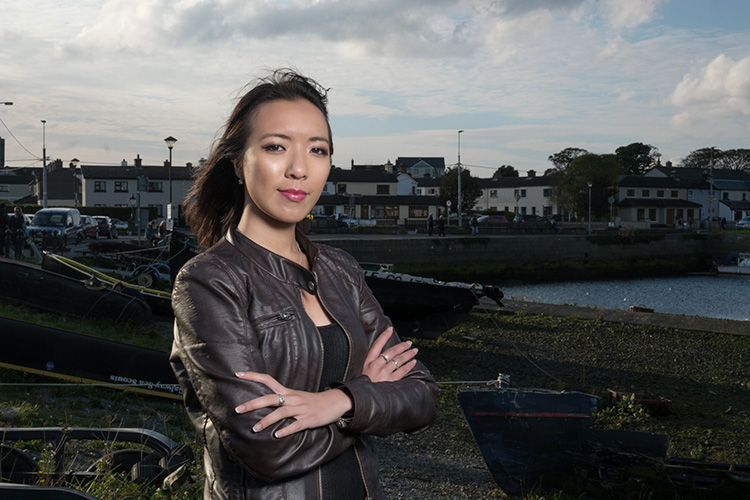
A typical portrait shot with off camera flash. To overpower the sun and stay below the camera’s sync speed, you’re forced to use a narrow aperture. Here we’re at f20 just to stop the backlight overpowering the hair and stop the sky blowing out. The resulting aperture means that everything is pretty much in focus, leaving the background looking cluttered. This shot is for example only, you should generally make a point of choosing clutter free backgrounds

A typical portrait shot with off-camera flash. 

To overpower the sun and stay below the camera’s sync speed, you’re forced to use a narrow aperture. Here I’m at f/20 just to stop the backlight overpowering the hair and the sky from blowing out. The resulting aperture means that everything is pretty much in focus, leaving the background looking cluttered. This shot is for example only, you should generally make a point of choosing clutter-free backgrounds

Sync Speed

Sync Speed is the fastest shutter speed where the camera exposes the whole frame at once. When you fire any shot below this speed, the first shutter curtain opens fully, revealing the entire sensor to light. At the end of the exposure time, the second shutter curtain moves across the frame to finish the capture. Both curtains then reset together (this means you get no light leaking in).

Generally, the sync speed varies between 1/125th and 1/250th, depending on your camera. You’ll find some quoted sync speeds are not indicated correctly. For instance, the Canon 5D series are rated at 1/200th but often show a black band at the bottom of the screen at this speed when it’s used with flash.

When you go above the sync speed, the second curtain starts to move before the first one has completed its journey. As your shutter speed gets shorter and shorter, the gap between these curtains narrows to a tiny slit. Despite this, all parts of the sensor receive light, and a full exposure is made. On a bright day, with a prime lens, you can easily shoot at 1/8000th at f/1.4 and have a perfect exposure. All parts of the frame still receive light, because it’s continuous throughout the exposure.

The Sync Speed Problem

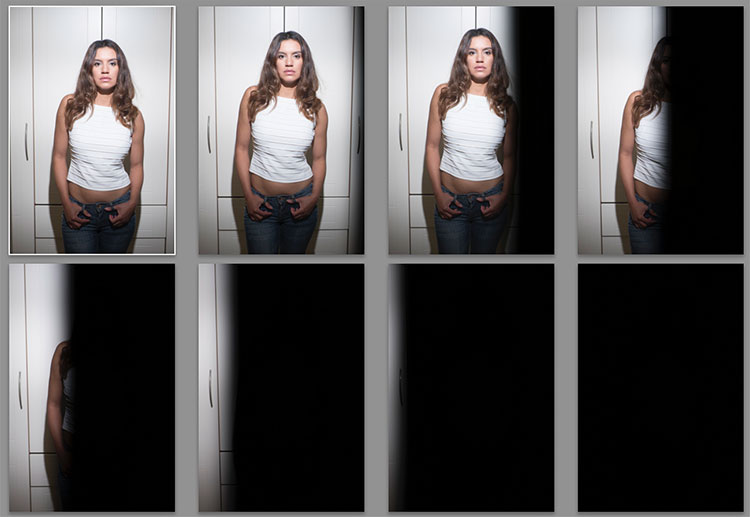
It’s when you introduce flash that you start to have problems. You see, when a flash is fired (usually when the first curtain is opened) all the light from it comes out in a very short space of time (in order of milliseconds). When you go above (faster than) the sync speed, the position of the curtains doesn’t reveal the entire frame at the time the flash fires. The means the shutter curtain blocks part of the flash and prevents it from reaching the sensor. Any ambient light will expose normally, but the flash gets hidden in part of the frame. As your shutter speed gets faster and faster, more and more of the flash is blocked until it’s no longer visible in the shot.
portraits with flash and high-speed sync

Here’s a set of images taken at 1/3 stop increments with a flash. Shot on the Fuji X-T2, the first is at 1/250th, the native sync speed of the camera. In order (left to right, top to bottom) 1/250th, 1/320th, 1/400th, 1/500th, 1/630th, 1/800th, 1/1000th, and 1/1250th. Even 1/320 is useable if the subject being lit is away from the edge.

Everything in Focus

Normally when you use flash outside in daylight, you end up having everything in focus. Remember the Sunny f/16 Rule? If your subject is in direct sunlight during the day, you can set your aperture to f/16 and your shutter speed will be one over your ISO value. So if your ISO is set to 100, your shutter speed would be 1/100sth (and f/16). As another example, if your ISO is 200, then the shutter speed would be 1/200th. To get a richer sky, you’d really need to be at f/22, making it a tough job for your flash. Because you can’t get faster than 1/250 (sync speed), you have to increase the aperture to expose the shot correctly.
portraits with flash and high-speed sync

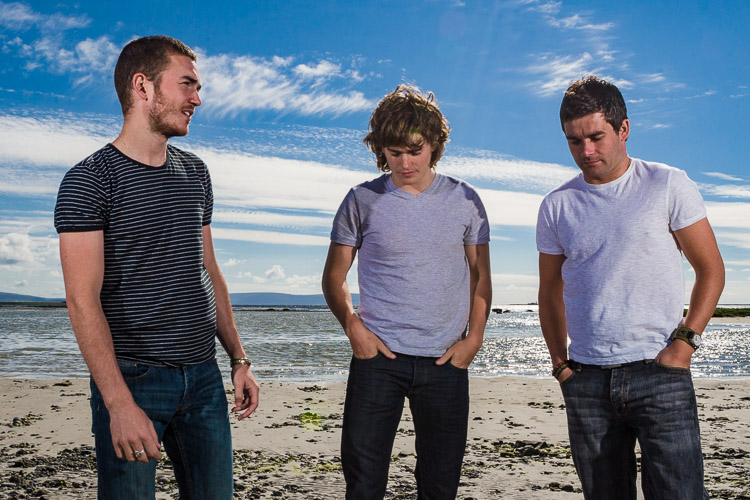
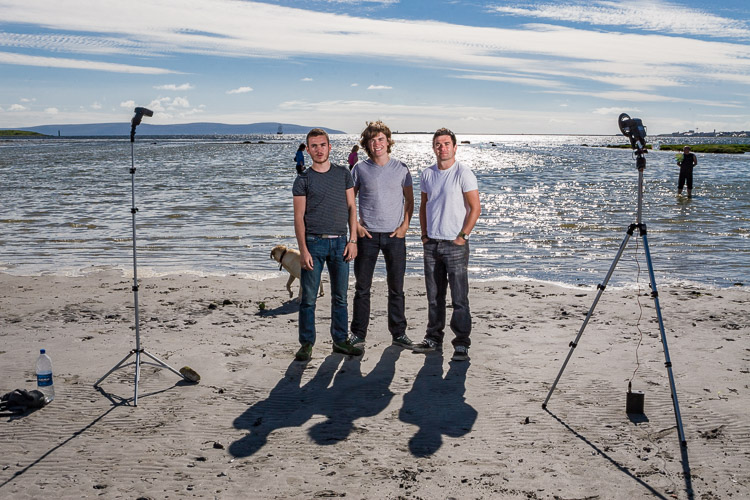
Shooting at f/20, 1/160 to get a richer sky for this band promo shot. It’s quite an old shot, so there were few options for reducing the aperture at the time. Even the hills in the background are in clear focus. The beach isn’t exactly pretty either.
portraits with flash and high-speed sync

A behind the scenes shot – two flashes on full power.

Softer light

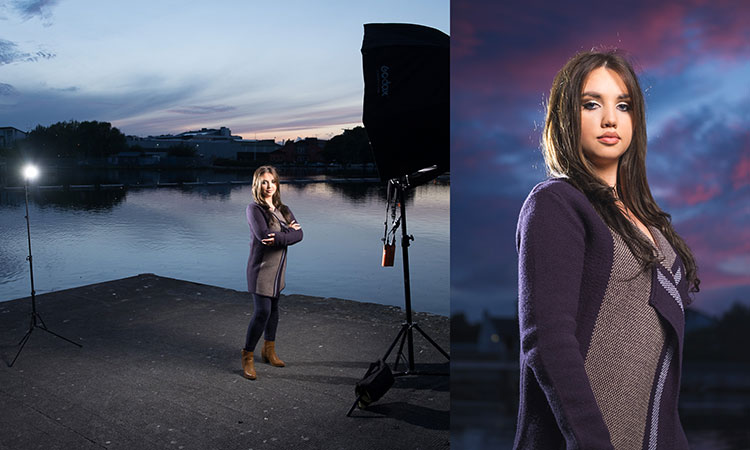
Most speedlights at full power, bare bulb, in close, can give you just enough power to look natural at these settings. Bare flash is not flattering, though it can add character. If you want softer, more flattering, light, you need more power. Most modifiers that give soft light will take two stops of power compared to the bare flash. That’s a lot of power. You could use a more powerful light, like the Godox AD360, the Elinchrom Quadra, or the Profoto B1. Alternatively, you could use a bracket that takes multiple speedlights. Either option allows you to get soft, flattering, light while outdoors.
portraits with flash and high-speed sync

A higher power option is the Godox AD360. This is coupled with the Godox 120cm Octa for softer light. This is shot at f/2.8, ISO200 and 1/125th. Because it’s after sunset, you can easily get wider apertures. just one of the options you have for the shallow depth of field look.

This solves the soft light issue, but it doesn’t solve your aperture issue. For creamy bokeh (the soft out of focus background look), you need to get our aperture down. If you’re shooting in the early morning or late evening, you can do this easily, but during the day it’s an issue.

The Solution: High-Speed Sync

You’ll need to find a way to get around the issue of sync speed for daytime shooting. Fortunately, there is a solution. It’s not perfect, but it does work. It’s called High-Speed Sync, also known as Focal Plane Sync. High-Speed Sync (HSS) works in a unique way. Instead of firing the flash at the start of the shot, HSS pulses the flash throughout the whole exposure, trying to simulate the effects of a continuous light.
portraits with flash and high-speed sync

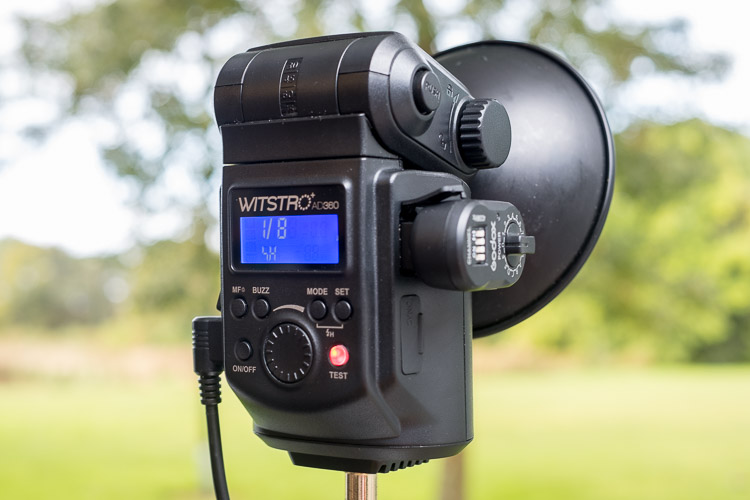
The AD360 set to High-Speed Sync. Usually, there’s a single button hold, or a double button combination to turn HSS on.

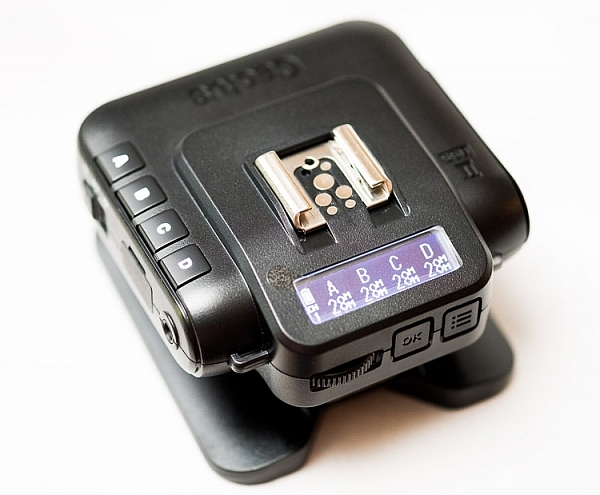
It works well, but it comes at the expense of power, and heat. HSS works the flash really hard. After a few shots, the flash may even shut down for cooling. For HSS to work, you need the camera to transmit HSS to flash, and for the flash have HSS built-in. All major brands allow it, though Fuji only just introduced it. Cactus Image makes a trigger called the V6II which allows you to use any HSS flash with any camera. Read my review of the Cactus V6II trigger here.
portraits with flash and high-speed sync

The Cactus Image V6II allows power and zoom control over a wide range of speedlights, as well as offering High-Speed Sync abilities.

The Look of HSS

You can use HSS to go over the sync speed barrier, so settings like 1/4000th at f/1.4 are achievable with flash. You get the complete control of the light using flash, but with the wide aperture you usually associate with natural light photographs. Yes, please!

Photographers like Dylan Patrick use this technique to create cinematic portraits. By shooting wide shots with shallow depth of field, you really have the option to create images that look like they were stills from the silver screen.

Settings for High-Speed Sync

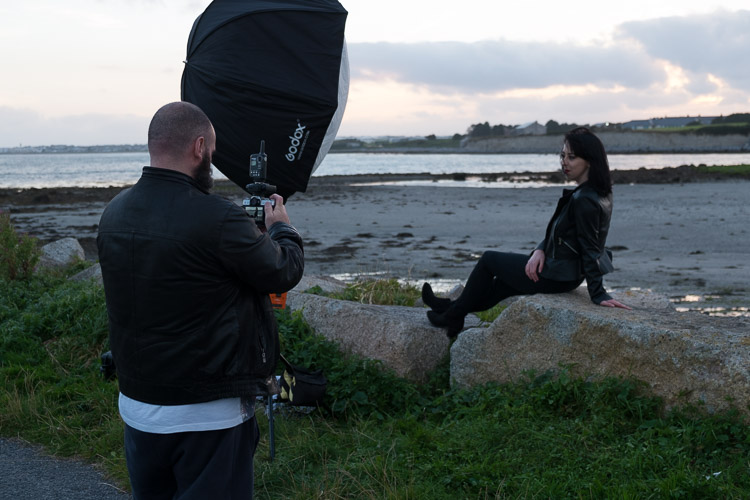
Let’s look at a typical setup and settings for a shoot using HSS. This shoot happened to be done on an evening, but I really wanted shallow focus. The camera was set to f/1.4 for super shallow depth of field. To get the clouds properly exposed, I had to drop the shutter speed to 1/4000th. To get the flash (an AD360) to work I had to set it to HSS. Using a Cactus V6II trigger, I could easily get my Fuji X-T10 to shoot with HSS.

portraits with flash and high-speed sync

An evening HSS photo shot at 1/4000th, ISO200, f/1.4. Notice the shallow depth of field in the image.
portraits with flash and high-speed sync

The BTS, an AD360 with 120cm Octa, shot by my assistant Ola.

If you use Canon, the Cells II trigger provides HSS with the AD360. It would also work speedlights like the v850.
portraits with flash and high-speed sync

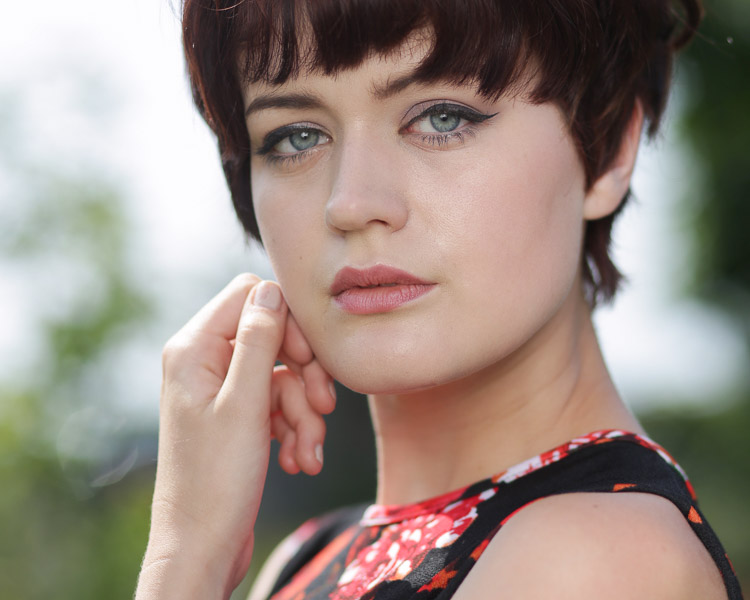
Using HSS on the AD360, I captured this shot at about 3:00 in the afternoon with the sun high in the sky. Shot with an 85mm lens at 1/2000th at f/2.5, ISO100 on a Canon 5DIII. The sun acts as a second light in the shot. Again the background is nicely out of focus.

Another High-Speed Sync portrait example.
portraits with flash and high-speed sync

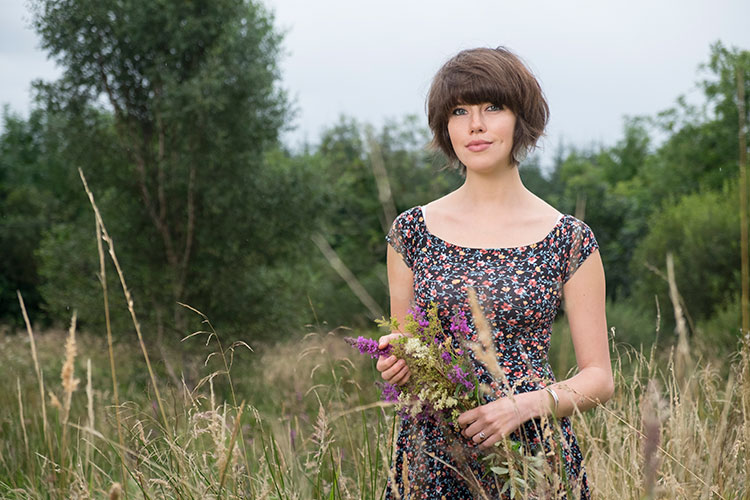
1/1000th, f/4, ISO800. An issue with shooting outdoors on overcast days is your shutter speeds can be low enough to cause camera shake. By bumping up the ISO, you can get a faster shutter speed, keeping you safe from camera shake. Using HSS then lets the flash do the work. I’ve shot to keep the flash looking as natural as possible here.

The Alternative

High-Speed Sync isn’t the only way, you’ve got other options. The first has been mentioned. Shoot at the beginning or end of the day. You can get great sky color and you’re not fighting strong sunlight. Of course, if you’re doing any work, even as favors, you often have to work to the subjects schedule rather than your own. So, you may have to shoot at midday to suit them. That leads to the next option.
portraits with flash and high-speed sync

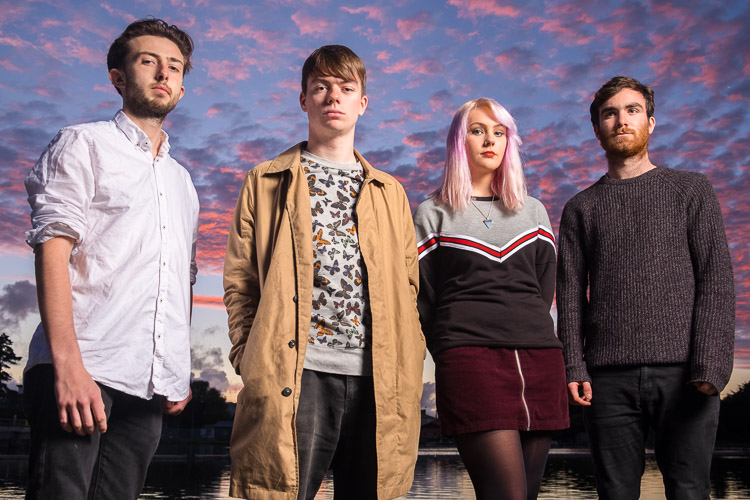
A shot of the band Drown for The Thin Air magazine. The evening light makes the shot. I needed a higher aperture to get the whole band in focus, so opted not to use HSS here.

Using Neutral Density Filter

If you shoot landscape photography, you will be familiar with Neutral Density (ND) filters. This filter allows you to slow the shutter speed down to get nice silky water. Neutral means that it adds no color, while the density part refers to blocking light. You can get them in a range of values from 1 stop to 16 stops.

For portraits, these allow you to drop the aperture down instead of shutter speed. So a 4 stop ND would take you from f/16 to f/4. The drawback is that as you block light, focusing can become harder. Another potential issue is that not all ND filters are actually neutral. Some tend to have a color cast. I have a Firecrest 10-stop for landscapes, which is neutral, but the older 4-stop I have from the same company is slightly pink.
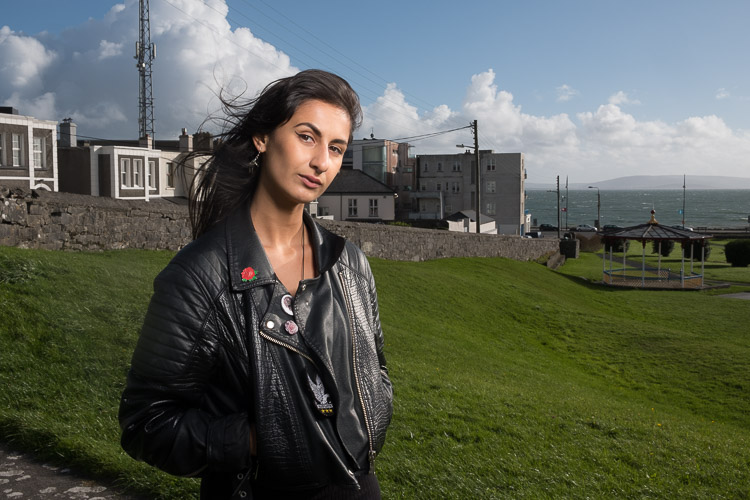
portraits with flash and high-speed sync

Without the ND filter applied, the entire scene is in focus. ISO 200, f/16, 1/250th.
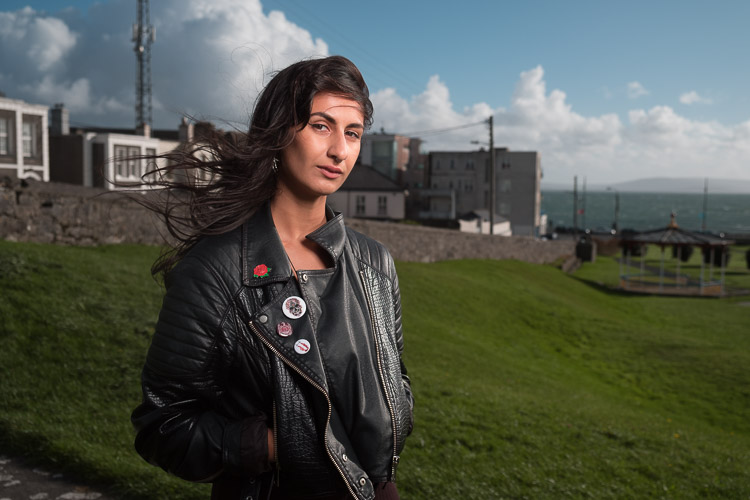
portraits with flash and high-speed sync

With the 4-stop ND filter applied, the background can be rendered out of focus. The flash is still at the same power as the shot above without the filter. The filter does have a color cast, which is hard to remove completely. ISO 200, f/4, 1/250th.

Conclusion

I hope this gives you some options and ideas for how you can make portraits outdoors even when the sun is bright, by using flash and high-speed sync. Please put your questions and comments below, and share your high-speed sync portraits as well.

googletag.cmd.push(function() {
tablet_slots.push( googletag.defineSlot( “/1005424/_dPSv4_tab-all-article-bottom_(300×250)”, [300, 250], “pb-ad-78623” ).addService( googletag.pubads() ) ); } );

googletag.cmd.push(function() {
mobile_slots.push( googletag.defineSlot( “/1005424/_dPSv4_mob-all-article-bottom_(300×250)”, [300, 250], “pb-ad-78158” ).addService( googletag.pubads() ) ); } );

The post How to Make Beautiful Portraits Using Flash and High-Speed Sync by Sean McCormack appeared first on Digital Photography School.


Digital Photography School
 
Comments Off on How to Make Beautiful Portraits Using Flash and High-Speed Sync

Posted in Photography


‘It’s about sharing your beautiful experience’: Nikon Photokina interview

26 Oct

Photokina 2016 gave us a chance to speak to Nikon about the models it’s showing, where the market is going and the challenges it faces.

It was a relatively quiet show for Nikon, with three KeyMission lifestyle cameras taking up as much space as the recently announced D3400 and 105mm F1.4 lens. We took the opportunity to speak to Naoki Kitaoka, Department Manager, Marketing Department and Masahiko Inoue, Group Manager, Marketing Group 2, to see how the company sees the market. Please note the following interview has been slightly edited for clarity and flow.

What’s the key mission of KeyMission?

We started by asking whether they foresaw DSLRs and other dedicated cameras returning to being the niche product they were at the end of the film era and where KeyMission fits in:

‘We don’t want to change our policy,’ said Kitaoka: ‘We will keep offering the best DSLR to the customer. On the other hand, smart devices are getting popular: almost everyone has one or two or three devices in their pocket. In the mobile era, we have to offer new solutions that are fit for the mobile era. We want to be the end to end solution for consumers. The KeyMission is one of our solutions I think.’

The KeyMission range, including the KeyMission 360 are aimed at ‘immediate immersive storytelling,’ the company says.

KeyMission, then, is intended as a way of bringing Nikon’s expertise to new customers, Inoue explains: ‘Our competence is high quality imagery. So we will continue to keep that our core competence and apply it into the KeyMissions.’

‘For instance, the lens in the KeyMission 360 has a very wide angle of view. But this kind of category needs the size to be wearable. Using our competence and some new techniques, we managed to keep the quality and realize the miniaturization.’

‘It’s a very wide-angle view. Very fast lens: F2.0. Very bright and very wide, normally that kind of lens is larger optical design but we try to do the miniaturization.’

As well as image quality and size, simplicity is another aim for the camera, says Kitaoka: ‘It is not just an action camera. With the KeyMission series, we are bringing to market the ultimate tools for immediate immersive storytelling. They also demonstrate the role Nikon technology can play in the exciting new field of VR.’

‘The concept is about sharing your beautiful experience.’ Inoue concurs.

This means making it easy to share a wide variety of content types, Kitaoka says: ‘We believe every single model, every single customer has a different image of sharing. We have expanded the categories we cover to include KeyMission so you can find your best camera, from KeyMission to DSLR. Additionally, different types of consumers with different purposes need different types of cameras for every mission. We don’t want to interrupt your adventure.’

The value of sharing

This need for simple sharing underpins the company’s plan to introduce a version of its SnapBridge sharing system across its entire model range: ‘Easy means setting up between camera and smartphone,’ says Kitaoka: ‘We launched the WMU app so we had kind of experience for this setup process. We tried to improve, to make the setting easier. But still some of you might feel it’s quite difficult. Now three or four steps are needed to connect camera to mobile phone. We are trying to reduce steps from four to one, and finally zero.’

‘Now three or four steps are needed to connect camera to mobile phone. We are trying to reduce steps from four to one, and finally zero’

The company has chosen the technology it thinks will help. ‘We use Bluetooth Low Energy so it can realize smart link,’ says Kitaoka. There’s a benefit to this technique, despite its low bandwidth, he explains: ‘If we use Bluetooth you can use Wi-Fi at the same time. Once you can shoot your story and then camera automatically sends your story to smartphone. Your Wi-Fi can stay connected to the internet: you don’t need to switch Wi-Fi from the camera to Internet. We wanted to make your steps easier.’

The future of Nikon 1

Moving on, we asked about the future of the Nikon 1 series and what role it now plays in expanding Nikon’s audience. Despite a dearth of releases, the cameras featured prominently on Nikon’s booth and both men spoke positively about the system’s future.

‘The Nikon 1 concept is fit for some customers,’ says Kitaoka: ‘For now we’ll keep Nikon 1 as usual.’ The sudden focus on KeyMission doesn’t take away from this, he explains: ‘as I told you before, the action category getting popular. [The] market [is] always changing so we launched KeyMission series to expand our customers.’

It’s been nearly two-and-a-half years since Nikon last released a Nikon 1 V-series body but we’re told the system is still part of the company’s plans.

Inoue elaborates: ‘Some manufacturers have tried to enter the DSLR market with their mirrorless camera or something. Our standpoint is different. Because our product mix covers full-frame and APS-C DSLR and the Nikon 1, these three product categories mean we offer to the full lineup and we receive each customer’s good reactions.’

‘And then we’re not seeing cannibalization between the DSLR and the Nikon 1: the customer is completely different.’

Totally different, but with an overlap

While this distinction is clear for the J and S models, we wondered whether this also applied to V series customers. ‘The J, S and V models are different categories, says Kitaoka: ‘the V series is sort of special, people they well know about DSLR, what is a photograph, they understand these ideas.’

The smaller size of the cameras provides a benefit for these customers, Kitaoka explains: ‘Sometimes you get work from a client that requires you to travel for the job and maybe go back to shoot more. In that kind of situation, sometimes the photographer doesn’t get enough money from their clients to carry their whole equipment because of the baggage costs of the airline.’

‘V3 helped them a lot. The telephoto lenses are smaller. Just in case, they use V series for second camera at the same time, so they can reduce the size of their systems.’

‘One of the most important features of the V series is the high frame rate and accuracy of autofocus. It’s fit for professional photographers’ demand. It’ll never be the main camera for a photographer but it can help them a lot.’

Neither man would be drawn on whether Nikon intends to concentrate on one of these 1 series user groups over the other. ‘We really recognize the mirrorless type of camera, the possibility and we always study [the market],’ says Inoue: ‘but sorry, we won’t be able to comment on future products.’

1V vs DL

On the topic of future products, we also weren’t able to get clarification on when to expect the much-delayed DL compacts, so we asked how these users were distinct from the Nikon 1 V series customer:

‘DL’s concept and target is users of the D800 series,’ says Inoue: ‘Of course the D800 is a very nice camera but the DL… Anytime and anywhere [you can] take a high quality picture by using the DL. It’s a very good second camera for that kind of user. Therefore the switching and the menu, the GUI, is in accordance with the DSLR equipment. That kind of DSLR customer can use the DL without any stress. Even the power switch is in the same position as on DSLR. Zooming dial right here.’

There’s still no news on when Nikon’s delayed DL series of 1″-type sensor compacts will arrive.

‘[They] borrow technology from Nikon 1 and DSLR. Of course the one inch sensor, on-sensor phase detection autofocus and high frame rate continuous shooting, everything from the Nikon 1, but the high quality images and the user interface and the Picture Quality control from our D series. Also the lens quality. You know, the DL has fast lenses with the nano crystal coating, but in a compact type of camera. This is the first time we’ve used that kind of technology in a DSC.’
Who uses video?

Finally, and continuing the theme of making models for more than one type of customer, we asked about the importance and challenges of video for Nikon.

‘There are two types of high end users [using video]’ explains Kikaota: ‘those who started [their careers] shooting still pictures, but also there are a lot of customers who started with video. In our company we have two types of customer. It’s difficult to make one solution to fit for both of them.’

‘I think that line between movie photographer and stills photographers has gone. The client wants to you to shoot the both of them at the same time to reduce costs’

Shooting video with current cameras can often be quite complicated, we suggested. ‘[This] complicated operation is fit for the customer they started shooting from video. On the other hand there are professional [stills] photographers: they are not yet used to using video, their demand is easy operation. So there are two types of people. It’s a big problem.’

‘We are trying to make a solution fit for both of them. One solution is Flat Picture Control. Flat Picture Control is well suited for the professional photographer, who started shooting pictures and now find they have to shoot some video, too.’

‘They are not necessarily so familiar with video editing or modifying video. With Flat Picture Control they can understand from stills point of view.’

‘Now we have an exact solution right now, but we will keep considering [whether to make] a separate product or [if it should] go into the one product.’

Nikon recognizes the challenge of adding video features that both stills and video shooters will appreciate.

‘I think that line between movie photographer and stills photographers has gone. The client wants to you to shoot the both of them at the same time to reduce the costs.’

Kitaoka then expanded on the demands they’re hearing from customers: ‘First of all, quality of the movie is a basic demand so we have to answer that, second frame rate, then lens quality and autofocus, also, [the challenges of] movie AF and still AF totally different.’

‘Movie autofocus needs to be smooth, sometimes fast, sometimes slower, depends on the situation. Movie shooters want to [be able to] choose high speed autofocus or natural speed autofocus.’

‘Actually we equip the autofocus system fit for the movie but a lot of people [are finding it difficult to use] autofocus between still photo and movie. But we keep trying to [provide the] best movie autofocus in [our] DSLRs and across every single category.’

Articles: Digital Photography Review (dpreview.com)

 
Comments Off on ‘It’s about sharing your beautiful experience’: Nikon Photokina interview

Posted in Uncategorized