RSS
 

Posts Tagged ‘August’

NASA will chase the August eclipse in jets to capture ‘clearest images of the corona to date’

03 Aug

It doesn’t matter where you’ll be during the August 21st solar eclipse, NASA plans to one-up you and capture a better photo—or at least a unique one. The space agency is actually going to chase the eclipse’s totality in two highly modified 1950s-vintage WB-57F jets, in order to capture the ‘clearest image of the sun’s […] corona to date,’ and the first-ever thermal images of Mercury.

The whole plan is detailed in the short video above, although we have to warn you, it might make you feel a little bit of gear envy—”if only I’d bought that Air Force surplus reconnaissance plane…”

Joking aside, the August 21st eclipse is a brilliant research opportunity, and NASA doesn’t plan to let it slip by unused. The two WB-57F jets have each been retrofitted with twin telescopes mounted on their noses. Using these telescopes, Amir Caspi of the Southwest Research Institute in Boulder, Colorado plans to capture “the clearest images of the Sun’s outer atmosphere — the corona — to date and the first-ever thermal images of Mercury.”

One of the WB-57F jets is readied for a test run at NASA’s Johnson Space Center in Houston. The instruments are mounted under the silver casing on the nose of the plane. Photo: NASA’s Johnson Space Center/Norah Moran

According to NASA, the jets will capture high-definition pictures at 30fps during the entire eclipse totality—which will last three times longer as the jets speed along, staying inside the moon’s shadow—from the stratosphere, avoiding interference from most of the Earths atmosphere. These photos will then be analyzed to determine why the sun’s atmosphere is so hot (millions of degrees), when the visible surface of the sun is significantly cooler (a few thousand degrees).

Before and after these observations, the scientists will also use the jets to try and capture the first-ever thermal images of Mercury—”the first attempt to map the variation of temperature across the surface of the planet.”

To find out more about this fascinating scientific (and photographic) mission, check out the video at the top or head over to the NASA website for a more detailed breakdown of what they’re looking to capture and why.

Articles: Digital Photography Review (dpreview.com)

 
Comments Off on NASA will chase the August eclipse in jets to capture ‘clearest images of the corona to date’

Posted in Uncategorized


How to photograph the August eclipse, and why you probably shouldn’t try

23 Jul

Essentially, it’s the ultimate photo challenge. On August 21st, photographers across the continental United States – and especially photographers within a 70-mile-wide band stretching from Oregon to South Carolina – will have no more than 160 seconds to get the shot of a lifetime.

Starting around 9am PT, the moon will pass in front of the sun, and a large swath of North America will be treated to a total eclipse. And if you ask anybody who knows anything about astronomy, it is a huge deal. Dr. Tyler Nordgren is such a man. He’s a professor of physics and astronomy, an award-winning photographer and a self-described Night Sky Ambassador. Here’s how he puts it:

“Half the people that are alive right now weren’t even alive the last time something like this was visible from the continental US. Secondly, there are 12 million people just living in the path of totality that are going to get the chance to see it, so it will be the most-viewed total solar eclipse probably in history.”

The most seen, most photographed, most shared, most tweeted – potentially the most people in total are going to be able to experience this in one form or another

Given that just about everyone in its path will have a camera in their pocket, he says it’s also likely to be the most photographed in history.

“The most seen, most photographed, most shared, most tweeted – potentially the most people in total are going to be able to experience this in one form or another.”

Hungary – My first eclipse photo that I took in 1999 superimposed on the stamp I bought there comemorating the eclipse by showing its path across the country. Photo and caption by Tyler Nordgren

But unless you’re a seasoned landscape photographer or astrophotographer, Dr. Nordgren thinks you might be better off not photographing it at all and just enjoying the view. He quotes Warren De la Rue, a pioneer of astrophotography. After becoming the first person to photograph a total eclipse “he wrote in his journal afterwards, that if he ever got the chance to see another one, he hoped to be able to see it without any equipment at all.”

In short, “See your first eclipse, photograph your second.” But if you’re unconvinced, Dr. Nordgren does have some advice.

Get ready

Preparation is key. Remember – 160 seconds. Of course, you’ll want a tripod and a cable release to lock everything down and minimize shake.

“If you really must photograph this, you’re going to want to practice a whole bunch of techniques in the weeks leading up so it’s as second nature as absolutely possible during those precious seconds.”

Protecting your eyesight and your gear is equally important. It’s only safe to point your eyes or your camera sensor directly at the sun during totality – a little bit before or after and you’re risking serious damage. He suggests a pair of solar eclipse glasses and a filter for your lens. Per NASA, your glasses should meet the ISO 12312-2 international standard.

Be sure to use both during partial phases of the eclipse – you risk damaging your eyesight, not to mention your camera, with just a pair of glasses and an unfiltered lens. Crucially, don’t forget to take off the filter during totality. You’ll be extremely disappointed with the results if you don’t.

Lensrentals recently posted a useful article detailing some specific settings to dial in if you plan on using a longer lens.

Pick a lens

What kind of lens should you use? Well, not surprisingly, it all depends on what you’re going for. If you want the sun as your main subject, you’ll obviously want a longer lens. “To really capture big detail in the corona and the object itself, you’ll want a lens with a focal length of around 500mm; between 400 and 600mm at least.”

But don’t forget that a total eclipse also presents a unique landscape photo opportunity. If you’d rather capture the eerie effect on the scene, a wider lens will produce excellent results too. It’s all a matter of personal preference.

Star Flyer – the 2013 eclipse as seen from the deck of a four-masted sailing ship racing across the Atlantic. Totality was 42 seconds long and I was on a quickly moving (and rocking) surface. Photo and caption by Tyler Nordgren

No matter what kind of shot you’re going for, you can size things up ahead of time by photographing a full moon.

“Something to keep in mind is that during totality the sun turns black, and is surrounded by this ghostly corona, so the spectacle of the object itself is this black disk with this white glow around it. That black disk is the size of the full moon, so take whatever your camera equipment is, take whatever your lens is and go out and photograph the next full moon. See if whatever size dot that appears. If that’s interesting to you, then great – that’s the lens to use.”

Get thee to the path of totality

If you’re set on photographing the eclipse and have the safety and gear requirements nailed down, all that’s left to do is get yourself into the path of totality for the big moment. Easy enough, right? Well, unless you’re lucky enough to live there, or you started planning your eclipse vacation years ago, chances are extremely slim that you’ll be able to find a campsite or hotel room in the path at this point. Your best bet is to find accommodations within a reasonable driving distance and set out as early as possible.

Ideally, you also want to aim for somewhere that’s less likely to have cloud cover. Dr. Nordgren knows all too well what a cloudy eclipse view looks like.

“If you’re going to do the close up photograph, you could be almost anywhere provided you’ve got clear skies. But I’ve also seen some really spectacular photos of totality through wispy clouds that give this dramatic view as well… just as long as you’re within that path of totality and the cloud cover is not so total that you’re utterly blacked out. And I’ve had that happen.”

This is the partial phase just a minute or two before totality in the Faroe Islands. Those clouds totally socked us all in 30 seconds before totality so we saw nothing. Photo and caption by Tyler Nordgren

If you’re hoping to get a wider shot, then great news: this eclipse will cross some of the most beautiful locations in the continental US. Provided you can get there, you can pretty much take your pick of landscapes. “What do you find compelling? Is it a hardwood forest like the Great Smoky Mountains, is it the big jagged peaks of the wind river range in Wyoming? Or being along the Oregon coast? It’s up to the photographer.”

And really, that’s what makes this such an incredible event.

“Everywhere from rocky shorelines in Oregon to snowcapped volcanic peaks in the Cascade range, to the deserts of Idaho and the mountains of Wyoming, the farmlands of Nebraska, the hardwood forests and the Mississippi river… you really have the entire breadth, literally, of the United States of America to capture this in.”

160 seconds – that is not a lot of time to see what I think is the most awe-inspiring, unnatural, natural experience in nature

Whether or not you can get to the path of totality, and whether or not you choose to photograph the event, you’ll still be treated to an amazing array of photos and videos from photographers across the US. And unless you’re dead set on photographing it, consider leaving the camera at home.

“If you haven’t seen a total solar eclipse, I encourage you, don’t waste your time photographing it. Chances are, somebody else will get a better photo. But if you are that kind of expert photographer, practice so that you can set your camera up and let it do its thing with as little input as possible, because 160 seconds – that is not a lot of time to see what I think is the most awe-inspiring, unnatural, natural experience in nature.”

Articles: Digital Photography Review (dpreview.com)

 
Comments Off on How to photograph the August eclipse, and why you probably shouldn’t try

Posted in Uncategorized


Hands-on with Sony’s wireless flash system, arriving in August

11 Jul

$ (document).ready(function() { SampleGalleryV2({“containerId”:”embeddedSampleGallery_7699465702″,”galleryId”:”7699465702″,”isEmbeddedWidget”:true,”standalone”:false,”selectedImageIndex”:0,”startInCommentsView”:false,”isMobile”:false}) });

Sony’s wireless radio flash trigger system, introduced back in March, is headed to retailers this August. The system is comprised of a ‘commander’ (FA-WRC1M) and a receiver (FA-WRR1). There can be up to 5 groups, each of which can contain 15 flashes. A standard sync port on the receiver allows for control of studio strobes with ease, though of course you’ll lose TTL capabilities. High Speed Sync (HSS) is also supported. The system has a maximum range of 30m/98ft, and the commander unit sports a large LCD with an intuitive user interface.

What we like

At a recent shooting event in San Diego, CA, I got some brief hands-on time with the new transmitters and receivers, and was pleased with how intuitive the user interface was (not something you can always take for granted with flash systems). For the shot below, I used E-TTL with three flashes (groups) – one (A) at camera right for some harsh side-lighting, one (B) front left of model Eliza as the key, and one (C) directly in front of her for a tiny bit of balance to the overall light. I dialed in my exposure manually to ensure ambient was drowned out, then varied the ratios of groups A, B, and C on the transmitter’s LCD with ease until I got the lighting just as I wanted it. Essentially, it all worked just as I’d expect it to. Adjust flash ratios, groups, Manual power, Flash Exposure Compensation are all very intuitive and direct. Furthermore, the option of triggering studio probes was very handy. Studio shooters: rejoice.

What we’re less pleased with

If you’re an event shooter, I was less pleased with the lack of an AF assist beam on the transmitter. This speaks to a larger problem with Sony mirrorless: no Sony E-mount camera will trigger any off-camera AF assist beam. Red/IR AF assist beams are a boon to any event photographer; for example, I rely on it for fast AF at dim wedding receptions, where all my flashes are off-camera for dramatic lighting. In such scenarios, AF assist beams on transmitters allow the camera’s AF system to focus in near-darkness, obviating the need for a heavy flash on-camera. Sony’s continued lack of any support of off-camera assist beams on transmitters or flashes is unfortunate, given Sony’s desire for acceptance by pros, and considering that in our own lab tests, Sony’s a7R II and a6300 focus incredibly well with red/IR assist beams triggered by Canon/Nikon systems (contrary to the belief of many that on-sensor phase-detect AF systems can’t ‘see’ these beams).

While one can fault both Canon and Nikon for similar oversights in their latest radio triggered flash systems, we find the omission increasingly unforgivable given that 3rd party options like Phottix and Yongnuo do offer AF assist beams on their radio triggers. Yet while these 3rd party options do at least work on Canon and Nikon DSLRs, they fail entirely to trigger AF beams on Sony FE cameras, due to Sony’s continued lack of support of AF assist beams (save for the largely useless one built into the camera).

We’re hopeful that this is something Sony will address in the future. It’s by no means a deal-breaker though for what appears to be a very capable radio trigger system that should find a way into your kit if you shoot with Sony flashes.

Both the commander and receiver will be available in August at $ 350 and $ 200, respectively.

Pricing and Availability – New FE 70-200mm f/2.8 GM OSS G Master lens. Teleconverters and Wireless Lighting Control System

Today, Sony has also released pricing and ship timing for the FE 70-200mm f/2.8 GM OSS G Master lens, 1.4x and 2.0x teleconverters plus their new wireless lighting control system. All products were introduced earlier this year.

One of the most eagerly anticipated lenses of the year, the Sony FE 70-200mm f/2.8 GM OSS G Master lens takes its place as the flagship telephoto zoom in the Sony lens lineup. Featuring built in Optical Stead Shot (OSS) and a fast f/2.8 maximum aperture across the zoom range, the lens will be an ideal fit for nature, sports, travel, fashion, beauty and wedding photographers. This lens will ship this July for a retail price of $ 2,500 US and $ 3,300 CA.

Designed exclusively to fit the 70-200mm F2.8 G Master lens, the new 1.4x and 2.0x teleconverters (models SEL14TC and SEL20TC) will both be sold for the same retail price of about $ 550 US and $ 700 CA, and will ship this July.

The versatile new wireless flash and control system – comprised of the FA-WRC1M wireless radio commander and the FA-WRR1 wireless radio receiver – was designed to meet the growing demands of professional Sony photographers. With a maximum range of 30m (approx. 98 feet) and the ability to control a maximum of 15 separate flash units in 5 different groups, it offers a flexible wireless flash shooting experience with exceptional performance.

The FA-WRC1M commander will be sold for about $ 350 US and $ 480 CA. The FA-WRR1 receiver will be sold for about $ 200 US and $ 280 CA. Both products will ship this August.

The new lenses, teleconverters and wireless lighting system will be sold at a variety of Sony authorized dealers throughout North America.

Articles: Digital Photography Review (dpreview.com)

 
Comments Off on Hands-on with Sony’s wireless flash system, arriving in August

Posted in Uncategorized


Come Join Me—and Greg Heisler—in Columbus, Ohio This August!

22 Jun

Just a quick heads-up for any of you who may live within striking distance of Columbus, Ohio. (And if that’s not you, no need to keep reading. It’d just piss you off.)

So MidWest Photo, the folks that brought us the LumoPro LP180 and a bunch of other cool things, are moving to new digs in Columbus. And they are having two days of festivities on August 6th and 7th.

There is lots of stuff going on: speakers, classes, vendors, giveaways, etc. And it’s all free.

I’ll be speaking on both days. Saturday the 6th will be on my hybrid “dad/photographer” approach to traveling. And Sunday’s presentation will be on learning to completely rethink and reshape your approach to photography. Each is a completely different talk, and both are geared towards the full range of photographers—from enthusiast to pro.

But better yet, Greg Heisler is also speaking on Saturday. In fact, I am following Greg on Saturday. You can imagine how thrilled I am.

If you have never heard Greg in person, I highly recommend it. I guarantee you you will learn some stuff. Especially in a small venue environment like this. As for following him onstage, I highly do not recommend that.

And since it is all free, it’ll only cost you gas money. (And face paint if you are going to see Greg.) Kidding. Mostly. But that would be awesome.

Heads-up: it requires registration, because seating is limited. And this will certainly fill. So if you are up for it, make sure to register ASAP for one or both days, here.

Come out and meet us!

Cheers,
David
Strobist

 
Comments Off on Come Join Me—and Greg Heisler—in Columbus, Ohio This August!

Posted in Photography


31. August 2015

01 Sep

Das Bild des Tages von: Amelie Satzger

© Amelie Satzger

Im Ausblick: Ein Ausstellungstipp, Selbstportraits und Retusche im 19. Jahrhundert.
kwerfeldein – Fotografie Magazin | Fotocommunity

 
Comments Off on 31. August 2015

Posted in Equipment


30. August 2015

30 Aug

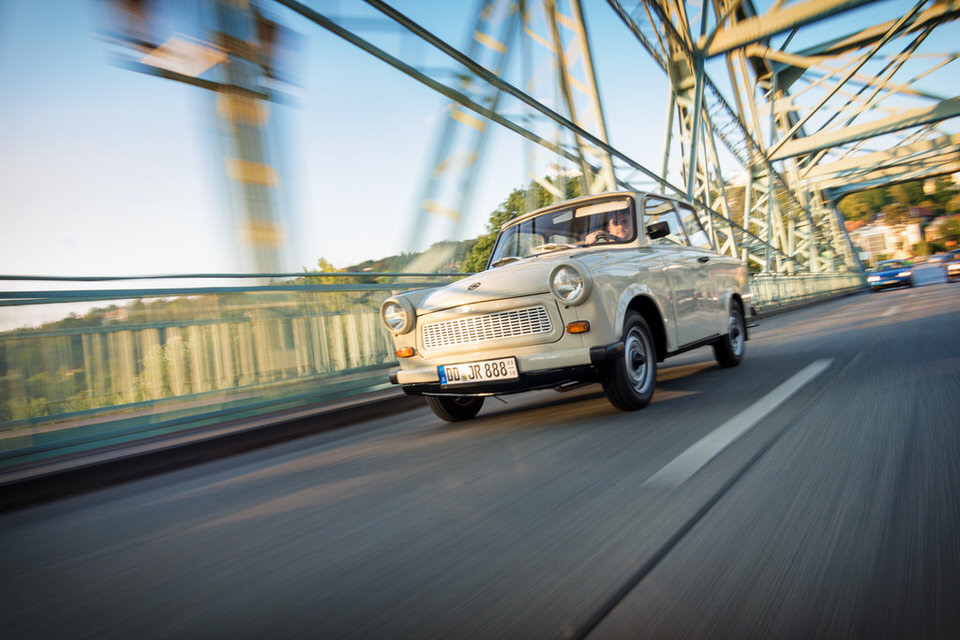
Das Bild des Tages von: fresch energy

Trabbant

Im Ausblick: Go, Trabi, go!
kwerfeldein – Fotografie Magazin | Fotocommunity

 
Comments Off on 30. August 2015

Posted in Equipment


29. August 2015

30 Aug

Das Bild des Tages von: Verena Hoppe

Blick auf eine sehr schmale Schärfeebene, eingetaucht in tiefes Blau.

Wahrlich ein Fest für die Augen ist es, unser Bild des Tages.
kwerfeldein – Fotografie Magazin | Fotocommunity

 
Comments Off on 29. August 2015

Posted in Equipment


28. August 2015

29 Aug

Das Bild des Tages von: chantal-olivia

Portrait einer jungen Frau mit verschobenen Streifen.

Im Ausblick: Frauen in der Fotografie, Stellung beziehen und Neues auf Instagram.
kwerfeldein – Fotografie Magazin | Fotocommunity

 
Comments Off on 28. August 2015

Posted in Equipment


27. August 2015

28 Aug

Das Bild des Tages von: Ralf Müller

© Ralf Müller

Im Ausblick: Ein Interview, hochformatige Panoramen und das Archiv von National Geographic.
kwerfeldein – Fotografie Magazin | Fotocommunity

 
Comments Off on 27. August 2015

Posted in Equipment


26. August 2015

27 Aug

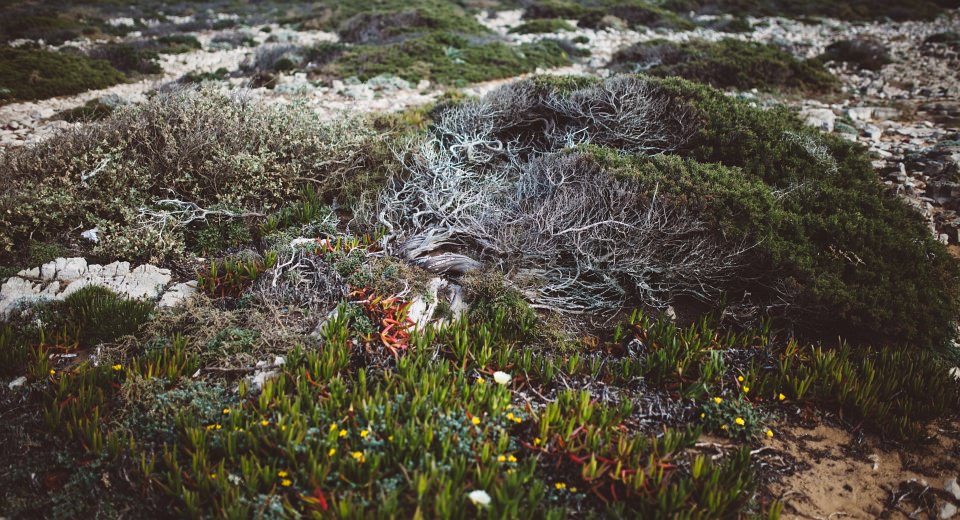
Das Bild des Tages von: spcknmgnt

Details von bodennahen Pflanzen.

Im Ausblick: Heidenau, Obdachlose in London und Brustbügeln.
kwerfeldein – Fotografie Magazin | Fotocommunity

 
Comments Off on 26. August 2015

Posted in Equipment