RSS
 

Posts Tagged ‘Artistic’

Evil Espresso: 13 Amazing Artistic & Unusual Coffee Machines

19 Nov

[ By Steph in Drawing & Digital. ]
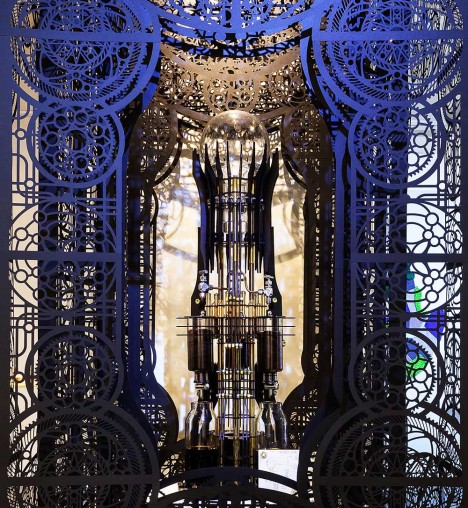
coffee maker dutch lab 1

Your countertop coffee maker will suddenly look inadequate compared to a monster of a sculptural espresso machine, an elegant steampunk orb and a piston-powered copper coffee maker fit for a villain’s lair. These 13 artistic, high-end and highly unusual coffee and espresso machine designs take the process of brewing your essential daily caffeine intake to the next level and then some.

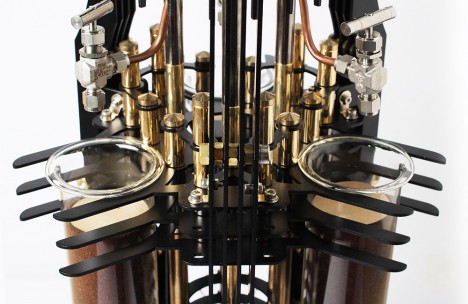
Sculptural Steampunk Coffee Machine by Dutch Lab
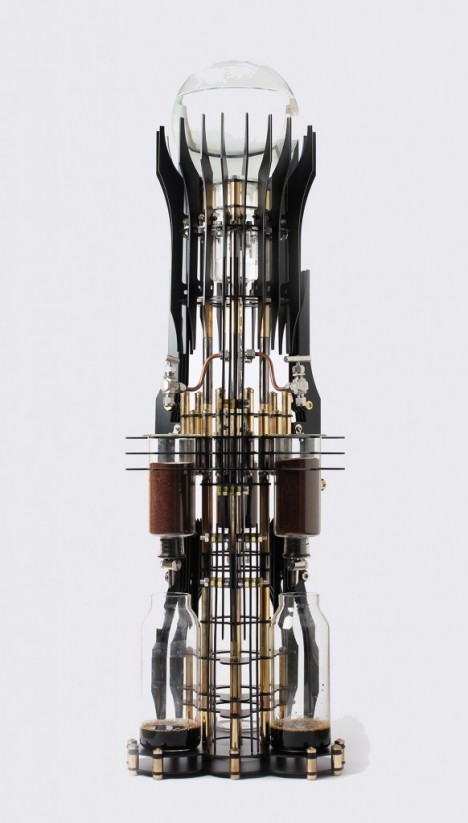
coffee maker dutch lab 2

coffee maker dutch lab 3

Would you ever guess, seeing it across a room, that this thing is a coffee maker? Dutch Lab created this Gothic-themed steampunk ‘monster’ intending for it to look a bit evil. The AKMA is named for the Korean word for ‘devil,’ and like all of Dutch Lab’s coffee machines, it uses a cold-brew technique relying on the force of gravity and a very particular grind of coffee beans – finer than those used for drip coffee, but coarser than those used for espresso.

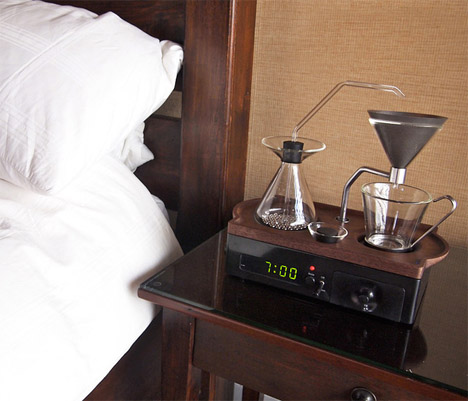
Coffee Alarm Clock
coffee alarm clock 1

coffee alarm clock 2

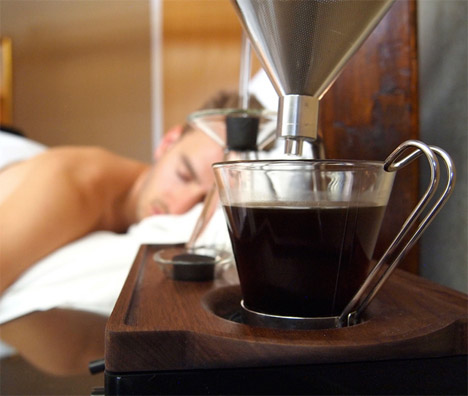
Coffee could literally be your alarm clock with the Barisieur, which brews up a single cup of fresh coffee at a designated time. It doesn’t just wake you up with smell, but also with gentle sounds as the process begins and the water starts to boil. It does require a bit of preparation at night, but as the designer notes, it “encourages a ritual before going to sleep, signaling to the body and mind that it is time to unwind and relax.”

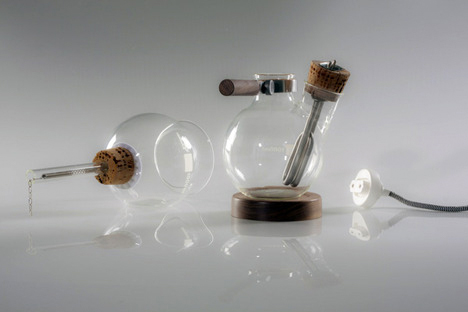
Steampunk Glass Balloon Coffee Maker
coffee maker steampunk 1

coffee maker steampunk 2

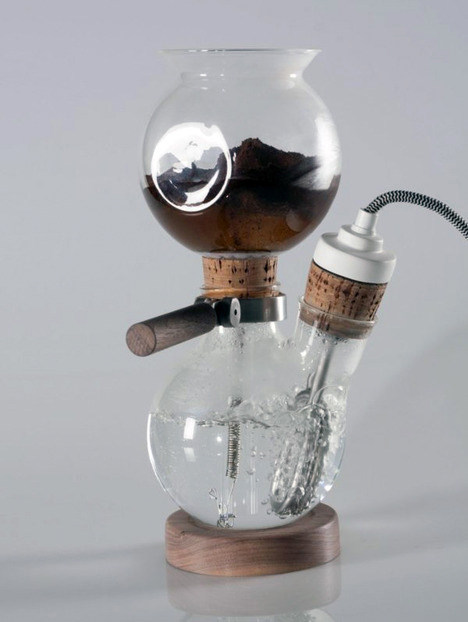
Another steampunk design looks like something straight out of a scientist’s laboratory. Café Balão by Davide Mateus consists of a pair of hand-blown glass vessels, one of which contains a wand-style heating element to boil the water. This siphoning coffee maker uses vapor pressure and vacuum to produce coffee, with vapor from boiling water in the lower chamber forcing water into the upper chamber containing the coffee grinds. When the heat turns off, gravity pulls the brewed coffee into the lower vessel.

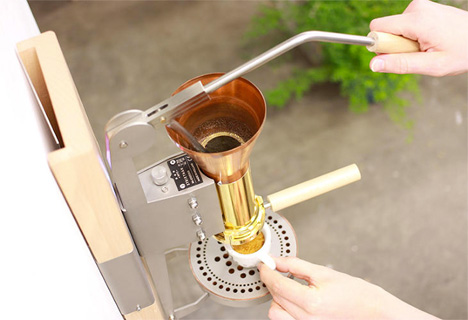
Piston-Powered Espresso Machine
coffee piston espresso

coffee piston espresso 2

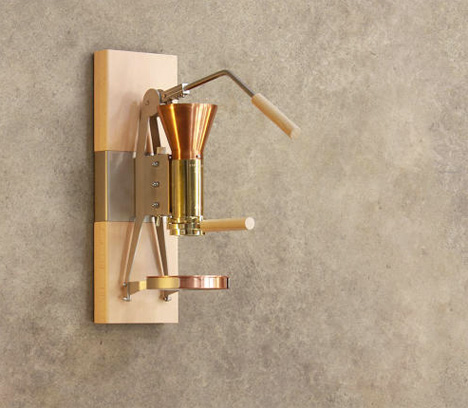
You’ll feel like you’re doing something diabolical when you pull the lever on the Streitman ES3 Espresso Machine, except instead of blowing something up or revealing a secret lair, you’ll be starting the piston-powered process of making a cup of espresso. The sleek wood and copper design forces hot water through ground coffee with a piston, and is available with a dual spout for making more than one cup at a time. It doesn’t come cheap, retailing at $ 1,700.

Minimalist Single-Serving Brewing Device
coffee minimalist 1

coffee minimalist 2

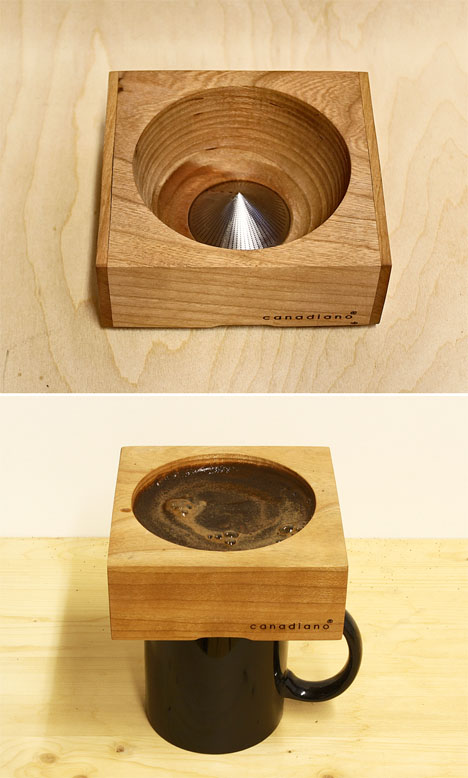
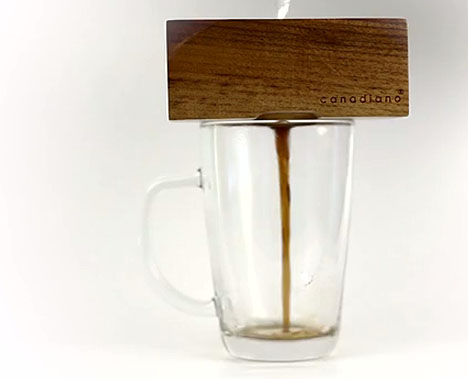
Is this the world’s most minimalist coffee maker? The Canadiano is a single-serving brewing device made of wood, which you simply place on top of a mug. Add coffee grounds, pour in some hot water and wait for your brewed coffee to seep through the metal filter. It’s available in three different wood varieties which ‘remember’ your choice of coffee, building up the oils of your specific beans and roast over time.

Next Page – Click Below to Read More:
Evil Espresso 13 Amazing Artistic Unusual Coffee Machines

Share on Facebook


[ By Steph in Drawing & Digital. ]

[ WebUrbanist | Archives | Galleries | Privacy | TOS ]


WebUrbanist

 
Comments Off on Evil Espresso: 13 Amazing Artistic & Unusual Coffee Machines

Posted in Creativity


4-Dimensional Photography: Artistic Time-Lapse Collages

09 Sep

[ By WebUrbanist in Art & Photography & Video. ]

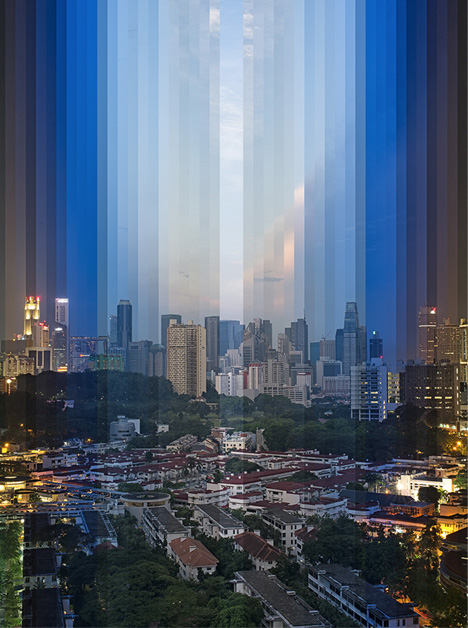
time lapse day night

Motion pictures aside, the nature of photographic representation implies freezing space in time – a moment captured and preserved, independent of what comes before or after.

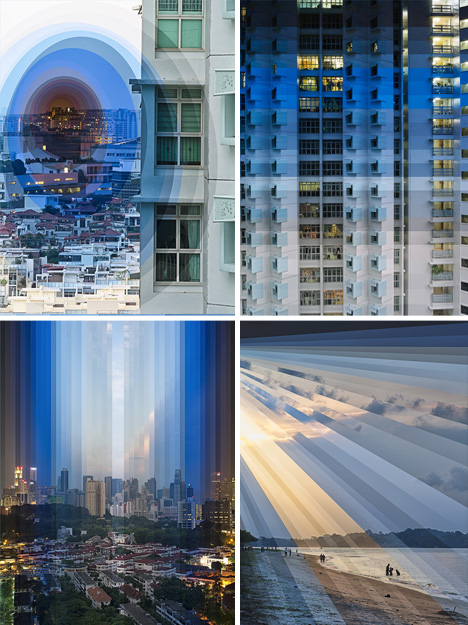
time lapse photo rays

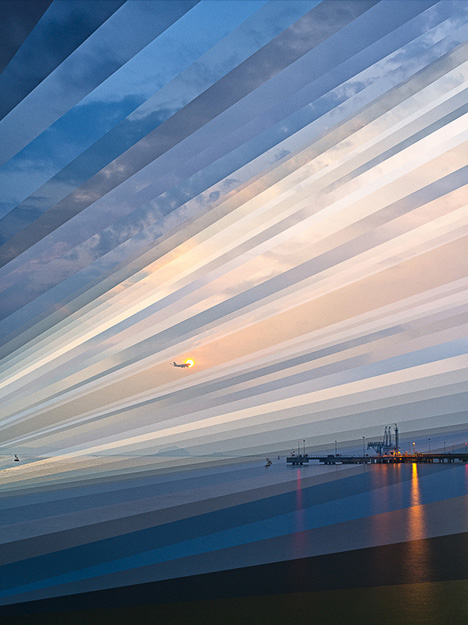
time lapse vertical sky

Yet, as photographer Fong Qi Wei points out, “we do know that time is also a dimension, like length, breadth and width. In fact, physicists have a model called space-time: suggesting that time is part of a continuum with the 3 dimensions that we are familiar with. But the print is still an instance. Most paintings and photographs are an instance of time. That’s not the way the world works. We experience a sequence of time.”

time elapsed photo seeries

time lapse rays light

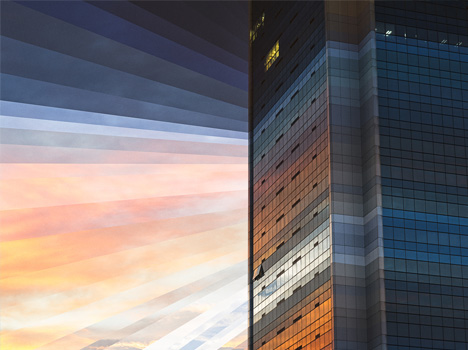
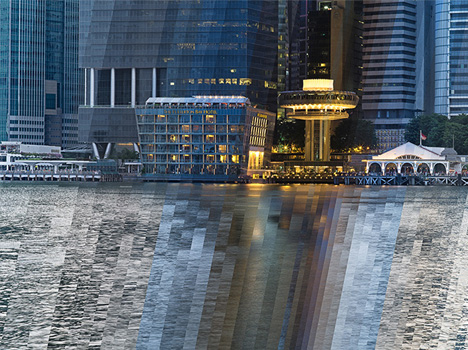
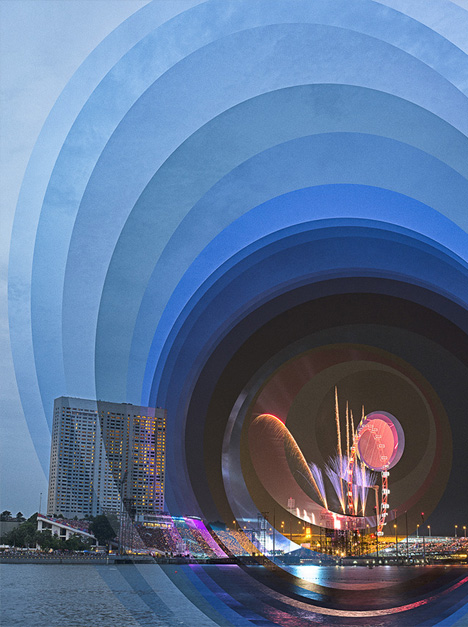
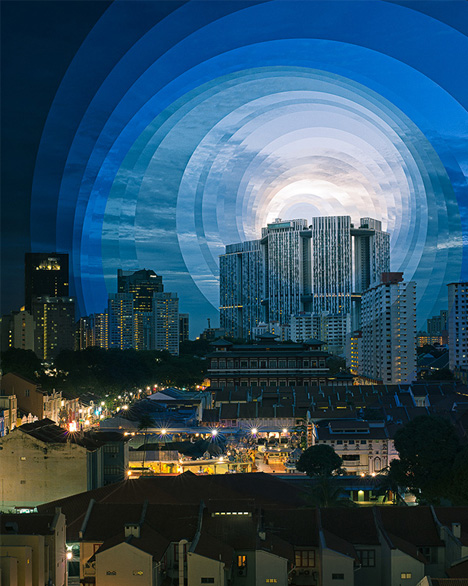
His solution is this photo series, Time is a Dimension, in composed mostly of “landscapes, seascapes and cityscapes,” which “are a single composite made from sequences that span 2-4 hours, mostly of sunrises and sunsets. The basic structure of a landscape is present in every piece[, but] each panel or concentric layer shows a different slice of time, which is related to the adjacent panel/layer. The transition from daytime to night is gradual and noticeable in every piece, but would not be something you expect to see in a still image.”

time lapse waterfront attraction

time lapse urban landscape

There is a playful and experimental quality to the variety of approaches found within this set of images. Sometimes a series of casually-drawn circles spread out from a focal point. In other cases, rays like a child’s drawing of sunshine span from some implied but out-of-frame source. Each has at least one surprise upon inspection, like the changing reflections in glass over the course of a day, or the differences in artificial illumination going into the night. Overall, the results are rich in colors and shades but also do tell a story of time elapsing, quite by design.

Share on Facebook


[ By WebUrbanist in Art & Photography & Video. ]

[ WebUrbanist | Archives | Galleries | Privacy | TOS ]


WebUrbanist

 
Comments Off on 4-Dimensional Photography: Artistic Time-Lapse Collages

Posted in Creativity


28 January, 2013 – Beyond Calibration : The Heresy of Artistic Intent

28 Jan

Are you a slave to colour management? If so, why, and if not….?

In a new essay entitled Beyond Calibration : The Heresy of Artistic Intent, contributor Chris Schneiter explores how and why we can become trapped by a mechanistic approach to colour management.


"Yes I downloaded the videos. THEY ARE AWESOME!!! I learned so much I think my brain is going to explode.


Now I need to get the LR4 video to see how much of Lightroom 4 I don’t know". 


The Luminous Landscape – What’s New

 
Comments Off on 28 January, 2013 – Beyond Calibration : The Heresy of Artistic Intent

Posted in News


8 Steps from Snapshots to Artistic Portraits

16 Oct

Appreciation of a portrait photo greatly depends on a viewer himself. If a lady looks at her own photograph, she seeks some imperfections she thinks she’s got, and estimates, how good a photographer is at concealing them. If you are a photographer looking at an image made by other photographer, you will, consciously or subconsciously inspect it for technical quality, Continue Reading
Photodoto

 
Comments Off on 8 Steps from Snapshots to Artistic Portraits

Posted in Photography


Games Off: Artistic Echoes of the Lost Olympic Games

06 Aug

[ By Steve in Art & Drawing & Digital. ]


Three Summer Olympic Games and two Winter Olympic Games have been canceled since Athens hosted the inaugural games of the modern Olympiad in 1896. Few visual records of these “lost Olympics” exist besides prototypical promotional and/or postal artwork. The nostalgic glimpses of alternative Olympic history presented here were designed to glorify Mankind’s competitive spirit in a utopian world untainted by war.

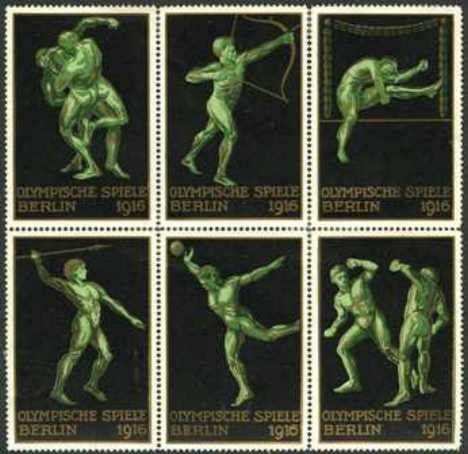
1916: Games of the VI Olympiad, Berlin

(image via: Maison)

The International Olympic Committee‘s official records system is based on the concept of an “Olympiad” – an Olympic Year, as it were. Once that year has passed and regardless if any Games were held, the next Olympiad is denoted by applying the next consecutive Roman numeral. Thus the 1912 Games of the V Olympiad held in Stockholm, Sweden, were followed by the 1920 Games of the VII Olympiad held in Antwerp, Belgium. The Games of the VI Olympiad, scheduled to be held in Berlin, Germany, never took place after being officially canceled shortly after World War I began in the summer of 1914.

(images via: British Library)

Planning began on the 1916 Olympic Games almost immediately after Berlin was selected as the host city during the 14th IOC Session in Stockholm. Among other cities that applied to host the Games were Alexandria, Amsterdam, Brussels, Budapest and Cleveland.

(images via: Olympic-Museum.de)

The 64,000-seat Deutsches Stadion, or “German Stadium”, was built over the course of one year and was officially dedicated on June 8th of 1913 – it was closed in 1934 and the Berlin Olympiastadion was built on the site. Posters, travel brochures and postage stamps were designed with very little material seeing the light of day due to the Games being canceled two years before they were to begin.

1940: Games of the XII Olympiad, Tokyo

(images via: Bryan Pinkall’s World of Opera, Stamp Circuit and Newmexico51)

It may seem odd that the Summer and Winter Olympic Games were awarded to both Germany and Japan amidst the obvious increase of militaristic policies espoused by these nations’ governments in the 1930s. Then again, the Olympic Movement has always striven to keep athletics and politics separate. The 1940 Summer Games were scheduled to be held in Tokyo from July 20th to August 4th of 1940, with the Olympic flame to be flown non-stop from Germany via a never-before-flown Messerschmitt Me 261 airplane.

(images via: The Ephemera Network, Olympic-Museum.de and Carter’s)

The government of Imperial Japan never really got behind the 1940 Tokyo Olympics as Japan’s leaders fundamentally disagreed with the Games’ peaceful precepts and concepts… not to mention they had other, more pressing concerns.

(images via: Olympic-Museum.de)

By 1938 the Second Sino-Japanese War was raging and both Japan and the IOC seemed eager to find some excuse to abandon the 1940 Games. Things came to a head in July of 1938 when the government of Japan officially withdrew their support.

(image via: Wikipedia)

Though the 1940 Tokyo Olympics were still two years away, much preparatory work had been done in anticipation of the first Olympic Games held in Asia. The images shown here include both official and unofficial efforts to paint a positive picture of the host country though the stylized, helmet-wearing soldier in one poster may have undermined efforts somewhat.

1940: Games of the XII Olympiad, Helsinki

(images via: Harvey Abrams Books, Rlanvin and RigaStamps)

With little time to spare, the IOC scrambled to find a new host city and settled on Helsinki, Finland, which was the runner-up to Tokyo in the original bidding process. Helsinki was reasonably prepared to shoulder the burden of hosting a Summer Olympics having completed the Helsinki Olympic Stadium in 1938.

(image via: International Poster Center)

The 1940 Olympics were to see the debut of a new Olympic sport: gliding. War clouds were gathering over Helsinki as well, however, and the outbreak of World War II in September of 1939 prompted the IOC to cancel the 1940 Helsinki Olympics. Just as well… on November 30th, 1939, the USSR declared war on Finland and Soviet bombers appeared over Helsinki.

(images via: Olympic-Museum.de)

Finland would manage to hold off the Red Army in several wars outside World War II’s main theaters and Helsinki’s Olympic Stadium survived relatively unscathed. It was to be the centerpiece of the 1952 Summer Olympic Games which had the character of a postponement – even some of the promotional material from the lost 1940 Helsinki Olympics was revised and reused 12 years later.

(images via: ABC RadioNational and Telegraph UK)

Sharp-eyes are required to note one salient difference between the two Ilmari Sysimetsä-designed posters above: the outline of Finland in the 1952 poster is slightly smaller than on the original poster as the country lost territory to the USSR with the signing of the Moscow Peace Treaty in 1940.

1940: V Olympic Winter Games

(images via: German Postal History and Olympic Source)

A similar situation occurred regarding the 1940 Winter Olympics originally scheduled to be held in Sapporo, on Japan’s northern island of Hokkaido. The IOC first offered the Games to St. Moritz, Switzerland, but conflicts with the Swiss town’s organizing committee over the eligibility of professional ski instructors saw the IOC offer the games to Garmisch-Partenkirchen, Germany, where they had been held in 1936.

(image via: USHMM)

A limited amount of promotional artwork was created in the very short time frame between June 1939 when the Games were awarded to Garmisch-Partenkirchen and November 1939 when Germany (and not the IOC) withdrew their official invitation.

1944: Games of the XIII Olympiad, London

(images via: Bryan Pinkall’s World of Opera and Olympic Games Marathon)

“Lucky 13″ strikes again? Never have an Olympic Games been as DOA as the 1944 London Olympics and their cold-season counterpart, the VI Olympic Winter Games awarded to Cortina-D’Ampezzo, Italy. The official IOC election for the 1944 Summer Olympic Games’ host city took place in June of 1939, in London, England. The defeated applicants (in order of votes) were Rome, Detroit, Lausanne, Athens, Budapest, Helsinki and Montreal.

(images via: Covers of the World and Stamp Circuit)

The year 1944 happened to mark the 50th anniversary of the IOC’s founding, however, and Switzerland issued a series of stamps commemorating the event. The stamps are display the name of Lausanne, the Swiss town where the IOC’s headquarters is located. Other stamps marking the never-held 1944 Olympics were handmade by Polish prisoners at the Woldenberg POW camp after being granted permission by their German captors.

(image via: MWB)

Surprisingly enough, modern-day designers haven’t completely forgotten the so-called “forgotten Games of 1944″. Topman has released a new line of A.D shirts displaying graphics influenced by the stillborn 1944 London Olympics. The graphics offer an intriguing look at what might have been though it’s much more likely the ’44 Games would have been much like the post-war Summer Olympics hosted by London four years later.

(images via: IWM and Uncle Eddie’s Theory Corner)

Italian dictator Benito Mussolini had already placed his bets on Rome winning the 1944 Summer Games, and had commissioned several pieces of statuary (above) to be placed in the “The Mussolini Forum”. As for Cortina-D’Ampezzo, the IOC continued its practice of postponing instead of canceling: the Italian alpine town graciously and successfully hosted the VII Olympic Winter Games in 1956.

(image via: Healey & Wise)

Lost in any discussion of the Lost Olympic Games are the crushed hopes of the athletes, many of whom trained for years leading up to a promised moment of glory. Four years is a long time in the life of an athlete; eight years can be a lifetime. Five canceled Olympic Games (and several boycotts) are more than enough – and that goes for the catastrophic global events which led to their cancellation.


Want More? Click for Great Related Content on WebUrbanist:

8 Pivotal Olympic Villages And Venues Then And Now: From Moscow to London and Beyond

A look back on critical Olympics venues and villages, historical Olympic architecture from around the world from games gone by in locations of historical significance. 9 Comments – Click Here to Read More »»


Olympic Disguise: Titanium Fish Screen Installation for London

An 820-foot-long titanium school of fish was installed in London for the summer to hide a 1970s shopping center from view of Olympic visitors. Click Here to Read More »»


Share on Facebook


[ By Steve in Art & Drawing & Digital. ]

[ WebUrbanist | Archives | Galleries | Privacy | TOS ]

WebUrbanist

 
Comments Off on Games Off: Artistic Echoes of the Lost Olympic Games

Posted in Creativity


Microsoft PowerPoint 2010 – Apply Artistic Effects Including Blur, Cement, Chalk Sketch, Film Grain

25 Sep

Apply artistic effects to pictures / photos in a PowerPoint 2010 presentation without loading an external image editor.

Artistic effects can help photographs stand out in a presentation, and in some cases when needed, blend in. Instead of editing images using an external editor, Microsoft PowerPoint 2010 comes built-in with a variety of effects.

For example, “Blur” may be useful when trying to place text on top of a picture, making it more readable. “Glow Edges” makes a photo look as if it is lit in neon. “Light Screen” creates a cubist / 8-bit / blocky image. “Paint Brush” may alter some photographs to look instead like paintings. PowerPoint comes built-in with 22 such artistic effects….

Read more at MalekTips.
New Computer and Technology Help and Tips – MalekTips.Com

 
Comments Off on Microsoft PowerPoint 2010 – Apply Artistic Effects Including Blur, Cement, Chalk Sketch, Film Grain

Posted in Technology


Photoshop Texture and Artistic Noise Overlays by Jack Davis

06 Mar

Adobe Camera Raw and Photoshop CS3, and the process of going beyond what was captured to what you want your audience to experience. From his program ‘How to Wow – Enhancing & Creative Effects CS3 ‘.


Nude Artistic Photography

08 Jan

Click here for the nude artistic photography: tiny.cc Follow me: wwww.twitter.com Facebook: www.facebook.com