RSS
 

Posts Tagged ‘Architecture’

12 Worthy Winners: 2013 World Architecture Festival Awards

08 Nov

[ By Steph in Architecture & Offices & Commercial. ]
World Architecture Awards Main

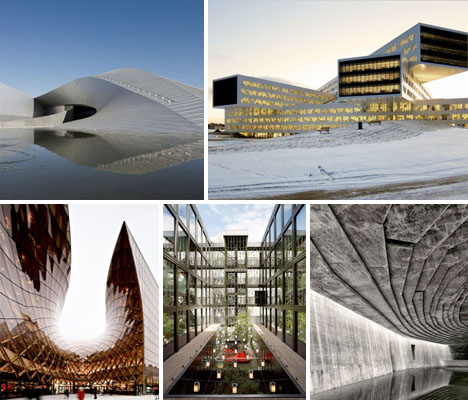
Dynamic, surprising and visually stunning, the winners of the 2013 World Architecture Festival awards represent the very best in recent architecture across a range of categories, from hotels and transit terminals to mosques and private homes. Here are 12 of those standout buildings, including the winner of the coveted World Building of the Year title.

Shopping: Emporia, Sweden – Wingardh Arkitektkontor
World Architecture Awards Emporia

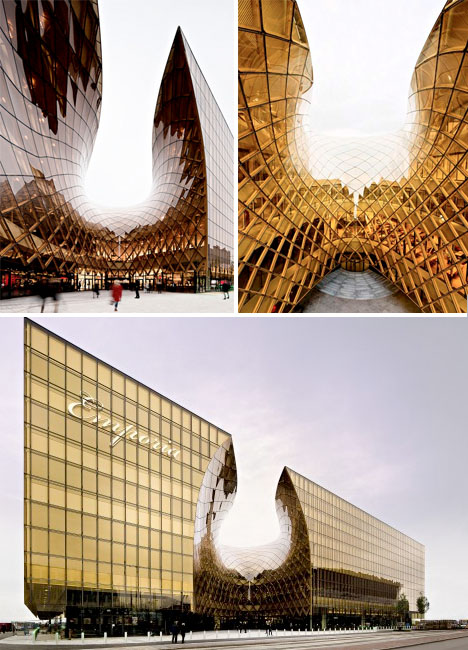
This striking golden glass structure is about as far from a typical suburban mall as a shopping center can ever get. The sprawling Emporia shopping center in Sweden features a cut-out amber glass entrance, color-coded atriums throughout the building that help with navigation, and a rooftop park with outdoor dining and a spa.

House: The Left-Over-Space House, Australia –  Cox Rayner Architects
World Architecture Awards Left Over Space

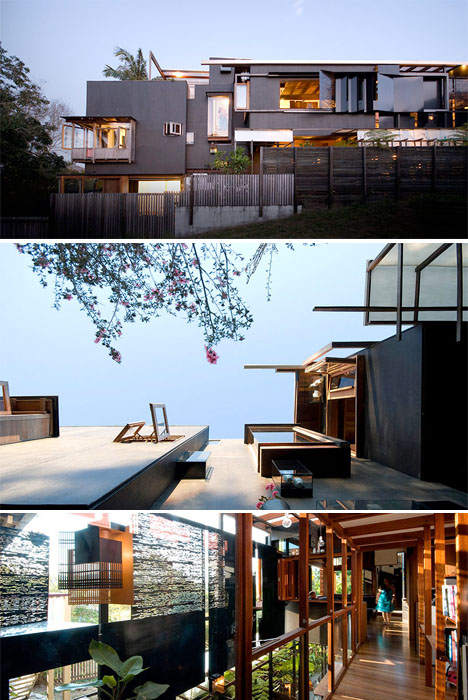
Proving that virtually no lot is too small for a comfortable, well-designed home, Cox Rayner Architects took a narrow space just 3 meters wide and created a spacious residence. The Left-Over Space House in Brisbane consists of stacked orthogonal forms made mostly of wood. Situated between two public buildings, the house makes use of what seemed like an unusable space. Iron screens offer privacy, and narrow courtyards enable access to nature.

Housing: 28th Street Apartments, USA – Koning Eizenburg Architecture
World Architecture Awards 28th Street Apartments

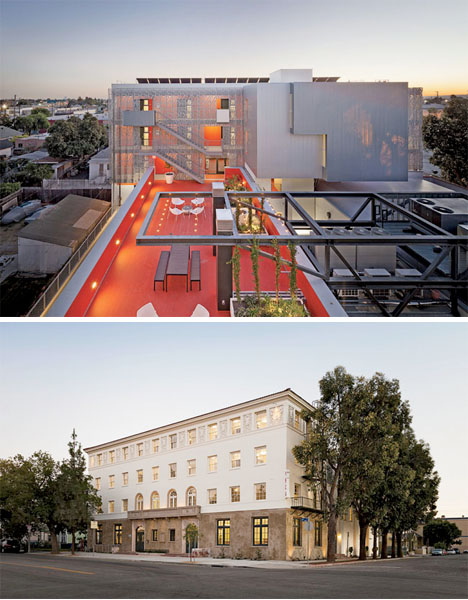
A historic four-story concrete building in Los Angeles, originally built in 1926, was temporarily abandoned and in a state of disrepair before Koning Eizenburg Architecture gave it a stunning update that restores its beauty while also playing old against new in dynamic and surprising ways. It now contains 24 studio apartments as well as common facilities, and features a modern roof deck with patterns abstracted from the ’20s bas-reliefs found in the main entrance.

Office: Statoil Regional and International Offices, Norway – A-Lab
World Architecture Awards Statoil

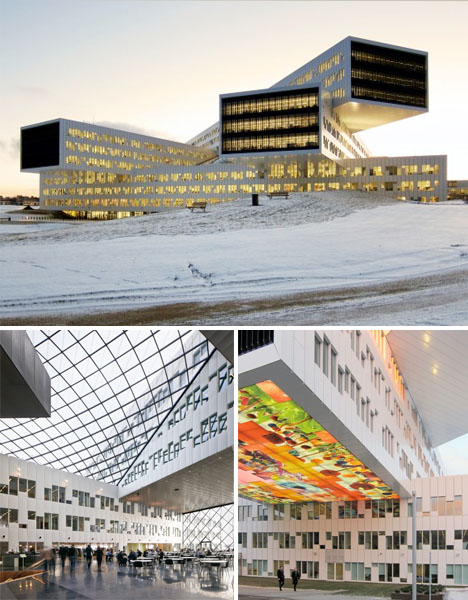
A-Lab aimed to create a massive commercial building complex for Norwegian energy producer Statoil that would somehow also blend in with the idyllic shoreline on which it’s located. The result is a series of narrow, stacked volumes, each oriented to optimize daylight conditions and views of the fjord landscape. The propeller-shaped glass roofs are filled in with structures inspired by soap bubbles to stand up to loads of heavy snow.

Next Page – Click Below to Read More:
12 Worthy Winners 2013 World Architecture Festival Awards

Share on Facebook


[ By Steph in Architecture & Offices & Commercial. ]

[ WebUrbanist | Archives | Galleries | Privacy | TOS ]


WebUrbanist

 
Comments Off on 12 Worthy Winners: 2013 World Architecture Festival Awards

Posted in Creativity


12 Worthy Winners: 2013 World Architecture Festival Awards

08 Nov

[ By Steph in Architecture & Offices & Commercial. ]

World Architecture Awards Main

Dynamic, surprising and visually stunning, the winners of the 2013 World Architecture Festival awards represent the very best in recent architecture across a range of categories, from hotels and transit terminals to mosques and private homes. Here are 12 of those standout buildings, including the winner of the coveted World Building of the Year title.

Shopping: Emporia, Sweden – Wingardh Arkitektkontor

World Architecture Awards Emporia

This striking golden glass structure is about as far from a typical suburban mall as a shopping center can ever get. The sprawling Emporia shopping center in Sweden features a cut-out amber glass entrance, color-coded atriums throughout the building that help with navigation, and a rooftop park with outdoor dining and a spa.

House: The Left-Over-Space House, Australia –  Cox Rayner Architects

World Architecture Awards Left Over Space

Proving that virtually no lot is too small for a comfortable, well-designed home, Cox Rayner Architects took a narrow space just 3 meters wide and created a spacious residence. The Left-Over Space House in Brisbane consists of stacked orthogonal forms made mostly of wood. Situated between two public buildings, the house makes use of what seemed like an unusable space. Iron screens offer privacy, and narrow courtyards enable access to nature.

Housing: 28th Street Apartments, USA – Koning Eizenburg Architecture

World Architecture Awards 28th Street Apartments

A historic four-story concrete building in Los Angeles, originally built in 1926, was temporarily abandoned and in a state of disrepair before Koning Eizenburg Architecture gave it a stunning update that restores its beauty while also playing old against new in dynamic and surprising ways. It now contains 24 studio apartments as well as common facilities, and features a modern roof deck with patterns abstracted from the ’20s bas-reliefs found in the main entrance.

Office: Statoil Regional and International Offices, Norway – A-Lab

World Architecture Awards Statoil

A-Lab aimed to create a massive commercial building complex for Norwegian energy producer Statoil that would somehow also blend in with the idyllic shoreline on which it’s located. The result is a series of narrow, stacked volumes, each oriented to optimize daylight conditions and views of the fjord landscape. The propeller-shaped glass roofs are filled in with structures inspired by soap bubbles to stand up to loads of heavy snow.

Next Page – Click Below to Read More:
12 Worthy Winners 2013 World Architecture Festival Awards

Share on Facebook


[ By Steph in Architecture & Offices & Commercial. ]

[ WebUrbanist | Archives | Galleries | Privacy | TOS ]

WebUrbanist

 
Comments Off on 12 Worthy Winners: 2013 World Architecture Festival Awards

Posted in Creativity


12 Worthy Winners: 2013 World Architecture Festival Awards

08 Nov

[ By Steph in Architecture & Offices & Commercial. ]

World Architecture Awards Main

Dynamic, surprising and visually stunning, the winners of the 2013 World Architecture Festival awards represent the very best in recent architecture across a range of categories, from hotels and transit terminals to mosques and private homes. Here are 12 of those standout buildings, including the winner of the coveted World Building of the Year title.

Shopping: Emporia, Sweden – Wingardh Arkitektkontor

World Architecture Awards Emporia

This striking golden glass structure is about as far from a typical suburban mall as a shopping center can ever get. The sprawling Emporia shopping center in Sweden features a cut-out amber glass entrance, color-coded atriums throughout the building that help with navigation, and a rooftop park with outdoor dining and a spa.

House: The Left-Over-Space House, Australia –  Cox Rayner Architects

World Architecture Awards Left Over Space

Proving that virtually no lot is too small for a comfortable, well-designed home, Cox Rayner Architects took a narrow space just 3 meters wide and created a spacious residence. The Left-Over Space House in Brisbane consists of stacked orthogonal forms made mostly of wood. Situated between two public buildings, the house makes use of what seemed like an unusable space. Iron screens offer privacy, and narrow courtyards enable access to nature.

Housing: 28th Street Apartments, USA – Koning Eizenburg Architecture

World Architecture Awards 28th Street Apartments

A historic four-story concrete building in Los Angeles, originally built in 1926, was temporarily abandoned and in a state of disrepair before Koning Eizenburg Architecture gave it a stunning update that restores its beauty while also playing old against new in dynamic and surprising ways. It now contains 24 studio apartments as well as common facilities, and features a modern roof deck with patterns abstracted from the ’20s bas-reliefs found in the main entrance.

Office: Statoil Regional and International Offices, Norway – A-Lab

World Architecture Awards Statoil

A-Lab aimed to create a massive commercial building complex for Norwegian energy producer Statoil that would somehow also blend in with the idyllic shoreline on which it’s located. The result is a series of narrow, stacked volumes, each oriented to optimize daylight conditions and views of the fjord landscape. The propeller-shaped glass roofs are filled in with structures inspired by soap bubbles to stand up to loads of heavy snow.

Next Page – Click Below to Read More:
12 Worthy Winners 2013 World Architecture Festival Awards

Share on Facebook


[ By Steph in Architecture & Offices & Commercial. ]

[ WebUrbanist | Archives | Galleries | Privacy | TOS ]

WebUrbanist

 
Comments Off on 12 Worthy Winners: 2013 World Architecture Festival Awards

Posted in Creativity


12 Worthy Winners: 2013 World Architecture Festival Awards

08 Nov

[ By Steph in Architecture & Offices & Commercial. ]

World Architecture Awards Main

Dynamic, surprising and visually stunning, the winners of the 2013 World Architecture Festival awards represent the very best in recent architecture across a range of categories, from hotels and transit terminals to mosques and private homes. Here are 12 of those standout buildings, including the winner of the coveted World Building of the Year title.

Shopping: Emporia, Sweden – Wingardh Arkitektkontor

World Architecture Awards Emporia

This striking golden glass structure is about as far from a typical suburban mall as a shopping center can ever get. The sprawling Emporia shopping center in Sweden features a cut-out amber glass entrance, color-coded atriums throughout the building that help with navigation, and a rooftop park with outdoor dining and a spa.

House: The Left-Over-Space House, Australia –  Cox Rayner Architects

World Architecture Awards Left Over Space

Proving that virtually no lot is too small for a comfortable, well-designed home, Cox Rayner Architects took a narrow space just 3 meters wide and created a spacious residence. The Left-Over Space House in Brisbane consists of stacked orthogonal forms made mostly of wood. Situated between two public buildings, the house makes use of what seemed like an unusable space. Iron screens offer privacy, and narrow courtyards enable access to nature.

Housing: 28th Street Apartments, USA – Koning Eizenburg Architecture

World Architecture Awards 28th Street Apartments

A historic four-story concrete building in Los Angeles, originally built in 1926, was temporarily abandoned and in a state of disrepair before Koning Eizenburg Architecture gave it a stunning update that restores its beauty while also playing old against new in dynamic and surprising ways. It now contains 24 studio apartments as well as common facilities, and features a modern roof deck with patterns abstracted from the ’20s bas-reliefs found in the main entrance.

Office: Statoil Regional and International Offices, Norway – A-Lab

World Architecture Awards Statoil

A-Lab aimed to create a massive commercial building complex for Norwegian energy producer Statoil that would somehow also blend in with the idyllic shoreline on which it’s located. The result is a series of narrow, stacked volumes, each oriented to optimize daylight conditions and views of the fjord landscape. The propeller-shaped glass roofs are filled in with structures inspired by soap bubbles to stand up to loads of heavy snow.

Next Page – Click Below to Read More:
12 Worthy Winners 2013 World Architecture Festival Awards

Share on Facebook


[ By Steph in Architecture & Offices & Commercial. ]

[ WebUrbanist | Archives | Galleries | Privacy | TOS ]


WebUrbanist

 
Comments Off on 12 Worthy Winners: 2013 World Architecture Festival Awards

Posted in Creativity


12 Worthy Winners: 2013 World Architecture Festival Awards

08 Nov

[ By Steph in Architecture & Offices & Commercial. ]

World Architecture Awards Main

Dynamic, surprising and visually stunning, the winners of the 2013 World Architecture Festival awards represent the very best in recent architecture across a range of categories, from hotels and transit terminals to mosques and private homes. Here are 12 of those standout buildings, including the winner of the coveted World Building of the Year title.

Shopping: Emporia, Sweden – Wingardh Arkitektkontor

World Architecture Awards Emporia

This striking golden glass structure is about as far from a typical suburban mall as a shopping center can ever get. The sprawling Emporia shopping center in Sweden features a cut-out amber glass entrance, color-coded atriums throughout the building that help with navigation, and a rooftop park with outdoor dining and a spa.

House: The Left-Over-Space House, Australia –  Cox Rayner Architects

World Architecture Awards Left Over Space

Proving that virtually no lot is too small for a comfortable, well-designed home, Cox Rayner Architects took a narrow space just 3 meters wide and created a spacious residence. The Left-Over Space House in Brisbane consists of stacked orthogonal forms made mostly of wood. Situated between two public buildings, the house makes use of what seemed like an unusable space. Iron screens offer privacy, and narrow courtyards enable access to nature.

Housing: 28th Street Apartments, USA – Koning Eizenburg Architecture

World Architecture Awards 28th Street Apartments

A historic four-story concrete building in Los Angeles, originally built in 1926, was temporarily abandoned and in a state of disrepair before Koning Eizenburg Architecture gave it a stunning update that restores its beauty while also playing old against new in dynamic and surprising ways. It now contains 24 studio apartments as well as common facilities, and features a modern roof deck with patterns abstracted from the ’20s bas-reliefs found in the main entrance.

Office: Statoil Regional and International Offices, Norway – A-Lab

World Architecture Awards Statoil

A-Lab aimed to create a massive commercial building complex for Norwegian energy producer Statoil that would somehow also blend in with the idyllic shoreline on which it’s located. The result is a series of narrow, stacked volumes, each oriented to optimize daylight conditions and views of the fjord landscape. The propeller-shaped glass roofs are filled in with structures inspired by soap bubbles to stand up to loads of heavy snow.

Next Page – Click Below to Read More:
12 Worthy Winners 2013 World Architecture Festival Awards

Share on Facebook


[ By Steph in Architecture & Offices & Commercial. ]

[ WebUrbanist | Archives | Galleries | Privacy | TOS ]


WebUrbanist

 
Comments Off on 12 Worthy Winners: 2013 World Architecture Festival Awards

Posted in Creativity


12 Worthy Winners: 2013 World Architecture Festival Awards

07 Nov

[ By Steph in Architecture & Offices & Commercial. ]

World Architecture Awards Main

Dynamic, surprising and visually stunning, the winners of the 2013 World Architecture Festival awards represent the very best in recent architecture across a range of categories, from hotels and transit terminals to mosques and private homes. Here are 12 of those standout buildings, including the winner of the coveted World Building of the Year title.

Shopping: Emporia, Sweden – Wingardh Arkitektkontor

World Architecture Awards Emporia

This striking golden glass structure is about as far from a typical suburban mall as a shopping center can ever get. The sprawling Emporia shopping center in Sweden features a cut-out amber glass entrance, color-coded atriums throughout the building that help with navigation, and a rooftop park with outdoor dining and a spa.

House: The Left-Over-Space House, Australia –  Cox Rayner Architects

World Architecture Awards Left Over Space

Proving that virtually no lot is too small for a comfortable, well-designed home, Cox Rayner Architects took a narrow space just 3 meters wide and created a spacious residence. The Left-Over Space House in Brisbane consists of stacked orthogonal forms made mostly of wood. Situated between two public buildings, the house makes use of what seemed like an unusable space. Iron screens offer privacy, and narrow courtyards enable access to nature.

Housing: 28th Street Apartments, USA – Koning Eizenburg Architecture

World Architecture Awards 28th Street Apartments

A historic four-story concrete building in Los Angeles, originally built in 1926, was temporarily abandoned and in a state of disrepair before Koning Eizenburg Architecture gave it a stunning update that restores its beauty while also playing old against new in dynamic and surprising ways. It now contains 24 studio apartments as well as common facilities, and features a modern roof deck with patterns abstracted from the ’20s bas-reliefs found in the main entrance.

Office: Statoil Regional and International Offices, Norway – A-Lab

World Architecture Awards Statoil

A-Lab aimed to create a massive commercial building complex for Norwegian energy producer Statoil that would somehow also blend in with the idyllic shoreline on which it’s located. The result is a series of narrow, stacked volumes, each oriented to optimize daylight conditions and views of the fjord landscape. The propeller-shaped glass roofs are filled in with structures inspired by soap bubbles to stand up to loads of heavy snow.

Next Page – Click Below to Read More:
12 Worthy Winners 2013 World Architecture Festival Awards

Share on Facebook


[ By Steph in Architecture & Offices & Commercial. ]

[ WebUrbanist | Archives | Galleries | Privacy | TOS ]


WebUrbanist

 
Comments Off on 12 Worthy Winners: 2013 World Architecture Festival Awards

Posted in Creativity


Fine Art of Architecture: B&W Photography by Joel Tjintjelaar

15 Oct

[ By WebUrbanist in Art & Photography & Video. ]

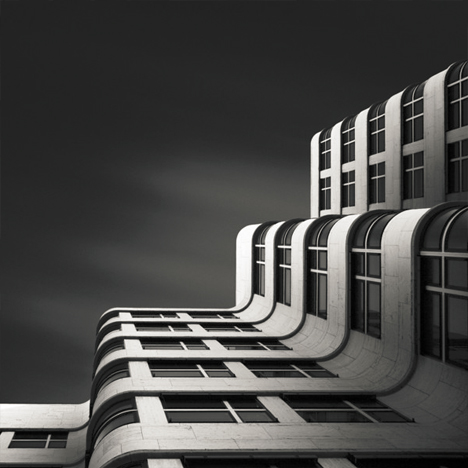
black white curved facade

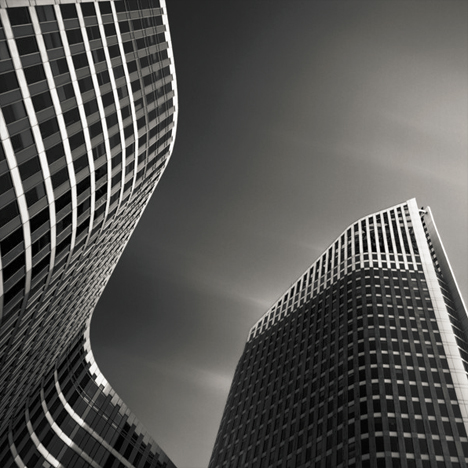
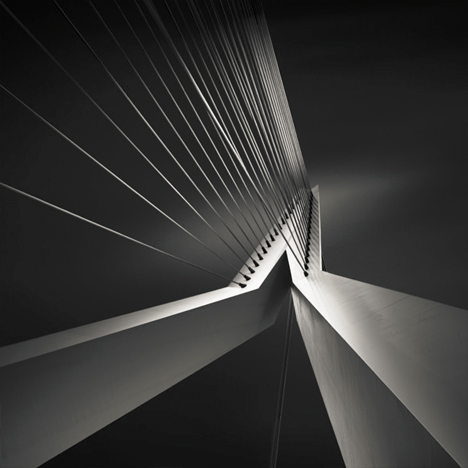
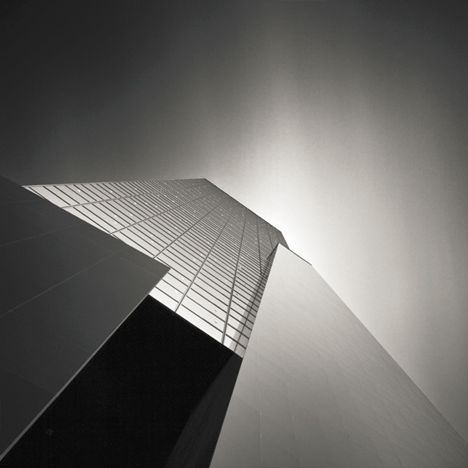
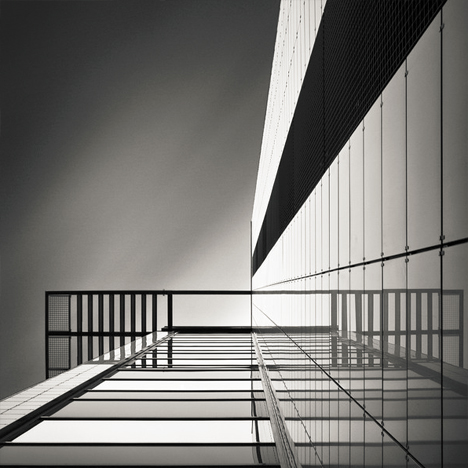
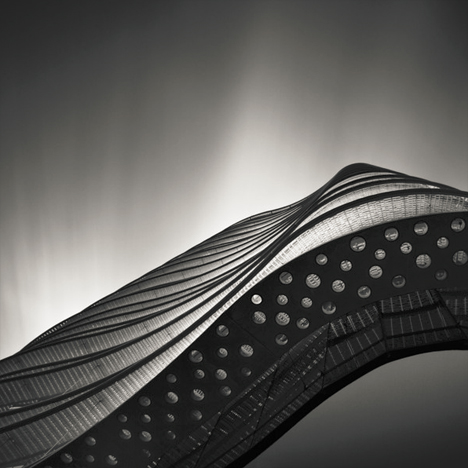
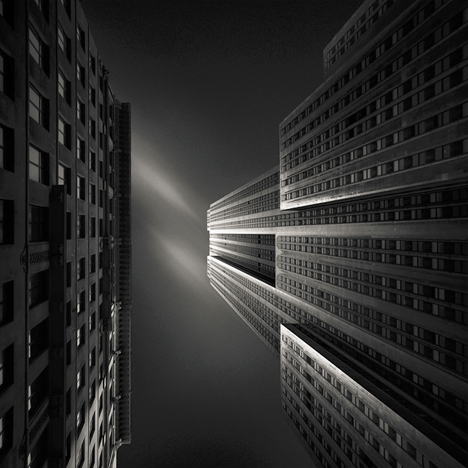
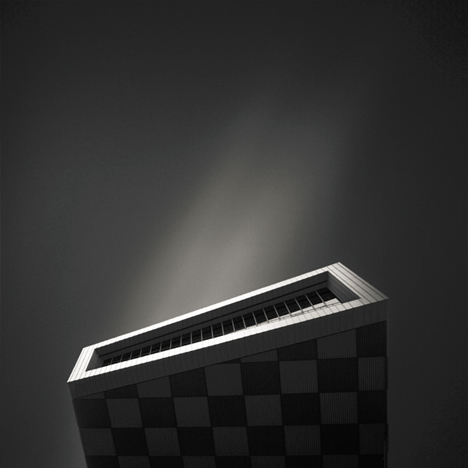
Highly refined yet ever-evolving, the work of this photographer started with portraiture, moved through landscapes and seascapes, and has for a time now focused on architecture, capturing even conventional structures in amazing ways.

black white curved buildings

black white tension bridge

WebUrbanist recently asked Joel Tjintjelaar of BWVision more about his history, process and transition from taking photographs to also teaching photography and post-processing techniques. The resulting interview follows below.

black white up angle

black white abstract view

While the results of his recent work may look like a fine stylistic stopping point to some, Joel states: “My workflow has changed gradually over time and will continue to change. It will never stop changing and it should never stop changing. The day I stop evolving is the day I should quit creating images.”

black white vertical

black white historic skyscraper

black white ledge

In part, the evolution of that work is tied to the teaching he does in at workshops in real life and also online via master classes and videos like this one on long exposure workflow.  Teaching, he notes, “forces me to be critical at my own work as well and to try to understand my own photography better, and more importantly: what drives me to create the pictures I [take] …. I teach them that fine art photography is not so much about technical qualities and skills but more about being able to express who you really are in a way that offers a completely new point of view for the viewer and leaves him changed.”

Next Page:
Fine Art Of Architecture Bw Photography By Joel Tjintjelaar

Share on Facebook


[ By WebUrbanist in Art & Photography & Video. ]

[ WebUrbanist | Archives | Galleries | Privacy | TOS ]


WebUrbanist

 
Comments Off on Fine Art of Architecture: B&W Photography by Joel Tjintjelaar

Posted in Creativity


Submarine Structures: 7 Wonders of Underwater Architecture

24 Sep

[ By Steph in 7 Wonders Series & Global. ]

Underwater Buildings Submerged Hotels Main

Enjoy a luxurious lunch, spend the night gazing at deep sea creatures, take in museum exhibits or even catch a glimpse at an underwater stripper pole in these seven wonders of submerged architecture. Located from 20 to 50 feet below the surface, these real-life submarine structures (including a couple concepts currently under construction) would make for a swinging town for mermaids and mermen if they were all located in the same place.

Abandoned Underwater Strip Club, Israel

Underwater Strip Club 2

Underwater Strip Club 1

Once, this barnacle-covered underwater building in Eilat,  Israel was the Red Sea Star restaurant, bar and observatory. But when that didn’t work out, it became perhaps one of the weirdest submerged businesses of all time: a strip club. The entrance is above water; visitors crossed a 230-foot bridge and descended a flight of stairs to gain access, so no scuba suits were necessary. Surprisingly, the Nymphas Show Bar wasn’t a big hit. Since its closure, it has been abandoned. Marine biologist Gil Koplovitz captured a series of shots that peer inside, which can be seen at The Huffington Post.

Water Discus Hotel, Dubai

Underwater Hotel Dubai 2

Underwater Water Discus Hotel Dubai 1

If you’re skeptical that the Water Discus Underwater Hotel will ever really be built, you’re hardly alone – it seems like one of many fantastical structures in Dubai that get a lot of attention as concepts but never manage to become reality. However, the developer has announced that construction is about to begin. The hotel will consist of a series of discs, some underwater and some above the surface, with 21 two-guest rooms in the submarine space.

World’s Largest Underwater Museum, Mexico

Underwater Museum Mexico

It may not have walls, but the world’s largest underwater museum is impressive nonetheless, with a series of displays made of pH-neutral concrete that can only be seen by divers and tourists in glass-bottom boats. The sculptures were designed to attract algae and marine life, making them an ecosystem. A total of 400 structures are planned. The Cancun Underwater Museum is located off the coast of Isla de Mujeres, Mexico.

Ithaa Undersea Restaurant, Maldives

Underwater Restaurant Resort Ithaa

While many similar concepts have never gotten past the ‘impressive renderings’ phase, the Ithaa Undersea Restaurant at the Hilton Maldives Resort has been open since 2005. Made of acrylic with a 270-degree panoramic view, the restaurant seats only fourteen at a time, for an intimate and quiet underwater dining experience (that’ll cost you at least $ 120 per person – for lunch.)

Next Page:
Submarine Structures 7 Wonders Of Underwater Architecture

Share on Facebook


[ By Steph in 7 Wonders Series & Global. ]

[ WebUrbanist | Archives | Galleries | Privacy | TOS ]


WebUrbanist

 
Comments Off on Submarine Structures: 7 Wonders of Underwater Architecture

Posted in Creativity


Architecture: Photographing Exterior Details

18 Sep

Between shooting for clients, teaching my kids photography class, family obligations, and all of the non-photography activities essential to running a photography business, Life has a way of not letting me shoot just for me very often. So, when I do get a chance to get out and shoot for myself, I find that I gravitate to architectural subjects. I live pretty close to a busy downtown area with a lot of history, so there’s never any shortage of interesting buildings to photograph. Much has been written about the technical aspects of architectural photography. Everything from perspective-correcting tilt-shift lenses to reflection-reducing polarizing filters have been suggested by some of the best in the business for capturing compelling images of buildings big and small. Don’t fall into the trap, though, of thinking that you need lots of expensive accessories to take interesting architectural photos.

Architectural photography, like every other genre, has its share of cliches, and I’ve probably shot them all.  Skylines? Check.  Laying down on the sidewalk and shooting straight up the side of the city’s tallest building? Check. So, if you believe (as I mostly do) that there is no such thing as an original idea, how do you capture something original and unique? Step #1 is to not care whether somebody else has taken a similar photo before you. If it’s original to you and you like it, then go with it. Print it big and hang it proudly. But if  you’re still looking for an original, unique perspective, start concentrating less on the big picture and more on the details.

detroit-architecture

Older buildings like these in Detroit offer a wide variety of textural and structural components to photograph.

You’ve heard the old line about the whole being greater than the sum of its parts. It’s the theory that something grand and impressive can result from the combination of less significant components. What you may not have heard is that the opposite can be just as true. Depending on your lens, vantage point, available lighting, and a host of other variables, it is entirely possible– if not likely– that an entire building would appear so small in the frame that whatever drew you to it in the first place could be lost and overlooked in the actual photo. Also, light that might be perfect for windows, doorways, and other details could be completely unsuitable for capturing the detail and character of the building as a whole.

french-quarter-architecture

The French Quarter in New Orleans is a treasure trove of distinct architectural elements.

As photographers, we strive to put our personal stamp on every image. Every picture tells a story. Architects are no different, imprinting style, history, and textures into their work.  They are easy to find. Just take a step back and look for the parts that make up the whole. As with any other type of photography, concentrate on angles, composition, and lighting. As far as selecting the right lens?  Just like photographing portraits, landscapes, food, or any other subject, your ideal focal length is going to depend on the size of the subject and your proximity to it. If, for instance, you are photographing gargoyles several stories above the ground, a long zoom of at least 200-300 mm is a must. On the other hand, if you are photographing a doorway, you’ll definitely need a wide angle of 28mm or wider.

Atlanta-Doorways

Three of my favorite Atlanta doorways. Going for bigger details will require a wide angle lens.

Beware of some of the common pitfalls. Even though you are not photographing the entire building, you still have to be careful about tilting your camera back too far and causing distortion. When you tilt back to look up at a building through your camera, the bottom of the sensor is closer to the building that the top of the sensor, resulting in an image where the top of the building looks considerably more narrow than the bottom. While you won’t encounter this issue too often while photographing details, you still need to be aware of it. Also watch out for reflections in windows and glass doors. Sometimes, slightly shifting your angle so you are not shooting at a direct 90-degree angle to the glass can correct the problem (and keep your own reflection out of the photos).

One last note on safety and choosing your buildings carefully. In this post-9/11 world–particularly in the United States– there are security issues to be considered. If you are photographing a government building, for example, do not be surprised to find yourself in a discussion with armed security guards within moments of taking your shot. While you are legally and technically allowed to take photos of public buildings from public vantage points, this does not always apply to federal office buildings, courthouses, and banks. Be polite. Don’t argue. If asked for your ID, provide it. Be prepared to delete the images on the spot. I’ve run into this issue a few times with non-governmental buildings also. I was once photographing the office building where I practiced law in another life, when I was approached by two very large men who were demanding to know what I was doing. I was not doing anything illegal or even anything for which they had the right to detain or question me. In these situations you have to ask yourself just how important that photo of the archway over the door really is. In my case, they pushed so I pushed back. They threatened to call the police, so I sat down on a bench and politely told them I’d wait. Everything worked out fine in the end, but it probably wasn’t my smartest move. Do as I say, not as I do.

atlanta-architecture

A few of the elements outside my old office building. Details above the first couple of floors will require a zoom lens

Photographing architecture can be a great way to hone your skills in a low-pressure setting.  You can experiment with composition and natural light without worrying about your subject getting bored and walking out on you. Take advantage of the opportunity to push your creativity and grow as a photographer.

Post originally from: Digital Photography Tips.

Check out our more Photography Tips at Photography Tips for Beginners, Portrait Photography Tips and Wedding Photography Tips.

Architecture: Photographing Exterior Details


Digital Photography School

 
Comments Off on Architecture: Photographing Exterior Details

Posted in Photography


Forest Pavilion is World’s First 3D-Printed Architecture

29 Aug

[ By Steph in Conceptual & Futuristic & Technology. ]

Worlds First 3D Printed Architecture 1

There has been a lot of competition to design and execute the first prototype of a 3D-printed architectural structure, including complex concepts for houses inspired by nests and möbius strips. But it looks like that honor goes to Smith | Allen, an Oakland, California-based duo of designers who have created the Echoviren Pavilion.

Worlds First 3D Printed Architecture 2

The airy white pavilion consists of 585 interlocking components made of plant-based bio plastics, printed over 10,800 hours, mimicking the look and feel of its setting in a redwood forest. Measuring 10x10x8, the structure was assembled in four days.

Worlds First 3D Printed Architecture 3

The bioplastics will enable the pavilion to eventually decompose naturally within the forest, just like the trees that grow all around it. That process will take 30 to 50 years. It will also become a habitat for insects, moss and birds during its time in the forest.

Worlds First 3D Printed Architecture 4

The Echoviren Pavilion was made using 7 of the Type A Machines Series 1 printers. The team actually used these small-scale printers to create large bricks with which to build, leading some critics to state that it’s not a truly 3D-printed structure, printed in much larger parts to create the whole. The true test of 3D architecture will come when larger printers are used to lay out the material for the components, layer by layer, but the Echoviren Pavilion is still a beautiful example of what 3D printers can do.

Share on Facebook


[ By Steph in Conceptual & Futuristic & Technology. ]

[ WebUrbanist | Archives | Galleries | Privacy | TOS ]


WebUrbanist

 
Comments Off on Forest Pavilion is World’s First 3D-Printed Architecture

Posted in Creativity