RSS
 

Posts Tagged ‘Abstract’

An Introduction to Amazing Abstract Automotive Photography

08 Sep

The post An Introduction to Amazing Abstract Automotive Photography appeared first on Digital Photography School. It was authored by Rick Ohnsman.

Some photographs document an event or show a person, place or thing. These are photos of record accurately capturing an image that represents what we see. Other times we want to take a more artistic approach, making a photograph more about a feeling than solely about the subject itself. Sometimes the two mix, for instance in advertising photography, where we might want to accurately show a product but do it in an artistic way that invites the viewer to also feel a certain way about the product.

porsche abstract automotive photography

The beautiful lines of a Porsche and the curves of a twisting road. Put the two together to create a story.

When leaning toward the artistic and sometimes abstract interpretations of photo subjects, I like to remember the words of famous photographer Minor White:

“One should not only photograph things for what they are but for what else they are.”

abstract automotive photography

You don’t need to show the whole car to tell the story. The colors and lines contribute to the image of this American legend.

Applying this to the subject of abstract automotive photography, my intent here is not to teach you everything there is to know about making abstract automotive photos, but to simply get your creative juices flowing. You’ll note that none of the photos here show a complete automobile, but instead depict details, pieces, and parts.

The focus here is the artistic concepts of form, shape, line, tone, color, pattern, light, and shadow.

blurry mustang shot

The shot is blurry by design. I wanted to create a feeling of motion here.

dashboard of mustang

You can also get creative with interior images. The zoom-blur effect was added later in editing.

car steering wheel composite

Ever get the feeling you’re being watched? The patterns and holes in wheels can look like faces – a phenomenon known as Pareidolia.

Automobiles may be a mode of transportation, but they are also art objects – the work of designers who pay much attention to form as well as function. Know that an automotive artist purposely and artistically designed every detail of every car. We, as photographers, can explore that art, find the beauty, note how light plays across the curves and surfaces of an automobile, and use it to craft beautiful photos.

cars all in a row

You can make a shot like this on a car lot. It’s all about repeating shapes, lines, and patterns.

What and where

Finding cars to photograph and places to photograph them will depend on what’s available to you. I work part-time at a Ford dealership, photographing new cars for posting on the internet. These are not art photos. They serve the purpose I spoke of earlier: accurately representing the vehicles to interested buyers. The purpose, time, and volume don’t permit spending much time on each photo. However, when time does permit, the light is especially nice, or a particularly interesting car is available, I will get a little more creative.

mustang front angle

Find an angle that works and you can use it over and over. Can you tell I like this composition when photographing Mustangs?

abstract transmission composite

Why restrict yourself to the exterior components of a car? When I saw this transmission torn apart on the workbench, I asked the mechanic if I could take some shots.

You might not work at a car dealership, but you could probably talk a local dealer into letting you take photos of their cars particularly if you’d share some of your images with them.

Alternatively, perhaps you or a friend have a nice car you could start with. Begin making and showing some good work and, before long, you’ll have people asking if you can photograph their cars.

old cars

Car shows can be a great place for auto art photography. They often have a diversity of makes and models from different eras.

Car shows

Most areas have occasional car shows, where owners polish their vehicles to a mirror-like finish and proudly show them. Often there will be a nice variety of vehicles, sometimes exotics, hotrods, older classics, and antiques. Because the public is typically invited to these events, and they are held in public spaces, photography is generally not a problem.

In fact, the owners practically expect people to ogle and photograph their cars. One thing they will not appreciate (and will likely get you run off in a big hurry) is touching their beauties. Always be respectful and ask if there’s any doubt about whether you can photograph the vehicles.

And, above all, never touch the cars.

red Jaguar with raindrops - abstract automotive photography

Raindrops on red Jags…These are a few of my favorite things. The color, the diagonal lines, the iconic symbols, and the interest added by the raindrops on a freshly-waxed hood all combine to make this image work.

One problem is that there will typically be lots of people around. Because cars are covered with highly reflective surfaces, getting shots without people’s reflections can sometimes be a problem.

I have no real solution for this, other than to make two suggestions:

  1. When making tight shots of particular pieces of a car, the chances of getting a reflection in your shot is much less than if you were photographing the entire car.
  2. Learn to be patient. Frame up your shot, be ready, wait for the person in the shot to move on, and then quickly make your photo.
reflections in old cars

It can be hard to keep bystanders, or even yourself, out of the reflections in glass, chrome, and shiny paint.

red and white car

Fins up! How cool is this beauty, found at a local car show?

black and white old car

Sometimes monochrome is the best way to show the old classics, much like they might have appeared in an old film of the era. Sunstars are courtesy of the noon sun, a highly polished surface, and an f/22 aperture.

Lighting

High-end automotive photography can involve as much care in lighting as any product or model session. There are studios specially designed to drive a car inside to photograph. I know a local guy who has such a studio. It has full hard cyclorama walls, a glossy white floor, and a lighting system that includes the largest softbox I’ve ever seen. The softbox has to be at least 30 feet long, maybe more!

abstract hood ornament compositions

Hood ornaments are art objects unto themselves. Then add a sunstar with a specular highlight and a small aperture. Both images were made in full noon sun.

front of car - abstract automotive photography

The hood emblem of an old Ford F-100 pickup reminded me of the symbol used by the superhero the Flash.

At the opposite end of the spectrum are the shots in this article. They are all made outside with just daylight, no flash, sometimes on a tripod, but many times handheld. Often they were made in the bright noonday sun. Sometimes the bright sun is nice, such as when the specular highlights on chrome, combined with a small aperture, create sunstars.

The point is that you don’t need anything fancy to try this kind of photography. A creative eye, some imagination, and the ability to properly control focus, depth of field, and exposure are all you need.

rusing car - abstract automotive photography

The door handle is the only touch of reality in this otherwise purely abstract image.

Gettin’ funky in the junkyard

Even the nicest cars will wind up here one day – the junkyard.

One might think it a strange place to make photos. However, for some reason (perhaps nostalgia?), many of us are fascinated by old things. In the auto junkyard, you’ll often find old classics quietly rusting in peace. The once-shiny paint fades to all kinds of interesting colors and patinas. And the layers of peeling paint and rust make an incredible canvas for abstract art.

car in junkyard

On the right, an old tour bus used by country star Gene Autry is now parked in Palouse, Washington. On the left, a tight shot of the abstract art to be found if you explore the rust patterns on the old band bus.

junkyard abstract automotive photography

Corruption of Power

A word of caution about junkyard photography: Always ask the owner if you can take pictures on their property.

Yes, oftentimes auto junkyard owners will puzzle over why anyone would want to make photos of a bunch of old beat-up and rusting cars. Ask nicely. Convince the owner you’re only there to make photos and you won’t be taking any spare parts home with you. You’ll often get the go-ahead.

Now, you’ll be working in an environment of sharp rusty metal, broken glass, spilled oil, gas, and other automotive fluids, so caution is important. (It might be a good idea to have your tetanus shot up-to-date and carry a first aid kit just in case.)

Whatever you do, just don’t head onto the property without permission, even if the area seems abandoned. You don’t want to meet the infamous junkyard dog or his angry owner.

junkyard abstract hood

You can likely still tell this is the hood of an old car. Even so, it’s really about the patterns, textures, lines, and colors.

Getting really abstract

It could be argued that the previous photos in this article really aren’t “abstract” images.

So let’s take a deep dive into really abstract automotive photography – the kind not everyone will appreciate. You’re almost guaranteed to have viewers ask, “What’s that??!!”

No matter. Abstract art is an acquired taste. But once the bug bites you, you’ll find an auto junkyard is practically a gallery of images all begging for your attention.

I took a photo workshop by noted photographer Art Wolfe earlier this year called “Photography as Art,” and he really opened my eyes to this kind of imagery. After the workshop, the auto junkyard became a whole new experience. It was suddenly a place where abstract imagery abounded and peeling paint, broken glass, rust, and decay were the stuff of great photos.

junkyard automotive abstract

It’s still an old car, but now we’ve entered the world of pure abstract art. Unlike photographing iconic landmarks, where your photo is pretty much what everyone gets, making these kinds of images guarantees your photo will be one of a kind.

junkyard abstract automotive photography

I have to wonder if this vehicle was painted numerous times over in its life, or if this is just how the paint ages.

abstract car paint peeling

I’ve seen abstract art like this selling for big money and displayed on the walls of corporate offices. I hope to someday figure out just how to tap into that market.

Go do it

I invite you to look at the shots here, look at other abstract automotive photography online, and get inspired. Then just go do it.

Make it a point to not photograph the entire car. Instead look at the shapes, lines, tone, color, and all the other artistic elements of the vehicle. Isolate these to make your shot.

If getting truly abstract images interests you, find some old cars in a junkyard and get in tight. Use the textures, colors, and patterns to make your shot. Be less concerned about what the subject is and more concerned about how the image feels.

Have fun and, if you get some good abstract automotive photography, share them in the comment section below. Best wishes!


abstract-automotive-photography

The post An Introduction to Amazing Abstract Automotive Photography appeared first on Digital Photography School. It was authored by Rick Ohnsman.


Digital Photography School

 
Comments Off on An Introduction to Amazing Abstract Automotive Photography

Posted in Photography


How to Shoot Abstract Flower Photography using Close-Up Filters

08 Aug

The post How to Shoot Abstract Flower Photography using Close-Up Filters appeared first on Digital Photography School. It was authored by Charlie Moss.

Shooting flowers is a passion for many photographers. Time spent out in the garden with your camera can become almost a form of meditative practice as you compose images surrounded by nature. It’s no wonder that so many photographers long to shoot beautiful flower images. But shooting close-up images of flowers can be an expensive business. Many tutorials will tell you that you need specialist macro lenses, proprietary macro extension tubes, or converters to reverse a lens that you already own. However, using close-up filters are a great alternative.

using-close-up-filters-for-flower-photography

Close-up filters are an option for macro photography that rarely makes it into the tutorial list. Many will tell you that they degrade the final image too much; they cause distortion and focus issues. However, in this article, I’m going to make the case that these filters can enable you to think in a more abstract way as you embrace their unique and imperfect properties!

What are close-up filters?

Close-up filters can also be called close-up lenses or macro filters. They are essentially a magnifying glass that screws into the filter thread on the front of your lens.

using-close-up-filters-for-flower-photography

When you buy a set of close-up filters, you need to know what lens you’re going to use them on. This is because you buy them according to the filter size of that lens. I suggest picking either a standard zoom or a prime lens in the 50mm to 100mm range and purchasing your filters for the thread size of that particular lens.

Close-up filters differ to budget extension tubes in one key way – you don’t lose electronic control of your lens. That means the autofocus will (just about) still work, and the aperture control in your camera settings will still work. Because budget extension tubes do not carry an electronic signal between your camera and your lens, you have to use it manually. For that reason I prefer close up filters – it makes changing your settings on the fly much easier!

using-close-up-filters-for-flower-photography

The image on the left was shot with just the Fujifilm 35mm f1.4 lens. The image on the right had a +10 close-up filter screwed onto the front of the lens.

The last thing to know about close up filters is that they have different magnification strengths – just like buying a magnifying glass. The higher the number, the more you will magnify your subject and the closer you can get. All of the images in this article have been shot using a +10 close-up filter on a Fujifilm 35mm f1.4 lens (roughly equivalent to a 50mm lens on a full-frame camera).

Why shoot abstract photos?

Abstract photos can really help to free you up from the common “rules” of photography. You can start to think outside of the box without wondering if an image is sharp enough all over, or if the colors are perfectly rendered.

How to Shoot Abstract Flower Photography using Close-Up Filters

That’s not to say that abstract photography is a way to “save” a bad photograph. As much thought and consideration should go into an abstract as it would a more traditional image.

Once you’ve learned to let go of the rules you might find that expressing yourself through color, shape, and texture can be relaxing. Experimenting with abstract photography can bring a whole new dimension to your work. It can even make you think about other kinds of photography differently. You’ll be much more careful when placing colors and lines in images in the future if you spend some time creating abstract compositions.

Tips for photographing flowers

Once you’ve got your close-up filter screwed to the front of your lens, head outside for a play. You won’t need a tripod at first – bump up your ISO and try handholding some close-up shots on a day with bright but overcast light (or shoot in the shade, of course).

Get the shot in focus

I recommend turning your autofocus off. We’re going to be working with some really shallow depth of field and that means your camera will often lock the focus on to something you don’t want it to.

How to Shoot Abstract Flower Photography using Close-Up Filters

Instead, you can use your body to move the subject in and out of focus. Carefully lean a fraction closer or further away, and you’ll see different parts of the images go in and out of focus. It takes some practice to get the hang of, but after a while, it’ll feel really natural.

If you’re a little unsteady and struggle to get the right part of the image in focus, try shooting a burst of three or five images and select the best one later. You can also use a tripod if you want to (if it is a very still day with no wind). However, I find that a tripod can often hinder creativity when you’re trying to think fast and look for new and fascinating angles and compositions.

Select an aperture

The aperture setting that you choose can change the whole feeling of an image. When you’re working this close to a subject, the depth of field can be as thin as a few millimeters.

using-close-up-filters-for-flower-photography

By using a very shallow depth of field, you can draw attention to just one part of a scene and throw the background and foreground completely out of focus. However, when shooting close up, it does mean that the whole flower or object might not be all in focus. That doesn’t mean it’s a bad thing – just picking a small part of the flower to be in focus can be a stylistic choice.

What can be interesting though is the way that the close-up filters interact with a wide-open lens. You begin to get these hazy, dreamy images that are somewhat unpredictable. It’s almost like a Lensbaby Velvet in some respects – or possibly a bit like smearing vaseline on your lens!

Composition is key

Since abstract photography often takes a subject and then makes it unrecognizable, all you have left is the composition and colors. That means you need to start thinking about how to mix shape, lines, form, textures, and colors to express emotions or tell stories. You cannot rely on recognizable and familiar objects anymore.

There are many compositional rules out there to study and put into practice. I have always found it helpful to spend as much time as possible looking at other peoples art (both in galleries and online) and trying to understand what makes a composition pleasing. You don’t have to know all of the rules of composition by name. But having a sense of how the position of elements in the frame and the color wheel work together to create interesting compositions can be a huge help when shooting abstracts.

using-close-up-filters-for-flower-photography

If you are shooting digital, don’t be afraid to shoot multiple images of the same scene and resist subjects. Try placing the main focus on different parts of the image, (including blurry foreground elements), and seeing how different aperture settings look.

You can also think about editing your photographs afterward to change the colors in the image. A slight shift in color, some noise added, or a touch of contrast on the focal point can really change the mood of the shot.

So for a very small investment (certainly compared to the rest of your camera gear), you can open up a new world of artistic abstract photography by using close-up filters. Also, better than that, it can happen entirely in your front garden!

Let us know if you shoot any images inspired by this article – post the results in the comments below!


using-close-up-filters-for-flower-photography

The post How to Shoot Abstract Flower Photography using Close-Up Filters appeared first on Digital Photography School. It was authored by Charlie Moss.


Digital Photography School

 
Comments Off on How to Shoot Abstract Flower Photography using Close-Up Filters

Posted in Photography


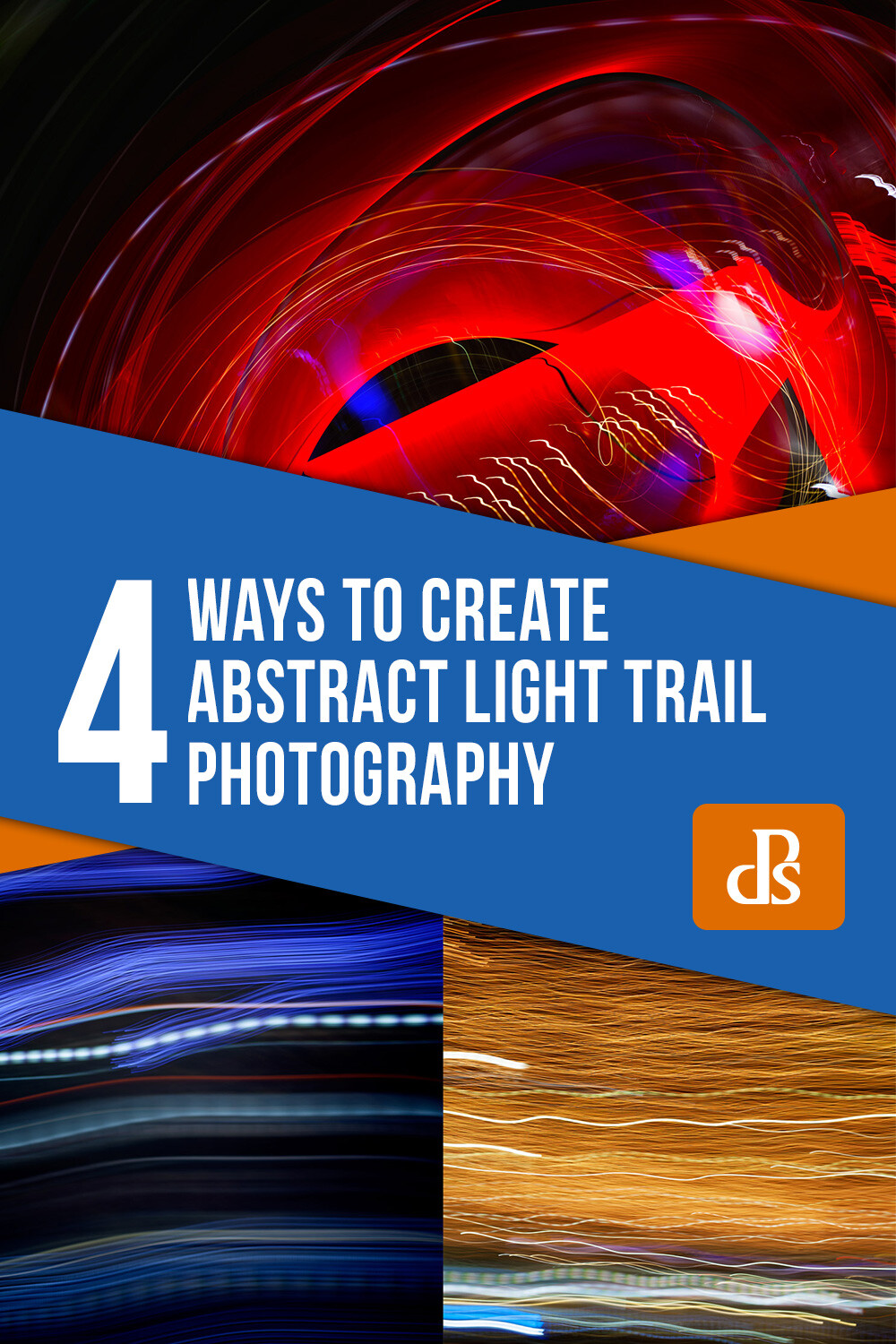
Get Moving – Four Ways to Create Abstract Light Trail Photography

08 Jul

The post Get Moving – Four Ways to Create Abstract Light Trail Photography appeared first on Digital Photography School. It was authored by Megan Kennedy.

Light trail photography is a unique facet of photography. By combining slow shutter speeds with light and camera movement, fascinating abstract photography can be made. Here are four abstract light trail photography techniques to experiment with in your own photographic practice.

What is abstraction?

Before we get started, let’s talk about abstraction. Abstract photography (often called non-objective, experimental or conceptual photography) is photography that does not have an immediate association with the visual world. Instead, abstract photography uses aspects like color, light, texture, shape, and form to evoke an emotional response from a viewer.

Often, in light trail photography, light trails complement a scene or subject. However, in abstract light trail photography, it’s the light trails themselves that are the sole conveyor of meaning. By erasing any other context, the viewer relies solely on the nature of light and photography to read a photograph. This creates intriguing photography that captures and holds the attention of the viewer as they visually unpack the image before them.

When to make abstract light trails

Although it can be done in daylight, abstract light trail photography is best carried out in the evening, at night, or in a dark room indoors. This is to minimize distraction and enhance the efficacy of our chosen light source/s.

What to photograph for abstract light trails

Traffic lights, building lights, car lights, phone light, glow sticks, torches, neon signage… there is an abundance of light sources available to photograph at night. With the right camera settings and technique, almost any point of light can be used to create an interesting light trail.

Camera tossing

Abstract light trail photography rests on the nature of the light source/s (brightness, movement, color etc) and the behavior of the camera (exposure settings, camera movement etc). For example, during a long enough exposure, a set of car lights will leave a trail as they pass by, whereas a stationary light source requires camera movement to activate an abstract light trail. Camera tossing predominantly involves the latter, physically moving the camera to achieve interesting abstract light trail results.

Taken over two seconds at f/4 and ISO 100, this tangle of lights demonstrates the path of the camera as it is tossed in the air.

A disclaimer…

Camera-tossed abstract light trails involve the tossing of a camera into the air during an exposure. Purists argue that a true camera toss means that the camera is tossed without the use of a guiding hand or camera strap. This is why for this method, I strongly advise you to use an old, cheap camera. A compact camera works well. You can even use a phone with a durable case.

I wouldn’t recommend taking your DSLR out for some air-time (although I must admit I did use my 5D MKII with a 50mm lens for some camera tossing sessions). If you aren’t keen on risking your camera, (which is totally understandable) skip forward to camera swinging and keep an eye out for old tossable cameras on sale or in local charity shops.

How to camera toss

The first step to camera tossing is to find somewhere safe to toss. Camera tossing in a quiet location, over grass or carpet is a good idea.

Once you’ve found a good spot with an interesting light source or two, it’s time to organize your camera settings. I went with a shutter speed of one or two seconds to allow the camera movement to really gain traction. I then set my aperture to f/4 and my ISO to 100.

Set your focus to manual. Aim your camera lens at the light source/s and adjust your focus. You can aim for the sharp rendering of the light source/s, or take intentionally unfocused shots for softer light trails.

Depress the shutter button and quickly toss the camera in the air (10-30 cm is high enough, though you can go higher if you’re game). Catch the camera as gently as possible and have a look at your results. Make any amendments to your exposure and have another go.

When you are happy with your exposure and focus, start introducing different throwing methods. Try spinning the camera as you flick it into the air, or throwing it carefully so that the lens is orientated at a particular angle for the duration of the exposure. The results between different throwing techniques can be quite pronounced, so take some time to experiment a little.

Taken at f/8 at 1/4th of a second, I left my lens unfocused to introduce a soft quality to the resulting photograph.

Camera swinging

A variation on camera tossing, camera swinging involves swinging your camera by your (firmly secured) camera strap.

Find a light source and take a few photographs to determine exposure and focus. Just like camera tossing, you want a longer shutter speed to give the camera movement time to take shape. For camera swinging, I started with an exposure of two seconds at f/4 with an ISO of 100.

Once you’ve settled on an exposure, make certain that your camera strap is fastened to your camera. Double-knot, even triple-knot your strap to hold it in place. You really don’t want your camera to go flying once you start swinging.

Two examples of camera swinging. Different light sources make varying light trails.

When you’re ready, depress the shutter button and have a go at gently swinging your camera back and forward like a pendulum. When the exposure finishes, check your results and make adjustments to your camera settings or technique as required.

The possibilities for camera-swung imagery are endless. Each swing creates unrepeatable paths of light from one image to the next, so again, don’t be afraid to experiment a little. Try jumping while swinging your camera or spinning around in a circle with your camera fastened to your wrist.

Moving your body

Not all abstract light trail photography is based around swinging and tossing your camera. Light trails can also be created by moving your body with a camera in hand.

Locate an interesting light source and figure out your exposure with a few test shots. I found that the combination of a one-second exposure at f/4 with an ISO of 100 was a good starting point.

Depress the shutter button and start moving. Ever seen those inflatable tube men, dancing around in the wind? Well, you don’t have to go THAT crazy, but shifting your arms up and down, twirling around, doing a little dance or moving from a sitting position to a standing position are great examples of camera-body movement.

As long as the shutter is open, and the lens is pointed toward a light source, the movements you make will be recorded in the image, creating kinetic abstract imagery.

Moving subjects

As an alternative to moving yourself around, photographing a moving light source can create dynamic light trail imagery too.

Star trail photography is the photography of stars as they appear to transit the night sky. Though it is us that is rotating on earth, the star trails illustrate our perception of the celestial sphere as a moving body.

Car trail photography records the movement of car lights in darkness, revealing trails that trace the routes of traffic in a given setting. For a more abstracted image, isolate the car trails from the surrounding landscape.

Physiography is a method of light painting that can be done in your darkened living room. Suspend a light source on a string and let it swing over your camera during a long exposure. The results are often surprising and intricate, documenting the path of the light source as it swings through the air with diminishing momentum.

This physiogram traces the path a moving light source has taken while suspended over a camera

Burning steel wool photography is another form of recording light trails. Though it can be a little hazardous, the results are quite spectacular.

abstract light trail photography

Burning steel wool leaves golden trails of light not dissimilar to this example of camera movement.

Conclusion

When the day turns to night, many pack up their photography gear and head home. But night time doesn’t necessarily mean that photography is over for the day.

Creating abstract imagery with light is an intriguing aspect of photography. Through the use of camera and/or subject movement you can create fascinating imagery that engages and intrigues an audience.

Go out and try these techniques for yourself, and share your abstract light trail photography with us in the comments below.


4 ways to create abstract light trail photography

The post Get Moving – Four Ways to Create Abstract Light Trail Photography appeared first on Digital Photography School. It was authored by Megan Kennedy.


Digital Photography School

 
Comments Off on Get Moving – Four Ways to Create Abstract Light Trail Photography

Posted in Photography


How to do Abstract Watercolor Photography

04 Jun

The post How to do Abstract Watercolor Photography appeared first on Digital Photography School. It was authored by Rick Ohnsman.

Less about what it is, more about how it makes you feel is this “watercolors” shot, “Visual Jazz.” © Rick Ohnsman

When you’re ready to make the transition from “snapshooter” to a serious photographer, make photographs rather than simply take pictures, then you’re also ready to begin thinking like an artist.  No longer should you snap a photo to simply record a representation of what you saw.  You will want to begin to think about how to craft your image so that it tells a story, captures the emotion, and involves the viewer in a way that communicates to them.  While the subject and the location still matter, it is also important to consider “how does my image make the viewer feel?”

A Wikipedia article on the famous photographer, Minor White, (July 9, 1908 – June 24, 1976) describes him this way – “An American photographer, theoretician, critic, and educator. He combined an intense interest in how people viewed and understood photographs with a personal vision that was guided by a variety of spiritual and intellectual philosophies.”

I especially like this quote from White –

“One should not only photograph things for what they are but for what else they are.” – Minor White

Water ripple reflections are sometimes distorted, making interesting abstracts. © Rick Ohnsman

Photographing “Watercolors”

The use of the term watercolors in this article is not to describe how you might photograph a watercolor painting nor is it about how to use digital tools and techniques to emulate a watercolor look with your photograph.  Instead, we explore how you can learn to see, and then photograph the interplay of light and water to make interesting, and often abstract, images.  Such images will require you to look harder, quietly observe, study and then decide how you will use your camera to capture the image.  You will want to think about how the scene makes you feel and how you will communicate that to your viewer.

A real benefit of making these kinds of photos is – unlike joining the dozens of photographers who might line up at sunrise at that iconic location and all snap away, essentially all making the same shot – these kinds of images will be uniquely yours.

Every image will be different.  In most cases, you couldn’t replicate the shot even if you tried.

There’s much satisfaction in crafting something that is uniquely your vision and creation.

The qualities of light and water

Yes, it’s a wave, but this photo is all about the patterns, colors, and reflections in the sea and surf. © Rick Ohnsman

You may have heard the origin of the word “photography,” based on the Greek words “phos” for light and “graphé” meaning drawing.  Thus, photography is ‘”drawing with light.”

The light that enters our camera lens is either direct (emitted from a source like the sun, or an artificial light source), or reflected (light bouncing off an object and into our lens).  We study the effect of light, and it’s absence, and use it to define the objects we photograph.

Now add water into the scene.  Water can also reflect the light (and the various colors comprising it).  It can also refract the light – bending, altering, and even splitting it into its component colors.

Light waves are changed as they pass from a less-dense material like air to a more-dense medium like water.  Understanding the physics behind how this works isn’t important.  What you as a photographer, a trained observer, and an artist, want to do is learn how to watch for and then capture the interplay of light and water.

Water exists in all three forms in this shot; liquid, solid, and gas. © Rick Ohnsman

The three properties of water

Okay, hang on, just a little more physics here.

Water exists in three states:

  1. liquid,
  2. solid (ice and snow), and
  3. gas (steam, fog, clouds, mist).

How light behaves when it is reflected off the water in these states or refracted through them will become part of your observation training as photographer and artist.

A long exposure blurs the liquid water, but the ice on the rocks is still, a way to display the static and dynamic qualities of water. © Rick Ohnsman


A long exposure blurs the water of Avalanche Falls in the Flume Gorge of New Hampshire. © Rick Ohnsman

There are always photos to be taken as this cellphone shot of water cascading down the windshield during a trip through the carwash demonstrates. © Rick Ohnsman

Capturing motion

Include the duck for a touch of reality, use the reflection only, or catch a rippled reflection for an abstract, there are many creative possibilities. © Rick Ohnsman

Water dripping down the wall of a building makes for a “realistic-abstract.” © Rick Ohnsman

Something else water can do is move.  From massive ocean waves, flowing rivers, erupting geysers, human-made fountains, tiny dripping drops, swirling fog and mist, snow and rain, in many forms water moves.

Our cameras can freeze that motion with high shutter speeds or flash or blur it with long exposures.  Water and how it behaves gives us tremendous opportunities for creativity with our cameras.

Combining still objects in the photo which don’t move, (think a rocky coastline), with water that does (like the waves) in a long exposure, and you create an exciting image that displays both static and dynamic elements.

There’s the realism of the water lily, but over in the corner of the shot… © Rick Ohnsman

Realistic or abstract?

There are no rules when it comes to how you choose to depict water in your photo.  It might be quite literal like an image of a waterfall.  It could play a “supporting role,” adding story and color to an image.  Or it could be about how the light interacts with the water; liquid, solid, or gas.  Alternatively, maybe it’s totally abstract – all about the shape, form, line, and color with no concern whatsoever to what the subject might be.

The objective here is to become a “student of light,” observing how light and water interact to create interesting scenes to photograph.

… a complete abstract. © Rick Ohnsman

Learning by observing

The rest of this article will be about the photos.  Study how I made each one and the way water, in its various forms, is used in combination with the light to make the image.  I have captioned the photos with additional information about them.  See what you can learn and then go make your own unique images.

Water vapor, or what we call fog, create effects with the light. © Rick Ohnsman

Ice is water in solid form. It reflects, refracts, and alters the light while taking on fantastic forms. © Rick Ohnsman

Reflections on the wet sand make great watercolors. © Rick Ohnsman

It might come in a bottle, but sparkling water is a great way to add bubbles to your watercolors. © Rick Ohnsman

Even where watercolors may not be the main subject, they can play a strong supporting role. © Rick Ohnsman


The post How to do Abstract Watercolor Photography appeared first on Digital Photography School. It was authored by Rick Ohnsman.


Digital Photography School

 
Comments Off on How to do Abstract Watercolor Photography

Posted in Photography


How to Make Interesting Abstract Smoke Photos

07 May

The post How to Make Interesting Abstract Smoke Photos appeared first on Digital Photography School. It was authored by Rick Ohnsman.

How would you like to learn a little “photo magic?” A magician not wanting to reveal his secrets might tell you his trick was all done with “smoke and mirrors.” The expression speaks of a kind of deception used to fool the viewer. No fooling here though, as you’ll learn the technique. You really will photograph smoke and later, mirror your image to add even more interest. So it really is smoke and mirrors. Shall we begin?

Abstract smoke photography - Firebird

Can you see the Firebird? How was this done? Read on for the tricks to this abstract magic.

Tools for the trick

Here’s what you will need to create your photo:

Camera

Most cameras will work for this kind of photography. Being able to use manual control and manual focus will make things easier. You will also need to be able to fire a flash mounted off-camera using either a wired or wireless method. A lens which will allow you to focus on an object a few feet away will be best. The shots shown here were done with the Canon “nifty fifty”, a 50mm f/1.8 prime lens mounted on a Canon 50D camera. For a relatively inexpensive lens, it is very sharp.

Abstract Smoke Photography - Use stick Incense

A package of 40 incense sticks from the dollar store is probably enough for a lifetime of smoke photography.

Flash

You will want an external flash you can mount off-camera. The pop-up flash on the camera won’t work for this. You will be mounting the flash off to the side of your shot so it illuminates the column of smoke pointing perpendicular to the direction you’re pointing the camera. Having a light stand on which you can mount it will be helpful. You also don’t want any of the light to hit the background or flare into the camera, so a snoot which will direct the beam of the flash at the smoke column works well. You may also be able to fashion a “barn-door” arrangement with cardboard (or even tape). Whatever works to keep the light only on what you want – the smoke column.

Tripod

The flash will provide plenty of light and also freeze the action, so you really aren’t concerned about motion blur. The advantage of a tripod is simply to help you compose and frame the shot and provide some consistency.  If you don’t have a tripod or simply prefer to handhold your camera, that’s okay too.

To better see the smoke and also give you more flexibility later in editing, a black or very dark background will work best. Black posterboard, black cloth, the black side of a reflector, or whatever you have should work. Because the column of smoke you’ll be photographing will be relatively small, you won’t need anything very large.

Smoke-producing object

Incense, the kind that comes in stick form, works very well for this kind of smoke photography.  It’s cheap, burns for a long time, and produces just the kind of smoke needed.

Location

Unless you have an absolutely calm day with no wind, shooting outdoors probably isn’t going to work. Even the slightest air currents will affect your smoke pattern. Shooting indoors, particularly in a modern home, might be a good way to test your smoke detectors but having the alarm go off just as you’re getting started with your work is rather disruptive.  I found shooting in the garage to be a good option. It was dark, the air was still, and after the session, it was easy to open the door and clear the smoke. Just be aware of the requirements needed; still air, no smoke detectors, (or at least temporarily disarmed ones), the ability to make the room dark, and a door or window you can open afterward to clear the smoke afterward, and you’ll be set.

Abstract Smoke Photography - Setup diagram

Setting up

The diagram above shows a basic setup. Put your camera on a tripod a couple of feet from where you will place the incense stick.  Taping the stick to light stand may allow you more flexibility in positioning it in the frame, but whatever you use, you will want to frame the shot so you put just the tip of the stick at the bottom of the frame, leaving a couple of feet above for the column of smoke. Whether you use a portrait or landscape orientation with your camera is up to you, just remember the smoke will drift around. Being a little loose with the framing isn’t a bad idea, you can always crop later.

The background should be a couple of feet behind the incense stick. If you light properly, it won’t show anyway so this isn’t crucial.

Position the flash on a light stand so it’s to the side of the camera and points perpendicularly to the camera angle. You will be side-lighting the smoke. Some photographers also put a reflector on the opposite side to bounce a little light on the other side of the smoke. You can experiment and see if you like that.  The shots here use only the one flash. As mentioned above, what is crucial is that no light fall on the background nor flare into the camera lens. A snoot is the easiest means of achieving this.

Abstract Smoke Photography - smoke photo straight out of camera

The smoke patterns are constantly changing and no two will be alike.

Camera and flash settings

In the darkened room where you’re working, use a flashlight or other dim lighting so you can still see the incense stick and do your framing. Focus on the tip of the stick, then turn off the autofocus so the focus stays locked.  Leaving on autofocus will almost guarantee frustration, as while shooting, the camera lens may hunt, trying to find and focus on the drifting smoke.

Shoot in Raw mode, (which you usually do, yes?) Doing so will allow greater editing flexibility later.

Set your camera around ISO 200, f/8 and about 1/60th of a second for starters.

Leave the flash off.

Make a shot before lighting the incense in the darkened room.

You should get a totally black frame and that’s what you want with no flash.

Now put the flash in manual mode and set it to about half power. You should have already connected it to the camera with a cord or perhaps set up a radio trigger so it will fire when the shutter is tripped.

Make a shot with the flash on and you should be able to just see the tip incense stick.  If so, you’re now ready to get smokin’.

Abstract Smoke Photography - The Seahorse

This image is straight out of the camera. Note the tip of the incense stick at the bottom right.

Making your photos

Light the incense stick, blow out the flame and a thin column of smoke will rise from the tip.

Make a shot and check it. Is it focused?

Be sure, as you don’t want to make a whole series only to later find out they aren’t sharp. If you need to adjust your focus or perhaps go to a smaller f/stop for more depth of field, do so now.

Also, check the exposure. If things are too bright, drop the flash power or reduce the ISO. If the smoke is too dim, do the opposite. You want to clearly see the smoke, but nothing else.

If all looks good, keep making shots. Occasionally wave your hand near the smoke column or gently blow on it to vary the smoke pattern. You will want some variety so you can later choose your favorite shots.

Abstract Smoke Photography - Smoke photo mirrored and colored with a gradient

This is the same image as the one before it, but horizontally mirrored and colored with a gradient.

Basic editing

What program you want to edit with is up to you. You will want to adjust the blacks so as to leave only the white smoke details. Then adjust the whites, highlights, shadows, exposure, and contrast by eye, tuning the shot to your liking.

If there are elements you wish to eliminate, paint them out with a black adjustment brush or use layers and masks in Photoshop if that is your preferred technique.

Abstract Smoke Photography - horizontal and vertical mirroring

The Gordian Knot – This image was mirrored both horizontally and vertically and then colored with a gradient.

Mirrors and colors and abstracts, oh my!

You got the smoke, now what about the mirrors? Yes, the white smoke patterns on a black background are interesting but you can take this much further. I used Corel Paintshop Pro, but Photoshop would work too. Or for that matter, any photo editor that supports layers will work. (Keep in mind Lightroom does not support layers so while you can edit, colorize, and do other things with it, the mirroring part is beyond its capabilities).

Here are the basic steps:

  • Open in your basic edited smoke image. Select the entire image and copy it.
  • Paste the copied image on top of itself as a new layer.
  • Mirror (flip) the upper layer horizontally or vertically. (In Photoshop, Edit, Transform, and Flip Horizontally or Vertically).
  • Change the blending mode on the upper layer to Lighten. You will now see the upper layer mirrored and superimposed over the lower layer and some interesting patterns will be created.
Abstract Smoke Photography - Alien Gas

Alien Gas – A straight smoke shot later colored green.

Abstract Smoke Photography - Negative version of smoke photograph - Purple Haze

Purple Haze – Now, take the image above, reverse it so it’s a negative, (the black becomes white and the green becomes purple), then mirror it both horizontally and vertically.

You can move the layers so they overlap each other in various ways and change the pattern. You might want to make the canvas larger and put the mirrored image next to itself or even have multiple layers with the image flipped both horizontally and vertically.

You’ve now entered the realm of abstract art and anything goes.

Maybe you’d like to add some color?

Create another layer at the top of the stack and fill it with a gradient.  Now use the Overlay or Soft Light blending mode and watch your smoke take on the colors of the gradient.

If you’d like to hand-paint the smoke,  create a blank layer at the top. Turn the blending mode to Overlay, and using the Brush tool (and a color of your choice) to paint the smoke, watching the white smoke take on that color while the black is left untouched.

Try putting a photo on the upper layer and switching the blending mode on that layer to Overlay.

Abstract Smoke Photography - The Witch Doctor

Like Rorschach inkblots, what you see is very individual. I call this one – The Witch Doctor

Something I find fascinating with these abstract smoke compositions is that they resemble Rorschach InkBlots. Everyone interprets them differently and can see different images in what are, after all, just random patterns of drifting smoke. The titles on these shots are what I interpret.

What do you see?

Smoke in other photos

You may have reasons to want to include smoke in your photos that is not an abstract interpretation. The same basic technique can work with side lighting.

The “Smokin’ Hot Peppers” was lit with two flashes, one on either side of the vase and an incense stick placed in and behind the peppers in the vase.

Abstract Smoke Photography - Smokin Hot Peppers

A flash on either side of the subject was the only difference here, otherwise, this image uses the same technique.

Pseudo-Smoke

Here’s one last trick that could work for you when you want something that looks like smoke but you’re in a no-smoking workspace.

Get some dental floss, fray it a bit, and tie it to a penlight or small flashlight letting the light shine down the length of the floss and onto your subject.

Now make a long exposure during which you keep the floss constantly moving. Smokeless smoke, just another option to have in your bag of photo tricks.

Abstract Smoke Photography - Pseudo Smoke Effect - Simulated Smoke

Looks like smoke, but it isn’t.

Conclusion

You’ll find that photographing smoke is all about the lighting. Side or backlighting will work best and a dark background helps the smoke show up better. Beyond that, it’s simply a matter of experimenting.

Give it a try and make a little photo magic. And share with us in the comments below!


The post How to Make Interesting Abstract Smoke Photos appeared first on Digital Photography School. It was authored by Rick Ohnsman.


Digital Photography School

 
Comments Off on How to Make Interesting Abstract Smoke Photos

Posted in Photography


Weekly Photography Challenge – Abstract

09 Mar

The post Weekly Photography Challenge – Abstract appeared first on Digital Photography School. It was authored by Caz Nowaczyk.

This week’s photography challenge topic is ABSTRACT!

© Megan Kennedy

Your photos can include anything includes anything that is abstract. It can be motion-blurred, cropped, minimalist, color-based, use nature, objects or anything really! They can be color, black and white, moody or bright. You get the picture! Have fun, and I look forward to seeing what you come up with!

© Peter West Carey


Some Inst-piration from some Instagrammers:


View this post on Instagram


A post shared by Rachel Harris-Huffman (@rachharrhuff) on


View this post on Instagram


A post shared by Ali Haider Khan (@alih4213) on


View this post on Instagram


A post shared by timothy sens (@timothysens) on


View this post on Instagram


A post shared by Helena Arendt (@helenaarendt) on


View this post on Instagram


A post shared by Anke Drewitz (@jenanke42) on


View this post on Instagram


A post shared by Jeremy Beckman (@jeremybeckman) on


Check out some of the articles below that give you tips on this week’s challenge.

Tips for Shooting ABSTRACT

How to Create Abstract Photos with Oil and Water and a Little Dish Soap

4 Refraction Ideas to Use In Your Photography

How to Make Funky Colorful Images of Ordinary Plastic Objects Using a Polarizing Filter

How to Create Abstract Photos with Colored Paper

How to Make Use of Foggy Surfaces for Abstract Photography

How to Create a Kaleidoscope and Make Unique Abstract Images

Getting Started with Abstract Macro Photography

6 Tips on How to Create Abstract Photos


Weekly Photography Challenge – ABSTRACT

Simply upload your shot into the comment field (look for the little camera icon in the Disqus comments section) and they’ll get embedded for us all to see or if you’d prefer, upload them to your favorite photo-sharing site and leave the link to them. Show me your best images in this week’s challenge.

Share in the dPS Facebook Group

You can also share your images in the dPS Facebook group as the challenge is posted there each week as well.

If you tag your photos on Flickr, Instagram, Twitter or other sites – tag them as #DPSabstract to help others find them. Linking back to this page might also help others know what you’re doing so that they can share in the fun.

The post Weekly Photography Challenge – Abstract appeared first on Digital Photography School. It was authored by Caz Nowaczyk.


Digital Photography School

 
Comments Off on Weekly Photography Challenge – Abstract

Posted in Photography


Abstract Table, An Interesting Tasting Menu in Oakland, California

08 Oct

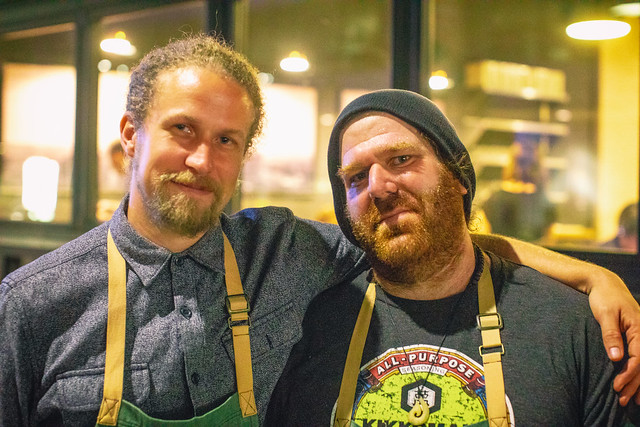
Duncan Kwitkor and Andrew Greene, Abstract Table
Chefs Duncan Kwitkor and Andrew Greene — Abstract Table, offering up a 5 and 7 course tasting menu Friday and Saturday nights at Gastropig.

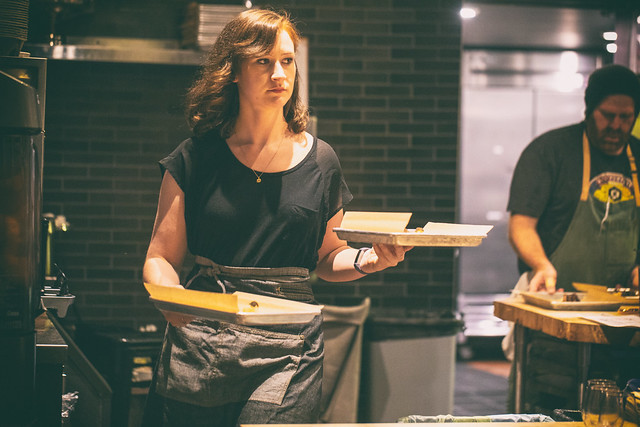
Last night my wife and I had a chance to dine at the opening of a new pop up style 7 course tasting menu called Abstract Table, currently being offered as permanent Friday and Saturday night dinner service at the Gastropig in Oakland’s Uptown District. The menu is prepared by chefs/artists/friends Andrew Greene and Duncan Kwitkorand (formerly of Duchess in Oakland’s Rockridge District). The duo’s initial tasting menu features many unique and interesting flavors put together loosely around a Japanese style with a “Fine Dining on Paper” theme. Courses are served on paper and metal trays.

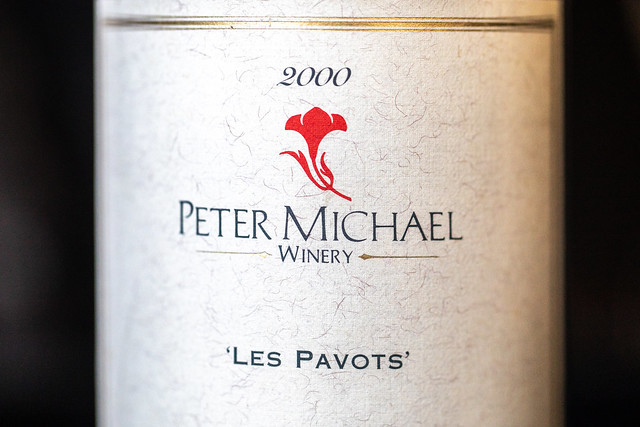
This is the first dinner series at the Gastropig and Greene and Kwitkorand plan to offer a winter themed tasting menu later this year as well. The tasting menu is modestly priced at $ 50 for a 5 course tasting and $ 70 for a 7 course tasting. Wine and sake are offered to accompany the meal or you can bring your own bottle (like we did with the excellent 2000 Peter Michael Les Pavots) and pay corkage.

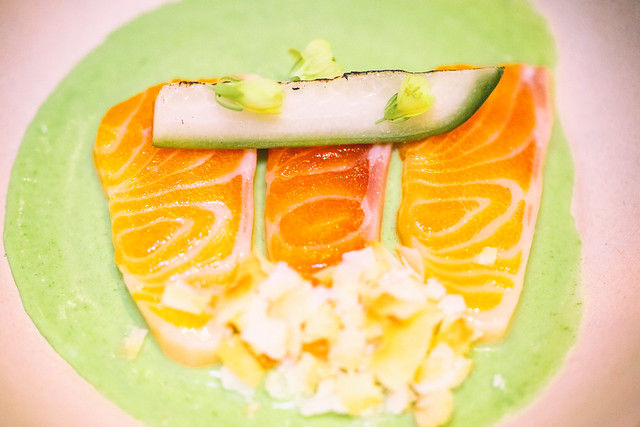
Of the 7 courses that we tried I think my personal favorites were the ocean trout with wild arugula sage, pickled grilled cucumber and coconut and the dessert panna cotta. My wife enjoyed the bok choy quite a bit and thought it was an interesting and unique approach to a salad. Overall I found every course quite enjoyable and appreciated the artistic orientation and presentation to the food. It is nice to see an interesting tasting menu approach and a new addition to Oakland’s food scene, especially at a fairly reasonable price.

They are currently offering two dinner services, one at 6pm and one at 8:30pm. Reservations are available via Resy.

More from Eater San Francisco here and the San Francisco Chronicle here.

More of my photos from last night’s opening here.

Oh and if you still haven’t had the baconslut egg sandwich at breakfast at Gastropig yet you are missing out!

Abstract Table

Abstract Table
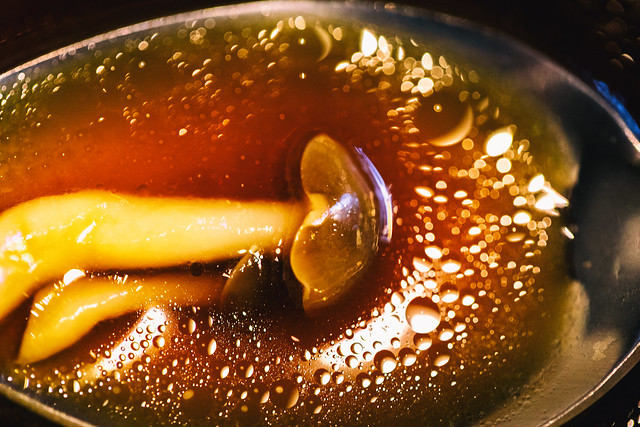
First course: Japanese mushroom soup, mitsuba, negs oil

Abstract Table
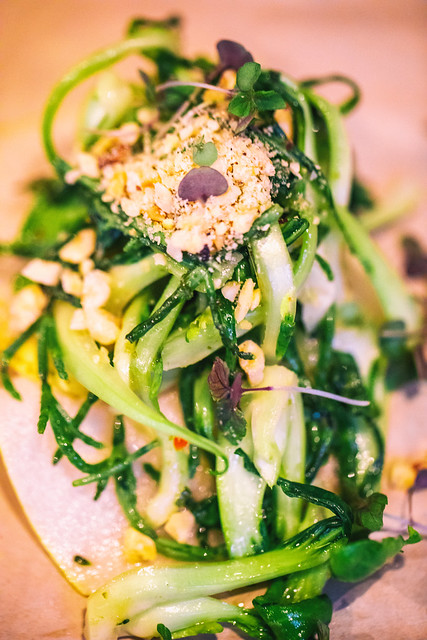
Second course: Bok choy, sea bean, pear, hazelnut, yuzu kasha vinaigrette

Abstract Table
Intermezzo: Coastlive Farms heirloom tomato, purple yam, miso

Abstract Table
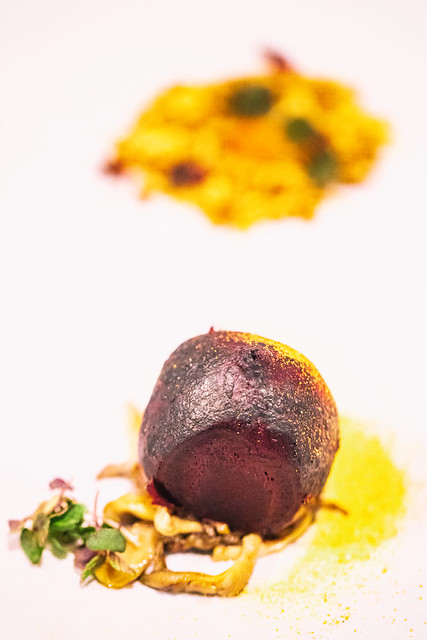
Third course: Charcoal beet, oyster mushroom, furikake granola, fish caramel

Abstract Table
Fourth course: Ocean trout, wild arugula sage, pickled grilled cucumber, coconut

Abstract Table
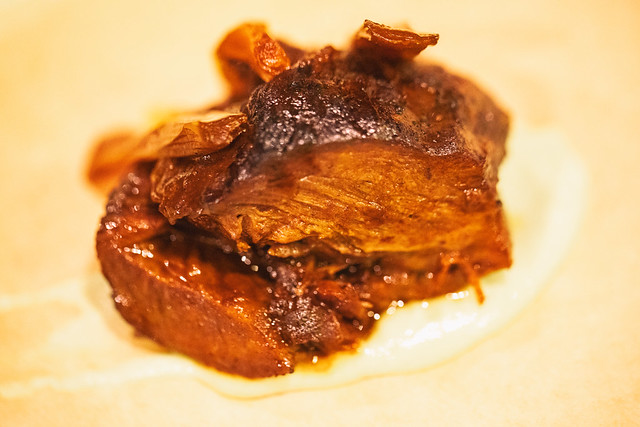
Fifth course: Beef cheek, turnip, tamari onion, edamame puree, sake glaze

Abstract Table
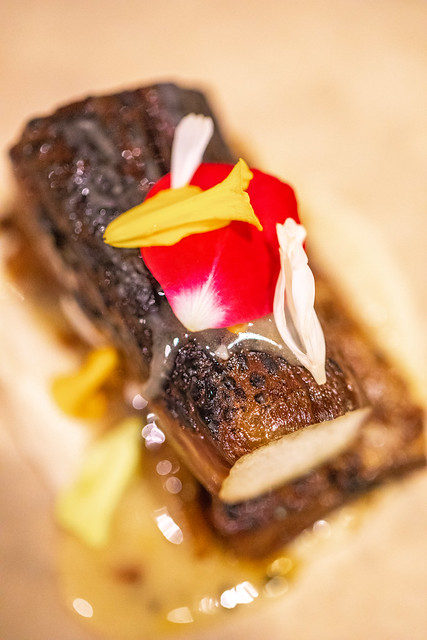
Sixth course: Lamb breast, smoked cauliflower, Japanese eggplant, togarashi honey

Abstract Table
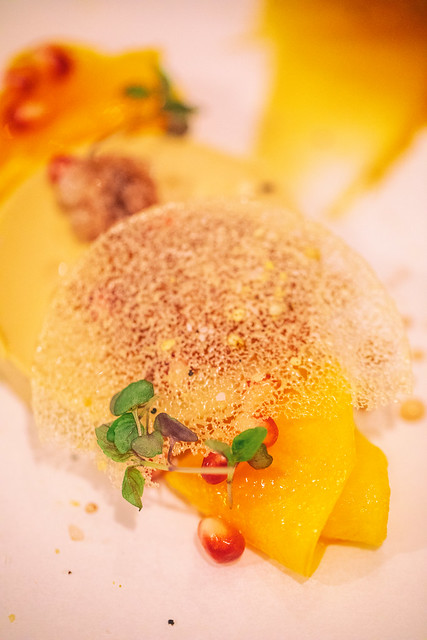
Seventh course: Hojicha panna cotta, persimmon, white chocolate tile, pomegranate granita

Peter Michael Winery 2000 Les Pavots
The excellent 2000 Peter Michael Les Pavots

Abstract Table
Dinner service Friday and Saturday evenings at Abstract Table


Thomas Hawk Digital Connection

 
Comments Off on Abstract Table, An Interesting Tasting Menu in Oakland, California

Posted in Photography


A Beginner’s Guide to Abstract Flower Photography

30 Sep

Abstract flower photography can stop you in your tracks. But unfortunately, when it comes to abstract flower photography, you probably don’t know where to start. What equipment do you need? What techniques do you use?

The world of abstract flower photography can seem distant and difficult.

abstract flower photography aster

Actually, it is no harder than any other genre of photography. It can be a lot more rewarding, though. You just need to know how to get started.

In this tutorial, you’ll learn the fundamentals of abstract flower photography. You’ll learn about the required equipment, as well as several key techniques for getting powerful abstract images. When you finish, you’ll be ready to go out and start applying these tips immediately.

Sound good? Read on.

What is abstract flower photography?

I’m going to define abstract flower photography simply as this – photographing flowers in a way that the viewer doesn’t immediately see the flower.

abstract flower photography swirls

That is, an abstract floral focuses not so much on the flower itself, but on parts of the flower: the curve of the petals, the color of the flower center, the play of light on the stamens.

To do powerful abstract flower photography, you have to stop thinking in terms of flowers, and start thinking in terms of shape, color, and light. This isn’t complicated. It’s easy to do, once you get the hang of it. The tips I share below will help you to do just that, so keep reading.

Equipment

To get beautiful abstract flower images, you need two things: a camera and a macro lens.

The type of camera doesn’t matter. These days, essentially all cameras are capable of capturing stunning images. In abstract flower photography, it’s the lens that counts.

So what lens do you need?

Any sort of macro lens will do. I’ve taken excellent abstract flower images with cheap, sub-300 dollar lenses. I’ve also used my much more expensive Canon 100mm f/2.8L lens.

The thing is, abstract flower photography isn’t really about sharpness and perfectly rendered detail. It’s about composition, light and color.

abstract flower photography daisy

A tip worth mentioning is that the shorter the focal length of a macro lens, the closer you need to be to your subject to get life-size images. So, for instance, 60mm macro lenses can be a problem when you’re trying to get a close-up of a rose and you keep casting your shadow on the petals by accident.

You may have also heard that for abstract flower photography you need a tripod.

abstract flower photography silhouette

I would disagree. I don’t use a tripod for abstract flower photography, myself because I find that it’s too limiting. I need to explore the flower through the lens, change my composition, take a few photographs, and change my composition again. You can’t do that with a tripod.

Have you got your camera and a macro lens? If so, you’re ready for the bulk of this tutorial on quick and easy tips for stunning abstract flower photography.

Tip 1: Shoot on cloudy days

If you’ve done natural light macro photography before, you’ll know that you can get beautiful macro photographs at a few different times of the day. First, when it’s cloudy. Second, during the golden hours: just after sunrise and just before sunset.

abstract flower photography tulip

I photographed this tulip on a cloudy spring day.

For abstract photography, I recommend that you only shoot on cloudy days.

On cloudy days, the light is even, resulting in colorful, deeply saturated images. And in abstract photography, color is key. In fact, out of all the images featured in this article, all but one were taken on a cloudy day.

abstract flower photography tulip

Once you become a more experienced abstract flower photographer, you can start to experiment with other types of light. But until then, stick to cloudy days. Your results will speak for themselves.

Tip 2: Get close. Really, really close!

In abstract flower photography, you cannot just take a snapshot of your subject. Your goal must be to show the viewer something new, something unexpected.

The way to do this is to get close. Really, really close.

abstract flower photography pink

As I said above, you must think in terms of shapes, color, and light. The way to start is to magnify your subject.

Take that macro lens and crank it up to its highest magnification setting (which should be 1:1, if you have a true macro lens). Then get close to a flower. Look through the viewfinder of your camera, and just move the lens around.

abstract flower photography tulip center

What do you see?

You probably won’t immediately notice a stunning composition. I spend a lot of time looking through my lens without taking any pictures. There’s a lot of experimentation involved, and that’s okay. Which brings us to Tip 3…

Tip 3: Use a shallow depth of field

The depth of field is the amount of an image that is actually in focus.

Images with only a small amount of the subject in focus have a shallow depth of field. Images with a large amount of the subject in focus have a deep depth of field.

Depth of field is controlled by your camera’s aperture setting, also known as an f-stop. A low f-stop (f/1.4 to f/5.6) gives you a nice, shallow depth of field.

On most cameras, you will be able to choose your f-stop. For abstract flower photography, I usually keep it in the f/2.8-3.5 range but feel free to experiment a bit depending on your creative vision. Just keep that depth of field nice and shallow.

abstract flower photography black-eyed susan

Why do I recommend having so little of the image in focus?

In abstract photography, you must photograph flowers so that the viewer doesn’t immediately see the flower. You must work in terms of light, color, and shapes.

By using a shallow depth of field, you emphasize those elements and take the focus off the flower itself. You shift the focus to the shape of the flower, the color of it, and the light falling on the flower.

abstract flower photography aster

This is what I focus on in my final tip.

Tip 4: Look at the shape of the flower

As I mentioned above, it’s essential that you think about light, color, and shape.

Out of these three elements, I think that shape is most important in abstract flower photography. This is because flowers have naturally interesting shapes: sinuous curves, perfect circles, radiating lines.

The photographs are there. You just have to find them.

abstract flower photography coneflower

For instance, flowers tend to have such beautiful, soft petals. You can use these to your advantage in your photography. Think about the petals, not as parts of a flower, but as twisting lines. Try to see these shapes moving about through the flower.

Carefully set up a composition that uses these lines. Keep it simple—one or two lines is all you need.

Only once you’ve composed deliberately, keeping the shape of the flower at the forefront of your mind, should you take the image.

abstract flower photography black-eyed susan

Conclusion

Capturing beautiful abstract photographs can be an intensely rewarding experience.

Make sure you have the right equipment. Then, if you shoot on cloudy days, get super close, use a shallow depth of field and, above all, think in terms of the flower’s shape, you’ll be well on your way to taking stunning abstract flower photographs.

Have any more tips for abstract flower photography? Share them in the comments!

abstract flower photography orange

The post A Beginner’s Guide to Abstract Flower Photography appeared first on Digital Photography School.


Digital Photography School

 
Comments Off on A Beginner’s Guide to Abstract Flower Photography

Posted in Photography


How to Find Opportunities for Abstract Photography Anywhere

12 Jul

Abstract photography, otherwise known as non-objective, conceptual, or experimental photography, is a tricky subject. According to Wikipedia, abstract photography is “a means of depicting a visual image that does not have an immediate association with the object world and has been crafted through the use of photographic equipment processes or materials”.

So basically, abstract photography is image-making that doesn’t aim to represent reality but rather visually explores the components that construct conventional subject matter.

To seek out abstract photography in any opportunity, you must shift your focus away from describing the world in a literal way, focusing on line, shape, form, space, color, contrast, pattern and texture instead. These elements come together to create an image that explores the way you appreciate your visual environment.

Here are a few tips to finding opportunities for abstract photography, wherever you are!

Previsualization

How to Find Opportunities for Abstract Photography Anywhere

Previsualization in photography is a skill where a photographer “sees” the outcome of an image before it is taken. By breaking down a potential image in your mind’s eye, you can dissect a scene, prioritizing the best possible visual results.

This is especially useful in abstract photography, where the outcome of a photograph sometimes isn’t immediately obvious.

Previsualizing will help you make the most of any potential photographic opportunity. Imagine encountering a fence for example. You could easily photograph the fence line and move on, but your photograph won’t be very engaging. Or, you could mentally analyze the fence’s structure, breaking it down into abstract categories (color, shape, line, pattern, etc.) to take advantage of the scene and exploit it to its full potential.

Go macro

macro flower - How to Find Opportunities for Abstract Photography Anywhere

Macro photography is an especially unique form of photography, illuminating what often goes unseen to the naked eye. Provided you have a macro lens, extension tubes, or even a magnifying glass, one of the best things about abstract macro photography is that you can get an interesting result photographing just about anywhere.

Abstract macro photography is a great opportunity to focus on subtle details in a scene without being overly concerned about representing a specific subject. Focusing on abstracted aspects such as color and shape rather than the subject means you can explore the building blocks of an image visually.

Look for lines

Abstract photography focuses on the naked ingredients of image making, but sometimes this means a change-up in your photographic approach. One great way to tease out abstract photographic opportunities is to focus on a compositional technique. For example, focusing on lines will reveal opportunities you may have passed over before.

How to Find Opportunities for Abstract Photography Anywhere

As one of the most basic elements of composition, lines are an extremely powerful tool in visual art. Lines that guide a viewer’s eye around an image (also known as leading lines) are a way to point towards a specific subject or highlight the geometry of a scene. They can also add a sense of urgency with straight, abrupt lines or lend a sense of calm or peace with softer, curved lines.

Concentrating on lines will reveal new opportunities in any environment, all you have to do is look.

Seek out texture

Texture in photography is one of the most under-utilized compositional tools. Exploring texture creates an image that people can “feel” in their mind. The feeling of touch appeals to a viewer’s understanding of the world.

By incorporating texture into an abstract photograph, you are connecting to an audience’s knowledge of how the world behaves under the sense of touch. And because most things feel like something, there are plenty of opportunities for textural abstract photography. Try looking for peeling paint, roughed up wood or dried leaves.

How to Find Opportunities for Abstract Photography Anywhere

Investigate color

Color is all around us, it’s a universally powerful tool of communication. For example, psychologically, yellow has associations with joy and energy, whereas green is associated with nature and calm. It’s just the same in abstract photography.

Focusing on color investigates our associations with the environment around us. It transcends abstract subject matter to connect with a viewer on a psychological level.

Making color the center of interest in your photography will reveal new and unusual abstract subject matter too. Objects that may seem boring or mundane come alive with a bit of color, creating unusual and interesting abstract photography.

How to Find Opportunities for Abstract Photography Anywhere - color

Conclusion

The scope of abstract photography is exciting and endless. Although it’s exact meaning is hard to define, abstract photography provides space for creativity and experimentation.

It’s the perfect excuse to shake up your photographic practice, all you have to do is look! Please share some of your abstract photos in the comments below.

The post How to Find Opportunities for Abstract Photography Anywhere appeared first on Digital Photography School.


Digital Photography School

 
Comments Off on How to Find Opportunities for Abstract Photography Anywhere

Posted in Photography


How to Create Abstract Photos with Colored Paper

04 Jul

Developed in China, paper as we know it has been around for at least 2000 years. Originally made by pressing the wet fibers of plant-derived cellulose together and dried in sheets, paper’s ability to be mass produced resulted in the advancement of the written word as a means to pass information down through time. This accelerated exchange of information triggered a revolution in cultural and technological advancements that have shaped the way we live today.

Artists paint and photographers print on specialized paper. Books, magazines, and newspapers distribute information across the world. Important documents are filed away on paper, ready to be pulled out at a moment’s notice. Even with today’s abundance of computer screens, paper has endured as an indispensable material.

Creating abstract photos is another wonderful use of paper. With a few bulldog clips, some colored paper, and a bit of creativity, you can create beautiful abstract images to enjoy and use as desktop wallpapers or backgrounds.

Creating Abstract Photos with Colored Paper - orange and red abstract image

What you will need

  • Your camera
  • A macro lens or set of extension tubes
  • A selection of different colored paper (I used a packet of variously sized one-color per piece origami paper I found at a dollar shop).
  • Several medium or large bulldog clips.

Selecting a space

First, you’ll need to choose a space to set up in. This is important because your paper needs to be exposed to plenty of natural light. Otherwise, your shadows will be too dark, and your photographs will look flat or awkward.

Set up outside, or near a large window with a decent amount of light flooding into your space. I work on a desk outside, with plenty of room to move and shoot from different perspectives.

Creating Abstract Photos with Colored Paper - orange circle abstract

Setting up

Setting up for this project is can be a little tricky. Once you’ve settled on a space to work in, you’ll need to arrange your colored paper. First, select a piece of colored paper that will serve as the background for the image. You’ll want this background to cover the frame, so choose a size that has adequate coverage. The background color is up to you, so choose whatever catches your eye.

Next, add a second layer of paper to sit on top of the background. This will be your foreground subject. Again, the color is up to you. To make an interesting image, you need to separate the foreground layer from the background. You’ll do this by physically adjusting the orientation of the foreground paper.

Creating Abstract Photos with Colored Paper - bulldog paper clip

Generally, sheets of paper want to stay flat and straight, so shaping your foreground paper can take a little bit of coordination. An easy way to control the orientation of the paper is to add weight to its edges. Attach a bulldog clip to each side of the piece of colored paper and lay it down so that there is a gap between the foreground and background paper.

Photographing your creations

Once you’ve attached your bulldog clips and arranged your paper, it’s time to get busy photographing. There are no hard-and-fast rules here, just photograph what you think looks best.

Try sitting your foreground paper vertically or horizontally in relation to the background paper for different depth effects. You can also try focusing your lens on different areas of the paper, or for a smooth, featureless gradient, unfocus your lens altogether. Focus on a small section of your paper or zoom out to include the whole arrangement.

You can modify the shape of your foreground paper by manipulating the location of the bulldog clips on the paper. Moving them closer together creates a nice S or U bend in the middle of the paper for soft organic lines. For harder lines, move the bulldog clips further away from each other to tighten the paper.

blue and yellow abstract - Creating Abstract Photos with Colored Paper

Paper has a thousand uses, the great thing about this project is that there is no right or wrong way to do things. Just take some time to relax and experiment. If you have kids or grandchildren, get them to help you – they’ll have fun helping to arrange the paper.

Enjoy!

The post How to Create Abstract Photos with Colored Paper appeared first on Digital Photography School.


Digital Photography School

 
Comments Off on How to Create Abstract Photos with Colored Paper

Posted in Photography