Canon has announced its EF 50mm F1.8 STM lens, which uses a stepper motor for quieter and more responsive autofocus compared to its ‘Mark II’ predecessor. It also features a 7-blade circular aperture and minimum focus distance of 35cm – both improvements over the Mark II. This compact fifty is just 39mm long and weighs 160g, has a metal mount, and supports an optional integrated hood. Read more
Tag: 50mm
-
Testbericht Zeiss Planar T* 50mm & 85mm

Ein Beitrag von: Alexander May
Schon seit ich angefangen habe zu fotografieren, war der Name Zeiss für mich immer verbunden mit unerreichbarer, kostspieliger Technik für qualitätsverliebte Individualisten. Daher war ich mehr als aufgeregt, als ich die Möglichkeit bekam, zwei Exemplare dieser historischen Marke einen Monat lang zu testen.
kwerfeldein – Fotografie Magazin | Fotocommunity -
Writer’s Favorite Lens: 50mm f/1.8
Picking a favorite lens can be tricky, because there are aspects of a variety of lenses that I like. Sometimes I like to use zoom lenses, sometimes prime lenses, and other times specialty lenses like macro or ultra-wide-angle. But despite the variety of options available, at the end of the day I keep coming back to one particular lens as my pick of the litter. The lens that gets the job done no matter what situation I’m in, the one that consistently produces outstanding results more than any other, is my trusty Nikon 50mm f/1.8G. It’s a workhorse that has survived rain, cold, and even being dropped on a concrete garage floor. It’s incredible versatility is why I like to recommend it to photographers – especially those new to the craft who want to expand beyond their kit lens.

Value and versatility
When I was first exploring digital photography several years ago, I was enticed by the zooming function of a kit lens and could not understand why anyone would want a lens with a fixed focal length. It seemed quite limiting, and since I was just getting my feet wet I did not understand why I would spend over $ 200 on a non-zooming lens when I could spend less than half that on one that covered a greater variety of focal lengths. The price, I thought, made the lens a waste of money. But nevertheless I listened to the advice of my friends Ryan and Kevin and skipped the kit lens entirely, opting instead to shoot only with the Nikon 50mm f/1.8 on my newly-acquired D200. And my, oh my, what a difference that made.
Despite what might seem like a high price tag for new photographers, this lens is quite inexpensive compared to many of its counterparts. Because its focal length is not especially wide, but not all that tight, it can be used in an astonishing variety of situations even on a crop-sensor camera. In fact, the only time I have found myself reaching for a wider lens is when I am shooting multiple people indoors. If I’m using my “Nifty Fifty” during these situations I have to either stand clear across the room or at the other end of the hallway to fit my subjects in the shot.
Other than that it works great for nature, architecture, animal, and especially portrait photography. I have done several portrait sessions with nothing but this 50mm lens, and it produces solid results if you want close-ups with beautiful blurry backgrounds or even whole group shots. While other lenses like the 85mm f/1.8 or 35mm f/1.8 are ideal for tighter or wider shots, this one lens can cover a greater variety of your photographic needs like almost nothing else. The price might seem a bit steep, but it will certainly pay off over time.

If you’re on a limited budget and want to take nice portraits, look no further than a 50mm lens.
Features
At first glance it might not seem like a non-zooming lens would have much in the way of features, and this particular one doesn’t even have image stabilization that is found on some cheaper kit lenses! But the more I used this lens, the more I realized how many features it did have, and how much they impacted my photography.
For instance, this lens has two focusing modes: Automatic/Manual and Manual. Because I use back-button focusing on my camera, the A/M mode on the 50mm f/1.8 means I don’t have to press any buttons or change any options if I want to quickly shift between Automatic and Manual focusing. On many other lenses I would need to fiddle with a switch on the lens itself in order to change this option. That might not seem like much of a hassle, but I have been in many situations in which I needed to quickly change from Automatic to Manual focusing and back. Not having to flip a switch every time has been an incredible time saver, and resulted in much better photos with much less frustration on my part.

Being able to switch easily between manual and automatic focus allowed me to get this shot of a precariously-perched water droplet.
Another key feature of this lens is its overall size. While a big zoom lens might seem tempting, and indeed they are certainly useful in a variety of situations, I like the compact size of this lens because it makes it ideal for tossing in a camera bag or carrying around for a day of casual shooting. It only protrudes a few inches from the camera, rendering it quite inconspicuous in a crowd of people. Though it is not ideal for street photography on a crop sensor body, it has allowed me to get plenty of candid shots in a variety of situations because it was simply easy to carry around on my camera.

While it is a bit on the tight-angle end for casual street photography, the 50mm lens on a crop sensor body can still deliver outstanding results.
Finally, there are a few features of the actual construction of the lens that elevate this lens as my favorite. One of the round glass elements inside the lens is aspherical, which significantly reduces some of the optical oddities caused by a defect called “chromatic aberration” that crops up on photos from time to time. This helps ensure that the photos I take using this lens are tack-sharp and have less of the strange color fringes that can show up on the edges of various elements of a picture.
It helps you learn

Learning to work within the constraints of this lens helped me understand so much more about photography than I would have otherwise.
Noted speaker Martin Villeneuve said that “constraints can actually boost creativity,” and this has certainly been my experience with this non-zooming 50mm lens. Shooting exclusively with it for over a year helped me learn far more about photography than I ever would have otherwise. Its wide aperture unlocked creative photographic opportunities that I would have never experienced with a kit lens Also, the inability to zoom forced me to become more invested in the situations I was photographing, as well as seek out new angles from which to shoot them. This has helped me learn how to use available light much better because I rarely needed to use the on-camera flash or external speedlights, and it helped me understand how the various elements of exposure worked in tandem because there was so much room to experiment with such wide aperture values.

Even in the pouring rain, this lens has never let me down.
To take the idea of working within limits a step further, and help me continually experiment with photography, I started a blog called Weekly Fifty where I post one image each week that was taken with this 50mm lens. After almost two years of doing this I feel like I am just scratching the surface of what it has to offer! Whether you are a new photographer looking for an addition to your gear bag, or a seasoned professional who wants to push new creative boundaries, you can’t go wrong with this simple but powerful piece of glass.
Do you use a 50mm lens? Post your thoughts about it in the comments below, or share any other favorite lenses you might have as well.
googletag.cmd.push(function() {
tablet_slots.push( googletag.defineSlot( “/1005424/_dPSv4_tab-all-article-bottom_(300×250)”, [300, 250], “pb-ad-78623” ).addService( googletag.pubads() ) ); } );googletag.cmd.push(function() {
mobile_slots.push( googletag.defineSlot( “/1005424/_dPSv4_mob-all-article-bottom_(300×250)”, [300, 250], “pb-ad-78158” ).addService( googletag.pubads() ) ); } );The post Writer’s Favorite Lens: 50mm f/1.8 by Simon Ringsmuth appeared first on Digital Photography School.
-
Writer’s Favorite Lens – the 50mm f/1.4 Lens

1/400, f/4.0, ISO 320
It’s easy to love the 50mm f/1.4 lens. It’s a jack-of-all-trades. It’s that best friend that never lets you down. It’s the cowboy of all the lenses; it can pretty much do anything you ask it to do. If I was forced to only keep one lens, I’d have to choose this one. I’d even go as far as to say that most of you probably have this lens, and if you don’t, you should.
Sometimes the 50mm f/1.4 doesn’t get appreciated as much as it deserves to be. It’s unassuming. It doesn’t look intimidating and professional on your camera. It doesn’t cost you an arm and a leg or your first-born child. It’s definitely not showy, and not really a lens that you’re going to brag about to your photographer friends. But man, when you need a lens that’s got your back, this is the one.
Before I go on, I want to clarify that I’m talking about my Nikon 50mm f/1.4 lens on a full frame body. If your camera is a cropped sensor, the 35mm f/1.4 lens will have similar results. You can also get the 50mm 1.8 lens for less money, but if you can spend a few extra dollars, get the sturdier, faster, 50mm f/1.4 (or even the 50mm f/1.2 if you’re a Canon user).

1/400, f/3.5, ISO 400
Convenient and Lightweight
The 50mm f/1.4 is great to take just about anywhere when you want to capture life around you. If you don’t want to lug around a bunch of heavy equipment, throw this lightweight gem on your camera, and go. Sure, there will be some shots that won’t be perfect with the 50mm, but you’re going to be able to get most of what you want. If you’re a smaller person like I am (5’3″ if I’m on my tiptoes), a little less weight can make a big difference if you’ve got a lot of walking around to do. I’ll admit that my arm gets really tired with the bigger lenses sometimes.
The freedom of smaller and lighter weight will allow you to move around more, without the restriction of maneuvering a big long lens, or pulling out a tripod. You can get it in and out of your camera bag easily, and keep it close to you, which will lessen the chance of gear getting stolen or broken.
You’ll be able to get up close if you need to, if you’re in a public place, or you can pull back a bit and get the whole scene. Your 50mm sees about the same as how things look to your eye in real life. So if you see something you want to capture, you just put the camera up, and there it is, pretty much how you just saw it. You don’t have to worry about everything being closer or farther away than you expect.
Ready for Anything

1/500, f/2.8, ISO 400
If your 50mm is on your camera most of the time, you’re ready to capture the unexpected. You won’t be stuck with a lens that absolutely won’t work for the situation. There are few situations that the 50mm can’t at least do a decent job. Sometimes you don’t have time to change to a different lens, because deer don’t come knocking at your front door very often, and they don’t stay for tea and cookies!
I’m not saying that you can’t ever use another lens, but the 50mm is a great lens to have on-the-ready.
Great at Capturing Details

1/1250, f/1.8, ISO 400 // 1/640, f/2.5, ISO 400
The 50mm lens is great to capture those details around you. Your feet make great zoomers, and you can easily move back to get more of the scene or closer to get those details in the shot. It feels like an extension of your eyes and brain, so taking photos becomes second nature.
Expert at Depth of Field and Bokeh

1/125, f/2.2, ISO 800
The 50mm f/1.4 offers awesome depth-of-field options. You can have just one small part in focus with the rest of the photo dropping away into creamy bokeh. You can also open that aperture all the way up to f/1.4 when you don’t have much light to work with. Those extra couple of f-stops can make a huge difference when every bit of light counts. If you’ve never owned a faster lens like this one (for example, if you’ve only been using the kit lens that comes with your camera), this will open up a whole new world to you!
Perfect for Portraits

1/1250, f/1.8, ISO 400
The 50mm can be a great portrait lens. Yes, there are lenses that might be better for portraits, but sometimes I really love the portraits I can make with my 50mm. You don’t have to get so close to your subject that you’re breathing on their face, but you don’t have to get so far away that you’re shouting instructions to them.
I find that sometimes the 50mm allows me to have the best connection to my subjects. I can touch their arm to move them into a better position, and talk to them and connect. Then I step back slightly and capture exactly what I just worked on, before I lose the connection and natural look we just achieved. Also, sometimes those big lenses can feel intimidating to your subject; the 50mm doesn’t look quite so scary.
Best All-Around Lens

1/320, f/2.0, ISO 800
You can also use your 50mm for other things besides people, of course (sometimes I do forget about that, because I’m kind of attached to photographing human beings). You can use the 50mm for still-life photos, scenery, and even some wildlife (especially if a deer comes right up to your house). There aren’t many things that the 50mm is useless for. It’s a great lens to have when you don’t know for sure what kind of photography you want to do, and you want to experiment for a little while.
Essential for Indoor Shooting

1/100, f/3.2, ISO 800
The 50mm is almost essential if you want to shoot indoors. If you want to read more ideas on using this lens indoors with natural light, go check out Tips For Great Indoor Portraits Using Natural Light. I love that I can maneuver in almost any space, even small homes, and still get everything I want in the photo. It’s also great if you don’t have tons of natural light available indoors, and you don’t want to use additional lighting and flash equipment.

1/250, f/4.0, ISO 400
The 50mm f/1.4 is so versatile that you can capture a family with their beautiful surroundings, or you can capture the most intimate close-up detail. It’s so easy to carry around that you won’t dread taking it along with you on your adventures. It’s so intuitive that you will feel like your heart is making photos, and your brain doesn’t have to work as hard. It’s so inexpensive that most photographers can add it to their collection.
Are you in love with your 50mm lens? Share in the comments why or why not. I’d love to hear what you think.
The post Writer’s Favorite Lens – the 50mm f/1.4 Lens by Melinda Smith appeared first on Digital Photography School.
-
The Canon EF 50mm f/1.2 L USM lens — One of the Fastest Canon Primes You Can Buy

It doesn’t get any more bokeh than f/1.2.
The first thing you notice when you hold the EF 50mm f/1.2L USM lens for the first time is how significant the weight of this lens is over the less expensive EF 50mm f/1.4 USM lens or EF 50mm f/1.8 II lens(both also excellent 50mms lenses). You can feel the quality as you weigh it in your hand. A big, solid, piece of glass allows this super fast f/1.2L lens to get the shallowest depth of field possible.
If you are going to be shooting in the darkest of environments, this is the lens for you. I use this lens a lot at night time parties or indoor events, where getting closer than you need with the EF 135mm lens is not a problem. I use this lens to take amazing photographs of paintings in museums and other places where you want a near perfect technical image at closer range. It’s a wonderful portrait lens of course.

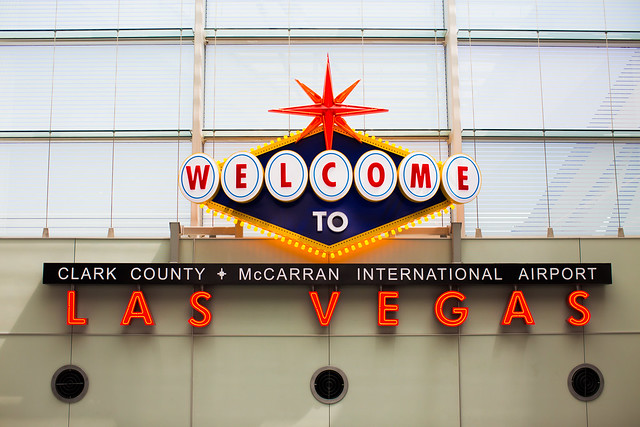
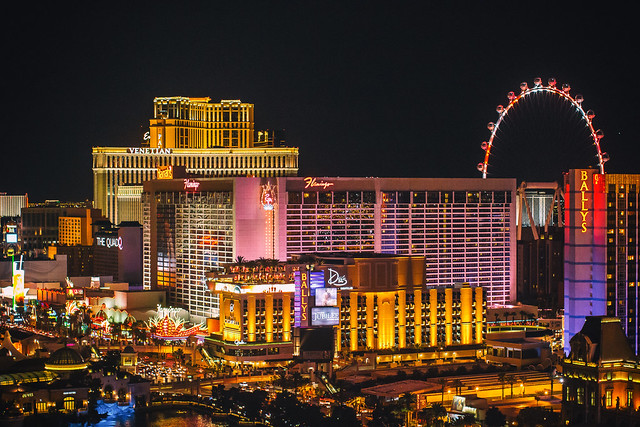
I like to take this lens with me if I’m going out to dinner at a restaurant or out for cocktails as it does a remarkable job at capturing food/cocktails in low light. As an aside, the cocktail in this post that I photographed with it is called the verbena and is a secret drink off the menu at the Cosmopolitan Chandelier bar in Las Vegas. The cocktail contains an edible flower called a Szechuan button that you chew before drinking the cocktail. It actually alters your tastebuds and feels like an explosion of pop rocks in your mouth as your entire mouth goes numb. As you sip your cocktail after chewing the flower you taste it in a whole different way. I’d definitely recommend checking it out at the Cosmopolitan on your next trip to Vegas.
Back to photography, the only drawback of this lens is the price. You do pay up a bit for quality here. It’s not that this lens is not worth the money (a little over $ 1,500), it is, it’s just that the EF 50mm f/1.4 USM lens is such a fantastic value when you compare the two (at around $ 400). While I like this lens much more than my EF 50mm f/1.4, if you are on more of a budget, you may find that the EF 50mm f/1.4 lens is the better 50mm lens for you to buy. On the other hand, if you really must own the best at 50mm lens, this is it.

It should be noted that at f/1.2 this is currently the fastest (lowest aperture) lens in production by Canon but that it shares this distinction with the EF 85mm f/1.2 USM lens, another excellent Canon portrait lens that I do not own yet, but that is on my list to consider soon.
There is another f/1.0 lens that Canon made, but that lens is no longer in production that I’ve never tried.
As a reminder, my analysis of my Canon gear is being done in partnership with Canon and I am receiving compensation for this work with them. More on Canon prime lenses here.

-
Samyang announces 50mm f/1.4 UCM still and 50mm T1.5AS UMC video lenses
Korean lens brand Samyang has announced that it will use the Photokina show next month to introduce a new 50mm f/1.4 lens for stills photographers and the same lens designed for videographers using DSLR and mirrorless cameras. Both the Samyang 50mm f/1.4 AS UMC and 50mm T1.5 AS UMC are designed to cover a full frame sensor and will each come in 10 mounts. Read more
-
The best 50 yet? Our Sigma 50mm F1.4 DG HSM in-depth review

The Sigma 50mm F1.4 DG HSM ‘Art’ is a fast normal prime for full frame cameras, with an unusually complex optical design. However at $ 950 / £850 it’s substantially more expensive than either its predecessor, or Canon and Nikon’s 50mm F1.4 lenses. We’ve already published lab test data showing that its optically excellent, but what does this mean in real-world use? Read our detailed review to find out.
-
Mitakon Speedmaster 50mm F0.95 is an ultra-fast prime for Sony Alpha 7

The Mitakon Speedmaster 50mm F0.95 is an ultra-fast prime for Sony E mount cameras, with manual focus and a clickless manual aperture mechanism. It offers full frame coverage, meaning it will work on the Alpha 7, 7R and 7S triplets, opening up intriguing low light options on the latter in particular. It will also work on APS-C E-mount models, offering a 75mm equivalent short telephoto angle of view. The lens is made in China by Shenyang Optical Electronics Ltd, and is available for pre-order now for $ 799. Learn more
-
Sigma 50mm F1.4 DG HSM ‘Art’ real-world samples gallery

The 50mm F1.4 DG HSM is Sigma’s latest fast normal prime for full-frame cameras, and one of the most hotly-anticipated lenses of the year. But how does it perform in real-world use? We’ve been using the lens for a couple of days, and put together a gallery of samples. We’ve concentrated on large-aperture shots to show sharpness and bokeh, but have also included several taken at smaller apertures. See photos
-
Sigma 50mm F1.4 DG HSM ‘Art’ lab test report

The Sigma 50mm F1.4 DG HSM ‘Art’ is a fast normal prime for full frame cameras, with an unusually complex optical design. Its premium price tag of $ 950 / £850 makes it substantially more expensive than either its predecessor, or Canon and Nikon’s 50mm F1.4 lenses. However Sigma’s recent high-end offerings such as the 35mm F1.4 DG HSM and 18-35mm F1.8 DC HSM have been truly excellent, so how does the new 50mm measure up? See the lens test data and our analysis