RSS
 

Posts Tagged ‘24mm’

Comparing a 24mm Versus 50mm Lens for Photographing People

11 Nov
photographing-people-2

Image taken with Canon 60D and Canon 24mm EF-S lens.

A number of dPS readers have recently been asking about the Canon 24mm EF-S pancake lens, and how it compares to a 50mm lenses for photographing people. Both are great options, given the price point, but they do have slightly different strengths when it comes to people photography. In this article, I’ll show you several different images of the same model, location, and posing, photographed with both a 24mm and a 50mm lens. This will provide a good visual of the difference between the two lenses, as well as give you insight as to when you might want to reach for each one.

photographing-people-50mm-1

Image taken with Canon 60D and 50mm lens.

For continuity, all images in this post were taken with a Canon 60D, and either the Canon 24mm f/2.8 or the Canon 50mm f/1.8 lenses. The 60D is an APS-C sensor (cropped sensor) camera, so first you need to multiply the focal length of each of your lenses by 1.6x in order to determine the functioning focal length of them on this camera (if you use Nikon it may be 1.5x, check your manual). So on a cropped sensor camera, the 24mm lens functions roughly as a 38mm lens, and the 50mm lens functions as an 80mm lens. In other words, the 50mm lens is great for head-and-shoulders portraits, while the 24mm lens is great for photographing people in the context of their surroundings. In the above example, you can see that the 50mm lens provided a tight shot of these two sisters, with a blurred background that keeps all the attention on their faces.

However, the context for this session is also important, in that it took place at a family vineyard, and the clients wanted to be sure that the grapes were also visible in the background of some of the images. As you can see above, the grapes really weren’t visible in the portrait taken with the 50mm lens, nor would closing down the aperture really give the perspective of the vineyard that my clients were looking for. So, after taking a few portraits with the 50mm, I switched over to my 24mm lens in order to capture a few wider shots.

photographing-people-24mm-1

Image taken with Canon 60D and Canon 24mm EF-S lens.

Same girls, same exact location, very similar pose. The only real difference here is that with the switch to the 24mm lens, you can see more of the girls and the the area around them. In some instances, you may want to minimize the area around your subject, in which case the 24mm lens would not be ideal. However, in this case it allowed for the images that highlighted both the girls and the vineyard, which was what the clients were after.

Bonus tip: Photographing sibling sets with a 24mm lens also allows you to see the height differences between siblings more easily with the wider angle shot, which is something that a lot of parents really enjoy.

photographing-people-50mm-3

Image taken with Canon 60D and 50mm lens.

Another thing to consider, besides the contents of the background in your images, is the coloring of the background. In the image above, the deep colored wood background brings a moodiness to the image that could be appropriate for a musician. However, the interesting thing is that the overall feeling of the image changes quite a bit when you look at it from the 24mm angle of view.

photographing-people-24mm-3

Image taken with Canon 60D and 24mm EF-S lens.

The second image, though in the same location, feels a lot less moody and dramatic than the first. The lighter stonework around the door brings a sense of balance to the image that just wouldn’t be achieved as well with the 50mm lens in this location. In my experience, this balance is especially important when it comes to converting images to black and white.

photographing-people-1

As you can see in the left image, the lighter stonework, around the darker door, serves as a frame for the subject, and naturally draws your eye in towards him. In addition, the increased contrast and texture provide some of the key ingredients for black and white images, which makes the image more aesthetically pleasing than the image on the right.

Overall, while there may be instances in which the content or coloring of your background may cause you to reach for one of these two lenses over the other, I’m very much in favor of using both of them whenever possible. Here’s a quick example from my own life to explain why both are so great for their own reasons. I recently photographed my girls in their Halloween costumes. I started with the 50mm lens because it’s my favorite.

photographing-people-50mm-4

Image taken with Canon 60D and 50mm lens.

I love this image of both girls (above) – the 50mm lens really lets you see their faces and expressions well, and the bokeh of the 50mm f/1.8 helped soften the literal construction site in the background of the image. However, the closer crop also means that only a small portion of their costumes were visible.

So, I switched over to my 24mm lens to take a full-length photo (below) of my little monkey and my lion as well. Now, I can really see them from head to toe. I can see the little fake feet of the monkey costume that freaked my youngest daughter out so much that she begged her sister to switch costumes with her. I can see the height difference between the two of them. I can see the black flats that my oldest daughter is so proud of, and wears to any event that she deems remotely “fancy”. Those are all things that I want to look back on, and remember. I love both images for different reasons, and am so happy to have them both, thanks to my trusty 24mm and 50mm lenses.

photographing-people-24mm-4

Image taken with Canon 60D and 24mm EF-S lens

I hope this has given you a good idea of how these two focal lengths compare when photographing people.

Have you tried the Canon 24mm EF-S lens? How do you use it? Do you have a nifty-fifty and do you use it for people photography? Which is your favorite? Please share your comments and images below.

googletag.cmd.push(function() {
tablet_slots.push( googletag.defineSlot( “/1005424/_dPSv4_tab-all-article-bottom_(300×250)”, [300, 250], “pb-ad-78623” ).addService( googletag.pubads() ) ); } );

googletag.cmd.push(function() {
mobile_slots.push( googletag.defineSlot( “/1005424/_dPSv4_mob-all-article-bottom_(300×250)”, [300, 250], “pb-ad-78158” ).addService( googletag.pubads() ) ); } );

The post Comparing a 24mm Versus 50mm Lens for Photographing People by Meredith Clark appeared first on Digital Photography School.


Digital Photography School

 
Comments Off on Comparing a 24mm Versus 50mm Lens for Photographing People

Posted in Photography


Wide lens, right price? Nikon 24mm F1.8G ED real-world samples

20 Oct

Earlier this year Nikon expanded a series of F1.8 primes with the 24mm F1.8G ED, sitting alongside 20mm and 35mm models. Compact and lightweight, it hits a $ 750 price point that’s relatively reasonable, considering the F1.4 version retails for over $ 2000. We’ve spent some time shooting with the new 24mm prime – take a look at its performance out and about. Read more

Articles: Digital Photography Review (dpreview.com)

 
Comments Off on Wide lens, right price? Nikon 24mm F1.8G ED real-world samples

Posted in Uncategorized


Nikon introduces 24-70mm F2.8 VR, 24mm F1.8 and 200-500 F5.6 FX lenses

04 Aug

Nikon has released three new full-frame lenses, including a prime and both standard zoom and super telephoto zooms. The one that will likely garner the most attention is the replacement for the venerable 24-70mm F2.8. The latest version adds Vibration Reduction, electromagnetic aperture control, a new optical construction and more. Also introduced is a 24mm F1.8 prime and a 200-500mm F5.6 super telephoto. More details

Articles: Digital Photography Review (dpreview.com)

 
Comments Off on Nikon introduces 24-70mm F2.8 VR, 24mm F1.8 and 200-500 F5.6 FX lenses

Posted in Uncategorized


Canon EF-S 24mm f/2.8 Pancake Lens Review

03 Aug

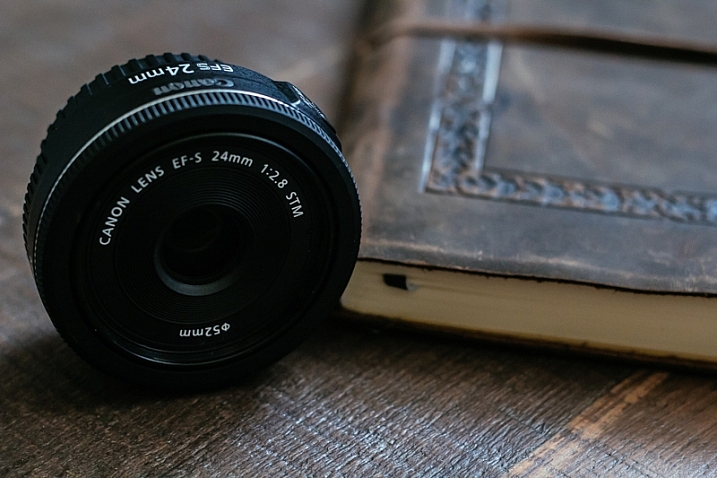
In November of 2014, Canon introduced us to its newest member of their low-cost prime lens family, the EF-S 24mm f/2.8 STM pancake lens. Canon gave us the 40mm version in 2012, and hoped to up the stakes by adding a wide-angle version this past year.

Sitting at the extreme end of what can be considered wide-angle, the EF-S 24mm (full-frame equivalent of 38mm on an APS-C sensor) does so in the form of a small, light, and inexpensive prime lens that is easily accessible to all Canon enthusiasts.

24mmPancake

The first features that will strike you about the 24mm are its inconspicuous qualities; the lens is incredibly thin at only 2.75 inches, and weighing under five ounces. Street shooters wanting a wider angle of view will be pleased at how reserved the profile of this glass is, as it makes even a large camera body appear smaller, and less noticeable.

In addition to being visually unobtrusive, the STM (stepping motor) feature of this lens allows for faster, and much quieter autofocusing, compared to the USM (ultrasonic) motor system used on many other lenses. Manual focus is available in full, and Canon maintains this lens is capable of a minimum focusing distance of six inches.

Aperture: f/4.0  Speed: 1/800  ISO: 200

Aperture f/4.0, Shutter speed 1/800, ISO 200

For filter users, the lens uses a standard 52mm fitting, and will accept all filters of that size. Also keep in mind that as this lens is part of Canon’s EF-S line, it cannot be used on full-frame systems, such as the Canon 6D, and will only fit APS-C (crop sensor) cameras.

Aperture: f/4.5  Speed: 1/400  ISO: 250

Aperture f/4.5, Shutter speed 1/400, ISO 250

As far as my personal experiences with the lens, they were generally very positive, despite my preconceived worries about image quality that were bolstered by rather mixed pre-release reviews. I was pleasantly surprised to find that the 24mm pancake performed admirably well in this area, giving me very sharp and accurate photos throughout the full range of aperture stops.

Aperture: f/8  Speed: 1/640  ISO: 250

Aperture f/8, Shutter speed 1/640, ISO 250

The shot above showcases the clarity of the 24mm pancake. The beachgoers far to the back of the frame are sharp, details are well-defined, and I was still able to create a soft blur on the sand directly in front of the camera.

Aperture: f/3.2  Speed: 1/2000  ISO: 200

Aperture f/3.2, Shutter speed 1/2000, ISO 200

The image above highlights how well the 24mm pancake handles blurring and bokeh at wider apertures, especially for a wide-angle lens. I usually take this shot with my 50mm f/1.8, but I wanted to see what the 24mm could do. The foreground blurring, sun glare, and porch details were all handled in a pleasant manner.

Aperture: f/8  Speed: 1/200  ISO: 100

Aperture f/8, Shutter speed 1/200, ISO 100

Textures are captured very accurately with this lens, as you can see with the water in the picture above. Ripples and the smoothness of the surface translate well also, and great tonal range helps define the lake from front to back.

Aperture: f/8  Speed: 1/50  ISO: 1250

Aperture f/8, Shutter speed 1/50, ISO 1250

Colors are deep and accurate, as shown in the photo above. Other than sharpness, noise reduction, and a bit of contrast adjustment, this image is as it appears right from the camera. I didn’t have to go crazy with the noise reduction, and had a great looking image even with sensitivity set at ISO 1250.

Obviously, being a wide-angle affair, this lens doesn’t produce bokeh or blurring as easily or smoothly as my 50mm f/1.8. This isn’t an issue as I’m usually doing landscape shots using a smaller aperture.

This little jewel is available (at the time of this writing) for $ 149.00. I’d highly recommend giving this lens a try, especially if you’re in the need of a backup at this focal length, or even an affordable wide-angle starter lens.

Have you shot with the 24mm f/2.8 STM? What did you think? Share your experiences with us below!

googletag.cmd.push(function() {
tablet_slots.push( googletag.defineSlot( “/1005424/_dPSv4_tab-all-article-bottom_(300×250)”, [300, 250], “pb-ad-78623” ).addService( googletag.pubads() ) ); } );

googletag.cmd.push(function() {
mobile_slots.push( googletag.defineSlot( “/1005424/_dPSv4_mob-all-article-bottom_(300×250)”, [300, 250], “pb-ad-78158” ).addService( googletag.pubads() ) ); } );

The post Canon EF-S 24mm f/2.8 Pancake Lens Review by Tim Gilbreath appeared first on Digital Photography School.


Digital Photography School

 
Comments Off on Canon EF-S 24mm f/2.8 Pancake Lens Review

Posted in Photography


New samples from the Sigma 24mm F1.4 DG HSM Art lens

20 Feb

We were recently lucky enough to visit Sigma’s factory in Aizu, Japan, where Sigma allowed us to shoot with a pre-production sample of the recently-announced 24mm F1.4 DG HSM Art lens. The wintry landscape of the Fukushima prefecture was a nice contrast to the CP+ convention center where we last gathered some samples with this lens, and our recent samples are more representative of lens performance on a native mount body (Canon 6D). Have a look

Articles: Digital Photography Review (dpreview.com)

 
Comments Off on New samples from the Sigma 24mm F1.4 DG HSM Art lens

Posted in Uncategorized


CP+ 2015: Hands on with Sigma’s new 24mm F1.4 DG HSM Art lens

13 Feb

One of the most interesting lenses at CP+ for enthusiast photographers is Sigma’s new 24mm F1.4 DG HSM Art. We made a beeline for the Sigma stand as soon as we arrived on the show floor and got our hands on this intriguing new prime. Click through for some photos and our initial impressions of its build and image quality, based on some initial sample images. 

Articles: Digital Photography Review (dpreview.com)

 
Comments Off on CP+ 2015: Hands on with Sigma’s new 24mm F1.4 DG HSM Art lens

Posted in Uncategorized


CP+ 2015: First samples from the Sigma 24mm F1.4 DG HSM Art lens

12 Feb

We’re at the CP+ show in Yokohama Japan, where Sigma is showing its brand new 24mm f1.4 full-frame prime lens. The latest in the company’s ‘Art’ series of fast primes, we have high hopes for the new lens based on our extremely positive impressions of the 35mm and 50mm lenses which have come before it. Sigma very kindly let us shoot some sample images on a late pre-production lens and it does indeed look very, very nice. Click through to take a look.

Articles: Digital Photography Review (dpreview.com)

 
Comments Off on CP+ 2015: First samples from the Sigma 24mm F1.4 DG HSM Art lens

Posted in Uncategorized


Sigma announces pricing for 24mm Art and 150-600mm Comtemporary lenses

12 Feb

Sigma has attached prices to its very recently announced 24mm F1.4 Art lens, as well as the 150-600mm F5-6.3 super telephoto that appeared at Photokina. The full frame 24mm lens, which supports Canon, Nikon, and Sigma mounts, will be available next month at a price of $ 849. The 150-600mm – also designed for full frame bodies – will be priced at $ 1089 and will ship next month for Canon and Nikon mounts. Read more

Articles: Digital Photography Review (dpreview.com)

 
Comments Off on Sigma announces pricing for 24mm Art and 150-600mm Comtemporary lenses

Posted in Uncategorized


Sigma goes wide with 24mm F1.4 DG HSM Art lens

10 Feb

With the CP+ tradeshow in Japan about to kick off, Sigma has unveiled a 24mm F1.4 DG HSM wide angle prime lens, joining its ‘Art’ series of premium glass. Designed to cover a full-frame sensor, it will be offered in Canon, Nikon and Sigma mounts with availability and pricing yet to be announced. Read more

Articles: Digital Photography Review (dpreview.com)

 
Comments Off on Sigma goes wide with 24mm F1.4 DG HSM Art lens

Posted in Uncategorized


Rokinon gives May 2013 release date for T-S 24mm F3.5 lens

13 Mar

rokinon_24-ts.png

Rokinon has announced the T-S 24mm F3.5, a wideangle perspective control lens, for release in May 2013. Rokinon rebadges and distributes Samyang lenses for the US market, and this lens first appeared at Photokina 2012 as the Samyang T-S 24mm 1:3.5 ED AS UMC, but without a specific date for launch. The lens features manual focus and aperture setting, offers up to 12mm of shift and 8.5° of tilt, and is designed for full frame cameras. It’ll be available in Canon, Nikon and Sony mounts, at an RRP of $ 1299.99.    

News: Digital Photography Review (dpreview.com)

 
Comments Off on Rokinon gives May 2013 release date for T-S 24mm F3.5 lens

Posted in Uncategorized