RSS
 

Archive for August, 2019

Video: Incredible timelapse shows Earth’s rotation relative to the Milky Way

24 Aug

Photographer Aryeh Nirenberg has shared an incredible timelapse from a trip to Northeast Colorado that shows the Earth’s axial rotation in relation to the location of the Milky Way Galaxy in the night sky.

The timelapse, which was captured nearly two years ago, but only now uploaded to YouTube, was captured with an astro-modified Sony a7S II with a Canon 24-70 F2.8 lens attached via an adapter. Approximately 1,100 10-second exposures were captured at 12-second intervals to create the 55-second timelapse.

In speaking with DPReview, Nirenberg said:

I was trying to shoot a regular Milky Way timelapse at a reservoir, but access to it was blocked on the side of the reservoir that I needed to be at to face the Milky Way. So, instead of just shooting the Milky Way with the boring field in the foreground, I thought I’d try doing it with my iOptron portable equatorial mount to make it more interesting and I [photographed] until most of the sky was out of the frame.

The resulting images were processed in Lightroom and the timelapse was rendered using LRTimelapse. You can find more of Nirenberg’s work on his website, Instagram profile and YouTube channel.

Articles: Digital Photography Review (dpreview.com)

 
Comments Off on Video: Incredible timelapse shows Earth’s rotation relative to the Milky Way

Posted in Uncategorized


How To Take Better Headshots: The Complete Guide

24 Aug

Headshot photography is a huge sub genre of portrait photography right now and is becoming bigger and bigger as time passes. So many people need to get headshots done and they should be going to you for this service! I want to talk about how we can all make our headshot photography so much better and thus provide our clients Continue Reading

The post How To Take Better Headshots: The Complete Guide appeared first on Photodoto.


Photodoto

 
Comments Off on How To Take Better Headshots: The Complete Guide

Posted in Photography


Unreal Engine’s Project Spotlight uses LED walls for real-time in-camera visual effects

24 Aug

Epic Games has showcased Project Spotlight, an Unreal Engine-powered way to capture real-time visual effects in-camera. The company has detailed the work in a new video showing off the system, including its ability to track the camera’s position in space in real-time for a realistic and customizable background.

Rather than filming in front of a blue or green screen for post-production later on, the Project Spotlight system enables filmmakers to shoot in front of LED walls showing the virtual environment in real-time. Creators can digitally manipulate this 3D virtual scene when necessary and the LED walls adjust the on-set lighting for realistic ambient light.

‘No matter what the project is,’ Lux Machina chief technology officer Philip Galler said, ‘creatives always want to see the closest representation to the final product as early on in the creative process [as possible].’

Experts featured in the video explain that because the virtual environment can be adjusted in real-time, the project saves critical time that may otherwise be wasted waiting for changes. As well, people from different departments can work together to determine how the virtual world is portrayed.

The technology was demonstrated at SIGGRAPH 2019 by Epic Games in partnership with Magnopus, Lux Machina, Quixel, Profile Studios, DP Matt Workman and ARRI. Future plans for the system are unclear at this time.

Articles: Digital Photography Review (dpreview.com)

 
Comments Off on Unreal Engine’s Project Spotlight uses LED walls for real-time in-camera visual effects

Posted in Uncategorized


Slideshow: Winners of the 2019 Australian Geographic Nature Photographer of the Year

24 Aug

2019 Australian Geographic Nature Photographer of the Year Winners

The South Australian Museum has announced the 2019 Australian Geographic Nature Photographer of the Year and also shared the winning images from each of the ten categories offered in this year’s contest.

In total, 2,219 images were submitted and judged by Justin Gilligan, Glenn McKimmin and Tui De Roy. In the end, the 2019 Australian Geographic Nature Photographer of the Year award was handed out to Mat Beetson of Western Australia for the above image of a beached Fin Whale being circled by sharks on Cheynes Beach in Albany, Western Australia. The winning image was captured with a DJI Phantom 4 Pro drone, marking the first time a drone-captured photograph has won the competition.

‘It was unreal, arriving at a peaceful coastal town with a pristine beach and then seeing this huge whale not even five metres from shore – we then noticed the thrashing close by and realised that a few sharks had also stopped by,’ Beetson told the Southern Australian Museum about the capture. ‘I launched the drone to see the aerial view and captured a sequence of photographs, this shot was one of the last ones I took and I was very lucky that the shark came back for a look.’

Beetson received a $ 10,000 cash prize as well as a Coral Expeditions cruise for winning.

The remainder of the images in this gallery are the ten winners in each of this year’s categories.

You can find out more information about the Australian Geographic Nature Photographer of the Year competition and the South Australian Museum by visiting their respective websites.

Above Image:

Overall Winner

Fin Whale, Balaenoptera physalus

The fin whale is sighted regularly in this region; seeing one beached, however, is rare. The whale sits less than 5m from shore and 100m from residential homes, giving whale researchers access to an unusual occurrence for this species. Bronze whalers and great whites feasted over the remains before removal.

Location: Cheynes Beach, Albany, Western Australia

Gear: DJI Phantom 4 Pro Drone, 24mm, 1/500, f/5.6, ISO 100, 118m high, filmed with permission DPAW

Photographer: Mat Beetson, Western Australia


Photo credits: Images owned by their respective creators, used with the permission of the South Australian Museum.

Winner, Animal Portrait

Decorator crab, Achaeus spinosus

Typically, decorator crabs attach pieces of sponge and seaweed to themselves to camouflage and hide from predators (which makes them very poor photographic subjects). However, Achaeus spinosus attaches stinging hydroids to itself to ward off potential predators (making it a very attractive subject for photography).

Location: Lembeh Strait, North East Sulawesi, Indonesia

Gear: Canon EOS 7D Mk II, Canon EF 100mm, f/2.8 macro USM, 1/250, f/16, ISO 200, INON Z240 strobe with Retra Pro light shaping device, handheld

Photographer: Ross Gudgeon, Western Australia

Winner, Animal Behaviour

Humpback whales, Megaptera novaeangliae,
Dolphins, unidentified species

The heat run is the ultimate wildlife encounter – multiple whales competing for a female. The chase can last for hours or even days and males can display bubble netting, open mouth gulping, physical contact, loud acoustic sounds, and breaching. Even after 16 years documenting humpback behaviour in the region, it is still truly heart-thumping and adrenaline-pumping action.

Location: Tonga, South Pacific

Gear: Canon 1DX Mk II, Canon 8–15mm fisheye, 1/320, f/8, ISO 200

Photographer: Scott Portelli, New South Wales

Winner, Animal Habitat

Commensal amphipod living in solitary ascidian

I was searching for miniature pygmy seahorses on the reefs of West Papua when I happened across this tiny amphipod crustacean. Just 0.5–1cm long, this male is sitting at the mouth of the sea squirt to guard the females and young within. According to an amphipod expert, this is likely a new species.

Location: Raja Ampat, West Papua, Indonesia

Gear: Nikon D800, Nikkor 105mm macro, 1/125, f/14, ISO 100, twin INON Z240 strobes, handheld, Subal underwater housing

Photographer: Richard Smith, United Kingdom

Winner, Botanical

Ghost fungus, Omphalotus nidiformis

The elusive ghost mushroom show starts after dark, when the green light of its bioluminescence glows across the pine forest on the Bellarine Peninsula. It seems like magic but the glowing works to attract insects that then help disperse the spores and spread the mushroom.

Location: Ocean Grove, Victoria

Gear: Canon 5D Mk IV, Samyang 14mm, 30, f/2.8, ISO 3200, Manfrotto tripod

Photographer: Marcia Riederer, Victoria

Winner, Landscape

When Barron Falls (Din Din) is in flood, the usually tranquil scene is transformed into a tumultuous cataract as huge volumes of water make their way to the coastal plain below. The sheer violence of this display, coupled with the deafening roar, makes it an unforgettable experience.

Location: Barron Falls, Kuranda, Queensland

Gear: Pentax X-5, 28.3mm, 1/320, f/5, ISO 100, handheld

Photographer: Neil Pritchard, Queensland

Winner, Monochrome

Honeycomb moray eel, Gymnothorax favagineus
Maze coral, Leptoria sp.

I came across this amazing juxtaposition of a honeycomb moray eel and a textured brain coral. It screamed monochrome to me, but one of the significant disadvantages of shooting underwater is that you cannot just change your lens to suit the subject. Still, I slowly moved as close to the eel as possible, increased the depth of field, and adjusted my strobes to light up the coral and the eel.

Location: Banda Sea

Gear: Nikon D850, Nikonos 13mm RS, 1/200, f/16, ISO 400, Seacam housing, Ikelite 161s strobe

Photographer: Tracey Jennings, United Kingdom/Malaysia

Winner, Junior

This night was the most amazing display of lightning that I have ever seen, with constant flashes of lightning lasting hours. For the composition, I decided to focus on a man standing at the edge of the water with an umbrella to add a sense of scale to the image.

Location: Fingal Bay, New South Wales

Gear: Canon EOS 5D Mk lll, Canon 17–40mm f4 L, 15, f/4, ISO 200, tripod

Photographer: Floyd Mallon, New South Wales. Age 17

Winner, Our Impact

The Menindee Lakes were deliberately drained in 2016–17 and New South Wales has experienced a lengthy drought. Animals and birds desperately seek food and water and there is very little left due to these human-made and natural events. Lake Cawndilla is now just a drying lakebed scattered with the remains of our native animals.

Location: Cawndilla Creek, Menindee, New South Wales

Gear: DJI Phantom 3 Advanced, 20mm, 1/640, f/2.8, ISO 200, ND4 filter

Photographer: Melissa Williams-Brown, South Australia

Threatened Species Winner

Winner, Threatened Species

Mertens’ water monitor, Varanus mertensi

STATUS: ENDANGERED

Mertens’ water monitors are highly inquisitive. This extremely bold specimen ostentatiously approached me to investigate the good-looking lizard in my dome port while I observed another nearby pair engaged in courtship – sadly for him he was staring at his own reflection, not the mate of his dreams.

Location: Adelaide River, Northern Territory

Gear: Olympus OMD EM-1 Mk II, Olympus 8mm f1.8, 1/125, f/11, ISO 64, two Sea & Sea YS-D2 strobes, manual flash output, handheld, Nauticam underwater housing

Photographer: Etienne Littlefair, Northern Territory

Portfolio Prize

Portfolio Prize (best portfolio of size or more images)

Artist: Charles Davis, (NSW)

Articles: Digital Photography Review (dpreview.com)

 
Comments Off on Slideshow: Winners of the 2019 Australian Geographic Nature Photographer of the Year

Posted in Uncategorized


You can now search for images in Google Photos using text found within the image

24 Aug

Google has confirmed Google Photos is adding the ability to search for images using the text featured in the content. This is different than searching for images based on their filename, instead using Optical Character Recognition (OCR) technology to identify words featured in photographs, such as from an image of a menu or sign.

The feature was first spied by Hunter Walk, who shared the above screenshots of the new capability. The official Google Photos account responded to the tweet, confirming it’s rolling out the new search capability.

Though apps that use OCR to copy text aren’t anything new, the ability to search through albums of uploaded photos for text located within the images will come in handy for many users, particularly those who use Google Photos for storing scanned copies of invoices and other business documents.

According to The Verge, the new OCR-based search option is available on some Android devices at this time. Google indicated in its tweet that the feature is rolling out over the course of this month, so it may take a number of days or weeks to arrive for everyone.

Articles: Digital Photography Review (dpreview.com)

 
Comments Off on You can now search for images in Google Photos using text found within the image

Posted in Uncategorized


Equipment and Camera Settings You’ll Need for Better Moon Photography

23 Aug

The post Equipment and Camera Settings You’ll Need for Better Moon Photography appeared first on Digital Photography School. It was authored by Jeremy Flint.

better-moon-photography

Super Moon, Oxford, England

As the brightest object in the night sky, the Moon has captivated people around the world for centuries. The Moon is simply fascinating, particularly with the recent 50th anniversary of the first humans landing on the Moon. It is also one of the most incredible subjects to learn to photograph. Everyone loves to observe the Moon, but have you ever looked up to the sky at night and thought, “how can I capture this magnificent phenomenon?” Well, as photographing the Moon can be a challenging undertaking, I have highlighted some information about the Moon and recommendations regarding equipment and camera settings you’ll need to consider to achieve better moon photography.

It is initially worth considering what the Moon actually is. Well, in general, the term “moon” denotes an object that orbits something other than the star in a solar system. Earth’s Moon is an astronomical body that orbits the planet and acts as its only permanent natural satellite, orbiting the Earth every 27.3 days. It is the fifth-largest Moon in the Solar System and is an average of 384403 kilometers (238857 miles) from Earth.

When you look up at the night sky to view the peaceful and tranquil Moon, you might notice that the Moon looks a little different each night. This is due to our Moon’s many phases and types.

Phases of the moon

better-moon-photography

Partial lunar eclipse, England

The amount of sunlight that reflects on the Moon’s surface that we can see from our point of view on Earth varies every day, and this is what we refer to as a Moon phase.

Moon phases change during the lunar month from a New Moon (which occurs the moment the Sun and Moon are aligned, with the Sun and Earth on opposite sides of the Moon) to a Waxing Crescent moon (when a thin sliver of the Moon becomes visible after a New Moon), First Quarter Moon (the moment the Moon has reached the first quarter of its orbit around Earth), Waxing Gibbous Moon, Full Moon, Waning Gibbous Moon, Third Quarter Moon and Waning Crescent Moon.

Different types of full moons

Moon photography 02

Super Blue Blood Moon, Oxford

full moon occurs when the side of the Moon facing Earth is fully lit up by the Sun. There are several types of unusual full moons that look different in color and size due to its position to the Sun and Earth. These include blood moons (that appears reddish and occur during a total lunar eclipse, when Earth lines up between the Moon and the Sun); Supermoons (a moon that appears larger because it is closer to Earth), Blue Moons (the “extra” Moon in a season with four Full Moons or the second Full Moon in a calendar month) and Harvest Moons (the full, bright Moon that occurs closest to the start of Autumn), for example.

The equipment

When photographing the full moon or different phases of the moon, you will need some essential pieces of equipment. I recommend you use a tripod for stability. Whilst you may get away with hand-holding your camera, you will get better results by mounting your camera on a tripod and avoiding camera shake. In addition, a remote shutter release cable is a useful bit of kit to help prevent camera shake. It is not essential as you can use your cameras self-timer function.

Which lens to use

Moon photography 03

Moon over the landscape, Dartmoor, England

The type of lens you use largely depends on whether you would like to capture the moon in the landscape, or as a detailed close-up. Wide-angle lenses are great to photograph the moon as it moves over an interesting landscape. Alternatively, a telephoto lens is a great choice for getting closer to the moon to reveal its surface details. Consider using a long focal length lens with a range of 300-400mm.

Which camera settings to use

better-moon-photography

Moonrise, England

Once you have chosen a lens and set your camera on a tripod, you will need to select your settings. Firstly, I would recommend setting your ISO to 100 to prevent noise and grain in your images. Next, select an aperture in the region of f/8 – f/16 to achieve clearer and cleaner shots. In terms of shutter speed, 1/60th to 1/125th should be a great starting point.

Focus on the moon

Moon photography 05

Moon and sky, England

When you have applied the settings, all you now need to do is set the focus of your camera. I like to use my cameras manual focus to focus on the Moon. Once the focusing distance to the Moon looks sharp using manual focus, you are ready to shoot the Moon.

In my experience, manual focus works better than autofocus as the Moon’s surface is sometimes too dark to be recognized by the camera’s autofocus and I find manual focus to be more reliable in obtaining sharper shots in low light. By using manual focus, if you’re camera settings aren’t spot-on for any reason, you will still have reasonably sharp photos that you can recover in your editing software.

If you apply all of these tips, you’ll achieve better Moon photography and be equipped to photograph the Moon at the best time.

Conclusion

In summary, photographing the Moon is one of the most enjoyable subjects any photographer can learn. To achieve better photos of the different phases and types of the Moon, be sure to use a tripod. Also, consider a remote cable release, choose a wide-angle or telephoto lens, get your settings right, and focus your camera on the Moon manually.

Do you have any other tips for better Moon photography? Alternatively, share your pictures of the Earth’s natural satellite or the Moon shining brightly over your chosen scene with us below.


better-moon-photography


The post Equipment and Camera Settings You’ll Need for Better Moon Photography appeared first on Digital Photography School. It was authored by Jeremy Flint.


Digital Photography School

 
Comments Off on Equipment and Camera Settings You’ll Need for Better Moon Photography

Posted in Photography


Sony Cyber-shot DSC-RX100 VII Review

23 Aug

$ (document).ready(function() { SampleGalleryStripV2({“galleryId”:”9588852492″,”isMobile”:false}) })

Sample photoSample photoSample photoSample photoSample photo
Gold Award

85%
Overall score

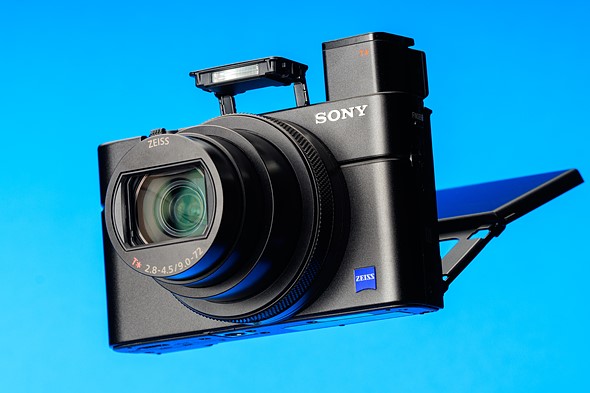
The Sony RX100 VII is the company’s latest pocketable 1″ sensor compact. It uses the same 24-200mm equivalent F2.8-4.5 lens as its predecessor but features a more capable, easier-to-use autofocus system.

This comes in addition to the already impressive capabilities we saw in the Mark VI, including very fast continuous shooting and high-quality 4K video capture. And, for the first time in the series, the Mark VII has a mic socket for improved audio recording.

The Mark VII can shoot at up to 20 frames per second with no viewfinder blackout: specs that are a match for the company’s flagship a9 sports camera. And it’s this capability, along with the enhanced AF, that prompts Sony to talk about ‘the power of an a9 in your pocket.’ To be clear, though, it does not share its hardware with that model.

Key Specifications

  • 20MP 1″-type stacked-CMOS sensor with phase detection and built-in DRAM
  • 24-200mm equivalent F2.8-4.5 zoom
  • 20 fps continuous shooting with full autofocus and auto-exposure, and no blackout
  • Seven frame, 90 fps ‘single burst’ mode
  • Retractable 2.36M-dot EVF with 0.59x equiv. magnification
  • 3″ touchscreen LCD (flips up 180° or down by 90°)
  • Oversampled UHD 4K video (up to 5 min clips in standard temperature mode)
  • Combined lens and digital ‘Active’ stabilization mode in video
  • High speed video at up to 1000 fps
  • Intervalometer
  • Wi-Fi with Bluetooth and NFC

The RX100 VII will be available in August 2019 at a recommended price of $ 1200. It’ll sell for around €1300 in Europe and £1200 in the UK, with both figures including tax. These are around the same prices as its predecessor was launched at, so we expect to see the Mark VI get re-positioned, to make room.


What’s new and how it compares

The RX100 VII looks like its predecessor but borrows know-how (though not hardware) from the pro-sports a9 model.

Click here to read more

Body and handling

The RX100 VII is an evolutionary product but somehow finds room for a mic socket, as well as that massive lens.

Click here to read more

Operation and controls

The control layout and logic is unchanged from previous models (for better or worse). There’s a good degree of customization available.

Click here to read more

AF and video performance

The RX100 VII offers one of the best autofocus implementations of any compact on the market, video impresses too.

Click here to read more

Image quality

Image quality from the RX100 VII is slightly improved over the VI. Check out our studio test scene to see how it compares to the competition.

Click here to read more.

Conclusion

The RX100 VII receives our gold award and recommendation. Here’s why.

Click here to read more.

Sample gallery

We’ve been shooting with a pre-production RX100 VII for a few days now. Have a look at what the new sensor can do.

Click here to see the gallery.

Articles: Digital Photography Review (dpreview.com)

 
Comments Off on Sony Cyber-shot DSC-RX100 VII Review

Posted in Uncategorized


Stunning Capture of Kingfisher Catching a Fish – Behind The Shot

23 Aug

The post Stunning Capture of Kingfisher Catching a Fish – Behind The Shot appeared first on Digital Photography School. It was authored by Caz Nowaczyk.

Stunning-Capture-of-Kingfisher-Catching-a-Fish-janet-smith

Do you want to know how to photograph a Kingfisher catching a fish? Then read on!

About this stunning capture of Kingfisher catching a fish

Photographer: Janet Smith

Camera Settings: 80mm focal distance, auto ISO, f5.6, 1/1200th. Camera set to manual and continuous silent shooting.

Camera equipment: Canon 5D mark IV, Canon 70-200mm f2.8, Neweer remote trigger, Manfrotto tripod, and black bin bag as a rain cover.

Where and when was the shot taken?

Shropshire Photography hides, Market Drayton near Shropshire and Staffordshire borders, 6 July 2019, around 3:30 pm.

What is the background behind getting the shot?

This is my bucket list shot – a shot that I thought I’d never be able to take because I could not afford to buy a fast lens which I was told is required in this type of shot.

Then almost a year ago, Brendan Van Son gifted me his old Canon 70-200mm f2.8 lens after learning I’ve wanted one but could not afford it. Having the lens opened up a whole new world for me. I saved and booked a hide day at Shropshire Photography Hides that got canceled three times because of bad weather and Minks decimating the Kingfisher nest and killing all the birds.

On the 6th of July, I finally managed to get to the hide. The day was overcast, drizzly, and windy. I set up the camera at water level and wrapped in a black bin bag to keep it dry. Then I set the camera to manual, f5.6, auto ISO and 1/1200th, set up the remote trigger and waited.

It took nearly six hours of waiting and shooting before I got this shot. I could not get the timing right, and this bird was super-fast. The light was also very low, and the drizzle persisted.

I ended up with more misses than hits, but it was well worth it. One thing I learned is patience and determination pays off. And maybe nicer weather would have helped as well.

What method or technique did you use to achieve the shot?

I prefocused on the area where the bird was likely to enter the water with the camera set on silent continuous shooting to minimize noise.

Describe any post-processing, including tools and techniques used

There was very minimal post-processing. I did a close crop to show more of the water movement and the bird. Also, I lightened-up the shadows +25 on the photoshop slider, pulled up the vibrance to +15, and exposure to +5.

What are your tips for others wanting to achieve a shot like this?

My tip is to be patient, ask for advice from seasoned bird photographers and observe the bird’s behavior. I learned that this bird would move three paces either left or right and bob it’s head down before diving. As soon as it does that, I pressed the remote and continue pressing until it was back on the branch.

You may also like:

  • 10 Must-Use Bird Photography Camera Settings for Beginners
  • 10 Common Bird Photography Mistakes and Their Solutions
  • 10 Surefire Tips for Photographing Birds in Flight
  • 5 Unforgiving Post-Processing Mistakes Every Bird Photographer Must Avoid
  • Review of the Nikon D500 for Wildlife and Bird Photography
  • 5 Secrets for Stunning Creative Bird Photography
  • 5 Tips for Better Forest Bird Photography
  • A Guide to Photographing Birds and Wildlife in a Wetland Area


Stunning-Capture-of-Kingfisher-Catching-a-Fish-janet-smith

The post Stunning Capture of Kingfisher Catching a Fish – Behind The Shot appeared first on Digital Photography School. It was authored by Caz Nowaczyk.


Digital Photography School

 
Comments Off on Stunning Capture of Kingfisher Catching a Fish – Behind The Shot

Posted in Photography


Tamron teases four new lenses for Sony E mount cameras

23 Aug

Tamron USA has shared the above video on Facebook teasing four new lenses for Sony E mount camera systems.

In the 18-second video, which is accompanied by the description ‘Tamron Thrives on Challenging the Limits,’ Tamron shows off the silhouette of four new lenses alongside its currently-available 17-28mm F2.8 Di III RXD and 28-75mm f/2.8 Di III RXD lenses.

No additional details are given, but based on the sizing of the lenses, it appears as though the tallest of the four lenses will be a telephoto zoom (note the focus and zoom rings on the edge of the silhouette) and the remaining three lenses will be more compact primes.

In a follow-up post, Tamron says the lenses will be ‘Coming Soon,’ but leaves it at that. Sony Alpha Rumors is reporting the new lenses being shown off at PhotoPlus in October, but that’s far from confirmed at this point.

Articles: Digital Photography Review (dpreview.com)

 
Comments Off on Tamron teases four new lenses for Sony E mount cameras

Posted in Uncategorized


Viltrox APS-C lenses for Fujifilm, Sony and Leica detailed ahead of launch

23 Aug

Chinese camera gear brand Viltrox is planning to release three autofocus lenses for Fujifilm X-mount, Sony E-mount, and Leica M-mount, according to FujiRumors, which initially spied the upcoming products back in May.

In a new report published this week, FujiRumors detailed the alleged specs for the three lenses, product images for which it found published on Viltrox’s official profile on Chinese social media website Sina Weibo. Below are images of the lenses and a breakdown of the specifications based on the charts provided by Viltrox:

$ (document).ready(function() { SampleGalleryV2({“containerId”:”embeddedSampleGallery_2165464926″,”galleryId”:”2165464926″,”isEmbeddedWidget”:true,”selectedImageIndex”:0,”isMobile”:false}) });

Viltrox 23mm F1.4:

  • Aperture range: 1.4 – 16
  • Aperture blades: 9
  • 10 Groups, 11 elements
  • Filter size: 52mm
  • Weight: 250g (8.8oz)

Viltrox 33mm F1.4:

  • Aperture range: 1.4 – 16
  • Aperture blades: 9
  • 9 Groups, 10 elements
  • Filter size: 52mm
  • Weight: 270g (9.5oz)

Viltrox 56mm F1.4:

  • Aperture range: 1.4 – 16
  • Aperture blades: 9
  • 9 Groups, 10 elements
  • Filter size: 52mm
  • Weight: 290g (10.2oz)

It’s unclear when the new lenses will launch. The initial report in May claimed on behalf of a source that the new models may launch in October, but the latest report points toward ‘around November’ as the official release time frame. Prices haven’t been revealed at this time. These three lenses will join Viltrox’s previously launched 85mm F1.8 autofocus APS-C lens.

Articles: Digital Photography Review (dpreview.com)

 
Comments Off on Viltrox APS-C lenses for Fujifilm, Sony and Leica detailed ahead of launch

Posted in Uncategorized