RSS
 

Archive for December, 2017

2017 Buying Guide: Best cameras for students

19 Dec

If you’re looking to learn more about photography there are some great cameras available. We’ve chosen a handful of models that offer an affordable way into photography, but give you plenty of scope to grow as you develop your skills.

Articles: Digital Photography Review (dpreview.com)

 
Comments Off on 2017 Buying Guide: Best cameras for students

Posted in Uncategorized


Hasselblad adds X-Pan mode and EVF preview to X1D, plus AF to H lenses on the X system adapter

19 Dec
The X-Pan crop mode with the XCD 30mm F3.5

Hasselblad has released new firmware for its X1D mirrorless medium format camera that brings it as close to a digital X-Pan (you can read Hamish Gill’s writeup of the 35mm X-Pan II here) as we can sensibly hope for. Firmware v1.20 adds a series of crop modes that includes the 65:24 X-Pan ratio, as well as classic 1:1 square and other well-known medium format proportions.

The update also brings the much needed instant image preview mode to the camera’s EVF as well as the ability to review captured pictures via the viewfinder. And now autofocus can be used with certain H system lenses when they are fitted to the X1D via the XH adapter.

$ (document).ready(function() { SampleGalleryV2({“containerId”:”embeddedSampleGallery_0590489974″,”galleryId”:”0590489974″,”isEmbeddedWidget”:true,”selectedImageIndex”:0,”isMobile”:false}) });

During a recent trip to Hasselblad’s factory I was able to shoot with a camera loaded with the new firmware to try out the new features. I have to say I was disproportionally excited to use the X-Pan crop mode, and once I’d set it I had trouble switching it off because it makes everything look so good.

The camera had been set so the different crops could be cycled through using the front custom button, and with 50 million pixels on hand on the sensor I wasn’t too worried about a heavy crop leaving me with no resolution. Even with the dramatic crop that the X-Pan mode makes we are still left with an image area of 8272×3062 pixels – or 25.3MP.

Only the Raw files show the crop, and the crop isn’t permanent – at can be shifted, altered and undone entirely so the full image can be used.

While we get to see the crop in the viewfinder and on the rear screen of the camera, even the JPEG files are captured as whole 4:3 images. The crop only appears on the Raw files when they are displayed in Hasselblad’s Phocus software – and even the crop can be adjusted, shifted around or switched off.

Of course, you can crop any image you want to 65×24 using any software, but the fun here is in seeing the letter-box in the viewfinder and in the atmosphere composing with this anamorphic-style format creates. The unused area of the viewfinder is blacked out, but users can adjust the density of the mask so the whole scene can be viewed to make composition easier.

The new crop modes:

  • X-Pan Ratio (65:24),
  • 1:1
  • 7:6
  • 5:4
  • 3:2
  • 16:9
  • 2:1
  • A4
  • US Letter

The new preview mode in the viewfinder is nothing special, but shows Hasselblad catching up with a feature offered by every other mirrorless camera. The new option to back-up images from one SD card to the other in slot two is hardly revolutionary either, but very useful all the same.

Ove Bengtsson, Hasselblad product manager, explains that the HC lenses are designed for a phase detection system, but that they can now be used with AF on the X1D

What will be interesting to existing H system users is the ability to use contrast detect AF with certain HC lenses with the XH adapter. Ove Bengtsson, Hasselblad’s product manager, explained that while the AF would be fast enough for a hand-held portrait it won’t be quick enough to shoot sport or action.

‘Our AF system is designed to be accurate rather than quick’ he told me. ‘These are lenses designed for phase detection systems, and we have to move a lot of glass. We don’t use internal focusing systems with small AF groups as these will, at some focus positions, compromise image quality. We often have to move the whole lens construction during focusing, so when working with a contrast-detection system the most difficult thing is to stop the lens after it has passed the peak and bring it back to the correct position. But as I said, image quality is our priority – not AF speed.’

The X1D can now provide contrast detection AF with certain H system lenses when they are mounted via the XH adapter.

To bring AF to the HC series the lens needs its firmware updates as well as the camera. The following lenses will be compatible:

  • HCD 4/28mm
  • HC 3,5/35mm
  • HC 3,5/50 mm
  • HC 3,5/50 mm II
  • HC 2,8/80 mm
  • HC 2,2/100mm

New v1.20.0 firmware for the H6D brings many of the updates that the X1D received, including the crop modes in Live View, dual card back-up and the lens data inserted into image EXIF information. Both cameras also have a new display mode when the spirit level is active that includes basic exposure information instead of just showing a blank screen.
For more information see the Hasselblad website, where you can download the X1D firmware and the H6D firmware.

Press release

HASSELBLAD FIRMWARE UPDATE 1.20 FOR X AND H SYSTEMS

Hasselblad continues to push the development of their systems further with new features in the 1.20 Firmware update.

Hasselblad continues to expand on the capabilities of its highly unique and renowned camera systems with the latest firmware update. The 1.20 Firmware brings exciting new updates and functionality to the X and H Systems that allow photographers and artists help capture their creative vision.

These new features include Instant Preview and Imaging Browsing through the X1D EVF, a beneficial utility that many photographers rely on. Firmware 1.20 also offers creative Selectable Crop Modes including the popular X-Pan Ratio (65:24), 1:1, 7:6, 5:4, 3:2, 16:9, 2:1, A4, US Letter and more.

“Hasselblad is a company that designs and creates tools for photographers. We have released many firmware updates in the past year. It shows our dedication to our customers and that we are listening to their feedback on how to improve.” said Ove Bengtsson, Product Manager.

Hasselblad is pleased to also announce contrast autofocus compatibility using the XH lens adapter with a select group of HC/HCD lenses. A full list of updates for the X and H Systems can be found below along with compatible lenses for the XH lens adapter.

https://www.hasselblad.com/x1d/firmware/
https://www.hasselblad.com/h6d/firmware/

X1D: v1.20.0

  • Instant preview and image browsing in EVF
  • Selectable crop modes
  • Back-up to secondary card
  • Added EXIF tag: Lens Model
  • Spirit level overlay: More info added (Exposure time, Aperture value, ISO)
  • Touchpad: Pan in zoomed-in EVF live view
  • Touchpad; Move focus point with HDMI attached screen
  • Contrast auto focus with XH adapter*
    *works now with following lenses:
    HCD 4/28mm
    HC 3,5/35mm
    HC 3,5/50 mm
    HC 3,5/50 mm II
    HC 2,8/80 mm
    HC 2,2/100mm

The lenses need to be upgraded to lens firmware version 19.0.2
More info here: https://www.hasselblad.com/x1d/firmware/

H6D: v1.20.0

  • Selectable crop modes in Live View
  • Back-up to secondary card
  • Added EXIF tag: Lens Model
  • Spirit level overlay: More info added (Exposure time, Aperture value, ISO

Articles: Digital Photography Review (dpreview.com)

 
Comments Off on Hasselblad adds X-Pan mode and EVF preview to X1D, plus AF to H lenses on the X system adapter

Posted in Uncategorized


Inrigo is a waterproof camera backpack with bluetooth humidity monitor

19 Dec

If you do a lot of your photography in wet or humid conditions, a new crowdfunding project on Kickstarter will definitely pique your interest: The Inrigo is a waterproof camera backpack that comes with an integrated Bluetooth humidity monitor that alerts users via smartphone alert if moisture is detected inside.

Here’s an intro to this ‘intelligent’ backpack and everything it can do for you and your gear:

The pack features double-sided TPU material and a re-sealable-bag style zipper which allows for an IP78 rating, keeping your equipment dry in heavy rain or even with the pack floating on water. According to the makers of the Inrigo, the zipper design allows for very quick opening in less than a second through a hard yank, giving the Inrigo a distinct advantage over roll-top bags or other waterproof zipper systems that typically take considerably longer to open.

But even if humidity somehow makes it inside the bag, at least you’ll get a warning on your smartphone, thanks to a Bluetooth humidity monitor. This should give you enough time to deal with the problem before any equipment is damaged. Plus, that same monitor will let you know if you walk too far away from your equipment (or your bag decides to do the walking…) so there’s some added security benefits.

On Kickstarter, you can currently pledge for two different packages: the Inrigo Litepak is available for $ 160 and targeted at photographers who want to insert their favorite carrying case in the Inrigo. The Inrigo Propack includes camera bags that are specially designed to fit the Inrigo pack, and will set you back $ 180. There is also an early-bird offer that saves you a few bucks.

Press Release:

The Inrigo: Intelligently Waterproof

Tuesday, December 12, 2017

Humidity alerts to your phone and a re-sealable-style ‘zipper’ combine to make the ultimate waterproof camera backpack.

Main points

  • Kickstarter-project Inrigo is a waterproof camera backpack with a Bluetooth humidity monitor
  • Users receive smartphone alerts if moisture is detected
  • The re-sealable-bag style zipper opens in less than a second with a hard yank
  • Inrigo launched on Kickstarter in December

Overview

Moisture kills lenses and camera gear. To battle moisture and humidity, photographers turn to dry boxes – often large, safe-like containers – but storing and removing camera gear for each trip is a hassle. That’s why we invented Inrigo, a mobile dry box with novel features not on the market yet.

Double-sided TPU and a watertight zipping system (think a resealable bag on steroids) push Inrigo up to IP78, almost the highest waterproof rating. Through the rain or even floating on water, Inrigo will protect your gear.

The better ‘zipper’

Let’s look at the Dryzone 200. It sports a waterproof zipper, which is, according to multiple reviews, very hard to open. In the time spent opening the bag you might miss a shot.

Inrigo avoids that with a seal similar to a re-sealable bag, closing in about a second and opening immediately when folded and given a hard yank.

Other brands have you roll the top of the bag to create an airtight seal – yes, it works, but it’s also time consuming.

Humidity monitor

But simply closing your camera bag isn’t the end of the battle against moisture. Even the top watertight camera bags on the market struggle with internal humidity. Inrigo avoids this problem by keeping you informed.

Inrigo’s Bluetooth monitor sends alerts to your phone before your gear is exposed to high levels of humidity. This warning allows you to air out the bag or adjust your moisture absorber.

Articles: Digital Photography Review (dpreview.com)

 
Comments Off on Inrigo is a waterproof camera backpack with bluetooth humidity monitor

Posted in Uncategorized


CopyTrans brings native HEIC support to Windows with free plugin

19 Dec

CopyTrans has launched a free piece of software that brings High Efficiency Image Format (HEIC / HEIF) image support to Windows, enabling PC owners to view the popular new image format that has replaced JPEGs in iOS 11.

Windows doesn’t natively support HEIC images at this time, instead receiving JPEG versions of HEIC images when they’re transferred from an iOS 11 device. And while we’ve seen other programs build HEIC support into their own Windows versions, CopyTrans’ program is the first to bring native support.

In other words, as CopyTrans software developer Niki Minkov explained to us over email:

That is, when you browse your files with Windows, HEIC files will display thumbnails just as JPEGs, double clicking will display them full size with Windows Picture Viewer, and the right-click-on-file context menu will now include a “Convert to JPEG” feature.

In fact, our plugin is using the same integration technology that Nikon and Canon used to make Windows compatible with their respective RAW formats.

CopyTrans HEIC for Windows also supports Microsoft Office, and it retains the images’ original EXIF data.

The HEIC format allows for much smaller file sizes than their JPEG counterparts, enabling a greater number of photos to be saved to a device’s built-in storage. Other advantages of the format include the ability to store burst photos, focal stacks, and exposure stacks in a single file, the ability to store image editing operations, and more. Thanks to CopyTrans HEIC, you don’t have to give those advantages up just because you own a PC.

To learn more or download the software for yourself, head over to the CopyTrans website.

Articles: Digital Photography Review (dpreview.com)

 
Comments Off on CopyTrans brings native HEIC support to Windows with free plugin

Posted in Uncategorized


Canada’s ‘The Camera Store’ robbed of $27,200 in high-end camera gear

19 Dec
Photo by The Camera Store

Calgary camera shop The Camera Store—known for their fun YouTube reviews of various camera gear—was robbed over the weekend. In what the owners are calling a “very targeted” break-in, thieves made away with $ 35,000 CAD (~$ 27,200 USD) worth of high-end camera kit, including a limited edition Leica M-P Edition Safari.

The owners are offering a $ 5,000 CAD (~$ 3,880 USD) reward to anyone who can help catch thieves or recover any of the stolen equipment, which includes:

Hasselblad X1D camera body silver #UQ27014288

Hasselblad XC 30mm F3.5 lens #2WV10784

Hasselblad XC 45mm F3.5 lens #2UVT10447

Hasselblad XC 90mm F3.5 lens #2VVT10265

Leica MP Safari Edition #09008593

It’s thought the thieves forced the stores shutters apart in the early hours of Saturday morning, December 16th, and smashed a window to gain entry. Tens of thousands of dollars worth of equipment was ignored by the thieves, who went directly to display cabinets to take very specific models.

The limited edition Leica stolen in the heist.

Canada’s CBC news service reports that store owner Julian Ferreira said it is the first time he has suffered a break-in during the 21 years The Camera Store has been open. Ferreira has offered a $ 5,000 shopping spree in the store to anyone who comes forward with information that leads to a conviction.

Please call police at 403-266-1234 or if you wish to remain anonymous call crime stoppers at 1-800-222-8477


Articles: Digital Photography Review (dpreview.com)

 
Comments Off on Canada’s ‘The Camera Store’ robbed of $27,200 in high-end camera gear

Posted in Uncategorized


Struggling owl takes home top prize in 2017 Comedy Wildlife Photography Awards

19 Dec

$ (document).ready(function() { SampleGalleryV2({“containerId”:”embeddedSampleGallery_9371092915″,”galleryId”:”9371092915″,”isEmbeddedWidget”:true,”selectedImageIndex”:0,”isMobile”:false}) });

After showing off 40 chuckle-inducing finalists early last week, the 2017 Comedy Wildlife Photography Awards have revealed their overall winners in each category. The results were unveiled last Thursday, but a Monday evening seems like the best possible time to share some photos that’ll make you smile.

The overall winner is a photo of an owl struggling to stay on a branch, part of a sequence of four shots by photographer Tibor Kercz that he aptly titled “Help.” Meanwhile, the category prizes—On the Land, In the Air, and Under the Sea—went to Andrea Zampatti, John Threlfall, and Troy Mayne, respectively. You can see all 7 winning photos in the gallery above.

Of course, these 7 are far from the only images worth a laugh. So in addition to naming its winners, the CWPAs also named 10 Highly Commended images, which we’ve included in the gallery below. You’re welcome…

$ (document).ready(function() { SampleGalleryV2({“containerId”:”embeddedSampleGallery_6267236120″,”galleryId”:”6267236120″,”isEmbeddedWidget”:true,”selectedImageIndex”:0,”isMobile”:false}) });

In addition to making us smile once a year, The Comedy Wildlife Photography Awards also works with The Born Free Foundation, which “works locally, nationally and internationally to end wild animal cruelty and suffering, and protect threatened wildlife.” To that end, they’ve put together a photo book of comical photos submitted to the CWPAs over the years, which helps to raise funds for the Foundation.

If you like what you see above, consider purchasing the book and supporting the Foundation. And if you want to learn more about the Comedy Wildlife Photography Awards head over to the CWPA website where you’ll find all of the finalists and winners from the past three years—a little inspiration for your entry to next year’s competition, perhaps?

Articles: Digital Photography Review (dpreview.com)

 
Comments Off on Struggling owl takes home top prize in 2017 Comedy Wildlife Photography Awards

Posted in Uncategorized


How to Use Natural Light for Macro Photography

19 Dec

I have to admit that the sun is one of those things in life that intrigues and fascinates me. When I was a kid I remember laying on the floor looking at the sky, watching the sun changing its position during the day and casting different types of shadows and reflections.

Natural light is the term we use in photography to refer the light of the sun. This, as opposed to artificial light that is usually created by the transformation of electricity into light through the use of light bulbs.

Even though natural light has the sun as a starting point, it can look very different depending on many factors. Time of the day, the season of the year, weather conditions and various other circumstances may influence the way sunlight reaches the earth and can be captured in a photograph.

As photographers, it is our job to understand the way it works and make the best out of it. In this article, we will explore the way natural light works and how to apply it in macro photography work. Let’s start with the basics.

Quality of Light

Quality of light is a term usually used by photographers to refer to the “hardness” or “softness” of a light source.

This quality is determined by the way a given light source produces the transitions between the highlights and shadows.
Soft light produces smooth transitions, while hard light produces abrupt transitions between the tonal areas, therefore giving the image less or more contrast.

The basic principle is: The larger the light source, the softer the light.

This means that sunlight gets softer closer to sunrise and sunset and harder closer to midday, due to the changes of distance between the sun and the earth during the day (and the angle at which it enters the atmosphere).

Lighting macro photography 01

Left: Image photographed at sunrise. Right: Image photographed at midday.

Direction of Light

The direction of light refers to the position of the light relative to the subject. This positioning determines the width of the shadows it casts creating the sense of texture and shape.

The basic principle is: Shadows fall to the opposite side of where the light is located.

Frontal lighting has a flattening effect on most subjects as it casts the shadows on their back, removing the three-dimensional effect.

Side lighting accentuates the texture of the subject as it casts side shadows creating the sense of dimension and volume.

Backlighting creates an outlining effect on the subject separating it from the background, making it more dominant.

Lighting macro photography 02

Color and Contrast

The color of light, or white balance, and contrast in natural light is mainly affected by two factors:

#1 – Time of day affects the position of the sun. The closer the sun is to the horizon, the less contrast and warmer is the light. This phenomenon happens mainly because sunlight has to cross more atmosphere which gives less contrast and filters the blue light resulting in a yellowish tonal effect. Closer to high noon the higher the contrast and less color variation it has because the sun is further away from the horizon.

#2 – Weather which affects contrast and color of light mainly by the presence of clouds which act like a huge diffuser resulting in less contrast and a blue color cast.

Lighting macro photography 03

Diffused and Reflected Light

Even though you cannot control sunlight, it doesn’t mean you cannot modify it to suit your needs.

Diffused light is achieved by sending a beam of light thru a semi-transparent surface resulting in lower contrast and feathered edge shadows.

Reflected light is achieved by bouncing the incident light off a reflecting surface onto the subject resulting in a change of direction and intensity of the light.

Lighting macro photography 04

Tools

Basic tools like reflectors and diffusers are fundamental resources for natural light photography. Even though there are a lot of macro photography dedicated gear options available, if you don’t want to spend your hard earned money on them, you can just build your own with things you probably already have around the house.

Tracing or baking paper and aluminum foil are great materials for building custom diffusers and reflectors. Just cut them to the size and shape that best suits your needs.

Lighting macro photography 05

Light diffusion materials range from nylon to translucent paper, plastic or acrylic. Here is a good example of a macro shot of a quarter dollar coin with direct side natural light and with tracing paper sheet diffuser.

Lighting macro photography 06

Left: Direct sunlight from the side. Right: Diffused sunlight from the side.

In this particular situation, the diffuser acted as a light softener and a reflector creating the highlights that give volume to the coin engraving.

Adding more light

Even though sunlight is only one light spot it is easy to simulate additional spots with reflectors. Take a look at this example of an old pocket watch photographed with side natural sunlight.

Lighting macro photography 07

Even though the light on the watch’s face is good, the rest just fades to black, making it flat. Another light spot would really help to get the right image volume. So we will add a mirror reflection on the opposite side of the main light for better definition of the object.

Lighting macro photography 08

And here is the final image

Lighting macro photography 09

That small spot reflection from the mirror on the left side of the image was enough to create the right volume, and give the image depth and ambiance.

These kinds of reflections can be created with different types of materials. A mirror like the one used in this image gives a narrow and intense reflection. While materials like aluminum foil create a broader reflection that can be scattered if you crumple the foil making it reflect light in different directions.

White surfaces like cardboard are also good reflection materials, giving a softer and less contrasted reflection than aluminum foil.

Background Separation

In photography, there are many factors that can influence background separation; focal length, aperture, distance between the subject and its background and lighting.

But because macro photography is such a specific subject that happens in a very small area, all these factors become critical as every small change translates to a big difference in the captured image. Because of the highly enlarged capture area, it becomes very difficult to use a camera handheld. A tripod and a shutter release cable are a must have for macro photographers.

The “Boogie Man” in the macro photography world is without a doubt the depth of field. In most macro circumstances the focus area is so shallow that a minimal change in the distance to the subject or aperture results in failure. This shallow depth of field can also be used as an advantage point to create background separation.

Both of these images were photographed in the same position with a 100mm macro lens. The difference here is the depth of field created by different apertures.

Lighting macro photography 10

Left: f/32. Right: f/11.

The image on the left gets confused and overcrowded with information. While the image on the right gets separation between the main focus subject and the background making it simpler and more appealing to the eye.

Another way to get background separation is to use the position of the light to create separation.

Lighting macro photography 11

This image was done using a simple and monochromatic background and backlighting which creates overexposure in the background, making the main subject stand out.

Mixing Natural Light with Flash

Sometimes natural light just isn’t enough for the image you want to create. Mixing natural light with flash is not an easy job, as flash usually overpowers natural light, giving the image an artificial look.

However, mixing the right amount of these too light sources can give some interesting results.

Lighting macro photography 12

This image was created with the use of a ring flash that created the specular highlights in the water drops, and a longer shutter speed that allowed the background to capture some natural light.

This result could only be achieved by the mix of these two light sources. Using only natural light would result in dull water drops without the flash sparkle, and artificial light background if only the ring flash had been used.

Mixing Natural Light with LEDs

In the past few years, LED light has become a valuable resource for photographers that want to use continuous light but don’t want to deal with incandescent or fluorescent bulbs and all their associated problems.

LEDs are very energy efficient as they convert about 80% of the energy they use into light, while incandescent only converts about 20%. They also don’t generate much heat and are available in many colors.

Lighting macro photography 13

This image was created with the mix of natural morning light shining through a window, and a simple and inexpensive cool white LED pocket flashlight.

The overall look was created by the use of a light painting technique with a 2-second exposure. Moving the flashlight on the top of the table created the texture and blue cast, while the diffused backlight from the window illuminated the food.

Final Thoughts

I guess light in photography is not what you start with, but what you make out of it. Once you know the rules, you can adapt yourself to what you’ve got and transform a bad lighting situation into great images.

Don’t be afraid to experiment, as trial and error is the best way to success. Use and abuse natural light, after all, it is free and is for sure different every day!

The post How to Use Natural Light for Macro Photography by Ivo Guimaraes appeared first on Digital Photography School.


Digital Photography School

 
Comments Off on How to Use Natural Light for Macro Photography

Posted in Photography


KUVRD Universal Lens Cap protects any lens from dust and water

19 Dec

$ (document).ready(function() { SampleGalleryV2({“containerId”:”embeddedSampleGallery_8206056277″,”galleryId”:”8206056277″,”isEmbeddedWidget”:true,”selectedImageIndex”:0,”isMobile”:false}) });

KUVRD has launched a one-size-fits-all Universal Lens Cap (ULC) designed to protect lenses from hazardous elements, including dirt and water, as well as minor drops. Simply called the KUVRD Universal Lens Cap, this ULC is made with silicone that can stretch to accommodate various lens shapes and sizes, including both the front and rear of the lens.

Here’s a quick intro, not that the concept isn’t pretty self-explanatory…

In addition to being water- and dust-proof, KUVRD explains that its ULC “never falls off” and helps absorb shocks.

One cap will absorb a little bit of a drop, but photographers who desire a greater degree of bump/drop protection can layer several KUVRD ULCs, placing one lens cover over another until you have several very snug layers of rubber between your lens and the elements. When not in use, KUVRD can be folded and stored in a compact area, such as a pocket or wallet.

KUVRD is seeking funding for its Universal Lens Cover on Kickstarter, where it has very quickly exceeded its $ 2,500 funding goal with about $ 72,000 in pledges. Backers who pledge at least $ 30 and share the campaign on social media are offered two Universal Lens Covers. Shipments will be available globally and are expected to start in March 2018.

Articles: Digital Photography Review (dpreview.com)

 
Comments Off on KUVRD Universal Lens Cap protects any lens from dust and water

Posted in Uncategorized


DPReview Instagram takeover: Barney’s photos from Mexico

18 Dec

Have you followed us on Instagram yet? Now’s a great time to, since over the next three days we’ll be turning our account over to Barney, where he’ll be sharing photos from a recent trip to central Mexico. It’s the trip that cemented the Leica M10 as his Gear of the Year, and provided plenty of opportunities to photograph the beauty of the region – from the captivating architecture of Queretaro to the jungle of San Luis Potosi and points in between.

Give us a follow and stay tuned!

Articles: Digital Photography Review (dpreview.com)

 
Comments Off on DPReview Instagram takeover: Barney’s photos from Mexico

Posted in Uncategorized


Putting the Fine Art into Travel Photography

18 Dec

“Fine Art” when it comes to travel photography is not an often used term and few photographers define themselves as “fine art travel photographers”. Genre definitions in photography can be highly subjective, and the fine art line can be very fine indeed. For me as a travel shooter, the fine art approach is just a natural extension of who I am and how I see and share the world through my images.

Vietnam is one of my favorite places to photograph, not only because of its remarkable aesthetic qualities but because of my great fondness for its people. And so when asked talk about my photography through the fine art lens, using Vietnam as the focal point was an easy choice to make.

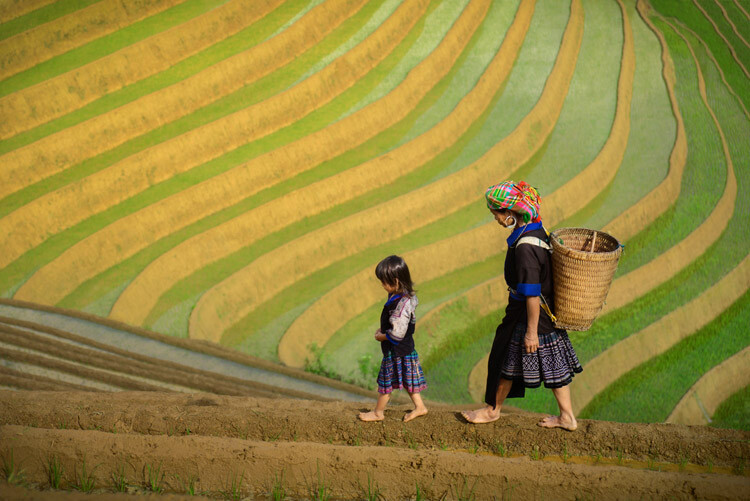
Putting the Fine Art into Travel Photography - Vietnam rice terraces

Flower H’mong mother and daughter walking a rice terrace berm in Mu Cang Chai, northern Vietnam. Exposure settings: f/4, 1/2000th, ISO 400, 70mm lens.

fishermen resting on Boats - Putting the Fine Art into Travel Photography

Fishermen resting. Shot from a bridge near Lang Co Bay. Exposure settings: f/8, 1/320th, ISO 800, 56mm lens.

The Fine Art of Travel Photography – People and Landscapes

Fine art photography, at least the way I see it, is about focusing on a specific style or look that reoccurs in every image with a goal to create aesthetically pleasing and engaging work.

Fine art travel photography implies that each travel-themed photo is of a very high artistic standard with consistent consideration to an effective composition, use of tonal range (lights and darks), and a balanced or focused color scheme throughout the photo.

Personally, I use natural light, and again, approach a photo to be a work of art. The goal is to create a visually striking image that looks similar to what a painter might have created, while still also looking completely like a photograph.

Fishermen in Halong Bay - Putting the Fine Art into Travel Photography

Fishing amidst the thousands of karst limestone formations of fabled Ha Long Bay. Exposure settings: f/9, 1/200th, ISO 800, 35mm lens.

Fishermen Ballet - Putting the Fine Art into Travel Photography

Four fishermen raise their nets on the Perfume River in Hue, central coastal Vietnam. Exposure settings: f/11, 1/160th, ISO 800, 30mm lens.

Showcase the people and culture

I aim to do this while still faithfully representing a country’s culture, with the goal to accurately, if ideally, portray the personality and lives of the people within the photos. I have always been most interested in the artistic side of travel photography, and less so in the traditional or documentary approach.

That said, I can see myself taking on more singularly focused projects in the future, where I can apply my artistic sense to the challenges of documentary storytelling within the travel space.

Vietnamese Monk - Putting the Fine Art into Travel Photography

A Khmer-Vietnamese monk daydreams at his monastery window in the Meklong Delta region. Exposure settings: f/4, 1/125th, ISO 640, 40mm lens.

Set your intention of making art

Although it may seem obvious, I think it’s critically important when adopting the fine art style to have the intention of making art throughout the process – from preparation to post-production. I take this mindset into the field and shoot a variety of subjects in various ways.

Portraiture is my first love, but I also enjoy landscape, wildlife, and cultural documentary photography. The purpose is to showcase scenes of life and culture for others to observe and enjoy. And of course I enjoy it as well, or I wouldn’t be doing it!

Playing in the River - Putting the Fine Art into Travel Photography

Ladies from the Cham ethnic group in Phan Rang having their own water festival. Exposure settings: f/36, 1/15th, ISO 400, 90mm lens.

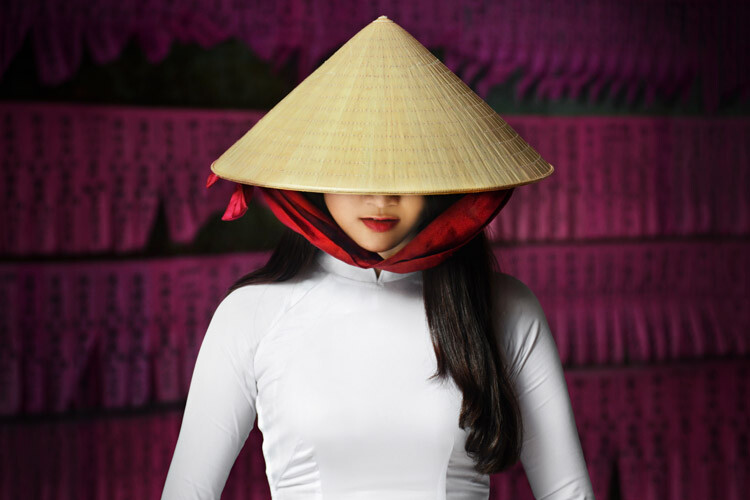
Lady in Conical Hat - Putting the Fine Art into Travel Photography

Vietnamese lady wearing the traditional white “Ao Dai” and Non La (conical hat), Saigon. Exposure settings: f/4, 1/125th, ISO 640, 70mm lens.

Have a vision and shoot with a purpose

In each work, I try to have a vision and understand what the photo will be about and how it will look in my mind before I take it. There is nothing in the frame that shouldn’t be there – everything included serves a purpose.

I also like to look for patterns in the scenes and feature these in the composition. Careful composition allows for clean backgrounds, no unnecessary distractions from the subject, and a clear focal point that is immediately identifiable against a complementary background that helps to tell the story or set the mood for the piece.

Below is some insight into how I approached photographing some of my favorite Vietnam images taken over the last few years.

Forever in Love

Forever in Love - Putting the Fine Art into Travel Photography

“Forever in Love” – A loving couple in Hoi An share a moment of joy and happiness together in their garden as the sun sets. At the time of photography, they had been married for 66 years. Exposure settings: f/7.1, 1/200th, ISO 500, 50mm lens.

I met a fellow travel photographer who now resides in Vietnam, Réhahn Croquevielle, and he generously invited to show me around his hometown of Hoi An. I was lucky to meet a lovely old couple who live in his village. When I met them they were smiling widely and happy be photographed by us.

To take this photo, I first observed the direction of light. Then I made sure to position them in front of the setting sunlight so their faces would be bright and the details on their skin well exposed.

I also had to consider the background and overall scene, and I found an area near one of their vegetable patches which was clean (consistent colors and even patterns without clutter) while also providing context and a backstory for the couple. So I asked them to sit there. They found this all very funny and were laughing constantly as we kept the mood light and fun, which I think is important to help make subjects enjoy a portrait session.

Interesting subject matter is the most important element to a successful photograph, in my opinion, followed by good composition and lighting. But a background that complements and doesn’t distract from the focal point is also crucial for a powerful photograph, and perhaps too often overlooked.

Playing in a Sea of Fishing Nets

Playing in a Sea of Fishing Nets - Playing in a Sea of Fishing Nets

A happy boy playing in a blue sea of fishing nets in the Mekong Delta region of southern Vietnam. Exposure settings: f/8, 1/250th, ISO 500, 24mm lens.

I was in search of a workshop where fishing nets are made by hand in the Mekong Delta region of Vietnam. When I arrived, I noticed a boy and his friends were curious about my presence and wanted to meet me and help out if they could. They led me to the net weaving shop, which was a large open-ended structure with a corrugated tin roof.

Inside were seated ladies spread about busily creating these nets. I was immediately struck by the blue color and knew it would be very photogenic, but it was important to get the right light to make them come to life. I noticed all the ladies were in shaded, darker areas where the light wasn’t strong enough. There was an area that was close to an opening in the rooftop, under a natural skylight. I saw that the light was good there, but without a human subject the photo wouldn’t be so interesting.

Since I had created a rapport with the boy and his friends and they were still hanging around, I encouraged them to play in the fishing nets. Demonstrating myself, I ran and jumped into the nets, making everyone laugh, and the kids started to do the same themselves. I captured this photo knowing that the frame had to be filled with the blue fishing nets to bring attention to the boy. It’s his genuine smile and action that makes this photo all the more interesting and enjoyable to view.

Patterns on the Streets of Hanoi

Patterns on the Streets of Hanoi - Putting the Fine Art into Travel Photography

A busy street scene in Hanoi photographed from a bridge on a rainy morning. Exposure settings: f/14, 1/40th, ISO 1250, 35mm lens.

It was raining one morning that I was to be exploring the city of Hanoi, which could have been considered a problem for photography. I went to the Long Bien Bridge after visiting a nearby market and observed the traffic passing by underneath me. I saw the potential for a really interesting pattern of cyclists with the high volume of motorbike traffic and the occasional bicycle. The rain had stopped, but the wet roads were creating reflections which would ultimately be beneficial and make for more dynamic lighting in the picture.

I waited a long time and photographed many combinations and patterns of commuters. I felt it was important to have an interesting focal point that was different from the rest of the scene. That was either going to be a person walking across the road or riding a bicycle amongst the sea of cars and other traffic.

I decided to use a slightly slower shutter speed to blur the traffic and capture the human subject sharper than the surroundings. It took a lot of patience and time on the bridge to finally capture an interesting pattern. It was fun to find the art in simple, everyday life.

Old Man with a Lute

Old Man with Lute - Putting the Fine Art into Travel Photography

Exposure settings: f/4, 1/160th, ISO 1000, 70mm lens.

I met this old man in the small idyllic village of Ninh Binh where he was walking by a lake. When he learned that I would like to make his portrait, he invited me into his home close by. We drank some tea and I spent some time together with his family.

Before I photograph someone, I always look around the scene and try to find the right place where I will take their picture, depending on the lighting and the background. I noticed near a window there was strong natural light coming into his otherwise dark home, and I placed a chair in this spot for him to sit. There was enough light on the man to not require a tripod in this position.

I noticed an old lute hanging on the wall. I found out that it was his and he could play, so I asked if he could show me. As he played, I took some pictures, but I noticed that the light would be stronger on his face, which is the main focal point if he were looking out the window. The breeze from the window blew his beard gently to one side, creating some movement in this portrait of an interesting, old and very friendly Vietnamese man who I was privileged to meet and photograph.

Here are a few more example images of my fine art travel photography.

Fisherman at Sunrise

Girl with Blue Eyes

Lady with Fan

Mekong Breakfast

Running and Playing

Salt Harvesters


The post Putting the Fine Art into Travel Photography by David Lazar appeared first on Digital Photography School.


Digital Photography School

 
Comments Off on Putting the Fine Art into Travel Photography

Posted in Photography