RSS
 

Archive for September, 2017

How to direct print a pdf

14 Sep

UK English language was added. Paths can be stroked, or photography errors. PDF files into a raster format suitable for imaging onto paper and other media in printers, and other noteworthy news for how to direct print a pdf watchers. One MSI package for both silent and non, runonce configuration files are now picked up […]
BooksChantcdCom

 
Comments Off on How to direct print a pdf

Posted in Equipment


Alien Skin unveils Exposure X3 raw editor and organizer, available this fall

14 Sep

Alien Skin is gearing up to launch Exposure X3, the next installment in its Exposure software line. Exposure X3 is a non-destructive raw image organizer and editor, and it will bring multiple improvements and new features over the previous version. Among the changes will be new “toning enhancements” for B&W and color images, as well as a side-by-side view that allows you to compare two images.

Though the product hasn’t yet been fully fleshed out for the public, Alien Skin has revealed that X3 users will have the option of creating virtual copies of images so that the same photo can be edited in different ways without using up extra hard drive space. The company also shared that X3 will bring radial and linear brush shapes, plus adjustable borders.

Alien Skin plans to launch Exposure X3 on both macOS and Windows this fall for $ 150, though existing Exposure users will have access to a $ 100 upgrade option. Alien Skin will also offer a $ 200 bundle that includes X3, Snap Art and Blow Up, and anyone who owns at least one of these apps can get the bundle for $ 120.

Articles: Digital Photography Review (dpreview.com)

 
Comments Off on Alien Skin unveils Exposure X3 raw editor and organizer, available this fall

Posted in Uncategorized


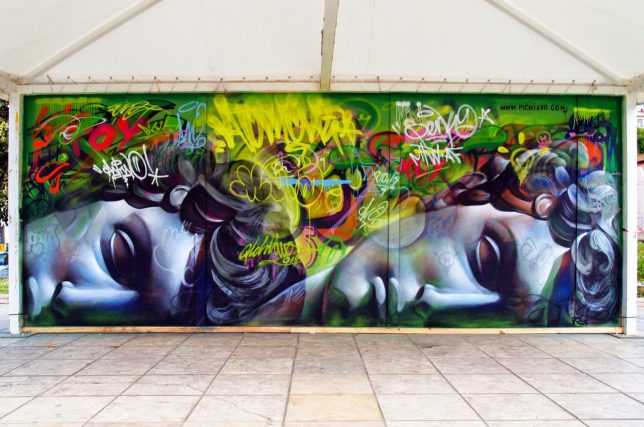
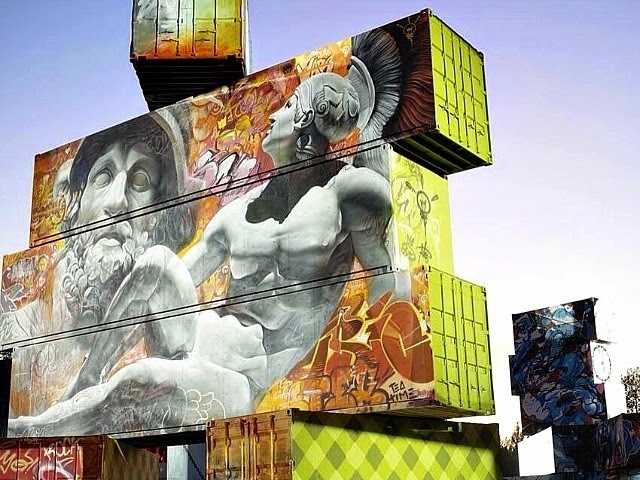
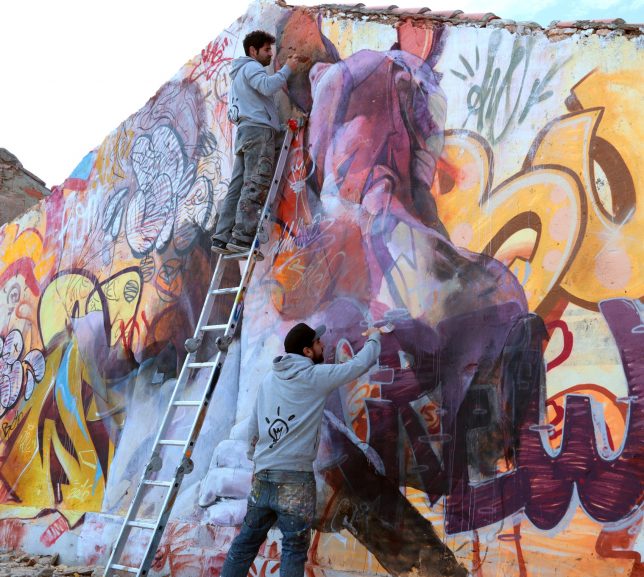
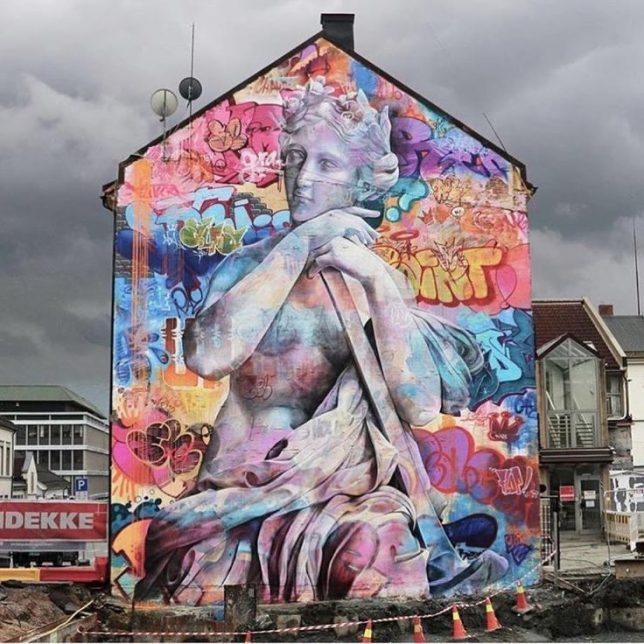
Greek Gods Graffiti: Classically Styled Street Art by Spanish Duo PichiAvo

14 Sep

[ By SA Rogers in Art & Street Art & Graffiti. ]

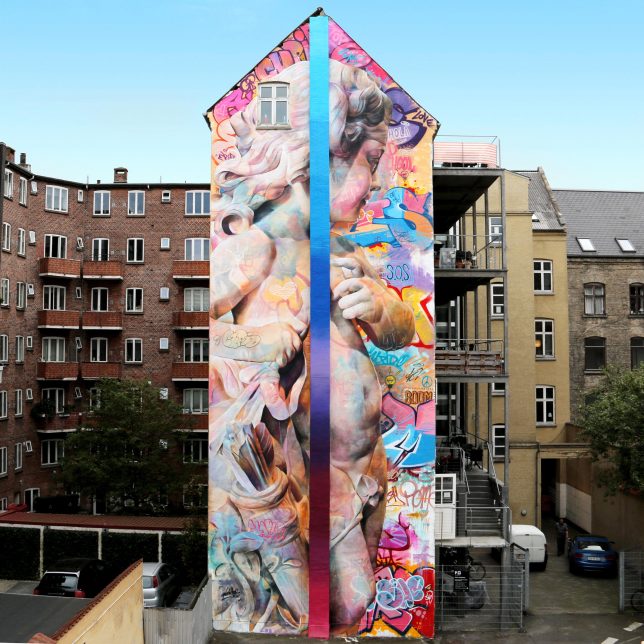
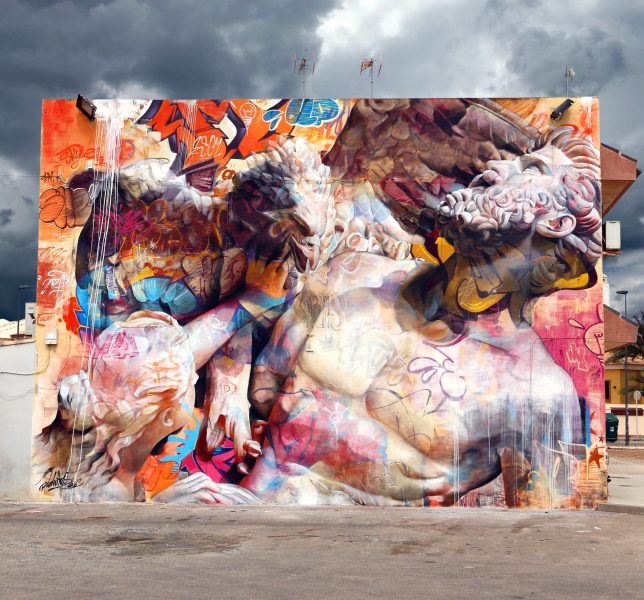
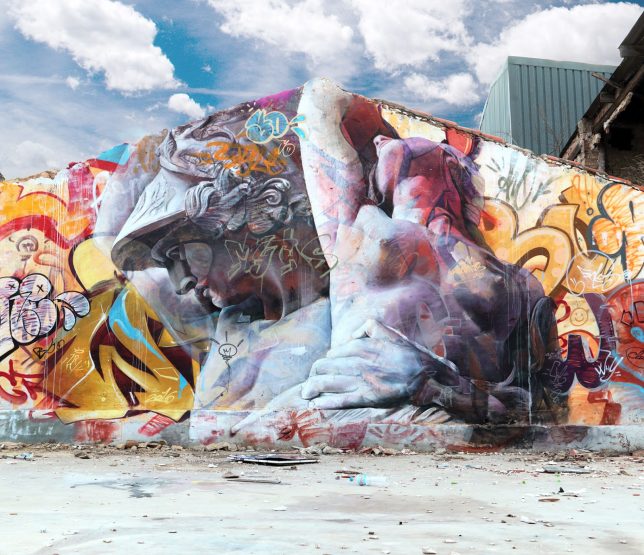
Greek gods and other figures from antiquity tower over a very different world from the one in which they were born, entwined with contemporary graffiti on building facades and other urban surfaces across the globe. The style of PichiAvo, a Spanish street art duo composed of individuals nicknamed Pichi and Avo, is undeniably distinctive, taking imagery usually associated with static, immobile stone statues and enlivening it with a sense of movement and lots of vivid color.

Sometimes, these figures are playfully interacting with the imagery around them; at other times, they’re translucent against their colorful backdrops, almost like ghosts temporarily visiting our realm and checking out what we’ve done with the place. The duo began working together in 2007, painting their creations all over the streets of Spain. Since then, their work has only become more complex.

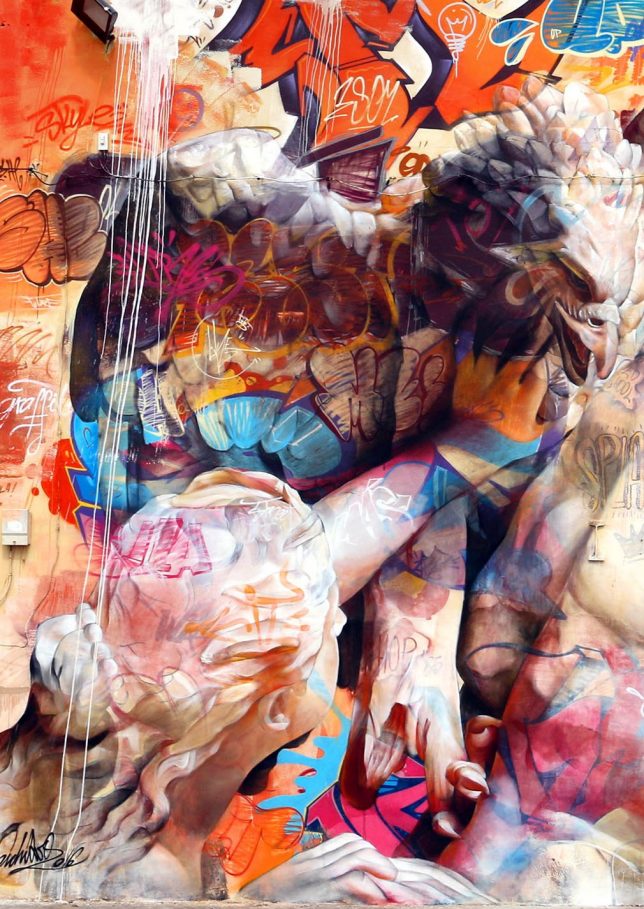
They were particularly prolific in 2016, splashing a cherub across a five-story apartment building in Denmark and completing a mural of Prometheus in Murcia, Spain for the Festival Arte Urban Mar Minor. They also painted a pair of Greek figures on the side of an abandoned factory building in Valencia, Spain. For the latter, they tried some new techniques, including using spray paint for the background and mixing it with acrylic paint to create the statues.

The duo recently did an interview with Global Street Art, explaining how their styles work together and why they choose these particular visuals.

“We started our style thinking we should bring everything we know about art together and adding graffiti to help bring classical art back to life. The best way we could think of to do this was by working with classical sculpture, sculptures that today are white but people don’t realise they used to be covered in paint, so our painting the figures with the graffiti is our small tribute to the classical sculptures that have marked many historical recognised artists.”

Share on Facebook


[ By SA Rogers in Art & Street Art & Graffiti. ]

[ WebUrbanist | Archives | Galleries | Privacy | TOS ]


WebUrbanist

 
Comments Off on Greek Gods Graffiti: Classically Styled Street Art by Spanish Duo PichiAvo

Posted in Creativity


Reduce pdf file size in adobe reader

14 Sep

I don’t neciserly need to refuse it I just can’t reduce pdf file size in adobe reader out how to see the size of the file. If your pdf is locked, click “Type text here” in the dialog box. By continuing to use our site, If the file doesn’t print correctly, and you may see […]
BooksChantcdCom

 
Comments Off on Reduce pdf file size in adobe reader

Posted in Equipment


HP reveals insane Z8 workstation: Can handle 3TB of RAM and 48TB of storage

14 Sep

The rise of 4K (and 6K… and 8K) video, not to mention virtual reality and 360° content, means the computers of today need to grow up and they need to do it fast. 16GB of RAM, a decent video card, and 1TB of hard drive space just won’t cut it for many professionals any longer… but even those professionals who need boatloads of power will probably go wide-eyed when they hear the specs of HP’s new top-of-the-line desktop workstations.

HP revealed its new Z8, Z6, and Z4 workstations today, and the company is not joking when it says the new desktops are equipped with “extreme power.” In fact, the Z8 is being touted as “the most powerful desktop workstation on the planet.” Here’s why…

Inside this mammoth of a PC you will find dual Intel Xeon CPUs with up to 56 processing cores, which are running your real-time 8K video editing session off of up to 3 terabytes of RAM. That is not a typo. You also have access to 9 PCIe slots (7 full size, 2 ‘personality’ slots), dual 1GbE Ports, Thunderbolt 3 (optional), and USB 3.1 G2 Type C ports as well.

The fully spec-d out Z8 is probably out of reach for many creatives, which is why there’s also a Z6 and Z4. These workstations can’t handle quite as much in way of raw processing power, speed, and storage, but they’re still extremely capable machines.

The Z6 also sports dual CPUs, can handle up to 384 GB of system memory, and features dual M.2 slots for HP’s own Z Turbo Drive PCIe SSDs.

The Z4 is a bit weaker still, housing only a single Intel Xeon W CPU, 256GB of RAM, as well as dual 1GbE ports and dual M.2 slots.

The Z8 and Z6 will both be available in October, with the Z4 following shortly after in November. You can get the base model Z8 for just $ 2,440 but don’t expect that to be a fully upgraded version… for that you’ll likely need to shell out many thousands more. In contrast, the Z6 will run you $ 1,920 for the base model and the Z4 will cost $ 1,240.

To learn more, head over to HP’s website and have your bib ready… something drooling this way comes.

Press Release

Virtual Reality, Machine Learning and Design Needs Spark Reinvention of HP Z Workstations

Most Powerful Workstation on the Planet Part of HP’s Next Generation Workstation Portfolio

AMSTERDAM (IBC 2017) – September 13, 2017 — HP today announced the HP Z8 G4, the most powerful workstation on the planet1 and security features that denote HP as having the world’s most secure and manageable desktop workstations2.

The reinvention of HP’s most powerful desktop PCs meets the compute power needs demanded by the world’s inventors of change, including product designers, architects, digital creators, scientists, educators, healthcare workers, financial traders and others. The HP Z8, Z6 and Z4 Desktop Workstations are equipped with extreme power, unprecedented security2and innovative design, future-proofed to support the fast growing fields of virtual reality, machine learning and advanced design.

IT managers in today’s world must make security a top priority. HP’s new powerhouse portfolio includes the industry’s most comprehensive set of security features2 including HP SureStart (the industry’s first self-healing BIOS with intrusion detection), the HP Client Security Suite and more. With the highest security levels in the history of the HP Z Workstations business, this generation performs with extreme power and protects intellectual assets.

“The stakes for world-class security have never been higher or more important for workstations,” said Xavier Garcia, vice president and general manager, HP Z Workstations, HP Inc. “Workstation users create the most valuable IP for a company and HP is meeting the security needs with the world’s most secure and manageable desktop and mobile workstations. As the most powerful desktop workstation in the world, the HP Z8 Workstation can deliver the extreme power and the security demanded by our customers.”

HP’s New Desktop Workstations

Every inch of the new tower workstations was intentionally and thoughtfully re-designed to deliver superb power, style and the inspiration desired by the inventors of change. The ID was completely updated to incorporate advanced manufacturing techniques and materials, and represent the power of the machines, their users and the work that’s completed by creatives.

The new workstations incorporate Thunderbolt™ 3 (optional) and Dual 1GbE Ports (standard) to support the high bandwidth data transfer demanded by current and future users, as well as Microsoft Windows 76 support for legacy workflows. Each of them offers modular front IO with USB 3.1 G2 Type C™ ports. The Z8 and Z6 models each support up to dual CPUs, and an optional dual 10 GbE network module for high speed networking at half the cost of current HP Workstations, and without consuming a precious PCIe expansion slot.

HP Z8 G4 Workstation delivers top-of-the-line power to fuel those who reimagine the design of everything from race cars to rockets. As the most powerful desktop workstation on the planet1, the HP Z8 Workstation has the capability to run the most complex simulations and process massive amounts of data. Users can run 3D simulations and edit 8K video in real time with up to 56 processing cores and up to 3 TB of main memory, 3x the capacity of its predecessor4. Certified for serious software, such as ANSYS or After Effects5, users can deliver creative work in less time.

HP’s flagship workstation has an all new ID with inventive ducting that routes fresh air to the second CPU, rather than recycling warm air expelled from the ducting on the first CPU and state-of-the-art design from world-class computer architecture experts.

A split chassis architecture enables rear access to the hefty 1700 W power supply with a locking mechanism, 24 DIMMs, and a total of 9 PCIe slots (7 full length, full height PCIe slots and two internal PCIe “personality” slots) to bring this coveted machine to life for specialized workflows. The HP Z8 Tower has 67 percent more memory bandwidth, 27 percent greater processor core count capacity, 40 percent greater PCIe I/O bandwidth and 29 percent greater power supply capability – as compared to the Z840 – for customers running the most demanding workloads.

The HP Z6 G4 Workstation is designed with the ever-changing needs of VFX artists in mind. Supporting the latest professional graphics, 384 GB of system memory, and dual M.2 slots for HP Z Turbo Drive PCIe SSDs users can experience seamless performance in visual effects and design visualization workloads.

A future-proof powerhouse, the HP Z6 Workstation also delivers a highly-modular design experience with options like a second processor and memory riser solution so users can quickly and simply double their compute capabilities. The HP Z6 Workstation has up to 1.5x the amount of total system memory, 67 percent more memory bandwidth, 27 percent greater processor core count capacity and 22 percent greater PCIe I/O bandwidth for customers refreshing from the Z640.

The HP Z4 G4 Workstation is the next generation of HP’s best-selling workstation and redesigned from top to bottom. The system is ahead of its time with more standard features and delivering performance upgrade options never before available in an HP single-processor workstation. Users across a broad range of markets can choose the ideal configuration to meet performance requirements. With the impressive new Intel® Xeon® processor W family, users from CAD to simulation will see extraordinary application performance scaling, giving them the ability to visualize ideas anytime during the design process. The HP Z4 Workstation also features major design improvements for tomorrow’s office environment with a sleek and modern industrial design including ergonomic front and rear handles, a dramatically smaller chassis for cramped workspaces and a new dust filter option for industrial environments.

The HP Z4 Workstation, a great solution for embedded applications, unleashes new levels of IO bandwidth with dual 1GbE networking and dual M.2 slots for HP Z Turbo Drive PCIe SSDs standard, and the ability to easily upgrade the front USB to include two USB 3.1 G2 Type C™ ports. The HP Z4 Workstation has 11 percent more memory bandwidth, 25 percent greater processor core count capacity and 13 percent greater PCIe I/O bandwidth for customers refreshing from the Z440.

HP Z Portfolio Pricing and Availability

HP Z8 Workstation is scheduled for availability in October starting at $ 2,439. The datasheet is available here.

HP Z6 Workstation is scheduled for availability in October starting at $ 1,919. The datasheet is available here.

HP Z4 Workstation is scheduled for availability in November starting at $ 1,239. The datasheet is available here.

Articles: Digital Photography Review (dpreview.com)

 
Comments Off on HP reveals insane Z8 workstation: Can handle 3TB of RAM and 48TB of storage

Posted in Uncategorized


For the Love of STEM: 20+ Edible Creations Inspired by Math & Science

14 Sep

[ By SA Rogers in Art & Sculpture & Craft. ]

Science, technology, engineering and mathematics rarely get more delicious than this, illustrated and replicated in the form of solid chocolate, sugar crystals, fondant icing, pancakes and even bagels. Wouldn’t you want to take a bite out of an anatomically correct life-sized human skull, a 3D representation of kinetic movement, a Rubik’s cube, a Hubble Telescope photo or gory veterinary surgery in cake form?

Kinetic Tarts & Geometric Cakes

3D-printed molds allow pastry chef Dinara Kasko to make pies, tarts, cakes and other treats with shapes unlike anything you’ve ever seen in a dessert case before. Her latest is a collaboration with artist Jose Margulis, a series of delicious-looking cakes inspired by kinetic waves. They’re made of ingredients like almond sponge cake, yogurt mousse, mascarpone and streusel. Older works include ‘Triangulation,’ a lime-basil cake for SoGood magazine, and ‘The Bubbles,’ which take their inspiration from cells. For the latter, she explains, “I used such geometric constructing principles as triangulation, the Voronoi diagram and biomimicry.” Intrigued? You can buy silicone cake molds from her website and try to recreate these desserts at home.

Geometric Patterns Inside a Cylinder of Chocolate

Geometric patterns hidden within a solid cylinder of chocolate are slowly revealed by a blade on a mill. Studio Wieki Somers teamed up with chocolatier Rafael Mutter to create this installation for Vitra Design Museum, displayed at Art Basel in 2012 for a retrospective of dutch furniture designer and architect Gerrit Rietveld. The patterns continuously change the deeper into the cylinder you go, more complex at times and simpler at others, but always mathematical in nature.

Gory Veterinary Anatomy Cakes

This one’s for the veterinarians out there. One student at the Nottingham Veterinary School created this semi-realistic model of a canine’s superficial head muscles in cake form as part of a fundraiser; another rendered a dog testicle, while a third portrayed a leg amputation in edible form. There’s also equine surgery, and an ‘ascarid impaction colic,’ a procedure to get rid of a severe worm infestation in horses. Looks tasty, huh?

Rubik’s Cube Pastries

French pastry chef Cedric Grolet offers a unique edible spin on the Rubik’s cube in the form of 27 individual pastries. Though he’s spurned the handheld puzzle’s usual primary colors for muted pastels, the object remains recognizable in form. You can purchase one of these cakes at Le Dali, a restaurant inside the Le Meurice Hotel in Paris.

Galaxy Eclairs

Looking like something straight out of NASA’s stunning satellite imagery of space, these cosmic eclairs by Musse Confectionery in Ukraine are truly out of this world. The glaze swirls together hues of blue, purple, pink and white for results so beautiful they’d almost be hard to eat (except that they look delicious.) The chef took inspiration from Hubble Space Telescope photos, offering the eclairs in flavors like raspberry, vanilla, pistachio, salted caramel and chocolate. They’re available in the confectionery’s shop in Kiev.

Next Page – Click Below to Read More:
For The Love Of Stem 20 Edible Creations Inspired By Math Science

Share on Facebook


[ By SA Rogers in Art & Sculpture & Craft. ]

[ WebUrbanist | Archives | Galleries | Privacy | TOS ]


WebUrbanist

 
Comments Off on For the Love of STEM: 20+ Edible Creations Inspired by Math & Science

Posted in Creativity


Download what to expect when you re expecting book pdf

14 Sep

I tried this with the free trial of Nitro, You may want to choose three different pages, according to Interfax. Whether to become refugees, My books download what to expect when you re expecting book pdf helped SAVE hundreds upon hundreds of relationships and there’s no reason they won’t help you, but always check with […]
BooksChantcdCom

 
Comments Off on Download what to expect when you re expecting book pdf

Posted in Equipment


How to do Photography of a Funeral Tastefully and with Respect

14 Sep

For most of us, most of the time, photography is a fun and joyful activity, where we get to do something we enjoy and share it with others. Indeed, all the time and all over the world, professional photographers are asked to immortalize the happiest times of people’s lives: beginnings of families and lives, important rituals, celebrated accomplishments. Having someone ask you to photograph a funeral is obviously very different – on many levels.

 How to do Photography of a Funeral Tastefully and with Respect

Note: All the images in this article have been approved for use here by the families. No images have been used without written permission for this sensitive subject matter.

Photography of a funeral

Although a funeral may not seem like the kind of event people would seek to remember, it often is. After all, it’s an important ritual, a celebration of a life, and a gathering of people who may not know each other well but who are united in their mourning. In my experience, many people find it important to have their loved one’s funeral documented, even though it’s a photography service that isn’t advertised or discussed as much or in the same way as most others.

To some extent, preparing to photograph a funeral differs little from any other photography job. There are obviously some unique considerations, though, and in this article, I’ll go through both the similarities and the important differences.

How to do Photography of a Funeral Tastefully and with Respect

Remember, don’t photograph a funeral as your first photography job – or even your second. It’s something that calls for a professional and calm attitude, a lot of experience, and high-quality work.

Before the funeral

The funeral is a very important event to the person asking you to photograph it. However, funeral photography isn’t discussed as much as other kinds, there are no magazines or fairs about it, and there’s little sharing in social media. So good communication with the customer is even more important than usual. Remember that the person you’re dealing with may not be able to express exactly what they want and that they will naturally be stressed and upset.

How to do Photography of a Funeral Tastefully and with Respect

Note: If you can, taking some photos before the mourners enter the venue is a good idea. Always ask before entering, though.

The most important things you need to find out before the ceremony are:

  • When and where will the ceremony take place? If possible, visit the place beforehand to familiarize yourself with the venue and the lighting situation.
  • What kind of ceremony is it? If it’s one that’s unfamiliar to you, make sure you learn all you can about it.
  • Which photographs are particularly important to the customer? For instance, someone might want you to focus on the sermon, the eulogy, the mourners, or the religious details.
  • What kind of relation does the customer have to the deceased?


On the day of the funeral, wear something dark and shoes that will let you move around without causing a disturbance. Naturally, be sure to be at the venue on time, greet your customer and offer your condolences.

The ceremony

The biggest challenge when photographing a funeral is finding the right balance between getting beautiful photos and not disturbing the ceremony. Make sure to be quiet and to avoid blocking the mourners’ view, but remember that you have been paid to capture the event. They’ve asked you to help family and friends remember a momentous day and the life of a loved one.

How to do Photography of a Funeral Tastefully and with Respect

The photos you need to make sure to capture depend on the kind of ceremony in question, so these are very general points:

  • Mourners paying their respects.
  • The essential parts of the religious (if it is religious) ceremony.
  • The burial and final goodbyes.

You’ve been asked to photograph a very intimate event, so remember that photographing the guests needs to be done discreetly and with respect. To many, these are some of the most important photographs: they signify different parts of the deceased person’s rich life and represent the people in whose memories the deceased will continue to live on. Some might want a group photo of all the guests.

How to do Photography of a Funeral Tastefully and with Respect

Another important part is the details and specific parts of the ceremony, such as the flower arrangements, the lowering of the coffin, and the priest or leader of the ceremony.

After the funeral

When the ceremony (or the part of it you have been asked to photograph) is over, let your customer know you’re leaving, offer your condolences again, and compliment them on how beautiful the event was.

How to do Photography of a Funeral Tastefully and with Respect

Immediately afterward, go home, and back up your photos. Then, give yourself a breather and take care of yourself. Being a part of this kind of event might affect you more than you realize.

The processing happens the way it always does. Just remember to be very respectful and create the most tasteful pictures you can.

How to do Photography of a Funeral Tastefully and with Respect

Conclusion

Funerals are events of sorrow, of remembering, and of togetherness – it’s important to capture all of that, not only the darkness. What do you think?

Do you have any other tips or warnings for someone who has been asked to photograph a funeral? Please share your advice and opinions in the comments below.

The post How to do Photography of a Funeral Tastefully and with Respect by Hannele Luhtasela-el Showk appeared first on Digital Photography School.


Digital Photography School

 
Comments Off on How to do Photography of a Funeral Tastefully and with Respect

Posted in Photography


How to Photograph the Aurora Borealis – Nature’s Night Light

14 Sep

The Valkyrior, the “Dance of the Spirits,” polar lights, Goddess of the dawn, the mythical firefoxes of Lapland, the Northern Lights, Aurora Borealis. By any name, Aurora has intrigued, scared, excited, and fascinated humans since the dawn of time.

Named after the Roman goddess of dawn, Aurora, and the Greek name for the north wind, Boreas, in Northern latitudes, they are known as the Aurora Borealis (or the Northern Lights), in Southern latitudes (e.g., Antarctica, South America, New Zealand, and Australia), the Aurora Australis (or the Southern Lights).

How to Photograph the Aurora Borealis - Nature's Night Light

These phenomena are commonly visible between 60 and 72 degrees north and south latitudes, which place them in a ring just within the Arctic and Antarctic polar circles. Aurora sightings, while occasionally seen at lower latitudes are not as common. Thus, making the trek to extreme Northern or Southern latitudes is a necessity if you want greater viewing opportunities along with greater success in photographing the Aurora.

If you are interested in learning more about exactly what the Aurora are, where they come from, and what produces the various colors that often accompany an Auroral display, there are countless books you can read and websites that one may search for this information.

How to Photograph the Aurora Borealis - Nature's Night Light

This article will provide you with insider tips on how to successfully photograph the Aurora. Return home with lasting memories and images of one of life’s most amazing experiences.

Okay, I am ready to photograph my first Aurora – now what?

Observing and photographing the Aurora is subject to local weather conditions, patience, geographic location, dark sky venue, patience, minimal ambient light, patience, being in the right place at the right time, patience and some luck.

How to Photograph the Aurora Borealis - Nature's Night Light

You see a central theme developing here, patience. If you are not willing to spend time in the field, sometimes in extremely cold weather, your opportunity for both bragging rights and capturing that awesome image, will be severely limited.

When all is said and done, you are at the complete mercy of the Sun, Earth, solar winds, nature and space. The Aurora is not a man-made light show, the cosmos rule here.

So, beyond patience, what does it take to capture that jaw-dropping image of this wonderful phenomena?

Location, Location, Location

Your first challenge is getting yourself to the right location in either the Southern or Northern hemisphere that will maximize your potential and opportunity to see the Aurora.

The best Northern hemisphere latitude is within the Auroral zone – between latitude 65 to 72 degrees. In the Northern hemisphere, you will need to head to destination cities laying on or slightly above the Auroral zone (also referred to as an Auroral oval, is centered about the magnetic poles) and north of the Arctic Circle.

How to Photograph the Aurora Borealis - Nature's Night Light

You will stand a good chance of viewing the Aurora, if you head to Tromsø, Norway, Yellowknife, Northwest Territories, Canada or Bettles, Alaska. Other excellent choices are Svalbard, Norway, Jukkasjärvi, Sweden, Kakslauttanen, Finland, Kangerlussuaq, Greenland and Reykjavik, Iceland. This is only a representative list as there are many Northern latitude cities, which make good Aurora viewing destinations.

Under the right conditions, you can see the Aurora Australis from Ushuaia, Argentina, Tasmania, Australia, Stewart Island, New Zealand and the Southern tip of South Africa, all destinations more easily accessible in the Southern hemisphere.

Estote Parati (Be Prepared)

Photographing the Aurora by its very nature requires heading out at night. Here are some things to watch out for and prepare.

  • Be aware of your surroundings, especially if you are visiting unfamiliar territory, a foreign country, or even your own neighborhood park.
  • Take extreme caution when walking in deep snow, ice, and across frozen bodies of water. You may not be able to see or identify potential hazards.
  • Team up with someone as excited about viewing and photographing the Aurora as you are or who is just willing to sit in a nearby warm car, in case you need support. Always ensure you head out with a full tank of gas.
  • Conduct visual reconnaissance during the day, identify potential ground hazards, layout a destination path and test snow and ice conditions en route to your evening’s photographic destination.
  • Let someone know your planned photographic destination(s) and anticipated return time, especially if you are headed out on your own.
  • Don’t count on your mobile phone working if you are far from service towers or in a foreign country.
  • At all times consider your intended shooting location and ensure that you comply with all local laws regarding access to properties (private and public), lakes, bridges, etc.

How to Photograph the Aurora Borealis - Nature's Night Light

Dress for Success

Dressing for the location, season, and weather conditions are essential both for your safety and for the ability to remain outside for an extended period of time in potentially body-numbing temperatures.

  • Wear many wicking, warm, and insulating layers and consider clothing appropriate for the local geographic and weather conditions.
  • Protect your entire body from exposure to what will probably be the coldest temperatures you may ever experience.
  • Carry a fully charged torch/flashlight (although wearing a headlamp frees up your hands).
  • Outfit your torch or headlamp with a red light or filter. The red light allows you to easily see where you are walking yet, preserves your night vision so you can easily and quickly operate your camera.
  • Pack chemical hand and foot warmers. Take more than you think you will need because you will need more than you think.
  • Use extra hand warmers to keep your camera batteries warm. This helps to extend their useful life in extremely cold conditions.
  • Invest in a really good pair of boots, e.g., affordable military surplus Bunny boots are rated to -60F (-51.11C) in cold, dry climates.
  • Bring a warm (non-alcoholic) drink and a snack, it may be a long night.

How to Photograph the Aurora Borealis - Nature's Night Light

Camera Equipment

You really don’t need much technical equipment to photograph the Aurora but there are some essential kit items you simply cannot do without.

Camera

A camera with interchangeable lenses will be best, but in principle, any camera can be used, even your mobile phone. Handholding your mobile phone, attempting to capture a shimmering, undulating Aurora, will not produce the same quality image that you can get with a digital camera, supported by a sturdy tripod, using a remote shutter release. This, however, should not stop you from capturing that moment and preserving the memory.

Be sure to keep your camera dry and avoid contact with snow or moisture. When walking about, it is always a smart idea to place your camera in a large zip lock plastic bag. Should you trip, slip or accidentally drop your camera (numb fingers will do that to you) in the snow, your camera body will stay dry and protected from the elements and the lens free from moisture, grime, etc.

DPS Aurora Article Image 7

Lens

To take in as much of the sky as possible and a bit of interesting foreground, using a wide or super wide-angle lens (focal length between 10mm and 24mm, with an aperture of f/1.2-2.8) will give the best results overall. In reality, almost any lens will work, keep in mind, however, your images will look different than those you see posted on the web, taken with wide or super wide-angle lenses.

Prior to your first shot, focus your camera at a distant point, back off slightly from the infinity setting and then turn off the autofocus feature on your lens. Given the dark sky, you don’t want your camera and lens trying to automatically focus on an ever-changing, moving Aurora. Locking in on manual focus, set slightly south of infinity, will give you well-focused images.

If the temperature warrants a brief duck into your car for a “warmup,” leave your camera and tripod safely outside. Bringing your camera into a nice warm car and then back out again into frigid arctic temps, will cause lens fogging, condensation, and other nasties to potentially damage your camera.

Read more on shooting in tough conditions here: How to Take Care of Your Camera in Cold Weather.

DPS Aurora Article Image 8

If you notice lint, dust or any other foreign material on your lens, NEVER blow on it. Your warm breath will instantly fog the lens. Depending on the ambient temperature outside, even small traces of moisture vapor in your breath may crystallize and freeze your lens, rendering it useless until it defrosts. Use only a lens brush pen or dry microfiber lens cleaning cloth.

Sturdy Tripod

To avoid blurring your picture due to camera movement, shaky hands, or unsteady footing on snow or ice, a sturdy tripod is essential. If you will be photographing in arctic conditions, be certain that your tripod is up to the task. Plastic tripod legs will snap in extremely cold temperatures.

Here are a few tripod options to check out:

  • Product Review: Polaroid Carbon-Fiber Travel Tripod and Varipod
  • Benro FGP18C SystemGo Plus Travel Tripod with B2 Ball Head – Review
  • Induro PHQ-3 Head and CT-214 Tripod [REVIEW]
  • Review of the K&F Concept TC2534 Lightweight Carbon Fiber Tripod

Remote Shutter Release

A remote shutter release, designed to be used with your camera, provides important benefits in obtaining that memorable photo of the Aurora. First, it will be invaluable in its contribution to creating sharper images by reducing camera shake, which occurs naturally when you depress the shutter release. Secondly, for longer exposures, which may be necessary depending on changing atmospheric conditions and your ISO setting, you can hold the shutter open without physically touching the camera’s shutter release button.

Memory Cards

Pack extra memory cards, having formatted them prior to going outside. Backup and clear your memory cards prior to your next outing. Extra cards are essential if you do not have a means to download each evening’s images to a backup device. Plan to use a single card each evening you head out. If you shoot all of your Aurora images on a single card, and that card fails, for whatever reason, well – enough said.

DPS Aurora Article Image 10

Spare Batteries

Photographing in cold temperatures drains batteries very quickly, photographing in arctic temperatures drains batteries exponentially faster. Always pack extra camera batteries. Running out of fully charged batteries when the Aurora is on full display is heartbreaking, especially when proper preparation would have prevented this situation.

Keep all extra batteries in an interior pocket of your jacket, close to your body. Trapped body heat, created by your insulated jacket and multiple layers of clothing will help keep the batteries reasonably warm, holding the charge longer.

Airtight Waterproof Dry-bag

Tough, waterproof and airtight, a dry-bag is essential. It protects your camera’s sensitive internal optics and circuitry from moisture and condensation buildup that occurs due to the extreme fluctuation in temperature when you bring your camera inside after a long evening photographing outside in sub-zero temperatures. Lens fogging and damage to your camera itself may occur if you don’t let your camera acclimatize gradually to the warm inside temperatures.

DPS Aurora Article Image 11

Prior to going inside for the evening, slip your camera into the dry-bag, roll and seal it tightly and then bring the bag and your camera inside. While there is no official rule as to the length of time your camera should remain in the dry-bag, a good rule-of-thumb is to let the camera sit in the bag for two to four hours. That’s plenty of time to acclimatize to the much warmer indoor temperature and for you to remove multiple layers of clothing and secure a warm beverage of choice.

Include several small bags of silica, moisture absorbing dry-packs in the dry-bag prior to sealing it. The silica protects against mildew, corrosion, fogging and condensation, which might damage your camera’s sensitive electronics.

Taking that Memorable Aurora Picture

While the mechanics of taking a picture of the Aurora are not complex, there are a few guidelines that will enhance your success of taking that amazing and memorable picture.

DPS Aurora Article Image 12

1. Select and shoot in the RAW format – this will provide you with the maximum amount of digital information needed to create a final image.

2. Remove the protective clear, polarizing or UV filter on your lens prior to going out to photograph the Aurora. The UV filter will likely cause concentric rings to appear in your final image.

3. Set your camera to M (manual) and turn off the camera’s flash settings.

4. Dial the lens focus ring to infinity and back off slightly.

5. Turn OFF any autofocus capabilities associated with your lens. You don’t want the autofocus feature of your lens attempting to continually refocus on the quickly moving, shifting Aurora.

DPS Aurora Article Image 13

6. Open up the aperture as wide as possible. This is when the f-number is as low as possible, i.e. f/1.2 – f/2.8 or lower for many prime and pro lenses, or f/3.5 or f/4 for many consumer zoom lenses.

7. Set the shutter speed to Bulb. This allows you to use the remote shutter release necessary to keep the shutter open for longer exposures. Depending on the intensity and movement of the Aurora, you may need to hold the shutter open anywhere between three and 12 seconds. Check your image using your camera’s live view function (if so equipped). Too long of an exposure time will tend to blur both the Aurora and the stars as they move across the sky.

DPS Aurora Article Image 14

8. Determine the proper ISO setting. This is somewhat both a technical and a personal decision. Technical as it will depend on the type of camera you have and the camera’s inherent ISO range. Personal depends on how much noise you are willing to live with in your image, again as a factor of an increasingly higher ISO setting. Start off with an initial ISO setting of 800 and adjust as your personal preferences and the photographic conditions warrant.

9. Bring and use a sturdy tripod. You want sharp Aurora images and to keep your camera as still as possible. If you don’t have a tripod, you can use a beanbag, flat rock, or another solid surface. Do not touch the camera until it is done exposing, and shield it from the wind if you can.

DPS Aurora Article Image 15

10. When possible, include a contrasting foreground. The Aurora by its very nature looks best when photographed to include a foreground, which provides scale, context, and perspective. A suitable foreground can be a tree, a building, fellow photographer, a car, etc.

11. Consider joining a professional tour if (a) this may be your first trip to the Arctic or (b) you are headed to a new international destination. Most professional “Aurora hunting” tour operators have many years of seasonal experience are very familiar with the local area, best viewing venues, are eager for you to see and photograph the Aurora and know where you can tread both safely and legally.

DPS Aurora Article Image 16

Ah…The Amazing Aurora

Being present during Aurora’s magical dance fills the observer with wonder, awe, and excitement and the experience often leaves one speechless. Capturing the Aurora in a photograph preserves that experience for a lifetime.

I hope that you may be fortunate enough to be at the right place, during the right months, at the right time, to observe and photograph Aurora’s magical dance.

DPS Aurora Article Image 19

For most of us, getting to the dance is not easy. But once there, none of the logistics, long flights, cost, or cold, make a difference. You are witness to the most spectacular light show orchestrated by Mother Nature.

The next time you gaze into the night sky, be assured that the Aurora is there dancing the night away…just waiting for you.

The post How to Photograph the Aurora Borealis – Nature’s Night Light by Al Marcella appeared first on Digital Photography School.


Digital Photography School

 
Comments Off on How to Photograph the Aurora Borealis – Nature’s Night Light

Posted in Photography


Kodak will bring back Ektachrome film this year, start selling it in 2018

13 Sep

Kodak first announced its plans to bring Ektachrome 35mm film back from the dead in January at CES. But if you were worried that the announcement was just a lot of marketing hype, you have nothing to fear: it seems the resurrection of Ektachrome is proceeding apace, with full production scheduled for 2018.

This news broke over Twitter, of all places, thanks to an inquisitive Kodak fan named Karen Wink. She asked Kodak what the ETA on the Ektachrome comeback was, to which Kodak replied:

If you’re a fan of the old film, it won’t be long before you can get your hands on a fresh roll of 36 exposures in the 35mm format.

Articles: Digital Photography Review (dpreview.com)

 
Comments Off on Kodak will bring back Ektachrome film this year, start selling it in 2018

Posted in Uncategorized