RSS
 

Archive for September, 2017

Enter to Win Corel PaintShop Pro 2018 Ultimate

18 Sep

Win a $ 500 gift card and a Corel software package – PaintShop Pro 2018 Ultimate, AfterShot Pro 3, VideoStudio Ultimate X10 and ParticleShop. Boom!

Enter the Corel “Colors of Fall” photography contest today!

Over the last few years here at dPS, we’ve run very some very popular competitions with our partners to give away some of their great photographic products to lucky dPS readers.

We are lucky enough to be able to do it again now.

Three Prizes

For this competition, Corel is giving away, as the grand prize, a $ 500 gift card and a Corel Software Package. The second place winner will receive a full Corel software package and the third place winner will win a copy of PaintShop Pro 2018 Ultimate.

The software package includes PaintShop Pro 2018 Ultimate, AfterShot Pro 3, VideoStudio Ultimate X10 and ParticleShop.

These prizes are designed to help every level of photographer create BETTER pictures. Since 1989, with the introduction of CorelDRAW, Corel boasts a range of award-winning products that includes graphics, painting, photo, video and office software with a community of over 100 million strong. Each prize will be won by a different dPS reader.

Enter to Win Corel PaintShop Pro 2018 Ultimate

All three prize winners will receive the full version of Corel’s leading photo editing and graphic design software – A $ 99.99 value!

* Special Offer – All dPS readers will receive 10% discount on PaintShop Pro 2018 Ultimate

Get Photoshop-like results for less with PaintShop® Pro 2018 Ultimate including a faster, easier PaintShop Pro and an exclusive bonus collection of premium software you won’t find in Photoshop. Turn photos into works of art with Painter® Essentials™ 5, automatically correct images with Perfectly Clear 3 SE, and edit RAW photos quickly with Corel® AfterShot™ 3.

  • Edit photos like a professional
  • Create unique graphic design projects
  • Turn your photos into works of art
  • Enhance your photos instantly
  • Work with RAW images
  • Simplified user interface

Enter to Win Corel PaintShop Pro 2018 Ultimate

Enter to Win Corel PaintShop Pro 2018 Ultimate

Learn a little more about PaintShop Pro 2018 Ultimate here.

How to Win

To win this competition you’ll need to:

  1. Download a free trial of PaintShop Pro 2018
  2. Edit your favorite “Colors of Fall” photo, using PaintShop Pro 2018
  3. Post your “Colors of Fall” photo, along with a few words on how you feel PaintShop Pro 2018 Ultimate would help your photography and, of course, a few words about your “Colors of Fall” photo. It’s as easy as that!

Do this in the next 21 days and on October 9, 2017, the team at Corel will choose the three best photos and comments, and we will announce the winners in the following days.

The deadline to enter is October 8, 2017, Midnight PDT. Photos and comments left after the deadline will not be considered.

Note: By entering the “Colors of Fall” photo competition, the Entrant is providing permission to Corel to publish their photo, if it is chosen as a winner, to be utilized within media post/s by Corel announcing the winners and promoting. Entrants will be provided a full photo credit if a photo is used, and will retain their copyright.

Please click HERE for full contest rules, terms and conditions.

By best – we’re looking for people who understand photography post-processing, and how PaintShop Pro 2018 Ultimate may best suit your needs. So you’ll need to check out the product page to put yourself in the best position to win. Don’t forget that to grab a free trial download.

There’s no need to write essay length comments to win – but we’re looking to hear what you like about the software and how it would help your development as a photographer. Don’t forget to include your “Colors of Fall” photo that you edited with PaintShop Pro 2018. We encourage you to have fun and be creative!

This competition is open to everyone, no matter where you live – but there is only one entry per person. To enter – simply leave your photo and comment below.

Note: By entering the “Colors of Fall” photo competition, the Entrant is providing permission to Corel to publish their photo, if it is chosen as a winner, to be utilized within media post/s by Corel announcing the winners and promoting. Entrants will be provided a full photo credit if a photo is used, and will retain their copyright.

Enter to Win Corel PaintShop Pro 2018 Ultimate

Disclaimer: Corel is a paid partner of dPS.

The post Enter to Win Corel PaintShop Pro 2018 Ultimate by Darlene Hildebrandt appeared first on Digital Photography School.


Digital Photography School

 
Comments Off on Enter to Win Corel PaintShop Pro 2018 Ultimate

Posted in Photography


Tamron developing lightweight, compact 100-400mm F4.5-6.3 lens

18 Sep

Third-party lens maker Tamron has officially announced that it is working on a new tele-zoom lens for full-frame cameras: the 100-400mm F/4.5-6.3 Di VC USD (Model A035).

Thanks to the use of magnesium in key areas of the barrel, Tamron claims the lens is both durable and, weighing in at just 1.12kg, the lightest in its class. The optical design incorporates three low dispersion elements to control chromatic aberration and Tamron’s eBAND (Extended Bandwidth & Angular-Dependency) coating to minimize reflections and flare.

Tamron also included a high-speed Dual MPU (Micro-Processing Unit) control system, which works in conjunction with Tamron’s Ultrasonic Silent Drive focusing motor to deliver AF speed and precision.

The lens will be compatible with Tamron’s 1.4X teleconverter and the Tamron TAP-in Console that lets you fine-tune and adjust focus and stabilization, among other parameters. An Arca Swiss compatible tripod mount will be available as an optional accessory.

If everything goes to plan, the 100-400mm F/4.5-6.3 Di VC USD will be available by the end of 2017 in Canon and Nikon mount versions.

Press Release

Tamron announces the development of a new ultra-telephoto
zoom lens with superior image quality, advanced features
and lightweight, compact design

100-400mm F/4.5-6.3 Di VC USD (Model A035)

September 15, 2017 – Commack, New York – Tamron USA, Inc. announces the development of a new ultra-telephoto 100-400mm F/4.5-6.3 Di VC USD zoom lens (Model A035) for full-frame DSLR cameras. The advanced optical design of Model A035 includes 3 LD (Low Dispersion) lens elements for greater aberration reduction and Tamron’s original eBAND Coating for superior anti-reflection performance.

At 39.3 oz., the new lens is the lightest weight in its class[1] and features magnesium material in key areas of the lens barrel to improve weight reduction, strength and portability.

The Model A035 delivers fast and precise autofocus performance and consistently powerful VC (Vibration Compensation) benefits thanks to the high-speed Dual MPU (Micro-Processing Unit) control system that is found in the latest Tamron lens models.

Model A035 is fully compatible with Tamron’s 1.4X teleconverter and the Tamron TAP-in ConsoleTM that enables lens customizations for focus adjustments, VC mechanism adjustments and more. Additionally, an Arca Swiss compatible tripod mount is available as an optional accessory.

This combination of features and optional accessories join to create a lens that photographers everywhere will enjoy using in various shooting situations, including low-light conditions that require handheld operation as well as those where convenient attachment to a tripod is preferred.

[1] Among 100-400mm F/4.5-6.3 lenses for 35mm full-frame DSLR cameras (As of September 15, 2017; Tamron)

PRODUCT HIGHLIGHTS

  1. 3 LD (Low Dispersion) lens elements effectively compensate for axial chromatic aberrations, a potential issue for ultra-telephoto lenses, and other various aberrations.
  2. eBAND (Extended Bandwidth & Angular-Dependency) Coating, with superior anti-reflection performance to eliminate flare and ghosting, provides flawless, crystal clear images.
  3. High-speed Dual MPU (Micro-Processing Unit) control system delivers quick and highly responsive autofocus performance and outstanding vibration compensation.
  4. Lightest weight (39.3 oz.) lens in the ultra-telephoto zoom lens category.
  5. Optional accessory tripod mount is Arca Swiss-compatible.
  6. MOD (Minimum Object Distance) of 59″ and maximum magnification ratio of 1:3.6
  7. Moisture-Resistant Construction and Fluorine Coating for weather protection
  8. Fully compatible with 1.4X teleconverter and TAP-in ConsoleTM

Articles: Digital Photography Review (dpreview.com)

 
Comments Off on Tamron developing lightweight, compact 100-400mm F4.5-6.3 lens

Posted in Uncategorized


Review and Field Test of G-Technology G-Drive ev ATC Portable Hard Drives

18 Sep

As photographers, keeping our data safe is of the utmost importance. Being able to trust your hard drives to work and survive all types of conditions and hardships is something to consider. As a wildlife photographer, I often find myself out in the elements, and when traveling, my gear has to put up with the rugged nature of travel, while still being ready to work when called upon. Recently I have been putting the G-Technology G-Drive ev ATC hard drives through their paces and I think these might just be one of the best rugged and solid ways to keep data safe on the move.

Review G Technology G Drive ev ATC Portable Hard Drive

G-Drive ev ATC hard drive features

The ATC is part of the G-technology ev series, a set of drives offering a simple workflow from the field to the studio. The ATC builds upon the standard RaW and ev drives by adding a polycarbonate protective shell to the main drive offering protection from bumps, dust, sand and even full submergence in water to keep your drive and data safe.

The case itself is solid – the simple blue and black design that is stylish and bright enough to easily find in dark conditions. The polycarbonate shell feels very solid in the hand and fits the drive like a glove. It seals closed with a latch system that might seem flimsy, but offers a solid click and seal to ensure the drive is closed off from the elements.

G-Drive ev ATC hard drives - The G drive inside the ATC case

G-Drive ev ATC hard drives Locking mechanism for waterproof closure

The G-Drive ev ATC comes in two varieties, offering Thunderbolt or USB-3 connections for your chosen device. The cords are built into the case itself so you don’t need to worry about forgetting them, a really well thought out design. Of course, the case adds an extra amount of bulk to the setup that might be a problem for those photographers wanting to keep things as small as possible, but personally, I think the extra size is a worthy trade off for the added protection.

Testing the drives during travel

Testing the drives out, they have accompanied me on a few international trips, coming as my primary and backup drives for work in the Falklands, Canada, and Finland. On each trip I have worked with two drives, keeping one as a primary and the other as secondary backup. The fast data transfer speeds were great, 1GB of data transferred in less than a minute over USB-3 meaning backups were swift and simple.

On returning flights keeping data separate is important (in case of a lost bag) and I had no worries about packing one of these with the G-Drive ev ATC hard drives into my checked baggage, knowing the solid construction would keep it protected from any rough handling from the dreaded baggage handlers! On all of my trips, the hold drive never skipped a beat, being ready to upload as soon as I got home to my office.

G-Drive ev ATC hard drives Using the internal drive with the EV docking station

The drive easily pops out and can be inserted into the G-Dock for easy file transfer back home.

In the office the workflow is simple. Popping the drives out of the housing I can easily slot them into the Ev docking station (called G-Dock) that gives me Thunderbolt speeds to upload images directly to my main drives for editing, backup and archiving. The ease of being able to just slot in one drive saves faffing around with multiple SD and CF cards again, keeping my workflow streamlined.

Extreme testing

To further test the drives I wanted to put them through the mill so I decided to rough them up with some real world testing. Grabbing one of the drives in the ATC case I took it out onto location and basically treated it like I didn’t care it was full of precious data. Dropping it onto the ground, into muddy puddles and even throwing it into my local river before rescuing it again down stream.

G-Drive ev ATC hard drives Tested in the dirt and mud without a hitch

Each test was passed with flying colors and even after fully submerging the drive underwater with my hand for a minute, it was in perfect working order. Of course, one problem with the drive is that you do need to check that everything is latched down. Human error, not fully closing the latch or getting something stuck into the gasket could compromise the waterproofing and seal, so it’s best to always be careful. I mean I doubt too many of us regularly throw our drives in a river intentionally…

G-Drive ev ATC hard drives Underwater isnt a problem for the ATC

As a drive, they are built solidly, but one area that I feel would be a great improvement is the use of SSDs rather than normal disk drives. Including an SSD would just add another level to the rugged nature of the drives making them even more durable for life on the road, while also giving faster transfer speeds. This would be especially useful for those editing and working with video files on the move as well.

As a photographer, G-Drive ev ATC hard drives suit my needs very well. The large 1TB hard drive easily has enough storage for a long photo shoot on location and with the protective shell offering great durability to my drives I am sure they will be part of my workflow for many years to come.

The post Review and Field Test of G-Technology G-Drive ev ATC Portable Hard Drives by Tom Mason appeared first on Digital Photography School.


Digital Photography School

 
Comments Off on Review and Field Test of G-Technology G-Drive ev ATC Portable Hard Drives

Posted in Photography


Western Digital’s new 12TB hard drive offers lots of storage and class-leading reliability

18 Sep

Western Digital is upping the internal storage ante with a new WD Gold drive that measures in at a whopping 12TB. The new WD Gold 12TB is a twelve-terabyte 7200RPM 3.5″ SATA 6Gb/s hard drive with the company’s 4th-gen HelioSeal, a technology that seals the drive with Helium to improve efficiency and reliability.

Western Digital is marketing the drive at IT managers, enterprises, and similar, but it is suitable for anyone who have a large amount of data to store… hint hint.

This 12TB model is the latest expansion in Western Digital’s WD Gold drive lineup, which also offers 8TB and 10TB capacities with 256MB cache, and even lesser capacities (down to 1TB) with 128MB cache. The drive stands out among other 3.5″ HDDs, according to Western Digital, because of its 550TB/year workload rating. Other features include enhanced RAFF tech to protect against vibrations, time-limited error recovery, real time fly height adjustment, and compatibility with all major desktop operating systems.

In other words: lots of storage meets class-leading reliability.

The WD Gold 12TB hard drive is available now from Western Digital for $ 522 USD.

Articles: Digital Photography Review (dpreview.com)

 
Comments Off on Western Digital’s new 12TB hard drive offers lots of storage and class-leading reliability

Posted in Uncategorized


Tips for Why and How to do Wildlife Photography at Eye-Level

18 Sep

Wildlife photography is all about creating a connection with the subject and with your audience. One of the key components of your wildlife images is how well they capture the audience’s attention. One of the most effective ways to do that is to try and get down and shoot at eye-level with the subject. Please note that eye-level need not necessarily mean ground-level always. You could have a subject on a tree, rock, etc., so it’s not always essential to be at the ground-level but being at eye-level really helps.

What’s the difference?

Let’s see what difference is in an image when you shot from eye-level of the subject.

Taken from a car.

Taken at eye level on the ground.

Purely from an attention grabbing perspective, this renders the background totally blurred thus restricting the number of points vying for attention. As is seen in the image above, the image when taken from eye-level helps in drawing attention directly to the bird. Why does this happen, though? What causes the background to blur out?

The background is affected

Often in my workshops and tours, I suggest people that they should ask “Why?” for all concepts and tips. For the eye-level approach to wildlife photography, I again ask, “Why does this result in getting a cleaner background?” The answer might be obvious to a lot of you but for those others who are just starting their journey as photographers, the following question might help.

Ever you ever searched for a tiny thing like an earring or a needle on the floor?

The obvious approach is to immediately get down to ground level and rest your head on the floor. But why does that help? It helps simply because by changing your perspective you change the distance between the subject and the background. The greater this distance, the greater the chance there is of the shallower depth of field coming into play and that of the subject standing out.

Take the images above for example. The following illustration will show the difference in terms of background for both..

Tips for Why and How to do Wildlife Photography at Eye-Level

In the illustration where the photographer is standing up, the background consists of the ground immediately behind the bird. The less the distance between subject and background, the lesser the blur of the background is achieved.

Where the photographer is lying down, the background is almost infinity (a significant distance away from the bird). The greater the distance between subject and background, the more blur of the background can be achieved.

With that rule understood, you will be able to apply it in the field that much better. Here are a few more examples of eye-level wildlife photography.

Tips for Why and How to do Wildlife Photography at Eye-Level

Tips for Why and How to do Wildlife Photography at Eye-Level

Tips for Why and How to do Wildlife Photography at Eye-Level

Tips for shooting wildlife photography at eye-level

Now that we have established the advantage of going to the eye-level of the subject, let’s take a look at a few ways to go about doing that.

Getting to the eye-level

#1 Get yourself flat on the ground

This is the easiest to do, as you just have to lie down, right? Well, I wish it was just that. If you are in a vehicle and are close enough to the subject, then try to get down on the ground with minimal to no noise and generally very slowly. Try and make moves only when the subject is looking away. Once you are flat on the ground, try not to make a lot of burst shots immediately. Let the subject get accustomed to you first.

#2 Get the vehicle at eye-level

Take a look at the image below. It is a pair of lions in the African savannah.

Tips for Why and How to do Wildlife Photography at Eye-Level

Quite often, wildlife photography is done in reserves or national parks, where getting down from the vehicle is not allowed. So what can you do in such scenarios? This is where your field-craft comes in handy. Know your subject and you will be able to predict its movement.

For example, take a scenario where you have a big cat walking on a road (they seem to like doing that don’t they?). You could either stop where you are and fire-off a few shots. OR you could take a moment to evaluate the animal’s potential path and wait at a location where the road is slightly lower than where you are currently situated. A lower elevation for the vehicle would ensure a better connection with the subject when it walks towards you. Take a look at the simple sketch below to give you an idea.

Tips for Why and How to do Wildlife Photography at Eye-Level

#3 Crawl

This one has to do mostly with shooting on the beach. If you are into shorebird photography quite often you will find yourself on a sandy beach because those are the areas where your subjects are found. It is generally not very easy to get up-close to these guys using your vehicle so you have to start crawling from a safe distance.

I have noticed that shorebirds allow you to get really close-up as long as you are willing to put in that effort to crawl and not rush in on them. Here is an example of the result of a 50-foot crawl.

Tips for Why and How to do Wildlife Photography at Eye-Level

Yes, get those elbow and knee guards ready because it isn’t the easiest thing to do. Especially if you are carrying a big lens around. A contraption like the ground pod helps a lot in this situation to push the gear easily.

#4 Standing up

Sometimes, when you are in a vehicle, getting to eye-level might simply mean standing up. Look at the following two images. Both clicked at the same spot, one while I was sitting down and the other when I decided to get up to eye-level.

Tips for Why and How to do Wildlife Photography at Eye-Level

Tips for Why and How to do Wildlife Photography at Eye-Level

It makes a world of a difference right? Now please remember that even when you are doing a simple thing like standing up, you need to be very cautious and slow in your approach. Wildlife does not like sudden movements, it spooks them.

Getting ready for eye-level

As with everything in photography, practice makes life much easier in the field, so here is my advice for the eye-level approach. Initially just try it without the camera. See if you can understand the mood of the subject. Remember, make no alarming or sudden movements and be as quiet and slow as possible.

Once you are able to do this with a certain degree of success, you are ready to then bring out the camera gear and give it a go. Remember, this is quite a lot like being a predator. You will not have a 100% success rate. Just make sure that when you succeed, you make full use of it. What I mean is, make sure that before you get down on the ground, you have chosen the spot well for a good background and you have taken into account the light on the subject.

So get out there, and practice and share your wildlife photography eye-level images.

The post Tips for Why and How to do Wildlife Photography at Eye-Level by Rahul Sachdev appeared first on Digital Photography School.


Digital Photography School

 
Comments Off on Tips for Why and How to do Wildlife Photography at Eye-Level

Posted in Photography


Nikon Director of Development: ‘If Nikon will go mirrorless, it must be full-frame’

18 Sep
Photo by Joseph Chan

We’ve known for some time now that Nikon is working on a mirrorless camera—in fact, Nikon confirmed this to DPReview directly. But one question has remained tantalizingly unanswered: will it be a full-frame system, or simply an evolution of the old 1-inch Nikon 1 system?

The answer, at least according to one high-level Nikon director, seems to be what we were all hoping for. The mirrorless camera will be full-frame.

This information came to light in an interview with Tetsuro Goto, Director of Laboratory Research and Development at Nikon Japan, who told Chinese website Xitek that, “full frame is the trend. If Nikon will go mirrorless it must be full frame.” A statement that immediately set the photography world on fire with speculation.

You can read the full translated interview at this link. Most of it focuses on the Nikon Df and other topics, but page 4 of the interview begins to cover new ground including competition from Sony, Fuji, and the like, and the future of Nikon mirrorless. The other, slightly controversial statement shared by Mr. Tetsuro during the interview had to do with Nikon’s market share and penetration vs the competition (translation courtesy of Nikon Rumors):

Nikon customer base is very broad, from novice to enthusiasts to prosumer to professional, that’s Nikon’s advantage. Olympus, Sony and Fujifilm can only cover a small part of that. So far there is no professional using their products. So when they develop products, even like retro style, they only try to meet these people and that’s only what they can do. Their customer base is limited anyway so they have limited view in developing products.

Read the full interview here, and then feel free to go speculation crazy in the comments. We’ll update you as soon as we have something official from our sources at Nikon.


A Nikon representative was not immediately available for comment at the time of publication. We will update this news story as soon as we have an official response from Nikon USA about Mr. Tetsuro Goto’s comments.

Articles: Digital Photography Review (dpreview.com)

 
Comments Off on Nikon Director of Development: ‘If Nikon will go mirrorless, it must be full-frame’

Posted in Uncategorized


Shopping Block: 20 Deservedly Abandoned British Stores

18 Sep

[ By Steve in Abandoned Places & Architecture. ]

These charming British shops and boutiques just couldn’t compete with big box stores but that’s not the only reason they’ve bitten the biscuit.

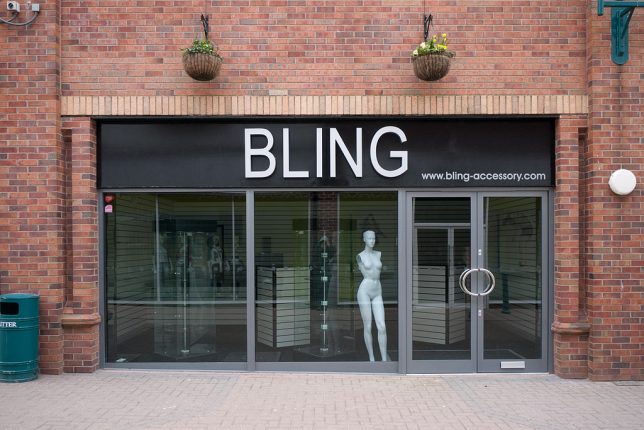
Why try owning and operating a store selling niche items when Asda (owned by Walmart), Tesco and of course Amazon can stock most of their inventory in a single aisle? While lower prices and greater convenience are welcome benefits of this socioeconomic transformation, the carnage inflicted on Britain’s shopping streets was, is and continues to be staggering. Take “Bling” for example… an abandoned East Yorkshire accessories boutique displaying (as of March 2010) only a broke-ass Venus de Milo surrounded by stripped shelving units.

Let It Go

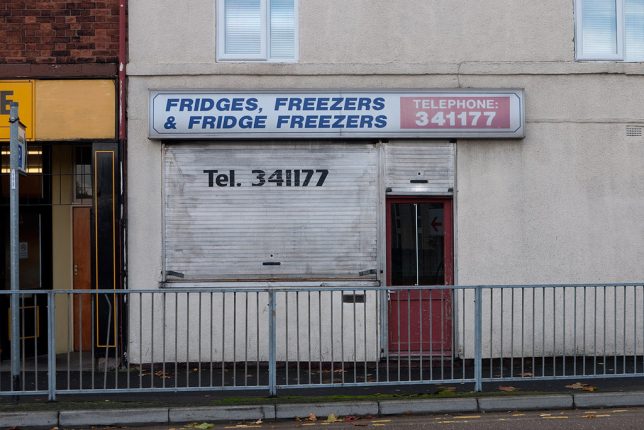
“Fridges, Freezers & Fridge Freezers” could be a follow-up to Monty Python’s legendary Spam sketch – all that Spam, Spam, Spam, Baked Beans & Spam needs to be stored somewhere, amiright? The erstwhile owners of this Doncaster, West Yorkshire kitchen chillling appliances outlet at least had sufficient space on the facade to display their phone number… twice.

Priceless Characteristics

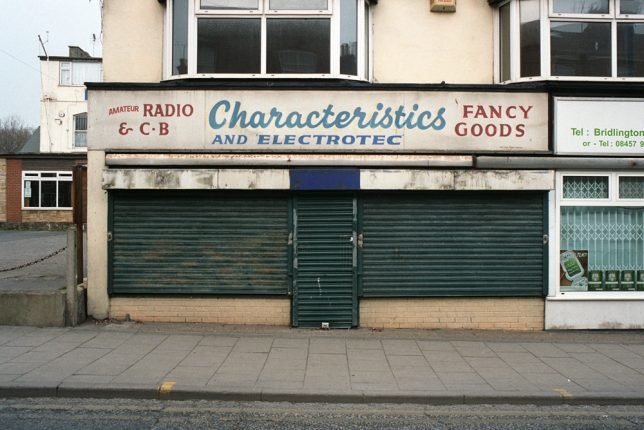
Allow us to state right here and now that all of our featured images were captured by Flickr member and urban landscapes photographer extraordinaire leon S-D (littleweed1950). We’ve cherry-picked from well over a thousand eerily beautiful images of closed and abandoned UK shopfronts including the befuddlingly-named “Characteristics and Electrotec” in Bridlington, East Yorkshire. That’s just off the charts, even for Quainte Olde Englande.

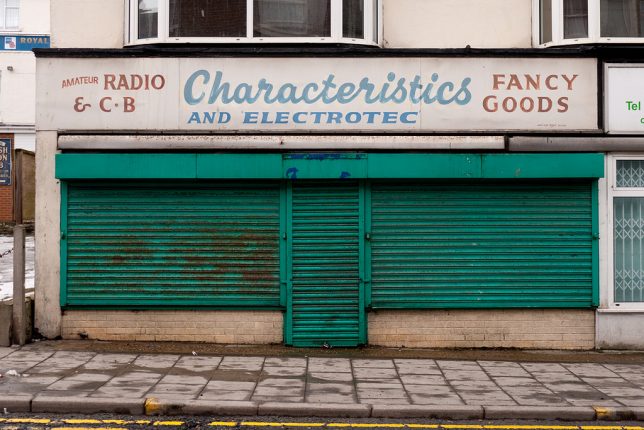
What the heck did this store sell (or at least TRY to sell), anyway? Radios, CBs, “Fancy Goods”… is that last one a euphemism for something? Who can put a price on “Characteristics”? Nobody now, it would seem. In any case, the photographer thought this shopfront was so nice, he visited it twice – in September of 2009 and again in January of 2013. Curiously, though the shop remained abandoned the facade was mildly rejuvenated with a coat of blue-green paint, thus improving its visual characteristics.

We All Float

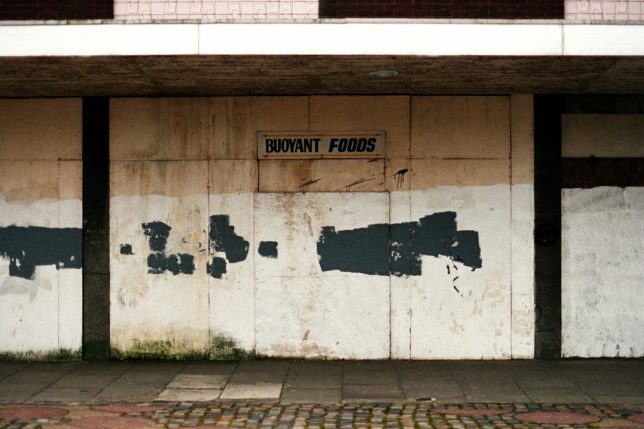
“I’m going to need to stock up on unsinkable meats and produce,” said no one ever. Seriously, even the captain goes down with the ship and he’s not going to be upstaged by some leftover broccoli. You’ll find the bubbly former “Buoyant Foods” store in Town Centre, Grimsby, Lincolnshire where it looked rather grim in November of 2009.

Keep Us In Sus-Pants

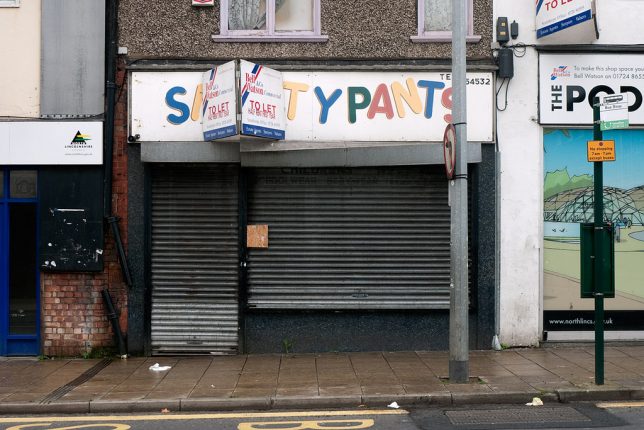
Have you noticed that British real estate agents use the term “To Let” on their “for sale” signs? Have you also noticed the two-word phrase looks alarmingly like the one-word er, word “Toilet”? Even more so here in beautiful downtown Scunthorpe, Lincolnshire, where the agent’s typical triangular sign leaves the former store’s name as “S-TY PANTS”. Now what could that really be, hmm? We’re sure the neighboring shop’s sign (“The POO”?) isn’t influencing our thoughts at all.

Next Page – Click Below to Read More:
Shopping Block 20 Deservedly Abandoned British Stores

Share on Facebook


[ By Steve in Abandoned Places & Architecture. ]

[ WebUrbanist | Archives | Galleries | Privacy | TOS ]


WebUrbanist

 
Comments Off on Shopping Block: 20 Deservedly Abandoned British Stores

Posted in Creativity


Photographing Jennifer Lawrence: A photographer’s dream come true

17 Sep

Clay Cook is an Advertising and Editorial photographer who has worked with clients ranging from the NFL to Red Bull, and been published in Forbes, Popular Mechanics, Adweek, USA Today, ESPN, and more. To see more of his work, visit his website or follow him on Instagram.

This article was originally published on Clay’s blog, and is being reprinted in full on DPReview with express permission.


We all have our dreams, some are simple while others are complex, buried with the overwhelming mountain of hurdles. I began my creative career in the one of the most complex industries: music. The business of music is just like any other business, except it’s competitive and hard to navigate as a poor teenager who lives in their parent’s basement.

But somehow I survived for a few years, and I have the scars to prove it. We toured and recorded albums, yet never seemed to make it where we always dreamed to be. One minute we had a breakthrough, the next we took ten steps back.

I often think about what was to blame, or who was to blame. But in the end I chock it up to timing. We happened to choose one of the worst times in the history of music to succeed. Free music was the new thing and the sales of compacts discs were crashing at an alarming rate. I often felt like my band was running on a treadmill, covered in sweat, yet never making any big leaps toward fame, fortune and my dream: to be my own boss.

It’s not often that people live out their dreams. But, what happens when you do? What happens when you achieve every single goal in your path? How do you plan for the future when you have nothing to chase?

These are questions I recently had to ask myself, because I accomplished the one dream that had been hanging in my head since I started photography. It may seem simple, but for me it was complex. My dream was to photograph Jennifer Lawrence

I grew up most of my adolescent life in a nice neighborhood, my family owned and operated a successful distribution business, so we lived a good life. Through the music industry I learned a lot the hard way, but was setup to succeed from an early age. Several houses up from ours lived the Lawrence family: Karen and Gary, two brothers Blaine and Ben and a bright-eyed, spunky-blonde Jennifer. Throughout high-school, my older sister dated Ben for a few years and often babysat young Jennifer. While I didn’t have much of a connection to Jennifer or the Lawrence family, my sister certainly did.

As we grew older, we went to different schools and Jennifer eventually moved and didn’t think much about it. That is until some years ago, when I received an email from my mom alerting me that Jennifer Lawrence, the girl down the street was to be in a movie with Charlize Theron called “Burning Plain.” I watched the film and smiled. When Jennifer starred in “Winter’s Bone” and took home the Academy Award, I felt proud. In a small town such as Louisville, Kentucky everyone seems to have their connection to Jennifer. While my connection may be more significant than the grocery clerk that helped Jennifer’s cousin find powered sugar one day, it’s not a connection where I claim to be close.

Today, Jennifer Lawrence is considered one of the most popular A-List celebrities in the world, a title that is well-deserved. I not only wanted to photograph her, but I wanted to do it organically. I wanted to work as much as possible to be the photographer chosen to capture Jennifer for “X” client. I constantly kept it in the back of my mind and didn’t tell many. It was a long term goal, one I expected to require years to achieve.

I wanted to earn it.

Shortly after the safe return from our adventure in Iraq, I received a call from my friend Coury Deeb, Founder of Nadus Films—a production company based in Louisville that works heavily the non-profit industry. Coury had been working closely with Meredith and Karen Lawrence, who collaborate with Jennifer for her foundation. The Jennifer Lawrence Foundation supports various other non-profit organizations with a primary focus of children in need.

The Lawrence family were neck deep in planning the “The Power of One” fundraising event presented by the Jennifer Lawrence Foundation and the Frazier History Museum; which recently just opened the doors to The Hunger Games: The Exhibition. The interactive exhibit features actual costumes and props from the production of The Hunger Games series. It’s a massive exhibit that soaks up the focus of the entire museum. It totally made sense to utilize that atmosphere to host this fundraiser. Lucky for us, the foundation was interested in having the event captured Nadus style.

While over numerous meetings and countless ideas, we landed on a plan of action. Nadus Films would document the event while I photographed Jennifer in two studio sessions. One being a portrait sitting with various children that the foundation supports and the other being a portrait sitting with her solo and a few friends who are attending the event with her. Leading up to the event we hit a few hurdles. The portrait sitting would have to be quick, it would have to feel more candid and most importantly, we had to keep it fun. No big deal.

I then made a few calls to some friends in the photography industry. First, Sarah Oliphant of Oliphant Studios. I had envisioned a dramatic black and white candid portrait with the children. A mood that felt very light-hearted, yet natural and intimate. I wanted to use a dark background, but with enough character to float behind the subject. In other words, I didn’t want Jennifer to fall into blackness, I wanted some gray surface texture to lift the contrast. I don’t often work with black as a background but gray, so I was thrilled when Sarah provide an option that could cater to my vision.

On the flip side, it would be an alternate background with more of a warm tone and a strong vignette. A background that more of a standard style of what you would see in a Leibovitz photograph. I would use both of these canvas backdrops over a period of two days.

The next call was to Digital Transitions—a New York based retailer for Phase One and various other top professional photography brands. I can depend on Digital Transitions for providing a quick rental program for the Phase One system. In this case: a Phase One IQ3 80MP XF Medium Format Camera with a Schneider Kreuznach 40-80mm LS f/4.0-5.6 Lens.

The reason I chose to shoot with a medium format over my workhorse a Canon 5D Mark III is actually several reasons.

Firstly, I wanted the resolution. I didn’t quite know what to expect. I knew the shoot would be very quick and fast-paced so the massive resolution of the digital file would provide a breath of options in post-processing. We could crop in dramatically or alter exposure without sacrificing the image quality—in other words, it was a safety in case I just can’t nail it in camera.

Secondly, I wanted the beautiful buttery look that a medium format camera offers, which if used right can resemble film. While I prefer a deep depth of field in most of my photography, I wanted this particular series to feel warm and soft with a dramatic aura.

I felt confident about the tools in play, I just needed a plan of action for the setup including lighting, logistics and safety. With Jennifer Lawrence, I wanted to provide as much breathing room as possible. I knew we wouldn’t have but a few moments, so I needed the set to be versatile. It had to be the right light, open enough to offer multiple posing options without a change. Therefore, we went big and soft.

For both sessions we opted to use a Profoto D1modified with a 51” Large Profoto Deep White Umbrella with a 1.5 stop Profoto Umbrella Diffuser as a key light. As a fill light, we used a Profoto D1 modified with a 65” Extra Large Profoto Deep White Umbrella with a 1.5 stop Profoto Umbrella Diffuser. We feathered the key light to soften shadows and offer a more natural nature of light. The entire set was draped in black cloth to negate the bouncing of light and increase the density of the shadows on her face.

I was nervous. Although the bath of anxiety wasn’t caused by the fact that this was the most popular and successful celebrity that has stepped in front of my lens. It was because I wanted the image to honor Jennifer, and for my photography to align with her brand and our client The Jennifer Lawrence Foundation.

We arrived at the venue early, only to receive some bad news: the shoot with the children was cancelled. I felt disappointed, but was thankful for the opportunity to have the second day. Nevertheless, we loaded in all of our equipment just in case… I’m glad we did. Within an hour of the event taking place we received word that our portrait session with the children was a go, with only an hour window to prepare. Fortunately, this wasn’t our first rodeo with this style of project and we were prepared for anything to be thrown our way.

We had our location, we had our equipment and my assistants prepare the set while I mingled and covered the opening of the event. I spent a brief time pre-staging, pre-lighting and make sure all the preparations were made which we had planned for. After a quick autograph session, I tagged along with Jennifer through The Hunger Games: The Exhibition and led her to our “mock-studio” where we would photograph her with a few select children. This walk provided the time to briefly catch-up and make a connection.

As we arrived to the set, I pointed to a stool we had setup and began to hand-select various children. I made sure to keep her attention while we made slight adjustments to the light and brought in our first subject.

Jennifer had never met most of these children, so it was then my job to make the awkward moment fell just right. I fired the shutter while I did my best to guide Jennifer and the children to have more of a conversation, at the same time punched in awkward jokes to bring out some laughter. Instinctively, Jennifer jumped in and helped the process.

While I was only able to fire several frames per child, I was confident in what we we captured. After four sets of children, a small technical glitch and nearly 30 frames later, Jennifer bailed and headed out of the venue for the evening.

After the shoot, I felt fairly confident in the candid portraits, but naturally was hard on myself for my equipment acting up. Apparently, radio signals from the radios used in the building for the event had conflicted with our radio triggers used in the portrait setup and caused the lights to fire in an extreme rapid pace, resembling a theater strobe for about four seconds.

Luckily, it was during our final set, but it was certainly a learning experience.

The second day started early as we had a lot of setup and didn’t want a repeat of the hiccup from the previous day. Therefore, we spent meticulous time with the lighting and staging. While the set would primarily be used for a professional “portrait-booth” for guests of the fundraising event for the evening, our priority was the solo portrait of Jennifer. After nearly four hours of staging, we were ready.

I vividly remember pacing back and forth several minutes before Jennifer arrived on set. We got word that she would be arriving with an entourage, which included Frances Lawrence, Director of The Hunger Games film franchise, which only added to the pressure. This was my opportunity to open doors and it had to be right, it had to be perfect.

As Jennifer walked towards the set I gave her a gentle hug, asked her take a breath and sit next to a posing table we had pre-staged hours beforehand. After a 10-second spew of small talk, I picked up the Phase One IQ3 Medium Format Camera, focused and snapped the shutter. With one sudden pulse of the flash all the anxiety went away and I felt a push of adrenaline. With a swiftness, we blazed through various positions I had pre-set and thought out.

While Jennifer needed little direction, the smallest ideas helped her provide the expression I was seeking. After just eight photographs, Francis jumped in a for a couple of frames. I did my best to make a stiff moment more awkward, which resulted in both of them bursting in laughter. We kept it fun, we kept it light-hearted, and it was quick. Just 10 minutes later, after a gracious good-bye, Jennifer and her entire crew were off to the next engagement.

I set the camera down, stepped back and exhaled a burst of air. After a moment of pause, I promptly walked over to my MacBook and reviewed the imagery; I was proud. The rest of the evening came as a relief and we blew off some steam with a few cocktails.

$ (document).ready(function() { SampleGalleryV2({“containerId”:”embeddedSampleGallery_6290472831″,”galleryId”:”6290472831″,”isEmbeddedWidget”:true,”standalone”:false,”selectedImageIndex”:0,”startInCommentsView”:false,”isMobile”:false}) });

As a professional photographer, it’s my job to make the process easy and quick. Despite having been in hundreds of campaigns, dozens of films and on nearly every major magazine cover in the world, Jennifer and her team relied on my professionalism, intuition and eye. She trusted me to produce something special. Those 48 hours were a thrill ride, I’ll never forget.

If you’re struggling to attain your dream: wander, investigate and inquire. You never know what’s around the corner or what a handshake can do. Your life can change in a instant, mine certainly did. When I first watched Jennifer on the big screen, I had no idea that our paths would one day cross. At that time, I wasn’t a photographer, just someone who desired more and worked relentlessly to accomplish a dream. I can only hope I have another opportunity to photograph J-Law, but in the mean time, I’ll be climbing the mountain towards the next dream.

A special thanks to Nadus Films, Jennifer Lawrence, Karen Lawrence, Meredith Lawrence, Andy Treinen, Frazier History Museum, Ina & Marcella Events, JP Davis, Fund For The Arts, Jordan Hartley, Hunter Zieske, Louis Tinsley, Stacy Swiderski, Digital Transitions and Oliphant Studios.

Articles: Digital Photography Review (dpreview.com)

 
Comments Off on Photographing Jennifer Lawrence: A photographer’s dream come true

Posted in Uncategorized


iPhone X vs. Samsung Note 8

17 Sep

iPhone X vs. Samsung Note 8

Two big flagship devices, two big price tags: with the introduction of iPhone X, Apple now has a horse in the “all screen, all the time” smartphone race. Here’s a breakdown of the specs with particular attention to the things that really matter – at least to people who prioritize photography features.

Dual cameras

You’d expect no less in the year 2017: each of these devices has a dual camera module. Both use two 12MP sensors with apertures as listed below.

iPhone X Note 8
Wide-angle F1.8 F1.7
Telephoto F2.4 F2.4

It’s welcome news that both of these dual cam units are dual-stabilized, meaning the wide and telephoto lenses offer optical image stabilization. The iPhone 7 Plus was only equipped with OIS in its wide-angle lens.

The Note 8 offers 26mm and 52mm equivalent focal lengths, and if the iPhone X is consistent with the 7 Plus, it will come with a 28/56mm combo. The Note 8’s ever-so-slightly wider view of the world may have some advantages, but that depends on your preferences.

The 12MP sensors used by the Note 8 measure 1/2.55″ in the wide-angle unit and 1/3.6″ in the tele lens. Apple doesn’t specify what size sensors it uses in the X, just that they’re bigger, faster, and have deeper pixels than what was used in the 7 Plus. Relatively speaking, a slightly larger smartphone image sensor is still pretty small. Even if they are bigger than the Note 8’s sensors, that’s likely to have less of an impact than improvements in image processing and camera software.

Still shooting features

Apple and Samsung put their devices’ depth-of-simulation modes front and center among camera features. It’s called Portrait Mode on the iPhone X and Live Focus on the Note 8, but they do the same thing: use information collected from the dual cam to create a depth map of the scene and blur the background.

Samsung lets users specify the amount of blur, while the Apple sticks with its classic “you get what we give you” approach and decides on your behalf how blurry the background should be. The Note 8 will also let you save a photo taken with the wide-angle camera; not so on the iPhone X. And Apple means it when they call it Portrait Mode: it can only be used when a face is detected. Samsung doesn’t require a face to be in the scene.

Apple promises better low-light results and more natural looking bokeh with its latest iteration of Portrait Mode. Additionally, iPhone X will include a new beta feature called Portrait Lighting, allowing users to apply different lighting effects, either in live view or after the photo is taken.

Autofocus

Apple doesn’t go into specifics about its camera sensors and is pretty short on details at this point about the autofocus used by the iPhone X. The company claims autofocus is faster compared to the iPhone 7 thanks to a new image processor. Both the Note 8 and iPhone X offer some level of phase detection autofocus, which Apple calls Focus Pixels and Samsung calls dual pixel.

Front-facing cameras

Those who indulge in the occasional selfie will be glad to know that front-facing camera specs are improving with each smartphone generation. The Note 8 users an 8MP F1.7 unit and the iPhone offers a 7MP sensor with an F2.2 lens. That would seem to lend a slight advantage to the Note 8, though the X’s differentiating factor is that it lets you use Portrait Mode with the front camera, as well as its Portrait Lighting feature.

Video

On paper at least, the iPhone X appears to slightly edge out the Note 8 in the video department. The iPhone records 4K at up to 60 fps and is capable of slow-motion capture at 1080p/240 fps. That’s just a step ahead of the Note 8’s 4K 30 fps recording and 720p/240 fps slow-motion capture. The Note 8 does offer slightly larger 9MP still capture during 4K recording, compared to the iPhone’s 8MP stills.

Display

Some people just like really huge phones. For them, the Note 8 and its 6.3″ AMOLED screen were created. The iPhone X has Apple’s biggest iPhone screen yet, but at 5.8″ it’s still significantly smaller than the Note 8’s.

It is smaller, but it’s inarguably better in terms of color management. The iPhone X’s wide gamut OLED is the most color accurate device on the market. That’s a benefit to anyone who takes and looks at photos on their mobile device.

Storage, durability, and other niceties

Anyone who takes a lot of photos with their device cares about storage space. There’s no surprises here: Apple offers the X with 64GB or 256GB of storage space and doesn’t provide a microSD card slot. The Note 8 is sold with 64GB (your only option in the US right now), 128GB or 256GB built in and provides a MicroSD card slot for up to an additional 256GB of space. We’ve got to consider that a Note 8 advantage.

Both devices are also fairly durable, which seems only fair since you’ll pay top dollar for either one. The iPhone X has an IP67 rating – the “6” in that number indicates that it’s dustproof, and the “7” indicates it’s protected against immersion in water up to 1m in depth for 30 minutes.

Long story short, the Note 8 has a better water resistance rating, but they’re both fairly sturdy.

Fairly solid, but the Note 8 has a better IP68 rating, meaning it’s dustproof and has the highest rating for water resistance. Samsung specifies that this entails “submersion in up to 1.5M of fresh water for up to 30 minutes.” Long story short, the Note 8 has a better water resistance rating, but they’re both fairly sturdy.

And then there’s battery life. Assuming that Samsung straightened out its well-publicized battery problems, it’s pretty much a wash in this category. The iPhone X promises 21 hours talk time or 12 hours of internet use, and Samsung claims 22 hours of talk time with 12-14 hours of internet usage, depending on whether you’re on Wi-Fi or data.

Price

Finally, the thousand dollar question: how much do these devices cost? The iPhone X with 64GB costs $ 999/£999, and the 256GB version costs $ 1149/£1149. An unlocked 64GB Note 8 is $ 930/£869, and ranges from $ 930-960 if purchased outright through a US carrier. Any way you slice it, these are flagship devices with prices to match.


Do you think one of these devices comes up stronger than the other in terms of photography features? Let us know in the comments.

Articles: Digital Photography Review (dpreview.com)

 
Comments Off on iPhone X vs. Samsung Note 8

Posted in Uncategorized


Yashica is teasing a comeback to the camera market

17 Sep

The legendary Yashica brand may be planning a comeback to the camera market, and people are kind of freaking out. Unfortunately, very little detail is available at this point, but a teaser video and website published by Yashica show a woman using a camera that looks like an old film model, and even taking selfies with it.

There is no way of knowing if this means Yashica will release a film camera or a retro-style digital model, but it would certainly be intriguing to see a digital version of an old Yashica like the Electro 35.

According to Wikipedia, the Yashica brand name disappeared from the camera market in 2003 when Kyocera, which owned the brand, halted production on all Contax, Yashica, and Kyocera-branded cameras. In 2008 the Yashica trademark rights were sold to the Hong Kong-based MF Jebsen Group and in March 2015, 100 Enterprises International Group Co. Ltd. was appointed as Yashica Global Sole Agent.

If you want to keep up with future developments and see the information that has been posted so far, you should have a look at the Yashica website where you can also sign up for email updates. As for the teaser… well, it doesn’t give much away:

Articles: Digital Photography Review (dpreview.com)

 
Comments Off on Yashica is teasing a comeback to the camera market

Posted in Uncategorized