RSS
 

Archive for September, 2017

How to be Better Prepared for Your Next Photo Shoot

21 Sep

Greater success with your event, street, travel or any other genre of photography can depend a lot on how prepared you are before you leave the house and how observant you are at the location you are making pictures. Here are some tips to help you be better prepared for your next photo shoot.

senior Thai woman taking part in a street parade holding a painted parasol - How to be Better Prepared for Your Next Photo Shoot

A participant in the annual Chiang Mai Flower Parade enjoys having her photo taken.

I’ve based this article on street and event photography so I can use my photos to illustrate specific situations.

Planning

Planning your photography session in advance can make it a much more rewarding experience. You don’t necessarily need to start making spreadsheets and contingency preparations if you’re going out to photograph a local farmers market or craft fair. But a little groundwork can make times you are out with your camera significantly more enjoyable.

Having some prior knowledge of your subject, the location, and the type of activity that happens there (if any) will increase the opportunities you have to capture better photos. Even the way you dress and the footwear you choose can potentially have an influence on your photos. Certainly, the amount and type of camera equipment you choose to carry will have an effect on the outcome of your photography excursion.

Women in traditional Thai costume prior to the start of the Flower Parade in Chiang Mai, Thailand - How to be Better Prepared for Your Next Photo Shoot

Girls talking before a parade starts.

For example

Performers rest prior to the start of a Chinese New Year parade in Chiang Mai, Thailand

Performers rest prior to the start of a Chinese New Year parade.

Before heading out to photograph the Chinese New Year Parade I checked so I knew the starting time, location, and the route it would take. I arrived at least an hour early for some behind the scenes moments when the morning light was rich.

Some prior knowledge of the type of subjects and activity I would encounter enabled me to anticipate the flow of action. So I was able to capture the dragon as it moved through the streets and received cash gifts from locals in its mouth.

A woman places money in the mouth of a Chinese New Year dragon during a street parade in Chiang Mai, Thailand. - How to be Better Prepared for Your Next Photo Shoot

A woman places money in the mouth of a Chinese New Year dragon during a street parade in Chiang Mai, Thailand.

Prepare yourself too

I was wearing a good pair of sports shoes as I knew I would need to run at times to keep ahead of the parade. With many parades and festivals in south east Asia, there are often few restrictions for photographers assertive and considerate enough to just go with the flow of things.

I traveled light, without an abundance of camera gear. There’s always a choice between carrying more and having it weigh you down and making your movements more difficult and not having the right lens with you. I typically prefer to take two lenses so I have one on the camera and the other in a small belt bag. This way I am free to move and can often get closer to the action than if I was weighted down with a shoulder bag or backpack full of gear.

Chinese New Year parade and photographers - How to be Better Prepared for Your Next Photo Shoot

Photographing the dragon during a Chinese New Year parade.

Researching is easy these days. So planning and being prepared before you head out with your camera takes very little effort but can make a huge difference to the photos you’ll make and how much you enjoy your experience.

Anticipation

Once you’re on location it pays to take a little time to observe and anticipate how you can obtain the best photos.

  • Walking around, watching people, and considering what you think will be the best spots to take photos from is an important first step. Think about lighting and composition.
  • How many places will you be able to clearly see your subject?
  • What will the background be like?
  • Will the lighting work for the style of photo you want to make?
  • Are there any vantage points that allow you to get above your subject?
  • Is there some place safe to get down and lie on the ground for a low perspective?
Chinese New Year parade with a ceremonial dragon - How to be Better Prepared for Your Next Photo Shoot

Try to position yourself where there will be a good background.

Find a good vantage point

Once you’ve found a good location it can often pay to stay there for some time. Consider the flow of the action and if you can get a good variety of photos from your position, don’t rush off. This is particularly relevant when you have a pleasing combination of good lighting and a background you can incorporate into strong compositions.

If you are constantly changing locations you may find that you have to adjust your exposure frequently and your background is different which will require more attention to your framing.

Sometimes moving around is necessary to follow your subject. It’s good to be aware of your surroundings and considerate of who else is around you, especially if you are on the move a lot. At events with a lot of spectators, you don’t want to block their view but you also want to make sure you and your equipment are safe.

How to be Better Prepared for Your Next Photo Shoot

Watching dancers practice prior to the start of a parade I observed the pattern of their movement and positioned myself so the background and light were best, and then made a series of photos. The image on the left illustrates reasonably well what’s happening. But because I had paid attention to the dance I knew the girl would arch her back and I would be able to photograph her face and a more interesting pose.

Get out of the flow of traffic

Putting yourself in position a little away from the traffic flow, when there is one, will allow you to work more freely also. I made this series of photos of cheese vendors at Istanbul’s spice market by standing in between two of the stalls where there were no other people. I got the nod from the men selling the cheese nearby that I was okay to be there and was even offered a slice of very tasty cheese to try.

Vendor selling cheese at the Istanbul spice market - How to be Better Prepared for Your Next Photo Shoot

It’s good to get out of the traffic flow so you can take photos without being bumped or disrupting business.

As I savored the flavor of the cheese I observed the action of the vendors offering cheese to passers by and got a feel for the rhythm of activity.

close up of cheese being sold in a Turkish street market - How to be Better Prepared for Your Next Photo Shoot

Once you find a good location make a series of photos.

Being out of the flow of foot traffic (which was very busy) allowed me to take my time without being bumped and jostled. I made a series of photos that illustrate this part of the market better than I could have with a single image taken as I was just passing by. This series of photos were made with my 50mm prime lens.

Istanbul spice market cheese - How to be Better Prepared for Your Next Photo Shoot

A few tips for taking the photos

  • Concentrate. Don’t hesitate or be distracted from your task. Stay focused and single-minded about getting the photos that you have come to make.
  • Don’t worry about making mistake. These will help you learn. Keep all your photos on your card so you can compare them once you have them loaded to your computer.
  • Choose your moments carefully. Machine gunning your subject will result in an overwhelming number of bad photos which can be discouraging.
  • Use a narrow aperture and a fast enough shutter speed to avoid blur. You might need to raise your ISO even if you are working in bright conditions.
  • Use manual focus and zone focus to ensure greater success.

Kebab Seller, Istanbul, Turkey - How to be Better Prepared for Your Next Photo Shoot

Conclusion

With a little research and planning, you’ll be better equipped mentally to approach your chosen subject with confidence. Observing your surroundings and the flow of activity once you’re on location will help you find the optimal spots in which to position yourself to obtain the best photos. Then, employ some solid photographic technique to ensure you make some great photographs.

The post How to be Better Prepared for Your Next Photo Shoot by Kevin Landwer-Johan appeared first on Digital Photography School.


Digital Photography School

 
Comments Off on How to be Better Prepared for Your Next Photo Shoot

Posted in Photography


Adobe announces record-breaking $1.84 billion in revenue for Q3

21 Sep

Adobe has once again posted record quarterly revenue, this time for the fiscal quarter that ended on September 1, 2017. The software company experienced a 26% year-on-year revenue growth with $ 1.84 billion in its third fiscal quarter this year. Of that, $ 1.27 billion came from the company’s Digital Media segment, including Creative Cloud. On a GAAP basis, Adobe saw its year-on-year net income grow 55% and its operating income grow 48%.

We’ll give you a moment to take that in… 55% net income growth, and a fiscal quarter of $ 1.84 billion. The jump to a subscription model is treating the company VERY well.

This marks yet another high point for Adobe, which previously posted record revenue during its second fiscal quarter ending in June 2017. During its Q2, Adobe made then record-setting $ 1.77 billion with its Digital Media segment having driven that revenue.

Looking forward, Adobe anticipates fourth fiscal quarterly revenue of $ 1.95 billion, which would once again keep it in line with analysts’ expectations and set yet another record. Financial highlights from Adobe for Q3 are listed below:

  • Adobe achieved record quarterly revenue of $ 1.84 billion in its third quarter of fiscal year 2017, which represents 26 percent year-over-year revenue growth.
  • Diluted earnings per share was $ 0.84 on a GAAP-basis, and $ 1.10 on a non-GAAP basis.
  • Digital Media segment revenue was $ 1.27 billion, with Creative revenue growing to $ 1.06 billion.
  • Digital Media Annualized Recurring Revenue (“ARR”) grew to $ 4.87 billion exiting the quarter, a quarter-over-quarter increase of $ 308 million.
  • Adobe Experience Cloud achieved revenue of $ 508 million, which represents 26 percent year-over-year growth.
  • Operating income grew 48 percent and net income grew 55 percent year-over-year on a GAAP-basis; operating income grew 43 percent and net income grew 46 percent year-over-year on a non-GAAP basis.
  • Cash flow from operations was $ 704 million, and deferred revenue grew to approximately $ 2.20 billion.
  • The company repurchased approximately 2.1 million shares during the quarter, returning $ 298 million of cash to stockholders.

Articles: Digital Photography Review (dpreview.com)

 
Comments Off on Adobe announces record-breaking $1.84 billion in revenue for Q3

Posted in Uncategorized


Oprema Jena revives Biotar 58mm F2 lens with record-setting 17 aperture blades

21 Sep

After successfully funding the ‘legendary’ Biotar 78mm F1.5 lens through Kickstarter, newly-minted company Oprema Jena is trying to pull off yet another resurrection. This time the crowdfunding platform is Indiegogo, and the lens they’re bringing back is the Biotar 58mm F2: the world’s only lens with a ‘historic’ 17-blade aperture.

Oprema isn’t holding back when it comes to describing this lens in the most epic of terms:

Reengineered to its true historic 17 aperture blade version it will change how you feel about photography. With its unique design the Biotar 58 balances the need for sharpness and bokeh in one lens like no other. It is truly an enchanting miracle bokeh wonder lens for all your photographic situations.

“Miracle bokeh wonder lens” …. there’s a tagline for you. And if that’s not enough, here’s an overly-dramatic introduction to this lens complete with inspiring music and over-zealous presenter voice:

Joking aside, people seem very excited about this old lens coming back. The original design dates back to 1927, and it was introduced to the public around 1937. Unfortunately, due to the war, the original Biotar 58 was only produced in small numbers, and later versions never quite recaptured the original’s flare for dramatic bokeh.

Until (at least according to Oprema Jena) now.

Oprema identified the models that were “most outstanding” from the Biotar’s history, and recreated those while adding in some modern conveniences like rangefinder coupling for Leica users, and modern-day lens mounts for everyone else. Here are some web resolution sample photos so you can judge for yourself if they succeeded in creating a lens worth dropping a grand on:

$ (document).ready(function() { SampleGalleryV2({“containerId”:”embeddedSampleGallery_8023124066″,”galleryId”:”8023124066″,”isEmbeddedWidget”:true,”standalone”:false,”selectedImageIndex”:0,”startInCommentsView”:false,”isMobile”:false}) });

Already over 150% funded, it looks like the Biotar 58mm F2 will come to be whether or not anybody else decides to pledge their money and pick one up. But if you want to learn more about this lens and/or drop the $ 950 it’ll take to buy one in either Silver or Black (Super Early Bird level, still 180 available), head over to the Indiegogo campaign by clicking here.

Articles: Digital Photography Review (dpreview.com)

 
Comments Off on Oprema Jena revives Biotar 58mm F2 lens with record-setting 17 aperture blades

Posted in Uncategorized


Incredible microscopic close-ups of a peacock feather

21 Sep

$ (document).ready(function() { SampleGalleryV2({“containerId”:”embeddedSampleGallery_0637573666″,”galleryId”:”0637573666″,”isEmbeddedWidget”:true,”standalone”:false,”selectedImageIndex”:0,”startInCommentsView”:false,”isMobile”:false}) });

Turkish macro photographer Can Truncer takes his macro work far beyond most macro shooters. Forget 1:1 or even 2:1, when Truncer decides on a project his super macro work requires complex focus stacking rigs, microscope lenses, and 40-images per photo to get everything in focus.

This was the case with his most recent project, Peacock Feather, in which he used three different microscope lenses and a super-macro setup to capture extreme closeups of these colorful marvels.

For this particular project, Truncer used three lenses: a Lomo 3.7x (3.7x magnification), Mitutoyo M Plan Apo 5x (5x magnification), and Nikon CF Plan 10x 0.30 WD 16.5 (10x magnification). Each was mounted to his Canon 6D in turn and, using the light from a single Yongnuo YN-560 III and two Ikea Jansjö LED lamps.

The final rig looked like this:

And these are the three lenses used:

The project took two weeks to complete, during which time Can captured 1,500 images of a single feather in order to create the final focus-stacked series you see at the top. Scroll through the high-res versions for yourself if you need to add a bit of wow-factor to your Wednesday.

And then, if you want to see even more incredible macro photography, you can find more of Can’s work on 500px, Flickr, and Instagram.


All images by Can Truncer and used with permission.

Articles: Digital Photography Review (dpreview.com)

 
Comments Off on Incredible microscopic close-ups of a peacock feather

Posted in Uncategorized


Concrete Like You’ve Never Seen It: 15 Unexpected Furniture & Object Designs

21 Sep

[ By SA Rogers in Design & Furniture & Decor. ]

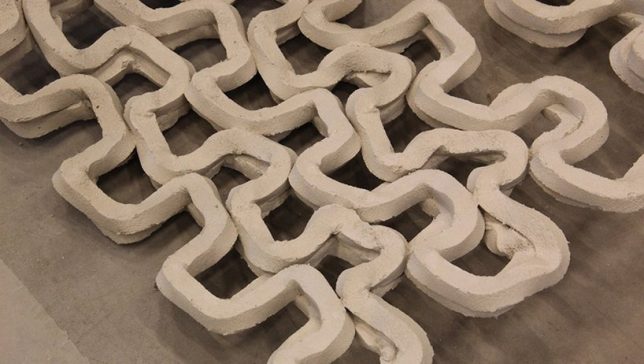
Concrete might typically be cold, hard, impersonal and impermeable, but treat it right and it’ll soften right up into surprisingly comfortable, accessible and usable everyday items, from pens and iPhone skins to rocking chairs and squishy-looking seating. Cast it from pillowy molds, 3D-print it in squiggles, brush it onto highly detailed objects, impregnate it into textiles or imprint it with delicate textures and you’ll have objects full of intriguing contradictions.

Concrete 3D Printer Enables Innovation

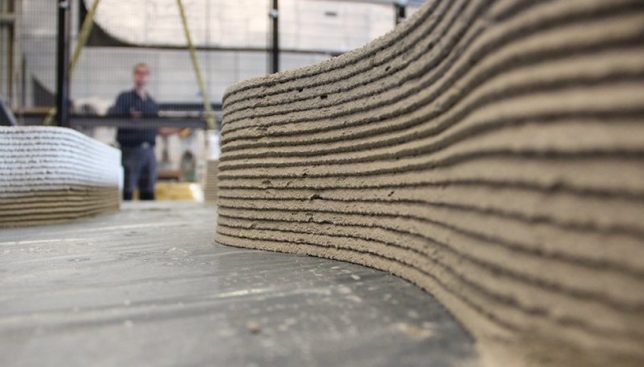
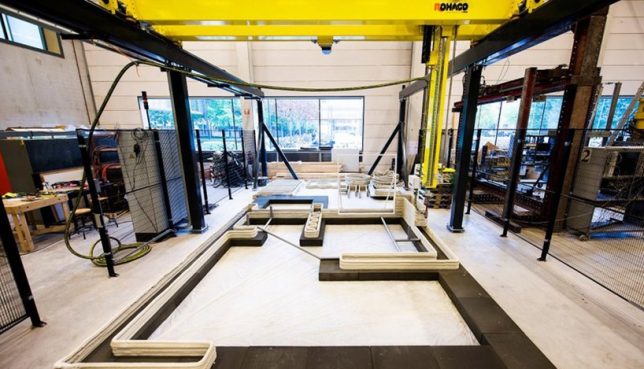
This 3D printer by Dutch company ROHACO spits out concrete in all manner of shapes, even squiggly lines, through a swivel head attached to a hose from a concrete mixer. Not only does this enable concrete to take unprecedented forms, it makes it possible to 3D print entire homes unsupervised, with the kinds of curves and details that would normally take an extraordinary amount of work.

3D-Printed Concrete Canoe

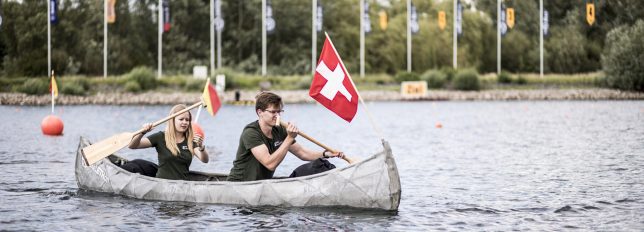
3D printing with concrete makes it possible to produce things like the skelETHon 3D printed concrete canoe, which won first place at the 16th Concrete Canoe Regatta competition in Germany. That’s right, it’s not even the first canoe to be made from concrete! The inner frame of this one is made of concrete reinforced with stiff steel fibers, while the shell is a two- to three-millimeter-thick waterproof concrete skin.

Concrete & Canvas Seating

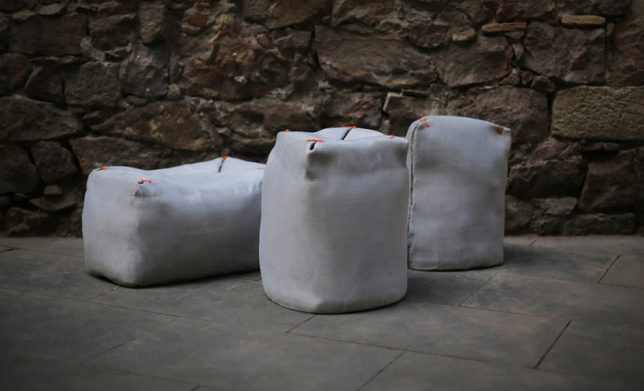
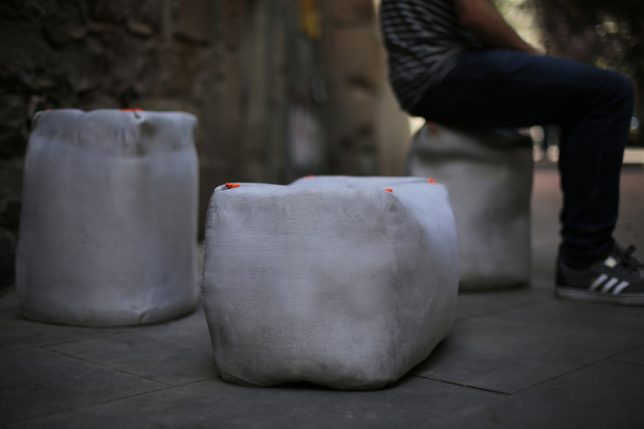
These objects are a bit of a contradiction: simultaneously appearing soft and hard. That’s because they’re both, technically. ‘Fabric’ is an outdoor seating collection by Miriam Estévez, wherein soft fabric poufs are soaked in a liquid concrete and allowed to dry in order to create a surprisingly strong, durable, waterproof result.

Traditional Chair Covered in Concrete

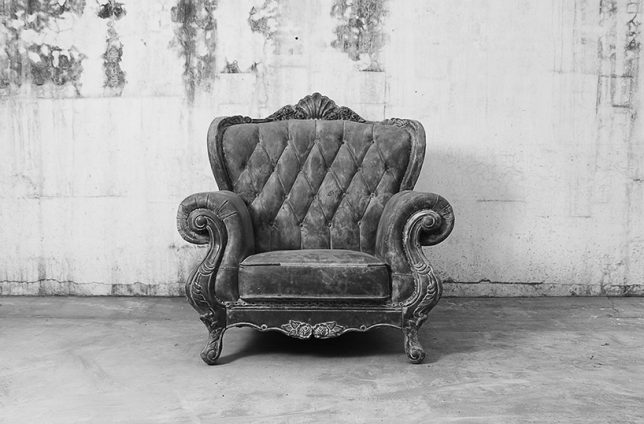
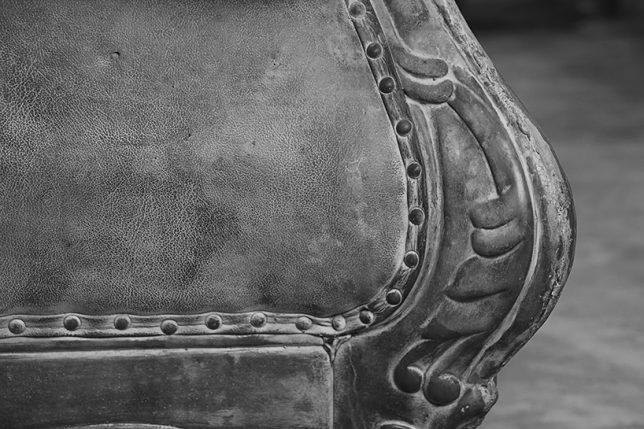
You might imagine that someone took a mold of a traditional chair and then cast it with solid concrete, producing the detailed form you see before you. The truth is actually much simpler. Bentu Design teamed up with Guangzhou fine arts students to carefully cover an existing chair with concrete mixture, making sure to preserve every detail, from the scallops along the wooden frame at the top to each individual upholstery nail.

Delicate Persian & Islamic Patterned Tables

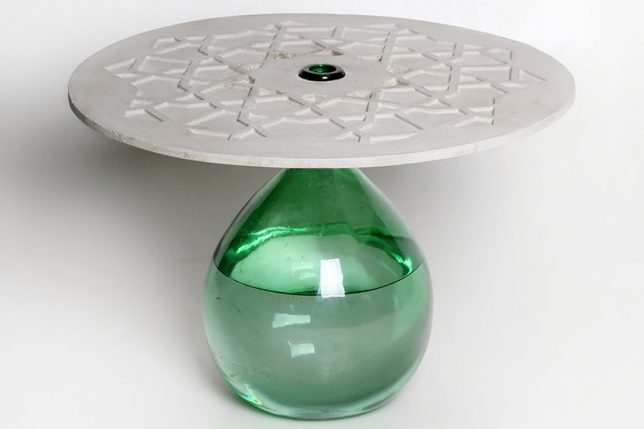
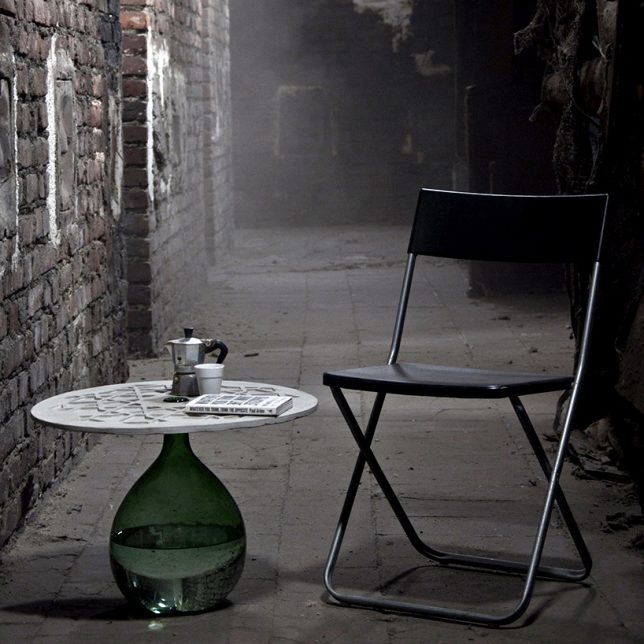
Concrete doesn’t take on the adjective ‘delicate’ easily, but every now and then, something qualifies. This disc-shaped tabletop, just a few millimeters thick, balances on the neck of a water-filled jug to form a beautiful recycled coffee table. Milan-based design studio Daevas printed the top with a traditional Persian pattern.

Next Page – Click Below to Read More:
Concrete Like Youve Never Seen It 15 Unexpected Furniture Object Designs

Share on Facebook


[ By SA Rogers in Design & Furniture & Decor. ]

[ WebUrbanist | Archives | Galleries | Privacy | TOS ]


WebUrbanist

 
Comments Off on Concrete Like You’ve Never Seen It: 15 Unexpected Furniture & Object Designs

Posted in Creativity


Snapseed app updated with new interface and presets, adds perspective tool to iOS

20 Sep

Google has just pushed out an update to Snapseed, the popular mobile image editing app for iOS and Android. The update (version 2.18) is for both versions of the app, and offers users on both mobile platforms a new interface and 11 new image presets. Additionally, the iOS update has brought the app’s Perspective Tool to Apple’s mobile devices, enabling users to adjust the horizon and “skewed lines” using their iPhone or iPad.

The update was announced on the Google Plus Snapseed page, where the team explained that Snapseed 2.18 is redesigned to make accessing features more efficient while speeding up the overall editing process. The new interface, meanwhile, moves Looks to the main screen, a feature that enables users to save their favorite edits so they can be applied to multiple other photos quickly.

Other changes are minor, and include switching the app from a dark to a light theme, as well as making certain tools and the export function accessible in a menu at the bottom of the display while editing. Both the Android and iOS updates are available now through the Google Play and iTunes App Stores, respectively.

Articles: Digital Photography Review (dpreview.com)

 
Comments Off on Snapseed app updated with new interface and presets, adds perspective tool to iOS

Posted in Uncategorized


How to do High-Speed Photography – the Fundamentals

20 Sep

What is high-speed photography?

High-speed photography is capturing the moments that happen in a fraction of time which you can’t see with the naked eye, like a bursting balloon or a splash of water. This photography is different from other kinds because it requires almost 1/20,000th of a second exposure time to freeze these moments. Most DSLR cameras don’t have such a high shutter speed, so how can you take these kinds of shots? In this article I will explain how to do high-speed photography.

Dancing Colors - Fundamentals of High-Speed Photography

What camera and lens do you need?

Let’s talk about the gear you need for high-speed photography first. Of course, you need a DSLR camera and the good news is that any DSLR will work. If you have any other camera that has manual controls, it will also work fine. Next is the lens and just like the camera, any will work. I use a 100mm macro lens for close-up shots like liquid sculptures and a 24-70mm zoom for balloon shots.

The only lens requirement is that the focal length should be long enough so that you have sufficient distance between your camera and the subject, to keep your gear safe from colors and water splashes. I found that 100mm macro is the best lens as it has 1:1 magnification so you can fill the frame with your subject. Because of the 100mm focal length, your camera will also be far enough from the subject.

Punch - Fundamentals of High-Speed Photography

Other equipment needed

Next, you need flashes and you need a lot of them. In some shots, I’ve even used four flashes together. The next requirement is a tripod because you need to do lots of work simultaneously, so it’s better that camera is fixed on the tripod. You also need a shutter release cable or remote to release the shutter.

Have patience

The most important requirement for this kind of photography is practice and lots of patience. Sometimes you’ll take hundreds of shots and none of them will be good, and you may think that it’s not your cup of tea. But don’t give up, as with practice and patience you can get desired results easily.

When I was trying to take following water drop shot, it took me almost 3 months and over 3,000 shots to get my first accurate shot. Eventually, I discovered a trick that made everything easy for me. I’ll share that trick later in this article so keep reading.

Fundamentals of High-Speed Photography

Get a helper as well

You may also need an assistant as you have to do lots of tasks all at the same time, and you can’t do everything on your own. Also, there will be a lot of mess after your shoot and it’s very boring to clean it up all alone. Last but not least, you need to find some creative hacks. For example, for “Dancing Colors” shots I made this setup using a soap dish, a plastic pipe, a black swim cap, some Velcro and fixed this in the air vent of the subwoofer of my computer speakers.

Fundamentals of High-Speed Photography

Along those lines, one day I also discovered that it’s much easier to fire flashes instead of releasing the shutter to capture an accurate moment. So I used some wire and a push button switch to make a switch to fire the flash manually.

Camera settings

Before we talk about camera settings, I am going to reveal a shocking truth. Are you ready for this? Okay, the reality is that camera shutter speed doesn’t matter in high-speed photography. In fact, in this image, my shutter speed was 1/10th of a second.

Fundamentals of High-Speed Photography

What, have I lost my mind? I just wrote that you need 1/20,000th of a second to freeze the moment and now I am saying that shutter speed doesn’t matter. Relax, I’ll explain everything.

In such photography, we usually shoot in a dark room with a narrow aperture and using bulb mode. We open the shutter and fire the flash at the right time to expose the image. So, regardless of whether the camera shutter speed is 1/10th or 1/250th, the exposure time is only when the flashes fire (for the duration of the flash).

Color Injected in Water Fundamentals of High-Speed Photography

Color injected into water.

Hence, these are the camera settings required:

  • Camera mode: Bulb
  • Aperture: f/11 – f/16
  • ISO: 100 – 400
  • Focus: Manual
  • Flashes with the lowest power setting possible.

Why do you need to use your flashes on the lowest power setting? Because that will give you the shortest flash duration. If you fire a flash on full power the flash duration is around 1/1,000th of a second. But at 1/128th power, it comes down to almost 1/35,000th of a second, which will freeze the subject completely.

Color Injected in Water Fundamentals of High-Speed Photography

Color injected into water.

Work flow

Set your camera on a tripod with a shutter release cable. Set the lowest possible ISO, go for 100 and increase it only if you don’t have enough flash power. Then, set the aperture between f/11-f/16, focus manually, and leave the camera. Now you need to train someone to press the shutter release button on your mark and release it as soon as the flash has been fired.

Your job is to do the action using one hand (like bursting the balloon, playing the beats or releasing the water drop) and fire the flashes using a switch at the perfect moment. You’ll need some practice but eventually, you will do it accurately.

Fundamentals of High-Speed Photography

Points to remember

Shoot in dark room: You should always shoot in a dark room as you are using bulb mode and sometimes your shutter speed will come down to 1/10th or 1/5th. So, if the light in the room is bright, it’ll affect the shot. The room should only have a small (low) light source so that you can see everything.

Small Aperture: Always shoot between f/11 – f/16 so you can get deep depth of field and everything comes into focus. Also, with a narrow aperture, the ambient light won’t affect the shot as much.

Made For Each Other - Fundamentals of High-Speed Photography

Manually Focus: Manual focus is a must as a camera can’t focus in the dark and you may miss the action if the camera keeps attempting to focus.

Flashes: Use the lowest power and slave mode on your flashes so you don’t need to attach all the flashes using wires. With slave mode, you need to fire only one master flash and the others will fire automatically.

The secret trick

Liquid Sculpture Fundamentals of High-Speed Photography

Now sit back and relax, because I am going to reveal a super easy way that you can shoot high-speed photography and get such pictures without much effort. Your chances of getting an accurate shot will increase tenfold. Are you ready?

The secret is to use burst mode on your camera. Set your camera to high-speed burst mode. You also need to change the camera mode to manual and the shutter speed to 1/125. Plus, you need to attach your master flash to the camera so that it’ll fire with the camera simultaneously.

Now when you press shutter release button, the camera will start taking photos and keep clicking until you release the button. Depending on your camera model, it will click between four to 10 shots per second.

Water Galaxy - Fundamentals of High-Speed Photography

With one hand, press the shutter release button and with your other hand do the action. Once the action is finished, release the button. By using this trick, you can get your first perfect shot in just 5-6 trials.

Conclusion

High-speed photography is a lot of fun. It can be tricky to get right. But don’t give up, keep trying until you get the desired results and share your photos in the comments below.

Refraction Fundamentals of High-Speed Photography


The post How to do High-Speed Photography – the Fundamentals by Ramakant Sharda appeared first on Digital Photography School.


Digital Photography School

 
Comments Off on How to do High-Speed Photography – the Fundamentals

Posted in Photography


Lens Rentals test shows all circular polarizing filters work great, price doesn’t matter

20 Sep
Photo: Roger Cicala/Lens Rentals

Our friend Roger Cicala over at Lens Rentals is at it again: buying up super expensive optical testing equipment because someone asked him why LR carries the circular polarizing filters they do. The answer, until now, was simple: make the expensive one on the market their high-end rental, and the cheapest one their “basic.” But is there really any difference?

That’s what Roger set out to figure out, and the answer might save you a little bit of cash.

You can read the full post and see all of the detailed results on the Lens Rentals blog, but the most surprising and positive conclusion was this:

All circular polarizers, regardless of price, are 99.9% effective at polarizing light.

Translation: if you’re looking for a circular polarizer because … well … you want to polarize light then save your money because the cheaper ones work just as well as the more expensive ones.

In addition to their ability to do what they say they do, Cicala and LR team tested CP filters for overall transmission (how much light to they let through) and transmission by wavelength so you can see what effect each filter has on the colors your camera sees. Check out the results here.

Articles: Digital Photography Review (dpreview.com)

 
Comments Off on Lens Rentals test shows all circular polarizing filters work great, price doesn’t matter

Posted in Uncategorized


The Profoto A1 is the ‘world’s smallest studio flash’ and Profoto’s first on-camera flash

20 Sep

$ (document).ready(function() { SampleGalleryV2({“containerId”:”embeddedSampleGallery_4235413921″,”galleryId”:”4235413921″,”isEmbeddedWidget”:true,”standalone”:false,”selectedImageIndex”:0,”startInCommentsView”:false,”isMobile”:false}) });

As expected after last week’s photo and specs leak, lighting manufacturer Profoto has launched an on/off camera flash unit called the Profoto A1. But if you were expecting a simple speedlight, Profoto is definitely branding this as more powerful than that. In fact, they’re calling it “the world’s smallest studio flash.”

The new A1 is styled much like most on-camera flash units, but is equipped with the powerful features of a Profoto studio head. The 76Ws unit uses a lithium ion battery that is claimed to be good for up to 350 full power bursts and which charges in under 80 minutes. Profoto also says that the A1 recycles “four times faster than other on-camera solutions,” as it can emit a full power pop every 1.2 seconds.

A stand-out feature of the A1 is its circular lens, which is said to produce light that is “natural and beautiful with a pleasing soft-smooth fall-off.” The rim of that circular lens housing is also magnetic, and accepts a range of clip-on modifiers that can be changed quickly and easily. The head offers a manually operated zoom function and the rear display is large and easy to read.

The A1 heads are equipped with Profoto’s Air Remote TTL system so they can work in groups alongside other A1 heads or any other Air Remote studio heads from the Profoto studio head range. Finally, the A1 offers variable power over 9 stops in both standard and HSS modes, and includes an LED modeling light for previewing the effect of the flash or using on its own as a light source.

The A1 is currently compatible with Nikon and Canon systems, and will be with Sony models in the future… but it doesn’t come cheap. As previously reported, the Profoto A1 will cost you $ 995 USD… quite the pretty penny when you compare it to some of the full-featured speedlights other options out there from brands like Godox.

For more information on the Profoto A1, visit the Profoto website or watch the introductory video below.

Press Release

The world’s smallest studio light

The Profoto A1 might be the smallest flash we’ve ever made, but it’s still built to the same impossibly high standards we’ve set ourselves over the last fifty years.

Our focus with the A1 was to create a flash that delivers a truly high quality of light, which is why it features a round head which delivers light that’s both natural and beautiful with a pleasing soft-smooth fall-off, that blends seamlessly with the ambient light.

Thanks to a smart magnetic mount built into the head, light shaping tools and modifiers can be clicked on and off quickly and easily. Within seconds you’re being creative with light, shaping it. It also has a zoom function that allows you to make fine adjustments to the spread of light by simply twisting the zoom ring on the head, and for accuracy it has a modeling light built-in to the head – so you can see what you’re going to get before you press the shutter.

We made it our mission to make A1 the first on-camera flash that’s easy to use from the box. The user interface is simple and intuitive with a large high-contrast display at its center. The less time you spend learning and fiddling, the more time you’ll spend shooting. And that’s ultimately what counts. Despite its size, or lack of it, the A1 punches above its weight in a good number of key areas.

Battery life is key when a photographer is right in the thick of the action, because the last thing they need to have to stop mid flow to change the batteries. The A1 has its own Li-ion high capacity battery built-in which lasts up to four times longer than AA batteries with no performance fade. So, you can shoot for longer with confidence.

And this is a flash that can keep up with you because it recycles four times faster than other on-camera solutions – that’s every 1.2 seconds at full power. Put simply, you’ll never miss a shot.

And while it’s true to say the Profoto A1 is our very first on-camera solution it’s also just as effective off-camera as a standalone unit, and integrated into a larger system of lights. That level of versatility is possible because Air Remote is built-in, which means the A1 offers seamless connectivity with freestanding lights like another A1 or bigger Profoto lights like the B1X.

And with AirTTL you’ll get a perfect exposure super-fast. Better still, you can lock the exposure with a single ‘click’ while still being free to fine tune that exposure in manual, giving you even greater control.

So, this is so much more than our smallest flash yet. This is shooting on the move, shooting with confidence and shooting with light shaping excellence. This is shooting off-camera and for the first time with Profoto, on-camera. This is the Profoto A1 – the world’s smallest studio light.

Articles: Digital Photography Review (dpreview.com)

 
Comments Off on The Profoto A1 is the ‘world’s smallest studio flash’ and Profoto’s first on-camera flash

Posted in Uncategorized


This is the story behind that tragic, viral photo of a seahorse holding a Q-tip

20 Sep
Photo by Justin Hofman

When photographer Justin Hofman snapped this photo while snorkeling off the coast of the Indonesian island of Sumbawa in 2016, he couldn’t have guessed the environmental impact the snapshot would have. A year later, the photograph is a finalist in the Wildlife Photographer of the Year competition, and has been dubbed “the poster child for today’s marine trash crisis.”

Hofman is based out of California, but he travels all over the world leading wildlife expeditions. This photo was captured on one-such expedition in Indonesia.

He was gleefully watching this seahorse bounce from natural object to natural object, hitching rides on the current, when something changed. Here’s a piece of the official image caption:

“As the tide started to come in, the mood changed. The water contained more and more decidedly unnatural objects—mainly bits of plastic—and a film of sewage sludge covered the surface. The seahorse let go of a piece of seagrass and seized a long, wispy piece of clear plastic. As a brisk wind at the surface picked up, making conditions bumpier, the seahorse took advantage of something that offered a more stable raft: a waterlogged plastic cotton swab.”

When Hofman shared the photo on his Instagram account last week, it received over 17K likes and 1,100 comments, but it’s a photo he wishes didn’t exist. “This sea horse drifts along with the trash day in and day out as it rides the currents that flow along the Indonesian archipelago,” he wrote on IG. “This photo serves as an allegory for the current and future state of our oceans.”

A post shared by Justin Hofman (@justinhofman) on

As for capturing the photo itself, we asked Hofman if he would like to share anything with our audience of photographers directly. This is what he had to say:

The thing I would really like to tell photographers is to a) Listen to your gut and b) Don’t worry so much about gear.

If you look at this encounter, on paper it doesn’t really make that much sense: I captured a photo of a 1 inch sea horse using a 35mm lens (16-35mm). Most people, if you had told them of the scenario would say to bring a macro lens. But I never have a macro lens on my camera. I am always afraid that a whale will swim by while I have a 105mm on, which would make it worthless. If I am unsure or just goofing off, I will always bring with me the most flexible lens I can. This ensures that whatever comes by, I have given myself the best opportunity possible to capture the moment.

Of course there will always be sacrifices, but the flexibility is key. If I had had a macro lens, I can 100% assure you that this photo would not have been possible because we were both bobbing around too much to make a sharp macro shot possible. Even with a 35mm, I only have a handful of photos that are actually in focus.

And in case you are curious about gear, he also shared that the photo was taken with an A7R II and Sony 16-35mm F4 lens in a Nauticam housing with a Sea and Sea 240mm dome and two Sea and Sea ys-d1 strobes.

To see more of Hofman’s work, be sure to visit his website or give his account a follow on Instagram. And if you’d like to learn more about ocean conservation, Justin suggests you visit SeaLegacy.org.


Photo by Justin Hofman and used with permission.

Articles: Digital Photography Review (dpreview.com)

 
Comments Off on This is the story behind that tragic, viral photo of a seahorse holding a Q-tip

Posted in Uncategorized