RSS
 

Archive for August, 2017

Marketing isn’t a dirty word (but camera companies are not your friends)

06 Aug
Marketing departments work to develop products that people will want. They aren’t always trying to make the best product for you, though.

Camera companies are not your friend but they’re also not trying to trample on your dreams. It seems like an obvious statement, but a misunderstanding of how markets and marketing work sometimes leads to exactly this sort of misconception. A look at the role marketing plays can help explain why ‘your’ brand sometimes makes decisions you hate.

Making a profit is not the same as profiteering

Brand loyalty sometimes prompts people to forget that every significant camera company is a large, profit-driven corporation. The fact that they make tools for a very personal, expressive, creative purpose and are often staffed by people who really care about photography (even in the marketing departments), shouldn’t obscure the fact that they’re trying to make money. But that isn’t the same thing as profiteering: it’s in their interest to make products that you want. And it’s the marketer’s role to work out what that product would be.

Marketing isn’t the enemy

Product development isn’t about virtuous engineers who create lovely things and evil marketing people who take them away. It’s usually a back-and-forth to create models that suit a specific audience without overwhelming them with tools and features they don’t necessarily want or producing cameras they can’t afford.

It’s true that, without the input from marketers, engineers can produce Formula One race cars. However, most people find a Ford Focus, Honda Civic or BMW 3 Series much more affordable and considerably more convenient for collecting the weekly shop. Still, if you wait long enough, some of that Formula One know-how may well make an appearance in your family hatchback.

It’s a process called market segmentation: identifying large enough groups of people with similar enough needs and disposable income, then making models specifically for them. If you get it right, you end up with a range of cameras that appeals to a broad range of people and makes it obvious to each buyer which model is best for them. Most of us aren’t racing drivers, after all.

It might not be for you

The upshot of this is that not every model is aimed at you. You may have read my car analogy and found yourself thinking ‘I’d never drive a Ford Focus.’ But, whether that’s a matter of taste or because it doesn’t suit your needs, this doesn’t mean the Focus isn’t a good product.

It is common to assume that your needs are universal or, at least, typical. However, just because you find a feature to be indispensable doesn’t mean that everybody else does. It follows then, that a company may not be wrong to remove it. So before you find yourself stating “no xxxx, no sale,” it’s worth thinking whether the product in question is aimed at you and whether it might be a good fit for other people. It could be that the sale to you was never expected.

Just because you find a feature to be indispensable doesn’t mean that everybody else does

For instance, there are a lot of people who are very vocal about the absolute necessity of viewfinders, but if you look back to the days when people actually bought compact cameras, you’ll notice that the majority of them didn’t have one. Most manufacturers would offer one or two models simply to capture the refusenik dollar, but the vast majority of users bought the cheaper model without one and did the same when replacement time came around.

D7500: desirable or debacle

The D7500 is a great example of the challenge of market segmentation. By resuscitating its high-end Dx00 line, suddenly the D7200 successor has to fit between two models rather than sitting as the best APS-C camera Nikon offers. Cue cries of outrage from people who decide that the features omitted to squeeze it into the gap were absolutely essential. To them.

Nikon reintroducing its high-end Dx00 series, means the D7500 is targeted at a slightly different group of people compared with its predecessor.

Nikon will have done its market research and presumably it’s concluded that most D7x00 users don’t want, need or use a second card slot or lenses that need metering tabs. It may also have concluded that most users who still want these features will either also want/need the other additional features that the D500 offers and will, however grudgingly, pay the extra money to step up, or decide that they can, regretfully, live without them and buy a D7500 anyway. After all, companies don’t try to pitch their products at the price you want to pay, they set them at the amount you’re willing to pay.

Companies don’t try to pitch their products at the price you want to pay, they set them at the amount you’re willing to pay

The other way of looking at it, of course, is that the D7500 is a faster camera than the D7200, with a bigger buffer and 4K video capability as well as some AF upgrades. So there are likely to still be plenty of people who’d never buy a D500 but who will find the D7500 offers them an awful lot of camera at a price they’re willing to pay, just as the D7200 did before it.

This isn’t to say marketing departments and market are always right, though. Confuse the customer or play things too conservatively, and you risk your company’s whole future.

Getting the message across

A clear example of unclear messaging is Sony’s a6x00 series. With its a6000, a6300 and a6500, Sony makes three fairly different cameras for fairly different users, yet there are lots of people confused about which models ‘replaces’ which and how Sony can justify apparent price increases.

The problem seems to be that the physical similarities and the naming convention are enough to convince some people that they are successive, rather than complementary, sister models. Step back and look at the pricing and the differentiation of feature sets though. The a6000 is the mass-market, circa $ 700 model. For a bit more money you get a better viewfinder, 4K video and faster shooting in the a6300. Then, at an even higher price point, you get the in-body stabilization, touchscreen control and deeper buffer of the a6500.

The pattern isn’t so different from that of Nikon’s D5x00, D7x00 and Dx00 series, or Canon’s 77D, 80D, 7D Mark II lineup, yet it’s one that causes a lot more angst and uncertainty.

Canon, competition and complacency

Then there’s the behavior of Canon, which is often criticized for making ‘uncompetitive’ models. Don’t they get it?

There’s something to these charges, perhaps. Companies with less market share will try to cram extra features in or set more aggressive prices to catch the eye of customers who’d otherwise gravitate towards market leaders. There isn’t the same pressure on the market leader to do the same.

People may decry the Rebel series as being dull or underspecced, but they’re a good enough fit for their target audience that Canon still sells a bucket load of them, irrespective of whether another brand offers a better feature set or that a mirrorless camera might be more convenient. And for many of their users, they are very good cameras.

But there’s risk in such caution. Ignore your smaller competitors for too long and you risk discovering they’ve eaten your lunch. While I’d take Sony’s claims of being number 2 in ILCs with a fair amount of salt*, it’s fair to say that the company that brought you the Walkman and the Playstation is also making significant inroads into the high-end camera market.

I don’t believe the continued absence of 4K from most of Canon’s models is purely a question of market segmentation. Or of complacency.

It seems unlikely to me that Canon hasn’t noticed this, which is why I don’t believe the continued absence of 4K from most of its models is purely a question of market segmentation. Or of complacency. Yes, Canon wants videographers with a project budget to buy into its Cinema EOS system. But the absence of 4K across much of the company’s lineup and the heavily cropped, yet still rolling-shutter prone, implementation on the EOS 5D IV (a camera nominally targeted at video shooters) suggests the company is also facing technological challenges in providing it.

The EOS 5D Mark IV (now available with Log gamma) is Canon’s most video-centric DSLR and yet its 4K capture is somewhat limited by significant rolling shutter. It seems extremely unlikely that this has been done with an eye on Cinema EOS sales.

Similarly, I doubt that Canon intentionally held back the dynamic range (DR) on the EOS 6D II to push people to buy the EOS 5D IV. It’s much more likely that it was cheaper to iterate on an existing design or to spread the cost of an older, coarser production line over one last generation of sensors because they don’t think the end user will mind. Or, at least, not enough to stop them buying the camera.

It’s worth not making the mistake of thinking that one brand must to offer a feature just because its rivals do.

As we tried to stress in our write-up, DR is not the sole significant factor in image quality, and the addition of Dual Pixel AF will represent a major benefit to a lot of 6D II buyers. So it’s worth being careful not to fall into the ‘no xxxx, no sale’ trap or making the mistake of assuming that one brand must offer a feature or capability just because its rivals do. Maybe the vigorous defenders of Canon’s honor are correct. Maybe the 6D II will be good enough, given the camera’s price. The alternative is that more competitive rivals will step in and dislodge the Canon from its dominant position. Ultimately, the market will decide.

You can’t always get what you want…

It can be frustrating to watch a camera company create products that don’t quite fit your need, worse still to see another brand offer something that’s closer to what you want, especially if you have enough money tied up in lenses to preclude swapping system or when it means having to spend more money to get the feature you want.

However, let me make a suggestion. Think about the camera you owned five or ten years ago, what it could do and how much it cost. Now have a look at the one you currently own.

If you feel that your current camera is a better match for your needs and skills than the one it replaced, that’s thanks to, not in spite of, the efforts of the marketing department. And, with this thought in mind, why not wander outside and make use of that capability? Because that’s what the engineers and marketers were all working towards.


*I’m not questioning whether the claim is true, just querying its significance. Outselling Nikon in terms of value of sales over a very select period, immediately after a stretch of not being able to supply cameras, when you’ve released several high-value cameras much more recently isn’t quite the same is saying “Sony is #2 now.”

Articles: Digital Photography Review (dpreview.com)

 
Comments Off on Marketing isn’t a dirty word (but camera companies are not your friends)

Posted in Uncategorized


Plug & Plop: Urban Add-Ons Turn Street-Side Bollards into Seats & Tables

06 Aug

[ By WebUrbanist in Design & Furniture & Decor. ]

Designed to act as barriers, bollards are a common sight in cities around the world — but what if they could engage rather than just separate?

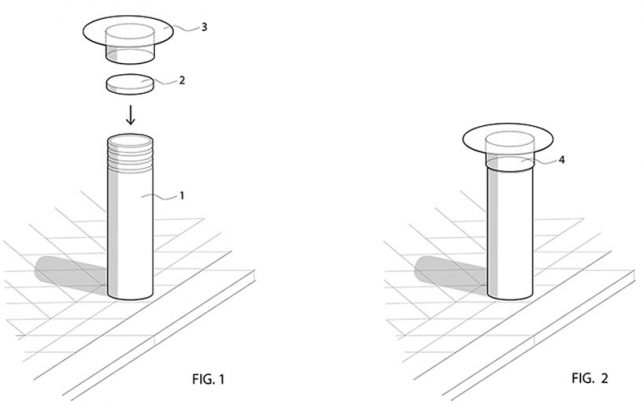
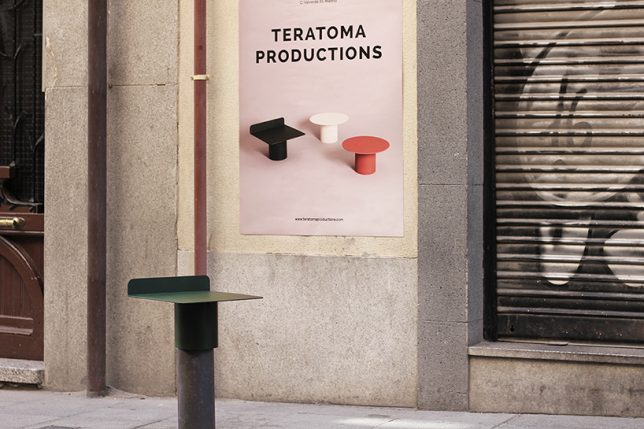
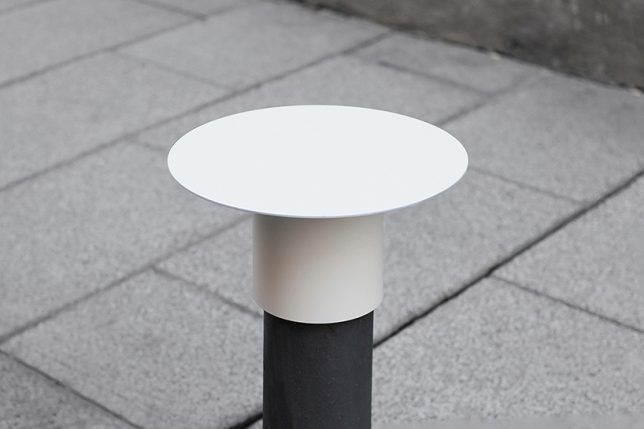
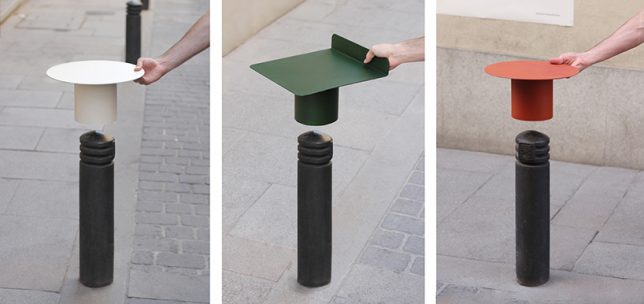
This series of simple additions from Teratoma dubbed PLUG A SEAT aim to transform (or at least extend) the function of the bollard, converting rows of columns into arrays of seating and table space.

The lacquered aluminum surfaces add a bit of color along with functionality, and have a variety of potential applications — they could be affixed permanently, or added temporarily by individuals eating lunch downtown, or deployed during street festivals.

These extenders can also be sized to fit different dimensions of bollard for different metropolitan areas (though one might hope that a future iteration could be able to expand and contract on demand).

In the grander scheme, these kinds of simple guerrilla furniture designs highlight potential new uses for old extant infrastructure. And who knows: maybe bollards will start to lose their original function as self-driving cars take to the streets, but instead of being removed could find second lives serving other purposes.

Share on Facebook


[ By WebUrbanist in Design & Furniture & Decor. ]

[ WebUrbanist | Archives | Galleries | Privacy | TOS ]


WebUrbanist

 
Comments Off on Plug & Plop: Urban Add-Ons Turn Street-Side Bollards into Seats & Tables

Posted in Creativity


Video: First hands-on with the modular RED Hydrogen One holographic smartphone

06 Aug

The $ 1,200 RED Hydrogen One smartphone with its holographic display and modular design wowed the world when it was announced last month. And that wow-factor only increased when people stumbled across RED’s patents for this intense little camera phone. Unfortunately, the initial render, press release, and those patents was all we had to go off of … until now.

Well-known YouTuber Marques Brownlee was given an exclusive first-look at RED’s prototypes of the Hydrogen One, and he’s sharing that first look with the world in the video above.

The RED Hydrogen One prototype next to an iPhone 7 Plus and an OnePlus 5. As you can see, it’s anything but small.

Brownlee got to look at three prototypes: a non-functional ‘fit-and-finish’ prototype that looks exactly as RED intends the final version to look (above), a prototype of the holographic display that he was not allowed to show on camera, and a prototype of the phone with a ‘Triplet’ lens mount module attached.

The first prototype was really all about the looks, and Brownlee had an interesting take on that. “It looks kind of like a Moto Z had a baby with a tractor,” he says. “It’s this part rugged, part modern look.” A look Brownlee actually quite liked.

The second prototype he wasn’t allowed to share on camera, but it’s the third prototype we’re most interested in, anyway. This is where things get really interesting for photo and video enthusiasts curious about how capable and modular this phone will really be. The third prototype features an attachment that adds a ‘sensor and lens mount’ to the smartphone.

Adding a sensor and lens mount to the phone makes it much thicker, but also has the potential to supercharge the Hydrogen One’s camera capabilities.

According to Brownlee, RED believes, “this can and will be the future of small form-factor cinema [cameras].” In fact, the company says the smartphone’s image quality “should only be surpassed by RED’s bigger cameras,” beating out mirrorless cameras and DSLRs if RED has their way with this phone.

At $ 1,200 for the phone by itself, and who knows how much for all of the modules and attachments required to get the RED Hydrogen One up to that caliber of image quality, it’s likely you’ll spend about the same amount of money on a cinema-capable Hydrogen One as you would on a cinema-capable DSLR setup… if not more. But if the quality is on par or better, why not get a really intense modular smartphone in the bargain?

I guess we’ll just have to wait and see how this phone evolves from prototype to full-fledged product. Speaking of which: RED expects to have their next prototype—a fit-and-finish version with the holographic display built in—ready in the next 30-45 days. They’re not dragging their feet.

Articles: Digital Photography Review (dpreview.com)

 
Comments Off on Video: First hands-on with the modular RED Hydrogen One holographic smartphone

Posted in Uncategorized


Venus Optics Laowa C-Dreamer 7.5mm F2 for Micro Four Thirds sample gallery

06 Aug

$ (document).ready(function() { SampleGalleryV2({“containerId”:”embeddedSampleGallery_2901085478″,”galleryId”:”2901085478″,”isEmbeddedWidget”:true,”standalone”:false,”selectedImageIndex”:0,”startInCommentsView”:false,”isMobile”:false}) });

Laowa is one of the brand names used by Chinese manufacturer Venus Optics. We previously encountered Laowa when we produced a sample gallery of the full-frame Zero-D 12mm F2.8 – a lens that claims zero distortion and has exceptionally well corrected barrelling for any focal length let alone one with such a dramatic angle of view. This 7.5mm F2 lens is designed for Micro Four Thirds cameras and makes no such distortion claims, but is one of the widest focal lengths for the system and certainly stands out for its combination of wide angle and wide maximum aperture.

The lens is small but weighty, its solidity lending it a feel of a product well made. It is actually very nice to use, focuses smoothly and its 46mm thread means filters can be used – with care. It is manual focus, with the infinity setting at the left of the scale as you look down from the shooting position. The aperture ring doesn’t unclick and offers the smallest space between the penultimate F16 and ultimate F22 settings. It has a depth of field scale marked on the barrel along with distances, but I’m unconvinced that either is especially useful.

These sample images have been made using the lens on the Panasonic Lumix DC-GH5.

See our Venus Laowa 7.5mm F2
sample gallery

$ (document).ready(function() { SampleGalleryStripV2({“galleryId”:”2901085478″}) })

Sample photoSample photoSample photoSample photoSample photo

Articles: Digital Photography Review (dpreview.com)

 
Comments Off on Venus Optics Laowa C-Dreamer 7.5mm F2 for Micro Four Thirds sample gallery

Posted in Uncategorized


Composition tips: simplification and negative space

06 Aug
Photo by Matthew Henry on Unsplash

Composition is about a whole lot more than the ‘rule of thirds’ or the ‘golden spiral.’ If you really want to understand what makes a photograph stand out, you need to dive deeper into the art of photography and photo composition… which is exactly what Ted Forbes did in this old episode of his aptly-titled YouTube channel The Art of Photography.

The episode was dug out of the archives by Fstoppers, and it was part of a larger series on composition, which is elaborated on in a blog Forbes was maintaining at the time called Composition Study.

But this episode in particular stands out, because it’s one of the deeper video dives out there on the subject of simplicity, minimalism, and negative space. Forbes starts with figure/ground relationships, and expands from that to explain how you create dynamism in a photograph, let your subject/figure breathe while drawing your viewers eye to that subject, and much much more.

Check out the full episode below, and then share your favorite minimalist composition in the comments down below:

Articles: Digital Photography Review (dpreview.com)

 
Comments Off on Composition tips: simplification and negative space

Posted in Uncategorized


Photo of the week: The Purple Hour

05 Aug

This image was shot in Myvatn, northern Iceland. I’d been shooting there for several years now, but this was the most magical I had ever seen it. The entire area was covered with fluffy frost and snow, created by a combination of fresh snow, high humidity and low temperatures.

The highlight was the snow-laden trees. After shooting a blazing red sunset with my northern Iceland workshop group, the colors subsided and a blue/purple sky, adorned by a full moon, remained above the trees.

The final image was focus-stacked from 2 shots captured with my Sony a7R and Canon 16-35mm F4L IS lens at 16mm, F11, 8sec and ISO100.


Erez Marom is a professional nature photographer, photography guide and traveler based in Israel. You can follow Erez’s work on Instagram, Facebook and 500px, and subscribe to his mailing list for updates. Erez offers photo workshops worldwide.

Articles: Digital Photography Review (dpreview.com)

 
Comments Off on Photo of the week: The Purple Hour

Posted in Uncategorized


Report: 45% of Leica is up for sale, and Zeiss is interested

05 Aug

Reuters is reporting that investment group Blackstone is “in talks with potential buyers” in an attempt to sell its 45% stake in Leica Camera, possibly to Zeiss. The other 55% of the company is owned by the Kaufmann family, who brought in Blackstone as a co-investor in 2011.

The report cites “people close to the matter,” who claim the investor has already teamed up with an investment bank and “held talks” with potential buyers, although the process hasn’t entered the bidding stage yet. Potential buyers include Zeiss and, more speculatively, Huawei, neither of whom would comment on the matter. However, Reuters’ sources said Zeiss would only be interested if it could acquire a majority stake in the company, something the Kaufmann family might not go for.

Speaking with Reuters, Leica chairman Andreas Kaufmann said his family “has long-term goals with Leica Camera,” long term meaning a 100-year timeline.

Last year, there was some talk of Chinese investor CDH buying out Blackstone’s stake in Leica, but no deal was struck. But it’s a new year, and Blackstone could earn a pretty penny for selling its stake in Leica. According to Reuters, the iconic camera brand is expected to report earnings “of roughly 70 million euros” this year at a valuation of around 700 million euros, or approximately $ 828 million USD.

You can read the full report at this link.

Articles: Digital Photography Review (dpreview.com)

 
Comments Off on Report: 45% of Leica is up for sale, and Zeiss is interested

Posted in Uncategorized


Opinion: The future of photography and the value of a free photo

05 Aug
Photo by Lionello DelPiccolo on Unsplash

Mikael Cho is the founder and CEO of Unsplash, a community where photographers can share their high-resolution photos for anyone to use for free—no credit or payment required. The platform has been criticized roundly by many professional photographers who claim the service devalues photography. In a recent blog post, Cho responded to this criticism, sharing his thoughts on the future of photography and the value of a photograph that is given away for free.

Mr. Cho has given DPReview permission to republish the article in full below.


We didn’t start Unsplash to reinvent an industry. We started Unsplash because we thought it might be useful.

Unsplash is a community where anyone can share high-resolution photos for anyone to use freely. It began as a Tumblr blog with ten photos we had leftover from a photoshoot. Instead of letting our photos sit dead in a hard drive somewhere, we thought it would be better if they were put to use to move other creative projects forward. A freelance designer could grab an image to pitch a mockup or demo. An entrepreneur strapped for cash could put a website up with a nice background photo to attract potential customers.

We believed the good from giving our images away would far outweigh what we could earn if we required payment or credit.

The power of photography

This proved true. By setting our images free, Unsplash turned into something much more meaningful than the hundreds of dollars we likely would have made selling them. Those first 10 photos photos have been seen 58 million times. Unsplash has become a community of over 20 million creators. People from all over the world have generously contributed over 250,000 photos, moving hundreds of millions of creative acts forward.

Unsplash photos mapping the world

Unsplash photos have not only helped designers and entrepreneurs create demos and websites but have been a source of inspiration for everyone from teachers to nonprofits to independent creators.

A few things made with Unsplash

Unsplash contributors share photography to make an impact so our aim has been to push the impact of their imagery like no other platform ever has. Today, a photo featured on Unsplash is seen more than a photo on any other platform. More than Instagram. More than the front page of the New York Times.

You don’t need to come with an audience or have an agent to be great on Unsplash. We bring an audience to you.

The Direct-to-Consumer Creator

As an independent designer myself, I understand you can’t do everything for exposure because exposure doesn’t pay the bills. But to completely dismiss the value of exposure doesn’t make sense either.

All artists need an audience to survive. Why do we spend time posting on Instagram if we don’t get paid for it? Because those posts build an audience over time.

In the last ten years, several platforms like YouTube, iPhone, Twitter, Instagram, SoundCloud, and Medium have enabled more and more of us to express and connect. Sometimes, this expression and connection is done for fun. For nothing but the purpose of creating. Other times it’s done to create an audience for something else. Filmmakers distribute trailers for free on YouTube to sell a movie. Musicians release free songs or entire albums on SoundCloud to sell concert tickets. Authors give free chapters and pour thousands of unpaid hours into blogs to sell a book.

New platforms don’t kill industries. They change the distribution.

Online platforms have opened up an opportunity for so many people to share their craft with huge audiences instantly. New platforms create a distribution channel and community we otherwise wouldn’t have. In this sense, there’s never been a better time to be a creator.

When two-time #1 New York Times best-selling author Tim Ferriss was blocked from distributing his book in Barnes & Noble, he uploaded excerpts from his book for free on BitTorrent to get distribution. Writer Leo Babauta “Uncopyrighted” everything on his popular blog, Zen Habits, in service of spreading his work further than he ever could alone. Chance the Rapper became the first artist to win a Grammy without selling physical copies of his album and giving most of his music away for free.

These examples of creators sharing in extreme ways didn’t produce any immediate monetary gain. In fact, they probably lost some sales from it. But whatever the losses, they were more than made up for by the outsized benefits that came from openly sharing their work. As Chance the Rapper said,

“I realized my strength was being able to offer my best work to people without any limit on it.

I make money from touring and selling merchandise, and I honestly believe if you put effort into something and you execute properly, you don’t necessarily have to go through the traditional ways.”

Unsplash is different though…

Unsplash seems like a beneficial platform for hobbyist photographers because hobbyist photographers make money elsewhere. But what about commercial photographers?

I get how Unsplash could seem more devaluing to a commercial photographer than other photo-sharing platforms because you’re giving up your copyright ownership of your photo when you share it. To get behind this argument though, we need to understand what photo copyright ownership gets us. The purpose of holding on to copyright for a photo is typically so you can protect it from someone else taking that photo and selling it for profit.

Before the internet, holding on to copyright for photos was more beneficial because the value in licensing a photo was high. The issue today is a licensed photo is losing its value. The price photo buyers are willing to pay to license a photo is accelerating downward. If you post your photos on a stock photo site, you’ll earn ~$ 511/year on average on your collection, half what you would make two years ago.

Data from Shutterstock

While almost everyone needs images to do their jobs today, the jobs we do with imagery are different from when photos used to be licensed by media buyers or photo agencies for commercial use. For example, almost 70 percent of the people who download images on Unsplash have never downloaded a photo from a stock photo site before. And the most common uses for Unsplash photos are presentations, blogs, or personal projects.

At the same time, the cost to produce a photo is going down. The five most valuable companies in the world today are all competing on the camera. While professional photography gear is still expensive, mobile cameras are improving at a rate that will eventually put a professional-level camera in everyone’s pocket.

Every 2 minutes, people take more photos than ever existed 150 years ago. There’s no doubt creating a great photo requires artistry but photography has become more saturated which means many photographers today are not contacted by people wanting to pay to use their copyrighted photos.

There’s more demand. There’s more supply. But it’s also different demand and different supply. The photo licensing business model doesn’t fit.

Photos as Relationship Makers

Most photographers have transitioned to using photos as tools to create relationships. Professional photographers use photos they took for fun to connect with potential clients. Potential clients enjoy the photos on your portfolio or Instagram, so they hire you for a photoshoot. Hobbyist photographers use photos to build an audience they can direct toward where they make a living or simply to practice their craft.

The human brain is wired to connect with imagery so imagery will always be something people seek out. Since photos work so well as a form of connection, we saw Unsplash as a more impactful way to do that. Giving up your copyright to a photo seems extreme but it’s this extreme level of giving that produces the unprecedented level of connection.

Recently, a team of researchers found the most shared articles from the New York Times were ones that gave readers practical utility. Giving someone something useful tends to have the biggest impact on people. When you pair two powerful things like giving and photography, you reach a whole new level of impact.

Many of our members have said they’ve gained so much from sharing work on Unsplash compared to anywhere else. Many have booked client work after posting just a couple photos. Some have been flown around the world on photoshoots. Some have gotten enough work to leave their jobs and become full-time photographers. Some have been able to build audiences for new products. And every contributor we’ve spoken to has enjoyed the impact their photography has made toward moving creativity forward. Here’s a few of their stories.

Yes, there will be people who use Unsplash photos freely who may have hired a photographer if Unsplash didn’t exist. But by giving photos, Unsplash contributors create a new opportunity for millions of other people to find their work.

If someone needs a photo for a presentation that will only be seen by a few co-workers, they don’t have a budget for photography. If they can’t use a free photo for that, they are not hiring someone. And there is no relationship created. But by finding a photo on Unsplash, a relationship begins. When they need to hire a photographer for a shoot, they’re more likely to go back to the place that fulfills that need. We’re trying to make it so these relationships connect back to the Unsplash contributor that inspired them.

We’ve already begun to build things into Unsplash to strengthen this relationship between photo contributors and the creators they inspire. We’re building up a library of things made with Unsplash to connect back to contributors. Just last month, we launched a “Say Thanks” feature which creates a way for people to publicly recognize the Unsplash contributor who gave the photo they downloaded. And we’ve begun work on an Unsplash member search to help our members book creative work.

In a sense, every Unsplash photo turns into a billboard for our contributors. And the future business model of Unsplash is about creating relationships through the unique attention and use each photo creates.

The future value in photography

By our estimates, there are potentially 100 times more people looking for usable imagery today, than a decade ago. Image use has moved mainstream which is why there’s a new opportunity for a business model that works better for everyone.

There’s no doubt about the impact of photography. Photos are powerful. The question is not if photography will maintain its power but how to create meaningful value from it. We’ve already begun to think about what this looks like. It’s going to take time to figure out. While we don’t have all the answers today, we will always be transparent and upfront about where we’re headed.

Every industry evolves. Things will change. We can’t be resistant to change no matter how much today’s world benefits us. We face the same fact that every artist and business must face: what we offer today will eventually be obsolete. We can choose to be upset with this fact or understand it is inevitable and continue to adapt.

If you do it right, you’ll be the one to disrupt yourself. You’ll be out in front of the pack. You’ll help determine the new value. That’s what we’re looking to do for photography. That’s what we’re looking to do for the creative community. We’re all in the same boat. When the creative industry benefits, we all benefit.

Articles: Digital Photography Review (dpreview.com)

 
Comments Off on Opinion: The future of photography and the value of a free photo

Posted in Uncategorized


The next iPhone may record 4K 60fps video with front camera

05 Aug

A firmware leak for the Apple HomePod has already revealed that the upcoming generation of Apple’s iPhone might use ‘SmartCam’ AI to adjust to different scenes on the fly. But that’s not the only gem developers have managed to dig out of the code. Further analysis of the source code has now found that at least one of the new models might also be capable of shooting 4K video at 60 frames per second on both front and rear cameras, making it the first smartphone to offer this video specification.

The function is mentioned in a section of code related to the HEVC, or H.265 video codec that will be included in both iOS 11 and macOS High Sierra, both due out this fall. HEVC is capable of maintaining high levels of image quality while using advanced compression algorithms to keep the file size down. This allows for 4K video capability to be installed in devices with limited storage or processing power.

Considering Apple’s current FaceTime front cameras only offer a 7MP stills resolution and 1080p video this would mean a huge jump in performance. The image sensor would need a bump in resolution, but presumably Apple’s new chipset will provide enough processing power to crunch the large amounts of data generated when shooting video at 4K resolution and fast frame rates.

Articles: Digital Photography Review (dpreview.com)

 
Comments Off on The next iPhone may record 4K 60fps video with front camera

Posted in Uncategorized


US Army abruptly stops using DJI drones due to ‘cyber vulnerabilities’

05 Aug

A leaked US Army memo obtained by unmanned aviation news site sUAS News is making some waves in the drone world today. In the memo, the largest branch of the United States armed forces called for its units to “cease all use, uninstall all DJI applications, remove all batteries/storage media from devices, and secure equipment for follow on directions.”

The decision was reached by the US Navy and the US Army Research Lab, which identified ‘operational risks’ and ‘user vulnerabilities’ in DJI’s products.

The memo does not go into detail regarding the specific vulnerabilities, saying only that,

Due to increased awareness of cyber vulnerabilities associated with DJI products, it is directed that the U.S. Army halt use of all DJI products. This guidance applies to all DJI UAS and any system that employs DJI electrical components or software including, but not limited to, flight computers, cameras, radios, batteries, speed controllers, GPS units, handheld control stations, or devices with DJI software applications installed.

DJI’s public relations manager Michael Perry responded to the news in an e-mail to sUAS News, saying the company was ‘surprised and disappointed’ that the Army didn’t consult DJI during the decision process. “We are happy to work directly with any organization, including the U.S. Army, that has concerns about our management of cyber issues,” wrote Perry, saying that DJI would reach out to the US Army to confirm the memo and better understand what they mean by ‘cyber vulnerabilities.’

To read the full memo and response, or dive a bit deeper into some of the cyber security concerns surrounding DJI’s products, head over to sUAS News by clicking here.

Articles: Digital Photography Review (dpreview.com)

 
Comments Off on US Army abruptly stops using DJI drones due to ‘cyber vulnerabilities’

Posted in Uncategorized