RSS
 

Archive for August, 2017

Video: How to edit photos in Lightroom with a PlayStation controller

12 Aug

Industrious photographer Ben Stewart has demonstrated an excellent way to edit photos in Adobe Lightroom: using a PS3 or PS4 wireless controller. The process, which Stewart explains in the video above, enables Lightroom users to quickly scroll through photos, select tools, and make image adjustments without ever touching their keyboard or mouse.

It quite literally turns curating and editing large photo shoots into a game, and once you get the hang of it, the technique has the potential to seriously speed up your workflow.

Stewart recently demo’d editing an image using a PS3 controller, which had been mapped to various Lightroom shortcuts, and he walks others through the process of setting up their own wireless controller system n the video. His process involves two pieces of software for Windows PCs, SCPToolkit and JoyToKey, though macOS users will need to use an alternative mapping application such as Joystick Mapper. And if, for some reason, you’re not a big fan of PlayStation, you can use wireless controllers from other companies as well.

Articles: Digital Photography Review (dpreview.com)

 
Comments Off on Video: How to edit photos in Lightroom with a PlayStation controller

Posted in Uncategorized


Cylinder House: This Residence is Just a Cluster of Glass Tubes

11 Aug

[ By SA Rogers in Architecture & Houses & Residential. ]

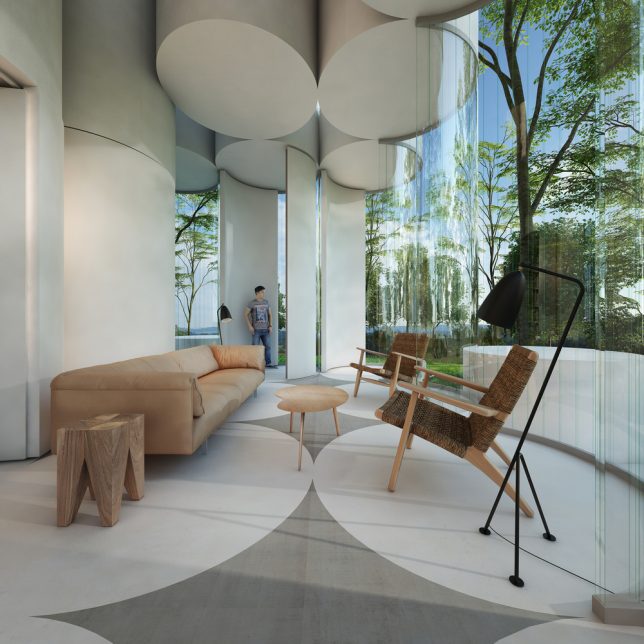
You know those glass tubes at the bank drive-through that shoot your deposits and withdrawals back and forth between you and the tellers? This house is like living in a cluster of them. Sadly, they’re not full of money, but it’s still pretty cool. ‘Cylinder House’ by lead architect Cyril Lancelin of the firm Town and Concrete is a modular glass residence in Lyon, France that can easily be expanded and rearranged without disturbing the trees around it by adding or subtracting one glass tube at a time.

Set on plinths, the tubes are narrow enough to allow for optimal malleability, conforming to the site. Some are taller than others, and some seem to hover above the landscape. The tubes can be fully open to each other, partially open or closed off altogether for smaller spaces. There are no walls or hallways inside other than the curving glass.

“The furniture marks space, but its movement can reinvent the house,” say the architects. “The plan is not fixed, to follow the evolution of the lives of these occupants. From the outside, the facades undulate… this system of cylinder juxtaposition allows to enlarge the house but also to have a blurred outer delimitation of the house with its context.”

The effect is definitely unusual when viewing the house from outside. As modular designs become more popular, their inventiveness only increases. It’ll be interesting to see how architecture as a whole is affected by the trend in the coming years.

Share on Facebook


[ By SA Rogers in Architecture & Houses & Residential. ]

[ WebUrbanist | Archives | Galleries | Privacy | TOS ]


WebUrbanist

 
Comments Off on Cylinder House: This Residence is Just a Cluster of Glass Tubes

Posted in Creativity


DJI launches Phantom 3 SE entry-level camera drone

11 Aug

DJI has added a new drone model to its portfolio. The DJI Phantom 3 SE is targeted at beginner pilots and offers a flight time of 25 minutes. A key differences to the standard Phantom 3, is that the SE features a vision positioning system that lets the drone hover and fly in a stable manner indoors or in areas without connection to GPS satellites.

The SE model also offers a video transmission range of up to 2.5 miles versus only 0.5 miles on the Phantom 3, and records video in 4K resolution at 30 frames per second compared to the standard version’s 2.7K footage.

In still image mode the camera can capture 12MP images, with the lens offering a 94-degree field of view. Other key features include flight speeds of up to 35mph and the capability to return automatically to a recorded home point when the battery levels of the drone or the remote controller get too low.

The DJI Phantom 3 SE is available now for $ 600. More information and detailed specifications are available on the DJI website.

Press Release

DJI Phantom 3 SE Now Available in Select Markets Worldwide

DJI has announced the availability of its final model in the iconic Phantom 3 product line with the Phantom 3 SE camera drone.

The Phantom 3 SE features several improvements over its predecessor, the Phantom 3 Standard, including the ability to record 4K ultra high-definition video, and a Vision Positioning System for precise navigation and flight stability. It also has an improved dual-band Wi-Fi remote control with a transmission range of up to 2.5 miles delivering over four times the range of the Phantom 3 Standard.

The Phantom 3 SE is available in select markets worldwide on store.dji.com and through DJI Authorized Dealers including Europe, Korea, Latin America, New Zealand, North America, and Taiwan. The U.S. retail price is $ 599 USD.

For more info and local pricing, please visit store.dji.com.

Articles: Digital Photography Review (dpreview.com)

 
Comments Off on DJI launches Phantom 3 SE entry-level camera drone

Posted in Uncategorized


Lonely Planet unveils Instagram-like Trips app for sharing travel photos and tips

11 Aug

Lonely Planet, the world’s largest travel guide book publisher, has just launched an Instagram-like mobile app called Trips that allows anyone to share their travel photos and create their own travel guides. The app, which is only available for iOS at the moment, serves as a platform for users to catalog trips they’ve taken and publish guides for the places they’ve visited. The guides include text, photos and captions, though the app’s main focus is ultimately on sharing photos.

Lonely Planet describes its new app as “a beautiful, simple and intuitive way to share travel experiences.” Each user has their own timeline, and their content can be shared with both other travelers using the app as well as family and friends.

Speaking to Engadget, Lonely Planet CEO Daniel Houghton explained, “We don’t expect people to abandon other photo-sharing apps.” Underscoring that there is an option in Trips for users to link to their Instagram account and show off the photos they have shared on that platform.

For travelers, though, Trips offers a way to share content that is more trip-focused than what’s possible on photo sharing services like Instagram. In addition to being able to arrange photos chronologically in trip reports, users can also add a map to their report, better enabling viewers to see exactly where the adventure took place. Plus, Trips can be used in conjunction with Lonely Planet’s popular Guides app, which offers travel guides from experts for regions around the world.

Trips is currently only available on iOS. An Android version of the app will arrive later this fall.

Articles: Digital Photography Review (dpreview.com)

 
Comments Off on Lonely Planet unveils Instagram-like Trips app for sharing travel photos and tips

Posted in Uncategorized


Canon EOS Rebel SL2 sample gallery

11 Aug
Photo by Barney Britton

The Canon EOS Rebel SL2’s diminutive size makes it very easy to carry around, despite some impressive tech under its skin. With the same sensor and processor as the more expensive Rebel T7i and EOS 77D, we’ve had high hopes that this small camera would put out big image quality for its price point, and we weren’t disappointed. From the zoo to the islands and even to a very dim pinball joint, take a look through our gallery to see what the EOS Rebel SL2 can do with a variety of both prime and zoom lenses.

See our Canon EOS Rebel SL2 sample gallery

Articles: Digital Photography Review (dpreview.com)

 
Comments Off on Canon EOS Rebel SL2 sample gallery

Posted in Uncategorized


Lensrentals is now renting out drones and VR/360 equipment

11 Aug

Popular gear rental (and astute gear commentary) company Lensrentals announced some big news this morning: they’re going to start renting DJI drones and Virtual Reality/360° equipment.

Lots of photographers are considering adding a drone to their kit or dabbling in Virtual Reality and 360° capture, but if you’re not sold on the idea, buying expensive VR or aerial photography gear might seem excessive. Lensrentals expansion into drones and VR offers a try-before-you-buy option that won’t set you back thousands.

Starting today, you can rent the Mavic DJI Pro, DJI Phantom 4 Pro and DJI Inspire 2 drones alongside “a number of supporting equipment items” in the company’s Drones section, as well as the Orah 4i VR camera, Nikon KeyMission 360 action cam and their accompanying accessories under the VR/360 section.

To give you an idea on price, renting a DJI Mavic Pro will run you $ 213 for 7 days, a Nikon KeyMission 360 action cam costs just $ 57 for the same period, and the more powerful Orah 4i VR camera costs $ 270 for that week-long rental. And if you like what you try, you can keep the drone/camera and apply your rental fee towards a purchase through Lensrentals’ Keeper program.

To learn more about the company’s new rental options, or take advantage for yourself, head over to the Lensrentals website.

Press Release

Lensrentals Adds Drone and Virtual Reality / 360 Equipment to Nationwide Rental Program

DJI Mavic Pro, DJI Phantom 4 Pro and DJI Inspire 2 Drones, Orah 4i and Nikon VR Gear Added to Inventory

Memphis, TN – August 10, 2017 – Lensrentals, the largest online provider of photography and video equipment for rental throughout the US, today announced a trial of drone and virtual reality (VR) equipment for rental nationwide. From today the Mavic DJI Pro, DJI Phantom 4 Pro and DJI Inspire 2 drones, and a number of supporting equipment items can be found under the video section of Lensrentals.com. Similarly, Orah 4i and Nikon virtual reality/360 equipment will also be available on Lensrentals.com, with a variety of accessories to enable professional quality image capture.

Following a recent successful trial, Lensrentals will extend the nationwide drone rental program to identify the most robust packaging, efficient maintenance and supplemental equipment options, to ensure the company continues to provide equipment with the lowest failure rate in the industry.

“With any new photo and video rental categories, we need ensure we’re maintaining our high standards for providing ‘like new’ equipment to enable our customers to capture the best quality imagery. ” said Lensrentals, Co-owner, Drew Cicala. “As drone technology has improved, especially stability control reducing the chances of accidental landings, and VR gear quality has increased, we’re more confident that we can maintain an inventory of professional equipment that can be rented repeatedly throughout the U.S.,” Cicala added.

Lensrentals expansion into drones and virtual reality equipment categories create opportunities for individuals seeking to try and buy gear through the Lensrentals Keeper program – that allows customers to rent equipment, keep the equipment and apply rental fees towards the purchase.

To comply with FAA regulations, customers adding a drone to their cart for rental or purchase will be directed to the remote pilot airman certification page at checkout.

In addition to new equipment packages, updated branding, amended layout and a smart shopping cart, customers that visit the Lensrentals website, will notice more streamlined navigation beginning with the type of content they are looking to create. By choosing photo or video customers are able to explore by type of equipment, brand etc., and receive recommendations of packages of equipment compiled by staff members based on the items most frequently rented together.

Articles: Digital Photography Review (dpreview.com)

 
Comments Off on Lensrentals is now renting out drones and VR/360 equipment

Posted in Uncategorized


LG V30 to feature glass lens and F1.6 aperture, fastest ever on a smartphone

11 Aug

LG’s upcoming flagship phone, the V30, will be launched at IFA in Berlin on the 31st of August and we’ll be present to report from the event. However, LG has a fun habit of trickling out some device details before launch, and today it has done just that with some news about the V30’s camera specifications.

LG tells us that the new device, “will include the world’s largest aperture and clearest lens ever to be featured in a smartphone.” In real terms, this means that the V30 will, presumably only on the main camera of its dual-cam setup, come with an F1.6 aperture which would be the fastest we have seen on a smartphone camera so far.

In addition, the lens is made form glass instead of the usual plastic materials which, according to LG, delivers improved light transmission over its predecessor and competitors. Together, those two technical details should make the V30 a great candidate for low-light photography with a smartphone.

In its press release, LG also says the wide angle camera in the dual-cam setup will have 30% lower edge distortion compared to the V20. However, it was also announced that the rear camera module will be 30% smaller than before, which could mean a reduction in sensor size and therefore reduce at least some of the fast aperture’s low-light advantage.

We’ll have to wait until the end of the month for the full specifications, but it seems the V30 could be a very interesting option for mobile photographers.

Articles: Digital Photography Review (dpreview.com)

 
Comments Off on LG V30 to feature glass lens and F1.6 aperture, fastest ever on a smartphone

Posted in Uncategorized


7 Common Mistakes That Every Photography Business Needs to Avoid

11 Aug

Everyone makes mistakes. When growing your photography business, you will make more mistakes over than the years than you can count – and some of them you will even look back on and cringe.

Mistakes are all part of the process. But also part of the job of being a photographer is figuring out how to minimize these mistakes, especially the ones that can set you back a long way. Learn from your peers so you can avoid their mistakes.

Photography Business Marketing

Here are some of the main pitfalls that plague photographers. Just fixing these alone can save you a lot of money, and even more importantly, a lot of time.

Mistake #1 – Not Charging Enough

When you are first building your portfolio, certainly you might have to do some jobs for free or at a reduced rate as you build your skill level. That part is fine, but once you have that portfolio and are a full fledged business, you do not want to sell yourself short.

Photography may seem to others like a passion job – that you just show up for an hour or two, take some photos, and send them over. But it is about so much more than that. It’s about building your skills, learning about light, composition, fixing mistakes on the fly, editing, and learning how to work with clients. It’s traveling to and from the location, paying your expenses, spending the time to market yourself to get the job, paying the bills to keep the lights on, and feeding your family. And it’s about having some time left over to enjoy yourself.

Photography Business Marketing

Create a spreadsheet and calculate these costs so you know what you have to make per job to survive and thrive. This will give you the confidence to ask for what you are worth. If you’re not able to cover all of these costs, then you’re not running a true full-time business, you won’t survive in the long run, and you’re lowering the value of the work itself.

Stay away from the cheap jobs and the cheap clients. They will just suck your time away and demand more and more. If the requirements for a client on a particular job suddenly change halfway through, ask for more money.

Sometimes you will want to do work for less than you are worth if it is the right type of job or the right type of client, but this should only be situational. There will be many points in your career where it will be more valuable to spend the time on your marketing and business development than on the job itself.

Mistake #2 – Not Reaching Out to People and Being Proactive with Marketing

Photography Business Marketing

Jobs are not going to come to you at first, no matter how good your work is. You will have to go out and find your clients, so create a list of your ideal client types and of the best ways to reach each of them.

Work within your personal network, canvas local businesses, attend events and offer your services to individuals. The more you put yourself out there, the more business will come to you. But at first, every job you receive will come as a direct result of you proactively contacting someone or figuring out a strategy to get your work in front of them.

Mistake #3 – Not Collaborating and Working With Other Photographers in Your Space (i.e. Your Competitors)

Photography Business Marketing

Other photographers can be one of the biggest helps to you along your journey. They’ve been there before, they have a lot in common with you, and they could become great friends. Learn from them and offer to help them.

Often you will get some of your first jobs from other photographers, whether it be assisting them or taking some of their overflow. Many established photographers still have a portion of their income come from helping out other photographers in their community.

In addition, accountability can be extremely important for your growth. Find a photographer in a similar place (level and business-wise) as you and work together. Have strategy sessions and share what is working and what is not. Having someone in your life like this can be integral to your success and for getting you through the hard times.

There will be a portion of photographers who see you as a competitor. They will not want to talk to or worth with you. That’s their problem, and the collaborations that you do with the willing photographers will help you both jump ahead of the ones who don’t.

Mistake #4 – Not Responding Quickly Enough

Why don’t photographers respond as quickly as possible to job inquiries? Either way, it makes things easier for us when the competition is slow to respond. I hear it all the time, how surprised people were by how quickly I responded to them, both at the beginning and throughout the entire job process. This shows a level of dependability, and in addition to helping people to want to work with you, it will also make them want to refer you. The more dependable you are, the more your clients will want to help you out however they can.

Even if it’s not a job inquiry, respond quickly. You never know when a casual conversation or advice that you give will turn into a job or reference. Often, it will turn into nothing, but when those one or two out of 10 turn into jobs, in the long run, those will add up.

Mistake #5 – Not Spelling Out the Terms of a Job from the Very Beginning

Photography Business Marketing

Being a skilled photographer is not just about creating beautiful pictures. A big aspect of the photography business is how you handle the job from start to finish, and often the most important part is the very beginning when you spell out the terms and requirements.

It is really tough to know exactly what a client is envisioning for the job, so it helps to ask a lot of questions. This will even help them figure out what they want, as many of them will not have any experience with hiring a professional photographer. It will also help you justify your price when you talk out the steps of a job with them.

Make sure they know that if the parameters of the job change (through their decisions), you will have to charge more for the extra work. Most clients will think it is not a big deal to add something that was not specified ahead of time, but this is just more work they are giving you that was not spelled out originally. It happens a lot of the time, so it’s very important for your photography business to learn how to handle it correctly.

Mistake #6 – Not Having a Contract

Similar to the last point, while you both need to come to an agreement on the scope of any photography project, you also need to spell out those terms in a contract. Without a contract, you can easily be screwed over, and many photographers learn this the hard way. Hire a lawyer to give you advice, and look into thelawtog.com, which provides a variety of photographer contracts. These can save you a lot of time and money.

Read this on contracts: The Biggest Legal Mistake Photographers Make

The contract is important for setting the boundaries of the project. It will be easier to ask for more money if the scope of a job changes when you have a contract that spells out the exact requirements that were drafted.

Mistake #7 – Not Having an Efficient Workflow

Photography Business Marketing

Efficiency is one of the most important aspects of running a photography business, and unfortunately, speed is something that is learned over time. Create a speedy and organized system for how you work. Import a job, cull the selects, crop, do the post-production work (light, color, contrast, etc.), export, deliver, and invoice. The more efficient you are with this, the less you will procrastinate. There is nothing that will cause a photographer to procrastinate more than staring at a mountain of unedited images.

While this tip may sound simple, jobs that might take beginning photographers three hours to edit, can take an experienced photographer an hour. It took me much longer to edit a job when I started, and this organization and efficiency can give you so much more time to spend on everything else.

Also read: Photography Workflow Tips – From Memory Card to Computer and Beyond

Always tell a client that you will get a job to them a couple days later than you think you can. This will allow you time to screw something up and still get the work to them on time. Usually, you will get it to them early which will make you look even better (this is called under promise, over deliver).

Mistake #8 – Bonus Tip: Learn When to Say No

Photography Business Marketing

It’s hard to say no as a photographer, especially if you are growing your business and are under booked, but some jobs or some clients are just not worth it. If you are not being paid enough and the job is not good for your portfolio, if the client is tough to work with and overly demanding, save that aggravation and pass.

Some of these clients will prey upon young photographers to squeeze as much out of them before the photographer wises up. Just avoiding these jobs alone will save you so much time, and allow you to put it towards marketing and business development efforts that will set you much further ahead than by taking a less than desirable job.

Your time is very, very important, so don’t waste it. Saying no can be one of the best decisions you make.

If you have a photography business and have any other tips for newbies just getting started, please share in the comments below.


For even more business help – join the Focus Summit 2017 Online Business and Marketing Conference for Photographers on Sept 26-28th 2017. We will cover marketing, business development, law, SEO, branding, blogging, and much more. Use the code “DPS” for a $ 50 discount.


The post 7 Common Mistakes That Every Photography Business Needs to Avoid by James Maher appeared first on Digital Photography School.


Digital Photography School

 
Comments Off on 7 Common Mistakes That Every Photography Business Needs to Avoid

Posted in Photography


Manfrotto targets 360° VR creators with new range of accessories

11 Aug

$ (document).ready(function() { SampleGalleryV2({“containerId”:”embeddedSampleGallery_7846479445″,”galleryId”:”7846479445″,”isEmbeddedWidget”:true,”standalone”:false,”selectedImageIndex”:0,”startInCommentsView”:false,”isMobile”:false}) });

Accessory creator Manfrotto has just launched a new range of bases, booms, heads and dollies aimed at Virtual Reality content creators. The company claims to be the first to produce, “unique, dedicated products designed to support professionals and enthusiasts shaping the future of photography and videography,” and that its new range makes VR creation easier and more enjoyable.

The Manfrotto 360° Virtual Reality range includes:

  • VR Clamp and VR Adjustable Dolly
  • VR Mini Tripod Kit
  • VR Aluminium Base with/without half ball
  • VR Pump Cup with spigot adapter
  • VR Carbon Tripod
  • VR Panoramic Head
  • VR Carbon Fibre Boom (Small, Medium, Large)

The company says that the bases have been designed to provide solid, motion-free support ensuring cameras remain as still as possible, and that their foot-prints are small enough that they won’t appear in the frame. The bases offer a choice of carbon fibre or aluminum materials, and booms are provided to enable images to be taken at various heights.

Prices for the range start at £30/$ 35 for a clamp and top out at £680/$ 690 for the Multi-Row Panoramic Head. For more information, visit the Manfrotto website.

Press Release

PRESENTING – MANFROTTO 360° VIRTUAL REALITY

  • The first dedicated range of solutions supporting virtual reality creation
  • Pro and enthusiast solutions for immersive content creation
  • Reliable, high-performance bases, accessories and extension booms
  • Engineered with high-quality materials and careful attention to ergonomics and detail

UK 9th August 2017 – Manfrotto, world leader in the photography, imaging equipment and accessories industry, is excited to introduce the brand new 360o Virtual Reality range and to be the first player to bring unique, dedicated products designed to support professionals and enthusiasts shaping the future of photography and videography.

Manfrotto’s new 360° Virtual Reality offering includes bases, accessories and extension booms that make it easier and more fun to create amazing 360-degree videos and photos.

With this new range, Manfrotto is facilitating the transition that is taking immersive content creation into the mainstream: from niche professional to widespread consumer application. Leveraging Manfrotto’s innovative offering, photographers and videographers can effortlessly capture entire scenes around their camera, enabling anyone viewing the content to look around and feel like they are experiencing the scenery in real life.

Manfrotto’s new 360° Virtual Reality Range provides a wide choice of combinations for individual content makers to select according to their specific needs and objectives.

Manfrotto VR bases provide reliably stable support and are compact enough not to show in 360° shots. They guarantee the stability photographers and videographers need to get a few meters off the ground and are available in a variety of sizes and materials to suit individual creative requirements.

Manfrotto’s VR accessories range makes flawless 360° shooting quicker and easier. These innovative accessories are compatible with all products in the range for the best results every time.

Manfrotto’s VR boom extensions maximize camera height when required. They can be connected to all the bases in the Manfrotto VR range, enabling users to achieve a wide variety of heights for the most breath-taking content.

The Manfrotto 360° VR range features a convenient selection of kits designed to make 360°content creation incredibly easy and intuitive. They are compatible with the most popular 360° cameras and are the smartest choice for anyone who wants to start creating high-quality immersive content easily, right away.

The Manfrotto 360° VR range starts from RRP £29.95 to £634.95

For more information, please visit www.manfrotto.co.uk

Articles: Digital Photography Review (dpreview.com)

 
Comments Off on Manfrotto targets 360° VR creators with new range of accessories

Posted in Uncategorized


Three Tips for Overcoming a Photographic Plateau

11 Aug

Let’s face it…growing up isn’t always easy. There are lots of hurdles to overcome during our journeys as photographers. At one time or another, we all hit rough spots with some aspect of photography. Take heart though, whether it’s a problem with technique, gear, or simply finding your own creative uniqueness, I can personally guarantee that someone else is struggling with that same problem.

But there’s one situation too often encountered by beginners and even pro photographers alike – the dreaded “plateau”. This is a stage that often happens when we feel like our photography has a reached a point where it is no longer improving. It’s a terrible feeling.

Three Tips for Overcoming a Photographic Plateau

Fortunately, overcoming a photographic plateau is easy once you identify and diagram the source of the problem. It’s here where you can run into trouble because critiquing your own performance in order to self-diagnose why you have plateaued is an exercise in self-realization. Here are three common reasons why photographers plateau in their work and some solutions that can push you into a new phase of growth.

Here are three common reasons why photographers plateau in their work and some solutions that can push you into a new phase of growth.

You’ve stopped learning new techniques

I get it. I really do. There comes a time when you reach a level of confidence in your craft. You feel comfortable in the techniques you practice and more and more of your images turn out just as you imagined them in your head. In itself, confidence that you know what you’re doing is a huge accomplishment in itself. The problem arises, and thus the plateau happens when you stop looking for new things to learn.

Three Tips for Overcoming a Photographic Plateau

How to overcome it

I used the word “comfortable” earlier. Becoming comfortable in your photography can be a creative death sentence. Simply put, don’t become overly comfortable to the point where you think there’s nothing else to learn. There are always advancements being made in the world of photography.

Three Tips for Overcoming a Photographic Plateau

Someone is refining a new method of shooting with a filter. There are more things to learn in the digital darkroom during post-processing. There’s always something new to learn. Learning new techniques not only keeps your mind limber but also improves your craft and the potential of your photographs.

Ignoring needed gear upgrades

I’ll admit it, I love photo gear. There are few artistic mediums where technology advances more quickly than it does in photography. The way your gear facilitates your work is a careful balance between mechanical capability and your personal skill level.

Three Tips for Overcoming a Photographic Plateau

The most expensive camera in the world will not make you a top notch photographer. At the same time, there may come a moment in your journey where your skill legitimately surpasses the capability of your gear. This can cause a plateau due to the fact that your lens will not become physically sharper and your camera’s maximum ISO rating of 6400 will never be able to shoot at 24,000.

How to overcome it

Learn what gear meets your current skill level and still leaves room to grow. However, the remedy for gear top out is not to automatically run out and buy the latest and greatest camera or lenses or anything else for that matter.

The very first thing you need to do if you’re a gear shopping photographer is to begin researching. Research and research some more. Read unbiased gear reviews and talk to other photographers who shoot with the same equipment you’re considering purchasing. The reason for this is so you know exactly what you need and you spend your money ONLY on those things and nothing more.

Shooting the same thing over and over

We all have certain things we love photographing. There are genres of photography which draw us in for one reason or another. For me, it is landscape and wilderness/adventure photography.

Three Tips for Overcoming a Photographic Plateau

For others, street photography is their love, while still others thrive on doing portraits in the studio. Whatever your passion may be, there will likely be a point where you find yourself shooting the same thing over and over and over again. While this is not always a bad thing, it can cause you to hit a creative wall and ultimately, plateau.

How to overcome it

This problem perhaps has one of the most polarized solutions of all. Simply go photograph something that you normally wouldn’t consider shooting. I know, sounds easy, right? It practically is, but completely switching gears and branching out into new areas of photography can feel unnatural, awkward, and downright scary.

Three Tips for Overcoming a Photographic Plateau

Still, shooting a few portraits here and there when you’re used to shooting only landscapes can be a great creative palette cleanser. Getting out into nature and slowing down can be a welcomed break for street photographers who generally shoot only in concrete jungles. Whatever change of pace you temporarily switch to, it will usually breathe new passion into your original modality and help you move past that plateau.

Some closing thoughts

Sooner or later, to some degree, we all will hit a plateau in our photography. How we handle that moment when it comes can make all the difference.

Usually, understanding the problem is a huge step in solving it and moving on with your photography. Try new things. Research and see if your work does, in fact, need that full frame camera sensor. Branch out and try a style of photography that you generally don’t practice. The key to overcoming a photographic plateau is the realization you need recharging once in a while. It’s a normal part of becoming a stronger and more capable photo maker.

The post Three Tips for Overcoming a Photographic Plateau by Adam Welch appeared first on Digital Photography School.


Digital Photography School

 
Comments Off on Three Tips for Overcoming a Photographic Plateau

Posted in Photography