RSS
 

Archive for July, 2017

The Art of Tech Living: Amsterdam’s Urban Campsite Lets You Sleep in Sculptures

25 Jul

[ By SA Rogers in Destinations & Sights & Travel. ]

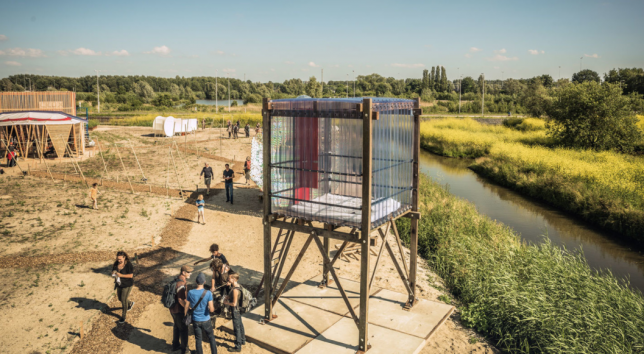
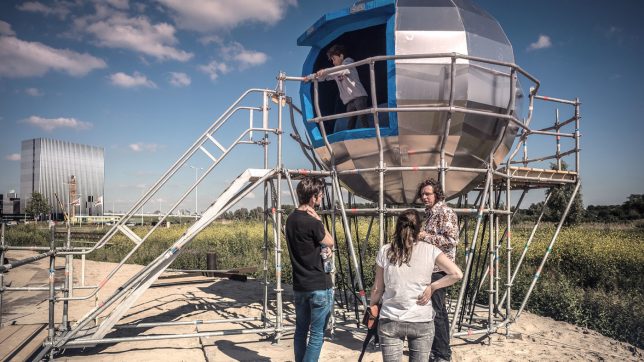
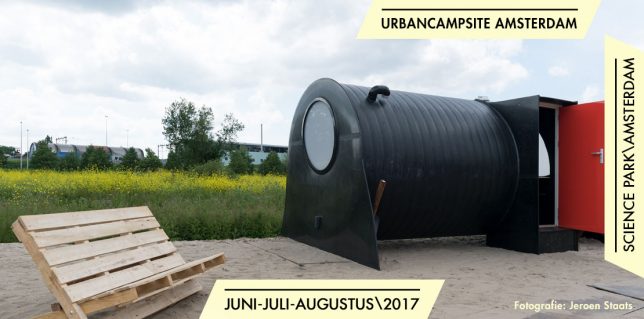
Every year, Amsterdam’s Centrumeiland of Ijburg hosts ‘Urban Campsite,’ a public exhibition of sculptural habitats allowing local residents and tourists can spend the night in mobile sculptures. Designers, artists and architects are invited to create cool structures that are way more interesting than the average tent and install them at Science Park, a new area in Amsterdam-East. This year’s theme is ‘The Art of Tech-Living,’ envisioning how art can give science and technology a little boost of imagination.

“Did you ever feel the urge to sleep in a piece of art? Well, then this is your chance! UrbanCampsite is the place where a camping and unique artistic objects meet. You can stay in beautiful, special, sometimes crazy works of art furnished as a hotel room. The UrbanCampsite offers its guests all the amenities of a normal campsite … and quite a lot more than that!”

Prospective guests book the individual habitats on AirBnB, and each sculpture is fully furnished inside. These ‘sleeping objects’ typically have room for two, though a couple will fit children as well, and they range from 85-120 Euros per night. They’re often made of reclaimed materials like trampolines, shrink wrap, pallets and metallic insulation.

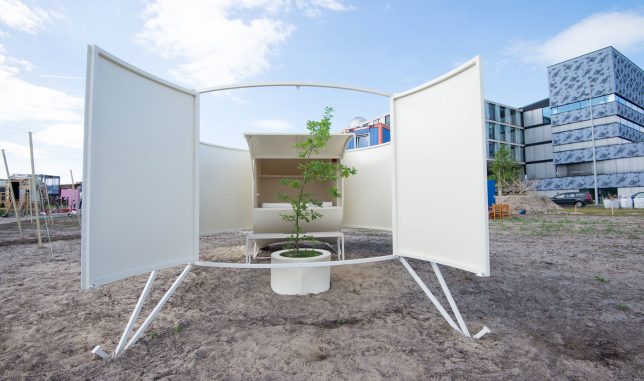
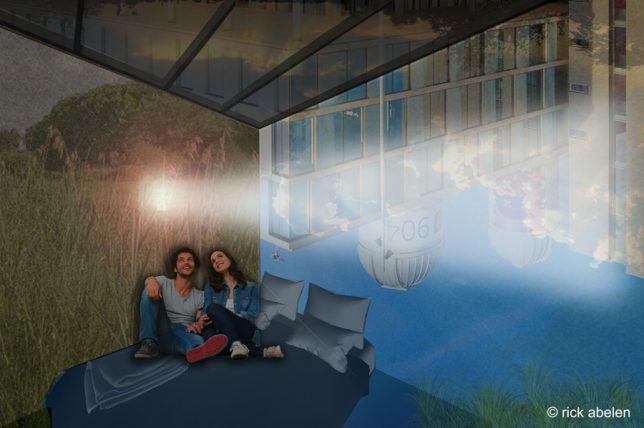
For 2017, the selection of sleeping objects includes a mini monastery with an oak sapling at its center, a giant camera obscura, a Dutch electric car from the 70s once used as a mobile post office, a stargazing lab, a 360-degree rotating research ship and a “luxury bungalow made of a sewer tube,” among others.

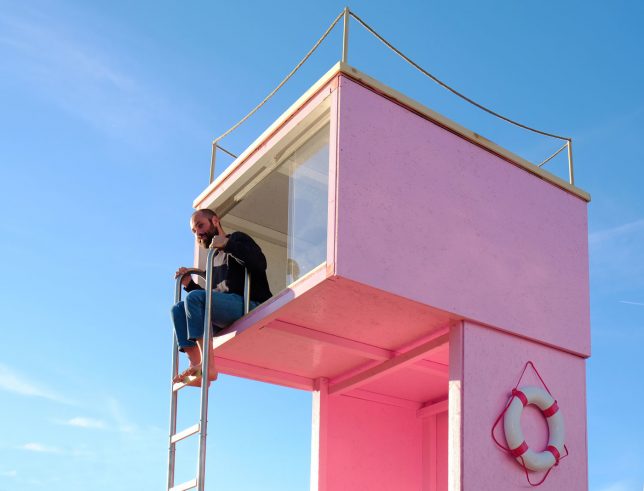
“Waiting for Water” by Stefanie Rittler and Sascha Henken, for example, bills itself as a humorous view on climate change, saying “The sea water level is constantly rising. Should we wait or change something?” In any case, you can enjoy the views from the upper-level bedroom while the exhibition is still safe on dry land.

Share on Facebook


[ By SA Rogers in Destinations & Sights & Travel. ]

[ WebUrbanist | Archives | Galleries | Privacy | TOS ]


WebUrbanist

 
Comments Off on The Art of Tech Living: Amsterdam’s Urban Campsite Lets You Sleep in Sculptures

Posted in Creativity


Nikon announces development of D850

25 Jul

Nikon has announced the development of the long-awaited replacement to its high resolution, full-frame D810: the D850.

The company didn’t release any actual details about the D850, though a teaser video promises an 8K time-lapse function. Nikon says that it will be a ‘formidable tool for creators who will not compromise on exceptional image quality and versatility’ and that it will incorporate ‘new technologies, features and performance enhancements that are a direct result of feedback from users.’

Nikon promises more information about the D850 at a later date. When that time comes, be sure to visit DPReview for all the details!

Ten things we’re hoping to
see in the new D850

Press Release:

DEVELOPMENT OF DIGITAL SLR CAMERA NIKON D850

MELVILLE, NY (July 25, 2017 at 12:01 A.M. EDT) –– Nikon Inc. is pleased to announce the development of the next generation full-frame, high-resolution, high-speed digital SLR cameras with the upcoming release of the highly anticipated Nikon D850. This announcement coincides with Nikon’s 100th anniversary of its establishment, which is celebrated today.

The D850 will be a formidable tool for creators who will not compromise on exceptional image quality and versatility, including both aspiring and professional photographers as well as hobbyists who capture landscapes, weddings, sports, fashion, commercial imagery and multimedia content creators.

The D850 is the successor to the D810, which has been highly praised by its users for offering extremely sharp and clear rendering, with rich tone characteristics. This powerful new FX-format digital SLR camera is engineered with a range of new technologies, features and performance enhancements that are a direct result of feedback from users, who demand the very best from their camera equipment. The D850 will exceed the expectations of the vast range of photographers that seek the high resolution and high-speed capabilities that only a Nikon of this caliber complemented by NIKKOR lenses can offer.

To learn more about the Nikon D850, please visit nikonusa.com/d850. Information regarding the release of this product will be announced at a later date.

Articles: Digital Photography Review (dpreview.com)

 
Comments Off on Nikon announces development of D850

Posted in Uncategorized


Ten things we’re hoping for from the Nikon D850

25 Jul

Ten things we’re hoping for from the Nikon D850

Nikon has announced the development of a the D850 – the long-awaited successor to the D810. As we’ve come to expect from such announcements in the past, Nikon is being vague on exact details, but promises that the D850 will be ‘a formidable tool for creators who will not compromise on exceptional image quality and versatility.’

We don’t have detailed specs yet, so until more details emerge, we’ve made a wish list. Click through for ten features that we’re hoping to see either added or improved in the forthcoming D850. Feel free to add your own suggestions in the comments.

More pixels (but not too many more)

A well-processed Raw file from the D810’s 36MP sensor contains a lot of detail, but we’d expect the D850 to offer at least a modest increase in pixel count.

The D810’s resolution of 36MP is more than enough for most applications, but we’d be surprised if the D850 doesn’t come with a higher megapixel sensor. In general, more pixels means better images, but we hope that the increase in resolution is reasonably modest. After all, 36MP is fine, and more pixels = bigger file sizes, and more work for the camera’s processor.

The same or better low ISO DR

This shot from the D810 was exposed for the highlights at ISO 64 and selectively pushed by 4EV – while retaining highlights – post-capture.

One of our favorite things about the D810 is its incredible dynamic range at its true ‘base’ ISO of 64. If you’re a regular lurker in DPR comments threads you’ll know that whether or not you need more DR is still (for some reason) a topic of hot debate. We’ll save you a lot of research and just say once and for all that more dynamic range is always a good thing. More DR means greater potential for capturing a wider range of tones in a single, clean, exposure. In fact, ISO 64 on the D810 allows it to compete with medium-format image quality.

If you’re still unconvinced, read this.

The D5’s autofocus system

The D5’s 153-point AF system is superbly versatile, and much more effective in poor light than the D810’s older system.

It’s a pretty safe bet that the D5’s 153-point autofocus system will find its way into the D850. The D5 (and the D500, which uses the same AF array) offers truly state-of-the-art autofocus, including excellent accuracy in poor light (not a strength of the D810) and an extraordinarily capable 3D AF tracking system.

There’s a common misconception that AF tracking is only really useful when shooting sports, action and wildlife, but we’ve come to appreciate it for portraiture, too. Especially for kids and babies, who don’t always stand as still as photographers would like.

4K video

The D500 and D5 offer 4K video capture, with some restrictions – we’re hoping that the D850 improves on their video specification.

The D850 will probably offer some flavor of 4K video capture. If it does end up with a 42MP sensor like the one on the Sony a7R II, we’d love to see D850 provide the same kind of video resolution options as that camera, with full-frame 4K plus an option for higher-quality oversampled 4K with a Super 35 crop.

Even if the D850 doesn’t ship with a7R II-style 4K feature suite, we’d at least hope for the addition of more sophisticated highlight warnings, plus focus peaking, which is a glaring omission from the D500 and D5. Oh and the reason we’re not clamoring for on-sensor masked PDAF: the artifacts it can result in with most mirrorless cameras when shooting into back-light.

XQD support

CompactFlash has been around a long time, but XQD cards are the future. The D500 offers one XQD slot and one SD slot – we’d expect the D850 to provide the same configuration.

It’s had a good run, and honestly it’s hung around for a lot longer than we thought it would, but the venerable CompactFlash memory format has had its day. The XQD media used in the D500 and D5 is smaller, mechanically simpler, and much, much faster.

Since Nikon is pitching the D850 as having ‘high-speed capabilities,’ we’d expect that the D850 will at least offer a single XQD slot, probably with an SD slot as backup/overflow (like the D500).

An articulated, touch-sensitive LCD

The D500’s rear screen is touch-sensitive and semi-articulating. We’re hoping to see the same screen on the D850.

We’d expect the D850’s rear screen to at least offer the 2.36M-dot resolution and limited touch-sensitivity features of the D5, but we’re really hoping that it’s articulated, too. While potentially less robust than fixed displays, tilting screens are much more useful, especially for landscapes, and indeed any tripod-mounted shooting from low or high angles.

Proper electronic first-curtain shutter implementation

This is what mirror/shutter shock looks like at its worst. We’re hoping the D850 offers a more effective electronic first curtain shutter feature.

The D810 improved on the D800-series by offering electronic first-curtain shutter (EFCS) to reduce the risk of shutter shock, but in our opinion, it didn’t go far enough.

With the D850, we’d love to see Nikon implement this feature properly, which means decoupling it from the mirror lock-up drive mode. Essentially it could operate much like the existing exposure delay mode, but with a much shorter delay. When the shutter button is pressed, the shutter and mirror would lock up, and the exposure would be started electronically a fraction of a second later.

We’ve found even a quarter of a second (or less) to be long enough to allow mirror vibrations to die out. A proper EFCS implementation would go a long way to avoiding mirror and shutter-related shake, especially some of the odd results we saw with some Nikon VR lenses.

Built-in Wi-Fi (and improved SnapBridge)

Snapbridge has improved since we first encountered it in the D500, but it’s still not great. We’d expect some degree of built-in connectivity but are hoping Nikon has made a fair few steps forward.

The D810 arrived before built-in Wi-Fi was widespread in Nikon’s lineup and we’d expect the D850 to offer built-in connectivity of some kind, as opposed to being limited to using external Wi-Fi modules. Nikon’s beginner-focused ‘SnapBridge’ system provides full-time Bluetooth connection but it offers limited access to, or control over, Wi-Fi. As such, it would seem like an odd fit for a camera that promises both high speed and high resolution capture (but hey – Nikon put it into the D500, so who knows?)

If present, we’d expect the D850 to feature Nikon’s full ‘SnapBridge’ suite, which includes Wi-Fi, Bluetooth and NFC. We can only hope that the company continues its efforts to improve the system.

Improved Auto AF Fine Tune

Auto AF Fine Tune is a great feature, but there’s room for improvement. We’re hoping that Nikon has refined it in the D850.

The D5 and D500 offer automated AF point calibration, but it’s not as useful – or as easy to use – as we’d like. Since higher resolution bodies require even greater AF precision, we’d love for Nikon to do some work on this feature in the D850. Specifically, we’d like to see the Auto AF Fine Tune extended to all AF points, not just the center point, and we’d like to be able to calibrate for different subject distances, and for ends of a zoom lens’s range. We’d also like calibration to be made more consistent – often the obtained value varies every time you try it.

In theory, if Auto AF Fine Tune could be improved along these lines, the D850 owner would be able to all-but guarantee accurate autofocus on each of his/her lenses, in any shooting condition. This has become expected, thanks to mirrorless.

Smaller body, illuminated controls

If you’ve ever shot at night, or early in the morning, you’ll appreciate the value of backlit controls. Will the D850 inherit this feature from the D5 and D500? We hope so.

The D810 is a pretty beefy camera, and not the most comfortable DSLR to hold and use for extended periods of time. We’re really hoping that the Nikon D850 gets slimmed-down a little, in the same way as we’ve seen with the D750 and D7500.

Another feature that we’d like to see included in the D850 is backlit controls. The ability to illuminate key control points in the D5 and D500 is extremely useful for low light and night shooting.

Articles: Digital Photography Review (dpreview.com)

 
Comments Off on Ten things we’re hoping for from the Nikon D850

Posted in Uncategorized


Godox teases the A1: An off-camera flash and 2.4GHz trigger for smartphones

25 Jul

Chinese flash brand Godox teased an interesting new product on its Facebook page this weekend. It’s called the A1, and it’s a ‘phone flash system’ that works both as off-camera flash and as a 2.4GHz flash trigger.

Unfortunately, Godox didn’t reveal too many details about the new trigger, teasing it alongside just a few lines of marginally-readable text. “I can only tell you that the product A1 has three built-in LED lamps and one hernia flash, support flash, away from the machine automatically,” reads the Facebook post. “You can control Godox flash which has 2.4G system through it!”

Below the text are a few photos: the product shot you see at the top of this post, and the three sample photos below that show the A1 in action as trigger, flash, and continuous light source:

No word yet on how much the Godox A1 will cost, or when it will officially arrive, but we’ll let you know as soon as we hear anything. Our question for you is: will you actually use this when it does ship? If you’re going to go to the trouble of breaking out a speedlight, wouldn’t you also grab your ILC?

Let us know in the comments.

Articles: Digital Photography Review (dpreview.com)
 
Comments Off on Godox teases the A1: An off-camera flash and 2.4GHz trigger for smartphones

Posted in Uncategorized


Video: Professional fashion model hits 30 poses in just 15 seconds

25 Jul

If you’re a fashion model working with Taobao, an Chinese online retailer a la Amazon, your photographer expects some next-level posing from you. In this video posted by the Facebook page Shanghai Expat, we get to see what this looks like in real life: 30 poses hit in just 15 seconds of shooting.

Rapid-fire posing is nothing new, but it’s still hard to believe that each one of these split-second poses turns into a different look option for a catalog. Over the course of a day’s shooting, these models will reportedly pose up to 150 outfits, taking just one minute to change outfits and a 10-minute lunch break.

At that pace, we’re not entirely sure how the photographer is keeping up. Have you ever had the opportunity to work with a model at this skill level? What was it like? Tell us in the comments.

Articles: Digital Photography Review (dpreview.com)
 
Comments Off on Video: Professional fashion model hits 30 poses in just 15 seconds

Posted in Uncategorized


UK government will require drone users to register and take safety tests

25 Jul

The UK has announced new upcoming regulations that will require some drone owners to register their aircraft and to complete safety awareness tests related to drone operation.

The requirements will be implemented for all drones weighing a minimum of 250g / 8.8oz and registration will be possible both online and via apps, though the UK government says it is still exploring potential plans. The tests, meanwhile, will require drone operators to demonstrate knowledge of the UK’s various regulations related to drone usage, privacy, and safety.

The new requirements were detailed over the weekend by the UK government, which explained in a statement that these new measures will “improve accountability and encourage owners to act responsibly.” A recent safety research study is cited as one of the reasons for the planned regulations. In the study, various UK authorities found that drones weighing as little as 400g / 14oz can damage the windshields on helicopters.

Many details about the UK’s drone registration plans are still missing, including how much such registrations may cost, how long the registration is good for, the extent of identifying details the drone operator must provide, and more. The UK’s statement indicates that it is still developing its plans and hasn’t yet established these finer details.

The new regulations will follow the drone code established by the UK’s Civil Aviation Authority in 2016. That drone code establishes operational rules for drone owners, including requiring that the drone stay within sight of the operator, that it stay below 120m / 400ft, avoid all things related to airports and aircraft, and maintain acceptable distances from property and people.

Articles: Digital Photography Review (dpreview.com)
 
Comments Off on UK government will require drone users to register and take safety tests

Posted in Uncategorized


No More Ugly Apartment Buildings: 13 Designs Refreshing the Paradigm

25 Jul

[ By SA Rogers in Architecture & Houses & Residential. ]

Apartment buildings are typically so hideous, it’s kind of exhausting. A structure with some measure of character gets knocked down in a prominent spot and before locals dare to dream that something cool might go up in its place, there’s another boring old block of apartments (or worse yet, condos) adding to the dull architectural noise of the city. Of course, it’s all subjective. You could argue, fairly enough, that pretty much all new apartment buildings are ugly, and that trying to make them ‘cool’ results in an even more irritating visual offense. What do you think – are these 13 designs switching up the same-old same-old in a positive way?

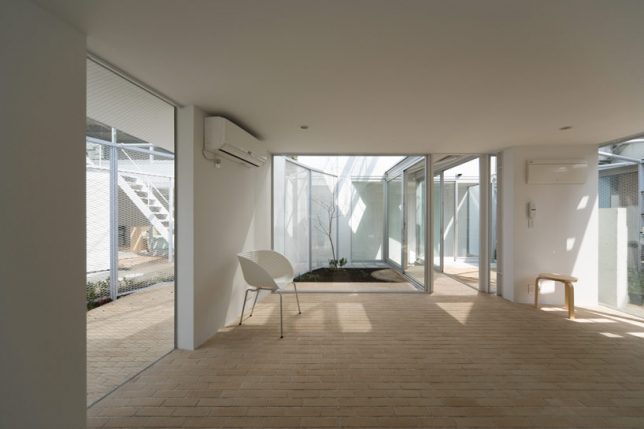
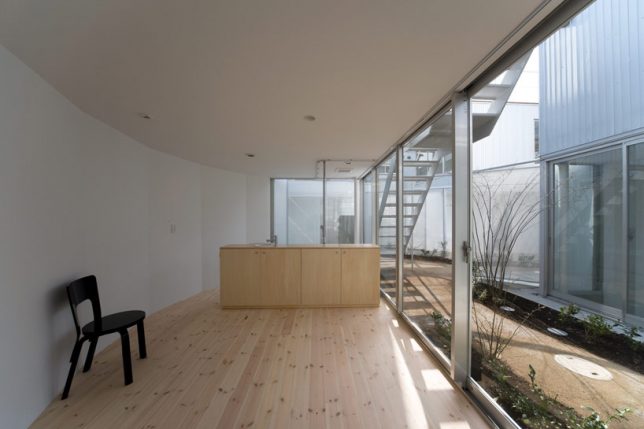
Lots of Light: 9 Units at the Apartment in Kamitakada

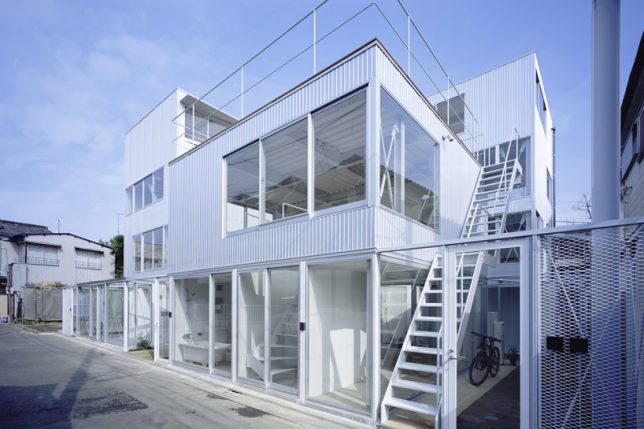
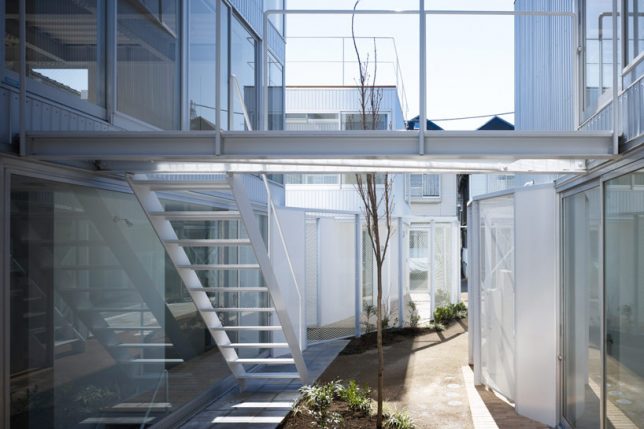
Developers looking to squeeze big bucks out of a project by creating high-end luxury housing are a lot more motivated to build structures that are more interesting than usual, but every now and then, there’s the rare project that gives some aesthetic consideration to a building that’s actually affordable to the average city resident. Takeshi Yamagata Architects designed this 9-unit building in Tokyo as a cluster of four buildings connected by open-air pathways, integrating gardens, curving walls and lots of windows for the feel of an urban refuge minus the multi-million-dollar price tag.

325 Kent by SHoP Architects

Currently under construction on the site of an old Domino sugar factory in Williamsburg, Brooklyn, the 325 Kent project by SHoP Architects is part of a redevelopment masterplan transforming the refinery into a 380,000-square-foot complex with a waterfront park and four residential buildings containing 2,800 rental units. SHoP’s building will house 522 of those apartments in a 16-story structure, arranged around a dramatic elevated courtyard. The units at the top will be stepped to create a series of spacious outdoor terraces. Nope – this one isn’t going to be cheap.

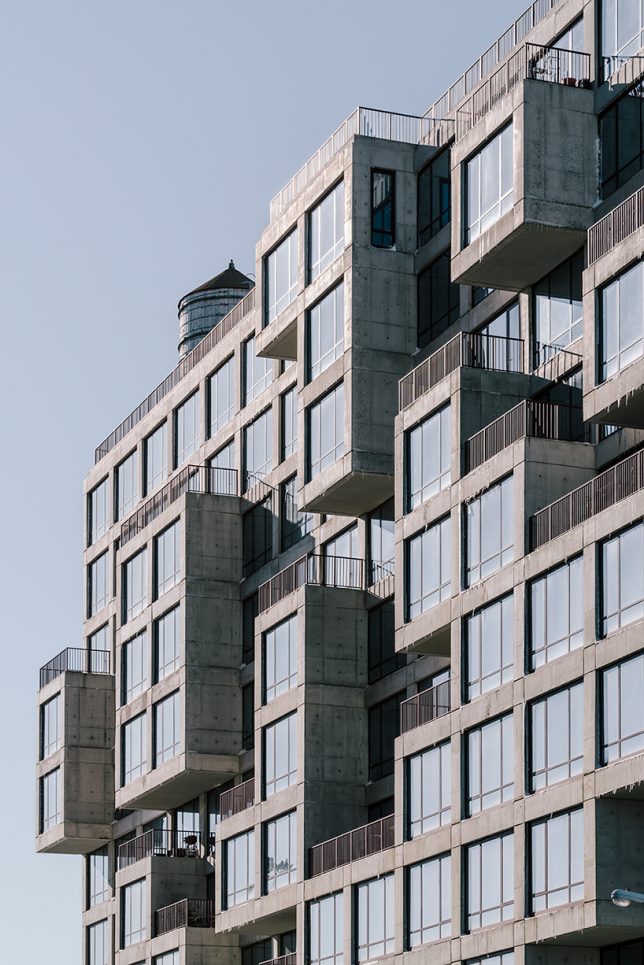
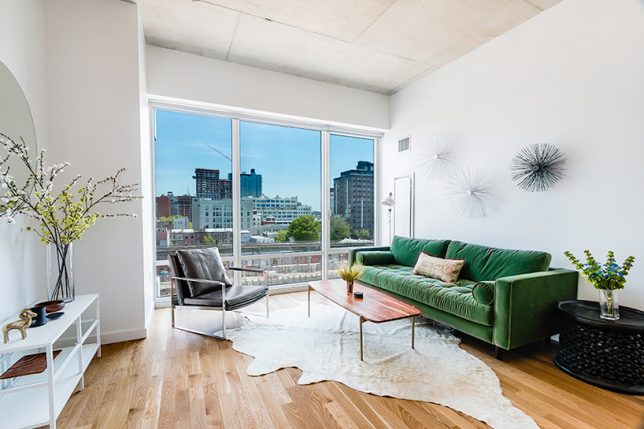
Pixelated Concrete: 222 Jackson by ODA

Over in Queens, the 11-story 2222 Jackson building by ODA features a pixelated concrete facade creating voids and projections for shade, privacy and outdoor spaces. Located just steps away from MoMA PS1, the building is conceived as a modular grid, giving it about 30% more outdoor space than the same-sized building with the same number of units arranged in a more typical shape.

Parasitic Growth: Plug-In City 75 by Stephane Malka

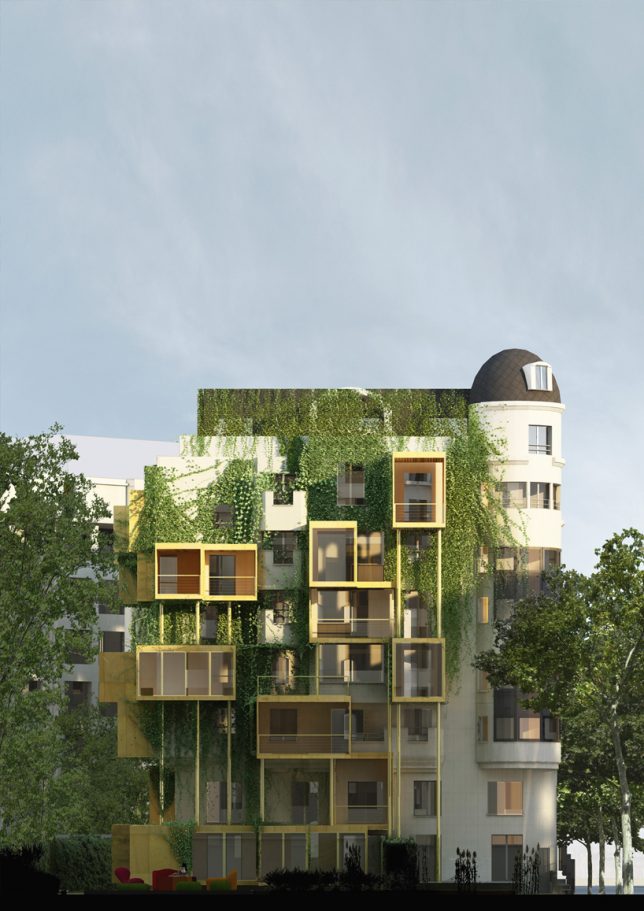
Commissioned to update and expand a 1970s-era building in Paris, architect Stéphane Malka proposes a system of parasitic wooden cubes that would attach to the facade, extending the living space and reducing the structure’s energy consumption by 75 percent. The unusual design would help mitigate problems with poor insulation and permeable windows while adhering to the city’s restrictive building laws, which don’t allow architects to build vertically.

Contemporary and Complimentary: p17 Housing in Milan

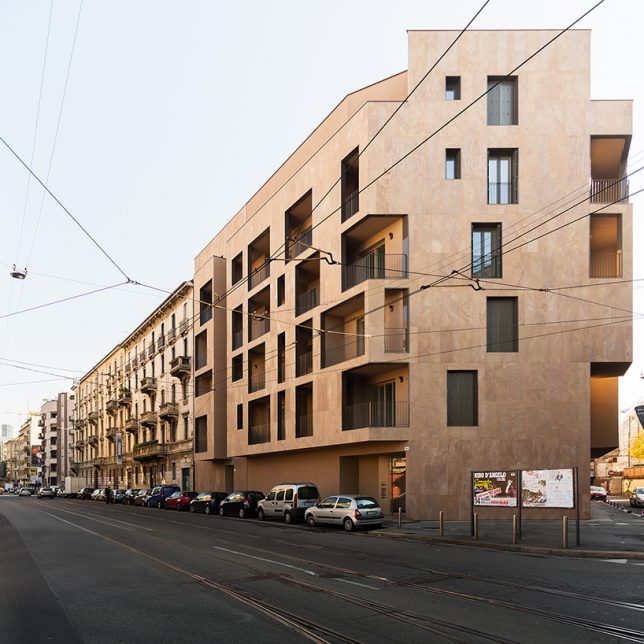
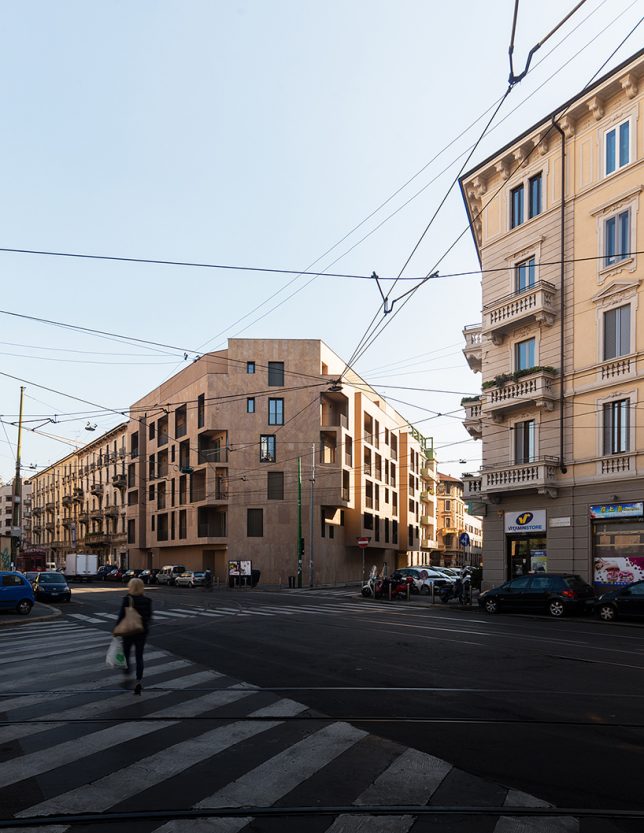
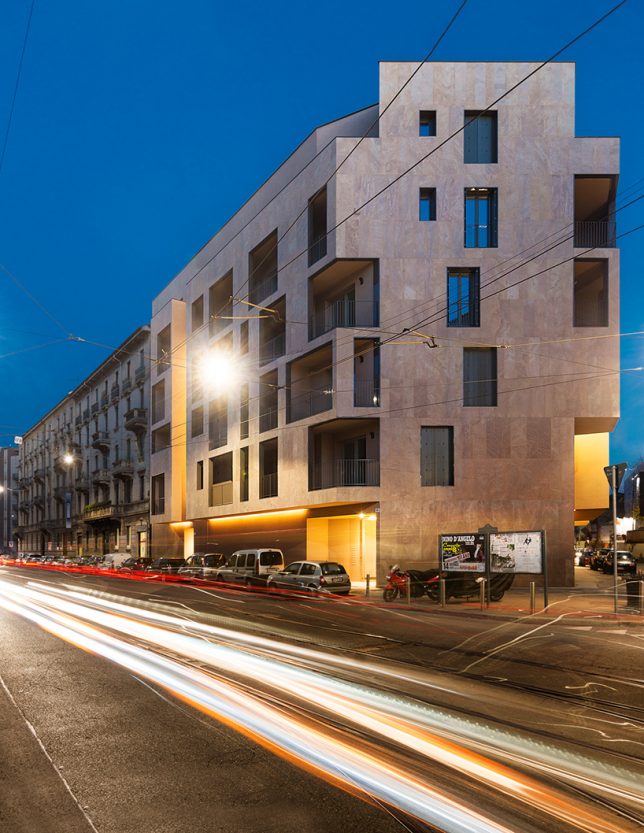
How do you sensitively design a new apartment complex that will blend in with a historic neighborhood while reflecting the era in which it’s being built? For P17, a residential housing complex in Milan, Italian architectural firm Modourbano harmonizes with surrounding buildings while retaining a contemporary feel, thanks to the beautiful natural hues in its sandstone facade.

Next Page – Click Below to Read More:
No More Ugly Apartment Buildings 13 Designs Refreshing The Paradigm

Share on Facebook


[ By SA Rogers in Architecture & Houses & Residential. ]

[ WebUrbanist | Archives | Galleries | Privacy | TOS ]


WebUrbanist

 
Comments Off on No More Ugly Apartment Buildings: 13 Designs Refreshing the Paradigm

Posted in Creativity


Voigtlander says the new 65mm F2 E-Mount macro is one of its finest lenses ever

25 Jul

Lens manufacturer Voigtlander has just introduced a 65mm F2 macro lens for Sony E-mount that it says, “rates as one of the finest in the history of Voigtländer.” The Macro APO-Lanthar 65mm F2 Aspherical is designed to cover full frame sensors, and allegedly boasts exceptional correction of chromatic aberration.

While the lens is manual focus, it has electrical contacts so exposure information can be recorded in the camera’s EXIF data, and distance measurements can be used to assist in-camera image stabilization systems. The contacts also allow focus peaking to be activated.

Macro enthusiasts will be able to focus down to 31cm to achieve a maximum reproduction ratio of 1:2, while a ten-bladed iris should provide at least attractively rounded out-of-focus highlights. The lens weighs 625g/1.4lbs, measures 91.3mmx78mm/3.6x3in and takes a 67mm filter.

The Voigtlander Macro APO-Lanthar 65mm f/2 Aspherical will go on sale from the 1st of August and will cost £750/€1,000/$ 1,060.

For more information visit the Voigtlander website.

Press Release

MACRO APO-LANTHAR 65mm F2 Aspherical

Announcing the release of the Voigtländer MACRO APO- LANTHAR 65mm F2 Aspherical, a Sony E-mount macro lens for full frame sensors incorporating an apochromatic optical design and inscribed with the designation “APO-LANTHAR”

We announce the release of the Voigtländer MACRO APO-LANTHAR 65mm F2 Aspherical, a Sony E-mount macro lens for full frame sensors. The APO-LANTHAR designation is given to especially high performance lenses in the Voigtländer lens lineup. The legendary APO-LANTHAR lens that continues to enthrall photographers with its outstanding imaging performace and beautiful rendering was born in 1954, but its origins can be traced back around 120 years (see additional info about the APO-LANTHAR below).

A need for apochromatic optical designs that reduce the longitudinal chromatic aberrations of the three primary colors (RGB) of light to practically zero arose with the increasing popularity of color film. Now, with the current range of high- resolution digitals sensors, this need for extremely high-level control of chromatic aberrations is even more pertinent than when film changed from monochrome to color. So rather than just being for already solved old technologies, apochromatic optical designs are indeed a subject requiring serious consideration in the digital age.

The Voigtländer MACRO APO-LANTHAR 65mm F2 Aspherical, which inherits the designation “APO- LANTHAR”, is a high performance manual focus macro lens optimized for the imaging sensors of Sony mirrorless cameras. The optical performance of this lens, which provides an image circle capable of covering a full frame sensor, rates as one of the finest in the history of Voigtländer. Sharp imaging performance is obtained from maximum aperture where you can enjoy blurring the background, and by utilizing a floating mechanism this lens delivers outstanding image quality for subjects from the minimum focusing distance of 31cm (reproduction ratio of 1:2) through to infinity. This lens is a manual focus and manual aperture design, but also features electrical contacts that enable the lens settings at image capture to be included in the Exif information of the image data. Furthermore, the lens is installed with a distance encoder to enable support for 5-axis image stabilization on bodies with this feature, for example by providing distance to subject information used in X,Y shift compensation. Focus peaking while manual focusing is also supported.

Main features

  • Full frame Sony E-mount with electrical contacts
  • Apochromatic optical design that eliminates chromatic aberrations
  • Enhanced high performance utilizing aspherical lens surfaces
  • Optical design optimized for digital imaging sensors
  • Extremely solid and durable all-metal barrel
  • Manual focus for precise focusing
  • Maximum reproduction ratio of 1:2 at a minimum focus distance of 31 cm

Additional info about the APO-LANTHAR

The history of the APO-LANTHAR begins with the HELIAR invented by Hans Harting in 1900. Despite its simple optical configuration of five elements in three groups, the HELIAR was a lens with superb depictive performance. As an example of the HELIAR optical formula still being valid in the present day, it is used in the currently available HELIAR Vintage Line 50mm F3.5, a lens known for its superb depictive performance. Furthermore, a HELIAR is recorded as being the lens used to take imperial portraits of Emperor Showa, and it is said the HELIAR lens was extremely highly regarded for its beautiful depictive performance and even treated as a family treasure by portrait photography businesses during the Showa period.

Moving forward about half a century from the birth of the HELIAR to 1954, Albrecht Wilhelm Tronnier developed a lens using the same five-elements-three-groups configuration as the HELIAR utilizing new glass types to achieve performance that exceeded the HELIAR. That lens was the APO-LANTHAR. The APO in APO- LANTHAR indicates an apochromatic optical design. The main characteristic of such a lens is that longitudinal chromatic aberrations caused by the different wavelengths (frequencies) of the three primary colors (RGB) of light are reduced to practically zero to achieve high-level color reproduction. Color film slowly gained popularity after its release in 1935, and one reason why the APO-LANTHAR was developed was to address a growing need to capture light more faithfully than possible with monochrome film.

The first camera to be fitted with an APO-LANTHAR lens was the 6 x 9 roll film rangefinder camera representative of post-war Voigtlander, the Bessa II. There were three different lens variations of this camera: APO-LANTHAR 4.5/100, COLOR-HELIAR 3.5/105, and COLOR-SKOPAR 3.5/105. The APO-LANTHAR 4.5/100 variation has red, green, and blue (RGB) rings indicating the apochromatic optical design engraved around the front of the lens barrel to differentiate it from the other versions as a special lens. Due to the rarity and high performance of the Bessa II fitted with APO-LANTHAR lens, this camera has become a legendary camera traded on the used market at high prices and the envy of camera collectors.

As homage to the RGB colors that differentiate the APO-LANTHAR from other lenses beginning with the BESSA II, the MACRO APO-LANTHAR 65mm F2 Aspherical also features three colored dashes indicating the RGB colors at the front edge of the lens barrel.

Articles: Digital Photography Review (dpreview.com)

 
Comments Off on Voigtlander says the new 65mm F2 E-Mount macro is one of its finest lenses ever

Posted in Uncategorized


Learning to ‘see’ light, tips from a National Geographic photographer

24 Jul

National Geographic photographer Bob Holmes takes stunning photos all over the world. But when you ask him how he captures these images, he won’t tell you about his favorite lens or any specific technique he uses. He’ll talk to you about what he sees. He’ll talk to you about light.

That was the subject of a recent conversation he had with Marc Silber of Advancing Your Photography: light. “Most people ‘look’ and don’t really ‘see.’ You’ve got to learn to see,” says Holmes. “We all look, everybody looks, but you’ve got to go beyond that and analyze what you’ve seen… to start with anyway.”

Once you acquire this ability to ‘see,’ explains Holmes, photography becomes about reacting to and capturing what’s in front of you—the camera is no longer ‘in the way.’

The duo goes on to talk about learning about light from iconic painters, and why it’s important to find work that speaks to you and try to unpack why exactly the lighting, composition, subject etc. evokes a certain emotion. The whole conversation, about 10 minutes long, is well worth your time and packed full of little gems. Check it out up top and let us know what you think in the comments.

Articles: Digital Photography Review (dpreview.com)

 
Comments Off on Learning to ‘see’ light, tips from a National Geographic photographer

Posted in Uncategorized


This Nat Geo cover was shot with a 10-year-old DSLR and an iPhone flashlight

24 Jul
European astronaut Paolo Nespoli sitting in a Soyuz launch module simulator, illuminated by a single iPhone flashlight. Photo © Alessandro Barteletti.

Photographer Alessandro Barteletti has spent the last year creating a photo essay for National Geographic, in which he tells the story of 60-year-old European astronaut Paolo Nespoli. The project has taken him all over the world with Paolo, but it’s the photo above that stuck with him, and that Nat Geo in fact picked for the cover of the July issue of National Geographic Italia.

For this project, Barteletti received access to the training centers in Europe, the US, and Russia, trailing Paolo and capturing photos honoring the astronaut as the first 60-year-old ever to be enrolled in a 6-month-long mission.

Behind the scenes with Barteletti, shooting Paolo Nespoli for National Geographic. Photo © Alessandro Vona

The memorable cover photo was captured in Star City, Russia, while Paolo sat inside the Soyuz launch module simulator.

“I came into the Soyuz with my Nikon D3 and a wide angle lens, ready to shoot Paolo when, suddenly, something unbelievable happened: all lights off, everything was dark and from the outside they started knocking on the door telling me I had only one minute left,” Barteletti tells DPReview. “I didn’t know what to do: that was the perfect setting for THE PHOTO, probably one of the best ones ever. Outside I had some led lights but if I had come out the module, they wouldn’t have let me come in once again.”

Paolo agreed that leaving the module wasn’t an option, and so they tried to come up with some way to capture the shot in the next 60 seconds… with no professional lighting anywhere in sight.

“I had an idea, one of those crazy ideas that only come to you when you are desperate,” says Barteletti. “I took my iPhone—the only electronic device I had with me—I turned on the torch, and I put it between two panels behind the astronaut.”

As it turns out, his idea worked perfectly. “The module was so small, less than 2 meters of diameter, that the torch was enough to properly light the setting,” he told us. “I had only the time for two landscape shots and two portrait ones, just a few seconds before I was literally obliged to leave the module.”

In the end, Barteletti was right: it was THE PHOTO. National Geographic chose this shot for the cover. Barteletti still can’t quite believe they chose a photo “shot with a ten-year-old Nikon D3 and lit with an iPhone torch.”

To learn more about Alessandro or see more of his work, visit his website by clicking here.

Articles: Digital Photography Review (dpreview.com)
 
Comments Off on This Nat Geo cover was shot with a 10-year-old DSLR and an iPhone flashlight

Posted in Uncategorized