RSS
 

Archive for July, 2017

CineStill 50D Film in 120 format goes up for pre-order

01 Jul

CineStill has launched its 50D film in 120 format, currently offering it for pre-order with an anticipated August 2017 shipping date. The 50D is a color-balanced daylight (5500K) color negative motion picture film; CineStill explains that its ‘Premoval’ process, which is proprietary, enables photographers to safely process the film at home or using standard C-41 chemicals. CineStill first introduced this film in late 2014.

This fine grain ISO 50/18° speed film is ideal for landscape and portrait photography, according to CineStill, which claims that its 50D product offers ‘unrivaled highlight and shadow latitude.’ The company says this film has been tested to have a shelf life of up to 1.5 years, though buyers are advised to use it within 6 months after purchase; price is $ 11.99 per roll.

The full list of features as provided on the 50D product page:

  • Color Balanced Daylight (5500K) color negative motion picture film stock for use as still photography film
  • ISO 50/18° in C-41 or ECN-2 Process
  • Factory spooled with self-adhesive labels inside
  • Remjet backing free, resulting in a unique halation effect
  • Unrivaled highlight and shadow latitude
  • Dynamic accurate color rendition
  • High resolution with maximum sharpness
  • Enhanced Scanning Performance
  • Great for portraits and landscapes
  • Recommended to process C-41 without worrying about remjet

Via: PetaPixel

Articles: Digital Photography Review (dpreview.com)

 
Comments Off on CineStill 50D Film in 120 format goes up for pre-order

Posted in Uncategorized


Rolling shutter explained with simple side-by-side examples

01 Jul

We hold accurate technical knowledge in pretty high regard around here, which is why this video from YouTube channel SmarterEveryDay was such a pleasant surprise.

In 7 minutes, engineer Dustin Sandlin does a fantastic job explaining rolling shutter with plenty of useful examples where he simulates the rolling shutter effect using high-speed camera footage and After Effects. In this way, he can actually show you how rolling shutter distortion happens; in fact, he can recreate it perfectly:

In the example above, he basically recreates what happens in every single frame of a 24fps iPhone video when you’re recording an airplane propeller. As the green line moves down, it scans the prop… but the prop is moving, and so it’s causing this strange distortion known as the ‘rolling shutter effect.’

In this example, he actually traces the lines as your camera is seeing them over the course of the exposure:

You will capture different patterns depending on which way the propeller is rotating, but it’s not a guessing game. You can actually visualize it when you slow the footage way down the way Dustin has.

But he doesn’t stop with propellers (which is where most breakdowns of rolling shutter end), he goes on to show you how this affects cell phone video of all kinds of things. Fidget spinners, a coin spinning on a table top, guitar and mandolin strings, you name it: the rolling shutter effect visualized and simulated/recreated by using high speed footage.

Definitely check out the full video up top to really see rolling shutter in action. If you’ve always had a hard time conceptualizing how the rolling shutter effect worked, and why it produced the shapes it does, you won’t find a better side-by-side comparison than this.

And if you like this, definitely check out Dustin’s YouTube channel. This is far from the only interesting, educational and just plain cool thing on SmarterEveryDay.

Articles: Digital Photography Review (dpreview.com)

 
Comments Off on Rolling shutter explained with simple side-by-side examples

Posted in Uncategorized


3 things that will bug photographers about the Polaroid movie trailer

01 Jul

If you want more proof that the youth are taking an interest in film photography, you’ll have to travel no farther than your local multiplex this summer. ‘Polaroid’ the film – but not that kind of film – arrives in US theaters this August, and promises plenty of ‘Ring’-style scares and thrills. In fact, it’s produced by the same minds that brought us ‘The Ring’ and ‘The Grudge,’ so you can pretty much guess how things go when a high school student stumbles across an antique Polaroid camera and starts photographing her friends.

On the surface it looks like your average popcorn-friendly flick, but photographers may have a hard time looking past a few bothersome details we spotted in the trailer. Here they are in no particular order.

The flash is comically bright and doesn’t do anything

Is the flash on this camera powered directly by the sun? How has anyone who’s been photographed by this camera retained their eyesight? It’s unbelievably bright. On top of that, it doesn’t even seem to have any effect on the image – the first subject we see photographed looks to be lit only by the tungsten bulb next to her despite a blinding flash that lit up the whole room.

The screeching flash capacitor

Not only is it needlessly bright, the flash makes a piercing noise as the capacitor supposedly charges it. An entire studio of professional strobes all re-charging at once wouldn’t make that much noise. It’s way too loud for a small on-camera flash, and should be an obvious clue that demons inhabit this camera.

The pristine instant film that comes with an antique camera

This camera came out of a dusty old box with a bunch of film in mint condition? Okay, sure. Maybe possessed Polaroids have a much longer shelf life than the garden-variety stuff. If that’s the case, somebody let the Impossible Project know.

Be sure to watch the full trailer (if you’ve got the stomach for it) and let us know in the comments if we missed anything.

Articles: Digital Photography Review (dpreview.com)

 
Comments Off on 3 things that will bug photographers about the Polaroid movie trailer

Posted in Uncategorized


Lee launches new set of high-end ProGlass IRND filters for stills shooters

01 Jul

Two years in the making, Lee Filters has just announced that it is bringing its highly-regarded ProGlass IRND cinematography filters to the world of stills photography. The company calls these ‘a new standard’ in ND filters, claiming they are, “remarkably neutral, with almost no color shift and extremely accurate stop values.”

The high-end filters will be available through the Seven5, 100mm and SW150 systems, and since they block both IR and UV pollution, they should deliver cleaner colors that require far less work in post-production.

This example, available in interactive form on the Lee website, comes from an unedited RAW file:

The new line will come in six different strengths: 2-stop, 3-stop, 4-stop, 6-stop, 10-stop, all the way up to an impressive 15-stop filter. And the 6, 10, and 15-stop models each feature additional foam light insulation to ensure there are no light leaks, no matter how long the exposure.

Shot with a 0.6ND medium grad Shot with a 0.6ND medium grad and the 4.5ND (15-stop) ProGlass IRND

For more information, and to watch a demo video, visit the Lee Filters website. The ProGlass IRND Filter systems are available to stills shooters today in Seven5, 100mm and SW150 versions for £132.00 ($ 172 USD), £150.00 ($ 195 USD), and £346.00 ($ 450 USD), respectively.

Press Release

ProGlass IRND Filters

Two years in the making, the ProGlass IRND range from LEE Filters sets a new standard in neutral-density filters.

ProGlass IRND filters were originally designed for the film industry, to meet the exacting needs of the world’s leading cinematographers, and have already been hailed as the best neutral-density filters on the market. Now, they are available to the stills photographer, in sizes to fit the LEE Filters Seven5, 100mm and SW150 systems.

Advances in coating technology mean that the filters, which are manufactured from 2mm-thick, optically flat glass, are available not only in strengths of two (0.6ND), three (0.9ND), four (1.2ND) and six (1.8ND) stops, but also in ultra-long 10 (3ND) and 15-stop (4.5ND) versions. Not only this, but all filters in the range – whatever their strength – are designed to be free of colour casts, with extremely accurate stop values, ensuring consistency in all shooting conditions and allowing for absolute precision when exposing images. Their neutrality also means less time spent tweaking colour balances in postproduction.

In addition, filters in the ProGlass IRND range are designed to block both infrared and ultraviolet pollution. As a result, blacks are rendered truly black, whites are clean, and results reveal a crispness that is second to none.

The 6, 10 and 15-stop versions of the ProGlass IRND filters come with a foam seal to prevent light leaks during long exposures, and should be placed into the filter slot closest to the lens. While the 2, 3, 4 and 6-stop versions do not feature a foam seal, it is still recommended also to place them into the slot closest to the lens.

All filters in the ProGlass IRND range can be used in conjunction with other filters, including neutral-density grads and the polariser.

Pricing
ProGlass IRND Filter (Seven5 System) – £132.00 each (Excl VAT)
ProGlass IRND Filter (100mm System) – £150.00 each (Excl VAT)
ProGlass IRND Filter (SW150 System) – £346.00 each (Excl VAT)

For further information, contact LEE Filters on +44 (0) 1264 366245; sales@leefilters.com; www.leefilters.com

Articles: Digital Photography Review (dpreview.com)

 
Comments Off on Lee launches new set of high-end ProGlass IRND filters for stills shooters

Posted in Uncategorized


Rebuilding Memories: Meticulous Miniatures by Iraqi Immigrant Ali Alamedy

01 Jul

[ By SA Rogers in Art & Sculpture & Craft. ]

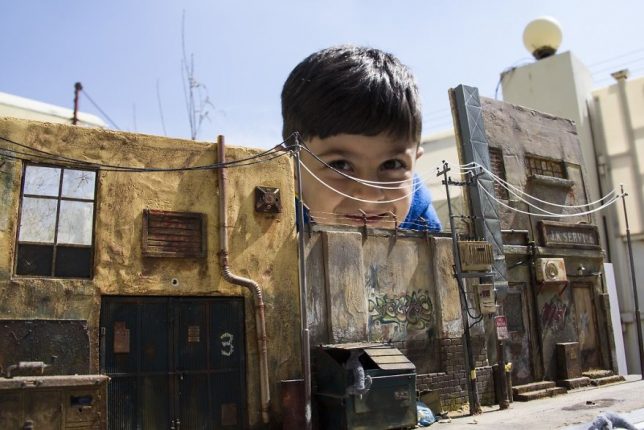
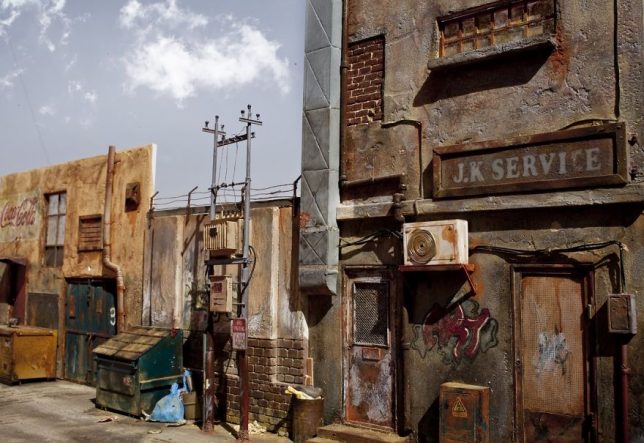
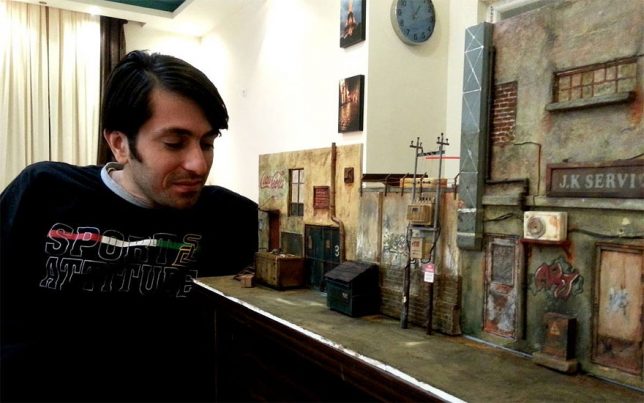
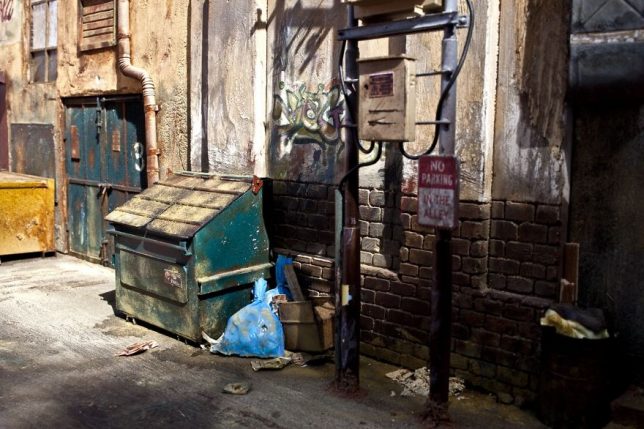
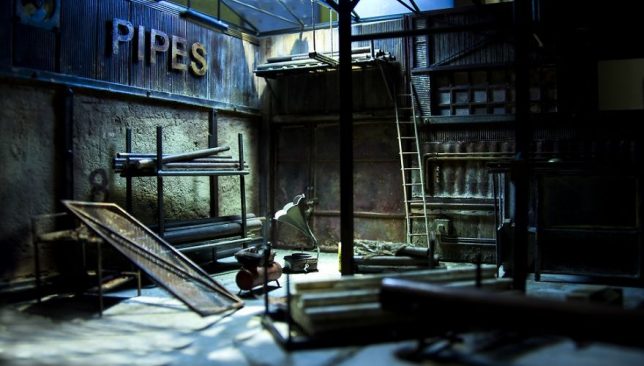
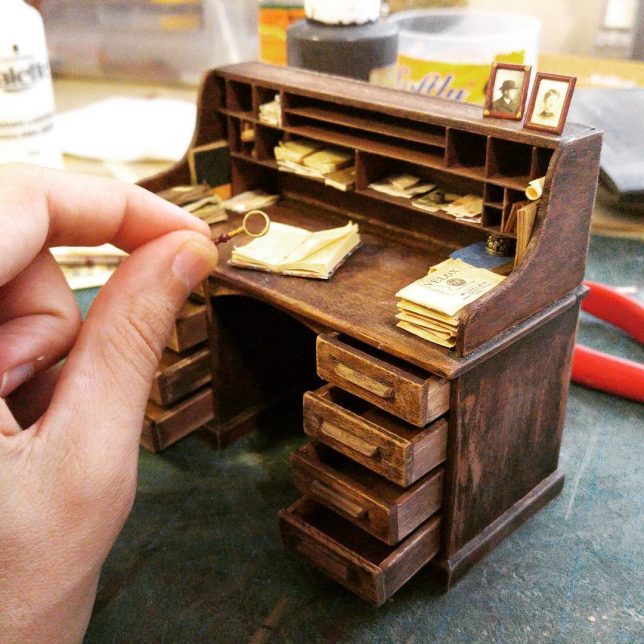
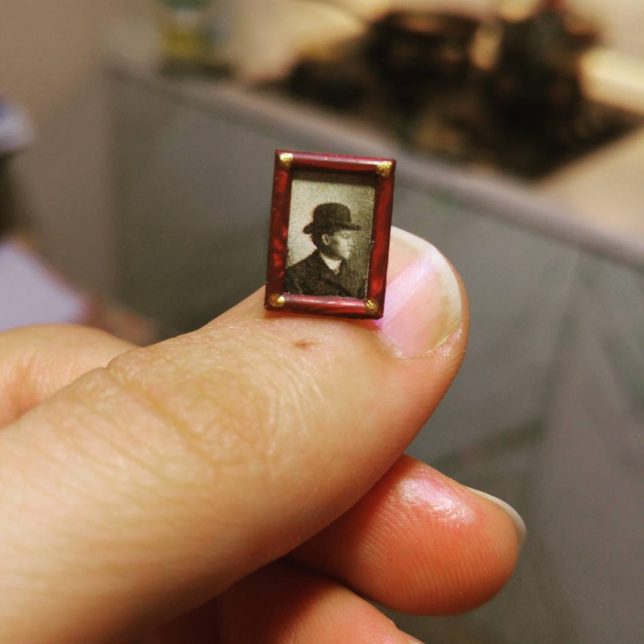
Born in Karbala during the Iraq-Iran War while his father was imprisioned by Saddam Hussein as a dissident, Ali Alamedy turned to books as a means of escape, wishing he could transport himself into the fictional settings between the pages. Later, as an adult, he began to bring those scenes to life – along with places from his own memories, and recreations of places that only exist in his imagination – in finely rendered miniature. In Arabic, the word ‘miniature’ translates to ‘a small painting on paper,’ so he didn’t find out about the existence of dioramas outside of his own art until he started searching for these words in English on the internet.

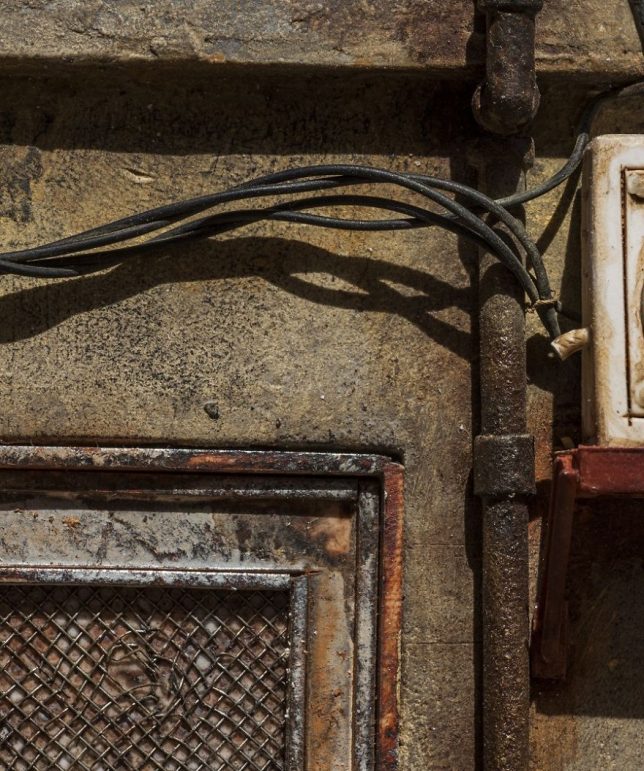
“When a budding artist has a burning desire to create a vignette, they don’t let the lack of building materials stop them,” he writes on Bored Panda. “This was exactly what happened to me when I started to make miniatures. I used any resource I could scrounge: aluminum foil, paper clips, plastic rods, foam board, coffee for weathering, anything that held possibilities.”

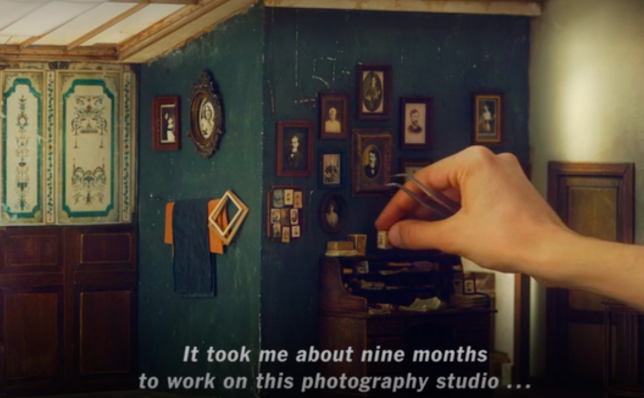
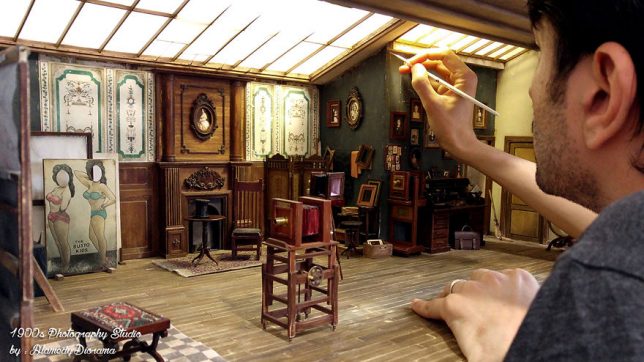
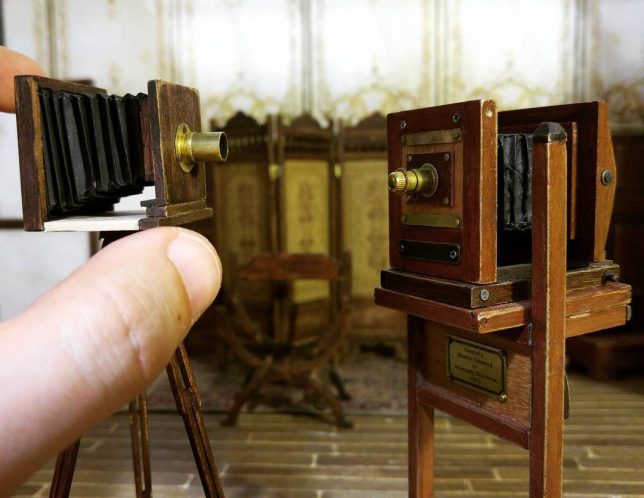
He began posting his work on Facebook, attracting fans all over the world, and his work has grown more and more meticulous. His largest project to date is the 1900s photo studio he built in honor of an old photographer. He spent 9 months building more than 100 miniature objects from scratch based on historical photographs of real studios, which, he notes, was a particular challenge due to the fact that all the photos were in black and white.

“The hardest part was how to recall the spirit of such a place in a small scale,” he says.

The New York Times gets a deeper look into both Alamedy’s work and his past in a new video, and you can see lots more detailed images on his Instagram.

Share on Facebook


[ By SA Rogers in Art & Sculpture & Craft. ]

[ WebUrbanist | Archives | Galleries | Privacy | TOS ]


WebUrbanist

 
Comments Off on Rebuilding Memories: Meticulous Miniatures by Iraqi Immigrant Ali Alamedy

Posted in Creativity