RSS
 

Archive for June, 2017

Adobe achieves record revenue

21 Jun

Software maker Adobe has today published its financial results for the second quarter fiscal year 2017 ended June 2, and the company reports a record quarterly revenue of $ 1.77 billion. At the same time operating income was increased by 46 percent and net income by 53 percent year-over-year on a GAAP-basis.

“Digital transformation continues to be the burning agenda for creative professionals, enterprises, governments and educational institutions,” said Shantanu Narayen, president and CEO, Adobe. “Adobe is the go-to company for creating world-class digital customer journeys from design to delivery to measurement and monetization.”

Other highlights of the financial results include the following:

  • Diluted earnings per share was $ 0.75 on a GAAP-basis, and $ 1.02 on a non-GAAP basis.
  • Digital Media segment revenue was $ 1.21 billion, with Creative revenue growing to a record $ 1.01 billion.
  • Strong Creative Cloud and Document Cloud adoption and retention drove Digital Media Annualized Recurring Revenue (“ARR”) to $ 4.56 billion exiting the quarter, a quarter-over-quarter increase of $ 312 million.
  • Adobe Experience Cloud achieved record revenue of $ 495 million, which represents 29 percent year-over-year growth.
  • Operating income grew 46 percent and net income grew 53 percent year-over-year on a GAAP-basis; operating income grew 42 percent and net income grew 43 percent year-over-year on a non-GAAP basis.
  • Cash flow from operations was $ 645 million, and deferred revenue grew to approximately $ 2.07 billion.
  • The company repurchased approximately 2 million shares during the quarter, returning $ 266 million of cash to stockholders.

More information and detailed figures are available on the Adobe website.

Articles: Digital Photography Review (dpreview.com)

 
Comments Off on Adobe achieves record revenue

Posted in Uncategorized


Zeiss launches Milvus 1.4/35 full-frame lens for Canon and Nikon

21 Jun

Zeiss has launched a new lens for full-frame DSLRs with Canon and Nikon mount, the Milvus 1.4/35. The new model is the tenth lens in the Milvus series and according to Zeiss, thanks to its fast aperture, particularly suited for portrait photography. That said, its 35mm focal length also makes it a good all-rounder and useful in landscape photography and even filming.

“The high maximum aperture enables the subject to stand out clearly against the background, and the photographer can achieve creative combinations of focus and blur,” says Christophe Casenave, Product Manager at Zeiss.

Like all lenses in the Milvus line the 1.4/35 comes with a robust metal barrel and is protected against dust and splashes and therefore suitable for working in adverse weather conditions. Zeiss says a new optical design with aspherical lens elements, special glass materials and advanced correction means photos taken with the Milvus are practically free from chromatic aberrations. The Zeiss Milvus 1.4/35 will be available from specialist dealers and in the ZEISS Online Shop from July 2017. The recommended retail price is 1,999 Euros ($ 2,228). More information is available on the Zeiss website.

Press Release:

ZEISS Milvus 1.4/35 Camera Lens for DSLR Cameras

The tenth lens in the ZEISS Milvus series for DSLR cameras already shows its many benefits at full aperture

OBERKOCHEN/Germany, 2017-06-21.

ZEISS has launched a new lens for full-frame DSLR cameras from Canon1 and Nikon2 on the market: the ZEISS Milvus 1.4/35. Now the tenth lens in the Milvus family, the ZEISS Milvus 1.4/35 is particularly suitable for portrait photography thanks to its speed. “The high maximum aperture enables the subject to stand out clearly against the background, and the photographer can achieve creative combinations of focus and blur,” says Christophe Casenave, Product Manager at ZEISS. “The manual focus enables very exact focusing, and the creamy bokeh provides an excellent image look. And even at full aperture the image quality leaves nothing to be desired.” The ZEISS Milvus 1.4/35 is also perfectly at home in landscape photography: “The 35-millimeter focal length is a genuine all-rounder.” Like all lenses in the ZEISS Milvus family, it is protected against dust and splashes and, according to Casenave, even bad weather is no problem. The metal barrel gives the lens its robust and durable character.

Practically no chromatic aberrations thanks to a new optical design

With aspherical lens elements, special glass materials and advanced correction, ZEISS has given the lens a completely new optical design. “This means the photos are practically free from chromatic aberrations,” says Casenave. Thanks to their excellent edge-to-edge imagery the ZEISS Milvus lenses are designed for high-performance digital cameras. “The resolutions of camera sensors are constantly becoming higher, and this also increases the demands made on the lenses. For ZEISS Milvus lenses this is no problem. They are a solid investment in the future.”

Also suitable for filming

The ten lenses in the ZEISS Milvus family, ranging between 15 and 135 millimeters, are also suitable for film productions: the manual focus with a large rotation angle can be operated with the aid of a ZEISS Lens Gear with a follow-focus system. The de-click function allows the aperture to be set continuously in the version for Nikon3 cameras. A further benefit for filming: ZEISS has matched the color characteristics of the ten lenses. Filmmakers can therefore switch between the focal lengths and still have a uniform color look. “This facilitates editing enormously,” says Casenave.

Price and availability

The ZEISS Milvus 1.4/35 will be available from specialist dealers and in the ZEISS Online Shop from July 2017. The recommended retail price is 1,999 euros.

You can find further information at www.zeiss.com/photo/milvus1435

Articles: Digital Photography Review (dpreview.com)

 
Comments Off on Zeiss launches Milvus 1.4/35 full-frame lens for Canon and Nikon

Posted in Uncategorized


How to Practice Low Impact Nature Photography

21 Jun

In many parts of the world, spring has blossomed into summer, furry and feathered babies were being born and summer is on its way. Photographers are pulling out their camera gear and finally heading back outside for some nature photography. I am so ready to get out and photograph the bounty that warm weather brings, I bet you are too. Before you head outside though, here are a few tips on having a little lower impact on the nature you’re photographing.

Low Impact Nature Photography - nature in bloom

Spring has sprung so let’s all get outside and shoot. Canon 5DIII, 70-200 @ 121mm, ISO 500, f/4, 1/750th.

Reduce your carbon footprint

When you do head out to do nature photography, consider your carbon footprint. We lead such comfortable lives these days that’s it’s easy to forget that hopping into the car for a two-hour drive isn’t all that great for our environment. Car-pooling with two or three of your friends is an easy way to reduce emissions. It’s a lot more fun to spend the day shooting with friends, too.

Low Impact Nature Photography - shoot with friends

Planning a day trip or holiday to shoot with your friends is not only more fun, it also helps to reduce your carbon footprint when you carpool and share vehicles.

Doubling up

Another way to reduce your carbon footprint is something I call “doubling up.” Whenever you fly somewhere, research what else you can easily see while you’re there. For example, this fall I’ll be a special guest photography teacher for Big Sky Yoga Retreats “Yogatography,” a combined yoga and photography retreat in Montana.

The ranch I’m staying at is only about a 90-minute drive from Yellowstone National Park so it makes perfect sense to add a few days in the park after the retreat ends. Of course, I also save money by combining my visit to Yellowstone with the Yogatography retreat but more than that, I reduce emissions by flying to Montana once instead of twice.

Low Impact Nature Photography - Mammoth Hot Springs

The last time I was in Yellowstone I was only carrying a little point and shoot while I hiked so I’m pleased to be able to “double up” this fall when I’m in Bozeman teaching and have another crack at shooting Mammoth Hot Springs with some beefier gear.

Heed the signs

Once you arrive at your location, heed the park signs. Often, the signs are meant to protect you from harm. But sometimes they’re meant to protect the wildlife around us.

How to Practice Low Impact Nature Photography

On the left, a sign from Antelope Island in Utah requesting that cars and hikers stay on the road to avoid aggressive wild buffalo encounters. On the right, a funny and scary bathroom sign from a Nevada park. For heaven’s sake, don’t slip. There are rattle snakes!

Several years ago in Utah, I left the trail while I was shooting in Arches National Park. My guide quickly pulled me back and pointed out what I hadn’t seen. Right next to where I’d planted my foot was a type of very slow growing fungal plant life that, when crushed, will not revive for hundreds of years.

How to Practice Low Impact Nature Photography - Arches National Park

It’s hard to see, but tucked in and around the rocks and bushes are delicate fungal plants that are easily crushed when stepped on. Canon 5DIII, 24-105 @ 22mm, ISO 100, f/16, 1.5 seconds.

We all want the best, most unique photographs but if we all leave the trail, our combined impact can destroy the beautiful environments we are trying to capture not to mention causing a lot of potential injury to ourselves.

Share special locations judiciously

While I greatly admire photographers who openly teach and share, consider very carefully whether you should share every amazing location you stumble upon with every photographer you know. Unfortunately, delicate environments can’t handle hordes of photographers. The wear and tear of too many people hiking in and out can destroy the natural beauty of the location itself, even if everyone stays on the trail.

Low Impact Nature Photography - secret location

Canon 7DII, 70-200mm with 1.4xIII extender @ 280mm, ISO 1000, f/5.6, 1/250th.

I love to photograph the tiny Key Deer on Big Pine Key in Florida. When I drive the island, I know just where these little creatures like to hang out. I don’t tell very many people about this location though, because the deer have become too habituated to humans, frequently approaching people and begging for food.

Too many human visitors can also frighten wildlife, disrupt nesting, and impact natural reproductive cycles. While complete secrecy about a magical location seems stingy, consider sharing more environmentally fragile places only with photographers who know and understand the impact they have on where they shoot.

Look, don’t touch!

When I see a lush, velvety plant growing at the Chicago Botanic Garden, all I want to do is run my fingertips across its surface. The rule at the garden, however, is to look and not touch. Sometimes I practically have to put my hands in my pockets to stop myself from touching the amazing specimens on display!

Luckily, they have a wonderful Sensory Garden where visitors are encouraged to physically touch the plant life. The Sensory Garden is mainly a teaching and learning area. But by allowing visitors to touch the plants there, it also helps prevent wear on the rest of the garden, leaving it pristine for the thousands of weekly visitors, many of whom are photographers.

Low Impact Nature Photography - velvet leaf

These broad velvety leaves beg to be touched. Canon 5DIII, 24-105mm lens @ 105mm, ISO 1000, f/4, 1/2000th.

If you’re shooting in a wild and remote place, use the same rule as that applies at the Chicago Botanic Garden, and don’t touch the plant life. Imagine hundreds of people walking through that same wild area and touching the same plant you’re touching. It wouldn’t take much before the plant started to wither around the edges, and ultimately turn brown and die. Next time, before you touch, ask yourself whether you’re truly leaving no impact on the plant. If you are impacting it, perhaps reconsider your actions.

Don’t pick the flowers

It probably goes without saying that when you pick wildflowers you’re impacting the environment in a negative way. Acres and acres of wildflowers are a breath-taking sight. A field left with only one or two flowers standing? Not so much.

Low Impact Nature Photography - field of tulips

Like a field of wildflowers, a picked-over field of tulips wouldn’t be nearly as stunning to photograph as this lush bed was. Canon 5DIII. 70-200mm lens @ 111mm, ISO 250, f/4, 1/1000th.

In some locations, it’s also illegal to pick wildflowers. It’s also illegal to remove shells, bones, pottery shards, and petrified wood from many state and national parks. While we humans seem to have a knee jerk reaction to gather and collect things, leaving plants and artifacts alone preserves them so that all of us can visit, enjoy and photograph them.

Avoid leaving tracks

Is that mud flat, playa or sand dune you’re photographing absolutely pristine? If it is, take care not to walk on it or leave footprints. Don’t drive on it or leave tire tracks either. Environmental recovery from this sort of carelessness can take decades before there will be enough wind or rainfall to smooth out your tracks. You’re not only wrecking the image-making opportunity for the next photographer that comes along, you’re destroying the beauty of the location for everyone who visits it.

Low Impact Nature Photography - Cumberland island boardwalk over dunes

On Cumberland Island, in Georgia, the National Park Service has constructed boardwalks so that visitors can view the dunes without damaging them. Canon 5DIII, 100-400mm lens @ 100mm, ISO 12800, f/8, 1/6000th.

Keep wild animals wild

Because I mainly photograph wild horses, I’m frequently asked if I touch, pet, or ride them. These questions always strike me as naive but, because most people are used to domesticated horses, perhaps they think that wild horses tolerate or accept humans more readily than other wild animals. They don’t.

Low Impact Nature Photography - cautious wild horse

Does this wild stallion look like he wants to be petted? He doesn’t. His ears are pinned back and he has an eagle eye on me too. Canon 5DIII, 100-400 @ 400mm, ISO 1250, f/6.7, 1/500th.

The same rules apply to wild horses that apply to any other wild animals. No matter how sweet or cuddly a wild animal seems, never approach, feed, touch, hug, or pick it up. Wild animals are often so much bigger than we are and even if they fearfully strike out with mildly aggressive behaviors, you can be seriously injured. Always keep a safe distance between you and the animal you’re photographing and, in some cases, shoot from the car or another protective structure like a blind. If, as a photographer, you’re afraid you’ll be too far away, buy or rent a bigger lens.

If you’re afraid you’ll be too far away to get a good photo, buy or rent a bigger lens.

Low Impact Nature Photography - don't feed wild anmals

Visitors to Big Pine Key often get too close to the Key Deer that live there. This woman fed the deer her lunch leftovers (!!) and then tried to pet them. This is the perfect example of what not to do when you’re photographing wild animals.

These rules may not seem like much “fun” but they are for the animals’ safety as much as for yours. Animals that become too accustomed to humans become less wild, more dependent on humans for their food, and ultimately nuisances when they start to forage for food in suburban areas. When too many wild animals invade populous areas, they are often culled, which is just a more politically correct word for killed. Keep your distance and keep wild animals wild, free, and alive.

Pack it in – pack it out

You’ve probably heard this bit of advice before. Whatever you carry in with you when you head into a refuge, preserve, or wilderness area, you should also plan to carry out with you. Garbage littering the landscape doesn’t make a very pretty picture. Of course, you can just “Photoshop it out in post-processing” but for the environment’s sake, and for the safety of the animals who might ingest any garbage left behind, take everything you brought in with you back out when you leave.

Low Impact Nature Photography - trash in water

The Salt River Wild Horse Management Group volunteers do an amazing job of regularly cleaning up the river but too many people toss their trash into it rather than carrying everything out with them when they leave. Even the day after a massive clean up effort, these wild horses were drinking next to floating trash. Canon 5DIII, 100-400 with 1.4xIII extender @ 560mm, ISO 1250, f/8, 1/500th.

An even nicer thing to do is to leave the area cleaner than you found it. On your way out, pick up the garbage other less savvy hikers and photographers have left behind and dispose of it appropriately once you get back home.

Leave Fido at home

If you’re a weekend warrior type of photographer – and many of us are – it might seem like a natural thing to bring your faithful pup along with you. In a very few situations, bringing your dog (or any domestic animal) may work out just fine, but at best bringing your dog along is a distraction from making images. At worst, your dog can wreck a field of flowers or scare off wildlife (or get injured).

Low Impact Nature Photography - dogs on boat

These two dogs are having a much better time relaxing at sea than they would be out hiking while you photograph wildlife. Canon T3i, 55-250 @ 240mm, ISO 200, f/6.3, 1/320th.

Perhaps if you’re a macro flower photographer, your well-behaved and leashed dog won’t a problem. He can rest on the path while you shoot. A puppy however (at least any that I’ve ever met) probably won’t be content to relax on the trail. Instead, he’ll be crashing through the flowers, possibly damaging them, and rendering them less likely to be image-worthy for the next guy that comes along with a camera.

Domestic animals affect the behavior of wild animals

If you’re photographing butterflies, birds, or wild animals, your dog should really stay at home for his safety, as well as the other animals. I’m sure that some of you are scratching your heads right now and exclaiming how well-behaved your dog is, but seriously… I’ve been out there on the range photographing wild horses when someone shows up with their “amazing dog.” The horses’ behaviors always change as they become aware of the dog.

Low Impact Nature Photography - alert wild stallion

This stallion has just sighted a hiker and her two dogs on the river bank. He’s alert and ready to protect his family. Canon 5DIII, 100-400 @ 241mm, ISO 500, f/4.5, 1/3000th.

Your dog might be cool with wild animals but the wild animals are immediately on alert. Remember, dogs are instinctually predatory animals and other animals recognize that. The behavior dynamic shifts when you bring your dog, no matter how amazing he is. Yell at me all you want, but please, leave Fido at home. Your dog impacts the environment and not in a good way for photography.

Reduce nature’s impact on yourself

I was in North Carolina a few weeks ago hiking on Shackleford Banks and photographing the wild horses. The first thing I did when I got back to my rental house was to shower off the sweat, sand, sunscreen and bug spray. As I toweled my hair dry, I kept itching my ear. That’s when I discovered the tick. Thankfully it wasn’t attached yet and I could just pick it off my skin but, ugh, so gross.

Low Impact Nature Photography - wear protective clothes

Photo Credit: Eden Halbert. Here I am in on Shackleford Banks in 80F+ degree weather, covered head-to-toe in UPF 50 quick dry clothing. Depending on your environment, wear a hat, sun- and bug-protective clothing, sunscreen and bug spray. Don’t forget to bring and drink plenty of water.

To reduce nature’s impact on you, my recommendation is to wear a hat, sun- and bug-protective clothing, sunscreen, and bug spray. Plus, remember to do what I forgot to do. After your photography hike and before you get into your car, check yourself, your clothes and your camera bag for ticks, burs and other clinging critters.

Teach others

Finally, set yourself up as a good example for your fellow photographers. More often than not, when another photographer crashes around like King Kong, it’s not with the intent to be destructive. It’s usually because he/she doesn’t know any better. If you model more appropriate behaviors, and explain why all these strategies are so important to preserving nature, your friends will follow your lead.

What strategies do you use to lower your impact on the nature and wildlife you photograph? Please share your thoughts in the comments. The dPS community would love to hear from you.

The post How to Practice Low Impact Nature Photography by Lara Joy Brynildssen appeared first on Digital Photography School.


Digital Photography School

 
Comments Off on How to Practice Low Impact Nature Photography

Posted in Photography


How to Create a Double Exposure Effect Using Photoshop

21 Jun

What is a double exposure effect?

In days of yore, back when DSLR cameras were SLR, a roll of film was inserted in the back of your camera to give you 24 or 36 exposures. A double exposure was created in-camera by taking two different photos on the same frame of film.

How to Create a Double Exposure Effect Using Photoshop

The Double Exposure Effect created in Adobe Photoshop using Blend Modes, Layer Masks and of course two or more images.

When I did shoot with an SLR camera, I managed to achieve this effect more by accident than intent. In order to take another shot, you had to manually wind onto the next exposure!

With the onset of digital, this technique is very easy to replicate in Adobe Photoshop. If you don’t have Photoshop, get GIMP, it’s free to download and use. If you do a search on YouTube, there are plenty of tutorials on making double exposure effects to choose from. The more popular tutorials seem to use images of a portrait and a landscape.

However, you can use any images you want as this is quite a stylistic technique.

The ingredients

In essence, all you need are two images.

One of these images will have to be cut out using a layer mask so that the other image can be clipped to it.
Then it’s a case of using the blending modes, reducing the opacity, and other color effects to produce the desired result. Depending on what images that you use, experiment with the different blending options to see which effect you like the best.

The technique – step-by-step

In this article, I will show you a step-by-step tutorial on how to create your very own double exposure effect using Photoshop. The hardest part will be selecting the two images that you want for the composition.

Select your images

For my first image, I’ll be using this photo of the Hook Lighthouse. I took this shot a couple of years ago while on holidays along the hook peninsula in Wexford, Ireland.

How to Create a Double Exposure Effect Using Photoshop

Hook Lighthouse on the Hook Peninsula in Wexford in South of Ireland.

However, I didn’t get to snap any seagulls. This is exactly what I wanted for my second image, a close up side shot of a seagull.

I found one on Pixabay. If you don’t have images ready to hand. You can go to sites such as Pixabay or Unsplash. These two sites alone have excellent quality images to choose from and you can download any image for free (note: please read the usage terms for the Creative Commons license and be sure to follow them).

How to Create a Double Exposure Effect Using Photoshop seagull

Seagull image from Pixabay.com

Cut out the subject from the background

So, first I needed to make a selection of the seagull. The Quick Selection Tool did a good job and I finished it off by using the Refine Mask. I was able to save this out on its own layer with a layer mask.

How to Create a Double Exposure Effect Using Photoshop

Using the Quick Selection Tool and Refine Mask in Photoshop to isolate the subject from the background.

I decided to add a blue background in keeping with the nautical theme but also the seagull is predominately white, so he stands out more.

How to Create a Double Exposure Effect Using Photoshop background

I added a blue background after I isolated the seagull from the original background.

Add the second image and adjust the Layer Blend Mode

I brought the lighthouse image in as a Smart Object above the seagull layer and resized it. Next, I dragged the seagull layer mask to the lighthouse layer (which copies and applies it to the second layer) and changed the Blend Mode to Vivid Light. Finally, I then reduced the opacity to 68%.

How to Create a Double Exposure Effect Using Photoshop

I used the Blend Mode – Vivid Light which produced some funky colors on the beak of the seagull. But I liked the effect it created on the lighthouse image in comparison to the other Blend Mode options.

How to Create a Double Exposure Effect Using Photoshop

The Layers Panel in Photoshop and how the double effect in Photoshop is achieved.

Adjustments

At this stage, the colors on the seagull went a little too funky, especially around the eye and its beak.

So, I added a Hue & Saturation Adjustment Layer, checked the colorize tick box, and dragged the Hue slider to 183 and increased the Saturation to 10.

I added a Hue & Saturation Adjustment Layer to get rid of the funky colors that the Vivid Light Blend Mode created around the beak of the seagull.

The lighthouse rocks were still a little too sharp, but I didn’t want to reduce the opacity of the overall image any further. So I duplicated the seagull layer and dragged it to the top of the layer stack. I chose a big soft brush and I dabbed a couple of times on the layer mask around the rocks and the lighthouse to give it more of an opaque/ghostly look.

Final image

A GIF animation illustrating the different stages in creating a double exposure effect.

I had hoped to put a video together to accompany this article. But honestly, Adobe Creative Cloud have done a great job with a video on their YouTube channel, in illustrating this technique in under 45 seconds!

Now it’s your turn, let’s see what you can do. Why not give this technique a go? Please post your questions, comments and results in the section below.

Disclaimer: the author was not sponsored by Adobe, Pixabay or Unsplash. Words and opinions are those of the author only.

The post How to Create a Double Exposure Effect Using Photoshop by Sarah Hipwell appeared first on Digital Photography School.


Digital Photography School

 
Comments Off on How to Create a Double Exposure Effect Using Photoshop

Posted in Photography


Four Common Myths About Full-Frame Cameras Dispelled

21 Jun

One of the beautiful things about modern digital photography is the astronomical degree of choice that is available to us. No matter whether you’re a professional photographer, a weekend warrior, or a casual enthusiast who just likes to take snapshots of your kids, your food, or your feet – there are dozens, even hundreds, of camera models and options to suit your needs. There are specialty cameras for recording extreme sports, underwater cameras for photographing the deep blue sea, and a slew of lenses available for DSLR and mirrorless cameras to suit any situation in which you might find yourself.

There are also some clear differentiating factors between these various options that make some cameras better suited to certain situations. One of the most common issues I see discussed is that of full-frame versus crop-sensor cameras. To help clear the air regarding this particular question I’d like to address four common myths about full-frame, with the goal of helping you choose a camera that suits your needs.

Four Common Myths About full-frame Cameras Addressed

Taken with a 10-year-old crop-sensor Nikon D200 and 50mm f/1.8 lens.

Myth #1: full-frame is better than crop-sensor

I see this myth being perpetuated all the time, particularly in online forums but also when talking to people in person. It’s a shame because it’s just not true. full-frame is certainly better in some aspects compared to crop-sensor cameras, but to declare that they are universally better is colossally misleading.

One analogy I like to use here is that of vehicles, particularly pickup trucks. A beast like the Ford F-150 is a fantastic and phenomenally well-rounded truck that excels at hauling, towing, and all the usual heavy-duty jobs for which one would typically buy such a vehicle. By comparison, the Toyota Tacoma is a smaller truck and not quite as powerful or capable, but actually beats its larger counterpart in some regards such as better gas mileage, smaller turning radius, and greater overall agility in a more urban environment.

Four Common Myths About full-frame Cameras Addressed

Taken with a full-frame Nikon D750 and 85mm f/1.8 lens. A crop-sensor camera would have worked, but would have required me to be farther back in order to get this same composition and there was simply not enough space in the room to do so.

Different not necessarily better

Neither truck is objectively better; both are well suited to the specific needs of the people who purchase them. The same is true for cameras in that full-frame cameras work very well in many regards. But to say they are better negates some of the unique advantages of smaller crop-sensor cameras.

full-frame models, as a rule, have strengths like greater high ISO capabilities, improved dynamic range, and improved build quality. If these things are important to you, then a full-frame camera might suit your needs. However, smaller and less expensive crop-sensor cameras have some unique advantages as well such as:

  • Autofocus points that reach farther out to the edges of the viewfinder.
  • Faster shutter sync speeds.
  • Longer reach—a 200mm lens on a crop-sensor camera is basically like shooting with a 300mm lens on a full-frame camera.
  • Generally less expensive.

These are all generalizations, of course, and there are always exceptions to the rule. But suffice it to say that just because full-frame cameras exist doesn’t mean you need to get one.

Four Common Myths About full-frame Cameras Addressed

Taken with a crop-sensor Nikon D7100, 50mm lens, and +10 close-up filter.

Myth #2: Shooting full-frame will improve your photography

This is a myth that’s closely related to GAS, or Gear Acquisition Syndrome – a condition that plagues many photographers and often causes them to continually buy more cameras, lenses, and accessories in the hopes that these things will help improve their photography. Getting a full-frame camera will certainly allow you to take advantage of the unique benefits that they offer, but it will by no means do anything to actually improve the quality of your photographs.

No matter what camera you have, whether it’s a mobile phone, pocket camera, or crop-sensor DSLR, the best thing you can do to make yourself a better photographer is to learn more about photography, not spend money on new gear. In fact, sticking with the gear you have and learning to work within its limitations can have a profound impact on your photography and go quite a long way towards helping you improve.

Four Common Myths About full-frame Cameras Addressed

Taken with a full-frame Nikon D750 and 50mm lens, but it was years of learning about composition, lighting, and other photographic principles that helped me get this shot.

To extend the vehicle metaphor just a bit, buying a Formula 1 car will not automatically make you a better driver. Certainly, it will allow you to have access to the unique capabilities of such a fine automobile. But simply parking an F1 racecar in your driveway will in no way upgrade your own ability to operate a motor vehicle. Some photographers mistakenly think that purchasing a full-frame camera will give their photography a boost. But in truth, it’s the day-in-day-out work of practicing the fundamentals of photography like composition, lighting, color, contrast, etc., that will lead to improvements.

Myth #3 Full-frame is too expensive for casual photographers

If you do decide that you want to invest in full-frame gear, you can take solace in the fact that price is no longer the barrier to entry that it once was. The first full-frame camera was the Canon 5D, which came out in August 2005 and cost about $ 3500 USD, which made it prohibitively expensive for all but the most dedicated professionals and ardent enthusiasts. Crop-sensor cameras were far cheaper, making them the default solution for many photographers around the world. To this day they remain a perfectly viable option for almost any type of photography.

However, as prices have gone down over the years it is now much more feasible to purchase full-frame gear compared to days gone by. New full-frame cameras such as the Nikon D610 or Canon 6D are about $ 1400-1500 (at the time of writing this) and can often be found on sale, which is a steal compared to just a few years ago. And while more expensive models such as the Canon 1DX Mark II or Nikon D5 can easily cost as much as a used car, you certainly don’t need those high-end models to take advantage of many of the benefits of shooting full-frame.

Four Common Myths About full-frame Cameras Addressed

Taken with a full-frame Nikon D750 and 70-200 f/2.8 lens. I could have taken a similar shot with a crop-sensor camera and different lens, but I specifically wanted the wide aperture of this lens and the control over depth of field offered by the D750.

Another benefit of the passing of time is that full-frame cameras which were cutting-edge a few years ago are significantly cheaper in price now that they have been replaced by newer models. Consider the Canon 5D Mark II, a camera which is so good it was used to film the season finale of the TV show House in 2010. While it can’t match the blistering high ISO performance and other tricks of its newer counterpart, it’s still a phenomenal camera and can be found used online for much cheaper than the shiny new models.

Myth #4 All serious photographers will eventually go full-frame

Friends and family members often ask me for advice when it comes to buying cameras and camera gear, and this used to be somewhat precarious territory due to the understanding that real photographers always ended up buying full-frame cameras. Thus, advising someone to buy a crop-sensor camera was to tread on dangerous ground because in a few years that person might realize his or her gear is a second-class citizen in the world of photography and it would have been better had a full-frame model been purchased from the start. Thankfully nowadays, as Princess Leia said to Han Solo at the end of Return of the Jedi, “It’s not like that at all.”

Four Common Myths About full-frame Cameras Addressed

Taken with a crop-sensor Nikon D7100 and 50mm f/1.8 lens.

Sensor technology in cameras today is so good that you can shoot professional photos whether you have full-frame, crop-sensor, medium format, micro-four-thirds, or in some cases even just a mobile phone. Camera gear is not the limiting factor it once was. So while many professionals certainly like to shoot full-frame, there is a growing number who prefer the features, size, convenience, and price of smaller models especially in the world of mirrorless cameras like the Olympus OM-D EM1 Mark II or Panasonic GH5.

If you have specific needs that are not being met by your crop-sensor camera then it may be a good idea to consider a full-frame camera. But otherwise, the gear you have is probably good enough and you’d be better off investing your money in lenses, lighting, and education rather than a new camera body.

Four Common Myths About full-frame Cameras Addressed

Taken with a full-frame Nikon D750 and 50mm f/1.8 lens. Why that particular setup? Honestly, I just like how that camera feels in my hands and I enjoy using it.

Conclusion

I’d like to hear from you, the DPS community, on this one. What type of camera gear do you shoot with, and is there any way in which you find it to be limiting? Do you shoot with full-frame and if so, what do you like about it? Are you content using crop-sensor cameras?

For the record, I personally use both crop-sensor and full-frame cameras and have specific purposes for both. But it’s always interesting to hear from other photographers on subjects like this. Leave your thoughts in the comments below.

The post Four Common Myths About Full-Frame Cameras Dispelled by Simon Ringsmuth appeared first on Digital Photography School.


Digital Photography School

 
Comments Off on Four Common Myths About Full-Frame Cameras Dispelled

Posted in Photography


Videre 35mm is a build-it-yourself cardboard pinhole camera

21 Jun

In an era where everyone has a camera in their pocket, incredibly, cardboard analog cameras are having a moment. It’s easy to see the charms of Videre 35mm, an adorable, assemble-it-yourself pinhole camera that’s seeking funding as part of Kickstarter’s Gold program right now.

It’s a re-tooled version of the medium-format Videre, which was fully funded on Kickstarter in 2013 by creator Kelly Angood. Her second project, a smaller version called Viddy which took 35mm and medium-format film, was successfully crowdfunded a year later.

$ (document).ready(function() { SampleGalleryV2({“containerId”:”embeddedSampleGallery_5146472518″,”galleryId”:”5146472518″,”isEmbeddedWidget”:true,”standalone”:false,”selectedImageIndex”:0,”startInCommentsView”:false,”isMobile”:false}) });

Videre 35mm is smaller and easier to assemble than its medium-format predecessor, offering a tripod mount, redesigned film mechanism and a sturdier shutter. Angood claims that the whole thing can be assembled in about an hour, and shipping is anticipated for December 2017 – provided its $ 10,000 funding goal is reached. With 40 days to go the project has reached close to $ 4,000.

Articles: Digital Photography Review (dpreview.com)

 
Comments Off on Videre 35mm is a build-it-yourself cardboard pinhole camera

Posted in Uncategorized


Pollution Pops: Sewage-Ridden Public Waters Frozen into Horrifying Popsicles

21 Jun

[ By WebUrbanist in Art & Sculpture & Craft. ]

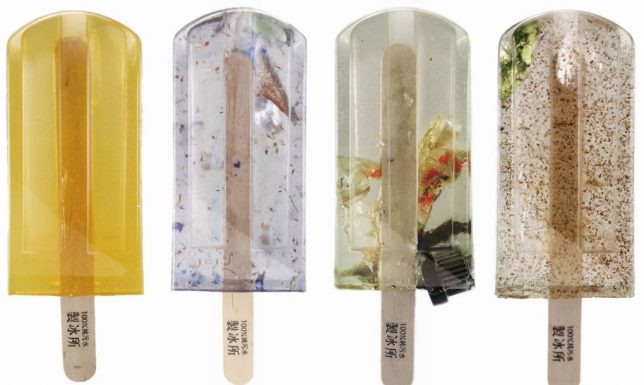
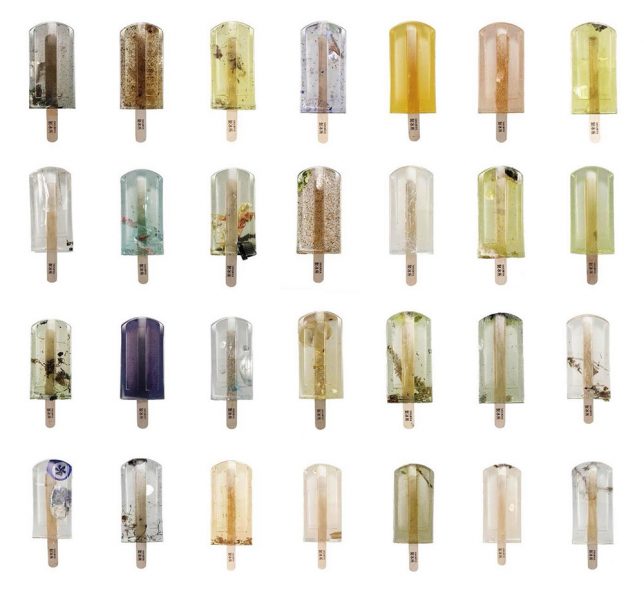
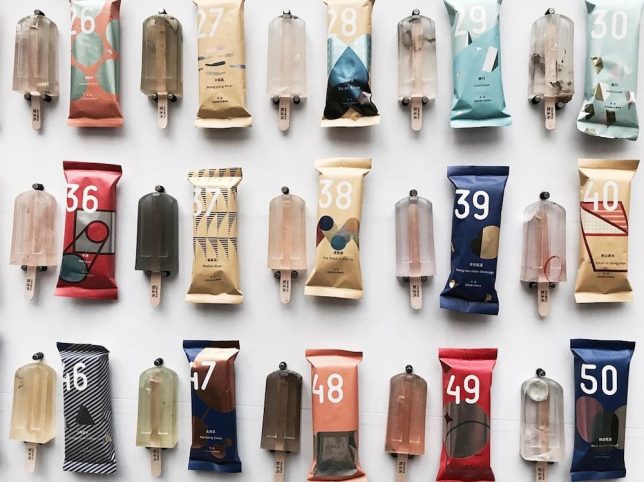
A stomach-churning twist on classic frozen treats, 100 stabilized ice pops made from Taiwan’s polluted lakes, rivers, beaches and ports feature an unsettling array of sewage found in public waters.

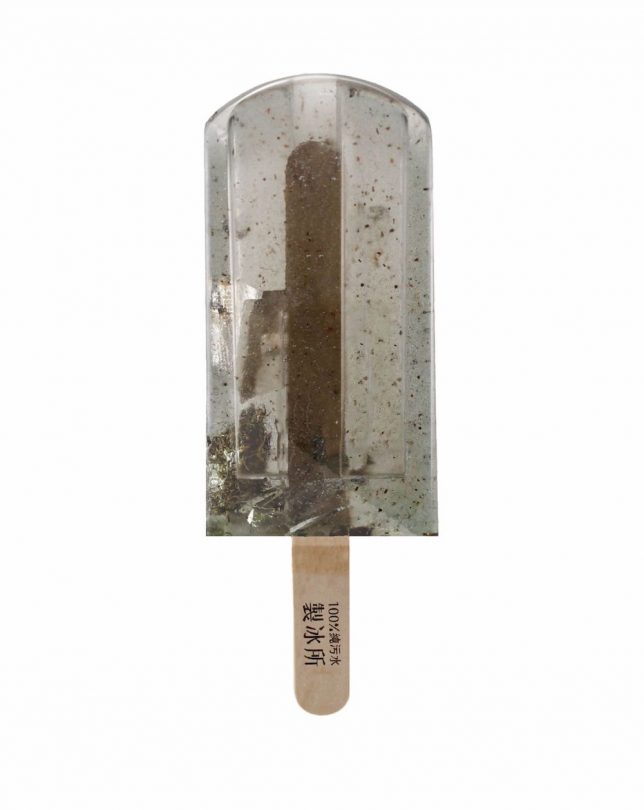
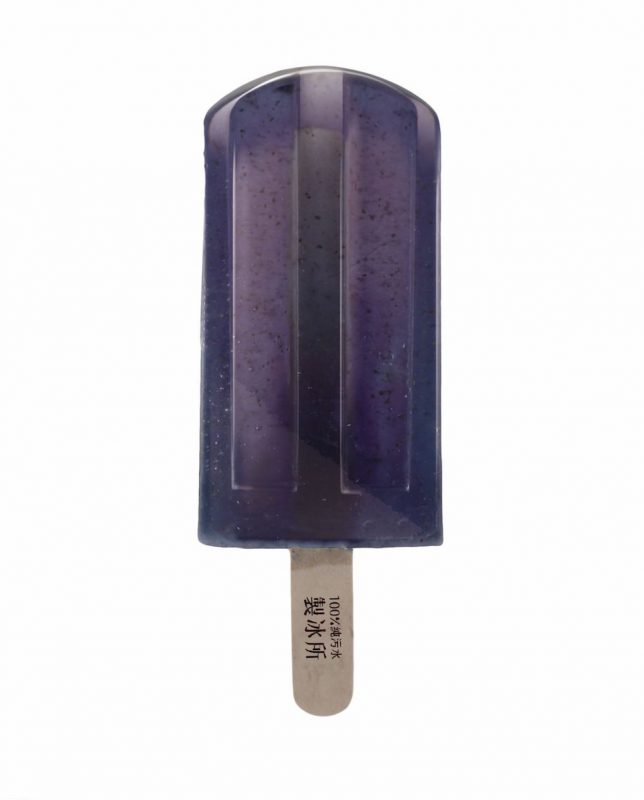
Each of these edible-scale popsicles was first frozen then preserved in polyester resin and wrapped in packaging. Diverse flavors feature ingredients such as plastic, arsenic, mercury and metal. Unappetizing titles include Yang-tzu-chou Drainage, The Large Ditch in Tianwei, and New Huwei Creek.

Some even look tasty at a glance, like some kind of hand-crafted iced delight. But the game of choosing something to try quickly becomes a nightmare of deciding which might be least terrible. Surely one without bits of cork, bottle caps or candy wrappers would be better, but then again: invisible poisons could be much worse.

Art students Hung I-chen, Guo Yi-hui, and Cheng Yu-ti from the National Taiwan University of the Arts concocted titled their line of less-than-delicious designs “Polluted Water Popsicles.” Their work was nominated for the Young Pin Design Award and featured in the New Generation of Design Exhibition this May at the Taipei World Trade Center.

Share on Facebook


[ By WebUrbanist in Art & Sculpture & Craft. ]

[ WebUrbanist | Archives | Galleries | Privacy | TOS ]


WebUrbanist

 
Comments Off on Pollution Pops: Sewage-Ridden Public Waters Frozen into Horrifying Popsicles

Posted in Creativity


Saramonic unveils VMic series of high-end shotgun microphones for DSLRs

21 Jun

Microphone maker Saramonic has launched the VMic series of high-end shotgun microphones for DSLRs. The top-of-the-range Saramonic VMic Pro is a super directional shotgun microphone that mounts directly onto your camera’s hotshoe. It comes with an integrated shock mount system that features an all-metal construction.

There is a 150 Hz low cut filter and a high frequency boost (+6dB) feature that can be controlled independently. The VMic Pro also comes with three position level control (-10dB, 0dB, +20dB), a 3.5mm headphone jack for audio monitoring, and a low battery LED indicator. The microphone’s frequency response is 35 Hz ~ 20 kHz, signal-to-noise ratio is 75dB, and the microphone has a dynamic range of 120dB. Power is supplied by two AA batteries and the package includes a foam windshield as well as a detachable 3.5mm cable to connect to the camera.

The VMic Recorder model features an integrated flash recorder that can store 16-bit / 48 kHz WAV audio files to a Micro SDHC memory card up to 32GB capacity. It also comes with an LCD monitor and a single-button recording function. The standard VMic model comes with similar specifications to the Pro variant but has to make do with a slightly reduced feature set. It will set you back $ 119.95; the Recorder is $ 199.95. No US pricing has been released yet for the VMiv Pro yet which in the UK will cost you £199.14.

Articles: Digital Photography Review (dpreview.com)

 
Comments Off on Saramonic unveils VMic series of high-end shotgun microphones for DSLRs

Posted in Uncategorized


OnePlus 5 camera samples

20 Jun

Today OnePlus has launched its latest flagship smartphone, the OnePlus 5, which comes with a dual-camera setup that combines a main camera with a 1/2.8″ 16MP Sony IMX 398 sensor and F1.7 aperture with a 2x tele-lens that captures images on a 20MP 1/2.8″ Sony IMX 350 sensor features an F2.6 aperture.

We already have our hands on a production unit and our full camera review will be available in the near future. To shorten the wait until then we have posted a selection of sample images that were taken with both wide angle and tele lens in a variety of lighting situations in the gallery below.

Sample Gallery

There are 17 images in our OnePlus 5 samples gallery. Please do not reproduce any of these images on a website or any newsletter / magazine without prior permission (see our copyright page). We make the originals available for private users to download to their own machines for personal examination or printing (in conjunction with this review), we do so in good faith, please don’t abuse it.

Unless otherwise noted images taken with no particular settings at full resolution.

$ (document).ready(function() { SampleGalleryV2({“containerId”:”embeddedSampleGallery_4311077055″,”galleryId”:”4311077055″,”isEmbeddedWidget”:true,”standalone”:false,”selectedImageIndex”:0,”startInCommentsView”:false,”isMobile”:false}) });
Articles: Digital Photography Review (dpreview.com)

 
Comments Off on OnePlus 5 camera samples

Posted in Uncategorized


Have Fun with Boomerang Over and Over Again

20 Jun

When it comes to phoneography one of our very favorite apps is Boomerang.

Well, it was our fave, then not anymore, then it came back. And we threw it out again, and it came back. (hehe)

The Boomerang app films a tiny clip then plays it back and forth in a loop forever (or three times if you post it as an Instagram story), just like magic. So why is that useful?

Oh you can do the most amazing things with Boomerang. Read along to see all our favorite tricks. From levitation to magical hair-doin’.
(…)
Read the rest of Have Fun with Boomerang Over and Over Again (376 words)


© laurel for Photojojo, 2017. |
Permalink |
No comment |
Add to
del.icio.us

Post tags:

The post Have Fun with Boomerang Over and Over Again appeared first on Photojojo.


Photojojo

 
Comments Off on Have Fun with Boomerang Over and Over Again

Posted in Equipment