RSS
 

Archive for May, 2017

This flower bloom time-lapse took three years and 8TB of raw footage to create

09 May

You can pick your favorite symbol of springtime from any number of familiar images. In Seattle, the local favorite is a rain-soaked figure clutching a latte with a cold, dead look in their eyes. But it’s hard to beat the natural beauty and optimism of a blooming flower. That’s the imagery that dominates filmmaker Jamie Scott’s recent time-lapse titled ‘Spring,’ a follow-up to his popular video ‘Fall’ of a couple of years ago.

He gives FStoppers a fascinating look at what it takes to create a time-lapse of this scope. Not surprisingly, a lot of patience and hard drive space were involved. Watch the video, check out the behind-the-scenes and let us know what you think in the comments.

Articles: Digital Photography Review (dpreview.com)

 
Comments Off on This flower bloom time-lapse took three years and 8TB of raw footage to create

Posted in Uncategorized


Risk-Taking Russian Rooftopper: Woman Takes Terrifying Skyscraper Selfies

09 May

[ By SA Rogers in Travel & Urban Exploration. ]

If you’re afraid of heights, a mere glance at these photos taken by Russian daredevil photographer Angela Nikolau might be enough to give you the heebie-jeebies. The 23-year-old scales some of the tallest skyscrapers in Russia and Asia, either using a selfie stick, a drone, or bringing her boyfriend Ivan Kuzenetsov along to take the photos. And as if perching on the edges of structures at such extreme heights isn’t enough, she often does yoga poses or wears stilettos while doing so.

Sunset in Dubai. ?????? ???????? ?????????? ????? ? ????? ??????? ??????? ? ????? ? ?????? !!!?? 9 ??? !!! ?????? ?? ????????? ?? ?????? ? ??? ??? ? ?????? ????? ????? @adrionov! #9??? #????? #????? #????? #???? #????? #???????? #?????????????? #??????????

A post shared by Angela Nikolau (@angela_nikolau) on

Solar Bangkok #chasingrooftops #city_explore #rooftopping #neverstopexploring #ssgkilleverygram #killtheaboveground #urbanexploration #china #roof #rooftop #shanghai #hongkon

A post shared by Angela Nikolau (@angela_nikolau) on

The self-taught climber is not too concerned about bypassing security and breaking trespassing laws to capture these incredible images, and virtually no building is too tall. Angela and Ivan climbed all 2,000 feet of the Golden Finance 117 building in Tianjin, China last fall.

What inspire you? ? ??? ??????????? ?????#chasingrooftops #rooftopping #neverstopexploring #killeverygram #killtheaboveground #urbanexploration #roof #roof_top #rooftop #china #guangzhou #city_explore #rooftopping #neverstopexploring #ssgkilleverygram #killtheaboveground #urbanexploration #china #roof #rooftop #shanghai #hongkong #selfietime #selfies #selfie #extreme

A post shared by Angela Nikolau (@angela_nikolau) on

You often ask me "are you afraid?". Sometimes like on this photo I am afraid. ?? ????? ??????????? ???? "????? ?? ??". ??????, ??? ?? ???? ??????????, ? ??????. #artofvisuals #envisiontones #alphahype#shotzdelight #ourmoodydays #spacewheel#depthobsessed #streets_vision #agameoftones#fatalframes #theIMAGED #eclectic_zhotz#gramslayers #moodygrams #createandcapture#citykillerz #heater_central #streatdreamsmag#colors_of_day #urbanandstreet #thevisualones#way2ill #creativeoptic #themoodoflife#visualambassadors #vzcomacro #folksouls#createcommune #capturedconcepts #burjkhalifa

A post shared by Angela Nikolau (@angela_nikolau) on

Other illegal conquests include the Sagrada Familia in Barcelona, the Shanghai Tower in China, the Tsing Ma bridge in Hong Kong and the Eiffel Tower in Paris. Unsurprisingly, many of the photos have to be taken late at night to avoid being caught.

Do not stop! ?? ??????????????! #yimap #highwithyi #yi4k #chasingrooftops #city_explore #rooftopping #neverstopexploring #ssgkilleverygram #killtheaboveground #urbanexploration #china #roof #rooftop #shanghai #hongkong #selfietime #selfies #selfie #extreme

A post shared by Angela Nikolau (@angela_nikolau) on

My life will never be the same Thanks to my dear @beerkus for the photo. ??? ????? ?? ?????? ??????? !) ?? ???? ??????? ????? ???????? @beerkus #yimap #highwithyi #yi4k #chasingrooftops #city_explore #rooftopping #neverstopexploring #ssgkilleverygram #killtheaboveground #urbanexploration #china #roof #rooftop

A post shared by Angela Nikolau (@angela_nikolau) on

Angela’s casual poses might be the most disconcerting aspect of the photos, especially for those of us who imagine death-gripping the edge if we managed to make it up that high. She’s often lounging dangerously close to certain death, holding on to a ladder with just one hand or hanging barefoot off cranes. In some images, she’s held aloft by her boyfriend, dangling hundreds of feet off the ground.

Dreamer ??????? ???????? ?? @to_be_bride Photo by @beerkus #shanghai #rooftop #roof #chasingrooftops #city_explore #rooftopping #neverstopexploring #killeverygram #killtheaboveground #urbanexploration

A post shared by Angela Nikolau (@angela_nikolau) on

Always near. By @beerkus #hongkong #city #urban #china #girl ?? ???????? ??????? ???? ???????? ???????? @dr.2ch

A post shared by Angela Nikolau (@angela_nikolau) on

Check out my new video, full version by link in bio. My channel on YouTube Elevation_ia Thanks for support @cherehapa #cherehapa ??????????? ????? ???????? ?? ???? ?????? ? ????? ,?????? ? ????????. ??? ????? ?? ????? Elevation_ia ??????? ?? ????????? @cherehapa #chasingrooftops #city_explore #rooftopping #neverstopexploring #ssgkilleverygram #killtheaboveground #urbanexploration #china #roof #rooftop #shanghai #hongkong #selfietime #selfies #selfie #extreme

A post shared by Angela Nikolau (@angela_nikolau) on

On a scale from one to ten, how happy are you now? ?? ????? ?? ?????? ?? ??????, ????????? ?? ?????? ?????????? Thanks to my dear @beerkus for the photo. ?? ???? ??????? ????? ???????? @beerkus #yimap #highwithyi #yi4k #chasingrooftops #city_explore #rooftopping #neverstopexploring #killeverygram #killtheaboveground #urbanexploration #china #roof #rooftop

A post shared by Angela Nikolau (@angela_nikolau) on

Check out all of Angela’s images at her Instagram, @angela_nikolau.

Share on Facebook


[ By SA Rogers in Travel & Urban Exploration. ]

[ WebUrbanist | Archives | Galleries | Privacy | TOS ]


WebUrbanist

 
Comments Off on Risk-Taking Russian Rooftopper: Woman Takes Terrifying Skyscraper Selfies

Posted in Creativity


National Geographic photographer shares tips for controlling light

09 May

National Geographic photographer Bob Holmes has posted a video on YouTube explaining how to control the three different types of light to give your pictures the trademark look from the famous magazine.

Articles: Digital Photography Review (dpreview.com)

 
Comments Off on National Geographic photographer shares tips for controlling light

Posted in Uncategorized


Guardians of the Galaxy team reveals why they chose an 8K Red camera

09 May

If you’re a Guardians of the Galaxy fan, you’re no doubt looking forward to seeing Volume 2 in the series, which was released last weekend. If you find yourself standing in line at the theater, you can even impress your friends with some movie trivia: Guardians of the Galaxy Volume 2 is the first feature film shot on the RED Weapon camera using the 8K RED DRAGON VV sensor. They’ll either be seriously impressed at your informed insider knowledge, or they’ll slowly move away and pretend not to know who you are. YMMV.

If you’re the gear-freak we think you are, watch this behind the scenes video of Director James Gunn and Director of Photography Henry Braham talking about their decision to use the camera, praising it for its large format look, small size, and high degree of usability. Oh, and as a bonus you’ll get to see actors flying around in front of blue screens as well.

Articles: Digital Photography Review (dpreview.com)

 
Comments Off on Guardians of the Galaxy team reveals why they chose an 8K Red camera

Posted in Uncategorized


7 tips to set up your Nikon DSLR for fast use

09 May

We’re fans of Steve Perry’s wildlife and landscape photography, but even bigger fans of his practical tips. In a recent video and article Steve outlines seven great tips about how to set up your Nikon DSLR for quick operation, particularly when it comes to wildlife shooting. Incidentally, we agree with every single one of his points for general shooting: the first thing we do when a new Nikon shows up in the office is set up these very ‘tricks’. They may not be news for seasoned Nikon shooters, but give the video a watch: you may be surprised by what you don’t know.

Articles: Digital Photography Review (dpreview.com)

 
Comments Off on 7 tips to set up your Nikon DSLR for fast use

Posted in Uncategorized


Art Sinks to New Depths: 25 Wet Works of Sub-Aquatic Sculpture

09 May

[ By SA Rogers in Art & Sculpture & Craft. ]

Temporarily submerged in a swimming pool for snorkelers to explore or permanently sunken into the sea as a diving destination, these subaquatic works of art take on a whole new dimension under water. Artists create faux shipwrecks, artificial reefs, submerged art shows and other water-themed works, often with environmental messages.

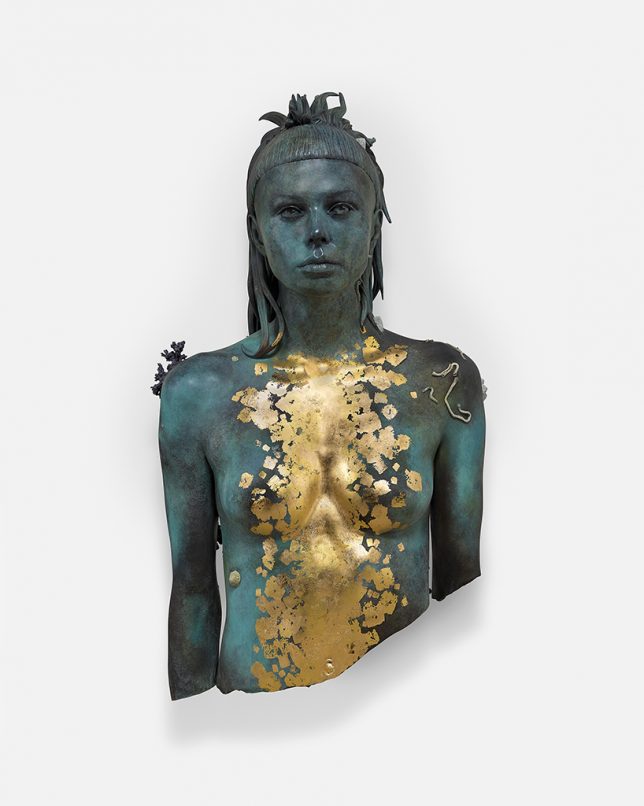
Treasures from the Wreck of the Unbelievable by Damien Hirst

Ten years of work culminate in a massive museum show in Venice as artist Damien Hirst displays ‘Treasures from the Wreck of the Unbelievable,’ based on a fictional account of an ancient shipwreck. The sculptures were lowered into the ocean so their ‘discovery’ by scuba divers could be filmed, and then brought back up again. No one ever called Hirst – who’s known for his outlandish and often absurdly expensive spectacles – unambitious.

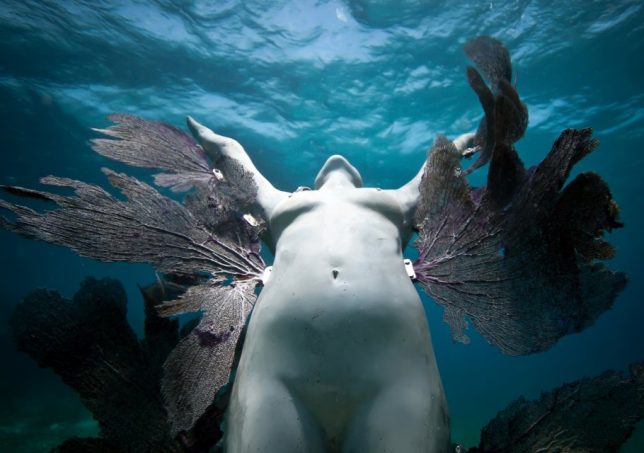
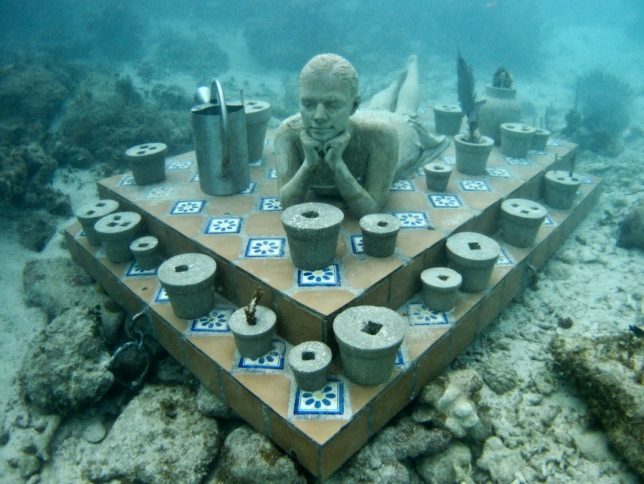
Submerged Sculptures by Jason deCaires Taylor

Looking at the many sculptures by Jason deCaires Taylor that have been submerged into the sea and transformed into artificial reefs, you can’t help but wonder whether these items might remain long after we living humans have rendered ourselves extinct, waiting to be discovered by alien explorers. The sculptor’s work revolves around such issues as immigration and the Syrian humanitarian crisis, and many exhibitions – like The Raft of Lampedusa in the Museo Atlantico, the first underwater contemporary art museum in Europe – are open to divers.

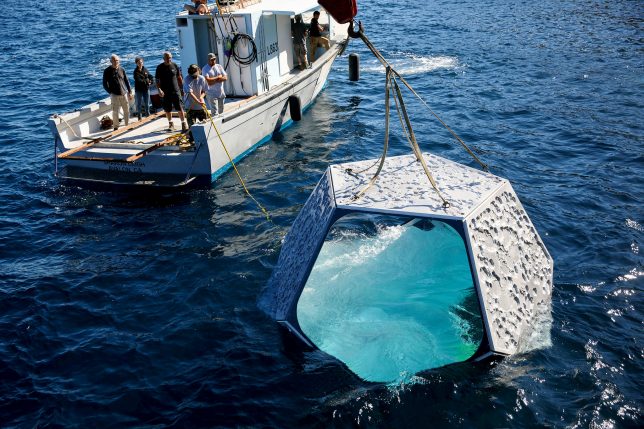
Underwater Pavilions by Doug Aitken

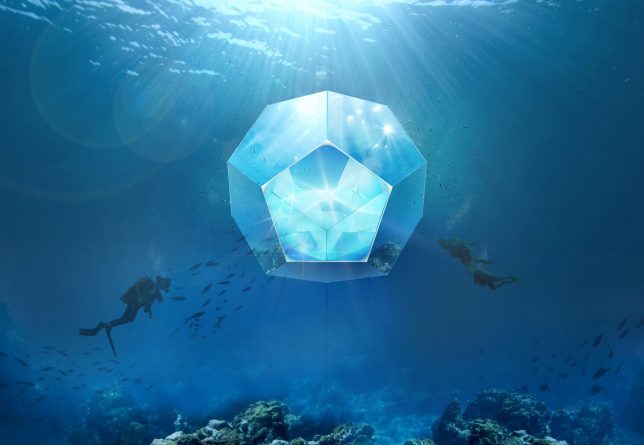
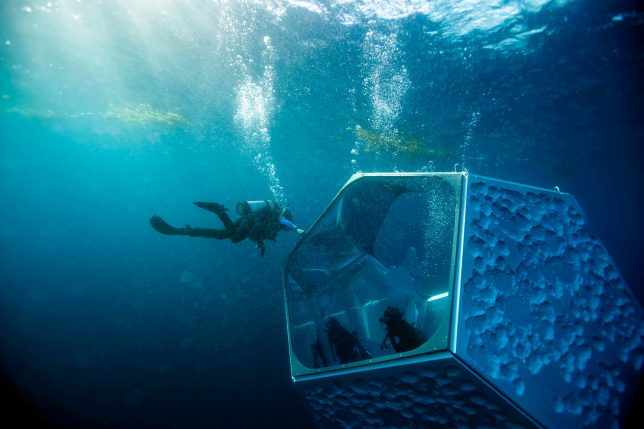
Artist Doug Aitken created three geometric swim-in, swim-out pavilions that are now moored to the ocean floor in a dive park off Avalon, California. Each twelve-sided structure is lined with mirrors, giving them a shimmering appearance that almost doesn’t look real. Produced by Parley for the Oceans and presented in partnership with the Museum of Contemporary Art Los Angeles, the installations “engage the living ecosystem as the viewer swims into and through the sculptures, which create reflective abstractions. The work operates as an observatory for ocean life, creating a variety of converging perceptual encounters. The sculptures will continously change due to the natural and manmade conditions of the ocean.”

Underwater Sculptures Made of Trash by Forlane 6 Studio

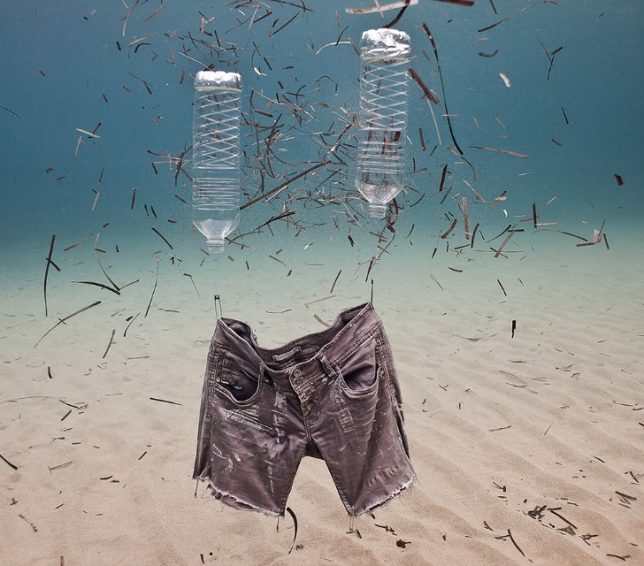
Discarded items found on the beach are transformed into surprisingly beautiful and poignant works of art by Forlane 6 Studio in this underwater photo series. The objects represent the careless way in which human activity has invaded virtually every corner of the earth. “When submerged, the objects seem to metamorphose and become organic creatures,” say the artists. “Their role in space is no longer fixed and static.”

Rapa Nui Reef by Dennis Macdonald

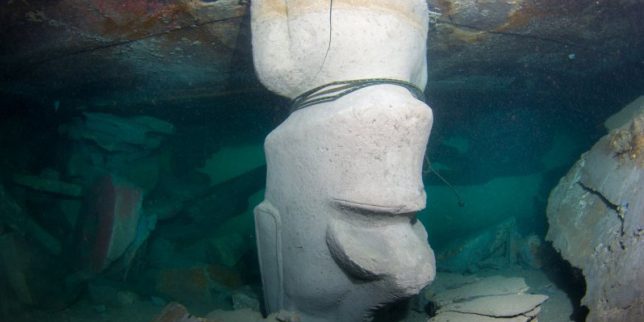
Intended as an underwater replica of the famous Easter Island sculptures, Rapa Nui Reef was supposed to be a dive site off Deerfield Beach in Florida. The sculptures were cast, shipped and loaded onto a barge for installation – but technical difficulties destroyed the project. The barge flipped over, destroying the statues. Oops.

Next Page – Click Below to Read More:
Art Under The Surface 25 Works Of Sub Aquatic Sculpture

Share on Facebook


[ By SA Rogers in Art & Sculpture & Craft. ]

[ WebUrbanist | Archives | Galleries | Privacy | TOS ]


WebUrbanist

 
Comments Off on Art Sinks to New Depths: 25 Wet Works of Sub-Aquatic Sculpture

Posted in Creativity


Lighting Tips for Perfect Portraits

09 May

Snapping a portrait, is much more complex than than pinning up a laser backdrop and requesting your subject say “cheese.”

The key to a polished look is lighting!

Read our tips for making your pals look their best in any light (you might just want to add some shine to help them look their best).
(…)
Read the rest of Lighting Tips for Perfect Portraits (301 words)


© laurel for Photojojo, 2017. |
Permalink |
No comment |
Add to
del.icio.us

Post tags:


Photojojo

 
Comments Off on Lighting Tips for Perfect Portraits

Posted in Equipment


‘That article was more like gossip’ Panasonic’s head of cameras talks downsizing, GH5 and the 8K era

08 May
 Yosuke Yamane: Division President, Imagine Network Business Division

Yosuke Yamane, the Director of Panasonic’s imaging business visited DPReview on a recent trip to the United States. He spoke to us about the GH5, the promise of 8K, reports of downsizing and why we haven’t seen on-sensor phase detection in one of the company’s cameras.

Initial response to the GH5

Given it’s the company’s latest product and that Yamane arrived after visiting the video-focused NAB Show in Las Vegas, we started off asking about the GH5.

Early response has been positive, he says, pointing out that it immediately topped the sales chart at one of the US’s largest dealers. ‘The sales were more than we’d originally planned for,’ he says: ‘It depends on the region: some regions sold three times more than we planned and others it was one-point-five times. We’re very satisfied with the result.’

‘Based on our survey, the first customers are mainly videographers,’ he says. But he expects this mix to change: ‘The GH5 provides the best still picture as well as the best moving picture quality ever in any Lumix, so we expect hybrid photographers and videographers to be 50:50.’

‘For video users, the specifications of the video are very important whereas the stills photographers tend to want to evaluate the image quality, based on pictures taken with the camera. In that sense, more and more photographers will come to the GH5. That’s what we expect.’

Who is buying the GH5?

We pressed Yamane on whether he thought the GH5 was selling beyond existing GH4 owners. ‘We don’t have any specific numbers,’ he says: ‘but my gut feeling is that many GH4 users are upgrading to the GH5, this is a decent portion of our first buyers. But, beside GH4 users, maybe it’ll be Canon EOS 5D III and IV users, or Alpha 7S Mark II users. Especially, my feeling was that EOS 5D Mark III users are very much interested in GH5.’

‘The majority of GH5 sales have been body only: that means lots of GH4 users are buying GH5. But also, at the introduction of the Sony a7S, it took share from the Canon EOS 5D Mark II because of the size. I think the same tendency is happening here: Canon EOS 5D Mark III customers are coming to the GH5 because of the compact size and the quality.’

‘The professional camcorder users coming to the GH5 because of the 4:2:2 10-bit video. 4:2:2 10-bit capable cameras are usually very expensive. It’s a feature mainly incorporated in cameras costing over $ 10,000 but we realized these functions for the GH5, so it can easily become part of their workflow at a very affordable price.’

Stumbling over Log?

On the topic of high-end video users buying the camera, we asked about the popularity of the paid upgrade to add V-Log. ‘We started selling V-Log as an upgrade with the GH4,’ explains Yamane: ‘We don’t know the exact attachment ratio but I know we sold more V-Log packages than we expected. When it comes to the GH5, because the stills side is improved, we don’t know if the attachment rate will be higher or not.’

Yamane was very open about the reasoning behind selling the V-Log feature as a paid upgrade: ‘If we incorporated it into the camera, we would have to charge a higher price for the GH5. As of now we believe it’s appropriate to offer V-Log as an option.’

‘It’s not a cost issue, it’s that Log is recognized as having a certain value in the market. If we want to add that value into this camera, we need to keep the value of Log video to the industry.’

Improvements to be made

With the GH5, Panasonic took the unusual decision to launch the camera with the promise of more features that would come after a few months. Yamane confirmed that the delay to introducing 4:2:2 All-Intra recording was simply because it wasn’t ready in time for the planned launch, though it’s noticeable that the V60 cards guaranteed to support its 400mbps write speed aren’t widely available yet. However, he confirms the engineering team is working on more than just delivering the promised features: there will be an update to improve movie autofocus.

‘Now we are brushing up the smoothness of DFD for video. We don’t know when we can announce it but there will be firmware.’

‘The most important part of video autofocus is not just speed but also the smoothness. We need to find a concession point for the smoothness of autofocus and the speed of autofocus. First we realized fast AF on the stills side using depth-from-defocus (DFD). Now we are brushing up the smoothness of the DFD for the video category. We are working on it right now. We still don’t know when we can announce it but there will be firmware.’

Why not adopt the phase detection approach used by many of its rivals, we asked. ‘On-sensor phase detection doesn’t work any darker than F8, [which can be a problem in video]. It’s not necessarily true that phase detection is better than DFD plus contrast detection.’

‘We think our DFD is going to be better than [the best of our rivals]. That’s our target.’

‘We are also aware of other brands’ excellent [phase detection-based] autofocus: we really respect the quality of their sensors and their technology. But if we wanted to do the same; to make our own sensors [using a comparable technology], we’d have to apply those sensors to all of our cameras. The development costs for this kind of sensor would be huge.’

‘Our DFD system is not dependent on a specific sensor, so from the viewpoint of expandability, we should probably go with DFD technology.’

‘But,’ he says: ‘we think our DFD is going to be better than [the best phase-based AF]. That’s our target and we want to realize that accurate autofocus.’

Engine of change

This bold claim is likely to stem from Yamane’s confidence in the GH5’s underlying hardware. This was the most difficult aspect to develop, he says. ‘Really at the core of the camera is its performance, which comes from the LSI’s development: the new processing engine. I truly believe this is the most special engine in the entire industry. This is not only for DSC but also for consumer and professional camcorders.’

He gave examples of all the things that are asked of the processor: ‘4:2:2 10-bit codec is 64x as much data as before. 4:2:0 8-bit at 60p. Also the DFD system’s speed, Dual IS stabilization, the best image quality for Lumix all need to be calculated in a very short time.’

The challenge extended beyond simply making a powerful processor, he says: the chip has to be efficient so that it allows good battery life and doesn’t generate excessive heat. ‘The heating issue was very tough to overcome. How to make the most efficient engine and how to dissipate heat was the most difficult part of the product development.’

Lenses for a hybrid camera

The Leica DG Vario-Elmarit 12-60mm / F2.8-4.0 ASPH. / POWER O.I.S. is the first in a range of F2.8-4.0 zooms for the Micro Four Thirds system

Moving on from the GH5, we expressed our surprise that the company would introduce a range of variable aperture zooms alongside such a capable video camera.

‘We are not just targeting GH5 customers,’ he explains: ‘we’re targeting all the other Micro Four Thirds cameras users. We’ve also taken other cameras’ sizing into account, and it also fits on the G85 and the GX85 and some other Micro Four Thirds cameras.’

‘The benefit of Micro Four Thirds style is that it can be smaller and lighter. If we made constant aperture F2.8 lenses, they’d be more expensive and bigger. Considering the benefit we can provide stills photographers we decided to go with F2.8-4 and give rather smaller lenses at reasonable prices.’

The lenses include stepless apertures, to minimize any impact on video while zooming, and, he suggests, for anyone concerned about changes in exposure while video shooting, there are workarounds: ‘Videographers can use them as a constant F4: I think we can also give videographers a solution in that way. I agree that in the future we need to offer lenses that best suit videographers but this camera is targeting hybrid users, both videographers and stills shooters, so we decided with this direction for the next three or four lenses.’

Ambitions and focus

It’s unusual for camera makers to talk much about the future, but during our discussion, Yamane set out some pretty bullish ambitions. ‘For Lumix, the United States is a very strategic market. Our target is to double the business volume by 2020.’

We asked him how this would be achieved.The current business in the United States is 30% mirrorless and 70% compact camera,’ he says: ‘though nearer to 50:50 if you count interchangeable lenses as well.’

‘For the future, to double the business, we’re going to focus on high end product: mirrorless cameras and high-end compacts. We expect a decent increase of the compact market to be sustainable.’

In addition to this, he says: ‘We’re also going to strengthen our product for the high-end video market.’

But, initially at least, this is going to be through cameras like the GH5: ‘firstly we’ll focus on the hybrid form factor. Also help photographers interested in making additional income from providing video. I think this camera will help this kind of photographer.’

In terms of compacts, we’ll focus on the ZS (TZ) series, such as the ZS100. Then the LX series, we’d like to strengthen. In this category the Sony RX100 series is very important, we have to directly compete with that. Our strength comes from ZS series. We’ll focus on that strength and FZ series long zoom.’

One camera he didn’t mention was the LX100, which we know to have an avid following. Should we expect a successor, we asked. ‘As I said, RX100 competes directly with LX10 but LX100 is one step higher. So as the customer expects LX200 we will also strengthen the successor of LX100. How will we answer to the passionate customers of the LX100? We will study how we’re going to answer these customers.’

Trickle-down of technology?

Yamane (center) was accompanied on his visit by Terry Takabayashi (left), General Manager, Merchandising Department and Kazuki Sugahara (right), Manager, Americas Section, Imaging Marketing Group.

One method for refreshing models might be through the trickle-down of technology, Yamane suggested: ‘After we introduced the GH4, which was the world’s first 4K mirrorless camera, this 4K technology has been applied in models like G7, G8 and LX100. For the development roadmap, the new technology will first appear in the flagship and then, looking at price and value for money, we will expand the range.’

‘we would like to expand the [GH5’s] technology to other models’

The rationale is pretty straightforward, he says: ‘R&D development of technology requires a lot of investment. So to amortize that investment we have to apply that technology to other models to expand the volume and realize a return on our investment. After we get a return on that investment we have to reinvest that return in new technology: we have to continue that kind of cycle to evolve our product.’

This means using the GH5 technology more widely, without under-selling it, he says: ‘With GH5 also we would like to expand the technology to other models, looking at striking a balance between offering good value for money and at the price zone at which a customer can expect that technology.’

All of this comes back to a phrase that recurred throughout our talk: the use of features such as 4K and 6K Photo modes to ‘create a new photo culture.’

Nikkei, restructuring and gossip

This all sounds very ambitious for a company reported to be considering scaling back its camera business. Yamane says customers shouldn’t worry too much about what the Nikkei, which published the story, said.

‘That article was more like gossip, saying the business may be moving towards the smaller side in the restructuring,’ he says, before explaining what’s happened.

‘Panasonic has four companies. The camera division used to be in the AVC Networks business but, as of the first of April, we moved Digital Camera and Camcorders to the Appliances company.’

‘I’m really proud of the engineering groups that made this camera available to the market’

Moving cameras and camcorders away from the pro video division and into the same company as refrigerators may seem odd, but Yamane explains the logic: ‘The Appliances business is much more consumer focused than the AVC group, which has a significant business-to-business component.’

‘The move will bring our marketing, manufacturing and R&D departments together in one place, so we gain better integration [by moving]. We’ll still co-ordinate across with the AVC business on advanced technologies but [the restructuring] means our R&D and marketing efforts are together.’

The coming of the 8K era

Along with its ambitious targets for US sales, Yamane says the company has ambitious targets for hardware, too. ‘Towards the year 2020, 4K will evolve to 8K. Panasonic has supported the Olympic Games for a long time and in 2020, when the games are in Tokyo, the era of 8K will start, [and] we will develop the hardware to develop the 8K picture.’

This doesn’t necessarily mean 8K video, though: ‘As far as for the customer category, we don’t know if we will be able to record all of the output from 8K video. So the question is how we utilize 8K information and create a new photographic culture’

‘In 2020, when the [Olympics] are in Tokyo, the era of 8K will start: we will develop the hardware to develop the 8K picture’

‘8K Photo will completely change the photo shooting style with 33MP resolution. Whether that’s a 4K crop from 8K or 2K cropping from 8K or it’s 33MP images on the stills side.’

But Yamane makes clear that he’s not just interested in the technology: he’s interested in its photographic benefits to users: ‘Based on the customer voice and the customer opinion, we will make the maximum effort to develop strong products to answer the needs of the customers.’

A team effort

Yamane is immediately clear about what’s going to enable the company to achieve these ambitions: when asked what he was most proud of, he was quick to give credit. ‘The engineers who make the product: my team. As the director of the imaging group I’m really proud of the engineering groups that made this camera available to the market. I am proud of every single feature and I respect the engineers who made each function. As long as those talented and reliable engineers are with me, I believe we can make even more innovative products.’

Articles: Digital Photography Review (dpreview.com)

 
Comments Off on ‘That article was more like gossip’ Panasonic’s head of cameras talks downsizing, GH5 and the 8K era

Posted in Uncategorized


Olympus firmware update brings support for Profoto remote and more to E-M1 II, EM-5 II and PEN-F

08 May

Olympus has announced major firmware updates for its E-M1 Mark II, E-M5 Mark II and PEN-F, as well as a pair of lenses. The camera updates add support for Profoto’s TTL flash system and provide plenty of new features, detailed below.

The first new feature is support for the Air Remote TTL-O (‘O’ for Olympus) radio trigger from Profoto. Pop it on the hot shoe and you can use a simple interface to control off-camera Profoto Air TTL flashes in both TTL and HSS modes.

Other major features include AF Target Spot Metering (E-M1 II only), the ability to set a minimum shutter speed in Auto ISO (PEN-F only), improvements to the AF touchpad function on the PEN-F for left-eye shooters, the ability to use High Res Shot and Focus Stacking modes when shooting with non-Olympus flashes, improved color reproduction on the E-M1 II’s EVF, and more.

Two lenses also receive updates: the 12-100mm F4 IS Pro and 300mm F4 IS Pro. The updates boosts sequential shooting performance when IS is turned on when using the E-M1 II and also improve 5-axis Sync IS with the E-M5 II and the original E-M1.

The updates are available immediately from the Olympus support website in your region. See the press release below for all of the changes in these updates:


Press Release:

PLUG IN AND POWER UP: OLYMPUS® FIRMWARE UPDATE DELIVERS NEW CAPABILITIES FOR OM-D® AND PEN® CAMERAS

Expansive New Performance Updates for the OM-D E-M1 Mark II, OM-D E-M5 Mark II and PEN-F Include TTL and HSS Compatibility with Profoto AirTTL Flashes

CENTER VALLEY, Pa., May 8, 2017 — Today, Olympus announces a series of powerful new firmware updates that enhance the performance of the Olympus OM-D E-M1 Mark II, Olympus OM-D E-M5 Mark II, Olympus PEN-F and select M.ZUIKO® PRO and PREMIUM lenses. The updates are available immediately and are designed to bolster Olympus cameras and lenses with the latest functionality, including true compatibility with the new Profoto Air Remote TTL-O, to strengthen the performance for the professional and enthusiast photographer.

Olympus is dedicated to providing ongoing product functionality and performance improvements to expand the capabilities of their cameras. The E-M1 Mark II, Olympus’s latest flagship camera designed to withstand the rigors of professional use and deliver outstanding images, is upgraded to Version 1.2. The E-M5 Mark II, a high-performance compact system camera that features Olympus’s advanced in-body 5-Axis Image Stabilization, is upgraded to Version 3.0. And the PEN-F, a beautifully crafted camera with creative functions ideal for street shooters and those with an affinity for sophisticated industrial design, is upgraded to Version 2.0.

The recent updates are comprehensive and go beyond compatibility with the Profoto Air Remote TTL-O. The E-M5 Mark II has been enhanced with features that include “Save Settings and Mysets” for saving camera settings on a computer, and a midtone adjustment function has been added to Highlight & Shadow Control for even greater control over the tonal quality of images. The PEN-F now offers touch-to-select Art Filters while viewing the effect in real time, and users can set the slowest shutter speed allowed before the camera raises the sensitivity in ISO AUTO. For the E-M1 Mark II, High Res Shot and Focus Stacking Modes are now compatible with non-Olympus flashes, and AF HOME settings are saved when the camera is turned off.

Firmware Version 1.1 for the M.ZUIKO Digital ED 12-100mm f/4.0 IS PRO and Firmware Version 1.2 for the M.ZUIKO Digital ED 300mm f/4.0 IS PRO improves silent sequential shooting performance when image stabilization is active on the E-M1 Mark II. Firmware Version 1.1 for the M.ZUIKO Digital ED 12-100mm f/4.0 IS PRO also improves 5-Axis Sync IS performance when paired with the E-M5 Mark II and the E-M1 Mark II.

Main Features

  1. Compatibility with Profoto Air Remote TTL-O

The latest firmware upgrade delivers compatibility between the Profoto Air Remote TTL-O and the E-M1 Mark II, E-M5 Mark II and PEN-F models. The Profoto Air Remote TTL-O wirelessly integrates the Profoto Air TTL Flash with these cameras, providing Olympus users with seamless integration with products from one of the leading manufacturers of lighting and light-shaping tools.

Simply attach the Profoto Air Remote TTL-O to the hot shoe for quick remote control of all functions. For more information on which functions can be used, please see the Profoto website: http://profoto.com

  1. “Save Settings and Mysets” function saves camera settings on the user’s computer

The convenient “Save Settings and Mysets” function has been added to the E-M5 Mark II and PEN-F to easily save the user’s customized settings on their computer and restore them on the camera when necessary. This feature is useful for applying the same settings to multiple cameras and saving complex settings when upgrading firmware.

  1. Midtone adjustment function added to Highlight & Shadow Control

The new midtone adjustment function has been added to the Highlight & Shadow Control on the E-M5 Mark II to provide control over bright and dark sections of a subject and to give users complete control over the tonal properties of the image.

  1. AF Target Spot Metering provides spot metering at the focus point

AF Target Spot Metering is now available on the E-M5 Mark II to effectively link the AF Target position and spot metering area.

  1. Touch to select Art Filters while viewing sample images on the screen

Sample images that demonstrate the effects of the Art Filter are now shown at the bottom of the PEN-F’s screen. Users can simply view and touch the sample Art Filter image on the screen to instantly activate that option.

  1. Set the shutter speed to begin raising the ISO sensitivity in ISO AUTO

It is now possible to control the lowest shutter speed setting on the PEN-F. This allows users to predefine a minimum shutter speed so that the ISO sensitivity increases in low-light situations rather than slowing down the shutter speed. This is convenient for handheld shooting in low-light environments.

  1. Improved AF Targeting Pad on the rear LCD monitor

The firmware update makes it possible to use touchpad operations on the PEN-F even if your nose touches the rear LCD monitor while looking through the viewfinder. The AF Targeting Pad provides the freedom to move the AF point on the rear LCD monitor using touch operations while keeping your eye on the viewfinder.

  1. High Res Shot and Focus Stacking Mode compatibility on non-Olympus flashes

The E-M1 Mark II’s powerful 50MP High Res Shot and Focus Stacking Modes are now supported with both Olympus flashes and flashes from other manufacturers.

  1. Automatic switching to rear LCD monitor when shooting with the viewfinder

When shooting through the E-M1 Mark II’s viewfinder during Rec View, the camera now automatically switches to the rear LCD monitor for image playback when the eye is moved away from the viewfinder.

  1. AF HOME settings saved when camera is turned off

Previously, AF HOME settings were reset after the E-M1 Mark II was turned off. The firmware upgrade saves the user’s AF HOME settings even if the camera is turned off. 

Additional Improvements

  • Improved viewfinder color reproduction during shooting for the E-M1 Mark II lets users compose their image while viewing color more accurately.
  • Improved stability for battery level display for the E-M1 Mark II.
  • Lens firmware upgrade improvements:

(1) M.ZUIKO Digital ED 12-100mm f/4.0 IS PRO Firmware Version 1.1 and M.ZUIKO Digital ED 300mm f/4.0 IS PRO Firmware Version 1.2 improves silent sequential shooting performance when image stabilization is active on the E-M1 Mark II.

(2) M.ZUIKO Digital ED 12-100mm f/4.0 IS PRO Firmware Version 1.1 improves 5-Axis Sync IS performance when paired with the E-M5 Mark II and E-M1 Mark II.

Camera Bodies – New Functions and Improvements

  E-M1 Mark II
Ver 1.2
E-M5 Mark II
Ver 3.0
PEN-F
Ver 2.0
Compatibility with Profoto Air Remote TTL-O X X X
“Save Settings and Mysets” for saving camera settings on a computer Already available X X
Midtone adjustment function added to Highlight & Shadow Control  Already available  X Already available
AF Target Spot Metering provides spot metering at the focus point Already available X Already available
Touch to select Art Filters while viewing sample images X
Set the shutter speed to begin raising the ISO sensitivity in ISO AUTO  Already available X
Improved AF Targeting Pad on the rear LCD monitor Already available X
High Res Shot and Focus Stacking Mode available on non-Olympus flashes X Already available Already available
Automatic playback on rear LCD when using Rec View in the viewfinder X Already available Already available
AF HOME settings saved when camera is turned off  X Already available Already available
Improved viewfinder color reproduction X
Improved stability for battery level display X

M.ZUIKO Lenses – New Improvements

  E-M1 Mark II  E-M5 Mark II E-M1
M.ZUIKO Digital ED 12-100mm f/4.0 IS PRO Firmware Ver 1.1 and M.ZUIKO Digital ED 300mm f/4.0 IS PRO Firmware Ver 1.2 improves silent sequential shooting performance when image stabilization is active  X*
M.ZUIKO Digital ED 12-100mm f/4.0 IS PRO Firmware Ver 1.1 improves 5-Axis Sync IS performance Already available X X

* E-M1 Mark II must be upgraded to firmware v1.2

Articles: Digital Photography Review (dpreview.com)

 
Comments Off on Olympus firmware update brings support for Profoto remote and more to E-M1 II, EM-5 II and PEN-F

Posted in Uncategorized


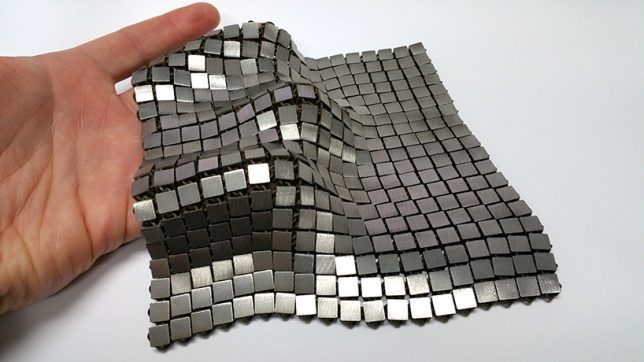
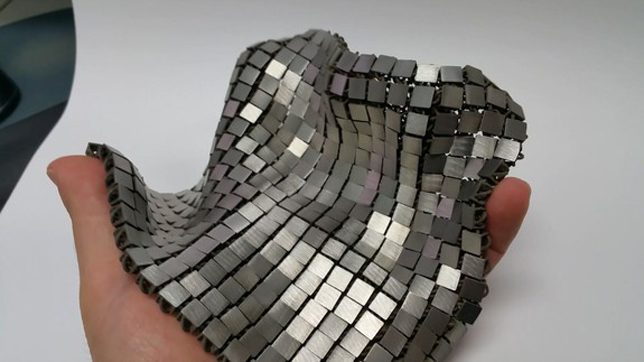
Chain Mail for Space: NASA’s 4D-Printed Metal Fabric Deflects Debris

08 May

[ By WebUrbanist in Conceptual & Futuristic & Technology. ]

NASA’s latest futuristic textile is made of metal but can fold and change shape, protecting a wearer (or covered craft) from dangerous collisions that could tear holes in people or ships.
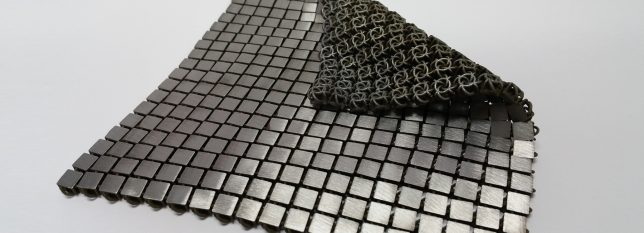
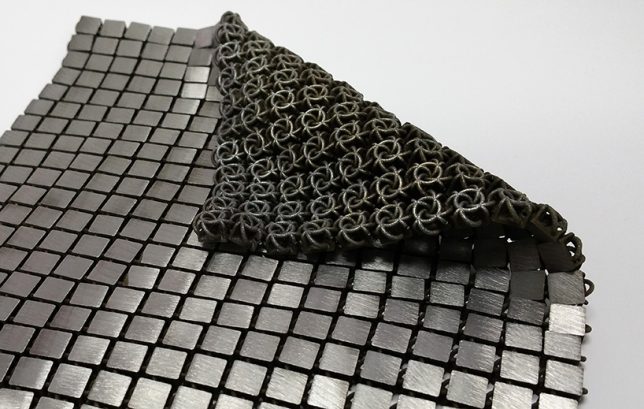
The woven metal is made up of a squares on the surface that are linked together on the back, but thanks to clever manufacturing the entire system can be created at once (rather than stitched together). With printers sent into space, this means astronauts could recycle and rebuild the material for different applications on demand.

“We call it 4D printing because we can print both the geometry and the function of these materials,” explains Polit Casillas. “If 20th century manufacturing was driven by mass production, then this is the mass production of functions.”

Developed by the Jet Propulsion Laboratory, this versatile textile has thermal protective properties as well, able to to keep machinery and people warm. Despite its flexibility, the mail retains a high tensile strength and can reflect or absorb light for heat control depending on which side faces outward.

Share on Facebook


[ By WebUrbanist in Conceptual & Futuristic & Technology. ]

[ WebUrbanist | Archives | Galleries | Privacy | TOS ]


WebUrbanist

 
Comments Off on Chain Mail for Space: NASA’s 4D-Printed Metal Fabric Deflects Debris

Posted in Creativity