RSS
 

Archive for May, 2017

Which DSLR Lens Should You Choose?

15 May

Nothing gives you more creative control over your photo snapping, than venturing into the world of DSLR photo-ing.

You can trick out your camera with new lenses, lights, tripods, and more to get just the photo-style you’re looking for. But, figuring out what lens to pick up first can be daunting.

So, we asked our Twitter followers (that’s you! Or … it could be) what lenses they first bought (or wish they had) after their kit lens – and we got lots of great answers and advice!

We’ve put these tips into this helpful guide so buying your first lens will be easy-peasy.

(…)
Read the rest of Which DSLR Lens Should You Choose? (838 words)


© Meg for Photojojo, 2017. |
Permalink |
No comment |
Add to
del.icio.us

Post tags:


Photojojo

 
Comments Off on Which DSLR Lens Should You Choose?

Posted in Equipment


A slow motion dive onto a trampoline covered with mouse traps

15 May

You’ve said it to yourself at least 100 times: ‘Hey, if only I had a trampoline, and maybe 1,000 mouse traps, I could have a jolly good time by climbing up a ladder and throwing myself on top of them all.’

We understand this is a bucket list item for an awful lot of people. After all, with trampolines readily available online, and mouse traps that can be ordered in bulk, why the heck not? Of course, if you’re being really honest with yourself, you’ll admit that the only thing holding you back from acting out this all-too-common fantasy is not having a $ 100,000 Phantom Flex 4K camera so that you share the experience in super-slow-motion on social media.

Thankfully, the Slow Mo Guys are around to help. It took them four hours to set everything up, and just a few seconds to take the plunge, but with super-slow-motion we get to see every detail.

Of course, this got us curious. If you had access to a Phantom Flex 4K, what would you shoot in slow motion?


Articles: Digital Photography Review (dpreview.com)

 
Comments Off on A slow motion dive onto a trampoline covered with mouse traps

Posted in Uncategorized


Shiftcam is a 6-in-1 lens case for the iPhone 7 Plus

15 May

The dual-camera of the iPhone 7 Plus with its 28 and 56mm equivalent lenses, offers more flexibility in terms of focal length and framing than most smartphones. The Kamerar attachment we tested some time ago increases this flexibility even further by adding more tele reach, macro capability and a fish-eye lens. 

The new Shiftcam camera lens case that is now on Kickstarter takes things one step further by adding even more lens options. The concept it similar to the Kamerar, with a system that is built around a shock-proof case that comes with a camera grip and an optional wrist strap. A snap mechanism and sliding lens module allow for quickly switching between telephoto, wide-angle, fisheye and macro options. The current prototype design includes the following lenses:

  • 120 Degree Wide-angle
  • 10X Macro
  • 20X Macro
  • 180 Degree Fisheye Lens
  • 2X Telepho

The makers of the Shiftcam are currently collecting funds for finalization of the design and mass production on the Shiftcam Kickstarter page where you can also secure a Shiftcam case by pledging $ 59. Shipping is planned for August 2017. We are hoping to get our hands on a review unit soon for a more in-depth look.

Articles: Digital Photography Review (dpreview.com)

 
Comments Off on Shiftcam is a 6-in-1 lens case for the iPhone 7 Plus

Posted in Uncategorized


Can you build a cheaper X100 with a mirrorless body and pancake lens?

15 May
One of the ones to beat: the Fujifilm X100F offers excellent image quality in a relatively compact and, dare I suggest, quite attractive package.

As a bunch of (perhaps above-averagely tech devoted) photographers, one of the unifying factors in the office is our love of larger sensor, fixed prime lens cameras. Obviously there are still arguments about whether they should be 28mm or 35mm equivalent and whether the compactness and lower price of APS-C outweighs the image quality benefits of full-frame, but that’s because we’re an awkward, opinionated bunch. We’re broadly agreed that they’re a great concept.

But is there another way of getting the same result? Of putting together a small mirrorless camera and one of the newly prevalent pancake primes, and ending up with a cheaper and more flexible combination?

There’s always something enticing about the prospect of doing something your own way, of cleaving from the path prescribed by the marketeers, and coming up with a better solution.

So what are your options? Let’s looks at the lenses available and then see if there’s an appropriate body to match.


The lenses

First it helps to decide what focal length you want. I’ve mapped the most common pancake lenses on a graph, showing equivalent focal length and equivalent aperture. This lets us compare field of view, depth of field and, to a reasonable approximation: low light image quality. I’m not going to argue about this, it just does.

As this chart shows, you broadly speaking get to choose from roughly 24, 28, 35 or 40mm equivalent lenses. I’ve included a couple of our favorite fixed-lens prime cameras on for reference.

Looking at the chart, you might think: ‘great, I’ve got lots of choices.’ But please let me ‘manage your expectations,’ if you don’t mind me using one of the most loathsome phrases I’ve ever encountered.

Why don’t I want you to get your hopes up too much? Well, mainly because some of these lenses just aren’t very good. The precise reasons for my skepticism vary but a recurrent concern is that far too many of these lenses use ‘unit focus’ or ‘group focus’ design, where a most, if not all of the lens groups have to be moved around to focus the lens. This is probably the worst way to design a lens that’s going to be used with contrast detection AF: accelerating lenses in one direction and then the other rewards the lightest of focusing elements. By contrast, trying to heft multiple groups around takes rather longer. On the other hand, this design can give good optical results. Eventually.

Then you’ve got the lenses that are optically iffy. The Sony 16mm F2.8 E may stand out because it’s the only 24mm equivalent option here, but there’s the slight downside that it’s legendarily indifferent. In fairness, there may be examples that don’t have corners or whole sides of the lens that are a bit mushy, I’ve just never encountered one.

28mm equiv.

28mm equivalent lenses allow you to shoot slightly wider-angle scenes. Or this picture of a train.

There are two stand-out choices here: the tiny but seeming end-of-life Panasonic Lumix G 14mm F2.5 II Aspherical II and the not-really-a-pancake at all Sigma 19mm F2.8 DN for Sony E-mount. Both are fast-focusing and, at around $ 280 and $ 200 respectively, are rather keenly priced. And, to add to the appeal, the main camera they’re likely to have to face down is the Ricoh GR II, which has only a moderately fast F2.8 maximum aperture (and unit focus, would you believe), so either of these lenses should be able to offer a credible alternative.

35mm equiv.

At 35mm equiv, again there are two obvious choices. Personally I’d prefer the Olympus 17mm F1.8 over the Canon 22mm F2, just on the basis that it uses a single, internal focus element. This means it’s much faster than the Canon, whose group focus design holds it back a little, even on the latest EOS M bodies with their clever Dual Pixel AF.

That said, the Canon is a jolly reasonable $ 250, rather than the $ 400 that the Oly will set you back. Also, the Olympus is again a little stout to really class as a pancake lens. But, given it can be paired with some very small bodies and because I like its snap-back manual focus ring, I’m keeping it in the running.

40mm equiv.

The GX85 isn’t as small as the GX850 (which makes us mourn the end of the GM line all the more), but it still pairs rather well with the 28mm equiv 14/2.5 or the 40mm equiv 20/1.7.

40mm equiv used to be a fairly standard lens for fixed prime lens cameras. It doesn’t really have the hint-of-wide-angle charm of a 35mm equiv, but some people like it. It’s Panasonic’s 20mm F1.7 that’s the obvious choice here. It’s the same old story: ‘first pancake design? let’s use unit focus,’ but it’s a pretty reasonable $ 270 and it’s fast enough so long as you don’t have ambitions of using it in AF-C mode all the time.

Fujifilm’s 27mm F2.8 is a little slower, in equivalent terms, but it’s really the combination of this and a $ 450-odd price tag that puts me off.


The cameras

So, what are the best cameras to pair these little lenses with? Personally, I’d argue that the perfect pancake-shooting camera will carefully balance three key properties: size, price and a degree of external control. I don’t expect all three to be optimal, but those are the things I need, if I want to get anywhere close to the experience of something like a Ricoh GR or a Fujifilm X100 series.

I’m not going to insist on a viewfinder, since Ricoh, Fujifilm, Leica and Sony have sold prime lens cameras without them and presumably they’ve done some sort of market research before committing hundred of thousands of dollars to that decision. But it’s a nice thing to have.

There’s more to this than lens depth. A 60mm equiv camera with a full-depth SLR mount and single control dial isn’t quite what I’m talking about.

Sony E-mount

This one’s easy, I reckon. The Sony a6000 is small, it offers a degree of external control plus a little bit of customization, has a viewfinder and is available for $ 500. Even though I have mixed feelings about the small, convenient and frequently slightly wonky 16-50mm power zoom, you can pick it up as part of a kit for just one hundred extra dollars. And, in doing so, take some advantage of the extra flexibility that comes from going down the ILC route.

The a5100 is also worth a look. It’s essentially the same hardware but with fewer controls and less scope for customization so would seems to fall foul of my rules almost immediately, but the flip-up touchscreen is going to appeal to some people.

I wouldn’t, personally, try to save money by picking up an NEX-6, at this point. On paper it doesn’t look that different from an a6000 (it was slightly higher spec in a couple of respects), but having got used the to improved menus and customizable function menu of the a6000, I couldn’t go back. Especially not for a camera I actually want to enjoy.

Canon EF-M

Canon has bounced around all over the shop in terms of who it’s targeting with its EOS M cameras. Whether this is an attempt to protect its DSLR sales or a sincere belief that only entry-level users want mirrorless cameras, it’s meant there aren’t many options if you want an enthusiast level of direct control.

The Canon 22mm F2 isn’t the fastest focusing lens but it’s better on the company’s more recent cameras and makes a great ‘world as I see it’ documentary lens.

The EOS M3 was the first model to include both a command dial and a dedicated exposure comp dial, so is one of the few I’d consider for this task. You can pick one up for around $ 430 at the moment, so it’s pretty well priced, too.

Like the Sony a5100, the EOS M10 is a simplified, primarily touchscreen-controlled model, which isn’t really my thing, but might be yours.

Sadly, both of these models are built around the company’s last generation Hybrid AF CMOS sensors. It works reasonably well but it’s not a patch on the Dual Pixel AF that arrived with the M6. The M6 would be a much better fit for this role than either of the bodies I’ve mentioned, but sadly it’s currently around $ 900, which significantly undermines the aim of putting together a cheap kit. If the price drops, though…

Micro Four Thirds

The Micro Four Thirds system has two great advantages, here: as the world’s first Mirrorless Interchangeable Lens Camera system, both Olympus and Panasonic have had enough time to develop some inexpensive bodies with a good level of control. Then, of course, its slightly smaller sensor allows the camera bodies and lenses to be that bit smaller, too.

The Panasonic 20mm F1.7 pairs well with a small camera body, meaning it’s with you when a stranger unexpectedly throws straw at you.

This leaves you with a good choice of bodies. On the Panasonic side of things, there’s the GX850/GX800, which is currently the company’s smallest body. Sadly it’s not quite as small as the ‘GM’ series it replaces. The GM5 would be perfect for this application, but it’s only going to get harder to find one at a decent price, now. The slightly larger GX85/GX80, which gives more direct control. If you’ve spotted anything of a trend so far, you won’t be surprised that this is the one I’d go for.

The Olympus rival here would be the E-PL8 (or the PL7 if you can find one). With a little bit of button reassignment and customization, the PL8 makes a pretty good hands-on shooter and also offers a flip-up touchscreen. The JPEG color is lovely, too, which is a bonus if that was one of the factors pushing you towards the X100F.


Recommendations:

28mm equiv:

  • Sony a6000 + Sigma 19mm F2.8
    ~ $ 700 ($ 800 with kit zoom)

As I say, this one’s easy. It’s a capable camera at a fiercely competitive price. The Panasonic GX85 + 14mm lens will be a bit smaller, feels a bit better in the hand and offers 4K video, but it ends up being around $ 900 and you don’t even get the kit lens for that, so I’d go with the Sony/Sigma combination.

35mm equiv:

  • Olympus E-PL8 + 17mm F1.8
    ~ $ 950 ($ 1050 with 12-32mm kit zoom)
  • Fujifilm X-A3 + 23mm F2
    ~$ 1050 (including 16-50mm kit zoom)
  • Canon EOS M6 + 22mm F2
    ~$ 1020 ($ 1150 with 15-45mm kit zoom)

As you can see, you get plenty of choices if you prefer the 35mm equiv focal length (which, as right-thinking people, you should). The Olympus is both pretty and pretty small, the Canon is the most expensive but fits more honestly into the Mirrorless+Pancake definition and requires much less reconfiguration to adapt it to the task.

But, since this is an opinion piece, not a review, I’m going to cheat and choose something that I’ve not even mentioned yet: the Fujifilm X-A3 and 23mm F2. Sorry to spring it on you like that.

He just came out of nowhere! Grabbed shot with the Fujifilm X100F

Clearly I’m not sorry, though. The X-A3 isn’t as well built as the Canon, and the Fujifilm 23mm F2 doesn’t fit any sensible definition of a pancake, but it’s the closest you’ll get to the capabilities of the X100 series. On top of this, the X-A3 has twin control dials, a 24MP sensor and a sensible price tag, so it’s in. And, just to add to the appeal, it is part of a system with the best range of circa-$ 500 prime lenses I can think of. So there.

Fixed lens or ILC?

Swings and roundabouts: there are advantages and disadvantages to each solution, but both these 35mm equivalents have a lot going for them, whether as main or secondary camera.

Ultimately, going down this route, whichever brand and combination you choose doesn’t buy you such an photographer-focused camera as the likes of the Ricoh GR II or the Fujifilm X100F. You usually have to settle for a darker lens and significantly less control. Worse still, you don’t even necessarily save that much money.

However, the clear benefit of slapping a pancake (or something vaguely like it) on a little mirrorless camera is flexibility. Because, as soon as you want to expand your horizons beyond the pancake’s field of view, you can can put on another lens and do just that. So please think carefully about which other lenses are available and, whatever you decide, I hope you enjoy the prime lens shooting experience.

Articles: Digital Photography Review (dpreview.com)

 
Comments Off on Can you build a cheaper X100 with a mirrorless body and pancake lens?

Posted in Uncategorized


Flat-Pack Life Support: NASA’s Inflatable Hydroponic Space Greenhouse

15 May

[ By WebUrbanist in Conceptual & Futuristic & Technology. ]

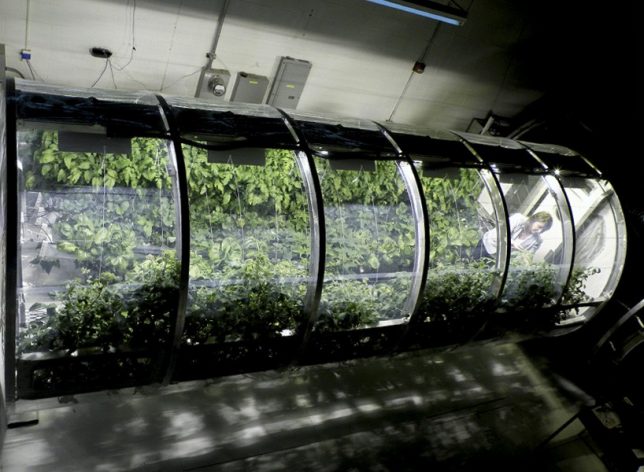
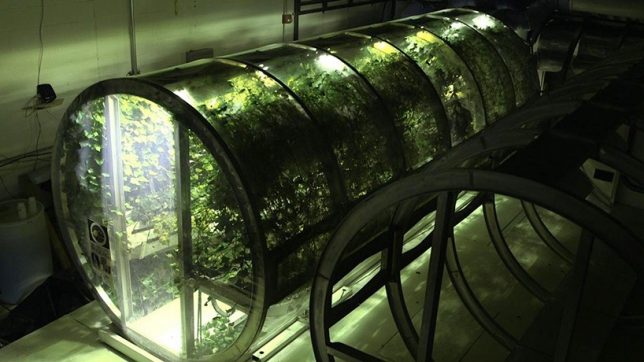
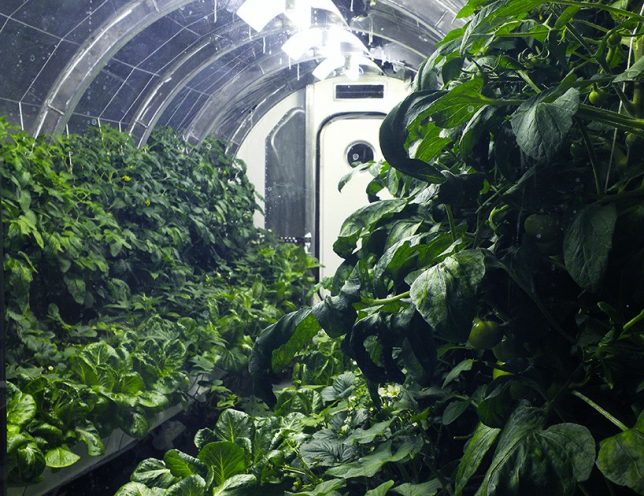
A key development in the quest to create sustainable ecosystems in space, this expandable greenhouse prototype aims to generate essential food and oxygen for long-term astronaut travel.

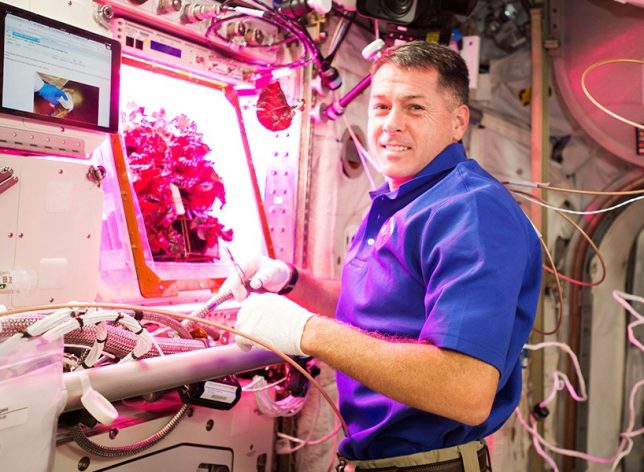
Recently, Peggy Whitson broke the record for longest stay in space (534 days) and astronauts have started growing their own vegetables on the International Space Station. This collapsible growing unit aims to take things to the next level, enabling longer-term settlements on places including the moon and Mars.

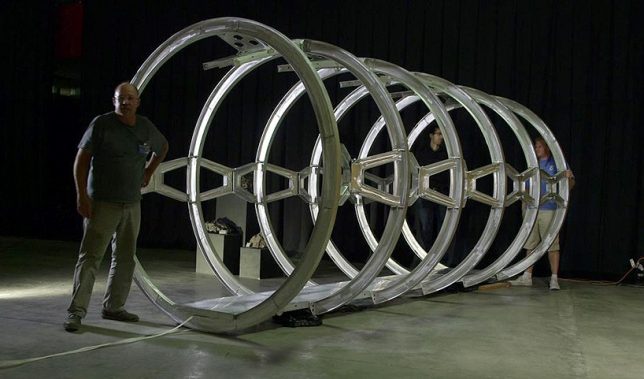
Developed by NASA and agricultural researchers at the University of Arizona, the test unit spans 7 by 18 feet. Its primary functions: convert carbon dioxide from crew, support plant photosynthesis. This bio-regenerative approach to life support is an essential system for recycling scarce resources off-planet.

It also takes its queues directly from our own world: “We’re mimicking what the plants would have if they were on Earth, and using of these processes for life support. The entire system of the lunar greenhouse does represent, in a small way, the biological systems that are here on earth.”

But a big trick to the design is simply its portability: materials take up space, so engineering minimal frameworks that will work when the system is expanded is critical to getting space greenhouses into (and out of) orbit in the first place.

Meanwhile, on the ISS, astronauts continue to grow (and consume) plants outside of Earth’s normal gravity, paving the way for a better understanding of how agriculture will really work off-planet in the future.

Share on Facebook


[ By WebUrbanist in Conceptual & Futuristic & Technology. ]

[ WebUrbanist | Archives | Galleries | Privacy | TOS ]


WebUrbanist

 
Comments Off on Flat-Pack Life Support: NASA’s Inflatable Hydroponic Space Greenhouse

Posted in Creativity


Cookin’ With Gas: 12 Abandoned Food Trucks

15 May

[ By Steve in Culture & History & Travel. ]

Food trucks and snack vans are mobile kitchens that offer meals on wheels to busy folks on the go… until the day they break down and are left abandoned.

Food trucks are specialized vehicles that aren’t easily un-specialized – especially by owners who presumably have fallen on hard times. Sometimes the only thing to do is abandon the chewed-up hulk in a field somewhere. In the case of the former “Mr. Food Go Go!”, that field is situated in Ravenhall, just west of Melbourne, Australia, and it’s brought to us by Flickr user Ken O’Toole (KENO Photography).

Riddle Me This

In the Old West, cowboys saddled with a terminally ill or mortally wounded horse would “take it behind the barn and shoot it”. Times have changed but it seems were still shooting our meal tickets, for example this rough & ravaged former food truck parked permanently in driest West Texas. Flickr user food shark gets the “credit” for snapping the bullet-riddled step van above on April 18th of 2008 near Chinati Hot Springs.

Gratefully Dead

Tired old VW Microbuses are fetching big bucks on the collector car market these days but this particular trippy hippie transport looks to be far too er, wasted for that. At least it lived out its last days doing what most minibuses dream of: serving up natural non-poisonous vittles to a new generation of Deadheads. Flickr user travelr16 caught up with the busted bus on April 3rd, 2011 on the campus of abandoned St Mary’s College near Ellicott City, Maryland.

Sailing Into The Sunset

“Sales are slow,” states Flickr user Alan (sunset sailor) of the above land-locked former burgermobile. Judging from his user name, this would appear to be his very own retired rolling fast-food emporium. The truck looks to be in respectable shape, at least compared to some of our other examples, though it’s in danger of being swallowed whole by the steadily encroaching vegetation. Sean Spicer, are you in there?

Next Page – Click Below to Read More:
Cookin With Gas 12 Abandoned Food Trucks

Share on Facebook


[ By Steve in Culture & History & Travel. ]

[ WebUrbanist | Archives | Galleries | Privacy | TOS ]


WebUrbanist

 
Comments Off on Cookin’ With Gas: 12 Abandoned Food Trucks

Posted in Creativity


Microsoft unveils Windows Story Remix, a video editor for Windows 10

14 May

Windows Movie Maker is revived in Story Remix, an app announced today for Windows 10 users at Microsoft’s Build conference. It allows users to easily edit together photos and videos from their mobile and desktop collections into movie clips.

Microsoft’s presentation emphasizes its ease-of-use and collaboration features, but the attention-getter is the ability to easily drop in special effects. Fireballs, 3D-figures and text can be added to a scene and anchored to objects for a realistic-looking cinematic effect. 

For those less interested in customizing their video, Story Remix can automatically edit photos and videos into a movie with basic input from the user, presenting the option to ‘remix’ the whole thing if you don’t like what you get. The demonstrations certainly look clever – we’ll be interested to see how end users take to the final product.

Articles: Digital Photography Review (dpreview.com)

 
Comments Off on Microsoft unveils Windows Story Remix, a video editor for Windows 10

Posted in Uncategorized


A mother shares her love of adventure with her son

14 May
Sarah-Jane “SJ” Staszak is suspended from a cliff with her son Hamish. (Photo courtesy of Benjamin Von Wong)

Benjamin Von Wong is at it again, this time partnering with digital artist Karen Alsop on a Heart Project to give a paralyzed mother another opportunity to share her love of adventure with her 8-year old son Hamish.

Von Wong and Alsop teamed up to give former outdoor education instructor SJ Staszak a chance to create some magical images with Hamish. Staying true to their individual artistic approaches, Von Wong set up a shoot where SJ and Hamish were suspended off a cliff (as were Von Wong and the lighting equipment) and Alsop used digital manipulation to edit studio photos of the mother-son duo.

‘Tunnel of Life’ (photo courtesy of Karen Alsop)

Read Von Wong’s post for more photos and behind-the-scenes footage

Articles: Digital Photography Review (dpreview.com)
 
Comments Off on A mother shares her love of adventure with her son

Posted in Uncategorized


We shot the Boeing 737 Max 9’s first flight with a Sony Cyber-shot RX10 III

14 May

The Boeing 737 Max 9, shortly after landing. There’s enough latitude in the RX10 III’s Raw files to allow for moderate shadow and highlight adjustment.

28mm (equiv) F4.5, ISO 100

As has been amply demonstrated in the past, I’m an aeroplane nerd. So when Boeing offered us the chance to shoot the first flight of its brand new Boeing 737 Max 9 last month, I jumped at the chance. I might even have pushed a couple of my colleagues out of the way.

In the end, three of us headed over to Boeing Field in Seattle for the first flight – Dan, (who couldn’t care less about aeroplanes), with a Panasonic FZ2500; me, the super-nerd with the Sony RX10 III, and Carey, an impartial observer, with a Panasonic GH5 (to film me and Dan arguing). We’ll be publishing a longer article comparing our results soon, but in the meantime, with the 737 Max 9 just (temporarily, hopefully) grounded, we thought you might like a sneak preview.

The 737 Max 9 at the end of the runway at Boeing’s Renton assembly plant, seconds before starting its takeoff roll.

400mm (equiv) F4, ISO 100

I am on record as having described the Sony RX10 III’s lens as being ‘made of magic’. I just don’t understand how a 24-600mm lens built into a compact (ish) camera can be as sharp as it is. Since as Arthur C. Clarke so memorably said, any sufficiently advanced technology is indistinguishable from magic anyway, and bearing in mind that I’m no expert in advanced optical technology, magic is the explanation I’m sticking with.

It was for that reason that when the question came up of which cameras we should bring, I grabbed the RX10 III from our stockroom. I might even have pushed Dan out of the way…

As well as 20MP stills, the RX10 III also shoots 4K video. Because we were trying to compare two cameras, and Boeing didn’t seem too keen on our suggestion that the Max 9 take off at least five times for accurate side-by-side tests (sorry Rishi, we did ask), we decided not to worry about shooting any video. The RX10 III takes nice-looking video, and if you’re curious you can see several examples of its footage in our full review.

Grant Hindsley is too tall. It’s an unfair advantage.

24mm (equiv) F4, ISO 100

First flights are always a bit of a lottery in terms of timing. I’ve shot a couple of them, and things rarely go exactly according to schedule. The 737 Max 9 takeoff was delayed by a couple of hours, which we spent standing around, stamping our feet to stay warm and teasing Grant Hindsley from the Seattle PI (above) about his great height. When the plane started to taxi, things happened very quickly. No time for comparing how mode x compared to mode y – we just had to start shooting.

In high speed capture mode, the RX10 III can shoot at up to 14 fps, in Raw + JPEG, with focus locked. Since we were shooting a large airplane, pretty much at infinity, moving from infinity to infinity by way of infinity, having focus locked (at infinity) was fine.

What I hadn’t anticipated is that when focus is locked, so is the RX10 III’s zoom. It makes complete sense when you think about it, but the lens won’t zoom with the shutter button half pressed. For this reason, I had to zoom and recompose a couple of times during the Max 9’s takeoff run, but even with this interruption, I still captured a lengthy sequence of sharp images of the plane rocketing past our position, and into the sky.

The 737 Max 9 lifts off from the runway at Renton, for its first flight.

400mm (equiv) F4, ISO 100

While the RX10 III can be a somewhat frustrating camera to use (I really dislike its fussy user interface and I can’t wait for the inevitable Mark IV to finally clean it up) that lens really is something. From 24mm right through to 600mm, I took home images that are sharp and contrasty from edge to edge, and free from noticeable distortion. Having such a wide (and usable) zoom range in a single camera allows for incredible versatility.

Zooming out to a medium focal length of 50mm let me capture one of the members of the assembled press taking a quick shot on his iPhone as the 737 Max 9 was towed to its gate after the flight…

50mm (equiv) F4 ISO 100

Dan and I we were shooting alongside photographers from various news outlets and picture agencies (and of course slightly beneath Grant, from the PI) and while they juggled with huge telephoto primes, swapping for wides for crowd shots and then back again, I just nudged the RX10 III’s zoom rocker switch in the desired direction.

The 737 is on final approach? Nudge.. nudge… to 600mm. It’s taxiing into the gate below our balcony? No problem. Nudge… nudge… back to 50mm. And then out again to 600mm for a shot of the pilot waving from her window. Done.

… and moments later, zooming in let me capture Boeing’s chief deputy test pilot Captain Christine Walsh waving from the window of the 737 Max 9 as it taxis to the gate after the first flight.

600mm (equiv) F5, ISO 100

We’ll be publishing Dan’s images from the Panasonic FZ2500, and a short video from the day very soon. For now, take a look at the gallery, which includes out of camera JPEGs and converted Raw files, as well as Raw files for download.

Sony Cyber-shot RX10 III sample gallery

$ (document).ready(function() { SampleGalleryV2({“containerId”:”embeddedSampleGallery_2851627643″,”galleryId”:”2851627643″,”isEmbeddedWidget”:true,”standalone”:false,”selectedImageIndex”:0,”startInCommentsView”:false,”isMobile”:false}) });
Articles: Digital Photography Review (dpreview.com)
 
Comments Off on We shot the Boeing 737 Max 9’s first flight with a Sony Cyber-shot RX10 III

Posted in Uncategorized


Huawei Mate 9 quick review

14 May

The Huawei Mate 9 comes with specifications that are in many ways very similar to the slightly newer P10 model. However, as the Chinese manufacturer’s current flagship phablet, the Mate 9 offers a Full-HD display that is, at 5.9″, quite a lot larger than the P10’s 5.1″ equivalent and is overall a chunkier and heavier device.

Like on all recent Huawei high-end models, the Mate 9’s dual-camera was co-developed with German camera manufacturer Leica. It comes with a 20MP monochrome sensor that is combined with a 12MP RGB chip to achieve better image results than conventional cameras. Both lenses feature an F2.2 aperture, complemented by a 6-axis optical image stabilization system and a 4-in-1 hybrid AF that combines contrast detection, phase detection, laser time-of-flight measurements and depth information. The Mate 9 can also record 4K video and has a front camera features an 8MP sensor and F1.9 aperture.

In terms of imaging features, the Mate 9 offers everything you would expect from a true high-end smartphone. The camera app’s Pro mode gives you manual controls and DNG Raw capture. There are panorama and HDR modes and some dual-cam based features, such as a portrait mode with a simulated shallow depth-of-field effect. 

The Mate 9 camera app allows you to adjust all essential shooting parameters using virtual sliders.

The rest of the specification is all worthy of a flagship model as well. Android 7.0 and Huawei’s EMUI 5.0 launcher are powered by the in-house Kirin 960 chipset and the large 4000mAh battery comes with Huawei’s own quick-charging system.

Key specifications:

  • Dual-cam with 12MP RGB sensor and 20MP monochrome sensor
  • F2.2 apertures on both lenses
  • Optical image stabilization 
  • Hybrid AF with contrast detection, phase detection and laser measurement
  • 4K video
  • Manual control over shutter speed
  • DNG Raw capture
  • 8MP / F1.9 front camera
  • 5.9″ LCD IPS display with 1080p
  • Android 7.0
  • Kirin 960 chipset
  • 4GB RAM
  • 64GB storage and microSD-slot
  • 4000mAh battery with quick charging

Image quality in good light

In good light the Mate 9 camera captures images with good exposure and pleasant colors that are vibrant but still natural. The dual-cam setup is also capable of maintaining better highlight detail than many competitors, making the Huawei a good choice for shooting in high-contrast situations. 

The Leica lenses provide very good sharpness across the frame and into the corners. When viewing the Huawei’s low-ISO image output at a 100% there are no artifacts such as chromatic aberrations, color bleeding or moire but blue skies show noticeable luminance noise. Fine low-contrast textures, such as distant vegetation, are a little smeared by noise reduction but overall the Huawei captures very good detail. 

 ISO 50, 1/1751 sec

In the scene below the Mate 9 camera maintains very good highlight detail in the bright sunshine.

 ISO 50, 1/1307 sec

The Huawei Mate 9 colors are vibrant but not quite as punchy and unnaturally saturated as on some competitors.

 ISO 50, 1/1715 sec

In the portrait scene below the camera does a very good job at balancing exposure between in the bright sunlit background and the shaded subject.

 ISO 50, 1/428 sec

Image quality in low light conditions

In low light the Mate 9 camera performs very well across the ISO range. Color response and white balance are good, even in mixed light situations, and the camera produces good exposures down to very low light levels. 

Noise and the effects of noise reduction become more intrusive as the ISO value goes up but the Huawei always maintains a good balance between noise reduction and detail retention. Chroma noise is well under control and grain tends to be fine and less intrusive than on some competitors. Even shots captured in very dark scenes still show some finer textures and decent edge detail. Overall the Mate 9 camera performs very well in low light, letting the Huawei compete with the very best in dim conditions. 

At ISO 100 a very minor reduction of detail is just about noticeable but you have to zoom in to a 100% view to see. Color and exposure are very good. 

 ISO 100, 1/100 sec

The ISO 250 shot below was captured in a tungsten-lit interior. The white balance system is doing a good job at producing a fairly neutral color response that preserves some of the scene’s warm atmosphere. At full-size view luminance noise becomes visible but the grain size is very small and much less intrusive than the smeared ‘noise blobs’ on some other cameras.

 ISO 250, 1/33 sec

The camera does a good job in the difficult light conditions of the indoor scene below. The optical image stabilization usually keep things steady but, like on most smartphone cameras, at slow shutter speeds even minor subject motion leads to slight softness.

 ISO 640, 1/17 sec

For the night scene below the camera’s auto mode selected ISO 1250. In these difficult conditions noise is visible even at smaller image sizes and a lot of fine detail has been eradicated by noise reduction. However, in comparison to many competitors the Mate 9 is still doing a very good job. Some low-contrast textures are preserved and noise levels are comparatively low. The auto exposure system is also doing an excellent job at balancing the bright portions of the scene against the darker elements. 

 ISO 1250, 1/4 sec

Flash

The Mate 9’s dual-LED flash performed well in our testing. When using the flash the camera tends to keep ISO pretty low, allowing for good detail and low noise levels. Exposure is good with subjects across the table but can get a little too dark at slightly longer distances. Auto white balance usually ensures natural skin tones, even in mixed light situations. 

 ISO 320, 1/25 sec

Front camera

The Mate 9’s front camera comes with an 8MP resolution and resolves good detail in bright light. It also offers better dynamic range than most front cameras we have seen and deals very well with bright backlit scenes, such as the one below. As you would expect, image quality starts suffering as light levels get lower but a display flash function allows for self-portraits even in very dark situations.

 Front camera, ISO 50, 1/1427 sec

Panorama mode

The Mate 9’s panorama mode works in the same way as on other recent Huawei high-end models. You can capture both vertical and horizontal panoramas and a guide line helps you keep things as straight as possible during recording. 

At usually just over 10,000 pixels wide the Mate 9’s panorama images are quite a bit smaller than on recent iPhones or Samsung Galaxy models and only cover a 180 degree angle of view. However, image detail is pretty good, there are only minor stitching errors and the mode deals well with moving subjects in the scene. 

Vertical panorama, 11274 x 3072 pixels

DNG Raw capture

When shooting in its Pro mode you can set the Mate 9 camera to save DNG Raw files in addition to JPEG images. 

Out-of-camera JPEG, ISO 50, 1/1000 sec

The Raw sample below was converted in Adobe ACR. We applied some negative digital exposure compensation and slightly lifted the shadow areas for an overall more natural tonal distribution and applied some small-diameter sharpening. If you click through to the full-sized version you can see that by doing so you can achieve noticeably better detail and reduce highlight clipping on some of the brighter elements in the scene (though the better highlight roll-off has as much to do with being able to access ACR’s cleverness as anything the phone is contributing). 

DNG Raw file, converted in Adobe ACR

Video

The Huawei Mate 9 can capture video in up to 4K resolution and 120 fps slow motion clips at 720p. The 1080p Full-HD sample below shows good color and detail but panning is not quite as smooth as the best in class. The quality of the stereo sound recording is good in most situations. 

Conclusion

The Huawei Mate 9 comes with high-end components that are wrapped up in a solid metal body with a premium look and feel, a comprehensive imaging feature set, a well-structured camera app and very good image quality across all light levels. In bright light the Mate 9 camera lags very slightly behind the best in class in terms of image detail and noise but delivers excellent dynamic range, making it a great camera for shooting in high-contrast situations.

In lower light the camera maintains an excellent balance between noise reduction and detail retention at all light levels and even images taken in very low light still show some fine textures, making the Huawei an excellent choice for mobile photographers who like shooting in dim conditions. Panning in video mode is not quite as smooth as on the iPhone or Google Pixel devices but if video is not too high up your list the Huawei Mate 9 is a very powerful tool for mobile photography.

If you prefer smaller smartphones you should have a closer look at the Huawei P10, which offers very similar all-around specifications in a noticeably smaller package. 

Huawei Mate 9 sample gallery

$ (document).ready(function() { SampleGalleryV2({“containerId”:”embeddedSampleGallery_4391473475″,”galleryId”:”4391473475″,”isEmbeddedWidget”:true,”standalone”:false,”selectedImageIndex”:0,”startInCommentsView”:false,”isMobile”:false}) });
Articles: Digital Photography Review (dpreview.com)
 
Comments Off on Huawei Mate 9 quick review

Posted in Uncategorized