RSS
 

Archive for May, 2017

Side by Side Drone Comparison – DJI Mavic Pro Versus the Phantom Pro 4

22 May

Drones are becoming more and more popular and there is more competition on the market now. Phantom isn’t the only game in town anymore. But does the DJI Mavic match up?

DJI Mavic Pro Versus the Phantom Pro 4 – Drone Comparison

In this video, Colin Smith from PhotoshopCAFE shows you footage from each drone and a summary of his points. Each has their pros and cons, and ultimately it comes down to your needs.

Do you have a drone? Which one? What was the deciding factor for you in choosing yours?

Shop for the DJI Mavic Pro or the Phantom 4 Pro on Amazon.com.

The post Side by Side Drone Comparison – DJI Mavic Pro Versus the Phantom Pro 4 by Darlene Hildebrandt appeared first on Digital Photography School.


Digital Photography School

 
Comments Off on Side by Side Drone Comparison – DJI Mavic Pro Versus the Phantom Pro 4

Posted in Photography


How to Create a Beautiful Bokeh Background

22 May

Have you ever thought that a sheet of aluminium foil can be used as a backdrop in order to create stunning bokeh effect? Before we start talking about El Bokeh Wall and how it can be achieved, let us first get to know what exactly the term bokeh means.

Assuming that you may not be aware, bokeh is a term which comes from a Japanese word “boke”, which means blur. You can capture a photo with the blur effect, which makes the background out of focus by shooting at smaller aperture values (larger openings) such as f/1.8 or f/1.4.

Bokeh background or El Bokeh Wall

El Bokeh Wall is basically a technique in which you can capture a photo with the backdrop full of bokeh, which makes your photo eye-catching.

El bokeh background wall 01

Things required to prepare El Bokeh Wall:

  • An sheet of aluminium foil
  • A fast lens, an a maximum aperture of at least f/2.8 or larger
  • At least two speedlights or studio lights
  • A sheet of colored gel

Step 1

El bokeh wall - bokeh background

Take a sheet of aluminium foil long enough to fully cover the background in your frame. Now crumple the foil sheet gently and make a ball out of it, but do not press it too hard.

El bokeh wall - bokeh background

Step 2

Now open the foil ball that you just made and in doing so, make sure that you do not remove the crumples. These crumples on the aluminium foil sheet will be used to create the bokeh effect.

Simply lay the sheet on a flat surface and move your hand gently over it, without removing the wrinkles formed on the foil sheet.

El bokeh wall - bokeh background

Step 3

Once you have flattened the aluminium foil sheet, put it on the wall or hang it in such a manner that it fills the frame. Make sure that the crumples are evenly distributed and the sheet fills your entire frame in order to capture perfect results.

Step 4

Now place your subject in such a position that there is a gap of at least 2-3 feet between the foil sheet and the subject. This will allow you to capture shallow depth of field and make the background out of focus. In order to create a bokeh effect you need to allow some distance between the subject and the background.

Step 5

The last step is where you light up your subject and the foil sheet in order to create a well-lit photo. Start with lighting the aluminium foil sheet, you can either use a flash, studio light or even a table lamp. In order to make the bokeh appear colorful, you can place a colored gel in front of the light source.

El bokeh wall - bokeh background

Now light up the subject as per your desire. Make sure that the light source being used on the subject does not spill too much on the background which can make your background appear overexposed. This is another reason why you should maintain some distance from the background.

Some tips before you start clicking

Once you have positioned your subject and set up the lighting, take out your camera and start clicking. But before that, keep these tips in mind in order to capture a photo full of beautiful bokeh.

El bokeh wall - bokeh background

Try using a lens which allows you to shoot at low aperture value such as f/2.8 or f/1.8. The smaller the aperture value, the more bokeh effect you can achieve.

Use a telephoto lens with focal length of 50mm or more in order to get shallow depth of field and you will need a smaller foil sheet as well.

Using flash or studio lights will give you better control over the light and you can capture much better-quality results. On the other hand, if you are using a table lamp or a bulb, you might have to bump up the ISO sensitivity which will introduce noise.

Conclusion

This is an easy technique to create some stunning bokeh-licious images. Please share your questions, comments and bokeh background images in the section below.

The post How to Create a Beautiful Bokeh Background by Kunal Malhotra appeared first on Digital Photography School.


Digital Photography School

 
Comments Off on How to Create a Beautiful Bokeh Background

Posted in Photography


Ferrari Designer Launches World’s Most Luxurious Sleeper Train in Japan

22 May

[ By WebUrbanist in Technology & Vehicles & Mods. ]

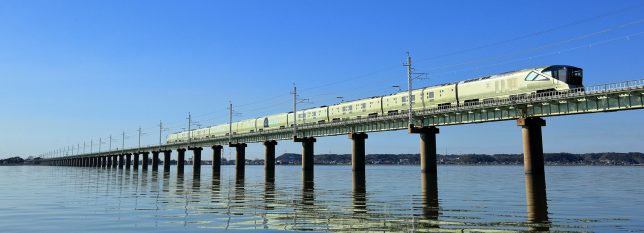
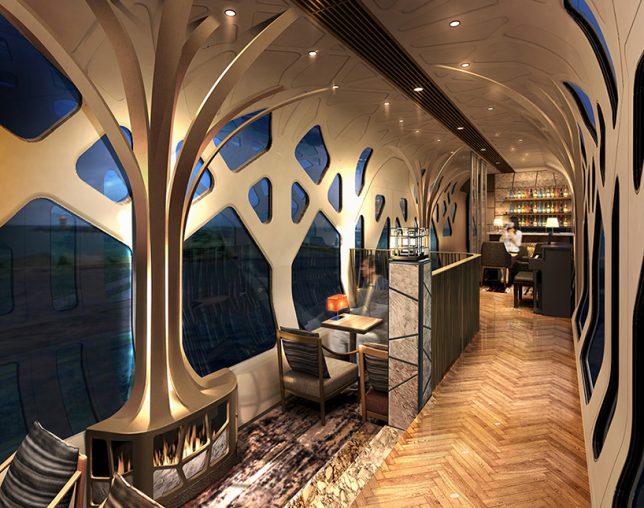
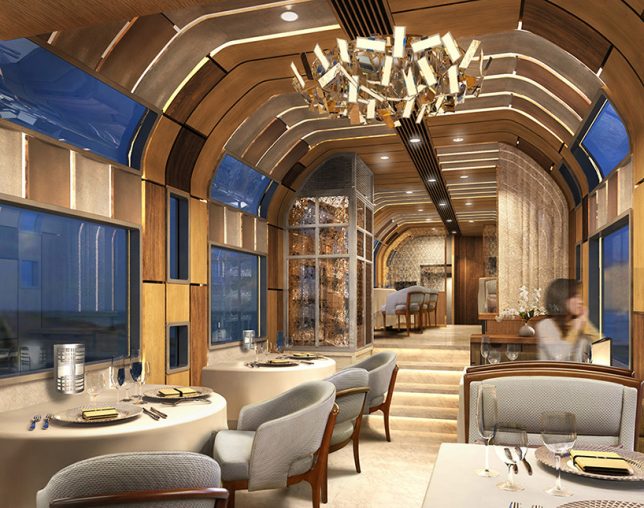
Public transit meets luxury transport in this elegant and open train design with rich interiors as well as copious windows for viewing the passing landscape.

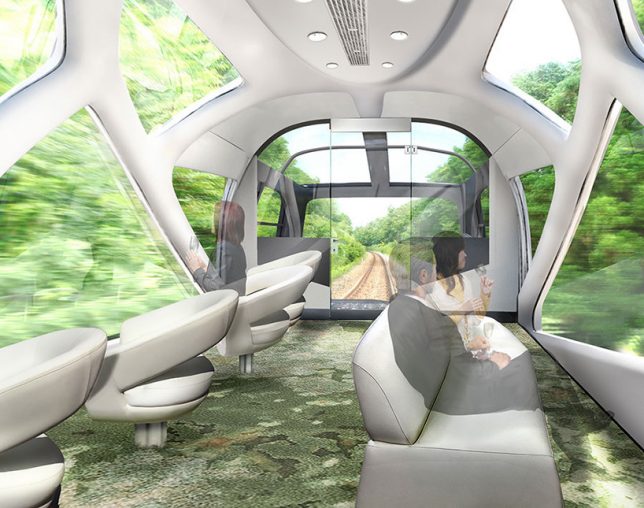
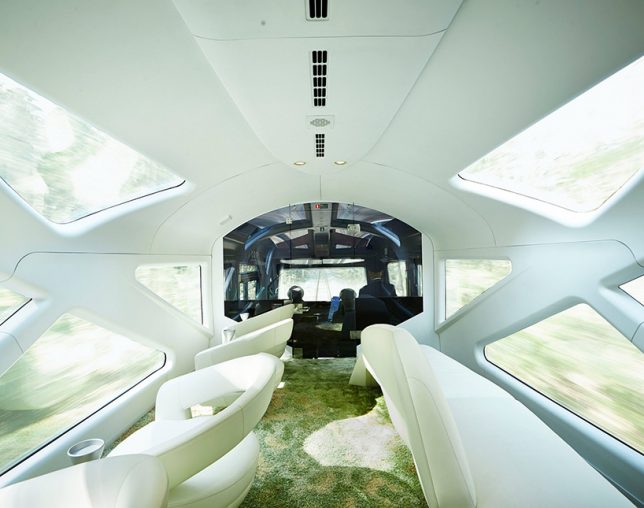
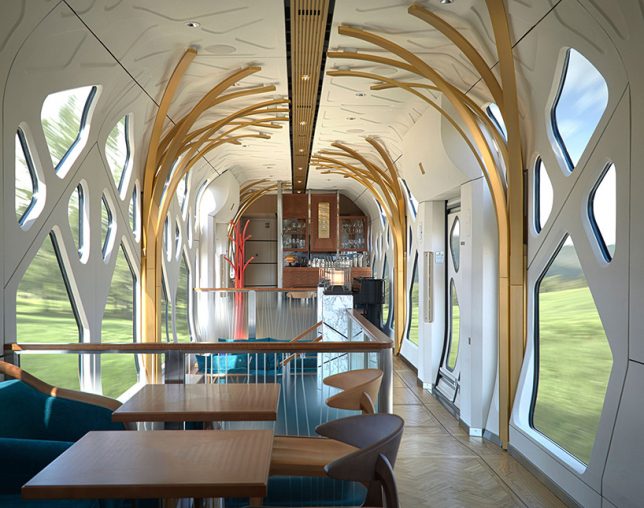
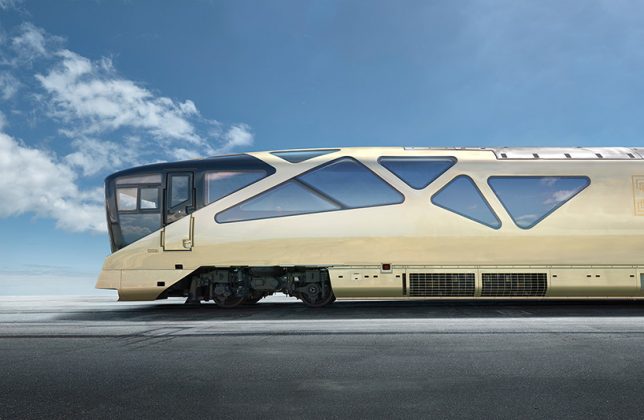
The champagne-colored Shiki-Shima sleeper boasts aesthetics by Ken Kiyoyuki Okuyama, the automotive designer behind the Ferrari Enzo as well as Maserati Quattroporte. Inside, branching window frames are meant to conjure images of tree-lined forests.

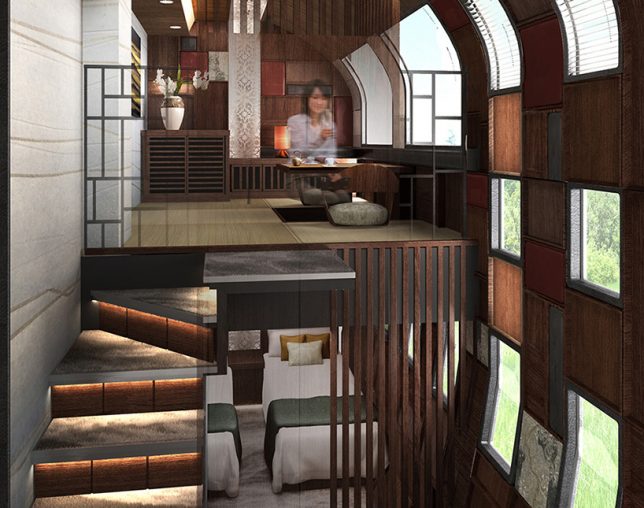
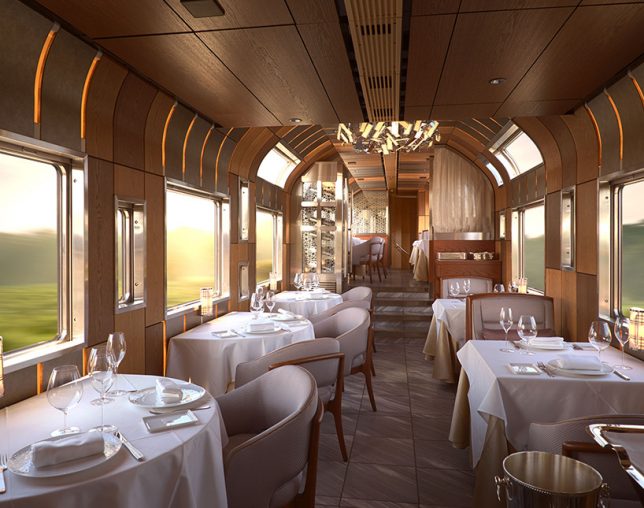
Window geometries on the exterior reflect the different needs of interior spaces, from lovely common rooms and fancy dinner cars to split-level sleeping compartments.

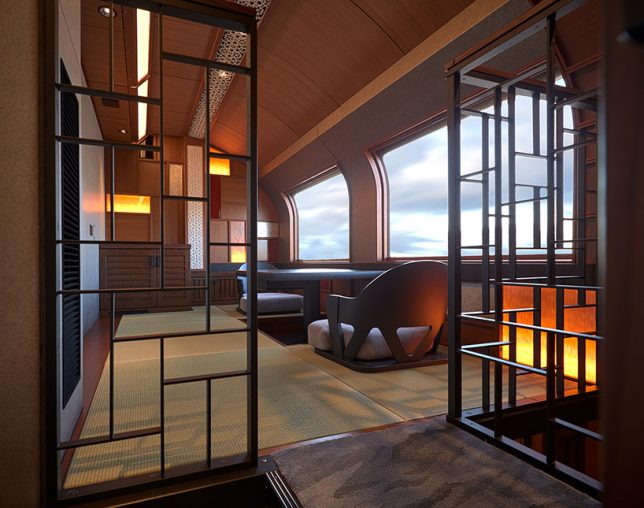
The design is also distinctly Japanese, featuring traditional wood, paper and lacquer interiors with tatami mats and artistic techniques developed over centuries of history.

and brings the elegant physique of a supercar to public transport. with dome cars, large geometric windows and a plush sofas, a trip on the rain suite shiki-shima is comparable to a luxury cruise.

“Okuyama nods to japanese artisanal crafts with his use of bentwood—made by curving wood with steam—to frame the sofas and seating. Meanwhile, oriental carpet mills takes car of the design under foot, using their signature ornate carpets that can already be found in the Vatican palace and Kyoto state guest house. The train consists of 17 rooms in total, with two large suite rooms and 15 smaller ones. JR east, the rail operator behind the luxury masterpiece, seeks to provide ‘a high-grade space’ that is currently unseen in existing railway journeys.”

Share on Facebook


[ By WebUrbanist in Technology & Vehicles & Mods. ]

[ WebUrbanist | Archives | Galleries | Privacy | TOS ]


WebUrbanist

 
Comments Off on Ferrari Designer Launches World’s Most Luxurious Sleeper Train in Japan

Posted in Creativity


Fading To Black: 13 Abandoned TV Repair Shops

22 May

[ By Steve in Abandoned Places & Architecture. ]

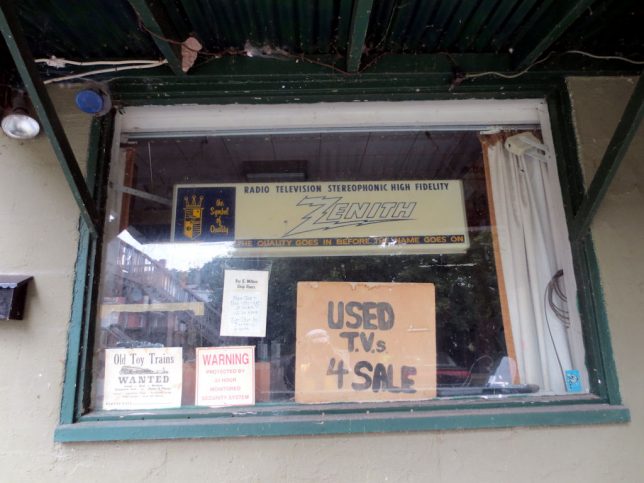
TV repair shops, once fixtures of our tuned-in society, have faded away as televisions became more reliable and the broadcast medium itself lost its relevance.

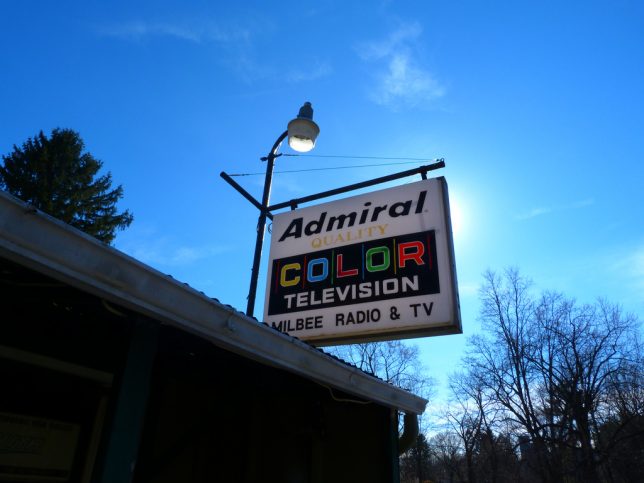
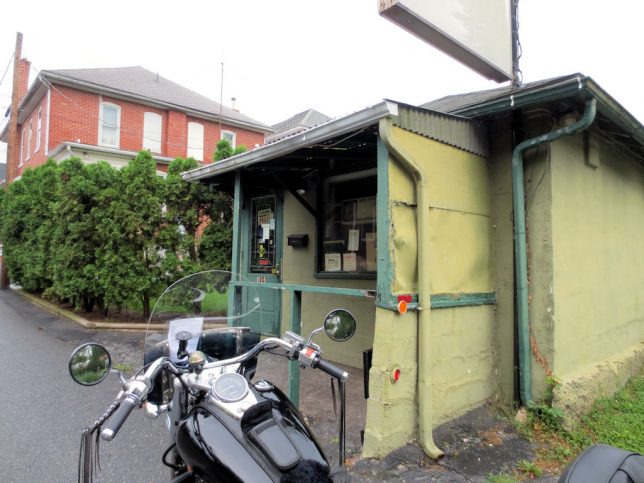
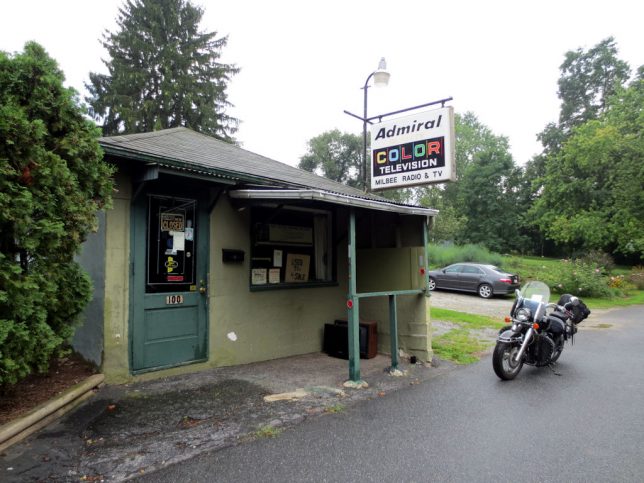
Take Milbee Radio & TV, a tiny TV repair shop supposedly operating out of Elizabethtown, PA. We say “supposedly” because neither Flickr user Katie Burkey (StarPhotographs) nor Wendyvee of RoadsideWonders have been able to find anyone actually working there – “I think this shop might be abandoned, but I never knew for sure,” stated Burkey in March of 2011.

Aside from the minuscule size of the shop (and its queasy two-tone green paint job), the gloriously retro sign tells a story all on its own. Does anyone remember brand names like Admiral, Zenith, Philco and Quasar? How long since the word “RADIO” on a sign attracted customers? Last but not least, “COLOR” television was once a feature worthy of note.

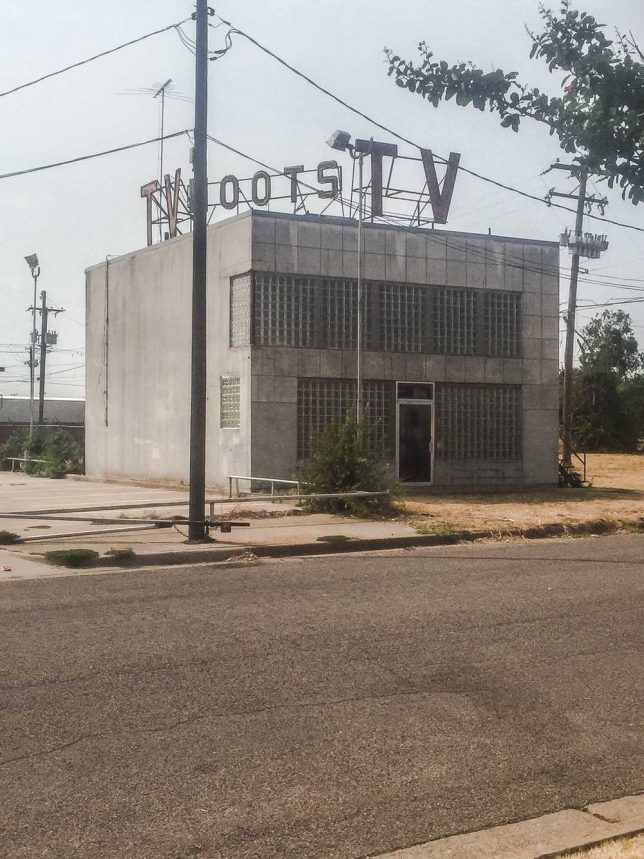
Don’t Give A Hoot

The latest entry in the Anti-Zombie Fortress sweepstakes is the former Hoots TV Service on Highway 80 West, Fort Worth, Texas. According to Joan Carroll, the glass block-enhanced blockhouse dates from 1964 and was the third (and final) location of Hoots TV.

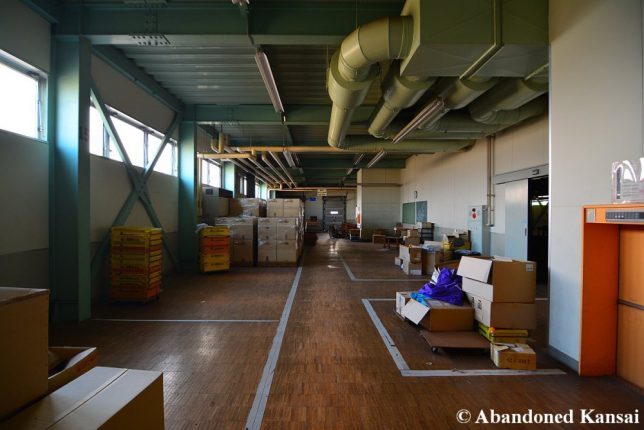
Screen Thy Last Screen

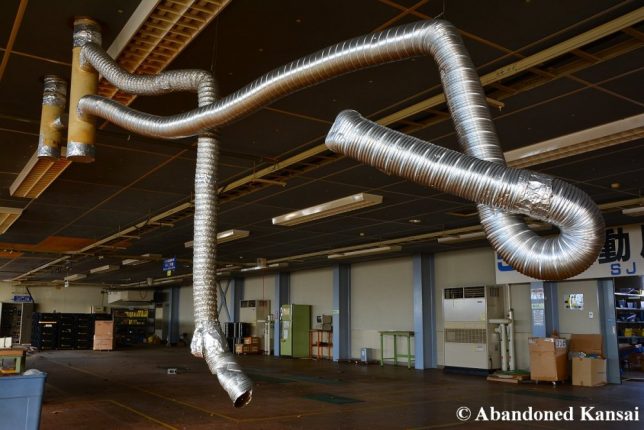
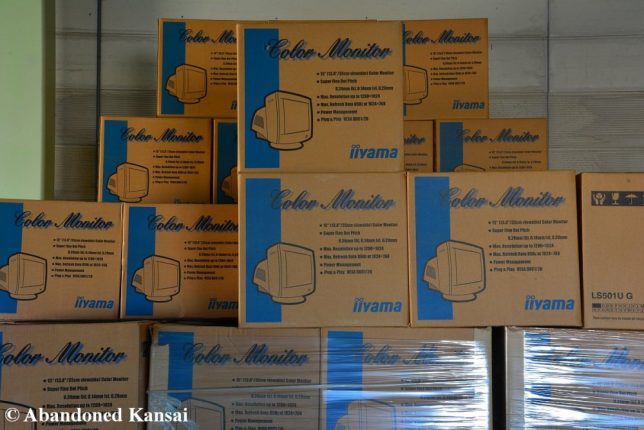
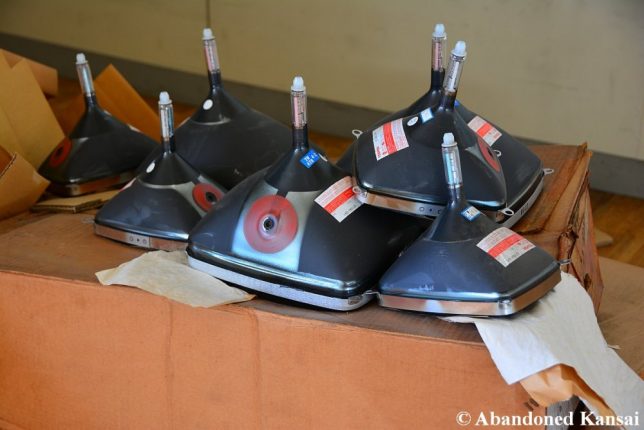
This Japanese TV and monitor repair, assembly and distribution center seems to have soldiered on until 2008, according to calendars found within by Florian and friends from the Abandoned Kansai urbex blog.

Like many Japanese abandonments, the business appears to have been closed in a hurry with much equipment and stock left in place and on shelves. Towards the end, the business serviced Sega arcade machines and monochrome computer monitors but couldn’t afford to retool when ponderous CRT screens gave way to flat-screen LCD and TFT-LCD displays.

Bad Dreams

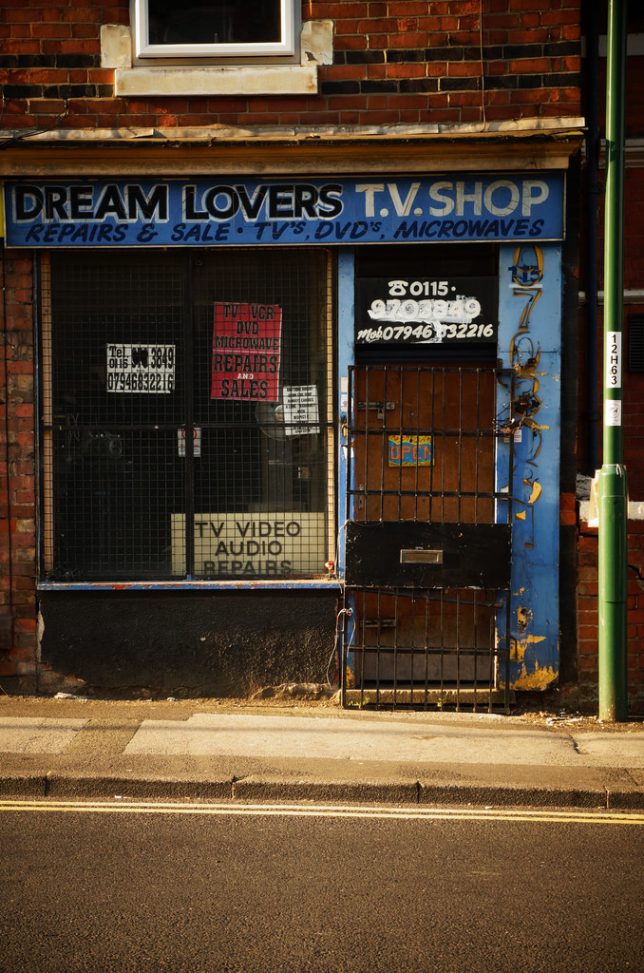
Odd that microwave ovens were once categorized as electronic devices instead of kitchen appliances but hey, those were the days! Dream Lovers T.V. Shop (why the periods between T and V?) once sold and serviced televisions – and presumably microwaves – from this gritty shop in Nottingham, UK. Flickr user Rust Never Sleeps captured the shop’s well-aged storefront in late July of 2014.

Rough In The Dimond

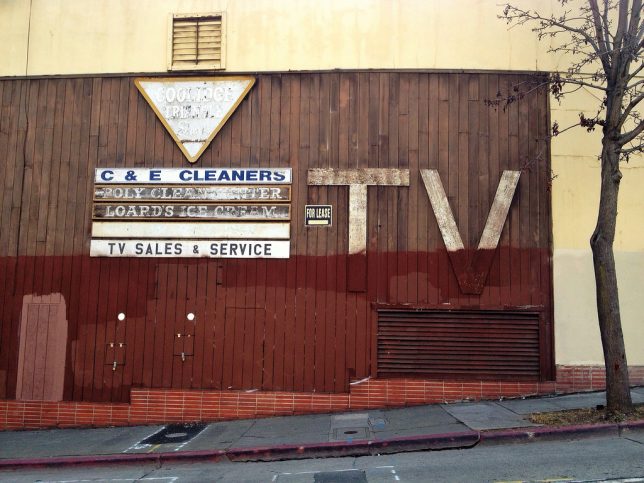
This ultra-rustic TV Sales & Service shop languishes unlamented in the cold heart of East Oakland’s Dimond (pronounced “diamond”) district. Flickr user Billy (misterbigidea) snapped the shop’s weary weathered facade in late January of 2014.

Next Page – Click Below to Read More:
Fading To Black 13 Abandoned Tv Repair Shops

Share on Facebook


[ By Steve in Abandoned Places & Architecture. ]

[ WebUrbanist | Archives | Galleries | Privacy | TOS ]


WebUrbanist

 
Comments Off on Fading To Black: 13 Abandoned TV Repair Shops

Posted in Creativity


‘It’s about being prepared for whatever is thrown at you’: Q & A with William Vazquez

21 May

NYC based photographer William Vazquez on one of his earlier assignments.

New York City based photographer William Vazquez, travels about 30-50% of the year. From Cuba to the mountains of Nepal, Vazquez has worked in more than 54 countries on more than five continents, often arriving first on the scene of a humanitarian crisis to document recovery operations for NGO’s and the companies that provide support to the areas affected by natural disasters.

While his documentary humanitarian work may be the most dramatic in context, Vazquez’s portraiture brings us closer to other cultures, whether it’s a flamenco dancer outfitted in a brilliantly colored red dress in Cuba or a black and white portrait of a woman cloaked in a burka in a clinic Afghanistan captured with a Speed Graphic on Type 55 Polaroid film.

You may find him trekking in the mountains of Nepal, wandering the streets of Cuba, or watching a baby being born after a devastating a typhoon in the Philippines. But, no matter where he is, Vazquez’s images bring life to the stories of the people and places he’s been.

You can see more of Vazquez’s work at his website and on Instagram.

How did you get your start in photography?

Vazquez’s warm personality and genuine interest in people elicits wonderful reactions in the portraits he makes around the world, including the photo of this woman in rural India.

Photography started as a hobby when I was a teenager. My first camera was a used Rollei 35 S, which I still have. But I had never considered photography a profession and didn’t know anything about professional photography until 1985 when I met a New York City based still life photographer named Jeff Glancz. He hired me one Christmas season to deliver gifts to his clients. At the time, I was studying electrical engineering at New York Institute of Technology but when Jeff started calling me to assist him on jobs at his NYC studio, I would cut class to work for him.

Summer break came, and he was looking for a full-time assistant. I agreed to work the summer and then go back to school when fall came around. But I never went back. I had found my calling: shooting 4×5, processing black and white film, and printing. This is where I wanted to be. I worked for Jeff for about a year when he told me I need to finish my education. I got a scholarship to Parsons (School of Design in NYC) in1986 and returned to school.

During and after Parsons I worked for a wide range of photographers in advertising, catalog, fashion, location, portrait and travel. I did it all, and travelled the world on assisting gigs. I learned things during this time that I still use in my work. It was an amazing experience! I learned how people worked business wise as well as photographically. I think that assisting pros is where I got my real education in photography.

I assisted for about 5 years with a 3-year transition period. Then my first big job came in. I did the 1995 Pfizer annual report. It was a global book with locations spanning the globe including Milan, London, Johannesburg, Sao Paulo, Hong Kong, Tokyo and a number of locations in the U.S.

When I first started as a pro, I did product photography for magazines like Martha Stewart Living, This Old House, GQ, and others. After a while I realized that I was not cut out for product photography. I am too impatient, and I liked being out of the studio. So I started doing more portraiture, and chasing down portraiture work.

Tell us about your current work.

The circle of life continues with the birth of babies despite the devastation of Typhoon Haiyan in the Philippines.

Right now my work is a blend of commercial, and humanitarian projects. I create photo libraries for my corporate clients such as Abbott, Pfizer, and Samsung, just to name a few. These assignments can be anything from lifestyle, portraits or industrial shoots. For example, one day I might be making pictures to illustrate middle class lifestyle in India; another day, I’ll photograph people working in a production plant.

An important part of my work is photography that illustrates CSR (Corporate Social Responsibility) efforts of large corporations around the world. This is how I got started in humanitarian work. Companies want to document the support they give to NGO’s (Non-Governmental Organizations) so they hire me to work with these non-profit groups. Once I connect with the NGO, we develop a relationship, which allows me to work for them directly.

‘It’s tough work… But that’s just a minor inconvenience compared to what the people who lived through the disaster have endured.’

The work I do for organizations like Americares, Direct Relief, and Project Hope, for example, varies from in-depth still or video stories on their humanitarian projects or documenting emergency relief operations such as those after Typhoon Haiyan in the Philippines, or the earthquake in Nepal. When documenting relief operations, I’ll fly in with the first people on the ground. It’s tough work—rough sleeping, bathing out of a bucket, low quality food, no electricity, etc. But that’s just a minor inconvenience compared to what the people who lived through the disaster have endured.

I also work with much smaller organizations as personal projects. These small organizations need quality images and video in order to help with fundraising, so it’s a good thing to do. Sometimes my expenses are paid or I tack it on to a paid project in the same country or close by. It’s one of my ways of giving back.

What equipment do you usually bring with you? Any tips for traveling overseas?

On his way to the day’s location in rural Shirdi India, this young man swinging from the vines of a banyan tree caught Vazquez’s eye. Captured with a Sony a7R II and a 24-70mm F4 lens.

If I have to just do still photos, and I don’t have to be dragging my gear through a jungle, I bring my Canon 5D Mark III with a variety of lenses, and accessories. I like working with the Canon 5D Mark III – it’s responsive and tough.

If I have to keep a low profile or do a combo of stills and video, I use my Sony A7R with a variety of lenses. The Sonys are great for keeping a low profile – they are small, lightweight, and less obtrusive. People get relaxed faster when you don’t have a huge machine with you. I also like the Sony a7S and the Sony a7R II for video because of the features and the dedicated accessories that help make the process easier for a one-man show, particularly for sound.

One of the things I am in love with at the moment is the DJI Osmo RAW. One of my biggest problems is getting usable video when working handheld, and when things are moving fast. The DJI is great for following people, shooting from a car and for grab shots. I end up with much more, and better, footage with the DJI and it still allows me to shoot loose.

I work alone in most of my projects, so I try to travel light. Sometimes I am able to get a local person to help carry gear but most of the time I’m on my own. Also, what I bring depends on the nature of what I need to accomplish. I usually try to keep it to one bag of gear with some additional items such as tripods, etc. that I carry in my suitcase. If I am working in an urban environment, I use a rollercase. If I’m going to be out in the countryside, I use a backpack. I have a mix of Thinktank and Tenba bags. Sometimes I use belt packs from Thinktank and leave the backpack in the car. When I start photographing, I’ll put my bag down and walk away from it when the action moves on, so I need to keep my gear attached to me.

‘There is always something new
to make life difficult.’

One of the issues I am facing these days is that airlines are really cracking down on the size and the weight of carry-ons, particularly on short hops within a country like India. So I use a photo vest that I pack full of gear to make sure the bag weighs as little as possible. I’ll sometimes use the photo vest when I’m forced to check in bags or I’ll use a backpack that fits in a Pelican case, and check that in.

I’m really excited about my upcoming trip to Nepal. However, I’m am not excited about what I have to do to deal with that electronics ban when traveling through the UAE. There is always something new to make life difficult.

I tend to fly though one of the UAE countries on most trips east, to Asia and Africa. They have the best fights to those places and good prices. I always carry my gear with me on the plane. But now with the restrictions banning electronics larger than the size of a cellphone on the way back, I have to pack my cameras in a Pelican 1510 case to carry on board, take a backpack in my suitcase to carry the gear when I work, then pack it back in the Pelican and check it in.

As for backup drives I invested in Samsung 1TB T3 SSD drives that are half the size of an iPhone so I can carry them on the plane with me. I’ll bring a smaller Macbook so I can pack more essential equipment. I usually don’t need a powerful laptop on the road – just something to copy files. If I have to process a few files, I can do that, too. At the end of the day, I just need is to make sure my images stay with me. Cameras can be replaced.

At this point, though, the bigger issue is the uncertainty of it all. What about batteries? Can I take them? Which ones? The list goes on and on. It’s about being prepared for whatever is thrown at you but, at this point, there’s little real information out there.

One of your favorite assignments in 2015 was documenting the rebuilding efforts after the earthquake in Nepal. Tell us a little about that experience.

Crammed into a tiny hut without electricity in Nepal waiting for a storm to pass, people turned on the lights on their cell phones so Vazquez had enough light to take pictures.

Nepal is one of my favorite places to visit. It’s stunningly beautiful and the people are very friendly and open. I have traveled there many times on assignment and for personal projects and I have a deep love for the place, and its people.

I went there right after the devastating earthquake in 2015. Seeing how the Nepalis were able to overcome something really traumatic, and still take the time to stop what they were doing to offer me hospitality, is something that will stay with me forever. I remember traveling with Americares up in the mountains to visit some people who were hurt and a freak storm rolled in. We had to take cover in the patients’ home. It was five of us and what felt like half the village crammed into their tiny hut.

It was pitch black in the hut and as I contemplated how I was going to photograph in the dark, someone turned on their cell phone light, then another, and another. I had lighting! Tea was served as we sat together waiting out the storm. Despite the hardships the people endured, they still thought of me. It was a magical moment.

How do you prepare for overseas humanitarian assignments?

“In the mountains of Nepal,” says Vazquez, “you are always climbing up or climbing down.” When he offered his hand to help the woman behind him—one of a group of social workers for Americares—she laughed and reminded him, “we are mountain women.” After thinking about it for a minute, Vazquez realizes “She could probably carry me up and down that hill—in sandals, no less!”

Anytime I am going anywhere I always do research on who I am working with, and where I need to go. It is important to have a sense of the geography I will be traveling through so I can gauge how far out in the woods I will be, travel times, etc. Plus it’s important to get to know who I’ll be working with on the ground.

I also look into the types of places I will be staying at so I know if I need to bring any specialized gear. Things like battery packs, solar battery chargers, a hammock, sleep sack, satellite phone, GPS tracker, water purifier, lighting, mosquito netting, what type of footwear, medicines – the list goes on and on.

I am my own best travel agent. I have a good grasp of geography, I know the airlines I like to travel on, and the places I don’t want to get stuck in. I organize my travel to and from places and take care of some hotel reservations. If I am going to be way out in the field, the local NGO I am working with handles the local logistics, like accommodations, and transport or I may hire a fixer to help me with translation and getting around.

‘If all else fails… Google Translate!’

When working with the NGOs they have people on the ground who know where things are, as well as speak the local language. But speaking even a few words of the local language goes a long way. I speak Spanish so when I was in the Dominican Republic after Hurricane Matthew, I was treated like family. In Nepal, many of the younger generation speak English, so you can always find someone to communicate with. Once you have done lots of traveling, it gets easier figuring out what people are trying to say. If all else fails… Google Translate!

I do use a travel agent when it comes to booking multiple cities and airlines. It makes it easier and if you run into problems, you have someone to reach out to. All I have to do is email my travel agent and she takes care of it. Try doing that with Expedia.

What’s a typical day like when covering a humanitarian assignment?

One of the first people on the ground after Typhoon Haiyan in the Philippines, Vazquez photographed these massive ships that were forced ashore during the storm.

Working on humanitarian assignments usually means really long days. Get up early and go for a long ride in a beat up car, in the heat with no air conditioning on a bad road. I get up early, eat whatever there is for breakfast, and get on the road. I always make sure I bring plenty of water and something to eat for the day. Most undeveloped places or places in crisis won’t have any food or water to buy.

‘…I sometimes have to put my camera down and lend a hand’

Then you make your stops at whatever the story is about. In my case it’s usually clinics or temporary places set up to distribute food and medicine with lots of people needing help—whether it’s food, or medical care. It’s amazing how overwhelming it can be. So much so that I sometimes have to put my camera down and lend a hand in unloading a truck, opening boxes, and handing out food. Then you get back to wherever you’re staying, clean up, eat, download cards, back images up, check out the day’s work, upload to my social media channels (if there’s an internet connection), then plan for the next day.

I have stayed in everything from a tent, to a home with a tarp over it, slept in a truck, slept in a communal room with lots of beds, and snoring people—again, minor inconveniences compared to those who have lived through a disaster. In the course of day I can see a baby being born in a tent, ride in an ambulance with someone in distress, witness an operation, and everything in between.

You meet a lot of people on your assignments. Do you stay in touch with some of the locals that you meet?

These schoolboys were more than happy to smile for Vazquez’s camera when he was on assignment in India.

One of the best things about what I do is meeting people. I do my best to stay in touch with them. Facebook makes it much easier, in some cases. There are many times I end up coming back to a country for a different assignment, and I make it a point to see the people I’ve met before.

When on assignment I usually spend a lot of days with the same people. We are together 24/7, eating together, traveling together, drinking together, laughing together and hanging out together. Much of what is experienced on some of these assignments is very emotionally charged, so we often form a tight bond.

I photographed a young woman in India, and her photo was used for the cover of the publication I was working for. The next year I returned and I saw her again, and I had some copies of the publication. She was so amazed she was speechless. She was so thrilled that she showed the magazine to everyone in sight. That’s one of the reasons I do what I do. That my work can perhaps inspire that type of response.

Also, I make it my business to get to know the people I am working with, which also helps for future opportunities in working together.

What are some of the challenges when working in remote locations? How do you overcome those challenges?

Ongoing humanitarian missions include the donation and distribution of medicine. Here, horsemen prepare to escort dignitaries celebrating the 100 millionth dose of antibiotics to reach the population of Ethiopia’s Amhara Region to combat malaria and trachoma (a disease that leads to blindness).

Working in remote locations is tough for many reasons. If you forgot something or a piece of critical gear breaks, you can’t get a replacement. You’d better be a flexible eater, too, because bush meat stew can be all there is to eat for days. If you get sick, you should be prepared with any medications you may need, because there is no medicine.

‘…with a multitool and duct tape you can fix
almost anything’

There will probably be no internet or even cell phone service. I have a satellite phone that I use for emergencies, and a satellite GPS tracker that I can send messages with so my wife knows where I am. Be prepared for no electricity too, but I have battery packs that I can charge with the sun or in a car. And, with a multitool and duct tape you can fix almost anything.

At the end of the day research where you are going, think of what the challenges will be, ask anyone you know for firsthand advice, invest in having the right gear, make sure you have all the insurances you need like evacuation insurance, and think carefully about what you are taking. If you take too much, getting around is a problem. If you don’t bring enough, you may not have what you need to get the job done. It’s all about bringing the right stuff.

You taught yourself how to shoot and edit video about 4-5 years ago. How often do you add video to your assignments?

Whether he’s shooting stills or video, Vazquez will put his cameras down to help distribute supplies when needed.

Almost all my assignments right now include B-roll in addition to stills, and sometimes more involved video work. I have tried different cameras, and setups but I prefer the Sony A7 series cameras because they do great video, are great still cameras, have advanced features, and have accessories that can make things work together instead of having to Frankenstein them together. I work by myself with lots of distractions going on, so I need to just have one button to push to make everything work.

Last year you did the Rickshaw Run to raise money for orphanages in India and Nepal. What’s your fundraising project for this year?

To raise money for orphanages in India and Nepal, Vazquez and fellow photographer Greg Kinch did a “Rickshaw Run” for more than 2500 miles through India in this colorful but cramped auto rickshaw. Getting stuck in the mud, dealing with burned out pistons and a carburetor that needed regular disassembly and cleaning were part of the adventure.

In my assignment work, I see so many great organizations and people that need support. I always want to do more. So besides providing free photography and communications advice I fundraise. I found the best way to fundraise is to do something that people will pay attention to. It’s been working. I also couple it with personal challenges that I want to do, and to inspire me.

My life revolves around my photography work so I have to constantly feed it with investment and inspiration. I feel that is what keeps my work relevant these days. Being able to combine my adventures to help people less fortunate makes it perfect.

Last year I did the Rickshaw Run. Fellow photographer Greg Kinch and I decided to drive an auto rickshaw (also known in some countries as a Tuk Tuk), 2500 miles through India to fundraise for an orphanage in India and an orphanage in Nepal, including Kids of Kathmandu. It was an amazing thing to do. It was tough, but a great personal achievement, and we raised about $ 5,000 – money that goes a very long way in that part of the world.

This year I am trekking to Everest Base Camp and taking a group of people who will also fundraise for the education fund of Kids of Kathmandu. The organization does amazing work in Nepal—they support an orphanage and rebuild schools up in the mountains that were damaged by the earthquake. All donations go straight to the organization and are tax deductible.

We’ll also be stopping at schools along the route to deliver solar powered lights donated to Kids of Kathmandu by Mpowerd. Electricity is scarce in this part of the world and kids often can’t read or study after the sun goes down, so these lights will help tremendously.

Articles: Digital Photography Review (dpreview.com)

 
Comments Off on ‘It’s about being prepared for whatever is thrown at you’: Q & A with William Vazquez

Posted in Uncategorized


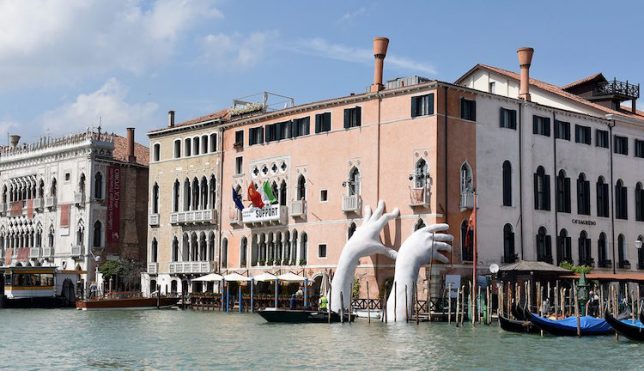
Helping Hands: “Support” Sculpture Braces Venetian Architecture From Below

21 May

[ By WebUrbanist in Art & Installation & Sound. ]

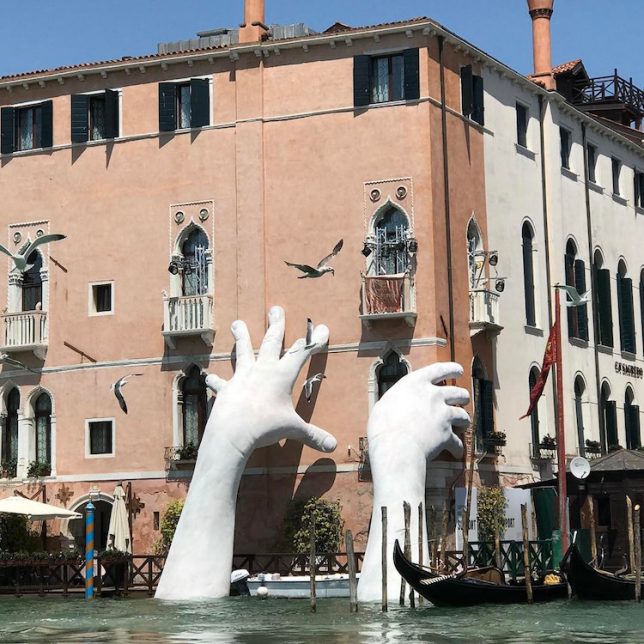
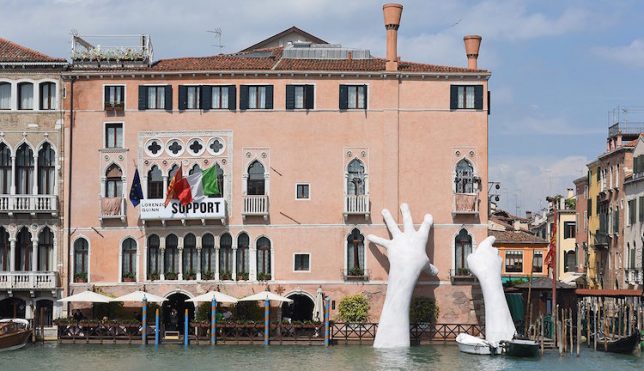
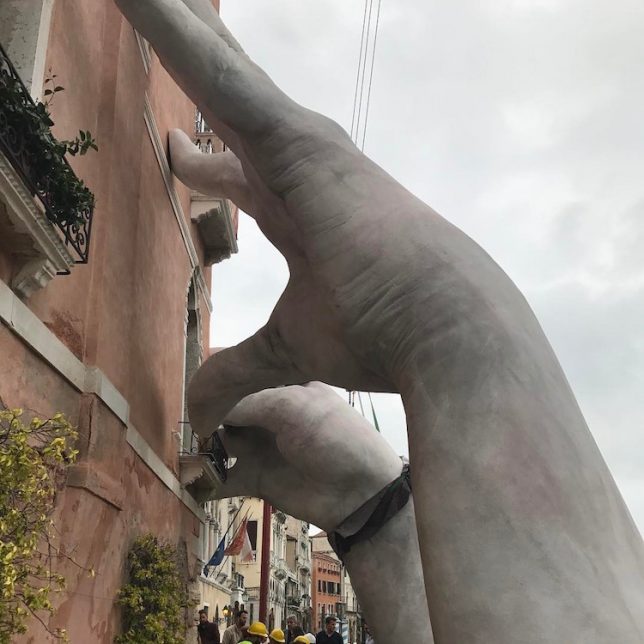
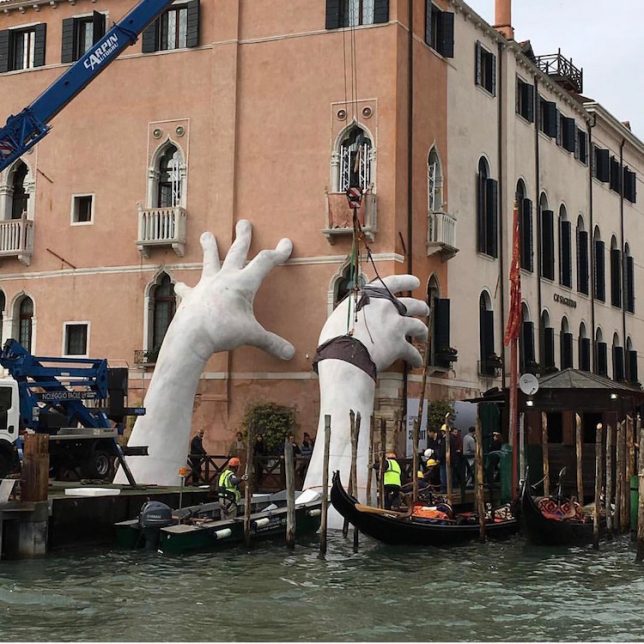
Historic architecture meets modern art on the canals of Venice, where a pair of gigantic hands emerge from the depths to lend support above the waterline.

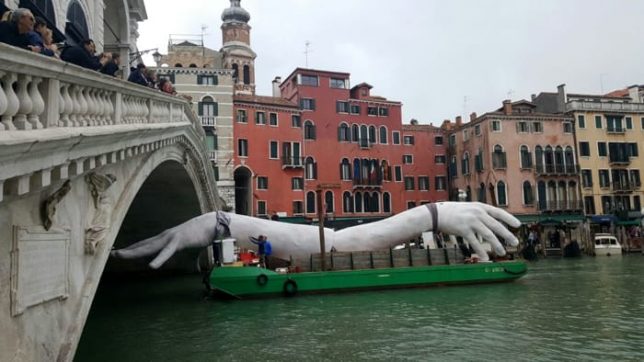
Designed by Lorenzo Quinn, “Support” was put into place a month in advance of the 57th International Art Biennale but is already drawing massive crowds ahead of its official debut.

It was prefabricated and shipped into positioned down the Grand Canal, then assembled and positioned so that it appears to support the Sagredo Hotel, a structure dating back to the 14th century.

Like many historic buildings in the city, this one rises straight up from the water — also like others, it is threatened by the prospect of higher sea levels as well as sinking and settling of the ground below.

“I wanted to sculpt what is considered the hardest and most technically challenging part of the human body. the hand holds so much power – the power to love, to hate, to create, to destroy” says the artist.

“Venice is a floating art city that has inspired cultures for centuries, but to continue to do so it needs the support of our generation and future ones, because it is threatened by climate change and time decay.”

"Cose" interessanti. #biennaledivenezia #venezia #lorenzoquinn #biennalearte2017 #manigrandi #solocosebelle #ENERGIA??????

A post shared by Nicolas Falcone (@nic.falcone) on

Le mani sono strumenti che possono tanto distruggere il mondo quanto salvarlo e trasmettono un istintivo sentimento di nobiltà e grandezza in grado anche di generare inquietudine poiché il gesto generoso di sostenere l'edificio ne evidenzia la fragilità. #venezia#venice#casagredohotel#mani#scultura#arte#support#lorenzoquinn#igersvenezia#igersveneto#loves_united_venice#loves_venezia#loves_veneto#veneziaunica#veneto_best_pics#veneto_in#loves_united_veneto#venetissimo#ig_venice#veniceinlove#loves_united_italy#loves_united_team#loves_united_details#volgoitalia#labellavenezia#volgoveneto#loves_veneto#venezia??

A post shared by Sabrina (@sabri_sini_) on

Stunning #venezia #venice #fondacodeitedeschi #rooftoop #canalgrande #biennalearte2017 #lorenzoquinn

A post shared by Serena (@serena.pavan) on

“Reflecting on the two sides of human nature, the creative and the destructive, as well as the capacity for humans to act and make an impact on history and the environment, Quinn addresses the ability for humans to make a change and re-balance the world around them—environmentally, economically, socially,” writes the Halycon Gallery, which represents Quinn.

Share on Facebook


[ By WebUrbanist in Art & Installation & Sound. ]

[ WebUrbanist | Archives | Galleries | Privacy | TOS ]


WebUrbanist

 
Comments Off on Helping Hands: “Support” Sculpture Braces Venetian Architecture From Below

Posted in Creativity


5 Things Every Newbie Photographer Must Learn and Practice

21 May

There are certain things as a photographer you should know regardless of if you are an expert or a novice. These simple yet powerful lessons not only differentiate you but also help you grow in your art and your photographic career. For every newbie photographer, these are essential lessons to learn and practice.

Note: For the purposes of this article, all the images used here are SOOC (Straight out of camera). This is done to demonstrate key concepts highlighted here. My camera of choice is Canon 5D MKIII with a few common Canon L-series lenses like the 50mm and 85mm.

#1 – Know your gear inside out

This almost seems like a no brainer but I am surprised by the number of people who say that they have a really fancy (and expensive) DSLR camera but still shoot in auto mode 100% of the time. Now before you get all upset and say that there is nothing wrong with shooting in auto, I will raise my hand and say that yes, I also shot in auto when I got my first DSLR camera. But very quickly I realized that my camera (a Canon 5D MKII at that time) was a fantastic and sophisticated piece of equipment that was capable of some incredible shots if I only knew how to operate it.

So take the time and really know the ins and outs of your gear. The user manual is a great place to start to not only familiarize yourself with what all the buttons do but also where they are located on the camera. You should be able to adjust settings without removing your eye from the eyepiece/viewfinder when you are composing your frame. Think about it this way, would you like to own a convertible and always drive with the top up (i.e. closed), even on the most gorgeous of summer days?

Here are some ways to learn the ins and outs of your gear.

ISO – Play around with various ISO settings to understand how it affects exposure and what is an acceptable ISO grain (for you). This will help you make photography decisions in low light situations. Some of these ISO decisions may be limited to the kind of camera you have. Regardless, you should know the upper limits of your gear.

5 Things Every Newbie Photographer Must Learn and Practice

The quality of light at the stables where my kids ride is terrible. Even though they have lots and lots of flood lights, there isn’t enough light just because of the sheer size of the barn. These images were shot handheld at ISO 3200 – the one on the left was at 1/60th shutter speed whereas the one on the right was at 1/400th. That was because of the natural light coming in closer to the wall that illuminated my son and gave me a higher shutter speed to capture the motion of the horse.

Sweet spot – Find the sweet spot for your lens. Every lens has an aperture setting where the image is sharper overall than others. This will help you analyze what is the widest aperture (smallest f-stop) you can shoot in and still have the image in focus. This is different than the depth of field (which is how much of the scene is in focus) in that the actual resolution of the image is sharper at the sweet spot.

Minimum shutter speed – Find out what is the lowest shutter speed you can handhold your camera and get a sharp image. This will also help in low light situations as well as in creative motion blur type shots when you don’t have a tripod handy. The general rule of thumb is to shoot at one over the focal length of your lens.

5 Things Every Newbie Photographer Must Learn and Practice

Here I was shooting in a dark canyon with dark stone walls. I was using a 35mm lens at f/1.4 (completely wide open aperture) because I wanted a very low ISO (100) to eliminate any noise. My shutter speed dropped to 1/30th – which I clearly could not hold steady…the image is completely blurry and out of focus!

Weight – Find out what is the maximum weight you can comfortably carry without hurting yourself or almost passing out because of discomfort from carrying excess weight (true story!)

#2 – Know and understand light

There are some photographers who only shoot in natural light while others only shoot using some form of artificial light. Then there are photographers who shoot in any type of light and do a fantastic job at that. There is no right or wrong answer here in terms of preference but it is important to know how to shoot in any form of light. That might be the only thing that stands between you and the shot of your dreams.

Knowing how to read, analyze, and play with light is one of the most basic and important skills every newbie photographer should know, in my opinion. Keep in mind that not all light is equal from a purely technical standpoint (tungsten versus fluorescent versus white-balanced light). Certain types of light are good and others are not so good. Experiment with many different kinds of light so you know how to read light, then learn how to shoot in each.

These three images were all shot within the hour just before sunrise.

Here my settings are as follows ISO1250, f/2.8, 1/60th shutter speed. I LOVE the blue in the sky falling on the snow covered Pike’s peak in Colorado.

5 Things Every Newbie Photographer Must Learn and Practice

The warm sunrise cast such a magical glow on the mountain and surrounding areas. My settings here were ISO 320, f/5.0, and 1/500th. The sky filled with so much light that I had to stop down my aperture to be perfectly exposed.

5 Things Every Newbie Photographer Must Learn and Practice

The overcast sky with little spots of blue took my breath away. My settings here were ISO 320, f/5.0, and 1/800th to get a perfectly exposed photo.

5 Things Every Newbie Photographer Must Learn and Practice

I do not like indoor yellow tungsten light…everything become so orange! (A custom white balance or correction in processing is necessary)

5 Things Every Newbie Photographer Must Learn and Practice

But neutral natural light is so much easier to work with and to get even natural-looking skin tones.

3 – Practice good ethics

Be respectful of the people, places, and things you photograph. I cannot tell you how much it pains me when I see photographers (both amateurs and professionals) disrespect their surroundings. Be it climbing where they are not supposed to, keeping heavy equipment on delicate surfaces, overcrowding and overstaying their welcome in public places and not giving other general tourists the opportunity to enjoy the scenery.

Pay special notice to other photographers. These are folks in your industry even if they are beginners. They are all in it for the same reasons you are – love for the art! Leave that sense of entitlement behind, just because you have more expensive gear does not make you a better photographer or a creative artist. Take the extra effort to find out what the photography rules are in the places that you intend to photograph and stick to them.

5 Things Every Newbie Photographer Must Learn and Practice

I belong to several groups of photographers and we regularly meet to shoot the breeze, photograph together and just generally geek out about all things photography. There is no pressure, no tension and everyone plays nice! Community over competition!

4 – Safety

Be safe when you are out and about. Always be aware of your surrounding especially if you are a female photographer who tends to travel alone. Check out this article  Safety Tips for Travel Photographers (Particularly Women) that addresses this issue. Remember safety always comes first, art next.

5 – Be your true self and be patient

Whether you choose to be in business or not, be true to your art. Get inspiration not just from other photographers but also from daily life. There are many amazing things around us at any given point in time. Just because no-one else photographs it does not make it boring. Similarly think outside the box, just because everyone photographs something a certain way does not mean you have to follow the pack.

When you are starting out, don’t obsess over clients, getting work, and making money. Yes, they are absolutely important, I will not disagree, but take the time to perfect your art (to the point where you are confident charging money for your photography) and then the money and fame will follow.

Also give out as much as you can, be helpful and uplift others who are on this journey with you. The more you put out there the more you will receive from the universe! I truly believe in that mantra across all walks of life.

5 Things Every Photographer Must Learn and Practice

I am always coming up with shoot concepts and ideas to keep experimenting. Some work and some fail miserably but that’s okay. I take everything as a learning experience and try to stay positive in my game. An editorial shoot with my daughter captured on film was a complete disaster as I got all the setting wrong and ended up with grainy, grudge frames! – but I learned a whole lot about film and light and how different it is to digital!

5 Things Every Photographer Must Learn and Practice

Leftover florals from Valentine’s day gave me a chance to practice some styling as well as a more moody, contrasty way of editing – which I sort of like and dislike at the same time! But no money was lost and I only used 10 digital frames and spent 30 minutes in editing experimentation.

Conclusion

Are there any other life lessons that photography has taught you? In the spirit of building this community of creatives, feel free to share it with others.

The post 5 Things Every Newbie Photographer Must Learn and Practice by Karthika Gupta appeared first on Digital Photography School.


Digital Photography School

 
Comments Off on 5 Things Every Newbie Photographer Must Learn and Practice

Posted in Photography


Olympus cleans up at Camera Grand Prix 2017

21 May

The Japanese Camera Journal Press Club has awarded Olympus three out of its four annual prizes after voting by photographic magazine editors and readers. The Olympus OM-D E-M1 ll came away with both the Camera of the Year award and the Readers award, while the M.ZUIKO DIGITAL ED 12-100mm F4.0 IS PRO won Lens of the Year.

The club, which was established in 1963, has ten member magazines and websites that each test and review camera equipment. The members come together with affiliated magazines to determine the best products released during the period between April and March each year. This year the OM-D E-M 1 ll attracted attention for its high speed AF system and frame rates that exceed those achievable by even top-end DSLR cameras.

Olympus didn’t wipe the board entirely though, as the Editor’s Award went to the Nikon D500 for its professional AF system and modest price, and the Fujifilm GFX 50S for its resolution and handling as well as for popularizing medium-format again.

For more information and to read why each of the products was awarded see the Camera Journal Press Club of Japan website.

Camera GP Japan information

Camera Grand Prix 2017 / CJPC

Camera Grand Prix is held by Camera Journal Press Club (CJPC, Japan), a group of representatives from magazines or websites specializing in photos and cameras. CJPC, established in September 1963, has 10 members from the media as of April 2017. The selection committee, organized under the auspices of CJPC’s Camera Grand Prix Executive Committee, deliberates and selects the best products to give the four awards from among those introduced into the market during the previous fiscal year (from April 1 to March 31).

Camera Grand Prix “Camera of the Year” is granted to a still camera recognized as the best of all released during the period. “Lens of the Year” is awarded to the best lens launched in the Japanese market, while “Readers Award” is determined by general camera users’ vote on a dedicated website. (The voting period in 2017 was from March 18 to April 9.) In addition, CJPC members give “Editors Award” to a camera or another form of photography-related product, excluding the one awarded “Camera of the Year”, in consideration for the product’s popularity, topicality, and innovativeness.

Camera of The Year
The award went to the OLYMPUS OM-D E-M1 Mark II
(production company : Olympus Corporation.)

Lens of The Year
The award went to the M.ZUIKO DIGITAL ED 12-100mm F4.0 IS PRO
(production company : Olympus Corporation.)

Readers Award
The Readers Award went to the OM-D E-M1 Mark II (production company : Olympus Corporation.). The award was stablished in 2008, in celebration of the 25th anniversary of the Camera Grand Prix. The winner is selected by general readers’ votes.

Editors Award
As the result of a conference of C.J.P.C. members, the D500 (production company : Nikon Corporation,) and the GFX 50S(production company : Fujifilm Corporation.) were selected for Editors Award.

Articles: Digital Photography Review (dpreview.com)

 
Comments Off on Olympus cleans up at Camera Grand Prix 2017

Posted in Uncategorized


Nikon reshuffles management structure

20 May

Nikon Corporation announced today the reorganization of its corporate structure. Nikon’s Core Technology Division will be closed and replaced by Research & Development Division and Production Technology divisions. As you’d expect, the former is dedicated to research and development, the latter integrates the functions of group production strategy planning and production technology development. The objective of this move is to clarify functions and responsibilities and enhance the efficiency of the production system.

In addition Nikon is integrating its Medical Business Development Division and Microscope Solutions Business Unit to form a new Healthcare Business Unit with the goal to create business synergies. 

The Japanese company has also decided to close its Business Support Division and distribute its functions across other divisions. By doing so, Nikon is hoping to optimize functions such as procurement, engineering and logistics, as well as quality- and environmental-management.

New organization:

Nikon announces reorganization of corporate structure

May 19, 2017

Nikon Corporation (Kazuo Ushida, President, Tokyo) announced today the reorganization of its corporate structure as outlined below, scheduled for June 29, 2017.

The Core Technology Division is to be closed, establishing the Research & Development Division and the Production Technology Division

Nikon has decided to close the Core Technology Division and establish the Research & Development Division which dedicates to research and development, and the Production Technology Division which integrates the functions of group production strategy planning and production technology development, etc.
With this change, Nikon reorganizes the corporate structure in a way that clarifies functions and responsibilities in order to revitalize the group-wide research and development structure and enhance the efficiency of the production system.

Establishing the Healthcare Business Unit

Nikon is integrating the Medical Business Development Division and Microscope Solutions Business Unit, to establish a new Healthcare Business Unit. This will enable the company to integrate/optimize organizations and functions rapidly, creating business synergy.
Nikon will boost existing businesses and accelerate creation/nurturing of new businesses in the healthcare, medical and biological fields, which are anticipated to grow in the future.

Closing the Business Support Division

To optimize group-common functions regarding procurement, engineering and logistics, as well as quality- and environmental-management, Nikon has decided to close the Business Support Division and relocate each function formerly handled by it.

Articles: Digital Photography Review (dpreview.com)

 
Comments Off on Nikon reshuffles management structure

Posted in Uncategorized


Review of the Benro Ranger 400 Pro Backpack

20 May

Ask most photographers and they will tell you that one of the hardest things to find with respect to photography gear is the perfect camera bag. One that will suit your every need. We search and search, but in the end, we all come to the realization there isn’t one bag that will be great for every situation. Though, sometimes you can find one that comes close, for me it was the Benro Ranger 400 Pro backpack.

Review of the Benro Ranger 400 Pro Backpack

Lots of options

One of the things to look for in a bag is one that gives you lots of options when using it. One that can handle most photographic situations that you might encounter.

I was looking for a bag that would hold my camera, my filters and holder, plus up to three lenses. Also ideally one that would take my laptop from time to time. It was also very important that it would hold my tripod.

The Benro 400 Pro backpack is lightweight and has a lot of protective elements. The outside of it measures 14 in (35cm) wide, by 19 in (50cm) high, and 8 in (20cm) in depth. It isn’t a large bag, but it’s big enough for most people. The inside is 12(W) x 17(H)x 6(D) inches, or 30(W) x 42(H) x 15(D) cm.

Review of the Benro Ranger 400 Pro Backpack

Sitting next to the Benro Tripod.

Space in the bag

The bag has three separate ways to enter it. The main zipper, that allows full access to the inside of the bag. There is a side zipper to allow easy removal of the camera with the lens attached. There is also a small zipper on the back near the top to help you get to your lenses faster for quick changes.

Review of the Benro Ranger 400 Pro Backpack

The side entrance to get your camera.

Inside the bag, you can move the dividers around to suit your needs. It is like most camera bags in that respect. It will take the camera, and more importantly large cameras fit easily. There are plenty of sections for your lenses, and  it will also allow you to take up to three others (besides the one on the camera), filters, and other smaller accessories you may need for your trip. You do need to be careful that you don’t carry too much, think of your back.

Review of the Benro Ranger 400 Pro Backpack

The inside of the bag.

The bag is deep and you can put your lenses in length ways, unlike other bags where they need to lay down and take up more room. For most lenses you can put them in this way.

There are also places to keep memory cards and batteries. If you want to carry your laptop it will take up to a 14-inch one. A 13-inch Wacom MobileStudio Pro also fits into it fine.

Review of the Benro Ranger 400 Pro Backpack

The area at the back so you can easily reach your lenses.

Materials

The Benro 400 Pro backpack is made with a black water-resistant nylon. It has a hard bottom, so for a backpack it will stands up really well when you put it down. When moving around you can just place it down and not worry about it falling over as many other bags do. It is very hard and gives the bag a lot of support with the structure of the bag as well.

Comfortable to wear

It is very comfortable to wear and the smaller size makes it a good bag for most people. The straps are thick and provide a lot of padding which make it good to carry on your shoulders. When the bag is full of gear you can carry it with ease.

Review of the Benro Ranger 400 Pro Backpack

The bag sits well on the back and is comfortable.

Waist band strap

It does come with a waist strap that you cannot remove from the bag. The sides that come around your waist to sit on your hips also have small compartments with zips. When you get the bag, one of the pockets holds the strap for the tripod and the other side has the rain cover. You can remove both and use them as pockets for easy access. I use one to store my car keys. The zip means they will be safe there.

Tripod attachment

The strap that is found in the side waist strap pocket is used to put across the front of the bag, and another pocket from down the bottom at the front pulls out so you can attach your tripod. The strap is fiddly and can take a bit to put your tripod on it.  I found it frustrating, and instead, choose to attach it a different way.

Review of the Benro Ranger 400 Pro Backpack

How the tripod fits to the front of the bag.

You can also attach it on the side of the bag as well, There is a strap at the bottom of the side that doesn’t seem to have much purpose, and then the strap that is used to keep the front section to the back section, extra security at the top of the side. You can use them to hold the tripod onto the bag. It is, in some ways, a much easier way to attach it. It is nice that you get a couple of choices.

Review of the Benro Ranger 400 Pro Backpack

The tripod attached to the side.

In the end

Since getting the Benro Ranger 400 Pro Backpack I’ve used it continuously. The only time I change bags is when I want to use one on wheels. It has been to many places and has not let me down so far. It has been comfortable to wear for hours and the tripod is easy to get on and off. For me it is almost the perfect camera bag.

The post Review of the Benro Ranger 400 Pro Backpack by Leanne Cole appeared first on Digital Photography School.


Digital Photography School

 
Comments Off on Review of the Benro Ranger 400 Pro Backpack

Posted in Photography