RSS
 

Archive for April, 2017

Fotodiox Pro FACTOR Series announced with nine high-output LED lights

04 Apr

Fotodiox Pro has launched its new FACTOR Series, a lineup of nine bi-color and high-output LED light panels for various photographic needs. The series contains three circular lights and five square/rectangular lights with removable barn doors. According to Fotodiox, these nine lights are designed to provide area lighting and spot illumination, and to facilitate ‘studio-style shoots.’ 

The FACTOR LED lights have adjustable color temperatures that range from 5600 Daylight to 3200 Tungsten, according to Fotodiox marketing director Bohus Blahut. The series utilizes Fotodiox’s Factorsoft, a technology that sets LED chips deep within the lights for ‘a soft, beautiful beam with no hot spots and a single, clean shadow,’ says Blahut. This is complemented by a svelte 1.5in / 3.8cm profile and all-metal construction.

This light series is also suitable for use during slow-motion video recording, as they will not produce flickering in high frame rate scenarios. As well, the lights can be powered from an ordinary AC wall adapter or V-lock batteries. The following models are available now through the company’s website:

  • FACTOR 1×1 – Comes with removable barn doors ($ 899.95 USD)
  • FACTOR 1×2 100 (100 watt draw) – Comes with removable barn doors ($ 749.95 USD)
  • FACTOR 1×2 200 (200 watt draw) – Comes with removable barn doors $ (1,249.95 USD)
  • FACTOR 1.5×1.5 – Comes with removable barn doors ($ 1,299.95 USD)
  • FACTOR 2×2 – Comes with removable barn doors ($ 2,199.95 USD)
  • FACTOR 1×4 – Comes with removable barn doors ($ 2,299.95 USD)
  • FACTOR Jupiter 12 (circular) ($ 659.95 USD)
  • FACTOR Jupiter 18 (circular) ($ 1,099.95 USD)
  • FACTOR Jupiter 24 (circular) ($ 1,999.95 USD)

Press release

Fotodiox Pro Announces FACTOR Series of Bi-Color LED Lighting

Featuring Factorsoft™ technology, the FACTOR series is the next step in the evolution of LED light panels

GURNEE, IL (PRWEB) MARCH 30, 2017

Fotodiox Pro, creator and distributor of several lines of specialty solutions for videography, cinematography and photography, has announced the FACTOR series of high-output, bi-color LED light panels. Designed for spot illumination, studio-style shoots and area lighting, the series contains nine models in various sizes and shapes that are built to use an assortment of creative, series-specific modifiers for shaping and directing the FACTOR lights’ soft beams. They are all available for purchase on FotodioxPro.com.

“At the core of the new FACTOR series is our Factorsoft™ technology,” says Bohus Blahut, marketing director for Fotodiox Pro. “Factorsoft™ refers to our unique use of LED chips, which are set deep in the body of each FACTOR light and produce a soft, beautiful beam with no hot spots and a single, clean shadow. We’ve also built the lights to have fully adjustable color temperature – anywhere from 5600 Daylight to 3200 Tungsten – without sacrificing their fantastic output.”

The FACTOR series features a sturdy, all-metal build and a convenient 1.5 inch profile that makes it simple to position the lights virtually anywhere on set. They run off included AC adapters or V-lock batteries, and produce no flickering at high frame rates – perfect for slow motion video.

  • FACTOR Models 
  • FACTOR 1×1 – Comes with removable barn doors
  • FACTOR 1×2 100 (100 watt draw) – Comes with removable barn doors
  • FACTOR 1×2 200 (200 watt draw) – Comes with removable barn doors
  • FACTOR 1.5×1.5 – Comes with removable barn doors
  • FACTOR 2×2 – Comes with removable barn doors
  • FACTOR 1×4 – Comes with removable barn doors
  • FACTOR Jupiter 12 (circular)
  • FACTOR Jupiter 18 (circular)
  • FACTOR Jupiter 24 (circular)

Accessory options for the series include model-specific honeycomb grids and creative masks for the FACTOR Jupiter models. To learn more about the FACTOR series and other photography and videography accessories from Fotodiox Pro, please visit FotodioxPro.com.

Articles: Digital Photography Review (dpreview.com)

 
Comments Off on Fotodiox Pro FACTOR Series announced with nine high-output LED lights

Posted in Uncategorized


Sigma 135mm F1.8 Art Sample Gallery

03 Apr

Recently the new Sigma 135mm F1.8 Art landed in the office, prompting us to get out there and shoot some portraits… from a distance. While one of their heavier primes, performance is exceptional wide-open with very quick focusing. What about that background blur? Take a look at our samples to find out.

$ (document).ready(function() { SampleGalleryStripV2({“galleryId”:”0773928388″}) })

Sample photoSample photoSample photoSample photoSample photo

Articles: Digital Photography Review (dpreview.com)

 
Comments Off on Sigma 135mm F1.8 Art Sample Gallery

Posted in Uncategorized


Nikon formally announces 100th anniversary products, still no word on pricing

03 Apr

$ (document).ready(function() { SampleGalleryV2({“containerId”:”embeddedSampleGallery_1581201547″,”galleryId”:”1581201547″,”isEmbeddedWidget”:true,”standalone”:false,”selectedImageIndex”:0,”startInCommentsView”:false,”isMobile”:false}) });

Nikon has formally announced a range of special-edition products to mark the company’s 100th anniversary. First shown at the CP+ show back in February, we’ll have to wait until June for pricing and availability information.

The 100th anniversary products include gunmetal gray versions of the company’s premium D5 and D500 DSLRs, alongside the ‘holy trinity’ of F2.8 zooms, and special editions of Nikon’s WX 7×50 IF and WX 10×50 IF binoculars. 

Press release:

NIKON 100TH ANNIVERSARY COMMEMORATIVE MODELS

TOKYO (April 3, 2017 at 12:01 A.M. EDT) — Nikon Corporation is pleased to announce the release of commemorative models and goods celebrating Nikon’s 100th Anniversary, which falls on July 25, 2017. These special items will be available only in limited quantities; More information including prices and availabilty will be announced in June 2017.

Since its establishment (as Nippon Kogaku K.K.) in 1917, Nikon has provided the world with unique value through its optical products based on optical and precision technologies. 100th anniversary commemorative models have been planned and developed with the tradition and advanced technologies, which have always led the times, that Nikon has cultivated over the past 100 years at their foundation, but they also incorporate the thanks and hope we feel looking toward the next 100 years. All commemorative items with the 100th Anniversary logo and special finishes and features that give them an even more elegant look and feel will be released. They are commemorative editions of our two flagship digital SLR cameras, a commemorative edition of the ultimate NIKKOR lens in our series of f/2.8 maximum aperture lenses, a commemorative set of three NIKKOR lenses, and finally, commemorative editions of three binoculars. In addition to the 100th anniversary commemorative models, we are also preparing a special collection of commemorative goods.

See our 100th Anniversary site for further details.?

D5 100th Anniversary Edition

The D5 is Nikon’s flagship FX-format digital SLR camera. It has supported the work of professional photographers in such fields as press, sports, and nature photography, and has also aided in activities related to the study and exploration of space. The D5 100th Anniversary Edition, in which the heritage of a flagship model is embodied, has a dark metallic gray finish and a stamp on the bottom noting Nikon’s contribution to the study and exploration of space. An anniversary booklet detailing Nikon’s contributions to the study and exploration of space is also included.

D500 100th Anniversary Edition

The D500 is the DX-format flagship that offers both agility and highly precise rendering. With its metallic gray finish and commemorative logo, the 100th Anniversary Edition combines an elegant look and feel with practicality. It comes with an exclusive metal case that has a plate on which the commemorative logo and serial number are engraved. The case contains a commemorative body cap and a commemorative leather strap embossed with the commemorative logo. 

NIKKOR 70-200E 100th Anniversary Edition

This is the 100th anniversary edition of the AF-S NIKKOR 70-200mm f/2.8E FL ED VR, a fast telephoto zoom lens that has been well received for its ability to offer both superior agility and excellent optical performance since its release in 2016. The commemorative lens comes with the individual glass elements that make up the internal workings of the lens, as well as a special stand and case for displaying them, providing those who purchase and use the lens with a sense of just how the lens achieves its characteristic rendering. 

NIKKOR Triple F2.8 Zoom Lens Set 100th Anniversary Edition

NIKKOR lenses have become synonymous with Nikon’s optical technologies. The NIKKOR Triple F2.8 Zoom Lens Set 100th Anniversary Edition is a set of three f/2.8 maximum aperture zoom lenses that best represent the NIKKOR name. The set is comprised of the wide-angle AF-S NIKKOR 14-24mm f/2.8G ED, the normal AF-S NIKKOR 24-70mm f/2.8E ED VR, and the telephoto AF-S NIKKOR 70-200mm f/2.8E FL ED VR. The same commemorative serial number is engraved on all three lenses. 

WX 7×50 IF and WX 10×50 IF 100th Anniversary Editions

The WX 7×50 IF and WX 10×50 IF 100th Anniversary Editions are commemorative editions of models in the new ultra-wide field of view WX series (WX 7×50 IF, WX 10×50 IF), which offer incredibly wide fields of view with sharp and clear viewing all the way to field edges. The special commemorative logo is printed on the bottom of the binocular’s central shaft, and an exclusive serial number is stamped on the top of the central shaft. What’s more, in addition to the usual strap supplied with the binoculars, the 100th anniversary commemorative models also come with a WX leather strap embossed with the commemorative logo. 

8×30 E II 100th Anniversary Edition

This is a commemorative edition of the Nikon 8×30E II, a binocular with an orthodox and classic design used and loved by many over the years since its release. Its 63.2° apparent field of view is realistic, and the application of a multilayer film coating to all lens and prism surfaces ensures that the field of view is bright and clear. The commemorative edition has an exclusive metallic gray finish, and the commemorative logo is printed on it. In addition, it comes with a special strap and case.

100th anniversary commemorative goods
Nikon 100th Anniversary Crystal Creation Nikon Model I

This is an elegant and beautiful crystal reproduction* created by Swarovski, the world’s leading crystal manufacturer, in commemoration of Nikon’s 100th anniversary. 

Nikon 100th Anniversary Pin Collection

This collection of lapel pins representing Nikon’s most historic and popular products, as well as the corporate logo, looks back at Nikon’s 100-year journey through light. 

Nikon 100th Anniversary Premium Camera Strap

This premium camera strap is made entirely of the best Italian leather that only improves with use and age. 

Nikon 100th Anniversary Miniature Nikon F Camera

The historic Nikon F, Nikon’s first flagship model and the camera that set the standard for single-lens reflex cameras around the world, is faithfully reproduced with this 1/2-scale model. 

More information will be available in June.

See our 100th Anniversary site for further details. 

Nikon 100th Year Anniversary

Since the company was established in 1917, Nikon has cultivated its status as a pioneer of optical technologies around the world. Guided by a corporate philosophy of “Trustworthiness and Creativity,” Nikon provides a wide range of products and services globally by harnessing advanced opto-electronics and precision technologies. Nikon is proud to celebrate its 100th anniversary in 2017. 

*Swarovski is a trademark or registered trademark of Swarovski AG.

Specifications, design, product name and supplied accessories may differ by country or area. Specifications and equipment are subject to change without any notice or obligation on the part of the manufacture.

Articles: Digital Photography Review (dpreview.com)

 
Comments Off on Nikon formally announces 100th anniversary products, still no word on pricing

Posted in Uncategorized


Beyond Brutalism: Cutting-Edge North Korean Architecture

03 Apr

[ By Steve in Architecture & Cities & Urbanism. ]

north-korea-architecture-1a

The infamous Ryugyong Hotel in Pyongyang may have stolen the spotlight but North Korea can boast many other examples of unusual cutting-edge architecture.

north-korea-architecture-1e

north-korea-architecture-1c

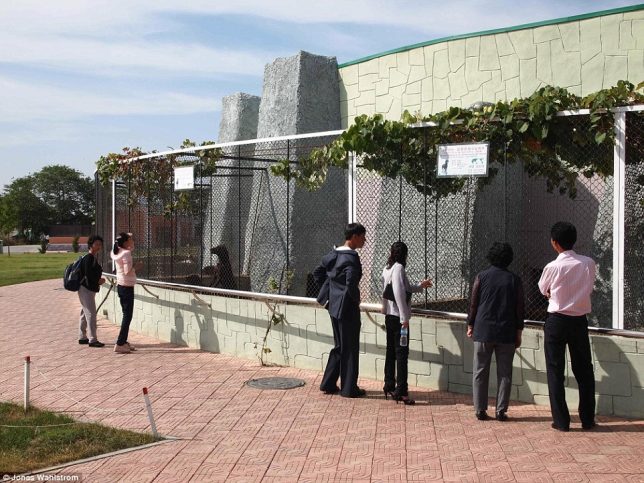
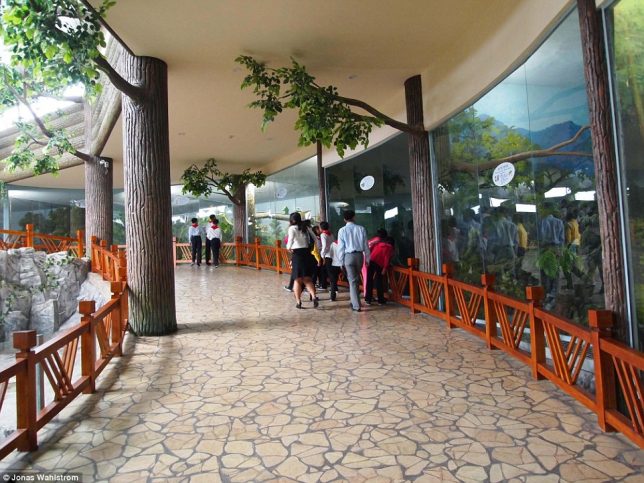
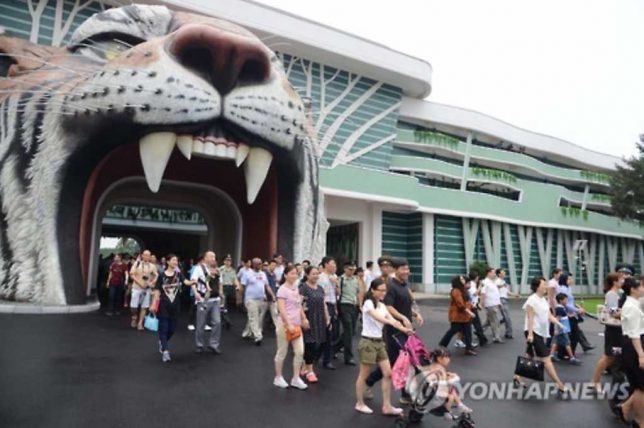
The Korea Central Zoo (also known as the Pyongyang Central Zoo) was founded in 1959 but recently underwent an extensive makeover, re-opening in July of 2016. The zoo was and continues to be criticized for exhibits that include a chain-smoking chimpanzee and various breeds of dogs. Canines are forbidden to be kept as pets in the capital city, ostensibly for hygienic reasons.

north-korea-architecture-1b

north-korea-architecture-1d

north-korea-architecture-1f

We’re here to discuss architecture, however, and when it comes to the Central Zoo the highlight has to be the huge tiger-head entrance archway. Rather impressive, unless you’re an easily frightened child (or adult). At least the scaredy-cats can find some solace at the turtle-shaped Reptile Enclosure.

Handball Hall

north-korea-architecture-2a

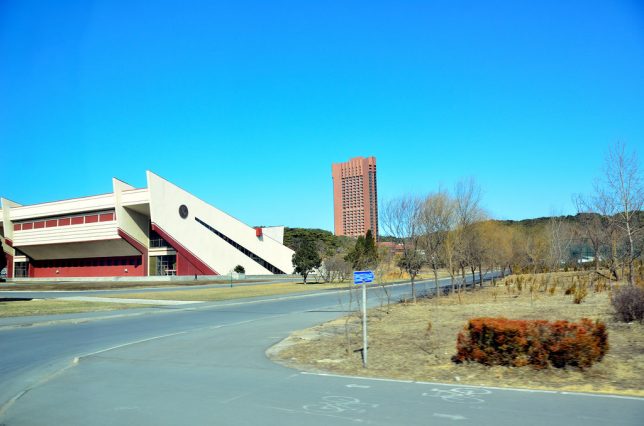
Handball is kind of a big deal in North Korea and the North Korea women’s national handball team has competed at the Asian Women’s Handball Championship no less than six times since 1991 – though they’ve never finished higher than third. The team practices at the strikingly angular and not at all ball-shaped Handball Hall located on Chongchun Street in Pyongyang’s “city of sports” district.

north-korea-architecture-2b

We don’t have a date for the first photo but the image just above snapped by Flickr user Aaron Geddes (Gedsman) in March of 2016 displays some subtle differences.

International Cinema Hall

north-korea-architecture-3a

north-korea-architecture-3c

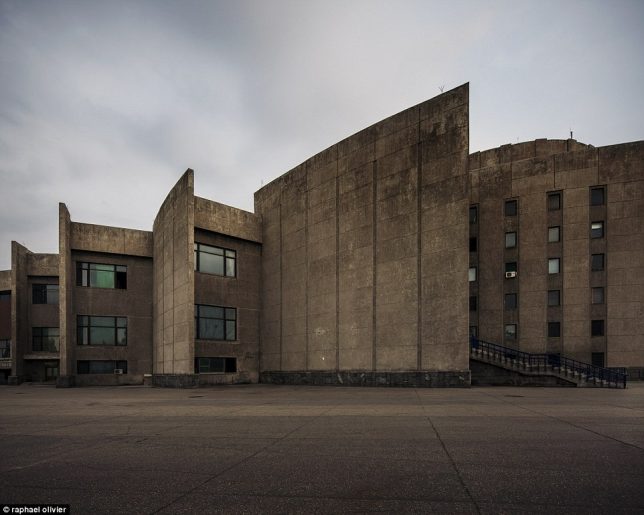
The International Cinema Hall isn’t in use very often as its main raison d’etre is hosting the Pyongyang International Film Festival every other year since 1987.

north-korea-architecture-3b

The sprocket-shaped building sits cheek-by-jowl to a golf course (you read that correctly) on the island of Yanggakdo, located in the Taedong River running through downtown Pyongyang.

Next Page – Click Below to Read More:
Beyond Brutalism Cutting Edge North Korean Architecture

Share on Facebook


[ By Steve in Architecture & Cities & Urbanism. ]

[ WebUrbanist | Archives | Galleries | Privacy | TOS ]


WebUrbanist

 
Comments Off on Beyond Brutalism: Cutting-Edge North Korean Architecture

Posted in Creativity


What learning photography and roller derby have in common

02 Apr

Sure, there are obvious differences between picking up a camera and playing a full contact sport on roller skates. Though you’re probably less likely to break your wrist taking pictures, the guiding principles of learning any new skill apply to photography just as much as roller derby. Trust me, I’ve started at the very bottom in both disciplines – I have literally been there and gotten the t-shirt. So many t-shirts.

As I head for the golden pastures where retired derby skaters go, I’ve done a lot of reflecting on the journey. Whether you’re fresh meat (that’s a real derby thing) or just a newbie photographer figuring out what PASM means, I think these basic principles apply.

You will be really, really bad for a while

When you’re new at skating, just staying upright is hard. You can see me demonstrating this point above at one of my earlier scrimmages.

Photo by Robert T. Bakie

With very few exceptions, everybody starts off bad. Like, really bad. In roller derby you’re a hot mess for a while until you learn how to move with eight wheels strapped to your feet. While it might be less obvious to a casual observer, starting out in photography is kind of similar. Until you get the basic principles in hand, there’s really no way around messing up a lot of shots. Don’t let it get you down.

Practice makes perfect, or at least better

By all means, read up on the fundamentals. Study the work of your heroes. But there’s no substitute for getting out there and getting dirty. As a beginning photographer, the more challenging situations you try to photograph, the more you’ll learn what does and doesn’t work. It’s the same in roller derby – you just need to log a lot of hours on the rink.

You’ll probably think you’re better than you are for a while

This is a photo of a telephone pole I took in 2009. It is Not Good. I thought it was something really special at the time.

The Dunning-Kruger effect – a surge of self-confidence that causes beginners to think they’re better than they are – is just as real in derby as it is in photography. Once you start seeing your skills improve, you’ll lack the frame of reference to know how truly bad you still are. And usually, someone or something will bring you back down to earth pretty quickly (refer to the photo at the top of the page for a diagram of what that can look like). That’s okay, it’s just another reason why the next tidbit is so important.

Seeking out feedback will help you see what you can’t

As humans we’re not great at spotting our own weaknesses, so seeking out someone more experienced in your field for some critique is invaluable. Listen and push yourself out of your comfort zone. Roll with people who are better than you are (you know, physically roll, or just go on a photo walk). Pay attention to what they do, but don’t stress out if you can’t quite keep up yet. You will eventually.

Once you master the basics, you’ll find your style

I’m still working on it but at least I’ve graduated from telephone poles.

We aren’t all an Ansel Adams, and we certainly can’t all be a Missile America. Some skaters, like yours truly, are wiry, bony types who look more at home at a Scrabble tournament than on the track. When you have good command of basic skills, you’ll start to see where your strengths are.

Similarly, with the nuts and bolts of exposure under your belt, a beginning photographer can start playing with different styles and subject matter. Pay attention to what you find you’re drawn to and build on your strengths.

Setting realistic goals will help you keep growing

Without goals, you’re just going in circles – aside from the literal circles that you roll in when you play derby. For best results, make your goals specific, realistic and achievable (you know, SMART) and find someone who can help keep you accountable for working toward them. Assign yourself a photo project and set deadlines for yourself, rather than sit at home worrying that you’re not shooting enough.

Don’t give in to Gear Addiction Syndrome

Gear Addiction Syndrome is real and it’s not just a problem for photographers. Many derby skaters can hold in-depth conversations about their preferences in knee pads and the secret sauce that is their wheel setup. Skating requires a certain level of gear smarts, but just as it is in photography, you can get too carried away making adjustments, particularly when you’re starting out.

In either case, experiment, find what feels like a good fit, and then embrace getting the most you can out of your kit before you start trying to upgrade everything in your (skate or photo) bag.

It will all start clicking and that’s when the fun really starts

This is what it feels like when things finally go right. There’s just a lot of actual blood, sweat and tears leading up to that moment.

Photo by Danny Ngan

The absolute best moments I’ve experienced playing roller derby and taking photos have been when instinct kicked in and I stopped thinking. I’ll turn a corner and see the best shot of my day materialize right in front of me, and I’ll have the right lens and the right settings to capture it. Or I’ll suddenly put a skill I’ve practiced for hours to use in a game.

Nothing beats that moment. Savor it.

Articles: Digital Photography Review (dpreview.com)

 
Comments Off on What learning photography and roller derby have in common

Posted in Uncategorized


Food photographers rejoice: Camera-enabled Samsung Family Hub 2.0 fridge quick review

02 Apr

Introduction

 Source: Samsung

All of Samsung’s new Family Hub 2.0 line of camera fridges come in three or four door configurations, have 21.5” 1080p LED screens, and of course, internet connectivity and cameras with enough resolution to allow you the freedom to count your yogurt cups from anywhere in the world.

Electronics giant Samsung has been largely absent from consumer digital imaging lately, save for its ongoing lineups of smartphones and tablets (please, don’t say ‘phablets’ within earshot of anyone, anywhere). That all changed at CES 2017, where the company has shown a renewed vigor in the digital imaging space with an update to its Family Hub refrigerator-based camera technology.

At the heart of this system is the large LED screen on the front of the units, which will allow you to load web pages, place food orders, leave notes for your family, and of course, frame your photographs of the food that is being cared for by the very device doing the photographing. The 21st century sure is grand.

Key Specs

  • Camera type: Fridge
  • Price as tested: $ 3499
  • Resolution: Good enough
  • ISO: Good enough
  • Image stabilization: Weight-based (334 lb. shipping weight)
  • AF Point Selection: Dunno
  • Battery life: AC power only
  • Fingerprint resistance: Standard

So who, then, is the Samsung Family Hub 2.0 camera fridge for? For the budding food photographer, it doesn’t get much easier. If you’re a landscape shooter though, you may run into some limitations.

In practice

The Family Hub 2.0 line of camera refrigerators makes basic food photography as easy as can be. The camera fridge acts essentially as a large softbox or cove, with ample space to style your food with ease.

Your photos with your camera fridge will look nothing like this, because this is a camera in a fridge, not a camera built into a fridge door. Important distinction.

A full internal LED lighting setup provides bright, constant illumination to allow you to capture your stylized creations or past-due eggs with a flattering (or maybe just flat) look, and internet connectivity lets you share these works with literally anyone in the world, even if no one wants to see them. In other words, this could be the perfect food-focused Instagrammer’s main camera.

There’s also an argument to be made for the eccentric product photographer who prefers to shoot primarily on bright reflective white, or the accomplished portraitist who wants some variety for his or her ‘Trapped Businessman’ portfolio (note, the ‘similar images’ listings on that page show a similar theme, ‘Trapped,’ but for some reason, the businessman is nude – fair warning).

But as an enthusiasts’ all-rounder, the Family Hub 2.0 camera fridge leaves something to be desired. First of all, to photograph anything besides what’s actually in the fridge, you will have to literally saw the back of the fridge off (DPReview in no way endorses this activity). And though the immense weight will be a boon to those photographing landscapes in windy conditions, the lack of any sort of control over image capture settings makes long exposures of waterfalls, grassy knolls and the like exceedingly difficult to capture with any sense of motion or grandeur.

There goes a brave man.*

For wildlife, you’re going to need a very long extension cord to keep the generator noise far enough away to keep from frightening your subjects, to say nothing of the rustling you’d make wheeling the camera up to a confused and soon-to-be angry Grizzly. And as for sports, the lack of a zoom will be limiting for anything besides a slot-car track built inside the fridge itself; wheeling a fridge up and down the sidelines of your local football match is likely to cause health problems.

Lastly, there’s no Auto ISO or Raw support (besides supporting the chilling of various raw meats), and these are both features that are present on many competing camera models in this price range. Of course, none of those competing models comes with a fridge built-in. So you just can’t have it all, it seems.

The wrap

Overall, we’re pleased to see Samsung’s continued commitment this new (ice) age of digital imaging. Their Family Hub 2.0 line of camera fridges offer easy-to-use Wi-Fi connectivity in solid, well-built packages. But we can’t help but feel that the camera fridge phenomenon as a whole will be given the cold shoulder by the broader photography community.

After all, the price of entry for a camera that primarily appeals to food photographers is fairly steep. And even if you can appreciate the stabilizing heft, there will be those for whom a hand truck is just one photography accessory too many. Perhaps most importantly, if you need to photograph anything besides what you place in the fridge, it’ll require a couple of warranty-breaching hours with a hacksaw.

In the end, the Family Hub 2.0 line of camera fridges is going to appeal to a very select niche, and if it’s the right camera for you, who are we to judge? But if you need a more well-rounded solution for your photography, we have to recommend that you hold off and put that pre-order on ice.

*In accordance with Creative Commons 2.0 and 3.0 licensing, image is a composite with credits to Rob Bixby for the photographer, Samsung for the fridge and someone whose alias is Traveler100 for the bears.

If you hadn’t caught on yet, we’re having a little April Fool’s Day fun her. We in no way endorse taking a hacksaw to a refrigerator, or really using a refrigerator for anything aside from refrigeration.

Articles: Digital Photography Review (dpreview.com)

 
Comments Off on Food photographers rejoice: Camera-enabled Samsung Family Hub 2.0 fridge quick review

Posted in Uncategorized


Circular Logic: “Endless Runways” Rounded to Save Energy, Time & Space

02 Apr

[ By WebUrbanist in Architecture & Public & Institutional. ]

circular takeoff

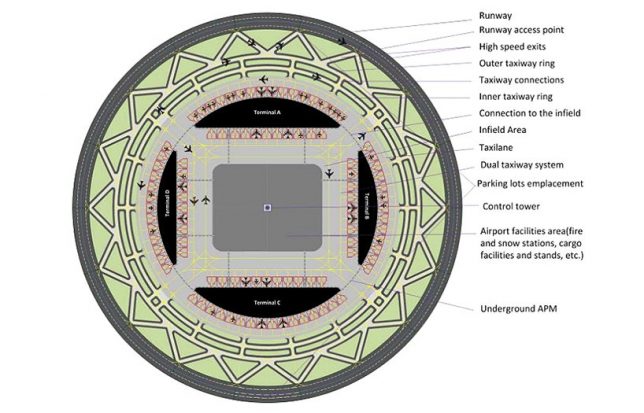
Designed to reduce real estate needs for runways in ever-more-crowded cities, this “endless runway” system encircles a central terminal building and lets multiple planes take off and land at the same time.

Developed by Dutch scientist Henk Hesselink, the two-mile-circumference shape also lets planes land or take off in alignment with the wind (rather than fighting crosswinds) since they can line up with any point on the strip.

round runway solution

In theory, the system would improve the flying experience for both passengers and pilots, making for smoother departures and arrivals. They would also save energy and space, increasingly an issue for once-suburban (or rural) airports now encroached upon by growing cities.

circular runway

Critics have expressed skepticism regarding the difficulty of landings and take-offs in such a setup, but big backers seem to believe in the potential. Also, even if not immediately feasible, increased automation could make it increasingly viable over time, since computer systems can coordinate ideal landing and arrival trajectories for optimal safety and comfort and across multiple planes.

runway system

Each such setup provides the length of three airstrips and could be deployed or at least tested at scale in Europe soon — participating backers include the Netherlands Aerospace Centre (NLR), along with DLR Germany and ONERA in France.

round runway backers

From the designers research report: “The results of the literature survey in this document are promising and suggest that a circular runway can be developed with current and expected technology. Today’s aircraft characteristics allow to take off and land with speeds and low altitude bank angles compatible with the operation on a circular track. The Endless Runway fits in future concepts that specify improved planning of operations, new navigation equipment, and intermodal transport.”

Share on Facebook


[ By WebUrbanist in Architecture & Public & Institutional. ]

[ WebUrbanist | Archives | Galleries | Privacy | TOS ]


WebUrbanist

 
Comments Off on Circular Logic: “Endless Runways” Rounded to Save Energy, Time & Space

Posted in Creativity


We try out the new HassleVlad X1D

01 Apr

We try out the new HassleVlad X1D

This is Vladimir. He’s a developer. More importantly to us, he’s the newest member of the DPReview team. We’re always excited when we get new things in the office.

We try out the new HassleVlad X1D

This is another new thing in the office.* What a happy coincidence that we get the perfect camera at the same time we welcome our new teammate.

*Not really. That’s not a real camera. That’s an edited image of a Hasselblad X1D**.

**Which, incidentally, is the camera we used to take all of the photos for this slideshow.

We try out the new HassleVlad X1D

Vlad wears noise-canceling headphones to block the sound of the demolition of the building next door. Unfortunately, the headphones do not cancel out the sound of the HassleVlad’s shutter.

We try out the new HassleVlad X1D

Vlad is an avid photographer as well as a developer. This means he has quickly adopted the habit of taking photos out of our office windows. We hope that he will be as quick to accept being the subject of many of our photos.

We try out the new HassleVlad X1D

The HassleVlad’s leisurely startup time and satisfying yet conspicuously loud shutter mean we cannot sneak up on Vlad.

We try out the new HassleVlad X1D

Here, Vlad knows that as long as he keeps walking, it is unlikely that I will be able to turn on the HassleVlad, set the AF point, and capture focus before he gets to me. He’s mostly right; the image is a bit soft. I am not deterred.

We try out the new HassleVlad X1D

Vlad seems happy about our team trip to photograph the University of Washington cherry blossoms even as he tries to ignore me.

We try out the new HassleVlad X1D

The cherry blossoms are beautiful and the HassleVlad does a fine job retaining the highlights of Vlad’s trip.

We try out the new HassleVlad X1D

Although Vlad does not take any selfies, the HassleVlad ensures his morning is well-documented.

We try out the new HassleVlad X1D

Medium format has a reputation for not performing well in low light, but we find the HassleVlad is quite competent in low Vlad situations.

We try out the new HassleVlad X1D

Yes, Vlad is sharp in the corners too.

We try out the new HassleVlad X1D

Vlad continues to try to avoid me, but I’m nothing if I’m not persistent. And I am determined to get the most out of the HassleVlad while I can.

We try out the new HassleVlad X1D

With a minimum focus distance of 27″ (70 cm) on the XCD 90mm F3.2, this is as close as I can get to Vlad. He is happy a macro lens has not been released for the HassleVlad.

We try out the new HassleVlad X1D

Vlad has proven to be a patient subject; he simply ignores me as I follow him and take photos. I have been Mildly Inconveniencing Vlad, so it is time for bolder measures: I am now standing directly in his line of sight.

We try out the new HassleVlad X1D

Success! The HassleVlad works. We definitely recommend this camera for the Vlad in your life. (And welcome to the team to the Vlad in our life!)

Articles: Digital Photography Review (dpreview.com)

 
Comments Off on We try out the new HassleVlad X1D

Posted in Uncategorized


STC adds 6-stop neutral density to its clip-on sensor filter range

01 Apr

Specialist filter manufacturer STC Optical Ltd has expanded its range of Clip filters to include a ND64 with infrared-cut properties. The new filter, which clips directly in front of the camera’s sensor instead of over the front of the lens, provides 6 stops of light reduction while maintaining accurate colors by preventing infrared light from passing freely during the exposure.

The benefit of using filters over the sensor is that the same filter can be used whichever lens is fitted, so users don’t have to buy a separate size for each lens diameter, or a different adapter ring. These kinds of filters are especially useful when used with ultra-wide lenses as they present no danger of vignetting and they fit behind lenses that can’t accept conventional front-element screw-in filters.

With wide, as well as normal, lenses having the filter behind the lens avoids the problems of flare that adding glass in front of the lens can create. It also side-steps the problem of  reflections on the back-side of the filter that can be a danger during long exposures when using filter holders that don’t hold the filter flat against the front of the lens.

Using this sort of ND filter will potentially be of benefit not only for creating long-exposure still images but also for video work. And of course with the filter remaining in place in the camera, changing lenses will take less time as there’s no need to screw off and reattached the filter.

Since the filter prevents DSLR mirrors returning to their normal position, it must be attached in live view mode. STC claims that it is perfectly safe to leave the filter in place even with the camera powered off, since the filter is designed to support the mirror, and prevent it from dropping.

A full list of compatible Nikon, Canon and Sony full frame and Canon APS-C  bodies is available on the STC Optical website. The filters cost $ 90.

Articles: Digital Photography Review (dpreview.com)
 
Comments Off on STC adds 6-stop neutral density to its clip-on sensor filter range

Posted in Uncategorized


Just added: New product overview videos and getting started guides

01 Apr

Are you shopping for a new camera? Or just looking for some advice about how to use your current favorite model? We’ve been working on a series of product overview videos for a couple of years, and we’ve just added a new series of informational videos to our YouTube channel.

Called ‘Getting Started Guides’, these videos are intended to give you a quick breakdown of the key features of several recent releases, and some quick tips on how to get the most out of them. You can find all of our recent overview and getting started guide videos from the links below, and subscribe to our YouTube channel to ensure you never miss a new video!

Watch our series of product overview videos

Watch our new ‘Getting Started Guides’

Articles: Digital Photography Review (dpreview.com)

 
Comments Off on Just added: New product overview videos and getting started guides

Posted in Uncategorized