RSS
 

Archive for April, 2017

Gudsen launches Moza Air 3-axis powered stabilization system

05 Apr

Chinese stabilization brand Gudsen has announced a new addition to its Moza range of powered gimbals that’s aimed at users of compact system cameras and small-to-medium sized DSLRs. The Moza Air can carry a maximum payload of 5.5lbs and offers powered 3-axis stabilization as well as remote control features. Gudsen claims it is ‘the smartest camera stabilization and control system for mirrorless cameras and DSLRs.’

The handheld device uses a single joystick on its handle for the photographer to control the direction the camera will face and the modes the gimbal operates in, while a smartphone app allows the same controls to be applied from a distance of 10m. The app also allows users to program motion-orientated time-lapse sequences with the head turning or tilting by increments to match the shooting settings of the camera. An optional thumb controller is also available that additionally provides start/stop functions for some camera models. Having an app and a thumb controller means that the system can be carried by one person while another controls the direction of the camera.

The gimbal is capable of 360-degree rotation in yaw, tilt and roll axes and with a dual-handle included users can opt to have the camera above or slung below the hand grip. The Moza Air is powered by three 2000mAh lithium batteries that run the system for up to four hours.

The Gudsen Moza Air costs $ 599. For more information and to read the full spec of the device visit the Gudsen website.

Manufacturer information

About MOZA Air

MOZA Air is a versatile and interactive camera stabilization system designed for mirrorless cameras and most DSRLs to capture smooth and cinematic videos. It is a 3-axis handheld gimbal stabilizer that gives the operator ability of controlling over the camera and gimbal via the handgrip or the MOZA wireless thumb controller. With a max payload of 2.5kg or 5.5 lbs, it can support Sony A7S, Panasonic GH5, Canon 5D Mark III and others. With high precision encoded motors and advanced motion control technology built into the MOZA Assistant App, it allows for shooting motion time-lapse with your iPhone.

Articles: Digital Photography Review (dpreview.com)

 
Comments Off on Gudsen launches Moza Air 3-axis powered stabilization system

Posted in Uncategorized


Anatomical Street Art: Sliced Animal Murals Reveal Disturbing Details

04 Apr

[ By WebUrbanist in Art & Street Art & Graffiti. ]

sliced spider

Marvelous if also a bit morbid, these highly detailed murals show the complex workings inside giant-sized animals, revealing muscle, sinew, tendons, veins and bones in various different configurations.

animal mural

Nychos is a street artist from Austria who creates spectacular, detailed artworks. He “grew up in a little village near Graz (Styria, South of Austria). He calls it the green hell. Born into an Austrian hunter’s family, he saw, at a very young age, things which normal people would consider as cruel and brutal.”

exploded whale

The scale of works by Nychos plays to the level of detail, and each piece is crafted differently, almost like an experiment in sequential dissections by a scientist or medical student. His subjects span the animal kingdom as well, from kangaroos and rats to whales and alligators (as well as humans).

cut dog

Some of the murals are sliced cleanly while others operate like layered x-rays, revealing various depths at different points along their length.

anamial

sliced snake

Still others feature intertwined animals at various stages of dissection or translucency, like the two snakes above, or act alike exploded axonometric drawings with pieces pulled out from the core.

translucent

While Nychos also exhibits in galleries and makes smaller-scale prints, his large public pieces are particularly compelling (if somewhat disturbing).

Share on Facebook


[ By WebUrbanist in Art & Street Art & Graffiti. ]

[ WebUrbanist | Archives | Galleries | Privacy | TOS ]


WebUrbanist

 
Comments Off on Anatomical Street Art: Sliced Animal Murals Reveal Disturbing Details

Posted in Creativity


The ‘Crapinon’ is a 135mm lens made from discarded parts

04 Apr

You know what they say about one man’s trash. Well, lens enthusiast and freelance video producer Mathieu Stern took the phrase to heart when he found an old lens tube at his local flea market. It was in a box of unsold items destined for the trash when he rescued it and gave it a new life. With the addition of an ND M42 to NEX adapter, M42 tubes and a couple of rubber bands, the ‘Crapinon 135mm’ was born. 

$ (document).ready(function() { SampleGalleryV2({“containerId”:”embeddedSampleGallery_8949319656″,”galleryId”:”8949319656″,”isEmbeddedWidget”:true,”standalone”:false,”selectedImageIndex”:0,”startInCommentsView”:false,”isMobile”:false}) });

Stern admits that the lens isn’t too sharp, as you’d expect, but it does work. See some of his sample images above. You can see more of his work at his YouTube channel and his website.

Articles: Digital Photography Review (dpreview.com)

 
Comments Off on The ‘Crapinon’ is a 135mm lens made from discarded parts

Posted in Uncategorized


Window Shades: Contextual Street Art Frames View of Greek Cityscape

04 Apr

[ By WebUrbanist in Art & Street Art & Graffiti. ]

shades

A turn of phrase meets art in this mural made to look like a face, with glass-framed eyes reflecting the world outside.

shades-at-night

Graffiti interventionist Achilles likes to put art in context, using walls and spaces as backdrops for layered works that wouldn’t work quite the same way anywhere else.

streetartsurprise

angles

twistedart

Many of his site-specific works play with perspective and create visual surprises by tucking elements onto different surfaces to create reveals as the viewer approaches.

Compared to his complex works, his artist bio is short and to the point: “Achilles lives and creates in Athens, Greece. He loves street art, graffiti and painting. He works as a freelancer creating murals, portraits, paintings, illustrations etc.”

Share on Facebook


[ By WebUrbanist in Art & Street Art & Graffiti. ]

[ WebUrbanist | Archives | Galleries | Privacy | TOS ]


WebUrbanist

 
Comments Off on Window Shades: Contextual Street Art Frames View of Greek Cityscape

Posted in Creativity


CP+ 2017 – Sony interview: ‘We need to offer new imaging experiences’

04 Apr
Yasuyuki Nagata – Senior General Manager Business Unit 2, Digital Imaging Group Imaging Products and Solutions Sector, Sony Corporation. Pictured at CP+ 2017 in Yokohama, Japan. 

Earlier this year, we traveled to the CP+ trade show in Yokohama, Japan. At the show, we met with senior executives from several major manufacturers, including Yasuyuki Nagata of Sony. During our interview we discussed the future of the a7-series, Sony’s strategy for growing the 1-inch camera segment, and the new a99II.

Please note that this interview has been edited slightly for clarity and flow.


Nikon recently canceled the DL series, which would have competed with the RX100-series. Is this good or bad for Sony?

It’s both good and bad. If Nikon had achieved a high-quality wide lens camera with a 1 inch sensor, that would have been a very competitive product. So in that sense, it’s good for us. But actually, from the perspective of driving the 1 inch sensor market, we want to stimulate this market and that means multiple manufacturers.

What is your general strategy for FE lenses in the future?

We’re launching products based on customer feedback – especially professionals. When we started the Alpha a7 series we only had three full-frame mirrorless (FE) lenses, but after we launched the a7R II, a lot of professionals started to use it. So their voices [became more important]. For example they wanted a 24-70mm F2.8, which is why we prioritized that model. So basically our strategy is to listen to our customers.

The GM 24-70mm F2.8 was a lens that Sony’s professional full-frame users wanted the company to make, according to Mr Nagata. 

In the past, we’ve heard that Sony wants to create some longer sports optics. is that something that is being planned in the future?

If a lot of professional photographers [want those lenses] we will have to create them. But for now, our main professional user base is portraits and landscape photographers.

Do you aspire to having a base of professional sports photographers in future?

Maybe. Of course it’s not just the lens, it’s the body as well.

The Olympics in Tokyo is three years away – would you like to see Sony lenses in the arenas alongside Canon and Nikon?

Of course, that’s our dream. And we won’t give up on that. But it’s hard to make a specific comment on future products.

How long will it be before mirrorless products represent the majority of cameras at large sporting events?

I don’t know! Historically, I believe it took Canon 7-10 years to become the dominant brand at professional sports events. It’s not easy. But a lot of professional photographers have already switched from DSLR to mirrorless. Maybe in some cases, we are already satisfying the needs of some sports photographers.

The Sony a7R II is a capable stills camera, but fits equally as easily into a professional 4K video workflow. 

Speaking about the a7-series lineup, how does your customer base divide up in terms of stills photographers versus videographers?

We don’t divide our customers in this way. Most of our customers shoot both video and stills, currently. Until a few years ago, video and stills shooters were totally different, but recently, portrait and wedding photographers have started shooting video too.

We always consider both kinds of users at every stage of development.

Moving on to the RX series, there are a lot of products now, and you’re leaving older models in the lineup – what is your aim with this strategy?

It depends on the region. By adding RX100 models 1-5, we expanded the 1 inch sensor market, and in most regions we enjoy #1 market share. The 1 inch sensor market was developed by Sony, and then other competitors started joining us.

[As such] we started with 100% market share, but even now we enjoy 60-70% market share in most regions. And our high-technology models like the RX100V drives some of that, but for the cost of one Mark V, you can buy three of the original RX100. So the cost factor is also important. With both entry-level and high-end RX models, we hope to be able to drive the 1 inch sensor market and remain at number 1.

The Cyber-shot RX100 V packs a lot of features into its pocketable form-factor, but Mr Nagata insists that older RX models still have their place in the market. 

We understand some of the comments we get from dealers, that because of this strategy they have to carry all five models, which might not be efficient for them, but realistically, those dealers ‘cherry pick’ the models they want to carry. Maybe in an area like the US it doesn’t make sense to [sell] all five models, but in developing countries, the Mark I and Mark II are crucial.

The earthquake last May caused a good deal of disruption – what was the effect on the camera division?

From a supply point of view, we had a month or so’s worth of product in stock. So the effect on our supply chain didn’t really kick in until the June, July timeframe, depending on the model. One inch sensors are easier to make than full-frame sensors, which require at least 2 months to manufacture, so the effect was more profound on full-frame sensors than one-inch. But it was all back up and running by the end of 2016.

What kind of feedback do you get from professionals that have switched from DSLRs to mirrorless?

Some professional photographers have said that G Master lenses were a trigger for switching, and also the [new] STF 100mm lens. Thanks to the short flange-back distance, a lot of E mount customers can use their own lenses with a7 cameras. That’s a benefit of the system. And after they’ve switched to an a7 body, people tend to switch over completely and buy Sony lenses.

Smaller body size is a big factor, and silent shooting is important too.

Is the lens attachment rate different from an a6500 to an a7-series camera?

It’s totally different. Even from the a7 to the a7R II, the attachment rate [with the a7R II] is almost double. From the a6000 to the a6500, again it’s completely different.

What are your plans for developing your pro support network?

We’ve started pro support, but we’re still learning. Professional photographers travel all over the world, so how to provide consistent support not just in their home country, but globally is very important for us.

Sony has ambitions to expand and improve its PRO Support network for professional alpha users. 

Was the choice of a smaller, lower-endurance battery in the a7 series made deliberately to keep the camera size small?

We are fully aware of this feedback. Right now, we’re not getting any negative commentary about the size of our a6000-series and a7-series cameras, so there’s probably no need to make them any smaller. There’s a balance between the size of the body and lens, too. So just making the body smaller doesn’t make much sense. And I’m afraid I can’t comment on how we will tackle this issue without commenting on future products, so I can’t say anything more.

Is Sony interested in joining the 360 imaging market?

We already have an action camera lineup, and it’s a similar category. The market itself is kind of shrinking, so instead of having one camera for 360, we’d probably prefer to support professional users, making 360 imaging using our a7-series and a rig. Rather than chasing after the consumer segment.

Do you see more growth in the high-end of the market in general?

I believe so. Which is why pro support is getting more important for us. But of course it cascades down to lower-end models too, and we don’t deny the important of the entry-level segment.

What’s the most important thing that Sony has to do to maintain its position in the next few years?

We need to offer new imaging experiences. We made the NEX series – APS-C mirrorless. That was a new experience. The RX100, the full-frame a7-series, G Master lenses – STF, too. It’s a new imaging experience. Sony is by far the number 1 sensor manufacturer, and the advantage of this is that is allows us to work together with sensor engineers to create the best image sensor for a specific model we are developing. so we’re aware of the sensor development schedule for the next two or three years. So we know what kind of future is coming, in terms of sensors, so we can plan ahead – what kind of bodies will be required, and what kind of lenses will required. We can take advantage of that.

When it comes to core technologies, we’re making lenses sensors, we’re making imaging sensors, we’re making LSIs and we have a software division. Some of our customers couldn’t believe we made an autofocus STF lens. It’s not easy. But we know light travels through lenses, and we know how light is detected on the sensor. So the total combination [of these technologies] means we can make that product.


The recently-announced a99 II is proof that the A-mount is still a going concern. According to Mr Nagata, Sony needs to maintain the A mount alongside the E mount. 

In the SLT lineup, development is slower than the a7-series. Where will that line go in the future?

Having options is really important, especially for high-end amateurs and professionals. If we just had the same cameras and lenses [as our competitors] the results would be the same. Some people want A-mount, some want E-mount, and depending on the situation, some customers might want both. Having that variety of bodies and lenses is key.

We need both A mount and E mount. Some people thought that Sony was only developing the E mount, until we introduced the a99 II. You’ve seen it, it’s a serious camera. There is a huge number of lenses for A mount, from Sony and Minolta, and we want to maintain a good relationship with those customers by providing great A mount bodies with no compromises compared to the E mount system. But we can start capturing new customers with the E mount. We we need both.

In the long term, do you want those A mount customers to come over to E mount?

That depends on them.

Will we see more A mount lenses, specifically designed to get the most out of the A99 II’s autofocus technology?

We have to prioritize. It’s not easy developing new lenses. Our customers’ expectations are very high, especially after we launched the G Master series. So we can probably only launch a few lenses a year!


Editors’ note:

It was interesting to speak to Mr Nagata in February. This month he is celebrating his 31st year with Sony, and during the course of three decades he has worked in various divisions, from robotics to Handycams. Clearly, he is not afraid of something that Sony has often been criticized for – having ‘too many’ products in the market. Every product has its place, from the high-end a99 II to the old, but still current, CyberShot RX100 Mark I, and Sony appears intent on introducing even more ‘new imaging experiences’ in the future.

Although understandably cautious about giving anything away, it is possible to glean some insights from Mr Nagata’s responses to certain questions. Firstly, it doesn’t look like the Alpha mount is going anywhere for now, although we would expect the relatively slow pace of development to be a continuing feature of that range, compared to the company’s mirrorless ILCs.

Secondly, reading between the lines, we’re optimistic that bigger batteries are coming to the next generation of Sony’s alpha range of mirrorless cameras. As Mr Nagata pointed out (although not in so many words), there’s not much point making a camera really small if you intend it to be used with large, high-quality lenses. And for videographers especially, the limited endurance of the a7R II and a7S II in some conditions is a real frustration – one that Sony is clearly very aware of. 

Sony is also aware that it needs to get better at catering to the needs of professionals in a more general sense – not only when it comes to the spec sheet of their cameras. Post-sales support for professionals is something that Canon and Nikon have perfected over decades, and is one of the main reasons why major news outlets and picture agencies still generally stick with one or the other. It’s early days for Sony’s PRO Support network, but we’d expect the company to put a lot of energy into improving and expanding it on the run-up to the 2020 Olympics – when all eyes will be on Tokyo, and Sony will be hoping for some professional representation on the world’s biggest stage. 

Articles: Digital Photography Review (dpreview.com)

 
Comments Off on CP+ 2017 – Sony interview: ‘We need to offer new imaging experiences’

Posted in Uncategorized


A Worthy Project for Landscape Photographers: League of Landscape Photographers

04 Apr

Three cover splay

Canadian landscape photographers Samantha Chrysanthou and Darwin Wiggett have created the League of Landscape Photographers, a self-identified group of artists who photograph the world around them in accordance with high ethical and artistic standards. ‘Landscape’ in this group is defined broadly to include wilderness and human interactions with and connections to the land. There is no cost to being a League member but each member must post a personalized code of ethics on their website or social media pages to join. League members share and discuss their ideas, portfolios and projects in the League Facebook group and on the League blog. The pinnacle achievement of the group is the annual, collectable fine-art Leaguemagazine to be released in the fall of 2017. There is currently a fundraising subscription campaign on until April 4 with the goal of getting $ 30,000 CAD to fund 1000 copies of the magazine that will go to subscribers worldwide. All proceeds from the subscriptions go to the creation of the magazine with its evocative imagery and high-end local printing and design. This is a magazine funded by photographers for photographers (no ads or commercial content) and funds raised go to fairly pay ALL contributors for their creativity. League magazine strives to promote photography with a conscience and show that photography can make a positive impact through thoughtful and ethical creativity.

Act quickly as their fund raising deadline is drawing near.

The post A Worthy Project for Landscape Photographers: League of Landscape Photographers appeared first on JMG-Galleries – Landscape, Nature & Travel Photography.


JMG-Galleries – Landscape, Nature & Travel Photography

 
Comments Off on A Worthy Project for Landscape Photographers: League of Landscape Photographers

Posted in Equipment


Nikon centralizes optical engineering departments from across the business

04 Apr

Nikon Corporation has announced that it is to bring all of its optical engineering facilities under one roof with the establishment of a single division to service the needs of the whole organization. The plan aims to centralize the company’s optical skills from each of its business units so information, technology and knowledge can be shared to make the whole company more effective. The Optical Engineering Division will be under the control of the main Nikon company, Tochigi Nikon Corporation.

The creation of the new division is part of Nikon’s restructuring plan that has seen concerted efforts to streamline the business after its previous restructure didn’t produce the results it needed. Nikon says that optics are its principle strength and this reorganization will help it to make the most of its resources. There is also a suggestion that having all the optical engineering in one place will help the company respond to variances in demand for certain products, which may help to elevate shortages of new releases.

Press release

Establishment of the Optical Engineering Division, aggregating all optical engineering functions to create new value

Nikon Corporation (Kazuo Ushida, President, Tokyo) announced today that the establishment of the Optical Engineering Division on April 1, 2017. Aggregating all the optical engineering functions distributed in each division is intended to create a synergistic effect and enhance multifunctionality, as well as enabling flexible deployment of resources to the area as necessary so as not to miss any business opportunity.

This new Optical Engineering Division is an organization that aggregates lens, mechanical and system engineering functions related to optical equipment and optical solutions. Superior technology and knowledge with respect to optical engineering maintained in each division will now be accumulated and evolved in the Optical Engineering Division to develop optical products that create new value.

In our restructuring plan, announced in November 2016, we decided to restructure our group companies to enhance manufacturing technology of optical components that are our core competence and a differentiator from our competitors. All the functions related to the manufacturing technology of optical components, which were previously owned by Nikon Corporation and our group companies, have now been brought together at Tochigi Nikon Corporation, our consolidated subsidiary, which started operation on February 1, 2017.

In addition to these advances for manufacturing technology of optical components, the newly established Optical Engineering Division will further improve our greatest strength, optical technology, by aggregating optical engineering functions, thereby helping to maximize our products’ competitiveness.

Articles: Digital Photography Review (dpreview.com)

 
Comments Off on Nikon centralizes optical engineering departments from across the business

Posted in Uncategorized


Sony’s sensor roadmap includes a 150MP medium-format chip for 2018

04 Apr

The Sony Semiconductor Solutions Corporation, the Sony division that is responsible for design and manufacturing of the Japanese company’s image sensors, has published its image sensor roadmap up to 2018 and the document includes some rather exciting news for medium-format photographers.

Sony’s plans include the launch of 100MP 44 x 33mm and 150MP 55 x 41mm medium-format sensors in 2018. Both sensors will be backside-Illuminated. The former is the same format as sensors currently used in the Fuji GFX or Hasselblad X1D, and the latter would fit into the Phase One 100XF. The roadmap also includes a 150MP 55 x 41mm monochrome BSI sensor to be launched in 2018. 

According to Sony the new sensors will allow for a much higher degree of cropping or image magnification than with current sensor types. Potential applications are not limited to conventional photography but also include aerial photography, large area surveillance and inspection applications in manufacturing and industry. The full document is available on the Sony Semiconductor website.

Articles: Digital Photography Review (dpreview.com)

 
Comments Off on Sony’s sensor roadmap includes a 150MP medium-format chip for 2018

Posted in Uncategorized


Image style AI can convert paintings to photographs

04 Apr

Apps that convert your photos into paintings, with styles ranging from Monet to Lichtenstein, have been all the rage recently, with Prisma being one of the most popular offerings. A research team at UC Berkeley has now developed an artificial intelligence algorithm that can do the reverse – and much more. 

Using ‘image style transfer’ their AI can convert Monet’s impressionist paintings into a much more realistic image that comes close to photo quality, giving you a good idea of the scene that the French painter was looking at when he put down his easel and started to paint. In addition, the system is capable of changing winter to summer in an image of a Yosemite scene, turn apples into oranges and horses into zebras. Of course it’s also possible to transform regular photos into Monets, Van Goghs or Cezannes.

The research project uses so-called ‘unpaired data’ which, in the words of the project team means that ‘we have knowledge of the set of Monet paintings and of the set of landscape photographs. We can reason about the stylistic differences between those two sets, and thereby imagine what a scene might look like if we were to translate it from one set into another.’

To achieve that the relationships between similar styles had to be coded in a way that can be understood by a computer and then the AI had to be trained using large number of photos from Flickr and other sources. In a final step the quality of the results was checked by both humans and machines before fine-tuning of the algorithms. 

On some occasions the results are still far from perfect but overall the AI is impressively good at transferring styles from one image to another. More information is available on the project’s GitHub page.

Articles: Digital Photography Review (dpreview.com)

 
Comments Off on Image style AI can convert paintings to photographs

Posted in Uncategorized


Pixelated Masterpieces: 32 Real-Life Works of 3D Glitch Art & Design

04 Apr

[ By SA Rogers in Art & Sculpture & Craft. ]

glitch main

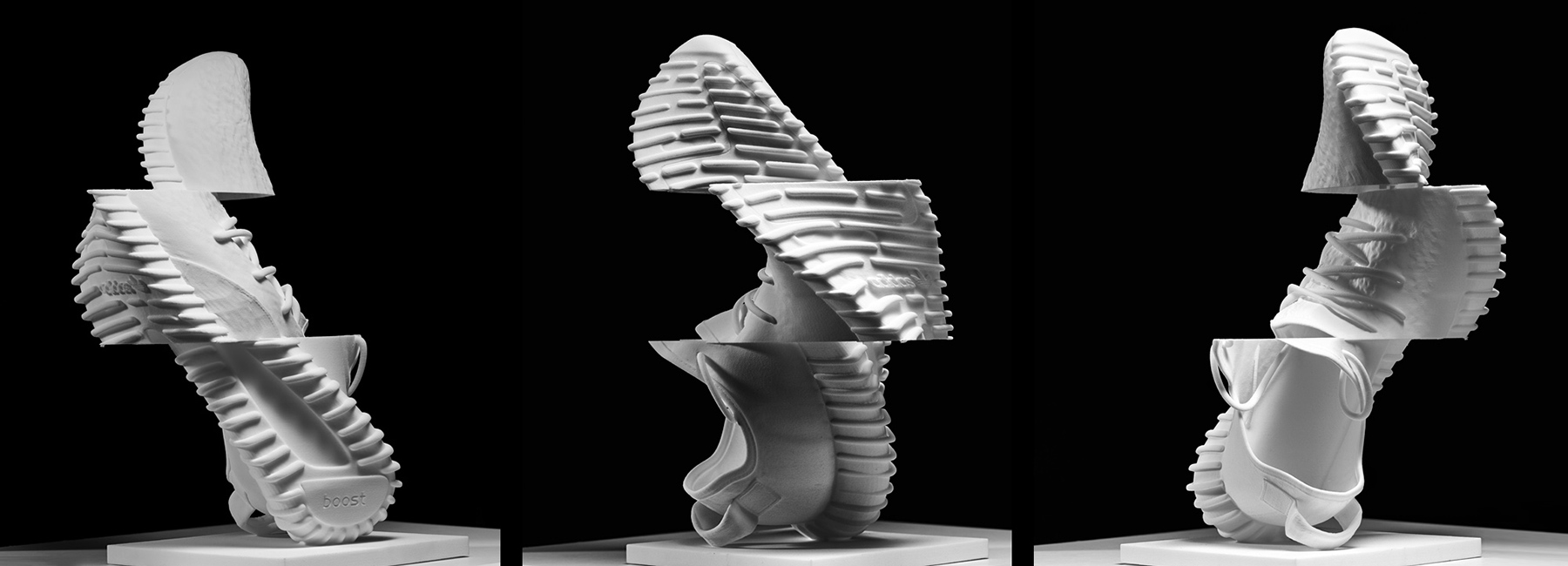
Don’t adjust your monitor – there’s nothing wrong with the images of these sculptures, rugs, furniture and even full-scale architecture. Playing with the aesthetics of digital errors, the glitches are carved, woven or painted right into physical, three-dimensional designs.

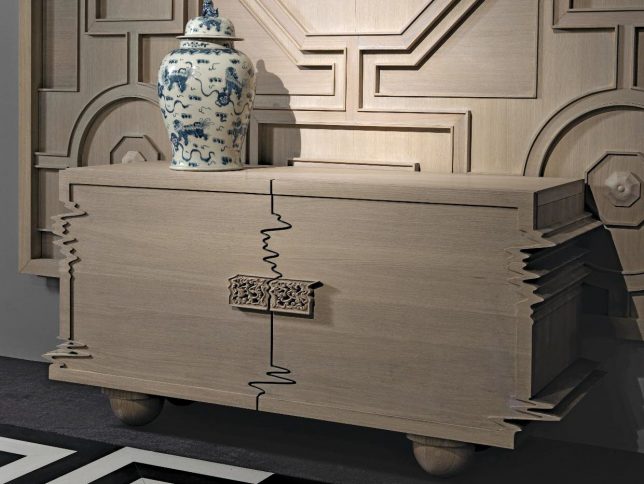
Good Vibrations by Ferruccio Laviani

glitch laviani 1

ferruccio laviani 3

laviani glitch 7

ferruccio laviani 4

ferruccio laviani 5

Invited to collaborate with a manufacturer of baroque furniture, artist Ferruccio Laviani took an unconventional approach, programming computer-controlled robotic routers to cut glitches directly into the wood for a warped effect. The result is a series called ‘F* THE CLASSICS!’ and the most striking piece is the ‘Good Vibrations’ cabinet. “In the course of my research for Good Vibrations, I ended up cutting out images from old analog videos, when you fast-forward a tape and get a frozen image that’s all twisted.”

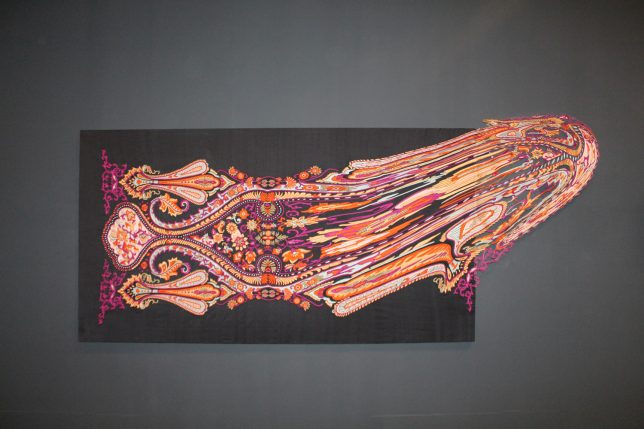
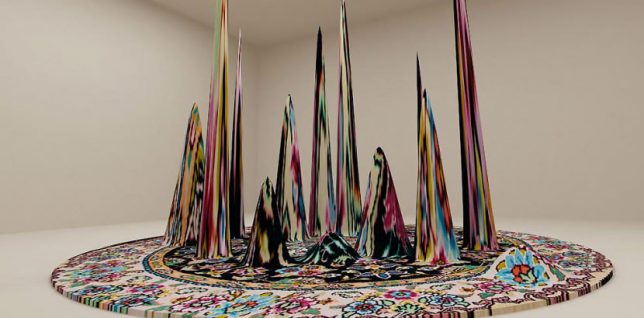
Glitch Rugs by Faig Ahmed


ahmed rug 4 ahmed rug 3

glitch ahmed 3

glitch ahmed 4

glitch ahmed 5

glitch ahmed 6

ahmed rugs

Textile artist Faig Ahmed weaves distortions into traditional rug patterns from India, Persia, Turkey and the Caucasus, making them look stretched, pixelated, warped and otherwise glitched and mutated for a fun modern twist on a beloved classic.

Pixelated Wood Sculptures by Hsu Tung Han

glitch tsu 4

glitch tsu 5

glitch tsu 1

glitch tsu 2

glitch tsu 3

Carved from teak, African wax wood or walnut, Hsu Tung Han’s figurative sculptures dissolve into cubes as if glitching out of existence in three dimensions, making it seem like they’re disappearing or in mid-transition before our eyes.

Real Life Glitch Building: House of Electronic Arts Basel

glitch building 1

glitch building 2

glitch building 3

glitch building 4

There’s nothing wrong with this photograph of Switzerland’s House of Electronic Arts Basel building – it’s the building itself that’s glitched. Berlin-based art studio !Mediengruppe Bitnik was invited to create ‘H3333333K,’ a play on the structure’s German name of ‘HeK,’ as a permanent exterior display. “The idea was to cast something fluid, non-permanent like a software error into something physical and permanent, like architecture,” says the group.

Warped Forms by Paul Kaptein

kaptein 2

kaptein 3

kapein 4

kaptein 5

kaptein 6

kaptein 7

Based in Perth, Australia, artist Paul Kaptein carves laminated wood into warped figures that look almost normal from some angles, and entirely abstract from others, unrecognizable as human bodies. “Paul’s work, seemingly bent through time and space, taps into his medium of emptiness, responding to the gap between immateriality and materiality – through the energy we call potential,” reads his artist statement. “His work is full of the boundless energy of potentiality loops or loops of potentiality or the realization that potential is the energy that constantly moves and transforms. Potential is the force that grabs ideas and translates them into being – it is a poetic energy of necessity and a necessary energy for poetics.”

Next Page – Click Below to Read More:
Pixelated Masterpieces 32 Real Life Works Of 3d Glitch Art Design

Share on Facebook


[ By SA Rogers in Art & Sculpture & Craft. ]

[ WebUrbanist | Archives | Galleries | Privacy | TOS ]


WebUrbanist

 
Comments Off on Pixelated Masterpieces: 32 Real-Life Works of 3D Glitch Art & Design

Posted in Creativity