RSS
 

Archive for April, 2017

Ricoh denies Nikkei report that it may leave camera business

14 Apr

Ricoh has issued a response to a report from the Nikkei Asian Review, denying that the company is considering leaving the consumer camera business. Ricoh’s statement says that it will focus its attention on ‘high added value products’ in its Pentax and GR lines. Additionally, the company says it plans to keep expanding its VR business, where it sees plenty of growth.

Nikkei’s article suggests the company considered, or is considering, a more drastic approach:

‘The Japanese company will radically review a production and manufacturing strategy centered on cameras for the retail market, including such brands as Pentax and GR. Options include withdrawing from this segment altogether.’

An investor relations presentation published by Ricoh today only directly mentions the company’s camera division once, indicating that Ricoh will ‘leave no stones unturned’ in examining losses in its camera business. But the overall tone of the document indicates that the company is looking to break from past approaches to structure and growth.

The Nikkei article and Ricoh’s statement seem to be in agreement that the company is looking to expand into commercial applications. Nikkei mentions that Ricoh plans to use spare capacity at compact camera production facilities to increase production of automotive products.

Below is Ricoh’s full statement addressing the article:

With regard to the article about RICOH today

Apr. 12, 2017
Ricoh Co.,Ltd.

Today there was an article saying that RICOH considers to shrink the camera business and withdraw from consumer products. This article is not based on RICOH’s official announcement.

RICOH is focusing its resource on the high added value products such as PENTAX and GR that are appreciated by the existing users and photo hobbyists. RICOH is also a market leader of input device? in the VR or AR market with its “RICOH THETA” where we can see rapid growth, and will keep on expanding the business even more in this field. In addition, RICOH will develop and expand the imaging business in the solution business field for corporate, by creating new market utilizing its own camera technology.

Articles: Digital Photography Review (dpreview.com)

 
Comments Off on Ricoh denies Nikkei report that it may leave camera business

Posted in Uncategorized


Photographers react with outrage at National Geographic train tracks photo

14 Apr

‘Don’t take photos on train tracks.’

If you feel like you’ve been hearing this message a lot lately, it’s because you have. And it bears repeating because apparently, it hasn’t gotten through. Not even a month after another tragic, well-publicized incident, National Geographic is coming under fire for posting a photo of a woman standing on train tracks at sunset to its Instagram account.

One more time for everyone in the back: Don’t take photos on train tracks.

Taking photos on active train tracks, or putting your subjects on train tracks, is illegal and dangerous. As a recent Today Show segment reminded us, despite their size trains are surprisingly quiet and may not be heard until it’s too late.

Plenty of Nat Geo’s Instagram followers have apparently heard the message and taken it to heart, judging by the numerous negative comments posted in response to the photo. But many other commenters are expressing approval, and the photo has well over 485,000 likes. Regardless of the circumstances surrounding this particular photo, publishing it to a much-respected and much-followed account could lead others to think taking this kind of photo is a good idea.

Unfortunately, there are many, many examples of why this is not a good idea. 

Articles: Digital Photography Review (dpreview.com)

 
Comments Off on Photographers react with outrage at National Geographic train tracks photo

Posted in Uncategorized


Big Sky Country: Local photographers share their favorite Montana photo spots

14 Apr

$ (document).ready(function() { SampleGalleryV2({“containerId”:”embeddedSampleGallery_0904372940″,”galleryId”:”0904372940″,”isEmbeddedWidget”:true,”standalone”:false,”selectedImageIndex”:0,”startInCommentsView”:false,”isMobile”:false}) });

Montanans celebrate an unofficial holiday on April 6th every year since ‘Big Sky Country’ as it’s known is covered by just one area code: 406. In honor of the day, Resource Travel recently rounded up a list of locals’ favorite photography spots across the state. Take a look at just a few examples of Montana’s gorgeous scenery and then head to Resource Travel for exact locations and more photos to whet your travel appetite.

Articles: Digital Photography Review (dpreview.com)

 
Comments Off on Big Sky Country: Local photographers share their favorite Montana photo spots

Posted in Uncategorized


Blue Earth Alliance: Collaboration is key for photography that makes a difference

14 Apr

Blue Earth Alliance: Collaboration is key for photography that makes a difference

Natalie Fobes on assignment in Russia for National Geographic. Fobes is an award-winning photographer who founded the nonprofit Blue Earth Alliance in order to work with photographers to share their stories.

“You don’t have to travel overseas to make a difference with your photography. Your world starts outside your front door,” says Natalie Fobes, a Seattle-based photographer with a resume many photographers dream of. Assignments for major magazines including National Geographic, dozens of awards as well as being a finalist for a Pulitzer, a photography instructor with courses on Lynda.com, and now a successful wedding and commercial photography business in Seattle, Washington where she lives with her family.

It all might sound a little intimidating, but spend just a few minutes in conversation with Fobes and you’ll come to understand not only her passion for the power of photography, but how much she wants to help other photographers succeed.

Almost 22 years ago Fobes formed the non-profit Blue Earth Alliance, along with fellow photographer Phil Borges and attorney Malcolm Edwards, who provided legal guidance. The philosophy behind Blue Earth Alliance is simple – photography and filmmaking can lead to positive change.

DPReview had the opportunity to talk with Fobes about Blue Earth Alliance, the impact of photography and the mission of Blue Earth Alliance.

Blue Earth Alliance: Collaboration is key for photography that makes a difference

The opportunity to share her photographs and the difficulty in finding funding lead Fobes to collaborate and begin Blue Earth Alliance. Photo by Natalie Fobes.

Blue Earth Alliance was formed almost 22 years ago to help photographers. Why did you feel it was needed?

I had just had a book published, had spent 10 years traveling the Pacific Rim and was doing well and I was approached to put together a traveling exhibit. It was expensive to put on the exhibit and hard to find sponsors. I was told if I had been a 501(c)(3) sponsors could help, and I learned other photographers were having similar problems. We saw the media landscape was changing and it was going to get harder to do long documentary projects.

I think the underlying philosophy of Blue Earth Alliance is we feel an individual can make a difference in this world. There are so many things that need attention:  the environment, disappearing cultures, social issues or a local situation. These are all things that matter in our lives, no matter if you live in a small town or in New York City or Seattle. By raising awareness of these issues, you can make a difference; you can make a change. It’s a very high level look, but I think that no matter who you are — whether you’re a professional photographer or advanced amateur — you recognize the power of photography.

Blue Earth Alliance: Collaboration is key for photography that makes a difference

Photojournalist Tom Reese spotlights the devastation of toxic waste in his project, “Choosing Hope: Reclaiming The Duwamish River.” Photo by Tom Reese.

Can you explain how Blue Earth Alliance works with photographers who become sponsored?

First, I need to be very clear:  Blue Earth does not provide direct funding or grants. That is a common misconception about Blue Earth. The biggest service Blue Earth provides is fiscal sponsorship. This is a huge asset to individual photographers and filmmakers since when we accept a project for sponsorship we extend our 501(c)(3) status to it. The photographer/filmmaker can then apply for grants from organizations and foundations that only donate to a 501(c)(3). After 21 years, we have a great reputation with funders for sponsoring worthwhile projects. Blue Earth provides a vetted seal of approval for donors.

Sometimes photographers and filmmakers just need encouragement for their projects. More than one photographer has mentioned that when Blue Earth selected their project for sponsorship, it encouraged and inspired them to continue their work.

Blue Earth Alliance: Collaboration is key for photography that makes a difference

Daniel Beltra’s project has documented conservation around the planet. He has shot on all seven continents, many of his photographs are shot from the air. Photo by Daniel Beltra.

Blue Earth Alliance has sponsored more than 134 photography and filmmaking projects over the last two decades. Can you reflect on a few that have had an impact?

We have had had many, but a couple that stand out. These projects can start the conversation, even raise the visibility of some of these issues. One was a really long term project by the late Gary Braasch. He came on board in the late 90’s, early 2000 and was talking about global warming before it became popular. It was important work in that it elevated the conversation because of his photography and his dedication.

Another is Subhankar Banerjee and his story about the Arctic National Wildlife Refuge and how important it was to keep that area pristine. He had worked at Boeing and had no professional photography experience. He came to us and wanted to do this project and applied for sponsorship.

He spent a couple of years in the Arctic and showed how beautiful it was even when some senators were calling it a frozen wasteland. The Preserve is one of the last pristine areas of that particular environment and there was a lot of discussion about oil, a lot of senators wanted to open it out to oil exploration. He also contracted with a number of museums including the Smithsonian to exhibit his work from this project. In one of the Senate debates about drilling in the refuge Senator Boxer held up his book.

Blue Earth Alliance: Collaboration is key for photography that makes a difference

Katherine Jack’s project with Blue Earth Alliance is documenting life in the Palawan Sea, in the Philippines and how changes to our marine ecosystem is affecting the life of the Palawan residents.

What are the steps a photographer would need to take to get support from Blue Earth Alliance? What are the criteria that makes a project worthwhile?

Blue Earth accepts project proposals twice a year: January 20 and July 20. The submission requirements can be found on our website. In a proposal we look for a clear description of the project, a unique viewpoint or topic and clarity around how the project fits within the Blue Earth mission. Having a project with a 501c3 status does not mean that money magically appears. Finding funding can be difficult, and it takes time to thoughtfully research funders and write grants.

When we review our project proposals one of the first things I look at their budget to see if they know what they are doing financially.

We have a responsibility to make sure funds are used as they should be. One of the first things I look for is are the photographers paying themselves, through a stipend. We are too important not to pay ourselves.

Blue Earth wants our project photographer/filmmakers to succeed, and we scrutinize all proposals in order in ensure that likelihood.

Blue Earth Alliance: Collaboration is key for photography that makes a difference

Greg Constantine’s decade-long project, Nowhere People, focuses on the plight of people forced from their homes, without citizenship and looks at the challenges of their daily lives and their future. Photo by Greg Constantine.

What advice do you have to photographers who are looking for a way to use their photography to make a difference?

Photographers and filmmakers should try to form coalitions with other like-minded people and organizations. I believe in the strength of an individual. But I believe in the power that comes when individuals come together for a common goal.

Photographers and filmmakers also need to realize that one grant will seldom fund their entire project. They should apply for many: large, small and in-between. For my first long-term project I used my savings, a grant and assignments to fund it.

It’s imperative to create a coalition of funders. Funders like to see support from other organizations when considering an application. They see it as a third-party endorsement of the photographer/filmmaker and the project. It’s true that success leads to success.

Photographers and filmmakers often forget, or are afraid of, including friends and family in their fundraising efforts. People are often more likely to give a donation to someone they know. Crowd-sourcing websites make fundraising campaigns much easier than in the past.

If a photographer doesn’t believe they can make a difference then they won’t.

Blue Earth Alliance: Collaboration is key for photography that makes a difference

Natalie Fobe’s captured the extensive damage of the Exxon Valdez oil spill in Prince William Sound while on a three month assignment for National Geographic. Photo by Natalie Fobes.

Your photography has included extensive work around the Pacific Salmon, wildlife and landscapes. What are you most proud of?

I think probably the work that may have had the most impact on society was the Exxon Valdez oil spill in. That was also the hardest story I photographed because of the difficulty of the working conditions and getting access. And the chaos, the chaos of the spill and the emotional impact of the destruction of the environment. The horrible pain that the animals and birds suffered and the people too.

This happened in a beautiful pristine area that was home and sustenance for the native Alaskans but also the commercial fishermen and townspeople who lived there.

Blue Earth Alliance: Collaboration is key for photography that makes a difference

Annie Musselman’s first project with Blue Earth Alliance focused on the delicate balance of human impact on wild animals. Her project Wolf Haven documents animals in sanctuaries. Photo by Annie Musselman.

What does the future hold for Blue Earth Alliance?

We are an organization with a passionate and dedicated board that donates thousands of hours each year to our mission.

We hold an annual conference “Collaborations for Cause.” This will be held in May 5-6, 2017, in Seattle. The goal of Collaborations for Cause is to put non-profits, educators, communications professionals and visual storytellers in the same room for education, inspiration and networking. Presentations and interviews of our past speakers can be viewed at photowings.org.

Our conference supports our mission to form a coalition of non-profits and visual storytellers. We hope that our photographers’ projects educate the public about important issues. Simply: we want our projects to change the world for the better.

Blue Earth Alliance: Collaboration is key for photography that makes a difference

Photographer Tim Matsui’s project focused on human trafficking and lead to the film, ‘Leaving the Life’ as well as working with King County Government in Washington State to create policy around human trafficking. Photo by Tim Matsui.

DPReview also spoke with Tim Matsui, a photographer who has worked on two projects in conjunction with Blue Earth Alliance. He explains how the organization helped him to make a difference with his photography.

I first went to Blue Earth because I was ‘just a photographer’ and unable to apply to many foundation grants or other funding opportunities. I was doing grassroots fundraisers, silent auctions, even burger-beer events with local businesses willing to support my work with their proceeds. Old school.

Leaving the Life is my second project with Blue Earth. My first one, over a decade ago, used documentary multimedia—when slide projectors and dissolve units were still a thing—to create dialog about the lasting effects of sexual violence on individuals and communities.

Being accepted at that time was not only validating of the social justice work I felt compelled to do, but it opened the door to foundation grants and private donations; something I knew very little about.

The learning curve was steep, but I was no longer ‘just a photographer.’ I was in the company of others who were much more accomplished than myself. I had access to their knowledge and this helped me understand how I could increase the impact and reach of my work.

Years later, when I realized Leaving the Life and The Long Night could create impact, I reapplied to Blue Earth. This allowed me to receive a grant from The Fledgling Fund. That grant lead to the policy work I’ve done with King County government.

In fact, it was a screening of The Long Night at Collaborations for Cause where I met a King County employee who became instrumental in my work with King County. Without her, I doubt that two-year journey would have come to fruition.

Blue Earth continues to support my work as I’m now looking for investors for a follow up film to The Long Night— these are people who see their return on investment not as financial renumeration, but policy change. And through Blue Earth I’ve had the opportunity to share what I’ve learned about using film to support social and policy change. Blue Earth is grassroots, created and run by photojournalists, and helping stories have impact is woven into the fabric of the organization. That matters to me.


Blue Earth Alliance’s Collaborations for Cause takes place May 5th and 6th in Seattle. You can find the speaker schedule and registration information online at blueearth.org.

Articles: Digital Photography Review (dpreview.com)

 
Comments Off on Blue Earth Alliance: Collaboration is key for photography that makes a difference

Posted in Uncategorized


Throwback Thursday: Pokémon Snap

14 Apr

Photography makes guest appearances on plenty of video games, but it has rarely been the entire point of a game. Pokémon Snap is a rare exception, and if you ask any child of the 90’s who owned a Nintendo 64, it’s a heck of a way to spend hours of your time.

Pokémon Snap debuted in North America in June 1999, and gameplay is extremely simple. You play as Todd Snap, a guy on a perpetual Pokémon safari armed with a camera and a few tools designed to elicit interesting responses from the Pokémon: a Poke-flute and an endless supply of apples and ‘pester balls.’ 

The objective, per usual, is to ‘catch them all’, but in this game, catching them means taking a photo as you coast around Pokémon Island in a cart. At the end of each level Professor Oak rates and scores your photos based on composition and subject matter. Being the late ’90’s you are shooting film (looks like Fuji maybe?) so you have a limited number of frames to work with on every outing.

And that’s the whole game: figuring out what series of events or combination of annoyances will make Pokémon show themselves and provide the most photogenic reactions. Lure Pikachu to a surfboard with a trail of apples, and voila: surfing Pikachu photo. You could also hit them with pester balls, which seems like a poor way to treat a Pokémon, but you get a lot of points if they faint for your photo. And here’s a fun fact – apparently ‘participating Blockbuster stores’ would make small prints of your best Pokémon shots if you brought your cartridge in.


If you never played it then I imagine it sounds pointless at best. And if you offered it to a kid who’s grown up on a steady diet of big-budget, modern blockbuster games, I’m sure it looks about as exciting as Pong. But it was an unlikely hit with my generation, selling 1.5 million copies and achieving ‘cult classic’ status.

I didn’t have any particular interest in Pokémon or photography at that point, but I spent countless hours playing Pokémon Snap. It was irresistibly cute and rewarded experimentation. Before its US release IGN predicted it would be ‘a game solely intended for a Pokémon-crazed Japanese audience,’ but were eventually won over, calling it ‘an addictive, surprisingly fun gem of an experience that definitely deserves a rent.’ Looking back at the game almost two decades after its release, I’d still say that sums it up pretty well.

Articles: Digital Photography Review (dpreview.com)

 
Comments Off on Throwback Thursday: Pokémon Snap

Posted in Uncategorized


The Macallan Masters of Photography Series whisky kit comes with a signed Steven Klein print

14 Apr

Scottish distillery The Macallan has launched its latest ‘Masters of Photography Series’ whisky kit, this one featuring a signed print from photographer Steven Klein. This is the 6th installment in The Macallan’s photography series, with each previous installment having featured signed prints from a different photographer. This time around, 1,000 bottles of this whisky will be sold, ten of them within a bundle with an exclusive signed print.

Of the 1,000 whisky bottles made available for sale, 100 will be slated for the US market, and they will come with a $ 2,995 USD price tag. Pricing and availability in other countries is unclear at this time, though The Macallan encourages interested buyers to email it directly for more info. Joining the photos is a video (above) touching on the ‘Time Captured’ theme of this whisky kit.

The bundle itself, in addition to featuring a signed print, will include a bottle of The Macallan limited edition whisky, custom barware tools, and a horse’s head bottle stopper, all contained within a black case.

Via: PRNewswire

Articles: Digital Photography Review (dpreview.com)

 
Comments Off on The Macallan Masters of Photography Series whisky kit comes with a signed Steven Klein print

Posted in Uncategorized


Canon EOS 5D Mark IV firmware 1.0.4 launches with bug fixes

14 Apr

Canon EOS 5D Mark IV firmware version 1.0.4 has been released, and it brings with it a handful of minor bug fixes and improvements. According to the new version’s release notes, 1.0.4 ‘enhances’ communication reliability between the SD card and camera, as well as fixing a Finnish language word error, an image issue experienced during long exposures and in bulb mode, and a problem with autofocus.

The full release notes:

Firmware Version 1.0.4 incorporates the following fixes and improvements:

  • 1. Fixes a phenomenon in which a red-colored area may appear at the bottom-center of a captured image when shooting in bulb mode or during a long exposure.
  • 2. Fixes a phenomenon in which the autofocus may not respond when the autofocus is initiated via pressing the shutter button, the AF-ON button or the AE lock button when configured in the custom control menu.
  • 3. Enhances the reliability of communications between the camera and SD card.
  • 4. Fixes incorrect wording on the Finnish language menu screen.

The firmware is available to download now from Canon’s support website.

Via: CanonRumors

Articles: Digital Photography Review (dpreview.com)

 
Comments Off on Canon EOS 5D Mark IV firmware 1.0.4 launches with bug fixes

Posted in Uncategorized


DJI launches Phantom 4 Advanced drone

14 Apr

Drone maker DJI today launched a new model in its Phantom 4 series, the Phantom 4 Advanced. Compared to the original Phantom 4, the Advanced adds a 1″ 20MP sensor and a mechanical shutter to its onboard-camera. It is also capable of shooting 4K video at 60 frames per second and supports H.264 4K video at 60 fps or H.265 4K at 30 fps.

In addition the new drone comes with a range of navigation and flight features that we’ve already seen on the original Phantom 4, such as Draw, ActiveTrack, TapFly, Gesture and Tripod. The Phantom 4 is also equipped with DJI’s FlightAutonomy system that uses 5 vision sensors, a forward-facing obstacle avoidance system, dual-band satellite positioning and ultrasonic rangefinders. 

The Phantom 4 Advanced now offers increased storage capacity, thanks to using a 128GB microSD card, and an extended flight time of up to 30 minutes.There is also a Phantom 4 Advanced+ version that offers an integrated 5.5″ 1080p screen in the controller. 

With the introduction of the new model the original Phantom 4 will be phased out but DJI promises after sales support will continue. The Phantom 4 Advanced and Advanced+ will be available from April 30 on store.dji.com? for $ 1,349 and $ 1,649 respectively. More information on the new model can be foud on the DJI website. 

Press Release:

New Phantom 4 Advanced Gives Creators The Ideal Flying Camera For Expanding Their Creative Vision

New Phantom 4 Advanced Gives Creators The Ideal Flying Camera
For Expanding Their Creative Vision

April 13, 2017 – DJI, the world’s leader in civilian drones and aerial imaging technology, Thursday, introduced a new addition to the Phantom family – the Phantom 4 Advanced – offering creators an affordable way to capture aerial imagery with a more powerful camera and more precise controls. The new Phantom 4 Advanced model improves on the original Phantom 4, giving photographers a 1-inch, 20-megapixel sensor and a mechanical shutter that lets them explore all the creative possibilities that a flying camera can provide.

The Phantom 4 Advanced’s upgraded camera is capable of shooting 4K video at 60 frames per second. The more powerful video processing now supports H.264 4K videos at 60fps or H.265 4K at 30fps, both with a 100Mbps bitrate. Excellent optical performance, sensors and processors ensure everything is captured with high dynamic range and more image detail needed for advanced post-production.

Similar to the Phantom 4 Pro, it comes with many key intelligent features that allow smooth automatic flight modes, including Draw, ActiveTrack, TapFly, Gesture and Tripod. Equipped with the FlightAutonomy system made up of 5 vision sensors, forward-facing obstacle avoidance system, dual-band satellite positioning (GPS and GLONASS), and ultrasonic rangefinders, the Phantom 4 Advanced is able to hover precisely in places without GPS and fly in complex environments.

The Phantom 4 Advanced+ version offers a 5.5-inch 1080p screen integrated into the controller. The screen is more than twice as bright as conventional smart devices, making it an ideal aerial imaging solution for outdoor use. In addition, creators can now do more with the Phantom 4 Advanced’s increased storage capacity using a 128GB microSD card and a flight time extended up to 30 minutes.

For those who are ready to take their aerial camera work to the next level, the Phantom 4 Advanced is truly the most affordable, intelligent and powerful flying camera you can find. For more information, visit http://www.dji.com/phantom-4-adv.

With the introduction of the more affordable, yet powerful Phantom 4 Advanced, the Phantom 4 model will reach its End of Life (EOL) on April 30, 2017. DJI will continue to provide after sales support to Phantom 4 customers and they can continue to enjoy flying their aircraft using the DJI GO 4 app.

The US retail price of the Phantom 4 Advanced and Phantom 4 Advanced+ is USD1,349 and USD1,649, respectively. It will be available on store.dji.com/? and the product will start shipping on April 30, 2017.

Articles: Digital Photography Review (dpreview.com)

 
Comments Off on DJI launches Phantom 4 Advanced drone

Posted in Uncategorized


Custom Essay Writing Service, Buy Argumentative Essay

14 Apr

our essay writing team will work on it relent lessly to ensure that its quality
www.surveymonkey.com/r/CMYZQZV

 
Comments Off on Custom Essay Writing Service, Buy Argumentative Essay

Posted in Equipment


Culinary Arts: Rock Candy Geodes Hidden Inside Huge Chocolate Shells

13 Apr

[ By WebUrbanist in Art & Sculpture & Craft. ]

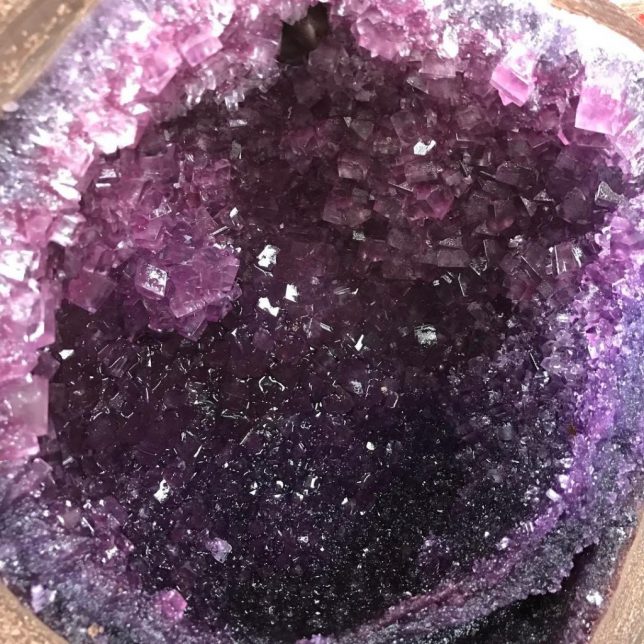
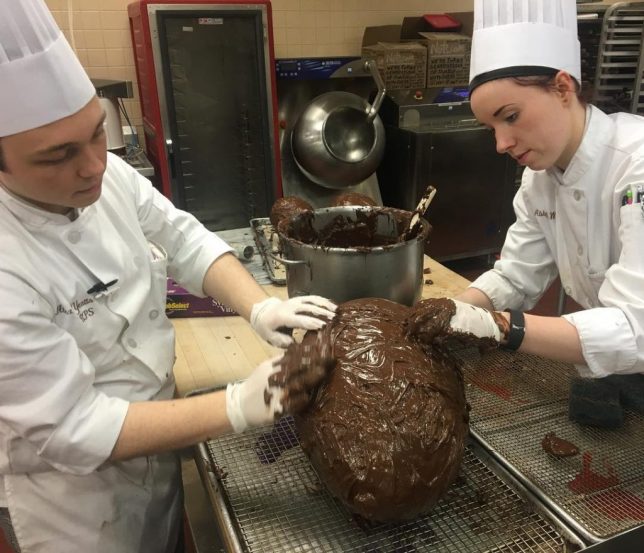
Just like the dull rocks that often reveal geode formations in nature, one would not expect to find such a sweet surprise inside what look a bit like giant Easter eggs (or perhaps dinosaur droppings).

As a final thesis project for the Culinary Institute of America in New York, Alex Yeatts and Abby Lee Wilcox spent months crafting these monstrous treats.

After 6 months of hard work @alex.yeatts and I cracked open our chocolate geodes!!! I am so thankful to have had this experience. #proud2bcia #chocolate #geode #foodart #chefstalk #candy #bakerylife #confectionery #foodie #foodporn #cny #pastry #buzzfeast #geodecake

A post shared by Abby Lee Wilcox (@abbyleewilcox) on

Orange-red and purple crystals inside look remarkably natural, particularly the latter (resembling typical amethysts). While hardly healthy, one could imagine subsisting on these gigantic desserts indefinitely.

In a similar vein (treats imitating nature), the “flower cakes” (and cupcakes) of Iven Kawi are stunning works of culinary art, so lifelike one could imagine being pricked by the needles on cacti or grind one’s teeth on the sandy landscapes (via Colossal).

Share on Facebook


[ By WebUrbanist in Art & Sculpture & Craft. ]

[ WebUrbanist | Archives | Galleries | Privacy | TOS ]


WebUrbanist

 
Comments Off on Culinary Arts: Rock Candy Geodes Hidden Inside Huge Chocolate Shells

Posted in Creativity