RSS
 

Archive for March, 2017

Canon EOS M6 sample gallery

28 Mar

The Canon EOS M6 shares plenty of features with the company’s EOS M5 flagship mirrorless camera, including a 24MP APS-C sensor with Dual Pixel AF, a Digic 7 processor and a 3″ touchscreen. It offers one more control dial compared to its M3 predecessor, but stops short of offering the M5’s built-in EVF. With a loaner unit in hand we ventured out into the street to start putting it to use – take a look at what it can do.

See our Canon EOS M6 sample gallery

$ (document).ready(function() { SampleGalleryStripV2({“galleryId”:”4783759740″}) })

Sample photoSample photoSample photoSample photoSample photo

Articles: Digital Photography Review (dpreview.com)

 
Comments Off on Canon EOS M6 sample gallery

Posted in Uncategorized


Researchers create method for photorealistic Prisma-style effects

28 Mar

Popular app Prisma applies painting styles to photographs using neural networks, turning a snapshot into an artwork in the style of ‘The Scream,’ for example. But what if you could transfer photorealistic effects from one photo to another? Researchers at Cornell and Adobe have successfully demonstrated a method that will translate a variety of styles from a reference photo to another image, including things like lighting, time of day and weather.

Input image on the left, reference style image in the center, output image on the right. It’s not incredibly realistic-looking, but more realistic than your average Prisma treatment.

Images via Fujun Luan

This could open up a whole new world of possibilities for ‘lazy’ photo editing. Say you snapped a photo of a rock formation in the middle of the day, but you’d rather it had the orange glow of golden hour. With this method, you could apply the textures and colors of a reference style image, i.e. some other rock formation at sunset, to your own image.

This photo-style-transfer method augments the neural-style approach Prisma takes by constraining the colorspace of the transformation applied to the source image. Taking a content-aware approach and classifying features like sky and water in each image helps to avoid mismatched textures and distortions.

Advanced photographers would likely be wary of making such drastic edits to their photos. However, the technology might appeal to someone who wants to apply the effects of professional lighting to a badly lit photo of an interior, for example.

What do you think? Could this technology be useful to you? Let us know in the comments.

Articles: Digital Photography Review (dpreview.com)

 
Comments Off on Researchers create method for photorealistic Prisma-style effects

Posted in Uncategorized


DPReview on TWiT: the Fujifilm GFX 50S

28 Mar

DPReview has partnered with the TWiT Network (named after its flagship show, This Week in Tech) to produce a regular segment for The New Screen Savers, a popular weekend show hosted by technology guru Leo Laporte.

On this week’s episode of The New Screen Savers, DPReview editor Dan Bracaglia joins Leo and guest host, Georgia Dow of iMore.com, to talk about medium-format digital photography and the Fujifilm GFX 50S. Tune in to the entire episode to also learn about mesh Wi-Fi networks, an HP all-in-one computer with a curved 34-inch display, and a review of the 2nd gen Nvidia Shield TV.

You can watch The New Screen Savers live every Saturday at 3pm Pacific Time (23:00 UTC), on demand through our articles, the TWiT website, or YouTube, as well as through most podcasting apps.

Articles: Digital Photography Review (dpreview.com)

 
Comments Off on DPReview on TWiT: the Fujifilm GFX 50S

Posted in Uncategorized


These Brutalist Sand Castles Might Be Cooler Than the Real Thing

28 Mar

[ By SA Rogers in Art & Sculpture & Craft. ]

modernist sand castles 11

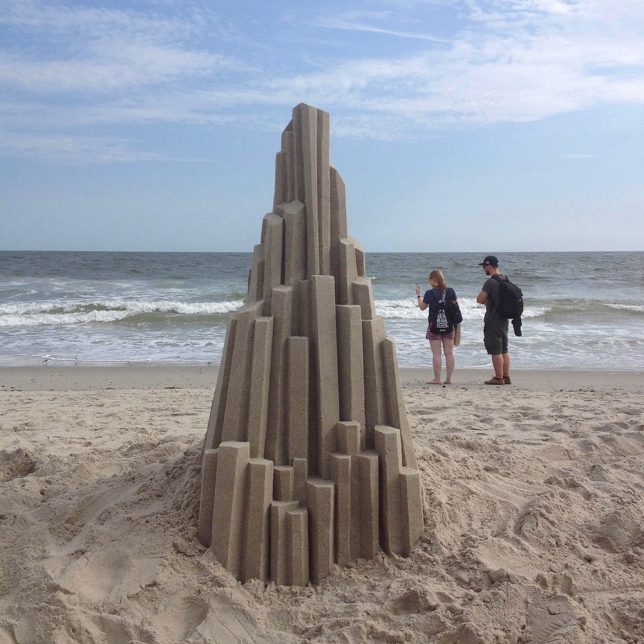
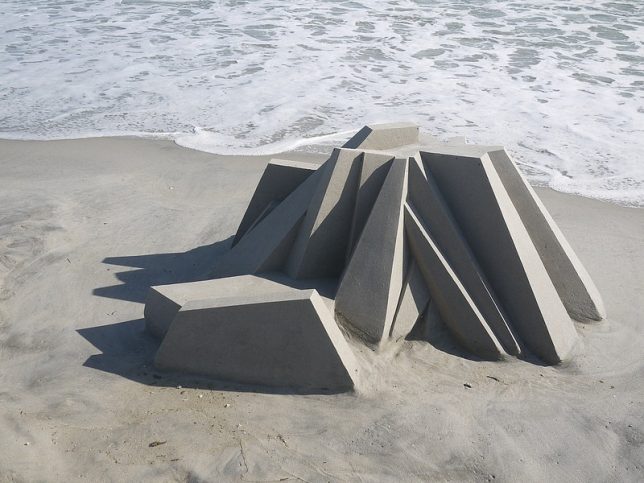
Brutalist architecture is often criticized for seeming cold, impersonal and out of human scale, but the same can’t be said for these structures when they’re miniaturized and ephemeral, destroyed in seconds by the sea. In fact, when they’re crafted out of sand on a beach, outside their usual context, we can appreciate the beauty of their geometry more than ever. Calvin Siebert’s modernist sand castles might just be better than the real thing.

modernist sand castles 10

modernist sand castles 9

While staying on Rockaway Beach in Queens during the summer, the professional sculptor and self-described ‘box builder’ crafts amazingly complex architectural structures that remain in place just long enough to photograph them, inevitably washing away. You might say that nature is… brutal.

modernist sand castles 12

modernist sand castle 1

While it’s not hard to imagine seeing some of these designs in the hills of Los Angeles, using sand as a medium enables Siebert to get more creative than the average architect in envisioning fantasy structures that could translate to concrete.

modernist sand castile 2

modernist sand castle 2

He doesn’t start with sketches, plans or even anything particular in mind, preferring to work intuitively, allowing the forms to take shape. He’s been creating these temporary works of art for the past six years, and has thousands of photos documenting them on his Flickr.

modernist sand castle 4

modernist sand castle 5

modernist sand castle 6

“Building ‘sandcastles’ is a bit of a test,” he says. “Nature will always be against you and time is always running out. Having to think fast and bring it all together in the end is what I like about it… once I begin building and forms take shape I can start to see where things are going and either follow that road or attempt to contradict it with something unexpected.”

modernist sand castles 7

modernist sand castles 8

“In my mind they are always mash-ups of influences and ideas. I see a castle, a fishing village, a modernist sculpture, a stage set for the oscars all at once. When they are successful they don’t feel contained or finished. They become organic machines that might grow and expand. I am always adding just one more bit and if time allowed I wouldn’t stop.”

Share on Facebook


[ By SA Rogers in Art & Sculpture & Craft. ]

[ WebUrbanist | Archives | Galleries | Privacy | TOS ]


WebUrbanist

 
Comments Off on These Brutalist Sand Castles Might Be Cooler Than the Real Thing

Posted in Creativity


Movavi Photo Editor 4

28 Mar

  Let’s take a closer look at  the new  Movavi Photo Editor. The completely redesigned interface is the first thing that catches your eye when you launch the program. Now you’ve got all the tool tabs at the top, and their settings on the right. Quick access to all functions, including “Undo”, “Redo”, “Revert Changes”, and “View Original” buttons in Continue Reading

The post Movavi Photo Editor 4 appeared first on Photodoto.


Photodoto

 
Comments Off on Movavi Photo Editor 4

Posted in Photography


Wesaturate will soon offer free Raw photos for photographers to practice editing

28 Mar

Students Gifton Okoronkwo and Kast Goudarzi have taken the wraps off a new website called Wesaturate, an online learning destination that will offer free Raw images for photographers to download. The intention for the website is to provide these images as learning tools, enabling anyone to practice Raw editing even if they don’t have the time or gear to go out and shoot their own photos.

Wesaturate is tentatively scheduled for a full launch on April 17, though at the moment it is only accepting email addresses from those who want to be notified about the launch. A single image is currently offered on the site in both Raw and JPEG formats; it, and others uploaded later on, are offered with a Creative Commons Zero license. Once the site fully launches, users will be able to share their own photos with the Wesaturate community.

The duo also plans to operate a blog that will publish tricks and tips for beginners. Speaking to PetaPixel, Goudarzi explained, ‘We’re really focusing on the photographer’s experience here and we want to make sure it’s all about them.’

Via: PetaPixel

Articles: Digital Photography Review (dpreview.com)

 
Comments Off on Wesaturate will soon offer free Raw photos for photographers to practice editing

Posted in Uncategorized


Gcam: the story behind the Google Pixel camera software

28 Mar

Google’s now independent X research division, which calls itself ‘the moonshot factory,’ has been publishing a collection of stories about the group’s graduated projects and where they stand today. The latest article in the so-called Graduate Series offers a closer look at Gcam, the software behind the class-leading cameras in Google’s Pixel devices. 

The blog post outlines how the Gcam team was set up back in 2011 to find a solution for the Google Glasses smart goggles’ most pressing challenge: providing a high-quality camera in a very small device. As using bigger hardware wasn’t an option, the Gcam team developed a method called image fusion, which uses multi-frame-stacking techniques to create a single, higher quality image with lower noise levels, better detail and increased dynamic range. 

The technology, which is now called HDR+, quickly grew beyond Google Glass and made it into the Nexus 5 and Nexus 6 cameras and eventually became the default camera mode in the Google Pixel series. The Gcam team now works across a range of imaging-related technologies, including Android, YouTube, Google Photos 360?Virtual Reality projects. If you are interested in more detail you can read the full blog entry on the X blog or find our full Google Pixel XL camera review here.

Articles: Digital Photography Review (dpreview.com)

 
Comments Off on Gcam: the story behind the Google Pixel camera software

Posted in Uncategorized


Panasonic likely to scale-back camera division

28 Mar

Panasonic is likely to significantly scale-back its camera business, according to a report by Japan’s largest business newspaper. The Nikkei Asian Review says the move is one of the proposals of a report prepared by the company’s business planning department.

Like all large electronics makers, Panasonic has found it hard to make profit in an industry with increasingly tight margins. The report puts forth ways to rationalize the business, sell or close loss-making groups and focus on the company’s areas of strength.

The paper identifies three businesses: ‘digital cameras, private branch exchange telephone systems and optical disk drives,’ which, it says: ‘will be dismantled. Each will be scaled back and placed under the umbrella of other operations, with headcount to be reduced.’

With the number of compact cameras being sold having fallen precipitously and the interchangeable lens camera market stagnant, the digital camera division is an obvious target for cuts as part of the company’s restructuring.

The Nikkei also says that ‘In the chip business, the company is weighing unloading shares in a joint venture with an Israeli enterprise,’ presumably a reference to the TowerJazz Panasonic Semiconductor joint venture that builds CMOS sensors, amongst other things.

Panasonic’s financial year ends on March 31st, so we’ll be watching the announcement of its 2017/18 plans for signs of the report being implemented.

Articles: Digital Photography Review (dpreview.com)

 
Comments Off on Panasonic likely to scale-back camera division

Posted in Uncategorized


21st Century Figurative Sculpture: 33 Modern Renderings of the Human Form

28 Mar

[ By SA Rogers in Art & Sculpture & Craft. ]

david mesguich 2

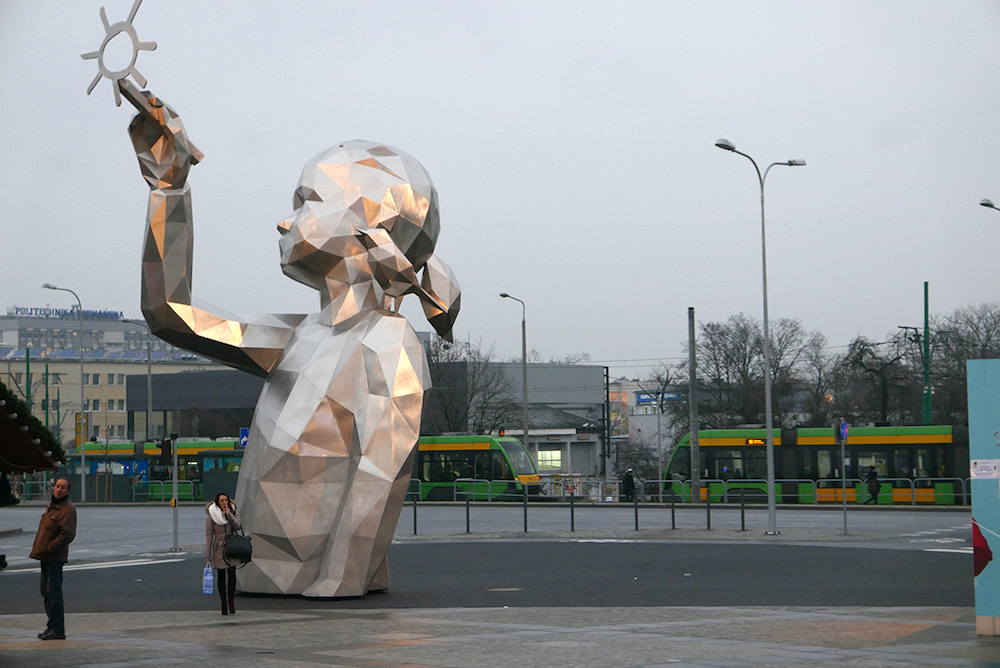
Michelangelo’s David may always represent a pinnacle of artistic achievement in figurative sculpture, but modern artists are adding some brilliant 21st-century elements to the mix in the form of glitches, kinetic parts, innovative methods and materials, and context from the digital era.

Hollow Humans by Park Ki Pyung

park ki kyung 1

park ki kyung 2

park ki kyung 3

park ki kyung 5

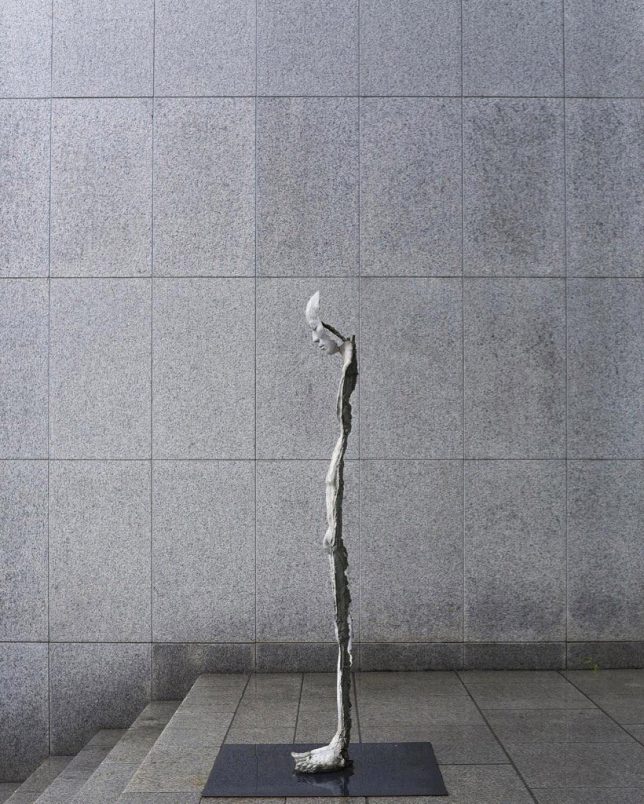
They appear to be impossibly thin veneers of stone, but these eerie sculptures by South Korean artist Park Ki Kyung are actually resin on a steel frame. The figures appear incomplete or fractured “to describe condition of emptiness,” says the artist. “I also use shape of human body with excluded front face, so that I can delete unique characteristics of each person. I describe images of ancient battle scene to show violence against self.”

Anatomical Sculptures by Claude-Olivier Guay

claude olivier guay 1

claude olivier guay 2

claude olivier guay 3

claude olivier guay 4

Each of these paneled human heads dramatically opens to reveal a matrix of wires inside, hand-bent by artist Claude-Olivier Guay with no more than a piece of pliers. In one remarkable case, a human torso shows us its skeletal framework, but what’s inside isn’t what it seems: the wire bends itself into an animal shape and gets down on all fours before transforming back into human form.

Wood Sculptures by Willy Verginer

willy verginer 1

willy verginer 2

willy verginer 3

willy verginer 4

A child clutches a leaking gas can, families swim in tainted water and men pray over barrels of oil in this series by Italian sculptor Willy Verginer highlighting environmental degradation. The sculptures are made of wood and minimally painted for a graphic appearance.

Dissolving Children by Lene Kilde

lene kilde 1

lene kilde 2

lene kilde 3

lene kilde 4

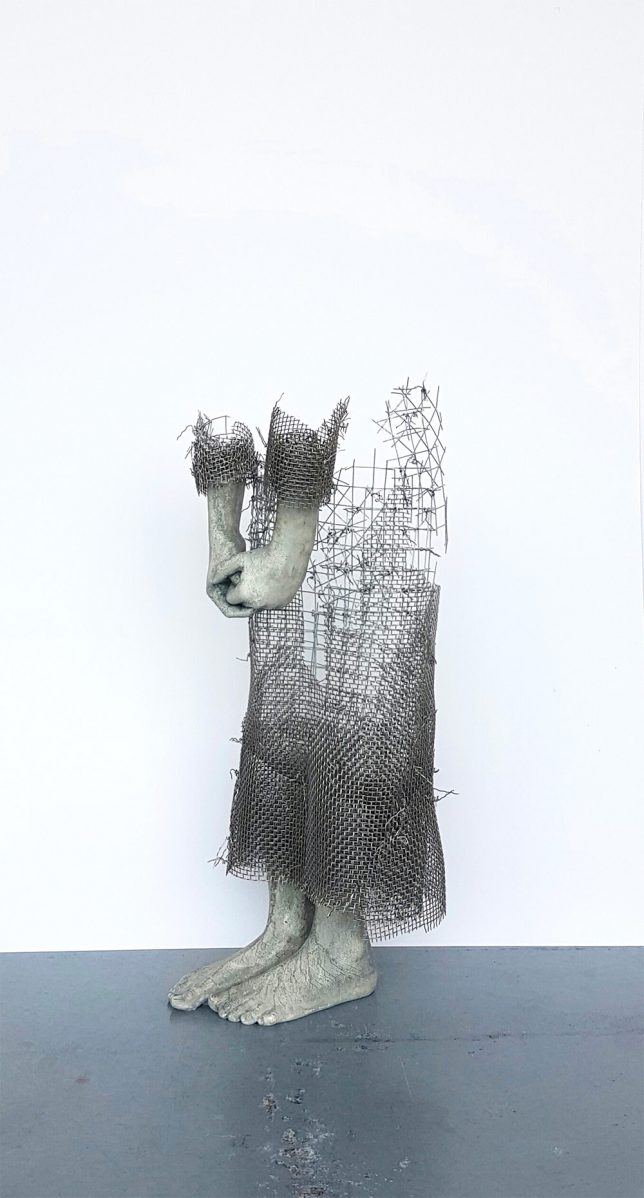
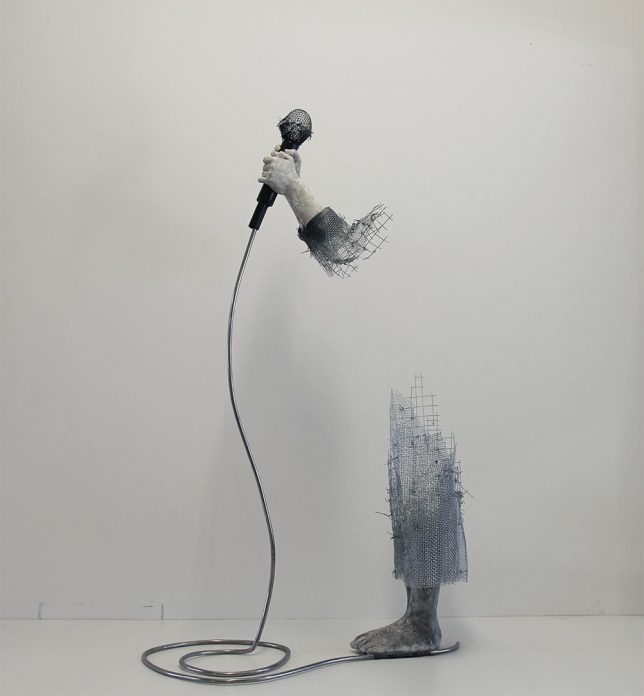
Limbs are often all that remain of children that have otherwise disappeared in the minimalist wire mesh sculptures of Norwegian artist Lene Kilde. Though the works may appear haunting and even mournful, the artist intends for the blank spaces to be filled in by the viewer’s mind, perhaps with their own images or memories.

Pixelated Wood by Hsu Tung Han

hsu tung han 1

hsu tung han 2

hsu tung han 3

hsu tung han 4

Bodies in motion seem to be dissolving into pixels before our eyes, embodying a clash between the digital and the analog. Artist Hsu Tung Han crafts walnut, teak or African wax wood into human figures interspersed wit blocks. In this case, the glitch effect feels less about corrupted data and more about existential and spiritual matters, as if the figures aren’t entirely tethered to the physical plane.

Next Page – Click Below to Read More:
21st Century Figurative Sculpture 33 Modern Renderings Of The Human Form

Share on Facebook


[ By SA Rogers in Art & Sculpture & Craft. ]

[ WebUrbanist | Archives | Galleries | Privacy | TOS ]


WebUrbanist

 
Comments Off on 21st Century Figurative Sculpture: 33 Modern Renderings of the Human Form

Posted in Creativity


Ask the staff: Pick one focal length or lens to rule them all

27 Mar
Can you guess the focal length? Photo by Wenmei Hill

We handle a lot of glass in the DPReview office, but there always seems to be a handful of lenses or fixed lens cameras that everyone is extra eager to lay some paws on. Which got us thinking of a fun hypothetical: If we could only choose one lens to use for the rest of time, what would it be?

To keep things interesting, and to vary the answers, we opened the question up to include one lens in particular or one focal length. The photograph that accompanies each answer was shot with that staff member’s chosen lens or focal length. We purposely didn’t list the gear used. See if you can guess!

Carey Rose

Any guesses what focal length Carey gravitates toward?

Before I worked at DPReview, I would have immediately chosen the 35mm focal length. Now that I’ve worked at DPReview for some time, I have to say… I haven’t really changed my mind.

Splurging on a battered old D700 after college left me without enough money to pick up anything approaching a fast zoom, so I started building up a collection of affordable Nikon AF-D primes: a 50mm F1.8, a 35mm F2, an 85mm F1.8. I quickly realized that I just wasn’t a zoom guy, and the 35mm F2 was glued to my camera most of the time. A used X100 was a natural next step for a more portable setup when I scored a good deal on one.

Even today, after using lens after lens and camera after camera for review after review, the 35mm focal length remains my go-to. It doesn’t matter whether I’m headed to shoot an event, a wedding, an environmental portrait, or just strolling around when some nice light hits, it’s more likely I’ll have a 35mm lens with me than any other.

Wenmei Hill

Wenmei likes versatility. Did she choose a zoom or a prime?

I’m going to take the easy way out and pick a zoom lens rather than a single focal length. My choice is the Nikon AF-S 24-120mm F4G ED VR, and my excuse is that the majority of shooting I do (documentary lifestyle and candid portraiture) requires a flexibility that is difficult to get with a single focal length.

I’m choosing the 24-120mm even though it’s not one of my ‘favorite’ lenses because it is relatively small, lightweight and versatile enough to get the variety of shots I look for when photographing. I am able to immerse myself in a scene at 24mm but also step back for a portrait at 120mm, using the longer focal length to get pleasing bokeh and separation from the background.

Shooting it on a DX-format body gives me even more reach at the long end (180mm equivalent) for portraits. I already use this lens as my everyday lens when I don’t have a particular creative plan and want to be prepared for anything, so it’s the one I’d choose if I had to pick just one.

Dale Baskin

Dale chose a specific focal length that he didn’t always love. Can you guess what it is?

This will probably seem like I’m going for the low hanging fruit, but I would choose 35mm. I used to be a solid 50mm guy, and if I wanted to go a bit wider I switched to 28mm, skipping 35mm entirely. My shift to 35mm began in earnest when I started shooting Fujifilm’s X100 series of cameras, which have a 35mm equivalent lens.

Now, one could argue that I’m choosing 35mm because I really enjoy the camera to which it’s attached, but that’s not the case. In fact, when I first started shooting the X100 I enjoyed it despite the focal length. It was actually the one thing I didn’t care for about the camera. However, as I continued to use it, I learned to adjust my style to take advantage of the 35mm field of view. After a few months, I found myself really enjoying it, so I decided to do a little experiment: I was about to embark on a trip to Brazil and decided to shoot my entire adventure at 35mm. The idea was both exciting and scary; I knew from experience that I would be giving up some shots by not having the right lens. However, I like to travel light, and I hate carrying camera gear, so I threw down the gauntlet and accepted my own challenge.

The upshot? I had a great trip and captured a lot of memorable images. Did I miss a few shots along the way? Sure, I did. But on the flip side, I got some great photos I would have otherwise missed because I forced myself to visualize every scene at 35mm instead of mentally switching to a different focal length. Now, no matter what camera I happen to be testing, one of the first lenses I always put on the front is a 35mm (or equivalent).

Sam Spencer

Sam chose a specialty lens. This image was shot using a similar lens, albeit with a different focal length. Do you know what it is?

Forever? Forever ever? I’m sure I could do the practical thing and say ’24-70’, or be a motorsports spectator the rest of my life and say ’70-200’, but I’m weirder than that. If it was a lens for me to shoot what makes me happy for the rest of my days, it’d be the Nikon PC-E 85mm F2.8 for product, portrait, and automotive photography. The maximum magnification of 1:2 means I can get close for product, and use the tilt to either get more of the product in focus, or isolate the focal point. I like medium telephoto lenses for the narrower field of view that makes selecting a background out of a busy environment much easier, and even F2.8 can be bright enough to blur the background at 85mm. I’m a control freak, not a speed demon, so I’ll be watching eBay for a copy…

Dan Bracaglia

Dan’s image was shot with the equivalent of his favorite focal length. The image was cropped in slightly, still any ideas what he chose?

The first and only lens I’d owned for many years was a 50mm. But as my interest in photography (and other activities) grew I found myself yearning for other lenses. If you’d asked me this question when I was 16 years old and shooting a lot of skateboarding, I probably would have said a fisheye is my favorite lens. If you’d asked me again when I was 18 or 19 years old and starting to get into photojournalism, I’d probably have said 24mm. If you’d ask me when I was 24-28 years-old, and reviewing cameras for a living, all why exploring the streets of NYC/Seattle, I most likely would have said 35mm. But these days, I’ve come full circle and 50mm is my focal length of choice if I could only shoot one lens for the rest of my life.

Sometimes overlooked or seen as pedestrian, there are plenty of reasons why a normal 50mm lens is number one in my heart and bag: For starters the nifty fifty is as practical as they come. Most manufacturers make a reasonably fast, yet inexpensive 50mm equiv. Moreover, I’d argue its the most versatile focal length of them all: in a pinch it can be used for portraiture or detail shots, in the same way a tele can. And it can also be used in some capacity as a wide-angle, if you have the room to move (I’ve shot many concerts with just a 50mm, without feeling a need for something wider). And if you get a reversal ring, you can mount a nifty fifty backward and use it for macro shooting!

For years I’ve carried a Nikon 50mm F1.8 in my bag as the ultimate backup for just about anything I’m shooting: weddings, concerts, portrait sessions, travel. It’s light cheap and versatile. But these days, the lens spends as much time mounted on my camera as glass I own costing 6x as much.

Jeff Keller

Jeff chose a workhorse zoom. Can you guess which one?

Since I’m always shooting with something work-related, I don’t get to use my EOS 5D III very often. But when I do, my daily driver is the Canon EF 24-105mm F4L IS USM. Not the most exciting choice of lens, I admit, but for land- and cityscapes that I enjoy taking, it definitely fits the bill. The image stabilization works well, it focuses silently and the weatherproofing is helpful when you’re out at Snoqualmie Falls and it’s throwing mist. Naturally, not long after I bought the 24-105, the Mark II arrived, with new optics, better autofocus and new coatings to reduce lens flare and ghosting. The lens is larger and heavier than my Mark I model, which I consider a good size for its focal length and aperture.

It’s nice to see that Canon isn’t the only one offering a lens with this focal range. Sigma’s 24-105mm F4 DG OS HSM Art lens is even bigger and heavier than Canon’s Mark II version, but the build quality is excellent. And, according to DxO, it’s also a sharper lens. And did I mention that it’s a bit cheaper?

Thus, if I was stranded in a world with wonderful landscapes and cool architecture, the Sigma 24-105mm F4 Art would be permanently mounted on my 5D III.

Vladimir Bobov

Vladimir is our newest DPR team member. He makes sure the site works properly. Any guesses what focal length he chose?

I wasn’t sure whether to bother praising the 50mm focal length. I figured that it’s so common, that talking about it would be either redundant at best or boring at worst. However, sorting my photo collection by focal length showed that I took more photos with a 50mm (on a 35mm full frame camera) than with any other lens, including the more versatile zooms.

So why pick the “normal” prime for the rest of my life? Versatility and portability. It’s the perfect lens for candid portraits in a casual setting – fast enough to use in low light, and small enough to not intimidate the subject. Wide enough for full-body and group portraits, and good enough for head-and-shoulders (especially when paired with an APS-C camera). I’ve also been able to use it effectively for landscapes, close-ups, product, and food photography. So although I’d certainly miss the other focal lengths, with enough creativity and trickery, the 50 and I could live happily ever after.

Richard Butler

Richard chose a favorite lens that doesn’t yet exist. This image falls toward the tele-end of his made-up range. Can you guess what it is?

If I have to live within the constraints of reality, then I’d be tempted to say a 35mm just for its Goldilocks-like flexibility. But, it seems only fair that if I agree to be bound by an arbitrary restriction, I’m should get to relax the need to limit myself to lenses that actually exist. The problem is that I really like 35-40mm equivalent lenses but also love something around 90mm equiv. for portraiture and a lifetime seems like a long time to have to go without.

Equally, if I have a 24 or 28mm equivalent lens, I get back into the habit of ‘seeing’ wide-angle scenes and I’m sure there’s some aphorism about making one’s life spicy. This is why I’m pushing back against reality: the need for a 90mm equiv, rules out the use of a 24-70mm equiv and, over time, the limiting equivalent aperture of an 18-55mm F2.8 on APS-C would leave me frustrated. Sigma’s 18-35mm F1.8 is a work of genius that I wish were available on mirrorless systems, so I’m going to put my faith in the men and women of Aizu and trust that they’ll make me a 16-60mm F2 for APS-C mirrorless. I mean, how hard could it be?

Allison Johnson

Allison chose a specific zoom lens, can you guess which one?

Maybe a truly bold person picks a prime to shoot with for the rest of their life, but I’m going to play it safe and pick a zoom, whatever that says about me. The Olympus 12-40mm F2.8 is not the very best lens I’ve ever shot with, but it’s fairly versatile, sturdy and relatively small. It’s the right size (along with the OM-D cameras I’ve used it with) so that it’s doable to carry around all day in my purse, and I like having a fairly wide 24mm equiv. out to 80mm for a little more reach when I want it.

Really, it’s not special in any way except that it’s a solid standard zoom for a system I like. I’ve had many happy days shooting with it, including one wonderful afternoon at a defunct nuclear power plant (seriously, it was awesome). If picking a zoom makes me basic, then so be it.

Barney Britton

Any guesses what lens Barney chose?

If I was trying to impress you, and if I wasn’t such a died-in-the-wool contrarian, my choice for ‘go-to’ camera and lens would be a Nikon D810 and a 35mm lens – something good, like the Nikon 35mm F1.4 or Sigma Art 35mm F1.4, or perhaps an old ’sleeper’ favorite, like the Nikon AF-D 35mm F2, for the hipsters. If you were to ask me what focal length I use most, I’d say that probably around 90% of my photography could be achieved with a 35mm lens. If you were to ask some of my comment-thread critics on the other hand, they’d tell you that 90% of my photography could be achieved with an iPhone, or their 5-year old daughter, or their blind grandmother, or their blind grandmother’s 5 year-old iPhone, but that’s beside the point.

But I’m not trying to impress you. Which is why I’m going to cheat a little, and make a case for a zoom lens, and one that doesn’t get a lot of love in these parts – the Nikon AF-S 24-120mm F4. The current version of Nikon’s ‘street-sweeper’ do-everything zoom, it’s true that the 24-120mm isn’t the sharpest lens in Nikon’s stable, or the best-controlled when it comes to distortion, or the toughest, and all the rest. It’s a kit zoom. A pretty good kit zoom, in my opinion, but still. So why – if I had to choose only one lens – would I pick the 24-120mm? Because it just works. I know that if I go out shooting with the D810 and 24-120mm, come rain or shine (or snow, or hail, or desert dust, or any of the other nasties I’ve thrown at it) I can capture pretty much anything I might want or need to. It’s almost boring. I wish I had more of an excuse to attach other lenses, but to be honest, most of the time I just don’t. I actually sold a bunch of my Nikon glass recently, because it wasn’t getting used.

The image above was taken just after a torrential downpour last December which turned into a hail storm. The camera and lens were – like me – soaked. Could I have taken it on something better? Maybe, but I wouldn’t have wanted to risk damaging a more expensive lens in those conditions. And would it be a better picture had I done so? Or a happier memory? No.

What would you choose?

If you could only shoot with one lens, or one focal length for the rest of your life, what would you choose? Feel free to share your answer in the comments! 

Articles: Digital Photography Review (dpreview.com)

 
Comments Off on Ask the staff: Pick one focal length or lens to rule them all

Posted in Uncategorized