RSS
 

Archive for February, 2017

Huawei announces P10 and P10 Plus with ‘Leica-style’ portrait mode

27 Feb

Huawei has launched its latest flagship smartphone duo at the Mobile World Congress today, the P10 and P10 Plus. The new models come with a refreshed design that features 2.5D curved Gorilla Glass 5, an all-metal backplate with a sandblasted finish and Huawei’s hyper-diamond cut on the edges. Both devices come in a range of colors including new green and blue options.

With a dual-camera that combines a 12MP color sensor with a 20MP monochrome chip the specification of the Leica-designed camera in the Huawei P10 is the same as in the Mate 9. Both lenses have an F2.2 aperture and the color variant also features optical image stabilization. As before, color and monochrome image information is combined for better image detail, higher dynamic range and lower noise levels in the Huawei P10 images. There is also a laser-assisted autofocus, two-tone LED flash and 4K video recording.

New on the camera is the ‘Leica-style’ portrait mode that uses 3D face detection and applies a combination of fake bokeh and adjustable illumination and ‘beautification’ effects to your portrait subjects. It works on both the main camera and the 8MP front camera that comes with an F1.9 aperture. The front camera can also automatically adjust the framing for individual or group selfies.

Images can be viewed and framed on a 5.1″ IPS display with 1080p resolution and the Android 7.0 operating system is powered by Huawei’s HiSilicon Kirin 960 octa-core chipset and 4GB of RAM. 64GB of internal storage can be expanded via a microSD slot. Compared to the P9 the battery size has increased from 3,000 to 3,200 mAh and fast charging is supported as well. The Huawei P10 will launch in March in Europe and many other regions at 649 Euros (approximately $ 685). Unfortunately US comsumer will have to wait a little longer for the new device.

The P10 Plus comes with a very similar design to the P10 but ups the display specification to 5.5″ and Quad-HD resolution. Like the P10 it is powered by the Kirin 960 chip, but in addition to the 4GB RAM/64GB storage version you can opt for a 6GB/128GB variant. In addition the P10 plus comes with slightly faster F1.8 apertures in the lenses of the dual-camera and a larger 3,750 mAh battery. The 64GB option will be priced at 699 Euros ($ 740), the 128GB model will set you back 799 Euros ($ 845).

Huawei P10 key specifictions:

  • Leica-branded dual-camera with 12MP color and 20MP monochrome sensors
  • F2.2 aperture
  • OIS on the color sensor
  • 27mm equivalent focal length
  • On-sensor phase detection and laser-assisted AF
  • Daal-tone LED flash
  • 4K video
  • 8MP front camera with F1.9 aperture
  • Manual camera control
  • 5.1″ IPS display with 1080p resolution
  • Android 7.0
  • HiSilicon Kirin 960 octa-core chipset
  • 4GB RAM and 64GB storage
  • microSD support up to 256GB
  • 3200 mAh battery
  • Stereo speakers
  • Fingerprint reader

Articles: Digital Photography Review (dpreview.com)

 
Comments Off on Huawei announces P10 and P10 Plus with ‘Leica-style’ portrait mode

Posted in Uncategorized


Amazon Calm: Rio’s Deteriorating Olympic Games Venues

27 Feb

[ By Steve in Abandoned Places & Architecture. ]

abandoned-rio-olympics-1h

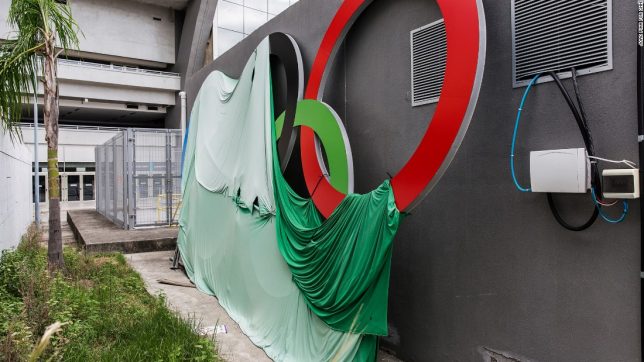
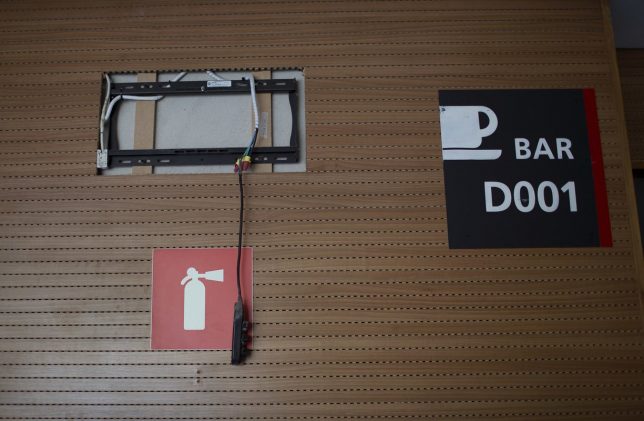
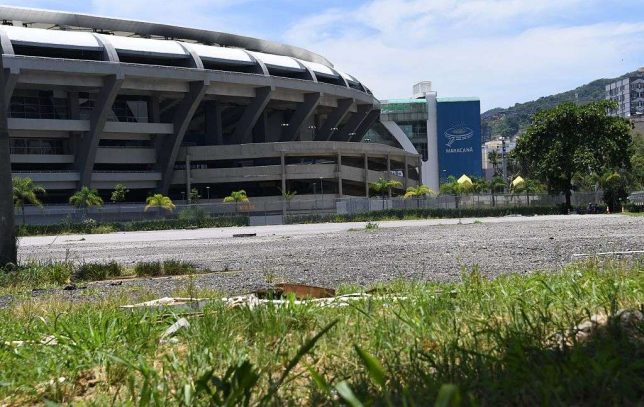
Barely completed in time, venues at the 2016 Summer Olympic Games in Rio de Janeiro, Brazil are going south in a big way now that the athletes have left.

abandoned-rio-olympics-1m

The Games of the XXXI Olympiad – Rio 2016 for short – were meant to do for Brazil what the 2008 Summer Olympics in Beijing did for China: announce the host nation’s arrival on the world stage.

abandoned-rio-olympics-1a

abandoned-rio-olympics-1l

abandoned-rio-olympics-1e

Critics of Rio’s winning bid were placated by that old chestnut; “hosting the Games will bring improved infrastructure and services that will benefit residents far into the future.” So how’s that working out, less than a year after the circus left town?

abandoned-rio-olympics-1i

abandoned-rio-olympics-1f

abandoned-rio-olympics-1g

Rio’s Olympics weren’t all that popular with cariocas (Rio de Janiero-ians) from the get-go, and let’s recall that Brazil’s economy was booming back in October of 2009 when the Games were awarded. In 2014, a massive financial scandal coupled with the onset of Brazil’s worst economic recession since 1990 put a huge financial squeeze on preparations for the Games. With funds tighter than a gymnast’s tendons, corners were cut and, well, you know the story – it’s a wonder the Games were as problem-free as they appeared on TV.

abandoned-rio-olympics-1j

abandoned-rio-olympics-1k

abandoned-rio-olympics-1d

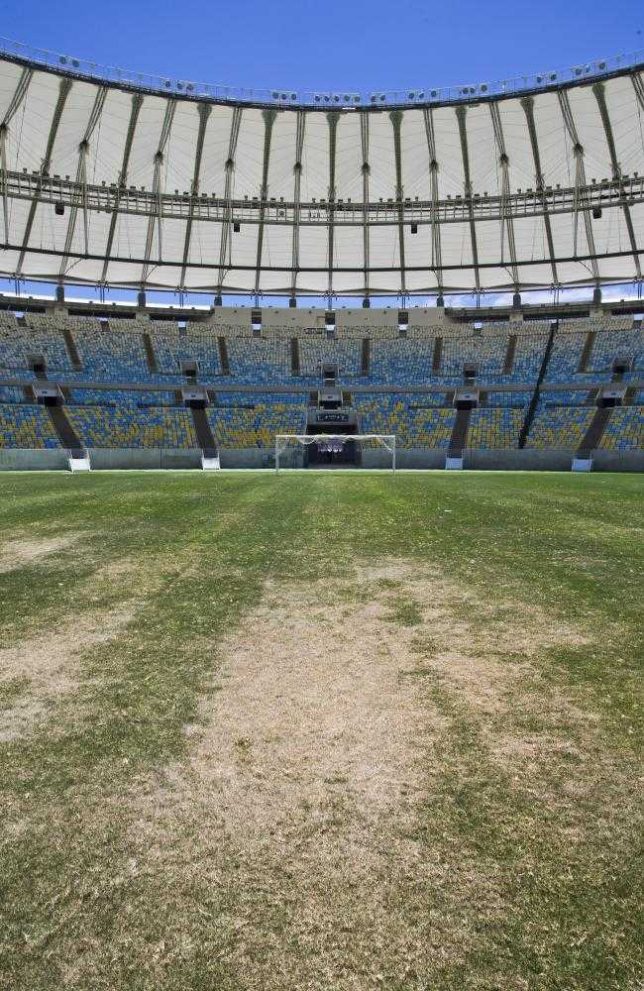
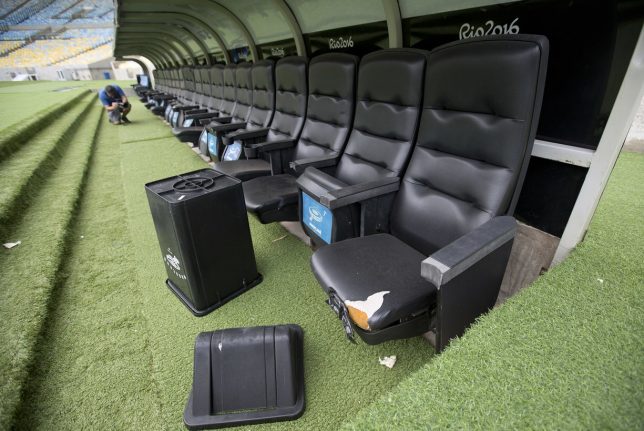
Good thing Rio’s poorer residents had so much to look forward to once the Games ended. Too bad their hopes focused on looting the lightly-guarded facilities of anything valuable – payback, of a sort, for their sense of disenfranchisement and a conviction that the only ones to benefit from the Olympic Games were the rich and powerful. These images depict the jewel in Rio’s Olympic crown, Maracanã Stadium, mere months after the Games ended with a bang at the Closing Ceremonies.

Next Page – Click Below to Read More:
Amazon Calm Rios Deteriorating Olympic Games Venues

Share on Facebook


[ By Steve in Abandoned Places & Architecture. ]

[ WebUrbanist | Archives | Galleries | Privacy | TOS ]


WebUrbanist

 
Comments Off on Amazon Calm: Rio’s Deteriorating Olympic Games Venues

Posted in Creativity


Things we found at CP+ 2017 which had been cut in half

26 Feb

Things we found at CP+ 2017 which had been cut in half

We’ll be honest – the past year has been pretty rough. It’s hard to find much good news out there, and it seems like the world is more divided than ever. With so much uncertainty in so many areas of our lives, it’s important to hold on firmly to the important things. Friends, family, lifebelts, and amusing-looking 19th century cameras (snigger snigger) but most of all, traditions

Here at DPReview we take tradition seriously. Every new years eve, Rishi drinks a pint of beer*. Every Easter, Carey gets a haircut. And every February, at CP+, we post a gallery of things we found at the show which have been cut in half.

So dim the lights, put on some Enya and settle in, because it’s that time again.

* Most of a pint of beer.

Things we found at CP+ 2017 which had been cut in half

First up is the recently announced Pentax KP, a weather-sealed 24MP APS-C DSLR which features a lot of the same technology as the full-frame K-1. We know what you’re thinking – this KP might have its innards exposed for all the world to see, but it hasn’t been cut in half! How am I supposed to trust DPReview? It hasn’t been the same since Phil left! Where is the Leica M9 review???

Things we found at CP+ 2017 which had been cut in half

Not so fast. Don’t worry – we know what you came here to see, and we would never disappoint you (unless you really are still waiting for the M9 review, in which case we’re definitely going to disappoint you). 

Here’s a KP without any weather sealing at all, because it’s been cut in half. It’s positively begging for dust and moisture incursion.

Things we found at CP+ 2017 which had been cut in half

Also distinctly vulnerable to the elements is this Canon EF Canon EF 200-400mm f/4L IS USM. A regular on the ‘things that have been cut in half’, trade show circuit, Canon seems to really enjoy taking these 200-400mm lenses apart and showing off their insides.

We’re starting to worry, to be honest.

Things we found at CP+ 2017 which had been cut in half

It’s just gratuitous, at this point.

Things we found at CP+ 2017 which had been cut in half

We have to admit though, when it comes to showing off lens components, Canon does a good job. These are aspherical lenses, from (L-R) the company’s 14mm F2.8 II, 85mm F1.2 II, 17-40mm F4, 16-35mm F2.8 II (last generation) and EF-S 15-55mm F2.8, respectively.

We were hoping to see the new 16-35mm F2.8 III represented in this display, but no such luck. If you really want to see an impressive aspherical element though, check out the 10-24mm F4, on display at CP+ 2015.

Things we found at CP+ 2017 which had been cut in half

The 16-35mm F2.8 III might have been missing from Canon’s aspherical mushroom farm, but Canon didn’t let us down – here it is, in another display case, with all of its many elements on show. This latest version of the 16-35mm is favorite of landscape photographers and a stellar performer, outperforming its predecessors in every respect.

Good luck getting nice-looking sunstars out of this one, though. It’s been cut in half.

Things we found at CP+ 2017 which had been cut in half

Tamron’s new 70-200mm F2.8 ‘G2’ has been completely redesigned, with a new optical design consisting of 23 elements in 17 groups. These include extra low dispersion and low dispersion elements to reduce chromatic aberrations. Stabilization has been improved too, and now offers up to five stops of compensation.

This lens is 50% lighter than shipping samples, so in theory, it should be even more hand-holdable.

Things we found at CP+ 2017 which had been cut in half

Not to be outdone, Nikon is showing off a another high-tech, multi-element 70-200mm of its own – the new, and very nice 70-200mm F2.8E.

We’ve been impressed by the performance of this new telezoom, both optically and in terms of image stabilization, but we won’t be getting on the waiting list for this 100th anniversary special addition. It looks like Nikon got a bit carried away with the weight-saving.

Things we found at CP+ 2017 which had been cut in half

Speaking of lightweight, Panasonic’s DC GH5 is a modestly-sized powerhouse, combining an advanced video feature set with impressive speed, resolution and autofocus performance for stills photography. We’re currently working on an in-depth review but we’re glad that Panasonic didn’t send us this one. It seems to have exploded.

Things we found at CP+ 2017 which had been cut in half

Voigtlander really outdid itself this year, when it came to things that had been cut in half. Here’s the Nokton F1.1 for Leica M mount. Normally a useful lens for extreme low light imaging on film and digital rangefinders, we’d recommend passing on this one if you see it on Ebay.

It’s decentered.

Things we found at CP+ 2017 which had been cut in half

Another Voigtlander – the 10mm F5.6 Heliar Ultra-Wide. The second native E-Mount lens made by Voigtlander and at the time of its release, the widest rectilinear lens ever produced, this one has been put together using even more aspherical elements than normal.

Things we found at CP+ 2017 which had been cut in half

Another 15mm, this is the LAOWA 15mm F4 Wide Angle 1:1 Macro – an impressive, inexpensive but undeniably niche optic, we’d describe this lens’s internal construction as ‘industrial’. Or ‘industrial accident’, in the case of this example, which has been partly – but not entirely – cut in half.

Things we found at CP+ 2017 which had been cut in half

Sony can always be relied upon for some high-quality tradeshow bisection, and this year was no different. It’s easy to forget that despite its size and form-factor, the SLT-A99 II does not contain a pentaprism, and seeing it cut in half (here with a 24-70mm F2.8 attached) reveals a surprising amount of empty space above the fixed mirror.

Admittedly, this one has 50% as much empty space inside it as a regular A99 II, because as you can see, it has been cut in half.

Things we found at CP+ 2017 which had been cut in half

That’s it for another year – thanks for reading, and we hope you’ve enjoyed our show content from CP+. It’s time for lunch. Or breakfast. Quite honestly we’re still a bit confused about what timezone we’re in.

Until next time – keep it demi. 

Articles: Digital Photography Review (dpreview.com)

 
Comments Off on Things we found at CP+ 2017 which had been cut in half

Posted in Uncategorized


Photographer Edin Chavez shares his favorite Miami Beach photo spots

26 Feb

$ (document).ready(function() { SampleGalleryV2({“containerId”:”embeddedSampleGallery_6758783119″,”galleryId”:”6758783119″,”isEmbeddedWidget”:true,”standalone”:false,”selectedImageIndex”:0,”startInCommentsView”:false,”isMobile”:false}) });

When a nagging desire to unleash his creative juices wouldn’t leave him alone, Edin Chavez left a successful self-made painting business to pursue photography. He’s now a Miami-based commercial photographer with clients like Nikon, National Geographic and Corona on his resume. Photography has brought him all over the world, but it’s Miami where he honed his skills and found his first go-to photo spots.

He recently shared ten of his favorites with Resource Travel, where you’ll helpfully find embedded Google Map widgets so you can hone in on exactly the right spots. Head over to the full post – after all, it takes an insider to tell you that the Best Buy parking garage is one of the best places for a sunset view of the city.

Read ’10 Best Photography Spots in Miami Beach’ at Resource Travel

Articles: Digital Photography Review (dpreview.com)

 
Comments Off on Photographer Edin Chavez shares his favorite Miami Beach photo spots

Posted in Uncategorized


Delkin introduces USB 3.0 multi-slot card reader that includes CFast port

25 Feb

Memory and memory accessory company Delkin Devices has announced a new multi-format card reader that will be compatible with the CFast standard. DDreader-48 uses a USB 3.0 interface and can facilitate data rates of up to 500MB/s with CFast 2.0, SD UHS-ll and microSD UHS-l memory cards. While the SD and microSD formats can’t yet test the reader’s transfer speeds on their own the extra capacity in the pipeline allows the reader to read or write from or to each of three slots simultaneously to save users time. A fourth port allows users to connect a Flash Drive via USB.

Delkin Devices USB 3.0 CFast 2.0 Multi-Slot Memory Card Reader is compatible with Windows and Mac devices and will be available at the end of March for £39.99 (approx. $ 40) with a limited 5-year warranty. For more information see the Delkin Devices website.

Press release

Delkin Devices USB 3.0 CFast 2.0 Multi-Slot Memory Card Reader

  • Supports CFast 2.0, SD UHS-II, microSD UHS-I & Flash Drives
  • Data Transfer Speeds up to 500MB/s
  • Three Slots for Simultaneous Data Transfer
  • USB 3.0 Interface
  • Mac & Windows Compatible
  • Plug & Play

Part Number: DDREADER-48
UPC: 814373020219

Overview
The USB 3.0 CFast 2.0 Multi-Slot Memory Card Reader from Delkin Devices utilizes the full power of CFast 2.0 and SD UHS-II memory cards for accelerated transfer, while doing it in only a fraction of the time. Designed with four slots for (1) CFast 2.0 card, (1) SD card, (1) microSD card and (1) USB flash drive, the reader is specifically built to handle the high-performance demands of the latest generation of memory cards used in the broadcast, cinema, and photography industries.

Unparalleled Speed
Incorporating a SuperSpeed USB 3.0 interface, the reader offers speeds suitable for professional photographers and videographers. Offload large files, such as high-res RAW images, 4K, 2K & 3D videos, quickly and efficiently at speeds up to 500MB/s (10x faster than USB 2.0)! The improved user workflow reduces transfer time dramatically and allows you to view and work on your files sooner. The reader also allows for simultaneous data transfer, giving you the ability to download all your files from multiple cards to your computer at the same time.

The CFast slot incorporates SATA III support, guaranteeing the fastest transfers to and from your CFast card. The SD slot is designed with a second row of connectors to utilize the super high-speed performance of UHS-II cards, while also allowing for backwards compatibility with non-UHS-II cards.

Compact & Travel-Friendly
At only 4 in. wide and weighing less than ¼ lb., the reader provides convenient, hassle-free portability. Bring it with you wherever you go; safely store it in backpacks, carrying bags, briefcases, and much more! Whether you are at home or travelling, the reader’s compact size allows you to access your precious files anywhere, anytime, while taking up minimal space.

Plug & Play
Access your files in seconds! No drivers or external power is required; simply plug the reader into any USB port on your computer and start viewing your photos and videos instantly. The reader is also backwards compatible with USB 2.0 and 1.1 ports, but will transfer data at slower rates.

Specifications

  • Compatible Memory Cards: CFast 2.0
  • SDHC / SDXC UHS-II
  • microSDHC / microSDXC UHS-I
  • Ports: 1 x USB 3.0 type-A ports
  • Computer Interface: USB 3.0
  • Data Transfer Rate: Up to 500MB/s via USB 3.0

In the Box
Delkin Devices USB 3.0 CFast 2.0 Multi-Slot Memory Card Reader
Limited 5 Year Warranty

Articles: Digital Photography Review (dpreview.com)
 
Comments Off on Delkin introduces USB 3.0 multi-slot card reader that includes CFast port

Posted in Uncategorized


Lensrentals and the mysterious case of the Sony FE 70-200mm F2.8 GM

25 Feb

$ (document).ready(function() { SampleGalleryV2({“containerId”:”embeddedSampleGallery_4915756573″,”galleryId”:”4915756573″,”isEmbeddedWidget”:true,”standalone”:false,”selectedImageIndex”:0,”startInCommentsView”:false,”isMobile”:false}) });

One lens’ bad fortune is our gain: the Sony FE 70-200mm F2.8 GM’s optical test results had been puzzling the team at Lensrentals, and when a customer dropped one recently a teardown was in order. The teardown took a total of six hours – twice the usual amount of time required – and along the way they found a lot of solidly constructed pieces, a mysterious component they dubbed the ‘Southern Fairy Tale Ring,’ and a great deal of silicone glue.

This article details the first part of the teardown, showing the disassembly of the first half of the lens up to the point where a snack break was needed. It’s a long read but as always, thoroughly fascinating and entertaining. It turns out that construction of the FE 70-200mm F2.8 is a bit unconventional, and that’s not a bad thing at all.

Read LensRentals’ Sony FE 70-200mm F2.8 GM OSS Teardown (Part 1)

Articles: Digital Photography Review (dpreview.com)

 
Comments Off on Lensrentals and the mysterious case of the Sony FE 70-200mm F2.8 GM

Posted in Uncategorized


EHang uses 1000 GhostDrone 2.0 drones for massive light show in China

25 Feb

Just a few days after Intel wowed audiences with a 300-drone aerial light show at the Super Bowl, Chinese drone company EHang raised the bar with a 1000-drone light show for audiences in China.

EHang performed its ‘Meteor Sky’ show in the city of Guangzhou in celebration of the traditional Chinese Lantern Festival on February 11. To create the spectacle, the company used 1000 of its GhostDrone 2.0 drones configured with color changing lights.

A long exposure captures the drone show near Guangzhou’s Canton Tower.

Putting on a show of this scale requires some impressive logistics. Just arranging the drones prior to flight required an area 290m long by 19m wide, and over 30 EHang engineers and staff put in thousands of hours to develop, choreograph and test the show. The company also developed an advanced communication network and safety system which maintained a minimum 1.5m distance between drones during flight. Despite the complexity, the entire show was controlled by a single computer on the ground.

EHang staff arrange drones in preparation for its ‘Meteor Sky’ light show. The entire staging area was 290m x 19m in size.

EHang notes that the show also served as a trial to see if drones could provide an environmentally friendly alternative to fireworks.

What do you think about drone light shows? Tell us in the comments!

Articles: Digital Photography Review (dpreview.com)

 
Comments Off on EHang uses 1000 GhostDrone 2.0 drones for massive light show in China

Posted in Uncategorized


CP+ 2017: Not special enough for you? Nikon shows off 100th Anniversary D5 and D500

25 Feb

CP+ 2017: Nikon shows off 100th Anniversary D5 and D500

Nikon is celebrating its 100th anniversary this year, and as part of the celebrations, the company has unveiled special editions of its professional D5 and D500, alongside the ‘holy trinity’ of F2.8 zooms.

Here’s the D5, in its special gunmetal finish and special gunmetal flight case, with special body cap, special shoulder strap and special booklet, full (presumably) of special information.

CP+ 2017: Nikon shows off 100th Anniversary D5 and D500

As special editions go, this one is admirably restrained.

CP+ 2017: Nikon shows off 100th Anniversary D5 and D500

Here’s a boring old normal D5 (yawn) pictured with the special 100th anniversary strap. Nikon has released precisely zero information about any of these special editions and accessories as far as we can tell, so it’s unclear whether this strap will be available for general sale. 

CP+ 2017: Nikon shows off 100th Anniversary D5 and D500

Not to be left out, here’s the D5’s baby brother, the D500 in a matching gunmetal finish, inside a matching, but slightly smaller gunmetal flight case. So special. So limited. 

CP+ 2017: Nikon shows off 100th Anniversary D5 and D500

Bow down before the ‘holy trinity’. Here are the 14-24mm F2.8, 24-70mm F2.8 and new 70-200mm F2.8E, in matching special finishes, in a matching special flight case. Even the hoods look like they’ve been given a lighter finish, but its very hard to tell from behind the glass display case. At any rate, it’s special. There’s absolutely no doubt about that. 

CP+ 2017: Nikon shows off 100th Anniversary D5 and D500

Again, we have no idea whether this exploded 70-200mm F2.8E will be available to purchase as a collectable item, and if so how much you’ll pay. We’d hope it will cost considerably less than the regular lens though, because this very special anniversary edition is entirely useless for photography. Why? Because it’s been cut in…

Sorry, wrong article.

CP+ 2017: Nikon shows off 100th Anniversary D5 and D500

As part of its 100th anniversary, Nikon is (literally) showcasing some key products from the past 100 years. The original Nikon F is in there, alongside an F4 and a Nikonos, and of course the D1. Also included is a Df. Maybe by the time Nikon’s 200th anniversary comes around they’ll have released a Df2.

Articles: Digital Photography Review (dpreview.com)
 
Comments Off on CP+ 2017: Not special enough for you? Nikon shows off 100th Anniversary D5 and D500

Posted in Uncategorized


Disappearing Road: Cross Quickly, Before It’s Swallowed by the Sea Again

25 Feb

[ By SA Rogers in Destinations & Sights & Travel. ]

passage du gois

Twice a day, when the tides go down, this causeway appears to connect the French mainland to the island of Noirmoutier, but cross quickly or the road will disappear, stranding you in the middle of the Bay of Bourgneuf. The Passage du Gois was built upon a strip of silt that just barely elevates it above the surface during low tide for a little over an hour at a time. Crossers often wait too long to get started, bet that they’ll be able to make it across, and lose.

passage du gois 7

passage du gois 8

passage du gois 2

Once it starts flooding, it happens quickly. That’s why there are elevated rescue towers located along the stretch – you might just have to swim over to one, climb up and wait it out. When the tide is low, abandoned, ruined cars can be seen littering the sand.

Passage du Gois 3

passage du gois alain

passage du gois alain 2

Each year, runners gather for the Foulées du Gois, a race across the causeway. The road also tends to be covered with seashells, making it a popular destination for both souvenir-seeking tourists and locals who look for edible shellfish.

passage du gois wikimedia

Photos via Flickr Creative Commons: garder le cap, ludovic, pics by brian, oliver gobin, alain bachellier, marc bourbon, oliver hankeln, wikimedia commons

Share on Facebook


[ By SA Rogers in Destinations & Sights & Travel. ]

[ WebUrbanist | Archives | Galleries | Privacy | TOS ]


WebUrbanist

 
Comments Off on Disappearing Road: Cross Quickly, Before It’s Swallowed by the Sea Again

Posted in Creativity


CP+ 2017: Hands-on with Sigma’s newest lenses

25 Feb

Hands on with Sigma’s four new lenses 

Sigma announced a whopping four new lenses just prior to CP+ 2017, in Yokohama, Japan. As soon as the show opened to the press, we headed straight to the Sigma booth for some hands on time. Three of the lenses announced are part of Sigma’s high-end ‘Art’ series including the 24-70mm F2.8 you see above, as well as a 135mm F1.8 and a 14mm F1.8.  

Sigma also announced a 100-400mm F5-6.3 DG OS HSM lens which is part of the company’s more modestly-priced ‘Contemporary’ series.

Click through the gallery for hands on photos of each lens and some initial impressions of build quality, size and weight. 

Sigma 24-70mm F2.8 DG OS HSM Art

The Sigma 24-70mm F2.8 is surprisingly lightweight (for an Art-series lens) and reasonably compact. Here it is shown with the focal length set to 24mm. Build quality seems excellent and the 24-70mm F2.8 is weather and dust-sealed, with rubber gaskets visible on the mount. It is constructed from metal and ‘thermally stable composite’, which we can only assume is even better than metal, because it sounds fancier. 

Sigma 24-70mm F2.8 DG OS HSM Art

The lenses extends a couple of inches when zoomed in to 70mm. Here you can see some of the switches on the lens barrel including the manual/AF toggle as well as a switch to engage and disengage the image stabilization. 

Sigma 24-70mm F2.8 DG OS HSM Art

The 24-70 F2.8 Art has a minimum focus distance of 0.37 meters (1.2 feet). It also feature a 9-blade circular aperture. Optical construction includes three SLD and four aspherical elements. 

Sigma 135mm F1.8 DG HSM

Sigma also announced a new telephoto prime lens. Like the 85mm F1.4, the 135mm F1.8 DG HSM is a big lens, and pretty heavy too – weighing in at 1130g/40.2oz.

Sigma 135mm F1.8 DG HSM

The 135mm F1.8 offers a minimum focus distance of 0.875 meters (2.9 feet). It uses a hypersonic motor to focus, which Sigma says should result in fast and ‘exceptionally stable’ AF. And a acceleration sensor ‘detects the orientation of the lens’ so the AF system can respond to ‘varying loads on the focusing group due to gravity.’ In laymen’s terms, this means that autofocus should be just as fast, and just as accurate in both portrait and landscape orientations. 

Sigma 135mm F1.8 DG HSM

Mounted on a Canon 5D Mark III you can get a sense of the physical size of the 135mm F1.8. Again, it features a dust and splash-proof construction. Of all the new Sigma lenses we handled, this one has the heftiest feel to it. It also features a 9-blade rounded aperture. 

Sigma14mm F1.8 DG HSM

Moving to the wide end of the lineup, the new 14mm F1.8 has a few of us on staff (especially those of us who like shooting in very low light) extremely excited. Fast, high quality wide-angle lenses for full-frame are pretty rare, and we suspect the 14mm F1.8 will appeal to more than just low light shooters. 

Sigma14mm F1.8 DG HSM

As you might expect, the 14mm F2.8 has a bulbous front element with a built-in lens hood. There’s no filter thread, which is pretty standard for wide, fast primes. Optical construction is comprised of 16 elements, of which three are FLD (low dispersion) and four are SLD (super-low-dispersion).

Sigma14mm F1.8 DG HSM

Mounted on a Canon 5D Mark III, this image gives you an idea of how big this prime lens is. Like the other two new ‘Art’ lenses it features a 9-blade circular aperture, however it does not appear to be dust and weather sealed. It features a minimum focus distance of 0.27m (~10 inches) and uses a ring-type ultrasonic (HSM) focus motor.

Sigma 100-400mm F5-6.3 DG OS HSM lens

Last but not least is Sigma’s new variable-aperture telezoom, the 100-400mm F5-6.4 DG OS HSM. Although reasonably long, it is impressively light considering the focal range. The lens weighs 1160g and measures 182mm in length. It features a dust and splash proof construction as well as optical image stabilization. The lens is shown here zoomed out to 100mm. 

Sigma 100-400mm F5-6.3 DG OS HSM lens

When zoomed all the way in the lens barrel does extend considerably, which is common for lenses of this class. The lens can be zoomed in and out by either twisting the zoom ring or physically pulling the front of the lens outward and inward. 

Sigma 100-400mm F5-6.3 DG OS HSM lens

The 100-400mm has a minimum focal distance of 1.8 meters and features a maximum magnification ratio of 1:3.8. It is built around a total of 21 elements arranged into 15 groups. It features four SLD (Special Low Dispersion) elements and focuses via hypersonic motor.

Pricing an availability on all these lenses is forthcoming.

Articles: Digital Photography Review (dpreview.com)

 
Comments Off on CP+ 2017: Hands-on with Sigma’s newest lenses

Posted in Uncategorized