RSS
 

Archive for January, 2017

Comedy Pet Photography Awards open for entries

28 Jan

$ (document).ready(function() { SampleGalleryV2({“containerId”:”embeddedSampleGallery_6652878511″,”galleryId”:”6652878511″,”isEmbeddedWidget”:true,”standalone”:false,”selectedImageIndex”:0,”startInCommentsView”:false,”isMobile”:false}) });

Looking to kickstart your pet’s career as an internet sensation? The organizers behind the Comedy Wildlife Awards have a new competition that’s a little closer to home. Entries are now being accepted for the inaugural Comedy Pet Photography Awards, and the winner will be awarded £2000 for their funniest photo of a domestic animal. Photos can be submitted online through May 31st. 

The competition is presented with the Animal Welfare Society, and entries will be judged by a panel of nature and wildlife photographers. The terms and conditions lay out all guidelines for qualifying entries, and they’re refreshingly written in plain and simple English.

Press release

COMEDY PET PHOTOGRAPHY COMPETITION LAUNCHED 

Tuesday 24th January

For Immediate Release

  • Inaugural Comedy Pets Photography Award has been launched following success of Comedy Wildlife Photography Awards
  • Launched by renowned nature and wildlife photographers Paul Joynson-Hicks MBE and Tom Sullam, who will be joined on the judging panel by Countryfile’s Kate Humble and TV Vet Emma Milne.
  • The winner of the funniest pet photo will win a £2,000 cash prize 

The team behind the hilarious Comedy Wildlife Photography Awards have launched a new competition to find the funniest photos of pets from across the globe. The Comedy Pet Photography Awards are calling on pet-lovers the world over to enter snaps of their comical pets to be in the running to win a £2,000 cash prize, a Think Tank camera bag and £100 gift voucher from Wex Photographic.

The competition is free and open to people of all ages and nationalities, as well as pets of all shapes and sizes. However, to ensure no pets are harmed or distressed in the quest for the perfect photograph, strict guidelines have been put in place which all entrants must follow. 

The competition is being supported by the Animal Welfare Society, a charity directed by vets and vet nurses which uses veterinary knowledge to improve the welfare of all animals.

Entries can be submitted online and the closing date is 31st May. The photographs will then by judged by an illustrious panel which include Countryfile’s Kate Humble, photographic editor Adam Storey and vet extraordinaire Emma Milne.

Paul Joynson-Hicks MBE, wildlife photographer and Co-Founder of the awards, commented:

“Following the immense success of the Comedy Wildlife Photography Awards, we wanted to launch a competition that people at home could take part in too.

“These awards are designed to celebrate those furry friends who play such important roles in our lives. Whether it be dogs, cats, lizards, horses or llamas, we want to see the funniest photos of pets from across the globe. 

“Of course, as with all our work, there is a more serious message at the heart of it. Whilst we’re all looking forward to giggling at grinning pooches and guffawing at goofy hamsters, this is also a chance to promote the importance of pet and animal welfare. By raising the profile of pets across the globe, we want to draw attention to the need for proper treatment and care when it comes to our animals.” 

All the details about entering the awards can be found at www.comedypetphotos.com. The only question that remains is, who is the world’s funniest pet?

Articles: Digital Photography Review (dpreview.com)

 
Comments Off on Comedy Pet Photography Awards open for entries

Posted in Uncategorized


Pictures show how badly earthquakes damaged Sony’s Kumamoto sensor factory

28 Jan
Photo via Sony

If you wondered why it took Sony so long to get back on its feet after an earthquake hit its sensor fabrication plant in Kumamoto, this picture taken in the aftermath might give you a clue. The halt in production at the factory had a devastating effect on large sections of the camera industry in 2016 as it was the provider of sensors for a huge range of products – from the Nikon DL cameras to the 100MP backs for Phase One and Hasselblad medium-format bodies.

This picture of the chaos inside the plant emerged in October last year as Sony announced plans to ensure such natural disasters would only knock out production for a maximum of two months. The earthquake that hit in April 2016 kept the Kumamoto business silent for over three and a half months, and it took until September for production to return to pre-quake levels. According to a report by the Nikkei Asian Review Sony estimates the event cost the company $ 776 million in lost operating profit. 

Tragically, at least fifty deaths are attributed to the earthquakes and around tens of thousands were forced from their homes in the prefecture. Recovery continues as displaced residents have begun moving back into the region.

More dramatic pictures of the quake-hit plant can be seen in this article on the Apple Daily website.

Articles: Digital Photography Review (dpreview.com)

 
Comments Off on Pictures show how badly earthquakes damaged Sony’s Kumamoto sensor factory

Posted in Uncategorized


iPhone 7 Plus survives 13 hours in icy Russian river

28 Jan
 

A video posted by Fedor (@emfedor1983) on

Apple’s iPhone 7 isn’t officially classified as a waterproof. With its IP67 rating it is capable of surviving immersion at a depth of one meter (3.3 feet) for 30 minutes but this is meant to protect against accidental drops into water or splashes rather than make the phone suitable for underwater activities. 

However, an incident during an ice fishing trip in Russia has now demonstrated that the device offers more environmental protection than its IP rating would suggest. According to Russian language publication ykt.ru a fisherman dropped his iPhone 7 Plus into an ice fishing hole in the city of Yakutsk. Unable to retrieve the device, it was left in the water overnight, until the next day a diver friend of the phone’s owner was, after three attempts, able to find the device and bring it back to the surface.

When taken out of the water, the iPhone powered on successfully and did not show any signs of malfunction after 13 hours in the freezing 4°C/39°F water. According to its owner the iPhone 7 Plus had approximately 35 percent battery charge when dropped and still showed 19% after the successful retrieval, which is documented in the Instagram video above. It’s great to know the iPhone is likely to survive even longer periods of time submerged in water, but we’d still recommend dedicated underwater equipment for your next diving or snorkeling video. 

Articles: Digital Photography Review (dpreview.com)

 
Comments Off on iPhone 7 Plus survives 13 hours in icy Russian river

Posted in Uncategorized


Iridient X-Transformer beta brings much-loved X-Trans processing to Windows

28 Jan

Iridient Digital, maker of the popular Iridient Developer Raw conversion software for Mac, has announced a public Beta of a Fujifilm Raw converter utility for Windows.

Iridient X-Transformer is a standalone utility that takes RAF files from Fujifilm cameras and demosaics them before saving them as DNG files. This allows Windows users to access the well-regarded processing look that is popular among Mac-owning X-Trans shooters.

Camera support covers all but the very latest X-series models and covers cameras both with X-Trans and Bayer color filter patterns.

The software is designed to give files that are optimized for the conversion software you then import into, with the option to add tags to prevent Lightroom from duplicating the sharpening or noise reduction you’ve chosen to apply with X-Transformer, and options defining the handling of lens corrections.

The plugin also includes options for organizing and batch-renaming of files and the ability to compress and reduce the bit-depth of processed files, to save space.

The software offers control over the following parameters:

  • Interpolation process (More Detailed/Smoother), based on the Detail+ and Smooth options in Iridient Developer. The ‘Smoother’ option is less prone to artefacts but without the same level of fine detail.
  • Sharpening (Off, Low, Medium, High), with the option to over-ride Lightroom Sharpening and the ability to specify the sharpening tag in the DNG file.
  • Lens Correction – includes the option to apply the camera’s lens corrections, ignore them or write them as ‘opcode’ tags into the DNG file to be handled by the downstream converter.
  • Chroma/Luma Noise Reduction (Off, Low, Medium, High) again with the option to cancel Lightroom’s default NR.

The beta utility is available for free download but will place watermarks on the converted images. The arrival of Iridient’s conversion algorithm for Windows users will see its inclusion in a forthcoming comparison of several leading Raw converters for X-Trans cameras.

Iridient conversion, 100% crop
(Sharpening Low)
ACR conversion, 100 crop
(Default parameters)

Articles: Digital Photography Review (dpreview.com)

 
Comments Off on Iridient X-Transformer beta brings much-loved X-Trans processing to Windows

Posted in Uncategorized


Samsung Galaxy S8 likely to come with same camera specs as S7

28 Jan

More than six months ago the upcoming Samsung flagship smartphone Galaxy S8 was rumored to come with a dual-cam setup. Now, that we are much closer to the actual launch of the device, it’s looking more and more like those rumors were unfounded. Today a major leak, via the usually very reliable Evan Blass (a.k.a @evleaks), has revealed that the S8’s camera specification will indeed be very similar to its predecessor S7: a 12MP sensor and F1.7 aperture in the main camera and 8MP with F1.7 at the front. The latter has an iris scanner next to it, like we’ve already seen it on the now discontinued Galaxy Note 7. There is no talk of OIS but we’d be surprised if it would not be included. 

There will be a new visual search function that uses the camera, though. The technology will be able to identify objects and users will then be able to perform searches on shopping sites or search engines. We have seen a similar feature on Amazon’s Fire Phone before. The same tool will also offer OCR functionality. 

Other specs sound interesting as well. There will be a Plus version with a large 6.2″ display alongside the 8-8″ standard model. Both displays will be curved AMOLED variants with an unusual 18.5:9 aspect ratio. Both phones will, depending on region, be powered by the brand new Snapdragon 835 or Samsung’s latest in-house Exynos chipset, combined with 4GB RAM and 64GB of expandable storage. The batteries will have a capacity of 3,500 and 3,000 mAh respectively. Both phones are expected to be announced on March 29. In Europe the Galaxy S8 will set you back €799 (approximately $ 855), the Plus model will be €899 ($ 960).

What do you think about the upcoming S8 from a mobile photography point of view? Will it, despite seemingly unchanged camera specs, be able to keep up with its high-end rivals? Let us know what you think in the comments.

Articles: Digital Photography Review (dpreview.com)

 
Comments Off on Samsung Galaxy S8 likely to come with same camera specs as S7

Posted in Uncategorized


Shealah Craighead named Trump’s official photographer

28 Jan
 

Hanging out with these guys during an event I had the pleasure of photographing. Thanks Anna Roger’s for capturing the laughter! You’re hired! Shamless promo I know…just couldn’t contain my excitement of getting in a photo with both the former President @georgewbush and possible future President @marcorubiofla #shamlessselfpromotion #president #gwb #pastmeetspresent=future!

A photo posted by Shealah Craighead Photography (@shealahdcphoto) on

News outlets are reporting that Pete Souza’s shoes have officially been filled: Shealah Craighead has been named the official White House photographer under President Trump. Craighead has previously worked with a number of political figures – she was First Lady Laura Bush’s personal photographer and in 2008 followed Governor Sarah Palin on the campaign trail. Other clients include Vice President Joseph Biden and wife Jill Biden, along with Florida Governor Rick Scott.

$ (document).ready(function() { SampleGalleryV2({“containerId”:”embeddedSampleGallery_6469220198″,”galleryId”:”6469220198″,”isEmbeddedWidget”:true,”standalone”:false,”selectedImageIndex”:0,”startInCommentsView”:false,”isMobile”:false}) });

You can see more of Craighead’s work on her website and by checking her out on Instagram and Twitter.

Articles: Digital Photography Review (dpreview.com)

 
Comments Off on Shealah Craighead named Trump’s official photographer

Posted in Uncategorized


Recycling Genius: Shrunken Plastic Bottles Replace Furniture Joints

28 Jan

[ By SA Rogers in Design & Furniture & Decor. ]

joining-bottles-main

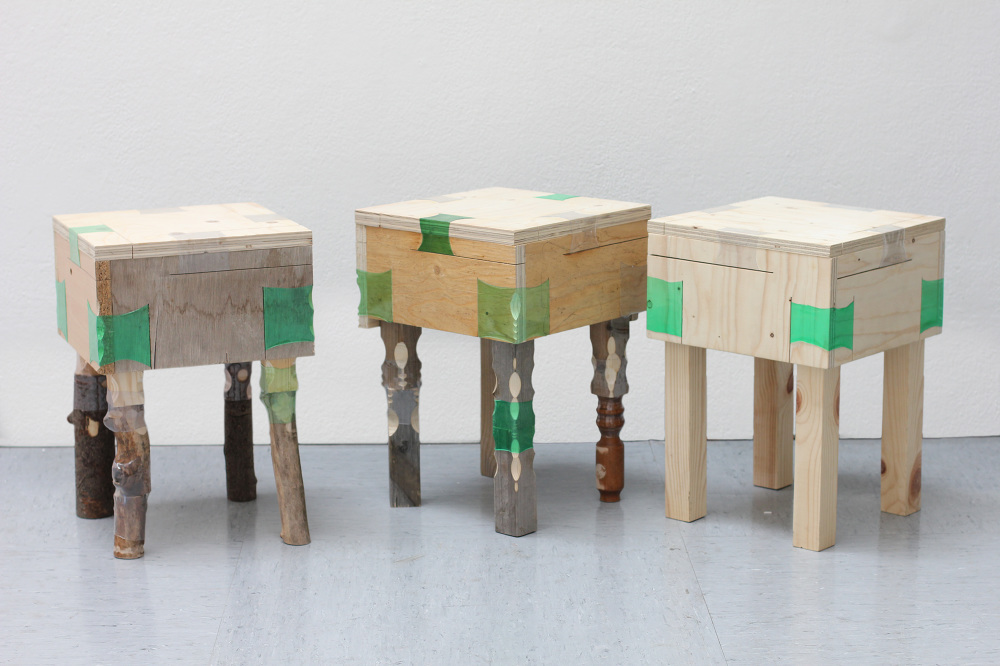
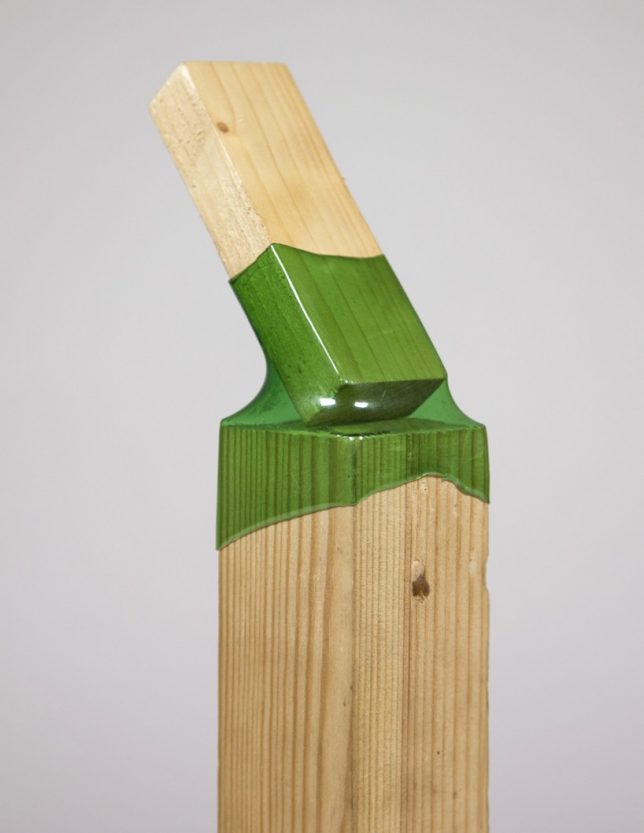
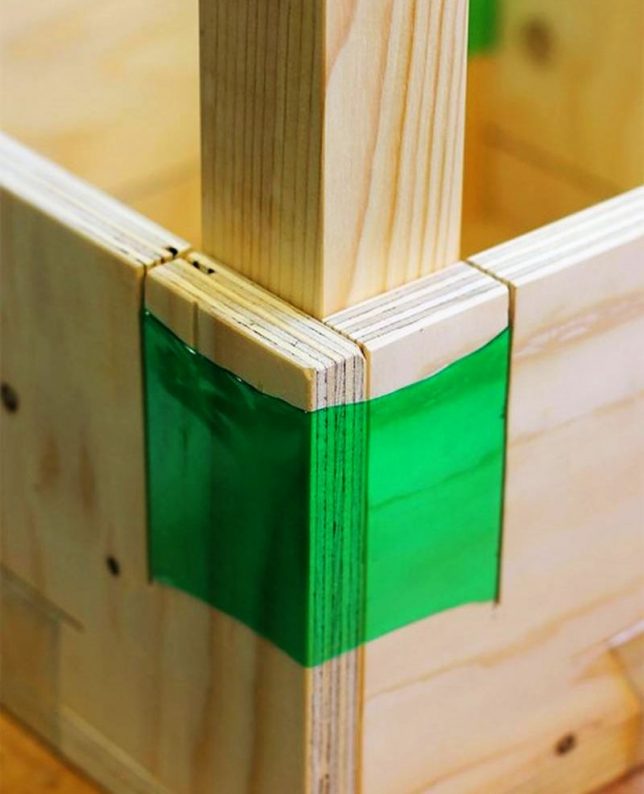
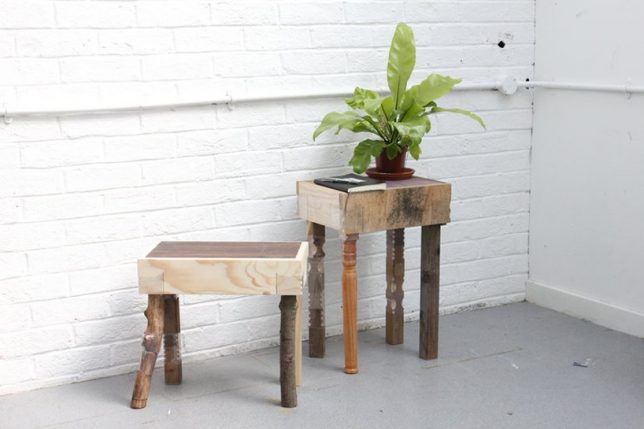
Assembling furniture DIY-style, without the skills, tools or fasteners used to produce conventional joints, becomes remarkably easy with shrink-wrapped pieces of discarded plastic bottles. While joinery is certainly an art – especially the complex forms found in Japanese furniture making – traditional methods aren’t necessarily accessible to anyone. This new project, Joining Bottles, offers a way to assemble functional furniture in minutes with trash and a heat gun.

shrunken-joints-4

Created by product designer Micaella Pedros, ‘Joining Bottles’ aims to provide a model for producing useful objects using materials that are affordable and widely available. A pile of junk sitting on a curb suddenly becomes valuable in a new way, even if it’s a seemingly irreparable chair and a bin full of materials headed to the recycling plant.

shrunken-joins-2

joining-bottles-4

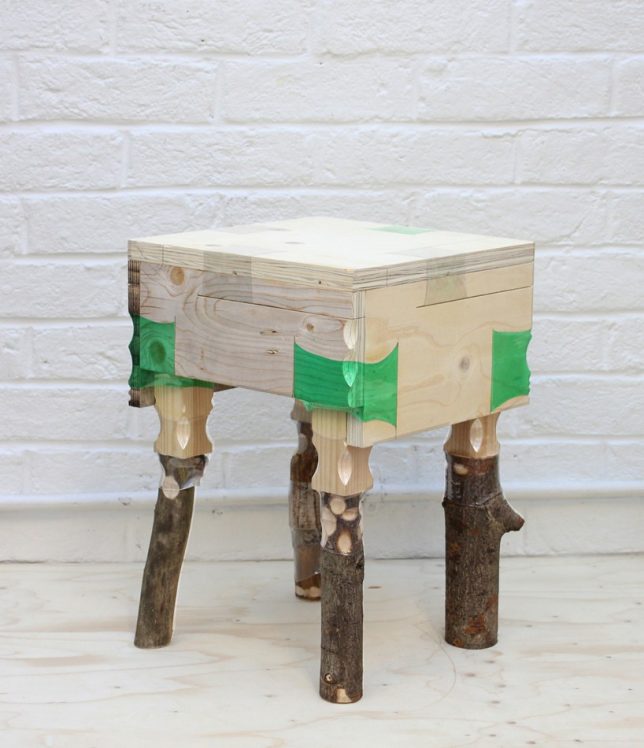
The individual pieces created for a series show how adaptable the concept can be. Use clear bottles if you want the joints to be unobtrusive, or colored bottles to highlight the ingenuity of the system. Wood waste of all kinds, including fallen branches, is assembled into stools, tables, shelves and other objects.

shrunken-joints-3

“The different types of wood and plastic bottles available are dictating the final aspect and composition of the work,” say the creators. “In that sense, a unique conversation is engaged within each piece. It creates more space for randomness and spontaneity, in other words, for human attributes in the creative process.”

Share on Facebook


[ By SA Rogers in Design & Furniture & Decor. ]

[ WebUrbanist | Archives | Galleries | Privacy | TOS ]


WebUrbanist

 
Comments Off on Recycling Genius: Shrunken Plastic Bottles Replace Furniture Joints

Posted in Creativity


Selfly pocket-sized camera drone snaps to a smartphone when not in use

28 Jan

A new pocket-sized consumer camera drone has launched on the crowdfunding website Kickstarter, where the team behind it seeks $ 125k in funding. Called Selfly, this drone is dubbed a ‘smart flying phone case camera’ due to its unique storage design. When not in use, Selfly folds into a compact rectangular shape that can be attached to the back of an included smartphone case.

Selfly is a small autonomous camera drone that, when stored, folds into a 9mm phone case. When removed from the case, four rotors appear to automatically lift the drone into the air where it hovers by default. The related mobile app offers optional control modes, including ‘Stick Control,’ ‘Voice Control,’ and ‘Fly By Picture.’ 

The integrated camera features an 8MP sensor able to record video at 1080p/30fps; live video broadcasting is supported, though flight time tops out at only five minutes. The drone is compatible with all 4″ to 6″ smartphones via its Universal Flip Cover Case. Additionally, Selfly has dedicated phone cases for the iPhone 6/6 Plus/7/7 Plus, Galaxy S6/7 edge, Galaxy 7, and the Nexus 6.

Selfly is similar to the pocket-sized AirSelfie drone that launched on Kickstarter late last year. That drone’s campaign has ended after exceeding its funding goal; backers pledged more than €570,000.

Via: News Atlas

Articles: Digital Photography Review (dpreview.com)

 
Comments Off on Selfly pocket-sized camera drone snaps to a smartphone when not in use

Posted in Uncategorized


Throwback Thursday: Five camera accessories you probably didn’t need

27 Jan

Five camera accessories you probably didn’t need

Plenty of useful camera accessories come on to the market every year – but among them are some real duds. So let’s take a look back at some of the worst offenders, shall we? The first product that comes to mind, at least around here, is the Sony Party-shot.

The Party-shot, introduced in 2009, was actually pretty clever. You popped on a compatible camera (originally the Cyber-shot DSC-WX1 and TX1) and off it went. The ‘personal photographer’ could rotate 360° and tilt up or down 24°, and would use the camera’s Face and Smile Detection features to follow subjects and take a photo at the right moment. It even used the Rule of Thirds for proper composition! The Party-shot was portable, making it the thing to talk about at parties (no pun intended).

Oh, and be sure to watch this:

Five camera accessories you probably didn’t need

No more waving your arms or calling out your childrens’ names to get them to look at the camera, thanks to the Look Lock by Tether Tools. It’s a simple enough gadget: it’s a smartphone holder on an articulating arm that attaches to your camera’s hot shoe. What you put on the screen is up to you. It can be videos, photos or, God forbid, clowns.

To give credit where it’s due, Samsung produced several DualView cameras that had an LCD panel on its front plate to essentially do the same thing. And it did have a clown mode.

Five camera accessories you probably didn’t need

Back in 2007 SanDisk released special ‘Ducati’ edition memory cards as well as a USB stick. This wasn’t just an unusual marketing scheme: at the time these ‘turbo-charged’ cards were also significantly faster than SanDisk’s other offerings at the time. They were also pricey, with that 8GB CF card going for $ 315 and the 4GB SD card priced at $ 130. That snazzy 4GB USB stick was $ 125.

In case you’re wondering about that SD card, it’s what SanDisk called ‘SD Plus’. The card could split open, exposing a hidden USB connector, so you could plug the card right into your PC. Not surprisingly these cards broke quite easily, and the ‘Plus’ designation now means ‘above average’ in SanDisk’s lineup.

Like many things, the partnership between SanDisk and Ducati didn’t last long, which is why I still treasure the 8GB SanDisk Extreme Ducati Edition CF card that I hide in my desk.

Five camera accessories you probably didn’t need

Back in the late 1990s transferring photos from camera to computer was a pain in the butt. You had to hook up a serial cable and those big 1.3 Megapixel files chugged along at a whopping 115kb/sec.  Then a company called SmartDisk said ‘why not make a device that lets you put that SmartMedia card into your floppy drive!’ And so the FlashPath adapter was born. 

The concept was pretty simple. Just pop two watch batteries into it, put the SmartMedia card into the side and insert it into your PC’s floppy drive (remember those?). That assumes that you’ve installed the proper drivers for Windows 95/98 or Mac OS, of course. The FlashPath wasn’t blazing fast, but by our estimates it was about double the speed of a serial cable, so it did save time. Not long after the FlashPath arrived, Sony did the same thing for its Memory Stick format. And not long after that, floppy drives started to disappear from PCs, starting with the iMac.

Five camera accessories you probably didn’t need

There have been plenty of accessory lenses for iPhones, but none is more ridiculous than the Turtleback iPhone SLR jacket. This $ 249 accessory, introduced in 2012, let you attach a Nikon F or Canon EF lens to the front of your iPhone 4. To make that happen you had to first attach a case to the phone and screw on an depth-of-field adapter ring, and then you could attach the lens of your choice. It goes without saying that using the SLR jacket required two hands, otherwise something terrible would happen to your iPhone.

We tested the SLR jacket at the time and it earned 2/5 stars, due mainly to do the fact that the iPhone is actually taking a photo of the focusing screen in the depth-of-field adapter, so you see the pattern of the screen and lots of dust. To its credit, Turtleback did offer an app which automatically flipped the image (since there’s no mirror, the image is upside-down) and calibrates the iPhone’s camera to maximize image quality.

Did we miss your most favorite, least useful camera accessory? Let us know in the comments.

Articles: Digital Photography Review (dpreview.com)

 
Comments Off on Throwback Thursday: Five camera accessories you probably didn’t need

Posted in Uncategorized


Applying color theory to landscape photography

27 Jan
This is Albert Biestadt’s painting entitled ‘Among the Sierra Nevada’ from 1868. As you can see he employed the use of what we now call color theory to create a color harmony in his painting.

Color Theory can be an extremely complex subject, especially if you start looking at the mathematics and physics behind the theory itself. On a more aesthetic level it’s an integral part of what can make an image of a landscape pleasing to the eye. Composition, subject and light all play a considerable roll in landscape photography, but color, and more importantly the idea of color theory, helps to weave all of those elements together to form a successful image. 

The most commonly utilized types of color harmonies are analogous, monochromatic, complementary, split complementary, triadic and quadratic. These color harmonies are essentially different combinations of groups of colors that work well with with one another, or for lack of a better word, are harmonious in their visual representation. 

Painters such as Albert Beirstadt, who is best known for his renditions of the American West during the mid to late 1800s, utilized what we now call color theory extensively in his paintings of breathtaking landscapes. In the above painting entitled ‘Among the Sierra Nevada’ Beirstadt utilized a triadic color harmony to add balance to the scene.

In the modern era of landscape photography, the same principles that Beirstadt utilized in the 1800s, can be applied to the way we compose images today. Consider the example below taken from Ted Gore’s blog post on the subject. As you can see, the color balance that he strikes in this image helps to solidify an already strong composition with excellent leading lines by guiding your eye through the scene through the use of the colors present in the image.

In this graphic, Ted has outlined the use of the Triadic Color Harmony present in this image taken along the Napali coastline on the island of Kauai, HI.

The Triadic Color Harmony present in the above image combines three groups of colors that are equally spaced from each other on the color wheel. The greens, yellows/oranges and blues all work to add balance to the overall scene and to create a very well composed final product that is pleasing to the eye. This is just one example of the several provided by Ted in his blog post. 

To find out more on the subject please give his blog post a read as we think that it does an excellent job explaining how color harmonies work and how they can be utilized effectively in modern landscape photography.

If you want to dive even further into the science behind color theory, give Dave Morrow’s blog post a read as well.

Articles: Digital Photography Review (dpreview.com)

 
Comments Off on Applying color theory to landscape photography

Posted in Uncategorized