RSS
 

Archive for January, 2017

Review of the New Sigma 500mm F4 DG HSM OS Sport Lens

10 Jan

The Sigma 500mm F4 is a big lens. I shoot with bigger lenses because I need the longer focal lengths when I’m on the wild horse ranges but this is a really big lens – the biggest I’ve ever used, actually. It’s a big ticket item too, as my dPS editor Darlene gently reminded me. Be extra careful.

Sigma has their lens safely back and I didn’t trip, fall, drop or dunk it so I guess it’s okay to share now that I’m very hard on my gear. This lens withstood two weeks with me and emerged unscathed. Bonus points to Sigma. This lens is built like a tank.
Sigma 500mm F4 Sport Lens Review 7

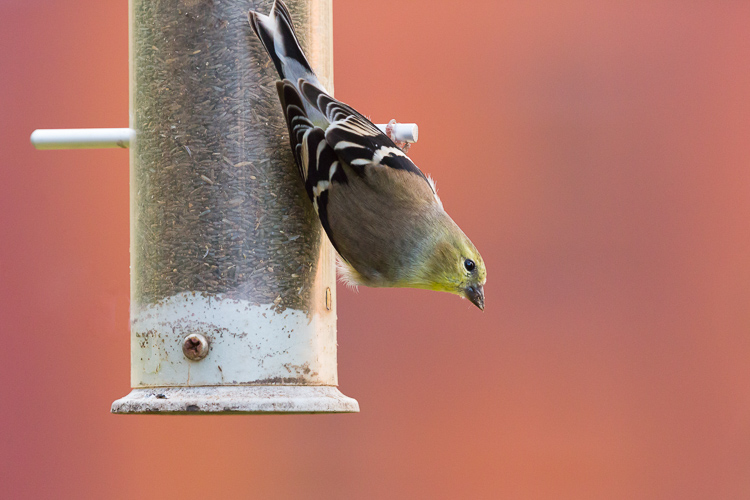
Finch on feeder, Chicago Botanic Garden, Glencoe, IL
Canon 5DIII, Sigma 500mm F4, ISO 6400, 1/1000th, f/8, monopod with a gimbal head.

What I really wanted to know when I tested this lens

When I tossed my name in the hat as a reviewer for this lens, what I really wanted to know was if a large 500mm prime lens is a practical focal length for the rigors of photographing horses, birds, and wildlife? How is it to shoot using support, rather than hand held as I normally do? Is the autofocus responsive? Does the lens make ultra sharp images?

I tested it in as many situations as possible in the limited time that I had it, starting with a few birding trips to the Chicago Botanic Garden. Birding was followed by visits to the Lincoln Park Zoo to get up close with the lions and tigers. I wrapped everything up by using it for the “at liberty” portion of an equine portrait session with four polo ponies. I love my results. Read on to find out why.
Sigma 500mm F4 Sport Lens Review 5

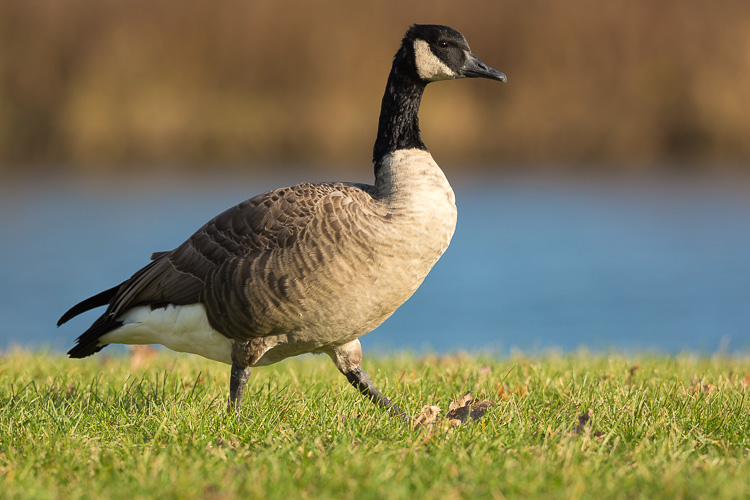
Striding goose, Chicago Botanic Garden, Glencoe, IL
Canon 5DIII, Sigma 500mm F4, ISO 400, 1/1000th, f/6.7, monopod with a gimbal head.

A few technical specs

  • Weight/Size: 7.3 pounds (3.3 kg), approximately 5.7″ wide x 15″ long (144.8 x 380.3 mm)
  • Focal length: Fixed 500mm prime, the lens does not extend further when focusing.
  • Maximum aperture: F/4.
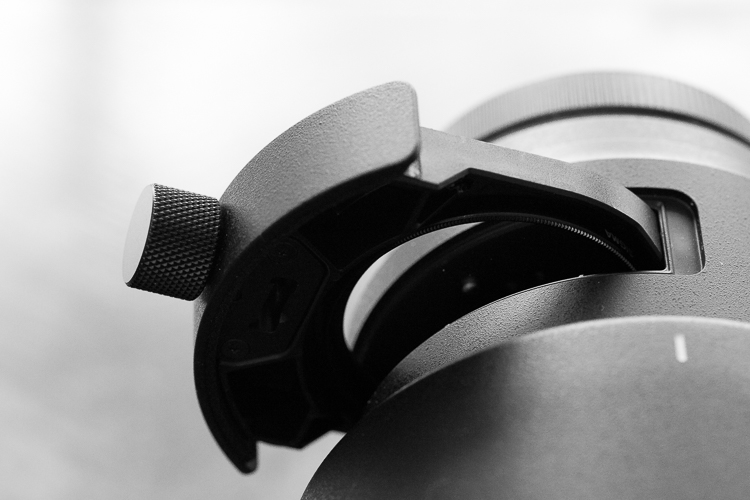
  • Filter: Rear drop-in, 46mm.
  • Mount: Available for Canon, Nikon, and Sigma
  • Recommended uses: Nature, wildlife, sports and action
  • Price: $ 5999 USD
  • Release date: December 2016, shipping January 2017.

You can read more detailed specifications here.

Shop for the Sigma 500mm F4 for Canon or for Nikon mount at B&H Photo Video.
Sigma 500mm F4 Sport Lens Review 11

Detail of Sigma 500mm drop-in rear filter slot.

Supporting the lens

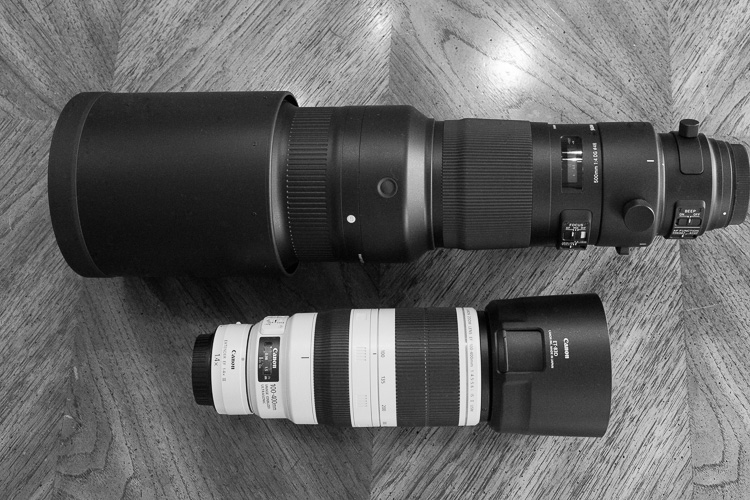
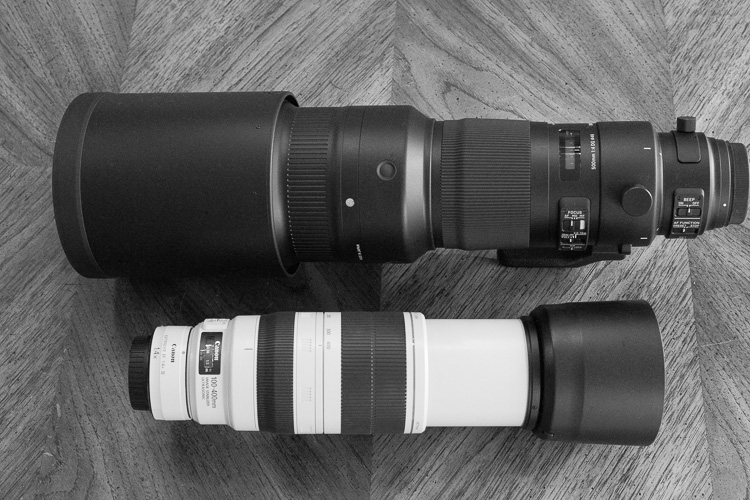
When photographing animals, birds, and wildlife, your typical gear is probably similar to mine. I mostly use the affordable Canon EF 100-400mm f/4.5-5.6L IS II USM lens with either the Canon 7D Mark II or Canon 5D Mark III. If I’m a bit further from my subject, I add a Canon Extender EF 1.4X III. Normally I shoot handheld.
Sigma 500mm F4 Sport Lens Review 9

Comparison of my 100-400mm lens with the Sigma 500mm F4.
Sigma 500mm F4 Sport Lens Review 10

Comparison of my extended 100-400mm with the Sigma 500mm F4.

The Sigma 500mm lens with my Canon 5D Mark III (which also has an L-bracket on it) weighed approximately 10 pounds. That’s about three pounds more than my typical gear. It initially seemed possible to hand hold but fatigue and a resulting loss of sharpness set in quickly. My solution was to use a quick release plate to attach the foot of the Sigma 500mm F4 DG HSM OS Sport lens to my heavy-duty Feisol monopod with a Jobu gimbal head.

This combination supported the weight of the lens/camera combination while allowing me to position the lens exactly where I wanted it. It wasn’t as flexible as hand holding, but far more so than using a tripod.
Sigma 500mm F4 Sport Lens Review 6

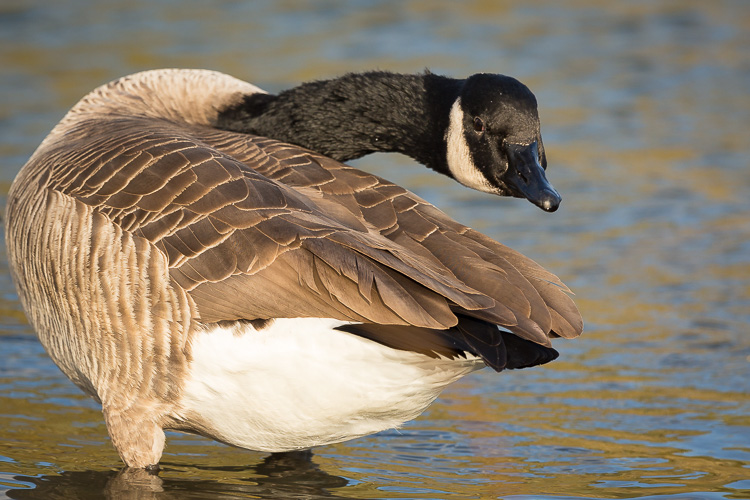
Backward glancing goose, Chicago Botanic Garden, Glencoe, IL
Canon 5DIII, Sigma 500mm F4, ISO 400, 1/1000th, f/6.7, monopod with a gimbal head.

Using support, I was able to shoot for a lot longer without fatigue – and without the shaky shots that come from fatigued hands. I also found the gimbal/monopod combination very portable and easy to maneuver when using this lens.

I would recommend using a sturdy tripod (rather than a monopod) to anyone setting up in a blind, with the intention of waiting for wildlife to approach a known watering hole or feeding spot. Over time, balancing this lens and camera combination on a monopod did take its toll on my shoulders. You wouldn’t want to miss a shot that you’d been waiting hours for, because your body was too fatigued from supporting your gear on a monopod, so use a tripod in that situation.
Sigma 500mm F4 Sport Lens Review 14

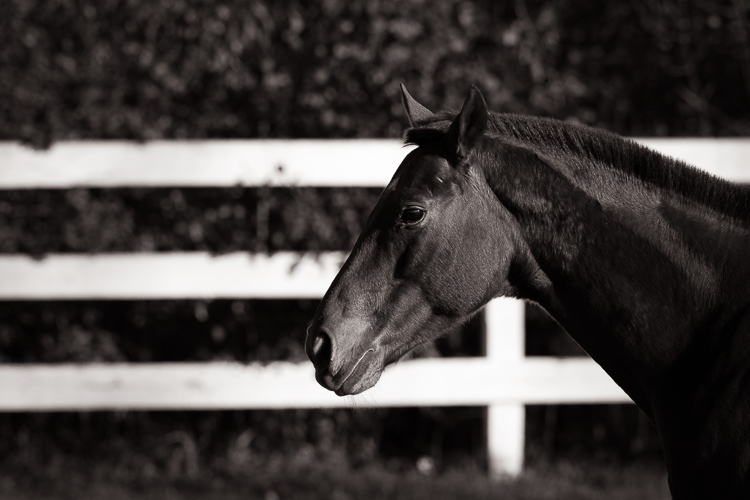
Horse profile with fence, Somewhere in Suburbia, IL
Canon 5DIII, Sigma 500mm F4, ISO 500, 1/1000th, f/8, monopod with a gimbal head.
Sigma 500mm F4 Sport Lens Review 15

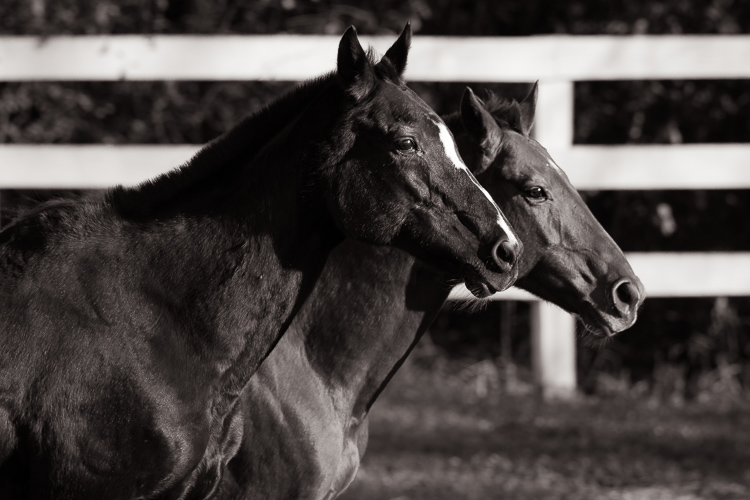
Profile of two horses with fence, Somewhere in Suburbia, IL
Canon 5DIII, Sigma 500mm F4, ISO 500, 1/500th, f/8, monopod with a gimbal head.

Sigma 500mm F4 Sport Lens Review 17

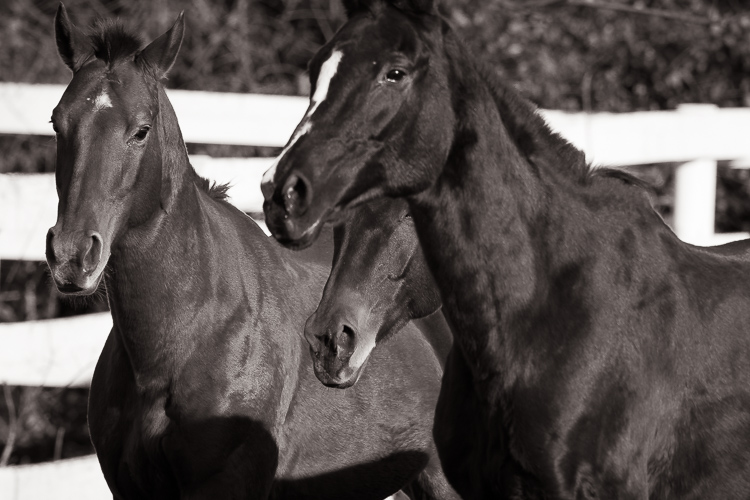
Three “guilty” horses II, Somewhere in Suburbia, IL
Canon 5DIII, Sigma 500mm F4, ISO 500, 1/500th, f/8, monopod with a gimbal head.
Performance in adverse weather

Illinois in the fall is mainly cool. It’s rainy sometimes but more dry than humid. It is also often very windy. I did not have a chance to test the Sigma 500mm F4 DG HSM OS Sport lens in rainy conditions but it shot flawlessly in the cold (the coldest temperature tested was about 30 degrees Fahrenheit, -1 celsius). Wind was more of a factor because of the large profile of the lens. Some gusts would really grab it and that movement caused a loss of sharpness.

Of course, this isn’t an issue specific to this lens – any larger, longer focal length lens will be affected by gusty winds. Solutions would be to shoot in a more protected area, to use higher-than-normal shutter speeds, or to wait for a less windy day to shoot (which is what I would have done if I wasn’t reviewing the lens in a limited timed frame).
Sigma 500mm F4 Sport Lens Review 8

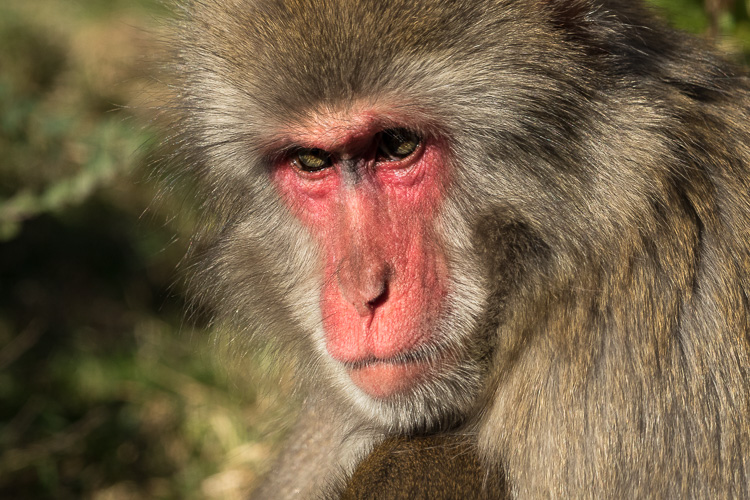
Japanese Macaque (Snow Monkey), Lincoln Park Zoo, Chicago, IL
Canon 7DII, Sigma 500mm F4, ISO 800, 1/100th, f/10, monopod with a gimbal head.

Autofocus performance

The autofocus on the Sigma 500mm F4 DG HSM OS Sport lens is flawless.

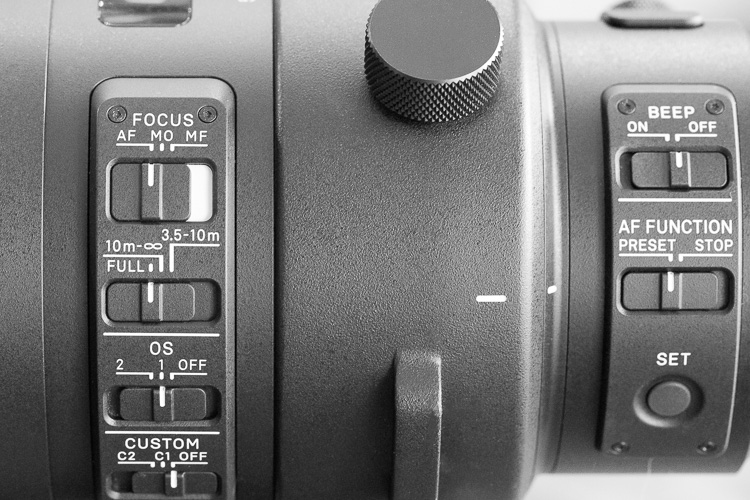
First, you can turn the annoying autofocus beep off with a simple switch right on the barrel of the lens. Turning the autofocus beep off is essential when photographing wildlife since the noise can make your subjects anxious. Thumbs up to Sigma for putting this feature in such an accessible location.
Sigma 500mm F4 Sport Lens Review 13

Detail of Sigma 500mm F4 option switches.

There are also settings for autofocus, manual focus, and manual override. The point of the manual override mode is to have the lens in auto but be able to easily switch it into manual by grabbing the focusing ring. Because I could manually override the autofocus at any time, even when the lens was in auto mode, that’s the mode I preferred to use.

Stabilization

I tested the Sigma 500mm F4 DG HSM OS Sport lens with and without the stabilization turned on. There are two options; OS1 for handheld photography, and OS2 for panning and tracking. While using my monopod and gimbal head, I didn’t see a noticeable difference in sharpness between OS1 and OS2. There was, however, a noticeable difference in sharpness when OS was turned to the off position. Ultimately I switched it to OS1 and left it there.

More convenience at your fingertips

In addition to the stabilization, beep, and autofocus options there is a “focus limiter.” This switch allows you to choose within which range you need the lens to focus. For example, if you know you aren’t focusing on anything close to you, you can set the lens to focus only from 10 meters to infinity. Setting this limiter allows the lens to focus a smidge faster and that gives you a better chance of sharply capturing fleeting moments.

My favorite feature
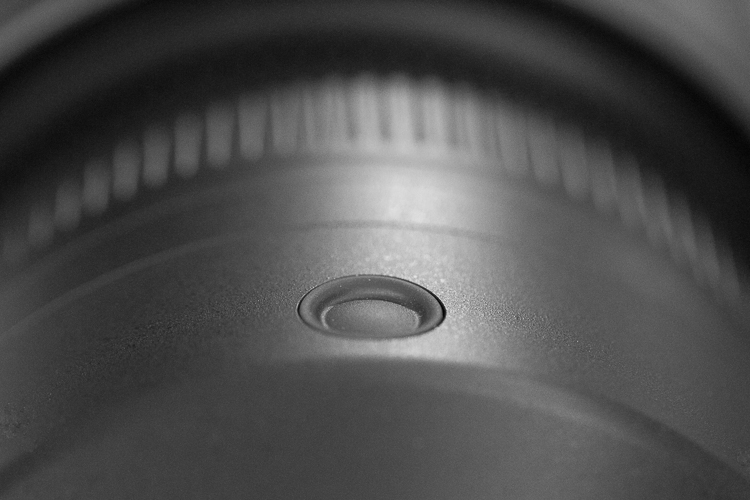
Sigma 500mm F4 Sport Lens Review 12

Detail of the Sigma 500mm F4 Recall Button.

Perhaps my favorite feature is the group of four rubber buttons circling the front of the lens.

To use them, find a location you want to have as a primary focusing point, hold down one of the buttons and hit the set button on the lens barrel. This action programs the lens to focus on the specific point you selected. The focus lock on that point is based on distance so if you move, you need to reset your buttons.

If you are stationary, sitting in a blind photographing birds or wild animals, this is an amazing feature. You can essentially compose four different shots in four different locations by assigning one of these buttons to each location. When a bird lands in one of your four locations, press the button for that focus point, press the shutter and grab your shot. I tested this with some of the spunkier zoo inhabitants and it worked like a charm.

Again, the advantage here is that this is a little faster than asking the lens to refocus. That millisecond is a precious advantage when photographing wildlife.
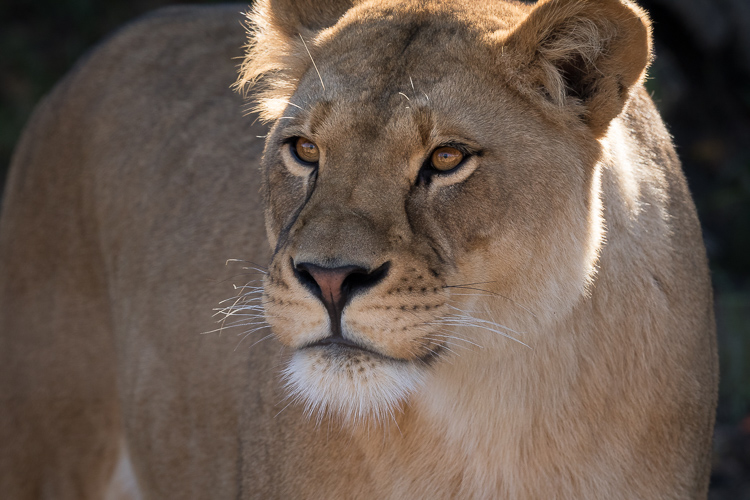
Sigma 500mm F4 Sport Lens Review 4

Approaching lion, Lincoln Park Zoo, Chicago, IL
Canon 7DII, Sigma 500mm F4, ISO 1000, 1/640th, f/8, monopod with a gimbal head.

Image quality

Image quality is a subjective thing but without it, state-of-the-art features and well-placed buttons don’t mean a thing. I was blown away by the images I produced with this lens.

Straight out of camera the colors rendered beautifully. They were soft, nuanced and creamy. Backgrounds blurred softly away creating a clean canvas for wildlife compositions. The separation between elements was also phenomenal. I had a lot of fun experimenting with “layering,” like the series of four monochrome equine images above and the zebra image below.
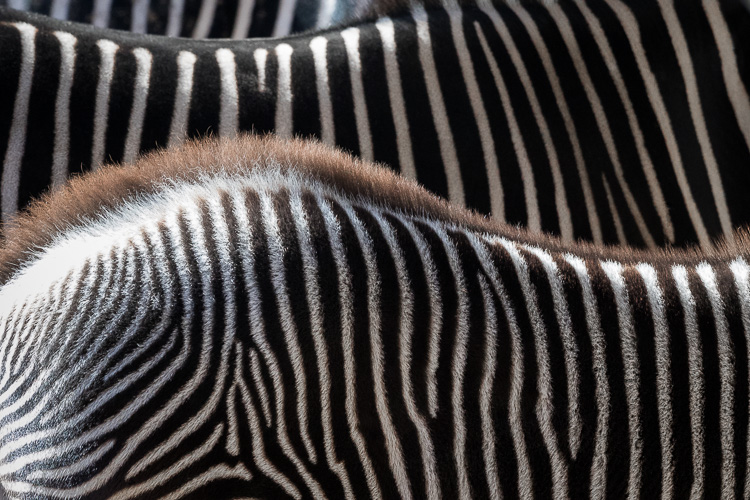
Sigma 500mm F4 Sport Lens Review 3

Layered zebras, Lincoln Park Zoo, Chicago, IL
Canon 7DII, Sigma 500mm F4, ISO 2500, 1/640th, f/8, monopod with a gimbal head.

Images made with this lens are tack sharp. Details of eyes, fur, and feathers are crisp and well-structured. There is no visible distortion and only very minimal vignetting. For wildlife images, I prefer the  range of f/8 to f/11 but I didn’t find any unusable apertures. I could have happily shot at f/4 if the circumstance called for it.

Because I was so happy with the quality, all of the wildlife and bird images included in this review were very minimally processed in Lightroom CC. I sharpened the RAW files, adjusted the white balance, and made a few targeted adjustments to enhance details.

Transporting and carrying the lens

While the weight and length of Sigma’s 500mm F4 lens aren’t unusual for this lens category (the Canon version is almost exactly the same weight and dimensions, and also $ 3000 more!) it is a factor when using it. First, you need to be careful about how you carry a large lens like this to prevent damaging your camera’s lens mount. During a typical shoot you might normally hold your camera by its grip, and let the weight of the lens hang off of the camera body. With a lens this large, that isn’t recommended. Instead, make it a habit of holding onto a lens of this size by the foot, and support the camera’s weight with your other hand. You can also cradle the lens like a baby, which I did often (I didn’t sing it any lullabies, though).

You also need to consider carefully the logistics of hiking to your destination with such a large lens. Investing in a special large lens backpack like this one might be a solution for ease of carrying. Lastly, if you have weight and bag restrictions when you travel, you’ll have to find a workaround for that.
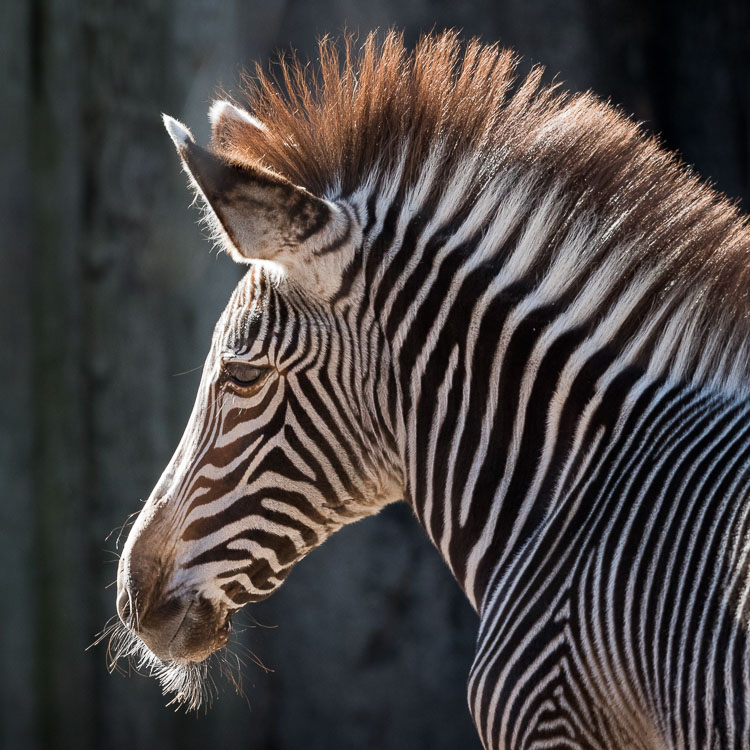
Sigma-500mm-F4-Sport-Lens-Review-2.jpg

Baby zebra portrait, Lincoln Park Zoo, Chicago, IL Canon 7DII, Sigma 500mm F4, ISO 1600, 1/640th, f/8, monopod with a gimbal head.
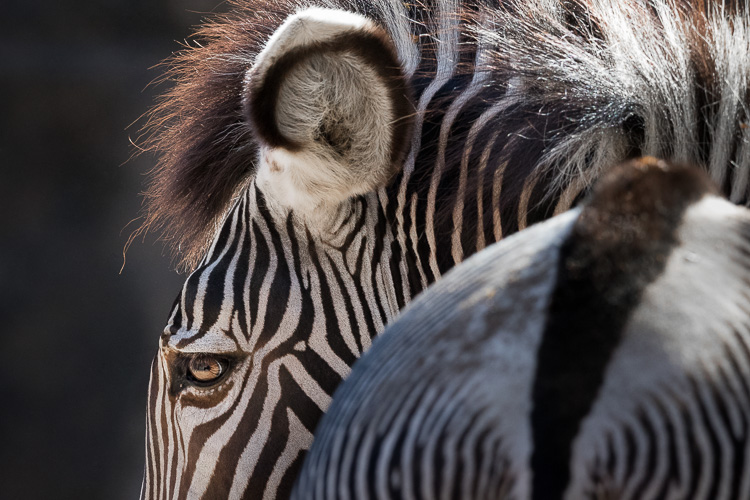
Sigma 500mm F4 Sport Lens Review 1

Zebra with turned head, Lincoln Park Zoo, Chicago, IL
Canon 7DII, Sigma 500mm F4, ISO 2000, 1/640th, f/8, monopod with a gimbal head.

Bottom line

This lens performed very well for me. Images were sharp and overall quality was excellent. For me, because I am often hiking (or recently, biking!) to locate and then keep up with very mobile herds of wild horses, the size and weight of the lens were a bit difficult to manage. Horses are also unpredictable and I often need a shorter focal length to capture all of their behaviors as their curiosity overcomes them and they start to approach me.

If you’re like me, I’d recommend the Canon 100-400mm I mentioned earlier in this review. For an affordable option with an even longer focal length, try Sigma’s own 150-600mm that weighs in at around 4 pounds for under $ 1000.

I would recommend the Sigma 500mm F4 DG HSM OS Sport lens for a birder, or any type of wildlife photographer that stations herself in a blind, and waits for the animals to come into view. If you’re that photographer, sign up at B&H to be notified when this lens will ship (here for Canon mount, or click here for Nikon) to ensure you get one of the first copies. You won’t be disappointed.

googletag.cmd.push(function() {
tablet_slots.push( googletag.defineSlot( “/1005424/_dPSv4_tab-all-article-bottom_(300×250)”, [300, 250], “pb-ad-78623” ).addService( googletag.pubads() ) ); } );

googletag.cmd.push(function() {
mobile_slots.push( googletag.defineSlot( “/1005424/_dPSv4_mob-all-article-bottom_(300×250)”, [300, 250], “pb-ad-78158” ).addService( googletag.pubads() ) ); } );

The post Review of the New Sigma 500mm F4 DG HSM OS Sport Lens by Lara Joy Brynildssen appeared first on Digital Photography School.

Digital Photography School

 
Comments Off on Review of the New Sigma 500mm F4 DG HSM OS Sport Lens

Posted in Photography


The Pros and Cons of Black and White Versus Color for Street and Travel Photography

10 Jan

The question of whether to shoot street and travel photos in black or white or color is an eternal one that isn’t going to go away. But one of the interesting things about digital photography is that it lets you decide whether to process a photo in black and white or color after the photo has been taken. Unlike film photography, there’s no need to commit to one or the other until you open the photo in Lightroom.

The Pros and Cons of Black & White Versus Color for Street and Travel PhotographyBut is that a mistake? I think it is because black and white photography and color photography are two different mediums. If you are working in color, then you need to pay attention to the colors in the scene and how to use them to create an interesting composition. But in black and white, you need to pay more attention to textures, contrasts, and shapes in order to create a strong composition.
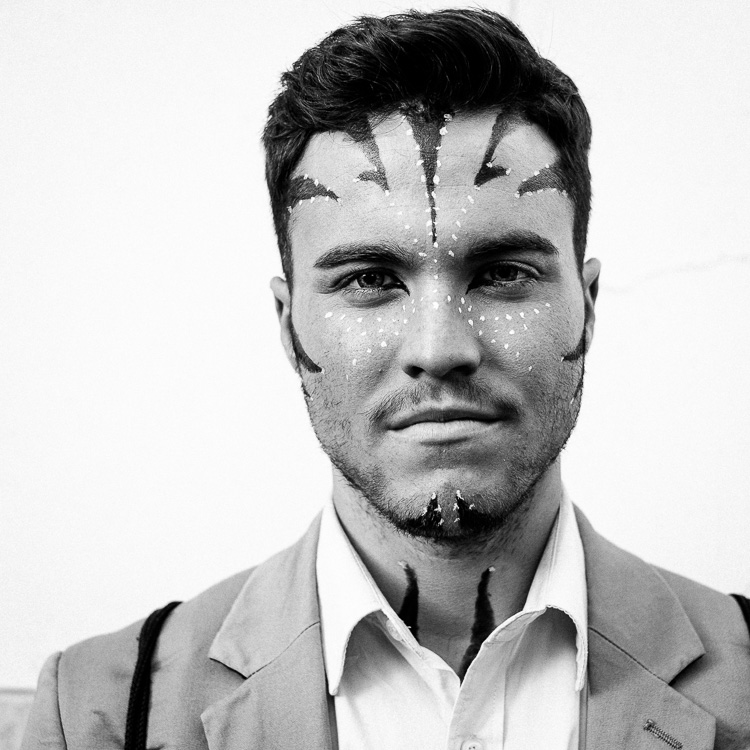
 

That’s on top of the task of capturing the expressive moments that the best street and travel photos reveal.

There’s a lot to think about, and as black and white and color photography require different mindsets, it’s a good idea to make the decision about which you are going to shoot before you press the shutter button.

Having said that, it is also helpful to think about the following factors when you are processing photos. It may be that you were working in color, but realize afterward that a particular image would work very well in black and white. The same considerations apply, except that you have more time to think about it.

3 Reasons for working in black and white

1. To capture character

Many street and travel photographers, street photographers especially, chose to work in black and white. If your aim is to make a candid portrait that captures something of the person’s character or soul, then black and white is an excellent choice. There is something timeless about black and white that helps reveal character.

That’s why I shot the following photo in black and white.

The Pros and Cons of Black & White Versus Color for Street and Travel Photography

2. To simplify the composition

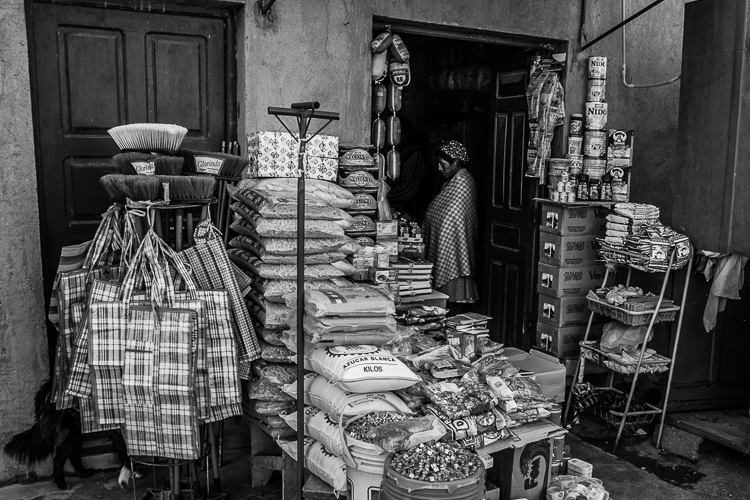
Black and white is a form of simplification. Skilled street photographers learn to create images that are uncluttered and that contain as few distractions as possible. Color can be extremely distracting, and sometimes it’s easier to ignore color completely and work in black and white.

For example, let’s say you make a portrait of somebody on the street, but there is a red poster on a wall behind them. In a color photo, that’s likely to be very distracting. But convert it to black and white and the distraction goes away. The viewer’s attention goes back to the person, where it belongs.

If you are working in an area with lots of potentially distracting colors, working in black and white may be the way to go. For example, this scene in Bolivia was quite colorful, and I felt that black and white removed the distractions of those colors.

The Pros and Cons of Black & White Versus Color for Street and Travel Photography

3. To evoke atmosphere

Color photos can be tremendously evocative, but so can black and white ones. I think it’s because a black and white image leaves something for the imagination, or perhaps because we associate it with photos taken in the past. So, if you are working somewhere with lots of old buildings, then black and white photos can be a tremendously moody way of capturing the atmosphere of that place.

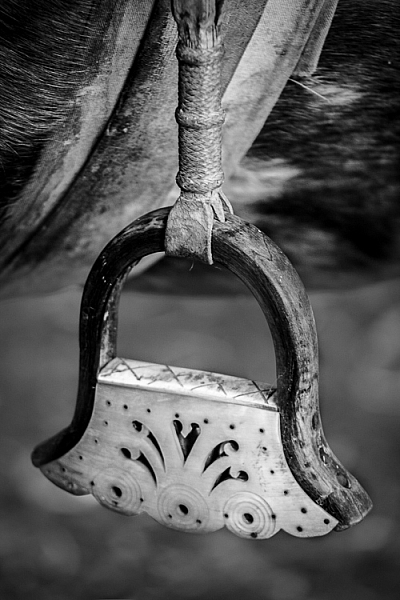
I chose black and white for this photo, taken in the Argentina, because the stirrup is handmade, and looks ancient, as if it were made many years ago.

The Pros and Cons of Black & White Versus Color for Street and Travel Photography

3 Reasons for working in color

Color is very powerful and used wisely it can elevate your images to another level. Yet, if it is not used thoughtfully, it can take away from the impact of your photos.

1. The colors of the location are part of its character

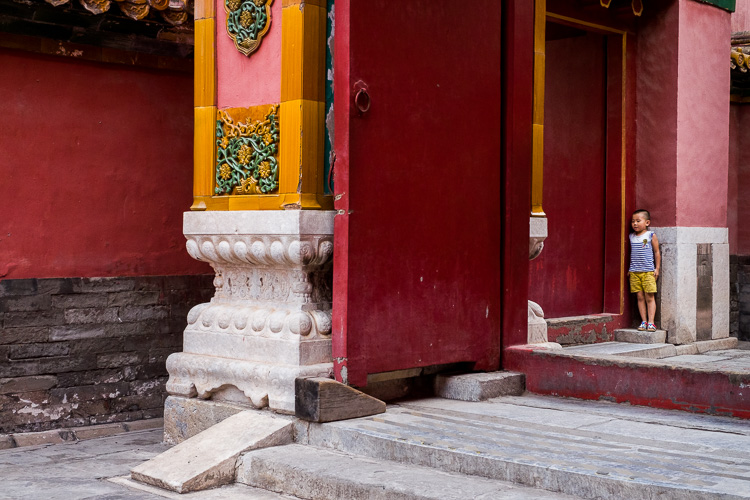
For example, last year I visited Beijing and noticed that red is a very common color in that city. It denotes power and wealth and has an important part in Chinese culture. I realized that it is possible to create a series of interesting photos with red as the dominant color.

For example, this photo (below), taken in the Forbidden City in Beijing, makes use of the striking contrast between the red walls and the yellow tiles (matched by the boy’s shorts).

The Pros and Cons of Black & White Versus Color for Street and Travel Photography

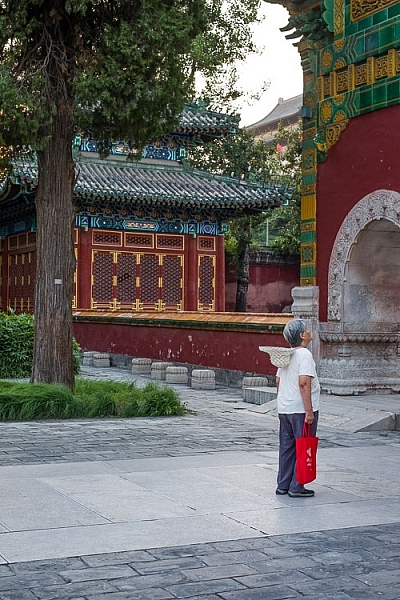
2. The light is beautiful

Color photos are at their strongest when the light is beautiful. This is usually during the golden hour close to sunset, or early morning just after sunrise. The light at these times is warm and golden, and tremendously evocative. This could be a good time to work in color.

I took this photo close to sunset. The light was soft and its warmth helped lift the scene.

The Pros and Cons of Black & White Versus Color for Street and Travel Photography

3. You are shooting at dusk

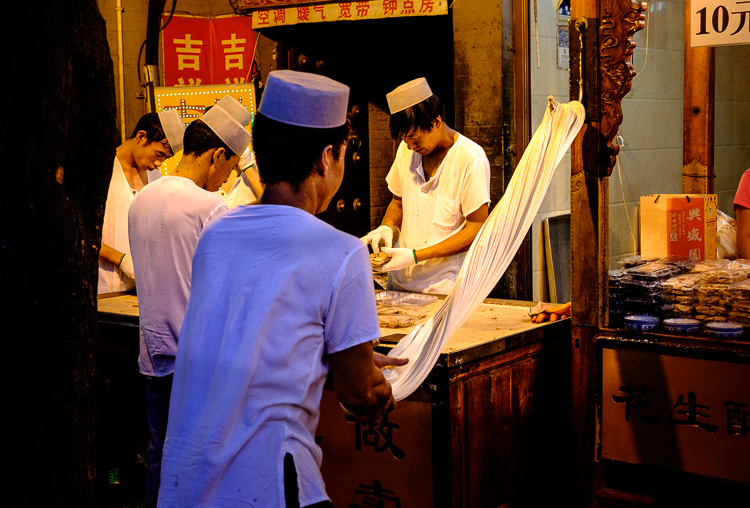
Dusk and early evening are good times to work in color as it gives you the opportunity to work with the natural color contrast between the orange light cast by tungsten light bulbs and the natural blue color of the ambient light.

This photo below was taken in the early evening. The hat and t-shirt of the man in the foreground are colored blue by the ambient light outside, while the rest of the scene is lit by artificial light. I retained the orange color in post-processing to keep the atmosphere.

Color vs black and white in street and travel photography

Commit

The process of deciding to shoot in black and white or color involves assessing the scene and the situation, and deciding which one to use, taking into account the reasons listed in this article and your personal preferences. The key is then to commit to the process. Work the subject and do your best to create the most powerful images possible.

If you’re working in color, think about the colors present in the scene and how you can use them effectively. Your mind will engage and start looking more deeply at the colors around you.

If you’re working in black and white, look for interesting textures, tonal contrast, and shapes. Again, once you commit your mind will start looking for compositions that work well in monochrome.

Your turn

What do you think? Do you prefer to make street and travel photos in black and white or color? Let us know in the comments.


If you enjoyed this article and would like to learn more about street and travel photography then please check out my ebook The Candid Portrait.

googletag.cmd.push(function() {
tablet_slots.push( googletag.defineSlot( “/1005424/_dPSv4_tab-all-article-bottom_(300×250)”, [300, 250], “pb-ad-78623” ).addService( googletag.pubads() ) ); } );

googletag.cmd.push(function() {
mobile_slots.push( googletag.defineSlot( “/1005424/_dPSv4_mob-all-article-bottom_(300×250)”, [300, 250], “pb-ad-78158” ).addService( googletag.pubads() ) ); } );

The post The Pros and Cons of Black and White Versus Color for Street and Travel Photography by Andrew S. Gibson appeared first on Digital Photography School.


Digital Photography School

 
Comments Off on The Pros and Cons of Black and White Versus Color for Street and Travel Photography

Posted in Photography


Meet two nomadic photographers who travel full-time

10 Jan

Plenty of photographers have the words ‘travel more’ at the top of their list of New Year’s resolutions. In fact, when we asked our readers what their photo-related resolutions were, more than a quarter responded that travel was a priority. 

So Elia and Naomi Locardi’s desire to travel as much as possible is a familiar one for a lot of photographers, but they’ve taken an unusual approach: they sold most of their possessions and live on the road as full-time travelers. You can learn more about their ‘location independent’ lifestyle in the SmugMug Films feature above. See a sample of the Locardis’ photography below.

$ (document).ready(function() { SampleGalleryV2({“containerId”:”embeddedSampleGallery_7988223662″,”galleryId”:”7988223662″,”isEmbeddedWidget”:true,”standalone”:false,”selectedImageIndex”:0,”startInCommentsView”:false,”isMobile”:false}) });

What do you think – would you be able to embrace a permanent-address-free lifestyle? Let us know in the comments.

Articles: Digital Photography Review (dpreview.com)

 
Comments Off on Meet two nomadic photographers who travel full-time

Posted in Uncategorized


Best Photos of 2016 by JMG-Galleries Blog Readers

10 Jan
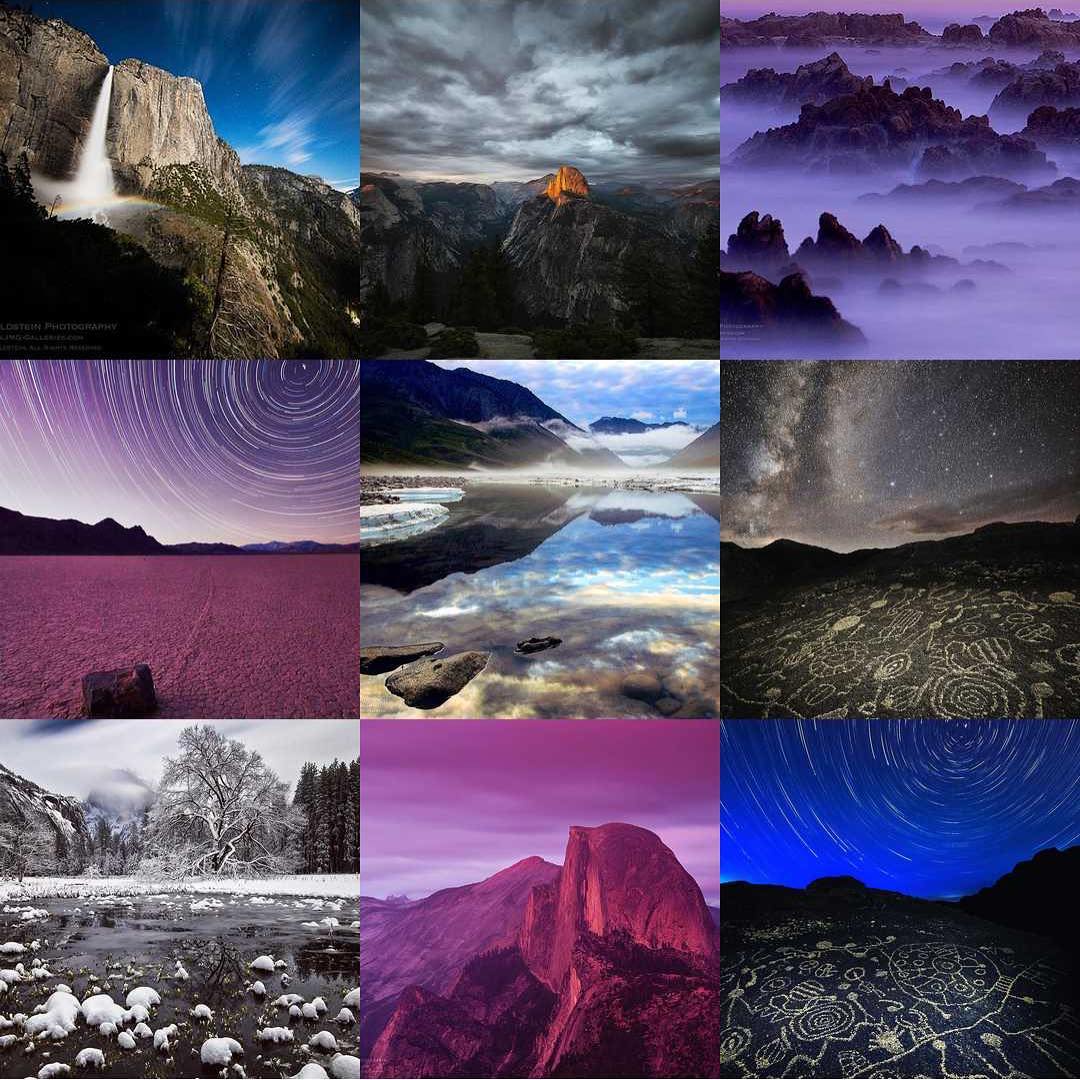
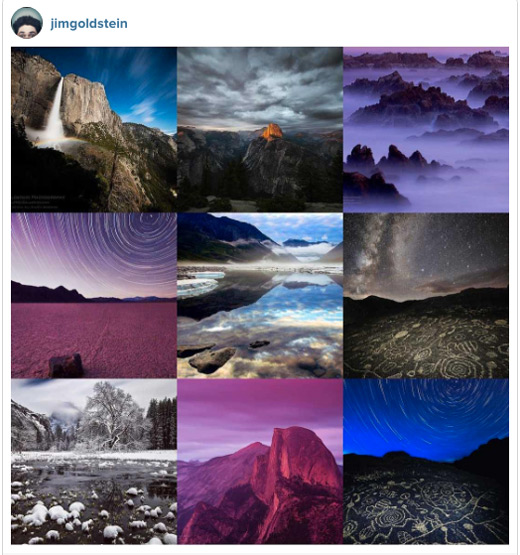
Best Instagram Photos 2016

Best Instagram Photos 2016

What better way to start 2017 than to be creatively inspired. The results of my 10th annual Best of Photos project hopefully will do just that by introducing you to photographers and their work from all over the world. Many of my blog readers are photo enthusiasts and many are seasoned professionals, but the great thing about photography is that no matter what your experience level we all can relate equally in our love for the art of photography and visually exploring. With that in mind I encourage you to reach out to photographers whose work you enjoy to keep sharing & growing as an artist.  I am incredibly thankful that this tradition has been embraced and enjoy seeing how familiar faces have evolved their work & grown over the years.  I hope reviewing your best photos of the year and comparing them to years pasts keeps you inspired and aware of your progress as a photographer.

If you’d like to take part next year and be informed when submissions open for the “Best Photos of 2017? blog project add your name to my mail list. You won’t be spammed. I send out newsletters quite infrequently.

Thank to everyone who took part!  I invite you to visit each link below as I have and introduce yourself to many of the participating photographers.

Best Photos of 2016

  1. Jim M. Goldstein – Best Photos of 2016 by Jim M. Goldstein
  2. Randy Langstraat – My Ten Favorite Photos of 2016
  3. Chris Moore – Exploring Light – 2016: A Year in Review
  4. Denis Balibouse – Denis Balibouse Reuters 2016 Photos
  5. Craig L. Howe – A Thousand Words
  6. Michael Russell – My Top 10 Photos of 2016
  7. J. J. Raia – 2016 Jim Goldstein Project
  8. Harold Davis – Harold Davis Best of 2016
  9. Wendy M. Seagren – Wendy Seagren Best 2016 Blog
  10. Stefan Bäurle – Top 10 Favorites of 2016
  11. Phil Slade – Another Bird Blog
  12. Scott Wyden Kivowitz – Best & Favorite Photographs of 2016
  13. Rick Holliday – Best of 2016
  14. Russ Bishop – Russ Bishop | 2016 – The Year in Pictures
  15. Bill Bean – 2016 Favorites
  16. tim fiddimore – Photos 2016
  17. Rachel Cohen – My Best of 2016
  18. Brian Knott – FMKPhoto – 2016 Year in review
  19. Alexander S. Kunz – 12 Favorite Photos from 2016
  20. Monika Chace – 500px Monika Chace 2016 favs
  21. Martin Quinn – Quinn Images – Best of 2016
  22. Jenni Brehm – Changing Perspectives
  23. QT Luong – Year 2016 in Review: Treasured Lands
  24. Greg A. Lato – latoga photography
  25. Fred Mertz – Fred Mertz Photography
  26. Martijn van der Nat – Best of 2016
  27. Bryan Bzdula – Top 25 of 2016
  28. Joseph Smith – 2016 Year in Review
  29. Khürt Williams – Ten Best Images of 2016
  30. Free Roaming Photography – Twelve Favorite Photos from 2016
  31. Peter Carroll – 2016
  32. Chuq Von Rospach – My Best Photos of the Year for 2016
  33. Gary Crabbe / Enlightened Images – My Favorite Landscape Photos of 2016
  34. Johann A. Briffa – 2016: A Photographic Retrospective
  35. Jao van de Lagemaat – Jao’s photo blog: Most memorable images from 2016
  36. Greg Russell | Alpenglow Images Photography – 2016 year in photos
  37. Richard Murphy – Best of 2016!
  38. Jim Stamates – My favorite images of 2016
  39. Brent Huntley – Photography and Travel
  40. Olivier Du Tre – Best of 2016
  41. Scott Thompson – Scott Shots Photography – My Top 10 Tahoe Area Photos of 2016
  42. Martin Nunez – My 12 best photographs of 2016
  43. Kyle Jones – 2016 Favorites
  44. Rob Tilley – Best of 2016 – My Favorite Images of the Year
  45. Pete Miller – Favorites of 2016
  46. Denise Goldberg – top photos : 2016
  47. Mike Chowla – My Ten Best of Images of 2016
  48. Deb Snelson – Favorite Photos of 2016
  49. Glenn Tunaley – Best of 2016
  50. Clint Losee – Top 10 of 2016 – My 10 Best Landscape and Scenic Photos
  51. Neil Bennett – Best of 2016
  52. Alan Majchrowicz – Photo Highlights 2016
  53. Dotty Molt – Best of 2016 – Every Image has a Story
  54. Björn Göhringer – My Top 14 Photos From 2016
  55. Richard Wong – Favorite Photos of 2016 – Richard Wong
  56. Brian Snyder – 10 Best Photos of 2016
  57. Deborah – My 2016 Favorite Images
  58. Phillip Colla – Natural History Photography – Best Photos Of 2016
  59. Richard Cummings – Fine Art America
  60. Todd Henson – Best Photos of 2016 – Todd Henson Photography
  61. Wendi Kennedy Photography – The 10 Best Moments/Photos of 2016
  62. Naomi Creek – 2016 Top 10
  63. MICHAEL KATZ – Michael Katz Photography
  64. Neil Creek – Neil Creek’s Top 10 Photos 2016
  65. Adrian Klein – Best Photos of 2016
  66. T.M. Schultze – T.M. Schultze Website
  67. Ilias Katsouras – Okrivadas
  68. Kevin Ebi – Living Wilderness: Best of 2016
  69. Kurt Lawson – 10 Favorites of 2016
  70. Caleb Weston – Dubland – Caleb Weston Photography
  71. Thomas Yackley – Yackley Photo
  72. Tim Manske – Beyond The Blue Ridge Favorites of 2016
  73. Patricia Davidson – My Top 10 Favorite Photos of 2016
  74. Jon McCormack – 2016: From Istanbul to California’s Sierra Nevada
  75. Tim Aston – Best of 2016
  76. Werner Priller – Favorites/Best of 2016
  77. Rich Greene – My Faves of 2016
  78. Roland Tuley – My 6 Best of 2016
  79. Derrald Farnsworth-Livingston – Top 10 Favorite Images from 2016 – Journey of Light Photography
  80. Melissa Leady – 45journal-2016 Top 10
  81. William Neill – My Favorite Photographs of 2016
  82. David Hunter – Favorites of 2016
  83. Dennis Wister – 2016 Top Picks @ 500px
  84. Gabor Ruff – Natural History Photography – Highlights from 2016
  85. Zolt Levay – Zolt Levay’s Best of 2016
  86. Steve Levi – LEViiMAGES – blog – 2016 Year in Review
  87. SkyVista Photography by Steve Luther – SkyVista Photography Best of 2016
  88. Doug Wiggers – Top 5 Images of 2016
  89. Franka M Gabler – Franka M. Gabler – Favorite Images from 2016
  90. Tom Whelan – Twelve from 2016
  91. David J Grenier – 2016 Top Twelve Photographs of the Year
  92. Drake Dyck – Wild Drake Photography
  93. Morkel Erasmus – Sixteen Scenes from 2016
  94. Mike Christoferson – 2016 – One Month at a Time
  95. Annika Ruohonen – Annika Ruohonen Photography
  96. Derek Fogg – Year in Review – 2016 – Scotland Bottom to Top
  97. Bryan William Jones – Jonesblog
  98. Alan Dahl – 2016 Favorite Photos
  99. Robin Mayoff – RHM Images
  100. Peter Knott – 2016 Favourites
  101. Jackson Frishman – Favorites of 2016
  102. Earl Robicheaux – Naturesetude Top 10 Images of 2016
  103. Mark Hespenheide – 2016-Favorites
  104. Andrew Thomas – USA National Parks 2016
  105. Vladimir Vozdvizhenskiy – 2016 Top 10
  106. Nick Fitzhardinge – 2016 – a review
  107. John Fujimagari – The Stentorian Image
  108. Larry Millican – The Annual Ten
  109. Mike “Mish” Shedlock – Top 15 Iceland
  110. Carl Donohue – Expeditions Alaska
  111. Carol Schiraldi – Best of 2016 – My Top Images
  112. Catalin – My favourite shots of 2016
  113. Frank Klug – Favorite Photos of 2016
  114. Tony Wu – Favorite Photos of 2016
  115. Josh Meier – Best of 2016
  116. Mark Graf – 2016 – A Year of Leaves
  117. Richard Valenti – Best of 2016
  118. Tori Bateman – Tori:B’s Best of 2016
  119. Milan Hutera – 2016 In Pictures
  120. Malcolm Andrews – The Aerial Horizon
  121. Helly Sellers – What a year!
  122. Dean Foster – My Best Photos of 2016
  123. Ron Niebrugge – My Photo Blog – Niebrugge Images
  124. Navin Sarma – Navin Sarma Photography
  125. Daniel Leu – Favorites 2016
  126. Scott Thomas – Views Infinitum
  127. Scott McGee – Under Pressure Photography
  128. Suzy Walker-Toye – My Best Underwater Photos of 2016
  129. Anne McKinnell – Top 10 Landscape Photos of 2016
  130. David Leland Hyde/Landscape Photography Blogger – Favorite Photographs of 2016
  131. Mike Cleron – 2016 Favorites
  132. Lon Overacker – Lon’s Favorites of 2016
  133. Bill Evans – My Favorite Images of 2016
  134. Rob Weir – Rob Weir Photography
  135. Jim Campbell – Best of 2016
  136. Neil Corman – Ten Images from 2016 by Neil Corman
  137. Duffy Knox – Top 10 of 2016
  138. Dayne Reast – 2016 Highlights
  139. Phyllis Whitman Hunter – Phyllis Whitman Hunter Photography
  140. Sara M. Skinner Photography – My Top 10 Favorites of 2016
  141. Steve Cole – The Last Stands – 9 Saved Places
  142. Sue Shuey – Overall Best of 2016
  143. Bob Blesse – Best Images of 2016
  144. Andrew S. Gibson – Creative Exercise: Your Best Ten Images From 2016
  145. James Bruce Schwabach – “Portfolio of Images From White Sands
  146. David Maurer – 2016 Best Photos
  147. Holly Davison – Holly Davison’s Best of 2016
  148. Maxim Nekrasov – Creationings
  149. Sarah Marino – Nature Photo Guides
  150. Ron Coscorrosa – Nature Photo Guides
  151. Paul Rosenblum – 2016 Best 10 Underwater
  152. Dave Wilson – Best of 2016
  153. Colleen Miniuk-Sperry – CMS Photography – Colleen Miniuk-Sperry Photography: Favorite Photos From 2016
  154. Brenda Ahearn – 2016 Favorites
  155. Bryn Tassell – Bryn Tassell Favourites of 2016
  156. Harold Klein – Best of 2016
  157. Robin Black – My 10 Best of 2016
  158. Adam Elliott – My “Best” Photos of 2016
  159. Tommy Lim Kang Wen – Milky Way and Aurora Australis in Lake Tekapo
  160. Photography by Vidya – Best of 2016 by Vidya Narasimhan
  161. Navin Sarma – Navin Sarma Photography
  162. Greg Clure – Best of 2016
  163. Michael Frye – My Top Photographs of 2016
  164. Pat Ulrich – Favorite Photographs of 2016
  165. Stephen L. Kapp – Top 10 Images of 2016
  166. G Dan Mitchell – 2016 Favorite Photographs
  167. Pablo SÌÁnchez – Pablo SÌÁnchez Landscape photography
  168. El Paisaje Perfecto – El Paisaje Perfecto
  169. Deirdre Ryan – My Personal Favorite Images Of 2016

Have a great 2017!

The post Best Photos of 2016 by JMG-Galleries Blog Readers appeared first on JMG-Galleries – Landscape, Nature & Travel Photography.


JMG-Galleries – Landscape, Nature & Travel Photography

 
Comments Off on Best Photos of 2016 by JMG-Galleries Blog Readers

Posted in Equipment


CES 2017 show highlights: from the weird to the (kind of) wonderful

10 Jan

CES 2017: Show highlights

This year’s consumer electronics extravaganza in Las Vegas was the usual combination of the weird and wonderful, showcasing everything from a fish-finding underwater drone to Panasonic’s flagship DC-GH5. DPReview was there – click through the slides above to see what we found. 

CES 2017: Show highlights

One of the first booths we stopped at was Canon’s. Here, the company was showing off a range of technologies, including the 250MP APS-H format sensor that they’ve been wheeling out at various trade shows over the past year or so. Here you can see an 800mm lens attached to the sensor housing.

CES 2017: Show highlights

Just around the corner is another technology demo, but this one is a shipping product. The ME20F-SH was announced back in 2015, and made headlines for its ability to capture HD footage at equivalent ISO sensitivities up to 4 million, but it is now in the hands of filmmakers. At CES, Canon was showing off full-color sample footage of the African savannah shot in collaboration with a National Geographic filmcrew, and captured in almost complete darkness.

CES 2017: Show highlights

Back to consumer digital imaging, and Canon was also showcasing its newest compact camera, the PowerShot G9 X Mark II. Externally almost indistinguishable from its predeCESsor, the pocketable G9 X Mark II is much faster, especially in Raw mode. 

CES 2017: Show highlights

Meanwhile, just across the hall, Nikon was entertaining attendees with the return of ‘Project Helix’. Now featuring 72 simultaneously-triggered Nikon D750 full-frame DSLRs and one KeyMission 360, Helix creates an interactive 360-degree image of whoever steps into the ring.

CES 2017: Show highlights

Here are some of the 72 Nikon D750s, and their companion 14-24mm F2.8 lenses. That’s roughly a quarter of a million dollars’ worth of gear, right there.

CES 2017: Show highlights

Considerably less expensive is the new Nikon D5600, launched last year in Europe and Asia, and officially announced in the USA at this year’s CES. Boasting a 24MP sensor, 39-point AF system an redesigned body, the D5600 is an attractive beginners’ DSLR.

CES 2017: Show highlights

Over to the Ricoh booth, where this show floor demo Pentax K-1 has had its magnesium alloy swapped for clear polycarbonate, to show off the camera’s inner workings. 

CES 2017: Show highlights

Also on the Ricoh booth was an interesting technology demo showing what happens when the Theta 360 is hooked up to a Pentax K-1. While the 360 takes care of a low-resolution 360-degree image, the K-1 can capture a high-resolution image of a portion of the scene. The resulting multi-image file can be explored in the same way as a conventional Theta 360-image, with the addition of higher-resolution inserts.

Currently only a technology demonstration, We can imagine this being particularly useful for businesses, and real-estate photography.

CES 2017: Show highlights

This is Kodak’s Super 8 video camera, which offers a hybrid of very old technology (super 8 film) with modern digital display and audio. The Super 8 camera features a digital live view display (albeit not a very good one) and digital audio recording, in a stylish body.

CES 2017: Show highlights

Much more modern is Panasonic’s Lumix DC-GH5. Definitely the highest-profile camera release of CES 2017, the GH5 is a flagship Micro Four Thirds 4K stills/video camera which also incorporates a ‘6K photo’ mode and a range of advanced stills photography features. 

CES 2017: Show highlights

Not exactly new, but a new look at least – this is the just-unveiled ‘Graphite’ edition of Fujifilm’s X-Pro2, shipping soon with its matching 23mm F2 lens. 

CES 2017: Show highlights

Ambarella may not be a brand name that rolls off your tongue, but chances are pretty good you own their products since the company makes the cameras and SOCs that power some of the industry’s most popular devices. We were really impressed by the Yi 4K action cam, which uses the company’s new H2 SOC to deliver stunning 4K/60p video.

CES 2017: Show highlights

What happens when you arrange 128 Canon Rebels in a sphere? If you’re Solidiphy, you sync them up, stitch the photos together, and send the results to a 3D printer. We gave it a try and will report back when we receive our Barney and Dale action figures.

CES 2017: Show highlights

Along with vinyl records, slide film, and 1980s video game consoles, instant prints are doing their part to drive the retro revolution. The Polaroid Pop brings back the classic 3.5 x 4.25″ instant print format using ZINK Zero Ink printing technology. A representative told us the Pop should be available ‘later in 2017.’

CES 2017: Show highlights

Speaking of retro… If you’ve been saying to yourself “Gee whiz, I sure do wish I had an old fashioned console TV on which to view my photos,” your day has arrived thanks to Broksonic. It’s actually a flat screen mounted in a console, but the analog spirit is there. If we get a review unit we’ll order up a bunch of frozen TV dinners to give it a spin.

CES 2017: Show highlights

Sony didn’t have any new gear to show off at CES 2017, but this tech was keeping himself busy repairing a6000-series bodies as part of Sony’s Pro Support program.

CES 2017: Show highlights

Touch it. Touch the future.   

CES 2017: Show highlights

WE TAKE IT BACK – WE DON’T LIKE THE FUTURE!

CES 2017: Show highlights

If there was one product class that dominated this year’s CES, it was drones. From the very big…

CES 2017: Show highlights

…to the very small…

CES 2017: Show highlights

…to the downright silly.

CES 2017: Show highlights

One of the most popular products of the show was a drone that doesn’t even fly. The PowerVision PowerRay is an underwater drone with integrated 4K camera – perfect for filming your tropical adventures. (Note: mermaid not included.)

CES 2017: Show highlights

Not do be outdone by their own underwater drone, PowerVision also introduced the PowerEgg. It’s a drone. Shaped like an egg. Because… eggs. Right? After all, who hasn’t said to themselves, “I love drones, I just wish they were shaped like eggs?”

CES 2017: Show highlights

And yet, it’s strangely cool and fun to fly!

And to think, we put a man on the moon… 

CES 2017: Show highlights

Speaking of which, NASA was raising the average IQ of its fellow exhibitors just a short distance away, with a couple of small robots in tow. This one, called ‘Rovey’ (we’re not making that up) is a demonstrator used in schools and colleges. Loosely modeled on the Curiosity Rover, Rovey was obviously feeling the chill a little, over in the South Hall. Unfortunately, Rovey was nowhere near the BB-8 droid we saw rolling around, so chances for a robot romance were slim.

CES 2017: Show highlights

If VR is your thing, this Drone Volt aerial machine should be on your radar. It combines video from two separate GoPro Omni rigs (a total of 12 cameras) for a high quality VR experience that stitches the drone right out of the picture. Just don’t crash it…

CES 2017: Show highlights

In the future, all cars will look like this. Apparently.

CES 2017: Show highlights

Ride it. Ride the future. 

Articles: Digital Photography Review (dpreview.com)

 
Comments Off on CES 2017 show highlights: from the weird to the (kind of) wonderful

Posted in Uncategorized


3 Reasons to do Headshots with Natural Light

10 Jan

I love natural light. I’ve probably said this before, but I prefer it to using studio lights. There’s something soft and beautiful about using the light generated by Mother Nature that makes it perfect for every occasion. I use natural light every chance I get. I even use it for my headshot sessions. You may be surprised by this but I’ve got some great reasons why. Read on to find out more.

Shoot Headshots with Natural Light

I have a 9-foot window in my studio. It’s perfect for natural light photography.

#1 – Natural light flatters every skin tone

From pale milk-white skin to dark chocolate brown, natural light makes everyone look beautiful. No matter the skin tone or the facial features natural light enhances everyone. Now I’m not talking about direct sunlight at midday. That type of light is too harsh. It washes out skin tones and creates harsh shadows. Set up your shoot in open shade. Use the side of a building or under a tree. You can even set up a canopy and shoot underneath. You will love the results, just be creative in how you use it.

Shoot Headshots with Natural Light

While the lighting behind this young woman isn’t natural. The light on her face comes from my 9-foot window. She used this shot in her modeling portfolio.

#2 – Natural light is cheap

If you are just starting out as a photographer, natural light doesn’t cost a whole lot to use. You can create beautiful head shots without fancy studio equipment. It’s a way to get your foot in the door. You might also be unique in your area. Think about branding and how being a natural light photographer might be a way to capture attention from potential clients. You could be the trendy alternative to the typical studio headshot.

Shoot Headshots with Natural Light

Taken outdoors against an old building. My client was looking for relaxed looking headshots for her LinkedIn profile.

#3 – Shooting outdoors is less intimidating

Think about all those giant light stands and softboxes. For someone who may be a little nervous about having their portrait taken, shooting outdoors can take off some of the pressure.

I find that generally, clients who are self-conscious or uncomfortable in front of the camera will relax more easily when I take them outdoors for a session. We chat for a while and generally need to walk a short distance to a location. It gives me a chance to take some of the pressure off them. The client starts to feel more comfortable and the overall look of the headshot is much better.
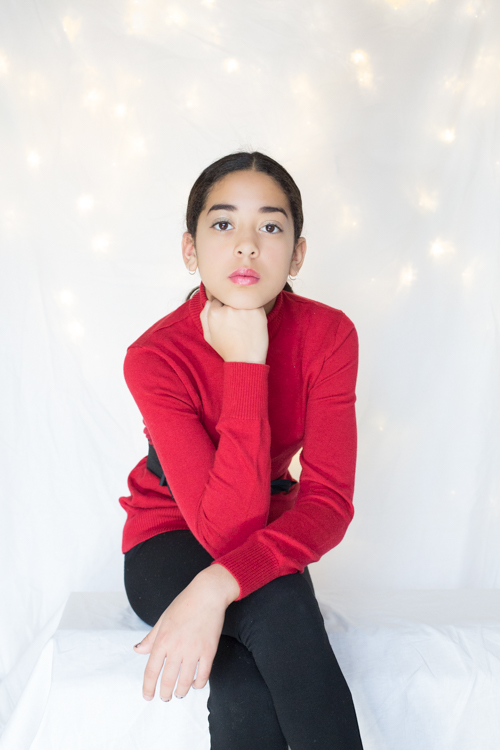

Shoot Headshots with Natural Light

While not your classic headshot pose, my client was relaxed and comfortable. She looks confident.

Professionals need to exude confidence in their images. They won’t be successful in their business if they look nervous or uncomfortable in their marketing materials.

As photographers, we have to visually communicate our client’s abilities

Remember headshots are all about creating an image. We are a part of the branding process for a company or a freelancer. You are helping to promote an actor or build a brand for a home stager. Your images should help attract potential business. It’s your job to tell people all about your client and their amazing abilities.

Shoot Headshots with Natural Light

As a real estate agent my client wanted a photo that associated her with the local area.

You can do this by taking beautiful and bright images that promote your client as a capable and highly skilled professional. Try using natural light in your headshot jobs. I think you will be pleased with the results. Also, remember that if you are offering a service that seems unique from all the others you can think about charging a little more for your highly specialized product.

Natural light is a great tool. I highly recommend utilizing it whenever you can. Please share your natural light headshots or any questions you may have, in the comments section below.

portrait_headshot

googletag.cmd.push(function() {
tablet_slots.push( googletag.defineSlot( “/1005424/_dPSv4_tab-all-article-bottom_(300×250)”, [300, 250], “pb-ad-78623” ).addService( googletag.pubads() ) ); } );

googletag.cmd.push(function() {
mobile_slots.push( googletag.defineSlot( “/1005424/_dPSv4_mob-all-article-bottom_(300×250)”, [300, 250], “pb-ad-78158” ).addService( googletag.pubads() ) ); } );

The post 3 Reasons to do Headshots with Natural Light by Erin Fitzgibbon appeared first on Digital Photography School.


Digital Photography School

 
Comments Off on 3 Reasons to do Headshots with Natural Light

Posted in Photography


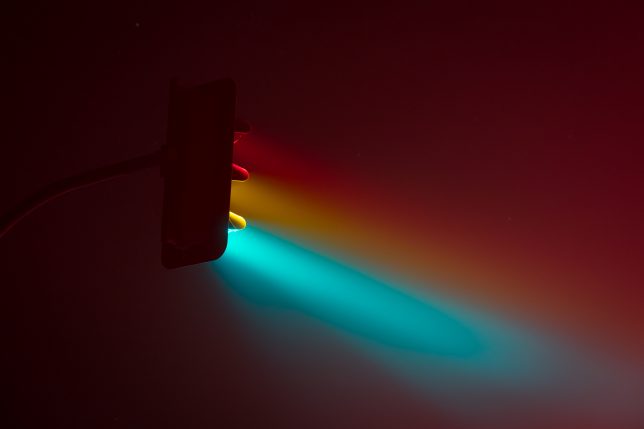
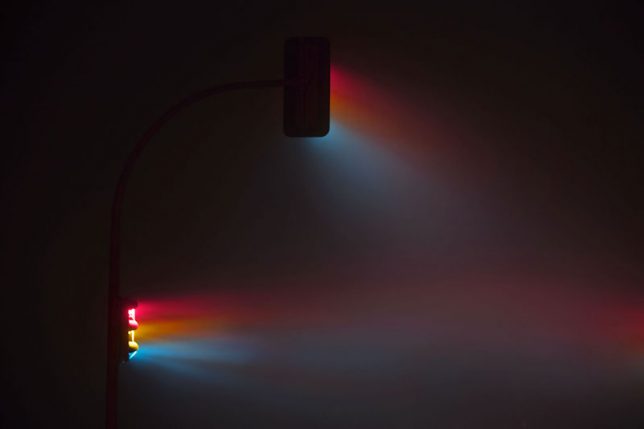
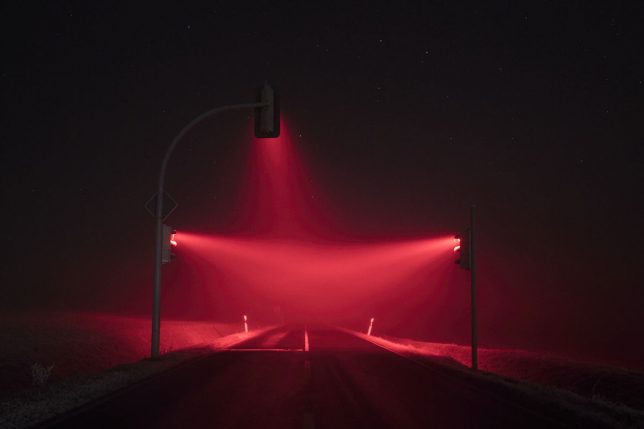
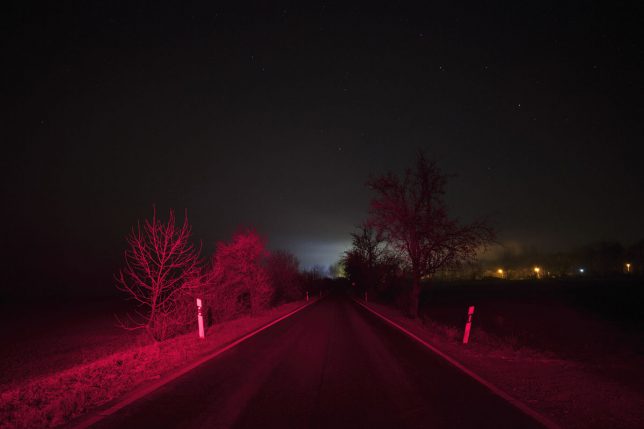
Street Light Art: Traffic Signals Emit Surreal Rainbow Streams in Hazy City

10 Jan

[ By SA Rogers in Art & Photography & Video. ]

lucas-zimmermann-traffic-lights-5

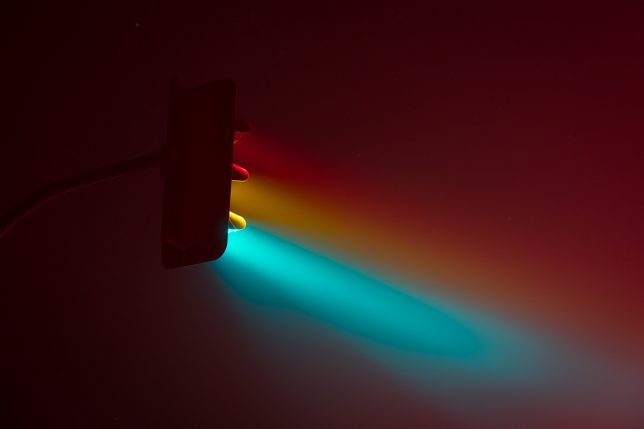
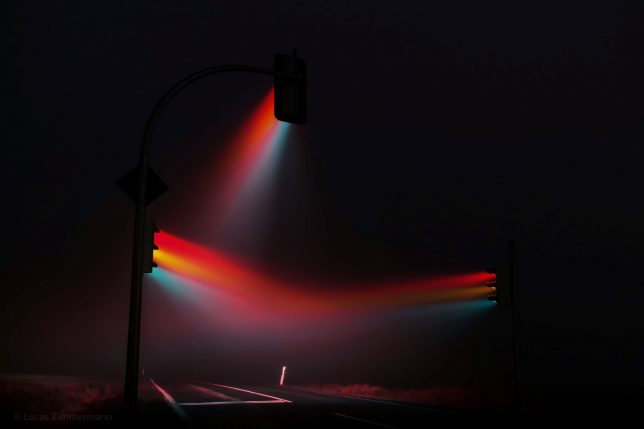
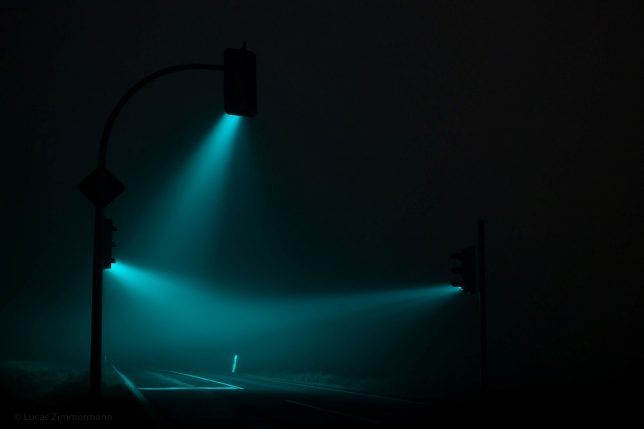
It’s almost a cliche at this point to highlight the beauty that can be found in everyday items, like that scene in the movie ‘American Beauty’ where Wes Bentley and Thora Birch stare at a plastic bag waving around on a sidewalk like it’s the Mona Lisa. But sometimes, it just can’t be helped. Have you ever gazed at a traffic light and marveled at the accidental art it was producing? You’re about to.

traffic-lights-eries-3

lucas-zimmerman-traffic-lights

lucas-zimmerman-traffic-lights-2

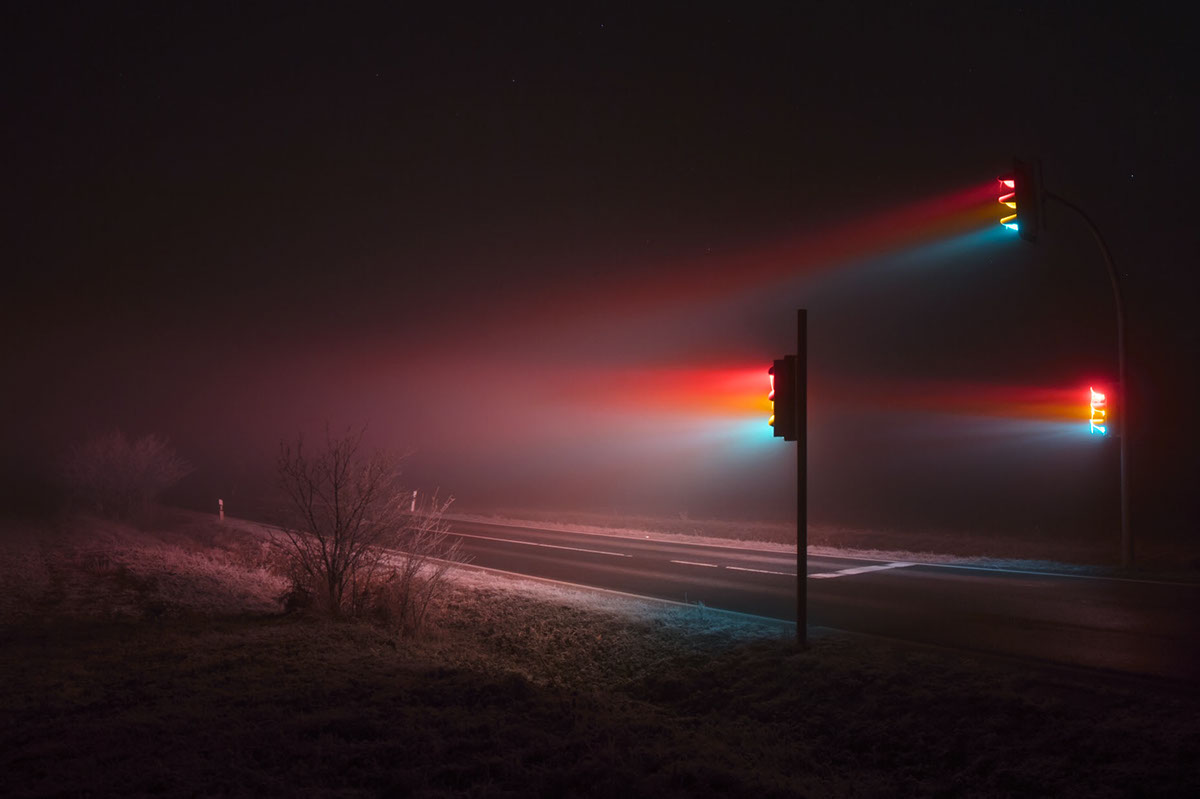
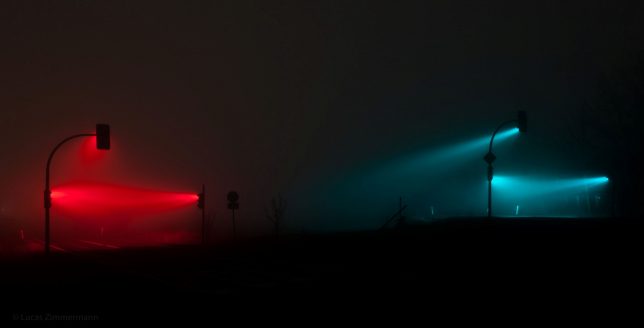
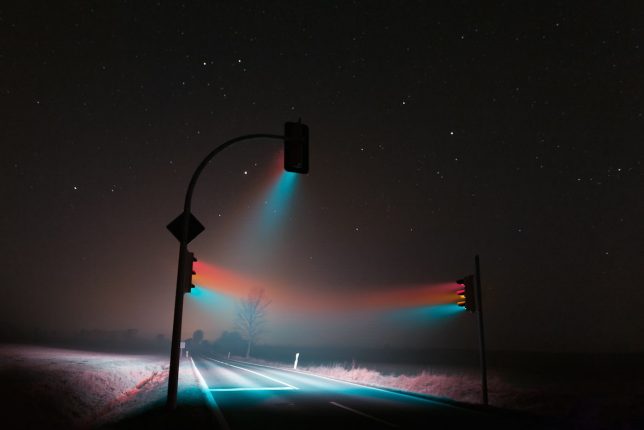
Being such a humble and unremarkable object, installed at countless intersections in countless cities, the traffic signal is an unlikely subject of the internet’s flighty attentions, but the magic here is really in photographer Lucas Zimmermann’s vision – and in the fog that clings to the town of Weimar, Germany.

lucas-zimmerman-traffic-lights-3

lucas-zimmerman-traffic-lights-6

lucas-zimmerman-traffic-lights-7

Zimmermann first captured his ‘Traffic Lights’ series on a particularly hazy night, noting that the light streaming from the red, yellow and green lamps was stretching out into rainbows. He wondered how the effect would be enhanced by long-exposure photography, and the results show the streams of light almost seeming to take physical form.

lucas-zimmerman-traffic-lights-8

traffic-lights-series-1

traffic-lights-series-2

“I have been waiting for two long years to finally go out again and progress on my traffic lights series,” says Zimmermann. “It was worth the wait.”

The new addition to the series is just as striking as the first, supporting Zimmerman’s belief that photography can show us things we might otherwise overlook, “such as a simple traffic light on the street.”

Share on Facebook


[ By SA Rogers in Art & Photography & Video. ]

[ WebUrbanist | Archives | Galleries | Privacy | TOS ]


WebUrbanist

 
Comments Off on Street Light Art: Traffic Signals Emit Surreal Rainbow Streams in Hazy City

Posted in Creativity


Chipotle sued for $2.2b for allegedly using womans photo without permission

10 Jan

Mexican fast-food restaurant chain Chipotle is being sued for $ 2.2 billion by a customer who claims a photo of her has been used in advertising without her consent. According to the lawsuit, photographer Steve Adams took Leah Caldwell’s photo in mid-2006 while she was dining in a Denver area Chipotle restaurant. Caldwell claims she refused to sign Adams’ release form before leaving the restaurant, but that her refusal didn’t stop Chipotle from using the photo in some promotional materials.

Both Adams and Chipotle CEO Steve Ells are named as defendants in the lawsuit. Caldwell states that she became aware of the photo’s usage in Chipotle promotional materials in December 2014 in Orlando, later seeing the photo in multiple California locations in 2015. She also claims the photo was edited to include alcoholic items on the dining table.

Chipotle has declined commenting on the pending litigation, but the lawsuit alleges that Chipotle bought and used the Adams’ photo without confirming whether Caldwell has signed a release. Due to the lengthy span of time that the photo was in circulation, the lawsuit is seeking a massive $ 2,237,633,000, the amount that Chipotle allegedly profited from the photo.

No doubt it’s a reminder to photographers everywhere that getting models to sign a release form is an absolute must. Will Chipotle end up paying over $ 2 billion as a result of the oversight? It seems unlikely. Let us know what you think in the comments.

Source: The Denver Channel

Articles: Digital Photography Review (dpreview.com)

 
Comments Off on Chipotle sued for $2.2b for allegedly using womans photo without permission

Posted in Uncategorized


CamFi launches Matrix software for multiple camera control

10 Jan

The maker of remote camera controller and image transmitter device CamFi has announced a new software package that allows CamFi users to control and trigger multiple cameras at the same time.

CamFi Matrix is an application for Windows PCs that communicates via a Wi-Fi or cabled network with certain Canon and Nikon DLR cameras and which can be used to preview a shot via Live View. A control panel allows camera settings to be adjusted and focus points to be selected, and once the shutter is tripped remotely the images can be downloaded and viewed. The system allows an unspecified number of cameras to be controlled at the same time, though the company recommends a high-performance router for simultaneously controlling more than ten, and a cabled connection for more than 20. The company suggests that using multiple-camera set-ups will be useful for creating virtual reality images, 3D product shots and panoramas.

To operate with the Matrix software each camera in the system needs its own CamFi unit, and connection is made via a router or cabled Ethernet rather than directly between the PC and the camera – so an existing network is required.

The CamFi units have existed for some time and have previously been used to link cameras to phones and tablets as well as PCs, but only one camera at a time. The software is free for owners of CamFi units.

For more information and to see a list of compatible cameras visit the CamFi website.

Articles: Digital Photography Review (dpreview.com)

 
Comments Off on CamFi launches Matrix software for multiple camera control

Posted in Uncategorized


Glow in the Dark Outdoor Art: 15 Designs That Come Alive At Night

09 Jan

[ By SA Rogers in Art & Installation & Sound. ]

glow-in-the-dark-snails

Phosphorescent paints, pigments and pebbles that charge via sunlight by day and glow after dark transform the nighttime urban landscape, illuminating murals, bike paths, skate parks, rivers and even live snails. It’s like taking the glow-in-the-dark stickers you plastered all over everything as a kid out into the real world and achieving similar effects on a satisfyingly large scale, hiding secrets all over the city that will be revealed when the sun goes down.

3 Glow-in-the-Dark Street Art Murals by Reskate

glow-in-the-dark-reskate-mural-1

glow-in-the-dark-reskate-mural-2

glow-in-the-dark-reskate-mural-4

glow-in-the-dark-reskate-mural-3

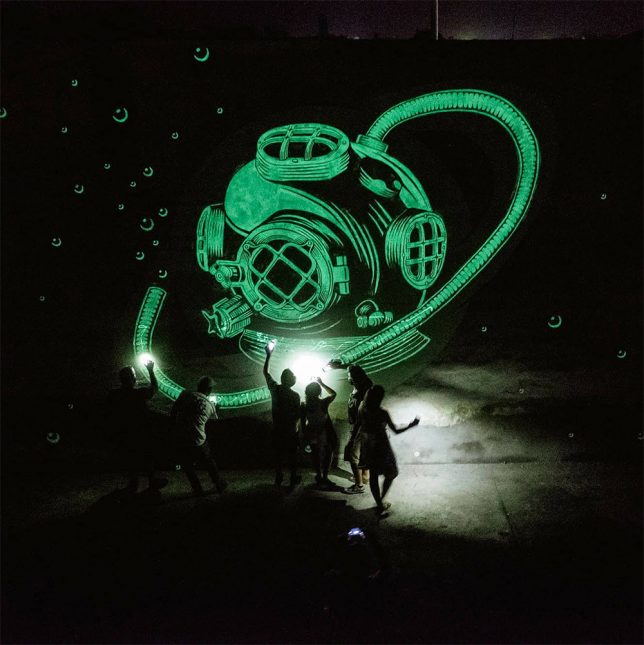
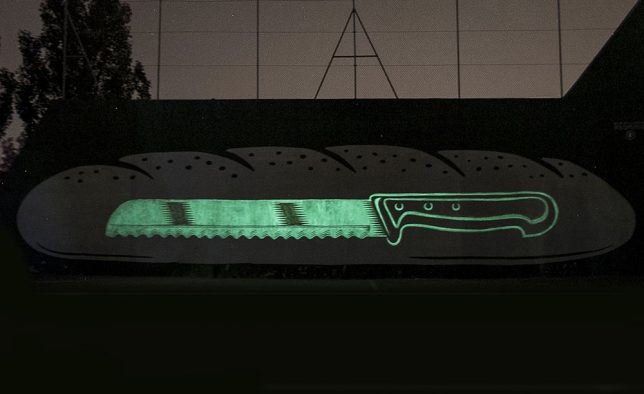
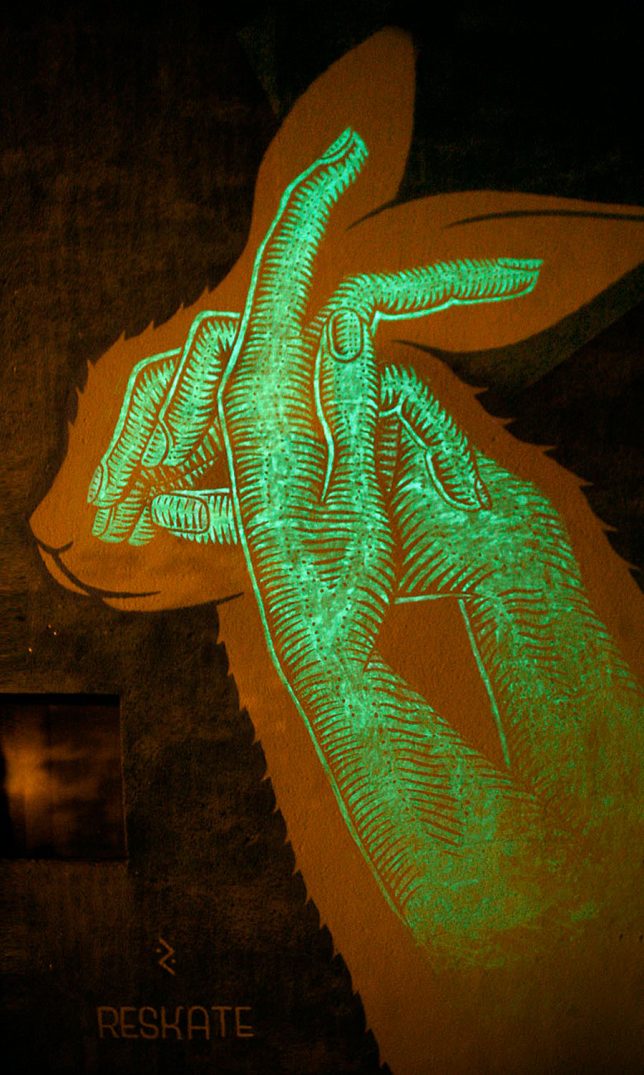
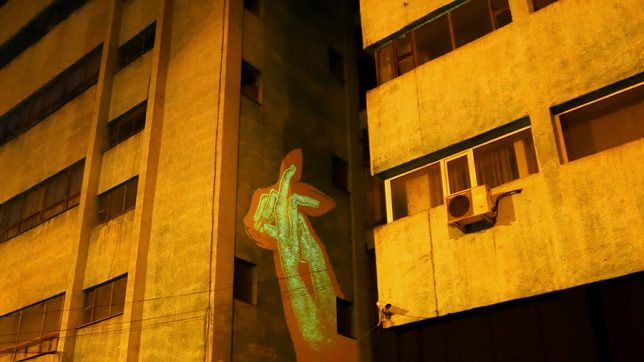
When the sun goes down, hand puppets, knives and space helmets appear within a rabbit, a planet and a loaf of bread. Spanish creative studio Reskate used glow-in-the-dark paint to hide these unexpected figures within their silhouetted murals.

Glow in the Dark Bike Path in the Netherlands

glow-in-the-dark-bike-path-poland

glow-in-the-dark-bike-path-2

glow-in-the-dark-bike-path-3

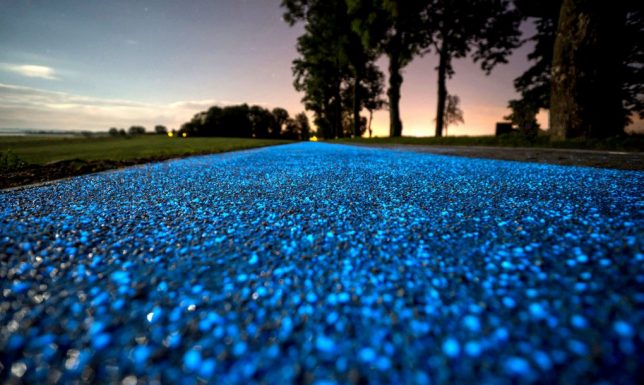
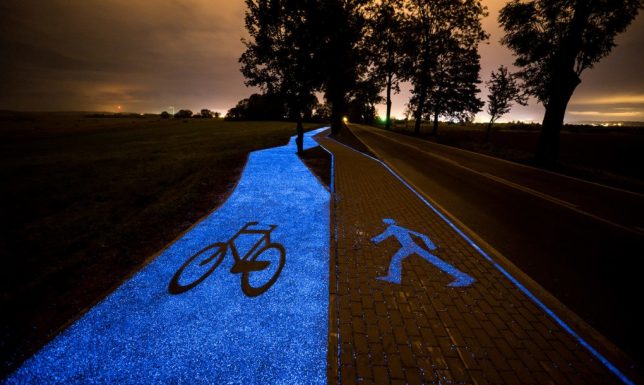
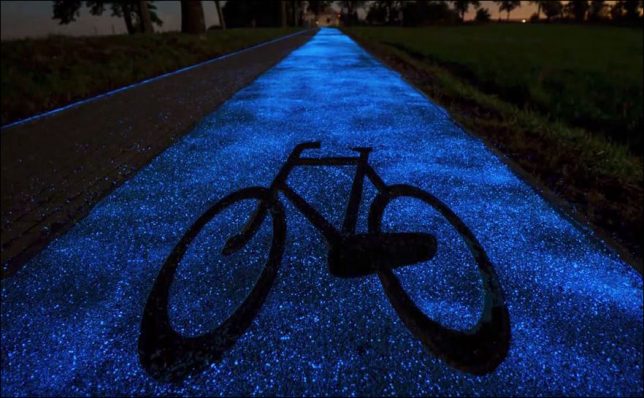
This bike path is safer after dark thanks to small particles of phosphor called ‘luminosphores’ that charge up during the day and release light at night. Urban planners in Lidzbark Warminski, Poland took inspiration from a similar project by Studio Roosegaarde in the Netherlands, but wanted to use a zero-energy light source instead of solar-powered LEDs.

Phosphorescent Mural by SpY, Paris

glow-in-the-dark-spy-mural-1

glow-in-the-dark-spy-mural-2

glow-in-the-dark-spy-mural-3

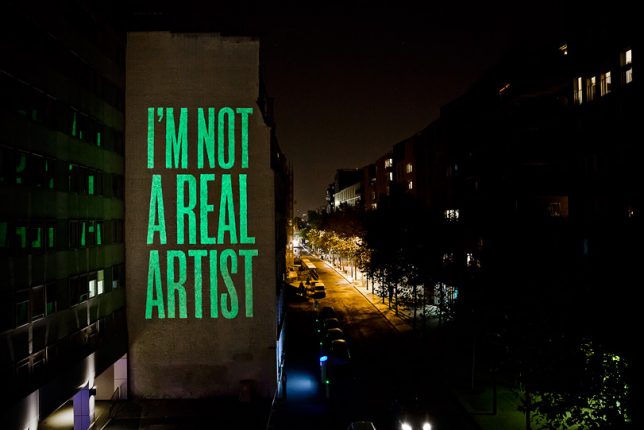
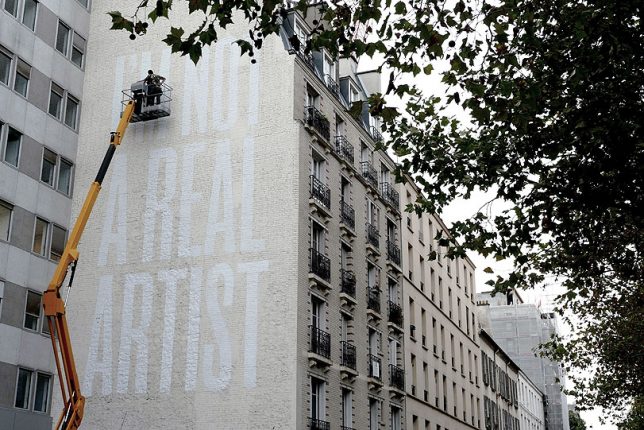
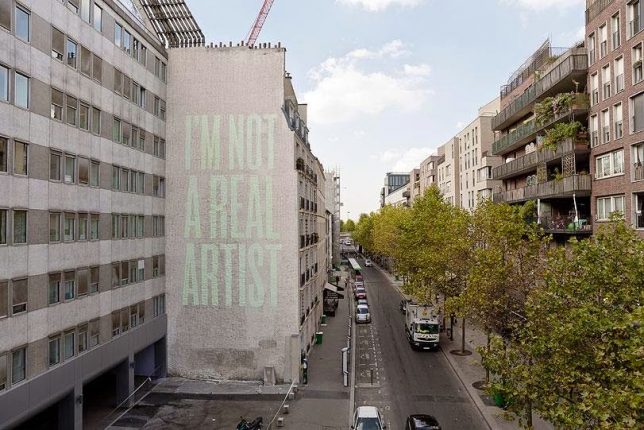
Blending into the pale brick on the side of a Paris building by day, this mural by SpY reveals its secrets at night, blaring ‘I AM NOT A REAL ARTIST.’

Snail Swarm Enhanced with LED Lights & UV Paint

glow-in-the-dark-snails

glow-in-the-dark-snails-2

glow-in-the-dark-snails-3

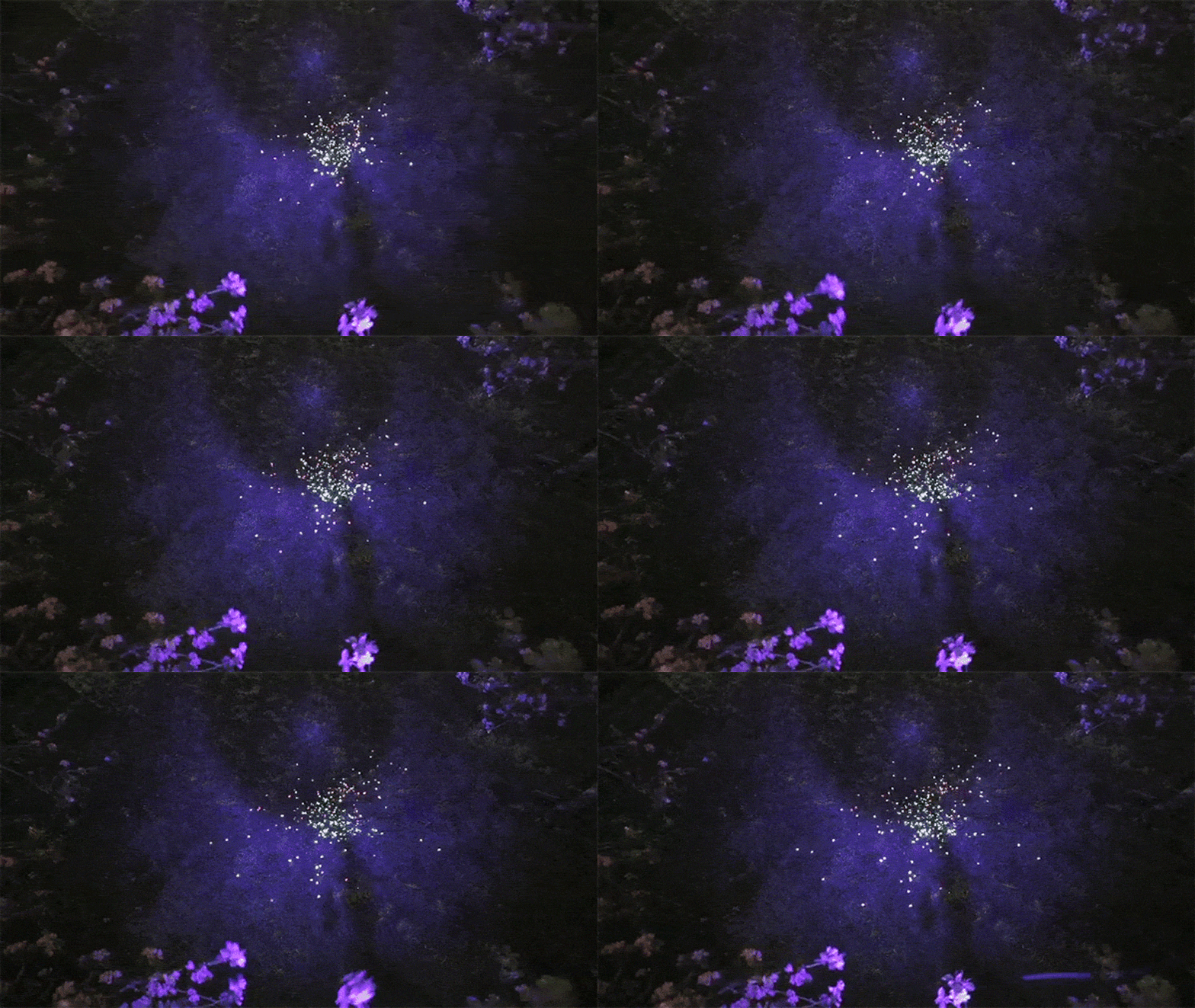
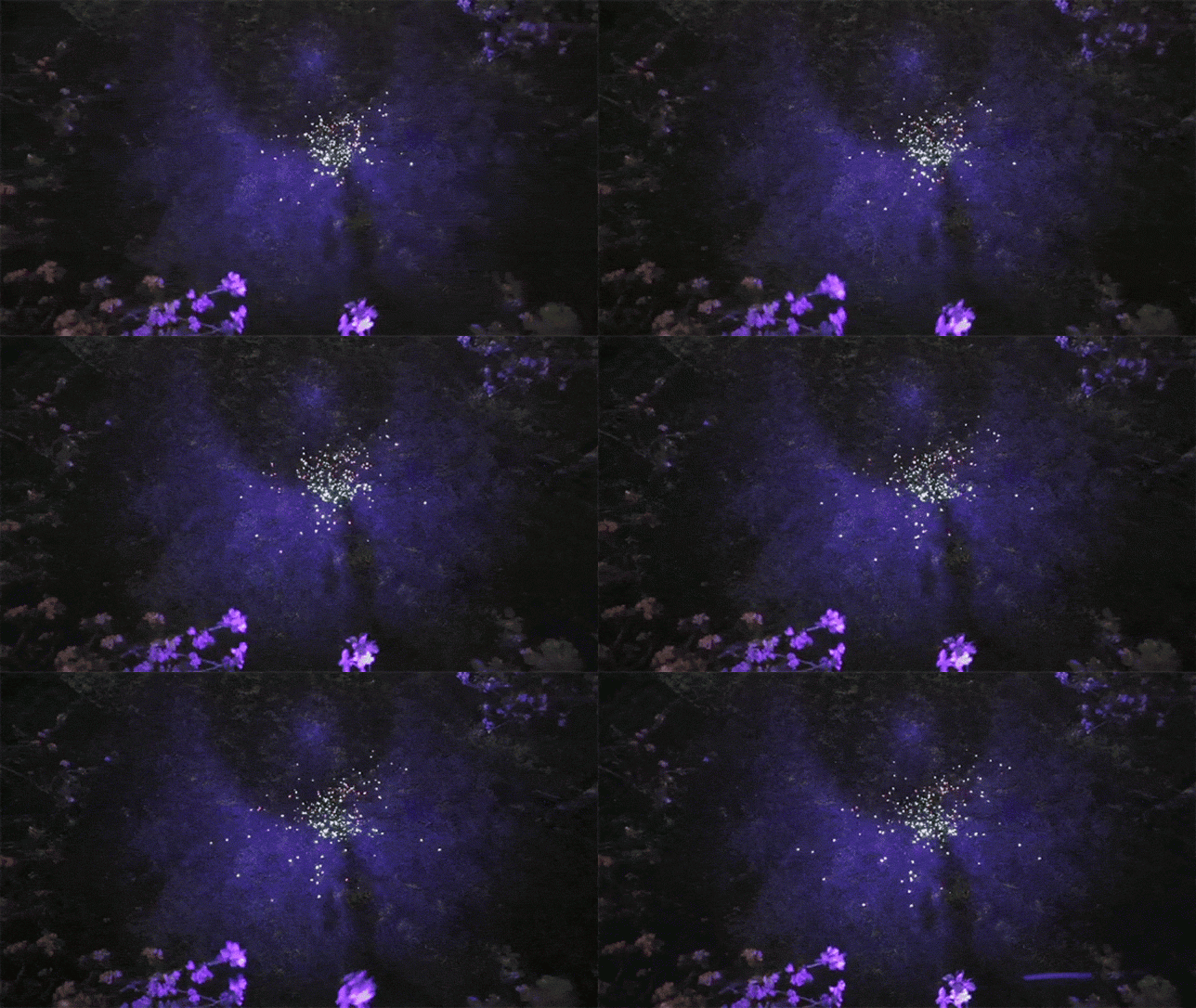
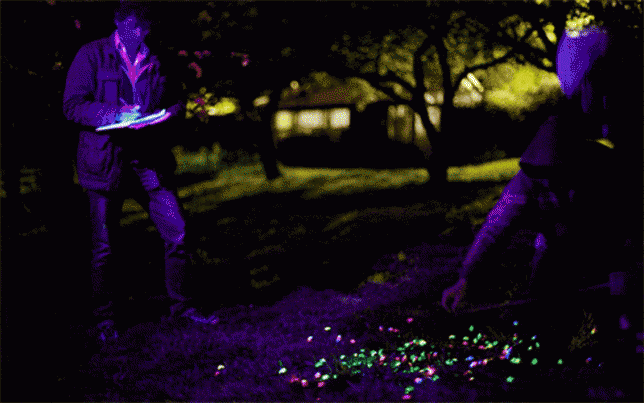
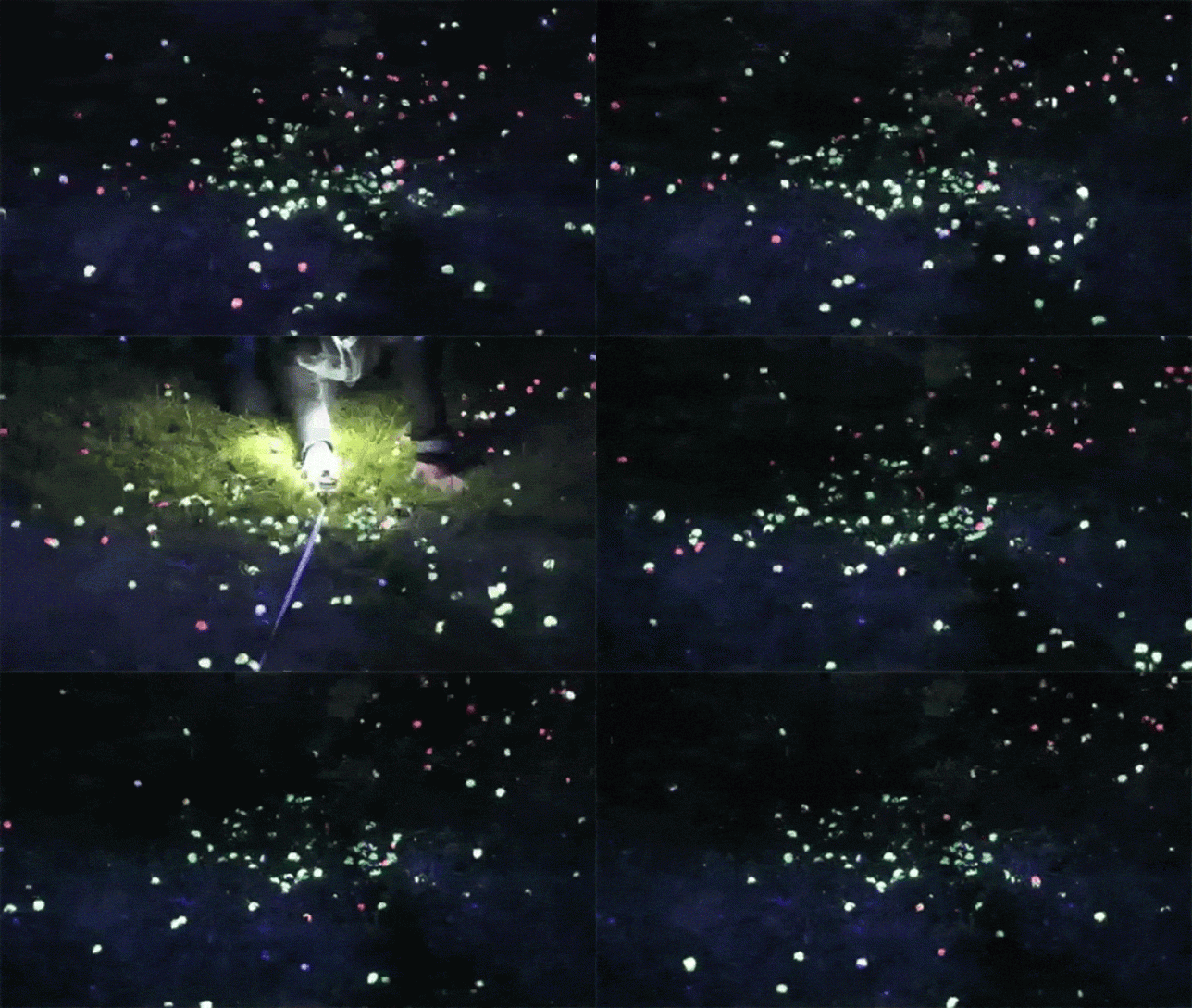
Researching snails can be kind of dry, so a group of researchers from the Ecology department at the University of Exeter found a more fun – and visually dazzling – way to go about it. The team tagged hundreds of live snails with LED lights and UV paint, and then tracked their patterns of movement at night. The experiment is an effort to track how snails spread lungworm to dogs.

Next Page – Click Below to Read More:
Glow In The Dark Outdoor Art 15 Designs That Come Alive At Night

Share on Facebook


[ By SA Rogers in Art & Installation & Sound. ]

[ WebUrbanist | Archives | Galleries | Privacy | TOS ]


WebUrbanist

 
Comments Off on Glow in the Dark Outdoor Art: 15 Designs That Come Alive At Night

Posted in Creativity