RSS
 

Archive for September, 2016

4 Common Lighting Styles to Get the Perfect Portrait

01 Sep

When you begin doing portrait lighting for the first time, the general advice you get is to put your light at 45º to your subject, and aim it down at 45º. It’s a quick way to get something reasonably good, without a lot of understanding. With a little more knowledge, you can make better lighting decisions, and get more dramatic images.
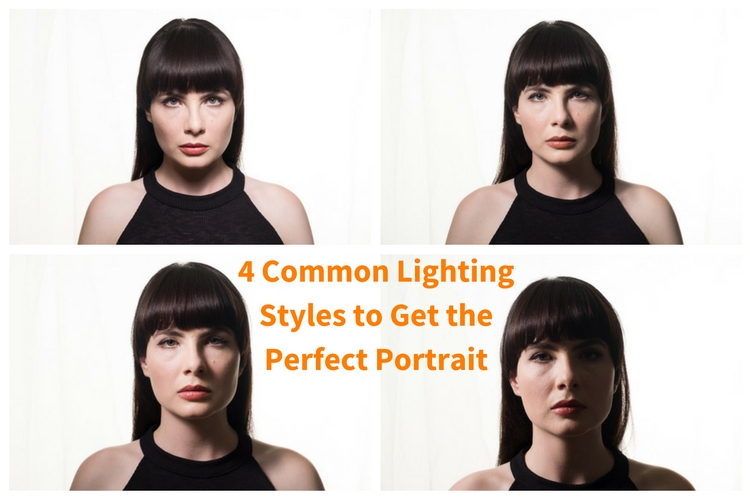
4 Common Lighting Styles to Get the Perfect Portrait

Light has four main properties:

  1. Quantity
  2. Quality
  3. Color
  4. Direction

In this article, we’re looking at direction of light only. If you look at the work of the Masters in painting, you’ll notice that they go to great pains to create light and shadow through their brush strokes. You can of course translate these to your own lighting. So let’s look at the different portrait lighting styles or patterns you can use.

To be able to see these patterns, your subject should be facing the camera. The key to seeing what’s happening is to pay attention to what the shadow is doing, especially the nose shadow.
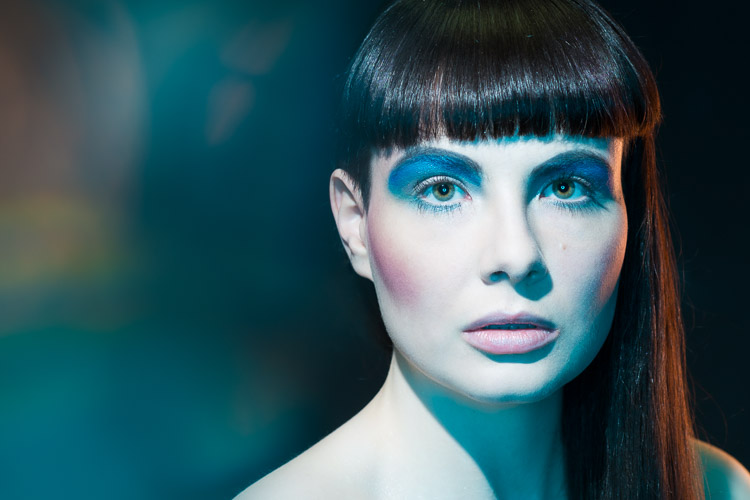
Short Lighting with a Butterfly pattern.

Short lighting style

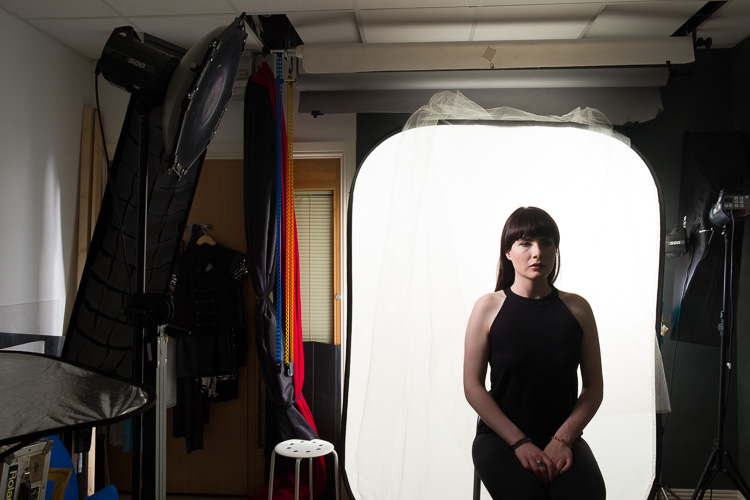
For this setup, I’ve used an Elinchrom BXR500 with a 44cm white beauty dish. The deflector is translucent, and I’ve added a grid to control the spill of the light. The Camera was a Fujifilm X-T10 with a Fujinon 18-55 lens.

The Portrait Lighting Styles

1. Butterfly Lighting

Butterfly lighting refers to the shape of the shadow under the nose that this pattern creates. It’s meant to look like a butterfly in flight, viewed from straight on. It’s also called Paramount lighting when used with guys to sound more masculine. If you look at the work of 30s and 40s Hollywood photographers like George Hurrell, you’ll see this lighting style in operation.
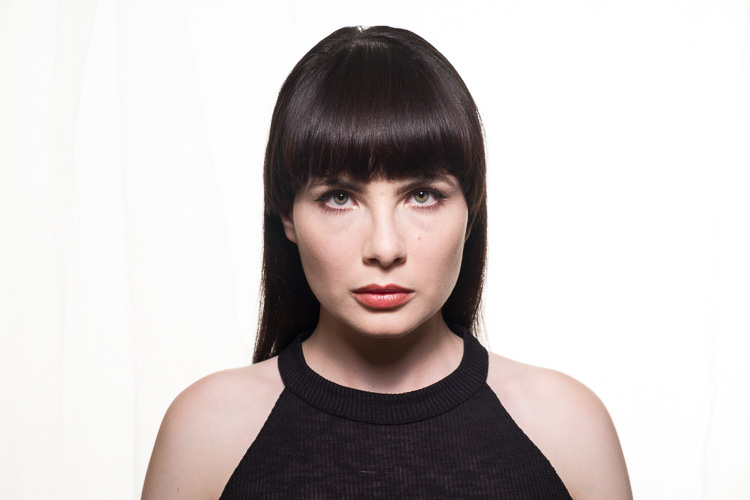
Classical Lighting Patterns 01

The basic butterfly portrait lighting, with no reflector.

First you should place your light on a boom stand, and position it so it creates a line between you, the light, and your subject. Your light should be high enough to create the butterfly shadow. If it’s too low, you won’t get a shadow and the light will be too flat. If it’s too high, you’ll have the nose shadow will cut into the lip.

As you look into the eyes of your subject, make sure you can see a reflection of your light. This reflection is called a catchlight, and helps give life to the eyes. If you cannot see the catchlight, lower your light a bit.
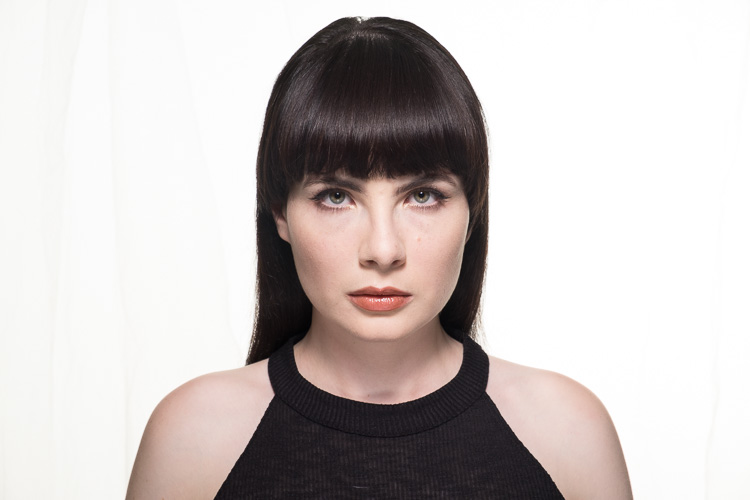
Classical Lighting Patterns 02

The basic butterfly portrait lighting, with silver reflector.

With Butterfly Lighting, it’s common practice to put a reflector (or even another light at lower power) underneath the chin to bounce light back up. This helps soften the look, and reduces the shadows caused by your light position. You’re not trying to overpower the light from above, as doing this will cast shadow upwards on the face, which isn’t particularly flattering.
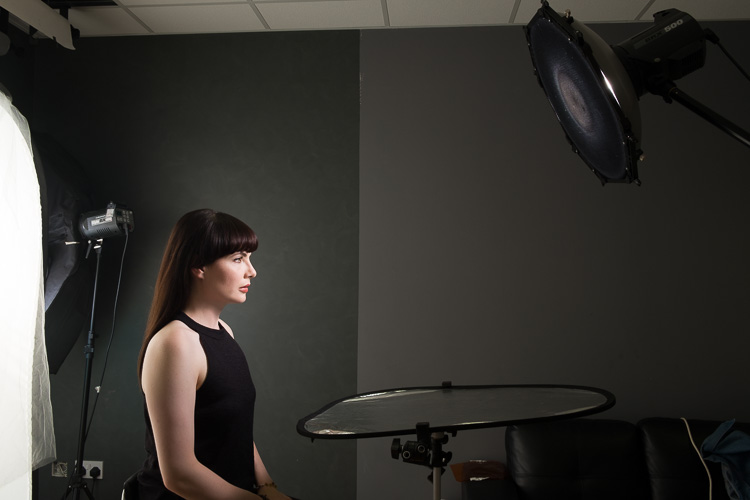
Classical Lighting Patterns 03

Behind the scenes shot of the basic butterfly lighting, with a reflector.

2. Loop Lighting

For Loop Lighting, you’re looking for a loop shaped nose shadow. Move your light to the left, or light from the centre. You’ll see the shadow change shape. With Loop Lighting, the nose shadow shouldn’t touch the shadow side of the cheek.
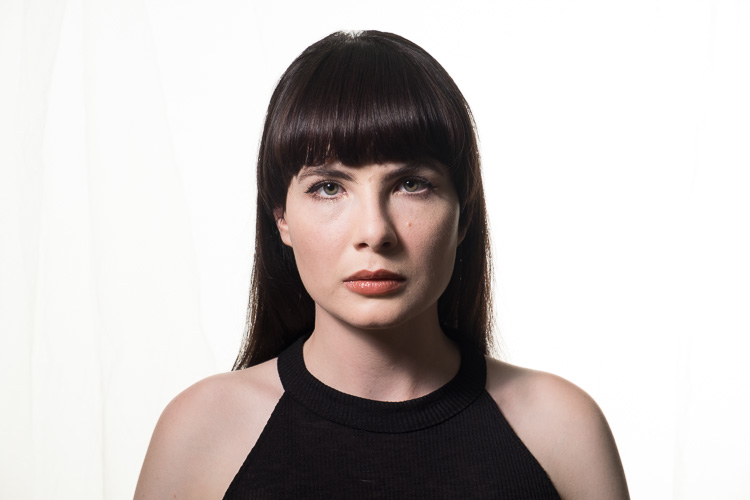
Classical Lighting Patterns 04

Loop Lighting

You should aim to have the bottom of the nose shadow about halfway between the lip and the nose in position. With Loop lighting, you’ve got two main options for filling in shadows. You can use a reflector, or a second light from the opposite side of the face as the key light, or you can use an on axis (behind the camera) fill light (like a ring light or an Octabox).

3. Rembrandt Lighting

If you move the key light around a farther, the nose shadow will meet the cheek. Some refer to this as closed loop lighting, with the normal Loop Lighting being referred to as open loop lighting. From a technical standpoint, Rembrandt Lighting usually has a higher light position than closed loop lighting, but for most the term Rembrandt refers to any light that creates a triangle of light below the eye opposite the light source.
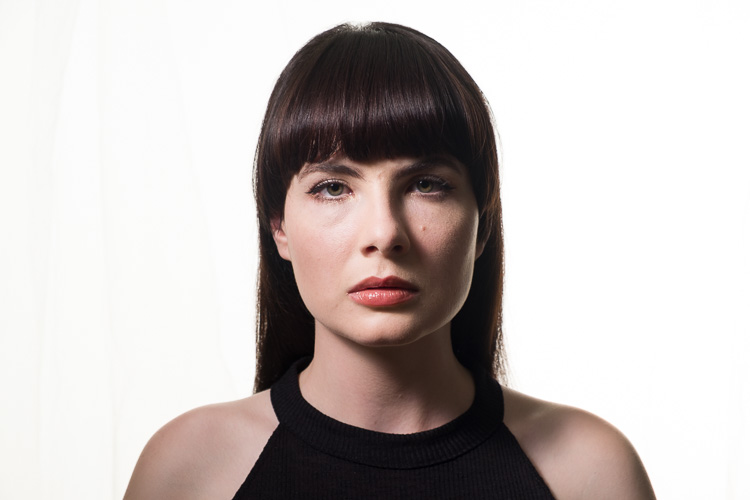
Classical Lighting Patterns 05

Rembrandt Lighting

You can probably guess that the name is based on the work of the painter Rembrandt. A lot of his portraits were painted while the subject was lit from a skylight or high window, giving that famous look.
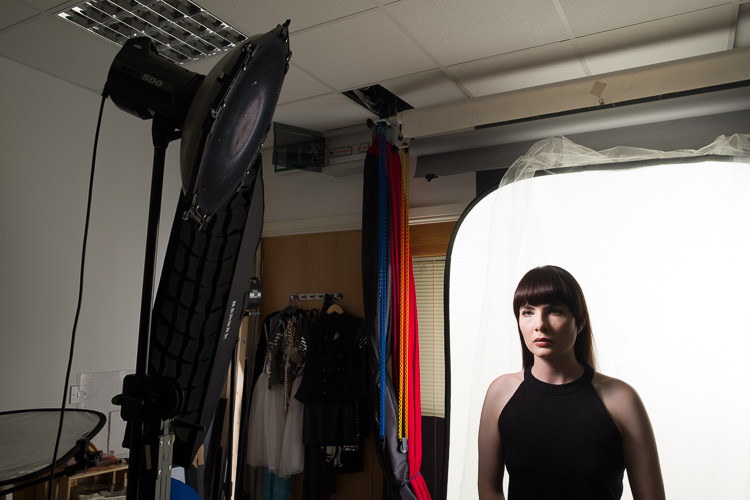
Classical Lighting Patterns 06

Behind the scenes making a Rembrandt Lighting.

4. Split Lighting

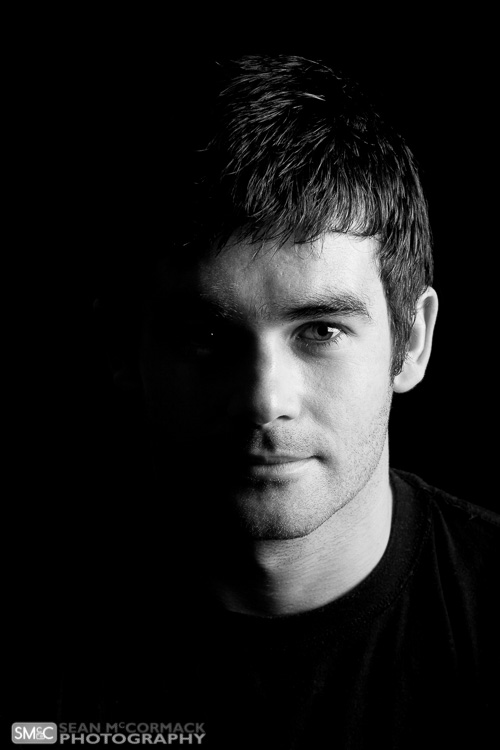
You’ve moved the light slowly from straight on, and your final light style is when the light is perpendicular to the camera. You’re lighting only one half of the face. One of the most famous uses of this is The Beatles album ‘With The Beatles’, where all four members are split lit. You should only be able to see one eye in the shot for this pattern (the other will be in shadow).
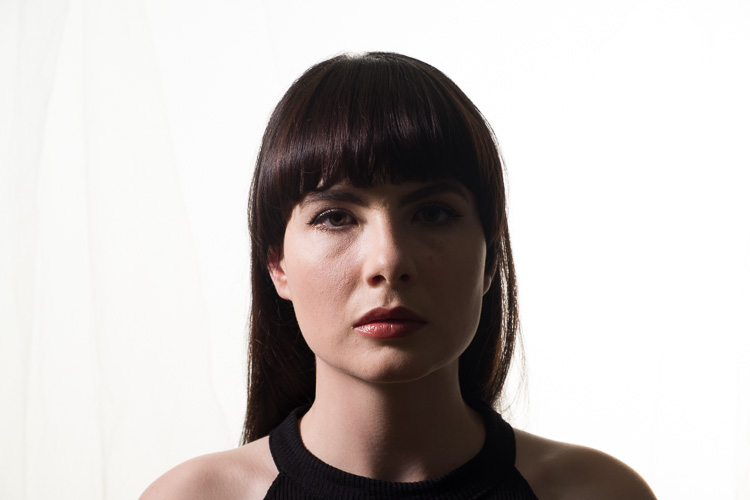
Classical Lighting Patterns 07

Split Lighting.

Classical Lighting Patterns 08

Behind the scenes for Split Lighting.

Broad and Short Lighting

To show how the patterns work, you’ve shot straight on to your subject. In real life this is only one view that you’d capture. By turning the face to the side you get even more options. When the face is at an angle, there are two parts of the face visible, the broad side, and the short side. The broad side is the one nearest you, from the ear to the nose. The short side is the small bit of the side facing away from you, that you can actually see.

By aiming the light at the broad side of the face, you see the face in detail, with very little shadow. On the other hand, if you light the short side of the face, you get more shadow. These lighting positions are referred to as Broad and Short Lighting respectively.

You can use Short Light to flatter heavier subjects, as the shadow tends to hide weight in the face. Broad lighting is better for thinner people, and is often used in fashion. For the Short Light example, the light was in the same position as our Split Lighting, the model has just been turned towards the light. For Broad Lighting, you can have it any where in front, though for this example, it was off to camera right.
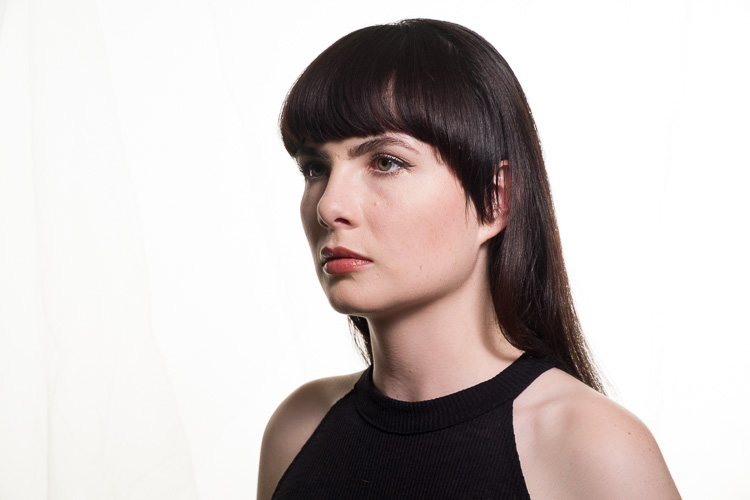
Classical Lighting Patterns 09

Broad Lighting (main light is to camera right).
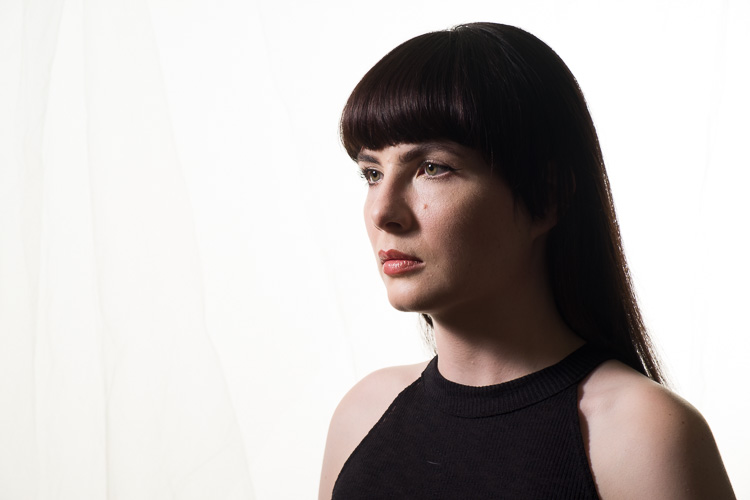
Classical Lighting Patterns 10

Short Lighting (main light is to camera left, closer to the background than the subject).

Creating Drama

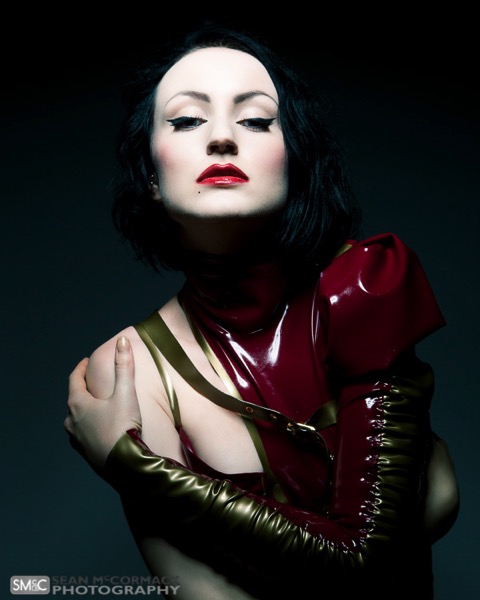
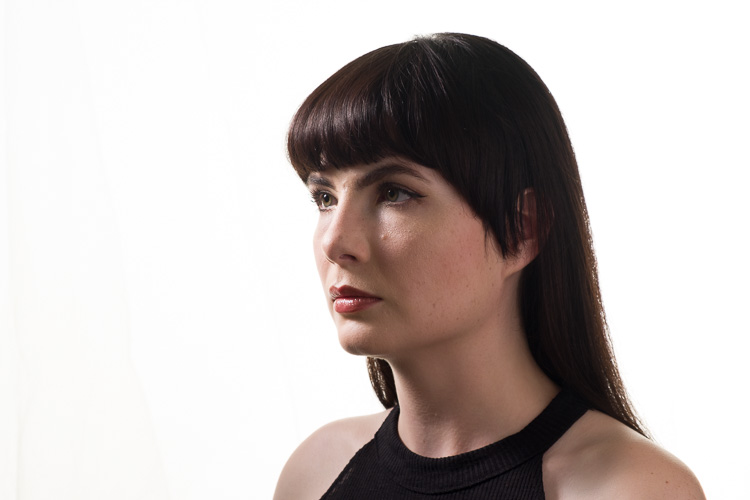
The trick to creating drama is to use shadow effectively. For this reason Short Lighting is the best option. You can use each pattern in a short light fashion.

Remember at the start, you were told to pay attention to the nose shadow? For Butterfly, you’re still looking for the butterfly shadow. The light will be directly in front of your subject’s nose to get this. As you move the light away, towards Loop position, it’ll start to become more dramatic. You can even do a Rembrandt portrait for really dramatic effect.
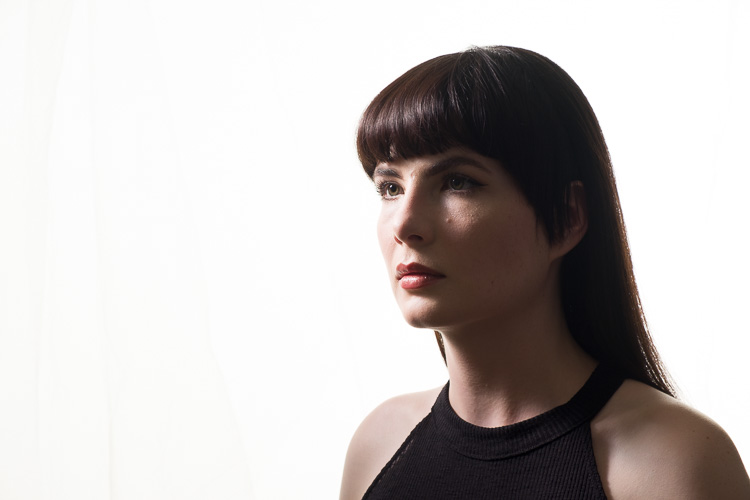
Classical Lighting Patterns 11

Rembrandt Lighting, Short lit with no fill.
Classical Lighting Patterns 12

Rembrandt Lighting, Short lit with silver reflector fill.

So that’s how to use common portrait lighting styles or patterns. You should get familiar with them, and as you look at magazines and online, you’ll start to see them in use.

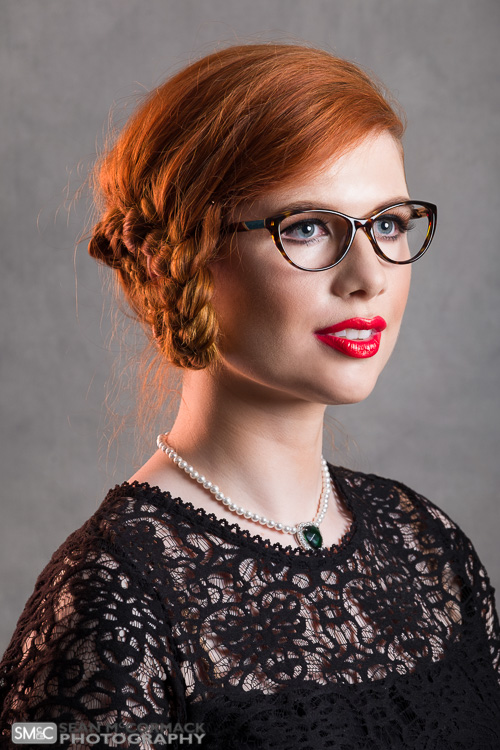
Examples of Portait Lighting in photos
Classical Lighting Patterns 16

Short Lit Loop Light

Classical Lighting Patterns 14

Split Lighting

Classical-Lighting-Patterns-13.jpg

Butterfly Lighting

Short Lighting with a Butterfly pattern.

Short Lighting with a Butterfly pattern.

googletag.cmd.push(function() {
tablet_slots.push( googletag.defineSlot( “/1005424/_dPSv4_tab-all-article-bottom_(300×250)”, [300, 250], “pb-ad-78623” ).addService( googletag.pubads() ) ); } );

googletag.cmd.push(function() {
mobile_slots.push( googletag.defineSlot( “/1005424/_dPSv4_mob-all-article-bottom_(300×250)”, [300, 250], “pb-ad-78158” ).addService( googletag.pubads() ) ); } );

The post 4 Common Lighting Styles to Get the Perfect Portrait by Sean McCormack appeared first on Digital Photography School.


Digital Photography School

 
Comments Off on 4 Common Lighting Styles to Get the Perfect Portrait

Posted in Photography


DxO releases major firmware update and accessories for DxO One camera

01 Sep

DxO has released a significant firmware update and an expanded range of accessories for its DxO One camera. The improvements include remote operation over Wi-Fi, while the accessories include a waterproof case.

The firmware update finally enables the camera’s Wi-Fi, making it possible to use it remotely. The camera can either create and ad hoc connection to an iOS device or can join an existing Wi-Fi network.

The Wi-Fi system uses the Apple Lightning connector to establish the communication between the two devices. These ad hoc connections should have a range of 10-15m, depending on how much radio traffic there is. Connections across existing Wi-Fi networks work over a greater range but use a slower transfer protocol.

The firmware update also improves both the camera’s battery management and the battery level reporting, meaning you should be able to shoot for longer with the camera and have a clearer idea of how much battery life remains.

Accessories

DxO has also launched a series of accessories that considerably extend the One’s capabilities.

These include a footplate/tripod mount, that allows the camera to sit upright and includes both a standard tripod thread and Arca-Swiss-style flanges. These are closer together than usual, though, so it may not be compatible with all Arca-Swiss heads.

There’s also a rugged case. This comes with two clip-on backs, one of which provides environmental sealing and allows the continued use of the touchscreen and a second that provides full water proofing (to a depth of 45m). The case includes a hinge attachment, making it compatible with many mounts and accessories designed for GoPros.

With the waterproof back attached, the camera’s shooting mode can be changed by holding your hand over the lens for 3 seconds – allowing a degree of control without having to remove the camera from its case.

There’s also a set of adapters to allow 30.5mm filters to be clipped onto the front of the camera. This makes it possible to add diopter lenses or optical filters to the camera easily.

The firmware update and associated iOS app will be free. The tripod stand will cost around $ 24.99/£19.99/€24,90, while the ‘outdoor case’ has a recommended price of $ 59.99/£49.99/€59,90.

Press Release

The DxO ONE award winning camera takes it one step further with two new state-of-the-art features

PARIS and SAN FRANCISCO—August 31, 2016—Camera manufacturer DxO announces major updates to the DxO ONE Miniaturized DSLR-quality Camera for iPhone, including Wi-Fi remote control and a new waterproof Outdoor Shell designed to further extend its elds of use. Upholding their promise to make the camera even better after you’ve bought it, Wi-Fi Remote Control will be available to all existing users free of charge via a forthcoming 2.0 software update. DxO’s accessories ecosystem also introduces an ultra-compact Stand and a snap-on Optical Adapter, enhancing creative possibilities for the DxO ONE which captures pro-quality photos and videos that you can share instantly to Facebook, Instagram, YouTube and more.

DxO’s new Wi-Fi Remote Control implementation is remarkable in that it completely eliminates the cumbersome and altogether frustrating Wi-Fi con guration process that plagues every other Wi-Fi-equipped camera on the market. When attached via DxO’s patented Lightning connector, Apple iOS can seamlessly pass its Wi-Fi authentication credentials from the iPhone to the DxO ONE. In-house or in-of ce, users can take advantage of this unique DxO innovation that lets the camera immediately tap into the Wi-Fi network that your iPhone is already logged onto. And when traveling about, or out in the wilderness, your DxO ONE can just as easily create a direct Wi-Fi connection to your iPhone. By enabling remote connectivity between the DxO ONE camera and your iPhone, photographers are free to explore every conceivable photographic angle, while still having control over every capture setting, and the ability to easily view, edit and share their content to social media sites such as Facebook, Instagram, and YouTube.

“Last year, we revolutionized mobile photography by packing DSLR-quality into a camera design so incredibly small that it could always be available in our pocket,” said DxO CEO and founder, Jérôme Ménière. “And now, thanks to Wi-Fi Remote Control and our new accessories ecosystem, all our users can take the DxO ONE with them absolutely anywhere, without restrictions, and extend their creativity even further.”

The Outdoor Shell, compatible with all existing DxO ONE cameras, is extremely rugged and yet quick and easy to attach. The shell can be equipped with either of two waterproof back doors, one of which is splash proof (IP67), perfect for sailing or walks in the rain. The other is fully submersible and immersion proof to depths of 45m (150 ft) for scuba diving in a reef or just swimming in your pool. The design features a dual clamping system that snaps securely into place to protect your DxO ONE camera from water, dust and shock, while providing access to power switching and multiple capture modes without having to open the shell. Built to stand up to the elements, the Outdoor Shell is made from durable high end polymers and stainless steel. The shell accepts 30.5mm thread optical add-ons, features a 1?4-20 thread for tripod mounting, and can even be attached to popular Action Cam xtures and harnesses. Available in seven exciting colors including yellow, coral, lime, olive, black, white and lagoon, the waterproof Outdoor Shell is the perfect way to protect and personalize your DxO ONE.

The 2.0 software update also introduces Mobile Smart Lighting, a lighter-weight variant of the famed Smart Lighting feature in DxO OpticsPro, which automatically analyzes each scene and applies an intelligent and customizable global tone map—in this instance, to every photo you take with your DxO ONE. The overall effect is similar to having added a ll light to the picture, which dramatically enhances the dynamic range of your images. The automatic 2.0 update also includes signi cant enhancements to battery management and power consumption including an on-demand auto- focus mode similar to that of DSLRs, and an innovative underwater white balance that automatically compensates for the blue cast to achieve a more pleasant rendering in your underwater images.

“It seems every few months the team in Paris automatically updates my DxO ONE with cool new features,” said celebrated motorsports photographer, John Thawley. “Now, with remote Wi-Fi control I’m totally untethered. Combined with the protective shell, I’m free to place the camera in all sorts of new and discreet scenarios. This means I can capture high resolution images that just weren’t possible before… not with any camera!”

An e-store, accessible right from the DxO ONE app, allows you to easily order any of the new accessories including an ultra-compact Stand that uses an ingenious combination of clamps to let you balance your camera on almost any surface or mount it to a tripod. Also accessible via the e-store is a snap-on Optical Adapter that allows standard ND and creative lters, macro lenses, and hoods to be mounted in front of the lens of your DxO ONE camera. And of course, the accessories store also provides one stop access to the waterproof Outdoor Shell that lets you take your DxO ONE miniaturized camera where no DSLR or smartphone can go.

Pricing & Availability

The DxO ONE Miniaturized DSLR-quality Camera for iPhone and iPad is available now for pre-order at dxo.com and Amazon, and other respected retailers for £399 / 499 €. First customer availability is expected second half of September.

Also available in the same timeframe from select retailers, as well as via the new in-app e-store, are genuine DxO accessories designed to enhance the DxO ONE user experience. These include the waterproof Outdoor Shell for £49.99 / 59,90 €, the ultra- compact Stand for £19.99 / 24,90 €, the snap-on Optical Adapter for £19.99 / 24,90 €, and a protective quick-draw Zipped Pouch for £15.99 / 19,90 €.

The DxO ONE 2.0 iOS app and companion Apple Watch app will be made available as free software updates via the iTunes App Store, also available the second half of September. Every DxO ONE user is invited to download DxO Connect for Mac/PC, or on Mac DxO OpticsPro for Photos – DxO ONE camera only, both of which harness the power of the DxO OpticsPro photo engine to make your best DxO ONE photos look even better.

Articles: Digital Photography Review (dpreview.com)

 
Comments Off on DxO releases major firmware update and accessories for DxO One camera

Posted in Uncategorized