RSS
 

Archive for August, 2016

Solving the Biggest Newbie Confusions with Lightroom by Phil Steele

07 Aug

Photography educator Phil Steele has taught Lightroom to tens of thousands of people. In this video tutorial he helps clear up the biggest confusion around using Lightroom that most beginners have – understanding how Lightroom and the catalogue work.

Watch this video to get a better understanding of how Lightroom works behind the scenes. If you’ve been using it for a while you can either confirm that you’ve got it right, or clear up some things that you may still not be 100% clear on.

Learn about several common sources of confusion when using Lightroom including:

  • The Lightroom database or catalog, what it is and how the “mind” of Lightroom works
  • Where Lightroom stores your images
  • How to get the edited versions out of Lightroom

If you enjoyed that video, and want to learn even more about Lightroom you can check out Phil’s course: Lightroom Made Easy.

googletag.cmd.push(function() {
tablet_slots.push( googletag.defineSlot( “/1005424/_dPSv4_tab-all-article-bottom_(300×250)”, [300, 250], “pb-ad-78623” ).addService( googletag.pubads() ) ); } );

googletag.cmd.push(function() {
mobile_slots.push( googletag.defineSlot( “/1005424/_dPSv4_mob-all-article-bottom_(300×250)”, [300, 250], “pb-ad-78158” ).addService( googletag.pubads() ) ); } );

The post Solving the Biggest Newbie Confusions with Lightroom by Phil Steele by Darlene Hildebrandt appeared first on Digital Photography School.


Digital Photography School

 
Comments Off on Solving the Biggest Newbie Confusions with Lightroom by Phil Steele

Posted in Photography


Tips and Tricks to Help You Take Better Youth Sports Photos

07 Aug

A favorite photography subject of any parent is their child’s sporting activities. But, sports photography can be challenging for the beginning photographer. It requires a robust understanding of camera settings and how they relate to one another. It can also be hugely rewarding to capture exhilarating moments that will be cherished for years to come.

Here are a few tips and Tricks I’ve learned for getting awesome sports photos.

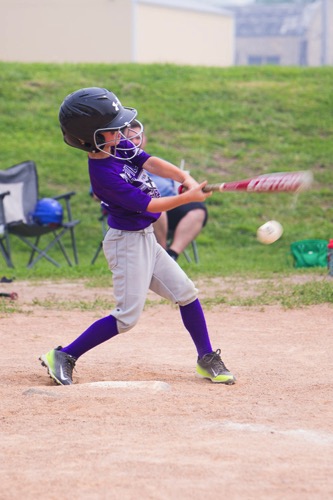
_88J6306

1 – Know the Sport

Every sport has the picture perfect moment. You know the one – the horse with its leg tucked just so, or the peak of the handstand. The moments captured on trading cards, or those that appear on the front covers of sporting magazines are good examples.

Chances are that because you’ve sat on the same bleachers week after week, that you know your child’s sport inside-out. A good sports photographer can anticipate the play, and is ready to capture the shot. For sports that are routine based – gymnastics, figure skating, equestrian, and the like – be sure to watch the practice so you’ll know when and where the picture perfect moments will occur, and where you need to position yourself to capture them.

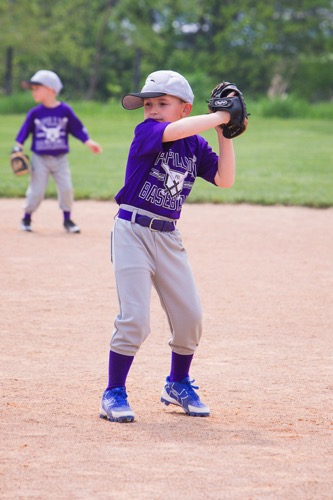
Sports 2

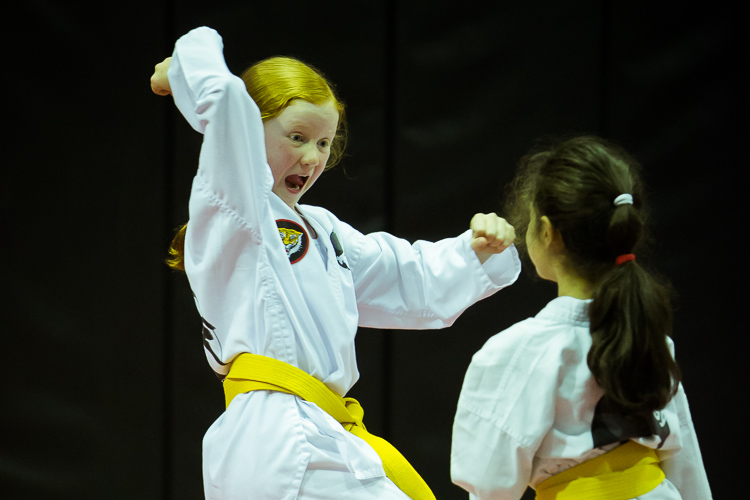
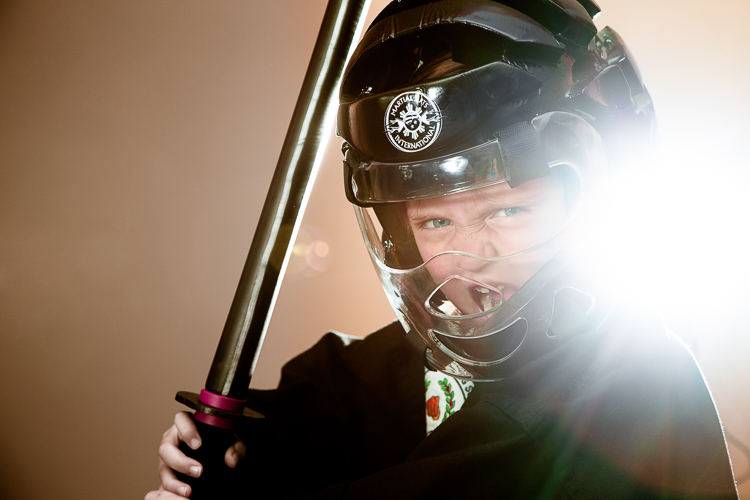
Capturing the passion of the athlete. The flare from the flash in the background was a happy accident. Exposure info: 85mm, f/6.3, 1/160th, ISO 500.

2 – Be Courteous

Before the game, have a chat with your child’s coach and make sure it’s okay for you to photograph the game – some sporting organizations have special rules for photographers which you’ll need to be aware of beforehand. During the game, be courteous to the other parents who are watching their own children. Please don’t be “that guy”, taking up half the bleachers with mountains of gear, or the one standing at the front, blocking the view of others.

3 – Choose your Lens

Generally speaking, longer lenses are better for sports photography, as the action is occurring some distance from you (and it’s uncool for a parent photographer to be on the field during play). A lens around 200mm is a good place to start. If you’ve just won the lotto, I’m well informed that professional 400mm and 600mm lenses are awesome (they can also be rented if you really want to try them out, and don’t have a winning lotto ticket in your back pocket).

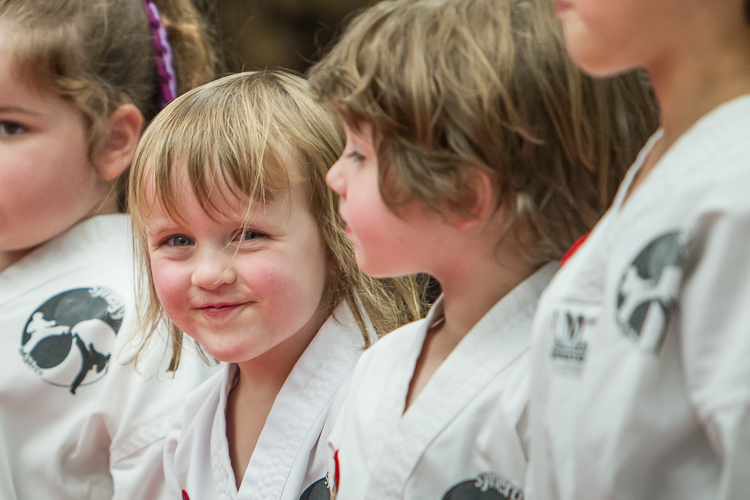
Sports 6 Sports 7

Exposure info on above images: 200mm lens, ISO 200, f/5.6, 1/320th of a second.

4 – Get the Camera off Auto

Yes, I know your camera has a sports/action mode. It might even have a cute little picture of someone running. But shooting sports in manual mode (or at least shutter priority) is a perfect way for you to learn how the exposure triangle works. It will also be a lesson in compromise because I can pretty much guarantee that unless you’re shooting in bright sunlight, something will have to give. Do you accept high ISO noise but stop the action, or do you accept some motion blur for less noise?

Sports 1

Shooting the pause moments. Note the ridiculously high ISO needed for this dimly lit indoor venue. Exposure info: 105mm, f/4, 1/160th, ISO 10,000.

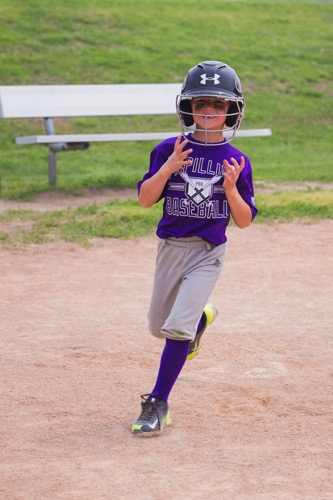
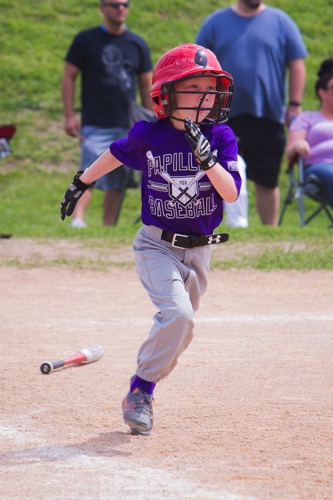
Shutter Speed – Sports shooting is one occasion where the age old adage of “minimum shutter speed = 1/focal length” doesn’t work. In reality, you’ll need to go much faster if you want blur-free images. To stop action at walking speed, try at least 1/250th of a second. For running, you’ll need 1/500th or faster. If these shutter speeds aren’t possible (most likely due to low light), try to anticipate and shoot the posed moments – those times when the athlete pauses for a microsecond (image above). It might be landing a trick, a look before throwing the ball, the moment before throwing a punch.

Sports 10 Sports 4

Exposure info on above images: 200mm lens, ISO 200, f/5.6, 1/320th of a second.

Aperture – Shoot with the largest aperture your lens allows. Professional lenses will generally open up to f/2.8. This will have two benefits – you’ll minimize depth of field (throwing the background out of focus and drawing more attention to your subject), plus you’ll be letting more light in (thus allowing a faster shutter speed).

Sports 9 Sports 8

Exposure info on above images: 200mm lens, ISO 200, f/5.6, 1/320th of a second.

ISO – You’ll often have to shoot at a high ISO to get enough light, especially if you’re shooting indoors. Trial and error will tell you how high your camera can go while still achieving an acceptable image. If you end up having to shoot at ISO 6400 and end up with a noisy image, just turn it black and white and tell people (in your best British accent), “It’s art, dah’ling!”

Focus mode – Check that your focusing mode is set to Continuous or Servo mode. This will ensure that the camera is constantly recalculating focus as you track a moving subject in your viewfinder. Every camera will handle this slightly differently, so it’s worth thumbing through your camera manual to understand how your particular model works.

5 – Get Down Low

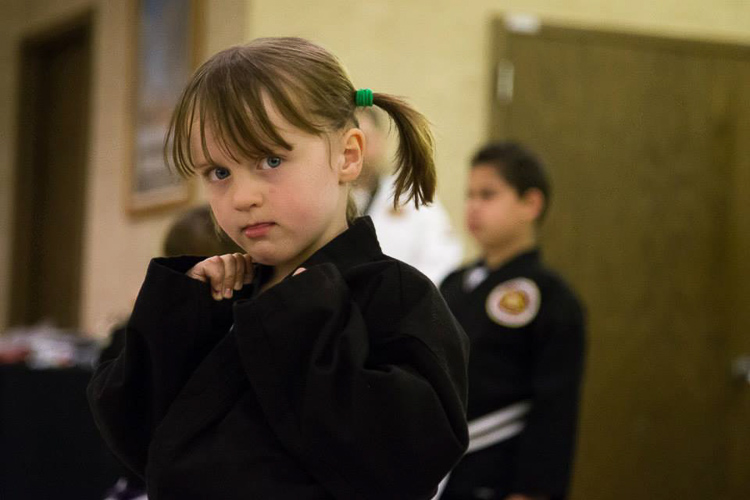
Many beginner photographers make the mistake of shooting from a standing position. For youth sports, this means that they are generally shooting down on the athlete – not a very flattering angle. Instead, try kneeling on the ground for a better perspective.

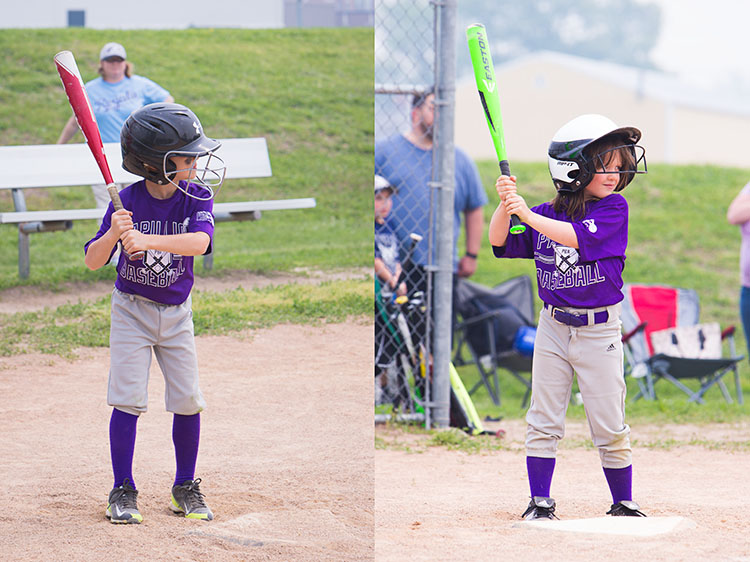
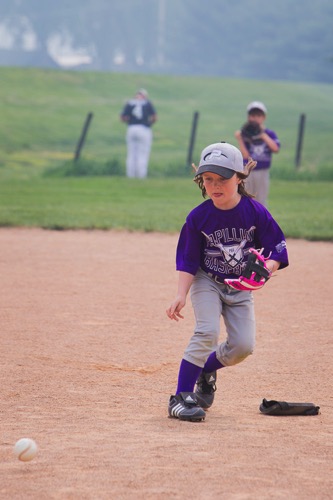
These two images, taken from different camera angles, show how shooting from a lower angle can make all the difference.

These two images, taken from different camera angles, really show how shooting from a lower angle can make all the difference. Notice you can see more of her face in the image on the right, taken from a lower camera position.

Exposure info on above images: 200mm lens, ISO 200, f/5.6, 1/320th of a second.

6 – Practice

As with all genres of photography, practice makes perfect. Try different angles or shooting from different positions around the field to see what works best. I guarantee you’ll see improvement as you keep shooting.

7 – Beware the Light Cycle

If your sport is being played in a large indoor venue (or outdoors at night), more than likely it will be lit by cyclic lights (mercury vapor, sodium vapor, fluorescent, etc). These cheap and efficient lights are a sports photographer’s worst nightmare. Unlike natural sources, these lights emit certain frequencies, and completely miss others, resulting in a unique color temperature that is difficult, if not impossible, to properly white balance in camera.

In addition – and completely undetectable to the naked eye – these lights have distinctive cyclic patterns, varying in both light intensity, and color temperature, multiple times per second. Shooting under them can be very much a hit-and-miss affair. Sometimes you’ll catch the light in a blue phase of the cycle; a millisecond later you’ll get magenta. You might get slightly darker, or brighter. Sometimes neighboring lights will be on different cycles, so part of your photograph will be dark and part will be light, each with a different color temperature. (Don’t believe me? Try this test: under a fluorescent light, set your camera to manual with a fast shutter speed like 1/250th, take a series of identical images in rapid succession, then compare the frames. The faster the shutter speed you pick, the more the effect will be visible.)

The lights here cycled yellow.

This image was shot under sodium vapor lights and shows the intense yellow frequencies emitted by this type of light, even with the camera color balanced for the white uniforms. Exposure info: 150mm, f/3.2, 1/320, ISO 5000.

Commercial architecture photographers combat this problem by lowering the shutter speed to allow more than one full cycle of light to be read by the sensor. However as we’ve already discussed, slow speed doesn’t usually work for action sports photography. Worse, many sports in these type of venues (equestrian, figure skating, gymnastics) don’t allow flash for player safety reasons, so you’re stuck using available light.

There is nothing you can really do about cyclic lights, other than to simply take more photos, and pray that you hit the cycle right. For odd colors, you could play with the individual channels in Photoshop, or convert the entire thing to black and white (this will be the only time you’ll ever hear me say “fix it in post-production”).  Regardless, it is something that you should be aware of so you don’t make yourself crazy trying to figure out why you got the results you did.

8 – Have Fun

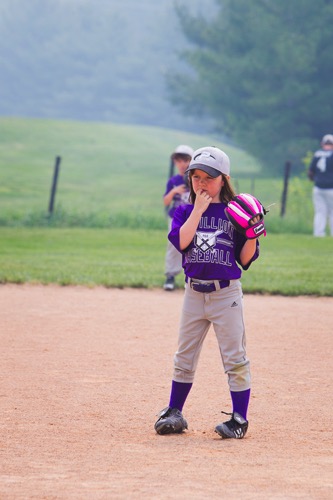
Sports 5 Sports 3

Exposure info on above images: 200mm lens, ISO 200, f/5.6, 1/320th of a second.

Youth sports are all about participating and having fun. Photographing them is no different. If your cherub is playing in the sand or picking her nose instead of chasing the ball, capture it! These are the memories you’ll treasure one day (or so they tell me). And remember that it’s okay to put the camera down sometimes and just enjoy the game too.

googletag.cmd.push(function() {
tablet_slots.push( googletag.defineSlot( “/1005424/_dPSv4_tab-all-article-bottom_(300×250)”, [300, 250], “pb-ad-78623” ).addService( googletag.pubads() ) ); } );

googletag.cmd.push(function() {
mobile_slots.push( googletag.defineSlot( “/1005424/_dPSv4_mob-all-article-bottom_(300×250)”, [300, 250], “pb-ad-78158” ).addService( googletag.pubads() ) ); } );

The post Tips and Tricks to Help You Take Better Youth Sports Photos by Rebecca Olsen appeared first on Digital Photography School.


Digital Photography School

 
Comments Off on Tips and Tricks to Help You Take Better Youth Sports Photos

Posted in Photography


Traffic-Proof Transit: Real Car-Straddling Bus Rolls Out in China

06 Aug

[ By WebUrbanist in Technology & Vehicles & Mods. ]

lanebusfeature

Initial plans to develop a lane-spanning bus in China were met with great enthusiasm but some skepticism, the latter of which is now being addressed versus a real-life, full-sized prototype.

The idea is simple: a bus that arches over traffic, neither hindered by nor hindering other vehicles on the road. Its mass and reduced need to start and stop also make the bus more sustainable than most transit options.

lanebus2

The mega-vehicle is spacious and vast, 72 feet long, 25 feet wide and 16 feet tall. With seven feet of clearance, leaves plenty of room below for ordinary road vehicles.

lanebustest

The bus runs on specialized tracks on either side of two-lane traffic roadways and can carry up to 300 passengers at top speeds of up to 60 miles per hour.

Since the concept has been demonstrated, countries including Brazil, France, India and Indonesia have expressed interest in the TEB-1 system, hoping to deploy it on their own congested urban roadways.

Share on Facebook


[ By WebUrbanist in Technology & Vehicles & Mods. ]

[ WebUrbanist | Archives | Galleries | Privacy | TOS ]


WebUrbanist

 
Comments Off on Traffic-Proof Transit: Real Car-Straddling Bus Rolls Out in China

Posted in Creativity


19 tips for better live music photography

06 Aug

Tips for better live music photos

There is no one-size-fits-all approach to shooting live music. Depending on the genre of music, the size of the venue, the quality of the house lighting, the rowdiness of the crowd and any photographic regulations imposed by the band or venue, your approach to getting the shot can vary greatly.

It is for all these reasons I find live music photography irresistible; no matter how much you prep, you simply never know what the rock and roll gods will throw at you. And the combination of difficult lighting, fast moving musicians and a mass of people competing for sight lines makes getting the shot all that more sweet. Especially when your shot conveys the pure, unfiltered energy of a live performance.

I’ve been shooting live for about seven years, in both stadiums and basements, dive bars and dance halls (I currently run a site called NWSoundExchange.com, which seeks to visualize Seattle’s DIY music culture), and I’ve picked up on some general tips and principles that help me feel a little more prepared each time I walk into a new venue. Some of these tips come from advice given to me by more seasoned music photographers I’ve bumped into over the years, like Mick Rock, others come from shooting hundreds of shows and learning from my own mistakes.

Of course, these tips alone won’t guarantee you the next cover of Rolling Stone. After all, excelling at live music photography requires on-the-fly thinking and problem solving, creativity, as well a mastery of photographic principles. But hopefully these tips will at the very least inspire you to bring a camera long to the next concert you attend.

By the way, the most important tip of all for shooting rock and roll is this: showing up with your camera to the show is half the battle. If you can make it that far, well, the rest should be pretty easy.

Do your homework

The Screaming Females are a very high-energy band. The lead singer/guitarist Marissa is known for her epic guitar solos. Knowing this going in gave me the foresight to position myself directly in front of her. 

I’m not trying to sound like your mother, but seriously, do your homework before shooting a show! Fifteen minutes spent watching Youtube videos can clue you in to how a band sets up on stage and who in the band you might want to keep your camera pointed at. This way, when you arrive at the venue, you can position yourself perfectly to get the most high-energy images.

Leave the extra gear at home

This image was shot during a very crowded and rowdy show in the basement of a dive bar. Bringing only one camera rig and an extra lens (kept in my pocket) meant I did not have to worry about stashing my bag anywhere and could easily move around within the crowd to make my shots.

Roll light! Being able to move around is crucial for getting good shoots. Also no one likes the guy in the crowd wearing the massive camera backpack.

I used to shoot live music with far too much gear: two bodies, a flash and a few extra lenses. These days I keep it much more simple: a full-frame camera, 35mm F2 lens and a flash. I do occasionally bring a wider or more telephoto lens, depending on where I’m shooting. But at the end of the day, the less I’m worried about switching gear, the more I’m tuned into the music that is happening in front of me.

If you must use a flash, bounce it

Shooting a show under a highway underpass was a unique experience. This was a show where I had no choice but to use a flash. Still, I used it sparingly, waiting for the most decisive of moments to pop a frame.

No matter what, I always go into a concert planning on shooting available light only. Of course this can be wholly impractical if the venue you’re shooting in is literally beneath a highway overpass with no light of any kind. It’s in situations like these that I’ll bring out the on-camera strobe.

Flashes should always be used sparingly in a live music environment. The whole point of a concert is for the crowd to experience and enjoy the music happening in front of them, and constant pops of bright light can detract from that enjoyment. Don’t make the concert about you. Be there to document the experience, not take away from it.

I also bounce my flash off the ceiling whenever possible. This results in the light falling back down on your subjects nicely. If you shoot direct flash, not only will you blind your subjects, but the lighting will look much less natural.

Fast glass is your friend

This images was shot at ISO 12,800 1/500 sec at F2.2 using the Nikon 35mm F2 D lens.

Zooms are great, but they are often not fast enough for shooting live music without flash (which should always be your goal going into a concert). Many photographers show up to concerts with a full-frame camera and a 24-70mm F2.8 lens, which can be fine. But I prefer to use primes with faster apertures. I’m not talking expensive glass, but rather lenses like Canon and Nikon’s 50mm F1.8.

When shooting using only the venue’s lights, my ISO is usually cranked all the way to 12,800 (I shoot with a D750) and my shutter speed hovers around 1/200 – 1/320 sec, the slowest speed I feel comfortable using in such an environment. This gives me little wiggle room for a slow aperture. Thankfully, the Nikon 50mm F1.8 D is pretty sharp by F2 and even better by F2.2. The point is, given the choice, always opt to bring along your fastest glass. Also don’t forget to micro adjust your lenses!

Avoid eye level composition

This image would probably have been a total snooze-fest had it been shot at eye-level.

Shooting images at eye-level is lazy and boring. So get super low, get high up; if you have an articulating screen, put it to use! But whatever you do, avoid eye-level. Your composition will thank you.

Try to shoot in full manual

This one is not set in stone, but generally speaking, you’ll learn more and have a better understanding of light and how you camera works if you shoot in full manual mode. Shutter Priority and Aperture Priority can both be useful in some live music shooting scenarios, but if you’re serious about getting better, keep it on the big ‘M’.

Whenever I walk into a new venue, I always try to guess and dial in the exposure without looking at my camera’s meter (advice given to me by a good friend). The more I do this, the better I’ve gotten at ‘reading a room’s light.’ Try it yourself! You’ll probably find that over time your intuition about exposure will improve.

Know when to use AF-C, AF-S (and know your camera’s AF system)

Focusing and recomposing using AF-S can be a good method to achieve creative compositions, just as long as the subject doesn’t move too much from the time you acquire focus to the time you take the shot. Of course, this image was taken using a manual focus lens. 

Continuous autofocus is generally your best bet for live music photography. It goes without saying that if you’re shooting a moving subject, AF-C makes more sense than AF-S. However, there are times when switching to AF-S can be useful, especially when trying to get creative with a composition.

When shooting live music in a dark environment, even the best cameras will likely struggle with subject tracking, meaning you are left with either using AF-C and keeping your focus point over the subject (which restricts your composition) or focusing and recomposing (if the subject is not changing depth from the camera). The latter is a method best used when the subject is relatively still.

Also, many modern cameras have central AF points with increased sensitivity for low light and low contrast scenarios. Knowing whether or not this is the case with your own cameras is definitely worth investigating.

Photograph the crowd

Live music is about more than just the band on stage.

Don’t forget to turn around and snap some photos of the crowd. An image that conveys the flavor of the environment and the energy of the crowd is a great addition to any set of live music photographs.

I’ve found the best time to turn around and get this shot is toward the end of any high-energy song, but not after. This ensures those in the frame are still sucked into the music, allowing you to go largely unnoticed. The last thing you want is folks staring at the camera like a deer in the headlight. One person blatantly acknowledging the camera can ruin the overall feel of a good crowd shot.

Look for interesting light

We already talked about how you should avoid using a flash whenever possible. Assuming you’ve followed that advice, you’ll largely be at the mercy of the venue lighting, which is not necessarily a bad thing!

Look for interesting beams of light and reflections to incorporate into your image. Using the venue lighting creatively can help you to better convey the mood of the performance. Also, be sure to be patient. One of the advantages of not shooting with a flash is that you can fire as many frames as you like, without bothering anyone. This means you can experiment to your heart’s delight.

In general, the rule of thumb with gelled lighting is this: avoid shooting skin tones lit by red lights as they tend to blow out all detail (unless you’re planning to convert to b/w in post). Wait instead for the lighting to switch to any other hue before taking a shot.

Find the details

A cowboy hat at a punk show?

Most live music imagery revolves around one of two subjects: the band and/or the crowd. Obviously, making photographs of said subjects is what shooting rock and roll photography is all about, but don’t forget to look for interesting or unusual details in and around the venue.

Even the most subtle details, like a pair of bare feet on stage, or a strangely out-of-place man in a cowboy hat, can add a new layer of intrigue to a set of already interesting live music photographs.

Be ready for the action

The last thing you want to do is get caught fumbling with controls when something epic is happening. I’ve certainly been there, missing excellent shots because I was too busy staring at my camera settings. It’s a terrible feeling.

To avoid this, try your best to be very in tuned to what is happening in front of you at all times. Change settings with your eye to the finder and only look at the back of you camera in between sets. Oh, and above all, don’t chimp during a set!

Keep one eye open

Shooting with both eyes open allows you to better predict when something visually interesting might occur.

This one also goes along with the previous point. Practice keeping both eyes open at all times when shooting live music. Better yet, try to keep your non-shooting eye honed in on the drummer. I’ve found that if you’re in tune with the drummer, you can often use their body language to predict when something interesting might happen.

Try the ‘pop and drag’

It can be a bit cliche, but it can also convey a band’s energy really well if executed correctly.

The old ‘pop and drag’ goes a little something like this: Mount a flash on your camera and point it at the ceiling, drop your shutter speed down to somewhere between 1/15 and 1/50 sec, while keeping your ISO reasonably high (it’s OK to stop down a little using this method). The general idea is to ‘pop’ the light from the flash, which bounces off the ceiling and falls back down on the band that you’re photographing while ‘dragging’ your shutter. Because of your slow shutter speed, the flash won’t completely freeze your subjects, causing blurring and glow.

The most important thing to remember when trying the ‘pop and drag’ is to experiment with your settings. Depending on the height of the ceiling and color of the ceiling, your flash output may vary greatly. If you’d like to use this method, I advise getting to the venue early to dial in your settings before anyone arrives.

Back up from the band, use the crowd

This one is pretty simple: While it makes sense to try and shoot a show as close to the band as possible, its also nice to change up your perspective and pull back a little. Moving back will allow you to get more creative with your framing. It also can help to convey the energy of the room better.

It’s OK to underexpose (shoot Raw)

I often underexpose by two stops to get a faster shutter speed, then push in post.

This one is dependent on the camera you are shooting, but Raw files from most modern full-frame cameras can hold up just fine being pushed a stop or two in post (much further if you’re converting to b/w). When you’re shooting in an environment where your settings are maxed out but your images are still too dark despite being at the maximum native ISO, it van be very reassuring knowing you can still push two stops when you get home.

Just make sure you’re shooting Raw.

Use creative aides

Everyone knows star filters are played out, which is why just about no one uses them. All the more reason to pick one up and make photos that look a little different. Just don’t rely on creative aides as a crutch!

Everyone’s a photographer these days, and rock and roll photos are a dime a dozen. So if you’re serious about setting your images apart from others, what do you do? Try experimenting with creative aides, like gels, star filters, prisms etc. to give your shots a slightly different look.

Star filters have not been cool for a very long time, but used selectively, they can be really effective. Take a look through this article, how many star filter photos can you find? More than you realized now that you’re looking for them? The point is, being subtle is important when employing creative aides. Don’t be a one-trick-pony and don’t rely on them too much. But used selectively, they can give some really cool results.

Shoot with heart, edit with brain

This phrase is my religion when it comes to shooting live music.

What exactly does this mean? For me it means, go to the show, have fun, be polite, dance and take photos without overthinking. Let the music envelope you, feel the energy, interact with the crowd, chat with the band, be a part of what’s happening. Doing so will allow you to subconsciously be more connected to the whole situation. Also, don’t be afraid to shoot ‘too much, ‘ (so long as you aren’t using a flash).

I used to be upset with myself when I came home from a show with 1000 images to shuffle through. But as I’ve gotten better at editing, I’ve gotten better at quickly pin-pointing the good stuff from the bad after the fact. And at the end of the day, if you got one killer image from a show, but shot 100 or 10000 images, no one will know but you.

B/W is your friend when editing

This image looked terrible in color. A conversion to black and white saved it.

B/W is the little yellow pill of the music photography world. A quick conversion can turn a noisy, ugly image into something much more attractive. Or, in the case of the image above, in which most of the detail in Dave’s face was blown out due to bad colored lighting, a quick conversion turned an ugly duckling into a tattooed rock and roll swan.

Have fun and be nice to everyone

When shooting a show it is important to remember that you are very unimportant in the grand scheme of the event. Please, please don’t be that photographer ruining everyone’s good time by constantly popping flashes and blocking people’s view of the band.

Live music is a lot of fun. Photography is a lot of fun. When combined, well, you get the point. At the end of the day, don’t take away from that inherent fun. Be polite to everyone in the crowd, ask before you step in front of someone to take a shot and don’t stand in their way too long. Use your flash sparingly. Don’t bring a massive bag and definitely do not wear a bag while shooting in the crowd. Respect gets respect and the golden rule certainly applies to live music photography.

Add your tips below!

Got a solid tip for live music photography? Please share it in the comments below!

Articles: Digital Photography Review (dpreview.com)
 
Comments Off on 19 tips for better live music photography

Posted in Uncategorized


CamFi DSLR controller now offers real-time upload to Dropbox

06 Aug

The makers of the CamFi wireless DSLR controller have launched a new version of their iOS app. It now allows the user to transfer photos to Dropbox in real-time while shooting. The new feature is aimed at photojournalists who want to send images to news desks as quickly as possible but can arguably be useful in other scenarios as well.

To make the system work, photographers need a so-called MiFi, a portable broadband device that allows multiple mobile devices to share a 3G or 4G mobile broadband Internet connection, or a second phone that is acting as a mobile hot-spot. Both the CamFi that is attached to the DSLR via a USB-cable and the phone that is running the CamFi app are then connected to the MiFi. This way, the CamFi can be controlled via the app and access the Internet at the same time.

As images are captured they are sent from the CamFi to the control phone via Wi-Fi and uploaded from the phone to Dropbox via the MiFi’s internet connection. This works for both Raw and JPEG files. The same system can be setup when controlling CamFi from a Windows PC. The developers say Mac and Android versions will be released very soon.

Articles: Digital Photography Review (dpreview.com)
 
Comments Off on CamFi DSLR controller now offers real-time upload to Dropbox

Posted in Uncategorized


Casio launches rugged EX-FR200 camera with detachable lens unit

06 Aug

Casio has announced a 360° camera that features a detachable lens unit and a mode that allows the body to control two cameras at the same time. The Casio EX-FR200 is equipped with a 1.35mm lens that offers a fisheye capture with the angle of view we’d expect from a 13.4mm lens on a 35mm film camera.

The lens can be used in four different modes to either capture a 180° 3888 x 3888 pixel fisheye spherical view, an unwrapped 360° 7456×1864 panorama, a super-wide 208° image or when combined with a second camera it can join two images shot in opposite directions to create a 360° ‘omni-directional’ image.

The camera consists of a body unit and a detachable lens/camera unit that can be used separated from the body, or folded for ‘normal’ shooting or selfie shooting while connected to the body.

Casio has also produced an accessory that mounts a pair of FR200 or FR100 lens units back-to-back so that they can shoot in both directions simultaneously to create images that can be merged in Casio’s Exilim Album app or Exilim 360 Viewer desktop software to form a navigable YouTube 360 Video file. The camera can also control dual lens units in sequence from different perspectives while pointed in the same direction.

The FR200 is waterproof, freeze-proof and drop resistant for use in tough environments, and communicates via Bluetooth 2.1 and Wi-Fi. The camera also has a 4K video function.

Beyond Japan it isn’t clear where the camera will be sold, but the company plans to make 5000 a month from the time it is released in mid-September.

For more information see the Casio press release (translated version).

Articles: Digital Photography Review (dpreview.com)
 
Comments Off on Casio launches rugged EX-FR200 camera with detachable lens unit

Posted in Uncategorized


Liquid Shard: Fluttering Silver Cloud Hovers Over Los Angeles Square

06 Aug

[ By SA Rogers in Art & Installation & Sound. ]

Screen Shot 2016-08-05 at 9.49.32 AM

A “universally despised” postmodern public square in Los Angeles is getting a second look this week with the addition of a surreal glittering silver cloud that undulates in the air above the concrete, seemingly floating without any supports. Tethered from a 10-story purple bell tower to a lower corner of the park, the latticework installation is made of thousands of holographic mylar strips that flutter in the breeze. The work is a collaboration between patrick Shearn of Poetic Kinetics and the AA Visiting School of Los Angeles, a week-long design program for art students.

What an amazing sight in Pershing Square!!

A video posted by Lori Erhardt (@poopsienyc) on

Due for a makeover in 2019 that will replace much of the concrete with grass and create shade canopies, Pershing Square tends to be empty and quiet despite renewed vitality in other areas of downtown L.A. It’s one of the city’s oldest public spaces, but had its trees and grass ripped out in 1951 so a parking garage could be installed beneath it.

Screen Shot 2016-08-05 at 9.49.41 AM

??????? MAGICAL!!! 'Liquid Shard' installation by @aavsla @poetickinetics Thank you for bringing such a beautiful piece into Downtown! ?? #liquidshard

A video posted by d a n i e l l e g a r z a (@ellierex) on

Poetic Kinetics is known for creating many of the massive, colorful creations that appear at Burning Man each year. Sharon says he was inspired by nature and “the feeling that we are only aware on a very surface level of what is really going on around us. We feel the currents of air on our skin but do not see the larger movements.”

Find yourself beneath a new installation, "Liquid Shard" by @aavsla and @poetickinetics, up and flowing now at Pershing Square. (?: @coleoptera.bijoux) #dtla #historiccore

A photo posted by Historic Core DTLA (@historiccore) on

Day 6: Assembling! —————————- #architect #design #archstudent #designstudent #artist #art #imagine #create #build #music #musicfestival #la #dtla #losangeles #california #dream #discoverla #losangelesart #archilovers #artlife #workshop #summer #architecturelovers #college #arquitectura #diseño #superarchitects #ilovela #southerncalifornia #aaschool

A photo posted by AA Visiting School Los Angeles (@aavsla) on

The Los Angeles Times captured 360-degree views of the installation, which billows like a school of fish when it catches the wind just right. Measuring 15,000 square feet, ‘Liquid Shard’ will remain in place through August 11th, so stop by and experience it in person if you can.

Share on Facebook


[ By SA Rogers in Art & Installation & Sound. ]

[ WebUrbanist | Archives | Galleries | Privacy | TOS ]


WebUrbanist

 
Comments Off on Liquid Shard: Fluttering Silver Cloud Hovers Over Los Angeles Square

Posted in Creativity


Lensbaby Twist 60 real-world sample gallery

06 Aug

Lensbaby’s Twist 60 is all about the bokeh. It promises appealing subject/background separation with Petzval-like swirly bokeh, offering an F2.5 maximum aperture. The Twist 60 is part of Lensbaby’s Optic Swap system and is currently offered for Canon, Nikon and Sony E mounts. We just couldn’t resist taking it out for a spin  — and we have to confess that we stuck mostly to wide open apertures in order to get the full swirly effect.  Take a look at our samples below, and stay tuned for more thoughts on swirly bokeh!

Articles: Digital Photography Review (dpreview.com)
 
Comments Off on Lensbaby Twist 60 real-world sample gallery

Posted in Uncategorized


Weekly Photography Challenge – Roads

06 Aug

Paths and roadways make great photographic subjects. This is your chance to go find some and photograph them.

Moyan Brenn

By Moyan Brenn

Weekly Photography Challenge – Roads

What draws you to a road to photograph it? Look deeper than just the road. Check out the scenery around the road, where does it lead, what’s in the distance? How can you photograph the road to make it interesting?

How about a low camera angle? Or a motorbike or car on the road? This week it’s your challenge to photograph roads.

HD_Vision

By HD_Vision

CONCAVO WHEELS

By CONCAVO WHEELS

Murat Livaneli

By Murat Livaneli

Share your images below:

Simply upload your shot into the comment field (look for the little camera icon in the Disqus comments section) and they’ll get embedded for us all to see or if you’d prefer upload them to your favourite photo sharing site and leave the link to them. Show me your best images in this week’s challenge. Sometimes it takes a while for an image to appear so be patient and try not to post the same image twice.

Share in the dPS Facebook Group

You can also share your images on the dPS Facebook group as the challenge is posted there each week as well.

Geoffrey Froment

By Geoffrey Froment

Billy Woodford

By Billy Woodford

Taylor Robinson

By Taylor Robinson

Kevin Dooley

By Kevin Dooley

googletag.cmd.push(function() {
tablet_slots.push( googletag.defineSlot( “/1005424/_dPSv4_tab-all-article-bottom_(300×250)”, [300, 250], “pb-ad-78623” ).addService( googletag.pubads() ) ); } );

googletag.cmd.push(function() {
mobile_slots.push( googletag.defineSlot( “/1005424/_dPSv4_mob-all-article-bottom_(300×250)”, [300, 250], “pb-ad-78158” ).addService( googletag.pubads() ) ); } );

The post Weekly Photography Challenge – Roads by Darlene Hildebrandt appeared first on Digital Photography School.


Digital Photography School

 
Comments Off on Weekly Photography Challenge – Roads

Posted in Photography


Thieves needed only ten seconds to swipe photographer Brett Costello’s gear in Rio

05 Aug
News Corp. photographer Brett Costello

Another instance of robbery during the Rio Olympics has been reported, this time involving News Corp photographer Brett Costello and his bag of photography gear. The incident took place at a coffee shop in Ipanema, according to Costello’s statement to The Courier Mail, where a woman distracted him while her accomplice grabbed Costello’s gear bag. The thieves are said to have fled in a vehicle.

Speaking about the theft, Costello said:

I was ordering the coffee and was with my gear and then all of a sudden a woman asked me a question, so I turned briefly, probably for 10-seconds. I felt something was not quite right and my bag with all my gear was gone. She was speaking to me for about 10 seconds, not long at all. I was in shock. No one saw a thing, I couldn’t believe it, I was later told there was a getaway car outside. They work in numbers and they’re good at what they do unfortunately. The police weren’t overly surprised, there was a camera in the cafe but I don’t think that’s going to help.

Several robberies and thefts at the Rio Olympics have been reported. On August 1, for example, Australian athletes had some of their items stolen during a building evacuation. Most recently, reports claim a mugger attempted to rob a Russian diplomat at gun point.

Via: The Courier Mail

Articles: Digital Photography Review (dpreview.com)
 
Comments Off on Thieves needed only ten seconds to swipe photographer Brett Costello’s gear in Rio

Posted in Uncategorized