RSS
 

Archive for August, 2016

15 Expansive Wide Angle Images

12 Aug

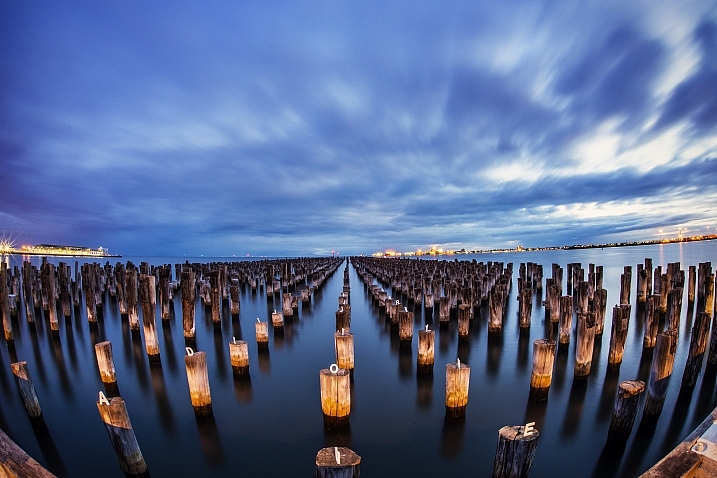
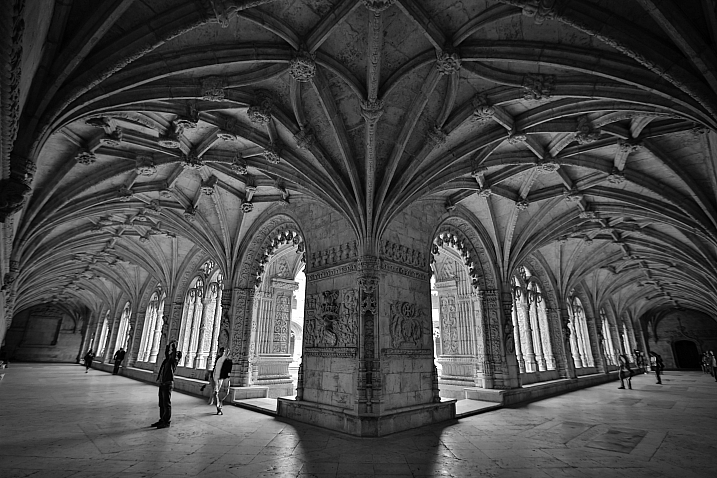
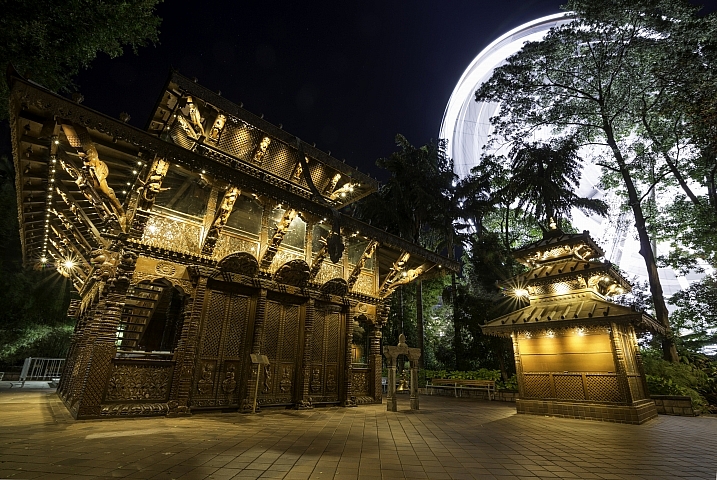
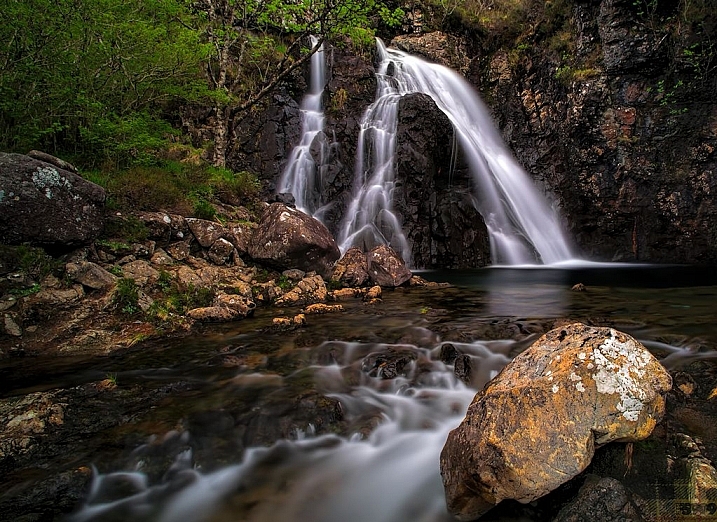
Wide angle lenses provide a very different view of the world than what your eye sees. They are inclusive, meaning the viewer feels like they are included in the image – like they could step into it.

These photographers have used the wide angle optics to great advantage – see if you enjoy them as much as I did:

Dave Wild

By Dave Wild

Stròlic Furlàn - Davide Gabino

By Stròlic Furlàn – Davide Gabino

Indigo Skies Photography

By Indigo Skies Photography

Meg

By meg

David Tomic

By David Tomic

Mark Iocchelli

By Mark Iocchelli

Giuseppe Milo

By Giuseppe Milo

Stròlic Furlàn - Davide Gabino

By Stròlic Furlàn – Davide Gabino

Pablo Fernández

By Pablo Fernández

Guillaume DELEBARRE (Guigui-Lille)

By Guillaume DELEBARRE (Guigui-Lille)

Paulo Valdivieso

By Paulo Valdivieso

Lenny K Photography

By Lenny K Photography

Fs999

By fs999

Fs999

By fs999

Emmanuel Huybrechts

By Emmanuel Huybrechts

googletag.cmd.push(function() {
tablet_slots.push( googletag.defineSlot( “/1005424/_dPSv4_tab-all-article-bottom_(300×250)”, [300, 250], “pb-ad-78623” ).addService( googletag.pubads() ) ); } );

googletag.cmd.push(function() {
mobile_slots.push( googletag.defineSlot( “/1005424/_dPSv4_mob-all-article-bottom_(300×250)”, [300, 250], “pb-ad-78158” ).addService( googletag.pubads() ) ); } );

The post 15 Expansive Wide Angle Images by Darlene Hildebrandt appeared first on Digital Photography School.


Digital Photography School

 
Comments Off on 15 Expansive Wide Angle Images

Posted in Photography


VSCO Open Studio is a free NYC workspace for photographers

12 Aug

VSCO has announced the launch of VSCO Open Studio, a free-to-use photography studio in the NoMad neighborhood of Manhattan, New York City. ‘It’s expensive to rent studio space for your passion projects. We get it,’ the company explains, saying that is why it decided to launch a free workspace replete with a permanent cyclorama, lighting equipment and gear that can be borrowed.

The Open Studio is located in VSCO’s NYC office, and while it is free to use, there is limited availability and therefore a $ 250 deposit is necessary to reserve the space. Those who fail to cancel at least 72 hours before their scheduled session will forfeit the deposit. Up to six people can be on the premises (though special permission for higher numbers can be requested), and the photography must be for a non-commercial project. Sessions are available once a week for 2-hour blocks.

VSCO has temporarily stopped accepting requests due to high demand.

Via: VSCO Blog

Articles: Digital Photography Review (dpreview.com)

 
Comments Off on VSCO Open Studio is a free NYC workspace for photographers

Posted in Uncategorized


Leica’s historical family tree is up for auction at Christie’s

12 Aug

A piece of Leica history is on auction at Christie’s – or more specifically, 107 pieces of history. The Stammbaum, or family tree, once greeted visitors at the company’s Solms, Germany headquarters and includes models introduced throughout Leica’s history. The collection traces models from rangefinder and SLR product lines all the way back to the U-r Leica, a prototype 35mm camera designed by Oskar Baranack.

The auction is open at Christie’s through September 14, 2016. The family tree’s assessed value is between £350,000 and £450,000 (roughly $ 456,400 – 586,800). If that’s a bit steep for you, there’s a free PDF download showing the camera models included over at apotelyt.com.

Articles: Digital Photography Review (dpreview.com)

 
Comments Off on Leica’s historical family tree is up for auction at Christie’s

Posted in Uncategorized


SpaceVR wants you to see the earth from space, in VR

12 Aug

SpaceVR is a startup that is planning to shoot VR cameras into space, so that subscribers to their service back on earth can see the planet from an astronaut’s point of view, in full 360-degree VR glory. The company has made a huge step towards reaching this goal by signing an agreement with aerospace company NanoRacks which, if all goes to plan, will launch the first SpaceVR camera satellite, called Overview 1, into space sometime in 2017. 

Overview 1 is a small cube satellite that carries two 4K image sensors with super-wide lenses. Video footage from the two modules would be stitched into a 360-degree spheric video panorama and transmitted to earth where it would be accessible via a wide range of VR viewing devices, including Oculus Rift and smartphones. The satellite will be delivered to the International Space Station (ISS) with the SpaceX CRS-12 Mission in 2017. NanoRack will then then deploy it into a low earth orbit using its CubeSat deployer. Once in place SpaceVR will have full altitude and flight control over the satellite. 

This is all good news for SpaceVR after initial attempts to raise funds for the project on Kickstarter had failed in 2015, and plans to install a more ambitious 12-camera system directly on the ISS had to be abandoned. If you’ve always wanted to see the earth through an astronaut’s eyes, and have sufficient faith in the project, you can pre-order a one-year subscription to the service on the SpaceVR website now.

Articles: Digital Photography Review (dpreview.com)

 
Comments Off on SpaceVR wants you to see the earth from space, in VR

Posted in Uncategorized


How to Be Different and Make Your Photography More Unique

12 Aug

When starting on the path of learning photography, it is common for some to already have an idea about what their work is supposed to look like. They admire and look at the work of photographers and want to be able to do similar work themselves. While this is an important part of the learning process, the best photographers all eventually go off in their own direction, and creatively it’s very important to think in this way. You want your work to ultimately be different. Here are some steps to help you figure out how to go against the grain and make your photography more unique.
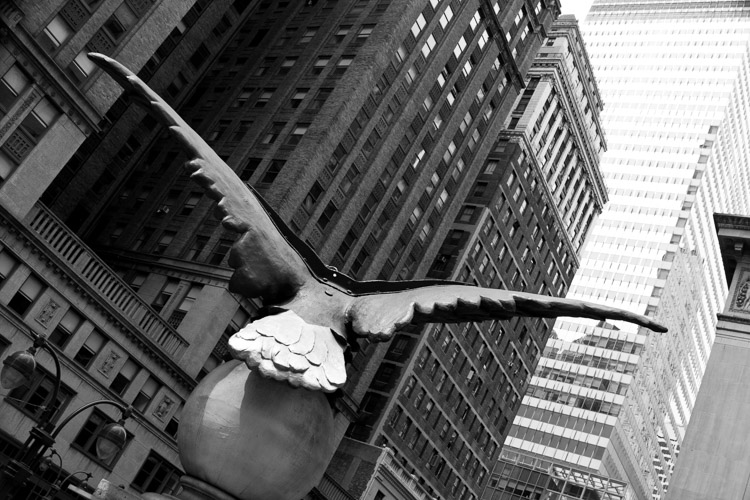
Soaring, 42nd Street, NYC

Soaring, 42nd Street, NYC.

1. Put your own spin on things you’ve learned
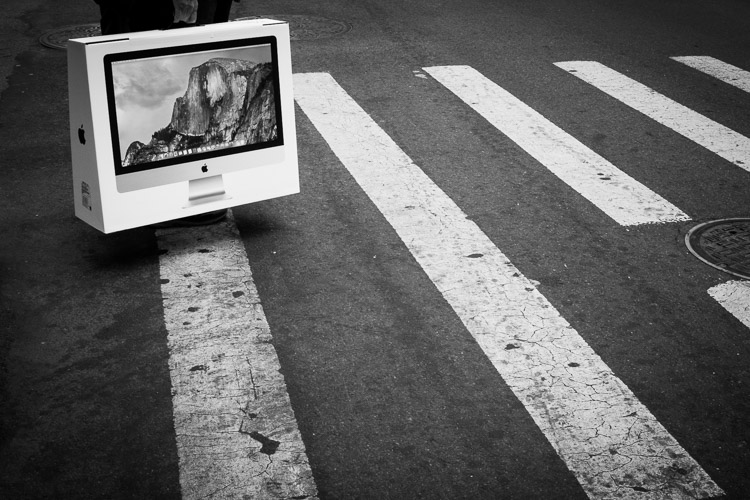
Yosemite, Broadway, New York.

Yosemite, Broadway, New York.

You cannot go against the grain if you don’t first understand the traditional techniques of photography. Take all of the photographers that you admire and teach yourself how to do what they did. Take the best aspects from all of them, whether it be content matter, lighting, exposure, overall look, or other technical skills, and integrate them into your own work. Become a hybrid of them all.

These photographers came before you for a reason, and it’s a luxury to be able to learn from them. You can still go in your own direction, however, you first need to create the foundation to be able to do that in the right way.

2. Don’t be afraid of people not liking your work

It is normal to feel like you need to cater to everyone’s interests. Obviously, you want to create work that a group of people enjoy, but try not to think about that at the beginning. No matter what you do, someone is not going to like your work, and probably more than a few people.
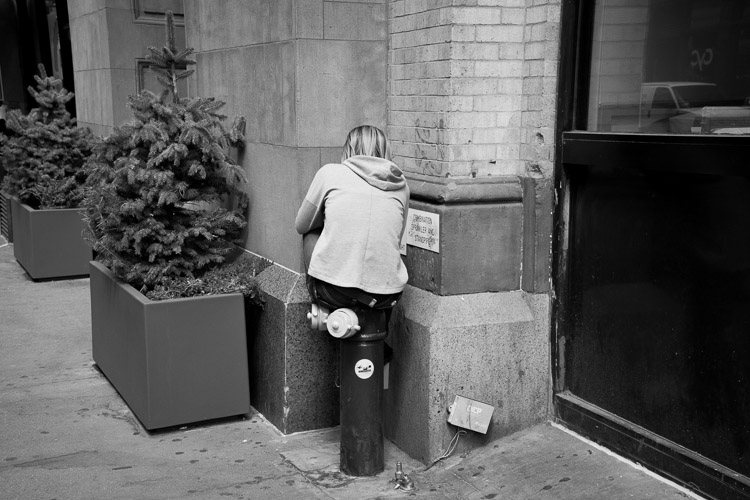
New York.

New York.

The problem with chasing likes, is that you end up playing the game of popularity. You look at what photography succeeds the most on social media websites, at what gains the most wows, and it’s easy to think that it is the best photography, and that is what you need to do as well. However, what you are really doing is conforming to work that has already been done before many times. You end up creating work so common that it is a dime a dozen. The most popular looks right now are the ones that are the easiest to achieve, with a medium amount of technical proficiency. You can do better.

There is no need to photograph for the purpose of getting likes. Seek out critiques and understand how people feel about your work, but your first aim should be to create work that means something to you. If you take everything else out of the equation, which of your images do you like the best? What has the most meaning behind it for you? This is often not a logical feeling. Rationally, you might think that a certain image is your best, but your gut may give a hint at something else.

Follow your gut. Follow your instincts. Search through your archive, and find work that you’re afraid of showing. That is usually the best stuff. Put it front and center, and develop the ideas of that work further.

3. Take some technical risks
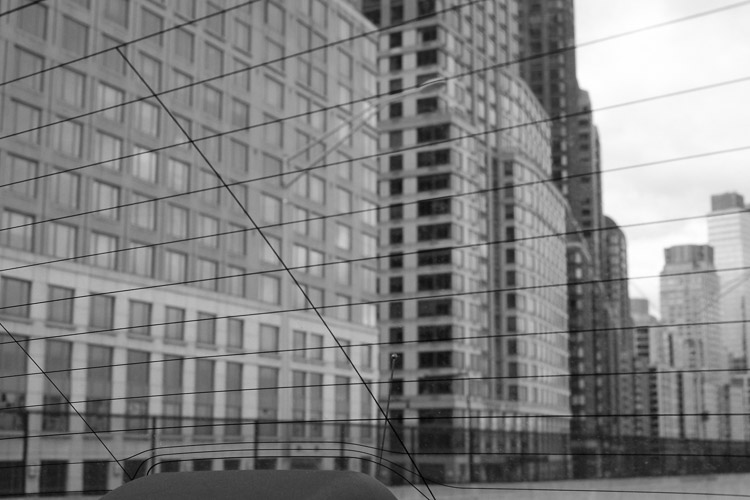
Trump Towers, New York.

Trump Towers, New York.

Try out as many alternatives to the traditional way of doing things as you can. Shoot in bad light, experiment with blurry photos, or create weird and off-kilter compositions. Make bright or dark images. Embrace imperfection and ambiguity. Not everything has to be beautiful.

Shoot in a more spontaneous way and follow your gut. Go to places that you normally wouldn’t explore, and take images. Shoot during your daily life. Force yourself to go to the most mundane place you can think of, and figure out how to create an interesting photograph there.

4. Think about, and create, exactly what you like

Intimate work is what makes great art. Think about ideas and subjects that you are passionate about, and explore them. Create nuanced work, and don’t be afraid if people don’t understand it right away. They probably won’t at first. Particularly if you are showing your work on the Internet, people scan so quickly, and they usually respond to what pops out at them in the most obvious way. Nuanced, thoughtful, and intimate work might not catch their eye right away. Experiment with this type of work and forget about how people might react to it.
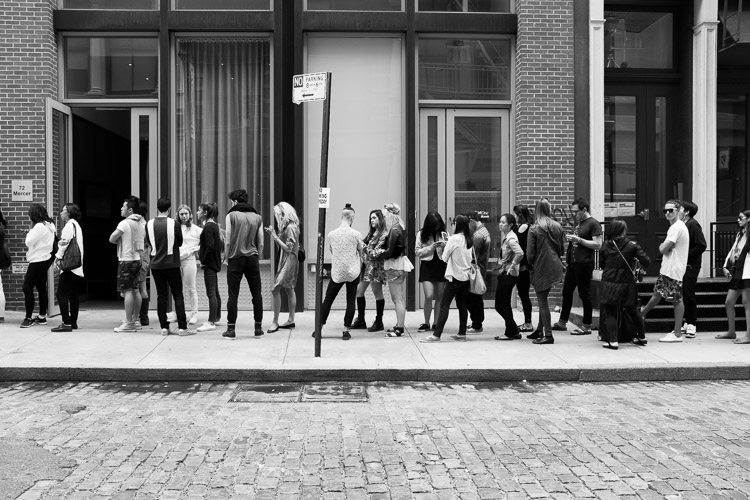
Sample Sale, SoHo, New York.

Sample Sale, SoHo, New York.

What are you interested in? Maybe it is nature, sports, politics, identity, community, Pokemon, or a particular place nearby. Create a story. It literally could be anything. Think about what you are most interested in, no matter how ridiculous it may seem, and see if you can figure out a way to combine that with photography.

Next, create a series based on your idea. This type of work displays extremely well in a series format, because you can cover more ground, tell more of a story, and people will take the time to go through it. It will be easier for them to understand the idea more as they explore, whereas their brain will often glaze over or miss the idea in a single image.

5. Educate people

There is a common misconception that you need to let art speak for itself. This is very true on one level, because great art will allow people to ponder, and to interpret it in different ways, without anything pushing that. However, people will often need to be grounded at some level, to let them start to understand the work and delve deeper into it in the first place. Then they can more effectively explore, and get lost in the work and their thoughts about it.
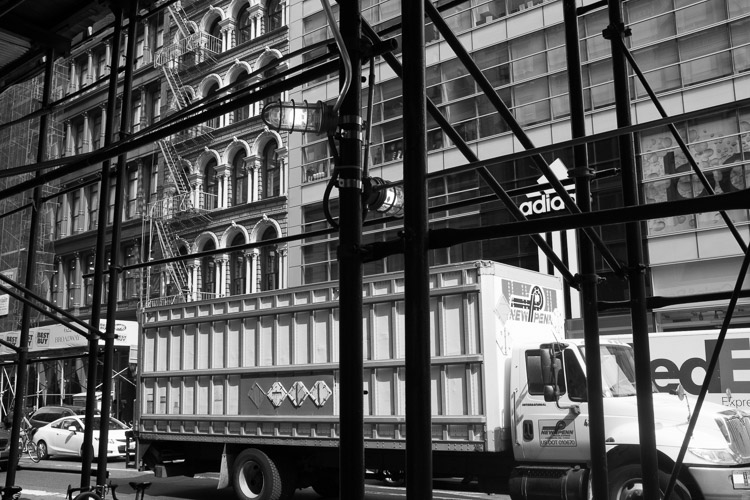
Broadway, New York.

Broadway, New York.

Writing about your work is important, because a good introduction will set people on the path to gaining pleasure from the work, without you having to say too much about it. Hold some information back of course. No need to over-share.

The bottom line

Going against the grain means you can do your photography in any way that you please, and you don’t even have to take the advice here. This is just to get you started thinking uniquely and experimenting, and as the photography quote goes, “If everyone is looking one way, look the other way.”

googletag.cmd.push(function() {
tablet_slots.push( googletag.defineSlot( “/1005424/_dPSv4_tab-all-article-bottom_(300×250)”, [300, 250], “pb-ad-78623” ).addService( googletag.pubads() ) ); } );

googletag.cmd.push(function() {
mobile_slots.push( googletag.defineSlot( “/1005424/_dPSv4_mob-all-article-bottom_(300×250)”, [300, 250], “pb-ad-78158” ).addService( googletag.pubads() ) ); } );

The post How to Be Different and Make Your Photography More Unique by James Maher appeared first on Digital Photography School.


Digital Photography School

 
Comments Off on How to Be Different and Make Your Photography More Unique

Posted in Photography


Legible Graffiti: Repainting Street Art for Digital-Age Audiences

11 Aug

[ By WebUrbanist in Art & Street Art & Graffiti. ]

legbility

Artist Mathieu Tremblin has hit the streets again, expanding on his portfolio of repainted tags, turning messy walls into neat and readable ‘tag cloud’ arrays.

tag wall before

tag wall after

His past works have turned murals into blocks of color or applied copyright watermarks to urban surfaces so they will show up in photographs, but this series seems to be an audience favorite, perhaps uniquely suited to a digital age.

tag door

tag door 2

In most cases, he simply takes a picture, paints over the existing graffiti (which, given public works, would probably not last long anyway), then matches the relative size and color of the vanished tags but in a consistent typographical style.

tag new

tag new 2

One could argue he the makes dynamic surfaces of Rennes, France static rather than simply legible, but it does raise questions about the intersection of words and meaning when it comes to street tagging. The content seems lost when rendered in boring fonts rather than a stylized hand.

street art repaint

strete art before after

‘The principle of ‘Tag Clouds’ is to replace the all-over graffiti calligraphy with readable translations like the clouds of keywords which can be found on the internet,’ Tremblin says.

tag new

tag new 2

“It shows the analogy between the physical tag and the virtual tag, both in form (tagged wall compositions look the same as tag clouds), and in substance (like keywords which are markers of net surfing, graffiti are markers of urban drifting).”

tag clean

tag clean 2

Oddly, too, the results stand out more than the original graffiti, thanks to familiarity – our mind is so used to seeing and dismissing curvy tags, but comprehending and reading fonted text.

Share on Facebook


[ By WebUrbanist in Art & Street Art & Graffiti. ]

[ WebUrbanist | Archives | Galleries | Privacy | TOS ]


WebUrbanist

 
Comments Off on Legible Graffiti: Repainting Street Art for Digital-Age Audiences

Posted in Creativity


Gulf Photo Plus PopUP_Berlin is Live

11 Aug

Just a quick note to let you know that tickets have just gone on sale for the Gulf Photo Plus PopUP event in Berlin for the weekend of October 29-30.

If you are unfamiliar with GPP’s PopUP, it is a road version/distillation of their world-famous Photo Week in Dubai. Each year, it is held in a far-flung city somewhere in the world that is not Dubai. It is done over a weekend, so as to be able to be fit in with many peoples’ work schedules.

The faculty sometimes varies, but this year it is the core group: Greg Heisler, Joe McNally, Zack Arias and me. The weekend will feature a half-day with each person. Basically, like being in front of a fire hose.

This is the fourth PopUP GPP has held. I have been involved in three of them, and they are one of the most enjoyable photo events I can think of. If Berlin is reachable for you and you are available for a weekend this fall, I strongly encourage you to attend.

(And as an FYI, Berlin has a large and thriving photo community, so this is expected to sell out quickly.)

For more info, and/or to register, head over to the Gulf Photo Plus PopUP site.

Cheers,
David
Strobist

 
Comments Off on Gulf Photo Plus PopUP_Berlin is Live

Posted in Photography


3 Tips for Taking Better Motorsport Photos

11 Aug

If you’re a fan of motorsport, then you’ve probably tried to take photo of a race car on the track. It’s not as easy as it looks is it? The high speed nature of motorsport photography tests even the best photographers and cameras. So it takes a special skill set to move your motorsport photos up to the next level.

Taking a photo of a car on track is one thing, but if you’d like to add one or more of the following elements to your photos, you’ll start to create some special images. So make sure you keep these three things in mind next time you are at a race track shooting motorsport: speed, action and emotion.

DPS Panning 001

#1 Speed

One of the biggest things that draws people to motorsport is the speed. If you’d like your photos to stand out, you need to showcase that speed in your photos. The photographic technique for doing this is called panning.

Panning is basically using a slow shutter speed to introduce motion blur into your photos. The easiest way to do this, is to focus on a particular point of the car, and move your camera in a smooth motion in the same direction as the car. This will keep the car nice and sharp, and blur out the background.

I would recommend that you start with a shutter speed of around 1/200th of second. As it takes a lot of practice to get a nice smooth motion. As you improve your technique and grow in confidence, you can progress to slower shutter speeds.

DPS Panning 002

Panning is one of the hardest techniques in photography. It takes a lot of practice to get it right. The slower the shutter speed, the less likely you are to get the car sharp in the photo. But the trade off is a more dramatic the effect when you do get it right.

Just remember that not even the professionals get every shot perfect, though they may not admit it. But once you have mastered the art of panning, you can look to add some more creativity to your shots by panning through objects, or using interesting angles.

DPS Panning 003

#2 Action

Getting a photo of one car on track is great. But those action moments are what really tell the story of the race.

Ideally you want to be on the look out for the moments when two or three cars are jostling for position. Usually in the opening laps of a race. Shots of the race leaders fighting for the lead will give your photographic story more definition.

To capture those actions moments, you will want to position yourself at one of the slower corners of the track. One that encourages passing. To do this you’ll need to be familiar with the venue. Each and every track is different.

DPS Action 001

Photographically, you’ll be looking to use a fast shutter speed to freeze the action. I would recommend using a shutter speed of 1/1000th at a minimum. Although the speed really all depends on how fast the cars are traveling at that section of the track.

Now, since you are freezing the action, you’ll still want to make the cars still look fast. To do this you will need to hide the wheels of the cars. Either shooting the cars directly front on, or from behind. Hiding the lack of motion in the wheels will give the cars a sense of speed, while still showcasing the action.

DPS Action 002

DPS Action 003

#3 Emotion

Motorsport, much like all sports, has high highs and low lows. That is reflected in the emotions you’ll see around the race track.

To complete a photographic story of the race, you’ll need to capture either the fans, teams, or drivers celebrating victory. That could be a victory burnout, it could be driver waving to the crowd, or it could be the team applauding as their driver crosses the checkered flag.

DPS Emotion 001

While the highs are good, the lows also tell an equal part of the story. It could be a crash between two competitors. It could be a driver walking away from his broken down car. These all add up to telling the story of the race.

Unfortunately, it takes a little bit of luck to capture the emotion in motorsport. That’s why these shots are the most rewarding.

Photographically these emotional moments take split second decisions to capture. If you’re photographing a driver doing a burnout, you’ll need to quickly drop the shutter speed to showcase some motion in the wheels. but not so much that the car starts the blur. I’d suggest something along the lines of 1/250th.

For capturing other celebrations, which are often just fleeting moments. I’d recommend a high shutter speed and wide aperture to create shallow depth of field to draw focus to the part of the celebration that tells the best story.

DPS Emotion 002

Summary

If you can keep those three things in mind while you are taking photos trackside, you’ll take your motorsport photos to the next level. Then you’ll really telling the story of an event, instead of just capturing cars on a track.

googletag.cmd.push(function() {
tablet_slots.push( googletag.defineSlot( “/1005424/_dPSv4_tab-all-article-bottom_(300×250)”, [300, 250], “pb-ad-78623” ).addService( googletag.pubads() ) ); } );

googletag.cmd.push(function() {
mobile_slots.push( googletag.defineSlot( “/1005424/_dPSv4_mob-all-article-bottom_(300×250)”, [300, 250], “pb-ad-78158” ).addService( googletag.pubads() ) ); } );

The post 3 Tips for Taking Better Motorsport Photos by Rhys Vandersyde appeared first on Digital Photography School.


Digital Photography School

 
Comments Off on 3 Tips for Taking Better Motorsport Photos

Posted in Photography


Elinchrom adds Sony compatibility to its high speed sync Skyport Plus HS wireless controller

11 Aug

Lighting manufacturer Elinchrom has introduced a version of its high speed sync Skyport remote flash trigger and controller that is compatible with Sony cameras. The new Skyport Plus HS transmitter allows Sony camera users to synchronize their shutter with Elinchrom flash heads using speeds of up to 1/8000sec. The system has been in use for some time for Canon and Nikon users, but now Elinchrom has added Sony to the list of camera brands with which the transmitter works.

Elinchrom’s high speed sync system is called Hi-Sync and varies from hotshoe style flash units in the way it produces light for short shutter speeds. While HSS modes in speedlights tend to use pulsing flash that gradually covers the camera sensor as the shutter slit passes by, Hi-Sync just uses a relatively long-duration burst. The company has introduced a system it calls OverDrive Sync that allows the user to calibrate the timing of the burst to the opening and closing of the individual camera’s shutter to ensure the two events coincide. This ODS system also allows a certain degree of exposure manipulation as photographers can tailor their shutter to different segments of the flash output curve.

The Skyport Plus HS 2.4GHz radio transmitter has a range of 200m/656ft when used without obstruction between the camera and the head, and 60m/196ft when used indoors. It system offers 20 channels for normal shooting and 20 more for high speed shooting, which can be arranged in 4 groups, and an AF illuminator to assist in low light conditions.

The Elinchrom Skyport Plus HS costs $ 249.95 USD / €249 EUR / £199 GBP.

For more information see the Elinchrom website.

Sony camera compatibility

 A7  A7 ll  A7r  A7r ll  A7s
 A7s ll A33 A37 A55 A57
A77 A77 ll A99 A100 A230
A290 A330 A350 A380 A390
A450 A500 A550 A560 A580
A700 A850 A6000 RX1 NEX-7K

Press release:

Elinchrom expands the family of EL-Skyport Plus HS transmitters to Sony users !

Since the launch of the Skyport Plus HS for Canon and Nikon, Sony users have been patiently awaiting their dedicated Transmitter. As promised, the most advanced Skyport ever is now available to Sony users. This will give them the ability to control and visualize power settings for all their compatible Elinchrom lights and the capability to shoot at speeds up to 1/8000s in Hi-Sync mode.


Visual Feedback Interface
The Large LCD display of the Skyport HS features two-way control via a visual feedback interface that lets you see the exact power up to 10 compatible Elinchrom lights in your setup right on the transmitter.

Users can control the modelling lamp and power of each flash unit directly from the Skyport transmitter, which instantly shows the updated settings.

This provides unsurpassed levels of “two-way communication and control” for every light in your setup, right from your camera.

Hi-Sync opens up the world of flash photography
Elinchrom Hi-Sync technology lets you go beyond the X-Sync of your camera. Photographers can simply switch to Hi-Sync mode and access sync speeds up to 1/8000s to freeze motion, overpower the sun, darken backgrounds or use a wider aperture. The ODS (Over Drive Sync) enables users to fine tune the Skyport Plus HS transmitter’s trigger signal to optimize exposure at high shutter speeds while gaining up to 2 more f-stops of light.

Even more
The Skyport HS has 20 frequency channels that can be used for either Normal or Speed mode. The transmitter attaches easily and securely to the hotshoe with its one-touch quick-lock mechanism, and is powered by 2x AA batteries. Users can also enjoy a range of up to 656ft (200m) outdoors, and up to 196ft (60m) indoors.

The Skyport HS continues the Elinchrom commitment to quality
Providing photographers with tools to enhance their shooting experience whilst also showing how Elinchrom is looking firmly ahead to the future. The Skyport HS represents a seamless extension of the EL-Skyport family since it is also compatible with the three previous generations of Elinchrom flash units (those using the EL-Skyport Transceiver RX module for Style RX, Digital RX, and Ranger RX systems, and those with integrated EL-Skyport modules for the BRX, D-Lite RX, ELC Pro HD, and ELB series.)

Other camera systems are currently being evaluated for future release.

EL-Skyport Plus HS Features
* Large LCD with unique, real-time display of remote flash power settings
* Easy access buttons and rotation ring for fast setup and control
* 20 Channels, 4 Groups for Normal and Speed Sync Modes
* Hi-Sync, up to 1/8000sec with Sony, Canon and Nikon cameras
* Extended working range up to 656ft (200m)
* AF Illuminator and sure-lock mounting foot
* USB port for future-proof upgrades

The EL-Skyport Transmitter Plus HS is now available for Sony, Canon and Nikon cameras.
EL19371 – EL-Skyport Transmitter Plus HS for Sony
EL19366 – EL-Skyport Transmitter Plus HS for Canon
EL19367 – EL-Skyport Transmitter Plus HS for Nikon
Street Price: $ 249.95 USD / €249 EUR / £199 GBP

Specifications
Frequency Band : 2.4 GHz
Channels : 40; (20 in Normal mode – green / 20 in Speed mode – red)
Groups : 4: 1, 2, 3, 4
Flash synchronization :
Normal: limited to the native X-sync of your camera
Hi-Sync mode: up to a 1/8000 sec.*
2nd curtain sync: only Canon
Range : Up to 200m (656’) for triggering
AF Assist Beam : Yes
Connection :
Foot for Sony hotshoe (19371) Canon hotshoe (19366) and Nikon hotshoe (19367)
Mini-USB for firmware updates
2.5 mm remote release
Power source : 2x AA batteries
Indicators and Controls :
LCD screen display:
Sync mode, group, channel, ODS activation, Hi-Sync activation, shutter mode, remaining battery power, flash unit name, flash unit ID, flash unit power level, flash unit modelling level.
Buttons:
Group selection, test, rotation ring to change values, confirmation, on/off and refresh.
There are also 4 buttons with variable functionality:
Power +/-, Modelling lamp off/prop/free, Individual unit selection and setup on the dashboard. Menu up, menu down and exit in the setup menu.
Dimensions : 84.1 x 68.3 x 58.5 mm (3.3 x 2.7 x 2.3”)
Weight : 120 g ( 0.27 lbs.) without batteries

Articles: Digital Photography Review (dpreview.com)

 
Comments Off on Elinchrom adds Sony compatibility to its high speed sync Skyport Plus HS wireless controller

Posted in Uncategorized


Throwback Thursday: when studio lenses retire

11 Aug

The Nikkor 50mm F1.4D has been around for, well, a while. Its age was something we noted even when we reviewed it back in 2008, though it’s still one of five 50mm lenses that Nikon still makes today (counting the 50mm F1.8G not-so-special edition that comes with the Nikon Df). Most significantly for us, it was one of our standard studio lenses for Nikon-mount cameras for quite some time.

Notice how I said ‘Nikon-mount’ and not just Nikon – because, fun fact, a number of digital cameras used the Nikon F mount back in the day. Just check out the leading images for our reviews on the Finepix S5 Pro and Kodak DCS 14n. The last Nikon camera we slapped it on for such a purpose was the Nikon D3S, even though the newer G version had been out for some time. And why not? Stopped down, the Nikkor 50mm F1.4D is plenty sharp, as with most standard 50mm primes.

So, you just dropped $ 6500 on a D5 and didn’t budget for lenses – good thing the Nikkor 50mm F1.4D can be had on the cheap these days.

So when Sam discovered this lens lurking in the back of our special cabinet of studio lenses, collecting dust ever since it had been replaced with the newer G version, we got kind of excited. This is a lens I own personally and have been using on older camera bodies for years, but we were eager take it for a spin on some newer sensors to see just how well it holds up.

It should go without saying that the Nikon 50mm F1.4D holds up just fine on the old 12MP full-frame sensors of yore, but at this aperture, it should be fine even on newer setups. Nikon D700. ISO 1600, 1/200 sec, F2.8.

Photo by Carey Rose

As far as the technical details go, this iteration of the lens was introduced in 1995, though the basic optical design goes all the way back to 1977 – 7 elements in 6 groups. (For comparison, the newer 50mm F1.4G is 8 elements in 7 groups). It’s made of decent quality plastic, feels fairly dense given its compact dimensions, and you’ll constantly have to tell people who borrow it to keep their fingers off the focus ring while focusing, lest they blow out the motor on the camera. This lens further shows its age by focusing externally, and is very obviously not weather-sealed. On the plus side, it focuses very fast on a higher-end camera body with a good focus motor, but it doesn’t focus silently like its G-series replacement.

Detail in the corners on 24MP is pretty good (as it should be at F5.6). Hopefully you’re a fan of hexagonal bokeh, because the aperture blades on the 50mm F1.4D aren’t rounded. Nikon D750. ISO 1600, 1/100 sec, F5.6.

Photo by Carey Rose

So while it makes a little noise while doing so, this older 50mm F1.4D focuses a fair bit faster on a pro-level body than the newer F1.G version. It was actually great on the D5, though unfortunately, you lose all the outer cross-type points when using a D-series lens. So we just stuck to the center points for low-contrast subjects when using it.

The simple design is so delightfully transparent and obviously imperfect at wider apertures that I find it a lot of fun to shoot with.

On a personal note, I still love this lens. Newer designs handle flare better and are generally sharper wide-open (especially in the corners). But there’s something about the character of this lens that keeps it in my bag. The simple design is so delightfully transparent and obviously imperfect at wider apertures that I find it a lot of fun to shoot with. Just watch out for fringing on backlit subjects.

So, sharpness isn’t all that great wide-open. But that bokeh still looks mighty nice. Nikon D5. ISO 1000, 1/125 sec, F1.4. Processed to taste from Raw with no noise reduction applied.

Photo by Carey Rose

So what’s in the future for our former-studio lens? Well, seeing as DPReview owns it and it’s in almost brand-new condition, it seems fitting to give it a second life out in the real world. It’s a lens that I’m looking forward to continuing to use on newer bodies when I want something a little less clinical, and it’s small enough to basically disappear once it’s mounted.

When you’re out and about, the Nikon 50mm F1.4D will make the Nikon D5 look a little less obtrusive than with a big F2.8 zoom, and with snappy autofocus to boot. ISO 1400, 1/250 sec, F2.

Photo by Carey Rose

Do you have an older, out-of-date lens that you still hold on to? What keeps you coming back to it? Let us know in the comments!

Articles: Digital Photography Review (dpreview.com)

 
Comments Off on Throwback Thursday: when studio lenses retire

Posted in Uncategorized