RSS
 

Archive for May, 2016

Two in one: LG G5 camera review

06 May

DPReview smartphone reviews are written with the needs of photographers in mind. We focus on camera features, performance, and image quality.

$ (document).ready(function() { SampleGalleryV2({“containerId”:”embeddedSampleGallery_4023333010″,”galleryId”:”4023333010″,”isEmbeddedWidget”:true,”standalone”:false,”selectedImageIndex”:0,”startInCommentsView”:false,”isMobile”:false}) });

The LG G5 succeeds last year’s G4 and is the first LG smartphone with a dual-camera setup. With an F1.8 aperture and optical image stabilization, the main 16MP module is very similar to the G4 in terms of specification and provides a 78-degree angle of view which is in line with most current high-end smartphone cameras.

But here’s where things get interesting: the second lens comes with an F2.4 aperture and 8MP sensor and captures a 135-degree super wide-angle image. In the camera app you can switch between lenses via a button, and when using the digital zoom the camera switches seamlessly between the two modules. As before, the autofocus is assisted by a laser that measures the subject distance.  

There is also an optional camera grip that should make the G5 particularly appealing to mobile photographers. The G5’s 2,800mAh battery is removable and slots into the device from the bottom. The latter clips away when a release button is pressed which allows you to attach a number of replaceable modules, one of which is the CAM Plus camera grip. It comes with an additional 1,200mAh of battery capacity and offers power, shutter, video and zoom buttons. It also lets you lock exposure and provides a more comfortable grip. We’ve put the G5 and the CAM Plus grip through its paces. Read our full review to find out how they performed.

Key Photographic / Video Specifications

  • 16MP main camera
  • F1.8 aperture
  • Optical image stabilization
  • 8MP secondary super wide angle camera with F2.4 aperture
  • 8MP, F2.0 front camera
  • 4K video
  • 120 fps 720p slow motion video
  • Optional camera grip with shutter button and control dial

Other Specifications

  • 5.3-inch 1440p display
  • Snapdragon 820 chipset
  • 4GB RAM
  • 32GB internal storage
  • microSD support
  • 2,800 mAh battery

Our 9-page review

We’ve considered every aspect of the LG G5 with the photographer in mind. We examined the user interface of the native camera app and its special features. We experimented with the camera’s performance when taking stills and video, and had a play with the device’s many special feature modes. Click any of the links below for more information of specific functions and continue to our conclusion for a final summary of our findings.

  • Page 2: Design and Hardware
  • Page 3: Camera Operation
  • Page 4: Camera Features
  • Page 5: Camera Features cont.
  • Page 6: Image Quality and Performance
  • Page 7: Image Quality Wide Angle
  • Page 8: Video Mode
  • Page 9: Conclusion and gallery

Articles: Digital Photography Review (dpreview.com)

 
Comments Off on Two in one: LG G5 camera review

Posted in Uncategorized


8 Reasons to Love Long Exposure Photography

06 May

Long exposure photography is not a new type of photography, but it is one that is gaining in popularity. Many photographers are buying Neutral Density filters (ND Filters – more on them below) to capture their own long exposures. It is quite an addictive form of photography. Over the last couple of years I have added many different ND filters to my kit. I use Formatt Hitech filters, though there are other brands that have them as well. Here are some reasons why I love this type of photography.
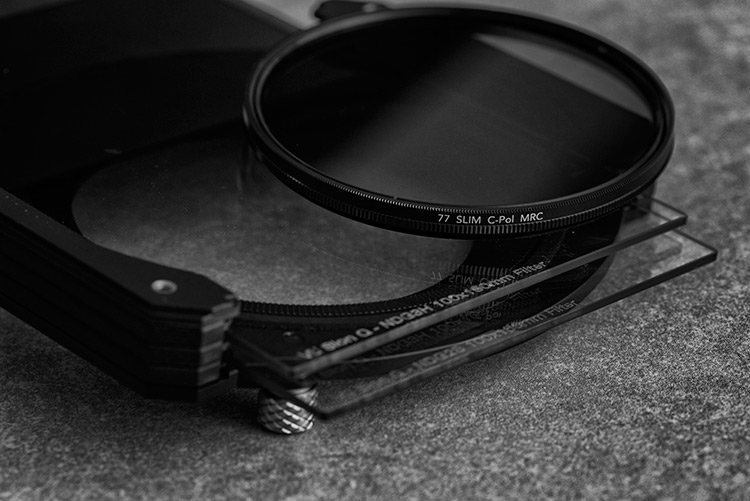
Drop-in and screw-in filters

Note: Neutral Density filters or ND Filters are designed to restrict the amount of light that enters the lens and camera. They can either screw onto the end of the lens or you can buy brackets that will fit square ones. They came in different densities, and how dark they are is referred to by how many stops of light they block. The most common ND filter is the 10 stop which many brands make. The neutral refers to them having no colour, supposedly. They are meant to have no colour and cause no colour cast in your images, though the more stops the filter has, often the more likely you are to get some colour cast. Cheap ND filters always have a colour cast, usually magenta. If you want to get serious about doing long exposure photography, then purchasing good quality filters from the start is something you will never regret.

1 – Get a smooth look to water, or show how the water moves

One of the more popular ways of using long exposures is to smooth out water to make it look still or frozen. This can be done with the ocean, rivers, and lakes. It can make the water in a scene less distracting because the water doesn’t have any movement in it. The image is then more about the sky, the rocks or whatever else is there.
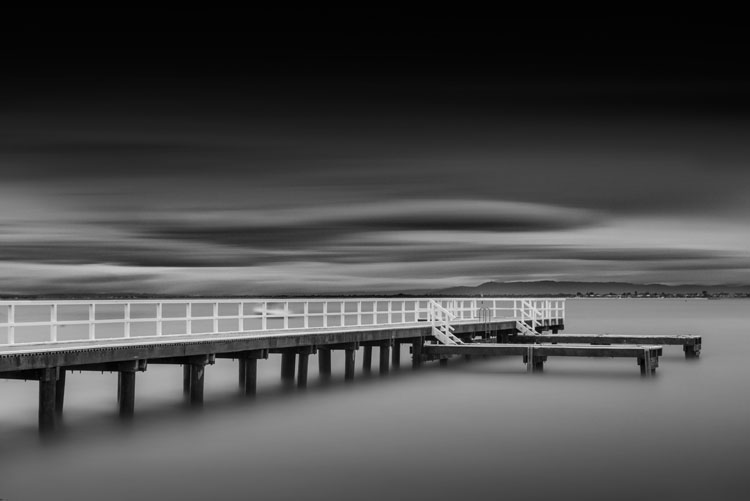
LeanneCole-7reasons2lovelongexposures-daveysbag

A pier at Davey’s Bay, the long exposure has blurred the clouds and smoothed the water – 5 minute exposure.

Another alternative is to do long exposures of around a second, so you can see the movement of the water. As the tides come in and out on the beach, you can see where it has been, it almost looks like a slow motion capture. It’s a wonderful effect and we are seeing it a lot more. Though water moving on the beach isn’t the only way to use it, water falling over rocks can be just as engaging.

Waterfalls are another type of long exposure that people love. Though many waterfalls are down in canyons, you still need a ND filter to get that smooth marshmallow effect with the water as it flows down. Though, you don’t often need a multi-stop one like you would for the previous water examples.
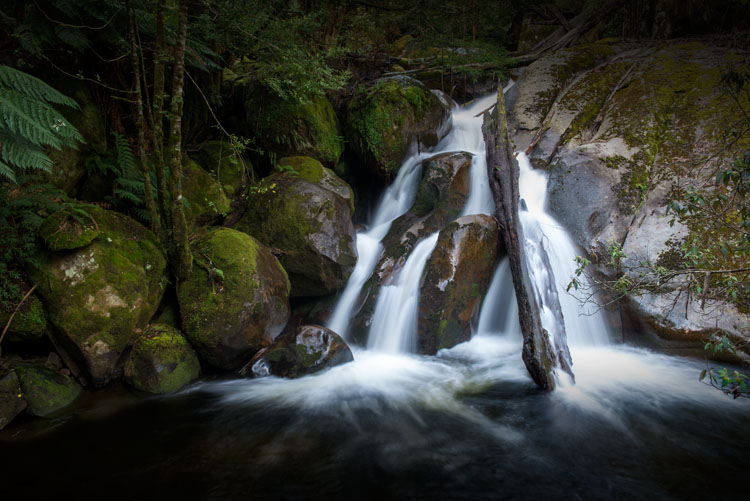
LeanneCole-7reasons2lovelongexposures-taggertycascades

Adding a few seconds (1.33 seconds) to an image of a waterfall gives it a lovely marshmallow effect. You can also see the movement of the water.

2 – Get blurred clouds

Architecture is a very popular subject for long exposures because you can blur the clouds. It gives the image a different look, and it almost seems like your subject is lost in time. With blurring the clouds, it also makes the building(s) you are photographing your main focus point, and gets rid of any distractions.
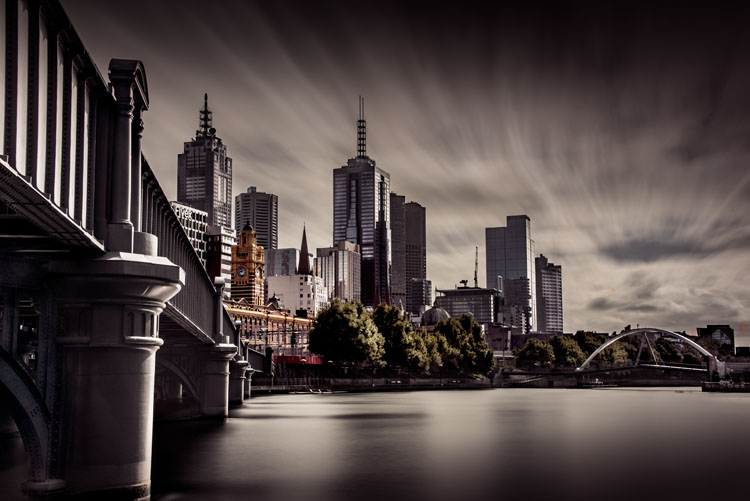
LeanneCole-7reasons2lovelongexposures-melbourne

Melbourne from across the river. The long exposure (4 minutes for this shot) gives the view a different feel to what we normally get.

3 – You can clear spaces of people and traffic

If you love photographing areas in towns and cities, but one of the challenges of that type of photography is that people are always around, long exposures using filters will help you clear those distractions. Exposures of several minutes can almost clear a scene of people, though it depends on the density of them. A scene where there are only a few people walking around can come out with the appearance of being empty with a long exposure. However, where there are many people you will find that they just blur, though this can be a great effect as well.
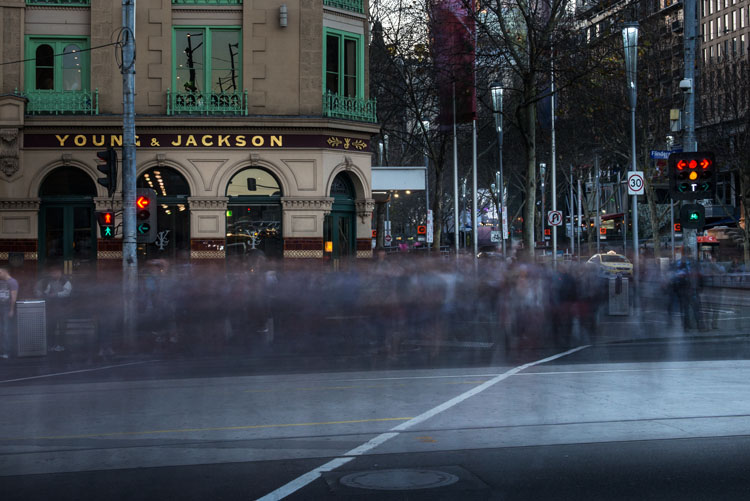
LeanneCole-7reasons2lovelongexposures-youngandjacksonscorner

Photographing a busy intersection with a ND filter makes people look like ghosts – 30 second exposure.

4 – There is a quietness about the work

Once people are introduced into a scene that you are photographing, it brings with it noise, as in how people see the images. They can be noisy, and whether people looking at the images realize it or not, they hear what they would hear if they were actually there. Vehicles can have a similar effect.
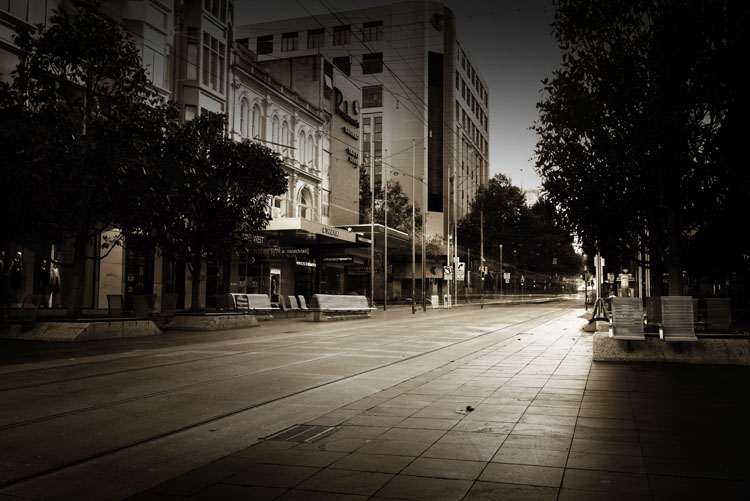
LeanneCole-7reasons2lovelongexposures-bourkestmall

Bourke Street Mall at peak hour, a 10 minute exposure has removed the people and given it an empty feeling.

If you do a long exposure of the same thing, that noise is gone. Often when you see a long exposure image it has a quietness to it. Fill a room with images done this way and put people in it, they will feel as though they have to be quiet.

5 – Take photos of a common subject and give it a completely different feel

In every city around the world there are iconic places and scenes that everyone is trying to photograph differently than others. If you have some ND filters and your tripod, you can create an image that not many others get. Especially when travelling, not many people have filters with them. You would have an opportunity to get something quite different to the thousands of other photos that are taken in those places. Of course it is a given that they are places where you can set up a tripod.
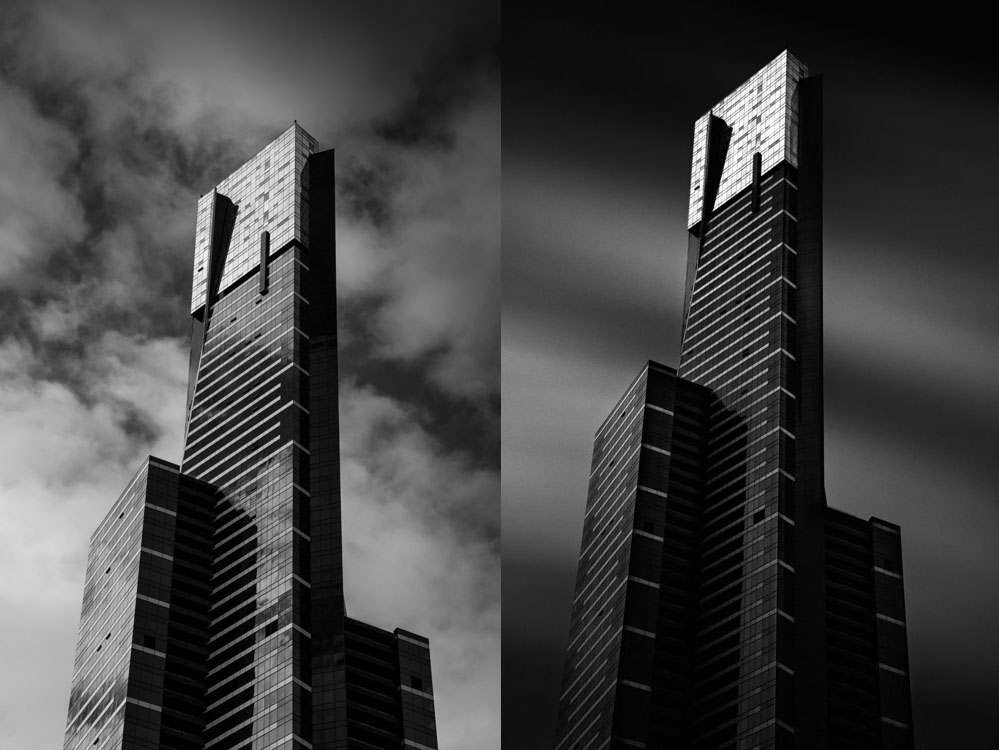
LeanneCole-7reasons2lovelongexposures-eurekatower

Eureka Tower is a very photographed building in Melbourne, the image on the right is similar to what most people get, but by adding a ND filter you give a well photographed building a different look. Left image: 1/200th – Right image: 6 minutes.

6 – Give a landscape a sense of time, or time passing

When you have images of clouds being blurred as they go over the top of a building or a landscape, it seems like you have captured time. Many people feel like they are looking at time passing. The long exposure is taken over a period of time, so it makes sense that you would get that feeling when you look at those images.
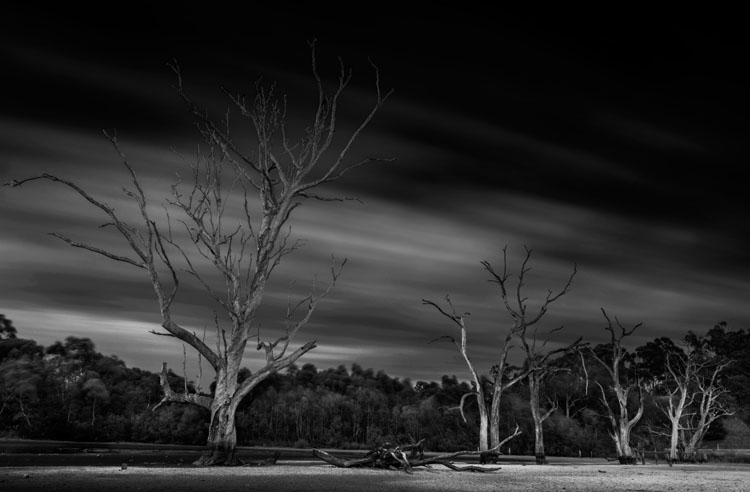
LeanneCole-7reasons2lovelongexposures-banyuleflats

Dead trees in a dried out swamp, and the moving clouds give the impression they have been there for an eternity – 3 minute exposure.

7 – Images have a surreal look and give you a different perspective

One of the great aspects of long exposure photography is that you can set up your camera, your tripod, and slot in your neutral density filter, but you won’t know what you will get until the image is taken. It will give you an image that is nothing like what you can see with your eyes. When you get the images onto your computer it is always a surprise to see exactly what you have captured.
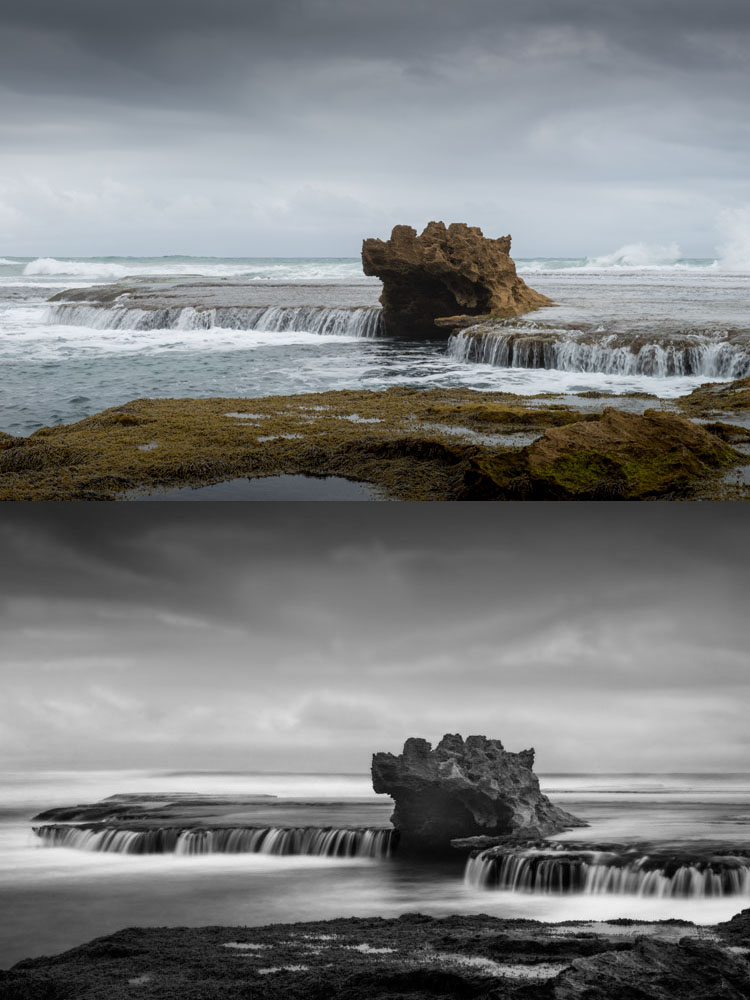
LeanneCole-7reasons2lovelongexposures-dragonshead

The same image, one take without the ND Filter and the second one with it. It gives the scene a completely different feel. Top image: 1/50th – Bottom image: 13 seconds.

8 – Night Photography is great for the same reasons

Night photography gives you an opportunity to take photos and not have to worry about filters. You can expose for however long you need. If it;s a windy evening and there are clouds in the sky, you will get movement in your images. If you are taking photos across a water way, then the water will be smooth, and you will get reflections of the lights if there are some on the other side. For all the reasons stated for long exposures, night photos have the same effect.
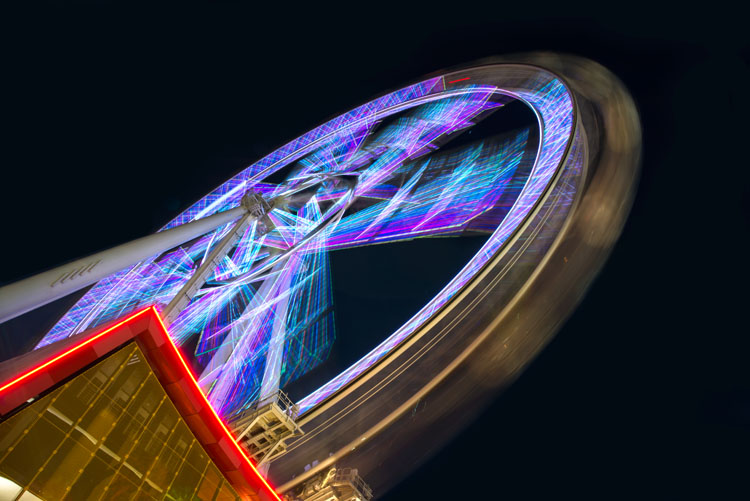
LeanneCole-7reasons2lovelongexposures-melbournestar

A night long exposure makes the Melbourne Star blurred and you can see how it moves – 2 minute exposure.

These are the reasons why I think long exposure photography is wonderful. If you are curious and want to try doing these then I am sure you will become addicted like many others. If you already do them, you might have your own reasons and perhaps you would like to share with us what they are in the comments below as well as your long exposure images.

googletag.cmd.push(function() {
tablet_slots.push( googletag.defineSlot( “/1005424/_dPSv4_tab-all-article-bottom_(300×250)”, [300, 250], “pb-ad-78623” ).addService( googletag.pubads() ) ); } );

googletag.cmd.push(function() {
mobile_slots.push( googletag.defineSlot( “/1005424/_dPSv4_mob-all-article-bottom_(300×250)”, [300, 250], “pb-ad-78158” ).addService( googletag.pubads() ) ); } );

The post 8 Reasons to Love Long Exposure Photography by Leanne Cole appeared first on Digital Photography School.


Digital Photography School
 
Comments Off on 8 Reasons to Love Long Exposure Photography

Posted in Photography


No alias: Pentax K-1 Pixel Shift shows impressive early results

06 May

It’s been a long wait for the arrival of our Pentax K-1, but it finally is here. We wasted no time taking Ricoh’s new flagship DSLR to our studio to see how the long-awaited full frame 36MP sensor stacks up to the competition. Huge thanks to LensRentals for renting us the lens for these tests.

$ (document).ready(function() { ImageComparisonWidget({“containerId”:”reviewImageComparisonWidget-21512957″,”widgetId”:354,”initialStateId”:2458}) })

Pixel Shift

It’s worth calling out in particular one of the major highlights of the K-1: its Pixel Shift Resolution mode that debuted in the APS-C format K-3 II last spring. We’re only showing you this mode at ISO 100 for the time being, but we’ll be updating our widget with higher ISOs once ACR support is updated.

The K-1’s Pixel Shift Resolution mode takes four consecutive shots and moves the sensor by a single pixel each time. This means that each of the original pixel positions gets sampled by a red, a blue and two green pixels. This has a few major benefits. First, it removes the need to demosaic: you don’t have to interpolate data from the surrounding area to build up color information, which leads to less color aliasing. It also brings a modest increase in resolution because you’re sampling luminance (green) information at every pixel position and not effectively blurring it by borrowing it from surrounding pixels. The increased resolution can easily be seen by looking at the color resolution targets, or looking at the text in the center of the studio scene, which shows no aliasing and can be read down to the very last line.

Another benefit to Pixel Shift is better noise performance: because you’re taking four shots, the camera essentially captures four times as much light, which decreases relative shot noise contributions. The decreased noise levels lead to better high ISO performance, and increased dynamic range.

There’s yet another benefit to Pixel Shift: the camera locks up the mechanical shutter and mirror, and uses a fully electronic shutter instead. This removes any risk of vibrations that might be caused by the mechanical shutter. For example, there’s a very tiny amount of blur in single shot mode at 1/40 sec, although it’s near-imperceptible without a direct comparison to a sharper, Pixel Shift image.

Articles: Digital Photography Review (dpreview.com)

 
Comments Off on No alias: Pentax K-1 Pixel Shift shows impressive early results

Posted in Uncategorized


Ready for takeoff: GoPro records rocket trip into space

06 May

While you’re waiting for Space X to get you into orbit, there’s an easier way to enjoy an otherworldly view. A GoPro HERO 4 camera was used to record a UP Aerospace Inc. SL-10 rocket’s travel into space, showing the flight at speeds of up to Mach 5.5 from Earth to an altitude of 120,700m / 396,000ft and back again. The video was recorded on November 6, 2015 during a mission to deploy the Maraia Capsule designed by NASA, and was recently showcased by GoPro on its YouTube channel.

This isn’t the first time GoPro’s action cameras have been used to record space missions. In April 2015, for example, NASA published a pair of videos showing astronauts on a spacewalk, both of which were recorded using the small action cameras. A GoPro was also used to record Felix Baumartner’s ‘Red Bull Stratos,’ a space jump that took place 24 miles above Earth. 

Articles: Digital Photography Review (dpreview.com)

 
Comments Off on Ready for takeoff: GoPro records rocket trip into space

Posted in Uncategorized


A Landscape Photography Tutorial (from a Portrait Photographer Trying Something New)

06 May

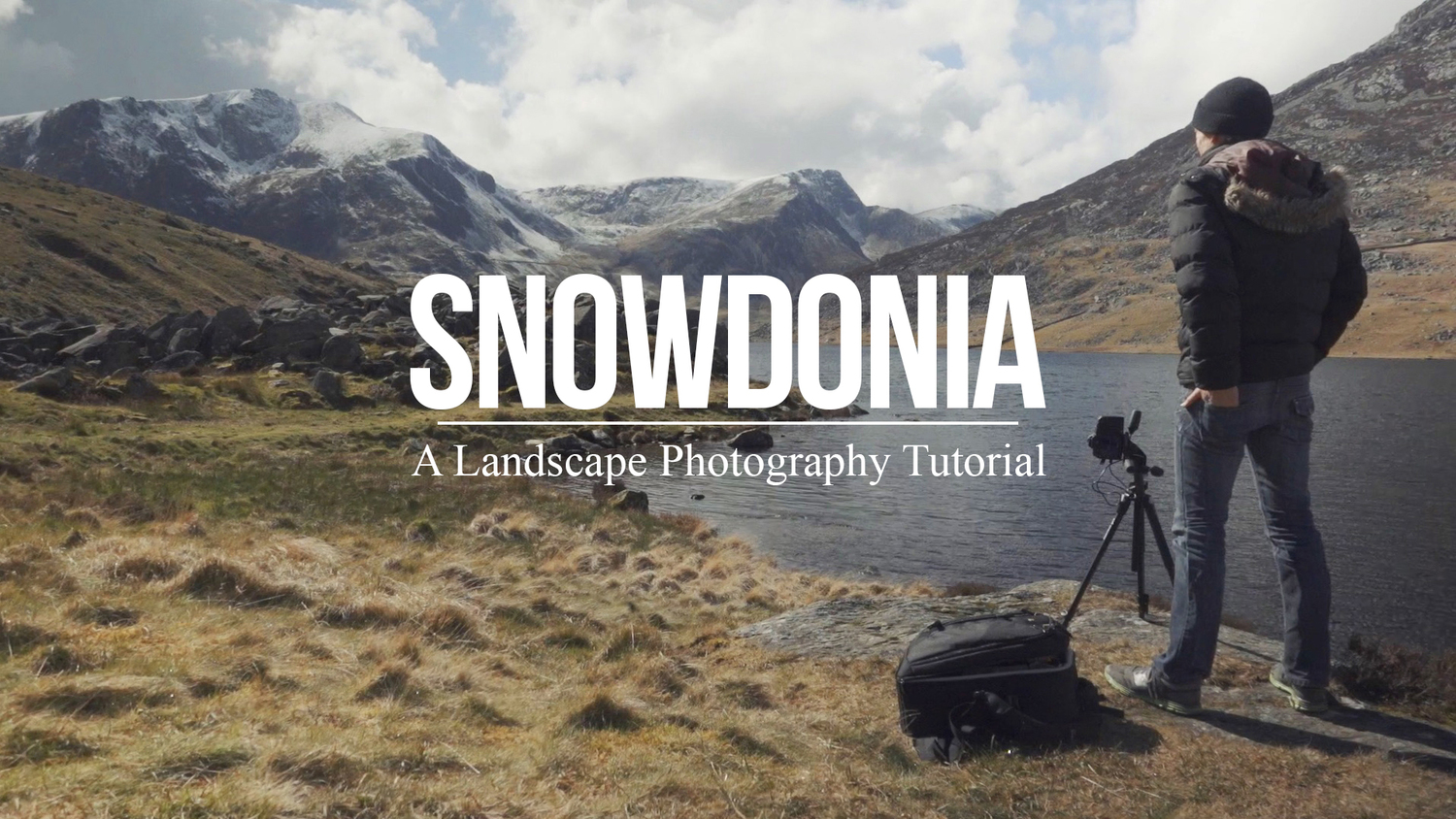
landscape-photography-tutorial

Sometimes when you’re in a rut the best way to get out of it is to do something completely out of the box and try something new – something a little risky.

Portrait photographer Sean Tucker changed things up recently but setting out on a landscape photography road trip.

He videos the experience and I think the result is fascinating – both to see how he approached his landscape photography but also to hear his insights on stepping outside his comfort zone to approach a new type of photography for him.

I like what he wrote in his blog about the experiment:

“There was no guarantee the trip wouldn’t be a waste as I’m not a professional landscape photographer by any means, but I think the best creativity will always come out when you are taking risks.”

Grab a cup of your favourite beverage and settle down to journey with Sean. The end results are at the end of the video.

Have you ever stepped out of your normal type of photography to try something new like Sean did?

Further Reading for helping you to break out of a photography rut:

  • 10 Tips to Motivate You out of a Photography Rut
  • 5 Ways To Break Out of a Creative Photography Rut
  • Are You in a Photography Rut? 11 Tips to Get Out of It!

googletag.cmd.push(function() {
tablet_slots.push( googletag.defineSlot( “/1005424/_dPSv4_tab-all-article-bottom_(300×250)”, [300, 250], “pb-ad-78623” ).addService( googletag.pubads() ) ); } );

googletag.cmd.push(function() {
mobile_slots.push( googletag.defineSlot( “/1005424/_dPSv4_mob-all-article-bottom_(300×250)”, [300, 250], “pb-ad-78158” ).addService( googletag.pubads() ) ); } );

The post A Landscape Photography Tutorial (from a Portrait Photographer Trying Something New) by Darren Rowse appeared first on Digital Photography School.


Digital Photography School
 
Comments Off on A Landscape Photography Tutorial (from a Portrait Photographer Trying Something New)

Posted in Photography


Forage-Friendly Barge Brings Fresh & Free Produce to NYC Docks

05 May

[ By WebUrbanist in Technology & Vehicles & Mods. ]

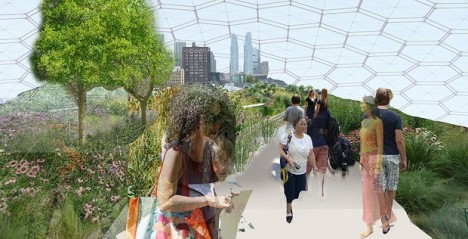
food barge

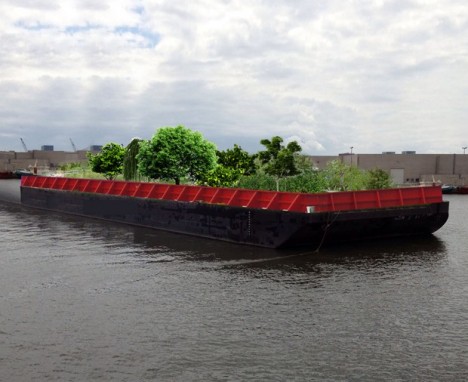
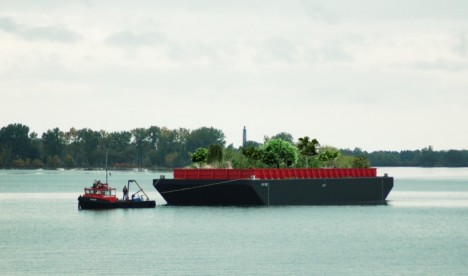
A food barge full of fruits and vegetables is coming to the waterways of the Big Apple this summer, stopping at scheduled increments to let people pick produce as it passes from one dock to the next.

swale rendering

Depending on where you live in New York City, finding a grocery store with fresh food is not always easy. The Swale project, set to launch in June on an 80-foot-long barge, will bring everything from blueberries to chard to people who want to partake.

In some cities with serious food desert problems, including Philadelphia and Baltimore, food forestry has already taken root. In Seattle, the seven-acre Beacon Food Forest is maintained by community volunteers and open to anyone who wants to grab something off a branch or vine.

swale food project

According to the project leader of Swale, New York ordinances prevent foraging for food on public land (such as parks), making similar projects in NYC impossible to launch, except on the water, of course. “We want to show that healthy, fresh food can be a free public service,” says Mary Mattingly, “not just an expensive commodity, and something that for not much work and effort, a city could supply.”

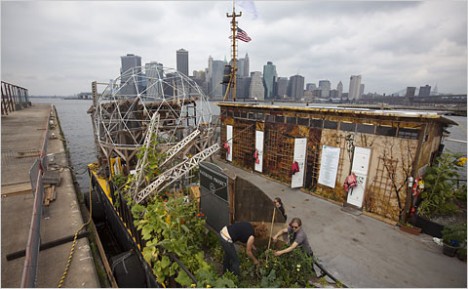
waterpod two

The project grew out of another of her adventurous works dubbed the Waterpod, in which she and some fellow artists lived self-sufficiently on the water for six months, growing their own food.

waterpod

More about the current Swale project: “Swale, a collaborative floating food project, is dedicated to rethinking and challenging New York City’s connection to our environment. Built on an 80-foot by 30-foot floating platform, Swale contains an edible forest garden. Functioning as both a sculpture and a tool, Swale provides free healthy food at the intersection of public art and service. With Swale, we want to reinforce water as a commons, and work towards fresh food as a commons too.”

Share on Facebook


[ By WebUrbanist in Technology & Vehicles & Mods. ]

[ WebUrbanist | Archives | Galleries | Privacy | TOS ]


WebUrbanist

 
Comments Off on Forage-Friendly Barge Brings Fresh & Free Produce to NYC Docks

Posted in Creativity


Padcaster VERSE is a mobile media case for iOS and Android devices

05 May

A few days ago we wrote about the Helium Core Kickstarter project which aims to turn your iPhone into a full-blown imaging rig with a large number of accessory ports and mounting options. The Padcaster VERSE is the subject of another Kickstarter project and presents a very similar concept. However, it differs from the Helium in some fundamental ways. The original Padcaster was designed a couple of years ago for the iPad Mini but thanks to a universal bracket that is compatible with any phone or tablet up to 5.31 inches, the VERSE is much more (you guessed it) versatile. It works with both Apple iOS and Android devices.

While the Helium Core is made from aluminum the Padcaster VERSE is polycarbonate plastic. It comes with twelve ¼-inch threads and five cold shoe mounts, allowing you to mount it to any type of camera support and attach an abundance of accessories such as lights, microphones or teleprompters. Like the Helium Core the Padcaster Verse is targeted at filmmakers, video bloggers, mobile journalists, photographers and other such creatives. Its adjustable mount makes it look like an ideal solution for those who use more than one device or want to be prepared for eventual upgrades. You can secure yourself an early-bird Padcaster VERSE by pledging $ 50 on the project’s Kickstarter page where you’ll also find additional information.

Articles: Digital Photography Review (dpreview.com)

 
Comments Off on Padcaster VERSE is a mobile media case for iOS and Android devices

Posted in Uncategorized


20 Awesome Mother’s Day Gifts for Photographers

05 May

If you’re like me, you love Mother’s Day, don’t you? We love it not only for a chance to greet our dearest women (or accept greetings if you’re a Mom), but merely for a reminder of what really matters in life. Every Mother’s Day is another chance for us to see that life is not about the number of figures Continue Reading

The post 20 Awesome Mother’s Day Gifts for Photographers appeared first on Photodoto.


Photodoto

 
Comments Off on 20 Awesome Mother’s Day Gifts for Photographers

Posted in Photography


Sony patents contact lens camera with blink-triggered shutter

05 May

Sony has patented a contact lens that comes with an integrated miniature camera module and all its components, such as image sensor, lens, processor, storage and even a wireless module to transfer images to a smartphone or other connected device. The camera is triggered by a “conscious” eyelid aperture and closure. A sensor measures the pressure of your eyelid, and other settings such as aperture and zoom can be controlled via eyelid movement as well. A display unit allows you to view captured images directly on the lens. The patent document says the following about the camera module:

“The image pickup unit includes, for example, a lens system including the image pickup lens, an aperture stop, a zoom lens, a focus lens, and the like, a drive system that causes the lens system to perform focusing operation and zooming operation.”

There is even a digital image stabilization system to counteract image blur caused by motion of the eyeball. Google and Samsung have filed for similar patents before but with its range of controls the Sony variant is, at least on paper, the most advanced so far. It’s impossible to know if a product like this will ever hit the market but if it does, it’s certain to raise even more privacy concerns than Google Glass at the time. You can read the full document here. 

Via: Sony Alpha Rumors | Via: PetaPixel

Articles: Digital Photography Review (dpreview.com)

 
Comments Off on Sony patents contact lens camera with blink-triggered shutter

Posted in Uncategorized


Metallic Life Forms: Kinetic Sculptures Undulate in the Wind

05 May

[ By Steph in Art & Sculpture & Craft. ]

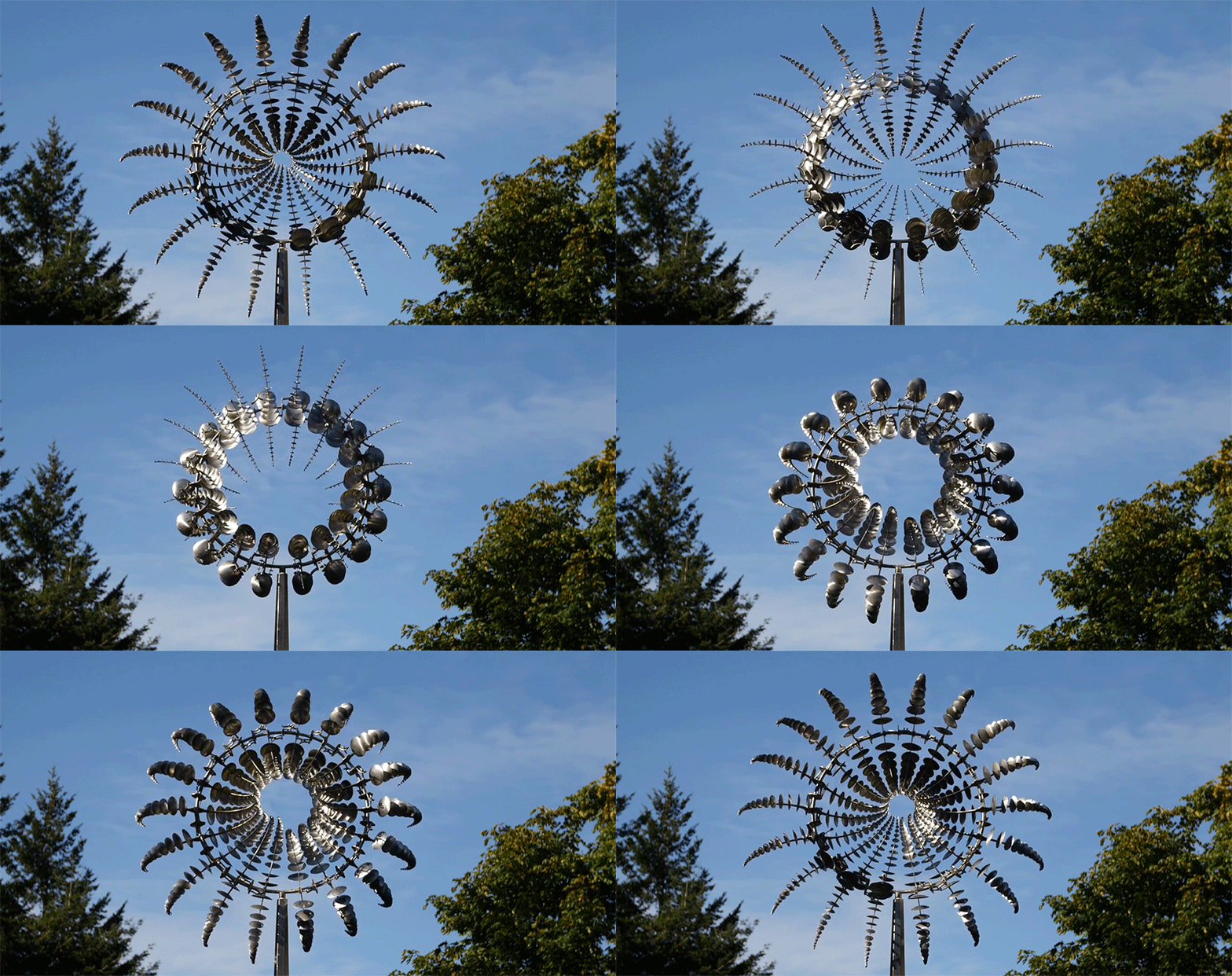
anthony howe kinetic sculpture 3

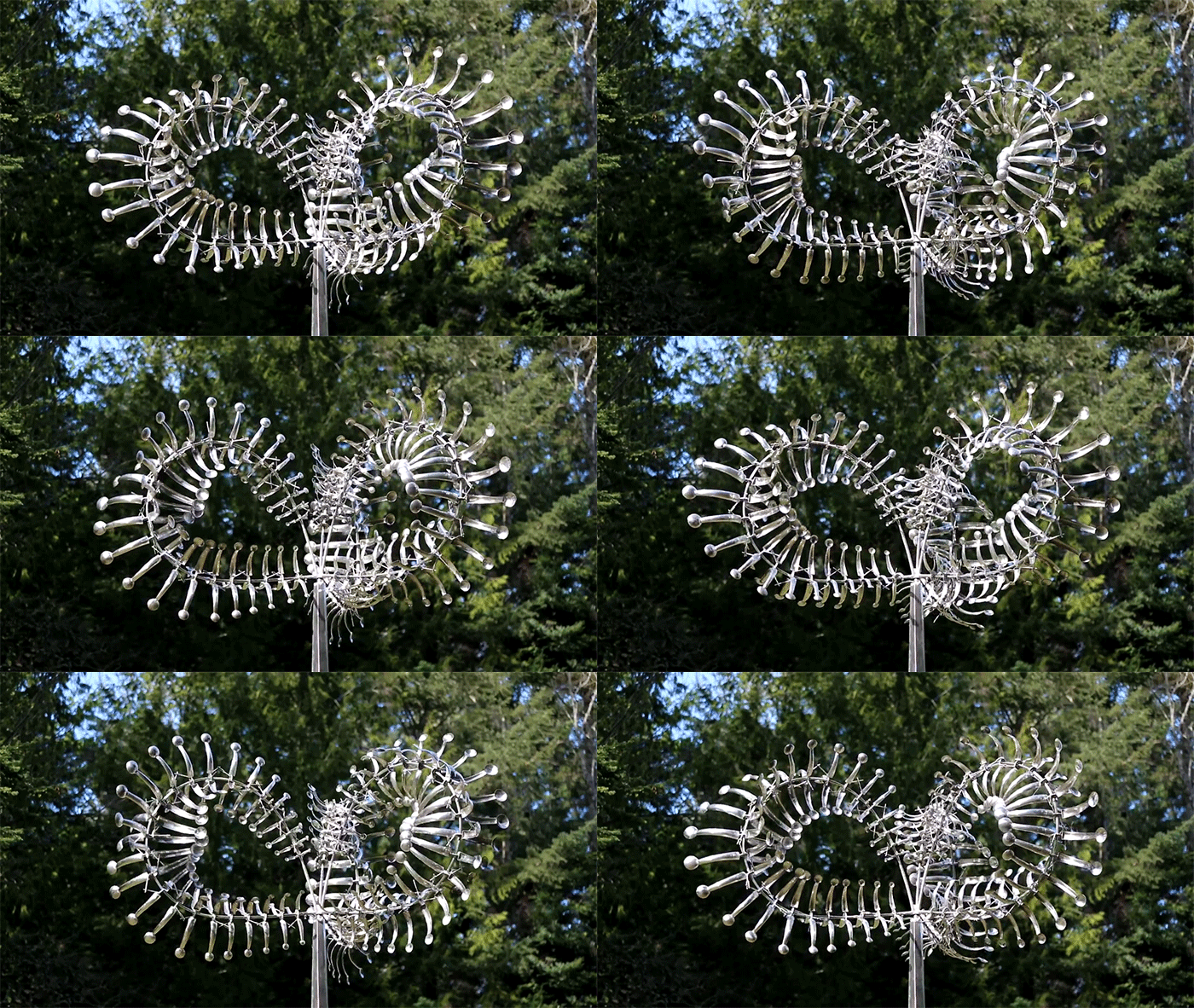
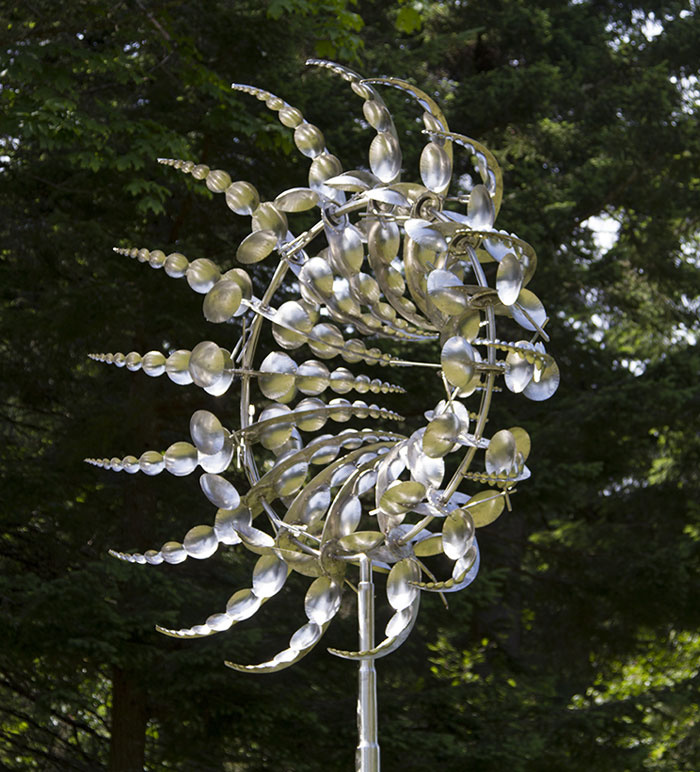
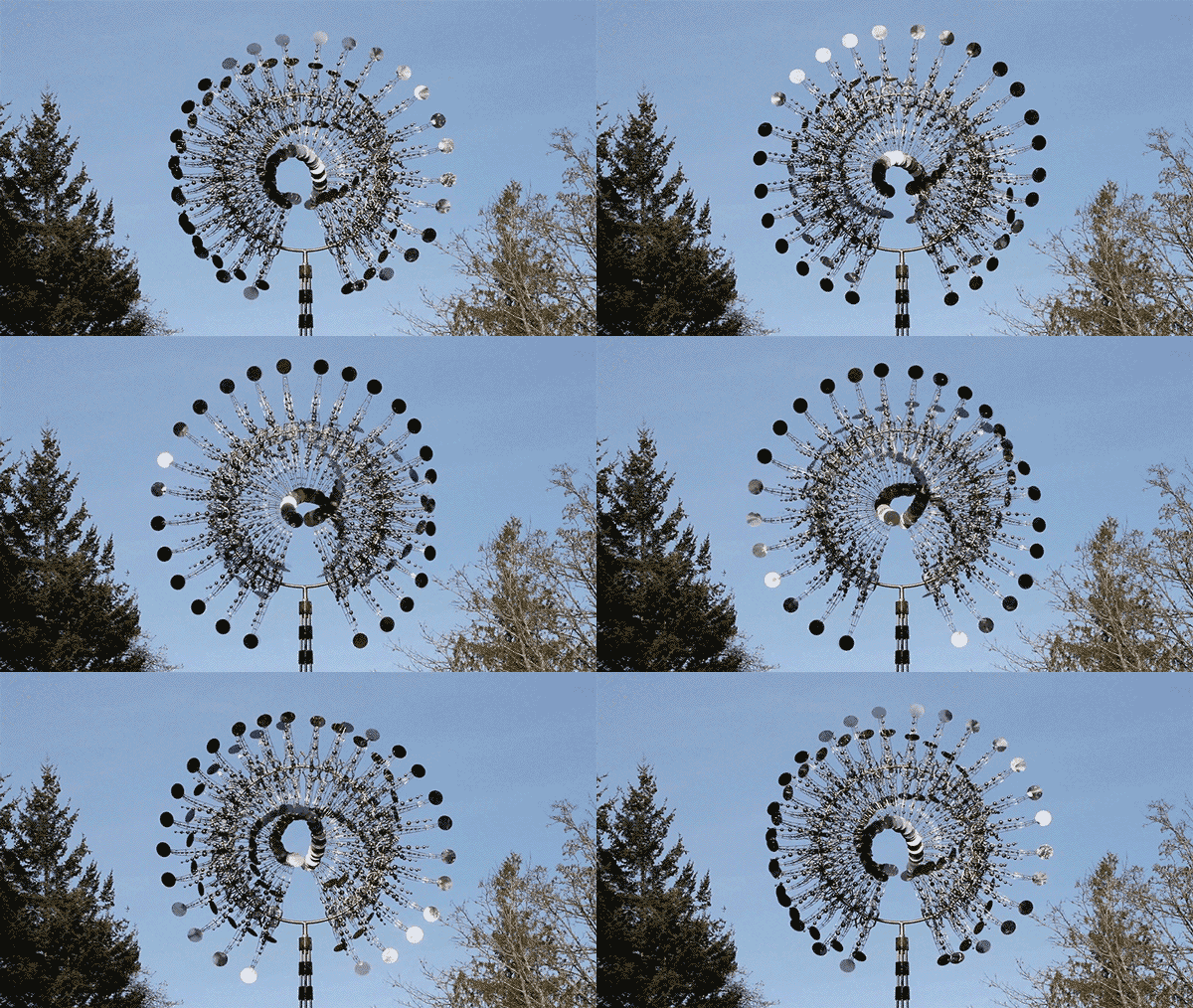
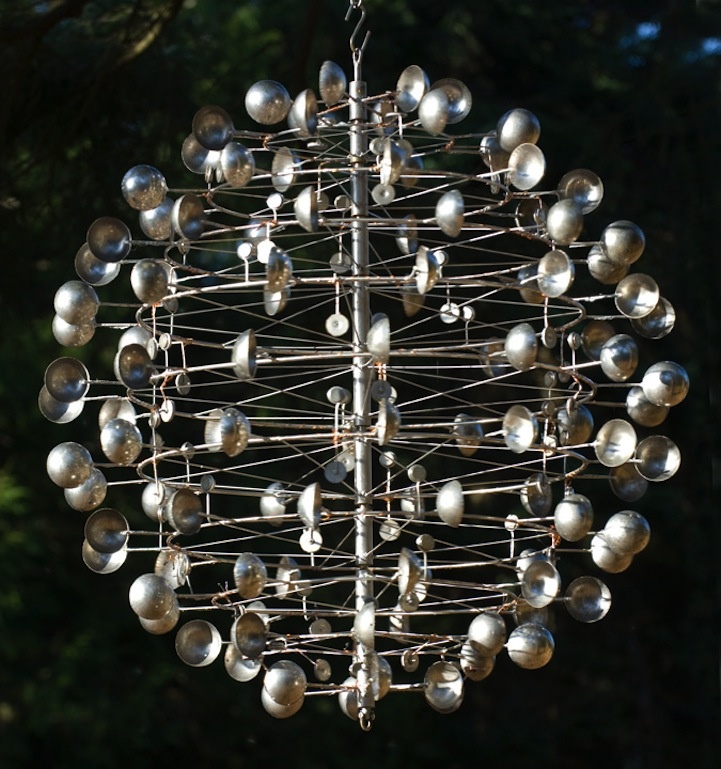
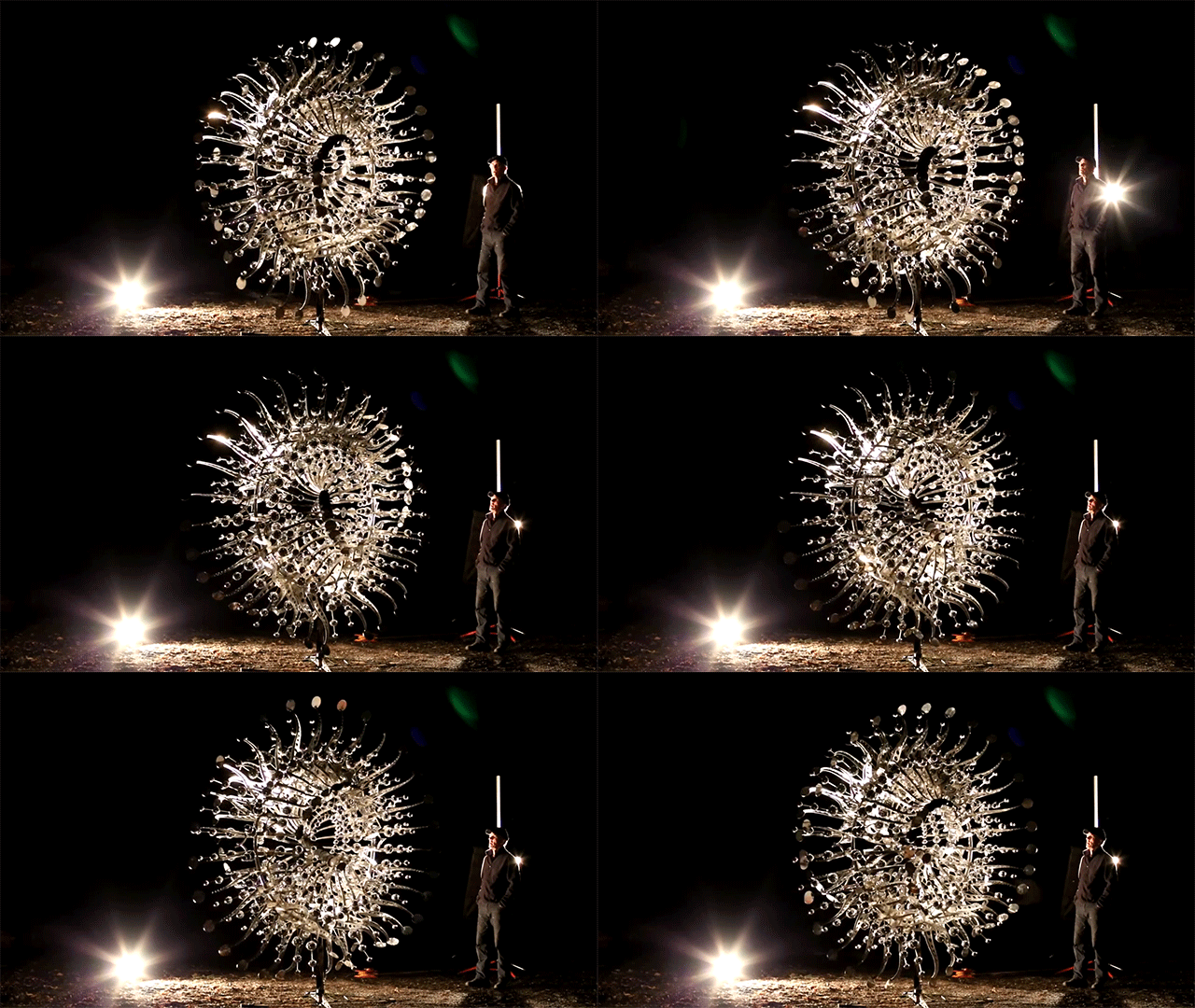
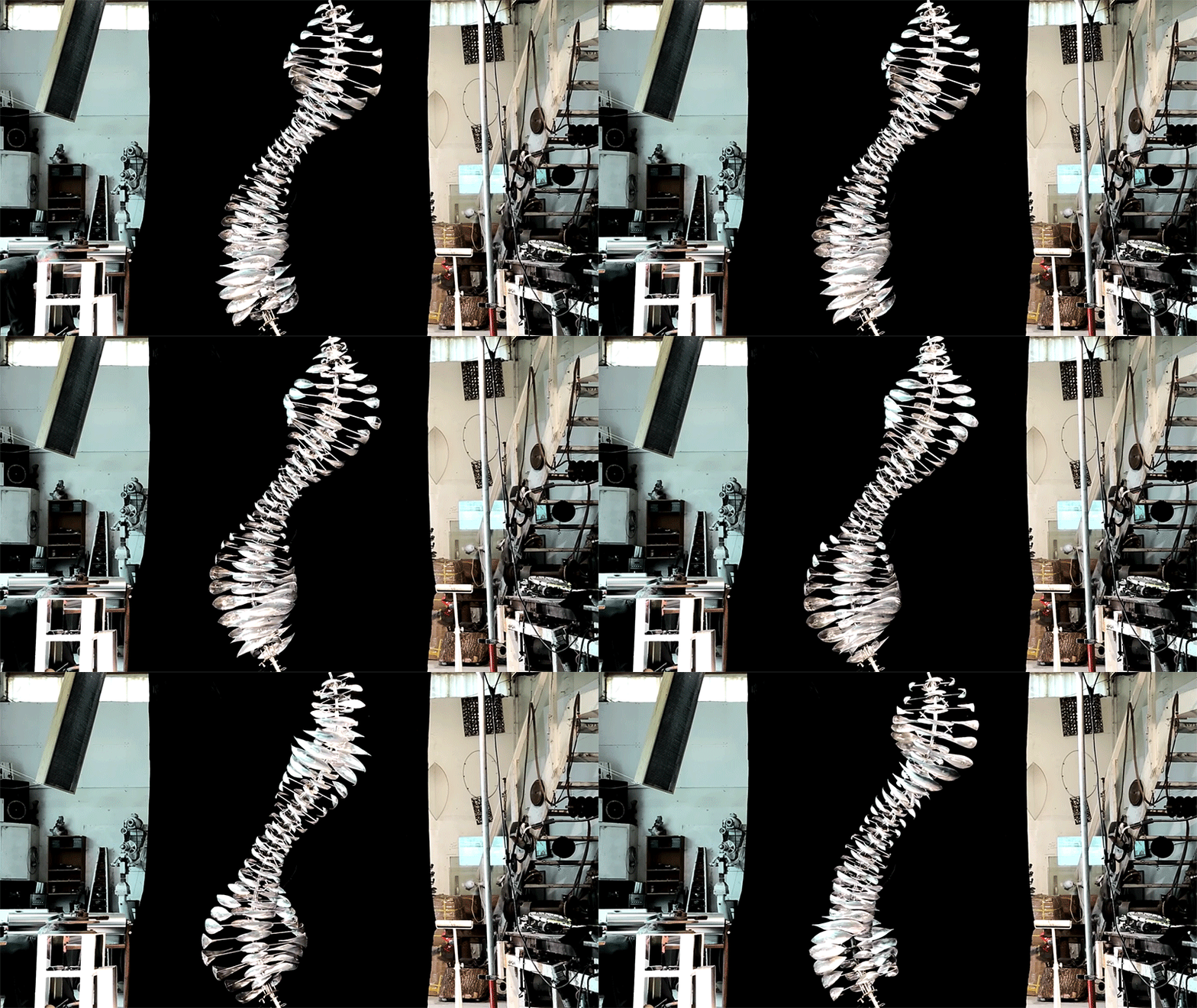
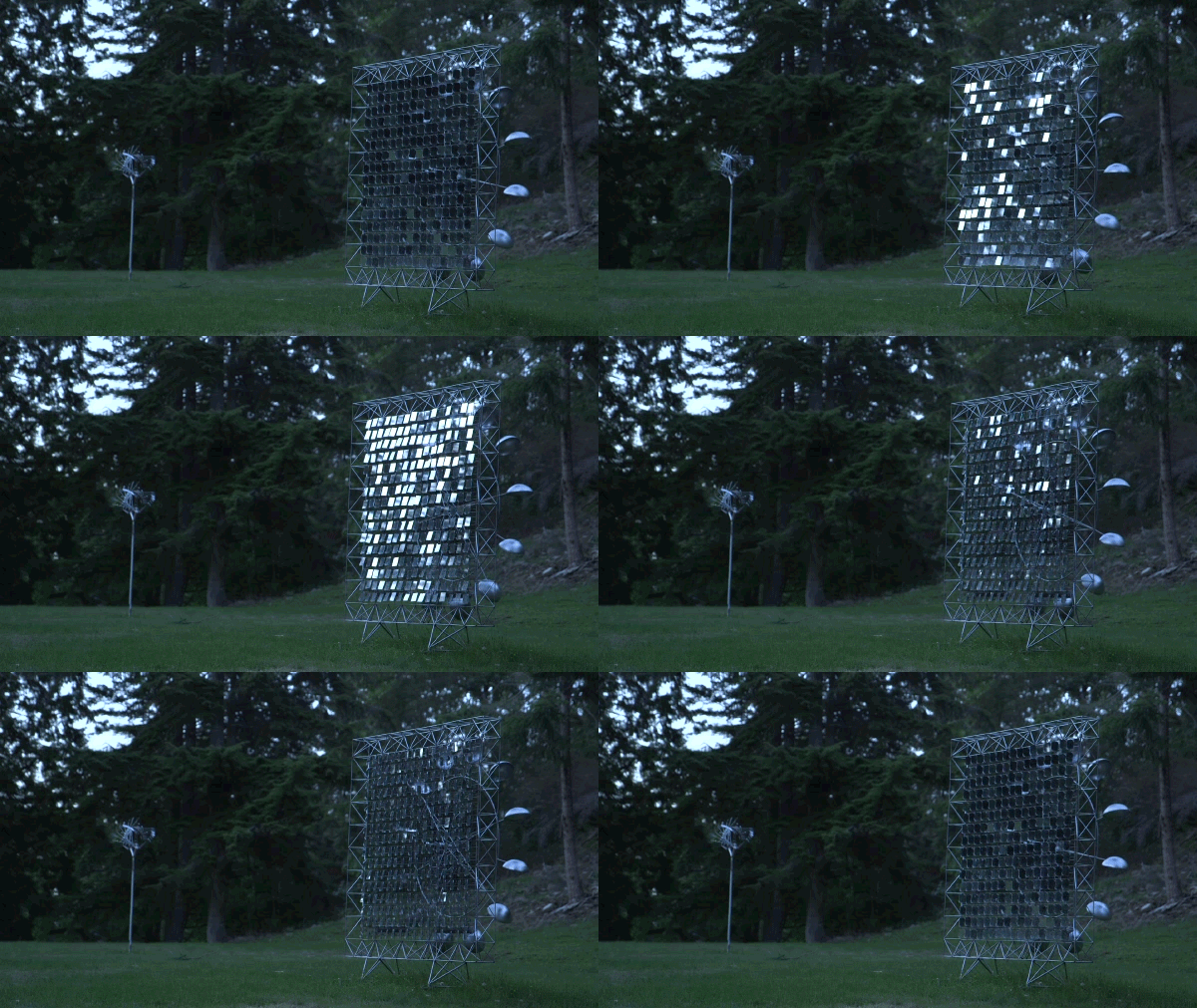
There’s something alien about the way these metallic structures move, a fluidity that makes them seem as if they’re alive. Each one transforms so completely as it spins, the results almost seem like optical illusions. It’s really all a play of light and shadow on cleverly designed kinetic sculptures, which are engineered to spin effortlessly whether the winds are barely blowing or gusting with extreme force.

anthony howe kinetic sculpture 2

anthony howe kinetic sculpture 6

anthony howe kinetic sculpture 1

anthony howe kinetic sculpture 7

Working through many a night in his remote workshop on Orcas Island, Washington, Howe refuses commissioned orders, working only from his personal creative inspiration. Hundreds of his sculptures have sold to private and public collections around the world, including large-scale urban works in several cities.

anthony howe kinetic sculpture 2

anthony howe kinetic sculpture 4

anthony howe kinetic sculpture 5

anthony howe kinetic sculpture 7

“Kinetic sculpture resides at the intersection of artistic inspiration and mechanical complexity. The making of one of my nieces relies on creative expression, metal fabrication, and a slow design process in equal parts. It aims to alter one’s experience of time and space when witnessed. It also needs to weather winds of 90mph and still move in a one mile per hour breeze and do so for hundreds of years.”

Share on Facebook


[ By Steph in Art & Sculpture & Craft. ]

[ WebUrbanist | Archives | Galleries | Privacy | TOS ]


WebUrbanist

 
Comments Off on Metallic Life Forms: Kinetic Sculptures Undulate in the Wind

Posted in Creativity