RSS
 

Archive for April, 2016

Vertical Micro-Farms: Fresh Produce Grown in Berlin Groceries

01 Apr

[ By WebUrbanist in Architecture & Offices & Commercial. ]
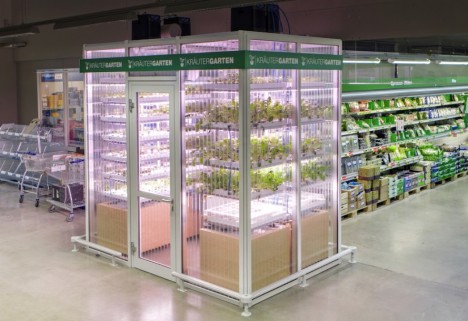
indoor farm grocery store

Taking farm-to-table approaches to new heights, a company in Berlin is putting small vertical farms directly inside of grocery stores to provide fresh produce and eliminate transportation costs. Its makers are boast that these are the first indoor farming installations of their kind, placed as they are directly in markets.

INFARM is currently testing live herb gardens in METRO Cash & Carry stores, integrating them into the layout of the shops and making their display part of the shopping experience.

indoor grocery berlin greens

Cutting down on transport costs and associated emissions is good both for the bottom line as well as the environment. These aquaponics systems use less water, energy and space than conventional farms and horizontal greenhouses. And, of course, there is nothing customers like more than the freshest possible ingredients, and these come right off the proverbial (or actual) vine.

indoor farm vertical garden

The present year-long pilot program involves herbs and salad greens for now, but the same technology can also be deployed to grow other plants including tomatoes, peppers and other fruits and veggies. Next steps may include additional stores and chains but also inserting similar modules into places like restaurants and hotels looking to offer something unique to their clients and guests.

no packing grocery store

This is not the first green grocery innovation to take root in Berlin, Germany, which is also home to the world’s first packaging-free grocery store. Original Unverpackt is the first in a series of stores using a sustainable model similar to co-ops but at a larger scale and aimed at mass market consumers, adapting the package-free bulk approach to sell all of its unpacked goods directly to consumers.

Share on Facebook


[ By WebUrbanist in Architecture & Offices & Commercial. ]

[ WebUrbanist | Archives | Galleries | Privacy | TOS ]

WebUrbanist

 
Comments Off on Vertical Micro-Farms: Fresh Produce Grown in Berlin Groceries

Posted in Creativity


An Exercise For You to Practice Depth of Field Without Going Outside

01 Apr

lead-photo-Vickie-Lewis-Photography-for-dps

Many photographers, especially when starting out, have a difficult time understanding depth of field. I also hear quite often that photographers are waiting for nice weather to get out and shoot. So, here’s a fun exercise you can do at home, in any weather, that will help you understand the finer aspects of depth of field.

Depth of field is determined by which aperture you choose, what focal length you’re using, and the distance between the camera and the subject. In this example, we’ll explore depth of field using a 100mm lens.

To set up

Find between one and three small objects you can photograph. I found three sports water bottles with balls on the top to shoot. Next, you need some studio space. A patio door or very wide window works well.

Your next step is to set up your object, or objects, in front of the window and to place your camera in position. The object and camera should be parallel to the window.

depth_of_field_illustration

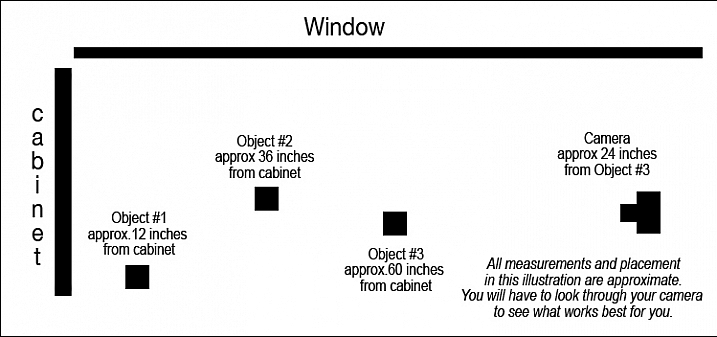
This is how I set up my camera and objects.

I put the first ball, the soccer ball, about 12 inches in front of the cabinet. Then I put the second ball, the baseball, about 24 inches in front of that. I put the third object, the basketball, 24 inches in front of the next object, and finally I set my camera about two feet in front of the last object.

You’ll need to play a little bit to see what works best for you. It will vary depending on the size of the object you are shooting, and the focal length you are using. You want to be able to focus on all three objects, and take a photo of them without moving your camera, so play for a minute. Focus on the first object and make sure you can see all three objects in the frame. Then focus on the second and make sure you can still see them all. Lastly, do it with the third one, too.

Set your camera on either aperture priority or manual exposure, and use the widest aperture you have. I chose f/2.8. Your lens might not have that aperture available, if so f/4 or f/4.5 will be just fine.

Shoot wide opened focusing on each object in turn

Now, without changing anything but your focus, take a photo of each of the three objects.

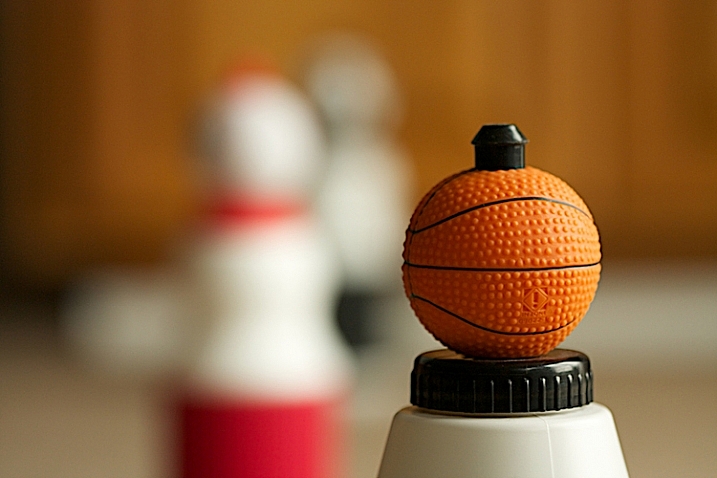
200__depth_of_field_f-2.8

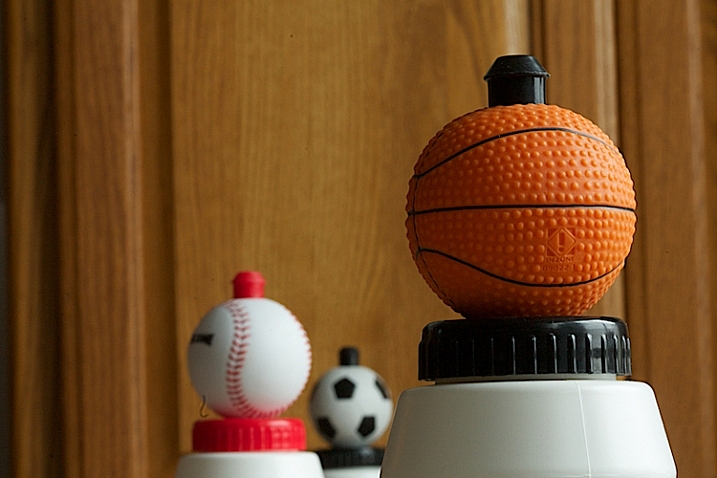
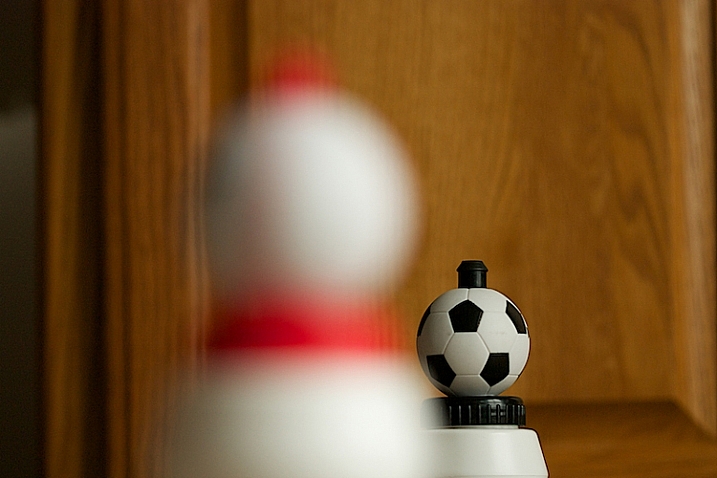
This photo was shot at f/2.8 while focused on the object closest to the camera, the basketball. Notice the narrow depth of field, in other words, how blurry the background is.

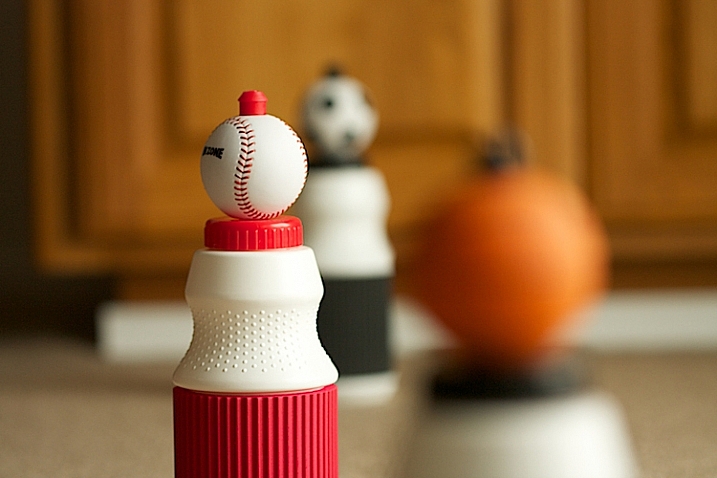
201__depth_of_field_f-2.8-f-2.8

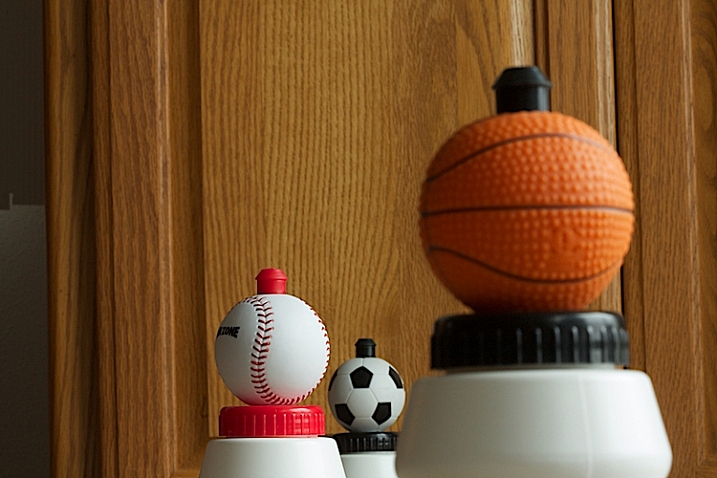
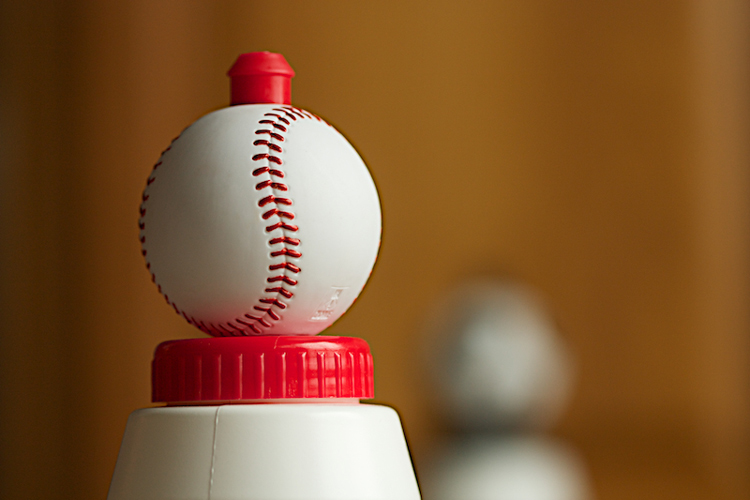
This was also shot at f/2.8, but this time, I focused on the middle object, the baseball. Notice that it is blurry in front and in back.

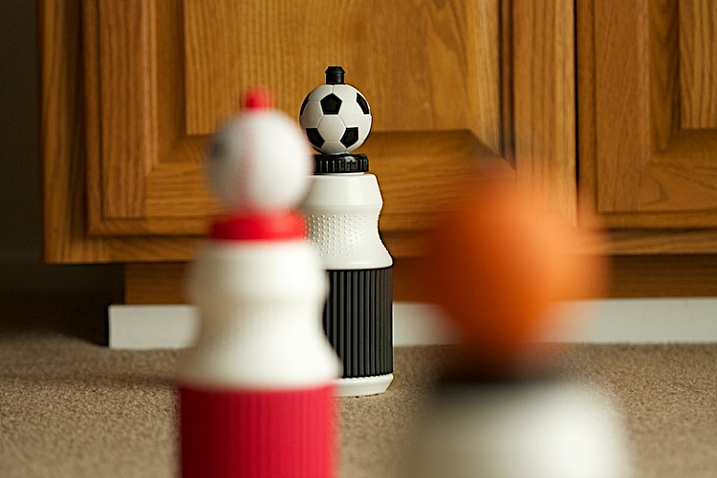
202__depth_of_field_f-2.8

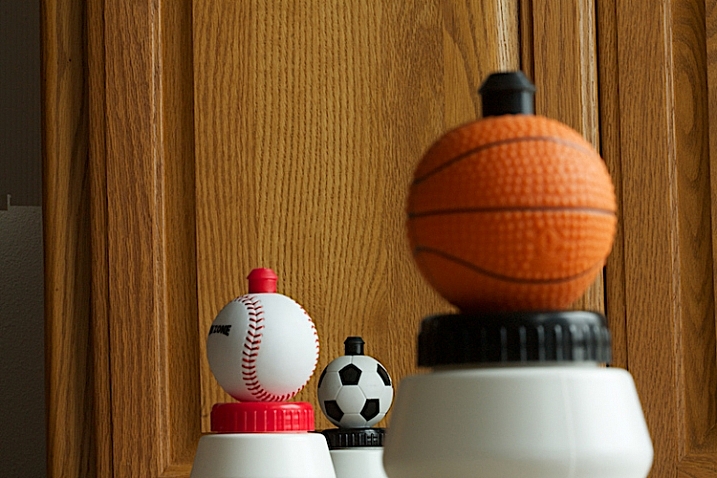
This photo was also shot at f/2.8, but I focused on the soccer ball. I did not change camera position nor did I change lenses. Notice the depth of field, but also notice the change in perspective. Can you see that more of the cabinet is in the photograph?

Next shoot with a small aperture

Now, let’s try something a little different. Instead of shooting at your widest f-stop, shoot at your smallest, which means a higher number, like f/32 or f/16.

205__depth_of_field_-f-32

Here is the same situation. The camera hasn’t moved, but the aperture is now at f/32. The focus is on the basketball, but look how much is sharp.

204__depth_of_field_-f-32

Look closely. The aperture is still at f/32, but the focus has changed to the baseball. Notice the basketball is more out of focus, but the soccer ball in the back looks pretty sharp.

203__depth_of_field_-f-32

Above is the third example. The focus is on the soccer ball.

You can practice each of these things with different f/stops to see the difference between f/4, f/8, f/11, f/16 and f/32. Each choice will change the depth of field.

Change the distance to the subject

209__depth_of_field_-f-2.8

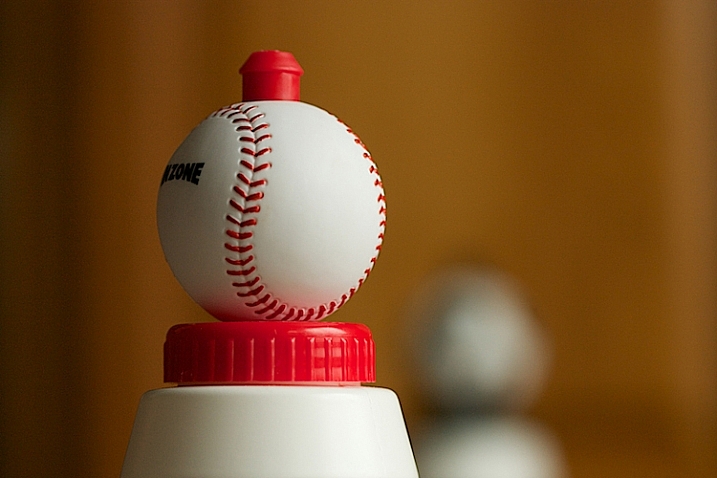
In the above photograph, I moved the camera closer to the baseball and shot at f/2.8. Practice isolating the elements and see what happens. Notice how the baseball really stands out, and look at the background. By isolating the baseball with a very narrow depth of field, the background becomes really out of focus. This tool is very helpful to clean up backgrounds.

210__depth_of_field_-f-2.8

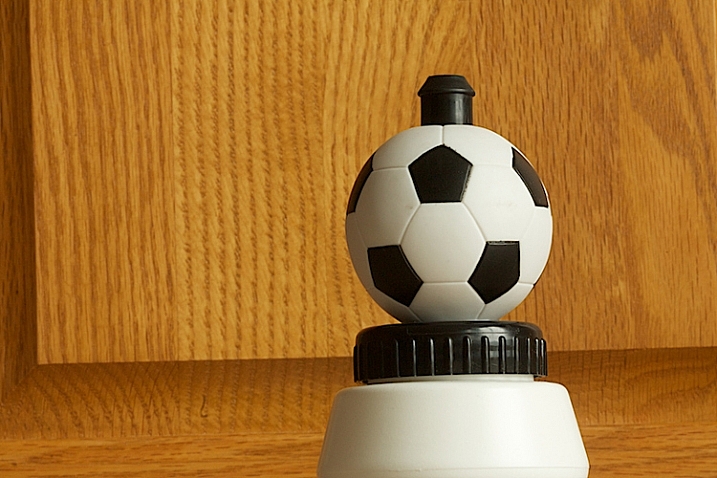
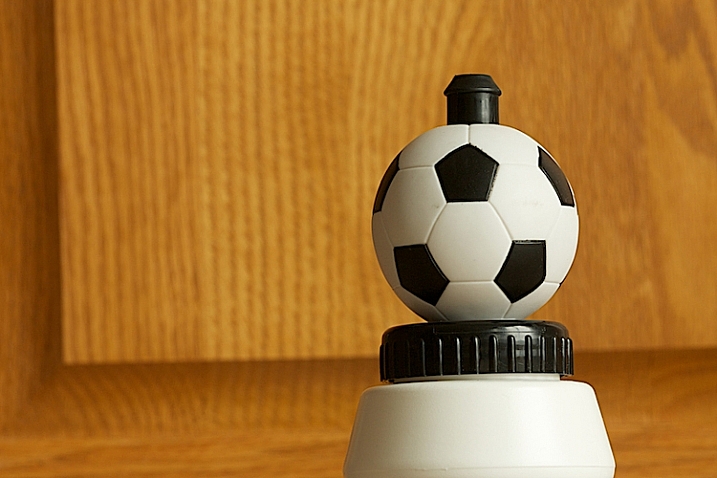
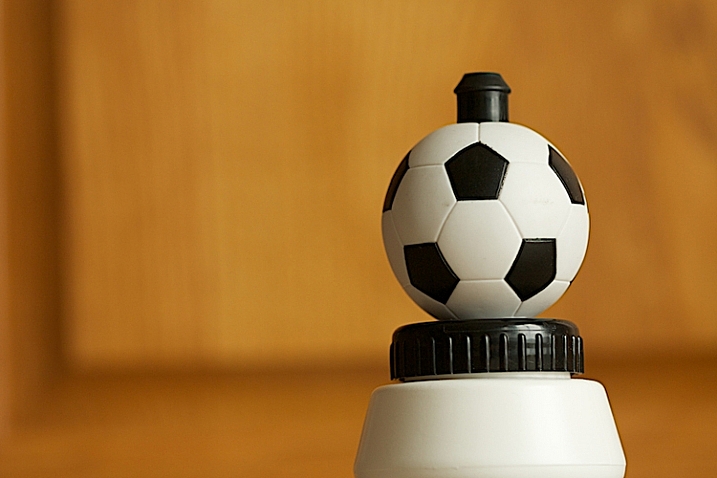
Then I changed my focus to the soccer ball. The aperture is still at f/2.8. What do you notice about the background?

213__depth_of_field_-f-32

In the shot above the soccer ball is still in the original position, about a foot away from the cabinet. Notice how sharp the background is – this was shot at f/32.

214__depth_of_field_-f-11

Now, notice how we start to lose detail in the cabinet behind. This image above was shot at f/11.

215__depth_of_field_-f-2.8

Finally, by shooting at f/2.8, and without moving the position of the soccer ball or the background, the background has become more out of focus and less distracting.

Take some times and practice this at home. So what you’ve learned here is a great way to practice depth of field at home–even on a rainy day! So take out your camera, find some small objects to shoot and start practicing.

Please share in the comments below how controlling the depth of field could impact how you shoot. What did you learn by doing this exercise?

googletag.cmd.push(function() {
tablet_slots.push( googletag.defineSlot( “/1005424/_dPSv4_tab-all-article-bottom_(300×250)”, [300, 250], “pb-ad-78623” ).addService( googletag.pubads() ) ); } );

googletag.cmd.push(function() {
mobile_slots.push( googletag.defineSlot( “/1005424/_dPSv4_mob-all-article-bottom_(300×250)”, [300, 250], “pb-ad-78158” ).addService( googletag.pubads() ) ); } );

The post An Exercise For You to Practice Depth of Field Without Going Outside by Vickie Lewis appeared first on Digital Photography School.


Digital Photography School

 
Comments Off on An Exercise For You to Practice Depth of Field Without Going Outside

Posted in Photography


Lights… Camera… Stinging nettles? Our Sony a6300 video shooting experience

01 Apr

The Sony a6300 has some of the most comprehensive video specs of a mass-market camera, so it seemed like a perfect excuse to embark on a video project. DPReview writer Richard Butler is a self-professed beginner when it comes to video, so he set out to see what he could do with the little Sony as he tested the camera’s video features. Find out about the his exploration of videography in our updated Sony a6300 first impressions, or just watch the mini-documentary above he shot, produced and directed.

Articles: Digital Photography Review (dpreview.com)

 
Comments Off on Lights… Camera… Stinging nettles? Our Sony a6300 video shooting experience

Posted in Uncategorized