RSS
 

Archive for February, 2016

Wearable Skylines: Architectural Rings Wrap Up Global Cities

05 Feb

[ By WebUrbanist in Art & Sculpture & Craft. ]

architecture wrapping cityscapes

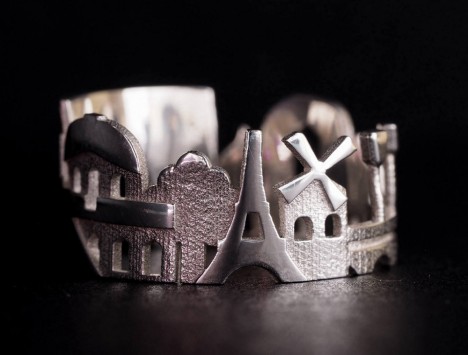
Jewelry for urbanists has taken a new turn with these silver, gold and platinum cityscapes, each featuring iconic buildings, monuments and landmarks from major metropolitan centers around the world.

architectural ring collection

Ola Shekhtman, a goldsmith from North Carolina, has crafted rings around cities including San Francisco, Boston, New York City, Paris, Amsterdam, Stockholm, Berlin and Hong Kong, selling them online via Etsy.

architecture finger jewelry

Growing up in Siberia, Ola wanted to travel the world, eventually visiting London and San Francisco before moving to New York.

architecture silver gold rings

With the help of 3D-modeling software, she created this series to capture the spirit of places she has been and those she yet wishes to visit. Buyers can likewise decide whether to pick places they live, favorite past points of travel or goal-oriented rings for desired future destinations.

Share on Facebook


[ By WebUrbanist in Art & Sculpture & Craft. ]

[ WebUrbanist | Archives | Galleries | Privacy | TOS ]


WebUrbanist

 
Comments Off on Wearable Skylines: Architectural Rings Wrap Up Global Cities

Posted in Creativity


Game Changers: How to Take Your Photography to the Next Level

05 Feb

The other day, one of the students I was mentoring asked me a really interesting question, “How do I take my photography to the next level?” The conversation that followed was the inspiration for this article.

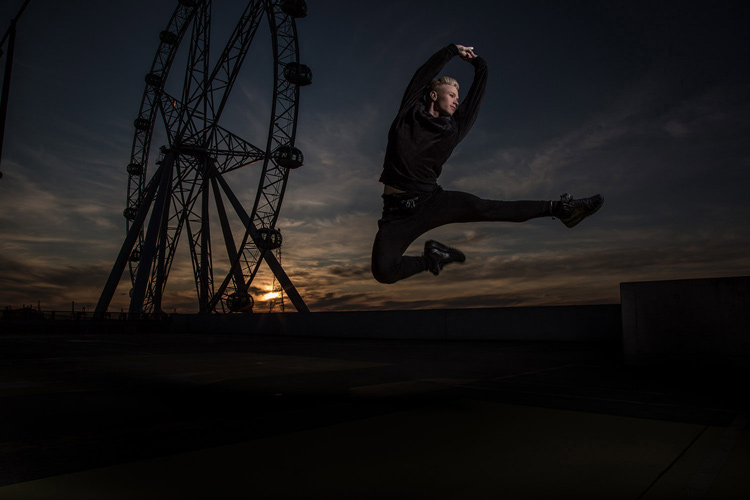
Photograph subjects and experiences that you love, in a way that is unique to you

Air 39

“The artist sees what others only catch a glimpse of.” – Leonardo da Vinci

When you photograph the things you love, you will always be excited and inspired. If you are excited and inspired by something, you are naturally going to want to spend more time doing it. The more time you spend doing something, the better you become at it.

I spent the first half of my career focusing on fashion photography, because I thought that was what I should be doing. I was okay as a fashion shooter, but to be 100 percent honest, I never really got the whole fashion world, and it didn’t consume me like it does the best fashion photographers in the world. The photographers who excel in this genre live and breathe fashion; some of them are fashion.

It wasn’t until I started to focus more on portraits, and travel lifestyle photography, that I really fell head over heels in love with photography. I’d finally found my “thing”! I could happily shoot portraits or travel lifestyle images all day long. I felt energized, and on a high after each shoot. I was always exhausted after shooting fashion.

Are you photographing the things you really love? Is this work making you feel excited and energized, or depleted and flat?

The way we see and experience life is something that is unique to each of us. If you want to take your photography to the next level, focus on photographing the things that matter to you, in your own world, and in a way that is unique to you. This is the one thing that will set you apart from all the other photographers.

Passion, not perfection

Contender final 1

If passion and perfection had an arm wrestle, passion would win every time. Why? Because the thing that makes photography great, is the way it makes us feel. If there is no passion in an image, and it doesn’t inspire a reaction, then it’s just a snapshot.

If you want to take your work to the next level, show your passion for your work.

Given a choice to shoot a photo that was technically brilliant, sharp, correctly exposed, and perfectly composed, yet void of emotion – or an image that was a bit rough around the edges, slightly soft, grainy, with a few blown highlights but captured the feeling – I would choose the latter every time.

Don’t just focus on what something looks like, focus on how it feels.

Technique, not gear

Gear 05

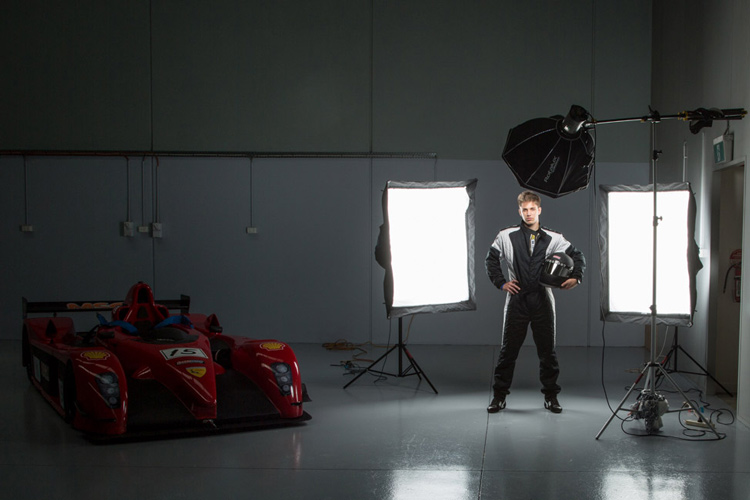
Michael Schumacher is the best F1 driver in history. If he were to challenge me to a race, and I drove a Ferrari and he drove a 1981 Toyota Corolla, he would still win. Why?

Schumacher is a master, who has spent years driving. He knows how to drive fast, and take corners at high speed, without rolling the car. He would probably lap me three times before I’d even had a chance to get out of third gear. In the wrong hands, the best gear in the world is useless, if you don’t know how to drive it.

So many photographers get hung up on the notion that having the right gear will make them better photographers. While it’s true that the right gear will give you a better quality image, it’s not going to guarantee that you will be a better photographer.

Instead of worrying about the gear, focus on the technique. It’s what you do every day that makes you great; not what you use every day. Dedicating as few as thirty minutes a day to your photography, every day, will do more to improve your skills and develop your style than owning all the high end gear in the world.

Learn to peel potatoes before you cook a soufflé

Last supper

Fat Tony & Co/Nine Network Australia

During the first few years that I was building my photography business, I had a night job working as a cook in an Italian restaurant. When you train to become a cook, you must master a task before you are allowed to move on to the next one. The first task each apprentice cook must master is peeling potatoes. Then they move on to the salads, entrees, pasta, steaks, and seafood. The last thing I was taught to cook was one of the most technically difficult dishes, the soufflé.

The photographer who attempts a complicated studio shoot right after buying his or her first camera, is like the apprentice cook who walks into a kitchen and insists on cooking a soufflé on their first day.

Taking a stepped approach to learning, will take your photography to the next level much faster than trying to learn it all at once. Many photographers will try complicated shooting or lighting styles, then become frustrated because their images are not working out the way they had hoped.

Master peeling potatoes first. It’s definitely a game changer!

FOG11FS 166

Ask for help

Putting their work out there, is something that many photographers struggle with. Yet, seeking and implementing constructive criticism is one of the fastest ways to take your photography up a few notches.

The fear of ridicule or criticism prevents some from sharing their work. This is really sad, because many of the fears people may have are imagined. FEAR is an acronym for False Evidence Appearing Real, it’s our mind trying to keep us small. When you create beautiful art, and you don’t share it with the world, you deny so many people the opportunity to experience beauty.

If you are ever in doubt, take Mother Nature as an example of best practices for artists. Every day she puts her work out there – sunset, sunrise, storms, sunshine, and rainbows. Some are absolutely spectacular. Other times, her art can be mediocre, yet she puts her work out there every day for us to enjoy.

Other ways you can ask for help:

  • Join a photography group
  • Find a mentor
  • Attend a workshop where your work can be critiqued by an expert whose work you respect

Confidence

Ecove Hyde15 2977

“Whether you think you can, or you think you can’t–you’re right.” Henry Ford

You can read books, take courses, and listen to podcasts until the cows come home. But if you don’t have self-confidence, it will be very difficult to take your work to the next level.

Confidence is knowing that you’ve done the hard work and put in the hours, and can now turn up and nail the shot.

Many photographers and artists really struggle with confidence. It may be due to old programming from a lifetime of being told they weren’t good enough, of having the people they spend the most time with not offering enough support, or a hundred other reasons, all of which undermine a person’s self-esteem.

Look for ways to improve your self-confidence. Spend more time with people who value and respect what you do. Find ways you can get rid of destructive self-talk.

The good news is that self-confidence can be trained, just like a muscle in the gym. Gaining self-confidence and self-belief is, by far, a major game changer. It will help take your photography to the next level.

Do you have a strategy that I might have missed? What techniques have you used to take your work to the next level? I’d love to hear your thoughts.

All images: Copyright Gina Milicia


fastflash_bookIf you want to learn more about using flash for creating portraits, pick up Gina’s brand new dPS ebook: Fast Flash for Portrait Perfection. Now on sale for an introductory price for a limited time only.

googletag.cmd.push(function() {
tablet_slots.push( googletag.defineSlot( “/1005424/_dPSv4_tab-all-article-bottom_(300×250)”, [300, 250], “pb-ad-78623” ).addService( googletag.pubads() ) ); } );

googletag.cmd.push(function() {
mobile_slots.push( googletag.defineSlot( “/1005424/_dPSv4_mob-all-article-bottom_(300×250)”, [300, 250], “pb-ad-78158” ).addService( googletag.pubads() ) ); } );

The post Game Changers: How to Take Your Photography to the Next Level by Gina Milicia appeared first on Digital Photography School.


Digital Photography School

 
Comments Off on Game Changers: How to Take Your Photography to the Next Level

Posted in Photography


Portrait time: Sample gallery from Sony’s new 85mm F1.4 GM lens

04 Feb

After Sony showed off its a6300 and trio of new lenses, our staffers were able to grab an a7R II and start shooting. Above we’ve put together a small selection of images taken with Sony’s new 85mm F1.4 GM portrait lens. 

$ (document).ready(function() { SampleGalleryV2({“containerId”:”embeddedSampleGallery_2269056192″,”galleryId”:”2269056192″,”isEmbeddedWidget”:true,”selectedImageIndex”:0,”startInCommentsView”:false,”isMobile”:false}) });
Articles: Digital Photography Review (dpreview.com)

 
Comments Off on Portrait time: Sample gallery from Sony’s new 85mm F1.4 GM lens

Posted in Uncategorized


8 Tips to Help Make People Comfortable for Their Portrait Session

04 Feb

Portrait photography is an incredibly complex subject to master. You have to worry about a variety of technical matters, including your lighting, location, time with subject, color temperatures, and your composition. In many situations you will be moving around an environment quickly and changing your lighting on the fly. It is a lot to pay attention to, and coordinate at the same time.

Business Portrait Session

On top of all of this, you must figure out how to make, and keep, your subject comfortable throughout the entire session. No matter how much is going right or wrong, or what is going through your head, your primary attention must always be on your subject.

Keeping the subject comfortable and natural is an art form in itself. Obviously, it’s not always possible. Some subjects will be impossible to get through to no matter what, but most of them will rise to the occasion if you can foster the right environment. There are many different ways that portrait sessions can vary, but here is how I like to approach photographing my portrait subjects.

1. Assess the subject’s personality

Each subject will have a different relationship with the camera. Some will have done this before, and will be all business. Some will be extroverted and will love the attention. Some will be uncomfortable at first, but will open up easily after a little time together.
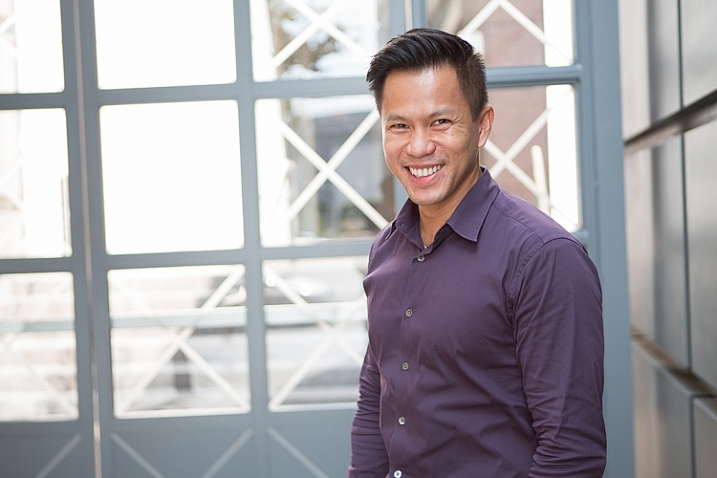
Business Portrait Session

The toughest group are subjects that come in incredibly uncomfortable and stiff, to them you are worse than the dentist. Seriously, there are many people that would much rather go to the dentist than to be photographed by you. These subjects will be the toughest to work with because they, “know I look terrible in front of the camera.” They know this because they know how uncomfortable they get, but they only get uncomfortable because they know they photograph badly. This is a catch 22 that you will have to scratch and claw your way out of, so to speak.

Is your subject extroverted or introverted? Do they like to joke and talk, or are they more reserved. Are they in the middle of a busy day, or do they seem more relaxed. Do they give you a stiff smile? These are all cues that you can pick up on, to help you figure out the best way to get through to them. The better you can understand your subjects, the better you will be able to get them to enjoy working with you, and to eventually feel comfortable with you and the camera.

2. Talk with your subject before the session

Whenever possible, when you first meet your subject, introduce yourself first. Ask them how their day is going to get them talking, then tell them about what you will be doing together. Many subjects will have no idea what to do, or what is about to happen, and will become stiff, nervous, and awkward.

Business Portrait Session

Explain how the session will go, and what you would like them to do. Maybe tell them that you are looking for natural images, casual smiles, and comfortable poses. Let them know that you will tell them what to do over the course of the session, but also mention that if they have ideas that they should bring them up. Is there a way that they feel comfortable standing? Tell them to speak up. Do they want to try something? Tell them to speak up. The best shoots are ones that turn into a collaboration between the photographer and the subject.

3. Help them pose, then change it often

Tell the subject that you will do some posing but that you also want them to stand in a way that is comfortable for them. You can have your subjects play a part in the posing (a few will be bad at this, but most will be good). Ask them, “How would you naturally stand or lean here?” Give them a couple suggestions of what to do by demonstrating a pose. If necessary, put a few example images on your phone or tablet to show them. Keep them moving. Ask them to slightly change their pose every few shots. This will keep them fluid and comfortable, instead of stiff and standing still.

The hands are just as important as the body pose, if not more so. If the subject’s hands feel comfortable, there is a good chance the rest of them will fall into place. Some subjects can get very stiff with the hands if you don’t give them direction. Do you want the hands in front of them, in their pockets, or crossed arms? I usually start by giving these suggestions, and asking them to place their hands in a way that they would normally stand. This often yields a very comfortable pose. Then when I have exhausted that, I will ask them to cross their arms to break them into another comfortable pose, then go from there.

DPS_business_portraiture_2

Changing the pose at the right times is a very important tool. The second your subject starts to look uncomfortable, get them to do something different. Change their hands or their stance. Move them to another location. Every time you break the stiffness is another chance for them to reset themselves into a comfortable pose.

4. Tell them what they are doing right

If your subject is doing something right, tell them! Give them positive reinforcement. Never tell them they look awkward, or they will freeze up even more. I constantly say some variation of, “This looks great” or a more specific compliment. The positivity just keeps things flowing and going in the right direction.

If you like someone’s smile, let them know that. They will instantly feel good, and it will help them recreate that look when you need it. For a few people, when you say something like that, it will kill their natural smile. Pay attention for these people, and obviously stop saying that to them, but for many this will help them recreate that look constantly as you need it. You can say, “Give me that smile from before.” Then if they have trouble doing it, plead and beg them for it in a funny way so they feel comfortable again.

Business Portrait Session

You can tell subjects not to do specific things, but be careful with how you do that as it can kill your momentum. Instead of saying, “Your hands don’t look right,” say, “I think your hands might be a little better this way.” Even your constructive comments can be made in a positive way.

5. Have conversational topics and jokes prepared

Ask lots of questions of the subjects that do not seem to be in a rush. For the ones that need to run out of there, you can only do so much. Even for these people, I will ask a couple simple questions at the beginning, such as, “Are you from New York” or “How has your day been.” Just these alone will give them a chance to talk, and you can go from there. For most people who are not in a rush, I will go a lot further and try to hone in on a topic that of of interested to them. I find that a good conversation over the course of a session, can make the whole session much more comfortable. The more you get them talking, the more they can break out of their shell. At the very least, they will like you.

Business Portrait Session

You do not need to write knock-knock jokes, but think of some funny things ahead of time to talk about, or to use in situations where you are desperate. When a subject begins a session by telling me how much they hate being photographed, I try to say something like, “Well you’re going to hate me then.” A dentist joke will work as well. I then comfortably tell them that they are in good hands, and not to worry. A quick and funny comeback for something like this will make them feel like you are prepared.

Sometimes when I need a smile, I will tell a subject to give me their most uncomfortable smile. This is only in certain moments though. I will never, ever tell the subject directly that they look uncomfortable. That is a road you do not want to go down, but I will make a joke about a stiff smile before they start trying to smile to make a point, and to make it a little humorous.

Have them smile with their whole body. Show them the difference between a smile just with their mouth, and then one with their entire face and body. There’s a big difference between the two, and framing it in this way can explain to them what they should be doing. The shutter click is such a finite moment that it helps if they think of the session as one long video where they are moving into their smiles, and not just turning them on suddenly.

DPS_business_portraiture_3

Often you will have to make slight tweaks to the way a subject is posing. Having a subject put their chin up slightly can be a very good way of getting rid of a double chin, but it also ruins the spontaneity of the moment. The same thing goes when posing people in a chair. Sometimes, the most flattering way to sit is the most awkward. When I have to do any of this, after I will say something like, “Now look natural.” Just the idea of how stiff they are once you do these poses, mixed with that comment, has the frequent effect of relaxing them and bringing out a smile, even with their chin up.

Besides that, I will have conversational topics that I try to bring up on the fly when needed, such as current events, sports, or random stories that I can think of.

6. Use the strengths of your personality to your advantage

Business Portrait Session

Are you an extrovert that can charm and joke with anyone? Then you should have an easier time getting your subjects to laugh and open up, but at the same time you will need to be careful not to overdo it. By talking too much, and commanding the attention in the session, you risk stopping the subject from having their own personality show through. All your images can end up looking the same, as they are the expressions of your subjects laughing at your jokes or comments. If this is naturally you, make yourself ask questions, and stop and listen a little bit more. Making them laugh is fantastic, but it is also different from creating an environment where they feel comfortable enough to open up to you.

Are you an introvert who gets uncomfortable trying to joke and talk with subjects that you have just met for the first time? This can actually be an advantage when you play your cards right, but this is a situation where gaining experience working with people is necessary. In this case, your advantage is your ability to listen and react. Ask your subjects questions, then play off what they say. Pay more attention to their emotions. Get them talking about interesting things that they are passionate about; have them open up that way.

Business Portrait Session

Still be confident and explain what you are doing, but play a more reactive role. Watch videos of other portrait photographers, both the talkative and the quieter ones, and pay attention to what they say to help you improve. Work on funny things to say that you will have in your pocket when you need them, as this will be your initial disadvantage. You will need to work more at first to be good at all of this, but after enough experience, the advantages can swing back in your favor due to your adept listening ability.

7. Don’t show them the images while you are shooting

Sometimes subjects will insist on seeing the images, and you will have no choice, but I always try to get out of having to show the subject the images until the end. I will often say that we can look at the images after, as a way to put them off. Having the subject look at a photo of themselves, especially if they seem self-conscious, can ruin their ability to feel comfortable later on in the session. In addition, two out of 10 shots are usually good anyway and the other eight will never see the light of day. But if they are looking at the back of that camera they will sure as heck see those eight!
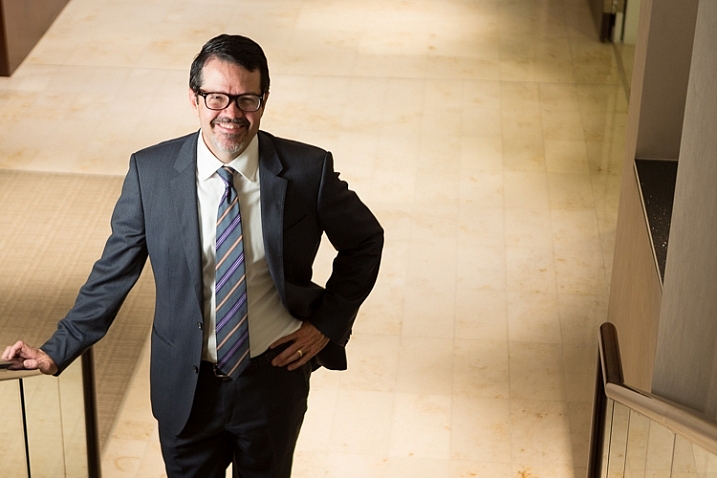
Business Portrait Session

For the most uncomfortable subjects, often there is no chance that the photos at the very beginning will be that good. You are just going through the motions as you are trying to make them comfortable over the course of the session. There are not that many situations where the subject seeing the photo is better, unless the subject seems very comfortable from the start.

8. Know that you can’t win them all

You will probably lose a few. You can only do the best with what your subject gives you. Portrait photography can be stressful so always keep that in mind. You can only work with what the subject is able to give you. Do your best for all your subjecs and push and spend more time with the ones that are having trouble, but let’s be frank, some subjects are just better that others.


fastflash_bookStrikingThePose2If you want to learn more about portrait posing and working with people, pick up one of the dPS ebooks by Gina Milicia Portraits: Striking the Pose (left) or her brand new one called: Fast Flash for Portrait Perfection (right).

googletag.cmd.push(function() {
tablet_slots.push( googletag.defineSlot( “/1005424/_dPSv4_tab-all-article-bottom_(300×250)”, [300, 250], “pb-ad-78623” ).addService( googletag.pubads() ) ); } );

googletag.cmd.push(function() {
mobile_slots.push( googletag.defineSlot( “/1005424/_dPSv4_mob-all-article-bottom_(300×250)”, [300, 250], “pb-ad-78158” ).addService( googletag.pubads() ) ); } );

The post 8 Tips to Help Make People Comfortable for Their Portrait Session by James Maher appeared first on Digital Photography School.


Digital Photography School

 
Comments Off on 8 Tips to Help Make People Comfortable for Their Portrait Session

Posted in Photography


Mystery Oreo Vault in NYC Takes You on a Weird Tasty Trip

04 Feb

[ By Steph in Design & Guerilla Ads & Marketing. ]

oreo vault 1

What’s behind the giant Oreo-shaped vault door mounted to a bright blue garage in midtown Manhattan? Curious passersby who decide to approach and find out for themselves will have the most authentic and rewarding answer to that question, but the rest of us can live vicariously through photos and video of this clever interactive ad installation promoting the cookie brand’s new flavor.

oreo vault 2

oreo vault 3

Once you open that portal-like door, a sign greets you with this message: ‘Welcome to the Oreo Wonder Vault – Pull the lever to begin.’ Follow the directions and a box of free cookies will come sliding down a conveyer belt, delivered directly to you via slide. This time, it’s ‘Filled Cupcake’ flavor.

oreo vault 4

oreo vault 6

Oreo tells Ad Week that as many as 50 prototype flavors and over 100 additional ideas can be in the Wonder Vault at any time, and it can take up to 18 months to perfect each one before it’s ready for release. “The limited edition process never stops; we have lot of flavor ideas just waiting to make their way to the world.”

oreo vault 5

The fun installation is located somewhere near 18th street between 7th and 8th Avenues, and appears to have already delivered all the free cookies it had to offer. The new flavor will be in stores on February 8th.

Share on Facebook


[ By Steph in Design & Guerilla Ads & Marketing. ]

[ WebUrbanist | Archives | Galleries | Privacy | TOS ]


WebUrbanist

 
Comments Off on Mystery Oreo Vault in NYC Takes You on a Weird Tasty Trip

Posted in Creativity


Oh, wow… Sony announces 24MP a6300 with incredible AF and 8 fps live view bursts

04 Feb

$ (document).ready(function() { SampleGalleryV2({“containerId”:”embeddedSampleGallery_3250592731″,”galleryId”:”3250592731″,”isEmbeddedWidget”:true,”selectedImageIndex”:0,”startInCommentsView”:false,”isMobile”:false}) });

Sony has introduced the long-awaited update to its popular a6000 mirrorless camera: the a6300. Featuring a newly developed 24 Megapixel APS-C sensor and a completely revamped ‘4D’ AF system with 425 phase-detection AF points, the a6300 sits at the top of Sony’s APS-C mirrorless lineup. It also appears poised to break down one of the last remaining strongholds of DSLR by a live feed of the action in between frames, with minimal blackout, at a respectable 8 fps shooting rate, with AF.

Key Features:

  • 24MP CMOS APS-C sensor with copper wiring
  • 425-point on-sensor phase-detection AF system
  • 11 fps continuous shooting (8fps continuous live view)
  • Silent shooting 
  • Max ISO of 51200
  • 4K video capture up to 100 Mbps
  • Phase-detect AF compatible with A-mount lenses via LA-EA3 adapter

Capable of continuous shooting at up to 11 fps with AF, the a6300’s 425-point hybrid AF system features ‘high-density’ tracking, which dynamically activated AF points around a subject and adjusts them depending on the motion of the subject itself. The 425 phase-detect points, impressively, reach all the way out to the corners of the frame.

Perhaps the biggest news is that the a6300 is capable of uninterrupted live view at up to 8 fps, potentially addressing one of the biggest shortcomings of mirrorless cameras when it comes to fast action shooting. Traditionally, mirrorless cameras tend to show only a stop-motion sequence of last-shot images at the highest shooting frame-rate, which makes it hard to follow a subject and keep an AF point over it. Live view in between short blackouts at 8 fps brings the a6300 much closer to the experience of a DSLR with optical viewfinder. At the launch event in New York this morning, Sony showed a video reminiscent of Nikon’s recent DSLR vs. mirrorless comparison for fast action shooting at CES, albeit comparing the a6300 to a <$ 1000 DSLR. Results looked impressive.

Notably, the a6300 can use all of its 425 phase-detect points to quickly focus A-mount lenses using a LA-EA3 adapter, which indicates this is now a standard feature that will be available across future E-mount cameras. We also expect phase-detect AF to work with other 3rd party lenses using adapters like the Metabones Smart Adapter.

The a6300 is capable of 4K video capture at up to 100 Mbps. The camera uses a 20MP (6K) region of the sensor to offer 2.4x oversampled 4K video with full pixel readout, and no pixel binning. Videographers should be able to expect sharp, low noise footage, even in low light since almost the entire sensor is sampled.

While the progress in technology is impressive, lack of true weather sealing, a touchscreen, or direct AF point selection with a dedicated joystick or control will continue to be problematic for some. The a6300 will be available in March for $ 1000 body only.

Press Release:

Sony Introduces New ?6300 Camera with World’s Fastest Autofocus 

New Mirrorless Camera Features World’s Fastest AF speed1 and Highest Number of AF points2 plus Newly Developed 24.2 MP APS-C Sensor, High Resolution 4K video recording and more 

NEW YORK, Feb. 3, 2016 – Sony Electronics, a worldwide leader in digital imaging and the world’s largest image sensor manufacturer, has today introduced the latest addition to their award winning lineup of mirrorless cameras, the ?6300 model. 

The camera boasts an unrivaled 4D FOCUS™ system that can lock focus on a subject in as little as 0.05 seconds, the world’s fastest AF acquisition time1.  Additionally, the ?6300 has an incredible 425 phase detection AF points that are densely positioned over the entire image area – the world’s highest number of AF points on any interchangeable lens camera2, and can shoot images at up to 11 frames per second with continuous autofocus and exposure tracking,

The impressive new mirrorless model also has the ability to  support full live-view continuous shooting on the Tru-finder or LCD screen at up to 8 frames per second, ultimately producing a real-time shooting experience that combines all the benefits of an electronic viewfinder with the immediacy of a through-the-lens optical viewfinder. 

The versatile ?6300 is equipped with a newly developed 24.2 MP (approx.. effective) APS-C sized Exmor CMOS sensor that works together with a BIONZ X image processing engine to produce outstanding image quality throughout the entire ISO sensitivity range ISO 100 – 51200 3.  It can also shoot and record high resolution 4K video with full pixel readout and no pixel binning in the popular Super 35mm format.

 “The ?6300 is yet another example of the dominant innovation that Sony continues to bring to the industry, especially from the mirrorless space,” said Neal Manowitz, Vice President of Digital Imaging at Sony Electronics.  “With this new model, we’ve combined the world’s fastest and most extensive AF system with a superb image sensor and many of our most advanced imaging and video technologies, creating a package that can far exceed the performance of any DSLR in its class.   This camera connects you with the action like never before.” 

Unrivaled AF Performance

Sony’s new ?6300 camera builds upon the acclaimed 4D FOCUS performance of the ?6000 model, utilizing a Fast Hybrid AF system that combines high-speed phase detection AF with extremely accurate contrast AF and allows it to capture and lock on to moving subjects in as little as 0.05 seconds1.  The camera’s High-density Tracking AF technology positions 425 phase detection AF points over nearly the entire field of view, allowing it  to accurately focus throughout a wide area – even on small, fast objects that other cameras would fail to recognize. 

In addition to the extensive AF coverage, the ?6300 debuts a new High-density tracking AF technology that significantly improves subject detection and tracking performance.  This new technology can quickly activate a large number of AF points surrounding a subject – approximately 7.5 times more density than the ?6000 – and intelligently adjust them in accordance with the subject’s motion.  This is a particularly powerful feature when used with high-speed 11 fps continuous shooting or the new 8 fps continuous live-view mode, which provides 100% accurate framing for fast moving subjects on the LCD screen or viewfinder.

Of note is the fact that the camera’s 425 phase detection AF points, enhanced tracking and focus accuracy are all available on the ?6300 when using A-mount lenses4 with a mount adaptor like the Sony LA-EA3.  This is a first for Sony E-mount interchangeable lens cameras with an APS-C sized sensor, as the only other cameras to feature this capability are the full-frame ?7R II and ?7 II models.

Other enhancements to the ?6300 include silent shooting functionality the ability to use AF in focus magnifier mode, expanded flexible spot AF, Eye AF in AF-C mode and more. 

Powerful 24.2 MP Exmor CMOS Sensor and BIONZ X Processor

In order to maximize efficiency and overall camera performance, the ?6300 features a new 24.2 MP sensor that is an ideal match for its BIONZ X image processing engine. 

The new image sensor employs copper wiring in its structure, which improves light collection efficiency and significantly accelerates readout speed. The BIONZ X processor features an upgraded image processing algorithm designed to maximize the sensor’s overall capabilities.  Together, the two key components work together to produce images with low noise and exceptional resolution in sensitivity settings up to ISO512003, in particular in the mid-to-high sensitivity range. 

Ultimate 4K Resolution and Other Professional Video Capabilities

In another first for non-full-frame Sony interchangeable lens camera, the new ?6300 offers internal 4K movie recording in Super 35mm format.  When shooting in 4K, the camera uses full pixel readout without pixel binning to collect 20 megapixels of information – approximately 2.4x5 (6K equivalent) as many pixels as 4K UHD and then oversamples the information to produce high quality  footage with exceptional detail and depth.   

The camera utilizes the XAVC S codec6 during video shooting, which records at a high bit rate of 100 Mbps7 during 4K recording and 50 Mbps during standard Full HD shooting, ensuring maximum detail and clarity in both video formats.  Additionally, the camera will focus approximately twice as fast as its predecessor during movie shooting thanks to its new and improved AF system.  AF speed and AF tracking sensitivity are also adjustable for expanded creativity.  

Other professional caliber video features include the ability to record Full HD at 120 fps at 100 Mbps7, another first for ? interchangeable lens cameras with APS-C sized sensors.  This mode allows footage to be reviewed and eventually edited into 4x or 5x slow motion video files in Full HD8 (24p or 30p) resolution with AF tracking.   The new ?6300 also offers S-Log gamma recording9 for wide dynamic range shooting – approximately 14-stop latitude in S-Log3 gamma setting – and supports S-Gamut for a wider color space.  Both options allow for greater creativity for processing video post-production.

Also included on the new camera is a microphone line input that accepts external microphones and also supports XLR input with Sony’s XLR adapter kit, as well as Gamma Display Assist, a new function that allows users to monitor images or check focus when recording S-Log movies. The new model has enhanced Zebra functionality for greater exposure control.  Picture profile settings are available, as well as Time Code / User Bit and much more. 

Enhanced Operability and Ergonomics

The ?6300 camera is equipped with a high contrast, high-resolution XGA OLED Tru-Finder with approximately 2.4 million dots that offers exceptional corner-to-corner visibility.  There is also a new mode available for the viewfinder that allows display of images at 120 fps, ensuring that action is displayed smoothly with very few afterimages, making subject tracking through the Tru-finder easier than ever.    

Aesthetically, the new ?6300 camera features an extremely solid feel in hand thanks to its robust, magnesium alloy design.  It can be customized to fit nearly any shooting style or preferences, with 9 customizable buttons that one of 64 different functions can be assigned to.  The camera adds a digital level gauge as well as upgraded dust and moisture resistance10, a reinforced lens mount structure and a new shutter release button and mode dial with improved operability and grip.

The new ?6300 camera is Wi-Fi® and NFC compatible and fully functional with Sony’s PlayMemories Mobile™ application available for Android™ and iOS platforms, as well as Sony’s growing range of PlayMemories Camera Apps™, which add a variety of creative capabilities to the camera.  It also supports QR code for easy connection to non-NFC smart phones.

Pricing and Availability

The Sony ?6300 interchangeable lens camera will be available in March for about $ 1,000 for the camera body or for about $ 1,150 paired with a 16-50mm F3.5 – F5.6 kit lens (model SELP1650).  Prices for the Canadian market will be about $ 1,350 CA for the body and about $ 1,500 CA for the camera kit.  It will be sold at a variety of Sony authorized dealers throughout each region.   

1.      Among interchangeable lens cameras equipped with an APS-C sized sensor as of February 2016, based on Sony research.  Measured using CIPA-compliant guidelines and internal method with an E PZ 16-50 F3.5-5.6 OSS lens mounted.  Pre-AF off and viewfinder in use.

2.      Among interchangeable lens cameras as of February 2016, based on Sony research

3.      Expandable up to ISO 51200 for stills and up to ISO 25600 for movies

4.      A-mount lenses with SSM or SAM only. Users can choose phase-detection AF or contrast-detection AF in AF System menu.

5.      1.6x in 30p setting

6.      An SDHC/SDXC memory card with a Class 10 or higher speed rating is required for XAVC S recording

7.      UHS Class 3 memory card is required for recording at 100Mbps

8.      Number of pixels required for Full HD movie recording is readout from the image sensor

9.      S-Log2 and S-Log3 are based on processing pictures.

10.   This camera is designed for optimal dust and moisture resistance, but is not waterproof or splashproof. For FE lens only

Sony Alpha a6300 specifications

Price
MSRP $ 1000 (body only), $ 1150 (w/16-50mm lens)
Body type
Body type Rangefinder-style mirrorless
Body material Magnesium-alloy
Sensor
Max resolution 6000 x 4000
Other resolutions 3:2 (4240 x 2832, 3008 x 2000), 16:9 (6000 x 3376, 4240 x 2400, 3008 x 1688)
Image ratio w:h 3:2, 16:9
Effective pixels 24 megapixels
Sensor photo detectors 25 megapixels
Sensor size APS-C (23.5 x 15.6 mm)
Sensor type CMOS
Processor BIONZ X
Color space sRGB, Adobe RGB
Color filter array Primary color filter
Image
ISO Auto, 100-25600, expandable to 51200
Boosted ISO (maximum) 51200
White balance presets 10
Custom white balance Yes
Image stabilization No
Uncompressed format RAW
JPEG quality levels Extra fine, fine, normal
File format
  • JPEG (Exif v2.3)
  • Raw (Sony ARW v2.3, 14-bit)
Optics & Focus
Autofocus
  • Contrast Detect (sensor)
  • Phase Detect
  • Multi-area
  • Center
  • Selective single-point
  • Tracking
  • Single
  • Continuous
  • Face Detection
  • Live View
Autofocus assist lamp Yes
Digital zoom Yes (2x-8x)
Manual focus Yes
Number of focus points 425
Lens mount Sony E (NEX)
Focal length multiplier 1.5×
Screen / viewfinder
Articulated LCD Tilting
Screen size 3
Screen dots 921,600
Touch screen No
Screen type TFT LCD
Live view Yes
Viewfinder type Electronic
Viewfinder coverage 100%
Viewfinder magnification 0.7×
Viewfinder resolution 2,359,296
Photography features
Minimum shutter speed 30 sec
Maximum shutter speed 1/4000 sec
Exposure modes
  • Auto
  • Program
  • Aperture Priority
  • Shutter Priority
  • Manual
Scene modes
  • Portrait
  • Landscape
  • Macro
  • Sports Action
  • Sunset
  • Night Portrait
  • Night Scene
  • Handheld Twilight
  • Anti Motion Blur
Built-in flash Yes
Flash range 6.00 m (at ISO 100)
External flash Yes
Flash modes Flash off, Autoflash, Fill-flash, Rear Sync., Slow Sync., Red-eye reduction, Hi-speed sync, Wireless
Flash X sync speed 1/160 sec
Drive modes
  • Single
  • Continuous (Hi+ / Hi / Mid / Low)
  • Self-timer
  • Bracketing
Continuous drive 11.0 fps
Self-timer Yes
Metering modes
  • Multi
  • Center-weighted
  • Spot
Exposure compensation ±5 (at 1/3 EV, 1/2 EV steps)
AE Bracketing ±5 (3, 5 frames at 1/3 EV, 1/2 EV, 2/3 EV, 1 EV, 2 EV steps)
WB Bracketing Yes
Videography features
Resolutions 4K (3840 x 2160 @ 30p/24p), 1920 x 1080 (120p, 60p, 60i, 30p, 24p), 1280 x 720 (24p)
Format MPEG-4, AVCHD, XAVC S, H.264
Videography notes Supports X-AVC S up t0 100 Mbps, ACHD to 28Mbps
Microphone Stereo
Speaker Mono
Storage
Storage types SD/SDHC/SDXC
Connectivity
USB USB 2.0 (480 Mbit/sec)
HDMI Yes (micro-HDMI)
Microphone port Yes
Headphone port No
Wireless Built-In
Wireless notes 802.11b/g/n with NFC
Remote control Yes (via smartphone)
Physical
Environmentally sealed Yes
Battery Battery Pack
Battery description NP-FW50 lithium-ion battery & charger
Battery Life (CIPA) 400
Weight (inc. batteries) 404 g (0.89 lb / 14.25 oz)
Dimensions 120 x 67 x 49 mm (4.72 x 2.64 x 1.93)
Other features
Orientation sensor Yes
Timelapse recording Yes (downloadable app)
GPS None

Articles: Digital Photography Review (dpreview.com)

 
Comments Off on Oh, wow… Sony announces 24MP a6300 with incredible AF and 8 fps live view bursts

Posted in Uncategorized


Dylan Goldby and the Art of Adoption Photography

04 Feb

Dylan Goldby shoots large projects for major clients. He is a Nikon Ambassador and a staff writer for F-Stoppers. He has held the title of photo editor for Groove Magazine and is the go to shooter for a multitude of international publications. As if these resume showstoppers aren’t enough, the Australian is the co-founder of Flash Light Expeditions, an endeavor Continue Reading

The post Dylan Goldby and the Art of Adoption Photography appeared first on Photodoto.


Photodoto

 
Comments Off on Dylan Goldby and the Art of Adoption Photography

Posted in Photography


Video: A quick look at the Sony a6300

04 Feb

Earlier today Sony introduced its new a6300 APS-C mirrorless camera, an update to the very popular a6000 model. DPReview’s Richard Butler was at the event in person and had a chance to get some hands-on time with the new body. In this video he gives us a quick look at Sony’s new crop-sensor flagship camera. 

For more information about the Sony a6300, as well as full specifications, have a look at our news story.

Articles: Digital Photography Review (dpreview.com)

 
Comments Off on Video: A quick look at the Sony a6300

Posted in Uncategorized


Hands on with Sony’s a6300 and G Master lenses

04 Feb

Hands on with Sony’s a6300 and GM lenses

At a press event in New York City, Sony unveiled a new mirrorless camera and three new lenses – but not just any mirrorless camera, and not just any lenses. The Sony a6300 is the much-anticipated followup to the very successful a6000. And for its full-frame range, Sony introduced a new lens class: G Master. The company has placed the FE 70-200mm F2.8 GM OSS, FE 85mm F1.4 GM and FE 24-70mm F2.8 GM in a category unto themselves, with an emphasis on resolving power and bokeh. We spent some brief moments with all of the new hardware – take a look.

Sony a6300

Front and center of this morning’s announcements is the a6300. Boasting a newly designed 24MP APS-C CMOS sensor, the camera’s most impressive feature is arguably its 425 phase-detect AF points with ‘Advanced 4D Focus.’

The a6300’s 4K video tech is impressive too. The camera reads the equivalent of 6K’s worth of data from its sensor and downsizes it to 4K/UHD – without pixel binning – which promises a big boost in video quality.

Sony a6300

Sony stuck with a familiar design when shaping the a6300, including these top plate mode and command dials, which will look very familiar to a6000 users. 

Sony a6300

It may look like its predecessor on the outside, but the a6300 uses a sturdier magnesium-alloy construction, with weather-sealing.

Sony a6300

The rear panel looks much the same as the a6000 as well, except for the addition of a switch toggling between AEL and AF/MF. The tilting 3″ 921k-dot LCD is still present, and still not a touchscreen, but the viewfinder has been significantly upgraded to a 2.36 million-dot OLED panel.

Sony a6300

A pop-up flash is another welcome carryover from the a6000. With a little pressure, the flash can be tilted backward at a slight angle for a bounce effect.

Sony a6300

The Sony a6300 is expected to ship in March, and will sell for $ 1000 body-only or $ 1150 paired with a 16-50mm F3.5-5.6 power zoom kit lens (not the more expensive 16-70mm F4 seen here).

Sony a6300

Autofocus speed was a strength of the a6000, and the a6300 brings the next evolution of that system with some lofty claims including focus acquisition in as little as 0.05 sec. The a6300 also boasts a minimal blackout period between shots, and can manage to supply a live view feed at up to 8fps – a major breakthrough for mirrorless cameras. 

Sony FE 24-70mm F2.8 GM

The first of Sony’s three ultra premium ‘G Master’ lenses is the FE 24-70mm F2.8 GM. The focus (no pun intended) of the GM lenses is resolution and bokeh, courtesy of high quality glass and a new XA (extreme aspherical) lens element. All three lenses are weather-sealed.

The 24-70 has 18 elements in 13 groups which include the aforementioned XA element, as well as ED and Super ED elements. A Nano AR coating reduces flare and ghosting. The lens also features nine circular aperture blades.

Sony FE 24-70mm F2.8 GM

The minimum focus distance on the 24-70 is 0.38m/15in. with a max magnification of 0.24x. The lens uses 82mm filters. Control-wise the lens has switches for focus mode and zoom lock as well as a stop focus button.

The 24-70mm F2.8 GM will be available in March for $ 2200.

Sony FE 85mm F1.4 GM

Next is the long-awaited fast 85mm prime. This constant F1.4 lens has a whopping 11 circular aperture blades – the most of any Sony lens yet – as well as XD and three ED elements.

The lens’ Super Sonic wave Motor uses a pair of position sensors to ensure accurate focus.

Sony FE 85mm F1.4 GM

As you can see, the 85mm F1.4 GM has a manual aperture dial (with switchable click-stops), AF/MF switch, and focus hold button. 

You’ll be able to pick up this monster of a lens in March for $ 1800.

Sony FE 70-200mm F2.8 GM OSS

The 70-200mm F2.8 steps into Sony’s FE line as the first fast constant aperture tele-zoom, looking the part of a sports shooter’s lens. Sadly, working samples were not available for press to use at the launch event, and its price is still TBD.

Sony FE 70-200mm F2.8 GM OSS

What we do know is that it will have 23 elements in 18 groups, which includes one XD, four ED and two Super ED elements. Like the 85mm lens, the 70-200 has 11 circular aperture blades. It uses two focus motors to optimize speed and accuracy. The front elements have a ring-type SSM while the rear parts use a double linear motor. The minimum focus distance is just 0.96m/38in.

Controls are as you’d expect from a high-end tele-zoom. There are switches for AF/MF, focus distance limit, image stabilization, and IS mode. There are two IS modes: standard (mode 1) and panning (mode 2). The lens also has a zoom lock and buttons for holding focus.

Articles: Digital Photography Review (dpreview.com)

 
Comments Off on Hands on with Sony’s a6300 and G Master lenses

Posted in Uncategorized


Sony releases a6300 videos showing AF tracking and 8 fps live view burst performance

04 Feb

Sony has released a video showing the AF tracking and 8 fps live view burst of the newly announced a6300, as well as a video demonstrating AF with subject tracking in 4K video.

The camera appears to have impressive AF subject tracking accuracy, following not just the dog but the dog’s face in the demo. We’ll reserve judgement until we get our hands on one, but previous Sony cameras had a tendency to wander off to other areas of the subject when using general subject tracking, so these results indeed appear impressive. The expansive 425-point array also mean the camera can track the subject to almost any point in the frame, and all of these points purportedly work with A-mount lenses mounted via a LA-EA3 adapter (we expect Canon mount lenses to work as well, with appropriate adapters).* Have a look below.


Sony a6300 ‘4D Focus’ demo


The a6300 also potentially addresses one of the largest shortcomings of mirrorless cameras for action shooting: the often stop-motion playback of last-shot images, as opposed to a live feed, when shooting continuous bursts. We recently reported on Nikon’s calling out of this particular weak point of mirrorless cameras, so Sony’s response in the a6300 today seems timely. Essentially, the a6300 offers a live feed in the EVF or on the LCD during 8 fps continuous shooting, in between what seem to be very short blackouts. This should make it much easier to both pan the camera and still keep your subject in the frame, or keep your selected AF point(s) over your subject. 

The video above, in addition to one Sony presented at the press event earlier today, demonstrate a promising live feed during 8 fps bursts, but ultimately its utility will be largely dependent on the length of those blackouts between shots. Sony claims that the length of blackouts is competitive when compared to a <$ 1000 DSLR.

While that might seem like a relatively low bar, the fact that Sony is getting a live feed off the sensor at all in between shots at 8 fps represents significant progress in the realm of mirrorless cameras. In comparison, a DSLR doesn’t have to do anything but return the mirror to get you this ‘live feed’ through the optical viewfinder between shots.


Autofocus in video


Sony has also released a video demonstrating impressive AF in 4K video recording with native mount lenses. There appears to be little hunting, with fast refocusing and even subject tracking available during movie recording. Have a look above.

This should be a boon for videographers, assuming Sony now allows one to easily specify the subject before tracking it. On the note of specifying a subject, it’s a huge shame that a touchscreen isn’t paired with this capable video AF system for focus point selection.

At least on paper, we think that these advances mark some significant progress for mirrorless (it’s too bad we can’t say the same for the a6300’s ergonomics), and we’ll be curious to see how the systems perform when we get our hands on a production a6300.


* It remains to be seen if subject tracking is available in any mode save for ‘Wide’ with 3rd party lenses though: subject tracking has been severely limited with 3rd party glass on the a7 II and a7R II due to the inability of the photographer to specify the subject, since it’s only available in Wide area mode.

Articles: Digital Photography Review (dpreview.com)

 
Comments Off on Sony releases a6300 videos showing AF tracking and 8 fps live view burst performance

Posted in Uncategorized