RSS
 

Archive for January, 2016

Feline Good: 15 Modern Cat Perches, Houses & Scratchers

07 Jan

[ By Steph in Design & Products & Packaging. ]

cat houses ceiling 2

We don’t own our cats, they own us – and these fun feline furniture designs celebrate their rightful places in our homes. That is, sneering down at us from elevated perches on the walls and ceiling, as is befitting of their status. From modern cat beds that look right at home beside Arne Jacobsen chairs and modular cardboard box play sets to entire custom habitats built into their humans’ houses, these cool cat-centric products go way beyond what you’ll find at your local pet store.

All-Seeing Cats: Ceiling-Mounted Feline Playgrounds
cat houses ceiling 1

cat houses ceiling 3

cat houses ceiling 4

cat houses ceiling 5

cat house ceiling 6

Our feline overlords can literally look down upon us from their elevated perches in this series of wall- and ceiling-mounted cat furniture by Goldtatze. German company Goldtatze designs modular elements that can be combined in various ways to create unique feline playgrounds with bridges, hammocks, scratching posts, beds and little covered houses with holes so they can stay hidden while silently judging you from above.

4 Sculptural Modern Cat Houses by Architecture
cat houses arcatecture 1

cat houses arcatecture 2

cat houses arcatecture 3

cat houses arcatecture 4

A group of architects teamed up to produce sculptural modern cat furniture for the Giving Shelter fundraiser, which donated its proceeds to the non-profit, cat-focused organization FixNation. The same attention to detail that you’d see in a human house was applied to these structures , many of which combine cat comfort with functionality for their human owners.

Meyou Cat Cocoons
cat houses cocoon 1

cat houses cocoon 2

cat houses cocoon 3

For everyone who’s ever lamented the gaudy cat bed selection at a local pet store, there’s Meyou, a line of modern minimalist cat furniture by Parisian designer Aude Sanchez. These cocoon-like beds feature spherical, replaceable inserts that allow cats to scratch the temptingly nubbly surface to their hearts’ content.

Cat Study House: A Tent for Cats
cat houses tent 1

cat houses tent 2

cat houses tent 3

Give your kitty (or small dog) her very own tent with Cat Study House, a portable yet sturdy little shelter made from canvas, a bamboo framework and joints made of copper and acrylic. It’s lightweight, washable and features a little porthole at the top so your pets can keep an eye on you.

Next Page – Click Below to Read More:
Feline Good 15 Modern Cat Perches Houses Scratchers

Share on Facebook


[ By Steph in Design & Products & Packaging. ]

[ WebUrbanist | Archives | Galleries | Privacy | TOS ]


WebUrbanist

 
Comments Off on Feline Good: 15 Modern Cat Perches, Houses & Scratchers

Posted in Creativity


Here at last: Nikon announces D500

06 Jan

$ (document).ready(function() { SampleGalleryV2({“targetContainerClass”:”sampleGalleryImageViewerContainer”,”galleryId”:”5622525111″,”isEmbeddedWidget”:true,”selectedImageIndex”:0,”startInCommentsView”:false,”isMobile”:false}) });

Nikon has announced the much-anticipated followup to its D300S, the 20.9MP D500 which the company calls its ‘best enthusiast DX offering.’ It features the same 153-point AF system and EXPEED 5 processor as the D5. It can shoot continuously at 10 fps with a 200 shot buffer for Raw images. It can also capture 4K/UHD video and also features ‘SnapBridge’, a constant connection to a smartphone using Bluetooth, similar to what Samsung did with its NX1. The D500 will be available from March at an MSRP of $ 1999.95 body only, or $ 3069.95 with the 16-80mm F2.8-4E ED VR lens.

The camera has a 100% coverage viewfinder offering 1.0x magnification. It also makes use of the XQD high speed memory format first used in the D4. It also has a flip up/down 3.2″ touchscreen LCD with 2.4 million dots.

The camera’s relationship to the D5 matches that shared between the D3 and original D300, with the APS-C format camera offering the same AF system and similar feature set with only a slight drop in continuous shooting speed and a much smaller body. And, as a first for one of Nikon’s APS-C DSLRs, the D500 also gets the illuminated buttons offered on the D5 for low-light working.

An AF module developed for full-frame means unprecedented frame coverage on the APS-C D500, in this case with cross-type sensors available out to the literal edges of the frame. Furthermore, Nikon is introducing Auto AF Fine-Tune, which appears to use Live View (focus at the image plane) to automatically calibrate (at least the center point of) the Phase Detect AF module for any given lens ‘with a few button operations’. This should help address arguably one of the biggest shortcomings of DSLRs relative to mirrorless cameras: the fact that the AF module is only a proxy for focus and, therefore, prone to inaccuracy. 

We were pretty impressed with the similar low power Bluetooth option on the NX1 as way of keeping a constant line of communication open between the camera and a smart device, meaning that images can quickly be pushed or pulled across from device to device. This continuous connectedness should make Wi-Fi much easier to use and consequently more appealing.

Jump to:

  • Press Release
  • Specifications

Press release:

PRO PEDIGREE, DX AGILITY: THE NEW NIKON D500 ESTABLISHES A NEW ERA OF DX-FORMAT PERFORMANCE 

The Highly Anticipated Resurrection of the DX-Format Flagship Gives Photographers the Best Combination of Speed, Reach and Connectivity 

LAS VEGAS, NV (January 5, 2016) – Today, Nikon Inc. announced the D500, a DX-format DSLR with pro-level features that gives photographers nimble handling, speed and extreme processing power in a compact and lightweight body. With amazing imaging capability, robust build quality and lightning fast performance, the D500 is sure to satisfy as the highly sought-after successor to the venerable D300S. Like its sibling the D5, the D500 benefits from Nikon’s latest technological innovations such as the totally new, blazing-fast Multi-CAM 20K 153-point AF system and 4K UHD video capture, yet adds a fun new way to share photos with Nikon SnapBridge built-in.

“Nikon has answered the call from photographers to once again re-invent this camera category and offer an unmatched combination of performance and value that is hard for any photographer to resist,” said Masahiro Horie, Director of Marketing and Planning, Nikon Inc. “When paired with the amazing imaging capabilities of legendary NIKKOR optics, photographers can capture intimate portraits, mind-blowing macros or action from extreme distances– the possibilities are endless.”

Pro-Level Image Quality, DX-Format Versatility

The D500 imagines the best of both worlds, offering advanced enthusiasts and pro photographers all the benefits of DX-format, such as smaller form-factor and lens crop, combined with many of the same advanced pro features found in the new Nikon D5. The new Nikon D500 features an all-new 20.9-megapixel DX-format CMOS sensor that renders images with outstanding colors and gorgeous tonality. This new sensor is coupled with Nikon’s new EXPEED 5 image processing engine, affording low noise and maximum processing power with a surprisingly small footprint and superbly balanced body.

The benefits of the DX-format are evident for long-distance applications like wildlife and sports photography, where telephoto ability is at a premium and weight reduction is welcome. With Nikon’s legendary FX or smaller-sized DX-format NIKKOR lenses, the sleek D500 is the ideal companion for wanderlust. When mated with the new AF-S NIKKOR 200-500mm f/5.6E ED VR lens, the D500 offers a remarkable 350-750mm equivalent focal range for a lightweight, yet super-telephoto duo. 

Because amazing images can happen even when the sun goes down, the D500 is capable of excellent low-light performance, with an ISO range of 100-51,200, expandable to 50-1,640,000 equivalent. From low-light cityscapes to action sports under the lights, the D500 is ready to tackle any imaging challenge.

Performance Meets Portability

Within the streamlined body of the D500 is a formidable processing powerhouse. Whether photographing sideline sports for the home team or animals in exotic destinations, a super-fast 10 frames-per-second (fps) burst speed with full AF and AE will help nail nearly any shot. This extreme speed lets users capture every fleeting moment in exceptional clarity, while a generous buffer allows for up to 79 shots (14-bit, uncompressed RAW/NEF) to be captured, so the moment won’t be missed.

To keep pace with the action, the D500 is fitted with the same AF system as the Nikon D5, the Multi-CAM 20K AF sensor module, with a separate dedicated processor for AF function. On the D500’s DX format sensor, the 153-point AF array fills the frame from side to side, letting users flawlessly track and lock-onto subjects from the edges of the viewfinder. Like the D5, the D500 utilizes the new 180K RGB Metering system and Advanced Scene Recognition System to help ensure balanced exposures and fantastic color rendition in nearly any shooting situation.

Controls and Rugged Construction Worthy of a Flagship

The D500 features an enhanced level of robust build quality, offering the same amount of rugged weather sealing as the Nikon D810. The durable body is a monocoque structure composed of magnesium alloy for the top and rear, while the front is reinforced with lightweight carbon fiber. The shutter mechanism has been tested for 200K actuations, helping to ensure maximum endurance. For further durability, the D500 excludes a pop-up flash, yet is compatible with Nikon’s newest radio frequency capable flash, the SB-5000 Speedlight (with optional WR-R10 & WR-A10)1.

It’s easy to compose and view images on the D500’s bright 3.2-inch, high resolution (2359K-dot) touchscreen LCD, which lets users interact with photos in playback, control the camera and operate menus. When mounted on a tripod or shooting from creative angles, landscape and event shooters will appreciate the reinforced tilting LCD screen, similar to that of the Nikon D750. Additionally, images are rapidly written to either a fast XQD card slot or to the additional SD card slot for maximum workflow efficiency.

Constant Connectivity with the New Nikon SnapBridge

The D500 marshals in a new way to share photos wirelessly with the new Nikon SnapBridge, making the camera’s built-in connectivity easier to use than ever before. SnapBridge allows for Bluetooth2 supported connection between your camera and compatible smart device, thus making automatic upload of your images possible. Once enabled, the camera stays connected to the smart device and transfers photos, eliminating the need to re-connect devices. Those looking to share images from their travels or from the field can also tag images for transfer in camera and can password protect their connection for added security. As an added benefit, the D500’s built-in Near Field Communication (NFC)3 capability easily connects the camera to a compatible smart device with just a tap, while built-in Wi-Fi3 capability allows for faster wireless image transfer.

For those looking for an even faster transfer solution, the D500 is also compatible with the new optional WT-7A Wireless Transmitter, enabling wired or wireless transmission of files to an FTP server or computer at faster speeds.

Advanced Video Features

Just like the D5, the D500 has the ability to capture striking 4K UHD video at up to 30p (3840×2160), as well as Full HD (1080p) video at a variety of frame rates. Ready for any production, the camera sports a host of pro video features derived from the D810, including uncompressed HDMI output and Picture Controls, but adds even more great features. These pro-level creative video features include the ability to create 4K time-lapse movies in-camera, Auto ISO smoothing to provide fluid transitions in exposure during recording, and the capability to record 4K UHD video to the card and output to HDMI simultaneously. When capturing 1080p Full HD content, the camera also has a new 3-axis electronic VR feature that can be activated regardless of the lens being used.  Challenging video exposures are no problem for the D500, as it also adds in Active D-Lighting to Full HD video to balance exposure values within a scene to help prevent blown-out highlights

Price and Availability

The new Nikon D500 DSLR will be available in March 2016 for a suggested retail price (SRP) of $ 1,999.95* for the body-only configuration. A kit will also be available, bundled with the versatile AF-S DX NIKKOR 16-80mm f/2.8-4E ED VR lens, for the SRP of $ 3,069.95*. The MB-D17-battery pack will also be available in March 2016 for the SRP of $ 449.95* and will add extended battery life and facilitate vertical shooting. The WT-7A Wireless Transmitter will be available in March 2016, for the SRP of $ 934.95*. For more information on these new Nikon products, please visit www.nikonusa.com.

1. Wireless Remote Controller WR-R10 and WR Adapter WR-A10 (both available separately) required. WR-R10 firmware must be updated to enable support for radio-controlled Advanced Wireless Lighting (see Nikon’s website).
2 The Bluetooth® word mark and logos are registered trademarks owned by Bluetooth SIG, Inc. and any use of such marks by Nikon Corporation is under license.
3 Wi-Fi and the Wi-Fi logo are trademarks or registered trademarks of the Wi-Fi Alliance. N-Mark is a trademark or registered trademark of NFC Forum, Inc., in the United States and/or other countries.
*SRP (Suggested Retail Price) listed only as a suggestion. Actual prices are set by dealers and are subject to change at any time.

Nikon D500 specifications

Price
MSRP $ 2000 (body only), $ 3069 (w/16-80mm lens)
Body type
Body type Mid-size SLR
Sensor
Max resolution 5568 x 3712
Other resolutions 4176 x 2784, 2784 x 1856
Image ratio w:h 3:2
Effective pixels 21 megapixels
Sensor photo detectors 22 megapixels
Sensor size APS-C (23.5 x 15.7 mm)
Sensor type CMOS
Processor Expeed 5
Image
ISO ISO 100 – 51200 (expandable to 50 – 1640000)
White balance presets 12
Custom white balance Yes (5)
Image stabilization No
Uncompressed format RAW + TIFF
JPEG quality levels Fine, Normal, Basic
Optics & Focus
Autofocus
  • Contrast Detect (sensor)
  • Phase Detect
  • Multi-area
  • Selective single-point
  • Tracking
  • Single
  • Continuous
  • Face Detection
  • Live View
Autofocus assist lamp No
Digital zoom No
Manual focus Yes
Number of focus points 153
Lens mount Nikon F
Focal length multiplier 1.5×
Screen / viewfinder
Articulated LCD Tilting
Screen size 3.2
Screen dots 2,359,000
Touch screen Yes
Screen type TFT LCD
Live view Yes
Viewfinder type Optical (pentaprism)
Viewfinder coverage 100%
Viewfinder magnification 1×
Photography features
Minimum shutter speed 30 sec
Maximum shutter speed 1/8000 sec
Built-in flash No
External flash Yes (Hot-shoe, Wireless plus sync connector)
Flash modes Auto, On, Off, Red-eye, Slow sync, Rear curtain
Flash X sync speed 1/250 sec
Continuous drive 10.0 fps
Self-timer Yes (2, 5, 10 or 20 sec)
Metering modes
  • Multi
  • Center-weighted
  • Highlight-weighted
  • Spot
Exposure compensation ±5 (at 1/3 EV, 1/2 EV steps)
AE Bracketing (2, 3, 5, 7 frames at 1/3 EV, 1/2 EV, 2/3 EV, 1 EV steps)
WB Bracketing Yes (2 or 9 frames in steps of 1, 2 or 3 mired)
Videography features
Resolutions 4K (UHD) 30p/25p/24p, 1080/60p/50p/30p/25p/24p, 720/60p/50p
Format MPEG-4, H.264
Microphone Stereo
Speaker Mono
Storage
Storage types SD/SDHC/SDXC (UHS-II compliant) + XQD
Storage included None
Connectivity
USB USB 3.0 (5 GBit/sec)
HDMI Yes (mini-HDMI)
Microphone port Yes
Headphone port Yes
Wireless Built-In
Wireless notes Wi-Fi with low energy Bluetooth
Remote control Yes (Optional, wired or wireless )
Physical
Environmentally sealed Yes
Battery Battery Pack
Battery description Lithium-Ion EN-EL15 rechargeable battery & charger
Battery Life (CIPA) 1240
Weight (inc. batteries) 860 g (1.90 lb / 30.34 oz)
Dimensions 147 x 115 x 81 mm (5.79 x 4.53 x 3.19)
Other features
Orientation sensor Yes
Timelapse recording Yes
GPS Optional
GPS notes GP-1

Articles: Digital Photography Review (dpreview.com)

 
Comments Off on Here at last: Nikon announces D500

Posted in Uncategorized


Nikon unveils KeyMission 360, a rugged 4K-capable action camera

06 Jan

$ (document).ready(function() { SampleGalleryV2({“targetContainerClass”:”sampleGalleryImageViewerContainer”,”galleryId”:”1153437218″,”isEmbeddedWidget”:true,”selectedImageIndex”:0,”startInCommentsView”:false,”isMobile”:false}) });

Nikon has announced a shockproof and waterproof spherical 360-degree action camera. Called KeyMission 360, it promises to ‘put 360 virtual reality in the hands of any enthusiast’ and offers 4K UHD recording. Shockproof to 2m / 6.6 ft and waterproof to 30m / 100 ft, the camera includes electronic VR stabilization and houses an image sensor and lens on opposite sides of the device to create immersive stills and video. No other firm specifications are available at this time; Nikon expects to officially release KeyMission 360 in Spring 2016.


Press release:

NIKON CHARGES INTO THE ACTION CAMERA MARKET WITH THE 360-DEGREE KEYMISSION 360

With the New KeyMission 360, Consumers Can Capture and Share an Exciting, Uniquely Immersive Perspective of Their Life and Passions

LAS VEGAS, NV (January 5, 2016) – Today, Nikon Inc. announced its entry into the action camera market with the development of an exciting lineup of products that build on Nikon’s legendary excellence in optical technology and imaging innovation. The first in the lineup will be the Nikon KeyMission 360 a rugged camera capable of recording true 360-degree video in 4K UHD allowing users to share new perspectives and explore imagery like never before. 

The Nikon KeyMission 360 features an image sensor and lens on opposite sides of the device, with images from each combining to create a single immersive, ultra-high-definition 360-degree video and still image. A terrific companion for a wide range of travel, sports or when an adventure takes a turn off the beaten path, the camera is designed to be easy to use and withstand the elements. Waterproof (approx. 100 ft./30m), and ready to stand up to dust, shock and low temperatures, the KeyMission 360 also features electronic Vibration Reduction (VR), enabled through applications during playback, that reduces the effects of camera shake to help produce sharp and crisp video quality.

Nikon will exhibit reference models of the KeyMission 360 at the Nikon booth at the 2016 Consumer Electronics Show (CES) from Wednesday, January 6 to Saturday, January 9, 2016 in Las Vegas, Nevada. The KeyMission 360, the first of Nikon’s lineup of action cameras, along with a variety of dedicated accessories, will officially be released in Spring 2016. For more information about the KeyMission 360 and other Nikon products, please visit www.nikonusa.com.

Articles: Digital Photography Review (dpreview.com)

 
Comments Off on Nikon unveils KeyMission 360, a rugged 4K-capable action camera

Posted in Uncategorized


Making (radio) waves: Nikon releases SB-5000 Speedlight

06 Jan

$ (document).ready(function() { SampleGalleryV2({“targetContainerClass”:”sampleGalleryImageViewerContainer”,”galleryId”:”0113478113″,”isEmbeddedWidget”:true,”selectedImageIndex”:0,”startInCommentsView”:false,”isMobile”:false}) });

The Nikon SB-5000 Speedlight is the company’s new flagship flash, released alongside the flagship Nikon D5 camera. The standout feature for the SB-5000 is its ability to operate and trigger via radio frequency, a first for Nikon’s line of portable flashes.

Nikon claims that when the flash is paired with the WR-R10 Wireless Remote Adapter set and a D5 or D500, the flash will operate without a direct line of sight at a range of up to approximately 98 feet (30 meters). With that same combination, the flash will be able to control up to six groups or 18 Speedlights for when you want to get really fancy. Although we haven’t had a chance to try this system out yet, we’re hoping that Nikon CLS features like TTL/Manual and Flash Exposure Compensation settings will be accessible via the camera menu system – especially since a radio-controlled commander with dedicated dials and buttons (like Nissin’s Air 1 system) isn’t available from Nikon. The SB-5000 retains similar optical-control and triggering capabilities as the other advanced Speedlights in the company’s lineup.

Attaching the WR-R10 to your camera should give you full control over up to 18 Speedlights (up to 6 groups) directly from your camera, without the need for any other flashes or commanders attached to your camera. This should be a boon for off-camera flash photography.

This is a significant addition to Nikon’s flash line-up, not only for the radio-triggered control it brings during applications where line-of-sight isn’t feasible or practical, but also because pairing flashes to the WR-R10 is arguably more preferable to pairing to the outdated SU-800 commander (which is so dated that it attaching it to your camera disables Auto ISO). 

Also new for the SB-5000 is a redesigned cooling system promising improved consecutive firing times before cool-downs, and 120 continuous shots at 5-second intervals. Controls are updated with an ‘i’ button for frequently used settings, and the flash head maintains tilt-and-rotate capability.


Press release:

New Radio Controlled SB-5000 Speedlight: Lighting with No Limits

The Nikon D5 is optimized to work with the newest flagship Speedlight, the SB-5000, illuminating new possibilities in creative lighting. A first for Nikon, the flash operates via radio frequency and will operate without a direct line of sight for a range of up to approx. 98 feet (30 meters). This new-found flexibility lets photographers place lights in different rooms, around corners and work seamlessly in bright ambient light with maximum efficiency. When paired with the WR-R10 and the D5 or the D500, this Speedlight can control up to six groups (A-F) or 18 Speedlights for truly advanced wireless lighting. It is also possible to perform Advanced Wireless Lighting using either radio-controlled (up to three groups) and/or optical-controlled units (up to three groups) by simply attaching a conventional, optical-control Nikon Speedlight or the SU-800 Commander (as a master or commander unit) and a WR-R10 (as a commander) onto the D5.

The new smaller SB-5000 Speedlight also has a radically new design that includes its own internal cooling system, which prevents overheating of the flash panel from consecutive firings. As a result, the SB-5000 can fire consecutively for longer than conventional models, without flash cool-down time between bursts, and can fire up to 120 continuous shots at 5 second intervals. Controls have also been streamlined and refined, with the addition of an “i” button for access to frequently used settings. The design also integrates versatile bounce ability, with the flash head capable of tilting down to -7° or up to 90°, and rotate horizontally 180° to the left and right.

Pricing and Availability:

The Nikon SB-5000 AF Speedlight will be available in March for the SRP of $ 599.95.

Nikon SB-5000 Key Specifications

  • Price: $ 599.95
  • Commander function: Yes
  • Remote function: Yes
  • Transmission mode: Radio control and optical communication
  • Transmission range: Radio control approx. 98 ft. (30m), optical communication – line of sight
  • Guide number: 34.5 m / 113 ft. (at 35mm) 55m / 180 ft. (at 200mm) (FX format, ISO 100)
  • Lens coverage: 24 to 200mm lens, 14mm with wide panel (FX format)
  • Minimum recycling time: 1.8 sec. (approx.) with Ni-MH (2600 mAh) batteries, 2.6 sec. (approx.) with AA-size Alkaline (1.5V) batteries
  • Flash duration: 1/980 sec. at M 1/1 (full) output, 1/30,820 sec. at M 1/256 output
  • Optional power supply: SK-6 Power Bracket Unit, SD-9 High-Performance Battery Pack
  • Wireless groups: Radio controlled: Master + 6 groups; Optically controlled: Master + 3 groups
  • Dimensions: 73 x 137 x 103.5mm
  • Weight (sans batteries): 14.9 oz. (420 g)

Articles: Digital Photography Review (dpreview.com)

 
Comments Off on Making (radio) waves: Nikon releases SB-5000 Speedlight

Posted in Uncategorized


Olympus Stylus Tough TG-870 brings next-generation GPS to familiar rugged compact

06 Jan

$ (document).ready(function() { SampleGalleryV2({“targetContainerClass”:”sampleGalleryImageViewerContainer”,”galleryId”:”1182601807″,”isEmbeddedWidget”:true,”selectedImageIndex”:0,”startInCommentsView”:false,”isMobile”:false}) });

Olympus has updated its rugged compact lineup with the Stylus Tough TG-870, a modest update to last year’s model offering next-generation GPS and a brighter, higher-resolution screen. Still sporting a 16MP BSI CMOS chip and a 21-105mm equivalent zoom, the TG-870 provides a 920k-dot 180 degree flip-up LCD that claims to be 1.1x brighter than its predecessor’s screen. While the Wi-Fi features are unchanged the GPS feature has enhanced, claiming positioning in under 10 seconds. Also new to this model is Live Composite mode as well as low light Nightscape Movie and Nightscape Mode options.

The Olympus Stylus Tough TG-870 will be offered in April 2016 for $ 279.99. 


Press release:

ACTION FROM EVERY ANGLE: THE NEW OLYMPUS STYLUS TOUGH® TG-870

Bright 180-Degree Tilting LCD, Ultra Wide-Angle 5x Zoom Lens, Built-in Wi-Fi®, Next-Generation GPS and Expanded Shooting Capabilities with Nighttime Live Composite in a Compact, Rugged Camera 

CENTER VALLEY, Pa., January 5, 2016 — Olympus adds to the versatility and creativity of its renowned Stylus Tough lineup with the new Stylus Tough TG-870, a premium rugged camera built to capture high-quality photos and video in the most challenging situations. This compact, take-anywhere camera is packed with features, including a class-leading ultra wide-angle 21mm (equivalent) lens with 5x optical zoom, allowing users the ability to effortlessly frame everything from dramatic landscapes to group shots. Together with its high-resolution 180-degree tilting LCD monitor, customizable front button, Sportcam Modes with full HD 1080/60p video, built-in Wi-Fi, next-generation GPS, and an ever-expanding wealth of expressive features, the Stylus Tough TG-870 is ready to capture stunning images anytime, in any environment.

In the tradition of the Olympus Tough series of rugged compact cameras, the Stylus Tough TG-870 is built to withstand extreme conditions: the camera is waterproof to depths of 50 feet (15 m), freezeproof to 14°F (-10°C), shockproof from 7 feet (2.1 m), crushproof to 220 pounds of force (100 kgf) and dustproof. The 21mm–105mm (35mm equivalent) f3.5–5.7 zoom lens is the widest lens in the rugged compact category, perfect for ultra-wide group selfie shots. The TruePic™ VII image processor, the same found in Olympus’s award-winning OM-D series of interchangeable lens cameras, is paired with a 16.0 megapixel backlit CMOS sensor to capture incredibly clear images with sharp details and true-to-life colors, even underwater.

The Stylus Tough TG-870’s 180-degree tilting 920,000-dot high-resolution LCD monitor has double the resolution and is 1.1x brighter than that of its predecessor, enabling the user to see more detail while shooting outdoors or underwater. The customizable button on the front of the camera can be programmed for several functions, including shutter release, video recording, monitor boost, LED assist and Super Macro Mode. The TG-870 also detects the orientation in which it’s being held to assist the user in capturing the perfect selfie, point-of-view action video or over-under shot.

The free Olympus Image Share app synchronizes a user’s iOS or Android mobile device with the Stylus Tough TG-870 via the camera’s built-in Wi-Fi, enabling instant image and movie transfers and direct uploading to websites and social media. A live view of the camera’s lens appears on the smart device display. Users can control the camera remotely by touching the smart device display as if it were the camera itself. The next-generation GPS boasts fast positioning in under 10 seconds via three satellite systems and helps users track precisely where they are in the world. The Olympus Image Track (OI.Track) smartphone app allows users to update the camera’s GPS assist data and transfer GPS logs and images from the camera to a smartphone for simplified viewing and management. 

An impressive variety of shooting modes and 13 Art Filters, including 6 new filters (Vintage, Key Line, Watercolor, Light Tone, Cross Process and Gentle Sepia), help the user capture distinctive images. The Stylus Tough TG-870 is equipped with nighttime Live Composite Mode, which automatically combines the brightest areas of multiple images taken with interval shooting for dramatic photos of cityscapes, star trails and light painting. Sportcam Mode puts four video options right at the user’s fingertips. With 60p Movie, the camera captures full HD 1080p video at 60 frames per second (fps), with 720/60p and 480/60p options also available. With High-Speed Movie, the Stylus Tough TG-870 can record slow-motion video at 120 fps at 854×480 (16:9) or 640×480 (4:3) resolution, or 240 fps at 640×360 (16:9) or 480×360 (4:3) resolution. Time Lapse Movie compresses hours of action into a short movie, and Sport Burst allows photographers to capture sequential images with a shutter interval of 0.05 to 60 seconds. For video capture after dark, camera settings are automatically optimized for low light with Nightscape Movie or Nightscape Mode.

The Stylus Tough TG-870’s rugged construction can be further reinforced with the CSCH-124 Silicone Jacket, which shields the camera from surface damage. The CSCH-123 Tough Sport Holder supports hands-free photography and video recording, allowing users to attach the camera to backpack straps or a chest harness during intensive activities like rock climbing or snowboarding. The PT-057 Underwater Case or Housing lets users dive deeper, increasing the camera’s underwater capability to 147 feet (45 m), and the elective UFL-3 Underwater Strobe Flash facilitates genuine underwater flash photography. A second tripod base plate on the camera offers the added benefit of vertical mounting, and the F-5AC compact high-capacity AC adapter reduces charging time, getting users back to the action faster. 

U.S. Pricing and Availability

The Olympus Stylus Tough TG-870 will be available in April 2016 in Gunmetal Metallic, Metallic Green and Pure White for $ 279.99 (US) and $ 329.99 (CA).

Olympus Stylus Tough TG-870 specifications

Price
MSRP $ 279
Body type
Body type Ultracompact
Body material Aluminum
Sensor
Max resolution 4608 x 3456
Image ratio w:h 1:1, 4:3, 3:2, 16:9
Effective pixels 16 megapixels
Sensor photo detectors 17 megapixels
Sensor size 1/2.3" (6.17 x 4.55 mm)
Sensor type BSI-CMOS
Processor TruePic VII
Color space sRGB
Color filter array Primary color filter
Image
ISO Auto, 125-6400 (expands to 12800)
White balance presets 6
Custom white balance Yes
Image stabilization Optical
Uncompressed format No
File format
  • JPEG (Exif v2.3)
Optics & Focus
Focal length (equiv.) 21–105 mm
Optical zoom 5×
Maximum aperture F3.5 – F5.7
Autofocus
  • Contrast Detect (sensor)
  • Multi-area
  • Center
  • Tracking
  • Single
  • Continuous
  • Face Detection
  • Live View
Autofocus assist lamp Yes
Digital zoom Yes (4x)
Manual focus No
Normal focus range 10 cm (3.94)
Macro focus range 1 cm (0.39)
Screen / viewfinder
Articulated LCD Tilting
Screen size 3
Screen dots 921,000
Touch screen No
Screen type TFT LCD
Live view Yes (Display tilts upward 180 degrees)
Viewfinder type None
Photography features
Minimum shutter speed 4 sec
Maximum shutter speed 1/2000 sec
Scene modes
  • Portrait
  • ePortrait
  • Landscape
  • Interval shooting
  • Live composite
  • Handheld star light
  • Night scene
  • Night + portrait
  • Sport
  • Indoor
  • Sunset
  • Fireworks
  • Cuisine
  • Documents
  • Beach & snow
  • Underwater snapshot
  • Underwater wide
  • Underwater macro
  • Backlight HDR
  • Self portrait
Built-in flash Yes
Flash range 4.00 m (at ISO 1600)
External flash No
Flash modes Auto, redeye reduction, fill flash, off, LED illuminator
Drive modes
  • Program
  • iAuto
Continuous drive 7.0 fps
Self-timer Yes (2 or 10 sec, custom)
Metering modes
  • Multi
  • Center-weighted
  • Spot
Exposure compensation ±2 (at 1/3 EV steps)
WB Bracketing No
Videography features
Resolutions 1920 x 1080 (60p), 1280 x 720 (60p), 640 x 480 (60p)
Format MPEG-4, H.264
Videography notes 5-axis (optical+digital) image stabilization
Microphone Stereo
Speaker Mono
Storage
Storage types SD/SDHC/SDXC, Internal
Storage included 37MB
Connectivity
USB USB 2.0 (480 Mbit/sec)
HDMI Yes (micro-HDMI)
Microphone port No
Headphone port No
Wireless Built-In
Remote control Yes (via smartphone)
Physical
Environmentally sealed Yes (waterproof to 15m/50ft, crushproof to 100kgf/220lbf, shockproof from 2.1m/7ft, freezeproof to -10C/+14F)
Battery Battery Pack
Battery description Li-50B lithium-ion battery & charger
Battery Life (CIPA) 300
Weight (inc. batteries) 221 g (0.49 lb / 7.80 oz)
Dimensions 113 x 64 x 28 mm (4.45 x 2.52 x 1.1)
Other features
Orientation sensor Yes
Timelapse recording Yes
GPS BuiltIn

Articles: Digital Photography Review (dpreview.com)

 
Comments Off on Olympus Stylus Tough TG-870 brings next-generation GPS to familiar rugged compact

Posted in Uncategorized


CES Video: Nikon’s Mark Soares talks about the D5 and D500

06 Jan

Today at CES Nikon announced two new DSLR cameras: the pro-oriented D5 and the enthusiast-oriented D500, which is possibly the longest-awaited successor to any camera we can remember, replacing the D300S after almost six years.

Just after the announcement we slipped away from the CES crowds with Nikon’s DSLR product manager, Mark Soares, to get his take on the new bodies, a rundown of some major features, and insight into why Nikon chose to break the number sequence by skipping ‘400’ and calling the new DX flagship the D500 instead.

Articles: Digital Photography Review (dpreview.com)

 
Comments Off on CES Video: Nikon’s Mark Soares talks about the D5 and D500

Posted in Uncategorized


Olympus launches M.Zuiko Digital ED 300mm F4 IS Pro as sharpest-ever lens

06 Jan

$ (document).ready(function() { SampleGalleryV2({“targetContainerClass”:”sampleGalleryImageViewerContainer”,”galleryId”:”4568204159″,”isEmbeddedWidget”:true,”selectedImageIndex”:0,”startInCommentsView”:false,”isMobile”:false}) });

Olympus has launched the M.Zuiko Digital ED 300mm F4 IS Pro, which it claims it the sharpest lens in its lineup. The 600mm equivalent prime lens features built-in IS that also works in conjunction with the OM-D E-M1 and E-M5 II bodies to offer 6 stops of stabilization, measured to CIPA standards – the best we’ve yet encountered. Olympus says it expects the lens to be used for bird photography, landscape and sports. The lens is now available for around $ 2500.

The 300mm F4 IS Pro includes the pull-back manual focus clutch system used on recent high-end Olympus lenses to give a traditional manual focusing experience. It also includes a retractable hood like the one found on the M.Zuiko Digital 50-150 F2.8 IS Pro. There’s also a rotating tripod collar but, since Olympus believes the stabilization and relative light weight of the lens allows it, it also comes bundled with a cosmetic ring that replaces the tripod mount for handheld use.

Jump to:

  • Press Release
  • Specifications

Press Release:

A NEW WORLD OF HANDHELD NATURE PHOTOGRAPHY: THE OLYMPUS M.ZUIKO® DIGITAL™ ED 300MM F4.0 IS PRO ARRIVES

Super Telephoto Lens with Powerful 5-Axis Sync Image Stabilization and Olympus’s Highest Resolution Ever in a Compact, Dustproof and Splashproof Body

CENTER VALLEY, Pa., January 5, 2016 —Olympus is pleased to announce the Olympus M.ZUIKO Digital ED 300mm f4.0 IS PRO, a compact supertelephoto lens that expands the capability of the M.ZUIKO PRO series of professional, splashproof and dustproof lenses that deliver outstanding image quality under any circumstance. The M.ZUIKODigital ED 300mm f4.0 IS PRO is the first Olympus interchangeable lens with a built-in image stabilization mechanism, and when paired with the Olympus OM-D E-M1 (firmware version 4.0) or E-M5 Mark II (firmware version 2.0), in-body and in-lens image stabilization work in perfect harmony, resulting in the new 5-Axis Sync IS technology to produce the world’s most powerful image stabilization performance of up to six shutter speed steps of compensation*. The lens can also be used effectively with other camera bodies, as the in-lens stabilization mechanism alone provides four shutter speed steps of compensation.

With a length of 8.9 inches (227mm) and weight of a mere 2.8 pounds (1,270g), at one third of the size and weight of most DSLR 600mm equivalents, the M.ZUIKO Digital ED 300mm f4.0 IS PRO is designed to slip into an airplane carry-on bag or backpack and go anywhere to help users easily capture handheld images in once-challenging photo destinations. Despite its compact size, the lens is hermetically sealed in 17 places and features freezeproof performance down to 14?F (-10°C). Together with the same splashproof, dustproof and freezeproof performance as the OM-D E-M1 and E-M5 Mark II, this ensures you can capture high-quality images in the harshest environments.

The M.ZUIKO Digital ED 300mm f4.0 IS PRO debuts Olympus’s highest-ever resolution by combining three Super ED lenses, one Extra-High Refractive index lens and three High Refractive index lenses to reduce the color bleeding and chromatic aberrations that tend to occur on typical super telephoto lenses. In addition to Olympus’s renowned ZERO Coating (ZUIKO Extra-low Reflective Optical Coating), a brand-new lens coating technology called ZERO Coating Nano suppresses reflected light to minimize ghosts and flares for extremely sharp details of images, including car headlights. A layer of nanosized particles and a layer of air from the center to the surface of the lens achieves a refractive index similar to air and significantly reduces surface reflection.

The M.ZUIKO Digital ED 300mm f4.0 IS PRO also gets up close to explore the beautiful, minute world of telemacro photography with maximum image magnification of 0.48x (35mm equivalent), with a minimum focusing distance of 46 inches (1.15m) from the end of the lens. When combined with the M.ZUIKO Digital 1.4x Teleconverter MC-14, the user can capture all of nature’s beauty in high resolution at 840mm (35mm equivalent) and an increased image magnification of 0.67x (35mm equivalent) in a handheld compact body while maintaining the same minimum focus distance.

The OM-D’s silent mode combines with the lens’ Movie & Still Compatible mechanism for silent AF and shooting, giving the user the ability to blend into the background of any situation, whether that be the refinement of a symphony performance or the dusty plains of a lion’s hunting grounds.

The lens also features a Manual Focus Clutch mechanism that makes switching to manual focus possible by pulling the focusing ring toward you. The side of the lens barrelfeatures a Focus Limit switch (4m to infinity, all range, 1.4 to 4m), an IS switch (On/Off), and an L-Fn button, which can all be operated without ever taking your eye off the viewfinder. The built-in sliding lens hood can be locked into place when extended, and the tripod base plate with a quick shoecompatible rail is removable.

U.S. Pricing and Availability

The M.ZUIKO Digital ED 300mm f4.0 IS PRO lens is available now for an estimated street price of $ 2,499.99 (U.S.) and $ 3,199.99 (Canada).

To find out more about the Olympus M.ZUIKO Digital ED 300mm f4.0 IS and for a complete list of specifications, visit the Olympus website at http://www.getolympus.com/us/en/lenses/pen-omd/fixed-focal-lengths/m-zuiko-ed-300mm-f4-0-is-pro.html.

*As of December 2015. CIPA guideline compliant, when correction is carried out on two axes (yaw and pitch) and when halfway release image stabilization is off.

Olympus M.Zuiko Digital ED 300mm F4 IS PRO specifications

Principal specifications
Lens type Prime lens
Max Format size FourThirds
Focal length 300 mm
Image stabilisation Yes (4 stops (6 stops with E-M1 and E-M5 II))
Lens mount Micro Four Thirds
Aperture
Maximum aperture F4.0
Minimum aperture F22.0
Aperture ring No
Number of diaphragm blades 9
Optics
Elements 17
Groups 10
Special elements / coatings Three super ED, one extra-high refractive, three high refractive elements + ZERO nano coating
Focus
Minimum focus 1.40 m (55.12)
Maximum magnification 0.24×
Autofocus Yes
Motor type Micro-type ultrasonic
Full time manual Yes
Focus method Internal
Distance scale No
DoF scale No
Focus distance limiter Yes
Physical
Weight 1270 g (2.80 lb)
Diameter 93 mm (3.64)
Length 227 mm (8.94)
Sealing Yes
Colour Black
Zoom method Rotary (extending)
Power zoom No
Filter thread 77.0 mm
Hood supplied Yes
Tripod collar Yes

Articles: Digital Photography Review (dpreview.com)

 
Comments Off on Olympus launches M.Zuiko Digital ED 300mm F4 IS Pro as sharpest-ever lens

Posted in Uncategorized


Olympus M.Zuiko Digital ED 300mm F4 IS Pro: a closer look

06 Jan

Olympus M.Zuiko Digital ED 300mm F4 IS Pro

The weather-sealed M.Zuiko Digital ED 300mm F4 IS Pro is the latest in the company’s range of high-end ‘Pro’ lenses for the Micro Four Thirds system and the fifth such lens to date.

Like the other Pro lenses, the 300mm F4 IS Pro features the company’s snap-back manual focus clutch system that reveals a distance scale when you pull on the focus ring; engaging manual focus and proving a linear focus response with end-stops to the ring’s travel, to give a traditional manual focus experience.

Size

The lens is relatively compact, given its long reach. Although its F4 maximum aperture is equivalent to F8 on full frame in terms of depth-of-field and light gathering (in total image terms), its still impressively small and light for 600mm equivalent lens. The lens itself is 227mm (8.9”) long, and relatively easy to add to a mid-sized camera bag.

The 300mm weighs 1.27kg (2.8lbs) meaning that it’s relatively easy to handle and carry. As Olympus points out, this is around one third of the weight of equivalent full-frame 600mm lenses. However, this lightness doesn’t come at the expense of solid-feeling build, with extensive use of metal giving the F4 Pro a reassuring sense of robustness.

Image Stabilization

The lens IS offers correction of pitch and yaw movement (tipping up / down or panning left / right), and this combines with the in-camera systems on the E-M1 and E-M5 II to offer six stops of stabilization, according to CIPA standard testing. The company explains that the gyroscopic sensors in the lens and those camera bodies calibrate one when the lens in connected to the camera, to ensure they work in sync with each other.

Sadly this full capability is not realized when the lens is mounted on the E-M10 II or older Olympus cameras, nor is it compatible with Panasonic’s Dual IS system on the GX8 that works in a similar manner.

Magnification

The closest focus distance on the 300mm is a pretty impressive 1.4m (4.6′) from the focal plane (1.15m front of the lens), giving a maximum magnification of 0.24x. This doesn’t exactly make it ideal for macro work (Olympus would probably point out that it’s akin to 0.48x magnification on a full frame camera, in terms of how much of the frame an object fills), but it does allow its use fairly close to the subject, increasing the lens’s utility beyond safari and birds-in-flight (etc.).

The lens features a focus limit switch to prevent it hunting across its full focus range, when being used for more distant subjects, so this close-quarters capability shouldn’t affect long-range performance. Olympus suggests wildlife, sports and stage performances as sensible use-cases, in addition to telephoto macro photography. The company’s internal analysis of images uploaded to Flickr apparently shows that 54% of images shot around 600mm equivalent are of birds.

Tripod ring

The 300mm F4 IS Pro has a built-in, rotatable tripod collar, as you’d expect on a long telephoto lens. However, Olympus is confident enough about the effectiveness of the stabilization that it allows you to remove the ring that the tripod foot is mounted on and replace it with a smooth ring to cover the mounting studs. This cosmetic ring is included in the box, meaning you don’t have to try to rotate the tripod foot out of the way or keep catching your hands on the mounting studs if you shoot handheld.

The foot on the tripod collar features Arca-Swiss compatible grooves cut into it, allowing a sturdy connection to a tripod without the need for an additional plate.

Elements/coatings

The lens is a relatively complex design, made up of 17 elements arranged in 10 groups. These elements include three extra low dispersion (ED) lenses, three high refractive index (HR) lenses and one extra-high refractive index (E-HR) lenses.

Olympus also touts a ‘nano’ coating that eases light across glass/air boundaries to reduce internal reflections and minimize ghosting and flare. Also helping to minimize flare is the retractable lens hood. It attaches using a normal lens bayonet but the outer sleeve of the hood can then be pulled back over the lens barrel when not in use and pulled forwards only when needed.

Overall

Although a 600mm equivalent prime isn’t usually considered a must-have part of every shooter’s camera bag, it’s likely to do a pretty good job of acting as a ‘halo’ product – underlining the company’s commitment to the system and its use in a wide range of circumstances, as well as showing-off what it is capable of. It feels significant that Olympus would explicitly highlight that the 300mm F4 is sharper than the older 300mm F2.8 for the Four Thirds SLR system – another niche but impressive optic that when it was released sat at the apex of that system’s lineup.

Articles: Digital Photography Review (dpreview.com)

 
Comments Off on Olympus M.Zuiko Digital ED 300mm F4 IS Pro: a closer look

Posted in Uncategorized


10 Fundamental Tips for Newbies in the Wedding Photography Business

06 Jan

So, you’ve decided you want to enter the wonderful world of wedding photography. Now it’s time to get prepared and arm yourself with as much know-how as possible. After all, you are going to be responsible for capturing the magic of this once-in-a-lifetime event – no pressure!

Here are the top 10 things I have learned on my journey, that are valuable to anybody breaking in to the wedding photography business.
DSC 2518

1) Experience and second shooting

You’re new to the scene, and may not have any experience photographing a wedding, other than that time you used your point-and-shoot camera at your cousin’s wedding. So, how do you get experience photographing a wedding, in a professional setting? Offer your services as a second shooter!

There are a few reasons why this is a highly valuable experience if you’re thinking of becoming a wedding photographer. The most obvious being that you will gain on the job experience, as well as building a wedding photography portfolio. By becoming a second shooter, you will also meet established wedding photographers, and begin to network with other pros. A great way to begin second shooting is to research wedding photographers in your area, and contact three to five that you like the most. You can also use Facebook and search for photographer groups to advertise yourself. Offer your services for free to start, and you should hopefully land yourself a job pretty fast.

When you secure a gig with a photographer, be punctual and polite on the big day. Observe the photographer’s behaviour, and the way they have structured the big day. This will help you get a feel for how you will one day operate your own business. If there is anything you are unsure of, or want to know more about, asking the photographer once the rush of the wedding is over, is a great way to get a better insight.

DSC 2680

2) Compare and prepare

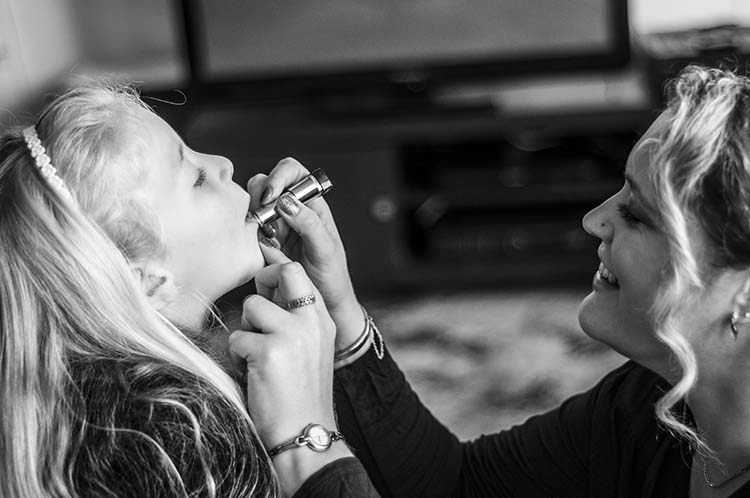
You’ve assisted a few photographers at a number of weddings, and now you want to take the reins. Good job! At this stage, there is a lot to think about, and begin preparing. You need a presentable portfolio to show prospective clients, as well as prices, packages, and a solid contract. A great way to roll two of those things together is to create your own website.

This will allow you to have an online gallery of your images, along with a page outlining all pricing and further information. If you’re not a HTML whizz or web designer, don’t fret – you can sign up to a website that will offer you pre-made themes, designs, and layouts. Wix is a great place to start, you can select a yearly plan, which will give you a domain name, and eliminate all of their advertisements from your website. Plus – their website editing tool is super straight-forward and will allow you to customize your website easily. Another low cost option is Squarespace, starting at $ 8/month.

When you are designing your packages and conjuring up your pricing, comparison is key. Take some time to think about all the expenses involved in your business and compare this to the rate you wish to charge. Depending on your expenses, it might work in your favour to price yourself slightly higher or lower. Things to consider are: your overhead costs (rent, telephone, utilities, web fees, etc.), equipment, price of goods including wedding photography albums and/or prints, and you should also think about your own salary and how much business you hope to accumulate during the year. Remember, you are a novice – clients will not be choosing you because of your years of experience, but because of your passion and artistic flair!

You will also need to think about having a contract ready to go should a client ask to see a copy. There are loads of great wedding photography contract templates online, find one you like and do some adjusting. Important things to consider when writing a contract are: model release, image copyright, illness or injury, pricing and deposits/retainers, sizing/format of images, etc. Always have a lawyer take a look at your contract. Laws vary from place to place, and sometimes it is not my place legal guidance to others. Remember, we are photographers – not lawyers.
DSC 2716

Read these related dPS articles for more on contracts:

  • The Biggest Legal Mistake Photographers Make
  • Wedding Photography Agreement (Contract) Tips

3) Sell yourself

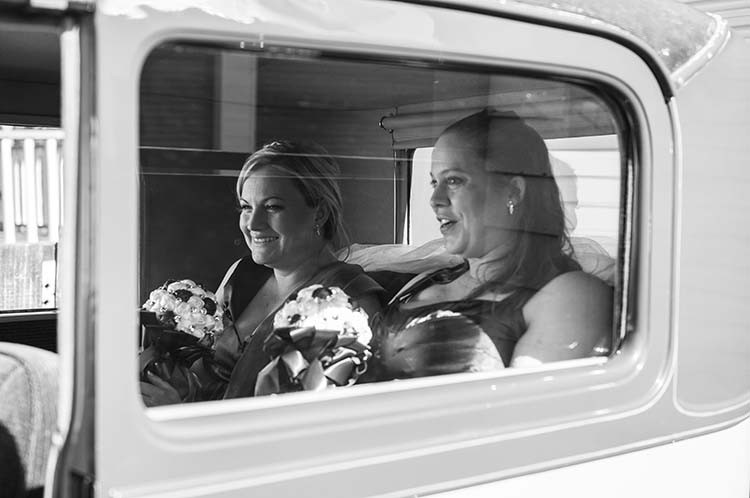
You’ve compared, you’re prepared – now it’s time to don the marketing hat, and get your name out there. There are a few avenues you can explore, but something that always goes down well, is running a promotion or special offer. For example, you could offer a special bonus (such as 20 free 5×7 prints, or a free 16×20 wall print) on your wedding services for the first five people who make a booking. This will cost you a little to produce, but it will benefit you massively and almost guarantee you five weddings.

A great way to utilize social media (again) is to search Facebook for wedding groups in your area, and advertise yourself there. Be sure to read the rules of the group and make sure you’re allowed to advertise your services in the group, some don’t allow it and you will be blocked. Have your website ready to go, so that as soon as you get some interest, you can fire through a quick message with a link to your work and pricing.
DSC 7202

4) Communicate

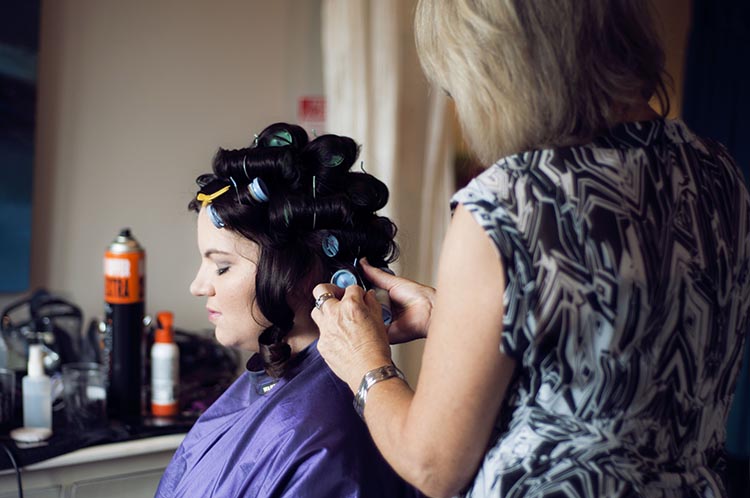
By now you should have a few people enquiring about your services and wanting to know more. At this stage, quick, friendly, and professional communication is your best friend. Have a script ready, so that as soon as you receive a message, email, or phone call you have a short and informative response ready to go. Remember, this is a script – NOT a sales pitch! Keep it short, sweet, and straight to the point.

My normal script goes along the line of, “Hello! Thanks for the message. Of course, I would be interested in photographing your wedding – please feel free to head on over to my website to see more of my work and pricing (insert website here). Do you mind me asking what is the date of your big day?” By asking for the date of the wedding, you are opening a conversation which is a hugely important part of the process. Once you have had a brief conversation regarding the details of their wedding, say to them that you will be in touch in a couple of days. This leaves the ball in their court so that they do not feel pressured, but also allows you to follow up with a friendly message and hopefully secure a consultation.
DSC 7742

5) Meetings

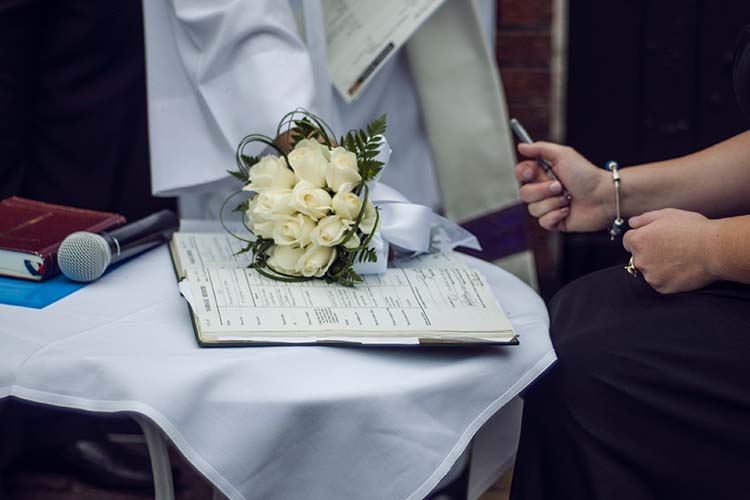
You’ve secured a consultation with your first potential client – yay! Turn up 5-10 minutes before the scheduled time, this is your only chance to make a first impression, and being late is a BIG no-no. Once you have greeted your clients with a smile on your face, ask them a few things about themselves. This initial meeting is a chance for them to get to know you (and vice versa) and your process, so go in there with a clear mind and plan of action.

Spend five minutes briefly explaining a run-down of how their big day will work from your perspective, and also explain your pricing, packages, and deposit payments. Take a copy of the contract and give it to them to take home and look over, let them know if they have any questions to contact you.

After this initial meeting, follow up with them three days later, and ask if they want to secure a spot. Make it clear that in order for them to secure their date in your diary, the deposit needs to be paid. If the clients liked you, and books you as their photographer, well done! You should always have a follow up meeting at their wedding venue, so that you can explore the grounds together, talk about potential photographic opportunities, and let those creative idea juices flow.
DSC 3417

6) The Essential List

You’ve got your first official booking, the deposit is paid, and the ball is well and truly rolling. Good on ya! Now you need to make a list of the absolute essentials that you need for the big day. These things include:

  • Family and group shot list
  • Bridal party shot list
  • Full itinerary of the day
  • Your own photographic equipment
  • Any post-wedding preparations

Contact the bride and groom and ask them to send you a list of all the must-have group portraits that they want, and also ask them for a full itinerary of the day. Ask them to allow an hour for photos between the ceremony and reception, in order to ensure that they get all the photographs that they want. Make a list of the equipment you will be taking including SD cards, spare batteries and chargers. If you are including prints or albums as part of your package, take some time to do the research and find a reputable, quality printing agency.
DSC 4113

7) Itinerary and planning

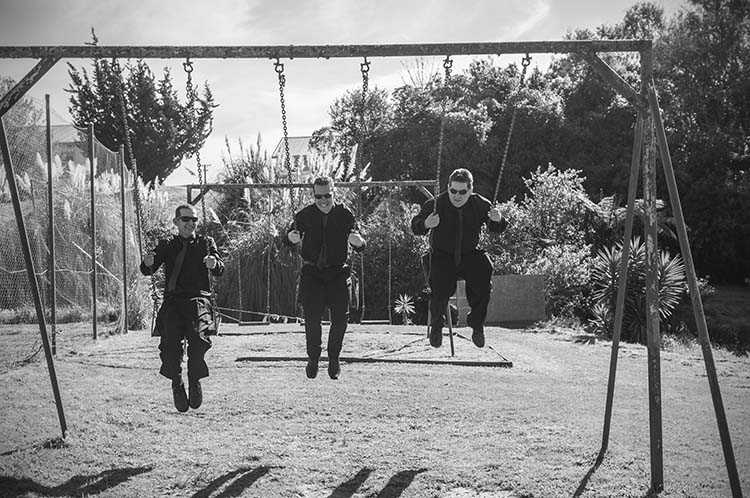
The big day is getting closer and you’re getting nervous – use the itinerary of the wedding day to start scheduling your own plan of action. Decide which shots you want, and when is the best time of day to take them. Be mindful of the time of day and position of the sun if you are shooting outdoors. You don’t want the subjects to appear silhouetted – but you also don’t want to blind your clients with the sun, as this will make for very squinty pictures.

Be sure to also schedule your own breaks – after all, this is a job and you will need a break. I find the best time to have a break is during the lunch or dinner, when everybody is busy with the food. Nobody likes being photographed with their mouth full of food, so this is a great time for you to sit down and enjoy a well deserved break and bite to eat as well. In most cases, the bride and groom will feed you (if this is really important, you can even put it in your contract).

DSC 7929

8) Recruit the best man and maid of honour

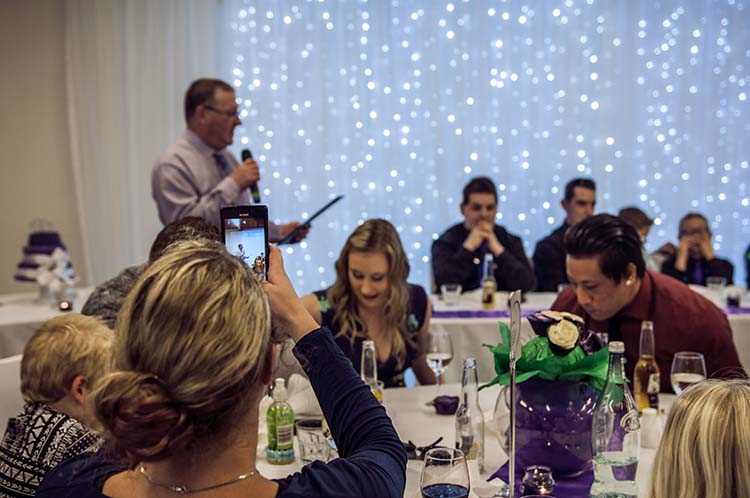
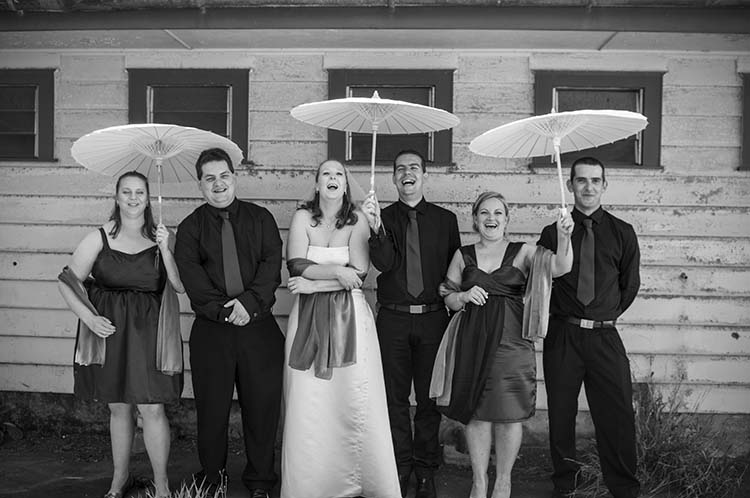
This will make your life so much easier, and will also enhance the experience of shooting family portraits. The best man or maid of honour are usually familiar with the family members, and will help herd the groups to make sure that everyone is ready for their portrait with the bride and groom. Let the bride and groom know that you intend to do this at your second meeting, and ask for a contact phone number or email address for the maid of honour and the best man. You can then drop them a line and introduce yourself before the big day, and ask them ever so nicely if they would be willing to stick around for family portraits to help you organize the herds of family members. Hopefully, they will see you operating like a well-oiled machine and the whole experience will not be too stressful on anybody. No one likes a stressed out photographer. This will also help you get to know them a bit better before the bridal party photographs, which is a major advantage in getting more natural, down-to-earth photos of the group.
DSC 3917

9) Have a perfectly balanced attitude on the big day

The big day is here – don’t panic! Refer to your equipment check list to double, triple, and quadruple check that you have not forgotten anything. When you turn up to the first location and start shooting, you need to be prepared to wear an infectious smile for the whole day. This will help all of your subjects relax and smile during their photos. Remember – it’s fine to direct people during the staged family portraits, but do it as kindly as you can. Find the perfect balance between friendly and assertive for this part of the day.

Self-check for professionalism, there are a few things that I think of which are absolutely unacceptable. This includes: showing signs of stress, smoking (even if the bride/groom are doing it), chewing gum, spitting, or excessive drinking. Sometimes photographing a wedding can seem a bit like a party, but this is a job and it needs to be treated as such. Be approachable, and just a generally delightful person to be around. People will remember this, and you may even find another engaged couple at that very wedding who like you so much that they decide to make a booking. Word of mouth is truly the best marketing tool ever!

DSC_8003-1

10) Follow up

The big day is over, phew – you survived! Now it’s time to knuckle down and do some editing, you’ve got a whole bunch of beautiful photos that you need to begin post-processing. I use Photos on my MacBook to sort through the images, and add all my best shots to a different album – I then go through that album and spend time editing those images.

How you should follow up as communication is critical, even at this point of the process. Text or email your clients the next day, and let them know you had an awesome time photographing their big day, and that you’ve got some stunning photographs. Some people take a couple of days to edit and send their images, other people take weeks. I tend to give a timeframe of 14 days, although they are usually done within five to seven days. If the photographs are not done in seven days, drop them a line and keep them updated on your progress, something along the lines of, “Hey guys! Just to let you know I have edited around 500 of your images and only have 100 to go. As soon as these are done I will be in touch to schedule a viewing.”
DSC_8089-1

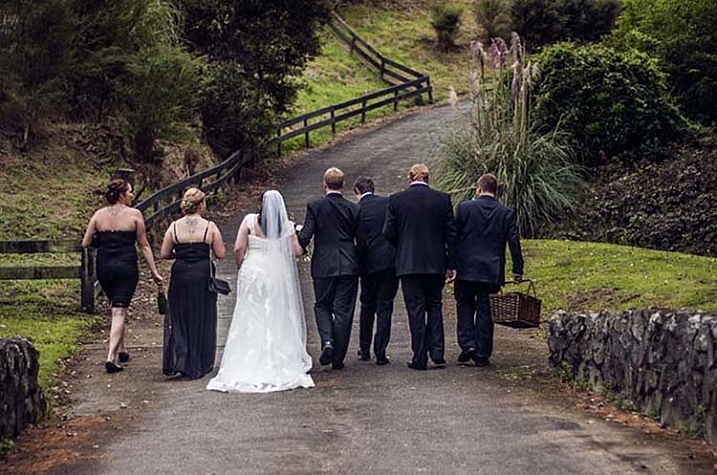
Once your edits are done, schedule a viewing time so that they can choose their favourites, and any potential prints. The final step is simple – once all is said and done, ask the client to provide you with an honest testimonial. This will give you more content to add to your website, and is also a great way for future clients to read about someone else’s experience with you.

From start to finish, the process of starting a wedding photography business takes hard work and determination, but you got there with (hopefully) no hiccups. Nice work!

Want more on similar topics? Check out these dPS articles:

  • 6 Things to Consider Before Becoming a Professional Photographer
  • What Defines an Amateur versus a Professional Photographer?
  • 4 Things You Must do BEFORE Becoming a Professional Photographer
  • 3 Questions to Ask Yourself When Starting a Photography Business

googletag.cmd.push(function() {
tablet_slots.push( googletag.defineSlot( “/1005424/_dPSv4_tab-all-article-bottom_(300×250)”, [300, 250], “pb-ad-78623” ).addService( googletag.pubads() ) ); } );

googletag.cmd.push(function() {
mobile_slots.push( googletag.defineSlot( “/1005424/_dPSv4_mob-all-article-bottom_(300×250)”, [300, 250], “pb-ad-78158” ).addService( googletag.pubads() ) ); } );

The post 10 Fundamental Tips for Newbies in the Wedding Photography Business by Jasmine Monrouxe appeared first on Digital Photography School.


Digital Photography School

 
Comments Off on 10 Fundamental Tips for Newbies in the Wedding Photography Business

Posted in Photography


Olympus M.Zuiko Digital ED 300mm F4 IS Pro real-world sample gallery

06 Jan
Olympus M.ZUIKO DIGITAL ED 300mm F4 IS Pro on the Olympus OM?D E?M1. You will love it, but birds will be less than pleased. Photo by Jordan Stead.

Olympus just squeezed a 600mm equivalent field of view into a 2.8-pound lens, complete with image stabilization, weatherproofing and an impressive close focusing distance. Meet the Olympus M.Zuiko Digital ED 300mm F4 IS PRO.

This compact, 2.8 pound supertelephoto is splashproof, freezeproof and dustproof, and is the first Olympus interchangeable lens with a built-in image stabilization mechanism. When paired with the Olympus OM-D E-M1 (firmware version 4.0) or E-M5 Mark II (firmware version 2.0), the 300mm’s in-body and in-lens image stabilization work together to produce image stabilization performance that Olympus claims is equivalent to up to six stops of compensation. 

We got the chance to shoot with it recently, and we’ve prepared a gallery of sample images. 

Articles: Digital Photography Review (dpreview.com)

 
Comments Off on Olympus M.Zuiko Digital ED 300mm F4 IS Pro real-world sample gallery

Posted in Uncategorized