RSS
 

Archive for August, 2015

Photographing Starry Skies for Nocturnal Landscape Without Breaking the Bank

02 Aug
Photo01

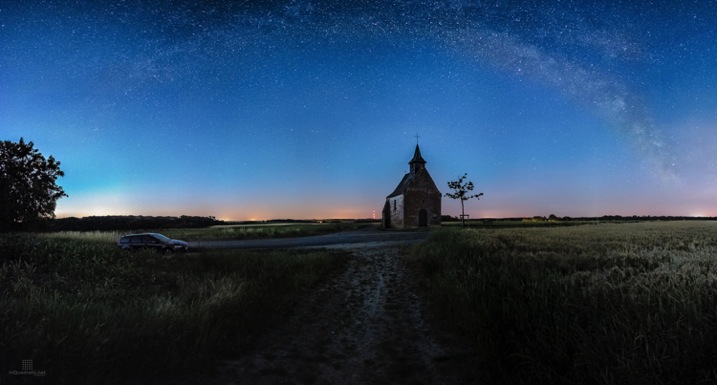
Milky Way over the Belgian countryside – Sony RX100, 28mm equivalent f/1.8 + LPR (Light Pollution Reduction) filter, ISO 6400. Panorama composed of 12×3 frames, each frame is the image average of four different photos

Photography in low-light conditions is one of the most challenging things to do with a camera. In conditions with faint, moving, distant lights it is even trickier. There is something about a starry sky that simply inspires awe in all of us. And it does so more often since light pollution is getting worst all around the world. I wonder how many children have seen The Milky Way first hand.

Recently, night photography caught my attention because, it is convenient for me. It is the time my duty as father can be left to sleep alongside my son, and the photographer in me can go out hunting starry skies. What is not convenient, is that I live in Belgium. People may know Belgium for its massive variety of beer, but also sports one of the most light polluted skies in all of Europe (dare I say the world?). Don’t believe me? Check the image below, extracted from the Dark Site Finder website.
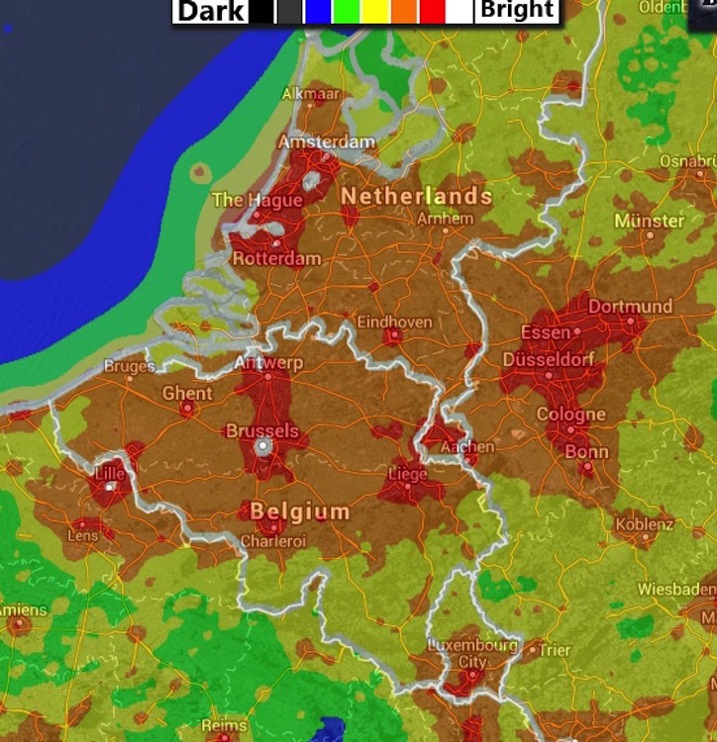
Photo02

Light pollution in Belgium (Source: Dark Site Finder)

As you can see, in Belgium the most you can hope for is a moderately dark sky, somewhere between typical urban suburbs and rural skies. This is mostly due to the presence of street lights lighting up almost all of the Belgian road network. Unfortunately, true dark skies are among the rarest gems in Europe: small, precious, and hard to find. Let me be clear here – nothing beats a truly dark sky and a clear atmosphere when it comes to photographing the stars.

But fear not – we can still get some pretty photos of starry nights with a bit of patience and the right gear.

Astrophotography versus nocturnal landscape

There are two main kinds of night photography that involve the starry sky: astrophotography and nocturnal landscape photography.

The first, in my view, is the attempt to photograph distant objects in the sky (planets, nebulae, galaxies) with no landscape. This kind of photography is usually achieved by using a camera mounted to a telescope (or to a long telephoto lens), all mounted on a motorized head on a tripod. Objects in the sky move pretty fast, so if you cannot track their movement with some sort of tracking device, you will not get many astrophotos. This kind of photography has its own challenges, but it is pretty straightforward: get a telescope, a tracking head, a sturdy tripod and you are pretty much done. A number of filters are also available to enhance the view of nebulae, planet and galaxies, as well to suppress the sky glow and punch through light polluted skies.

Nocturnal landscapes, instead, are another kind of beast entirely – the main problem is that you have the stars moving (fast!) across the fixed landscape. If your exposure is too long, stars will stop appearring as dots, and will begin to become trails. And you cannot track their movement or the landscape will be blurred. Here is the difficulty – you are trying to photograph in low light faint, distant lights and you want to do that as fast as possible (except if you do want to photograph star trails). The technical steps you have to adopt in order to capture a nocturnal landscape may vary depending if you want record star trails or not, and on the darkness of the sky above you.

What you cannot (easily) control: The ideal conditions

Ideally you want to have:

  • The darkest sky possible above you
  • A clear, moonless night (few clouds are allowed)
  • A clear and thin atmosphere
  • An interesting view or foreground

Remember, you are still doing landscape photography. A boring landscape with a dark, empty foreground will ruin even the most majestic of skies. You need to balance both parts to get a keeper.

What you can control: The ideal gear

Ideally, money is one of your last concerns and you have a digital full frame camera (oh what the heck, let’s take a digital medium format camera, even better) with excellent ISO capabilities and a set of fast (ideally f/1.4 to f/2.8) and sharp lenses to put in front of your sensor. Also, you need a sturdy tripod and head, a remote shutter, a headlamp (to see what you are doing) and strong lights (or even off-camera flashguns if you are brave enough) to do some light painting.

If you are like me, and money is a constraint, you can get away with any camera able to shoot at 3200 ISO (while still retaining some image quality) in RAW format. But you will still need fast glass (a lens with a large maximum aperture), anywhere from f/1.8 up to f/3.5.

To give you an idea, below there is the list of my current gear for nocturnal landscape photography:

  • Olympus OM-D EM–10
  • Samyang 7.5 f/3.5 UMC fisheye (Micro Four Thirds) – equivalent to 15mm on full frame
  • Samyang 12 f/2.0 NCS CS
  • Sigma 30 f/2.8 Art DN
  • Sony DSC-RX100 M2 (yes, a compact camera)
  • Manfrotto 055XPROB + ball head
  • MeFoto + ball head with uncoupled pano movement
  • Spare SD memory cards and batteries
  • Remote shutters with intervalometer

Nocturnal Landscapes with star trails
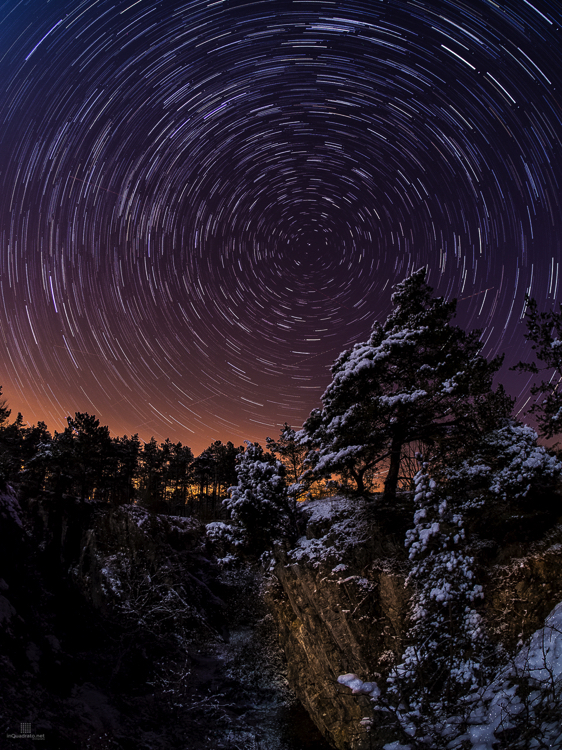
Photo03

Star trails (Stack of 60 frames taken with Olympus OM-D EM–10 + Samyang 7.5 f/3.5 fisheye lens)

The easiest nocturnal landscape you can take is one with star trails, mainly because you are not trying to fight the sky’s rotation (well, technically the Earth’s rotation). Instead, use this to your advantage to create striking images, in particular if you can get the North Star in the frame, so that you will end up having concentric star trails, all centred on the North Star (assuming you are in the northern hemisphere, of course).

In principle, all you need to do is: compose your scene, focus on infinity, set the camera in BULB mode and go grab some coffee. The longer you let the camera register the scene, the higher the number of trails you will record; and they will be longer and more continuous. Practically however, you do not want to do that because the noise due to the overheating sensor (hot pixels) will degrade the quality of the final image. You are better off by taking many shorter exposures (30 seconds each) and stack them later using software like StarStax or similar. This will allows you to keep the digital noise under control, with the downside of recording a great number of images to process later. Be sure you have a high capacity SD card that is empty, and your battery is fully charged before you start taking the sequence. An intervalometer is a must in order to set the appropriate number of shots to take, and the time interval between them. Never touch your camera until the end of the shot sequence.

In summary, get an interesting composition and fire at will. It does not require much more than that. You can even do cityscapes with star trails, like the shot below; this is a view over the city center of Brussels (Belgium), from the roof of my building.
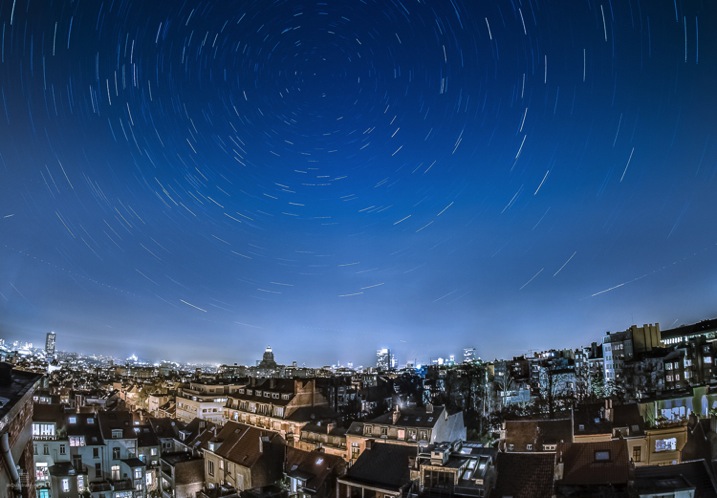
Photo04

Star trails over Bruxelles, Belgium. (Stack of 400 frames taken with Olympus OM-D EM–10 + Samyang 7.5 f/3.5 fisheye lens)

With cityscapes there is the extra difficulty of not blowing out the city lights, which are much brighter than the sky. Graduated filters may be of great help if you have a distant, flat horizon. Else, just expose (to the right) for the city and hope for the best, but some stars should show through. Mind your exposure time will be short because of the bright cityscape, so be prepare to shot a lot of frames (note the number for the shot above).

Nocturnal landscapes without star trails

Basically, the Holy Grail is getting a bright, sharp, colourful, and structured image of the Milky Way to shine across your landscape. This is the most difficult task and requires much more thinking that just doing star trails.

  • Size matters – the Milky Way is huge, so you need an ultra wide angle, or a fisheye, lens to fully capture our galaxy
  • Time matters – you want to get a sharp image of the sky, meaning you should avoid recording the stars movement. There are a couple of mathematical relations that can be used to estimate the longest time you can record the scene at a given focal length (or the equivalent in 35mm if you have a cropped sensor) before stars begins to form trails. These are called 600 and 500 rules: the longest time you can record the image is given by the following equations:Exposure time (t) = 600 / Focal Length OR Exposure time (t) = 500 / Focal LengthWhere the 500 rule is the most conservative of the two. Once you get the maximum exposure time (t) for your chosen focal length, it is just a matter of setting the proper aperture and ISO settings to match it. Usually you will need to use a larger aperture (small f-number), a good starting point for setting the proper ISO value is given by the following equation:

ISO = (6000 * f^2) / Exposure time  – f^2 means the f-number to the power of two

For example, with my Samyang 12mm f/2.0 on my Olympus OM-D (crop factor 2x), in order to get a good sky I should use a shutter speed no longer than: Exposure time = 500/(12*2) or approximately 21 seconds.

Assuming I go for the widest aperture, I should use an ISO value of about:  ISO = 6000 * (f2.0 to the power of 2 = 4) / 21 = 1142 or rounded up to ISO 1150. 

If, say, the aperture was set to f/4.0 instead of f/2.0, the ISO will need to be: ( 6000 * (4.0 ^2)  / 21 OR ( 6000 * 16 ) / 21 = 4571.

With this in mind, it is obvious that wider and faster your lens is, the easier it will be to record a good sky. This will also allow you to use a relatively low ISO, to keep the digital noise as low as possible. The shot below is one of my first attempts to capture the Milky Way. It has been done with my OM-D EM–10 with the Samyang fisheye at f/3.5, ISO 1000 with a shutter speed of 40 seconds, under a fairly dark sky (for Belgian standards).
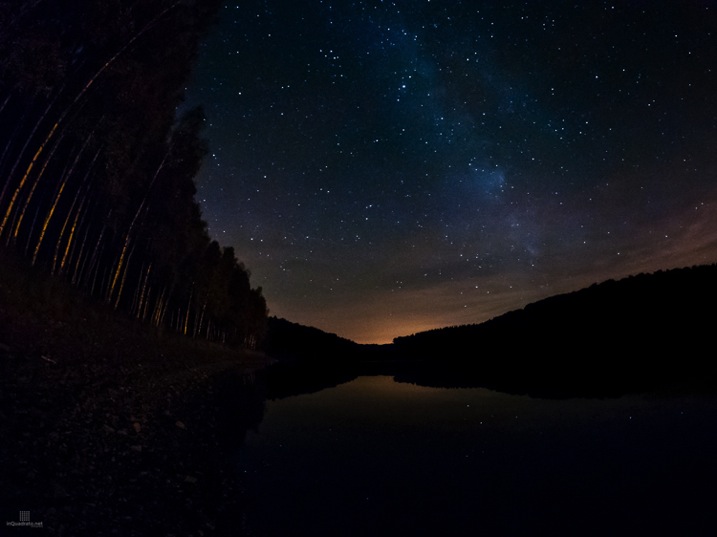
Photo05

The Milky Way in the winter Belgian sky (Olympus OM-D EM–10 + Samyang 7.5 f/3.5 fisheye lens)

Doing nocturnal landscape panoramas

As if the things were not already complicated enough, sometimes a single shot is not enough; either because it is not wide enough, or because you want to produce really large prints and you need to have a file with a resolution larger than that of a single photo. Sometimes you want to do a nocturnal panorama and that means taking different images and merging them later to form a panorama. The only difficulty is that you need to be precise in the camera movements and work as fast as possible to avoid large star movements between one photo and the next. In my experience it is also best to use a wide lens, like a 28mm (in 35 or full frame format) or wider. This because software struggles to automatically stitch together photos containing only stars and no big, fixed points, like a part of a rock or a tree, and also because longer focal lengths will require a greater number of frames to stitch together to cover the same view. For seamless stitching of the different frames, it is best to allow a superposition between the frames in the order of 30–50%.

To help you to work fast, note the vertical and horizontal angles of view for your lens and your camera before heading out. A great tool for this is the Angle of View Calculator. Once you know the vertical and horizontal angles of view you can move precisely and fast with your camera by using the graduated scales on you tripod head.
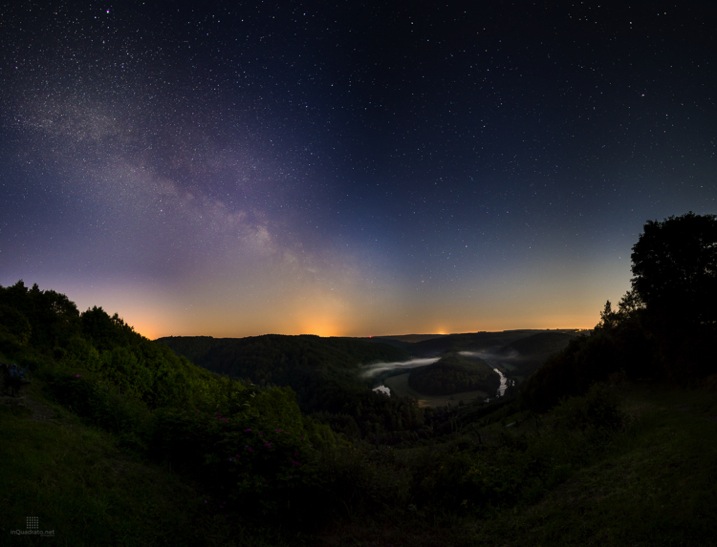
Photo06

The Milky Way over the Belgian Ardennes – Olympus OM-D EM–10 + Samyang 12 f/2.0; panorama composed of 12 (4×3) photos.

Fighting the evil orange glow: LPR filters

Light pollution is, unfortunately, a sad reality in many countries. It is not always possible to be under your dream sky and you have to try to deal with light pollution and the resulting orange glow in the sky. As I mentioned when introducing astrophotography, some filters exist to help holding back light pollution by absorbing light of specific wavelengths: in particular, broad band Light Pollution Reduction (LPR) filters try to reduce the orange glow by absorbing the light emitted by streetlights used in cities and on roadways. Those lights are from low and high pressure sodium lamps, which emit light at around 583nm; this light is cut by the LPR filters. The transmission spectrum for my Sky-watcher LPR filter is shown below.
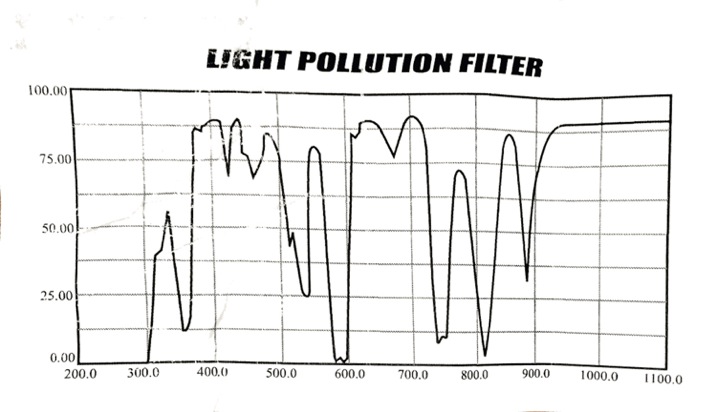
Photo07

Typical transmission spectrum of a broadband LPR filter.

There are many kinds of filters and light polluting sources so you have to find the right filter to suppress or reduce the kind of light in your location. At the moment, here in Belgium, I am happy with the Sky-watcher LPR filter. There are several manufacturers who produce different filters to suit different equipment, as well as large and small wallets. Just have a look for Sky-watcher LPR and UHC filters or Astronimik CLS filters just to name two options.

Do the filters really help in the field? It depends on the kind of light pollution, and also on the amount of pollution versus ambient light. I found that in some circumstances the filter clearly helps, and the non-filtered image cannot be saved in post processing. Other times, the filter seems to be less important. Anyway, with a polluted sky I’d say the filter does help. The image below shows the effect of the filter on street lights compared to using no filter; in both cases you can see the RAW and edited image. They should speak for themselves.
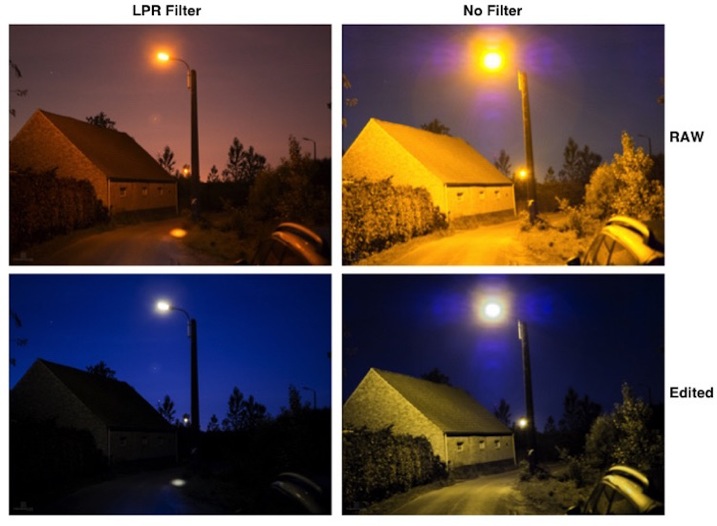
Photo08

Comparison between test shots with and without an LPR filter

Note there are some downsides to the use of this filter. First, it darkens the scene of about one stop (the images above are taken at the same exposure value by using a slower shutter speed when the filter was in use), and it does not work with wide angle lenses. This is because it is an interference filter, and cannot handle light coming in with very different angles, like when using a wide angle – it will generate banding on the image that is difficult or impossible to remove. The solution is using lenses with an equivalent focal length of about 30mm or more and shoot a panorama.

Having to deal with a one stop loss of light, and the use of lenses with a relatively long focal length is challenging, in particular if the lenses you have are not very fast, but it is worth giving the filter a shot.

A final word of caution: cheap LRP filters like mine come usually in sizes of 1.25” or 2” in diameter, and the most suitable diameter of the two is 2”, which corresponds to a 48mm threaded filter. This size suits very well many lenses for micro four thirds camera, such as the Panasonic Lumix 14mm f/2.5 and Lumix 20mm f/1.7, old Zuiko legacy lenses, Sigma 19 and 30 f/2.8 and so on. With larger lenses the amount of vignette you will get will probably make it impossible to produce a useable panorama.

Because my fastest, not too wide lens, is the wide end of the zoom on my Sony DMC-RX100 M2, which is equivalent to a 28mm f/1.8, I decided to play along and use it to photograph the Milky Way. I went to the Chateau de la Hulpe, in La Hulpe (Belgium), which is located a few miles from Bruxelles, under a heavily polluted sky (even for Belgian standards) and I made a 8×4 panorama of the Castle under the Milky Way. I fitted the camera with the LPR filter and shot 18, 20 second long, exposures at f/1.8 and ISO 6400. To contain the digital noise, each frame used for the panorama is the result of image averaging two shots. The result is shown below. I think it is not bad at all and that there is still plenty of room for improvement.
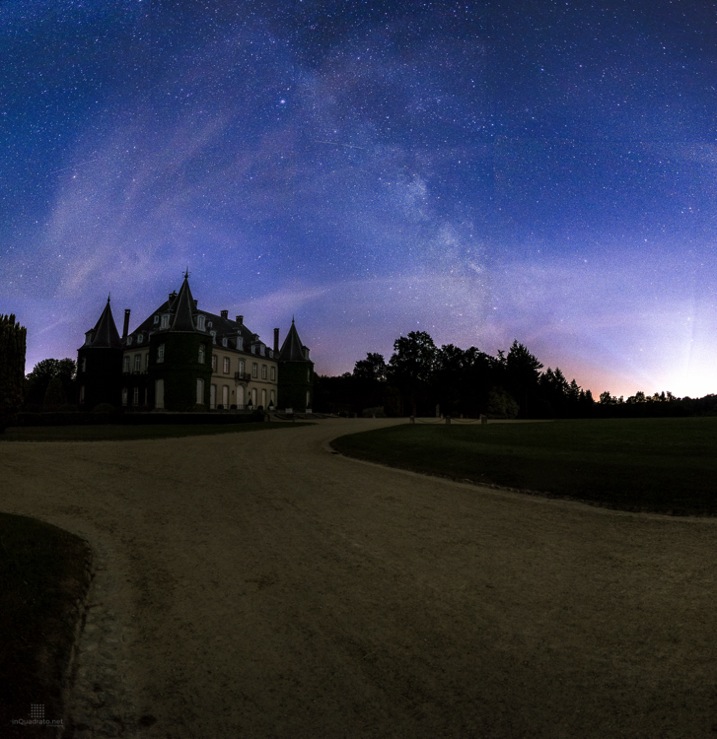
Photo09

The Milky Way in the Belgian heavily light polluted sky – Sony DMC-RX100 M2 at 10.4mm (equivalent to 28mm on full frame camera) and f/1.8 + LPR filter; panorama composed of 32 (8×4) frames.

In summary, don’t give up just yet, if you live in a light polluted area; with a bit of luck (and gear) there is hope, even in the orange glowing sky.

Disclaimer: I am not associated in any way with Skywatcher, Astronomik, Panasonic, Olympus or with any of the other brands I have mentioned in this article.

googletag.cmd.push(function() {
tablet_slots.push( googletag.defineSlot( “/1005424/_dPSv4_tab-all-article-bottom_(300×250)”, [300, 250], “pb-ad-78623” ).addService( googletag.pubads() ) ); } );

googletag.cmd.push(function() {
mobile_slots.push( googletag.defineSlot( “/1005424/_dPSv4_mob-all-article-bottom_(300×250)”, [300, 250], “pb-ad-78158” ).addService( googletag.pubads() ) ); } );

The post Photographing Starry Skies for Nocturnal Landscape Without Breaking the Bank by Andrea Minoia appeared first on Digital Photography School.
Digital Photography School

 
Comments Off on Photographing Starry Skies for Nocturnal Landscape Without Breaking the Bank

Posted in Photography


1. August 2015

02 Aug

Das Bild des Tages von: Nizamettin Küçüköner

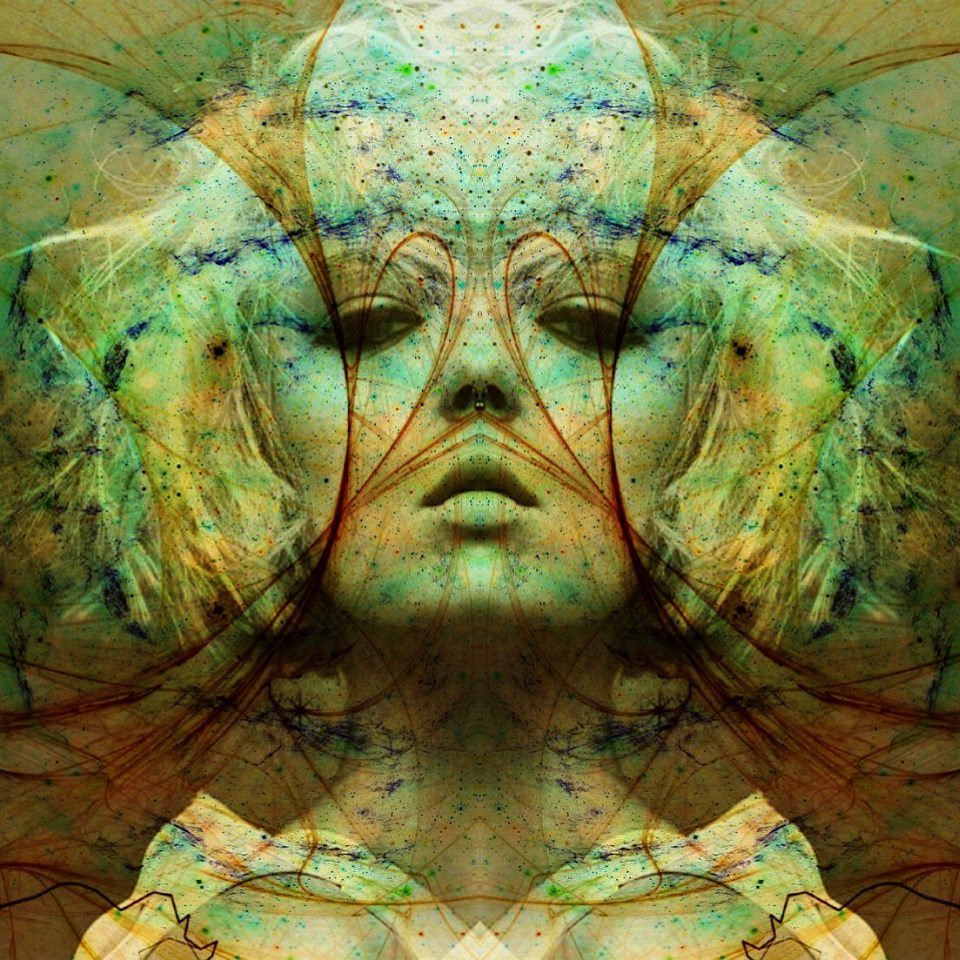
Symmetrisches, surreales, digital verfremdetes Frauenportrait.

Im Ausblick schaut uns heute die Bewohnerin einer fremd-vertrauten, grünen Welt an.
kwerfeldein – Fotografie Magazin | Fotocommunity

 
Comments Off on 1. August 2015

Posted in Equipment


Think Tank Photo Sub Urban Disguise 30 Shoulder Camera Bag Review

02 Aug

Packing and carrying equipment for travel adventures is always a challenge. With increasing airline restrictions and not being willing to check your gear, you need to find the best possible alternative for your needs. Like most of my peers, I covet several bags. Usually when going abroad I take a bag with all the equipment and a smaller, second bag for everyday outings once on location. As I tend to travel lighter and lighter every day, I was on the lookout for a bag that could serve dual purposes for my recent Italy trip. I wanted a bag that could carry my two Fuji X bodies, some lenses, a filter kit, and my iPad. The other important consideration was that the bag needed to be easy to access and work from.

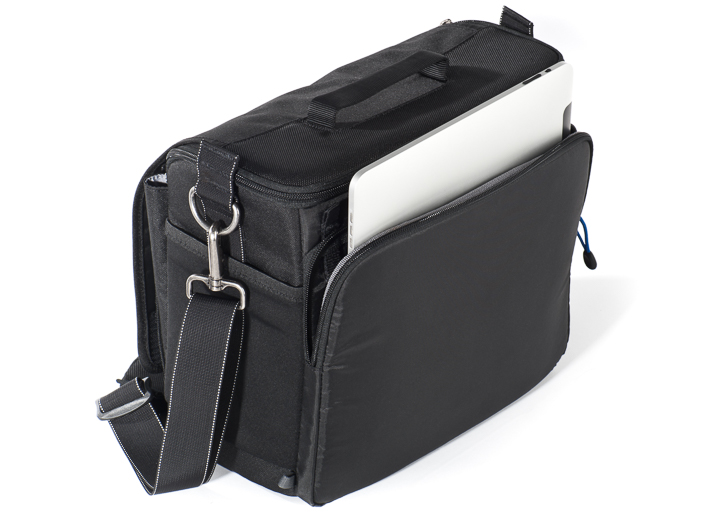
Think Tank Photo Sub Urban Disguise 30 - Image Courtesy of Think Tank Photo

Think Tank Photo Sub Urban Disguise 30 – Image Courtesy of Think Tank Photo

After much looking around, I settled on the Think Tank Sub Urban Disguise 30. As you may know, Think Tank products are legendary and they carry their well-known “non-rhetoric warranty.” This bag is one from their compact series, designed for small kits. There are four different models and the 30 is the biggest of them all, the one that features a separated iPad compartment.

The bag is constructed of high-quality ballistic polyester, treated for water resistance. It features YKK® zippers, stretch pockets on the sides, two-ply bonded nylon thread, and a removable shoulder strap. The interior comes with removable dividers and a rain cover that fits in the main outside pocket.

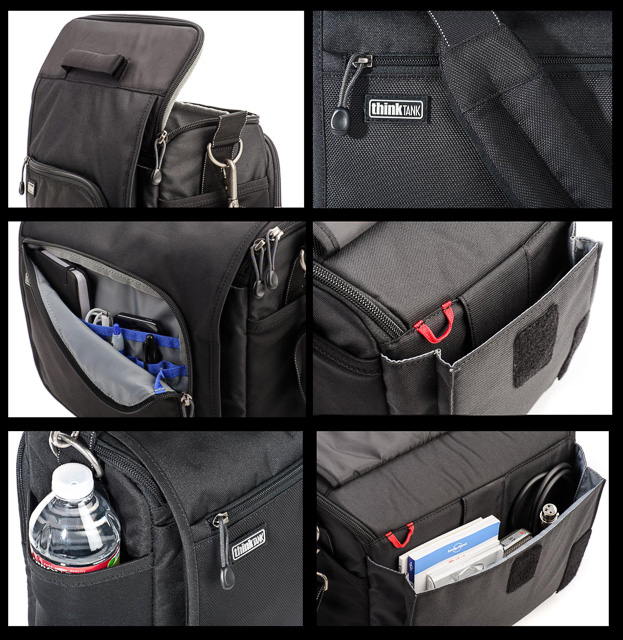
Besides the main compartment, the Sub Urban Disguise 30 has multiple pockets. There is a front organizer pocket on the front flap that can accommodate personal items. Under the main flap, there is a large pocket that is roomy enough to store bigger accessories, like battery chargers, cables, or perhaps a travel book. There is also a mesh pocket inside the main flap for smaller accessories. The exterior stretch side pockets can fit a bottle of water or a flash.

Think Tank Photo Sub Urban Disguise 30 Details - Images Courtesy of Think Tank Photo

Think Tank Photo Sub Urban Disguise 30 Details – Images Courtesy of Think Tank Photo

The bag dimensions are:

  • Exterior: 12” x 10” x 7.3” ((W x H x D)
  • Interior: 11” x 9.5” x 5” (W x H x D)
  • iPad pocket: 10.7” x 8.5” x .8” (W x H x D)

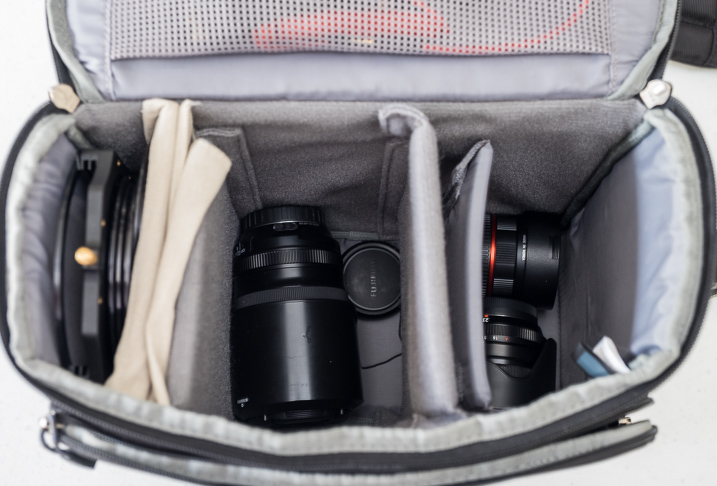
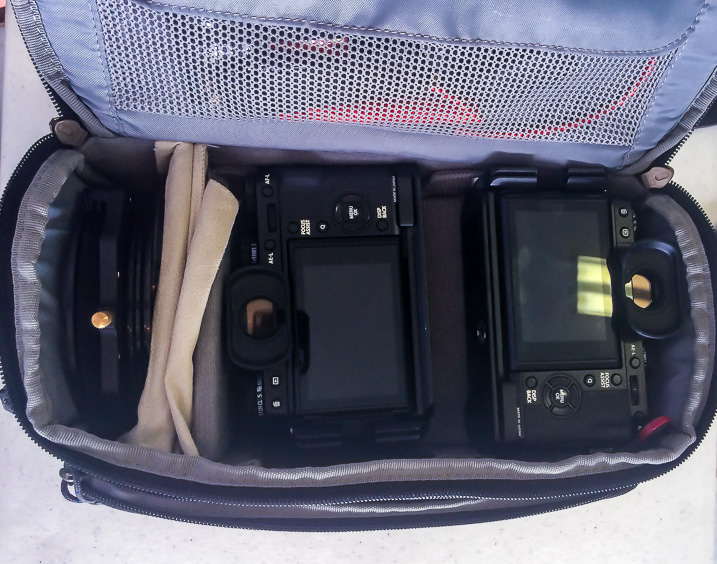
According to Think Tank, this bag can fit a standard-size DSRL, two to four zoom lenses, a regular iPad, and a 70-200 f/2.8 lens unattached. As I am shooting mirrorless, my use was a little different, and I was able to fit two Fujifilm X-T1 bodies with lenses attached, three separate lenses, a full-size filter kit, the iPad, and accessories, and I had room to spare.

Lower Section Think Tank Photo Sub Urban Disguise 30

My kit bottom layer  contains Fujinon XF 55-200 mm f/3.5-4.8, Fujinon XF 23mm f/1.4 and Rokinon 8mm f/2.8 fisheye for Fuji X mount.

Lower Section Think Tank Photo Sub Urban Disguise 30

My kit upper layer contains Fujifilm X-T1 body with Fujinon XF 10-24mm f4.0 lens attached, Fujifilm X-T1 body with Fujinon XF 16-55 f/2.8 attached and on there is a complete Lee Filter kit with 3 ND grads and 2 NDs. (Photo taken with iPhone)

As you can see, I loaded mine by layering the interior in two tiers. I placed lenses on the bottom of the bag, which I separated from the top with the provided dividers, and then placed both camera bodies on top for easy access. On the side I had the filter kit. As explained above, one of the things that I was looking for was to have easy access to the gear, and this way I had both bodies with the most used lenses within very easy access. The bag is very comfortable to wear as the shoulder strap is solid but very well padded.

One of the best things about this bag is the way it opens. There is a flip-top lid that folds away from your body, and that really helps you to reach the camera fast. This top lid is zippered and totally separated from the main Velcro exterior flap that accesses the bigger pocket. In the end, the bag was everything that I expected, so I will continue to use it on future trips, especially the ones around cities with lots of walking, and where I need quick access to the cameras, to take a shot and put it away again.

Obviously, how much you can fit in the bag will depend on the type of configuration you use and how you divide the bag internally, but if you want something relatively light for urban walks or travel, this is really a very good option. If you don’t need to carry a tablet, you can also consider this bag’s smaller siblings with three more models to choose from. There is probably one that will suit you well. The price for this bag starts at $ 49.75 and this particular model is $ 84.75, a price that I believe is more than reasonable for all these features and quality.


googletag.cmd.push(function() {
tablet_slots.push( googletag.defineSlot( “/1005424/_dPSv4_tab-all-article-bottom_(300×250)”, [300, 250], “pb-ad-78623” ).addService( googletag.pubads() ) ); } );

googletag.cmd.push(function() {
mobile_slots.push( googletag.defineSlot( “/1005424/_dPSv4_mob-all-article-bottom_(300×250)”, [300, 250], “pb-ad-78158” ).addService( googletag.pubads() ) ); } );

The post Think Tank Photo Sub Urban Disguise 30 Shoulder Camera Bag Review by Daniel Korzeniewski appeared first on Digital Photography School.

Digital Photography School

 
Comments Off on Think Tank Photo Sub Urban Disguise 30 Shoulder Camera Bag Review

Posted in Photography


Guerrilla Grammarians Fix Street Graffiti Spelling & Punctuation

02 Aug

[ By WebUrbanist in Art & Street Art & Graffiti. ]

street art signed stamp

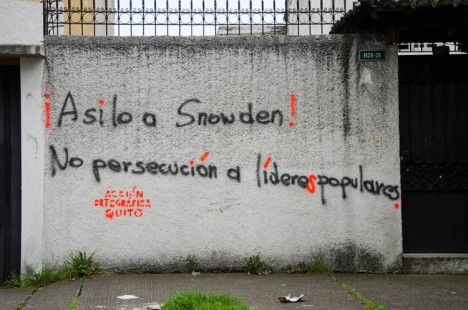
Calculated correctors, this team of vigilante street art fixers patrols for grammatical mistakes then regroups to decide on edits before hitting the streets of Quito, Ecuador, to deploy them.

street art grammar nazis

Known as Acción Ortográfica Quito, the group consists of a trio who share a strange set of common interests including street art copy editing. Like rogue professors, they use red to highlight their changes or suggestions, but their good intentions do not render their actions legal, hence their strictly maintained anonymity.

street art emphasis added

“There’s a big difference in saying: ‘No quiero verte’ (I don’t want to see you) and ‘No, quiero verte’ (No, I want to see you),” notes one of the members in an interview with COLORS, “Many times, someone does not realize how a comma or an oversight can completely change the meaning of a sentence. It can change your life.”

fixing street art spelling

The task can be daunting – their first fix had thirteen errors in two lines of text. Whether serious or silly, they suggest “it’s a public service and a moral obligation. We’re against spelling vandalism and we won’t break nor give up until we see a society free of spelling mistakes.”

street art spelling fix

Above, the phrase: “If in your kisses I met the essence of life, then not kissing you would be the worst sin I could commit,” for which these graffiti activists turned the verb into conditional, added and deleted commas, turned ellipsis into full stop and capital letter into lower case.

grammar graffiti correct fix

The group is also broadening its scope and mandate over time; they are aiming to add a hotline where people can phone in mistakes they spot and have begun correcting grammar on Twitter posts as well. When time permits, they also leave their name stenciled at the scene in red, like a grader signing their work for students.

tag-clouds-before-after

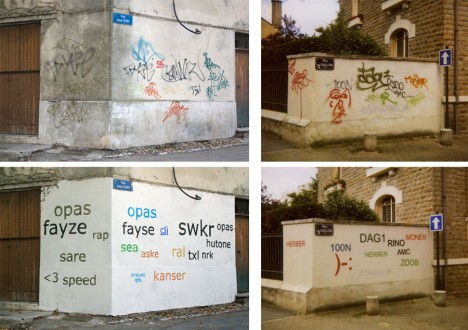
Meanwhile, a similarly unconventional yet equally geeky German street artist is out to fix tags, turning them into tag clouds – it would seem this group is not alone in its quest to clean up yet preserve the essential meaning of everyday graffiti.

Share on Facebook


[ By WebUrbanist in Art & Street Art & Graffiti. ]

[ WebUrbanist | Archives | Galleries | Privacy | TOS ]


WebUrbanist

 
Comments Off on Guerrilla Grammarians Fix Street Graffiti Spelling & Punctuation

Posted in Creativity


Readers’ Showcase: Sarnim Dean

01 Aug

Born and raised in New Zealand, DPR reader Sarnim Dean has been surrounded his whole life by wildlife and landscapes many of us only dream of visiting. He explores the country on his mountain bike and with his camera. Take a look at some of his images and find out more about him in our Q&A. See gallery

Articles: Digital Photography Review (dpreview.com)

 
Comments Off on Readers’ Showcase: Sarnim Dean

Posted in Uncategorized


Verleih mir Flügel

01 Aug

© Tina Bauer

Ein Beitrag von: Tina Bauer

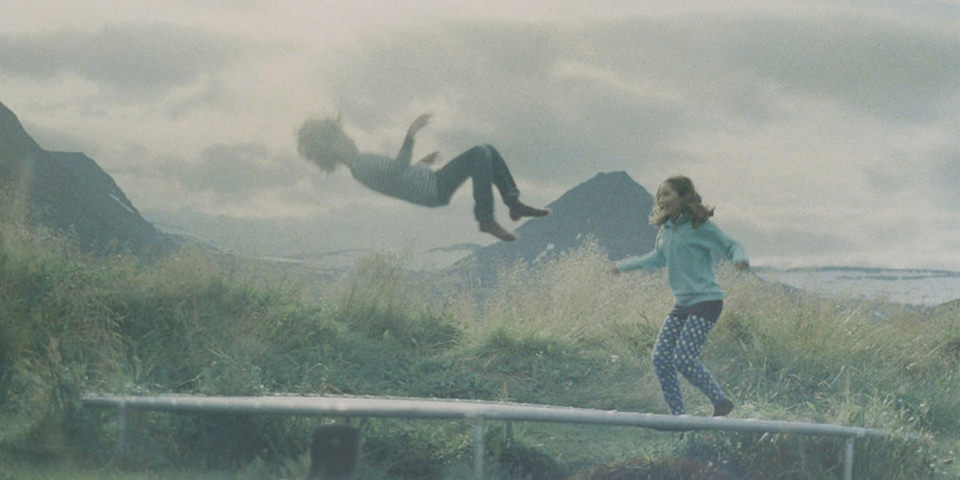
Island ist für viele ein Sehnsuchtsland. Für mich ist die Insel im Nordmeer ein Stück Heimat, denn ich habe dort zwei Jahre gelebt und gearbeitet. In meinem Projekt „Verleih mir Flügel“ erfasse ich die besondere Atmosphäre Islands mit farblich reduzierten Bildern und persönlichen Motiven fernab der touristischen Sehenswürdigkeiten.
kwerfeldein – Fotografie Magazin | Fotocommunity

 
Comments Off on Verleih mir Flügel

Posted in Equipment


28 Timeless Images of Time-worn Old Cars

01 Aug

Antique, old, rusted, archaic, crumbling, ancient, and time-worn – all words that could describe vintage vehicles. Some are in better condition than others, some in running order, others put out to pasture.

Photographers love to shoot crumbling subjects. I hope you enjoy these images of old cars:

Photograph Plymouth by Aaron J. Groen on 500px

Plymouth by Aaron J. Groen on 500px

Photograph Old memories by László Gál on 500px

Old memories by László Gál on 500px

Photograph Old Metal by Meagan V. Blazier on 500px

Old Metal by Meagan V. Blazier on 500px

Photograph P L Y M O U T H by Liban Yusuf on 500px

P L Y M O U T H by Liban Yusuf on 500px

Photograph Rusted Car in Flowers by Lidija Kamansky on 500px

Rusted Car in Flowers by Lidija Kamansky on 500px

Photograph Racing through the streets of Havana by Mikko Palonkorpi on 500px

Racing through the streets of Havana by Mikko Palonkorpi on 500px

Photograph Old Blue Car by Giancarlo Bisone on 500px

Old Blue Car by Giancarlo Bisone on 500px

Photograph Spacecraft by Tasos Koutsiaftis on 500px

Spacecraft by Tasos Koutsiaftis on 500px

Photograph The Eye by Sotiria Alexandri Schijvenaars on 500px

The Eye by Sotiria Alexandri Schijvenaars on 500px

Photograph Vespa & Fiat by Emmanuel Hatas on 500px

Vespa & Fiat by Emmanuel Hatas on 500px

Photograph Look into my eyes by Mark U on 500px

Look into my eyes by Mark U on 500px

Photograph Old rusty car by Yauheni Patsiomkin on 500px

Old rusty car by Yauheni Patsiomkin on 500px

Photograph Vergessen by Alan Lopane on 500px

Vergessen by Alan Lopane on 500px

Photograph The Ghost Town by Indigo Verse on 500px

The Ghost Town by Indigo Verse on 500px

Photograph old car by Matteo Pecchioli on 500px

old car by Matteo Pecchioli on 500px

Photograph Recycle by Ten:Dead:Pixels  on 500px

Recycle by Ten:Dead:Pixels on 500px

Photograph Rotting Jalopies by Todd Klassy on 500px

Rotting Jalopies by Todd Klassy on 500px

Photograph Beetle by ????? ???????? on 500px

Beetle by ????? ???????? on 500px

Photograph The aurora taxi by Ingrid Kjelling on 500px

The aurora taxi by Ingrid Kjelling on 500px

Photograph Dick Tracy´s by Oscar Mazza on 500px

Dick Tracy´s by Oscar Mazza on 500px

Photograph Helpless by DeVaughn Squire on 500px

Helpless by DeVaughn Squire on 500px

Photograph Eyes by Dave Linscheid on 500px

Eyes by Dave Linscheid on 500px

Photograph untitled by Mikko Erholtz on 500px

untitled by Mikko Erholtz on 500px

Photograph old police car by Michel Bellemare on 500px

old police car by Michel Bellemare on 500px

Photograph Old Caddy by Arkadiusz Ziomek on 500px

Old Caddy by Arkadiusz Ziomek on 500px

Photograph Old car racing by Sergey  Lebedev on 500px

Old car racing by Sergey Lebedev on 500px

Photograph Menara Car by Soufiane BOUDIR on 500px

Menara Car by Soufiane BOUDIR on 500px

Photograph Autoskulturenpark in Mettmann by Adam Zborowski on 500px

Autoskulturenpark in Mettmann by Adam Zborowski on 500px

googletag.cmd.push(function() {
tablet_slots.push( googletag.defineSlot( “/1005424/_dPSv4_tab-all-article-bottom_(300×250)”, [300, 250], “pb-ad-78623” ).addService( googletag.pubads() ) ); } );

googletag.cmd.push(function() {
mobile_slots.push( googletag.defineSlot( “/1005424/_dPSv4_mob-all-article-bottom_(300×250)”, [300, 250], “pb-ad-78158” ).addService( googletag.pubads() ) ); } );

The post 28 Timeless Images of Time-worn Old Cars by Darlene Hildebrandt appeared first on Digital Photography School.

Digital Photography School

 
Comments Off on 28 Timeless Images of Time-worn Old Cars

Posted in Photography


On the fly: SeattlePI.com photographer captures Blue Angels from the air

01 Aug

The Blue Angels announced their arrival in Seattle this week as they usually do – suddenly, and with a lot of noise. While we’ve been able to catch glimpses of them flying over from our office windows, as they prepare for a local maritime festival. But our view is nothing like the view SeattlePI.com photographer Josh Trujillo had during their flyby yesterday afternoon. Read more

Articles: Digital Photography Review (dpreview.com)

 
Comments Off on On the fly: SeattlePI.com photographer captures Blue Angels from the air

Posted in Uncategorized


Weekly Photography Challenge – Antique Cars

01 Aug

Old cars – look around you, they’re everywhere.

PoL Úbeda Hervàs

By PoL Úbeda Hervàs

Weekly Photography Challenge – Old Cars

Admit it – photographers love old things. The more battered, torn, peeling, weathered, falling down, beat up, rusted, broken and just in generally poor condition an item is – the more we love to photograph it. Right?! Tell me I’m not alone on that?

So your challenge this week is to go find an old car. It could be ancient and broken down like described above, or overhauled, in pristine condition, and well cared for by a car enthusiast. It’s your choice – or do both.

Thebig429

By thebig429

Craig ONeal

By Craig ONeal

Shoot the entire car (or vehicle) or do some detail shots of important parts. Your call again.

Robert Payne

By Robert Payne

Domiriel

By Domiriel

RSdBarros

By RSdBarros

RSdBarros

By RSdBarros

Darlene Hildebrandt

By Darlene Hildebrandt

Keith Midson

By Keith Midson

Where to find them?

If you can’t seem to find any old cars in your area here are a few places to look. Please remember not to trespass on private land and get permission before entering anyone’s property.

  • Junk yards (ask first)
  • Farmers’ fields (ask if you need to go on the property)
  • Vintage car clubs or car rallies. These are great as you’ll find dozens or hundreds of cars there on display for you to photograph.
  • Historic parks or museums – outdoor ones are especially good. If indoors ask about their photography policy before shooting and you may also need permission if you want to use a tripod.
  • Cuba – you don’t have to travel there (unless you want to) I just thought I’d mention it as the country is FULL of them, and I thought you might enjoy seeing some of my images from that amazing country.
Cuba-Jan14-3043-Edit-2400px

Added some texture overlays using Macphun’s b/w Tonality plugin.

_X2A8150-Google

I loved the detail on the steering wheel on this car.

Cuba-Jan2015-0422-online

You can even hire a driver and a car there for about $ 30/hour. Or just hail any taxi!

Cuba-Jan2015-1514-online

Cuba-Jan2015-1891-98-edit-online

Light painted using the light from a cell phone!

You may find it handy to have a tripod and polarizing filter (to cut reflections) and shoot later in the day if possible to get nice even light on the car. You might want to check out this dPS article as well: The 5 Biggest Mistakes Newbie Car Photographers Make.

Share your images below:

Simply upload your shot into the comment field (look for the little camera icon in the Disqus comments section) and they’ll get embedded for us all to see or if you’d prefer upload them to your favourite photo sharing site and leave the link to them. Show me your best images in this week’s challenge. Sometimes it takes a while for an image to appear so be patient and try not to post the same image twice.

googletag.cmd.push(function() {
tablet_slots.push( googletag.defineSlot( “/1005424/_dPSv4_tab-all-article-bottom_(300×250)”, [300, 250], “pb-ad-78623” ).addService( googletag.pubads() ) ); } );

googletag.cmd.push(function() {
mobile_slots.push( googletag.defineSlot( “/1005424/_dPSv4_mob-all-article-bottom_(300×250)”, [300, 250], “pb-ad-78158” ).addService( googletag.pubads() ) ); } );

The post Weekly Photography Challenge – Antique Cars by Darlene Hildebrandt appeared first on Digital Photography School.


Digital Photography School

 
Comments Off on Weekly Photography Challenge – Antique Cars

Posted in Photography


31. Juli 2015

01 Aug

Das Bild des Tages von: Simon. viewfinding.

© Simon. viewfinding.

Im Ausblick: Fotos wie Röntgenbilder, ein Fotoschatz und eine Anleitung für Fotowettbewerbe.
kwerfeldein – Fotografie Magazin | Fotocommunity

 
Comments Off on 31. Juli 2015

Posted in Equipment