RSS
 

Archive for August, 2015

Gone Fur Good: 10 Abandoned Petting Zoos & Game Parks

16 Aug

[ By Steve in Abandoned Places & Architecture. ]

abandoned-petting-zoo-1a
Generations of adults cherish childhood memories of these now-abandoned petting zoos. As for the animals fed & petted there, maybe they remember, too…

abandoned-petting-zoo-1c

White Pines Deer Park near Oregon, Illinois is remembered fondly by several generations of kids who enjoyed feeding the 200-odd deer kept in a spacious enclosure. “It’s excellent,” stated 8-year-old T.J. Turner in the summer of 1992. “Deer come right up to you. Outside you never get to pet them or see them.” Inside too, nowadays.

abandoned-petting-zoo-1b

abandoned-petting-zoo-1d

Flickr user BillsExplorations visited what remains of White Pines Deer Park in February of 2013, about two decades after the park closed in the mid-1990’s. Though it adjoins White Pines Forest State Park (an Illinois Nature Preserve since 2001), Bill didn’t see any deer roaming about – blame it on carelessly disposed-of Polaroid film waste.

Gotta Flat

abandoned-petting-zoo-2

Flickr user Quinn Dombrowski (quinn.anya) brings us this curious “Flat Petting Zoo”… says they sell furs there. Better not tell PETA or Elaine Benes.

Benson’s Hedges

abandoned-petting-zoo-3b

abandoned-petting-zoo-3d

Benson’s Wild Animal Farm in Hudson, New Hampshire, opened in 1926 and closed in 1987 following a decades-long decline. In 2009, the town of Hudson acquired the property and it’s gradually being redeveloped as a public park and nature area sans petting zoo.

abandoned-petting-zoo-3a

abandoned-petting-zoo-3c

Some of the much-deteriorated old buildings including the Old Lady in the Shoe’s house are to be restored though non-native plants, animals and animal-petters are no longer welcome.

Next Page – Click Below to Read More:
Gone Fur Good 10 Abandoned Petting Zoos Game Parks

Share on Facebook


[ By Steve in Abandoned Places & Architecture. ]

[ WebUrbanist | Archives | Galleries | Privacy | TOS ]


WebUrbanist

 
Comments Off on Gone Fur Good: 10 Abandoned Petting Zoos & Game Parks

Posted in Creativity


Readers’ Showcase: Greg Krycinski

16 Aug

When he learned that he had a hearing condition that would make continuing his work in music production difficult, Greg Krycinski picked up photography. His stark black-white-landscapes and street scenes resonate in their simplicity. See a sample of his work here and find out more about him in our Q&A. Read more

Articles: Digital Photography Review (dpreview.com)

 
Comments Off on Readers’ Showcase: Greg Krycinski

Posted in Uncategorized


28 Images with Strong Black and White Compositions

16 Aug

This week on dPS it’s all about black and white photography. We are featuring a series of tips and articles around that topic. You can earlier ones below and more daily over the next few days.

  • 5 Simple Ways to Create Expressive Photos in Black and White
  • Tips for Black and White Wildlife Photography
  • 7 Tips for Black and White Portrait Photography

Now, let’s take a look at some images that use this medium to their advantage in strong black and white compositions:

Photograph The great migration by Nicole Cambré on 500px

The great migration by Nicole Cambré on 500px

Photograph Awoken Despair by Alexandre Deschaumes on 500px

Awoken Despair by Alexandre Deschaumes on 500px

Photograph Snowy Owl by Kevin Pepper on 500px

Snowy Owl by Kevin Pepper on 500px

Photograph Biorhythms (2011) by Nik Barte on 500px

Biorhythms (2011) by Nik Barte on 500px

Photograph Farewell, dear friend! by Victoria Ivanova on 500px

Farewell, dear friend! by Victoria Ivanova on 500px

Photograph Story_IV by ? DrakSpirit ?  on 500px

Story_IV by ? DrakSpirit ? on 500px

Photograph Silhouette by mahmood Al-jazea on 500px

Silhouette by mahmood Al-jazea on 500px

Photograph Magical forest by Damian Cyfka on 500px

Magical forest by Damian Cyfka on 500px

Photograph Hide by  PortraitsBySam on 500px

Hide by PortraitsBySam on 500px

Photograph Art of road surface 2 by Junichi Hakoyama on 500px

Art of road surface 2 by Junichi Hakoyama on 500px

Photograph Six Steps by Dave MacVicar on 500px

Six Steps by Dave MacVicar on 500px

Photograph Lone Tree by Phil Buckle on 500px

Lone Tree by Phil Buckle on 500px

Photograph K. by pkfruen  on 500px

K. by pkfruen on 500px

Photograph pray by Muhammad Berkati on 500px

pray by Muhammad Berkati on 500px

Photograph Street Noir by András Sümegi on 500px

Street Noir by András Sümegi on 500px

Photograph Cold morning by Junichi Hakoyama on 500px

Cold morning by Junichi Hakoyama on 500px

Photograph Parisian Morn by Cubz Cubbon on 500px

Parisian Morn by Cubz Cubbon on 500px

Photograph Onwards and upwards by Lex Schulte on 500px

Onwards and upwards by Lex Schulte on 500px

Photograph *** by Turgut Kirkgoz on 500px

*** by Turgut Kirkgoz on 500px

Photograph LoaD IN # by Guillaume Rio on 500px

LoaD IN # by Guillaume Rio on 500px

Photograph Blues by Pascal-Ludovic Saissi on 500px

Blues by Pascal-Ludovic Saissi on 500px

Photograph Glass B&W by jenrygraphy on 500px

Glass B&W by jenrygraphy on 500px

Photograph Capitolio by Liban Yusuf B&W on 500px

Capitolio by Liban Yusuf B&W on 500px

Photograph I won't forget my roots by Cimone  on 500px

I won't forget my roots by Cimone on 500px

Photograph The Eye by John Steven Fernandez on 500px

The Eye by John Steven Fernandez on 500px

Photograph La batalla by alfonso maseda varela on 500px

La batalla by alfonso maseda varela on 500px

Photograph HERBAL TEA by Acken Li on 500px

HERBAL TEA by Acken Li on 500px

Photograph Taj Mahal - India by Christophe Paquignon on 500px

Taj Mahal – India by Christophe Paquignon on 500px

googletag.cmd.push(function() {
tablet_slots.push( googletag.defineSlot( “/1005424/_dPSv4_tab-all-article-bottom_(300×250)”, [300, 250], “pb-ad-78623” ).addService( googletag.pubads() ) ); } );

googletag.cmd.push(function() {
mobile_slots.push( googletag.defineSlot( “/1005424/_dPSv4_mob-all-article-bottom_(300×250)”, [300, 250], “pb-ad-78158” ).addService( googletag.pubads() ) ); } );

The post 28 Images with Strong Black and White Compositions by Darlene Hildebrandt appeared first on Digital Photography School.


Digital Photography School

 
Comments Off on 28 Images with Strong Black and White Compositions

Posted in Photography


Tips for Black and White Wildlife Photography

16 Aug

South African photographer Heinrich van den Berg once said, “I believe that if black-and-white photography is done correctly, it can convey much more emotion and a deeper meaning than color ever could. It’s as if by subtracting color, the viewer is forced to add his own emotion to the images. Color photography is like a novel that spells everything out in detail, whereas black-and-white photography is like poetry—its strength isn’t in what’s said; it’s in what’s left out.”

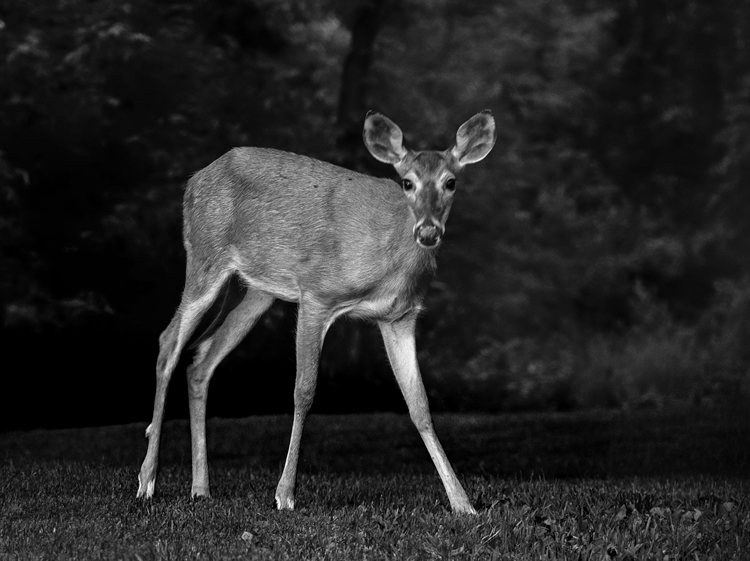
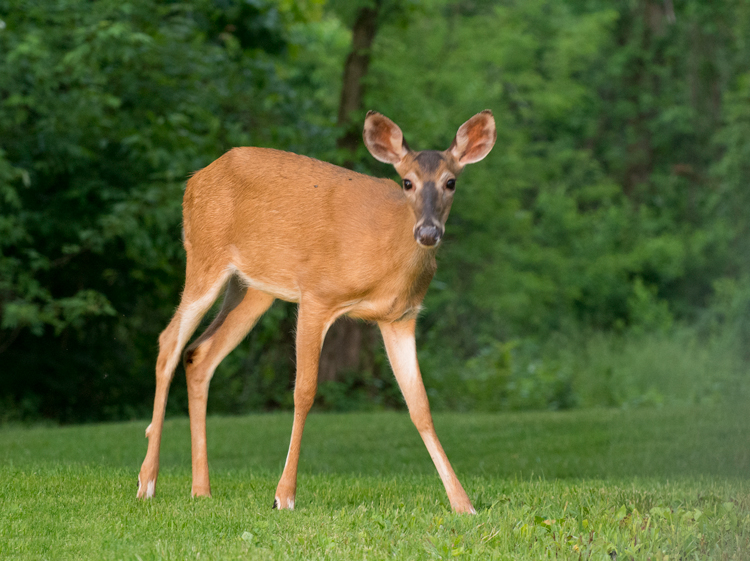
Close your eyes for a moment and imagine a deer standing in a forest. Was the image you imagined in color? Most people will visualize the image in color. But are the colors necessary to produce an image of the deer? Let’s take a look at some advantages of wildlife photography in black and white.
Deer image

Original color image

Black and white deer

The black and white processing in Nik Silver Efex Pro 2 in this image converted the green foliage into a dark background.  Now the emphasis is on the deer and the texture of its coat.

Why Black and White?

Color, though admirable, may be a distraction that interferes with the viewer’s ability to see the textures, lines, patterns, and contrasts within an image. Often your wildlife subjects are surrounded by lush green foliage and blue sky backgrounds, and in color photos, the trend is to saturate them. With black and white photos we take the attention away from those colors, and draw it to the wildlife subject. Colorful images may tell a story, while black and white can reveal a more emotional portrait of the wildlife. Color may show the actuality of a scene, black and white is a perception of the captured reality. Black and white can add drama to your wildlife images that color will hide from the viewer.

It is important to note that not every image will make a great black and white one, some images and subjects will require color to make an impact. If color is the purpose of an image –  say, for instance, your subject is a red-headed wood pecker, then black and white may not work for that subject. Some photographers hold the opinion that an image lacking color is a good candidate for black and white conversion; however, even very colorful images may be hiding a dramatic black and white image.
Hawk Eye

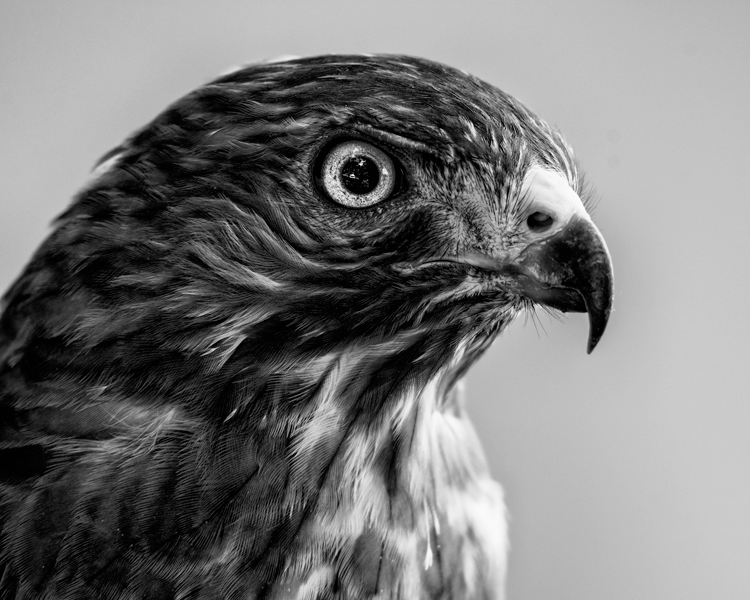
The textures, lines and contrast of the feathers create a dramatic portrait of this Broad-winged Hawk.
DSC_5418-Edit-Edit

Shooting

Without color, the key ingredients to shaping your image are light, composition, contrast, and tones. When photographing for black and white, lighting can transform an image. Black and white works well in all ranges of lighting conditions. Even the harsh midday sun, (difficult lighting for color shots) can products some fantastic results. How many times on a gloomy, rainy day have you grumbled about terrible lighting? Well, maybe for color photography it isn’t ideal, but the great thing about shooting for black and white results, is that even overcast days can produce some great images. It can allow you to capture the tones and textures of your wild animal subject, features which may be hidden in a color image, shot on a bright sunny day.

Of course, the morning and evening glow hours are going to work great when the low angle of light brings out the textures and lines of wildlife. If you are just starting to develop your skills shooting for black and white wildlife, or you are having problems visualizing your images as you shoot, here is a helpful tip. Most DSLR cameras with allow you to set your picture style to monochrome when you are shooting in RAW. The preview will appear in black and white, but your RAW file will still contain all the image’s color information, that you can use later as you convert to black and white. Stripping out all the color from the preview will help you see the forms of the image without the distractions of color. Use this process to help train your eye to see in black and white.
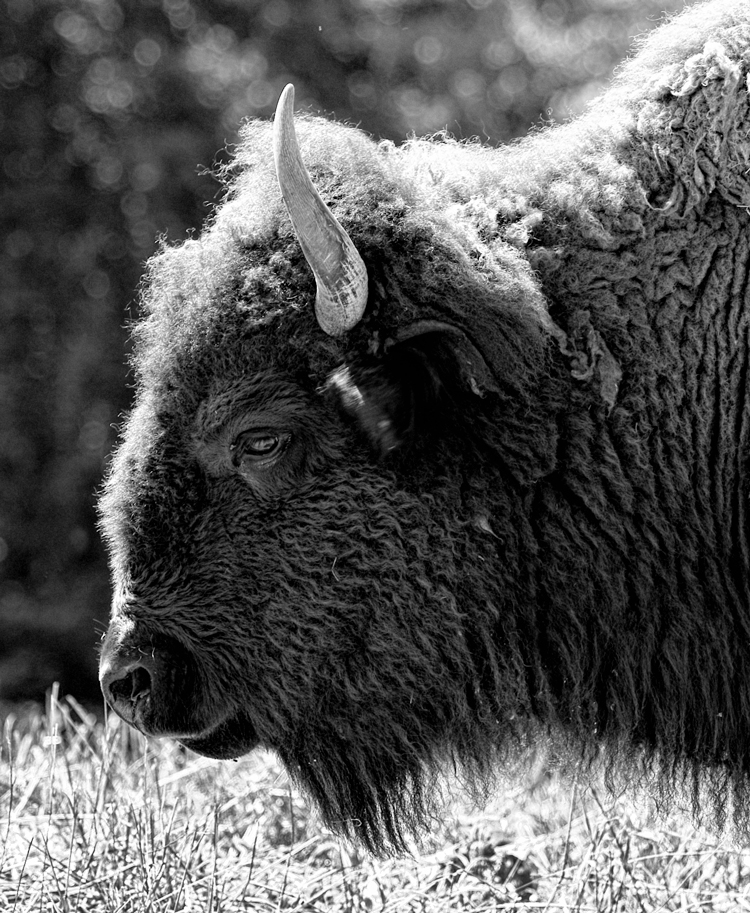
Bison Portrait

In this image, the harsh mid-day sun still produced a dramatically lit portrait of a Bison.
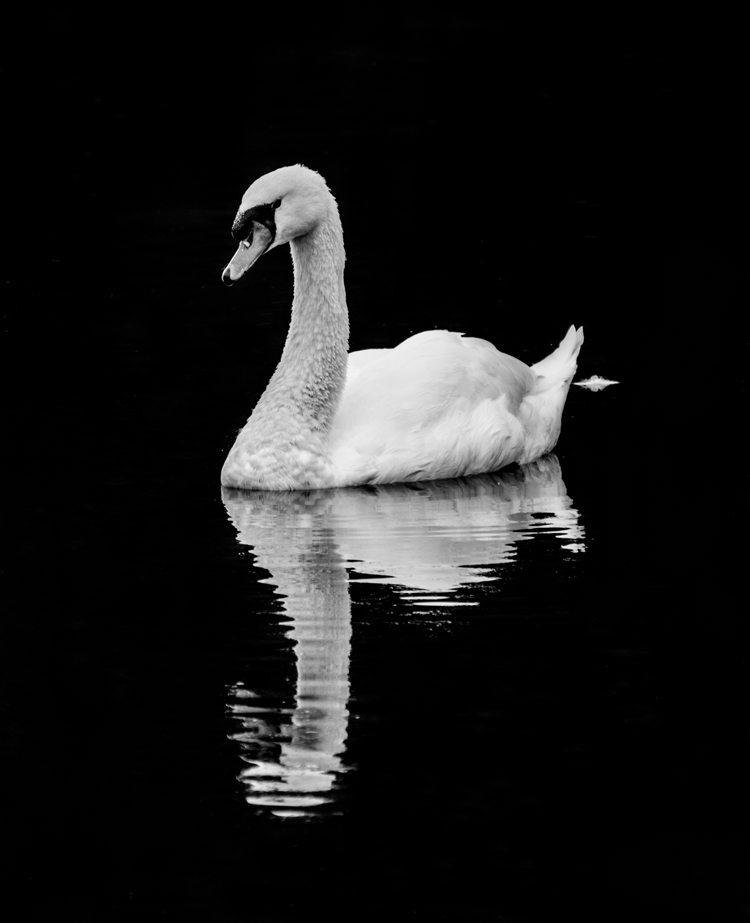
Swan on the lake

When exposing this image to keep the detail in the swan’s white feathers, the background was exposed to nearly black. Converting to black and white required very little processing.

Composition

Composition is even more important in black and white than in color. While a colorful image sometimes hides poor composition, black and white enhances and brings out the composition of your wildlife shot. Use shallow depth of field to isolate the subject, making a dramatic portrait and bringing out the textures of the fur or skin. Remember to use the KISS theory of composition. (Keep It Simple Silly)
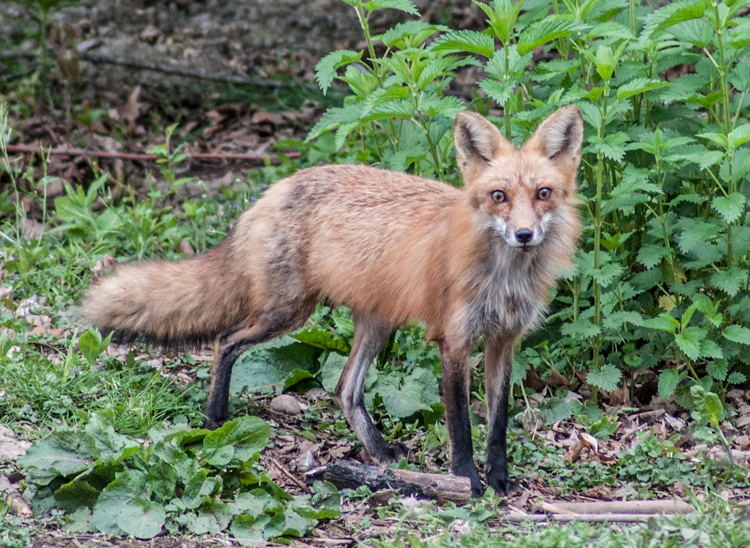
Fox

Original image

black-white-wildlife-photography-fox-final

Without the distractions of color this image becomes a moody and detailed portrait.

Processing

There are too many ways of converting images to black and white to mention them all. But Photoshop, Lightroom and Silver Efex Pro 2 are the three processing means I use the most. Whichever program you use for your conversion, you must learn to take control of the process. Instead of stripping the color out, use the tool in your editing program to turn colors into controlled shades of gray. Different processes applied may produce different emotional reactions to a single image.

As illustrated by the photo of the grazing zebras below, high-key processing creates a cheerful or upbeat image, while a low-key interpretation of the same image reveals a more somber or mysterious aspect to the image. Though a high-key image is very light, it should still have black areas; and conversely, a low-key image is mainly dark but should also contain some white areas.

  • Photoshop: Use a black and white adjustment layer to fine-tune how each color tone is converted to a shade of gray. This is a great starting point, but you may also want to adjust contrast, and dodge or burn areas to dramatize the subject. If you use Photoshop to convert your images to black and white, don’t be afraid to experiment. Never just use the Image Mode – Grayscale to convert your image, that is like “throwing away the baby with the bath water”! You will throw out too much useful color information that could be used to create the mood you are looking for in your image.
  • Lightroom: Using the black and white tab, similar to Photoshop, you can also adjust how each color tone is converted to shades of gray.
  • Nik Silver Efex Pro is a very powerful black and white software. One of its greatest features is the preset effects already preloaded into it. Use one of those presets as a starting point, and follow up with the powerful adjustment panel to really fine tune your images.
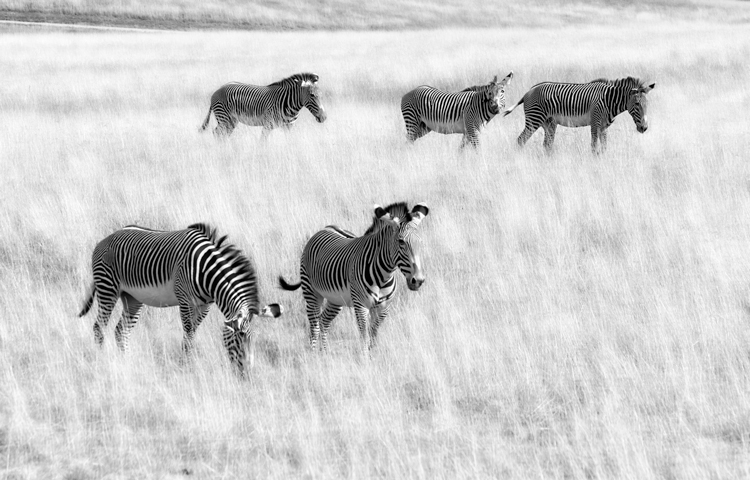
High Key processing

High-key processing in Lightroom creates a cheerful image of zebras grazing in a field. The same image was then opened in Photoshop and the layer was duplicated adding a motion blur.  The layer blend mode was changed to Overlay and a layer mask was added to keep the zebras from being blurred. This gives an artistic effect to the grass.
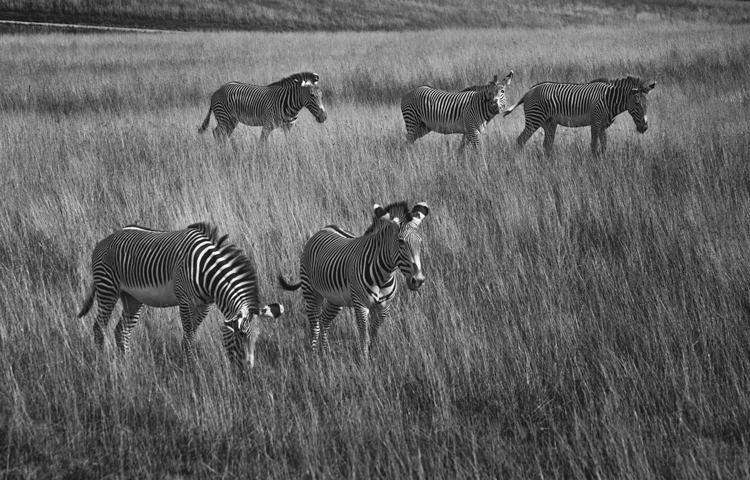
Low Key Processing

Low-Key processing in Lightroom creates a more mysterious effect.

Conclusion

The next time you are out photographing wildlife, look for opportunities to shoot black and white images. What wildlife do you like to photograph? Get out there and discover some stunning black and white wildlife opportunities!

Editor’s Note: This is the second article in a week full of features on black and white photography. Look for 5 Simple Ways to Create Expressive Photos in Black and White earlier today and more daily over the next week.

googletag.cmd.push(function() {
tablet_slots.push( googletag.defineSlot( “/1005424/_dPSv4_tab-all-article-bottom_(300×250)”, [300, 250], “pb-ad-78623” ).addService( googletag.pubads() ) ); } );

googletag.cmd.push(function() {
mobile_slots.push( googletag.defineSlot( “/1005424/_dPSv4_mob-all-article-bottom_(300×250)”, [300, 250], “pb-ad-78158” ).addService( googletag.pubads() ) ); } );

The post Tips for Black and White Wildlife Photography by Bruce Wunderlich appeared first on Digital Photography School.


Digital Photography School

 
Comments Off on Tips for Black and White Wildlife Photography

Posted in Photography


Die 5 Fotowettbewerbe des Monats

16 Aug

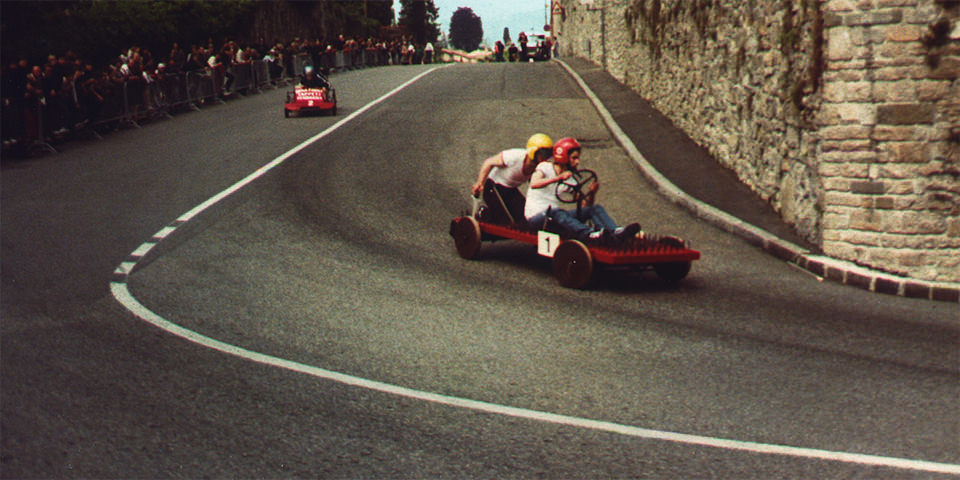
Seifenkistenrennen

Diesen Monat haben wir viele große internationale Fotowettbewerbe für Euch entdeckt, einige mit Teilnahmegebühr, dafür aber jeder auch mit sehr hohen Geldpreisen. Straßenfotografen, Berufsfotografen, Dokumentarfotografen und Studenten sollten unter den folgenden Links ganz sicher einen Wettbewerb für sich finden.
kwerfeldein – Fotografie Magazin | Fotocommunity

 
Comments Off on Die 5 Fotowettbewerbe des Monats

Posted in Equipment


Flashpoint Ring Li-On Ringflash Review

16 Aug

Adorama has been on a roll with its rechargeable lithium-ion battery powered flash units. Not long ago, they debuted the FlashPoint Zoom Speedlight, and now they have upped the ante with a monster 400ws ringflash. I recently got my hands on this ringflash and ran it through some tests to see how it would perform. Read on for some specs and details!

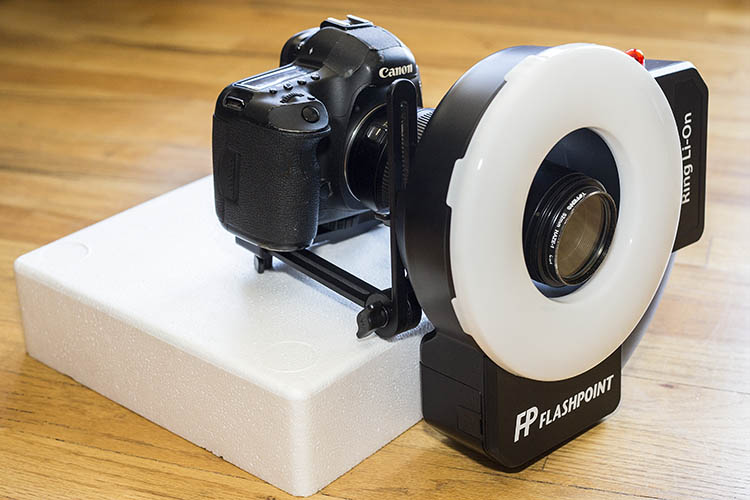
Adorama Flashpoint Ring Li-on ring flash

Ring Li-on flash with Canon 5D Mark III and Canon 100mm f/2.8 macro lens attached.

What’s in the Box

The first thing you’ll notice about this ringflash is its size, as indicated by the large box it arrives in. Included in the box are:

  • (1) FlashPoint Ring Li-On 400ws Ringflash with a Guide Number of 82
  • (1) Snap-on diffuser ring
  • (1) PC cable
  • (1) Rechargeable battery
  • (1) Battery charger
  • (1) Fully adjustable camera bracket with 1/4″ x 20 screw mount

With the rechargeable battery, the flash weighs in at 3.1 pounds (1.4kg), and has dimensions of 8.9 x 9.1 x 2.8″. Due to its size, I found it was very difficult to use this flash in handheld mode, without using the included bracket to hold it in place with my camera, or on a tripod. As a result, the final product ends up weighing quite a bit. Even though it is fully transportable, I would not consider this setup to be the most compact and travel-friendly, especially since the flash doesn’t come with a carrying case. However, the easily affixed umbrella bracket and tripod mounting included with the flash make it a breeze to use this flash in a hands-free studio setup.

Adorama Flashpoint Ring Li-on ring flash

The flash can be triggered via the included PC cable with a 3.5mm jack, or remotely from a distance of 150+ feet away using the Flashpoint Commander set (sold separately). This means that the Flashpoint Ring Li-on Ringflash can be triggered by any camera that has a PC socket, adapter in a hot shoe, or connection to the wireless Flashpoint Commander system. The only possible limitation is  lens size. If you opt to shoot through the Ring Li-on flash, it must be done with a lens no larger than 3.5 inches in diameter, otherwise it won’t fit through the middle opening in the flash.

Adorama Flashpoint Ring Li-on ring flash

Features

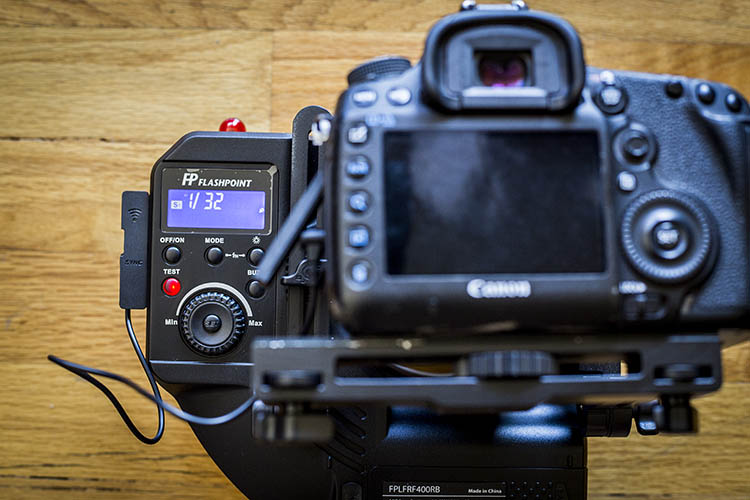
Despite its somewhat cumbersome size, one of the Ring Li-on’s best features is the 11.1V Lithium-ion cell battery with a 4500mAh capacity. This powerful battery can run the flash through about 450 full-power discharges, before needing a recharge. Additionally, the powerful battery also allows for the flash to perform with a solid guide number of 82 (feet at ISO 100), which is very rare among portable ringflashes.

Flash output is very easily controlled via an intuitive, illuminated rear selection dial that clearly indicates battery levels, LED model/video lamp power, and flash modes of Manual, 2 Slave, and Stroboscopic. The flash’s power is adjustable in 1/3 stop increments from full power down to 1/128th power with a recycling time of between 0.5 seconds and 2.8 seconds on a fully charged battery. Flash duration averages between 1/300 to 1/20000 seconds depending on the power of the output.

Another great feature of the Ring Li-on flash is the ability to emit constant 440 lux LED lighting with three level output settings for use as a modeling light or a video light, and it will even power-off automatically after a set period of time to conserve battery power.

Adorama Flashpoint Ring Li-on ring flash

Ring Li-on Flash in Practice

For those of you unfamiliar with ringflashes, they tend to be favored among fashion and portrait photographers thanks to the ringed catchlights that are produced in the subject’s eyes. Macro photography shooters may also find ringflashes appealing since they produce virtually shadow-free lighting with even illumination. You may also have seen ringflashes used by medical and dental professionals, again because of the even lighting produced.

In the portrait below, the Ring Li-on flash produces a look with very balanced lighting that is very soft on the shadows. The subject is evenly exposed, and we see the signature ring-shaped catchlight in his eyes.

Adorama Flashpoint Ring Li-on ring flash

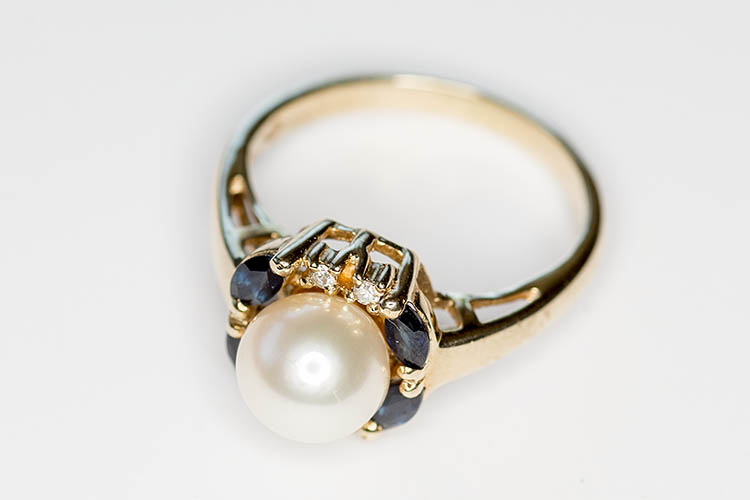
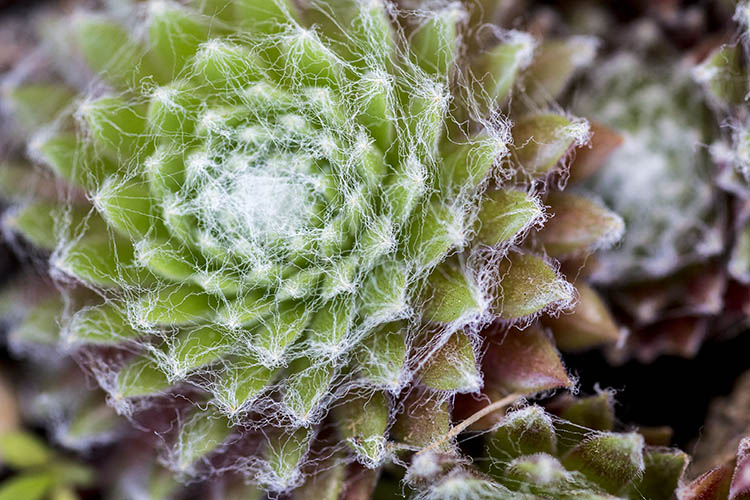
The Ring Li-on flash also performs superbly when paired with a macro lens, although I strongly advise using the provided bracket to help stabilize your rig. Below, the Ring Li-on flash was used to photograph a family heirloom ring. Little to no shadow is detectable, and the ringflash’s catchlight is reflected in the pearl. In the final example, the Ring Li-on is used to take a macro photo of a succulent plant, thus providing even lighting with just a hint of a shadow even in this layered plant.

Adorama Flashpoint Ring Li-on ring flash

Adorama Flashpoint Ring Li-on ring flash

Your Turn

What’s your take on ringflashes? How do you incorporate them into your photography work, if at all?

googletag.cmd.push(function() {
tablet_slots.push( googletag.defineSlot( “/1005424/_dPSv4_tab-all-article-bottom_(300×250)”, [300, 250], “pb-ad-78623” ).addService( googletag.pubads() ) ); } );

googletag.cmd.push(function() {
mobile_slots.push( googletag.defineSlot( “/1005424/_dPSv4_mob-all-article-bottom_(300×250)”, [300, 250], “pb-ad-78158” ).addService( googletag.pubads() ) ); } );

The post Flashpoint Ring Li-On Ringflash Review by Suzi Pratt appeared first on Digital Photography School.


Digital Photography School

 
Comments Off on Flashpoint Ring Li-On Ringflash Review

Posted in Photography


McBike: Meal Tote Helps Cyclists Carry Burger, Fries & Drink

16 Aug

[ By WebUrbanist in Design & Products & Packaging. ]

mcbike meal tote

Solving a series of long-standing issues associated with taking out the typical fast food trifecta, this clever carrying case is a useful alternative to Happy Meal boxes, bags and cupholders that work better for cars than people traveling on foot or by bike.

The solution is more subtle than it might first appear – yes, it solves the timeless question of how to hold a drink as well as a meal, but it also separates out the warm foods (french fries and hamburger above) from the cool drink (soda or shake suspended below), then unfolds into a ready-to-eat spread. Thin cardboard makes the entire container easy to collapse as well.

im lovin it

Customers can hold the package in their hand or slip it over the handlebars and continue cycling unencumbered. Targeted initially toward markets in two bicycle-friendly cities (Copenhagen, Denmark and Medellin, Colombia), the company is also looking to give these a go in Amsterdam, Holland and Tokyo, Japan.

mcbike drive through

mcbike system

For now, it is a trial redesign that is as much about marketing toward young urban bikers, but if the packaging is sound there seems to be no obvious reason for McDonalds not to ultimately deploy these around the world (and for other fast food chains to follow suit).

Share on Facebook


[ By WebUrbanist in Design & Products & Packaging. ]

[ WebUrbanist | Archives | Galleries | Privacy | TOS ]


WebUrbanist

 
Comments Off on McBike: Meal Tote Helps Cyclists Carry Burger, Fries & Drink

Posted in Creativity


15. August 2015

16 Aug

Das Bild des Tages von: michaelpezzei

Landschaftsfotografie: Blick auf ein steinernes Gebirge.

Heute beeindrucken uns die geschwungenen Linien eines Gebirges:
kwerfeldein – Fotografie Magazin | Fotocommunity

 
Comments Off on 15. August 2015

Posted in Equipment


Royal Family expresses concerns over alarming measures used by paparazzi seeking photos of Prince George

15 Aug

The Duke and Duchess of Cambridge have expressed concerns with some of the recent tactics used by paparazzi trying to photograph their two-year-old son. The letter details some of the methods photographers have used to try and get their shots, including hiding in sand dunes and using other children to lure Prince George into view at playgrounds. Read more

Articles: Digital Photography Review (dpreview.com)

 
Comments Off on Royal Family expresses concerns over alarming measures used by paparazzi seeking photos of Prince George

Posted in Uncategorized


Ein Sommer in der Stadt

15 Aug

© Hajdu Tamas

Ein Beitrag von: Hajdu Tamas

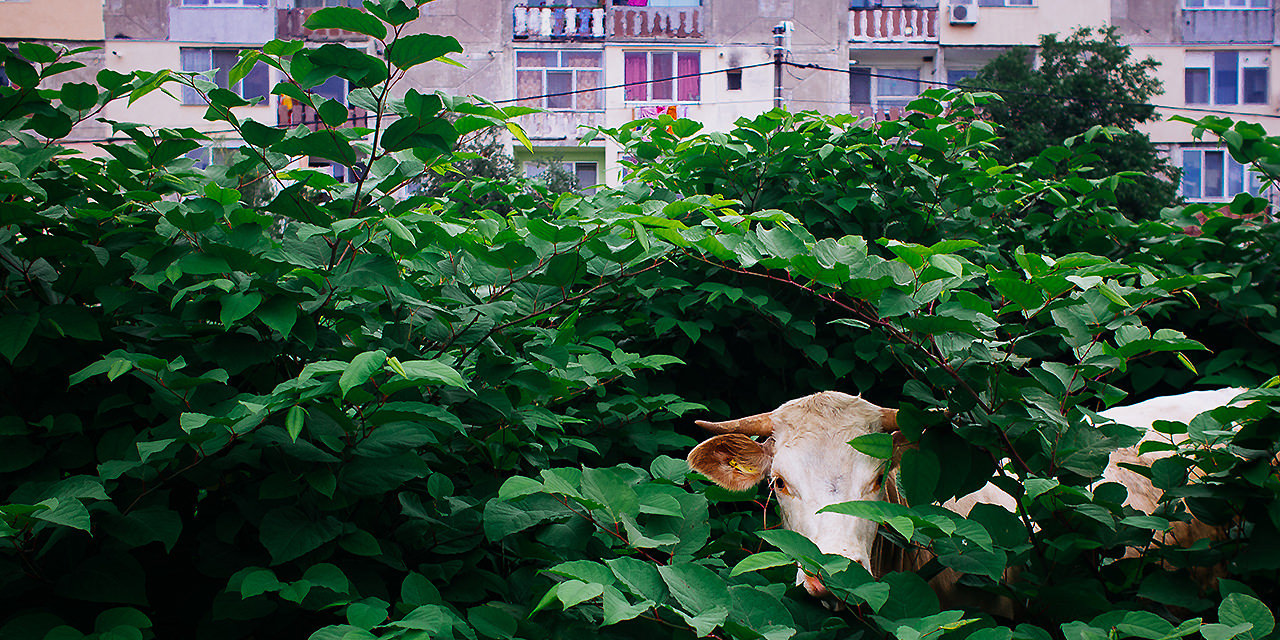
Stadtviertel sind sowohl Plätze des dichten Lebens als auch der Verlassenheit. Im Sommer spielen üppige Kultur und Trostlosigkeit zusammen. Man sieht es auf den Flächen zwischen den Häusern, den Häuserwänden, auf den Bürgersteigen, den Balkonen, in den Rissen und auf den grauen Oberflächen.
kwerfeldein – Fotografie Magazin | Fotocommunity

 
Comments Off on Ein Sommer in der Stadt

Posted in Equipment