RSS
 

Archive for July, 2015

Paper People: Hand-Cut Zig-Zag Photorealistic Portraits

24 Jul

[ By Steph in Art & Sculpture & Craft. ]

paper cutout portraits 2

Tiny slivers are sliced away from a single, oversized sheet of white paper in a zig-zag pattern to reveal portraits of public figures, from Audrey Hepburn to Michael Jackson, in this series of photorealistic portraits by Korean artist Yoo Hyun. There’s no ink, graphite or paint involved – just an X-acto knife to cut out the negative space and tweezers to carefully peel those pieces away.

paper cutout portraits 8

paper cutout portriats 1

Take a close look at Hyun’s works and you realize how strikingly simple this process is, working a similar way to pixels. All you’ll see, when examining a small strip of one of these portraits, is a bunch of diagonal white lines. It’s amazing to see how much detail comes through, the portraits somehow revealing nuances in skin and hair texture, when you look at them from farther away.

paper cutout portraits 6

paper cutout portraits 5

paper cutout portraits 4

The trick is in ever-so-slight variations of the thickness of each diagonal line of paper. Even the smallest cut-out can convey a shadow, while uncut areas make highlights pop. Pulling this off requires incredible precision, as a mistake the width of a human hair can affect the final outcome.

paper cutout portraits 3

paper cutout portraits 7

Check out more of Hyun’s work on his Instagram, @yoo.hyun, or on Facebook.

Share on Facebook


[ By Steph in Art & Sculpture & Craft. ]

[ WebUrbanist | Archives | Galleries | Privacy | TOS ]


WebUrbanist

 
Comments Off on Paper People: Hand-Cut Zig-Zag Photorealistic Portraits

Posted in Creativity


On top of the world: Photographer faces fears to capture rare wedding photos

24 Jul

Photographer Brian Rueb was approached by two friends to shoot their wedding – a familiar proposal for many photographers. However, there was a slightly unusual twist in this case, as the couple planned to tie the knot on top of Half Dome in Yosemite National Park. Read more

Articles: Digital Photography Review (dpreview.com)

 
Comments Off on On top of the world: Photographer faces fears to capture rare wedding photos

Posted in Uncategorized


Baroque and Broken: Eerie Paintings in Abandoned Places

24 Jul

[ By Steph in Art & Photography & Video. ]

ted pim 1

Shuffling through ancient paint chips, dead leaves and empty bottles in an abandoned and dilapidated building, you turn a corner and register a human figure emerging from the darkness in a haze of flesh tones and pale fabric. It might take a moment to realize that it’s not a real person, but rather a painting in the style of the old masters, rendered right there on the gritty wall like an heirloom left behind when the place was vacated.

ted pim 2

ted pim 3

Working under an assumed name, Belfast artist Ted Pim has spent the last ten years traveling the world, creating these eerie works inside abandoned buildings. He spends days alone completing each work armed with no more than his paints, industrial torches and a camera.

ted pim 4

Ted Pim 5

Aside from anyone who might have stumbled upon them unknowingly, no one has seen these works prior to Pim publishing the photos on his website and on Instagram in June 2015. The artist documented each painting and kept the images in a folder all these years. Private collectors in London and New York City recently purchased all of his completed works on canvas, and more are coming in winter 2015.

ted pim 6

“I was drawn to abandoned buildings as I liked the contrast of painting detailed, Baroque-inspired pieces inside dark, neglected structures,” Pim tells WebUrbanist. “These buildings provided me with the perfect atmosphere to create my pieces, with the end result often reflecting my surroundings- haunting, dark figures.”

ted pim 7

“The paintings usually take a few days, and I never return to the building. All my images were taken on an old analog camera and printed and scanned (the reason for fingerprints on some of the images.)”

Share on Facebook


[ By Steph in Art & Photography & Video. ]

[ WebUrbanist | Archives | Galleries | Privacy | TOS ]


WebUrbanist

 
Comments Off on Baroque and Broken: Eerie Paintings in Abandoned Places

Posted in Creativity


Stephen Shore – Uncommon Places

24 Jul

© StephenShore - UncommonPlaces

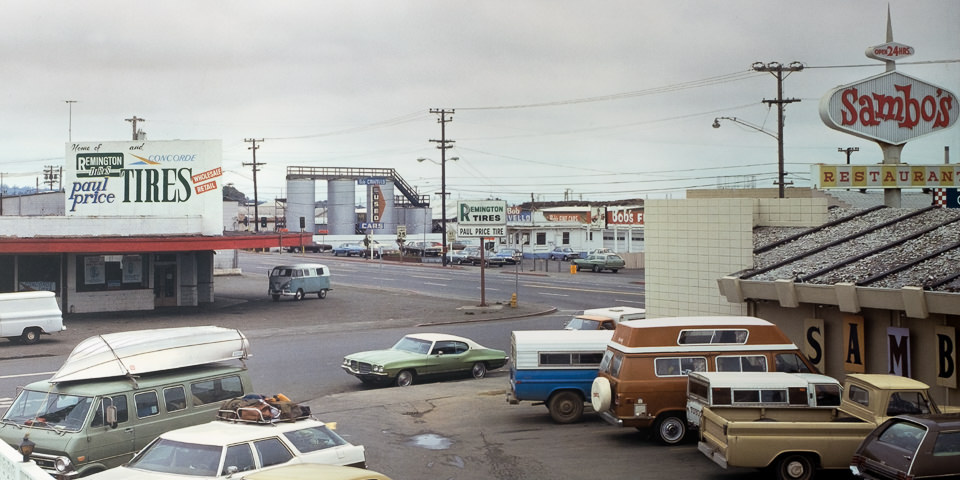
Von „Uncommon Places“, dem berühmten Buch von Stephen Shore, hatte ich immer wieder gelesen. Irgendwann habe ich dann Amazon zu Rate gezogen und festgestellt, dass es das eine Buch „Uncommon Places“ gar nicht gibt. Viel mehr handelt es sich um ein Werk, das sich immer wieder verändert hat und vor allem erweitert wurde. Ende 2014 wurde die vermutlich definitive Ausgabe vorgestellt und über dieses Buch werde ich hier berichten.
kwerfeldein – Fotografie Magazin | Fotocommunity

 
Comments Off on Stephen Shore – Uncommon Places

Posted in Equipment


Paralleluniversum

24 Jul

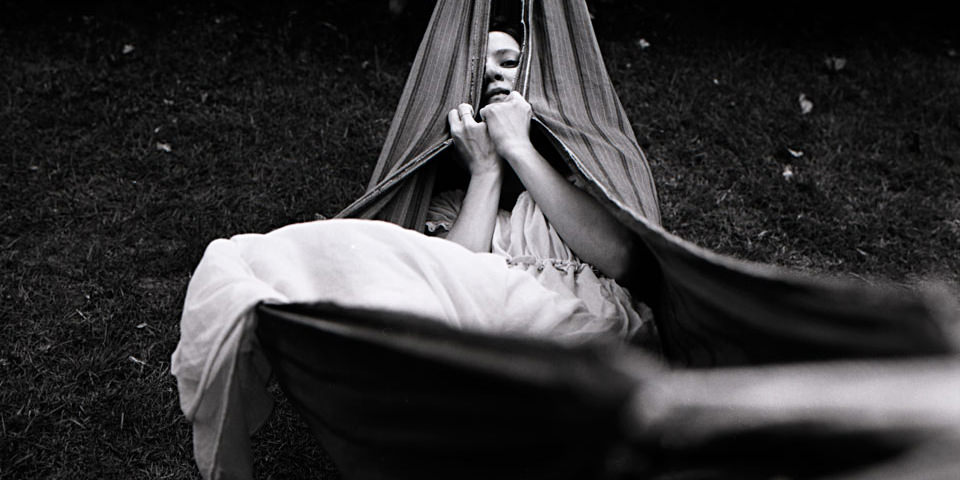
Eine Frau in einer Hängematte

Wir haben seit einem Jahr einen Garten. Anfangs waren wir mächtig überfordert. Mehrere Apfel- und Kirschbäume wollten gepflegt werden. Igel und andere Tiere suchten Unterschlupf und Rosen und andere Gewächse wollten richtig beschnitten werden, damit sie große und tolle Blüten tragen. Und auch die Gartennachbarn schauten immer mal interessiert über die hochwuchernde Hecke.
kwerfeldein – Fotografie Magazin | Fotocommunity

 
Comments Off on Paralleluniversum

Posted in Equipment


Panasonic Osaka offers 3D figurine portraits via imaging booth fitted with 120 Lumix GH4s

24 Jul

The Panasonic Center in Osaka has installed a photo booth that uses 120 Lumix DMC-GH4 cameras to create a three-dimensional impression of the occupants, which can then be turned into a plaster figurine. Panasonic claims that what makes its booth stand out is that the ‘scan’ is created in just 1/1000sec. That means the subjects can be in motion and the image will still be sharp. Read more

Articles: Digital Photography Review (dpreview.com)

 
Comments Off on Panasonic Osaka offers 3D figurine portraits via imaging booth fitted with 120 Lumix GH4s

Posted in Uncategorized


Flickr Brings Back Pro

24 Jul

Thomas Hawk, Pure Pro

“It’s about time we started to take photography seriously and treat it as a hobby.” Elliott Erwitt

“Hell hath no fury like that of a ‘professional’ photographer scorned.” Thomas Hawk

A few years ago, shortly after Marissa Mayer joined Yahoo, Flickr did away with their paid pro account. Existing pros could keep this distinction (and pay for it) and were grandfathered, but new pro accounts could not be opened.

Announcing that decision Mayer took a bunch of heat for suggesting that there really wasn’t much of a distinction between professional and amatuer photographers anymore — a statement which she later clarified. As Bart Simpson might say, aye caramba senora Mayer!

Nothing pisses off so called professional photographers more than to minimize their self-important “pro” moniker and lump them in with every Tom, Dick, and Harry, or these days Jane, Jill and Mary as just another shutterbug with an iPhone 6+ or a Canon 5D Mark 3. The truth of the matter is though that the economics of photography have been changing for years now and much to the chagrin of the “professional,” the economics of photography have never been more disbursed. Between microstock, macrostock, laughingstock, micro four thirds and Getty Images, about 10 million more people are in the game than were a few decades ago — and yes even those iPhone shooters on EyeEm.

All of which has nothing to do with Flickr and their pro accounts, which was just a title given for paid vs. free accounts.

In the early days, Flickr offered two levels of service, pro or free. Free accounts were limited to sharing only their last 200 images, while pro accounts got unlimited photos on the site. It was a way for people to try Flickr before committing to paying for it, or as Michael Arrington put it back in 2011, a way for Flickr to hold your photos hostage. Most people didn’t pay, but the most serious users did and were recognized with a special little badge labeling them as a cut above the rest. They also didn’t have to look at ads or have ads appear on their photos for others.

Mayer did away with the pro account at Flickr in 2013 and granted every free user a full terabyte of storage on the site with no 200 photo limitation. Flickr opened up and become free and unlimited for 99.999% of potential users (1 terabyte is a lot). This was a *huge* move on Flickr’s part. Replicated enterprise storage is not cheap and I suspect today has become one of the most significant costs for Yahoo in running Flickr.

Well all that changes today with the return of the pro account at Flickr. The new pro is a little different than the old pro, but I think it’s great that Flickr is bringing back pro and think it still represents terrific value for the serious pro or amateur photographer.

Before we get into the new pro, it’s important to point out that for those of us lucky birds who have been grandfathered into the old pro account nothing changes. We still keep our unlimited photo storage, ad free status for both our photos and our browsing, and heck, what a deal, $ 24.99/year! We will also even get a brand new pro account badge back on our accounts like the new pros.

So what about this new pro account, how does the new pro account work?

Well for starters it’s more expensive than the old pro. The new Flickr pro account will cost you $ 49.99/year. If you want to you can choose more of a pay as you go model at $ 5.99/month, but if you do the math that will be considerably more expensive than committing for a year.

For that money you get a few things.

First you get the distinction of a pro icon on your Flickr account. This may sound dumb but really it’s not. Especially on a social network where anonymous trolls can easily create throwaway accounts and blocking tools are really bad, when you see a pro icon on Flickr you will be taken more seriously. You are invested.

More significantly, in my opinion, you get the same ad free status for your own photos and for your own browsing. If you are pro you can rest assured that Aunt Millie will not have to see ads when she looks at your photos of this year’s 4th of July barbecue. Likewise, as you browse Flickr yourself you’ll be completely exempt from having to view any advertising. This alone is worth the price of pro. Any path out of having to view ads is worth it in my opinion. If only Facebook could see the light.

Another interesting deal is that by signing up for pro you can get a 20% discount off of Adobe’s Creative Cloud offer (for the annual subscription only). That’s actually a pretty good bargain. Most serious photographers use Lightroom and Photoshop. At $ 120/year for Adobe’s Creative Cloud software this pays for about half of your pro account if you use Lightroom and Photoshop.

And then there are stats. I love my pro stats on Flickr. I look at them every day. Maybe it’s just pure vanity or maybe it’s just curiosity about where my Creative Common Non-Commercial licensed Flickr photos are appearing elsewhere online, but I love stats. Not only do pros get access to a sophisticated stats panel, it’s now been improved to give you even more information about your photos.

Finally, you get free shipping on any Flickr merchandise ordered domestically or 50% off shipping for international orders — and just in time for that special Labor Day photo book you were going to make up for your sister-in-law this year — just kidding, but, you know, Yom Kippur will be here before you know it.

Of course the biggest missing feature of the new pro over the old grandfathered pro (lucky me), is the promise of unlimited photo storage. New pro accounts are still limited to the 1 terabyte (which in fairness is more than 99.999% of photographers will ever need, but as someone who has used up 970GB of my 1,000GB by only age 47, I’m glad I still get unlimited). I’m planning on publishing 1,000,000 high res photos to Flickr before I die.

By the way, if you really, really, really want pro but don’t want to pay for it, I suggest you strike up a friendship with Pacdog. I swear that guy has probably bought and given out like 50 pro accounts for his friends over the years. He’s the most humble Donald Trump type character on Flickr pro and very generous with his paid upgrades for his best friends on Flickr.

If you want more info on how to upgrade to pro on Flickr you can find that here.

Thomas Hawk = PURE PRO! You can find me on Flickr here.


Thomas Hawk Digital Connection

 
Comments Off on Flickr Brings Back Pro

Posted in Photography


4 Steps to Help You Start a Documentary Photography Project

24 Jul

The thing you need to do for getting good ideas which are actually possible, is to weigh the game in your favour.

You need to be selective in your project choices, research well, and demonstrate an intense curiosity when pitching your project idea.

The four steps in this article will help you:

  • Use your interests to research and learn about a subject.
  • Demonstrate your curiosity to those who hold the key. These are the gatekeepers.
  • Gain access.
  • Start a documentary photography project.

Peter David Grant dps submission 1 of 7
Primarily a street photographer, using this method I transitioned into documenting places hidden behind closed doors, as you can too.

Step #1. What are you interested in?

The first thing to ask yourself is, what are you actually interested in? Grab your pen and pad, write down “What Interests Me?”, then number lines, 1 to 20.

Without thinking too much, fill in all the way down to the bottom of the list. The goal here isn’t to think about where your interests might go, but rather to give you a reference from which to work.
Peter David Grant dps submission 2 of 7
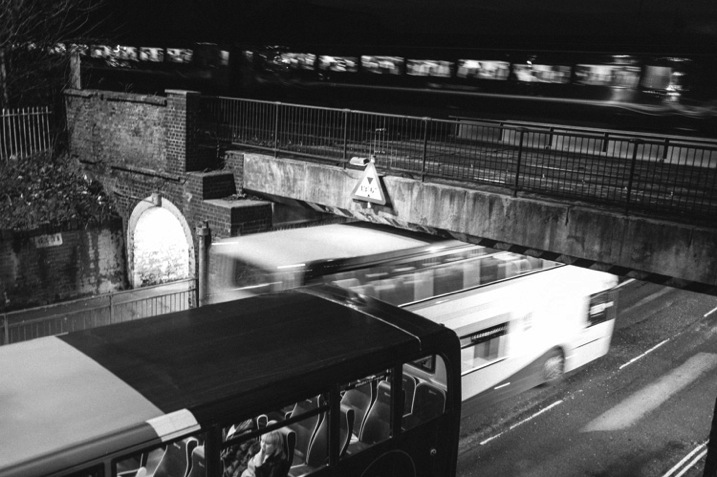
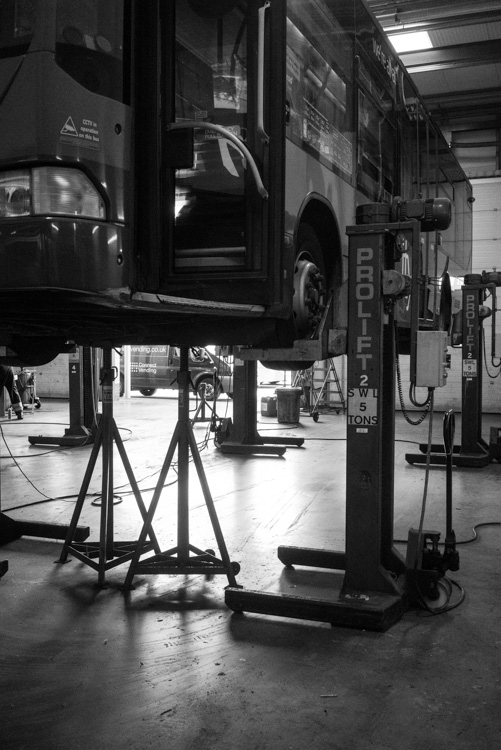
Look back at your photographs and see what you like to capture. Lots of street photographs like these were coming about due to my interest in transport. I’ve now started projects about the local train station, and a local bus company.

Step #2. Whittle down your list

Now that you’ve got your list of 20 interests, the next thing you need to do is get rid of those which are not visual in nature, or are impractical. For example, you should cross off astronaut training from your list, or following your favourite sports star around the world, as they do their thing. It just isn’t realistic, at least not in the early days.

Your goal here is to have a list of potentially visually stimulating interests which are readily accessible (assuming you gain access) to go back to over many visits. A key part about documentary photography is understanding what is going on, and picking up on the subtleties of the situations. You need to be able to go back again and again, build rapport, and blend in – because it is at that point that you’ll start producing quality photographs.

With the list reduced to those that are practical, which also have a visual interest, you should select three that you believe will be most interesting to others. This is important for a couple of reasons:

  1. You’re starting to think about what your audience will be thinking. This will be useful when it comes to talking to the gatekeepers, to use as a reason why you should document the subject.
  2. You’re thinking about what the gatekeepers find interesting. You need to be able to demonstrate empathy with the people you contact.

Finally, of those three interests, which one do you feel you know the most about? This makes the next step easier.
Peter David Grant dps submission 3 of 7
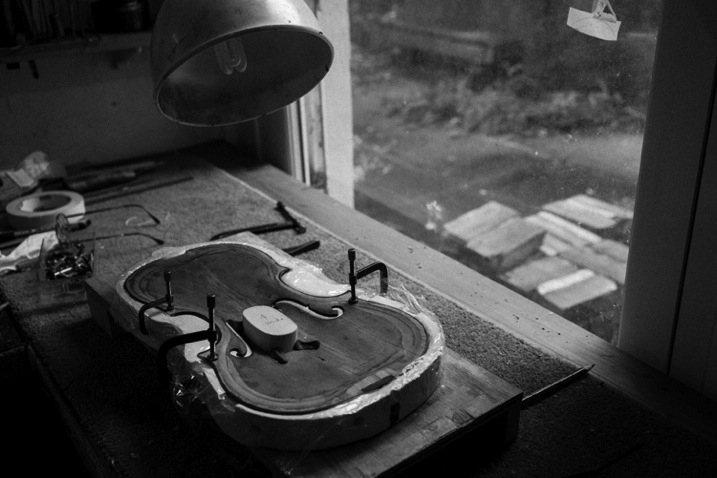
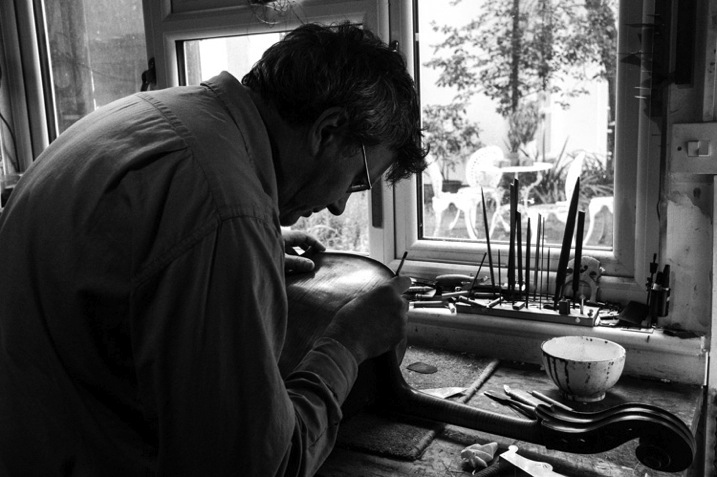
Don’t forget to think laterally. While I’m as musical as a crumbling wall, being an engineer, I could appreciate the design and material aspects of violin making.

Step #3. Research your interest and finding out who to contact

Once you’ve chosen your interest, you should further your understanding. Get your notebook again, start researching and make notes. Some suggestions:

  • Google your interest, and read the top three or four links.
  • Read the related Wikipedia article, making sure you follow any links that stand out.
  • If you’re researching a company, devour their website. Click every single page. Read everything.
  • Search on Google News for your interest.

While reading, in addition to anything that grabs your interest, keep an eye out for:

  • A name for someone you might be able to contact.
  • Something time sensitive which is changing. Part of documentary photography is recording something for historic purposes.

All of this collected information will form ammunition for your first contact, showing your knowledge, interest, and understanding of the subject. Remember this should be interesting stuff to you. If it feels like a chore, you’ve probably chosen the wrong interest as a subject, or aren’t connected with it.
Peter David Grant dps submission 4 of 7
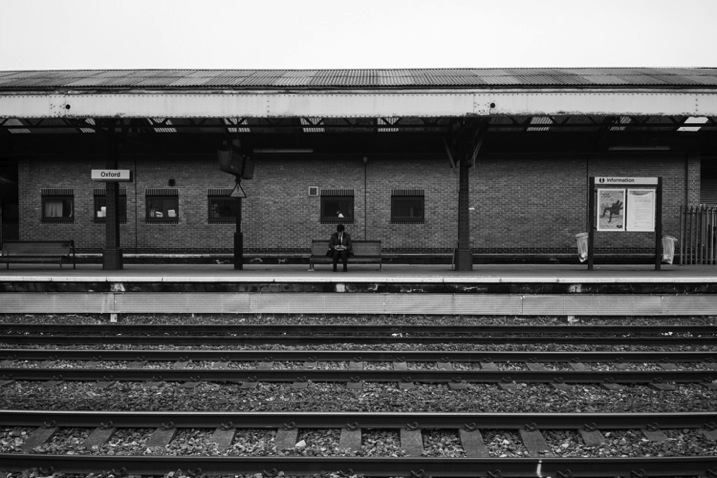
You should be deeply interested in the subject. I had no problem spending hours, upon hours, researching the local train station, because I wanted an all-access pass so badly.

Next, you should consider your close friends and family. Do any of them have links to your interests? Those who do, are they in a position to give you the access you’re after? If so, great! They’re going to be who you contact. If they’re not, you should still talk with them about your interests, and desires. They might be able to put you in contact with a connection.

After you’ve found the person you’re going to contact, you should look for their details. It might be as easy as looking at their contact page online, or through finding someone else’s email address at the company, working out their structure, and taking a punt.

For example, if you wanted to contact John Doe to ask about documenting Company XYZ, through some Googling, or looking at XYZ’s PR or HR page, you might find an email address like john.doe@XYZ.com. It wouldn’t be too difficult to imagine john.doe@xyz.com. I’ve used this in the past to great success.
Peter David Grant dps submission 5 of 7
Guessing an email address allowed me to access the Oxford Train Station which I’m currently documenting as they redevelop.

In large organizations, you might find the assistant to the gatekeeper is the person you’re going to be contacting. LinkedIn is also a brilliant resource.

One final piece of research to do, is to look for example photographs you can show the person you’re making contact with. These can either be your own work, or the work of other photographers (be sure to credit them though). What you’re looking for is something that visually explains the kind of thing you’re seeking to achieve.

At this point, you should have a chunk of research about the organization, relevant news articles, an idea of who you’re going to contact, and some example photographs to show them.

Step #4. Making contact – demonstrating your interest and knowledge

It is now time for you to put it all together in an email. Your email should include:

  1. Why you’re emailing that particular person. This is about understanding why they are the gatekeeper to the project, showing that you care about the subject, and demonstrating your understanding.
  2. Show your curiosity and understanding of their role within the organization.
  3. Tell them what you want to do. Make your request clear and straightforward. Note: don’t ask for everything at once. If you think what you want to ask is too much, dial it down, and ask for something smaller. Once you’re in, and have gained their trust, they’ll open things up for you. As well as explaining what you want to do, you should also explain why you want to produce and show your audience the photographs at all. Mention the examples you’ve attached.
  4. Tell them what they can do with the photographs. Give them permission to use those that you’re going to take. It is the least you can do. Make suggestions where they can use them, for example in their monthly newsletter (if you can somehow find out what they call the newsletter, make sure to include that too) or on their social media.
  5. Tell them what you want to do. Explain your intentions for the photographs, e.g., are they for an exhibition (don’t worry if you’ve not arranged one, if the work is good that will sort itself out later), a book, or just your website. Be honest about your intentions.
  6. Understand the difficulties. This will impress them. You’re once again demonstrating your understanding of what they do. You’re effectively saying, “I know there are problems that me being there will bring, but I think they’re worth overcoming”. Bring it back to why you want to do the project in the first place, so that they can see the benefits, and why they outweigh the difficulties.
  7. Summarize all of the above and suggest what the next action step. You could say something like, “If this sounds interesting to you Mr. Doe, it would be great to discuss this further when it suits you sometime”.
Peter David Grant dps submission  6 of 7
Don’t be scared to chase emails either. If you don’t hear from them within the week, send a follow up email or phone call. Without it, I wouldn’t have shot at Oxford Violins.

In addition, you should make it clear that none of your ideas are set in stone, and that you’re open to their input (remember, it is highly likely that they are more knowledgeable than you are).

Finally get someone to check it. Before you do though, make sure you don’t prime them as to your intentions. You’re looking to find out if your request is obvious, clear, straightforward, that you’ve demonstrated your curiosity, and that there is a single next step that is easy to understand.

Now send it.

Step #5. What do you do next?

Once you’ve got your foot through the door, you need to show your face, be confident, demonstrate your knowledge, ask questions, and show your curiosity. Assuming that all goes well, the rest should pan out nicely. Start shooting, see how the project develops, and learn as you go.

This is where the joy starts. You’ve used your interest, and your camera, to get into somewhere that is fascinating to you. Enjoy yourself. Make friends, and click that shutter.
Peter David Grant dps submission  7 of 7
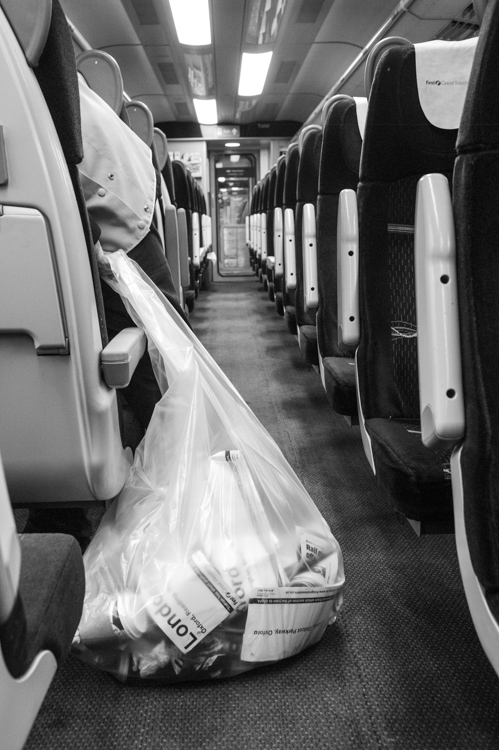
Before you know it, you’ll be behind the scenes in places you couldn’t have imagined yourself being.

Bio: Peter David Grant has produced an exclusive ebook of the emails he’s used to get access to many of his projects for dPS readers. He’s deconstructed them, explaining why each bit is in there, and provides templates for you to use. You can get it here.

googletag.cmd.push(function() {
tablet_slots.push( googletag.defineSlot( “/1005424/_dPSv4_tab-all-article-bottom_(300×250)”, [300, 250], “pb-ad-78623” ).addService( googletag.pubads() ) ); } );

googletag.cmd.push(function() {
mobile_slots.push( googletag.defineSlot( “/1005424/_dPSv4_mob-all-article-bottom_(300×250)”, [300, 250], “pb-ad-78158” ).addService( googletag.pubads() ) ); } );

The post 4 Steps to Help You Start a Documentary Photography Project by Peter David Grant appeared first on Digital Photography School.


Digital Photography School

 
Comments Off on 4 Steps to Help You Start a Documentary Photography Project

Posted in Photography


23. Juli 2015

24 Jul

Das Bild des Tages von: ovit

Lissabon-©-ovit-18274652925

Im Ausblick: Warum Nacktfotos aus Kinderfotoalben verschwinden, Vietnam und Nordkorea.
kwerfeldein – Fotografie Magazin | Fotocommunity

 
Comments Off on 23. Juli 2015

Posted in Equipment