RSS
 

Archive for July, 2015

Abandoned McBarge: Floating Fast Food Restaurant in Ruins

14 Jul

[ By Steph in Abandoned Places & Architecture. ]

abandoned mcdonalds 1

Built in 1986 in the hopes of enticing diners who were gravitating toward more high-end fare, this now-abandoned floating McDonalds might just be the saddest-looking fast food ruin around. Known as the ‘McBarge,’ it’s been anchored in Burrad Inlet near Vancouver, Canada since its debut and served its last Big Mac in 1991.

abandoned mcdonalds 4

The idea was to show off the future of technology and architecture while also attempting to regain some of the market share it lost during an ‘80s trend toward bistros and boutiques.

Abandoned Mcdonalds 3

How, exactly, McDonald’s aimed to do that with a clunky-looking barge serving the same old menu is unclear. The chain dropped $ 12 million on the floating fast food joint and four other locations built just for Expo ’86 in Vancouver, thinking they could simply move the barge elsewhere if it didn’t catch on.

Abandoned Mcdonalds 2

For whatever reason, it was never reopened, and hasn’t budged from its apparently permanent spot in the inlet. Owner Howard Meaking proposed renovating it into the showpiece of a new waterfront development along the Fraser River in 2009, but the city council still hasn’t approved the idea.

A group called ‘Vancouver’s Worst Ghost Hunters’ took a tour of the abandoned barge, using a legal loophole to get aboard and filming the experience. Check out the (surprisingly vermin-free) interior in the video (Images via Wikimedia Commons, Ashley Fisher/Flickr Creative Commons).

Share on Facebook


[ By Steph in Abandoned Places & Architecture. ]

[ WebUrbanist | Archives | Galleries | Privacy | TOS ]


WebUrbanist

 
Comments Off on Abandoned McBarge: Floating Fast Food Restaurant in Ruins

Posted in Creativity


13 Great Subjects for Urban Night Photography

14 Jul

The great thing about night photography is that subjects that appear commonplace during the day take on a new, interesting appearance at night. Urban scenes are lit (or not lit) at night in fundamentally different ways that our eyes are not used to. The long exposure times required in night photography allow you to use different techniques to capture the scenes in creative and often dramatic ways. Plus you aren’t beholden to the sun’s rays and the changing daytime light.

Nevertheless, you may struggle with finding good subjects when you do have opportunities to get out and shoot at night. Further, you may not know what subjects lend themselves to great photographs at night, or overlook great scenes and subjects in your own city. Therefore, this article is designed to help you pick out some good subjects that might be right around the corner.

Obviously, the point here is not to limit your subject matter, but rather to show you things that might be nearby next time you are stumped for ideas. I hope you’ll use these subjects as starting points for your own thinking, and the go well beyond the ideas presented here.

1. Reflections

Great Subjects for Urban Night Photography - St. Paul reflection example

St. Paul’s Cathedral, London (Shutter speed: 1.3 seconds; Aperture f/8; ISO: 200).

Most cities have plenty of modern office buildings made of glass and steel. These are often not particularly photogenic subjects in themselves, but the glass and steel provide great opportunities for capturing reflections of anything nearby. At night, the glass can appear particularly reflective. The bright lights of the city at night will show up clearly in the glass of nearby buildings. The next time you are downtown, keep an eye out for reflections in those glass buildings.

Of course, water presents a great opportunity for capturing reflections as well. A very slow shutter speed will remove any ripples from the water and make the reflection show up more clearly. Using a slow shutter speed will not usually be a problem at night because your camera will be struggling to capture more light to achieve a proper exposure, but if it is just add a mild neutral density filter to your lens.

Keep in mind that the water with the reflection doesn’t have to be a lake or a river (although those often work great); sometimes just a puddle will do.

2. Streaking Lights
Great Subjects for Urban Night Photography - Arc de Triomphe example

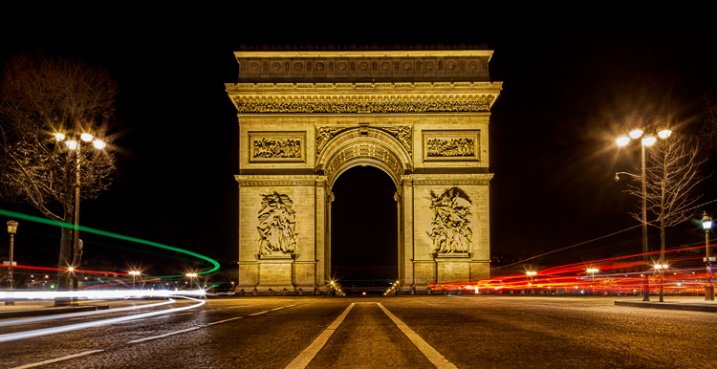
Arc de Triomphe, Paris (Shutter speed: 30 seconds; Aperture f/22; ISO: 50).

Streaking headlights and taillights from passing vehicles are a great way to deal with the problem of traffic in your picture, and as a bonus, it adds a sense of movement to your scene.

To include streaking lights, start by using a slow shutter speed. You will typically set a shutter speed of at least 15 seconds to allow enough time for the vehicles to move through your frame. Set a mid-range aperture (around f/8) and a low ISO (100) to accommodate the long shutter speed, then adjust from there depending on conditions. After that, just wait until traffic is about to enter your frame and trip the shutter. The shutter will stay open during the time the traffic moves through the frame and only the headlights and taillights of the passing vehicles will show up in your picture.

Where should you go to find good places for streaking lights? That depends. If you just want the streaking lights to accentuate a picture of something else, then you can go anywhere. If you want the streaking lights to be the cneterpiece of the photo, however, you will need to find a place where you can overlook a highway or major street. Bridges and overpasses work great for this. In addition, parking garages that are next to a highway can work great as well (if you can access them).

3. Skylines

Great Subjects for Urban Night Photography - NYC skyline example

Midtown Manhattan, taken from Roosevelt Island (Shutter speed: 10 seconds; Aperture f/8; ISO 100).

Skyline shots nearly always look great at night. In every city, the buildings will be lit, and will contrast against the black sky. Further, you don’t have to worry about a lot of things that cause problems during the day. For example, there will be no glare from front-lit buildings, or shadows from backlit buildings. For the most part, cloud conditions do not matter.

The key is to find a good vantage point. If your city has a river or bay your can shoot across, those make great spots. Another good choice is a high spot overlooking the skyline (look for overpasses of highways leading into downtown). Make liberal use of Google Maps’ street view to find good vantage points.

4. Monuments

Great Subjects for Urban Night Photography - Alamo example

The Alamo, San Antonio, Texas (Shutter speed: 13 seconds; Aperture f/16; ISO: 100).

The best part about photographing monuments at night is that they are usually well-lit. Further, the night provides a different perspective on a monument that might otherwise be commonplace.

The worst part about monuments is that, even at night, they can attract a lot of people. The long exposures required at night can help you eliminate them though. By using an extremely long shutter speed (over 30 seconds, so you will need to use Bulb mode), any people that happen to walk through your view will not show up in the final picture. Of course, if the people happen to stop walking and stand around in your frame, they will show up and you will have to use the Clone Stamp tool in Photoshop later to get rid of them.

Remember that many times the lights of monuments are not kept on all night. They seem to go out around midnight.

5. Fireworks

Great Subjects for Urban Night Photography - St. Louis fireworks example

St. Louis, Missouri (Shutter speed: 6 seconds; Aperture f/3.5; ISO: 100).

It doesn’t have to be the 4th of July or some major celebration to find a fireworks display. Many cities and towns now have fireworks displays on a regular basis as a means to draw people to local business. For example, the picture above of fireworks over St. Louis was taken on a random weekend. In addition, I live near a lake in Texas that has fireworks every weekend during the summer. See if you can find a fireworks display near you.

The key to capturing fireworks displays is to use the right shutter speed, and time the explosions. A shutter speed of around 10-15 seconds seems to work the best. That provides enough time for the fireworks to fully explode, but is not so long that the fireworks don’t show up well. Trigger the shutter when you see the dot of the firework going up. That way your picture will capture the explosion from beginning to end. After a while, you’ll develop a feel for when things are about to happen based on the rhythm of the fireworks show and you can trigger the shutter then.

6. Individual Buildings

Great Subjects for Urban Night Photography - Dallas example

Building in downtown Dallas, Texas (Shutter speed: 13 seconds; Aperture f/16; ISO: 200).

Don’t overlook shots of individual buildings. I know . . . it sounds boring. If you photographed an individual building during the day, you would end up with something really uninteresting. But you’ll be surprised at how certain buildings look at night, be on the lookout for ones with interesting lights. There is no better way to find them than to just pound the pavement.

Don’t look just for brightly-lit buildings either. Industrial buildings and scenes have great shapes and textures to them, often better than anything modern. While you might not want to be trolling around in an abandoned factory, there are plenty of historical public structures or working factories you can photograph from the street.

7. Streetlights

Great Subjects for Urban Night Photography - London lights example

Gates and streetlamps between Green Park and Buckingham Palace, London (Shutter speed: 1.3 seconds; Aperture f/8; ISO: 800).

If you can find a row of streetlights, it will often make a great subject. It can also be a great way to accentuate a picture of something else.

Sometimes you will want to create a starburst effect to the lights. To do that, stop down your aperture to a very small setting, somewhere in the range of f/16 – f/22. The lights will appear to twinkle in the result.

8. Carnivals

Great Subjects for Urban Night Photography - State Fair example

State Fair, Dallas, Texas (Shutter speed: 10 seconds; Aperture f/22; ISO: 100).

Carnivals are all about bright lights, vibrant colors, and movement. As such, they can be great places for the prepared night photographer.

Carnivals don’t happen every day, so you’ll need to plan ahead. Most metropolitan areas have publications listing all upcoming events. If nothing else, you can check a guidebook for your city.

Once you are there, set your exposure so that your shutter speed is in the range of 8-15 seconds. That will capture the movement of the carnival in your shot. This will usually allow you to use a low ISO to keep noise under control and a moderate aperture so that you will have a sufficient depth of field.

9. Museums

Great Subjects for Urban Night Photography - Louvre example

The Louvre, Paris (Shutter speed: 1/8 second; Aperture f/4; ISO: 3200) Note: these settings were used because I was forced to hand hold this shot.

Museums are places that cities want to show off. As a result, most museums present dramatic facades, and are well lit at night. They are an easy way to find a good subject for night photography.

In addition, you will not have to search for museums. All museums will be listed in every guidebook or tourism website for your city. There are often several museums to choose from. Just find the most attractive one and check it out.

Once you get there, the key to success is composition. Start with the obvious frontal shot, and then work the scene from there, trying out different angles and perspectives.

10. Neon

Great Subjects for Urban Night Photography - Times Square neon example

Times Square, New York (Shutter speed: 3 exposures at .6, 1/6, and 2.5 seconds; Aperture f/16; ISO: 100).

Flashing signs are everywhere, and can be easily overlooked. Next time you are out, make a point to include the signs in your picture.

11. Overlooks and Views
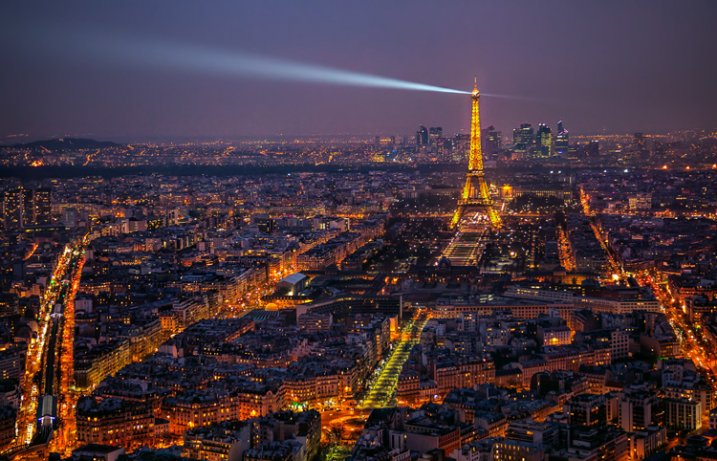
Great Subjects for Urban Night Photography - Paris example

Paris at Night, Taken from the Montparnasse Tower (Shutter speed: 1/4 second; Aperture f/4; ISO: 800).

A good view can present a great opportunity for photography at any time, and nighttime is no exception. Be careful though – a great view does not necessarily make a great picture. The key to success often lies in the foreground. Make sure there is something of interest in the foreground draw your viewer into the great view.

Finding a great view can be difficult. This is particularly true at night, since often the parks or towers from which you capture the view are closed. The best way I have found to find great views is to use guidebooks for your city. Sometimes the guidebook will actually have a section on the best views. If that doesn’t work, take a look at the map on 500px to see what views others have found.

12. Bridges

Great Subjects for Urban Night Photography - Golden Gate Bridge example

Golden Gate Bridge from Marin Headlands, San Francisco (Shutter speed: 4 seconds; Aperture f/9; ISO: 800).

When in doubt, find a bridge to photograph at night. While your city may not have the Brooklyn Bridge or the Golden Gate Bridge, I can almost guarantee you that it will have a bridge, and that it will be well lit at night. Almost every city is built on a river or a bay, meaning there will be bridges. They are always lit.

The key is to find the best vantage point to view the bridge. In your quest to find this, there is no greater tool than the street view function of Google maps. Using Google maps, find the main bridge(s) of your city and then, at either end, virtually walk around using street view. Be sure you find a place to park as well, as this is often tricky around bridges.

Take special notice of the water under the bridge. There will be two effects related to the water. First, the long exposure time will smooth out the water. In rivers it will sometimes show a smooth current. Second, the lights from the bridge will often create reflections in the water. As such, if you can maneuver to use the water as your foreground, you may be rewarded.

When photographing a bridge, don’t overlook the passing traffic. You might be able to incorporate streaking lights from the cars as an element of the shot. As mentioned above, make sure you time the exposure right so that you start it right as traffic is about to enter the frame.

13. Fountains

Great Subjects for Urban Night Photography - Trafalgar Square fountain example

Fountain in Trafalgar Square, London (Shutter speed: 13 seconds; Aperture f/10; ISO: 100).

Many central plazas and squares are centered around a fountain, and these are usually brightly lit at night. They are great places to start when looking to photograph a city a night. What’s more, photographing at night works to your advantage when you find such a fountain. The slow shutter speeds that are required by the low-light scene allow the water to flow while your shutter is open. This makes the water appear smooth.

Start with a low to mid-range ISO (100-400) and a moderate aperture (around f/8). Start with these settings, then adjust your shutter speed to get the correct exposure ought to result in a sufficiently slow shutter speed to create the smooth, flowing water you want.

Conclusion

Night takes up roughly half of each day. Further, it is often easier to get out and shoot at night because most of our work and family obligations take place during the daylight hours. So get out and shoot in your town. Even if you do not live in a major city – many moderate-sized metro areas have most, if not all, of the same subject matter.

When you do start planning night photography, you’ll be surprised how many of the subjects above are near you. It just takes a little effort and advance thought. So check out the available subjects nearby and get after it.

googletag.cmd.push(function() {
tablet_slots.push( googletag.defineSlot( “/1005424/_dPSv4_tab-all-article-bottom_(300×250)”, [300, 250], “pb-ad-78623” ).addService( googletag.pubads() ) ); } );

googletag.cmd.push(function() {
mobile_slots.push( googletag.defineSlot( “/1005424/_dPSv4_mob-all-article-bottom_(300×250)”, [300, 250], “pb-ad-78158” ).addService( googletag.pubads() ) ); } );

The post 13 Great Subjects for Urban Night Photography by Jim Hamel appeared first on Digital Photography School.


Digital Photography School

 
Comments Off on 13 Great Subjects for Urban Night Photography

Posted in Photography


Pet Photography: 5 Simple Tips for Animal Photographers

14 Jul

For armature or professional photographers who use their skill for weddings, portraits, engagement, maternity or any other popular family photography, adding “pet photography” to your business card can be an added rise in business for you. How can a family photo be complete without Fido in the picture? Doing pet photography, or just understanding how to photograph a pet for Continue Reading

The post Pet Photography: 5 Simple Tips for Animal Photographers appeared first on Photodoto.


Photodoto

 
Comments Off on Pet Photography: 5 Simple Tips for Animal Photographers

Posted in Photography


Architecturally Alive: 16 Transforming Kinetic Buildings

14 Jul

[ By Steph in Architecture & Cities & Urbanism. ]

moving architecture kundig 2

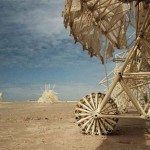
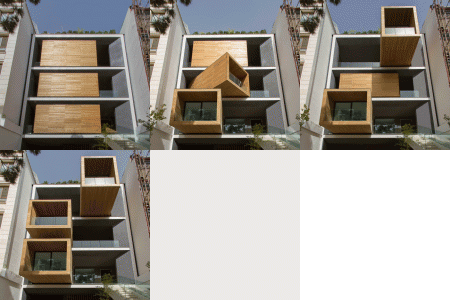
Will the cities of tomorrow be filled with intelligent kinetic architecture that moves and transforms of its own accord, as if it has a life of its own? The designers of these 16 structures seem to think so, whether they’re making use of ancient pulley-powered systems or engineering remarkably responsive auto-adaptations to change the look of a structure, shield it from the sun, or make it seem like a living creature in a bid to foster deeper connections between humans and architecture.

Adaptable Snow Cone Lifeguard Station

moving architecture snow cone 1

moving architecture snow cone 2

movign architecture snow cone 3

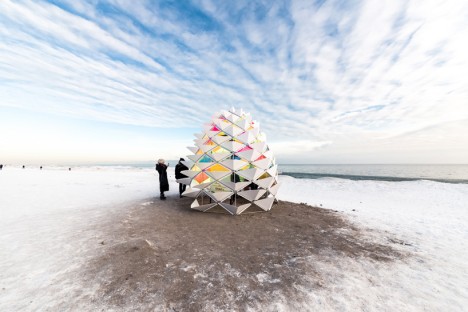
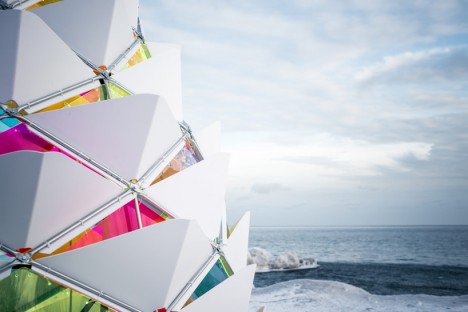
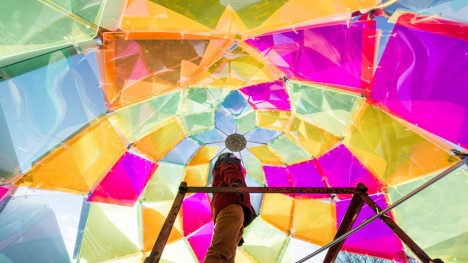
Modeled on a pine cone, this lifeguard post by RAW Design, Ferris + Associates and Curio adapts to weather conditions on Toronto beaches. The white ‘petals’ can move to either offer shade during the hot summer months or to collect snow in the winter for extra insulation. The petals can also be retracted on one side and closed on the other to guard against heavy winds but still let sunshine in. It was fabricated in three weeks and then re-assembled on-site within 6 hours.

Penumbra Adaptive Window Shading System

kinetic facade 1

moving architecture penumbra 3

moving architecture penumbra 2

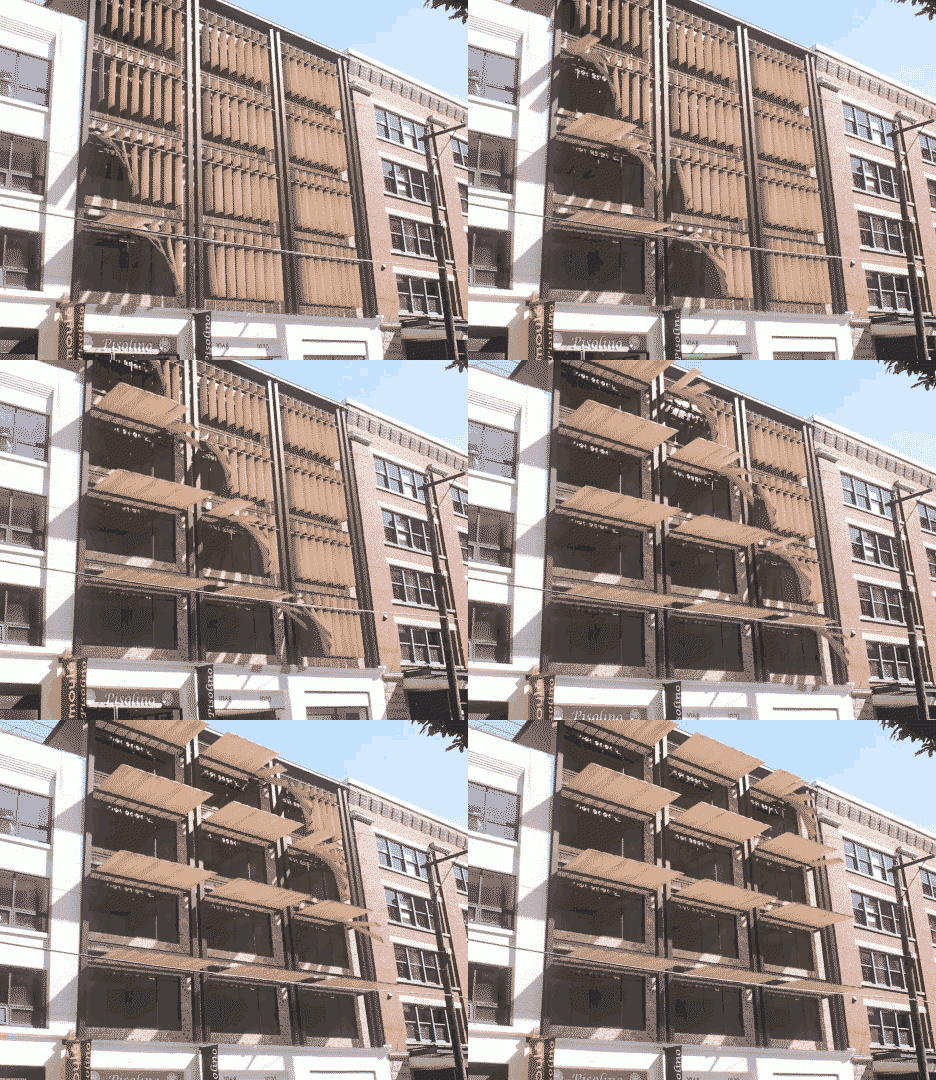
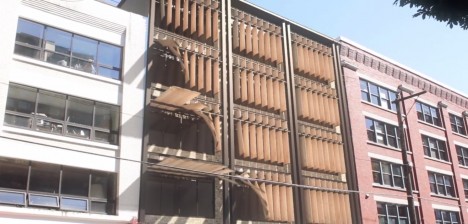
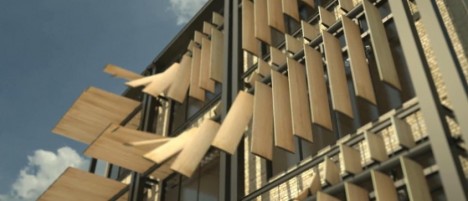
The Penumbra system by Tyler Short is “designed to offer a kinetic and mechanical solution to a problem that would otherwise be nearly impossible to solve with static architectural components: providing shading across a building facade for both low evening sun and high afternoon sun conditions.” The various kinetic elements of the shade system can shift in different ways to deflect light as needed.

Moving Parts by Olson Kundig Architects

moving architecture kundig 4

moving architecture kundig 5

moving architecture delta shelter

moving architecture delta shelter 2

Architect: Tom Kundig

Architect: Tom Kundig

Architect: Tom Kundig

Architect: Tom Kundig

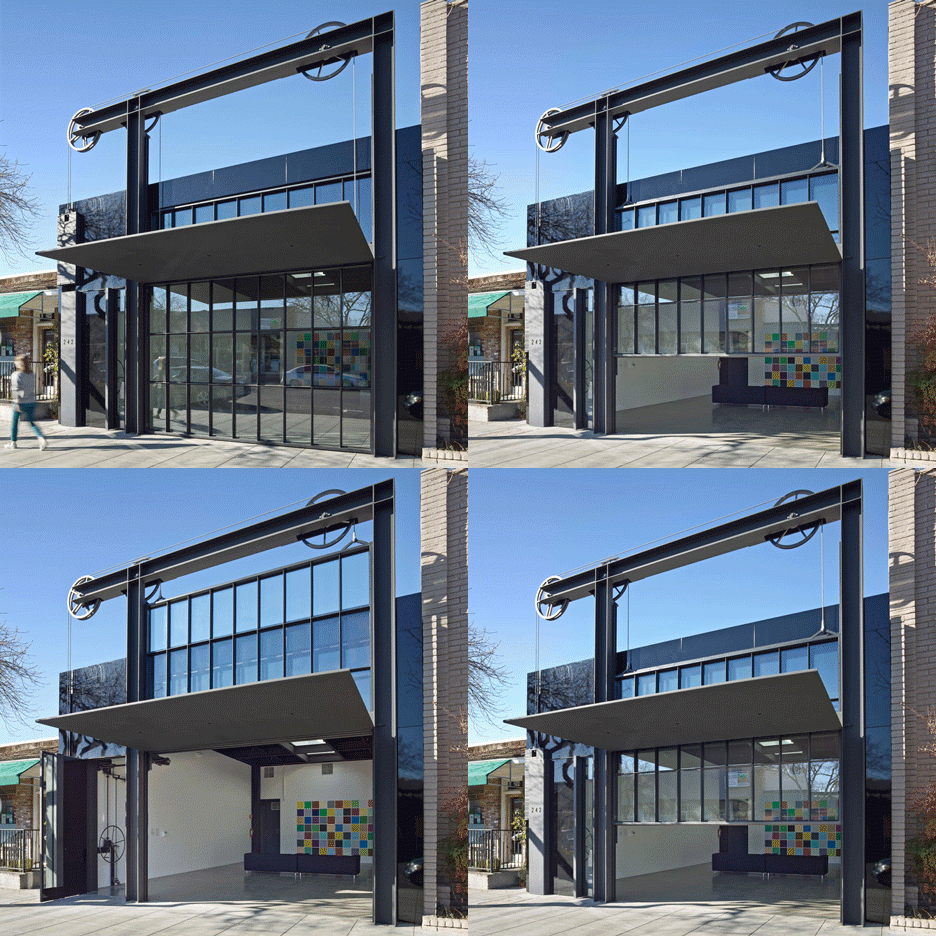
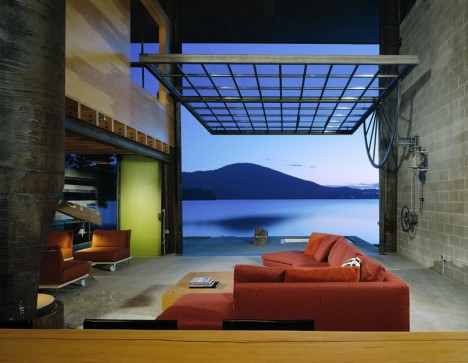
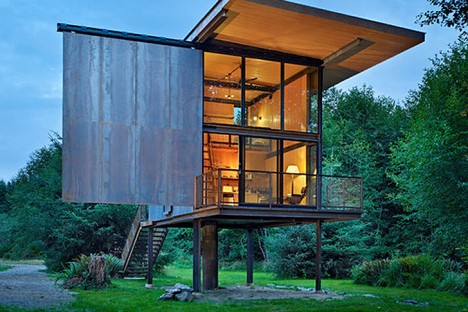
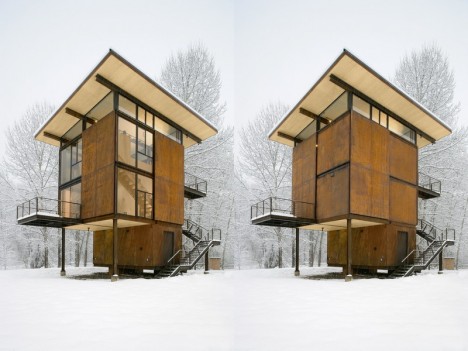
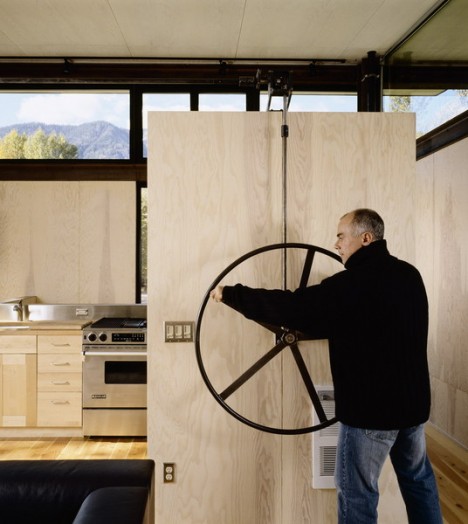
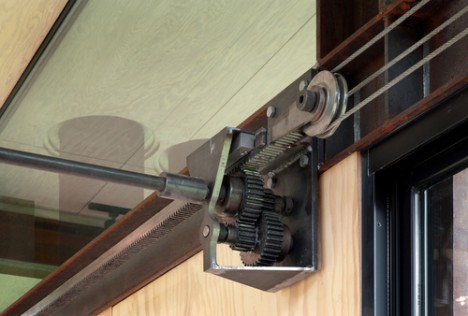
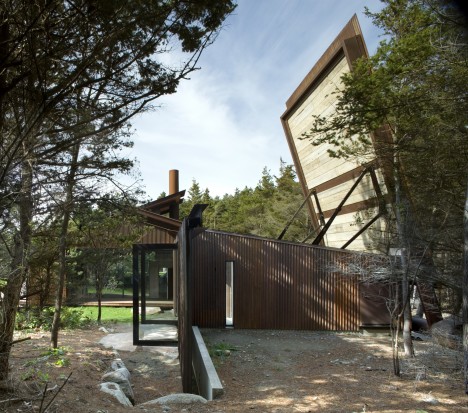
A home with a roof that opens vertically, an art gallery with a hoist-and-pulley facade and a ‘virtually indestructible’ cabin with operable steel panels are among the kinetic projects by Tom Kundig of the firm Olson Kundig. The architect says early exposure to mining, logging and farming industries led to a lifelong fascination with machinery, which he has integrated into all sorts of architectural projects. The idea is to move something large using very little energy, encouraging user participation in the transformation of the space in concert with geometry and physics.

Next Page – Click Below to Read More:
Architecture Thats Alive 16 Transforming Kinetic Buildings

Share on Facebook


[ By Steph in Architecture & Cities & Urbanism. ]

[ WebUrbanist | Archives | Galleries | Privacy | TOS ]


WebUrbanist

 
Comments Off on Architecturally Alive: 16 Transforming Kinetic Buildings

Posted in Creativity


4 Tips for Doing Photography on a Budget

14 Jul

Several times in the past few months people have asked me how to get into photography without spending a lot of money. I must admit the idea of emptying your wallet to get all the camera bodies, lenses, flashes, tripods, and other gear you need to do some serious photography can seem quite daunting, it certainly was for me when I first got bitten by the photography bug.

The good news is you don’t really need the latest, greatest, and most expensive gear to make some stunning images thanks to the magic of modern technology. In many cases all you need to do some serious picture-taking is the camera you probably already have with you: your smartphone. However as good as modern mobiles can be, they do have some serious limitations (particularly due to their small image sensors) like limited low-light capabilities, and non-zooming lenses. If you really want to up your game and take advantage of the bigger image sensors, larger lens selection, and incredible accessories available for DSLR or mirrorless camera without breaking the bank – here are a few options to get you started.

photographing-on-budget-beach-sparks

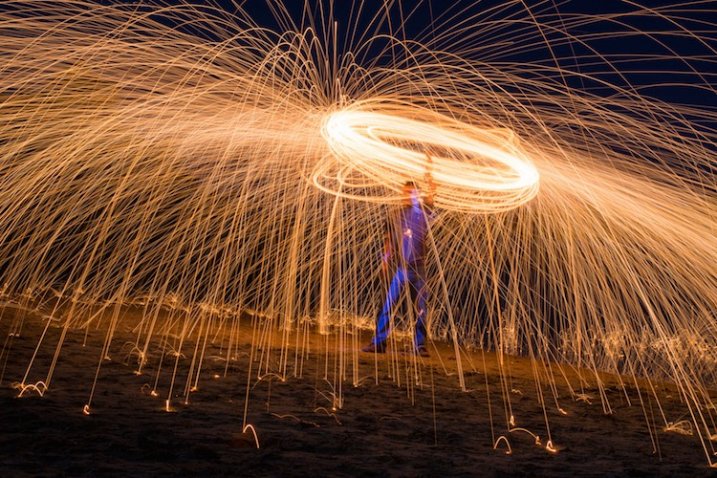
You don’t need a lot of money to take pictures like this. A basic camera and some creativity will do just fine.

1. Buy used gear

New cameras sure are nice, and I can certainly understand the desire to have a model with the most megapixels, best image sensor, highest ISO, fastest autofocus, and coolest bells and whistles. But, before you rush off to drop hundreds or thousands of dollars on a brand new model though, consider this – every picture you have ever seen was taken with a camera older than one you can buy today.

Think of the most famous photographs in history: A man facing down a row of tanks in Tiananmen Square. Muhammad Ali standing triumphant over a defeated Sonny Liston. The 1984 National Geographic photograph of a young woman from Afghanistan. These were all taken on film cameras, with capabilities outmatched in almost every possible way by even the cheapest digital camera today. Certainly new cameras make the act of taking pictures easier in many ways with bright screens, easy-to-use controls, and a host of other features designed to help you get the hang of your hobby. But if you’re pressed for cash buying an older, used camera can be just as good.

photographing-on-budget-cottonwood-borer

Photo of a cottonwood borer beetle taken with my old Nikon D200 that is far less capable than any new DSLR on the market today.

To put my money where my mouth is, I take most of the pictures on my weekly 50mm photo blog not with my new Nikon D7100, but with my ten-year-old Nikon D200, which can be found used online for a fraction of what a brand new camera costs today. It’s only 10 megapixels, and doesn’t have features like wi-fi, a tilting screen, or even the ability to use live view – but it allows me to take beautiful images and that’s often the only thing that matters.

Buying a camera just a few years old can save you significant amounts of money while giving you a high-tech photographic instrument that your photographic forebears from decades gone by would only have dreamed about. Older cameras like the Canon Rebel T2i, the Nikon D80, Olympus PEN E-P2 and many others don’t stack up to modern cameras when you look at marks on a checklist of features, but all of them are capable of producing amazing images, and can be purchased used for much cheaper than any new camera today. This applies to more than just camera bodies, and you can find very good prices on accessories like lenses, flashes, tripods, and other equipment too.

My brother took this shot with a ten-year-old DSLR and a macro lens he found when cleaning out his basement.

My brother took this shot with a ten-year-old DSLR and a macro lens he found when cleaning out his basement.

I prefer buying used equipment from sites that offer some type of warranty or trade-in period if you decide you don’t like what you receive. Two of my favorites in the United States are KEH.com and Adorama Used. Other sellers like B&H offer used cameras, and you can often buy refurbished equipment directly from camera manufacturers that even come with a warranty. Some photographers I know get a lot of high quality gear for cheap on sites like eBay and Craigslist as well. Be forewarned that sites like these often make no guarantees as to the quality of what you are buying, but as long as you are careful you can find some good deals.

For some buying tips read: How to buy used camera gear 

2. Make your own gear

If you’re like me you may find yourself scrolling through websites, or flipping through catalogs, dreaming of all the camera gear that you don’t have, mostly because so much of it is too expensive. While many common photography accessories can be purchased used, you can actually make your own versions for almost no money at all. These won’t stand up the the daily rigors of a professional photography environment, but most offer similar functionality as their full-priced name-brand counterparts for far less cash. From do-it-yourself tripods to homemade lighting kits, the internet is brimming with articles, videos, and tutorials for enterprising photographers looking to fashion their own equipment to save a buck or two. The end result might look the same as a professional product, but you may be quite surprised at what you can come up with to expand your photographic horizons with a bit of searching and a willingness to try making things by yourself.

Read these dPS articles for some DIY projects:

  • Creating Effective DIY Studio Lighting With Household Items
  • 5 DIY Hacks to Have in Your Camera Bag
  • How to Make a DIY Light Panel or Scrim
  • DIY Light Modifier You Can Do With Savage Translum Material
  • DIY How to Build and Use a Reflector to Take Better Portraits
  • How to Make An Inexpensive Light Tent – DIY

As an example, here’s a photo of a toy train I took with my son one morning before I left for work. It required no special equipment, and took about 10 minutes to set up.

A toy train, seen in a whole new light.

A toy train, seen in a whole new light.

You might think a photo like this would require an expensive camera, a fancy studio, and a lot of costly lighting rigs, but in truth it was quite the opposite. I shot this using my trusty D200 on our dining room table with a bit of aluminum foil taped to a board.

No fancy lighting or expensive equipment required.

No fancy lighting or expensive equipment required.

This is only one case scenario out of thousands, and just goes to show that a bit of out-of-the-box thinking, and some creativity, can net incredible results without requiring a trip to the bank. While spending money on additional gear and equipment can certainly boost your capabilities as a photographer, this is just one way to take you skills to the next level without breaking the bank.

3. Learn to use the equipment you already have

Recently I was talking about cameras with a fellow photography enthusiast who was a bit frustrated with his DSLR. He wanted to shoot in Aperture Priority but have his camera also take care of setting not just the shutter speed but the ISO as well. As he told me about the new camera he was thinking about buying and pondering how he could save enough money to get it. I asked if I could look through his camera menus a bit. A minute later I found that his camera did indeed have an Auto ISO setting which did exactly what he was hoping, and saved him hundreds of dollars right there on the spot.

This is only the most recent example of a phenomenon I have encountered many times; the camera you already have can probably do a lot more than you realize. If you’ve never sat down and read the manual for your camera, you might be in for a pleasant surprise when you find out how much it can actually do. You can almost always find online tutorials dealing with your specific camera with a bit of internet searching.

The equipment I used to shoot this was not expensive (a $ 100 pocket camera) but I did have to learn about lighting, posing, focal lengths, background compression, and other aspects of photography.

If you want to seriously enhance your photography skills without buying a single piece of new gear, one of the best routes you can take is to learn from others. Most cities have photography clubs where members meet regularly to teach workshops, share tips, or just gather to talk about their favorite hobby with fellow like-minded individuals. Often these groups and clubs require nothing of new members except a passion for photography. Those that do charge a fee usually keep it reasonable and have a good motive for doing so; membership dues give the group access to better facilities, early sneak peeks at new equipment, or even a notable guest speaker.

If you don’t have one of these groups in your area there are plenty of online forums as well, such as the ones right here at Digital Photography School. Joining a community, whether face-to-face or online, is a fantastic way to learn more about the capabilities of your gear, teach yourself about the principles of photography, and make personal connections that can help you when you need it. No new equipment is required – just a willingness to meet people, stretch yourself, and try something new.

4. Get out and shoot photos!

This might sound a bit silly, which is why I’m leaving this until the very end. I often have conversation with people who want to improve their photography skills but think they can only do it by spending money. One of the best ways to improve as a photographer is to actually go out and take pictures, and if  you already have a camera this requires spending no money at all.

It’s easy to think that buying a new camera, lens, flash, tripod, or camera bag will inspire you to get your creative juices flowing and take better pictures, but after a while all that gear will usually start collecting dust just like the camera equipment you already have. Whether you have a mobile phone, a pocket camera, or a full-fledged DLSR or mirrorless model, you are in possession of equipment that is light years beyond what your forebears had only a few decades ago. The secret to improving your photography is not about spending even more money on an ever-growing cache of equipment, but simply taking what you already have, going out into the world, and using it.

Capturing the beauty of nature with an old and relatively cheap iPhone 5.

Capturing the beauty of nature with an old and relatively cheap iPhone 5.

What about you? What are some of your favorite low-budget tips for improving your photography? Share your thoughts in the comments below.

googletag.cmd.push(function() {
tablet_slots.push( googletag.defineSlot( “/1005424/_dPSv4_tab-all-article-bottom_(300×250)”, [300, 250], “pb-ad-78623” ).addService( googletag.pubads() ) ); } );

googletag.cmd.push(function() {
mobile_slots.push( googletag.defineSlot( “/1005424/_dPSv4_mob-all-article-bottom_(300×250)”, [300, 250], “pb-ad-78158” ).addService( googletag.pubads() ) ); } );

The post 4 Tips for Doing Photography on a Budget by Simon Ringsmuth appeared first on Digital Photography School.


Digital Photography School

 
Comments Off on 4 Tips for Doing Photography on a Budget

Posted in Photography


Fab Four New Items for Your DSLR!

14 Jul

It’s time to class the place up with new accessories for your DSLR!

We’ve got four brand new items in the shop full of style, sophistication and juuuust a dash of futuristic rainbows.

Everything on your DSLR’s wishlist.

(…)
Read the rest of Fab Four New Items
for Your DSLR! (0 words)


© Erin for Photojojo, 2015. |
Permalink |
No comment |
Add to
for Your DSLR!”>del.icio.us

Post tags:


Photojojo

 
Comments Off on Fab Four New Items for Your DSLR!

Posted in Equipment


Sony Cyber-shot DSC-RX100 IV first impressions review posted

13 Jul

The fourth iteration of Sony’s Cyber-shot RX100 series brings a host of high-speed features from super slow-mo movies to 4K video with virtually no rolling shutter. It all stems from the RX100 IV’s 20MP stacked CMOS sensor and the additional room for high speed circuitry that the design allows. Our full review is well under way; for now take a look at the first installment. Read more

Articles: Digital Photography Review (dpreview.com)

 
Comments Off on Sony Cyber-shot DSC-RX100 IV first impressions review posted

Posted in Uncategorized


13. Juli 2015

13 Jul

Das Bild des Tages von: Wladimir Jara S.

Eine Höhle, ein Mensch und goldenes Licht.

Im Ausblick: Der Google-Algorithmus Deep Stereo & Unterwasserbilder von Tieren & Menschen.
kwerfeldein – Fotografie Magazin | Fotocommunity

 
Comments Off on 13. Juli 2015

Posted in Equipment


Rezension: Roger Steffens – the family acid

13 Jul

© Roger Steffens - The Family Acid

Es gibt eine ganze Reihe von Auslösern, ein Fotobuch zusammenzustellen und zu realisieren. Seien es nun konkrete Projekte, Serien oder auch Monografien, die eine Rückschau auf das Lebenswerk eines Fotografen liefern. Eine Herausforderung ist dabei immer auch, aus einer großen Menge Bilder eine wirklich starke Auswahl zu treffen und diese in eine stimmige Reihenfolge zu bringen.
kwerfeldein – Fotografie Magazin | Fotocommunity

 
Comments Off on Rezension: Roger Steffens – the family acid

Posted in Equipment


Allen & Company Media Conference, 2015 — Sun Valley, ID

13 Jul

Tesla and SpaceX CEO, and Solar City Chairman, Elon Musk, Sun Valley Idaho, Allen & Company Conference, July 2015

I published I set of 247 billionaires and media moguls from last week’s Allen & Company Media Conference in Sun Valley, Idaho. You can see the entire set here.


Thomas Hawk Digital Connection

 
Comments Off on Allen & Company Media Conference, 2015 — Sun Valley, ID

Posted in Photography