RSS
 

Archive for April, 2015

How to Make a DIY Light Panel or Scrim

07 Apr

how-to-guide-banner

In an earlier article we discussed 10 reasons why you should consider using a light panel instead of a softbox for your next shoot. In this, part two, I am going to:

  • Show you how to create your own self-standing PVC light panel frames and accessories
  • Share some cheap fabric alternatives to use with your new frames
  • Offer helpful tips on making them stronger and easier to assemble

Before we get started, I want to talk a little bit about the size of our panels versus what you may buy online. There are a lot of different brands of frames out in the market, and most of them top out at around 72”. A six foot tall panel might sound plenty big, but when you are shooting someone who is tall, you are not going to have the area of coverage you need around your model’s head. To remedy this, you will have to attach the panel to your light stands, using an adapter, to raise it off the floor.

The panels we are going to create measure in at roughly seven feet tall, giving you a little more headroom and allowing you to free up your light stands for things such as… lights!

With that being said, while the panel part of this project is pretty quick and easy, creating the fabrics can be a bit more daunting, especially if you are uncomfortable around a sewing machine.

If you do not want to tackle making your own fabrics, you can still clamp large pieces of fabrics to the frame – such as bed sheets. Another option would be to build your frames to the smaller dimensions as a name-brand panel, then purchase the fabrics from that company. The money you save building the panels might even be enough to cover the cost of the fabrics.

Here are the main things you are going to need to create your panel:

List of Tools for Creating the Frame

  1. Ratcheting PVC cutter or shears
  2. Measuring tape
  3. A marker

As far as PVC goes, your local hardware store will most likely have two lengths to choose from. Depending on how you are going to transport the PVC, you can choose between the standard 10 foot sections or pre-cut five foot sections. The 10 foot sections will save you more money, but getting them home may prove a bit tricky, unless you have a long vehicle such as a truck, SUV, or van.

I like to build my panels out of ¾” Schedule 40 pipe. Schedule 40 is both rigid and lightweight. If you decide to buy the PVC in 10 foot sections, you will need three pieces per panel. If you go with five foot sections, you are going to need six pieces per panel.

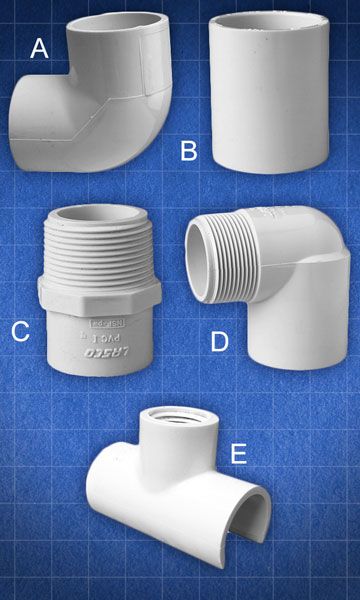
As far as fittings, you are going to need: (all fittings Schedule 40)

  • Eight 90 degree ¾” elbows
  • Two ¾” couplers
  • Two ¾” slip to threaded adapters
  • Two ¾” slip to threaded street elbows
  • Four ¾” threaded saddle tees
fittings

(A) 90 degree ¾” elbow (B) ¾” coupler (C) ¾” slip to threaded adapter (D) ¾” slip to threaded street elbow (E) ¾” threaded saddle tee

That should do it. Let’s get started on the panel.

Measure and mark

With your tape measure and marker, measure and mark your cuts on each section of pipe. When measuring your cuts, be sure to start your measurement from the last mark you made.

Your marks need to be at:

For 10’ pipe

Piece 1

  • Mark 1 – 40.75” (103.5 cm)
  • Mark 2  – 40.75“ (103.5 cm)
  • Mark 3 – 19” (48.3 cm)
  • Mark 4 – 19” (48.3 cm)

Piece 2

  • Mark 1 – 40.75” (103.5 cm)
  • Mark 2  – 49.5“ (125.7 cm)
  • Mark 3 – 11” (27.9 cm)
  • Mark 4 – 11” (27.9 cm)

Piece 3

  • Mark 1 – 49.5” (125.7 cm)
  • Mark 2  – 40.75“ (103.5 cm)

For 5’ pipe

Piece 1

  • Mark 1 – 40.75” (103.5 cm)
  • Mark 2  – 19“ (48.3 cm)

Piece 2

  • Mark 1 – 40.75” (103.5 cm)
  • Mark 2  – 19“ (48.3 cm)

Piece 3

  • Mark 1 – 40.75” (103.5 cm)
  • Mark 2  – 11” (27.9 cm)

Piece 4

  • Mark 1 – 40.75” (103.5 cm)
  • Mark 2  – 11” (27.9 cm)

Piece 5

  • Mark 1 – 49.5” (125.7 cm)

Piece 6

  • Mark 1 – 49.5” (125.7 cm)

Once you have finished marking all of your cuts, take your PVC cutters or shears, and cut out all the pieces. When you’re done you should have:

  • Panel Sides: four  40.75” pieces
  • Panel Top and Bottom: Two 49.5” pieces
  • Leg 1: One 11” and one 19” piece
  • Leg 2: One 11” and one 19” piece

Next, take one of your leftover scrap pieces and cut two small sections of pipe, roughly 1.25” inches in length. These will later be inserted into the elbow joints of the legs, so that they can pivot.

Assembly
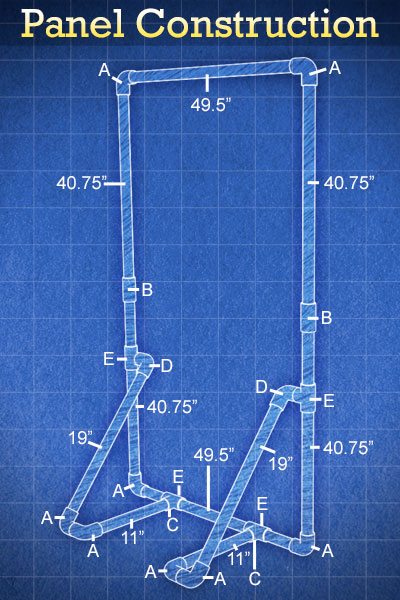
panel-construction-diagram

Assembly diagram showing each length of pipe, and each fitting, that make up the completed light panel. Letters coincide with above fitting diagram.

To create the sides of the panel, join together the ends of two side pieces with a coupler. Next, connect the top and bottom sections to the side pieces using 90 degree elbows.

Three short sections of PVC are all that make up the feet for your panel. First, add a 90 degree elbow to the 19″ and 11″ pieces of pipe. Attach the threaded coupler adapter to the other end of the 11” piece, then attach the 90 degree street elbow to the other end of the 19” piece. Next, screw a threaded saddle tee connector onto each of the threaded adapters. Finally, join the two pieces together by inserting the small piece of PVC between the two 90 degree elbows. You should now have a pivoting leg that can snap onto your panel, so that it can stand on its own without having to attach it to a light stand.
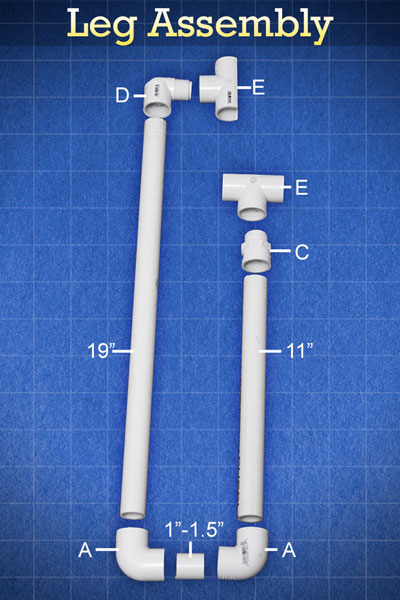
leg-assembly

Assembly diagram showing how to assemble the snap-on panel legs. Letters coincide with the above fitting diagram.

*Quick Tip*

The shape of the legs are great for placing sandbags on, whenever you are on location and it is breezy.

Fabrics

I have three main types of fabric that I always keep handy. Diffusion, black, and white. You should be able to find everything you need at your local fabric store. For the diffusion panel, I use a white (translucent) rip-stop nylon. For the black, I use a nylon material. Make sure that it does not let a lot of light pass through it, that it’s fairly opaque. For white panels, I found that the white lining of blackout curtains works awesome! It does not have to be hemmed, and it does not allow light to pass through it, which seems to make it a very efficient bounce source. Just make sure you pick the whitest blackout fabric you can find. (The fabric comes in off-white colors, as well.)

The fabrics for the panels can be made by cutting out pieces of material, about 2-3 inches larger than the  4’ x 7’ frame, then hemming them. Hemming is not required but will keep the edges tidy and professional looking.

To make the fabric panels easier to attach to the frames, sew 10” strips of wide elastic on a diagonal to the back corners of each piece. Once added, attaching the panels to the frames is as easy as slipping each corner into the elastic pocket.
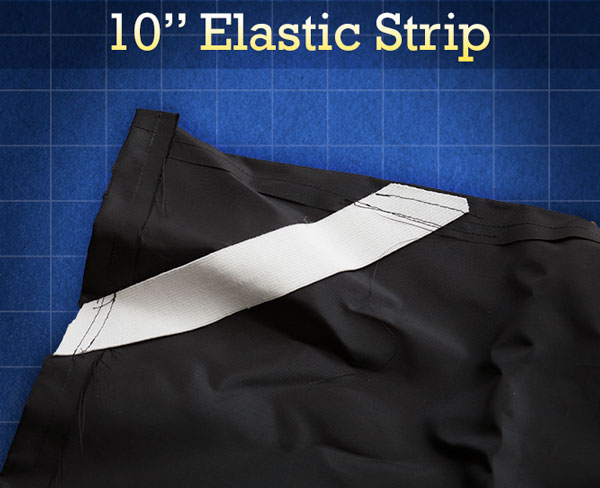
elastic-strip

Example of elastic strip pocket, created to make fabrics easier to attach to panel frame.

At this point, you have pretty much finished your DIY light panel. Now, I am going to show you some additions that will make your light panel even more versatile.

Accessories

Crossbar

A crossbar is a great thing to add to your panel for extra strength in outdoor windy conditions, and it can make the panel a lot easier for an assistant to hold and position.

To add a crossbar to your panel, just cut out an extra 49.5” section of PVC, the same size as the top and bottom sections of our panels. Next, replace the couplings on each of the side pieces with a ¾” tee. This will give you a channel to attach your crossbar to. That is all there is to it!

A Bungee or Shock Cord

If you decide to make more than one panel, you are soon going to realize how cumbersome it is to dump out all the individual pieces and sort through them.

To make your life a little easier, you can use a 23 foot length of thin elastic bungee (shock) cord and run it through each piece of your panel. The bungee cord keeps all your pieces together when the panel is broken down, and the slight tension helps pop the pieces into place when you are ready to set things up.

To add the shock cord to your frame, lay out all the un-assembled pieces on the ground and start feeding the elastic cord through the PVC. Next, pull the two ends of the bungee cord tight until the ends of the frame touch each other, then tie the ends together. Finally, cut off and discard any extra cord.

Single and Double Clips
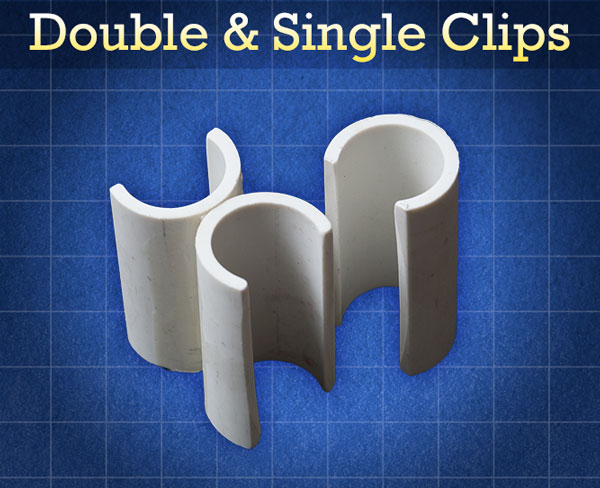
clips

Single and double clips are an essential accessory to carry in your bag, along with your panels. Single clips offer a great way to attach pieces of fabric to your frame, or further secure your fabrics for windy conditions.

Things Needed to Make Clips:

  1. Measuring Tape
  2. Marker
  3. 5’ section of 1” Schedule 40 Pipe
  4. Ratcheting PVC Cutter/Shears
  5. Dremel tool with cutting and grinding attachment
  6. PVC cement
  7. C-Clamp

To create a single clip, cut a 2” section of pipe using your shears. Next, use a Dremel tool fitted with a cutting wheel to cut a section from the PVC. (Use the circumference diagram below as a reference, to produce a sufficient clip.) Once you finish cutting out the section, use a grinding attachment to bevel, smooth, and round any rough edges.
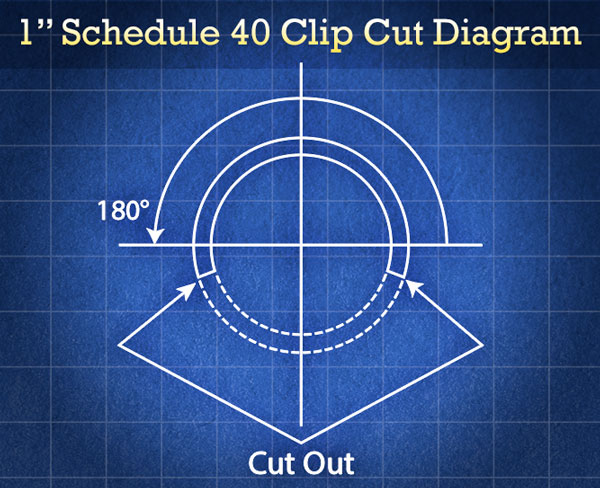
clip-cut-diagram

Double clips are made by cementing two single clips together, then attaching a c-clamp to them until the cement dries. These clips do an awesome job of attaching two or more frames together. For instance, by using double clips, you can create a giant 8’x7’ diffusion source, bounce source, or v-flat.

Adding Strength

Though PVC frames are cheap and lightweight, their strength does not stand up to their commercial aluminum counterparts. If you find that you are needing your panel frames to be stronger and more rigid, there are a few things that you can do to strengthen them without adding a lot to their weight. (The only downside of each method is that you won’t be able to use bungee cord to keep the panels together.)

Spray Foam

Filling your tubes with spray foam might be the easiest way to add stiffness and strength to your panels. To insure that there are no voids left in the pipe during the filling process, drill a few small holes along the length of each section. The holes should be just large enough to stick the straw of the spray foam through. Once each section is filled, make sure that it is placed on a flat surface, otherwise it will stay bent once the foam dries.

Dowel Rods

Wooden dowel rods are another great way to strengthen your PVC frames. This method will require a saw to cut off the excess ends of the dowels. A ¾” dowel will not fit snugly into most ¾” pipe. (The inner diameter of the pipe is more around .8”.) To remedy this, try wrapping the ends of the dowels in a few layers of gaffer or duct tape, then hammer them into the pipes using a rubber mallet. You can also try applying a large glob of PVC cement to the rod before placing it inside the tube. Once the cement dries, it should hold the dowel in place.

Closing Thoughts

I hope this article has proven helpful and has made you excited to start using light panels in your photography. If you have not yet read the first article entitled “10 Reasons to Ditch Your Softbox for a Light Panel”, I encourage you to do so. This article shows the benefits of using a light panel over a softbox and shares techniques that will help you get the most out of using one.

Until next time, go out, have fun, experiment and create something awesome!

googletag.cmd.push(function() {
tablet_slots.push( googletag.defineSlot( “/1005424/_dPSv4_tab-all-article-bottom_(300×250)”, [300, 250], “pb-ad-78623” ).addService( googletag.pubads() ) ); } );

googletag.cmd.push(function() {
mobile_slots.push( googletag.defineSlot( “/1005424/_dPSv4_mob-all-article-bottom_(300×250)”, [300, 250], “pb-ad-78158” ).addService( googletag.pubads() ) ); } );

The post How to Make a DIY Light Panel or Scrim by Joel Dryer appeared first on Digital Photography School.


Digital Photography School

 
Comments Off on How to Make a DIY Light Panel or Scrim

Posted in Photography


Colorado proposes bill supporting photographers who record police

07 Apr

Colorado, U.S. state legislatures have introduced a new bill that, if signed into law, will prevent law enforcement officers from interfering with citizens who are photographing or recording police activity. It is House Bill 15-1290, and it comes at a time when Texas has proposed its own bill on the topic, but with a draconian slant: it penalizes citizens that film or photograph police actions within 15 feet of the incident. Read more

Articles: Digital Photography Review (dpreview.com)

 
Comments Off on Colorado proposes bill supporting photographers who record police

Posted in Uncategorized


Sony FE 24-240mm f/3.5-6.3 OSS real-world samples posted

07 Apr

In theory, Sony’s FE 24-240mm f/3.5-6.3 OSS all-in-one zoom is an ideal candidate for travel photography with one of the company’s a7-series. The stabilized lens provides Sony’s full frame mirrorless cameras with a 10x zoom range, designed with five aspherical elements and one ED glass element. We put it to the test on landscapes, portraits, and lots of things in between. See gallery

Articles: Digital Photography Review (dpreview.com)

 
Comments Off on Sony FE 24-240mm f/3.5-6.3 OSS real-world samples posted

Posted in Uncategorized


6. April 2015

07 Apr

Das Bild des Tages von: mostly tim

16847921980_mostly tim

Im Ausblick: Workshop beim Magnum-Fotografen, Teenagerjungs und Kulturwerkzeug Instagram.
kwerfeldein – Fotografie Magazin | Fotocommunity

 
Comments Off on 6. April 2015

Posted in Equipment


Portrait of a City: 31 Photographic Street Art Murals

06 Apr

[ By Steph in Art & Street Art & Graffiti. ]

wrinkles of the city main

Residents of cities like Tokyo, Havana and Los Angeles see their own faces blown up to monumental proportions and pasted onto all sorts of urban surfaces when photography, street art and architecture come together. These 31 images from artists working all over the world cover the humorous and the poignant, bringing photography to the most unexpected places.

2 Girls Building in Melbourne by Samantha Everton
photographic murals 2girls 1

photographic murals 2girls 2

photographic murals 2girls 3

A fine art image by Australian photographer Samantha Everton spans the entire facade of the ‘2 Girls Building’ in Melbourne by KUD Architects. The concrete of the building is printed with a wallpaper texture and where it cuts away, the photo (printed on glass) is revealed. The image becomes three dimensional in the form of the three-story lamp mounted to the outside of the structure, mimicking the one in the original photo.

Inside Out Project by JR in Tokyo

photographic murals JR Tokyo 2

photographic murals JR Tokyo 1

The most well-known street artist working with photographic imagery is JR, who creates collages of portraits of residents in each of the cities in which he works. Based in Paris, the artist pastes up gigantic images of faces on buildings, bridges, rooftops and trains all over the world and gets in his subjects’ faces with a 28mm lens to capture unguarded expressions. The work pictured here is part of the Inside Out Project, which welcomes people to submit their own black and white photographic portraits to be exhibited in their own communities.

Humorous Photographic Images by Mentalgassi

photo murals mentalgassi 4

photo murals mentalgassi 3

photo murals mentalgassi 2

photo murals mentalgassi 5

photo murals mentalgassi 1

mentalgassi 6

mentalgassi 7

Trash cans mounted to poles become backpacks, ‘metal heads’ appear on domed recycling bins and faces appear to be squashed in windows as artist trio Mentalgassi bring their photographic imagery to the streets. The anonymous young Berlin artists met at school and became interested in how new media techniques could be applied to three-dimensional objects.

Next Page – Click Below to Read More:
Portrait Of A City 31 Photographic Street Art Murals

Share on Facebook


[ By Steph in Art & Street Art & Graffiti. ]

[ WebUrbanist | Archives | Galleries | Privacy | TOS ]


WebUrbanist

 
Comments Off on Portrait of a City: 31 Photographic Street Art Murals

Posted in Creativity


Contest – Win One of Five Defrozo Prize Packages

06 Apr

For this contest, Defrozo is giving away five prize packs

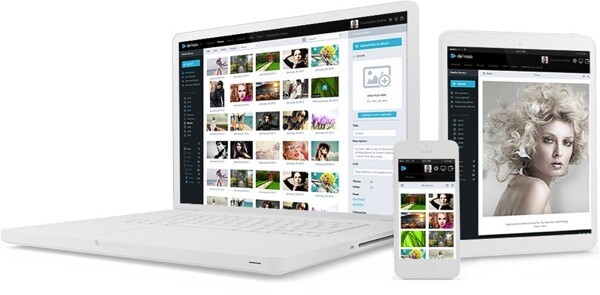
Defrozo is a team of web developers and photographers currently seeking contributors on Kickstarter in order to finish their one-stop photography marketing platform by October 2015.

Defrozo 1b

Defrozo is built to help photographers grow by offering seven essential tools, from a website manager to shopping cart, and even a CRM (customer relation management) system, for better display and marketing of their work online.

There are going to be five winners to this giveaway. Each winner will receive a Prize Pack designed to help both enthusiast and pro photographers create an engaging, relationship-driven online brand that generates leads, referrals, and sales.

Each prize pack includes the following:

1. Item 1: Kickstarter Ultimate VIP Pack+ ($ 50 value)

Defrozo 2b

Get our most popular Kickstarter reward for free. This includes:

  • Two years of Defrozo top-tier subscription plan, Ultimate free
  • Private development time access
  • Kickstarter Edition website theme
  • Three eBooks kit
  • Founder Medal on your Defrozo website
  • Personalized Wallpaper
  • Thanks in social media

2. Item 2: Photography Marketing Triple Set

Strengthen your brand by using three professional marketing templates produced by Defrozo’s respected partner, TemplateMonster. Set includes:

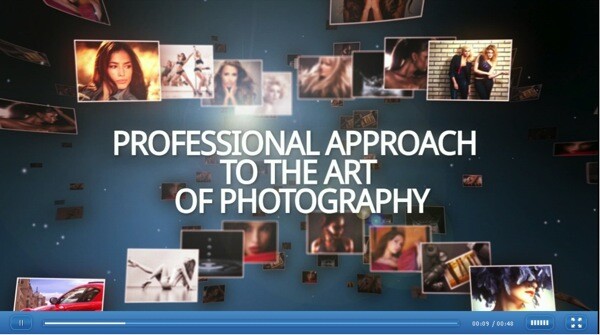
  • Photographer Portfolio After Effects Intro ($ 85 retail value). Full HD video intro template to make your presentations more dynamic and engaging. View live demo here.Defrozo 3b
  • Responsive Newsletter Template ($ 25 retail value). MailChimp-ready, responsive template to boost your email marketing. View live demo here.Defrozo 4b
  • Photo Studio Facebook HTML CMS Template (retail value $ 59). Custom tab template to take your Facebook business page to the next level. View live demo here.Defrozo 5b

How to win

To win this contest you’ll need to:

  • Visit the Defrozo Kickstarter page and learn more about the product and its benefits for your photography career.
  • Leave a comment below and tell us which features and tools you’d like to see in the full version of Defrozo (scheduled for the release in October 2015), and more importantly, HOW you would use them to highlight and market your photography. Please note: there is a limit of ONE entry per person.
  • Do this in the next six days and after April 14th, the team at Defrozo will choose the best five answers and we will announce the winners in the following days.
  • The deadline to enter is April 12th, Midnight PDT (GMT-7). Comments left after the deadline will not be considered.

By best – the Defrozo Co-Founders are looking to see if you have an understanding of what Defrozo is about and how it best suits your needs, so you’ll need to check out the project’s Kickstarter page to put yourself in the best position to win.

There’s no need to write essay length comments to win, but we’re looking to hear your feedback about Defrozo and how it would help your development as a photographer.

This competition is open to everyone around the world, no matter where you live, but there is only one entry per person.

To enter, simply leave your comment below.

Defrozo is a community-driven platform which means that your feedback and suggestions will be used by the developers to build a truly versatile and effective system capable to solve many problems photographers face day to day.

Don’t forget to share this post with your friends and like Defrozo on Facebook for special offers and announcements on all Defrozo events.

Disclaimer: Defrozo is a Paid Partner of dPS.

googletag.cmd.push(function() {
tablet_slots.push( googletag.defineSlot( “/1005424/_dPSv4_tab-all-article-bottom_(300×250)”, [300, 250], “pb-ad-78623” ).addService( googletag.pubads() ) ); } );

googletag.cmd.push(function() {
mobile_slots.push( googletag.defineSlot( “/1005424/_dPSv4_mob-all-article-bottom_(300×250)”, [300, 250], “pb-ad-78158” ).addService( googletag.pubads() ) ); } );

The post Contest – Win One of Five Defrozo Prize Packages by Darlene Hildebrandt appeared first on Digital Photography School.


Digital Photography School

 
Comments Off on Contest – Win One of Five Defrozo Prize Packages

Posted in Photography


Studio Update: Nikon D7200 and Panasonic GF7 added to comparison tool

06 Apr

Monday got you down? We’ve got something to help pick you right back up – our studio scene comparison tool has just been updated. Now included are samples from the Nikon D7200, Panasonic Lumix DMC-GF7 and Panasonic Lumix DMC-ZS50. Take a look at how they perform against their peers. Read more

Articles: Digital Photography Review (dpreview.com)

 
Comments Off on Studio Update: Nikon D7200 and Panasonic GF7 added to comparison tool

Posted in Uncategorized


How to Use a Wide-Angle Lens for People Photography

06 Apr

Wide-angle lenses are indispensable in travel photography. When I organize photo tours, I find that each and every trip has a storytelling component. Almost always, we as photographers, strive to not only describe a situation, but tell a tale, and when it’s about people, we want to tell the audience the story of the hero in the center of it. We want to draw the viewer in so far that they can sense it, breathing the very scents of the scene.

How to use wide angle H Fisch 1050

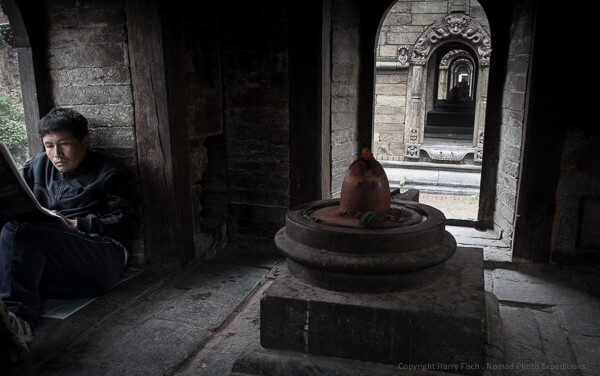
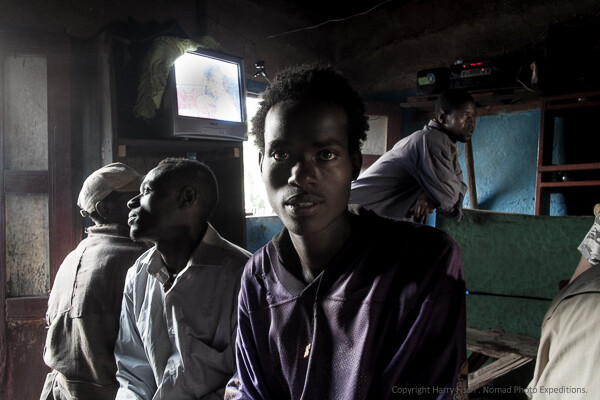
There is an ideal tool for this type of need; the wide-angle lens that normally ranges (on a full frame camera) from about 21mm to 35mm. It has a variety of advantages; you can get close to people, evoke a sense of immersion in the viewer, and get people and objects in focus with minimal effort.

I normally use FUJI X cameras which have APS-C sized sensors. As this sensor is smaller than full frame, if you want to translate the focal length of the lens from full frame (a size of sensor similar to that of 35mm film cameras), you will have to multiply it by 1.5 times. Thus an 18mm lens on full frame is LIKE a 27mm lens on a cropped sensor (18 x 1.5 = 27).

In this article, when I refer to a focal length, for example 24mm, I am referring to the length on full frame. A focal length of 24mm on a full frame camera will act like a 36mm on the Fuji ASP-C sensor.

How to use wide angle H Fisch 8638

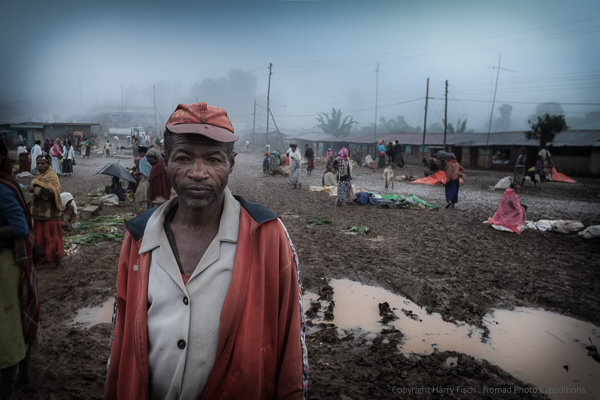
The difficulty inherent in the wide-angle lens is that it forces you to be very conscious of the distortions it produces. When photographing people, it also requires you to get close to the subject, which can be uncomfortable for most amateurs.

If you are looking for the dream location to take the wide-angle lens for a spin, it’s India, specifically Benares. It’s a scenario full of detail, with dramatic first planes of foregrounds, colorful seconds, smells, activity, and noise. It’s a great big beautiful mess, and there are always extraordinarily attractive people to photograph.

With wide-angle, the typical range goes from 21mm to 35mm, although some photographers use up to 18mm when photographing people. The famous photo agency Reuters published its best photos of 2013, and if you read the blurb under each, you’ll see that 80% of them were taken with a 24mm wide-angle lens. With a quality prime 24mm lens, the distortion of the outside lines is not as much of an issue.

How to use wide angle H Fisch 9541

Between the photo tours I organize in India, Ethiopia, Thailand, and Cuba (among other places), I recognize that I have a special predilection for Varanasi. By what I can see in the data from my Adobe Lightroom software, is that 73% of the photos I take are done with a 18mm lens. I also use – despite the fact that it requires a lot of skill when dealing with people as subjects – a Zeiss 12mm, which is the equivalent of an 18mm on APS-C format.

It isn’t only that wide-angle lenses open the shot more, the viewer gets more information inside the frame, and the wide-angle lens allows for a much more natural view (it is argued among experts as to whether a 28mm or a 35mm is the most natural point of view).

How to use wide angle H Fisch 2159

Wide-angle has a series of advantages, but – as aforementioned – not without also presenting an inconvenience; it does have a great tendency to deform the outlines, like on images of people. Also, it does require a specific and honed technique to get the best photos from it. In the majority of cases you have to get close to the subject in order to get dramatic results, as well as getting a notable depth of field, and this is something that creates yet more issues for photographers who are not accustomed to getting up close and personal with people.

Now, let’s take a look at some of the characteristics of the wide-angle lens.

Wide-angle lens characteristics

Distortion of the point of view

A 24mm lens, if it is not used properly, will deform outlines and produce exaggerations. If the lens is not good quality, you will see a curvature in some parts of the photo instead of straight lines. In some type of photography this exaggeration of the lines is considered a creative argument and can add a dreamy look to a picture. This works fine from time to time, specially if you do not over do it.

How to use wide angle H Fisch 1054

The best approach to this possible issue is to be aware of the horizontal position of your camera and avoid, as much as possible, tilting it up or down. Having the camera on an horizontal plane parallel to the ground helps.

Distortion of the vertical axis

It is important to take your time situating the camera critically with respect to the vertical axis. This is why whenever I use a wide-angle lens I change my position (camera height) with respect to ground level. Using a wide-angle lens 50cm (19.7″) off the ground isn’t the same as being one meter (39″), or one meter eighty high (5.9 feet). I normally try a few levels to find the position that will give me the best angle, though I recognize that with practice you can understand this process before actually having to go through trial and error.

How to use wide angle H Fisch 3867

I am always very aware of at least one vertical line in a picture taken with a wide lens. It can be a street corner, a mast, a raised arm. The vertical reference can many times be the anchor, the basic reference of the picture, the nail of the whole image. The best way to ruin a good picture is to show a bent mast where the viewer clearly expects, and knows, that it should be straight and distortion has been created by your position taking the picture. On many modern cameras you can set your viewfinder to display a grid. This will allow you to see through the display and organize the lines of the whole set with the vertical and horizontal references that are visible.

High and low angle

How to use wide angle H Fisch 8064

A high camera angle consists of taking in the subject or the scene from top to bottom, situated on high ground from the objects you want to photograph. When using a low angle, you would be taking a photo from bottom to top from a point below what you want to photograph. As well as getting a more original point of view, a lot of times it is used as a technique to augment the distortion and highlight different parts of the subject. Honestly, I would use it with a lot of caution, here’s why:

If you have seen the movies of Orson Wells you will remember the scenes which evoke feelings of dreaminess – or sometimes nightmares. Wells loved to use the emphatic form made by shooting from a high angle far above the subject, and the low angle doing just the opposite. Anyone who has seen his movies knows perfectly how much distortion it produced, as he used it to create very specific environments. If you use extreme high and low angles, you will get this effect as well.

Depth of field, getting everything in focus

Depth of field is important if you want everything in focus. With an 18mm lens it’s difficult to get a photo that has shallow depth of field or less of the scene in focus. With an aperture of f/5.6, it will keep practically everything in focus from a distance of one meter (3.3 feet) to infinity. This makes it interesting and convenient if you want to take pictures without even focusing.

How to use wide angle H Fisch 6098

A lot of street photographers shoot this way – focus at two meters (6.6 feet) with an aperture of f/5.6. From there, you already know that if you keep a set distance from the subject, everything will be reasonably in focus. This can save you lots of time in situations were you do not have much time to focus properly or you find that your automatic focus behaves erratically.

The originality of the plane and of the frame

With an extreme wide-angle lens, once your eye is trained, you can offer a rather original vision of reality. In real life we do not see wider than 50mm. Going beyond this, 28mm, 24mm, 21mm, 18mmm, creates a kind of unreal feeling. Lines exaggerate their proximity or separation, the foreground seems tremendous (large) in relation to the background. The relative size of objects differs from what we normally sense. If we add to all this the depth of field characteristic and the possible distortions, we do have a creative weapon that should be used with great care! As much as we are surprised by an original point of view, we get bored by seeing to many wide-angle lens distortions.

How to use wide angle H Fisch

Proximity to the subject

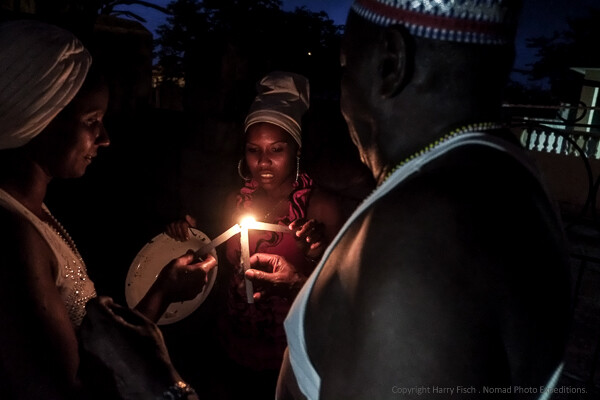
This will give the viewer a strong feeling of being there, of immersion into the scene. In possibly half of the photographs that I take with a wide-angle lens, the distance to the subject is less than two meters (6.6 feet). In documentary style photography – not necessarily photographing landscapes – a wide-angle lens rewards closeness with a subject, as it results in a rather impressive image. Great photographs are done with a 18mm lens and have been made from a distance of less than one meter (3.3 feet) from the subject. This is typically done by getting the subject in the third of the frame and allowing the viewer to observe what is happening at the second plane. You should be specially aware of the way your lens behaves; the nearer the subject to the edge of the frame, the bigger optical distortion you will get. Also remember what has been said about the way to hold your camera to avoid distortion; vertical and horizontal axes as well as the tilting issue.

How to use wide angle H Fisch 0669

Many photographers feel uncomfortable getting this close. But, if you like photographing people, a wide-angle is an essential tool. The best you can do is get used to getting close to people, with a friendly manner and a smile.

Landscape photographers do not always follow this proximity suggestion. Their use of the wide-angle is aimed more at obtaining an impressive depth of field, many times a spectacular symmetry and… searched distortion! You will see hundreds of pictures taken with a 15mm were the clouds follow a very characteristic pattern created by the distortion of the lens.

googletag.cmd.push(function() {
tablet_slots.push( googletag.defineSlot( “/1005424/_dPSv4_tab-all-article-bottom_(300×250)”, [300, 250], “pb-ad-78623” ).addService( googletag.pubads() ) ); } );

googletag.cmd.push(function() {
mobile_slots.push( googletag.defineSlot( “/1005424/_dPSv4_mob-all-article-bottom_(300×250)”, [300, 250], “pb-ad-78158” ).addService( googletag.pubads() ) ); } );

The post How to Use a Wide-Angle Lens for People Photography by Harry Fisch appeared first on Digital Photography School.


Digital Photography School

 
Comments Off on How to Use a Wide-Angle Lens for People Photography

Posted in Photography


Anatomy of a Green Screen Shot: How to Use It Right

06 Apr

I have a family that I shoot several times a year, They’re “show people” , all outgoing and crazy and fun, and after at a certain point, the mom, Ginette, said to me, “You know, I love all of the perfect and beautiful shots that you get of us, but I think it’s time to show the world the kind Continue Reading

The post Anatomy of a Green Screen Shot: How to Use It Right appeared first on Photodoto.


Photodoto

 
Comments Off on Anatomy of a Green Screen Shot: How to Use It Right

Posted in Photography


Meet our First Ever App!Disposable Camera

06 Apr

We made an app and we couldn’t be more excited to share it with you. Meet Disposable Camera!

We brought back everything good about Dispo Cams and none of the bad stuff.

Get back (or feel for the first time) the feeling of 27 potential prints burning a hole in your pocket.

Shoot a through a whole camera and get 27 prints back just like the good ol’ days.

Learn More About Disposable Camera

Or, Download It NOW


© laurel for Photojojo, 2015. |
Permalink |
No comment |
Add to
Disposable Camera”>del.icio.us

Post tags:


Photojojo

 
Comments Off on Meet our First Ever App!Disposable Camera

Posted in Equipment