Renowned nature and landscape photographer Art Wolfe has been all over the world during his 40+ year career. In this article he describes his first visit to Antarctica in late 1992, where he went in search of emperor penguins. Braving freezing conditions and dangerous under-maintained airplanes, Art spent $ 25,000 to take the trip – as it turned out, the first of many. Click through for the full story
Month: April 2015
-
19. April 2015
Das Bild des Tages von: Herz.eigen

Im Ausblick: ein Liebespaar-Portrait
kwerfeldein – Fotografie Magazin | Fotocommunity -
Grenzen überwinden

Ein Beitrag von: Stefan Wolf
Anfang diesen Jahres stand ich vor einer großen Frage, die mich nach wie vor sehr bewegt und beschäftigt: Wie kann man Vorurteile, Sorgen und Ängste gegenüber Flüchtlingen ausräumen und für eine bessere Willkommenskultur auf beiden Seiten sorgen?
kwerfeldein – Fotografie Magazin | Fotocommunity -
4 Things Commercial Photographers Need to Discuss with Their Small Business Clients
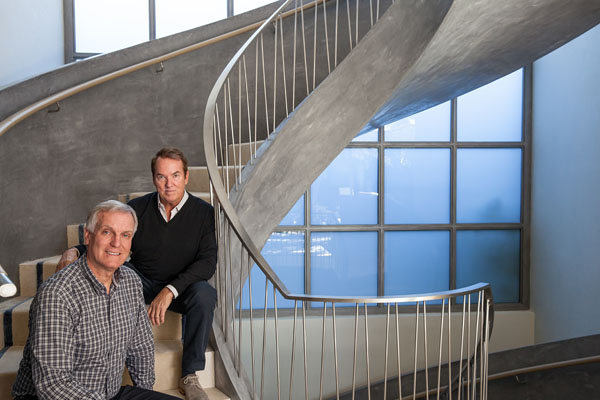
Lead architects of a high-end design firm.
Providing successful images for a business can be very rewarding, especially when it’s for a budding business that you get to witness growing. While all businesses, big and small, essentially have the same demands, a small business is most likely still learning how to work with various professionals and creating their processes as they go. Diving into a project with a small business can lead to lots of time and money being wasted if terms and project details are not discussed openly, early on. The following are some key factors to discuss with your small business client during an initial consultation so that conflicts can be avoided down the line:
1. Brand

Large family-run urban farm
While we are hired in part because of the individual style that we have developed over time, a business’s brand is the first thing that needs to come across to their audience. When working with a small business especially, the branding should be clearly defined in order to be able to provide images that will be a great benefit to them. Do they have certain color palettes they work with? Are their graphics portraying a more formal brand, or a very casual brand? Are they nature-oriented, or do they work in traditional office spaces? What clientele are they catering to? All of these are questions that should be addressed in the initial consultations. A small business may still be developing their brand or creating a branding package, so without a brand to guide the images, there may be a need for updated photos once the brand is clearly defined. Expressing this to a client will not only help them understand that professional photography is an investment intended to last a long time, but it will also show them that you are keeping their best interest in mind for their long-term success.
2. Budget
Small businesses will typically have very low budgets, so the decision to invest in professional photography services will be a big one for them. Regardless of the cost for your services, there is likely to be very little (if any) wiggle room in their budget allowance. Being aware, and respectful, of the client’s budget restrictions will not only help ensure that there is less run-around in the planning stages, but it will also give the client more confidence that you are an ally. If you offer packages geared towards commercial work, consider having several options to select from, or to use as a kick-off for budget discussions. Often a custom quote is required depending on their specific needs, but some packages to give the client a ballpark idea of pricing can let them know what they can expect to spend.
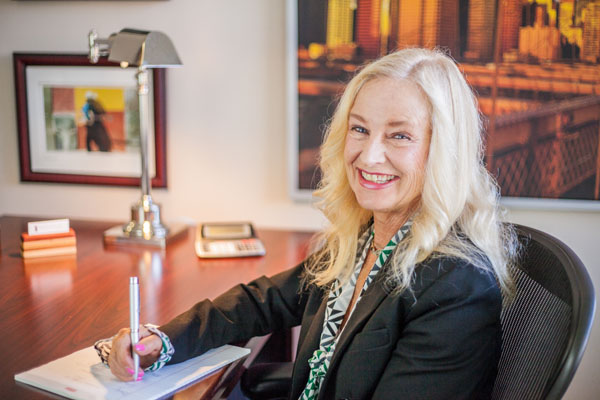
Independent financial advisor
3. Timeline
Depending on how experienced your small business client is, their timeline for getting final images may not be very realistic. This is where it’s your job to educate clients on your process and, more importantly, on your specific ability to turn around jobs in a time crunch. Knowing their expectations about timing and delivery will be vital in creating a quote, coordinating any vendors (venue, props, assistants), and making sure that the client gets their images in time to use them.
Do they require any extensive editing techniques or talent that requires outsourcing? Did they request a location or backdrop that requires reservations and a long wait for booking? Will they need models, and if so, do they have specifics in mind? Are they planning on using these images for a specific event, or marketing campaign that has a set date? Which leads to the final factor to keep in mind…
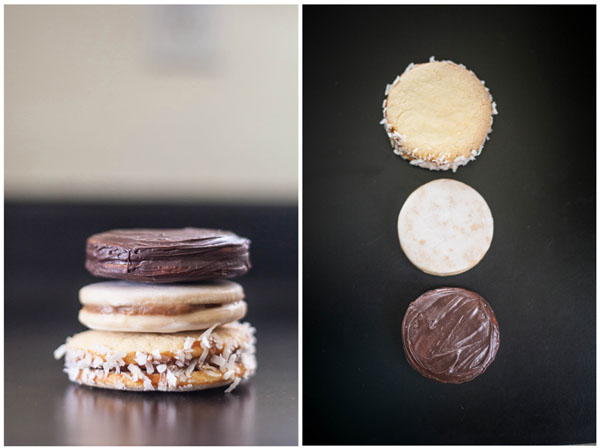
Home-based food business products
4. Usage
Many folks will assume that if they hire you to take photos, they then get to keep the photos and do as they wish with them. In reality, commercial work is generally very specific about what usage is permitted. If they are planning to use the photos on a product label, do you get any royalty from that product sale? If they are hiring you because of a large print marketing campaign, can they then use the images in email campaigns several years down the line? Are you granting them use for a certain amount of time, or can they use these images forever? Once you turn over the images, are they allowed to do any alterations to them?
While there is no one answer to these questions, be sure to discuss the planned use of these images and to clearly specify it in a contract. Both parties need to be in agreement with what is decided, and having this discussion up front will once again show your client that you value your work and intend to be completely open with them about terms.
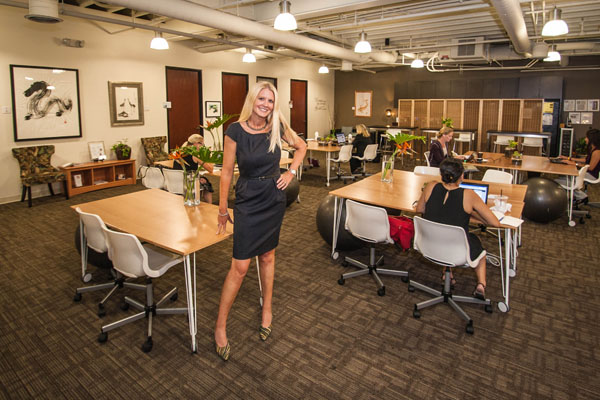
Owner of a co-working space
Although there are many factors to discuss with your client at the beginning of a project, these four points will help get the basic information clarified, and get both parties on the same page. These discussion points will also go a long way to helping you create a quote for them that is accurate and all-inclusive; avoiding time-consuming confusion farther into the project.
Do you have any additional points of conversation that are a must for initial client consultations? Please share in the comments below.
googletag.cmd.push(function() {
tablet_slots.push( googletag.defineSlot( “/1005424/_dPSv4_tab-all-article-bottom_(300×250)”, [300, 250], “pb-ad-78623” ).addService( googletag.pubads() ) ); } );googletag.cmd.push(function() {
mobile_slots.push( googletag.defineSlot( “/1005424/_dPSv4_mob-all-article-bottom_(300×250)”, [300, 250], “pb-ad-78158” ).addService( googletag.pubads() ) ); } );The post 4 Things Commercial Photographers Need to Discuss with Their Small Business Clients by Natalia Robert appeared first on Digital Photography School.
-
Touching Art: Raised Prints of Famous Paintings for the Blind
[ By WebUrbanist in Art & Installation & Sound. ]
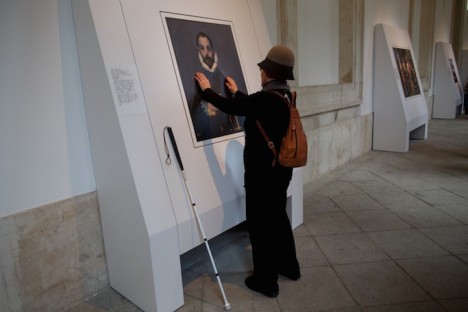
Enabling the visually impaired to quite literally put their hands on priceless artworks, this unique exhibition allows blind people to experience works like the Mona Lisa for the first time. An initial collection of six such works is on display through June at a gallery in the Museo del Prado in Madrid, Spain.
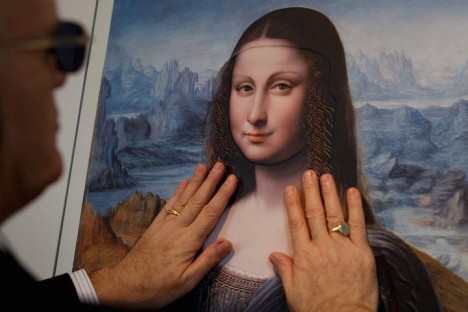
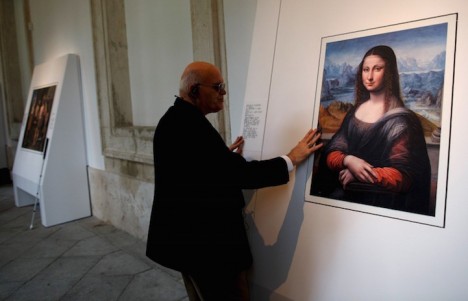
The innovative printing studio behind these complex displays, Estudios Durero, starts with high-resolution photographs of original works then reworks them, adding texture and volume in an advanced relief printing process.
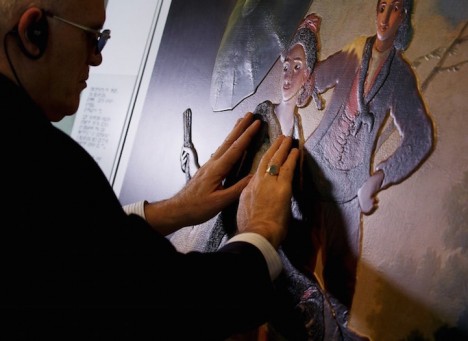
Over the course of 40 hours, special inks are layered on top of flat surfaces. The resulting pieces are then chemically treated to that raise sections of the reprinted paintings. In a final stage, the colors are layered on top of this 3D hybrid to make them look like the originals.
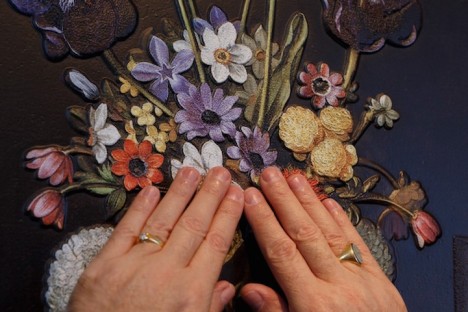
Each piece is different, requiring a nuanced and calculated approach to crafting individually appropriate solutions that reflect elements of artistic intent and style in this new feel-oriented format.
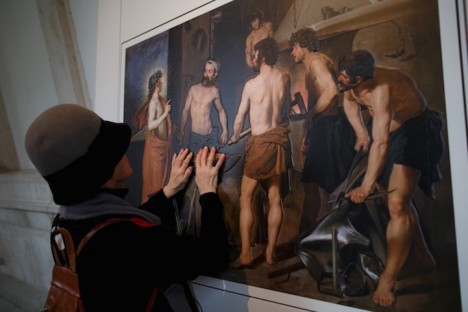
Braille text and audio guides accompany each piece, walking visitors through a multimedia experience culminating in the touching of each work (photos by Pablo Blazquez Dominguez).
Want More? Click for Great Related Content on WebUrbanist:
Microcosmic Art: Famous Paintings from Tiny Drawings
These famous recreations – and impressive originals – hide a tiny secret: they are composed of thousands of other minuscule works of art.
Click Here to Read More »»
Emoji-Nation: Famous Paintings Revised for the Internet Age
In a world of mobile devices, share icons and popup alerts, fine art is interrupted by signs and symbols of our times, adding a jarring layer of technology to …
Click Here to Read More »»
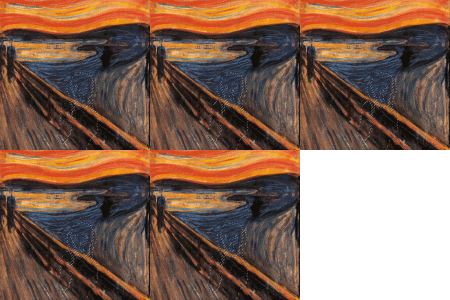
Subtracting Art: Subjects Photo-Edited from Famous Paintings
Anyone who has used Photoshop or similar programs knows these shifting dotted lines suggest a selection has been made and, in this case, something has been …
Click Here to Read More »»


[ By WebUrbanist in Art & Installation & Sound. ]
[ WebUrbanist | Archives | Galleries | Privacy | TOS ]
-
Dumpster Divine: 12 Flashy Trashy Artistic Dumpsters
[ By Steve in Art & Street Art & Graffiti. ]

Dumpsters may be grungy, grotty, gross-smelling garbage holders but these ubiquitous urban trash bins positively bloom just by adding a little art.

Our lead image comes courtesy of Flickr user Biafra Inc., and at first glance one wonders whether the dumpster is really that tiny or the photographer is utilizing some keen perspective manipulation. Wonder no longer: the dumpster actually IS tiny and you can even buy one (though not THIS one, it’s sold out) for your desktop at Dumpsty.com.
Grin Bin & Bear It

Dumpsters like the one above located in East Los Angeles take a lot of abuse both from the trash contractors who empty them and casual taggers who can’t resist their big blank accessible sides. Some of the best dumpster art, therefore, works with the ambient conditions resulting in a gritty, visceral visual impression.
X Marks The Spot


In April of 2011, urban artist X publicly thanked Andy Warhol for, well, being Andy Warhol. X‘s graphic homages appeared on the sides of high buildings, electrical boxes, dumpsters and more. You’re welcome.
Austin City Limit

Just what is the most common dumpster base color, anyway? Some manufacturers go for dark blue, others opt for the above shade of dull gray-green perhaps because it’s one of the most blah hues imaginable. That kind of thinking can backfire, however, should an enterprising graffiti artist choose a contrasting shade for his/her art. Flickr user Dan Machold (danmachold) discovered a perfect example just off Speedway in Austin, TX.
Next Page – Click Below to Read More:
Dumpster Divine 12 Flashy Trashy Artistic Dumpsters
Want More? Click for Great Related Content on WebUrbanist:
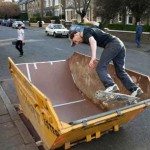
Recycle Your Dumpster: Urban Art via Adaptive Reuse
How many different ways can you upcycle an old dumpster? The Skip Conversions project turns them into swimming pools, skate ramps and more.
Click Here to Read More »»

Dumpster Drinking! Skips Turned into Miniature Bars
Dutch designers create miniature ‘trash villages’ in urban locations by transforming dumpsters into bars and restaurants using discarded building materials.
Click Here to Read More »»
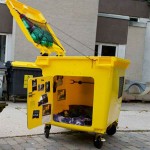
Dystopian Dumpster Living: Trash Bins Turned Tiny Houses
German designer Phillip Stingl envisions a bleak future in which society has collapsed, and a growing population of elderly people live in dumpster houses.
Click Here to Read More »»
[ By Steve in Art & Street Art & Graffiti. ]
[ WebUrbanist | Archives | Galleries | Privacy | TOS ]
-
3 Reasons to Disable Your Camera’s Auto-Review Function
Whether you have an iPhone, a pocket camera, or a DSLR it’s likely that the first thing you do after taking a picture is peek at the back LCD screen to see how it turned out. Did you capture that flawless sunset glow? Is that flower petal perfectly in focus? Was everyone in the group photo smiling?
The simple act of looking at the LCD screen seems so natural that we often don’t give it a second thought, and nearly every camera has this auto-review function turned on by default. Ironically, turning this off can have a can have a profound impact on your photography, and I’d like to share three reasons below you might want to disable it.
1. It makes you more confident
I have been shooting without the auto-preview on my camera for a long time, but when I first made the decision to disable it I was kind of a nervous wreck.
- How will I know if my shot turned out?
- What if I didn’t get the exposure right?
- Don’t people expect me to check to see if I got the photo?
I asked myself all sorts of questions like that, while remaining determined to leave the auto-preview feature off, and much to my surprise these thoughts quickly faded. It’s a weird feeling to take a picture and not have it instantly show up on the back screen of your camera, and at first I found myself constantly clicking the Review button to check my photos anyway.

Rather than checking my camera after each shot, I trusted my instincts and experience to get the photo right. This also made it possible for me to simply pay more attention to the duck and my surroundings.
I soon found myself looking at my shots less and less, and instead relying on my knowledge of composition, framing, and a proper reading of my camera’s light meter to get the picture right from the beginning. I learned to pay more attention to my exposure settings like aperture, shutter speed, and ISO and started to trust my instincts as a photographer instead of snapping a few pics, checking the back screen, snapping a few more, checking again, and…well, you know the pattern. If you have seen the first Star Wars movie you might remember the end when Luke Skywalker switches off his targeting computer and decides to trust his instincts (or The Force) instead of relying on technological gimmicks, which is a bit like disabling the auto-review feature on your camera.
Not having your pictures automatically appear after every shot might seem scary at first, but the less you rely on constantly checking to ensure you got things right, the more you will find yourself growing confident in your ability as a photographer. It’s similar to learning to ride a bike without training wheels, and the extra step of actually pressing the Review button requires just enough effort that you will probably stop doing that most of the time too. Fortunately if you do decide that you want to check your shots, they’re all just a button press away.
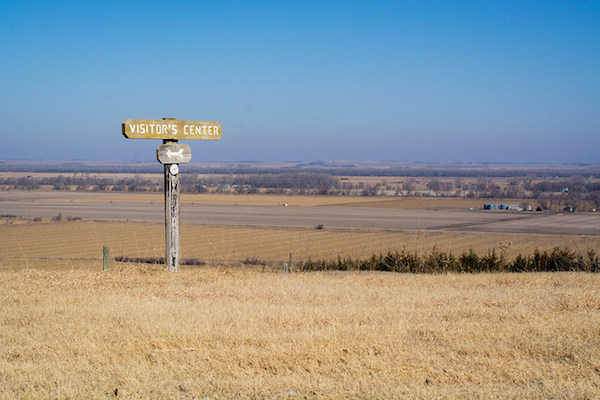
I knew I would not be back at this location for at least a year, but I shot this using f/8, 1/1500 second, ISO 280 and never looked at the photo until I got home 400 miles later. The picture turned out precisely how I wanted.
2. It helps you be more present in the moment
Have you ever had dinner with someone who was constantly checking his phone? Or been at a meeting where one person is clearly focused on texting her friend rather than talking to her coworkers? It’s obvious that these people were not engaged with what was going on around them, and their behaviour probably made you more than a little annoyed. Likewise, having the auto-preview enabled on your camera can turn you into the photographic equivalent of the chronic phone-checker; someone who is more interested in looking at his or her electronic gadget,s rather than being a part of the events around you.
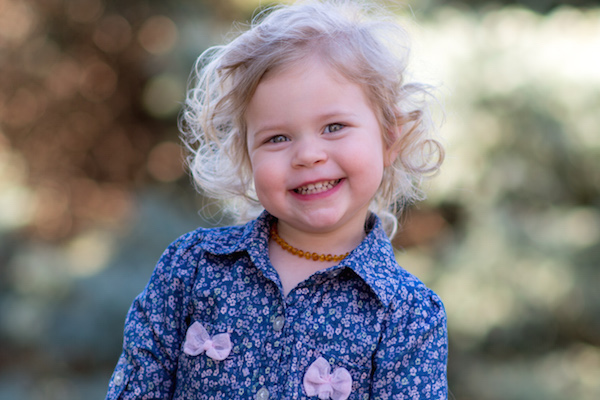
Because I was giving this girl my undivided attention instead of looking at the back of my camera, the two of us were able to just goof around and have fun, while also getting some good portraits.
Consider this scenario: Your kids are playing with their cousins at the park, and you’ve brought your trusty DSLR along to document the afternoon. But you’ve got the auto-preview turned on, so after every shot you find yourself looking down at the LCD screen on your camera instead of watching the kids play and have fun together. It might not seem like a big deal, but to the little ones around you this constant shoot-check-shoot-check routine sends the message that your camera is more important than their swinging, sliding, or slipping around on the sand.
Or maybe you’re out with your camera and tripod for an evening of landscape photography, but after each one you meticulously examine the rear LCD screen to see if you got it just right. Every second you spend poring over your pictures is a second you are not enjoying the sights and sounds of the scenery around you, and that time adds up.
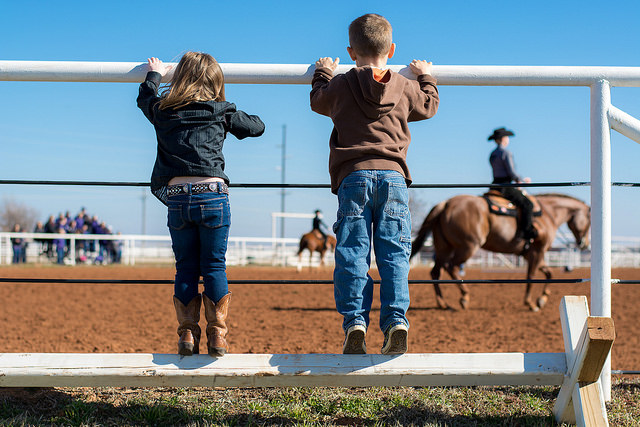
Watching these kids at a horse show was so much fun I did not want to spoil it by looking at my camera after every shot.
By disabling the auto-preview you will learn to not only trust your instincts and build confidence in your abilities, but simply be more present in the world around you. You will find yourself worrying less about whether you got the perfect photo of your kids playing or snapped the ideal landscape, and instead start enjoying the squeals and screams of the children or feeling like a part of nature rather than an observer of it. Remember, you can still use the review button to check your shots! You will just learn to use it more intentionally rather than as the default.
Surprisingly, a recent study suggests that people who are busy snapping pictures of a given event are less likely to remember details of the event than those who took no pictures at all. Although the researchers did not specifically investigate whether the effects of constantly peeking at the screen to look at photos had any affect on the outcome, I think it would be safe to conclude that doing so would serve to take you out of the moment even more than if you were just taking photos and not looking at the screen. Suffice to say, the seemingly harmless act of checking the rear LCD screen on your camera can have a greater impact than it might appear, and disabling the auto-preview is a good first step in helping you experience moments instead of just capturing photos of them.
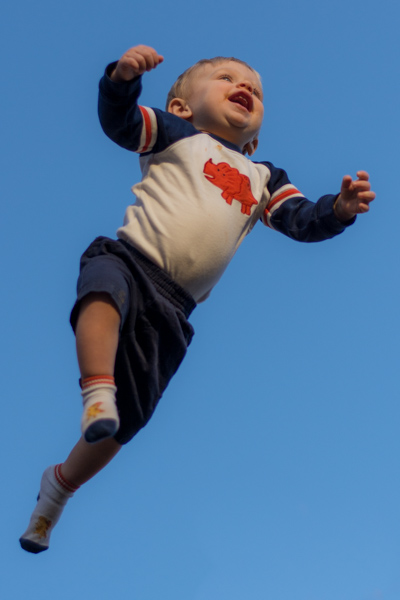
By just having fun and not concentrating on whether I nailed the perfect shot, my brother and I were able to just have fun and enjoy the afternoon while we played with his son.
3. It brings back the magic of shooting with film
Do you remember the days of shooting film when you had to wait days, or even weeks, to see if your pictures turned out? The excitement of dropping off your rolls of film, the anticipation of getting them back, and the nervous elation as you saw your images come to life in your hands is something that has been all but lost in the modern era of instantaneous photography. Even though I can check the back of my camera as much as I want, I have found myself not reviewing my pictures at all until I pop my memory card into my computer many hours or even days after I’m done shooting. More than bringing back a bit of nostalgia, this process has made me a much more intentional shooter. I think carefully about the photographs I want and how to capture them, I spend time being present in the moment, and most of all I don’t worry so much about my photos. I get the shots I get, and if I find out a few days later that I did not nail a photo how I wanted to, I use it as inspiration and a learning opportunity.
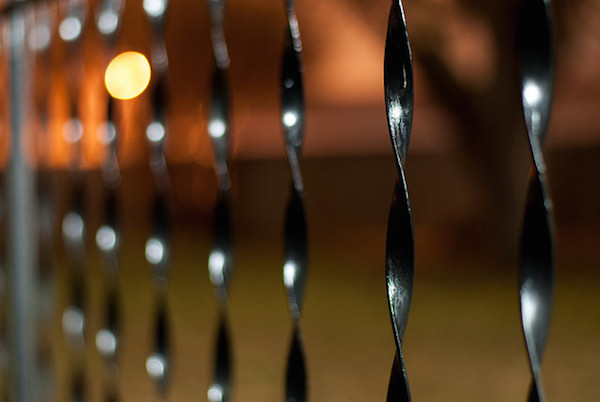
This was one of those times when I did have to review every shot because my depth of field was so shallow that I had to be sure I was getting the right part of the fence in focus.
I want to make clear that I don’t think you should stop using the LCD screen to review your shots altogether, especially if you are a professional, or semi-professional, who takes on photo jobs for money. It’s important to know when to review and when not to. If I’m doing a portrait session there are many times when I stop to check and look to see if I nailed the focus or the lighting worked out how I wanted it to. I’m not saying you should never look at the back of your camera to check your photos, but that you might want to reconsider whether you have the camera automatically show them each time you click the shutter.
Of course, if you shoot mirrorless, or with any other camera that has an electronic viewfinder, much of this article is kind of a moot point. But, the overall lesson remains intact; don’t look at your photos so much when you’re taking them.
What about your experience? Do you use the auto-preview, or have you disabled it? Leave your thoughts in the comment section below!
googletag.cmd.push(function() {
tablet_slots.push( googletag.defineSlot( “/1005424/_dPSv4_tab-all-article-bottom_(300×250)”, [300, 250], “pb-ad-78623” ).addService( googletag.pubads() ) ); } );googletag.cmd.push(function() {
mobile_slots.push( googletag.defineSlot( “/1005424/_dPSv4_mob-all-article-bottom_(300×250)”, [300, 250], “pb-ad-78158” ).addService( googletag.pubads() ) ); } );The post 3 Reasons to Disable Your Camera’s Auto-Review Function by Simon Ringsmuth appeared first on Digital Photography School.
-
Scientifantastic – The Time-lapse and Landscape Work of Joe Capra
Photographer Joe Capra got started shooting landscapes but in recent years he’s been making a name for himself with high-resolution timelapse videos, shot on dedicated stills cameras and painstakingly put together using specialist software. Click through to view some of his stunning imagery and to learn more about his process in our detailed Q&A
-
Die 5 Artikel des Monats
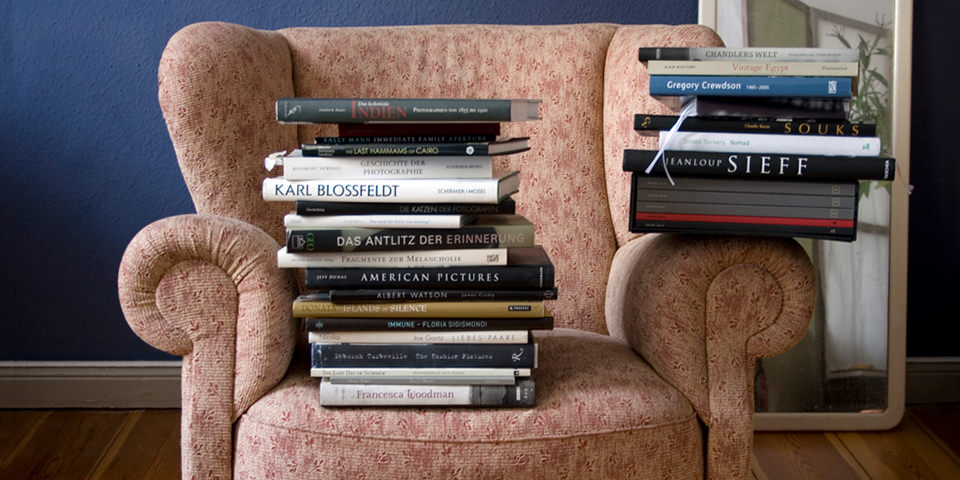
Freundinnen und Freunde der Fotografie, ich bin der Meinung, dass wir uns auf künstlerischer Ebene dann weiterentwickeln, wenn wir nicht nur die Arbeiten betrachten, die in unserer üblichen Filterblase umherschwirren. Mut zum Blick über den Tellerrand kostet etwas Bequemlichkeit, doch er hält auch die Langeweile fern.
kwerfeldein – Fotografie Magazin | Fotocommunity -
Fantastic Cities: 48-Page Urban Coloring Book Made for Adults
[ By WebUrbanist in Art & Drawing & Digital. ]
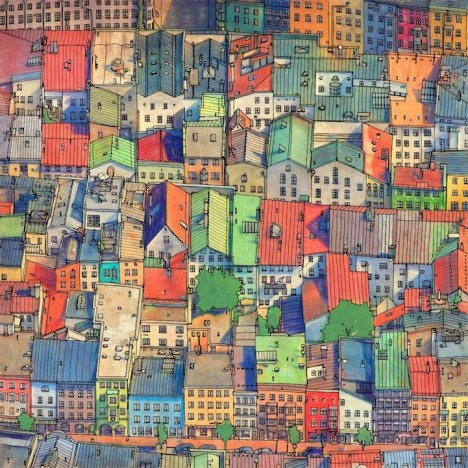
Coloring books are no longer just for kids, as this one designed for adult colorists illustrates in beautiful black and white. Showing urban scenes both real and imagined, these fictional, actual and hybrid views could take hours each for enthusiasts to fill in, and, psychologists argue, may even profit mental health benefits beyond the fun of simply reliving a childhood activity.
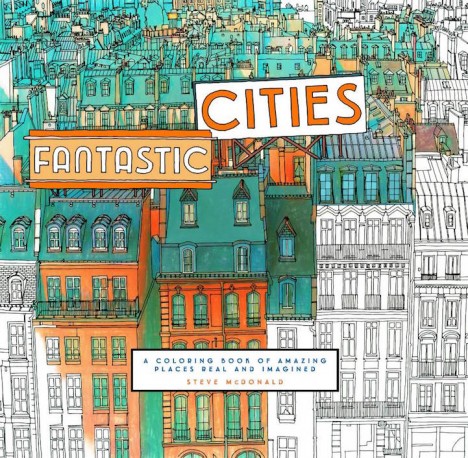
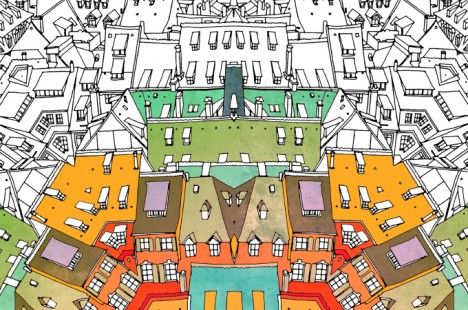
Canadian artist Steve McDonald, the man behind Fantastic Cities, is known for works of a similar style, but these have historically been found in galleries and collections: “small on-site studies that are usually done with pencil/chalk on colored paper and large format studio work which is usually done with pencil & charcoal/chalk with acrylic washes on paper. Steve has also gained a lot of attention for his highly detailed ‘ bird’s eye view ‘ renderings of villages, cities and rural scenes as well as his compositions of machinery and his popular flying vehicle series.”
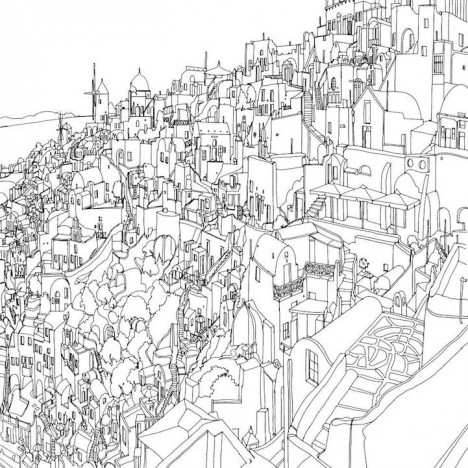
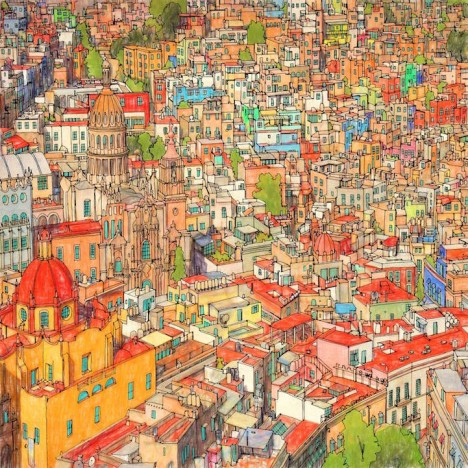
In this book, Steve selected scenes from major cities like New York and San Francisco, providing aerial drawings of real places but also stylized works based on the architectural and urban character of other cities, all with extreme levels of detail that leave readers with much to color.
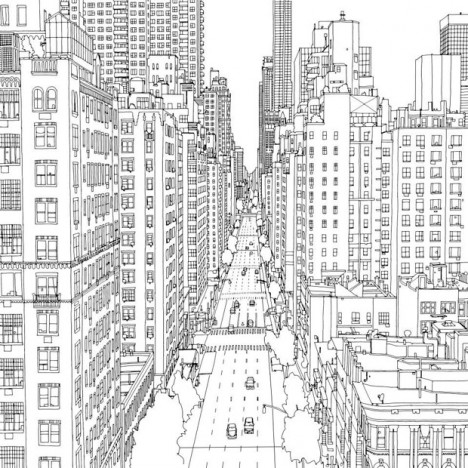
There may even be psychological benefits to coloring: “by engaging multiple parts of the brain, coloring allows us to focus on the lines, movements, and colors in front of us, use our imaginations and be creative, and de-stress.” More about the book: “This unique coloring book features immersive aerial views of real cities from around the world alongside gorgeously illustrated, Inception-like architectural mandalas. Available July 7th from Chronicle Books.”
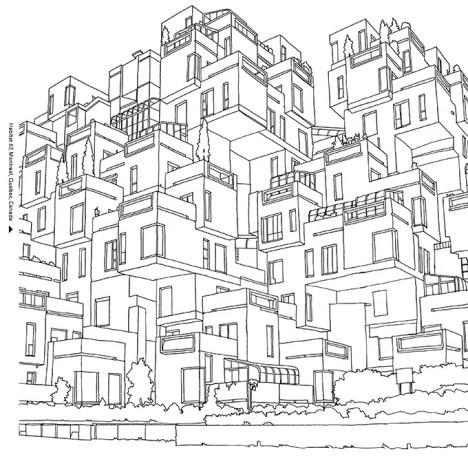
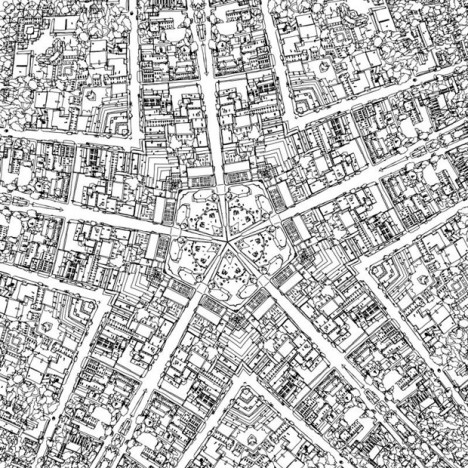
Nor is this an isolated piece – according to the New York Times, “major publishers are seizing on the trend. This year, Little, Brown will release four illustrated coloring books for adults, all subtitled ‘Color Your Way to Calm.’ The books, ‘Splendid Cities’ by the British artists Rosie Goodwin and Alice Chadwick and three titles by the French illustrator Zoé de Las Cases, feature detailed cityscapes with famous landmarks, cafes and street life. Promotional materials for the books emphasize the health benefits of ‘mindful coloring,’ noting that the activity “has been shown to be a stress reliever for adults.”
Want More? Click for Great Related Content on WebUrbanist:

Book of Cities: Rise & Fall of 10 Places Over 200 Years
We take it for granted that London and New York will grace the pages of books, but would you be surprised to learn that Madrid and Cairo were once as commonly …
Click Here to Read More »»
Pencil vs. Camera: Illusion Drawings Pop Off the Page
You might think artist Ben Heine has Photoshopped himself into his own pencil drawings, but he’s actually standing on top of them. Much like the …
Click Here to Read More »»

Pop-Up Pulp: Book Covers Made Into Dramatic 3D Scenes
Pulp fiction cover art is fabulous enough in its own right, but Thomas Allen takes it to new heights with his weird but hilarious pop-up cover art.
Click Here to Read More »»
[ By WebUrbanist in Art & Drawing & Digital. ]
[ WebUrbanist | Archives | Galleries | Privacy | TOS ]